TIMELY study identifies pregnancy CGM targets associated with improved neonatal outcomes in women with T2D –
Higher glucose from 12 weeks’ gestation onward associated with LGA; TIR >70% and TAR <30% support pregnancy CGM targets
DT&T just published a prospective observational study, "Continuous Glucose Monitoring Metrics in Women with Type 2 Diabetes in Pregnancy: The TIMELY Observational Cohort Study," from Dr. Denice Feig (University of Toronto), Dr. Jennifer Yamamoto(University of Manitoba), and colleagues. The TIMELY study, which we view as supremely exciting, enrolled women with pregestational T2D before 26 weeks’ gestation (n=50) to evaluate CGM metrics throughout pregnancy and determine their association with maternal and neonatal outcomes. Kudos to the authors for identifying the centers and so many women with T2D who were pregnant. Using Dexcom G6 sensors, researchers examined glycemic patterns across pregnancy and explored how these metrics related to outcomes such as large-for-gestational-age (LGA) birth and other neonatal complications.
Taken together, the findings suggest achieving recommended pregnancy-specific CGM targets, particularly early in gestation, improve neonatal outcomes in women with T2D. Kudos and let’s move forward on this! What a terrific area of investment for business organizations and philanthropists alike to think about, particularly those people very interested in improving life not only for people with diabetes, but particularly those from marginalized backgrounds.
Pregnancy CGM targets appear clinically meaningful for women with T2D
The findings provide strong prospective evidence supporting pregnancy-specific CGM targets in women with T2D. Women achieving >70% Time in Pregnancy Range (TIPR; 63-140 mg/dL) experienced markedly fewer LGA births than those below this threshold (10% vs. 47%). Every 5% increase in TIPR was also associated with a 28% reduction in LGA risk. Maintaining Time above Range (TAR) <30% was further associated with reductions in both LGA and composite neonatal outcomes. Although international pregnancy CGM guidance has largely been informed by studies in T1D, these results suggest that the same minimum TIPR target of 70% is clinically meaningful in T2D pregnancy as well.
Notably, researchers noted in the discussion that participants achieved average TIPR of 73%, which is higher than the ~66%-68% reported in recent pregnancy AID trials in T1D (AiDAPT, CIRCUIT, CRISTAL), yet adverse pregnancy outcomes remain common. The authors suggested this reflects fundamental differences between T2D and T1D pregnancy rather than diminished importance of glycemic outcomes. They also highlighted the important contribution of obesity, socioeconomic factors, and other determinants of health beyond glycemia alone.
Higher glucose levels emerged by 12 weeks, reinforcing the importance of preconception care
One notable finding was how early glycemic differences emerged. Mothers who ultimately delivered LGA infants demonstrated significantly higher mean glucose beginning at approximately 12 weeks' gestation, with separation persisting throughout pregnancy. Likewise, nocturnal glycemia appeared particularly informative, as nocturnal TIPR >70% and nocturnal TAR <30% were each associated with lower LGA risk, as shown below.
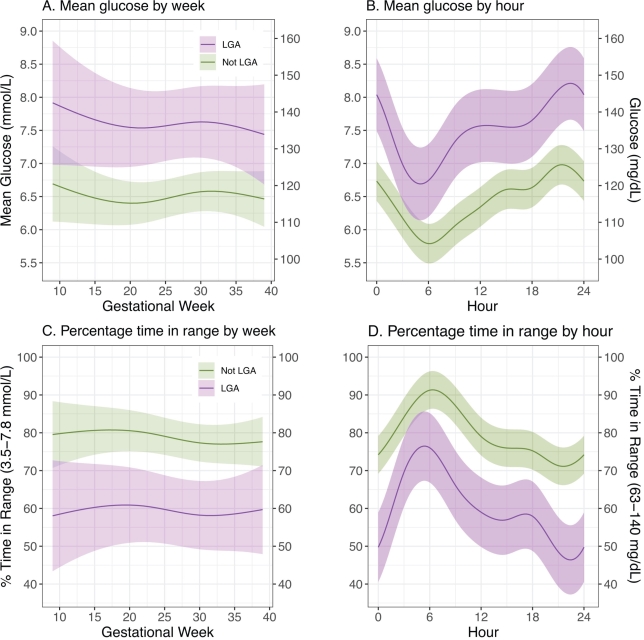
Source: Feig et al., "Continuous Glucose Monitoring Metrics in Women with Type 2 Diabetes in Pregnancy: The TIMELY Observational Cohort Study," DT&T (2026).
The authors said these findings suggest that glucose optimization should begin before, or as early as possible during, pregnancy, rather than waiting until later in gestation. This is not a new idea and we are very happy to see it gaining some traction. They also note that diabetes distress measured early in pregnancy was associated with persistently lower TIPR and higher mean glucose, highlighting psychosocial support as another potentially modifiable contributor to pregnancy outcomes.
Implications as CGM adoption expands in T2D pregnancy
While CGM has become standard in many pregnancies complicated by T1D, evidence has remained comparatively sparse for women with T2D despite this population experiencing particularly high rates of adverse neonatal outcomes. The TIMELY study may help move the field beyond simply demonstrating feasibility of CGM toward defining actionable glycemic targets that may inform future clinical guidelines.
Close Concerns’ Questions
- How should these findings influence preconception counseling and earlier CGM initiation in women with T2D planning pregnancy?
- Should pregnancy CGM guidelines establish separate evidence-based targets for women with T2D or do the existing T1D-derived targets remain appropriate?
- To what degree is TIPR being used and how might use of it expand?
--by Riya Chatterjee, Monica Oxenreiter, and Kelly Close