ADA 2025 Day #1 Highlights –
Executive Highlights
- The energy is high in Chicago, with ADA 2025 in full swing! We’re excited to be a part of the ADA 85th Scientific Sessions, joining thousands of passionate researchers, clinicians, advocates, and HCPs from around the world. With over 12,000 in-person attendees from 40 countries, it sure is lively. Following this morning’s celebration of leaders in the diabetes arena at our W!LD event, we enjoyed impactful presentations across new data results and analyses across diabetes tech and therapy. We can’t wait to see what’s in store in the coming days – check out our preview to see what we’re looking forward to learning!
- In the opening lecture, ADA Chief Quality Officer Dr. Osagie Ebekozien delivered a powerful address on the need to more effectively implement the ADA’s Standards of Care into everyday practice. What an exciting prospect! Recognizing that most people with T2D receive care in a primary care setting, Dr. Ebekozien outlined the ADA’s strategy to close gaps in outcomes. The organization’s approach to supporting primary care is grounded in four pillars: (i) promoting translational research; (ii) empowering communities to advocate for their needs; (iii) equipping PCPs with the knowledge and tools; and (iv) enabling people with diabetes to better engage with their PCP. To advance this agenda, the ADA is collaborating with seven other national professional organizations through the Diabetes Primary Care Council Leadership and engaging in PCP outreach through the ADA Diabetes Primary Care Alliance.
- In therapy, the day was filled with exciting results in T1D, obesity, and cardiometabolic health.
- In an oral session, Vertex announced updated results from the phase 1/2 portion of the phase 1/2/3 FORWARD trial of zimislecel (VX-880) in T1D. Results were simultaneously published in NEJM. Encouragingly, all 12 participants of the trial demonstrated engraftment with glucose-responsive endogenous C-peptide production. Additionally, they achieved A1c <7.0% and TIR >70%. Furthermore, they were free of severe hypoglycemic episodes from Day 90 onwards and 10 participants had stopped using exogenous insulin at one year.
- Focusing on obesity, Dr. Tim Heise (Profil, Germany) presented full phase 1b (n=54) results of Zealand’s GLP-1/GLP-2 RA dapiglutide in obesity. Topline results were previously announced in September 2024. In Part 1 of the phase 1b trial, the mean drop in body weight was 6.7%, 8.3%, and 7.1% for the doses of 7.5 mg, 10 mg, and 13 mg, respectively. The mean body weight gain in the placebo group was 2.1%. Following these results, Zealand continued investigating dapiglutide in Part 2 of the phase 1b trial, focusing on higher doses (up to 26 mg). Topline results are expected in 2Q25.
- In another oral session, Prof. Hiddo Heerspink (University of Groningen, Netherlands) presented results of the post-hoc analysis of the SURMOUNT-1 trial (n=2,539), exploring how Lilly’s GIP/GLP-1 dual RA tirzepatide influences kidney parameters in people with prediabetes, obesity, or overweight. People receiving tirzepatide experienced a significantly smaller decline in eGFR (1.6 mL/min/1.73m2 vs. 5.5 mL/min/1.73m2, p<0.001). Similarly, a pooled group on tirzepatide treatment experienced a non-significant but numerically greater decrease in UACR (16% vs. 4%, p=0.078). These results hint at tirzepatide’s potential kidney benefits in people with prediabetes and overweight or obesity.
- In tech, an abundance of real-world data on AID systems emerged, including Omnipod 5, iLet, and MiniMed 780G:
- iLet: Dr. Steven Russell (Beta Bionics) presented additional real-world outcomes of iLet during its first two years of commercial availability in the US. In the overall cohort, there was a 1.6% difference between mean baseline A1c (a quite high 8.9%) and mean follow-up GMI (7.3%). Time below Range (TBR) remained low at 1.5% (about 20 minutes), which was slightly below TBR in iLet’s pivotal trial (1.8%). Dr. Russell noted that the average baseline A1c of iLet users has increased since its launch, yet the mean GMI achieved after starting iLet has remained relatively consistent. Dr. Russell said these results indicate that iLet is increasingly being used by patients whose diabetes had been more challenging to manage on previous therapies without compromising glycemic outcomes. Although we heard some hallway chatter today that some doctors were frustrated not to be able to “change basal rates, etc.” the outcomes seemed very favorable. We’d love to see more TIR data to hear how the % of time over 250 mg/dL changed versus 180 – 249 mg/dL.
- MiniMed 780G: Dr. Jennifer McVean (Medtronic) presented real-world outcomes of MiniMed 780G on days without user-initiated boluses. The analysis included 54,553 users with ≥10 days of sensor use and evaluated days on which users did not log any boluses. Quite strikingly, the overall cohort still achieved consensus glycemic targets on days without boluses. Mean Time in Range (TIR) was 71%, and mean Time in Tight Range (TITR) was 44%. Mean TBR was very low at 0.9%, with only 0.2% Time <54 mg/dL. TIR and TITR were higher among recommended settings users (ROS users) at 76% and 50%, respectively, without an increase in TBR (0.8%).
- Omnipod 5: Dr. Sean Oser (University of Colorado Anschutz) presented real-world outcomes of adult Omnipod 5 users with T2D (n=23,664). Consistent with previous real-world Omnipod 5 datasets, users of the 110 mg/dL target achieved the highest TIR (68%) with minimal TBR of 0.3%. Alongside use of the lowest target range, a more aggressive insulin sensitivity factor (ISF) or insulin-carbohydrate ratio (ICR) were identified as predictors of TIR ≥70%. Dr. Oser said these findings informed a regression analysis to derive predictor cutpoints, recommending optimized settings of: (i) 110 mg/dL target; (ii) ISF x total daily insulin (TDI) ≤1,500; and (iii) ICR x TDI ≤350.
- We also attended a riveting standing-room only debate between Dr. Diana Isaacs (Cleveland Clinic) and Dr. David Ahn (Hoag) on the advantages and pitfalls of over-the-counter (OTC) CGM. Given CGM’s expansion into a broader population not widely familiar with data interpretation and device wear, Dr. Isaacs and Dr. Ahn reflected on the implications of the expanded data accessibility. Dr. Isaacs championed “data for all,” arguing that OTC accessibility can benefit many populations and facilitate follow-up testing for many at-risk people with prediabetes or undiagnosed T2D. In contrast, Dr. Ahn opposed broadening the use-cases for CGM without any boundaries, highlighting concerns in evidence, accuracy, and features, especially in the wellness and non-diabetes arenas.
Day #1 of the 85th ADA Scientific Sessions kicked off in Chicago! See below for our top highlights across diabetes therapy, technology, and big picture, and stay tuned for our latest updates over the next few days.
Table of Contents
-
Diabetes Therapy
- 1. If you just had to choose one for T2D: GLP-1 RA, GIP/GLP-1 RA, or SGLT-2 inhibitor?
- 2. Primary endpoint met by all 12 participants in Vertex’s zimislecel (VX-880) study; 10 participants insulin independent; CGM metrics show over 90% TIR for all
- 3. GLP-1/GLP-2 RA dapiglutide confers up to 8.3% weight loss in phase 1b trial
- 4. SURMOUNT-1 post-hoc analysis shows preserved eGFR in people with prediabetes and obesity on tirzepatide
- 5. Glucose-lowering treatments with a focus on primary prevention of CVD
- 6. ADA’s Obesity Association reviews the first two chapters of the Standards of Care for overweight and obesity management
- 7. PATHWEIGH: A novel care delivery process for sustainable weight management in primary care settings
- 8. Once-weekly dual GLP-1/GIP RA HRS9531 shows 2.7 percentage point A1c drop in A1c and 8.9% weight loss in people with T2D
- 9. Older Americans with T1D and CKD or dementia experience low rates of recurrent severe hypoglycemia but high mortality rates
- 10. Real-world evidence can complement randomized controlled trials to better understand pharmacotherapies
- 11. NEW Post hoc analysis of SURMOUNT-1 shows that tirzepatide sustains weight reduction in adults with obesity and prediabetes over 176 weeks
-
Diabetes Technology
- 12. MiniMed 780G users (n=54,553) still achieve consensus glycemic targets without user-initiated boluses
- 13. Data for all or a disaster waiting to happen? Dr. Diana Isaacs and Dr. David Ahn debate the need for over-the-counter CGM
- 14. Additional real-world iLet outcomes (n=16,394): Significant A1c to GMI reductions in both adult and pediatric population
- 15. Real-world outcomes of Omnipod 5 in T2D (n=23,664): Higher bolusing frequency associated with increased TIR
- 16. “Time to retire A1c”: Prof. Battelino makes the case for replacing the clinical use of A1c with TIR and TITR
- 17. Improving inpatient management with increased structure, support, and the integration of virtual care components
- 18. “Plan-Do-Study-Act”: Early AID uptake scales safely in pediatric T1D with structured support and education
- 19. Extended time and tech support: Remote initiation of CGM in older adults
- 20. *NEW* Real-world effectiveness of t:slim X2 with Control-IQ in children with T1D under six years of age
- Big Picture
Diabetes Therapy
1. If you just had to choose one for T2D: GLP-1 RA, GIP/GLP-1 RA, or SGLT-2 inhibitor?
This afternoon session featured a lively debate on the choice between GLP-1 RA, GIP/GLP-1 RA, or SGLT-2 inhibitors for the treatment of T2D. Dr. Karol Watson (UCLA) advocated for GLP-1 RAs, Dr. Jon Purnell (Oregon Health & Science University) for GIP/GLP-1 RAs, Dr. Alice Cheng (University of Toronto, Canada) for SGLT-2 inhibitors, and Prof. Avivit Cahn (Hadassah Hebrew University Hospital, Israel) for combination therapy. The debate was focused on people with T2D who do not need insulin, with metformin as an optional treatment.
- Dr. Watson argued for GLP-1 RAs. Based on current evidence, which could certainly change given the evolving landscape for T2D treatment, Dr. Watson highlighted the “plethora of evidence” of GLP-1 RAs demonstrating benefits across cardiometabolic diseases (i.e., T2D, CVD, CKD, MASH). Several CVOTs have shown the superiority of GLP-1 RAs, especially regarding stroke reduction. In fact, this benefit is one of the most crucial factors that distinguishes GLP-1 RAs from SGLT-2 inhibitors, especially as people with T2D have higher risk of stroke. For example, a 2004 study of a 20-year follow-up showed that the relative risk of stroke increased up to 6.5-fold in women and two-fold in men with T2D. Furthermore, GLP-1 RAs have demonstrated significant MACE reduction in both primary and secondary prevention, while SGLT-2 inhibitors have mainly shown MACE reduction in secondary prevention.
- On GIP/GLP-1 RA, Dr. Watson commented on the lack of results to date. Currently, the SURPASS-CVOT is comparing tirzepatide with dulaglutide in T2D and ASCVD, with time to first occurrence of three-point MACE as the primary outcome. Additionally, the SURMOUNT-MMO is focusing on tirzepatide in adults with obesity with or at high risk for ASCVD without diabetes, with the time to first occurrence of death, MI, stroke, coronary revascularization, and heart failure as the primary endpoint. As these trials are expected to complete in 2025 and 2027, respectively, Dr. Watson emphasized the preference for GLP-1 RAs over GIP/GLP-1 RAs in T2D.
- Dr. Purnell pushed for GIP/GLP-1 RAs. Dr. Purnell brought laughter to the audience with his statement that he’s not constrained by evidence because he’s an endocrinologist. On a more serious note, Dr. Purnell presented evidence on the importance of preventing both microvascular and macrovascular complications in T2D. People with T2D have twice the level of mortality compared to those without, and people with diabetes and MI have a four-fold increase in mortality. Alarmingly, people with T2D, MI, and stroke have an eight-fold increase in mortality. Looking at the 2025 ADA Standards of Care, Dr. Purnell explained that the field is no longer focused on just addressing glucose levels, considering aspects of diabetes that cause death independently. In particular, clinical trials have shown that a greater degree of weight loss is significantly associated with beneficial CV outcomes in both people with and without T2D. Therefore, Dr. Purnell questioned, “Why don’t we use the drug that shows the best weight loss?” While trials are ongoing for tirzepatide, Dr. Purnell expressed strong confidence in this conclusion.
- Dr. Cheng advocated for SGLT-2 inhibitors. “Of course, it’s SGLT-2 inhibitors,” said Dr. Cheng, as she spotlighted the efficacy in improving health outcomes. Shown across 13 prospective randomized studies, SGLT-2 inhibitors have demonstrated improvements in the holistic, person-centered approach of treatment. In the “circle of care,” SGLT-2 inhibitors have demonstrated cardiorenal protection, A1c reduction, weight loss, and CV risk reduction. Importantly, Dr. Cheng highlighted that SGLT-2 inhibitors are easy to take among patients based on tolerability and affordability. Dr. Cheng creatively called the SGLT-2 inhibitor class a “black dress,” as it’s easy to accessorize in combination with other treatments. Additionally, while SGLT-2 inhibitors may increase risks of adverse effects, she said they are avoidable, predictable, and treatable, helping patients accept this “foundational” treatment.
- Prof. Cahn encouraged combination therapy. Given GLP-1 RA, GIP/GLP-1 RA, and SGLT-2 inhibitors have different mechanisms, Prof. Cahn explained the potential for complementary effects. On side effects, combination trials have not shown increasing risks emerging with overlapping treatments, especially among people with T2D. While there is limited data on clinical trials and clinical endpoints with combination treatments, subgroup analyses have demonstrated the benefits of adding SGLT-2 inhibitors to GLP-1 RA treatment, and vice versa. Moreover, a recent 2025 observational study compared combination therapy with newer generation GLP-1 RAs and SGLT-2 inhibitors with SGLT-2 inhibitors alone in adults with T2D and ASCVD. The combination group demonstrated a lower risk of 46% in three-point MACE, 45% in five-point MACE, 42% in ischemic stroke, and 37% in MI. Overall, she encouraged consideration for either sequential or initial combination treatment, referring to the VERIFY trial to support the latter option.
- While combination treatment offers significant benefits, Prof. Cahn reminded important considerations like cost and population subgroups, including those with prediabetes. She noted the importance of more clinical trials and data on combination treatment, especially for newer agents in the evolving treatment landscape. In the meantime, increasing observational results have been providing important insights that support combination treatment for T2D.
- In a rebuttal session, both Dr. Watson and Dr. Purnell argued that SGLT-2 inhibitors lack evidence of strong weight loss effects. In response, Dr. Cheng acknowledged the importance of obesity but explained that not everyone with T2D requires the same degree of weight loss; in fact, the extent of weight loss seen with GLP-1 RA and GIP/GLP-1 RA could be of concern among some patients.
- Dr. Cheng ended with a quote from her father, “The only way to get results is to put the work in.” In the context of treatments, patients need to continually adhere to their treatment plan to see favorable outcomes. Reflected in a meta-analysis of eight observational studies, adherence to SGLT-2 inhibitors was higher than GLP-1 RAs. Specifically in the US, the use of SGLT-2 inhibitors was associated with a 23% lower risk of non-adherence compared with the use of GLP-1 RAs. In conclusion, Dr. Cheng shared another quote from her father, “The easy way is not always the best way. But if the best way is also easy, you’d be a fool not to take it.”
2. Primary endpoint met by all 12 participants in Vertex’s zimislecel (VX-880) study; 10 participants insulin independent; CGM metrics show over 90% TIR for all
Dr. Michael Rickels (University of Pennsylvania) presented one-year follow-up data for the FORWARD study investigating stem cell-derived islet therapy zimisclecel (formerly known as VX-880). Results were simultaneously announced by Vertex and published in NEJM. As background, zimislecel requires standard immunosuppression and is being developed for people with T1D with severe hypoglycemic events (≥two events within a year) and impaired hypoglycemic awareness. Vertex’s phase 1/2 study enrolled 14 participants, though two participants only received a half dose of zimislecel (Part A of the study), while the other 12 received the full dose, either with sequential or concurrent dosing (Parts B and C). Today’s presentation featured updated data from the 12 participants who received the full dose. As a reminder, interim data was presented at EASD 2024.
- There were no severe hypoglycemic events for all participants (between Day 90 to Day 365), and all participants achieved an A1c of <7.0% or a ≥1% reduction (between Day 180 and Day 365). Thus, all participants met the phase 1/2 primary endpoint.
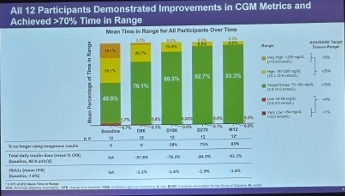
- ADA recommended glycemic targets (A1c <7.0% and Time in Range >70%) were achieved by all participants. This increased from 11 to now all 12 participants.
- 10 out of 12 participants were able to eliminate insulin use, up from nine participants as shared in the interim data. Insulin use was reduced in the two participants who did not reach insulin independence. One participant had a 70% reduction, and the other had a 36% reduction.
- All participants achieved >70% Time in Range. As shown below, Time in Range increased from 49.5% at baseline to >70% at Day 90 and continued to increase to 93.3% at one year – a 43.8 percentage point increase (+10.5 hrs/day).
- Safety. Most adverse events were mild or moderate in severity. Of the adverse events related to zimislecel, most were due to immunosuppressive therapy. The most common adverse events were diarrhea, headache, and nausea. There were no treatment-related serious adverse events attributed to zimislecel. Some participants exhibited transient elevations in liver transaminases (ALT and AST), decreased white blood cell counts, and decreased renal function, though these were associated with the infusion procedure and immunosuppression regimen, not zimislecel.
- Ongoing pivotal phase 1/2/3 study. Zimislecel continues to be evaluated in a pivotal phase 1/2/3 study (n=52). Dr. Rickels noted that phase 3 enrollment is ongoing and anticipated to complete by mid-2025.
3. GLP-1/GLP-2 RA dapiglutide confers up to 8.3% weight loss in phase 1b trial
In an oral session, Dr. Tim Heise (Profil, Germany) presented full phase 1b (n=54) results of Zealand’s GLP-1/GLP-2 RA dapiglutide in obesity. Topline results were previously announced in September 2024. In Part 1 of the phase 1b trial, the mean decrease in body weight was 6.7%, 8.3%, and 7.1% for the doses of 7.5 mg, 10 mg, and 13 mg, respectively. The mean body weight gain in the placebo group was 2.1%. The pharmacokinetics showed dose proportionality and a mean half-life of 112-119 hours across the three doses. Overall, Dr. Heise emphasized that the efficacy and half-life of dapiglutide support its potential for once-weekly dosing. As a first-in-class GLP-1/GLP-2 RA, dapiglutide aims to address low-grade inflammation and obesity-associated co-morbidities.
- Safety. Dapiglutide appeared safe with no related serious or severe adverse events. Most adverse events were mild, and the most frequent adverse events were related to GI, metabolism, and nutrition disorders (mainly decreased appetite). Most adverse events were mild. Two participants treated with dapiglutide discontinued treatment due to adverse events.
- Baseline characteristics and methods. Trial participants were 85% male, with a median age of 46 years, BMI kg/m2, and body weight of 95 kg (209 lbs). Participants were randomized (14:4) to three dose cohorts. Dose escalation occurred every second week to reach target doses of 7.5 mg, 10 mg, and 13 mg during the 13-week treatment period. The trial did not include lifestyle interventions.
Following these results, Zealand continues to investigate dapiglutide in Part 2 of the phase 1b trial, focusing on higher doses (up to 26 mg). As shared in 1Q25, the trial will investigate up to five doses of dapiglutide, with a monthly dose escalation schedule over 48 weeks. Topline results are expected in 2Q25.
4. SURMOUNT-1 post-hoc analysis shows preserved eGFR in people with prediabetes and obesity on tirzepatide
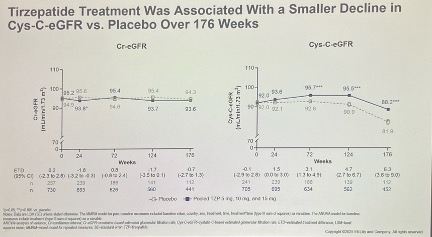
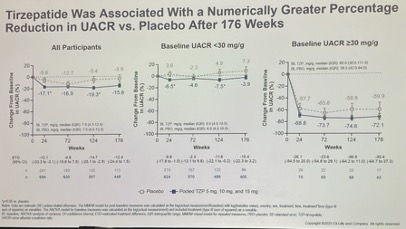
In a poster session, Prof. Hiddo Heerspink (University of Groningen, Netherlands) presented results of the post-hoc analysis of the SURMOUNT-1 trial (n=2,539), exploring how GIP/GLP-1 dual RA tirzepatide influences kidney parameters in people with prediabetes, obesity, or overweight. As background, the SURMOUNT-1 trial evaluated tirzepatide in people with obesity or overweight with weight-related comorbidities. Results from the 72-week study showed up to 22% weight loss (24 kg or 52 lbs) with tirzepatide 15 mg from a baseline body weight of 105 kg (231 lbs). In the three-year extension study (n=1,032) among people with prediabetes, tirzepatide conferred up to 23% weight loss compared to 2% in placebo, and conferred a 94% relative risk reduction in T2D progression (1.2% vs 13% taking placebo). This post-hoc analysis of the extension trial assessed change in kidney parameters from baseline between those taking tirzepatide (5 mg, 10 mg, or 15 mg) vs. placebo.
- Baseline characteristics. As announced at WCIRDC 2024, participants in the trial were on average 48 years old, with 64% being female, 73% White, 10% Asian, 8% Black, and 7% Native American. By ethnicity, 47% of participants were Hispanic or Latino. The mean baseline weight was 107 kg (236 lbs), BMI was 39 kg/m2, and A1c was 5.8%. Most relevant to this analysis were baseline eGFR and UACR levels, which were 97 mL/min/1.73 m2 and 7 mg/g, respectively. These levels reflect normal kidney function, defined as eGFR between 90-120 ml/min/1.73 m2 and UACR <30 mg/g.
- Results. People receiving tirzepatide experienced a significantly smaller decline in eGFR (1.6 mL/min/1.73 m2 vs. 5.5 mL/min/1.73 m2, p<0.001). Similarly, a pooled group on tirzepatide treatment experienced a non-significant but numerically greater decrease in UACR (16% vs. 4%, p=0.078). These results hint at tirzepatide’s potential kidney benefits in people with prediabetes and overweight or obesity. We imagine these findings might be more pronounced in people with chronic kidney disease (CKD) at baseline; the ongoing phase 2 trial (n=140) is currently focusing on this subgroup of people with T2D and CKD.
5. Glucose-lowering treatments with a focus on primary prevention of CVD
Focusing on primary prevention, Dr. Cecilia Low Wang (University of Colorado) spotlighted glucose-lowering drugs and the importance of these treatments. Dr. Low Wang explained that the population for primary prevention has a lower risk and risk event rate, requiring larger sample sizes and longer study periods to gather enough CV events that help determine the significance of treatment intervention. Among glucose-lowering agents that have received FDA approval for CV risk reduction, only SGLT-2 inhibitor dapagliflozin and GLP-1 RA dulaglutide have received an indication for primary prevention of CVD. The CVOT for dulaglutide has demonstrated MACE reduction, and dapagliflozin has shown a reduction in hospitalization for heart failure and CV death.
- In meta-analyses of SGLT-2 inhibitors, the drug class has shown risk reduction for hospitalization for heart failure and adverse kidney outcomes in T2D, regardless of CVD. Dr. Low Wang referred to a 2019 study, in which the use of SGLT-2 inhibitors reduced MACE by 11% and hospitalization for heart failure by 31%. SGLT-2 inhibitors also reduced the risk of progression of kidney disease, including macroalbuminuria. The use of SGLT-2 inhibitors also reduced the risk of worsening eGFR, end-stage kidney disease, or renal death. However, despite these results, SGLT-2 inhibitors did not reduce the risk of MACE in those at high risk.
- On metformin, Dr. Low Wang highlighted a 2024 retrospective cohort study that studied whether SGLT-2 inhibitor is superior to metformin as a primary prevention treatment among people with diabetes at low risk. Compared to people on metformin, those on SGLT-2 inhibitors had similar all-cause mortality (HR: 0.75), cardiovascular death (HR: 0.69), hospitalization for heart failure (HR: 1.06), stroke (HR: 0.78), and progression to end-stage renal disease (HR: 0.88). However, results showed that the use of SGLT-2 inhibitors was associated with a lower risk of all-cause mortality (HR: 0.47) and progression to end-stage renal disease (HR: 0.22) in those under 65 years.
- In meta-analyses of GLP-1 RAs, the same 2019 study showed that the use of GLP-1 RAs reduces the risk of MACE by 12% and decreases the risk of progression of kidney disease. While GLP-1 RAs have demonstrated a clear benefit in established ASCVD, however, the drug class has not shown benefits in primary prevention. Encouragingly, a new meta-analysis published last month included five other trials that were not previously included in the former study (REWIND, FLOW, PIONEER 6, SOUL, and AMPLITUDE-O). This new study demonstrated that GLP-1 RAs reduce MACE by 14%, hospitalization for heart failure by 14%, composite kidney outcome by 17%, and all-cause mortality by 12%. The benefits of GLP-1 RAs were seen regardless of the presence of CVD in the trial population.
6. ADA’s Obesity Association reviews the first two chapters of the Standards of Care for overweight and obesity management
In a standing room-only symposium, Drs. Kimberly Gudzune (Johns Hopkins University) and Louis Aronne (Weill Cornell University) reviewed the new and evolving Standards of Care (SoC) for the management of overweight and obesity. ADA’s Obesity Association published the first two chapters in May 2025: (i) Introduction and Need for Comprehensive Care; and (ii) Weight Stigma and Bias. The Association is currently drafting the third chapter on pharmacotherapy, which will be available soon. Interim CSMO of ADA and co-chair of the symposium Dr. Nuha El Sayed said that the SoC is co-created by the Professional Practice Committee (PPC), an interdisciplinary team of adult and pediatric endocrinologists, obesity care providers, and experts in public health, behavioral health, and epidemiology, among others. The PPC also closely collaborates with obesity organizations and performs an extensive literature review. Given that obesity affects 40% of adults and 20% of children in the US, we appreciate this major step to address a serious public health epidemic.
- Introduction and need for comprehensive care. Dr. Gudzune shared that the understanding of obesity as a metabolic disease is a rather recent development. In 1999, the World Health Organization (WHO) acknowledged obesity as a complex, multifactorial disease requiring long-term management strategies. In 2013, the American Medical Association (AMA) recognized obesity for the first time as a disease state with multiple physiological aspects.
- Despite these changes in paradigm, however, many barriers to care from providers and patients exist. Many providers had lingering doubts about AMA’s statement and worried that patients might lose accountability for their lifestyle. Another survey from 2015 revealed that the majority of US physicians still believed that obesity is due to a lack of self-control (~50%). Many clinicians were also afraid of offending patients (~60%), lacked training to discuss obesity (~60%), and had low morale that interventions would successfully reduce weight (~85%). On the patient side, an NHANES study (n=4,585) in 2018 found that despite high rates of self-awareness of overweight (93%) and desire to lose weight (91%), only 61% tried to lose weight, 10% sought for professional help, and less than 4% sought medical help. Dr. Gudzune thus noted the high number of missed opportunities in obesity management. These barriers directly translate to low uptake of weight management in clinical practice. In 2019, only 3% of eligible primary care patients were referred to nutrition services, 3% were given medications, 4% GLP-1 RAs, and 0.3% bariatric surgeries.
- Given these challenges, the Standards aim to offer a “unified guidance and propose realistic solutions,” from prevention, screening, and diagnosis to treatment goals and quality care options. The SoC takes a complication-centric and tailored approach to reduce risks and disease burdens, rather than solely focusing on the weight.
- Dr. Gudzune continued to speak about weight stigma and bias, and the guidelines on education, clinical environment, and communication.
- Education and training: Dr. Gudzune opened with insights into bias in healthcare, particularly emphasizing how explicit, implicit, and institutional biases can negatively impact patient care. She framed weight bias as a public health crisis, citing evidence that stigmatization contributes to a range of adverse outcomes, including psychological distress, disordered eating, and physiological reactivity. Citing a national survey across medical specialties, she noted that clinicians themselves admit to explicit bias against individuals with obesity. With these findings, Dr. Gudzune called the packed room to action. ADA’s updated Standards now include that all clinical team members (including all non-clinical staff) should receive comprehensive training on weight bias and stigma. She then offered a suite of resources already available on the ADA website to support these efforts.
- Clinical environment and practice: Next, Dr. Gudzune pivoted to a set of physical and procedural standards that clinical environments must meet to ensure accessibility and inclusivity for all patients. Projecting an ADA-adherent “shopping list” on the screen behind her, she emphasized that clinics should aim to exceed the minimum of appropriately sized and supportive equipment. Instead, they should strive to embed inclusivity and mindfulness of patient preferences into every aspect of the care setting. On that note, Dr. Gudzune emphasized the importance of locating scales in private areas as essential to respectful, patient-centered care that extends beyond the provider to involve the whole clinic staff.
- Communication and collaboration: Dr. Gudzune began the final subsection of the chapter on weight stigma and bias with a powerful idea: obesity management is a long-term collaboration between patient and provider, grounded in honesty and mutual respect. She underscored the power of non-judgmental, inclusive language in building such a rapport, particularly in an era of open notes and shared health records. Dr. Gudzune continued that patients routinely see the language and codes used to describe their care. Therefore, providers should avoid stigmatizing terminology and select ICD-10 codes with care. Additionally, she noted that providers should ask permission before discussing weight. A simple, yet powerful invitation that fosters trust and centers the patient as a partner in care, rather than a bystander. It would be exciting to see this change!
- Pharmacotherapy. In anticipation of the chapter “coming soon,” Dr. Aronne highlighted the rapidly evolving trends in obesity management. He did not share specific recommendations on medications as these have not been published yet. He began by saying that targeting obesity has significant metabolic and cardiovascular (CV) benefits. Weight reduction up to 5% improves blood pressure and glucose; 5-10% prevents T2D, MASLD, and dyslipidemia; 10-15% reduces CV outcomes, MASH, and obstructive sleep apnea (OSA); and >15% has the potential to confer T2D remission and reduction in CV mortality. Despite these important health benefits, however, obesity remains under treated compared to T2D. In 2016, 86% of adults with T2D but only 2% of those with obesity received pharmacotherapy. Furthermore, although both obesity diagnoses and GLP-1 RA prescriptions increased 20-fold and seven-fold, respectively, from 2019 to 2024, the absolute number in 2024 remains low at 0.67% and 2%, due to barriers like stigma, lack of awareness, cost, and insurance coverage. Dr. Aronne was hopeful that the upcoming SoC could mitigate these challenges. More specifically, the new chapter aims to offer clear guidelines on treatment goals, therapy options, and frequency of monitoring. It will also discuss lifestyle interventions and strategies to lead nonjudgmental, shared decision-making conversations with patients. Finally, by adding guidelines like any dose of obesity drug can be used as a maintenance dose, as opposed to the maximum approved dosage, or strategies on managing prior authorizations, Dr. Aronne hopes that SoC will push for better insurance coverage.
7. PATHWEIGH: A novel care delivery process for sustainable weight management in primary care settings
In an afternoon symposium, University of Colorado’s Dr. Mark Gritz, Dr. Jodi Holtrop, Dr. Leigh Perreault, Peter Smith, and Northwestern’s Dr. Robert Kushner discussed PATHWEIGH, a new care delivery process aimed at facilitating weight management in primary care settings. Setting the stage, Dr. Smith highlighted that there are 100 million people with overweight or obesity in the US, but only 9,100 endocrinologists and 9,800 ABOM (American Board of Obesity Medicine) diplomates. Meanwhile, there are 280,000 primary care physicians (PCPs), underscoring the potential for PCP involvement in treating obesity. The challenge is that while there are many potential obesity interventions, they often are not implemented in a timely manner due to the time, resource, and self-efficacy constraints PCPs face. Dr. Smith aptly illustrated this with the analogy below, likening obesity interventions to cars attempting to merge onto a packed highway.
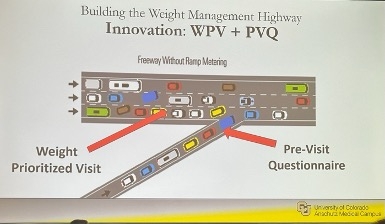
- PATHWEIGH intervention components. Two strategies PATHWEIGH uses to address the barriers noted above are: (i) a “weight prioritized visit” in which weight-related care (e.g., counseling on lifestyle medication, referral to specialty care, involvement of anti-obesity medication) is the primary focus of the visit; and (ii) a pre-visit questionnaire. PATHWEIGH also provides educational, consultative, and decision support tools, including those integrated into the EHR, to simplify, streamline, and innovate care.
- Efficacy of PATHWEIGH. PATHWEIGH was implemented across 56 primary clinics across the University of Colorado Health System. Dr. Gritz highlighted that the trial was designed pragmatically with the intention of building real-world evidence to create real-world impact. The primary outcome was weight loss at 18 months with the PATHWEIGH intervention compared to usual care. Across over 274,000 adults with a BMI ≥25 kg/m2, the PATHWEIGH intervention demonstrated a -0.10 kg weight loss while placebo showed a 0.47 kg weight gain for a statistically significant treatment difference of -0.58 kg. Dr. Perreault claimed that this is the first study to scale an intervention to such a magnitude and show prevention of population weight gain. PATHWEIGH intervention participants were also 23% more likely to receive weight-related care. This is an important metric to measure considering that research shows that only 25% of patients with a BMI ≥25 kg/m2 have received such care in the past four years.
- Low cost and extra revenue generated. There were negligible costs associated with a limited number of interviews that were conducted and clinic visits that were recorded. Weight-related codes were used over twice as frequently during the PATHWEIGH intervention compared to usual care (124,621 vs. 56,105), and this contributed to an extra >$15 million in revenue generated over four years.
- Future directions. Dr. Kushner shared potential areas for further inquiry, such as assessing additional clinical outcomes (e.g., weight-related complications), investigating the mediators of the observed weight change, and developing strategies to increase clinician and patient engagement – indeed, Dr. Holtrop pointed out that while there were routine users of the PATHWEIGH intervention, there were also partial users and non-users. Between these two groups, commonly perceived barriers to uptake included high practice turnover rates, burnout, and staffing shortages/changes.
8. Once-weekly dual GLP-1/GIP RA HRS9531 shows 2.7 percentage point A1c drop in A1c and 8.9% weight loss in people with T2D
Dr. Meifan Zeng (Jiansu Hengrui Pharmaceuticals) presented results for the phase 2 study investigating the efficacy of HRS9531 (KAI-9531) in Chinese people with T2D. As background, HRS9531 is a once-weekly injectable dual GLP-1/GIP RA in development by Boston-based Kailera Therapeutics and China-based Jiangsu Hengrui Pharmaceuticals. In people without T2D, phase 2 results have shown that 8 mg HRS9531 confers a mean weight loss of 21% at 36 weeks, compared to <2% in placebo.
In this phase 2 trial (n=199) for people with T2D, participants were randomized to receive HRS9531 (1 mg, 2 mg, 3 mg, or 4.5 mg) or placebo for 20 weeks. This was followed by a 12-week extension trial in which placebo participants were given 1 mg HRS9531, also once-weekly.
- Baseline characteristics. Mean age was 47 years old, most participants were male (67.3%), mean A1c was 8.5%, and mean weight and BMI were 79.5 kg (175 lbs) and 28.5 kg/m2, respectively.
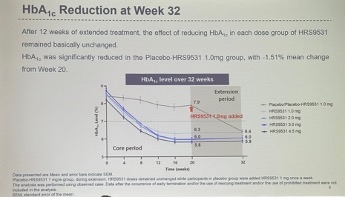
- 24-week results. In the HRS9531 groups, change in A1c from baseline ranged from -2.2 to -2.7 percentage points (from a baseline range of 7.5-10.5%), compared to -0.3 percentage point in placebo. HRS9531 also showed dose-dependent weight loss ranging from -4.0% to -8.9%.
- 12-week extension treatment results. During the 12-week extension treatment, the placebo group, which was placed on 1 mg HRS9531, saw an A1c decrease of 1.5 percentage points. Overall, after the 24-week study and 12-week extension, >90% of participants in the 4.5 mg HRS9531 group achieved an A1c <7.0%, and 74% additionally saw ≥5% weight loss. The HRS9531 groups saw improvements in blood pressure (up to -9.5 mmHg and -4.9 mmHg reductions in systolic and diastolic blood pressure, respectively), triglyceride levels (up to -26%), liver function (up to 31.8% reduction in ALT and 24% in AST), and kidney function (up to -62% reduction in UACR).
- Safety. Most adverse events were mild or moderate and GI-related, and no clinically significant hypoglycemia or severe hypoglycemia was observed.
9. Older Americans with T1D and CKD or dementia experience low rates of recurrent severe hypoglycemia but high mortality rates
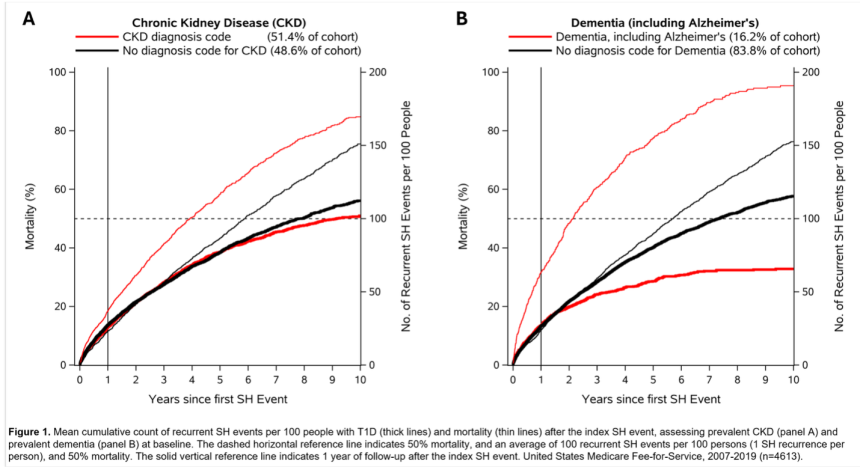
Dr. Anna Kahkoska (University of North Carolina at Chapel Hill) presented findings from a retrospective cohort study (n=4,613) on recurrent severe hypoglycemia (SH) events in older Americans with T1D. Prior work has seldom assessed recurrence and mortality in this population. Thus, the present study seeks to fill a gap in understanding long-term outcomes after SH events in adults with T1D — a group at a well-established, elevated risk due to age-related vulnerabilities and multimorbidity. The bottom line is that both CKD and dementia actually confer lower rates of SH, but (as expected) higher mortality.
- Study design and baseline characteristics. Investigators analyzed a random 20% sample from 2007-2019 of nationwide fee-for-service US Medicare beneficiaries. Participants, with an average age of 75 years (38% male, 77% non-Hispanic White, 14% Black, 6% Hispanic), all had a prior SH event requiring emergency department visit or hospitalization.
- Results. Investigators found 3,527 recurrent SH events over a mean follow-up 3.6 years (incidence rate = 21.4 per 100 person-years). Nearly 20% of participants experienced one SH recurrence, 8% experienced two, and 8% experienced three or more. The reported one-year mortality rate was 15%. Participants with T1D and CKD or dementia had lower rates of recurrent SH events, but higher rates of mortality, compared to those without CKD or dementia. Overall, older participants with T1D experienced high rates of recurrent SH events and mortality in the years after their first SH event, reinforcing the age-old adage, “hypoglycemia begets hypoglycemia” ...
10. Real-world evidence can complement randomized controlled trials to better understand pharmacotherapies
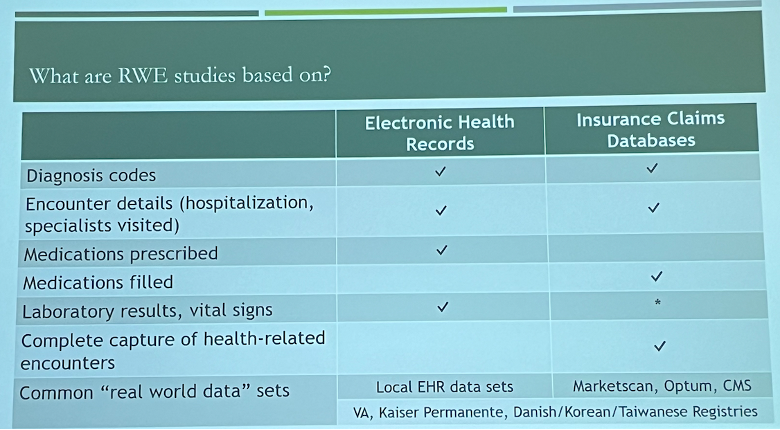
Dr. Sara Jane Cromer (Harvard University) reviewed the roles of randomized clinical trials (RCTs) and real-world evidence (RWE) – such as cohort, case-control, and cross-sectional studies – in advancing the field’s understanding of pharmacotherapies. RCTs are the gold standard method for researching drug efficacy, as: (i) randomization reduces confounders; (ii) intention-to-treat analysis avoids selection bias; and (iii) close monitoring reduces information bias such as disease misclassification. However, Dr. Cromer noted that RCTs are costly, time-consuming, at times unethical, and may be less applicable to real-life situations. For example, trials often involve a healthier, younger, and more affluent population, and have stricter monitoring regimens and treatment adherence. On the other hand, RWE, based on electronic health records or insurance claims data (see figure below for details), can complement RCT results.
- RWE are faster and cheaper, can compare active treatments (unlike placebos often used in trials), assess combination therapies, and can include underrepresented populations. The timeliness of RWE, in fact, has offered insights, like SGLT-2 inhibitors increasing the risk of euglycemic diabetic ketoacidosis (eDKA), two years before results from RCTs, when a meta-analysis of 10 studies revealed statistical significance. RWE can also help clinicians understand the evolving clinical practices, identify health disparities, and contribute to RCT design.
- However, Dr. Cromer said that RWE cannot always be trusted. For example, some studies have found an over 10-fold increase in pancreatitis risk with GLP-1 RA use, while others showed a 70% decrease in the risk. A meta-analysis of RCTs, however, did not find a statistically significant change in pancreatitis risks. The unreliability may be due to biases from investigators or data, such as: (i) immortal person-time bias; (ii) inappropriate adjustment for causal intermediaries; (iii) selection bias of participants; (iv) detection bias; (v) misclassification bias; and (vi) confounding. In fact, one study found that the vast majority of RWE had at least one major, avoidable methodological issue. To mitigate these sources of bias, Dr. Cromer encouraged conducting target trial emulation, which mimics the strengths of RCTs. New user designs, including participants who newly start treatments, can also help, as they clearly identify “time zero” and reduce the risk of immortal time bias. Finally, she advocated for RWEs using active comparators to decrease the likelihood of confounding by indication, immortal time bias, and surveillance bias.
11. NEW Post hoc analysis of SURMOUNT-1 shows that tirzepatide sustains weight reduction in adults with obesity and prediabetes over 176 weeks
In a session focused on incretin-based treatments for obesity, Dr. Jamy Ard (Wake Forest School of Medicine) presented post hoc analysis results of the SURMOUNT-1 trial (n=1,032) of Lilly’s GIP/GLP-1 RA tirzepatide. Full results of the SURMOUNT-1 trial were previously announced at ObesityWeek® 2024 and published in NEJM in November 2024. At Week 176, tirzepatide conferred up to 23% weight loss compared to 2% in placebo from baseline of 107 kg (236 lbs), similar to the weight loss observed at Week 72 (results presented at ADA 2022 and published in NEJM in June 2022). The trial also demonstrated that tirzepatide reduced the risk of T2D progression by 94% – nine participants (1.2%) on tirzepatide progressed to T2D, compared to 34 participants (13%) on placebo. The current post hoc analysis showed that in participants with obesity or overweight and prediabetes, tirzepatide was associated with a longer continuous time spent with weight reduction ≥5%, ≥10%, ≥15%, and ≥20% vs. placebo over 176 weeks. Building on these results, the ongoing SURMOUNT-MMO trial (n=15,374) is studying the long-term cardiovascular impact of weight reduction with tirzepatide.
- Results. Not surprisingly, more people on tirzepatide lost weight at defined thresholds. 99% of participants on tirzepatide (68% on placebo) achieved ≥5% weight loss at any time during the 176-week SURMOUNT-1 trial; 92-98% (vs. 40%) achieved ≥10%; 70-93% (vs. 22%) achieved ≥15%; and 48-80% (vs. 7%) achieved ≥20%. Body weight reduction was sustained for a longer period in participants treated with tirzepatide than those with placebo. Those on tirzepatide sustained weight loss ≥5% for 167-168 weeks (vs. 164 weeks). Similarly, tirzepatide sustained weight loss of ≥10%, ≥15%, and ≥20% for over 160 weeks (vs. 128 weeks), 141 weeks (vs. 65 weeks), and 129 weeks (vs. 65 weeks), respectively.
- While not mentioned during ADA 2025, we are also excited to report a Diabetes, Obesity and Metabolism article published just this month by the same lead investigator. Dr. Jamy Ard, Dr. Clare Lee (Lilly), and Dr. Kimberly Gudzune (Johns Hopkins) et al. investigated the heterogeneity of SURMOUNT-1 participants’ response to tirzepatide. They defined slow responders as those who achieved <5% weight loss at 12 weeks, while early responders were defined as people who achieved ≥5% weight loss at 12 weeks. As we have reported at AACE 2024, men, elderlies, and participants with high BMI at baseline were more likely to be slow responders. There was no significant difference between the two groups in terms of percentage of people with prediabetes and duration of obesity. Nonetheless, the article notes that late responders achieved mean weight loss of 11% from baseline, compared to 19% of early responders and 27% of very early responders (who had lost ≥10% weight loss at 12 weeks). Being on a higher dose of tirzepatide was associated with greater weight reduction, even for late responders. Investigators noted that side effects, causes and severity of obesity, and social determinants of health may contribute the heterogeneity of treatment response.
Diabetes Technology
12. MiniMed 780G users (n=54,553) still achieve consensus glycemic targets without user-initiated boluses
Dr. Jennifer McVean (Medtronic) presented real-world outcomes of MiniMed 780G on days without user-initiated boluses. The analysis included 54,553 users with ≥10 days of sensor use and evaluated days on which users did not log any boluses. Most of the cohort were >15 years old (n=40,432). The cohort was also predominantly individuals with T1D (n=42,649) compared to T2D (n=6,596).
CGM metrics between users with the recommended settings (i.e., 100 mg/dL target and two hours active insulin time ≥95% of the time) and non-recommended settings were compared. As a reminder, Medtronic has presented several real-world datasets of MiniMed 780G, which have consistently demonstrated that use of the recommended settings drives superior glycemic outcomes. Non-users of the recommended optimal settings averaged 58 days without boluses, while recommended settings users averaged 56 days.
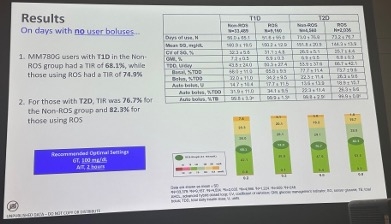
- In the overall cohort on days without boluses, mean Time in Range (TIR) was 71%, and mean Time in Tight Range (TITR) was 44%. Mean Time below Range (TBR) was very low at 0.9%, with only 0.2% Time <54 mg/dL. TIR and TITR were higher among recommended settings users (ROS users) at 76% and 50%, respectively, without an increase in TBR (0.8%). Among non-recommended settings users (non-ROS users; n=41,830), 37% of individuals achieved the triple composite endpoint of: (i) GMI <7.0%; (ii) TIR >70%; and (iii) TBR <4.0%. In comparison, 62% of ROS users (n=12,723) achieved this triple composite endpoint.
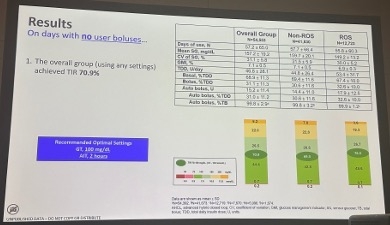
- When analyzed by diabetes type, people with T2D averaged higher TIR than people with T1D on days without boluses. Regardless of type, use of the recommended settings was associated with higher TIR and TITR.
- T1D: Among non-ROS users with T1D, TIR was 68% compared to 75% among ROS users. Moreover, TITR was 42% among non-ROS users compared to 49% with recommended setting use. One-third of non-ROS users achieved the triple composite GMI, TIR, and TBR endpoint compared to 58% of ROS users.
- T2D: Among those with T2D not using recommended settings, TIR was 77% with TITR of 48%; however, among recommended settings users, TIR was 82% with TITR of 54%. 57% of non-ROS users achieved the triple composite endpoint compared to 77% of ROS users.
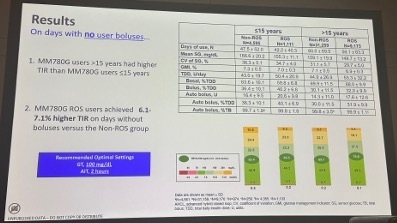
- When analyzed by age, individuals >15 years old tended to have higher TIR than individuals ≤15 years old. Similar to other subgroups, recommended setting use was associated with increased TIR and TITR.
- ≤15 years old: Non-ROS users averaged 63% TIR and 41% TITR compared to 70% TIR and 46% TITR among ROS users. For the triple composite glycemic endpoint, only 20% of non-ROS users achieved it compared to 40% of ROS users.
- >15 years old: Non-ROS users achieved 70% TIR and 43% TITR compared to 77% TIR and 50% TITR among ROS users. 38% of non-ROS users achieved the triple composite endpoint compared to 63% of ROS users.
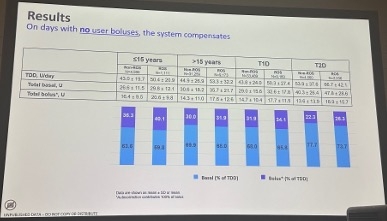
- Dr. McVean highlighted that these results are driven by system compensation through autocorrections. Across the age groups, roughly 30-40% of daily insulin was bolus insulin (i.e., autocorrections). Among individuals with T1D, roughly 32-34% of daily insulin was derived from autocorrections, while 22-26% of daily insulin originated from bolus insulin among individuals with T2D.
- Other studies of AID have shown significant glycemic improvements even without bolusing. At ADA 2024, Tandem presented data from a cohort of ~29,000 Tandem Control-IQ users who did not administer a single pre-meal bolus for a period of ≥seven days. These individuals still achieved a median TIR of 62% while using Control-IQ as a “fully closed loop” (FCL) AID system – slightly higher than the median 57-60% TIR when boluses were administered in hybrid closed loop mode (HCL). Given this context, Medtronic’s results are especially impressive since they suggest the HCL MiniMed 780G system can still support daily achievement of consensus glycemic targets even without bolusing in the real world.
13. Data for all or a disaster waiting to happen? Dr. Diana Isaacs and Dr. David Ahn debate the need for over-the-counter CGM
In a standing-room only presentation to open the conference, Dr. Diana Isaacs (Cleveland Clinic) and Dr. David Ahn (Hoag) engaged in a lively debate about the advantages and pitfalls of over-the-counter (OTC) CGM. As a reminder, two OTC CGMs launched in the US last year for adults not on insulin therapy: Abbott’s Lingo (September 2024) and Dexcom’s Stelo (August 2024). Through these launches, CGM’s accessibility has significantly expanded in the US, now available to people with prediabetes and people without diabetes.
Given CGM’s expansion into a broader population not widely familiar with data interpretation and device wear, Dr. Isaacs and Dr. Ahn reflected on the implications of the expanded data accessibility. Dr. Isaacs championed “data for all,” arguing that OTC accessibility can benefit many populations and facilitate follow-up testing for many at-risk people with prediabetes or undiagnosed T2D. In contrast, Dr. Ahn opposed broadening the use-cases for CGM without any boundaries, highlighting concerns in evidence, accuracy, and features, especially in the wellness and non-diabetes arenas.
- Dr. Isaacs emphasized that many people lack insurance coverage for prescription CGMs that require a recent provider visit to obtain. She argued that OTC CGMs improve accessibility, especially in emergencies where people on insulin therapy run out of CGMs, bypassing traditional barriers to access. Additionally, citing the 2025 ADA Standards of Care, she noted that CGM use should be considered even for adults with T2D not using insulin. Since CGM adoption in primary care has been somewhat slow, she said the ease of OTC availability could drive greater adoption, ensuring more people with T2D not on insulin therapy receive care that aligns with clinical guidelines.
- Dr. Isaacs said this expanded availability could enable improved screening for prediabetes or undiagnosed T2D and facilitate appropriate follow-up testing. Since 98 million Americans have prediabetes per the CDC, she suggested that the public health benefits could be tremendous due to the possibility for early intervention, citing UKPDS data demonstrating that early intensive therapy was associated with a 25% reduced risk of microvascular disease.
- Beyond prediabetes, Dr. Isaacs highlighted several additional populations who could benefit from OTC CGMs:
- Obesity: Dr. Isaacs cited an analysis comparing people with and without obesity, which demonstrated lower Time in Tight Range among people with obesity compared to people without obesity. Similar results were also seen between people with and without prediabetes.
- Gestational diabetes (GDM): Dr. Isaacs cited the recently published DipGluMO study, which found no differences in perinatal outcomes between pregnant women with GDM randomized to CGM or BGM. Since participants expressed a higher preference for CGM, she said CGM may be worthwhile to reduce burden. Moreover, OTC availability mitigates insurance difficulties some may encounter in obtaining CGM.
- People without diabetes: Dr. Isaacs suggested OTC could be beneficial for individuals seeking to better understand how lifestyle choices affect glucose. She suggested there could be potential use cases for stress regulation, nutrition, and physical activity (including athletes).
- In response, Dr. Ahn questioned the equity of expanding CGM use to wellness consumers while many people with diabetes still lack access. He cautioned that increased demand for CGM could strain manufacturing supply and potentially reduce availability for insulin users who rely on accurate, real-time glucose data. He speculated his argument could hold weight given several recent issues for Abbott’s and Dexcom’s CGMs, including shortages and recalls, as well as Dexcom receiving an FDA warning letter for manufacturing issues.
- Early-stage T1D: Dr. Isaacs also positioned OTC CGM as a potentially valuable tool to assist monitoring for people with early-stage T1D, potentially helping prevent diagnosis in DKA. She cited evidence associating 10% or more Time >140 mg/dL with an 80% risk of progression to clinical T1D within 12 months and a 40% risk of progressing within two years with 5% Time >140 mg/dL. Thus, since these individuals are not on insulin yet or have problematic hypoglycemia, insurance coverage would be difficult; thus, OTC CGM could fill this gap.
- Dr. Ahn expressed significant concern regarding data interpretation with these devices. He cited a study that surveyed expert diabetes clinicians on whether metrics in CGM AGP reports from people without diabetes would necessitate follow-up, demonstrating significant disagreement in clinical recommendations between respondents. Among 10 people without diabetes, only one report had unanimous agreement. Given variability in clinicians’ interpretations, Dr. Ahn was also concerned about users’ ability to interpret the data, arguing that misinterpretation could lead to significant confusion and exacerbate anxiety among users. Particularly in the context of determining food choices based on CGM data, he suggested that constant data accessibility could cause individuals to overreact to glucose levels, potentially predisposing some to risk for disordered eating behavior.
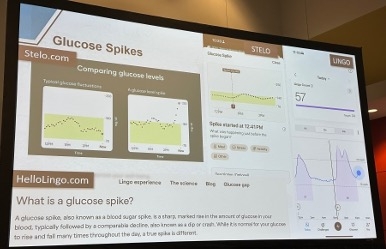
- In particular, Dr. Ahn questioned Lingo’s and Stelo’s “vague” definitions of glucose spikes. As a reminder, Lingo provides users with a “Lingo Count,” which quantifies the intensity and duration of detected glucose spikes (where a lower number indicates stronger glycemic health), while Stelo automatically detects glucose spikes and prompts users to reflect on the potential causes for the perceived spike. He compared data from his anecdotal use of Stelo to the definition of a glucose spike on Stelo.com, revealing that his sensor detected a glucose spike, which he argued appeared to more closely mirror a normal glucose fluctuation per Stelo.com (see below). He also suggested that the “vilification” of spikes could be concerning or confusing for patients, noting that if eliminating all spikes is the ultimate goal, then patients would be better off not eating or eating an extremely low carb diet, which is clearly not ideal either. That was particularly valuable and astute, we felt.
-
- Dr. Isaacs downplayed Dr. Ahn’s concerns that CGM data could be overwhelming for new user populations, stating that users should be able to decide whether they want to access this data, noting that blood pressure readers and BGMs have long been OTC. She also argued that many CGMs offer embedded education through apps and that, in many cases, users learn independently. Instead of restricting access, she advocated for expanding screening and educational initiatives, noting the significant public health potential.
- Dr. Ahn questioned the reliability of CGM accuracy in users without diabetes, emphasizing a consistent pattern of overestimation compared to BGM. He presented data showing that CGMs revealed inconsistent post-prandial responses in people without diabetes, even within the same individual eating the same meal on separate occasions. He argued that this discrepancy would make it difficult for patients to draw meaningful conclusions from analyzing post-prandial glucose responses via CGM. Dr. Ahn also emphasized the lack of clear glycemic targets for individuals without diabetes, questioning what these users should perceive as goals. He cited three of the largest CGM studies examining glycemia in people without diabetes: Shah et al. 2019, Spartano et al. 2024, and DuBose et al. 2023, noting inconsistent average Time in Tight Range and calibration differences among devices. Despite this variability, Dexcom’s Stelo and Abbott’s Lingo have set ambitious targets (96% and >90% daily Time in Range, respectively), which could mislead users about what constitutes “normal.” Dr. Ahn noted that Stelo.com claims the range of acceptability for 100 mg/dL is 80-120 mg/dL, undermining the validity of using CGMs to guide decisions within the tighter 70-140 mg/dL range promoted for wellness. Last, he also pointed to this study which showed that CGM’s tended to overestimate fasting and postprandial glucose values by about 16.2 mg/dL, compared to capillary glucose measurements. He expressed concern that these differences may lead people to misdiagnose themselves when looking at fasting and post-prandial diagnostic criteria for blood glucose values. We hadn’t even thought about that!
- Dr. Isaacs acknowledged that CGM readings may vary and that CGM metrics are not yet standardized for people without diabetes. However, she argued that these limitations are being overstated. Rather than fixating on exact numbers, she emphasized the value of seeing real-time trends on how lifestyle factors (specific foods, stress, activity, sleep) can affect glucose levels. She pointed out that access to this type of immediate feedback can empower individuals to make healthier lifestyle decisions, claiming the benefits outweigh the risks.
14. Additional real-world iLet outcomes (n=16,394): Significant A1c to GMI reductions in both adult and pediatric population
Dr. Steven Russell (Beta Bionics) presented additional real-world outcomes of iLet during its first two years of commercial availability in the US. As a reminder, iLet received FDA clearance and subsequently launched in May 2023. Beta Bionics announced iLet’s first real-world dataset from its first 12 months of commercial availability at ATTD 2025, including data from 3,300 users. In this dataset, the cohort had an overall baseline A1c of 8.5% (n=3,300) compared to an average GMI of 7.3% on iLet, representing a 1.2% decrease – larger than the average 0.5% A1c decrease compared to standard care observed in iLet’s pivotal trial. Notably, A1c outcomes were similar regardless of engagement frequency (i.e., tracked interactions with devices, such as logging meals or unlock swipes).
- Methods. Like the 12-month dataset, this analysis included individuals with an available baseline A1c value before starting iLet who uploaded at least two weeks of iLet data to the cloud. Baseline A1c was compared to CGM-derived GMI after iLet initiation. Pediatric (n=2,025) and adult users (n=14,369) were analyzed separately. Real-world outcomes were also compared to pivotal trial results from 331 participants (219 adults and 112 children).
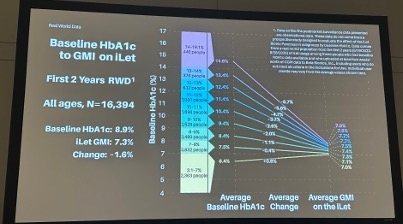
- Overall outcomes. In the overall cohort, there was a 1.6% difference between mean baseline A1c (8.9%) and mean follow-up GMI (7.3%). Dr. Russell noted that there was a 0.6% increase from baseline A1c to follow-up GMI among people with baseline A1c <7.0%, which seemed inconsistent with the significant glycemic improvements observed among people with higher baseline A1c. To investigate this discrepancy, Beta Bionics analyzed a larger clinic with 75 iLet users and a follow-up A1c on iLet available. Within this clinic, there was a 0.4% increase from baseline A1c to follow-up GMI; however, baseline and follow-up A1c were comparable (6.5% and 6.6%, respectively), suggesting that GMI overestimates A1c values below 7.0%. Dr. Russell said these results indicates that iLet clusters people with high baseline A1c levels into a tight range, while low baseline A1c levels tend to remain stable after iLet initiation.
- Time below Range (TBR) remained low at 1.5%, which was slightly below TBR in iLet’s pivotal trial (1.8%). Real-world Time <54 mg/dL was also comparable to the pivotal trial (0.3% in both datasets).
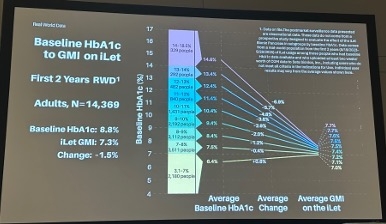
- Adult outcomes. Adult users achieved a 1.5% difference between mean baseline A1c (8.8%) and mean follow-up GMI (7.3%), which was greater than the 0.7% A1c to GMI reduction observed with iLet in the pivotal trial. Improvements were observed regardless of prior therapy. Among previous MDI users (n=8,557), there was a 1.8% difference between baseline A1c (9.1%) and GMI (7.3%), and among those previously on an insulin pump or AID system (n=4,694), there was a 0.9% difference between baseline A1c (8.1%) and GMI (7.2%).
- TBR was comparable to the overall cohort at 1.5%. Time <54 mg/dL was also similar to the overall cohort at 0.3%.
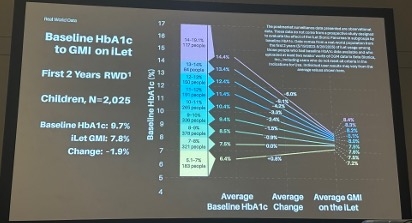
- Pediatric outcomes. Pediatric users saw a greater A1c-GMI difference than adult users (1.9%), although pediatric users had a higher mean baseline A1c (9.7%). Like adult users, the real-world A1c reduction was greater than the corresponding reduction observed in the pivotal trial (a 0.7% decrease from 8.1% to 7.4%). Improvements were observed regardless of prior therapy. Previous MDI users (n=1,380) saw a 2.1% difference between baseline A1c (9.9%) and GMI (7.8%), while previous pump or AID users (n=595) saw a 1.2% difference between baseline A1c (9.0%) and GMI (7.8%).
- TBR and Time <54 mg/dL were similar to the adult cohort. TBR was 1.5%, while Time <54 mg/dL was 0.3%.
- Dr. Russell noted that the average baseline A1c of iLet users has increased since its launch, yet the mean GMI achieved after starting iLet has remained relatively consistent. Dr. Russell said these results indicate that iLet is increasingly being used by patients whose diabetes had been more challenging to manage on previous therapies without compromising glycemic outcomes.
-
- Among adults, mean baseline A1c was 8.8% in the two-year dataset compared to 8.4% in the real-world dataset of iLet’s first year of commercial availability – both significantly higher than the 7.7% average A1c in the pivotal trial. Due to the higher baseline A1c, the mean change between A1c and GMI has steadily increased (0.7% in the pivotal trial, 1.2% in the one-year dataset, and 1.5% in the two-year dataset).
- Among children, mean baseline A1c was 9.7% in the two-year dataset compared to 9.2% in the one-year dataset – again higher than 8.1% A1c in the pivotal trial. As a result, the mean change between A1c and GMI also increased (0.7% in the pivotal trial, 1.5% in the one-year dataset, and 1.9% in the two-year dataset).
15. Real-world outcomes of Omnipod 5 in T2D (n=23,664): Higher bolusing frequency associated with increased TIR
Dr. Sean Oser (University of Colorado Anschutz) presented real-world outcomes of adult Omnipod 5 users with T2D (n=23,664). Insulet also presented real-world outcomes among adult Omnipod 5 users with T2D at ATTD 2025 (n=19,117). Like real-world datasets of Omnipod 5 in users with T1D, the T2D dataset also associated the lowest glycemic target (110 mg/dL) with the highest Time in Range (TIR).
As a reminder, Omnipod 5 received FDA clearance for T2D in August 2024 based on positive results in the SECURE-T2D pivotal trial (n=305), which were first announced at ADA 2024. At 13 weeks, mean TIR improved 20% (+4.8 hours/day) from 45% at baseline to 66%, and mean A1c decreased 0.8% from 8.2% at baseline to 7.4%. Currently, Omnipod 5 is one of two AID systems with FDA clearance for T2D alongside Tandem’s Control-IQ+, which received clearance in February 2025.
- Methods. Individuals included in this new analysis had ≥90 days of system use and sufficient CGM data (≥75% of days with ≥220 readings), and they primarily used the 110 (n=13,118) or 120 mg/dL target (n=7,785). Baseline A1c was self-reported. Outcomes were stratified by baseline A1c and users’ average number of daily boluses.
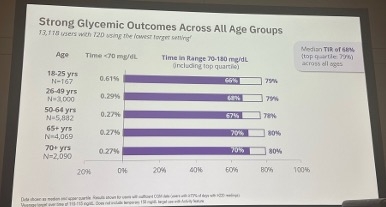
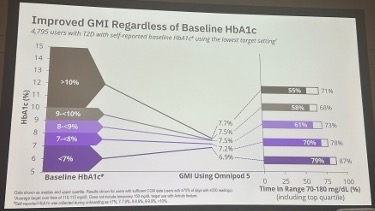
- Consistent with previous real-world Omnipod 5 datasets, users of the 110 mg/dL target achieved the highest TIR (68%) with minimal Time below Range (TBR) of 0.3%. Users of the 120 mg/dL and 130-150 mg/dL achieved 63% TIR and 55% TIR, respectively, and both cohorts also maintained TBR of 0.3%. When split by age group, median TIR was similar regardless of age (see below).
- Users also experienced significant improvements in GMI regardless of baseline A1c. Similar to iLet’s dataset presented in the same oral symposium, the largest differences between baseline A1c and GMI were observed among those with the highest baseline A1c.
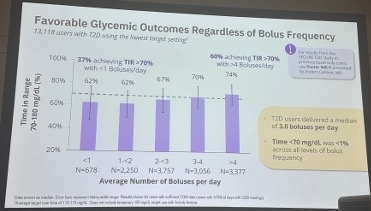
- Users who bolused more frequently tended to achieve higher TIR. Users who averaged over four boluses per day achieved median TIR of 74% compared to 62% among those who averaged fewer than one bolus per day. Moreover, 60% of users who averaged over four boluses per day achieved TIR >70%, compared to 37% of those averaging fewer than one bolus per day. Importantly, TBR remained <1.0% regardless of bolusing frequency.
- Users employing a simplified carbohydrate counting approach (defined as individuals whose five most-used carbohydrate values accounted for over half of overall meal boluses) achieved comparable glycemic outcomes to those using precise carbohydrate counting. Specifically, precise carbohydrate counters (n=1,643) achieved 73% median TIR compared to 69% TIR among those using a simplified approach (n=7,663), who represented most users. Dr. Oser said the results indicate that strong glycemic outcomes can still be achieved with Omnipod 5 even without precise carbohydrate counting.
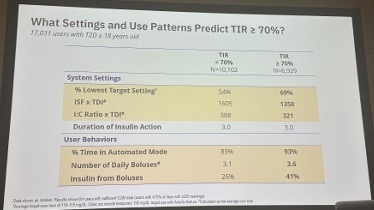
- Alongside use of the lowest target range, a more aggressive insulin sensitivity factor (ISF) or insulin-carbohydrate ratio (ICR) were identified as predictors of TIR ≥70%. Dr. Oser said these findings informed a regression analysis to derive predictor cutpoints, recommending optimized settings of: (i) 110 mg/dL target; (ii) ISF x total daily insulin (TDI) ≤1,500; and (iii) ICR x TDI ≤350. Users with these settings (n=1,819) achieved median TIR of 79%. Of those who bolused at least three times per day on average (n=1,094), median TIR was 81%.
16. “Time to retire A1c”: Prof. Battelino makes the case for replacing the clinical use of A1c with TIR and TITR
Prof. Tadej Battelino (University of Ljubljana, Slovenia) argued for the need to prioritize CGM-based metrics over A1c. He began by joking that A1c is no longer measured in his clinic in Slovenia, saying that it is “time to honorably retire A1c” in the US as well. In making his case, he explained the discordance between A1c and many diabetes complications – which he suggested could be resolved by Time in Range (TIR) and Time in Tight Range (TITR).
- Prof. Battelino suggested that A1c often fails to predict microvascular and cardiovascular complications, citing numerous studies where diabetes complications arose even at “normal” A1c levels. In a rapid-fire review, Prof. Battelino presented evidence that A1c lost predictive power after controlling for covariates in outcomes, such as cognitive performance in older adults with T2D (Inoue et al. 2025), incidence of MACE, severe hypoglycemic episodes, microvascular events in people with T2D (Bergenstal et al. 2023), and aortic stiffness – a proxy for cardiovascular disease (Foreman et al. 2021).
- Further emphasizing A1c’s limitations, he cited a UK Biobank study of nearly 40,000 individuals, showing A1c in the prediabetes range (5.7-6.4%) was associated with higher risk of early cognitive decline and grey matter phenotypes (Ranglani et al. 2023). Prof. Battelino said that these findings suggest long-term complications can begin earlier than previously recognized, and at levels A1c may be ill-suited to distinguish.
- In contrast, TIR consistently correlated with many complications. Prof. Battelino presented additional data showing a strong inverse relationship between TIR and the risk of albuminuria (Zhang et al. 2025). He further cited studies linking TIR with the severity of MASH in Chinese adults with T2D (Wang et al. 2025), white matter microstructure changes in children with T1D (Mauras et al. 2025), and diabetic foot ulcer healing time (Ortiz-Zuniga et al. 2025), underscoring CGM metrics as strong predictors of complications. He also highlighted findings from a study (Shilo et al. 2024) showing that CGM identified 17% more prediabetes cases and 1.4% more diabetes cases than fasting glucose criteria, supporting CGM’s use in diabetes diagnosis as well.
- As usual, Prof. Battelino championed TITR as an even more precise tool for clinical practice and complication prediction. Emerging evidence he cited included:
- Cai et al. 2025, which showed TITR is associated with reductions in all-cause and cardiovascular mortality in T2D;
- De Meulemeester et al. 2024, which linked TITR to various microvascular and macrovascular complications in T1D, outperforming TIR;
- Zhang et al. 2025, which found each 10% increase in TITR was associated with a 9% reduction in albuminuria risk (HR 0.91; p<0.001); and
- Shah et al. 2023, which showed TITR and TIR strongly predict diabetic retinopathy in adults with T1D.
- In closing, Prof. Battelino emphasized that CGM-derived metrics are stronger predictors of diabetes complications than A1c, and thus should be prioritized in diabetes management.
17. Improving inpatient management with increased structure, support, and the integration of virtual care components
Dr. Michael Hughes (Emory University), Dr. Jane Jeffrie Seley (Weill Cornell Medicine), and Dr. Nadine Palermo (Brigham and Women’s Hospital) explored the evolving landscape of inpatient diabetes management. The session examined the continuum from hospital to home care, addressing (i) how to safely support personal diabetes technologies during hospitalization; (ii) the growing role of virtual diabetes care and education; and (iii) strategies to empower individuals post-discharge through appropriate planning and improved access to medications and technology. Across the presentations, panelists emphasized infrastructure development, interdisciplinary collaboration, policy standardization, and patient-centered innovation as essential to transforming inpatient diabetes care. While each speaker addressed distinct facets, all highlighted the importance of early intervention, systematized protocols, and technology integration to enhance both clinical outcomes and patient autonomy.
- Dr. Hughes focused on the institutional and clinical frameworks necessary to support patients who wish to continue using their personal diabetes devices (i.e., personal CGMs and/or AID systems) during hospitalization. Drawing from his experiences at Stanford and a meta-analysis of international guidelines, Dr. Hughes underscored the growing consensus, including in the 2025 ADA Standards of Care, that the continuation of such devices is not only safe with appropriate protocols, but is also increasingly desired by patients.
- Nonetheless, significant barriers persist: (i) inconsistent policies; (ii) limited staff training; and (iii) logistical complexities with device-specific documentation and approval processes. Dr. Hughes advocated for a device-agnostic, systematized approach, and he stressed the importance of persistent advocacy, stakeholder engagement, and local policy customization. His insights framed inpatient diabetes technology as both a clinical imperative and a reflection of respect for patient autonomy.
- Dr. Seley highlighted the transformative role of telehealth for virtual diabetes management and education in the inpatient setting. Dr. Seley presented a robust model of virtual inpatient diabetes consults at NY-Presbyterian/Weill Cornell Medicine, which included the ability to assess competency with individual’s personal diabetes devices, use of standardized protocols and order sets embedded within Epic, and a comprehensive discharge program inclusive of CGM initiation. She detailed how diabetes care and education specialists (DCESs) oversee all processes from insulin protocols to teaching materials, underscoring their expertise and expanding responsibilities. A cornerstone of her presentation was the Diabetes Champion Program, a structured curriculum delivered virtually to interdisciplinary staff to foster a network of local diabetes advocates. Emphasizing scalability, Dr. Seley showcased how leveraging digital platforms, clinical decision support tools, and standardized educational materials can address gaps in inpatient diabetes expertise, empower care teams, and facilitate smoother hospital-to-home transitions.
- Dr. Palermo addressed the post-discharge phase, stressing the acute care hospitalization period as a critical window to initiate long-term diabetes management strategies. As Dr. Palermo stressed, discharge planning should begin at the time of hospital admission. Dr. Palermo outlined how her institution uses admission as a trigger for early identification of barriers to diabetes care, integrating this into a structured discharge planning framework. Through staff education modules, standardized teaching assessments, and "Meds to Beds" consults, the hospital model ensures patients leave the hospital with both the knowledge and tools necessary for effective outpatient self-management. Dr. Palermo emphasized the utility of EHR-integrated supply checklists and dosing references in promoting safe and sustainable insulin use at home. Her talk demonstrated how proactive infrastructure can bridge inpatient care with community-based management, ultimately supporting long-term patient empowerment and reduced readmissions.
18. “Plan-Do-Study-Act”: Early AID uptake scales safely in pediatric T1D with structured support and education
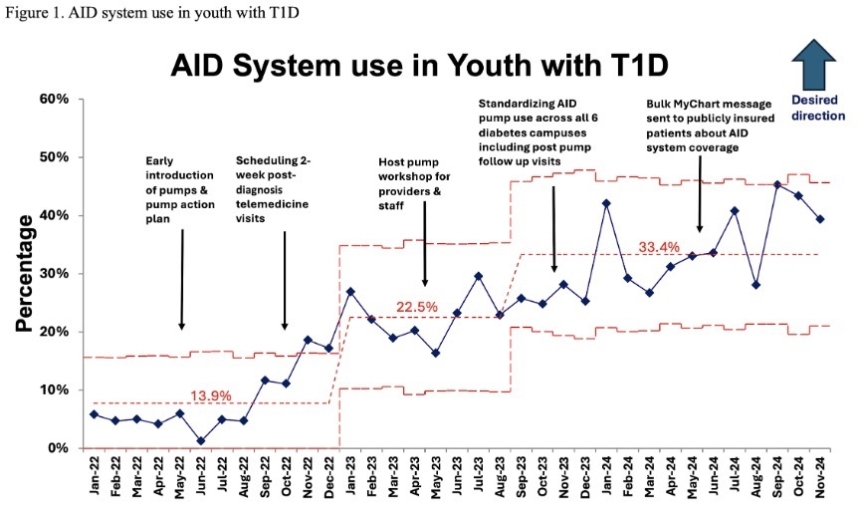
Dr. Mili Vakharia (Baylor College of Medicine) presented a quality improvement initiative with the goal of increasing AID adoption in youth with newly diagnosed type 1 diabetes (<12 months) from 5% in January 2022 to over 25% in November 2024 (n=375). To develop the project, Dr. Vakharia’s team identified provider and patient barriers to adoption. Over 60% of providers expressed some hesitancy to offer AID early, most often citing limited parental support or knowledge about the technology. In contrast, the majority of families (68%) had no concerns with starting AID, with most citing lack of awareness of the technology or lack of an offer from their provider as the main barrier.
- To address this, the authors implemented a multi-pronged “Plan-Do-Study-Act” approach (see figure below), featuring:
- A standardized process for AID initiation within 90 days of diagnosis, including a pump action plan with backup injections and ketone guidance;
- The introduction of a two-week post-diagnosis telemedicine visit with a provider and CDCES to assess AID eligibility;
- AID education workshops with more than 100 staff and providers;
- Weekly CDCES outreach and provider follow-up within 30 days of pump start to standardize AID processes across six clinics; and
- Bulk patient portal messages to raise awareness about AID systems.
- By the end of the initiative, AID use among newly diagnosed youth rose from 5% to 33%, exceeding the original goal. The introduction of the first two steps of the “Plan-Do-Study-Act” plan alone was associated with a centerline shift in AID users from 14% to 23% (see below). About 90% of providers completed AID system education through the workshops, and almost 80% of patients received an insulin pump action plan. The intervention also demonstrated a favorable safety profile – among the youth who initiated pump therapy (n=388), only two experienced diabetic ketoacidosis (DKA). Dr. Vakharia concluded that structured support and pump safety guidance may help mitigate the risk of DKA while significantly improving AID adoption soon after T1D diagnosis.
19. Extended time and tech support: Remote initiation of CGM in older adults
Dr. Elena Toschi (Joslin Diabetes Center) discussed remote initiation of CGM in older adults, sharing key takeaways on US reimbursement policies and clinic visits. Older adults with diabetes on complex insulin regimens are at high risk of hypoglycemia, and the use of CGM in older adults can reduce hypoglycemia risk. CGM initiation and support by remote education has been successfully performed among adults with diabetes and may be an important source of access to CGM in remote or under-resourced areas. However, older adults may struggle to learn how to use technology effectively to manage their diabetes or for remote education. The feasibility of initiating CGM remotely in older adults is less studied, motivating this trial.
- Study participants (n=98) were 65 years of age or older, on three or more daily insulin injections, and either CGM naïve or unsuccessful CGM users. 33% of patients had T1D, and 65% had cognitive dysfunction measured by a Montreal Cognitive Assessment (MoCA) score of less than 26, suggesting minor cognitive impairment. An initial in-person visit was used for CGM set-up, followed by weekly remote visits during the first month.
- Average time per visit was 54 minutes, totaling 273 minutes (4.6 hours) per participant in the first month of treatment. 64% of participants required an initial visit time over 60 minutes, and 39% of participants required an additional virtual visit with an average duration of 58 minutes for support. Patients requiring an extra visit were older (median age 75 vs. 69), more likely to live alone (50% lived alone vs. 35% who did not), and more likely to have cognitive impairment (71% vs. 62%). The high average visit times required to initiate CGM demonstrate the challenges of technology use among the elderly.
- Among CGM-naïve participants, technology support was the most commonly discussed topic during appointments in the first, third, and fourth weeks, followed by CGM use discussion in the first week. There was limited focus on diabetes management or lifestyle in initial appointments due to challenges with initiating the use of new technology.
- The initiation time for CGM more than doubles Medicare’s training time allotment. In 2022, 99% of US adults 65 and older received insurance coverage through Medicare. In the first year of enrollment, Medicare covers one hour of individual training and nine hours of group training. In subsequent years, Medicare covers two hours per year for ongoing education. The elevated training time requirement (4.6 hours on average) indicates that policy changes for Medicare reimbursement should be considered. Dr. Toschi said that remote initiation remains possible for older adults and improves patient access to CGM, but providers should be prepared for longer and more frequent virtual visits. Future work will provide further detail on the hypoglycemic benefits afforded by the virtual initiation of CGM in this population.
20. *NEW* Real-world effectiveness of t:slim X2 with Control-IQ in children with T1D under six years of age
In an oral presentation, Dr. Valentino Cherubini (Azienda Ospedaliero Universitaria, Italy) shared real-world findings from a study evaluating Control-IQ in children (<11 years old). This prospective analysis compared glycemic outcomes and safety across two age groups across 30 pediatric centers: (i) less than six years; and (ii) six to 10 years.
- Study design. Eligible participants had T1D for at least six months and at least 30 days of prior CGM use before starting Control-IQ. Data was collected at baseline and at six-, 12-, and 18-month intervals. Children under 25 kg or using less than 10 units of insulin daily were standardized to meet device entry criteria.
- Results. Both groups saw significant improvements in Time in Range (TIR) and Time in Tight Range (TITR) by six months, which were sustained through 18 months. Children aged six to 10 years achieved greater increases in TIR and TITR than those under six years, although A1c reductions were similar across both groups. A shorter time from diagnosis to Control-IQ initiation was associated with better glycemic outcomes, including greater TITR and lower A1c.
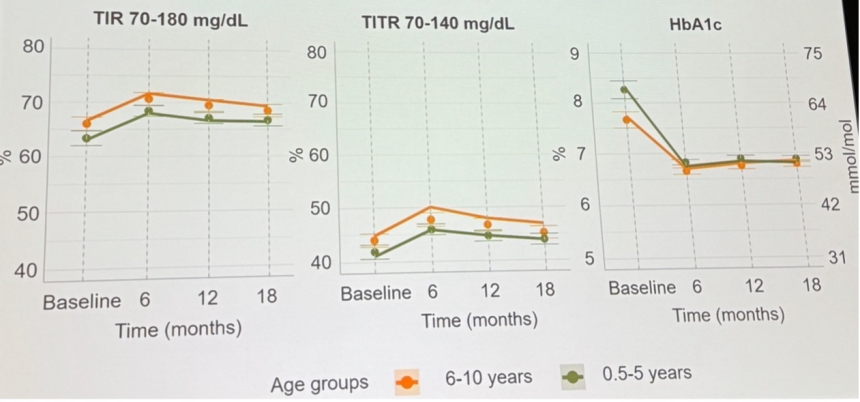
- Conclusion and discussion. Dr. Cherubini emphasized that Control-IQ is both effective and safe in real-world use for young children, including those under six years. He highlighted the importance of early adoption of AID systems in pediatric care to ensure positive outcomes during the critical early years of T1D management.
Big Picture
21. Turning standards into action: Dr. Osagie Ebekozien delivers powerful opening lecture on improving the quality of diabetes care
In a packed lecture hall, Dr. Osagie Ebekozien (ADA, Chief Quality Officer) delivered a powerful address on the need to more effectively implement the ADA’s Standards of Care into everyday practice. Given Dr. Ebekozien’s arrival at ADA has happened only recently, it was great to hear this. While diabetes outcomes continue to improve, he emphasized that progress has not been equitable. Even when care aligns with evidence-based standards, inconsistent implementation across clinics leads to disparate outcomes, underscoring the need for greater coordination and accountability.
- Recognizing that most people with T2D receive care in a primary care setting, Dr. Ebekozien outlined the ADA’s strategy to close gaps in outcomes. Its approach to supporting primary care is grounded in four pillars: (i) promoting translational research to strengthen the effectiveness of primary care interventions; (ii) empowering communities to advocate for their needs and champion priorities that drive equitable outcomes; (iii) equipping PCPs with the knowledge and tools to deliver high-quality, evidence-based care; and (iv) enabling people with diabetes to better engage with their PCPs, in large part by enhancing health literacy.
- To advance this agenda, the ADA is collaborating with seven other national professional organizations[1] through the Diabetes Primary Care Council Leadership and engaging in PCP outreach through the ADA Diabetes Primary Care Alliance. The Alliance collaborates with over 4,000 practices and more than 15,000 PCPs, who collectively serve approximately 2.5 million people with diabetes. Dr. Ebekozien said that many of these clinics are in rural and underserved areas, creating a diverse foundation of data to inform scalable, equity-focused solutions.
- Dr. Ebekozien highlighted a key addition to the 2025 Standards of Care: Recommendation 1.5, which calls on healthcare systems to adopt a culture of quality improvement, using benchmarking as a tool to drive better outcomes. He noted that a growing body of evidence supports strategies such as case management, care team restructuring, and patient education to improve diabetes outcomes. Dr. Ebekozien also encouraged attendees to localize this work: identify productive processes, pilot solutions, and scale. He cited the ADA’s national successes — including expanding access to CGMs and AID systems and implementing screening programs for T1D and diabetic retinal disease — as examples of how local initiatives, when scaled nationally, can drive meaningful improvements in outcomes and reduce system-wide costs.
- To further examine how the ADA is working to improve the quality of diabetes care nationwide, Dr. Ebekozien moderated a panel discussion focused on the various ways the Standards of Care have already influenced practice.
- Dr. Nuha El Sayed (ADA, Interim CSMO and SVP of Quality Improvement) emphasized that “diabetes has no nationality.” While acknowledging that the Standards of Care are US-focused, she noted that nearly half of its readership is international. To meet the needs of the diverse US population, Dr. El Sayed remarked that the ADA incorporates global perspectives to ensure cultural relevance.
- Ms. Lisa Murdock (ADA, Chief Advocacy Officer) highlighted the Standards of Care’s role in driving policy change, such as expanding federal CGM eligibility requirements. She underscored the need for advocacy at every level, noting that the ADA has also proactively begun conversations with state governments to align CGM coverage expansions.
- Dr. Raveendhara Bannuru (ADA, VP of Medical Affairs) highlighted the publication of the first chapters of the “Standards of Care in Overweight and Obesity” last month. Dr. Bannuru said that additional chapters will be “coming soon,” featuring evidence-based recommendations to implement into clinical workflows. Once the inaugural document is complete, the Obesity Association will update the guidelines annually.
- Dr. Samar Hafida (Obesity Association, VP) concluded by expressing excitement for the collective momentum the ADA community will generate to reduce obesity stigma, and by extension, the complications that accompany obesity.
22. Edwin Bierman Award Lecture: Prof. Naveed Sattar discusses the multidimensional, evolving story of diabetes and cardiovascular disease
In an early afternoon session, Prof. Naveed Sattar (University of Glasgow, UK) delivered the Edwin Bierman Award Lecture. Dr. Bierman pioneered the use of human cultured cells to study atherosclerosis (arterial plaque formation), especially remembered for his work on the physiologic and nutritional regulation of lipoprotein metabolism, particularly in the context of obesity and diabetes. Prof. Sattar received this year’s award for his outstanding contributions to the field of macrovascular complications and the management and treatment of diabetes, contributing his expertise in epidemiology, diabetes, obesity, and cardiovascular disease (CVD) to countless lifestyle and drug trials. He said that the field must approach diabetes and CVD from multiple dimensions, and that he himself “flitters between them like a butterfly,” enabling him to draw many connections between these diseases. He believes that obesity significantly contributes to the development of complications, such as heart failure and chronic kidney disease, and that treating chronic diseases without tackling excess adiposity promotes multimorbidity.
- Prof. Sattar said that there is a nearly two-fold higher unadjusted risk of CVD in people with prediabetes, based on his work published in 2020. He said that CVD risk begins during prediabetes, and CVD development outpaces progression to diabetes. Major contributing factors are overweight or obesity, increased waist-to-hip ratio, muscle insulin resistance, and decreased activity, which lead to elevated blood pressure, triglycerides, and ectopic lipids and fluids. He noted buildup of ectopic lipids and fluids will lead to plaque build-up in the arteries many years before frank T2D. Prof. Sattar again emphasized his view that rising rates of obesity are at the center of the progression to CVD, connecting this to modern lifestyles.
- “We live in an obesogenic environment.” Prof. Sattar first characterized health trends in the UK in 1980s, when high smoking rates, high LDL cholesterol values, elevated blood pressures, correlated with very high rates of CVD, but low rates of T2D. Through targeted public health efforts involving widespread use of statin therapy and anti-smoking campaigns, CVD rates have since dropped significantly in the UK as in many high-income countries, although T2D rates have risen markedly alongside obesity. Prof. Sattar describes increases in the excessive processing of food as creating “excess nutrient availability,” which, in turn, promotes overeating and more T2D, ectopic nutrient, lipid and fluid stress, and eventually comorbidities, such as heart failure and chronic kidney disease, as well as many other obesity-related complications.
- “If we don’t solve obesity, we might as well go home.” Prof. Sattar said that the field must tackle rising global rates of obesity to maintain progress in treating CVD overall and to decrease long-term rates of comorbidities. He believes that we must tackle rising weights much earlier in life (well before frank T2D develops) to prevent the development of complications much earlier in the life course.
--by Riya Chatterjee, Kayla Mathieu, Elizabeth Rose, Jeremy Alkire, Nour Khachemoune, Kat Moon, Elaine Young, Esther Min, Andrew Goyette, Monica Oxenreiter, and Kelly Close
[1] Organizations include the American Academy of Physician Associates, American Academy of Family Physicians, the American College of Physicians, the American Association of Nurse Practitioners, the American College of Osteopathic Family Physicians, the American Pharmacists Association, and the American Society of Health-System Pharmacists.