Executive Highlights
- EASD Day #5 marked a strong close to a groundbreaking conference across diabetes therapy, technology, and big picture concepts. Though the conference center seemed a bit quieter than the bustling crowds that filled Allianz MiCo on previous days, its halls were filled with perhaps the conference’s most captivating debates thus far in the conference. There were multiple references to next year’s meeting in Budapest, happening September 20 – 24.
- In tech, Dr. Ohad Cohen (MiniMed) presented exciting, early feasibility for MiniMed’s fully closed-loop algorithm, Vivera, and MiniMed Go. MiniMed’s Vivera achieved over 80% TIR with meal announcements and 74% TIR with no meal or correction boluses. What a difference a decade makes – Al Mann departed this earth ten years ago, and we know how proud he would be to watch these changes! Beyond Vivera, MiniMed’s smart MDI system, MiniMed Go, achieved non-inferiority to standard MDI plus CGM in a randomized controlled trial – this was standout. Beyond readouts, Prof. David Herzig (University Hospital of Bern, Switzerland), Prof. Johan Jendle (Örebro University, Switzerland), and Dr. Michael Hughes (Emory University) delivered a very inspired and inspiring vision for the future of diabetes care, prioritizing less input and more automation.
- In therapy, Prof. Jens Holst (University of Copenhagen, Denmark), who is widely known for his foundational role in the discovery and characterization of GLP-1, delivered the 2026 EASD Diabetes Global Impact Prize Lecture on decades of research in incretin-based therapies. In data readouts, we were impressed by results from a phase 3 study (n=620) of once-weekly BGM0504 (relsipatide) in Chinese adults with obesity or who are overweight that demonstrated nearly 20% weight loss. Look out!
- In T1D cures, several sessions focused on groundbreaking, cell-based cures in the pipeline. Among our highlights, the esteemed Prof. Per-Ola Carlsson (Uppsala University, Sweden) presented 14-month follow-up results from the first-in-human transplantation of UP421, Sana Biotechnology’s allogeneic hypoimmune islets without immune expression. In hypoimmune cell-based cures, OZTx-410 (from Fujisawa, Kanagawa Prefecture, Japan-based Orizuru Therapeutics’ novel allogeneic iPSC-derived pancreatic islet cell therapy) delivered clinically meaningful fasting and postprandial C-peptide after one year in the phase 1/1b OASiS-1 study in a very small study (n=3).
- In big picture, key themes of holistic care, early intervention, and patient-centered treatment dominated the final day of EASD. Among today’s well-attended sessions, the new ADA/EASD 2026 consensus report marked a shift beyond glucose management to early initiation of SGLT-2 inhibitors and GLP-1 RAs for multi-organ protection and weight management. We’ll be curious to see how there may be growing differentiation between the two classes, as SGLT-2 inhibitors are surely becoming far more accessabile in the US, its biggest market, while incretins remain extremely (relatively) expensive for the under 65-set.
- Turning to obesity, Prof. Francesco Rubino (King’s College Hospital, UK) advocated for the separation of preclinical and clinical obesity – citing concerns that it would redefine the disease state as a risk factor and therefore reduce access to obesity medications and increase stigma.
- Relatedly in obesity, Dr. William Dietz (George Washington University) explored pros and cons for BMI and waist circumference in obesity diagnoses.
- During a highly engaging and packed “lab talk”, Prof. Chantal Mathieu shared her career journey and in doing so, greatly inspiree her audience of clinicians and researchers. She emphasized the importance of centering patients as her motivation, and cited two primary, motivating goals for her career, namely improving clinical care for people living with diabetes and helping prevent or cure T1D.
Table of Contents
-
Tech
- 1. Dr. Ohad Cohen presents MiniMed fully closed-loop data, achieving over 70% TIR without meal announcements or correction boluses
- 2. Less input, more automation: Experts envision the future of diabetes care
- 3. MiniMed Go meets primary endpoint, with greater benefits among those who consistently respond to alerts
- 4. Prof. Tali Cukierman-Yaffe and Dr. Martin Prázný debate on AID use in older adults
-
Therapy
- 5. EASD Global Impact Prize lecture: Prof. Jens Holst traces GLP-1 from discovery to a transformative therapy and asks what comes next
- 6. Profs. Ake Sjöholm and Hertzel Gerstein describe incretins and SGLT-2 inhibitors as complementary tools for cardiovascular protection
- 7. Once-weekly BGM0504 (GLP-1/GIP RA) confers nearly 20% weight loss with and broad cardiometabolic benefits in phase 3 study
- 8. Sana’s UP421 hypoimmune islets exhibit sustained graft survival, C-peptide production, and immune evasion 14 months following implantation
- 9. Prescribing cascades in people with T2D: Dr. Berthon identifies medication pairs potentially contributing to polypharmacy
- 10. Orizuru’s OZTx-410 allogeneic iPSC-derived islet cell sheets demonstrate clinically meaningful C-peptide production after one year
- 11. Dr. Martin Gaudier shares an update on AdoShell as it progresses toward first-in-human trials
-
Big Picture
- 12. 2026 ADA/EASD consensus broadens T2D management beyond glycemia, emphasizing earlier organ-protective therapy and holistic care
- 13. Know yourself: Prof. Chantal Mathieu delivers highly engaging lab talk on her experiences and career
- 14. An “interventional diabetologist”: Prof. James Shaw on expanding access to cell-based therapies in T1D
- 15. Separating risk management from disease treatment: Prof. Francesco Rubino on the importance of separating preclinical and clinical obesity
- 16. Pros and cons of routine assessment of BMI and waist circumference in all adult patients for diagnosis of obesity, from Dr. Bill Dietz
- 18. Results show greater 2-hour plasma glucose value is associated with all-cause dementia
Tech
1. Dr. Ohad Cohen presents MiniMed fully closed-loop data, achieving over 70% TIR without meal announcements or correction boluses
Dr. Ohad Cohen (MiniMed) presented early feasibility data for Vivera, MiniMed’s novel fully closed-loop (FCL) algorithm designed to eliminate required meal announcements while preserving the option to bolus when users prefer. In what Dr. Cohen described as the first-in-human study of the algorithm, adults with T1D (n=24) completed three separate three-week, free-living phases: (i) fully announced meals; (ii) fully unannounced meals; and (iii) “at-will” bolusing, during which participants chose whether to announce meals at their own discretion. Vivera achieved >70% TIR across all three phases, including 74% TIR without meal or correction boluses and 77% when participants chose whether to announce meals. Dr. Cohen framed the algorithm’s ability to accommodate very different meal-management behaviors within the same system as particularly important, noting that the goal is not necessarily to eliminate bolusing, but to make it optional. This is so interesting from our view!
- Study design. The prospective, two-center feasibility study evaluated the efficacy and safety of the Vivera FCL algorithm across three levels of user interaction with meals. The study enrolled adults with T1D (n=24) ≥18 years; all participants had been diagnosed with T1D for at least one year and all were MiniMed 780G users at baseline with an A1c ≥6.5%. The study was conducted across centers in Israel and New Zealand, with no restrictions on diet or physical activity. After a four-week run-in with MiniMed 780G + Simplera Sync and announced meals, participants used Vivera and Simplera Sync for three consecutive three-week phases, including (i) announced meals; (ii) unannounced meals, with no meal or correction boluses; and (iii) meal announcements “at will”. CGM outcomes and device-related safety events, including severe hypoglycemia and DKA, were assessed.
Results. Vivera achieved >70% TIR across all three phases, including just under 74% with essentially no meal announcements or correction boluses. Glycemic outcomes and meal interactions across the three phases were:
- Fully announced: TIR 82%; TITR 59%; TBR <70 mg/dL 2.0%; TAR >180 mg/dL 16%; 4.6 meal announcements/day;
- Fully unannounced: TIR 74%; TITR 48%; TBR <70 mg/dL 1.2%; TAR >180 mg/dL 25%; 0.04 meal announcements/day (virtually none!); and
- At-will: TIR 77%; TITR 53%; TBR <70 mg/dL 2%; TAR >180 mg/dL 21%; 1.6 meal announcements/day.
TIR and TITR were numerically highest with full meal announcement, while the increase in hyperglycemia during the fully unannounced phase was not accompanied by greater hypoglycemia; time <54 mg/dL remained 0.2%, 0.2%, and 0.3% across the three phases, respectively, which says a great deal, that severe hypoglycemia is virtually not an issue. No serious adverse events were reported across any of the scenarios. While we might expect that fully closed loop would do considerably betterin “fully announced” than the other options, this was actually not the case. In fact, the “fully closed loop” TIR and TITR were 82% and 59%, respectively, very positive percentages, compared to “fully unannounced” TIR and TITR of 74% and 48% and “at-will” at 77% and 53%, both still very high percentages.
- Discussion. Dr. Cohen framed flexibility as a central goal of MiniMed’s Vivera, with the “at-will” phase revealing substantial differences in how participants wanted to interact with the system. Some participants stopped bolusing when given the choice, as presumably they see it as a bit of a “hassle” (our word) while others continued to announce meals because they were more comfortable remaining actively involved, according to Dr. Cohen. Fascinatingly, he also observed geographic differences, with participants in New Zealand tending to bolus less when given the choice while those in Israel continued bolusing more frequently. He noted that, on average, participants had lived with diabetes for approximately 24 years and were accustomed to intensive management, which he explained potentially made it difficult to abandon behaviors practiced for decades.
- Looking ahead, Dr. Cohen suggested that people who begin using advanced closed-loop systems closer to diagnosis may ultimately prefer substantially less interaction with insulin delivery. He described Vivera as designed to accommodate this spectrum, from users who continue announcing meals to those who rarely or never bolus, without requiring a separate "bolus" or "no-bolus" mode. While he cautioned that the current study was small and short, he characterized the findings as confidence-inspiring for advancing Vivera into larger and longer studies in the US, Europe, and New Zealand.
2. Less input, more automation: Experts envision the future of diabetes care
Profs. David Herzig (University Hospital of Bern, Switzerland) and Johan Jendle (Örebro University, Örebro, Sweden), alongside Dr. Michael Hughes (Emory University, Atlanta) discussed how diabetes care is becoming increasingly automated. Specifically, he referenced reducing the need for precise meal announcements, to enabling diabetes devices and health systems to communicate, and shifting routine clinical management from scheduled visits toward continuous, data-driven care. Across the session, speakers asserted that greater automation could reduce multiple burdens for people with diabetes and clinicians alike, while emphasizing that advances in interoperability, cybersecurity, and safe clinical workflows will be essential as care becomes increasingly connected.
- Prof. Herzig explored whether AID could “do better” without requiring meal announcements, arguing that precise carbohydrate counting is becoming less necessary as fully closed-loop systems advance. He reviewed several approaches to reducing meal-related burden, including wearable-based meal detection, ultra-rapid insulins, and adjunctive therapies. In a small pilot study, ultra-rapid lispro produced a numerical ~10 percentage point increase in TIR in an unannounced-meal setting, though he cautioned that the study was very small and the result should be interpreted carefully. Looking beyond insulin, he reviewed adjunctive approaches including pramlintide, SGLT-2 inhibitors, and GLP-1 RAs. Notably, adding weekly semaglutide alongside AID in people with T1D and obesity increased TIR by five percentage points and induced weight loss, while SGLT-2 inhibitors reduced postprandial excursions but carried a two- to four-fold higher DKA risk (in this era before Libre Duo). Prof. Herzig concluded that fully closed-loop systems are performing well for some people, but further advances in insulin kinetics and safe adjunctive therapies could reduce meal-management burden further.
- Prof. Jendle outlined how greater interoperability could allow diabetes devices and healthcare systems to “talk” to each other, while cautioning that greater connectivity must be balanced against cybersecurity and data-security risks. He described three levels of data sharing, progressing including (i) direct connections among patient-facing devices; (ii) sharing with healthcare professionals and designated followers; and (iii) third parties for purposes including research and product development. He pointed to Fast Healthcare Interoperability Resources (FHIR) and ongoing standardization efforts as potential bridges between CGM/pump data and EHRs, while identifying gaps including limited technical resources, differing vendor approaches to data access, costly or technically limited third-party aggregators, and regulatory and workflow considerations. Prof. Jendle also highlighted unresolved questions around whether medical-device data should be stored locally or in the cloud and cautioned that every additional layer of connectivity introduces potential cybersecurity vulnerabilities.
- Greater interoperability will therefore require deliberate trade-offs between accessibility and security. Prof. Jendle outlined threats including unauthorized access, data manipulation, loss of functionality, and ransomware, and stressed the importance of protecting the confidentiality, integrity, and availability of healthcare data and systems. Rather than viewing security as the responsibility of a single stakeholder, he called for proactive risk assessment, organizational preparedness, executive involvement, and response plans before adverse events occur. As new integrations are introduced, he urged healthcare systems to continually ask whether they are “opening a new door for attackers.”
- Dr. Hughes reframed telemedicine as an integrated care infrastructure that can progress from remote visits to data-driven intervention between appointments. He proposed four levels of progressively sophisticated capabilities: (i) synchronous remote visits; (ii) access to remotely generated data; (iii) automated interpretation and triage; and (iv) clinical intervention. At the first level, virtual visits can meaningfully expand access. Dr. Hughes cited recent data from northwest London showing a median wait of 8.5 days for a virtual specialist appointment vs. 50 days in person in 2024, while at Emory, use of video visits increased with patients’ distance from the medical center – particularly relevant across rural areas with limited endocrinology access.
- Dr. Hughes was particularly enthusiastic about shifting diabetes care from being “tethered to the calendar” toward being triggered by continuous clinical data. He pointed to Stanford’s pediatric 4T study, where a dashboard prioritizing patients based on clinical metrics reduced clinician review time by 60%; over three years, the clinic reported 1.2% lower A1c vs. a historical cohort after enrolling patients in its remote patient monitoring system. He also highlighted automated treatment adjustment. In a small RCT, an AI system operating within clinician-defined parameters optimized basal insulin dosing in 15 days vs. more than eight weeks with usual clinical care. This approach has since evolved into UpDoc, which Dr. Hughes said recently received FDA clearance for AI-guided dose titration, with studies now examining simultaneous titration of insulin, other diabetes medications, and antihypertensives between visits.
- Ultimately, Dr. Hughes envisioned health systems aggregating disparate data and automating routine, protocolized workflows so clinicians can focus their attention where human involvement adds the most value. He noted that while 50% of US adults used an app to access their health records in 2024, only 7% used an app combining records from more than one source, illustrating the fragmentation patients currently face. He proposed health-system-level infrastructure that defines the population being managed, aggregates relevant data, identifies and triages clinical needs to the “lowest-friction safe response,” and then confirms that the underlying problem was actually resolved.
3. MiniMed Go meets primary endpoint, with greater benefits among those who consistently respond to alerts
Prof. Laurent Crenier (Hôpital Erasme, Belgium) presented RCT (randomized controlled trial) data showing that MiniMed’s Smart MDI system, MiniMed Go, was non-inferior to MDI and CGM for TIR at six months in people with T1D and A1c ≥8%, while post-hoc analyses suggested that responding consistently to dosing notifications may be key to realizing greater glycemic benefit. MiniMed Go combines Simplera CGM, InPen, and the InPen app, which provides a dose calculator alongside missed-dose and correct-high-glucose alerts with suggested boluses. While six-month TIR and A1c did not demonstrate superiority in the intention-to-treat (ITT) population, higher responders to these alerts achieved 8.1 percentage points greater TIR and 0.6 percentage points lower A1c than lower responders – an association also seen in real-world data from over 5,500 users.
- Study design. The six-month, 18-center European RCT evaluated MiniMed Go vs. usual care (MDI and CGM) in people with T1D (n=143) who had had diabetes over two years, with average A1cs ≥8%. Following a three-week run-in, participants were randomized 1:1 to Smart MDI or continued MDI and CGM. The primary endpoint was change in TIR at six months, adjusted for baseline A1c and assessed first for non-inferiority (7.5% margin). Secondary endpoints included A1c non-inferiority and superiority analyses for TIR and A1c. Analyses included: (i) the ITT population (n=143); (ii) a per-protocol population excluding early study exits and participants with less than 70% sensor use (n=106); and (iii) a post-hoc analysis stratifying Smart MDI users by whether they responded to missed-dose or correct-high-glucose alerts with an InPen bolus within one hour.
- Results. Smart MDI met the primary TIR non-inferiority endpoint at six months, though neither TIR nor A1c demonstrated superiority in the ITT population at this timepoint. At baseline, the control (n=71) and Smart MDI (n=72) groups had quite high mean A1cs of 8.9% and 9.4%, respectively, and TIR of 43% and 38%; these baseline differences were accounted for in the adjusted analysis. At six months, the adjusted TIR treatment effect was 0.19 percentage points favoring Smart MDI, meeting non-inferiority but not superiority. A1c similarly met non-inferiority, with a -0.13 percentage point treatment effect, but not superiority. Notably, A1c superiority was achieved at three months in the ITT population (-0.41 percentage points) and at six months in the per-protocol population (-0.31 percentage points). Prof. Crenier reported an acceptable safety profile, with no severe hypoglycemia or DKA in the Smart MDI arm.
- Post-hoc analyses suggested that responding to Smart MDI’s missed-meal and high-glucose notifications was associated with greater glycemic benefit. Participants in the Smart MDI arm were divided into higher (n=31) and lower responders (n=28) using the median bolus-response rate of 28.3% as the cutoff. Higher responders achieved 8.1 percentage points greater TIR and 0.6 percentage points lower A1c than lower responders, with both comparisons statistically significant. Importantly, the association extended beyond the trial. Real-world analysis of Smart MDI users (n=5,507) using the same response-rate cutoff similarly showed 9.4 percentage points greater TIR among higher responders.
- Discussion. Prof. Crenier identified alert fatigue as a potential explanation for declining engagement over time, noting that participants initially received more than four notifications per day and response rates declined between three and six months. He suggested that the trial’s enrollment of people with A1c ≥8%, including some with A1c around 10% who were already missing boluses, may have generated particularly frequent notifications and contributed to declining responsiveness. In response to concerns that acting on delayed bolus alerts might increase hypoglycemia, Prof. Crenier noted that overall TBR remained very low and explained that the bolus calculator incorporates active insulin when generating dosing recommendations. Overall, the findings suggest that engagement with actionable notifications may be important to realizing the full glycemic benefit of the system.
4. Prof. Tali Cukierman-Yaffe and Dr. Martin Prázný debate on AID use in older adults
Prof. Tali Cukierman-Yaffe (Tel Aviv University, Israel) and Dr. Martin Prázný (Charles University, Prague, Czechia) debated whether older adults should use AID systems. Prof. Cukierman-Yaffe, who took the pro side, showcased various clinical trials demonstrating that most older adults, even those with mild cognitive impairment, can achieve glycemic, physical, and even potential cognitive benefits from AID. She also emphasized that to ensure safe and effective use, appropriate education and support for onboarding and troubleshooting these systems must be provided. Dr. Prázný pushed back, saying, “No to high hopes.” While he disclosed that he “enthusiastically” prescribes AID to older adults in his clinic, he focused his argument on the limitations of the trials presented by Prof. Cukierman-Yaffe. He explained that the currently available evidence on AID use in older adults is insufficient and not representative of real-world patients. As such, his “interim” verdict was that for most older adults with diabetes, the incremental benefit of AID does not yet justify its complexity, cost, and potential burden.
- Prof. Cukierman-Yaffe argued yes for AID in older adults, citing clinical trials that have demonstrated improved TIR and physical benefits. Prof. Cukierman-Yaffe framed her argument around the central question: Can AID improve TIR and TAR and reduce hypoglycemia rates in both healthy older adults and those with impaired physical and/or cognitive function? Among healthy older adults, she highlighted numerous studies, including the AIDE T1D and ORACL trials, that found improvements in TIR with AID. Even among older adults with probable cognitive impairment, preliminary results from the Glycemic Response & Cognitive/physical Enhancement (GRACE) trial showed TIR improvements from 63% to 77% after 12 months. Regarding older adults with severe impairments requiring full caregiver support, she noted that while studies in these populations have not been conducted, anecdotal evidence suggests AID systems can improve average blood glucose and TIR in a patient-caregiver dyads. Beyond improving glycemic management, she highlighted how AID use in these dyads could reduce caregiver burden.
- Beyond glycemic improvements, AID systems may also offer physical and, potentially, cognitive benefits. Prof. Cukierman-Yaffe showcased her study in which older adults initiating hybrid closed-loop therapy for 12 months demonstrated better performance on the 10-meter walk speed and timed up-and-go tests (both of which are associated with fall risk) compared with those on standard therapy. Additionally, older adults using AID performed better on the 6-minute walk test, a measure of aerobic capacity. Secondary findings from the ongoing GRACE trial showed that older adults with cognitive deficits using AID also improved on the Digit Symbol Substitution Test (DSST), a measure of attention, processing speed, and executive function, whereas those on standard therapy continued to decline in cognitive performance.
- Dr. Prázný argued that the evidence does not yet justify widespread AID use in older adults. Taking a closer look at the methodologies of the studies presented by Prof. Cukierman-Yaffe, Dr. Prázný noted that the participants were not representative of older adults seen in the real-world practice. In his experience, most patients are over 80 years old and have greater impairments such as frailty, sarcopenia, and poor vision, or live alone. In terms of real-world data, he raised the potential for survivorship bias, in which data are only analyzed from those who successfully continue using AID, ultimately excluding users who stopped using the system, were never offered it, or were hospitalized. Furthermore, he said these trials are not measuring the proper outcomes: “In a population where remaining life expectancy is measured in years, the endpoints that matter are not the ones we measured.” Even for commonly measured outcomes, such as TIR, he argued that CGM demonstrates similar improvements as AID in these populations, claiming that most of the safety benefits come from sensors rather than “autopilot.” Given this, he questioned whether AID has adequately demonstrated that it is worth the complexity, burden, and risks associated with infusion-set failures or additional caregiver burden.
- Closing the session, Dr. Prázný said that AID may be justified in older adults under specific circumstances. He said AID in older adults is justified in settings in which several factors are in place, including: (i) the patient or a trained caregiver is capable of managing the system; (ii) initiating AID would improve an outcome not addressed by CGM, such as reduced burden from MDI; (iii) settings are simplified, such as through simplified meal announcements; and (iv) there is a care team that offers 24/7 contact and has an exit plan in place should something go wrong.
Therapy
5. EASD Global Impact Prize lecture: Prof. Jens Holst traces GLP-1 from discovery to a transformative therapy and asks what comes next
Prof. Jens Holst (University of Copenhagen), who is widely known for his foundational role in the discovery and characterization of GLP-1, delivered the 2026 EASD Diabetes Global Impact Prize Lecture, “The future of GLP-1 receptor agonists.” The EASD Diabetes Global Impact Prize recognizes individuals whose clinical or translational diabetes research has had a global impact, including by shaping clinical guidelines, diagnostic approaches, procedures, and models of care to improve the lives of people with diabetes. Prof. Holst was recognized for a career spanning roughly 1,900 publications and more than 85,000 citations, as well as extensive mentorship of younger scientists. His foundational work on GLP-1 helped establish the hormone’s role in glucose regulation and appetite, laying the groundwork for a therapeutic class that has since transformed treatment of T2D and obesity.
- Looking back at decades of GLP-1 research, Prof. Holst highlighted how understanding of the hormone expanded from glucose regulation to appetite, satiety, and reward. He revisited early human experiments showing that GLP-1 infusion reduced food intake in a dose-dependent manner, then walked through evidence that GLP-1 signals through both gut-brain neural pathways and central nervous system targets. He also highlighted interactions between GLP-1 and PYY following gastric bypass. Experimentally blocking both pathways increased ad libitum food intake by 20%, supporting their combined role in appetite regulation.
- Prof. Holst characterized the modern GLP-1 era as extending far beyond glucose lowering and weight loss,pointing to emerging cardiorenal and metabolic benefits. He reviewed evidence spanning cardiovascular outcomes, HF, kidney disease, MASH, obesity-related cancers, and potentially addictive behaviors. Among the examples highlighted were the 20% reduction in MACE with semaglutide in SELECT, a 24% reduction in kidney disease-related outcomes with semaglutide in FLOW, and a 94% reduction in progression to T2D with tirzepatide among people with obesity/overweight and prediabetes in the extended SURMOUNT-1 study.
- Looking forward, Prof. Holst emphasized that access, treatment persistence, and long-term weight maintenance may now be among the biggest challenges facing GLP-1 therapy. He noted high discontinuation and reinitiation rates and stressed that weight regain after stopping treatment makes effective maintenance particularly difficult, raising the question of whether GLP-1-based therapies will need to be used lifelong, analogous to treatments for other chronic diseases. He also pointed to cost and global availability as major barriers and argued that the future impact of the class will depend not only on developing more potent agents, but on making effective therapies broadly accessible.
6. Profs. Ake Sjöholm and Hertzel Gerstein describe incretins and SGLT-2 inhibitors as complementary tools for cardiovascular protection
In this engaging Friday morning symposium, Profs. Ake Sjöholm (University of Gävle, Sweden) and Hertzel Gerstein (McMaster University, Canada) explored how incretin-based therapies and SGLT-2 inhibitors can be used across the cardiovascular disease spectrum. Both speakers emphasized the strength of combination therapy, rather than an either/or approach. Prof. Sjöholm focused on peripheral artery disease (PAD), where GLP-1 RAs confer established benefits in MACE and improvements in physical function. Further, he described how SGLT-2 inhibitors offer a profile of well-characterized heart failure and kidney protective effects. Prof. Gerstein discussed broader cardiovascular (CV) outcomes, where he explored evidence that therapy benefit appears unaffected by diabetes status and are additive when the two classes are used together.
- Prof. Sjöholm proposed tailoring treatment in diabetes and PAD to an individual’s clinical priorities. For atherosclerotic or functional disease, he favored a GLP-1 RA with proven CV benefit, with semaglutide particularly relevant when physical function (e.g. maximum walking distance) is a primary concern. For patients with heart failure or kidney disease, an SGLT-2 inhibitor may be prioritized alongside assessment of volume status and eGFR.
- The two classes offer different cardiovascular strengths. Prof. Sjöholm characterized incretins as conferring established MACE reduction, improved physical function with semaglutide, and protection against major adverse limb events (MALE). SGLT-2 inhibitors, meanwhile, are supported by extensive evidence to reduce the risk of heart failure and adverse kidney events, but do not have established limb-directed efficacy. Either approach must be used in addition to standard PAD care, including smoking cessation, structured exercise, intensive lipid lowering, antithrombotic therapy, blood-pressure control, and foot surveillance.
- Prof. Gerstein highlighted outcomes evidence supporting both classes, with GLP-1 RAs conferring consistent benefit across atherosclerotic outcomes and SGLT-2 inhibitors demonstrating strong results for HF and kidney disease. A meta-analysis of 10 GLP-1 RA CVOTs (n=77,419) showed a 14% relative reduction in MACE (HR=0.86), alongside reductions in CV death, MI, stroke, all-cause death, HF, and kidney outcomes. Across SGLT-2 inhibitor analyses, MACE was reduced more modestly (HR=0.91), while CV death/HF hospitalization (HR=0.77) and kidney disease progression (RR=0.63) showed larger effects.
- Prof. Gerstein emphasized that cardiovascular benefits extend beyond diabetes and persist with combination therapy. Meta-analyses found no evidence that treatment effects for either SGLT2i drugs or GLP-1 RA drugs differed according to diabetes status. Analyses stratified by background therapy also found no significant interaction between GLP-1 RAs and SGLT-2 inhibitors. These data support the possibility that their benefits can be combined, rather than one class diminishing the effect of the other. Prof. Gerstein cautioned that the magnitude of benefit from combination therapy is inferred from subgroup analyses and mathematical modeling rather than by a dedicated randomized combination trial.
7. Once-weekly BGM0504 (GLP-1/GIP RA) confers nearly 20% weight loss with and broad cardiometabolic benefits in phase 3 study
In this compelling Friday morning presentation, Prof. Linong Ji (Peking University People’s Hospital, China) presented results from a phase 3 study (n=620) of once-weekly BGM0504 (relsipatide) in Chinese adults with obesity or who are overweight. As background, BGM0504 is an investigational dual GLP-1/GIP RA for adults with overweight or obesity and T2D. The present 52-week trial demonstrated dose-dependent weight loss of up to 19.2% with BGM0504 15 mg, alongside significant reductions in waist circumference and favorable changes in blood pressure, lipids, and uric acid. Prof. Ji noted that phase 3 development has been completed and a New Drug Application (NDA) has been filed in China.
- Study design and baseline characteristics. The randomized, double-blind, placebo-controlled phase 3 trial enrolled 652 adults aged 18-65 years with overweight or obesity and without diabetes. Participants were randomized 1:1:1:1 to once-weekly placebo or BGM0504 5 mg, 10 mg, or 15 mg. All participants assigned to active treatment began at BGM0504 2.5 mg and escalated every four weeks until they reached their assigned maintenance dose. Accordingly, the 15 mg group titrated through 2.5 mg, 5 mg, and 10 mg before reaching 15 mg at Week 12. Co-primary endpoints were percent change in body weight and the proportion achieving at least 5% weight loss at Week 52. Baseline characteristics were well balanced, with a mean age of 33.8 years, mean body weight of 96.2 kg, mean BMI of 33.9 kg/m² (approximately 85% had BMI ≥30 kg/m²), and a study population that was 46.3% female.
- Results. BGM0504 conferred substantial, dose-dependent weight loss at Week 52. Under the treatment-regimen estimand, mean body weight drop was 14.3% with BGM0504 5 mg, 17.3% with 10 mg, and 19.2% with 15 mg, compared to a 3.1% decline with placebo. Weight-loss threshold attainment was similarly effective. In the BGM0504 15 mg group, 95% achieved ≥5% weight loss, 85% achieved ≥10%, 67% achieved ≥15%, and a whopping 49% achieved ≥20%, compared with 29%, 17%, 6%, and 2.5% with placebo, respectively.
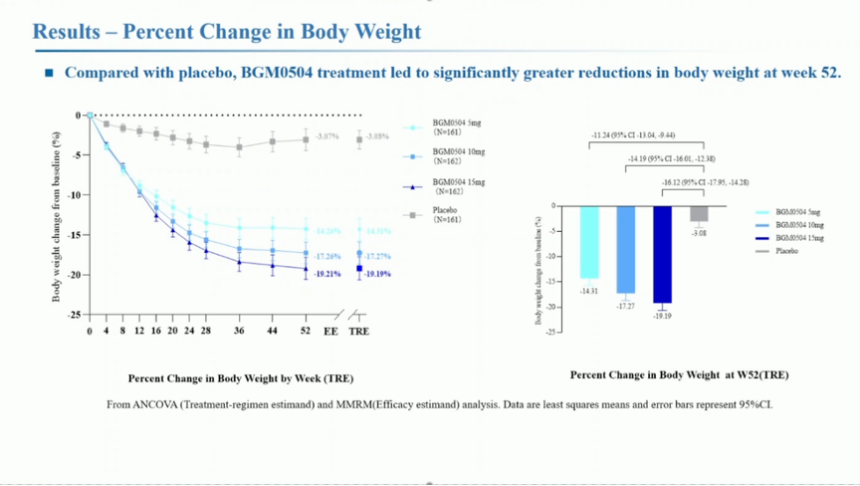
- On waist circumference and BMI, Prof. Ji described dose-dependent results. Mean waist circumference fell by 12.2 cm, 14.7 cm, and 16.5 cm with BGM0504 5 mg, 10 mg, and 15 mg, respectively, compared to 3.3 cm with placebo. Mean BMI declined by 4.81, 5.87, and 6.47 kg/m², respectively, versus with 1.03 kg/m² with placebo.
- On cardiometabolic risk factors, pooled analysis of all BGM0504 treatment arms demonstrated a 10.1 mmHg systolic blood pressure reduction and a 5.2 mmHg diastolic pressure reduction, versus 3.2 mmHg and 1.1 mmHg with placebo, respectively. Triglycerides fell 33.6% with BGM0504 versus 1.0% with placebo, total cholesterol declined 7.4% versus a 1.2% increase, LDL-c fell 12.7% versus 1.6%, and HDL-c increased 7.3% versus 0.6%. Serum uric acid declined by 70.7 μmol/L with BGM0504, compared to 18.2 μmol/L with placebo.
- On safety and tolerability, treatment-emergent adverse events were common across all arms, but rates of discontinuation due to adverse events remained low: (i) 1.74% with BGM0504 5 mg; (ii) 1.21% with 10 mg; (iii) 0.66% with 15 mg; and (iv) no discontinuations with placebo. Gastrointestinal adverse events were the most frequent and were characterized as generally mild to moderate in severity. Despite the accelerated titration schedule, the Prof. Ji characterized GI tolerability as comparable with other dual GLP-1/GIP RAs.
8. Sana’s UP421 hypoimmune islets exhibit sustained graft survival, C-peptide production, and immune evasion 14 months following implantation
In this exciting Friday afternoon symposium, Prof. Per-Ola Carlsson (Uppsala University, Sweden) presented 14-month follow-up results from the first-in-human transplantation of UP421, Sana Biotechnology’s allogeneic hypoimmune islets without immune expression. As background, UP421 cells are donor-derived islets evade the immune system by downregulating the expression of HLA class I and II molecules – cell-surface proteins which help the immune system distinguish the body’s own cells from foreign cells – and upregulating CD47 expression (a protein that promotes immune tolerance). In the present trial, a 42-year-old male participant with T1D and a baseline A1c of 10.9% received a subcutaneous transplant of 79.6 million UP421 cells in his forearm. Six-month interim results reported at ADA 2025 revealed detectable basal and stimulated C-peptide levels, along with complete evasion of adaptive and innate immune responses. The trial achieved its primary safety endpoint, with no severe adverse events or adverse events related to the study drug observed.
In today’s follow-up results, PET-MRI imaging provided evidence of islet cell graft survival 12 months following implantation (see below). Imaging utilized an exendin-4 tracer, which binds to islet cells expressing the GLP-1 receptor, primarily beta cells. There was greater uptake of the exendin-4 tracer at Month 12 than Month 3, reflecting increased integration with surrounding blood vessels.
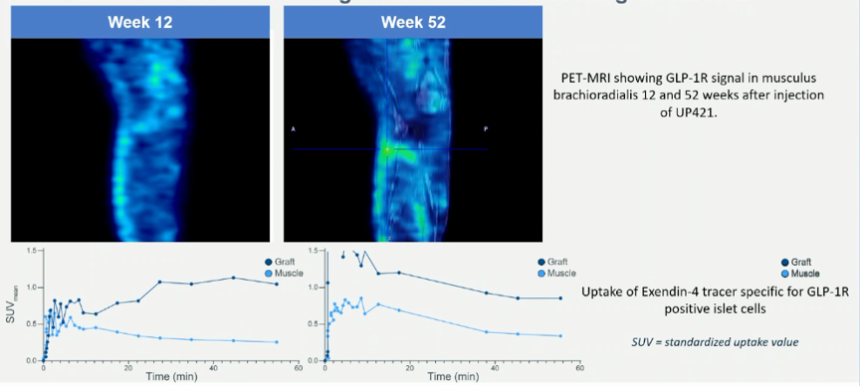
- At Month 14, the patient’s basal and stimulated C-peptide levels remained elevated from baseline and comparable to those observed at Month 6. These metrics saw a gradual decrease between Months 6 and 12. Because imaging showed no evidence of beta cell attack during these time points, Dr. Carlsson attributed this decline to less intensive clinical monitoring during the study period and the resulting deterioration of the patient’s glycemic control. Following an increase in monitoring between Months 12 and 14, basal and stimulated C-peptide levels, as well as 14-day glucose management indicator (GMI), returned to levels observed at Month 6.
9. Prescribing cascades in people with T2D: Dr. Berthon identifies medication pairs potentially contributing to polypharmacy
In this insightful session on real-world diabetes care, Dr. William Berthon (University of Edinburgh, UK) presented results from an analysis of prescribing cascades in people with T2D. Dr. Berthon explained that prescribing cascades – defined as medications initiated to treat adverse drug reactions caused by an initially prescribed medication – may be an under-recognized contributor to polypharmacy in people with T2D. He said that between 2012 and 2022, people with T2D in Scotland were prescribed a median of nine different medicines per person per year, with two potentially inappropriate medicines per year in those aged over 65 years. This analysis aimed to determine the frequency at which prescribing cascades occur and to highlight opportunities to reduce avoidable medication use.
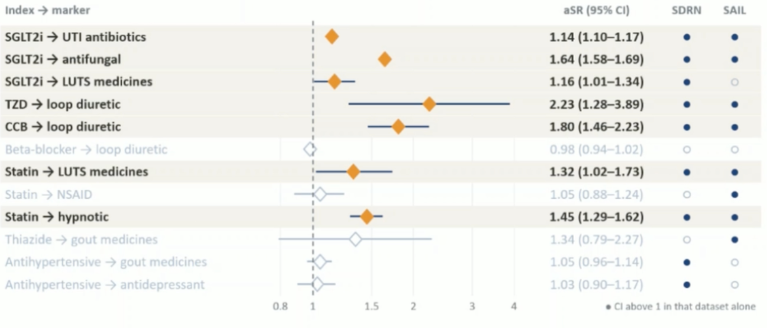
- Study design. This observational study focused on adults aged 40 years or older with T2D between 2015 and 2023, analyzing data from the Scottish National Diabetes Research Platform (SDRN; n=387,338) and the Wales SAIL Databank (n=296,582). Using a prescription sequence symmetry analysis, the researchers calculated adjusted sequence ratios (aSR), where values greater than one indicate a cascade signal.
- Prescribing cascades were identified primarily in SGLT-2 inhibitors and statins, with the strongest signals for TZDs and CCBs. Among 12 pre-selected hypothesized cascades, seven were found to have a cascade signal, six of them in both datasets independently. UTI antibiotics (aSR=1.14), antifungal medicines (aSR=1.64), and lower urinary tract symptom (LUTS) medicines (aSR=1.16) were more often prescribed after than before initiation of SGLT-2 inhibitors. For statins, LUTS medicines (aSR=1.32) and hypnotic medicines (aSR=1.45) were also more often prescribed after statin initiation. Notably, loop diuretics had the greatest aSR values, 2.23 and 1.8 after TZDs and calcium channel blockers (CCB) initiation, respectively. Among these, antifungal medication following SGLT-2 inhibitor initiation exhibited the greatest excess risk, with one in 12-15 new SGLT-2 inhibitor users having an excess antifungal prescription. In Scotland, there were also an estimated 1,842 excess loop diuretic starts among 71,307 new CCB users, and 1,238 excess hypnotic starts among 111,385 new statin users.
Manuscript currently under peer review.
- Dr. Berthon noted that not all cascades are inherently negative. He stated that because UTIs are a known reaction of SGLT-2 inhibitors, prescribing UTI antibiotics while continuing SGLT-2 inhibitors is often appropriate. However, the use of loop diuretics due to CCB or TZD may potentially be avoidable because oedema may not be recognized as drug-related. Additionally, loop diuretics carry risk of harms, such as electrolyte disturbances and acute kidney injury. As such, reducing the dose of CCB/TZD or switching may be safer for patients. Regarding the cascade between statins and hypnotics, he said the link between statins and sleep disturbances is still contested, but hypnotics carry their own risks, so taking a non-drug approach may be preferable in such cases. Overall, Dr. Berthon said recognizing an adverse drug reaction as the cause of a new symptom may identify opportunities to stop or modify the medicine responsible, helping to reduce polypharmacy. The manuscript is currently under peer review.
10. Orizuru’s OZTx-410 allogeneic iPSC-derived islet cell sheets demonstrate clinically meaningful C-peptide production after one year
In this compelling Friday morning presentation, Dr. Daisuke Yabe (Kyoto University, Japan) shared findings from the phase 1/1b OASiS-1 study (n=3), evaluating the safety and efficacy of OZTx-410, Japan-based Orizuru Therapeutics’ novel allogeneic iPSC-derived pancreatic islet cell therapy that requires immunosuppression. OZTx-410 is made up of thin sheets of uniform islet clusters that are transplanted into abdominal subcutaneous tissue, a site that enables easy access and monitoring. The sheet-form grafts are generated in a scalable manufacturing and cryopreservation process that eliminates the need for processing at the transplantation site. In a preclinical study, Orizuru’s proprietary sheet-form islets demonstrated successful engraftment and increased plasma human C-peptide levels five weeks after implantation.
- Study Design. OASiS-1 is an open-label, single-center, dose-escalation phase 1/1b study that recruited adults aged 20-65 years with T1D (n=3) and recurrent severe hypoglycemia. The study included a one-year primary evaluation followed by long-term follow-up after each participant was assigned to a different dose of OZTx-410. All participants underwent a single abdominal subcutaneous transplantation and received insulin along with induction and maintenance immunosuppression. The first participant underwent transplantation in February 2025, and all patients completed the one-year follow-up in August 2026.
- Dr. Yabe shared that all participants achieved clinically meaningful fasting and postprandial C-peptide levels after one year. The one patient who receiving the therapeutic dose (highest dose of OZTx-410) achieved insulin independence during the study. Notably, there were no dose-limiting toxicity or life-threatening events within the one-year period. Data cleaning and statistical analyses are ongoing for secondary endpoints, including C-peptide, A1c, and CGM metrics.
11. Dr. Martin Gaudier shares an update on AdoShell as it progresses toward first-in-human trials
In this compelling Friday afternoon presentation, Dr. Martin Gaudier (Adocia, France) presented encouraging preclinical and translational data for Adocia’s AdoShell, a fully retrievable hydrogel-based device designed to protect transplanted pancreatic islets from immune attack while allowing oxygen, glucose, and insulin to diffuse across the synthetic barrier. The platform aims to support functional islet replacement without the long-term systemic immunosuppression that currently limits broader use of cell-based therapies in T1D.
- AdoShell acts as a physical “immune shield” around transplanted islet cells. The hydrogel is designed to exclude larger immune components, including immune cells and antibodies, while allowing diffusion of small molecules such as oxygen, glucose, and insulin. In vitro experiments have shown preserved intracellular insulin in encapsulated human islets exposed to activated immune cells, whereas insulin content declined significantly in unprotected islets – indicating impaired function due to autoimmunity.
- Preclinical studies supported sustained function across multiple islet sources and animal models. In rats, implanted allogeneic islets continued to secrete insulin in immunocompetent diabetic rats. Further, researchers have found encapsulated human islets remained functional for at least two months in immunodeficient mice. In two mice followed for 104 days, researchers also reported no decrease in C-peptide secretion. Excitingly, AdoShell preclinical findings have supported stem cell-derived islets maturation after implantation, evident in rising levels of human C-peptide over time.
- Retrieved islets appeared to remain viable and functional. Human-islet implants retrieved from preclinical models maintained viability and glucose-stimulated insulin secretion comparable with pre-implantation measures 85 days after implantation.
- AdoShell continues to progress toward first-in-human trials. A multi-compartment design can house up to 150 kIEQ (thousands of Islet Equivalents) per device, with multiple implants allowing a total therapeutic dose of up to 750 kIEQ. The GMP-compatible manufacturing process maintained homogeneous islet distribution and function. Additionally, the team has developed a laparoscopic implantation approach.
Big Picture
12. 2026 ADA/EASD consensus broadens T2D management beyond glycemia, emphasizing earlier organ-protective therapy and holistic care
In the final session of EASD 2026, speakers presented the new ADA/EASD consensus report on the management of T2D, marking a further shift away from a glucose-centric treatment paradigm toward holistic, anticipatory, and longitudinal care. The consensus was simultaneously published in Diabetologia and Diabetes Care. Across presentations, the writing group emphasized earlier use of SGLT-2 inhibitors and incretin-based therapies, greater attention to weight and organ protection, personalization according to comorbidities and absolute risk, and systematic implementation of therapies already shown to improve outcomes. The 16-member writing group used the 2022 consensus as its starting point and reviewed RCTs, systematic reviews, and meta-analyses published through December 31, 2025.
- Prof. Dame Melanie Davies (University of Leicester, UK) introduced the report and highlighted its fundamental shift from managing hyperglycemia toward preventing complications across the life course.The consensus advocates for the consideration of SGLT-2 inhibitors and/or GLP-1-based therapies earlier, potentially from diagnosis, to provide organ protection and improve long-term outcomes. Earlier combination therapy should also be considered in people with concomitant CVD, CKD, and HF. The updated framework keeps the person with diabetes at the center but expands surveillance beyond traditional microvascular and macrovascular complications to associated conditions including HF, MASLD, obesity-related complications, physical function, and psychological and mental health. Prof. Davies stressed that realizing the benefits of the available therapies will depend on their “consistent, equitable, and systematic implementation.”
- Prof. Peter Rossing (University of Copenhagen, Denmark) reviewed the expanding therapeutic toolkit, emphasizing that lifestyle management remains foundational despite increasingly effective pharmacotherapy. Medical nutrition therapy should be personalized rather than centered on a single optimal macronutrient ratio, while intensive lifestyle therapy aiming for ≥10% weight loss can be considered with the possibility of diabetes remission. Physical activity recommendations incorporate the “5 S’s” – sitting less, stepping more, sweating through aerobic activity, strengthening, and sleep – with resistance exercise particularly important during weight loss to preserve skeletal muscle. Prof. Rossing also underscored the declining emphasis on metformin as an obligatory first treatment: metformin remains an effective glucose-lowering therapy, but the consensus supports earlier SGLT-2 inhibitor and GLP-1-based therapy when their broader benefits are relevant. Metabolic surgery should be considered at BMI ≥30 kg/m² (≥27.5 kg/m² for people of Asian ancestry) and more strongly considered at BMI ≥35 kg/m² (≥32.5 kg/m² for people of Asian ancestry).
- Prof. Francesco Giorgino (University Hospital of Bari, Italy) detailed how treatment should be personalized according to ASCVD, HF, CKD, MASLD/MASH, and other long-term conditions, with several notable new recommendations. In established CVD, GLP-1-based therapies with proven benefit are recommended to reduce MACE and all-cause mortality, while SGLT-2 inhibitors with proven benefit can reduce HF and kidney outcomes. Combination SGLT-2 inhibitor/GLP-1-based therapy can be considered when cardiovascular or kidney risk is high. For HF, SGLT-2 inhibitors remain central, while semaglutide or tirzepatide should be used in people with obesity and HFpEF to improve HF symptoms and outcomes. For CKD, SGLT-2 inhibitors form the foundation of HF/kidney protection, with GLP-1-based therapies and, in albuminuric CKD, finerenone layered on according to individual risk.
- Prof. Giorgino also highlighted MASLD/MASH as an entirely new section of the consensus. Weight reduction and lifestyle modification remain foundational, but a GLP-1-based therapy with demonstrated benefit should be used in people with obesity, T2D, and MASLD and preferred in those with biopsy-proven MASH. Pioglitazone or tirzepatide can also be considered for MASH. The document additionally addresses obstructive sleep apnea and emphasizes earlier intensive treatment in younger-onset T2D, while noting that drug selection in older adults should account particularly for frailty, safety, and tolerability.
- Prof. Nisa Maruthur (Johns Hopkins University) focused on turning the recommendations into routine clinical practice, emphasizing repeated reassessment rather than therapeutic inertia. Treatment goals should be specific, measurable, attainable, relevant, time-based, and developed collaboratively, with weight goals treated as importantly as glycemic goals. DSMES remains a central but underused intervention, while medical nutrition therapy, physical activity, social determinants of health, and individual preferences should remain integral even as pharmacotherapy intensifies. A particularly important message was that most people with T2D could benefit from considering an SGLT-2 inhibitor or GLP-1-based therapy early, potentially at diagnosis. When insulin is eventually needed, the consensus favors starting basal insulin while continuing GLP-1-based therapy when possible and retaining organ-protective agents such as SGLT-2 inhibitors. CGM should also be considered, particularly in people using insulin.
- Prof. Maruthur stressed that implementation is ultimately a health-system challenge, not simply a matter of choosing the right drug. The consensus calls for integrated, multidisciplinary care that incorporates the full burden of multiple long-term conditions and the individual's social context. Digital health, interprofessional teams, electronic health records, AI and analytics, and population-level surveillance could support a “learning health system,” while health systems should actively identify and address inequities in access to evidence-based diabetes care.
- Dr. John Buse (University of North Carolina) closed by outlining 13 knowledge gaps that remain despite the increasingly ambitious treatment paradigm. Among them, he highlighted: (i) limited trial evidence supporting increasingly stringent glycemic and CGM targets; (ii) uncertainty around how diabetes remission should be defined and maintained; (iii) insufficient evidence around early intensive therapy, particularly in younger-onset T2D; and (iv) questions around when therapy should be de-intensified later in life. He also stressed major evidence gaps around GLP-1-based therapy in pregnancy and in people for whom weight loss is not desired, as well as how best to preserve skeletal muscle and bone during substantial pharmacologic weight loss.
- Notably, Prof. Buse acknowledged that the evidence has not yet caught up with some increasingly common combination-treatment strategies. Despite the consensus repeatedly stating that SGLT-2 inhibitor plus GLP-1-based therapy can be considered in appropriate high-risk patients, he noted that there is still no compelling evidence establishing whether the two classes should routinely be combined. Other unresolved questions include optimal targets for medical and surgical weight loss, how best to maintain weight loss, whether maximum doses of highly effective therapies are necessary to obtain outcome benefits, and how to evaluate people who respond inadequately to otherwise effective treatments.
13. Know yourself: Prof. Chantal Mathieu delivers highly engaging lab talk on her experiences and career
In an inspiring presentation in EASD’s circular arena, Prof. Chantal Mathieu (KU Leuven, Belgium) offered a sweeping overview of her illustrious career. Despite the session’s title, “Lab Talk,” she chose to highlight the experiences that have defined her decades-long leadership of the diabetes field, both in and out of the lab.
- As a guiding principle, Prof. Mathieu advised the audience to “know thyself,” referencing the inscription in the Temple of Apollo in Delphi. She told the audience, “Life is too short to do things you don’t like.” Accordingly, she emphasized the importance of having goals and shared her two main goals in her life, to improve clinical care for people living with diabetes and to help prevent or cure T1D.
- When finding a mentor, she advised early career researchers to find an “inspiring mentor who you like and who has money to support you.” She spotlighted two of her mentors – Profs. Roger Bouillon (KU Leuven, Belgium) and Mark Waer (KU Leuven, Belgium) – and her early work focusing on vitamin D and in NOD mice to model T1D. She advised the audience to surround themselves with a diverse group of “clever, fun people” and to find allies and collaborators at any stage of career.
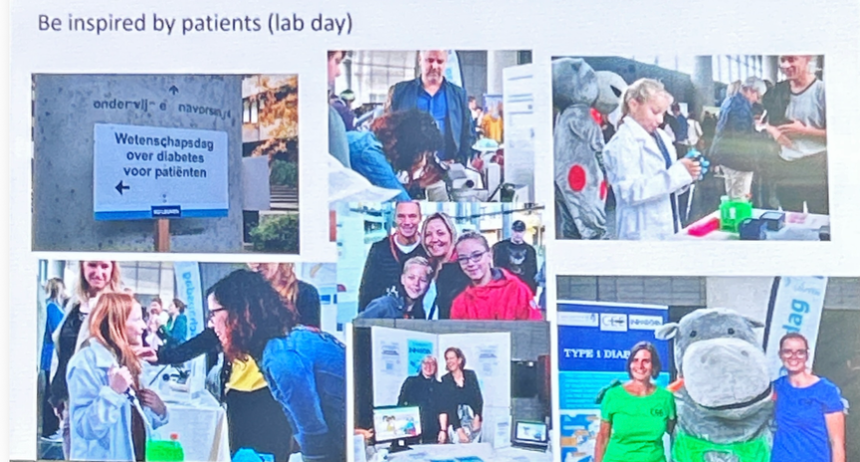
- Be inspired by patients. Prof. Mathieu shared that her inspiration is people living with T1D. As a physician-scientist, Prof. Mathieu emphasized the motivation she receives from clinical encounters, and she advised basic scientists to do the same. She highlighted that programs like “Lab Day” (as shown below, not to be confused with EASD “Lab Talks”), where patients with T1D come in and to learn about ongoing research, provides a practical way to connect basic scientists with the population their work aims to benefit.
14. An “interventional diabetologist”: Prof. James Shaw on expanding access to cell-based therapies in T1D
In one of the final sessions of EASD 2026, Prof. James Shaw (Newcastle University, UK) delivered a forward-looking presentation on the path toward making cell therapy a more routine part of T1D care. Despite extraordinary advances in continuous glucose monitoring, hybrid closed-loop systems, and automated insulin delivery, Prof. Shaw explained that modern care does not fully address the fear of hypoglycemia, unpredictable glucose excursions, cognitive burden, or lifestyle restrictions associated with T1D. However, beta cell replacement – through pancreas transplantation, deceased-donor islet transplantation, and emerging stem-cell-derived products – may be uniquely equipped to address this broader burden by restoring endogenous insulin production.
- While recent consensus guidance appropriately emphasizes diagnosis, insulin initiation, glucose monitoring, education, nutritional support, and complication screening, cell therapy remains largely absent from the standard clinical pathway. Similarly, Prof. Shaw explained the conventional role of a diabetologist has historically centered on insulin prescribing, education, interpretation of glucose data, and patient support. While these elements remain essential, Prof. Shaw contended that diabetes care must expand as transformative cell-based therapies become more available.
- Importantly, the field continues to advance beyond conventional deceased-donor transplantation. Prof. Shaw explored encouraging early work using anti-CD40 ligand-based immunosuppression, where all 12 recipients reported no apparent renal toxicity and achieved insulin independence following islet cell transplantation, along with several immune-evasive approaches designed to protect transplanted cells from rejection. Stem-cell-derived islets were spotlighted as an especially important tool for solving the supply problem inherent to deceased-donor transplantation. Prof. Shaw highlighted Vertex’s stem cell-derived islet program, in which laboratory-differentiated insulin-producing cells are infused using a procedure similar to conventional islet transplantation. In early clinical data (n=12), all recipients of VX-880 avoided severe hypoglycemia after a single infusion, exogenous insulin use declined, A1c values fell well below 7.0%, and 10 achieved complete insulin independence.
- Although approximately 400,000 people live with T1D in the UK, only roughly 30 islet transplants are performed annually there, and while clearly not everyone needs an islet transplant, the figures overwhelmingly reinforce major unmet need. Prof. Shaw therefore proposed the emergence of an “interventional diabetologist” – a clinician equipped to recognize appropriate candidates, discuss pancreas and islet transplantation alongside technology and education, coordinate referral to cell-therapy centers, and support patients before and after intervention. The work of an interventional diabetologist must be multidisciplinary, integrating diabetes specialists, transplant clinicians, specialist nurses, transplant coordinators, procedural teams, and local follow-up providers.
- Prof. Shaw presented Breakthrough T1D’s Centers of Reference for cell therapy as one option to support the interventional diabetologist model. Instead of functioning as an isolated expert center, the programs aim to spread knowledge, develop equitable referral pathways, harmonize care, benchmark outcomes, and prepare the diabetes workforce for licensed cell therapies. Education initiatives in interventional diabetology are already focusing on immune interception, precision monitoring, adjunctive therapies, and next-generation treatments.
15. Separating risk management from disease treatment: Prof. Francesco Rubino on the importance of separating preclinical and clinical obesity
During his presentation, Prof. Francesco Rubino (King’s College Hospital, London, England) discussed the movement towards new diagnostic criteria for obesity in clinical practice. Prof. Rubino’s presentation was based on the 2025 Lancet Diabetes and Endocrinology Commission on the definition and diagnostic criteria of clinical obesity. The commission was led by Prof. Rubino and featured over 50 leaders in the field, aiming to address the limitations of BMI as the sole metric of obesity and propose a more clinically relevant strategy for its definition. The resulting framework separated obesity into two categories of preclinical and clinical obesity. Although it received broad endorsement, Prof. Rubino noted that the commission sparked intense debate among HCPs. Their concerns were broadly critical of the “preclinical” label, citing concerns that it would redefine the disease state as a risk factor and therefore decrease access to obesity medications and increase stigma.
- Prof. Rubino clarified the definitions of preclinical and clinical obesity. Preclinical obesity is a risk state in which organ function is preserved. Clinical assessment should therefore evaluate individual risk beyond BMI alone to prevent harm before it occurs. In contrast, clinical obesity is an active disease, with organ function impaired by excess body fat. In this case, clinical assessment should involve identifying organ dysfunction and assessing its severity with the goal of improving or restoring health.
- He stated that this new distinction allows for proportionate care, paving the way for more personalized approaches aligned with the patient’s management plan, treatment options, and outcome measures.
- For preclinical obesity, the management plan should match care intensity to individual risk, with treatment options including lifestyle intervention and escalation to medication or surgery if risk has not been reduced. Therefore, patient outcome measures would include weight loss and other measures of risk reduction.
- For clinical obesity, the management plan should include prompt treatment, with its intensity matched to disease severity. Treatment options should include medication and/or surgery, with lifestyle intervention as an adjunct. Patient outcome measures include objective and patient-reported improvement in organ function, beyond weight loss alone.
- Prof. Rubino highlighted common misconceptions regarding the singularity of disease diagnosis and plurality of clinical management. To illustrate his point, Prof. Rubino provided an overview of medicine’s approach to disease, which includes: (i) definition; (ii) diagnosis; (iii) staging/risk stratification; and (iv) management. He noted that the first two components were a singular entity by design. In other words, disease definitions are purposefully narrow to provide consistency and aid HCPs in distinguishing between diseases. They are based on large bodies of evidence stemming from clinical trials and epidemiology. Plurality occurs when moving into staging/risk stratification and clinical management. Prof. Rubino asserted that it is during these stages when individual assessment is critical. Through one-on-one interactions with patients, HCPs can confirm diagnoses and necessary treatment plans for patients. He noted that obesity specialists are often familiar with these stages of risk scoring and management frameworks, which are stages that are distinct from disease definition and diagnosis.
- Indeed, there are inherent blind spots of any uniform label for obesity, Prof. Rubino said. He pointed out that throughout history and across medicine, art, and culture, obesity has been an especially heterogeneous disease. If obesity is considered a uniform risk factor, this could result in overlooking those who are already sick, delaying them from appropriate treatment. On the other hand, if obesity is considered a uniform disease, those who are healthy and incorrectly labeled with a disease may receive unnecessary treatment. Indeed, having a heterogeneous health status under the same label carries inherent complexity. As such, Prof. Rubino emphasized that it is the HCP who can ultimately determine the functional diagnosis during risk scoring and management, rather than through anthropometric definitions and diagnostic criteria.
16. Pros and cons of routine assessment of BMI and waist circumference in all adult patients for diagnosis of obesity, from Dr. Bill Dietz
In this session, Dr. William Dietz (George Washington University) discussed the strengths and limitations of BMI as a measure of obesity, proposing ways forward in the diagnosis of obesity. In the 1950s, BMI emerged as an opportunity to replace relative weight measurements, thus establishing obesity as a quantifiable risk factor grounded in BMI. Dr. Dietz noted that there were certainly advantages of BMI as a metric, such as its feasibility, reproducibility, and correlation to increases in weight and morbidity. However, its limitations are now widely discussed, such as its inability to fully account for racial differences, morbidity, or mortality. Perhaps most notable is that it is unable to directly measure body fat or its location, with Dr. Dietz reminding audience members that the same was true for measurements of waist circumference (WC), waist-to-hip ratio (WHR), and waist-to-height ratio (WHtR). While he reiterated the benefits of using WC, WHtR, and BMI to inform a diagnosis, he underscored that the goal should be the identification of biomarkers for obesity.
- Over time, a variety of metrics for obesity have emerged, Dr. Dietz said. According to a 2025 Lancet Diabetes and Endocrinology Commission, obesity is defined with BMI tailored to age, sex, and ethnicity plus an additional anthropometric measure. Obesity can also be defined using two of the following: (i) WC; (ii) WHR; (iii) WHtR; and (iv) direct measure of fat content, such as DEXA.
- On WHR, Dr. Dietz noted that it is often intrusive and not easily scalable. However, it is protective of increased hip circumference seen in gynoid obesity.
- On WHtR, he identified this as easily measured, height constant, and scalable, with supportive literature.
- On WC, its benefits were similar to those of WHtR. Dr. Dietz highlighted how it was easily measured, scalable, and also supported by a large body of evidence.
- He also advocated for studies that assessed both increased WC in people with overweight and normal WC in people with obesity. Insight into these connections and their impact could help HCPs in the clinical management of obesity as a heterogeneous condition.
- Dr. Dietz underscored the benefit of adding WC or WHtR to BMI for the diagnosis of obesity. This rationale was grounded in the fact that both metrics provide additional information compared to BMI in predicting morbidity and mortality. These three metrics identify high-risk obesity phenotype better than either measure alone. He especially advocated for WC as a useful metric, pointing out that regardless of weight loss, exercise or diet interventions decreased WC. Moreover, Dr. Dietz stated that BMI and WC should be routinely assessed in all adult patients. Although WC thresholds for adults have been published, they are yet to be standardized. Additionally, he noted that WC standards for pediatric populations may add appreciation to risk assessments of obesity.
17. Eight hours of sleep associated with optimal glycemic profiles in adults with T1D, regardless of insulin delivery approach according to Dr. Aleksandra Duda-Sobczak
In this fascinating Friday afternoon symposium, Dr. Duda-Sobczak (Poznan University of Medical Sciences, Poland) presented an analysis suggesting that sleep duration has a nonlinear relationship with glycemic management in adults with T1D. Approximately eight hours of sleep was associated with the most favorable glycemic profiles. This relationship was notably similar between people who received their insulin through advanced hybrid closed-loop (AHCL) systems and those that opted for conventional insulin therapy – multiple daily injections (MDI) or an insulin pump.
- The analysis included 282 adults with T1D treated with AHCL or conventional insulin therapy. Participants included 121 AHCL users and 155 non-AHCL users receiving either multiple daily injections (n=83) or conventional insulin pump therapy (n=72). Sleep duration and quality were self-reported using the Pittsburgh Sleep Quality Index. CGM data were used to evaluate TIR and several measures of glycemic variability.
Across treatment approaches, approximately eight hours of sleep was associated with a superior glycemic profile.After adjustment for age, sex, diabetes duration, and therapy type, sleep duration showed significant nonlinear associations with all assessed glycemic outcomes. Around eight hours of sleep corresponded to the highest estimated TIR and lowest measures of glycemic variability. AHCL users had significantly better glycemic outcomes, but AHCL did not change the relationship between sleep and glycemia. After approximately eight hours of sleep, predicted TIR was 77.1% with AHCL vs. 61.2% with conventional therapy. Predicted CV was 31.9% vs. 36.6%, respectively
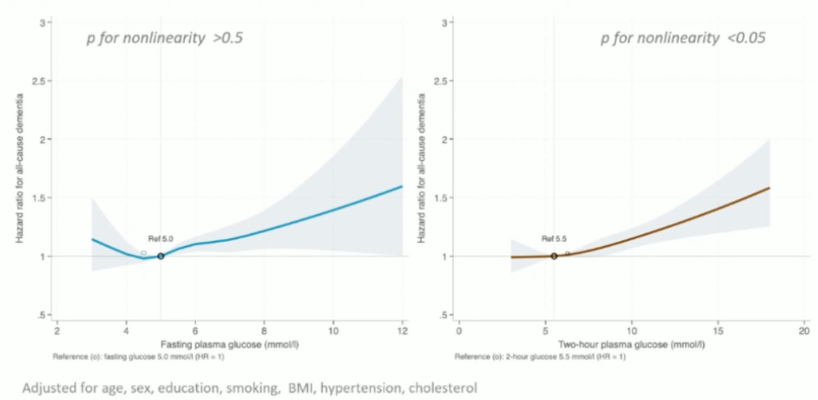
18. Results show greater 2-hour plasma glucose value is associated with all-cause dementia
In this session on aging and real-world diabetes care, Prof. Dianna Magliano (Baker Heart and Diabetes Institute, Australia) presented results from a study exploring how fasting plasma glucose and two-hour plasma glucose influence the development of dementia. Prof. Magliano said that while studies have shown that PWD have a higher risk of dementia compared to those without diabetes, less is known about how plasma glucose levels may play a role across the spectrum of glucose in people without known diabetes. Her findings ultimately lend support to the potential role of abnormal glucose metabolism in causing dementia, suggesting that intervention in people with prediabetes could be important in the prevention of dementia.
- Study design. This observational study (n=104,817) analyzed data from the Västerbotton Intervention Program, a public health promotion program in northern Sweden. Participants with known dementia had a mean age of 58 years, 43% women, mean fasting glucose of 5.5 mmol/L, and mean 2-hour glucose of 7.1 mmol/L. Those without dementia had a mean age of 49 years, 49% women, fasting glucose of 5.3 mmol/L, and 2-hour glucose of 6.6 mmol/L. The median follow-up time was 15.6 years. A Cox proportional regression was used to explore the relationship between 2hPG, FPG, and dementia, adjusting for age, gender, BMI, and education.
- Two-hour plasma glucose is positively associated with greater risk of all-cause dementia and vascular dementia but not fasting plasma glucose. While both fasting glucose and 2-hour glucose demonstrated upward trends in all-cause dementia, fasting glucose hazard ratios did not reach significance. Compared with a 2-hour glucose of 5.5 mmol/L, a glucose of 15 mmol/L was associated with a 1.4 times greater risk for all-cause dementia. When comparing Alzheimer’s disease and vascular dementia, fasting glucose again showed upward trends but was statistically insignificant. 2-hour glucose values demonstrated a stronger relationship with vascular dementia risk than Alzheimer’s disease, with a hazard ratio of roughly 1.3 at 15 mmol/L for Alzheimer’s disease vs. a hazard ratio of ~1.6 for vascular dementia.
-- by Kayla Cao, Allison Platt, Caroline Metz, Daniel Lee, Carina Sun, Riya Chatterjee, Kayla Mathieu, Elizabeth Rose, Monica Oxenreiter, and Kelly Close