ACC 2026 Day #2 Highlights –
Executive Highlights
- This year’s American College of Cardiology’s (ACC) Scientific Sessions continued today in New Orleans, LA. Attendees strolled along the river and through the French Quarter, as well as through the lively halls of the convention center. Scientific insight into CKM (cardiovascular kidney metabolic) syndrome, heart failure (HF), and much therapeutic overlap with type 2 diabetes continued today.
- Dr. Mustafa Al‑Jarshawi (Keele University, England) presented an analysis estimating the national cardiovascular impact of oral semaglutide in the US. Specifically, the study aimed to evaluate the real-world implications of the SOUL trial (n=9,650) and assess the potential of oral semaglutide for meaningfully reducing cardiovascular morbidity and mortality among high‑risk adults with T2D. Across 4.5 years, 847,598 MACE events were projected without treatment compared to 728,934 with treatment, corresponding to a 14% relative reduction and a number needed to treat (NNT) of 55. Prevented events, which totaled 118,664, included 28,430 cardiovascular deaths (NNT = 254), 83,489 nonfatal myocardial infarctions (NNT = 78), and 24,521 nonfatal strokes (NNT = 284). Notably, benefits were consistent across demographic and clinical subgroups.
- Dr. Ann Marie Navar (UT Southwestern) presented a compelling on-treatment analysis of enlicitide decanoate, an oral PSCK9 inhibitor currently in development. In 2025, results from the CORALreef Lipids trial(n=2,912) in adults with hypercholesterolemia and the CORALreef HeFH trial (n=303) of adults with heterozygous familial hypercholesterolemia were presented. 46% of participants in the trials had T2D. Recall that cardiovascular disease remains the leading cause of death for people with diabetes, which emphasizes the importance of tight lipid management for this population.
- For CORALreef Lipids, the placebo-adjusted mean percent LDL cholesterol reductions were -62.9% at Week 24 and -58% at Week 52. The overall incidence of adverse events was similar between the enlicitide group (64.3%) and placebo (62.1%). For CORALreef HeFH, the placebo-adjusted mean percent LDL cholesterol reductions were -62.2% at Week 24 and -65.3% at Week 52. The overall incidence of adverse events was again similar between groups, at 77.7% in the enlicitide group and 76.2% in placebo. Dr. Navar said that too many patients remain at risk of atherosclerotic cardiovascular disease due to elevated LDL cholesterol levels, and that enlicitide may help more patients reach targets.
- In an engaging session, Dr. Snehal Bhatt also discussed practical approaches to increase patient access to effective cardio-kidney-metabolic therapies. Although out-of-pocket costs have improved modestly compared to 2025, many incretin-based and other cardio-renal protective agents remain unaffordable for patients who would clearly benefit. With this context, Dr. Bhatt posed a central question for clinicians: when full-dose, guideline-recommended therapy is financially inaccessible, is limited or partial use of these agents preferable to no therapy at all? Read on for more!
Table of Contents
- 1. Projected population‑level cardiovascular benefit of oral semaglutide in high‑risk US adults with T2D
- 2. Further analysis from the CORALreef trials: Durability of PCSK9 inhibitor enlicitide for lipid lowering over 52 weeks
- 3. Dr. Tim Garvey on the “complication-centric” model of obesity care
- 4. Heart failure and obesity: Dual epidemics, single strategy?
- 5. Finerenone versus spironolactone in heart failure: Debating the gray zones
- 6. New directions in incretin-based cardiometabolic therapies
- 7. “Unveiling the Mask” between steroidal and non-steroidal MRAs: An argument for non-steroidal agents in CKM care
- 8. Practical GLP‑1 RA prescribing: nutrition, compounding, and navigating payer barriers
- 9. “We need to do a better job:” Dr. Peter Toth’s call for primary prevention of hypertension complications
- 10. Overcoming out-of-pocket cost barriers to cardio-kidney-metabolic therapies: practical considerations from Dr. Snehal Bhatt, including significant negativity on compounded GLP-1
1. Projected population‑level cardiovascular benefit of oral semaglutide in high‑risk US adults with T2D
In a moderated poster session, Dr. Mustafa Al‑Jarshawi (Keele University, England) presented an analysis estimating the national cardiovascular impact of oral semaglutide in the US. Specifically, the study aimed to evaluate the real-world implications of the SOUL trial (n=9,650) and assess the potential of oral semaglutide for meaningfully reducing cardiovascular morbidity and mortality among high‑risk adults with T2D.
- Study Design. Investigators applied SOUL trial eligibility criteria to NHANES data from 1988-2018, identifying adults ≥50 years with T2D, an A1c between 6.5% and 10%, and at least one of the following conditions: (i) coronary artery disease; (ii) cerebrovascular disease; (iii) symptomatic peripheral artery disease, or (iv) CKD. Event rates and hazard ratios, derived from the SOUL trial, were used to project 4.5‑year MACE – defined as a composite of cardiovascular death, nonfatal myocardial infarction, and nonfatal stroke.
- Results. An estimated 6.1 million US adults met SOUL trial eligibility criteria for oral semaglutide. Across 4.5 years, 847,598 MACE events were projected without treatment compared to 728,934 with treatment, corresponding to a 14% relative reduction and a number needed to treat (NNT) of 55. Prevented events, which totaled 118,664, included 28,430 cardiovascular deaths (NNT = 254), 83,489 nonfatal myocardial infarctions (NNT = 78), and 24,521 nonfatal strokes (NNT = 284). Notably, benefits were consistent across demographic and clinical subgroups. In addition, at 50% uptake in the population which met SOUL trial eligibility criteria and considering SOUL trial discontinuation rates of 15.5%, more than 59,000 MACE events could still be avoided with oral semaglutide use, along with more than 14,000 cardiovascular deaths, 41,000 nonfatal myocardial infarctions, and 12,000 nonfatal strokes.
- Clinical implications. The present analysis supports oral semaglutide as a meaningful, scalable cardiometabolic intervention for high‑risk adults with T2D. Moreover, the analysis suggests that widespread use could substantially reduce preventable cardiovascular events and narrow existing disparities in cardiovascular outcomes. Because oral semaglutide is an oral GLP‑1 RA, it may also improve treatment uptake and adherence compared with injectable options, supporting earlier initiation of cardioprotective therapy in routine practice. Realizing this population‑level impact will require system‑level strategies, including improved coverage, clinician education, and targeted implementation, to ensure eligible patients can access and remain on therapy.
2. Further analysis from the CORALreef trials: Durability of PCSK9 inhibitor enlicitide for lipid lowering over 52 weeks
Dr. Ann Marie Navar (UT Southwestern) presented a compelling on-treatment analysis of enlicitide decanoate, an oral PSCK9 inhibitor currently in development. In 2025, results from the CORALreef Lipids trial (n=2,912) in adults with hypercholesterolemia and the CORALreef HeFH trial (n=303) of adults with heterozygous familial hypercholesterolemia were presented. 46% of participants in the trials had T2D. Recall that cardiovascular disease remains the leading cause of death for people with diabetes, which emphasizes the importance of tight lipid management for this population. These post hoc analyses aimed to characterize the on-treatment population, as opposed to the broader study which may include results from patients who discontinued treatment or left the trial. This ensures greater clinical relevance.
- Post hoc analyses were conducted using data from the CORALreef Lipids (NCT05952856) and CORALreef HeFH (NCT05952869) trials, two randomized, placebo-controlled phase 3 trials of enlicitide 20 mg daily. On-treatment analyses were conducted, meaning that data were drawn from patients who completed the entire treatment course, as opposed to intent-to-treat extrapolation. The mean percent change in LDL cholesterol levels was evaluated in participants who remained on treatment at Week 24 and Week 52. For CORALreef Lipids, among the 1935 participants treated with enlicitide and 969 treated with placebo, 88% (n=1711) and 89% (n=861), respectively, remained on treatment at Week 52. For CORALreef HeFH, at Week 52, 94% (n=189) of participants receiving enlicitide and 91% (n=92) receiving placebo remained on treatment.
- Significant, sustained LDL cholesterol lowering was demonstrated through Week 52 (see figure below). For CORALreef Lipids, the placebo-adjusted mean percent LDL cholesterol reductions were -62.9% at Week 24 and -58% at Week 52. The overall incidence of adverse events was similar between the enlicitide group (64.3%) and placebo (62.1%). For CORALreef HeFH, the placebo-adjusted mean percent LDL cholesterol reductions were -62.2% at Week 24 and -65.3% at Week 52. The overall incidence of adverse events was again similar between groups, at 77.7% in the enlicitide group and 76.2% in placebo. While overall adverse event rates are high, this reflects the high rate of complications related to hypercholesterolemia and potentially diabetes, which a large portion of study participants had.
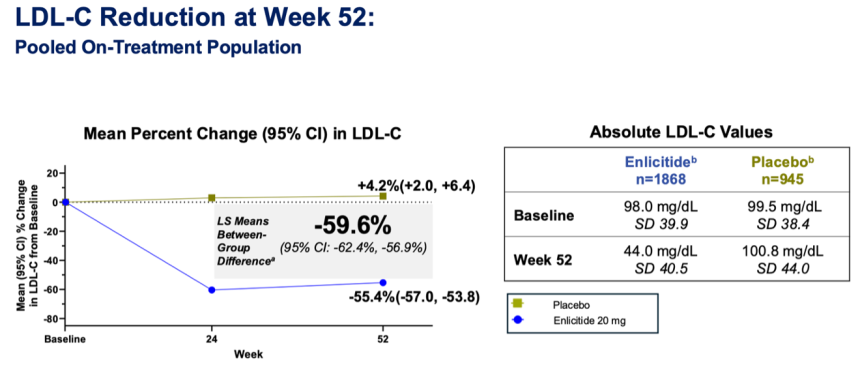
- The authors conclude that enlicitide offers safe, durable, and attractive LDL cholesterol lowering. The therapy’s oral formulation has notable access benefits compared to currently available PCSK9 inhibitors, which are administered subcutaneously. Rates of adherence were high, with 98% of patients following dosing instructions and missing no more than one dose per week on average. 87% of patients also chose to enroll in the open label extension study. Dr. Navar said that similarly high adherence can be achieved if patients are appropriately educated on administration, understand the rationale for therapy, and remain motivated. She said that too many patients remain at risk of atherosclerotic cardiovascular disease due to elevated LDL cholesterol levels, and that enlicitide may help more patients reach targets.
3. Dr. Tim Garvey on the “complication-centric” model of obesity care
In this lively Sunday “Great Hall” session, Dr. Tim Garvey (University of Alabama at Birmingham) emphasized the importance of “complication-centric” obesity care. Six medications, he noted, are currently approved by the FDA to treat obesity. Dr. Garvey characterized four of these six medications, approved in 2014 or earlier, as “first-generation.” First-generation therapies generally achieved less than 10% weight loss on average in RCT settings, Dr. Garvey explained, limiting their ability to meaningfully alter the long-term course of obesity-related complications.
- The obesity therapy paradigm shifted beginning in 2021, Dr. Garvey continued, when “second-generation” incretin-based agents were approved for chronic weight management, notably Novo Nordisk’s semaglutide and Lilly’s tirzepatide. In RCTs, these agents demonstrated unprecedented degrees of weight loss for a medical therapy, with average reductions that rival bariatric surgery in some populations. Further, such drastic weight loss has been shown to translate into substantial improvements in cardiometabolic risk factors and obesity-related complications (see below).
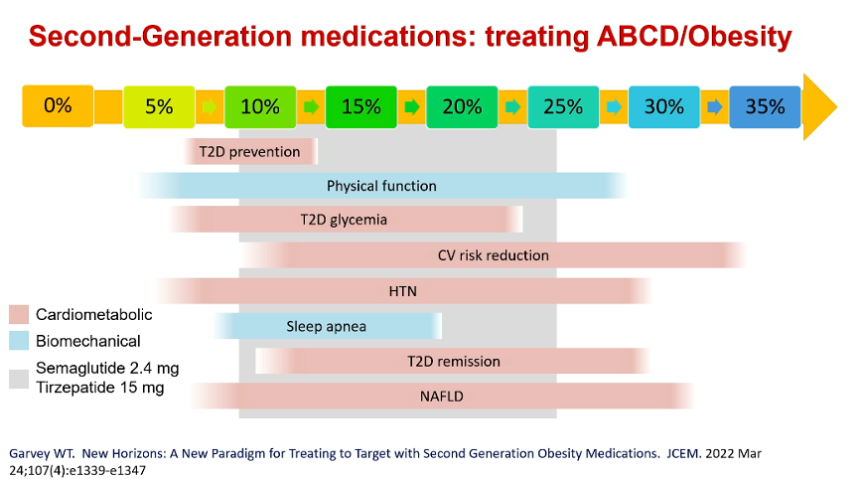
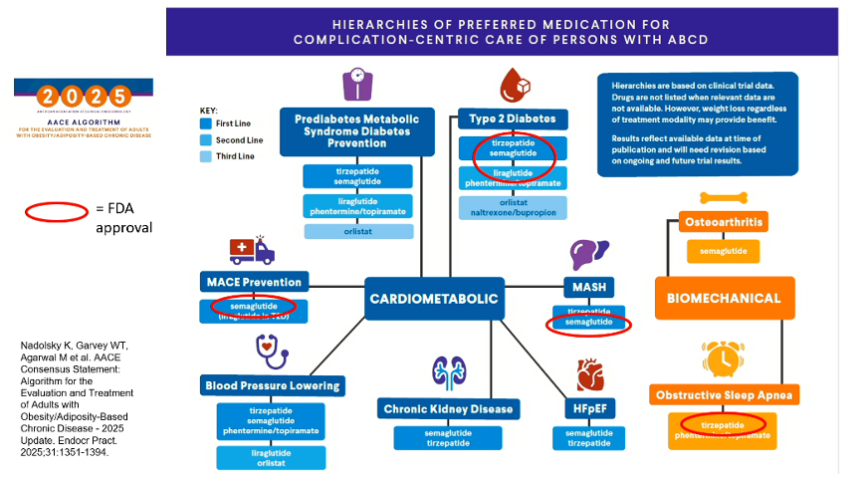
- Dr. Garvey also highlighted the AACE/EASO medical term for obesity: adiposity-based chronic disease (ABCD). He emphasized that the definition makes clear what is being treated – excess or dysfunctional adiposity – and why, namely that this is a lifelong disorder that impairs health. Thereby, AACE and EASO distinguish obesity management from weight-loss-centric to complication-centric care, aimed at mitigating the impact of T2D, cardiovascular disease, obstructive sleep apnea, MASH, and osteoarthritis, among other known complications. Such a characterization, Dr. Garvey added, informs a growing list of FDA-approved indications for these agents (see below).
4. Heart failure and obesity: Dual epidemics, single strategy?
Continuing the interdisciplinary discussion of heart failure (HF) at ACC 2026, a Sunday morning presentation discussed the treatment of obesity and HF in tandem. Prof. Magdy Abdelhamid (Cairo University, Egypt) discussed the mechanistic relationship between the two conditions, as well as other related conditions such as diabetes, and discussed the therapeutic classes that he views as most effective for management. Next, Dr. Josephine Harrington (University of Colorado) asked, “what’s in a name?” and discussed the importance of proper definitions for the conditions and how these impact care, including a study of visceral fat and biomarkers.
- Obesity and HF are linked by pathophysiology. Obesity leads to hemodynamic changes such as increased blood volume, cardiac wall stress, and cardiac output, as well as increased epicardial fat and general inflammation. Co-morbidities related to obesity are also related to HF, including obstructive sleep apnea, diabetes, hypertension, and hypercholesterolemia. However, biomarkers used to diagnose HF can differ in people with obesity compared to those without, which complicates detection. Prof. Abdelhamid said that unexplained dyspnea, or shortness of breath after minimal exertion, is a tell-tale clinical sign that is highly effective as a sign of HF that warrants investigation. Further, beyond the mechanistic overlap, mortality rates are elevated in people with HFpEF and obesity, said Prof. Abdelhamid. To address the overlap of the two conditions, he naturally turned to GLP-1 RAs, which have demonstrated robust cardiovascular benefit as well as weight loss. The therapies can also improve endothelial function, glycemic control, blood pressure, and be anti-inflammatory. In addition, he recommends the use of RAS inhibitors, SGLT-2 inhibitors, and MRAs. As he concluded, he urged the audience to take on the challenge of obesity and HF together, saying that obesity increases the risk of incident HF particularly for women and for patients at young ages.
- Dr. Harrington discussed the importance of properly defining HF and obesity. Traditionally, the diagnosis of obesity has relied on BMI, yet broader understanding of this metric’s limitations is continually expanding. She offered the examples of an extremely muscular bodybuilder, who may have a high BMI yet be very metabolically healthy, and the opposite case, where patients with a low BMI and very low muscle tone may have clinical signs of obesity. She discussed the importance of waist circumference measurements and characterizing visceral adipose tissue as better indicators of obesity and metabolic disease. In fact, patients in the highest tertile of visceral adipose tissue are at a 50% higher risk of heart disease compared to patients in the lowest tertile, after BMI adjustment. With these understandings in mind, Dr. Harrington said that clinical practice may have room to change, potentially offering GLP-1 RAs at lower BMI thresholds, improving the prevention of other CKM diseases, and better incorporating patients into research. On the HF front, she continued Prof. Abdelhamid’s discussion of biometrics in people with obesity – in the case of NT-proBNP, at the commonly accepted threshold of 300 pg/mL, people with obesity have approximately double the incidence rate of cardiac incidents. She urged attendees to consider the nuances of visceral fat location and “maintain a high index of suspicion” for HFpEF, especially in the setting of obesity.
5. Finerenone versus spironolactone in heart failure: Debating the gray zones
A highly engaging debate over the use of finerenone and spironolactone for HF awakened the crowd on Sunday morning. Dr. Muthiah Vaduganathan (Harvard University) and Dr. Robert Page (University of Colorado Anschutz) offered competing arguments for the two therapies, exploring the mechanisms of actions of the therapies, cost effectiveness, and much more. The two therapies are mineralocorticoid receptor antagonists that can reduce fibrosis and improve ventricular function for patients with heart failure (HF). Recall that there is a high amount of overlap between HF and diabetes, and that finerenone has also demonstrated benefits to glycemia and kidney disease, further motivating its use for the treatment of CKM as a whole. However, the therapy is less established than its steroidal counterpart, spironolactone.
- Pro: Finerenone is worth the cost over spironolactone for HF. Dr. Vaduganathan began by defining the pharmacological differences between non-steroidal MRAs such as finerenone and traditional, steroidal MRAs like spironolactone. Finerenone is bulky, more selective for the receptors, and has a shorter half-life compared to spironolactone, with equivalent potency. Based on such findings, global guidelines have already been updated to include finerenone in nations such as Japan. There have also been small head-to-head RCTs of the two therapies showing that finerenone is associated with less hyperkalemia and kidney-related adverse events compared to spironolactone.
- Dr. Vaduganathan also emphasized that finerenone is the most studied MRA for CKM syndrome,despite its relatively recent development. Further, the FINEARTS-HF trial demonstrated that finerenone can reduce the onset of diabetes by about 25% in patients taking the therapy and has a positive glycemic profile. In contrast, spironolactone has a neutral-moderately adverse glycemic profile that can lead to an increase in A1c values in just four months of spironolactone treatment. In all, Dr. Vaduganathan said that the magnitude of evidence for finerenone over spironolactone leads him to support its use when possible.
- Con: Caution is warranted with the use of finerenone over spironolactone for HF. Dr. Page said that studies such as the TOPCAT trial have demonstrated spironolactone’s efficacy for HF, which supports the continued use of this therapy. His highly engaging argument and presentation centered around cost effectiveness. He said that MRA therapy has demonstrated high value for patients with HFmrEF and HFpEF, and that SGLT-2 inhibitors were only of intermediate value, further supporting the use of these therapies. He offered a number of counterarguments to common rebuttals in his initial presentation: the risk of hypotension may be mitigated by using a low dose of spironolactone, and sexual side effects in men such as gynecomastia may also be mitigated by using eplerenone instead of finerenone. He conceded that the renal protective effects of finerenone also encourage its use over spironolactone, but overall, low-dose spironolactone is cost-effective for HF and proteinuria. He said that finerenone should be reserved for patients with HFpEF with CKD who do not respond to spironolactone, or those with excellent insurance or those who are “independently wealthy,” drawing laughs from the audience.
6. New directions in incretin-based cardiometabolic therapies
In this forward-looking session, Dr. Abraham Michael Lincoff (Cleveland Clinic) provided an overview of incretin‑based therapies in today’s pipeline. His talk centered on how rapidly the field is evolving, from dual and triple agonists to antibody‑based constructs and increasingly sophisticated oral formulations.
- Dr. Lincoff reviewed CVOT data, noting that in the SURPASS-CVOT (n=13,299), tirzepatide and dulaglutide demonstrated remarkably similar cardiovascular event rates. In the trial, tirzepatide conferred an 8% risk reduction in time to first MACE event compared to dulaglutide, despite their mechanistic differences. Moreover, he emphasized that the field still does not know how agonism versus antagonism across incretin pathways will meaningfully shift cardiovascular outcomes. Several agents are now in cardiovascular outcome trials, including Novo Nordisk’s CagriSema(GLP-1 RA/amylin analog) , Zealand/ BI’s survodutide (GLP-1/glucagon dual-agonist), Lilly’s retatrutide (GLP-1/GIP/glucagon triple-agonist), and more.
- He then turned to next‑generation molecules and delivery platforms. Dr. Lincoff discussed Amgen’s MariTide (maridebart cafraglutide, a GLP-1 RA/GIP receptor antagonist), an antibody‑based compound designed for once-monthly dosing. Notably, adults with overweight or obesity without T2D (n=465), the therapy demonstrated up to 20% weight loss versus 2.6% with placebo at 52 weeks. Among emerging therapies, Dr. Lincoff spotlighted retatrutide as one of the most compelling candidates given its profound weight‑loss efficacy. In a phase 2 trial (n=338), the therapy demonstrated a 24% weight reduction at Week 48, which Dr. Lincolff highlighted as far surpassing the FDA’s 5% weight reduction threshold as the benchmark for demonstrating clinical benefit. Notably, 100% of participants who received the highest two doses of retatrutide (8mg or 12mg) exceeded this 5% threshold in phase 2.
- On oral agents. Dr. Lincoff explained that oral peptide therapies remain challenging as peptides are inherently poorly bioavailable. Nevertheless, high‑dose peptide formulations with protective coatings, including the recently FDA approvedoral semaglutide 25 mg, allow for meaningful absorption while avoiding the logistical burdens of injections, cartridges, and cold‑chain storage. For non-peptide small‑molecule GLP‑1 RAs, like Lilly’s orforglipron, a more straightforward path to oral delivery is possible. Lastly, Dr. Lincoff explored Novo Nordisk’s oral amycretin, a unimolecular GLP‑1/amylin agonist, which conferred up to 10% weight loss in adults with T2D at Week 36. He framed this agent as an example of the next wave of incretin innovation that could broaden therapeutic options.
7. “Unveiling the Mask” between steroidal and non-steroidal MRAs: An argument for non-steroidal agents in CKM care
In this engaging Sunday morning session, Dr. Andrew Sauer (Saint Luke’s Health System) sought to clarify key differentiators between steroidal and non-steroidal mineralocorticoid receptor antagonists (MRAs) in cardio-kidney-metabolic (CKM) management. Dr. Sauer began his address by acknowledging his long-standing enthusiasm for spironolactone, among other steroidal MRAs (sMRAs). He emphasized that they remain underutilized in modern practice, despite proven benefits for cardiac reverse remodeling and kidney protection in patients with heart failure with reduced ejection fraction (HFrEF).
- Beyond HFrEF, Dr. Sauer pivoted to the TOPCAT trial (n=1,722), which investigated spironolactone for heart failure with preserved ejection fraction (HFpEF). While TOPCAT did not meet primary endpoints on cardiovascular death, aborted cardiac arrest, and heart failure hospitalization, “strange irregularities” underscore the need for further consideration, Dr. Sauer argued. Specifically, in Russia and Georgia, very low event rates suggest that many patients did not truly have HFpEF. In addition, nearly a third of patients not adhering to therapy (no detectable spironolactone metabolites) suggests that sMRAs may still have use in the population, despite trial findings. Nevertheless, guidelines now only give weak support, if any, for spironolactone in HF cases.
- In contrast to sMRAs, Dr. Sauer introduced finerenone and the broader class of non-steroidal MRAs (nsMRAs) as a rapidly evolving alternative. nsMRAs’ bulkier (non-steroidal) molecular structure, distribution between heart and kidney tissues, and relatively short half-life of ~2-3 hours (compared to >20 hours for spironolactone) could contribute to meaningful efficacy and safety differences compared to sMRAs. In the FIGARO-DKD trial (n=7,437), finerenone conferred a 13% reduction in the composite of cardiovascular death, non-fatal MI/stroke, and HF hospitalization in patients with T2D and CKD. Further, in the FINEARTS-HF study (n=6,001), finerenone achieved a 16% reduction in the composite of cardiovascular death and total HF events in patients with HFpEF and HF with mildly reduced EF (HFmrEF; EF ≥40% and elevated natriuretic peptides). Benefits were notably consistent across the left ventricular ejection fraction spectrum, and particularly large absolute gains in ejection fraction were made among those with recent worsening of HF. Therefore, Dr. Sauer argued that though TOPCAT’s analysis of an sMRA conferred heterogeneity and puzzling subgroup signals, FINEARTS-HF for an nsMRA showed no heterogeneity of benefit across ejection fractions.
- Lastly, Dr. Sauer highlighted what he termed “differentiators” that clinicians might not fully appreciate. Dr. Sauer began this discussion with metabolic effects, noting that sMRAs have off-target effects and have previously been associated with increases in A1c, among other concerning glycemic signals. Finerenone, on the other hand, has shown a trend towards a lower incidence of type 2 diabetes. Extending the discussion to cardiac arrhythmia outcomes, Dr. Sauer noted pooled analyses from FINEARTS suggest reductions in incident atrial fibrillation with nsMRA use in HFpEF and HFmrEF. In contrast, TOPCAT did not support spironolactone’s ability to prevent new-onset atrial fibrillation. Additional pooled analyses of finerenone studies also showed consistent reductions in cardiovascular death, HF events, and kidney disease progression.
- These insights were contrasted with BARACK-D (n=1,372) findings, which investigated low-dose spironolactone trial in CKD. BARACK-D failed to demonstrate robust reductions in major cardiovascular outcomes by spironolactone, leading Dr. Sauer to conclude that sMRAs have not matched nsMRAs’ proven efficacy in CKM management.
- Ending on a forward-looking note, Dr. Sauer stressed that the totality of evidence now positions nsMRAs, particularly finerenone, as increasingly central players in CKM care due to their more favorable cardio-renal, metabolic, and tolerability profile with respect to sMRAs.
8. Practical GLP‑1 RA prescribing: nutrition, compounding, and navigating payer barriers
In this practical session, Dr. Danielle Belardo (UC Davis) outlined the implementation of GLP-1 RAs into cardiometabolic care. Dr. Belardo emphasized that GLP‑1 RAs must be paired with structured nutrition and lifestyle support to optimize outcomes and minimize adverse effects. She reviewed practical strategies for managing GI side effects, including slower titration, dose pauses during symptomatic periods, and reinforcing hydration and protein‑forward eating patterns. Further, she highlighted the risk of lean mass loss during rapid weight reduction, underscoring the importance of adequate protein intake and consistent resistance training to preserve muscle and metabolic health.
- On compounded GLP-1 RAs. Dr. Belardo addressed the growing use of compounded GLP‑1 RAs, highlighting major safety and regulatory concerns. She noted that fewer than 50% of US states require compounding pharmacies that produce sterile medications to meet recognized quality and sterility standards, creating substantial risks related to contamination, potency variability, and dosing errors. She reinforced that FDA‑approved GLP‑1 RAs remain the only evidence‑based, quality‑assured options and should be prioritized in all clinical settings.
- On coverage barriers. Importantly, Dr. Belardo focused on payer realities, emphasizing that coverage is often the primary barrier to accessing GLP‑1 RAs. She reviewed common insurer requirements such as step therapy, documentation of failed first‑line agents, and strict BMI or comorbidity thresholds that exceed FDA labeling. For example, certain plans may require BMI ≥35 or ≥40, or multiple comorbidities, despite the FDA criteria being BMI ≥30 or ≥27 with a single comorbidity.
- Dr. Belardo highlighted strategies clinicians can use to navigate these barriers. She emphasized the importance of preparing strong, structured appeals when coverage is denied, combining a clinician’s letter detailing medical necessity with a patient narrative describing functional limitations and prior lifestyle efforts. When initial appeals are unsuccessful, she encouraged clinicians to escalate to peer‑to‑peer reviews, request employer‑level exceptions for self‑insured plans, and, when appropriate, pursue a state Independent Medical Review, which can overturn denials when the patient meets FDA criteria and has a 68% success rate for overturning denials in California.
9. “We need to do a better job:” Dr. Peter Toth’s call for primary prevention of hypertension complications
In this crowded Sunday morning symposium, Dr. Peter Toth (CGH Medical Center) issued a call to action to his audience, urging HCPs to treat hypertension as a true cardio-renal-metabolic emergency, rather than a background vital sign. Framing family and pregnancy history as a “wonderful crystal ball” for risk stratification, Dr. Toth argued that clinicians too often wait for overt disease, rather than acting on early risk signals. “Collectively,” he concluded, “I know that we love our patients. But we need to do a better job.”
- Dr. Toth opened his argument with a cautionary perspective, reminding the audience that cardiovascular disease remains the leading cause of death in the US and worldwide, even exceeding deaths from cancer and chronic respiratory disease combined. Yet, despite the fact that it is “preventable and treatable” in the words of Dr. Toth, just one in five people with hypertension achieves adequate management globally. Thereby, Dr. Toth established hypertension as a massive, largely preventable driver of morbidity and mortality that demands earlier intervention.
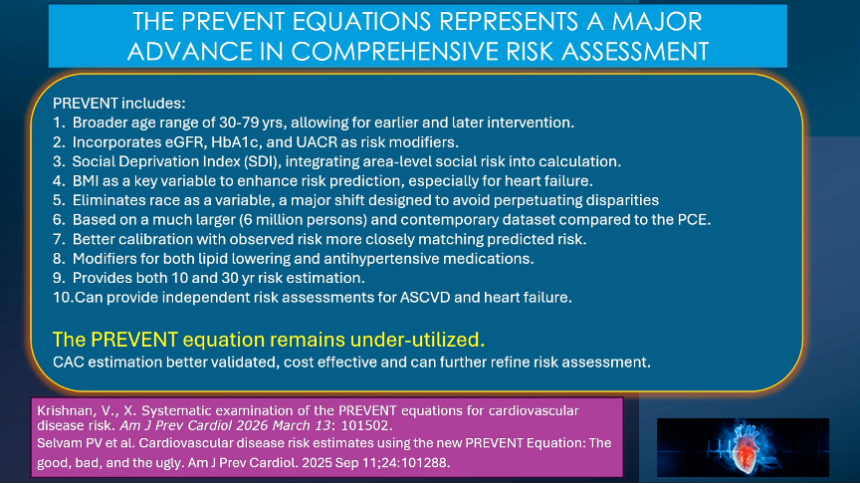
- Clinicians too often wait until disease occurs, Dr. Toth continued, rather than acting during primordial (mitigating the development of risk factors) and primary prevention (modifying existing risk factors) windows – thereby missing critical opportunities to reduce hypertension complications. Accordingly, Dr. Toth strongly advocated for new models of risk assessment, notably including the PREVENT equation (see below).
- In people with T2D, intensive BP lowering has been shown to improve both cardiac and renal outcomes. Thereby, Dr. Toth shared the recommended BP goal to be <130/80 mmHg. Separately, in cases of T2D and CKD (eGFR <60 mL/min/1.73m2 or moderate to severe albuminuria of <30mg/g), an ACE inhibitor or ARB is preferred. In people with T1D, Dr. Toth shared a systolic goal of <120 mmHg, if feasible for the patient. However, he did note that BP guidelines for people with T1D differ between the AHA and ACC guidelines and thus can be individualized to the patient profile.
- As an adjunct to therapy, Dr. Toth also highlighted weight loss and lifestyle changes as capable of conferring meaningful impacts on BP. For patients with overweight or obesity and hypertension, guidelines now recommend structured weight-loss programming, including pharmacologic interventions when appropriate, to improve BP and vascular health. Interestingly, Dr. Toth noted that he had seen several patients discontinue two to three anti-hypertensive medications after substantial weight loss.
10. Overcoming out-of-pocket cost barriers to cardio-kidney-metabolic therapies: practical considerations from Dr. Snehal Bhatt, including significant negativity on compounded GLP-1
In this engaging Sunday morning session, Dr. Snehal Bhatt discussed practical approaches to increase patient access to effective, cardio-kidney-metabolic therapies. Although out-of-pocket costs have improved modestly compared to 2025, many incretin-based and other cardio-renal protective agents remain unaffordable for patients who would clearly benefit. With this context, Dr. Bhatt posed a central question for clinicians: when full-dose, guideline-recommended therapy is financially inaccessible, is limited or partial use of these agents preferable to no therapy at all?
- Dr. Bhatt began his discussion by cautioning against compounded medications as a primary workaround.Without FDA review, compounded products may have uncertain doses, formulations, or quality – as discussed in recent FBIand FDA warnings directed at telehealth companies. At the same time, Dr. Bhatt noted that telehealth platforms, including Ro and Hims & Hers, have begun partnering directly with manufacturers to offer authentic products. Yet, these sites often require paid memberships to access such medications, increasing total out-of-pocket costs unless patients or their family members are already enrolled. Manufacturer assistance programs (e.g. NovoCare and LillyDirect), he concluded, currently serve as partial solutions to modestly reduce cost. Nevertheless, he stressed that even these programs do not make the therapies affordable for many patients.
- Additionally, Dr. Bhatt highlighted that some patients and clinicians have turned to off-label dosing strategies, including microdosing and “click counting,” to support titration, improve tolerability, or stretch medication supply for financial reasons. For example, a 15-mg tirzepatide multidose pen can be reconceptualized as 240 “clicks” (or 60 clicks per 15‑mg dose), which allows clinicians to recommend an intermediate 7.5‑mg dose (30 clicks) and potentially extend a one‑month pen to two months – effectively halving monthly cost for selected patients. However, these approaches, Dr. Bhatt emphasized, can increase dosing complexity and require patients to manage extra needles and precise click counting. Furthermore, extension beyond one month exceeds known formula stability, risking the delivery of an inactive drug and “months of placebo,” as Dr. Bhatt described it.
- In closing, Dr. Bhatt urged clinicians to approach all “workaround” strategies with caution and individualization to patient profiles. While current access pathways are imperfect, Dr. Bhatt did express optimism for the future. Increased competition in the anti-obesity medication pipeline and broader CKM space will likely continue to drive prices down, broadening access for many patients who stand to gain from these therapies.
-- by Kayla Mathieu, Elizabeth Rose, Nour Khachemoune, and Kelly Close