Updated algorithm places a greater emphasis on prediabetes and T2D prevention and a new section on diabetes classification
Endocrine Practice released the 2026 update to the American Association of Clinical Endocrinology’s consensus statement on adult T2D management, which has heightened our anticipation for this topic at AACE later this week in Las Vegas. The publication — authored by 14 experts, including Dr. Susan Samson (Mayo Clinic), Dr. Irl Hirsch (University of Washington), Dr. Cecilia Low Wang (University of Colorado Anschutz), and Dr. Guillermo Umpierrez (Emory University) et al. — spans 11 sections (one more than in 2023, when it was last updated) and cites nearly 400 references, roughly double the prior update.
New guidance places greater emphasis on prevention
Notably, the 2026 update places even greater emphasis on prevention than the 2023 guidelines, highlighting lifestyle modification and proactive treatment of overweight and obesity as central to managing prediabetes and T2D. Identifying excess weight as the main driver of insulin resistance and progression to diabetes, it highlights 7-10% weight loss as a meaningful clinical threshold for prevention, adding that even greater weight loss can further reduce progression risk and improve related conditions like hypertension, dyslipidemia, and fatty liver disease. Where lifestyle changes – which are recommended for everyone with prediabetes, regardless of weight – alone are insufficient, AACE supports the early use of weight-loss therapies where indicated. It also stresses early and aggressive management of cardiovascular risk factors in tandem.
New section focuses on diabetes classification
The statement also introduces a new classification algorithm to ensure clinicians consider causes beyond T2D (even though it is the most common), including T1D, LADA, monogenic diabetes, and pancreatic disease. As misdiagnosis can occur, it stresses that early, correct diagnoses are essential to properly determine treatment plans and reduce the risk of complications.
Diabetes Classification Algorithm
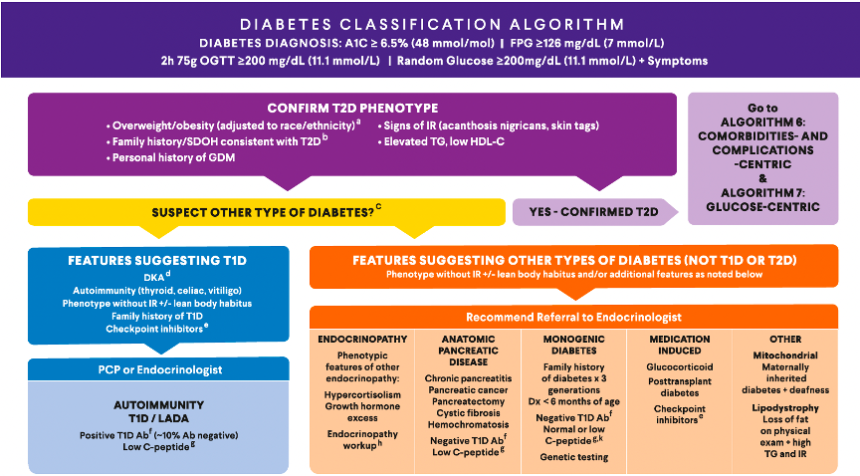
Source: Endocrine Practice, “American Association of Clinical Endocrinology Consensus Statement: Algorithm for Management of Adults With Type 2 Diabetes – 2026 Update,” Dr. Susan Samson et al.
In addition to these updates, the 2026 consensus statement reinforces AACE’s longstanding emphasis on reducing complications and comorbidities in adults with T2D, with structured guidance on managing dyslipidemia, hypertension, and glycemia. This includes recommendations for insulin initiation and titration, as well as detailed profiles of pharmacotherapy for both T2D and obesity.
Authors to detail evidence and implications of the updated algorithm at AACE 2026
Lead author Dr. Susan Samson will take the stage at AACE on Thursday to discuss how clinicians can use the algorithms presented in the publication to formulate personal treatment plans for patients with T2D, focusing on their current or potential risk of comorbidities and complications. At 3:30 pm in Room 125 of Caesars Forum, she’ll discuss some of the recent evidence backing up these recommendations.
Earlier in the day, she’ll be joined by several of the other authors – Dr. Cecilia Low Wang, Dr. Scott Isaacs (Emory University), Dr. Kenneth Izuora (UNLV), and Dr. Thanh Hoang (Walter Reed National Military Medical Center) – so that attendees can connect with them live and discuss what this update means for their practice. We are especially looking forward to hearing their perspective on how a combination of lifestyle modifications and therapies can prevent progression of prediabetes to T2D – the document specifically points to metformin, pioglitazone, and acarbose as demonstrating efficacy in clinical trials, and we remain curious to see what is needed to secure coverage expansions so that therapies can be offered at greater levels for this preventive purpose.
-- by Jeremy Alkire, Monica Oxenreiter, and Kelly Close