MannKind 1Q26 – Afrezza quarter driven by resource reallocation and sales force reorganization (+3%); preparations for Afrezza pediatric launch complete before May 29 PDUFA date –
Executive Highlights
- MannKind announced today its 1Q26 results on a call led by CEO Dr. Michael Castagna and CFO Mr. Christopher Prentiss (press release, investor presentation, webcast).
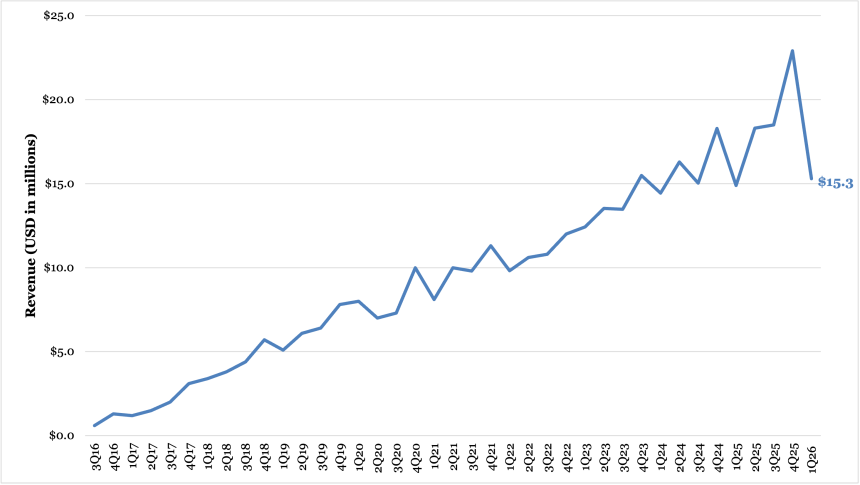
- Afrezza sales were $15.3 million, up 3% from 1Q25 but down 33% sequentially. Afrezza’s relatively weak performance compared to recent quarters – Afrezza exceeded 20% YOY growth in both 3Q25 and 4Q25 – was attributed to: (i) reallocation of Afrezza resources to support the expected launches of pediatric Afrezza and FUROSCIX ReadyFlow Autoinjector later this year; and (ii) a sales force reorganization that led to customer disruptions.
- V-Go recorded $3.1 million in revenue, down 23% from 1Q25 and 28% sequentially. The continued sales decline results from MannKind’s decision to remove V-Go from its sales force in 4Q24 to prioritize Afrezza’s commercial expansion.
- Dr. Castagna characterized the pending FDA approval of Afrezza in the pediatric population as a significant growth opportunity. Launch preparations are completed before the PDUFA date of May 29. If Afrezza is approved, the launch would initially prioritize the 360,000 children, adolescents, and young adults aged 8-22 years with T1D in the US. Market research conducted by MannKind suggested a peak share potential of 23%-37%.
- MannKind completed enrollment in the pilot phase of the INHALE-1st study, which is evaluating Afrezza as a first-line therapy in newly diagnosed pediatric T1D. Per ClinicalTrials.gov, the trial, which aims to enroll 100 participants, will evaluate Afrezza in combination with basal insulin for youth aged 10-<18 years for 13 weeks, followed by an optional 13-week extension period.
Table of Contents
Financial Highlights
1. Afrezza revenue totals $15.3 million, a marked decline from recent quarters but still up YOY
Afrezza sales were $15.3 million, up 3% from 1Q25 but down 33% sequentially. Afrezza’s relatively weak performance compared to recent quarters – Afrezza exceeded 20% YOY growth in both 3Q25 and 4Q25 – was attributed to the company’s reallocation of Afrezza resources to support two expected launches this year, pending FDA approval: (i) pediatric Afrezza (PDUFA date of May 29); and (ii) FUROSCIX ReadyFlow Autoinjector (PDUFA date of July 26). To prioritize these launches, MannKind reorganized its sales force. This included transitioning the company’s nephrology targets to the existing Afrezza sales team; however, customer disruptions resulted. Mr. Prentiss said steady improvements are expected over the remainder of the year.
- MannKind launched Afrezza in India in 4Q25 with its commercial partner Cipna. Updates on this launch were minimal after the company shipped 600,000 products to Cipla in 4Q25. MannKind is optimistic this launch will drive meaningful growth for Afrezza since India has one of the highest global diabetes burden – a 2023 study published in The Lancet Diabetes and Endocrinology estimated 11% of the population (101 million people) had diabetes. Dr. Castagna said the company hopes to increase awareness of Afrezza among Indian healthcare providers who attend ADA in June.
- As a reminder, Afrezza received FDA approval for a label update clarifying its initial conversion dose when switching from MDI or insulin pumps. Dr. Castagna said this label should provide clearer guidance to healthcare providers, which will benefit the imminent pediatric launch.
2. V-Go revenue continues to decline (-23%) after sales force removal in 4Q24
V-Go recorded $3.1 million in revenue, down 23% from 1Q25 and 28% sequentially. The decline resulted from MannKind’s decision to remove V-Go from its sales force in 4Q24 to prioritize Afrezza’s commercial expansion. The device remains available for existing users; however, its annual sales peaked in 2024 at $18 million compared to $16 million in 2025 –consistent with company expectations.
Pipeline Highlights
1. Afrezza in pediatrics: Launch preparations complete ahead of May 29 PDUFA date
Dr. Castagna characterized the pending FDA approval of Afrezza in the pediatric population as a significant growth opportunity. Launch preparations are completed before the PDUFA date of May 29. If Afrezza is approved, the launch would initially prioritize the 360,000 children, adolescents, and young adults aged 8-22 years with T1D in the US. Market research conducted by MannKind suggested a peak share potential of 23-37%.
- Afrezza’s pediatric regulatory submission was supported by the INHALE-1 study in children aged 4-17 years. The trial included an initial randomized 26-week period (n=230), followed by a 26-week extension. At Week 26, after a noncompliant participant was excluded from the modified ITT analysis, A1c outcomes with Afrezza were noninferior to a rapid-acting insulin analog with basal insulin. A1c and Time in Range were relatively stable through 52 weeks with no changes in the safety profile.
- MannKind completed enrollment in the pilot phase of the INHALE-1st study, which is evaluating Afrezza as a first-line therapy in newly diagnosed pediatric T1D. Dr. Castagna added that the first 10 patients have completed the study. Per ClinicalTrials.gov, the trial, which aims to enroll 100 participants, will evaluate Afrezza in combination with basal insulin for youth aged 10-<18 years for 13 weeks, followed by an optional 13-week extension period. This indication would allow MannKind to better target the roughly 30,000 individuals diagnosed with T1D annually in the US.
- While unmentioned on today’s call, additional Afrezza studies are underway:
- INHALE-GDM (NCT06535789) is evaluating Afrezza after meal tolerance tests in pregnant women aged 18–40 years with gestational diabetes (n=30). Dr. Castagna said in 3Q25 that the first 10 participants met company expectations regarding dosing protocol and training materials.
- The INHALE-AIDEx study (NCT06880835) is assessing Afrezza during exercise (n=30). Per ClinicalTrials.gov, both INHALE-GDM and INHALE-AIDEx are actively recruiting, with the last updates posted in May 2025 and September 2025, respectively.
2. FUROSCIX ReadyFlow Autoinjector launch preparations continue before PDUFA date in July
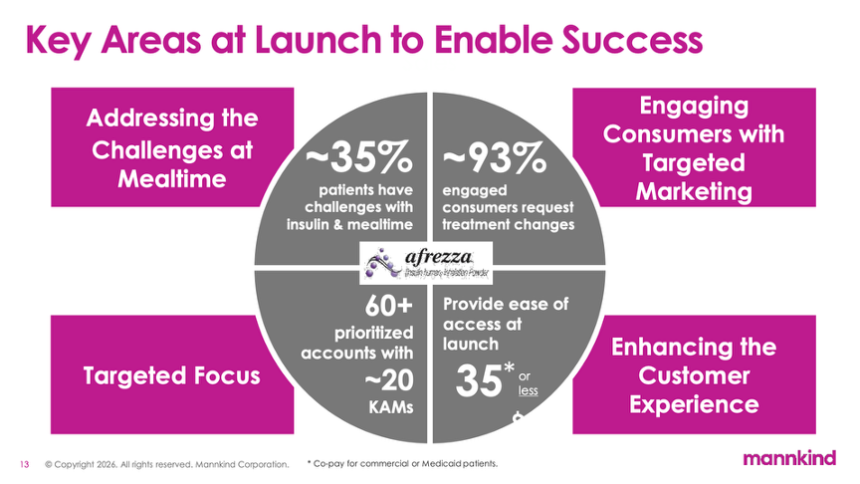
MannKind also expects to launch the FUROSCIX ReadyFlow Autoinjector this year, with its PDUFA date set for July 26.In October 2025, MannKind completed its acquisition of scPharmaceuticals, the manufacturer of FUROSCIX (furosemide), which treats edema (i.e., fluid buildup) due to chronic kidney disease or chronic heart failure. FUROSCIX is an on-body infuser that subcutaneously administers furosemide for five hours, providing an alternative to IV diuretics. Dr. Castagna emphasized the autoinjector would significantly simplify use, reducing administration time to seconds; require minimal training; and reduce rehospitalization potential. Market research also indicated two-thirds of healthcare providers would expand their use of FUROSCIX with the autoinjector. Due to the acquisition, MannKind shifted its endocrine sales team to additionally target nephrology.
Analyst Q&A
Q (Samuel Rodriguez Santiago, Cantor Fitzgerald): You guys said that you're still confident hitting 110 to 120 in sales for this year. Is that including both the on-body and the AUTO-INJECTOR? Is this due to the potential approval of the AUTOINJECTOR? And then do you expect the auto injector to like cannibalize the onboarding fees or quite quickly?
A (Dr. Michael Castagna, CEO): So the forecast for the year is basically looking at how the units came out in 2025 and kind of proportionally, you know, as we look at our and our curves, they look like they're consistent with 2025. So I'd say the auto injector is a small portion of that range, but not the reason we expect to hit 110. It'll we believe the Omada Infusers should be able to get in that direction and that the auto injector will just bring it there faster. So, depending on when that launches, when that gets out there, and how fast we get everything moving, that'll be a great opportunity.
One of the challenges in the first half so far is we actually don't have samples this year and that's just due to the nature of how we're preparing for auto injector, managing our inventory supply. So that is another key thing that we're really gearing up to sample the auto injector and get that out there to get the adoption faster.
Q (Brandon Folkes with H.C. Wainwright): Maybe just on AFREZZA, AFREZZA, pediatrics, do you have to do anything on the contracting side post the AFREZZA, Pedes label expansion, or does that fall into the current coverage contracts that you have? And then secondly, can you just talk about some of the. Yeah. How do you assess the success of the PD ramp early on? You know, what are some of your objectives that would drive you to invest further behind the PEDs launch versus sort of, you know, maybe keep investment where it is or pull back? Thank you.
A (Dr. Michael Castagna, CEO): So I think on the on the contracting, because it'll be the same SKUs. There's not like we have to add another skew to the contract. So I think from that perspective, there's not updates. We are we've had a couple of presentations to the large PBMs and some regionals, and we are exploring how do you free up prior authorizations and simplicity for parents and patients around pediatrics? And it does feel like there's an appetite to free up that friction that happens in the adult side for kids at least, and then, depending on the conversations, could go into adults. But we're really focused on making sure Medicaid access exists for kids. And the big three PBM commercial lives have access for kids. I don't think it all happened July 1st, but I think as we get throughout the year going into January next year, I would expect updated clinical guidelines at most of the payers to support the use of AFREZZA, even adult, because the clinical guidelines, what we're finding is people weren't and are not aware of the FDA guidelines putting AFREZZA equal to an aid system and an MULTIPLE DAILY INJECTIONS.
And so for them, the two calls to three step edits is against the standards of care now. So from that perspective, I actually expect with PEDs approval guidelines to get updated and payer criteria to get updated in a positive way going into 2027. And so far, all indicators are positive. In terms of PD success, I think key things we'll be looking for is not as much on the revenue side.
Obviously we want revenue to grow, but how many prescribers do we have? How many institutions have tried? How many times have they repeated that trial? And how many patients do we see coming into our referral hub? Those are going to be the key metrics we're looking at every week and we will share those as the as they come out in the quarters. But we think that's really important is look at breadth and depth of prescribing and how many patients get uptake. And we will have access programs for those patients to make sure nobody goes without the option of AFREZZA. So that's our commitment as we look through 2026 is to make sure that payer friction is not one of the reasons to not prescribe.
And so we will we'll do everything we can to minimize that but really maximize the opportunity. How parents, children and doctors experience AFREZZA because we believe what we see in the adult side, when somebody has a great experience and they use it more than ten patients, they really become adopters. The ones that never really adopted, the ones who tried it. One person never really figured out how to dose it due to PR, etc.
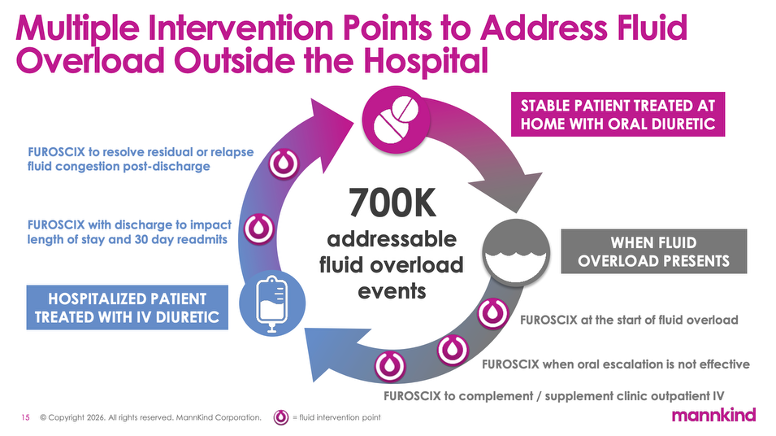
So we think it's really important to go wide and deep in these accounts. And then we just made a decision that our sales force will be covering. The 20 key account managers we have will be having local coverage to help with the reach and frequency and share of voice in the beginning of launch here. So that's going to be important as well.
Q (Anthony Petrone, Mizuho Financial Group): Maybe just pure OSSIX, the PDUFA, July 26. I think we're in the window, but are you expecting a panel meeting on the auto injector? So I'll be the first question and the quick follow up on Fürer six. This is, you know, moving from a hospital, you know, almost, you know, patient setting infusion clinic.
You're going from a five hour infusion cycle to under 10 seconds. Patient has to use this in the home setting. So just what does that transition look? How long do you think it it takes to get adopted in the home? And you know, what level of patient training is there going to be? It just strikes us that this can be pretty seamless and and it's pretty much a kind of a game changer for these patients. So just trying to frame up that transition from, you know, infusion to auto injector the home setting
A (Dr. Michael Castagna, CEO): We have had various information request from FDA, nothing that looks like a showstopper at this point. So we believe we're on track for that PDUFA date and hopefully that continues to go in the right direction. We're working on labeling, manufacturing, all that as we speak, so we'll be ready when the FDA gives us the green light on the transition because it's an acute use drug, meaning, you know, every cycle is a new cycle. Every patient, every day is a new patient.
That conversion can happen very quickly. And today, probably 90% of the use is preventing people from going into the hospital. The E.R. and about 10%, I'll say, is on the discharge and the readmission of 30 days. And that's just rough estimates. I could be off by 50% on those, but I don't think and so the auto injector, I think really helps get those patients on the hospital discharge faster because it's just much easier.
We're going to get probably more local distribution there, same day to the patient. And we think that's one of the key barriers of when someone's suffering from fluid overload. You know, they want that product as soon as possible. And we believe that that's an important dynamic with the auto injector that can happen versus the cogs you deal with.
The auto on fuser are quite high and so that's something you don't want laying around in many places, but otherwise I think you will see a pretty quick transition. There'll be a group of people starting to use Dolomiti and Fuser and we'll all be prepared to hopefully make it available for them. But we believe the proponent's for growth will come from the auto injector.
Close Concerns’ Questions
- How will MannKind’s educational strategies differ between the adult and pediatric populations?
- To what extent will the recent launch of Afrezza in India accelerate its growth in 2026? How much will this market contribute to full-year revenue?
- Despite the resource allocation, how can MannKind continue to drive growth among the adult population with T1D?
--by Andrew Goyette, Monica Oxenreiter, and Kelly Close