ACC 2026 Day #3 Highlights –
Executive Highlights
- The American College of Cardiology’s (ACC) Scientific Sessions concluded today in New Orleans, LA. During the ACC’s first-ever full closing ceremony, outgoing ACC president Dr. Christopher Kramer (University of Virginia) removed the ornate presidential chain from around his neck and bestowed it on his successor, Dr. Roxana Mehran (Mount Sinai Hospital). Dr. Mehran gave her first speech as new president of the ACC, highlighting her background as an Iranian-American woman, and affirming the ACC’s mission of “transforming cardiovascular care and heart health for all.” Acknowledging “profound challenges” and the “wrong direction” of the current trajectory of cardiovascular disease, she promoted a “virtuous cycle” of research, guidelines, actionable knowledge, education, and scientific sessions within the ACC. A highlight of the ceremony included everyone – cardiologist or otherwise – standing, holding hands with their neighbors, and chanting “Yes we can!”
- Dr. Buthainah Alhwarat (University of Arkansas) presented results from a large real‑world analysis evaluating five‑year cardiovascular outcomes with combined SGLT-2 inhibitor and GLP‑1 RA therapy in people with T2D. The study leveraged data from the TriNetX US Collaborative Network to construct four propensity‑matched cohorts (n=167,757). Combination SGLT-2 inhibitor + GLP‑1 RA therapy produced the lowest five‑year event rates across most outcomes. The primary composite outcome occurred in 3.70% of combination‑treated individuals versus 13.5% with insulin + metformin, 4.17% with SGLT-2 alone, and 3.86% with GLP‑1 RAs alone.
- Prof. Alberico Catapano (University of Milan, Italy) presented full results from the CORALreef AddOn trial (n=301) of enlicitide, a PCSK9 inhibitor. Results were published simultaneously in JACC by Dr. Alberico Catapano (University of Milan, Italy). Preliminary results were announced by Merck in June 2025, and we look forward to hearing more from the company when it reports updated results. Cardiovascular disease continues to be the leading cause of death worldwide, with a particularly heightened relationship between cardiovascular mortality and diabetes. Treatment has remained challenging, with many patients failing to achieve LDL cholesterol targets despite taking traditional statin therapies or an alternative.
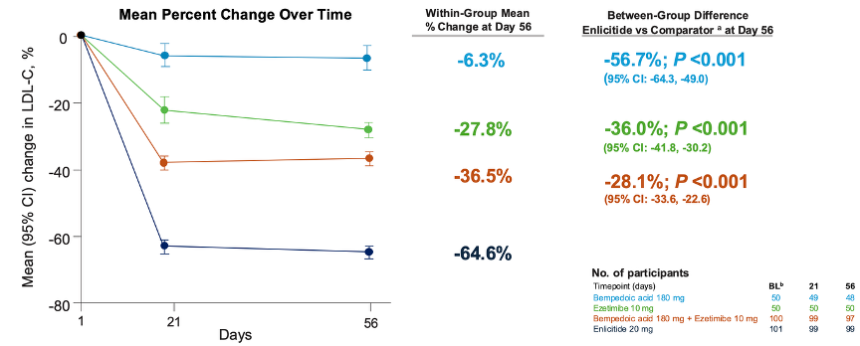
- Oral enlicitide + statin therapy produced significantly greater reduction in LDL cholesterol compared to the other therapies, with a rapid reduction over just 56 days of treatment. Enlicitide produced greater between-group reductions in LDL cholesterol levels compared to bempedoic acid (-56.7%), ezetimibe (-36%), and bempedoic acid + ezetimibe (-28.1%); all p <0.001. Based on these strong results, Prof. Catapano characterized enlicitide as an easy-to-use therapy that may close gaps in lipid management and support efforts to address the ongoing cardiovascular epidemic.
- In this thought-provoking afternoon session, Dr. Himaja Dutt Chigurupati (New York Medical College) presented an analysis of trends in cardiac arrest-related mortality among PWD. Cardiac arrest (CA), Dr. Chigurupati explained, remains the leading cause of death in the US. Further, diabetes confers a heightened CA risk, likely due to common comorbidities like obesity or hypertension. Among PWD, AAMR decreased from 21.3 in 1999 to 18.3 in 2024, conferring an average AAPC of -0.69 – indicating a modest overall decline in CA-related mortality within the study period. By sex, AAMR was 23.9 for men compared to 16.1 in women. Addressing healthcare disparities and improving emergency response systems in higher-burdened areas, Dr. Chigurupati concluded, remains crucial.
Table of Contents
- 1. Five‑year cardiovascular outcomes of combined SGLT‑2 inhibitor and GLP‑1 RA therapy in a large, real‑world T2D cohort
- 2. Full results of the CORALreef AddOn trial: Enlicitide + statin therapy provides significant benefit to LDL-C compared to non-statin therapies
- 3. Cardiac arrest in PWD: Declining overall rates, but persistent inequities
- 4. Will lowering my cholesterol give me diabetes? Lipid-lowering therapies and A1c
- 5. GLP-1 RAs for HFmrEF and HFrEF: Meta-analysis shows no survival benefit and increased HF hospitalizations
- 6. Early vs. adult-onset of obesity: Divergent cardiometabolic and cardiovascular risk
- 7. Healthcare in the age of the One Big Beautiful Bill
- 8. Ten-year cardiovascular outcomes of bariatric surgery vs. GLP‑1 RA therapy in BMI‑matched cohort
- 9. The Future of Heart Failure: Where Will We Be in 2035?
- 10. VTX3232 (parunoflast), an NLRP3 inhibitor, offers positive results for overall and liver-directed inflammation reduction
- 11. Dr. Muthiah Vaduganathan calls for extending cardiovascular prevention to heart failure
- 12. Closing ceremony and convocation
1. Five‑year cardiovascular outcomes of combined SGLT‑2 inhibitor and GLP‑1 RA therapy in a large, real‑world T2D cohort
Dr. Buthainah Alhwarat (University of Arkansas) presented results from a large real‑world analysis evaluating five‑year cardiovascular outcomes with combined SGLT-2 inhibitor and GLP‑1 RA therapy in people with T2D. The study leveraged data from the TriNetX US Collaborative Network to construct four propensity‑matched cohorts (n=167,757), including (i) those treated with SGLT-2 inhibitor + GLP‑1 RA combination therapy, (ii) SGLT-2 inhibitor monotherapy, (iii) GLP‑1RA monotherapy, or (iv) insulin + metformin. Highlighting the importance of the study, Dr. Alhwarat emphasized that the literature is limited on the combined cardiovascular effects of these two effective agents.
- Study design and baseline characteristics. This retrospective cohort analysis used propensity score matching to balance demographic and clinical variables across groups. The primary composite endpoint was a four‑component outcome including all‑cause mortality, myocardial infarction, stroke, and heart failure over five years. Mean age was 58 years across all cohorts, with 48% being male, and 65-66% being white. Hypertension prevalence was 63-64%, while CKD prevalence was 11-12%. Mean A1c values showed expected treatment‑pattern differences at 8.06%, 7.34%, 7.99%, and 7.98% in the SGLT-2 inhibitor + GLP-1 RA, SGLT-2 inhibitor, GLP 1RA, and insulin + metformin cohorts, respectively.
- Results. Combination SGLT-2 inhibitor + GLP‑1 RA therapy produced the lowest five‑year event rates across most outcomes. The primary composite outcome occurred in 3.70% of combination‑treated individuals versus 13.5% with insulin + metformin, 4.17% with SGLT-2 alone, and 3.86% with GLP‑1 RA alone. These correspond to an approximate 66% relative risk reduction compared to insulin + metformin (HR 0.34; CI: 0.33-0.35), a 4% reduction versus SGLT‑2 inhibitors alone (HR 0.96; CI: 0.93-0.99), and a 13% reduction versus GLP‑1 RAs alone (HR 0.87; CI: 0.84-0.90). All-cause mortality was 1.35% with combination therapy compared with 8.63% (insulin + metformin), 1.90% (SGLT-2), and 2.04% (GLP‑1 RA). While MI (0.64%) and heart failure (1.85%) rates were slightly higher than SGLT-2 monotherapy (0.62% and 1.81%), combination therapy maintained a clear survival advantage across comparators and delivered the only mortality reduction versus GLP-1 RAs alone.
2. Full results of the CORALreef AddOn trial: Enlicitide + statin therapy provides significant benefit to LDL-C compared to non-statin therapies
Prof. Alberico Catapano (University of Milan, Italy) presented full results from the CORALreef AddOn trial (n=301) of enlicitide, a PCSK9 inhibitor. Results were published simultaneously in JACC, and preliminary results were initially announced by Merck in June 2025. Cardiovascular disease continues to be the leading cause of death worldwide, with a particularly heightened relationship between cardiovascular mortality and diabetes. Treatment has remained challenging, with many patients failing to achieve LDL cholesterol targets despite taking traditional statin therapies or an alternative.
Currently, injectable anti-PCSK9 monoclonal antibodies are available for patients not responding to other therapies. These therapies function by allowing LDL receptors to degrade excess LDL (see figure below), providing significant LDL lowering effects. Despite this, the therapy class remains underutilized, said Prof. Catapano. Enlicitide decanoate is an oral macrocyclic peptide PCSK9 inhibitor that has demonstrated about 60% LDL cholesterol lowering compared to placebo in previous studies. However, no head-to-head trials have compared enlicitide with other oral non-statin therapies, leading to the present study.
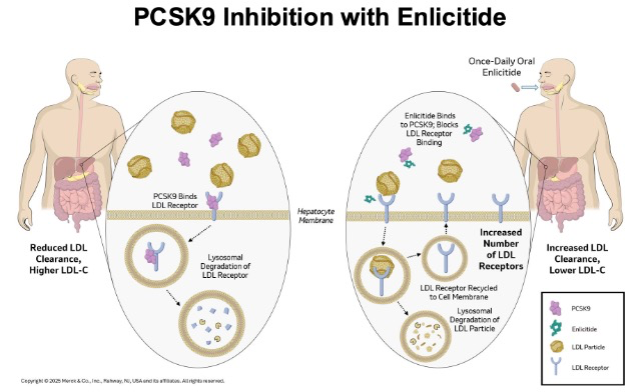
- CORALreef AddOn was a phase 3, randomized, double-blind, active-comparator trial. Participants were adults either with atherosclerotic cardiovascular disease (ASCVD) and LDL cholesterol levels ≥55 mg/dL or those at risk for ASCVD and LDL cholesterol levels ≥70 mg/dL. All participants were taking statins at baseline and were assigned (2:1:1:2) to take enlicitide 20 mg (n=101), bempedoic acid 180 mg (n=50), ezetimibe 10 mg (n=50), or bempedoic acid 180 mg + ezetimibe 10 mg (n=100) daily for 56 days. These therapies are commonly prescribed to patients failing to meet LDL goals on statin therapy. The primary endpoint was mean percent change from baseline in LDL levels at Day 56 using the differences in least-squares means. Key secondary endpoints were mean percent change in apolipoprotein B (ApoB) levels and non-high-density lipoprotein cholesterol (non-HDL-C). 37% of participants were women and the study spanned eight countries. 50% of participants had T2D.
- Oral enlicitide + statin therapy produced significantly greater reduction in LDL cholesterol compared to the other therapies, with a rapid reduction over just 56 days of treatment. Enlicitide produced greater between-group reductions in LDL cholesterol levels compared to bempedoic acid (-56.7%), ezetimibe (-36%), and bempedoic acid + ezetimibe (-28.1%); all p <0.001 (see figure below). Corresponding differences in ApoB (-47.5%, -33.6%, -26.8%) and non-HDL-C (-51.2%, -32.2%, -25.8%) were greater with enlicitide versus the other therapies (all p<0.001). Adherence was high at 97% across all groups. Similarly, safety was favorable with only 2-3% of patients discontinuing treatment due to a drug-related adverse event. Based on these strong results, Prof. Catapano characterized enlicitide as an easy-to-use therapy that may close gaps in lipid management and support efforts to address the ongoing cardiovascular epidemic.
3. Cardiac arrest in PWD: Declining overall rates, but persistent inequities
In this thought-provoking afternoon session, Dr. Himaja Dutt Chigurupati (New York Medical College) presented an analysis of trends in cardiac arrest-related mortality among PWD. Cardiac arrest (CA), Dr. Chigurupati explained, remains the leading cause of death in the US. Further, diabetes confers a heightened CA risk, likely due to common comorbidities like obesity or hypertension.
- Study design. Researchers identified 1,146,259 CA-related deaths (in which both CA and diabetes are listed as causes of death) from the CDC WONDER database in adults aged ≥25 years. To assess nationwide mortality patterns over time, researchers calculated annual crude and age-adjusted mortality rates (AAMR), which account for differences in population age structure – thereby reflecting true differences in risk. To understand how trends changed over the study period (1999 to 2024), researchers employed Joinpoint regression analysis, which identifies time points where the direction or rate of change shifts. Researchers also reported annual percent changes (APCs) for specific time segments and average annual percent changes (AAPCs) to summarize overall mortality trends.
- Results. Among PWD, AAMR decreased from 21.3 in 1999 to 18.3 in 2024, conferring an average AAPC of -0.69 – indicating a modest overall decline in CA-related mortality within the study period. By sex, AAMR was 23.9 for men compared to 16.1 in women. Notably, non-Hispanic black individuals had the highest AAMR at 37.1, which was followed by Hispanics with 33.2. The western US had the highest burden of CA-related mortality in PWD, demonstrated by an AAMR of 29.0. Urban areas had a slightly higher AAMR than rural areas, at 19.4 and 18.7, respectively.
- Clinical significance. While CA-related mortality among PWD decreased from 1999 to 2018, incidence surged in urban areas, highlighting vulnerabilities in already vulnerable populations. Specifically, Dr. Chigurupati noted non-Hispanic Black and Hispanic populations, as well as those in high-burden regions, to be particularly affected. Addressing healthcare disparities and improving emergency response systems in higher-burdened areas, Dr. Chigurupati concluded, remains crucial.
4. Will lowering my cholesterol give me diabetes? Lipid-lowering therapies and A1c
In an engaging, standing-room-only session, Dr. Erica Spatz (Yale University) discussed patient concerns of glycemia when taking statin therapy. She began with a case study, discussing a long-term patient of hers. He is a 52-year-old man with a family history of premature coronary artery disease (CAD) on his father’s side. On his mother’s side, he has a history of diabetes with renal complications, as well as peripheral neuropathy. He leads a very healthy lifestyle, including his diet and exercise, and prefers not to take medications. His blood pressure and lipid levels were normal/slightly elevated at baseline, and his A1c was 5.3% at baseline. However, due to the family history of CAD, Dr. Spatz ordered a chest x-ray, which demonstrated a high coronary artery calcium score, a marker of plaque buildup. The patient reluctantly agreed to begin taking rosuvastatin 20 mg, which lowered his LDL cholesterol and slightly increased his A1c to 5.4%. After four years of treatment, his LDL levels remained steady, but his A1c rose again to 5.7%, leading him to self-discontinue the statin. Dr. Spatz said that cases such as this one are common in her clinical practice and that adequately weighing the benefits and risks is essential.
- Evidence demonstrates that statins do have a glucose-increasing effect. In a meta-analysis involving 19 studies and over 1,000 subjects, low- or moderate-intensity statins led to a 10% increase in new-onset diabetes, and high-intensity statins led to a 36% increase in new-onset diabetes. In terms of A1c, the increase is approximately 0.06-0.08%. The risk is somewhat stratified by baseline A1c values. Dr. Spatz said that the data and her clinical experience suggest that statin therapy has the greatest impact on glycemia for patients with borderline prediabetes or diabetes, sometimes bumping these patients into the next class but not causing more dramatic variations from normoglycemia.
- All the same, Dr. Spatz reminded the audience that the theoretical adverse effects of statins on glycemia are already accounted for in the overall reduction of cardiovascular risk that the therapies offer. These data are not new, she said. As early as 2011, studies demonstrated that the number needed to treat (NNT) for one additional case of diabetes is 498 patients per year, compared to a NNT of 155 for one fewer patient experiencing a cardiovascular event per year. This indicates that the absolute risk favors statin therapy even with the glycemic drawbacks. Interestingly, non-statin therapies have not been associated with new-onset diabetes.
- The mechanism of this effect remains unclear, despite extensive study. Possible explanations include HMG-Coenzyme A Reductase, which is inhibited by statins and can then reduce the synthesis of the mevalonate pathway products. This can increase insulin resistance and decrease insulin secretion. Statins can also slightly damage muscles, causing myopathy and leading to insulin resistance.
- Turning back to the opening case study, Dr. Spatz said that she first began by validating the patient’s concerns. She discussed the data supporting the use of statins with him, as well as his family history. He agreed that the risks of MI were much greater than the risk of developing diabetes over time. He resumed taking rosuvastatin 10 mg and agreed to consider additional therapies if LDL did not remain low. He committed to an even healthier diet to attempt to mitigate the risk of diabetes as well.
5. GLP-1 RAs for HFmrEF and HFrEF: Meta-analysis shows no survival benefit and increased HF hospitalizations
In this intriguing Monday afternoon session, Dr. Darya Chekhava (St. Barnabas Hospital) presented findings from a systematic review and meta-analysis of GLP-1 RA safety and efficacy in patients with heart failure with reduced ejection fraction (HFrEF) or heart failure with mildly reduced ejection (HFmrEF). Notably, while HFrEF and HFmrEF remain major global health burdens, the role of GLP-1 RAs for the treatment of both conditions remains undefined. Weight loss and reduced inflammation have traditionally improved HF outcomes, which naturally leads to the study of GLP-1 RAs for this condition. The present analysis – published in JACC on Friday – sought to better define the relationship between this patient sub-population and the widely used therapies.
- Study design. To investigate the impact of GLP-1 RAs on HFrEF and HFmrEF, researchers completed a meta-analysis of seven RCTs (n=2,608) identified with a PRISMA algorithm from PubMed, Embase, and Cochrane. Outcomes included: (i) heart failure (HF) hospitalization; (ii) all-cause mortality; (iii) ejection fraction changes; and (iv) weight change. Participants had a mean age of 62 years, 17% were female, and had a follow-up duration between 3 and 41 months. During Q&A, Dr. Chekhava shared that roughly 50% of patients had co-occurring T2D.
- Results. Interestingly, GLP-1 RA use in patients with HFrEF or HFmrEF was associated with a statistically significant increase in HF hospitalization risk (HR 1.29; see below). Further, GLP-1 RA use did not confer significant survival benefit (HR 0.83). Consistent with treatment class effects, however, weight loss was significant in this population, with a mean reduction of 3 kg from baseline at the end of treatment. Lastly, no significant improvement to ejection fraction was observed.
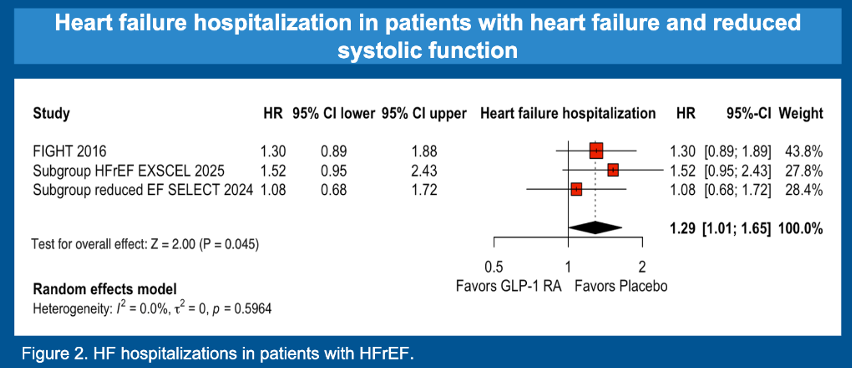
- Clinical significance. GLP-1 RA use in patients with HFrEF or HFmrEF was associated with increased HF hospitalizations compared to placebo. Further, no significant benefits were observed in all-cause mortality, MACE, HF events, ejection fraction within this population. Therefore, these findings raise potential concerns regarding the safety profile of GLP-1 RAs in patients with HFrEF or HFmrEF. Although this hypothesis requires further clinical investigation, these results may help inform future practice by improving patient stratification – identifying those most likely to benefit from GLP-1 RA therapy and those for whom it is unlikely to provide meaningful clinical benefit.
6. Early vs. adult-onset of obesity: Divergent cardiometabolic and cardiovascular risk
In this moderated poster session, Dr. Shiza Sarfraz (East Carolina University) presented a nationally representative analysis comparing cardiometabolic profiles and cardiovascular outcomes in adults with early‑onset vs. adult‑onset obesity. Dr. Sarfraz emphasized that although obesity is well‑established as a cardiometabolic risk factor, the timing of obesity onset remains under‑recognized as a potential determinant of long‑term cardiovascular burden.
- Study design. Using NHANES data from 2017-2020, investigators conducted a cross‑sectional, survey‑weighted analysis (n=1,550) of adults ≥18 years with obesity (BMI ≥30 kg/m²). Obesity onset was classified as early-onset (i.e., BMI ≥30 kg/m² by age 25 or younger) or adult-onset (i.e., BMI <30 kg/m² at age 25 and meeting criteria for obesity at the time of the survey). Models adjusted for age, sex, race/ethnicity, BMI, smoking, physical activity, and sedentary time. Outcomes included measured hypertension, A1c, and cardiovascular disease (CHF, CHD, angina, MI, and stroke).
- Results. Among adults with obesity, 14% had early‑onset and 86% adult‑onset obesity, representing 19.4 million US adults. Longer duration of obesity exposure in the early‑onset cohort was associated with worse cardiometabolic markers, including higher glycemia (A1c +0.28%), and a substantially greater burden of heart failure (13.5% vs. 6.6%). Early‑onset obesity carried significantly higher odds of congestive heart failure (aOR 1.59; CI: 1.01-2.50), CHD (aOR 1.67; CI: 1.02-2.73), and angina (aOR 1.93; CI: 1.01-3.67), underscoring the elevated cardiovascular risk associated with earlier obesity onset. MI and stroke trended higher but were not statistically significant, and hypertension was similar between groups. Dr. Sarfraz highlighted that weight history, specifically the age at obesity onset, may serve as a simple, low‑cost clinical tool to identify adults who warrant earlier cardiometabolic screening and more aggressive preventive strategies.
7. Healthcare in the age of the One Big Beautiful Bill
Bleary-eyed audience members filed into this early morning presentation and panel discussion of the effects of the One Big Beautiful Bill Act (OBBBA) on cardiovascular care and were treated to images of downward spirals, vicious cycles, and Gordian knots. Dr. Rishi Wadhera (Harvard University) first explained how the legislation, signed into law in July 2025, reversed many health funding gains of the Affordable Care Act of 2010 and the Inflation Reduction Act of 2022. He explained that the OBBBA reduced funding in four key areas: Medicare, Medicaid, the Supplemental Nutrition Assistance Program (SNAP), and rural health, each of which would be taken up by a different presenter.
- Dr. Wadhera argued that the new 80 hours/month work requirements for many on Medicaid never actually increased employment rates in states with similar models. He explained that these new requirements prevent many eligible patients from accessing coverage not through outright disqualification, but by simply raising administrative hurdles in such a way that defeats those most in need of care. He noted that the costs associated with implementing and administering the new requirements often cancel out any savings from the cuts to coverage. He finished with a particularly salient diagram of a “vicious cycle” of these funding cuts to negative health outcomes, noting the “downstream effects are not just measured in budgets, but in blood pressure readings.”
- A “non-random subset” of Medicare enrollees is at risk of disenrollment from the OBBBA, explained Dr. Eden Engel-Rebitzer (Harvard University). These patients have higher levels of functional impairment and poorer-than-average physical and mental health. She noted that 75% of uninsured adults reported skipping needed healthcare due to cost and that the OBBBA will result in about 7.7 million Americans losing Medicare/Medicaid coverage by 2034, which will translate to an extra 42,000 deaths annually – a number comparable to the average annual breast cancer mortality. Dr. Engel-Rebitzer’s advice to providers included building infrastructure to help patients navigate the changing requirements, having hospitals plan for increases in uncompensated care, and lobbying individual states to broaden exceptions to work requirements.
- Dr. Prihatha Narasimmaraj (Harvard University) outlined the OBBBA’s cuts to SNAP benefits by $186 billion. She first outlined the ongoing debate on SNAP vis-à-vis nutrition outcomes: while some argue that SNAP is used primarily to purchase non-nutritious foods, others see SNAP as a vital part of the federal safety net with huge health implications for its enrollees. She pointed to studies of previous reductions to SNAP funding, which caused widespread decreases in diet quality, increases in hypertension, diabetes, obesity, heart failure, and postponement or cancellation of needed healthcare in favor of affording food. Studies also found that the increased psychological distress of food insecurity itself will measurably worsen health outcomes, leading to higher rates of substance abuse and poorer mental health. She finished by highlighting the importance of food insecurity screenings at every patient-doctor interaction and increased awareness of local food resources.
- Dr.Paula Chatterjee (University of Pennsylvania) highlighted the weaknesses of the Rural Health Transformation Program (RHTP). The RHTP is a subset of the OBBBA that allocates $50 billion to rural areas, included as a concession for senators from rural states. Dr. Chatterjee, however, argued that based on the first-year data, funding allocations to each state showed no correlation to that state’s rural population, with Texas the least funded per capita. In a landscape where rural health is already disadvantaged through (i) older and more expensive hospital infrastructure; (ii) fewer staff, billers, and coders; (iii) fewer resources to offset uncompensated care; and (iv) a handicap in the “arms race” of hospital technology, Dr. Chatterjee likened the OBBBA to “tightening a Gordian knot” for rural healthcare’s solvency.
- The session ended with a brief discussion between former commissioner of food and drugs Dr. Robert Califf (Duke University) and incoming ACC president Dr. Roxana Mehran (Mount Sinai Hospital). Dr. Califf characterized the current political environment as a struggle between people who believe society should be optimized for people who are “hardworking,” “self-starters,” and people who believe humans are “interdependent social creatures,” many of whom “can’t make it on their own and need help from others.” The OBBBA, he said, is evidence of the former.
8. Ten-year cardiovascular outcomes of bariatric surgery vs. GLP‑1 RA therapy in BMI‑matched cohort
In this highlighted original research session, Dr. Abdelrahman Hafez (Mayo Clinic) presented results from a real‑world, BMI‑matched comparison evaluating 10‑year cardiovascular and mortality outcomes with bariatric metabolic surgery (BMS) vs. GLP‑1 RA therapy. Dr. Hafez emphasized the persistent evidence gap in head‑to‑head comparisons between these two modern standards of obesity care, particularly in broad, BMI‑matched adult populations where both therapies are guideline‑supported.
- Study design and baseline characteristics. Using the Mayo Clinic Database Explorer (2004-2025), researchers emulated a target trial by defining a clear time zero (i.e., the date of surgery or the first GLP‑1 RA prescription). Exact matching on diabetes status and explicit matching on pre‑index BMI (median 43 vs. 42 kg/m²) ensured that baseline adiposity did not confound downstream outcomes. The final cohort (n=3,838) included participants with a median age of 58, was ~64% female, ~75% had diabetes, 93% had hypertension, and 35% established ASCVD.
- Metabolic outcomes. Individuals in the BMS cohort produced substantially greater and more durable metabolic improvements. 92% of surgical patients achieved ≥10% BMI loss vs. 52% with GLP‑1 RA therapy. Long‑term BMI reduction favored surgery (26 kg/m² vs. 11 kg/m²), and A1c reductions were more pronounced (7% vs. 3%). These differences were highly significant (p<0.001) in long-term adiposity reduction and glycemic management. Dr. Hafez stressed that metabolic benefit alone did not explain the survival advantage. He noted that testing for weight‑loss interaction was not significant, indicating that the benefit of BMS extends beyond weight reduction.
- 10‑year clinical outcomes. Over 10 years, bariatric surgery delivered a 30% relative reduction in 10‑year all‑cause mortality compared with GLP‑1 RA therapy (HR 0.70). MACE was similarly reduced (HR 0.71). The analysis showed an early and progressively widening survival advantage for the surgical group over the 10‑year follow‑up. Importantly, these advantages persisted despite matching on BMI and diabetes, reinforcing that the benefit is not solely attributable to greater weight loss. As summarized by Dr. Hafez, “For eligible patients, surgery remains the most protective, definitive intervention available.”
9. The Future of Heart Failure: Where Will We Be in 2035?
Without a crystal ball onstage, Drs. Nancy Sweitzer (Washington University in St. Louis), Eldrin Lewis (Stanford University), and Muthiah Vaduganathan (Harvard University) did their best to see 10 years into the future of heart failure treatment in this Monday afternoon session. Just 10 years ago, Dr. Lewis began, companies were “getting out of heart failure,” convinced progress could not be made. Yet, in the intervening years that “hypothesis” has been wholly disproven by meaningful strides in understanding heart failure with preserved ejection fraction (HFpEF).
- Looking towards the future, each panelists was asked to predict what might be coming in the next decade. Dr. Lewis answered first, noting that advances in clinical phenotyping, though not perfect, will replace traditional qualitative measurements (e.g. evaluating shortness of breath). “Deep phenotyping and combinations of genetics, genomics, and epigenetics,” he predicted, will come together in the clinic to better tailor treatment to individuals. Dr. Sweitzer agreed with Dr. Lewis, though she shared practical reservations. Notably, Dr. Sweitzer argued that deep phenotyping would far longer than 10 years to implement. Instead, she pointed to the study of inflammation as the potential next transformation in heart failure (HF) care.
- Separately, Dr. Vaduganathan shared hope for a new decade of heightened interest in HF. He highlighted that the field is gaining traction in political, academic, and clinical circles. Accordingly, Dr. Vaduganathan was optimistic for a future where HF research experiences the same impact and investment as cancer research. Still, Dr. Lewis lamented that many people know that hypertension is the biggest risk factor for HF, yet they “walk around with uncontrolled hypertension all the time” – just like “most people know you need money for retirement, yet a lot of people don’t save.” Similarly, those with diabetes or prediabetes may know that “90% of risk factors overlap” with cardio-kidney-metabolic (CKM) syndrome. Yet, they might be primarily concerned with pursuing a GLP-1 RA for weight loss, despite the acute risks of HF that CKM syndrome confers. Increasing at-risk patients’ motivation to prevent progression will be key to the future of HF treatment, Dr. Lewis concluded.
- No discussion of the future would be complete without AI. Dr. Lewis shared enthusiasm on the subject, pointing to future uses of AI in consolidating masses of data into digestible sizes, advancing genomics to create risk probabilities, and addressing health inequities in cardiology deserts. “Most people go 363 or 364 days of the year without seeing a clinician,” he added, explaining that AI in wearables and AI support for behavior modification could empower patients to treat themselves. Dr. Sweitzer agreed, noting many primary care physicians are overwhelmed by patient volume, leaving little time to stay updated on ever-changing guidelines. For this population, she added, AI could help make treatment recommendations based on the latest research. Dr. Vaduganathan added that the role of AI in HF is “predominantly upstream,” aiding in prevention and early detection rather than replacing the central role of clinicians.
- Dr. Sweitzer closed with a “wish” for “the decade of women in HF.” She noted that a blood pressure reading of 120/80 mmHg actually increases risk of HF in women, yet clinicians still treat women and men to that same target. She hoped for a future where a new set of treatment goals are established for women, rather than their current status as “mini-men.”
10. VTX3232 (parunoflast), an NLRP3 inhibitor, offers positive results for overall and liver-directed inflammation reduction
Dr. Peter Libby (Mass General Brigham) presented very interesting combination results of VTX3232 and semaglutide for cardiometabolic and neuroinflammatory conditions. VTX3232 (parunoflast) is an NLRP3 inhibitor, which blocks the activation of the NLRP3 inflammasome. This is a key driver of chronic inflammation that can play a role in obesity, insulin resistance, and cardiovascular disease. Previous work has demonstrated that NLRP3 expression in atherosclerotic plaques correlates with disease severity in patients with coronary artery disease. Therefore, an NLRP3 inhibitor such as VTX3232, in development by Ventyx Biosciences, may improve disease severity and overall inflammation. This leads to the investigation carried out by Dr. Libby and collaborators.
- The trial was a phase 2a, multicenter, randomized, double-blind, placebo-controlled study of VTX3232. Participants were adults (n=175) with BMI ≥ 30 to ≤ 42 kg/m2, high-sensitivity CRP ≥2 mg/L (an indication of inflammation in the body), stable hypertension or hyperlipidemia, and no history of diabetes. Study participants were randomized to VTX3232 30 mg or placebo tablets once-daily alone or in combination with semaglutide weekly subcutaneous injections for 12 weeks. The mean age was 48 years, and 78% of participants were female. The primary endpoint was incidence/severity of adverse events (AEs) and serious AEs. The secondary endpoint was change from baseline in hsCRP values over time. 87.4% of patients completed treatment, with the highest discontinuation rates seen in the VTX3232 monotherapy group.
- Adverse events were comparable for VTX3232 and placebo, with VTX3232 leading to rapid, sustained, and significant reductions in hsCRP values. There were no serious adverse events related to study drug. Beginning at Week 1, most participants receiving parunoplast had hsCRP levels <2 mg/L throughout treatment, indicating reduced inflammation. Excitingly, biomarkers of NLRP3 activity and liver inflammation, as measured by MRI, were also improved by VTX3232 (see figure below). VTX3232 alone did not decrease body weight.
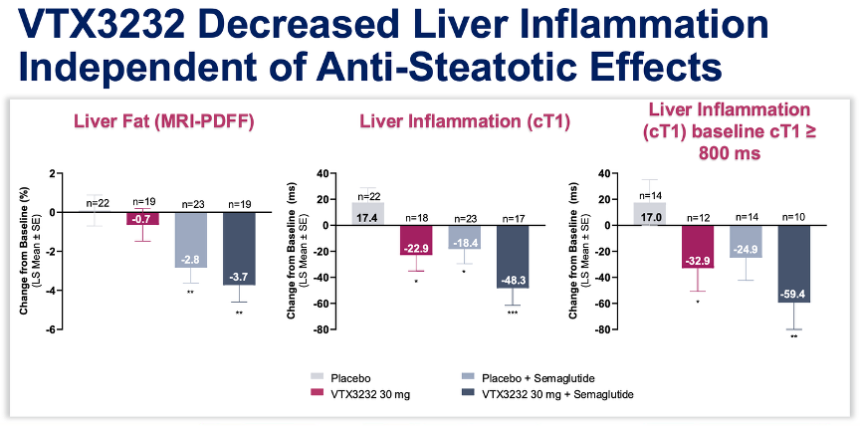
- Dr. Libby said that VTX3232 was safe, well-tolerated, and decreased systemic and liver inflammation alone and when added to semaglutide. These results support further development and parunoflast's potential to address the residual burden of disease mediated by inflammation.
11. Dr. Muthiah Vaduganathan calls for extending cardiovascular prevention to heart failure
In a compelling Monday morning session, Dr. Muthiah Vaduganathan (Harvard University) argued that we must “broaden the lens” of cardiovascular prevention. He said that the field has focused heavily on first myocardial infarction, perhaps to the detriment of heart failure (HF) prevention. In what he described as the “renaissance period of heart failure,” Dr. Vaduganathan said that we “finally have the tools and the therapeutic interventions to predict heart failure.” Therefore, he urged the audience to reframe HF not as a single timepoint diagnosis, but as a lifetime exposure. Risk accumulates over decades, he stressed, and our treatment strategies should be matched to this life-course perspective.
- Dr. Vaduganathan highlighted that, in many regions of the world, mortality among patients with established HF continues to rise. This is despite significant gains in HF survival and event-free survival within the past few decades. Even with optimal therapy, patients with HF continue to experience substantial residual risk and significantly curtailed lifespans compared to their peers. Thus, Dr. Vaduganathan noted that cardio-kidney-metabolic (CKM) pathways are becoming an increasingly prevalent route to the development of incident HF.
- Treatment approaches for T2D, CKD, and other cardiovascular diseases now share “highly overlapping” pharmacologic agents, he continued, giving rise to new “pillars” of CKM care. Specifically, he discussed ACE inhibitors or ARBs, non‑steroidal mineralocorticoid receptor antagonists (nsMRAs), SGLT‑2 inhibitors, and GLP‑1 RAs as four core therapeutic pillars that have each been independently shown in primary trials to reduce the risk of incident HF, even when these therapies are prescribed for separate indications like T2D or CKD. This, he argued, supports the view that CKM management is a dynamic, interconnected process: “if you treat one entity, you can, in fact, treat another.”
- Because these therapies act through distinct mechanisms, Dr. Vaduganathan explained that they can be safely and effectively combined with the potential for truly additive clinical benefit. He described the “remarkable” potential of fully implementing all CKM pillars to alter the trajectory of HF, particularly HFpEF. This additive benefit has been most clearly illustrated in the CONFIDENCE trial (n=800), in which finerenone and an SGLT-2 inhibitor were studied as monotherapies versus in combination. The combined initiation of both therapies conferred mathematically additive kidney and cardiovascular protection. Importantly, Dr. Vaduganathan also noted that combination therapy may also improve therapeutic safety profiles.
- Above all, Dr. Vaduganathan argued that screening for HF must become a central priority. HF is too often diagnosed late in the disease course, and there is substantial opportunity upstream by screening earlier for both subclinical HF and its CKM risk factors.
12. Closing ceremony and convocation
ACC 2026 ended with robe-wearing, oath-taking, and mace-carrying. At the dual convocation and (first-ever) full closing ceremony, robed fellows and associates of the ACC processed into the theater from all sides, taking their places in the front rows, while honorees and award recipients sat onstage behind a large central podium. Around the theater, audience members, including many families, watched attentively as the formalities began. ACC secretary Dr. David Winchester (University of Florida) called the meeting to order by placing the ceremonial mace of the College on a cushion onstage. Over the next hour, many awards and prizewinners were announced, and newly minted fellows (FACCs) and associates (AACCs) of the ACC took their respective oaths to officially join the College. Dr. Winchester proclaimed that “real transformation doesn’t come from standing apart but standing together” and that “cardiovascular disease isn’t limited by borders, and neither are we.”
- Outgoing ACC president Dr. Christopher Kramer (University of Virginia) removed the ornate presidential chain from around his neck and bestowed it on his successor, Dr. Roxana Mehran (Mount Sinai Hospital). He described his “fantastic voyage” of a presidency as an honor and thanked the ACC for entrusting the presidency to him for the past year. Dr. Mehran gave her first speech as new president of the ACC, highlighting her background as an Iranian-American woman, and affirming the ACC’s mission of “transforming cardiovascular care and heart health for all.” Acknowledging “profound challenges” and the “wrong direction” of the current trajectory of cardiovascular disease, she promoted a “virtuous cycle” of research, guidelines, actionable knowledge, education, and scientific sessions within the ACC. A highlight of the ceremony included everyone – cardiologist or otherwise – standing, holding hands with their neighbors, and chanting “Yes we can!” until out of breath. The audience continued to stand as Dr. Winchester declared, “Hear ye, hear ye,” picked up the ceremonial mace, and led the procession of ACC fellows and associates out of the theater, formally adjourning ACC 2026.
-- by Kayla Mathieu, Elizabeth Rose, Leigh Wilson, Nour Khachemoune, Esther Min, and Kelly Close