Executive Highlights
- Day #1 of DTM 2026 kicked off with workshops on real-world evidence, data science and AI, diagnostic tools, and more. Scientific sessions officially begin tomorrow (Wednesday, October 28) and end the following afternoon. See the website, agenda, and preview.
- A lively afternoon debate between Dr. Rayhan Lal (Stanford University) and Mr. Shahid Shah (Netspective Foundation Inc., Silver Spring, Maryland) explored whether diabetes technology should move toward 100% open-source software. Dr. Lal argued that greater openness supports patient autonomy, transparency, and independent evaluation, while Mr. Shah emphasized the financial, regulatory, and legal challenges of maintaining fully open systems. Despite their differing perspectives, both supported improving patient access to diabetes data, with Mr. Shah calling for more targeted approaches that balance openness with sustainable innovation.
- On AID, Dr. David Ahn (Hoag Memorial Hospital, Newport Beach, California) compared commercially available systems, while Dr. Viral Shah (Indiana University) advocated for earlier consideration of AID in T2D. Dr. Ahn highlighted important differences in algorithms, glucose targets, and user involvement, emphasizing that system selection should reflect individual preferences and clinical needs. Dr. Shah reviewed evidence supporting improved glycemic outcomes with AID in T2D and cautioned that therapeutic inertia can delay access to effective treatment.
- On artificial intelligence, Dr. Juan Espinoza (Ann & Robert H. Lurie Children’s Hospital of Chicago) reviewing ten studies demonstrating applications ranging from genetic risk prediction and AI-supported insulin delivery to diabetic retinopathy screening. Drs. Nestoras Mathioudakis (Johns Hopkins) and Kayo Waki (University of Tokyo) discussed the use of natural language processing and AI-powered dietary tracking to improve clinical workflows and support behavior change. Meanwhile, Mr. Shahid Shah cautioned that AI adoption must be accompanied by clear accountability, human oversight, and safeguards against errors.
- On CGM, emerging glucose and ketone monitoring technologies offered a glimpse into the future of less invasive and more comprehensive metabolic monitoring. Speakers explored approaches using breath composition, voice patterns, and brain electrical activity to detect glucose fluctuations. Dr. Richard Bergenstal (International Diabetes Center) highlighted the potential of continuous ketone monitoring to improve early identification of DKA, particularly among high-risk populations. Other discussions emphasized the need for standardized CGM performance evaluations, stronger cybersecurity protections, and improved data interoperability.
- Dr. Julia Mader (Medical University of Graz, Austria) also highlighted practical opportunities to expand diabetes technology use across outpatient and hospital settings. She discussed smart insulin pens as an option for individuals not using AID. In hospital-focused sessions, speakers emphasized the potential of insulin-dosing algorithms, inpatient CGM, and CGM initiation at discharge to improve glycemic management, while calling for stronger evidence on clinical outcomes.
Table of Contents
-
Top Highlights
- 1. Navigating AID system difference: Key features and clinical pearls from Dr. David Ahn
- 2. Dr. Richard Bergenstal highlights the potential of continuous ketone monitoring to improve early detection and prevention of DKA
- 3. Is 100% open-source software the future? A debate between Dr. Rayhan Lal and Mr. Shahid Shah
- 4. AID for T2D: Dr. Viral Shah on the benefits of early adoption of the technology
- 5. Emerging non-invasive glucose monitoring approaches leverage breath and voice activity to track glycemic fluctuations
- 6. Quick Take: SynchNeuro uses brain activity as a signal for non-invasive glucose monitoring and metabolic forecasting
- 7. Risk prediction, prevention, and personalized insulin delivery: Dr. Juan Espinoza highlights the expanding role of AI in diabetes care
- 8. 2026 updates on diabetes data interoperability: Dr. Juan Espinoza highlights the CGM data policy initiative aimed at enabling equitable, interoperable, and sustainable access
- 9. Drs. Mathioudakis and Waki discuss language processing and large-language models to improve diabetes care
- 10. Updated FITTER guidelines: Dr. Jane Jeffrie Seley on “giving it your best shot”
- 11. Experts call for standardized CGM performance evaluations, stronger cybersecurity efforts, and greater oversight of connected diabetes technologies
- 12. Drs. Guillermo Umpierrez, Elias Spanakis, and Jane Jeffrie Seley emphasize the need for greater use of insulin-dosing algorithms, CGMs, and AIDs in hospital settings
- 13. Glucose curves as metabolic fingerprints: Dr. Michael Snyder discusses how AI offers a new approach to diabetes subtyping
- 14. Smart MDI systems to support people with diabetes on injections
- 15. The greatest risks of AI in healthcare may stem from poor implementation rather than the technology itself
- 16. *NEW* Dr. Heman Shakeri explores dynamic CGM analysis for earlier diabetes detection
Top Highlights
1. Navigating AID system difference: Key features and clinical pearls from Dr. David Ahn
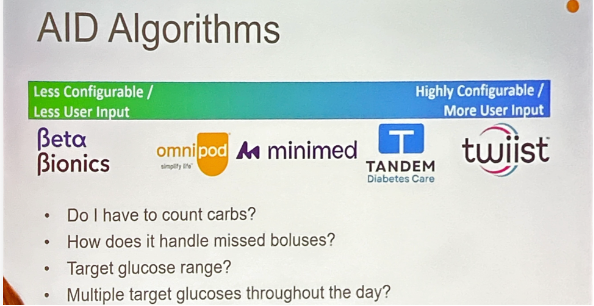
Dr. David Ahn (Hoag Memorial Hospital) kicked off the clinical sessions at DTM 2026 with a comparison of commercially available AID systems in the US, exploring how differences in device design, algorithms, and user involvement shape treatment decisions. He identified six considerations when choosing an AID system: (i) device size; (ii) tubed versus tubeless design; (iii) CGM compatibility; (iv) smartphone control; (v) device display; and (vi) algorithm functionality. Dr. Ahn placed the available algorithms along a spectrum of configurability and user input, stressing that greater flexibility is not necessarily better for every patient. Through clinical cases, he illustrated how understanding system-specific settings can help clinicians manage exercise, address missed boluses, and prevent dosing errors
- Tandem’s t:slim X2 or Mobi with Control-IQ and Control-IQ+: Dr. Ahn reviewed the t:slim X2’s touchscreen, 95-300-unit reservoir, and smartphone-controlled bolus capability alongside the smaller, screenless Mobi, which offers full smartphone control and a physical quick-bolus button. He also noted plans for a tubeless Mobi option anticipated by the end of the year or early next year, which we expect to hear more on during Tandem’s 3Q26 call. Both systems use the Control-IQ/Control-IQ+ algorithm, which adjusts insulin delivery around programmed basal rates and offers Standard, Sleep, and Exercise activities. Sleep Activity narrows the glucose target, but does not deliver automated correction boluses, while Control-IQ+ allows temporary basal adjustments and extended boluses of up to eight hours.
- Clinical takeaway: Dr. Ahn noted that running Control-IQ+ in Sleep Activity continuously provides tighter glucose targets through more minute basal adjustments, although automated correction boluses are disabled. He pointed out that this approach was used in the clinical trial supporting the system's FDA clearance for pregnancy in T1D.
- Insulet’s Omnipod 5: Dr. Ahn underscored the system’s tubeless design, direct communication between the pod and CGM without requiring a nearby smartphone, and customizable glucose targets of 100-150 mg/dL. A recent update in spring 2025 introduced the lower 100 mg/dL target and reduced interruptions from Automated Mode. Unlike Control-IQ, Omnipod 5 recalculates insulin needs with each pod change based primarily on total daily insulin dose (TDD), rather than relying on programmed basal rates during automated operation.
- Clinical takeaway: Adjusting programmed basal rates does not directly affect automated insulin delivery. Dr. Ahn encouraged clinicians to consider the 100 mg/dL target when appropriate and assess bolus settings that indirectly influence the algorithm through changes in TDD.
- MiniMed 780G and MiniMed Flex: Dr. Ahn described the 780G's meal detection technology, which can deliver automated correction boluses as frequently as every five minutes when glucose is predicted to rise above target and automated basal delivery has reached its maximum. The system offers glucose targets of 100-120 mg/dL, a temporary 150 mg/dL target, and a seven-day infusion set, with compatibility across Simplera Sync and Abbott's Instinct sensors. He also introduced MiniMed Flex, which retains the same algorithm as 780G and insulin reservoir in a screenless, smartphone-controlled pump approximately 50% smaller than the 780G.
- Clinical takeaway: MiniMed 780G's frequent automated corrections may be particularly useful for patients who miss meal boluses. Dr. Ahn also noted that MiniMed Flex retains MiniMed 780G's reservoir, potentially easing transitions for existing users.
- Beta Bionics iLet: Dr. Ahn characterized iLet as a simpler alternative that requires only body weight for initialization, eliminating the need to program basal rates, carbohydrate ratios, or correction factors. Users announce meals as smaller, usual, or larger than normal rather than counting carbohydrates, and the algorithm adapts insulin delivery accordingly. Three glucose targets are available: (i) lower (110 mg/dL); (ii) usual (120 mg/dL); and (iii) higher (130 mg/dL). The system does not offer conventional manual correction boluses between meals.
- Clinical pearl: Dr. Ahn mentioned that the simple setup process can reduce burden for clinicians as well, which may benefit clinics that are not as well-resourced to support insulin pump users, such as rural communities or primary care.
- Sequel’s twiist with Tidepool Loop: Dr. Ahn presented twiist as a highly configurable option, offering glucose targets ranging from 87 to 180 mg/dL, the ability to schedule different targets throughout the day, and flexible meal bolusing. Additional features include carbohydrate absorption settings, retroactive carbohydrate adjustments, a pre-meal target, and bolusing through an Apple Watch.
- Clinical takeaway: With adjustable glucose targets, carbohydrate absorption settings, and retroactive carbohydrate entries, twiist may appeal to users who want greater control over insulin delivery. He also described Loop’s pre-meal feature as a “pre-basal” rather than a pre-bolus, since it temporarily lowers the glucose target to increase insulin delivery before eating without administering a conventional meal bolus.
2. Dr. Richard Bergenstal highlights the potential of continuous ketone monitoring to improve early detection and prevention of DKA
Dr. Richard Bergenstal (International Diabetes Center) emphasized the significant burden of DKA among people with T1D and the opportunities for dual glucose-ketone monitoring to improve metabolic risk assessment. By enabling simultaneous measurement of glucose and ketone concentrations, dual analyte sensors could provide a more comprehensive picture of metabolic health. Dr. Bergenstal highlighted populations at elevated risk of DKA and reviewed emerging evidence supporting the importance of monitoring both glucose and ketone concentrations.
- Dr. Bergenstal emphasized the clinical burden of DKA and the potential for continuous ketone monitoring (CKM) to improve early detection and prevention. Approximately one-third of hospitalizations among people with T1D in 2022 were attributable to DKA, underscoring the importance of earlier identification of metabolic deterioration. Dr. Bergenstal highlighted several populations at elevated risk of DKA, including individuals taking SGLT-2 inhibitors, pregnant women, people with CKD, individuals living in rural communities, and those with a history of DKA. He also discussed findings from the French SFDT1 cohort examining the real-world burden of DKA, as well as a pooled analysis of CGM metrics demonstrating an association between severe hypoglycemia risk and DKA risk among people with T1D. By simultaneously measuring glucose and ketone concentrations, dual analyte sensors could provide a more comprehensive assessment of metabolic status and DKA risk. Importantly, CKM may enable earlier identification of rising ketone levels, particularly in situations where glucose measurements alone may not adequately capture DKA risk.
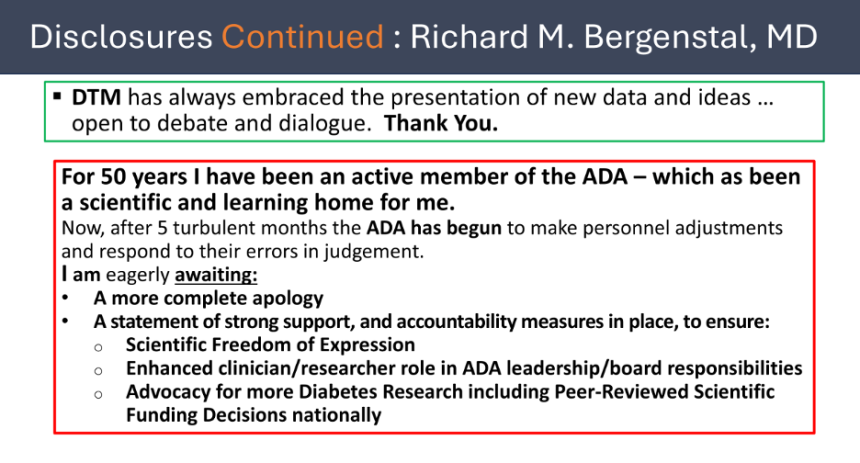
- Notably, Dr. Bergenstal opened his presentation on the burden of DKA with a personal statement calling for renewed, urgent, and frank discussions with the ADA. Drawing on his 50 years of involvement with the organization and delivered as an extension of his conflict of interest disclosure (see slide below), his remarks acknowledged that the ADA had moved toward addressing the concerns of its members but has not yet gone far enough. While some of Dr. Bergenstal’s colleagues chose to boycott DTM (which is formally affiliated with the ADA), Dr. Bergenstal emphasized that he had honored his commitment to speak at the meeting while also making his concerns heard. His statement preceded Dr. Lal’s remarks and underscored his continued dedication for serious, open dialogue.
3. Is 100% open-source software the future? A debate between Dr. Rayhan Lal and Mr. Shahid Shah
In this engaging afternoon session, Dr. Rayhan Lal (Stanford University) and Mr. Shahid Shah (Netspective Foundation Inc.) debated whether we should strive for 100% open-source software and whether this could be feasible. Dr. Lal argued that open-source options uphold the values of medical ethics, enables greater access rights for users, and allows for independent testing and greater accountability. Opposing absolute open sourcing, Mr. Shah stressed that, “Doing the right thing is not a business model.” In an interesting political moment, Dr. Lal clearly stated that while he supports Dr. Klonoff (Diabetes Technology Society), he does not support the ADA. He called for a “true apology, CEO accountability, editorial independence” as well as other “significant changes.” He also wore a shirt that read “WANTED” and “FreeNola5.”
- A case for 100% open access. Dr. Lal opened by sharing his story and personal investment in improving diabetes outcomes as a person with diabetes, engineer, physician, scientist, and family member of PWD. He next stressed that open access aligns with the four key features of medical ethics: (i) autonomy, meaning that patients get to make a decision based on a full understanding of risks/benefits; (ii) justice, which considers if burdens and benefits are distributed equally among groups in a society; (iii) beneficence, meaning the practice has an intent of doing good for the patient; and (iv) non-maleficence, meaning do no harm. Dr. Lal emphasized that patients and providers cannot make an informed decision when they do not know how something works. He also stressed that open-source software has been shown to increase TIR while decreasing patient burden.
Making openness workable and sustainable. Mr. Shah supported patients’ usable access to their own device readings and their ability to share those readings and change products. He distinguished patient data access, software interfaces, permission to control therapy, source-code licensing, and research-data access. These involve different risks and responsibilities and should not be bundled into a single decision about whether everything must be open. Access to a glucose reading and permission to issue an insulin-delivery command, for example, require different safeguards.
Mr. Shah emphasized that greater openness must address legitimate concerns about investment, regulatory responsibilities, liability, and the ongoing costs of validation, cybersecurity, maintenance, and support. Those concerns should be specific and testable, not blanket reasons to deny access. Companies should explain the actual risk and what evidence or safeguards would make a request acceptable. Protecting an investment and preventing patients from leaving are different objectives; commercial preferences should not be presented as safety requirements.
4. AID for T2D: Dr. Viral Shah on the benefits of early adoption of the technology
Dr. Viral Shah (Indiana University) examined the potential role of AID systems in T2D. He highlighted the limitations of current treatment approaches, including delays in insulin initiation and intensification. Dr. Shah presented clinical trial evidence demonstrating improvements in A1c with AID systems across diverse patient populations, regardless of baseline characteristics, prior insulin regimens, or use of CGM. He also discussed the practical considerations of insulin delivery, including daily insulin requirements and the capacity of pump systems, emphasizing that AID may benefit a broader range of individuals with T2D than is often assumed.
- Dr. Shah proposed that clinical practice should reconsider the conventional approach to insulin intensification, suggesting that AID be considered earlier for appropriate patients rather than only after years of treatment escalation. He emphasized that persistent therapeutic inertia can (and does) delay effective management and increase the risk of complications. His presentation called for further research and changes in clinical practice to facilitate timely access to advanced insulin delivery technologies for people with T2D.
- In Q&A, Dr. Shah emphasized that equity and inclusion require offering choices that reflect individual needs and preferences, rather than prescribing a single technology for everyone. Responding to a suggestion that clinicians should recommend only the simplest insulin pump, he stressed that “choices should be made by people with diabetes, not by us [clinicians]”: one approach will not suit all patients. He also highlighted accessibility challenges in device design, noting that miniaturization may disadvantage individuals with tactile difficulties or impaired vision. As another example of implicit bias designed into current devices on the market, he observed that red-green color blindness is common, yet red and green are frequently used to distinguish glucose-related information. Finally, Dr. Shah characterized technology adoption as partly a marketing and communication challenge, noting that his clinic’s high use of AID reflects his ability to communicate its value to patients: “My clinic mostly uses AID because I know how to sell it.” Accessible design, individual decision-making, and effective education are all necessary components to ensure that diabetes technologies are inclusive and usable across diverse populations.
5. Emerging non-invasive glucose monitoring approaches leverage breath and voice activity to track glycemic fluctuations
This presentation highlighted emerging approaches to non-invasive glucose monitoring, including breath analysis and brain-signal analysis, alongside the potential of continuous ketone monitoring to improve early detection of DKA. Dr. Frank Flacke (Mainz, Germany) reviewed research identifying correlations between volatile organic compounds (VOCs) in exhaled breath and blood glucose concentrations, while Dr. Jeffrey Joseph (Thomas Jefferson University) discussed the potential of voice and breathing patterns to predict glucose fluctuations and identify hypoglycemia. Together, the presentations highlighted growing interest in expanding diabetes monitoring beyond conventional glucose sensing. These approaches may ultimately improve accessibility, convenience, and early identification of metabolic complications.
- Dr. Flacke highlighted research investigating breath-based glucose monitoring as a convenient, non-invasive alternative to conventional glucose measurement. While urine, saliva, and ocular fluid have previously been investigated as alternatives to blood-based glucose measurements, breath analysis offers several potential advantages, including portability, affordability, environmental sustainability, and accessibility across age groups, not to mention ease of collection. Dr. Flacke discussed a study of 112 participants with and without T2D that examined associations between blood glucose concentrations and VOCs in exhaled breath following a meal challenge. Using gas chromatography-ion mobility spectrometry (GC-IMS), researchers identified 20 VOCs that changed alongside glucose concentrations. These findings suggest that changes in breath composition may reflect glycemic fluctuations. Building on these findings, researchers have developed portable breath-analysis technologies incorporating microsensors, including metal oxide sensors, to detect glucose-associated VOCs. These findings suggest that breath-based monitoring could eventually offer a needle-free approach to glucose assessment, particularly for people with prediabetes and non-insulin-treated T2D.
- Dr. Joseph discussed the potential of voice and breathing patterns as non-invasive biomarkers of glucose concentrations, highlighting early research using AI to identify glycemic fluctuations and hypoglycemia. Changes in glucose concentrations can influence tissue hydration, and, in turn, vocal frequency and amplitude, potentially providing measurable acoustic indicators of glycemic fluctuations. Dr. Joseph described the development of ML algorithms to identify associations between glycemic fluctuations and acoustic signals from voice and breathing sounds, including technologies using wearable wireless acoustic sensors positioned over the trachea. In a study by Kaufman et al. (n=505), voice recordings were collected using a smartphone application six times daily over two weeks and analyzed alongside time-synchronized CGM measurements. Researchers identified a significant association between glucose concentrations and vocal fundamental frequency, with vocal frequency increasing linearly as glucose levels rose. Dr. Joseph also highlighted a study by Lehmann et al. (n=22) investigating voice as a biomarker for hypoglycemia. Researchers examined changes in speech and breathing patterns associated with anxiety and increased sympathetic nervous system activity during hypoglycemia. They developed an ML algorithm capable of detecting hypoglycemic episodes with high accuracy. Collectively, these findings point to the potential of acoustic monitoring for non-invasive glucose estimation and early detection of hypoglycemia.
6. Quick Take: SynchNeuro uses brain activity as a signal for non-invasive glucose monitoring and metabolic forecasting
Dr. Casey Halpern (SynchNeuro) explored the use of electrical brain activity to track and potentially predict glucose fluctuations. This technology builds on the understanding that glucose-sensing neurons dynamically adjust their electrical activity in response to changes in glucose concentrations. These electrical activity fluctuations could provide measurable signals associated with glycemic fluctuations. SynchNeuro is developing a small, silicone-based electroencephalogram (EEG) sensor worn behind the ear to continuously record electrical brain activity. By analyzing these signals, the company aims to identify patterns associated with glucose changes and generate daily metabolic forecasts. Dr. Halpern discussed the potential for this approach to detect glucose spikes and monitor continuous glucose fluctuations using brain activity rather than direct measurement of glucose concentrations.
7. Risk prediction, prevention, and personalized insulin delivery: Dr. Juan Espinoza highlights the expanding role of AI in diabetes care
In an engaging overview of AI in diabetes, Dr. Juan Espinoza (Ann & Robert H. Lurie Children’s Hospital of Chicago) highlighted 10 recent studies demonstrating how AI could transform diabetes research, diagnosis, treatment, and care delivery. Dr. Espinoza emphasized that AI applications extend well beyond generative models, encompassing machine learning, predictive analytics, and decision-support tools. He encouraged clinicians and researchers to match the technology to the clinical problem, considering cost, available resources, and implementation feasibility. Throughout the presentation, he highlighted opportunities for AI to reduce patient burden, support clinical decision-making, and expand access to care, while emphasizing that clinical utility must ultimately be demonstrated through meaningful patient outcomes.
- AI is demonstrating potential to improve diabetes risk prediction and reveal underlying disease mechanisms. Dr. Espinoza highlighted a recent study in which a machine-learning-based genetic risk score improved prediction of T1D compared with an earlier genetic risk score, although performance varied by ancestry. He also reviewed a 2025 study demonstrating that machine learning applied to CGM responses could identify metabolic subphenotypes, including muscle insulin resistance (AUC 0.88) and beta-cell deficiency (AUC 0.84). Additionally, the recently developed GluFormer foundation model, trained on CGM data, demonstrated the potential to predict future glycemia, long-term metabolic risk, and treatment response across 19 external cohorts. Dr. Espinoza emphasized that these approaches could uncover clinically relevant information from existing data, although further validation is needed before widespread implementation.
- Emerging AI applications could support more personalized insulin delivery and improve safety for people with diabetes. Dr. Espinoza discussed a 2025 randomized trial evaluating digital twin technology, which creates individualized computational models to simulate glucose responses and inform AID adjustments. Among 72 adults studied over six months, Time in Range (70-180 mg/dL) increased from approximately 72% to 77%, suggesting that personalized simulations could help patients and devices adapt to changing insulin requirements. He also highlighted a 2024 NEJM AI study demonstrating that machine learning could detect hypoglycemia using vehicle and camera signals during driving (AUROC 0.80). Although preliminary, these findings illustrate opportunities to integrate AI into everyday technologies to improve diabetes management and safety.
- On diabetes prevention and interventions, Dr. Espinoza reviewed a study in which deep learning predicted stem-cell differentiation potential from early cell images with nearly 97% clone-level accuracy, potentially improving the efficiency of beta-cell manufacturing. He also highlighted a study that demonstrated that AI-designed insulin receptor agonists could activate insulin signaling and lower glucose in mice. Turning to prevention, he highlighted a trial (n=368) in which an AI-powered lifestyle intervention met noninferiority criteria compared with human coaching in a Diabetes Prevention Program, with 31.7% versus 31.9% achieving the composite study outcome. Dr. Espinoza suggested that AI-enabled interventions could help extend personalized support to more individuals without proportionally increasing staffing requirements.
- Dr. Espinoza emphasized that AI's greatest impact may come from improving access to care and connecting patients with timely interventions. He highlighted a trial conducted across 24 hospitals in Tanzania, in which AI-supported diabetic retinopathy screening paired with immediate counseling nearly doubled referral attendance within eight weeks compared with standard care. He also discussed emerging research using smartphone voice recordings to identify diabetes-related signals, including a 2026 study reporting classification AUCs of 0.78 in men and 0.79 in women -he cautioned that such applications require additional external validation.
8. 2026 updates on diabetes data interoperability: Dr. Juan Espinoza highlights the CGM data policy initiative aimed at enabling equitable, interoperable, and sustainable access
Dr. Juan Espinoza (Ann & Robert H. Lurie Children’s Hospital of Chicago) shared updates on the Integration of Connected Diabetes Device Data into the Electronic Health Record (iCoDE) initiative. Over the past 12 months, there have been numerous developments, with the 2026 update designed to reflect how health systems are moving device data into real-world practice. As co-chair of the Rising T1DE Alliance, Dr. Espinoza also shared his team’s work in developing a new national policy framework for ensuring consistent CGM data availability, interoperability, and definitions, helping to turn innovation into infrastructure.
- iCoDE began in 2016 to produce the first framework for integrating CGM data into the electronic health record (EHR). In 2025, it expanded to include data from AIDs and has since been downloaded more than 139 times by health systems, federal agencies, researchers, and HCPs. Dr. Espinoza shared that most recently, the team has developed a connected pen data framework for integrating insulin pen information into the EHR, which is expected to be published in the next two to three months. As the field continues to rapidly evolve, Dr. Espinoza highlighted the needed for the 2026 update to review the recommendations and provide a focused, practical refresh. This update focused on five areas: (i) the integration landscape; (ii) middleware (the software that communicates between the operating system and the application); (iii) LOINC (Logical Observation Identifiers Names and Codes); (iv) policy & standards; and (v) recommendations. In the review of the 54 original recommendations, the team reaffirmed 44, revised nine, added two, and retired one.
- To characterize the 2026 landscape, Dr. Espinoza worked directly with Abbott, Dexcom, Medtronic, Senseonics, Glooko, and Tidepool to identify what data is available and how it can be standardized, normalized, and aggregated. Each company reviewed supporting materials to confirm that iCoDE’s description matched the capabilities reported in practice. Dr. Espinoza noted this section of the report is particularly susceptible to becoming outdated, and therefore will be updated continuously. The report will present this information in easily digestible tables that cover integration pathways, data access, workflow, and intermediaries.
- Middleware was a significant focus of the update, as it is becoming an increasingly purposeful and important part of the CGM data architecture. Rather than simply being a workaround for getting data, the 2026 update is treating middleware as a system that deserves structured recommendations. Dr. Espinoza is particularly focused on the question of which data belongs where. He said that not every CGM data point needs to live in the EHR, just as the EHR does not hold every heart rate or blood pressure reading. Instead, the EHR needs to hold actionable data, while the rest can stay in middleware, where it can still be analysis-ready and useful.
- On the national CGM policy roadmap, Dr. Espinoza shared that the focus of CGM data integration is shifting from something organizations opt into and toward becoming a standard of care with equitable access. To identify the major policy gaps, his team worked with patients, health systems, manufacturers, funders, and aggregators to publish the National CGM Policy roadmap, released earlier this month, that gives a comprehensive overview of the challenges affecting CGM data and integration. The published white paper makes six recommendations: (i) clarify patient access so they can access and direct their device data; (ii) adopt interoperability standards; (iii) strengthen information-blocking protections; (iv) establish baseline infrastructure; (v) set shared contracting principles; and (vi) develop a shared CGM data dictionary.
9. Drs. Mathioudakis and Waki discuss language processing and large-language models to improve diabetes care
Drs. Nestoras Mathioudakis (Johns Hopkins) and Kayo Waki (The University of Tokyo) showcased their work with AI in the clinic, demonstrating how AI can improve the efficiency of clinical workflows and support patient behavioral changes. Dr. Mathioudakis described how natural language processing (NLP) can help find patients, devices, and clinical events written in health record notes that structured codes miss. On the patient side, Dr. Waki showed that large language models (LLMs) can estimate nutrients from meal photos and chats more accurately than dietitians, making meal logging easier and moving patients toward dietary goals.
- Dr. Mathioudakis explained that much of diabetes care lives outside of standard data codes and instead lives in “prose,” such as patient descriptions of hypoglycemic symptoms, timing of diabetes diagnosis, lifestyle counseling and goals of care, and AID use and settings. NLPs extract meaning from and generate human language. He outlined four jobs that NLPs can help in diabetes care: (i) “find” patients, devices, and phenotypes; (ii) “detect” clinical events that standard coding misses; (iii) “predict” occurrence of hypoglycemic events by adding text-derived signals to risk models; and (iv) “listen” to patients’ own words at scale.
- Find. Dr. Mathioudakis described a case in which his team wanted to know what percentage of patients with T1D were offered, prescribed, or actively using insulin pumps. Without AI, finding this information in a prior study meant manual review of more than 1,500 charts. Instead, in this study led by Dr. Estelle Everett, they used NLP and found that among 667 patients with T1D at UCLA, the AI found 90% of cases with insulin pump use vs. finding only 9% using standard codes. For CGM, the NLP found 85% vs. 68% with codes.
- Detect. Among more than 200,000 patients with T2D and no code for non-severe hypoglycemia, NLP identified hypoglycemic episodes in 3.4% of patients, with 93% of those confirmed on manual review.
- Predict and listen. When using text-derived details, such as occupation, chronic stress, or poor dietary adherence, the NLP could more accurately predict the diagnosis of type 2 diabetes. Additionally, when given patients’ free-text answers to open-ended questions on treatment non-adherence, the NLP easily identified barriers to adherence, including duration of treatment, complex regimens, and disrupting daily routines.
- Despite the vast capabilities of NLPs, Dr. Mathioudakis caveated that chart review remains the gold standard, and human validation is needed at every point where AI is implemented. Furthermore, data have not yet shown that richer data, such as identifying which patients have hypoglycemic symptoms, actually improves care or outcomes.
- Turning to the patient benefit of AI, Dr. Waki and her team use apps and wearables grounded in behavior-change theory to help people with diabetes exercise more, sleep more, eat more fiber, and lower stress. She noted that behavior change is complicated, so the use of AI allows for making tasks like meal logging simpler and more likely to occur. To illustrate this point, before using AI, her team ran a 12-month trial (n=126) of their DialBetesPlus app in adults across Japan with T2D and moderately increased albuminuria. The app lets patients self-monitor walking steps and diet with simple feedback. At 12 months, UACR was 29% better than the control group, with A1c 0.32 percentage points lower; however, diet did not improve vs. the control due to the burdensome task of meal logging, with only 37% of participants using that feature. As a result, her team developed an AI-powered app that estimates nutrients from a meal photo, lets patients log by chat, and gives daily and weekly feedback. In the FiberMore trial, patients using the app raised fiber intake from a baseline of 12 grams per day to the guideline target of 20 grams per day.
- In developing the system that estimates nutrients from photos, Dr. Waki found that the best LLM model tested outperformed human dietitians. Strikingly, giving the model human-labeled reference images made the model perform worse. For patients who forget to take a photo of their food, chatting with the model about what they ate also produced accurate enough nutrient information to enable behavioral feedback. Using this model, Dr. Waki is conducting a multi-site pilot trial (n=80) in people with T2D to compare its latest app, FiberMore2+, against a standard meal-logging app, with the primary outcome being fiber intake and secondary outcomes of A1c. Looking ahead, her team plans to explore whether AI can help with behavior change focused on other nutrients (e.g., vitamins, added sugar, iron, sodium, potassium) and behaviors like walking, eating less salt, drinking less alcohol, and lowering stress. The app is also planned to include goal setting and barrier-and-solution identification.
10. Updated FITTER guidelines: Dr. Jane Jeffrie Seley on “giving it your best shot”
Dr. Jane Jeffrie Seley (Weill Cornell) highlighted the importance of structured education in improving injection technique and preventing injection-site complications, particularly lipohypertrophy (LH). The original FITTER recommendations, developed by an international consensus group of experts and informed by a 2015 survey of approximately 13,000 individuals across 42 countries, found that fewer than 40% of people with diabetes had received instruction from healthcare professionals on proper insulin administration. Education can reduce A1c by up to 0.58% and achieve a 50% reduction or complete resolution of LH, alongside improvements in injection practices. Dr. Jeffrie Seley also discussed the updated international recommendations developed by 16 diabetes specialists from 13 countries between 2023 and 2024, following a review of literature published since 2015.
- The new recommendations emphasized the need for routine injection site assessment and comprehensive education for both insulin users and healthcare professionals. Individuals taking insulin should receive guidance on inspecting and palpating injection sites, selecting and rotating injection locations, appropriate injection technique, insulin storage, and sharps disposal. Healthcare professionals should be trained to recognize and assess LH and understand its potential consequences, including impaired insulin absorption and glycemic variability. Finally, Dr. Jeffrie Seley called on diabetes organizations, healthcare institutions, and insulin and needle manufacturers to develop accessible, non-branded educational resources to support consistent implementation of evidence-based injection practices.
11. Experts call for standardized CGM performance evaluations, stronger cybersecurity efforts, and greater oversight of connected diabetes technologies
In this session, speakers emphasized the growing need for standardized CGM study designs, comprehensive performance evaluations, and stronger cybersecurity standards as diabetes technologies become increasingly interconnected and reliant on AI. Dr. Emily Dunkelberger (FDA) highlighted opportunities to standardize pivotal CGM study designs to improve regulatory transparency and predictability, while Dr. Guido Freckmann (Institut für Diabetes-Technologie Ulm, Germany) discussed new recommendations from the International Federation of Clinical Chemistry and Laboratory Medicine (IFCC) to address inconsistencies in CGM accuracy evaluations. Dr. Marisa Cruz (University of California, San Francisco) and Dr. David Sacks (George Washington University) reviewed recently published Diabetes Technology Society (DTS) performance guidelines emphasizing system reliability, interoperability, and AI-enabled clinical decision support. Additionally, Mr. Ravi Subramaniam (IEEE Standards Association) discussed the importance of cybersecurity standards in protecting connected diabetes devices and maintaining patient trust. Overall, this discussion underscored that CGM performance cannot be characterized by a single accuracy metric.
- Dr. Dunkelberger emphasized the importance of standardizing pivotal CGM study designs to improve regulatory predictability, transparency, and consistency across manufacturers. Standardized study designs could establish a more level playing field for established and emerging CGM developers while strengthening confidence among patients, clinicians, and regulatory authorities. Dr. Dunkelberger highlighted several important considerations for pivotal studies, including whether the final commercial device is being evaluated, whether testing reflects the device's intended use and indications, and whether the comparator method and sample matrix are appropriate for the target population and clinical setting. Differences in study design and comparator methods can complicate comparisons of CGM performance across manufacturers, even when devices report similar accuracy metrics. Dr. Dunkelberger emphasized that aligning pivotal study designs with established regulatory principles could foster greater predictability, transparency, and trust throughout the CGM development process.
- Dr. Freckmann highlighted new IFCC recommendations aimed at addressing inconsistencies in CGM accuracy evaluations and establishing more standardized clinical study procedures. Despite the widespread adoption of CGM, differences in study methodologies can produce varying performance results. To address these challenges, the IFCC working group has proposed standardized study designs that include at least 100 participants, with a majority having T1D, and comparator glucose measurements collected every 15 minutes. Additional recommendations include evaluating one sensor per anatomical wear site, assessing performance throughout the full intended sensor wear period, and ensuring that studies capture a broad range of clinically relevant glucose conditions. These recommendations aim to improve consistency across clinical evaluations and provide a more reliable foundation for comparing CGM accuracy and performance.
- Dr. Cruz and Dr. Sacks emphasized that CGM performance must be evaluated across multiple domains beyond traditional accuracy metrics. Drs. Cruz and Sacks highlighted new DTS guidelines addressing reliability, interoperability, and AI-enabled clinical decision support. The presenters noted that clinical applications of CGM data have evolved more rapidly than the methods used to evaluate CGM systems. Chapter 8 of the recently published guidelines recommends that glucose agreement be reported across sensor wear segments and glucose ranges, sensor survival be estimated using Kaplan-Meier analysis, and manufacturers report the proportion of expected glucose readings successfully delivered to users. Chapter 9 focuses on interoperability, emphasizing that connected devices can introduce safety risks that may not be apparent when individual components are evaluated separately. Potential challenges include outdated glucose data, differences in device clocks, and conflicting commands between connected systems. The guidelines therefore recommend testing how integrated systems respond to simulated failures, including whether they can fail safely and recover predictably. Overall, the DTS guidelines provide recommendations for manufacturers and regulatory authorities, reinforcing that CGM performance cannot be adequately captured by a single numerical measure.
- Mr. Subramaniam highlighted the growing importance of cybersecurity in connected diabetes technologies. He emphasized IEEE 2621 as a standardized framework for evaluating medical device security and protecting patient safety. As diabetes devices become increasingly interconnected, cybersecurity vulnerabilities can introduce risks extending beyond data privacy. This includes inaccurate diagnoses, inappropriate therapy delivery, and disruptions to continuity of care. IEEE 2621 establishes a structured testing and evaluation process that includes assessing device security requirements, identifying potential vulnerabilities, conducting penetration testing, and generating standardized security evaluation reports. Certification against recognized cybersecurity standards could help manufacturers demonstrate security preparedness that may support more efficient regulatory submissions. Mr. Subramaniam also emphasized the importance of building patient trust in AI. He highlighted four key considerations: (i) whether users understand how AI functions and its limitations; (ii) who is accountable when AI produces incorrect recommendations; (iii) whether algorithms perform consistently across diverse patient populations; and (iv) how sensitive health information is protected.
12. Drs. Guillermo Umpierrez, Elias Spanakis, and Jane Jeffrie Seley emphasize the need for greater use of insulin-dosing algorithms, CGMs, and AIDs in hospital settings
With coffee in hand and groovy ’60s classics like “Can’t Help Myself” by The Four Tops playing, attendees shuffled into the ballroom, energized and ready to learn from an esteemed panel on diabetes technology in hospital settings. Chaired by Drs. Andrew Demidowich (Johns Hopkins) and Madhu Subhas (Omaha VA Medical Center), this session opened with Dr. Guillermo Umpierrez (Emory University), who highlighted how insulin-dosing algorithms help standardize dosing and reduce clinical variability to improve glycemic management. On inpatient CGM and AID use, Dr. Elias Spanakis (University of Maryland) called for trials using standardized, inpatient-specific CGM metrics and assessing clinical outcomes, such as in-hospital complications or length of stay. Citing high hospital readmission rates among people with diabetes, Dr. Jane Jeffrie Seley (Weill Cornell Medicine) closed with practical strategies for implementing CGM at discharge to reduce hospitalization and improve glycemic management.
- Dr. Umpierrez highlighted the shift toward computer-guided insulin algorithms, such as Glucommander, to support insulin dosing and achieve optimal glucose targets. In the GlucoCABG trial assessing glycemic management in cardiac surgery patients, Dr. Umpierrez and his team used Glucommander to target an intensive blood glucose target of 100-140 mg/dL. With this algorithm, patients achieved a mean blood glucose concentration of 130 mg/dL without increasing hypoglycemia. Dr. Umpierrez emphasized that Glucommander is not the only tool capable of helping patients meet glycemic target. Other algorithms, including LOGIC-Insulin and EndoTool have also demonstrated improvements glycemic management.
- In a separate study of DKA management, computer-guided insulin infusion tools also shorten time to DKA resolution, with blood glucose reaching below 250 mg/dL within 9.1 hours vs. 10.9 hours in the conventional therapy group and bicarbonate levels reaching 18 mmol/L within 13.6 hours vs. 17.3 hours. Hypoglycemia rates were also lower (12.9% vs. 35%), while hospital stays were shorter (three days vs. 4.5 days) compared with standard treatment. Taken together, Dr. Umpierrez stated insulin-dosing software is a necessary component of diabetes management, especially given that insulin requirements change with severity of illness, kidney function, nutrition, and medication.
- Turning to inpatient CGM and AID use, Dr. Spanakis critically reviewed existing studies, noting that while they have shown improvements in glycemic management, such as TIR, there are differences in the magnitude of effect. He noted key methodological factors across the trials that contribute to this difference, such as how the CGMs or AID were used (e.g., by itself vs. with smartphones or tablets), which healthcare providers monitored the devices (e.g., nurses vs. providers), as well as differences in study populations and CGM metric definitions. He further noted that the majority of studies did not report on specific clinical outcomes, such as in-hospital complications, infections, length of stay and mortality. While clinical benefits are often inferred from improvements in glycemic management, there is a need to evaluate these outcomes directly, particularly given difference across patient populations.
- Dr. Spanakis and other emerging work from researchers are defining standards for which glycemic metrics should be used in inpatient trials. He cited his consensus statement for CGM metrics for inpatient clinical trials, which aimed to define terms related to hospital hypo- and hyperglycemia, hospital TIR, hospital glycemic variability, and the use of CGM data for insulin dosing. Following this consensus statement, Diabetes Care and Diabetologia simultaneously published the international position statement on practical approaches for inpatient CGM and AID in adults, which helped provide recommendations for specific CGM metric targets.
- Making the strong case for providing CGM at discharge, Dr. Jeffrie Seley cited that those with diabetes have a higher rate of hospital readmissions of 16-24% vs. 14% without diabetes. Diabetes also ranks among the top 20 conditions associated with the highest 30-day hospital readmission rates, with diabetes with complications ranking third overall. Given this data, Dr. Jeffrie Seley said this is the perfect opportunity to start a CGM at discharge program. In one pilot study that randomized individuals to either BGM or CGM at discharge, after 12 weeks, those on CGM showed a trend towards increased TIR, decreased hypoglycemia, and reduced glycemic variability. In addition, because of the small sample size, there was no significant difference in ER visits or hospitalizations compared with the BGM group. However, in another study assessing CGM at discharge in adults with T2D (n=108), not only did A1c decrease from 12% to 8.2%, but readmission rates were lower in the CGM group than in controls (23% vs. 50%).
- Regarding implementation, Dr. Seley said that because CGM use for inpatient treatment decisions is not FDA-cleared, both individuals with diabetes and healthcare professionals need education for safe use. For example, she recommended training nurses, dietitians, pharmacists, PAs and NPs to become “diabetes champions” – HCPs who attend monthly meetings with guest speakers to learn more about diabetes care and education and how to support CGM use during the hospital stay. She also noted training inpatient teams to navigate coverage barriers (e.g., out-of-pocket costs or lack of coverage) to ensure that individuals given sample CGMs can continue using them after discharge. In her experience, this means working closely with social workers and care managers to navigate insurance coverage. Behavioral and physical factors can also present challenges, particularly since acutely ill individuals are focused on recovery rather than trying to learn a new device. She stressed the importance of spending the necessary time with inpatients to explain the benefits of CGMs, and if done properly, she has found that nearly 100% of her inpatients continued to use a CGM after discharge. Ideally, this is done at least two days prior to discharge, allowing individuals to use the CGM, interpret trend arrows, and discuss questions with their clinicians. Additionally, given that nearly 40% of seniors and 24% of families with a household income below $30,000 do not own a smartphone, she called for the need to have backup receivers on hand in the clinic.
13. Glucose curves as metabolic fingerprints: Dr. Michael Snyder discusses how AI offers a new approach to diabetes subtyping
Dr. Michael Snyder (Stanford University) examined the potential for AI and CGM to identify distinct metabolic subphenotypes underlying dysglycemia, with implications for nutrition, lifestyle interventions, and treatment selection. Underscoring the heterogeneity of diabetes, he reviewed earlier efforts to classify diabetes into subgroups using clinical characteristics and genetic data, including a genetic analysis of 1.4 million individuals that identified approximately 650 loci and 12 clusters. Despite these advances, a key challenge remains in understanding the metabolic defects driving these differences. Drawing on studies involving individuals with normoglycemia and prediabetes, he demonstrated how glucose response patterns may reveal differences in beta cell function, muscle insulin sensitivity, and incretin activity, potentially supporting more targeted approaches to diabetes prevention and management.
- AI models identify metabolic subphenotypes from glucose response patterns. A study of 55 participants who consumed seven standardized carbohydrate challenges revelead considerable variation in postprandial glucose responses to foods such as rice, pasta, and potatoes. To better understand these differences, researchers identified 14 features of glucose response curves that could be incorporated into machine learning models to predict metabolic subphenotypes, including muscle insulin resistance, beta cell dysfunction, and impaired incretin activity. Models demonstrated promising predictive performance for muscle insulin resistance and beta-cell dysfunction achieved reliable performance measures, although prediction of incretin-related dysfunction remained less reliable. Dr. Snyder reported better predictive performance using at-home CGM-based data than clinic-based assessments for certain predictions. Dr. Snyder also noted that individuals with muscular insulin resistance experienced greater glucose excursions following potatoes and pasta, while those with beta cell dysfunction showed larger responses to potatoes. Additional associations included higher blood pressure among individuals with pronounced glucose responses to bread.
- Metabolic subphenotypes may explain differences in responses to dietary interventions. Researchers subsequently examined whether consuming protein (egg whites), fiber, or fat approximately 10 minutes before white rice could reduce postprandial glucose excursions. While protein and fiber attenuated glucose responses in participants without the relevant metabolic defects, these benefits were less apparent among those with beta-cell dysfunction or muscle insulin resistance. Dr. Snyder suggested that identifying metabolic subphenotypes could help explain why commonly recommended dietary strategies have variable effectiveness across individuals and potentially guide more tailored nutritional advice.
- Integrating CGM and wearable data may guide lifestyle and treatment decisions. Turning to broader applications, Dr. Snyder reviewed research integrating CGM, smartwatch measurements, dietary logs, and physical activity data to examine associations between daily behaviors, glucose regulation, and metabolic subphenotypes. Greater physical activity was associated with lower muscle insulin resistance, while its relationship with beta-cell dysfunction was less pronounced, suggesting that exercise interventions may have different glycemic effects depending on the underlying metabolic defect. Beyond lifestyle interventions, he considered how metabolic subphenotyping might eventually inform medication selection and pointed to an AI-supported, CGM-based lifestyle program that demonstrated improvements in weight and Time in Range. Although further validation is needed, Dr. Snyder suggested that integrating CGM with AI and other physiological measurements could help move diabetes management toward interventions targeting the underlying causes of dysglycemia.
14. Smart MDI systems to support people with diabetes on injections
Dr. Julia Mader (University of Graz, Austria) examined the role of smart insulin pens, particularly for people who do not meet glycemic targets despite CGM use. She highlighted the limitations of conventional insulin delivery, including: (i) missed or delayed injections; (ii) dosing errors; and (iii) difficulties calculating appropriate insulin doses. Smart insulin pens provide additional information on insulin dose and timing, with some systems also offering dose recommendations and integration with CGM data. Dr. Mader emphasized that these features may support more informed treatment decisions, improve engagement, and help individuals better understand their bolusing patterns.
- Evidence suggests that smart insulin pens can improve TIR, reduce missed and/or mistimed insulin doses, and increase treatment satisfaction. She also discussed potential economic benefits, including reduced insulin wastage and lower treatment costs in some settings. However, she noted that simply tracking insulin dose and timing may not consistently improve glycemic outcomes; the benefits of smart pens depend on how effectively the available data inform clinical decision-making and insulin titration. Prof. Mader concluded that smart insulin pens represent a promising complement to CGM, with potential to support individual diabetes management, optimize treatments, and improve continuity of care, particularly for individuals who are not using AID systems.
15. The greatest risks of AI in healthcare may stem from poor implementation rather than the technology itself
In a thought-provoking session on the “dark side” of AI, Mr. Shahid Shah (Netspective Foundation Inc.) described how the greatest risks of AI in healthcare may arise from the people, processes, and systems surrounding its implementation rather than the technology itself. Mr. Shah emphasized the importance of accountability, verification, and appropriate safeguards as AI becomes increasingly integrated into clinical workflows. He urged researchers and clinicians to protect the benefits of useful automation while evaluating the entire pathway from data to patient outcomes. Additionally, he distinguished AID, predictive machine learning, and generative AI: evidence for one technology or use case does not establish the safety or effectiveness of another. The relevant unit of evaluation is the deployed care system, including human behavior, workload, access, follow-through, and recovery when something goes wrong, not only the model.
- Mr. Shah cautioned that polished AI-generated summaries and alerts can create a false sense of reliability when responsibility for reviewing their accuracy remains unclear. He identified three common risks: (i) summaries that nobody verifies; (ii) alerts that nobody owns; and (iii) users who lack adequate training. He encouraged clinicians to question AI-generated outputs, verify supporting evidence, and identify omitted information, emphasizing the importance of citations, transparency, and clear accountability.
- Mr. Shah highlighted that AI could substantially improve care coordination, but the identification of clinical problems is insufficient without assigning responsibility for addressing them. He outlined a proposed progression toward AI-enabled care, from better-prepared visits in 2026 to care between visits in 2027 and shared care plans and coordinated task completion by 2030. He emphasized that AI should help close gaps in care by assigning follow-up tasks, tracking their completion, and integrating recommendations into EHRs, rather than leaving patients to navigate fragmented systems.
- As AI systems become increasingly autonomous, stronger safeguards will be essential to prevent errors from spreading across interconnected clinical systems. Mr. Shah emphasized independently checkable evidence and clear boundaries between producing information, recommending an action, and being authorized to carry it out. A convincing explanation is not a substitute for verification. He proposed a staged approach requiring AI tools to explain their reasoning before making recommendations and obtain appropriate authorization before taking action. Independent AI auditing systems and human oversight could provide additional safeguards.
- Mr. Shah concluded by calling for greater collaboration and practical standards to support responsible AI implementation. He emphasized that training cannot compensate for poorly designed systems and proposed potential roles for the ADA and Diabetes Technology Society DTS in establishing guidance for AI-generated summaries, accountability for clinical follow-up, and testing standards for autonomous agents.
16. *NEW* Dr. Heman Shakeri explores dynamic CGM analysis for earlier diabetes detection
Dr. Heman Shakeri (University of Virginia) explored how preserving the timing and sequence of CGM measurements could improve the detection of early glycemic abnormalities that conventional summary metrics may overlook. While established measures such as TIR, glycemia risk index (GRI), and coefficient of variation (CV) effectively characterize glucose management in insulin-treated diabetes, Dr. Shakeri argued that their utility becomes more limited when assessing subtle changes in glucose regulation before overt hyperglycemia develops. Drawing on applications in GDM and early-stage T1D, he presented approaches that examine glucose transitions and individual excursions rather than relying solely on aggregate measures. He also discussed the potential for AI-based CGM analysis, emphasizing the importance of incorporating physiological context and additional inputs beyond glucose alone.
- Traditional CGM metrics can obscure important differences in glucose dynamics, particularly in the early stages of dysglycemia. Dr. Shakeri illustrated how two individuals with identical TIR and GRI can exhibit markedly different glucose profiles, with one experiencing frequent, rapid fluctuations and the other showing slower, more gradual changes. These distinctions become particularly important in the largely normoglycemic range, where metrics emphasizing T
time below 70 mg/dL or above 180 mg/dL offer limited discrimination between healthy individuals and those developing early glucose dysregulation. To preserve more information from the CGM trace, he highlighted two measures developed by his colleagues in the Center for Diabetes Technology at the University of Virginia: Poincaré plots, which pair each reading with the next so that the spread of the resulting cloud captures both step-to-step change and slower drift, and the entropy rate, which treats the trace as a sequence of glucose states and measures how unpredictable the transitions between states are. In published data, both measures were already elevated in autoantibody-positive individuals whose OGTT was still normal. Greater dispersion and less predictable transitions may indicate declining glucose regulation, potentially distinguishing profiles that appear similar using conventional summary metrics. - Dynamic CGM analysis shows promise for identifying dysglycemia earlier in pregnancy and presymptomatic T1D. In early pregnancy, Dr. Shakeri described analyses using CGM to predict subsequent GDM diagnosis, with T
time above 140 mg/dL (TAR140) demonstrating promising performance after harmonizing OGTT-based diagnostic classifications across study sites. He noted that inconsistencies in reference diagnoses can undermine prediction models and suggested that CGM could eventually complement initial GDM screening by identifying individuals requiring definitive testing. In early-stage T1D, however, TAR140 is less discriminatory because healthy individuals can also experience glucose elevations. His group is instead investigating meal-like glucose excursions as transient disturbances in glucose regulation, examining the shape, timing, and recovery of responses to identify potential deterioration in early insulin secretion. These approaches could eventually help distinguish physiological glucose fluctuations from patterns suggestive of disease progression. - AI could strengthen CGM-based phenotyping, although understanding what drives glucose changes remains a major challenge. Dr. Shakeri discussed emerging pretrained models capable of identifying patterns in CGM time-series data but cautioned that glucose measurements alone cannot reliably explain the effects of treatment or behavior. For example, models may incorrectly associate insulin administration with rising glucose because insulin is often delivered in response to hyperglycemia - while this may sound like common sense to a person with diabetes or a clinician, it is something that would need to be trained into a model for it to appropriately adjust in response. Incorporating insulin dosing, meals, exercise, and other inputs is therefore essential, yet challenging given sparse, late, and mis-sized logs of meals and doses, and insulin sensitivity that varies roughly tenfold between people and within one person across the day. He emphasized evaluating such models with matched comparisons (the same model with and without the dosing and meal inputs) and constraining learned models so that they move in the right direction, by a plausible amount, in response to a dose, rather than only recognizing glucose patterns.
-- by Allison Platt, Caroline Metz, Daniel Lee, Kayla Mathieu, Riya Chatterjee, Monica Oxenreiter, and Kelly Close