Executive Highlights
- Breakthrough T1D hosted the first day of its inaugural Clinical & Research Congress in Philadelphia on Friday, bringing together 1,000 attendees from more than 30 countries. In a rousing Opening Session address, which brought together many of the Congress’s eager attendees, Breakthrough T1D CEO Dr. Aaron Kowalski emphasized that T1D is entering a new era, with advances in diabetes technology, cell replacement, and disease-modifying therapies creating opportunities to improve care while pursuing cures. Dr. Kowalski described the congress as reflecting the multidisciplinary collaboration needed to translate a growing research pipeline into meaningful improvements in T1D outcomes.
- Though Dr. Kowalski highlighted insulin independence achieved by participants in Vertex’s and the University of Chicago’s cell-based trials, he stressed that scientific breakthroughs alone are insufficient. Instead, the T1D community must “build the runway” through coordinated clinical teams, training, insurance coverage, and partnerships to “land” emerging therapies in flight and support widespread patient access. Drawing on his own and his brother’s experiences with T1D, Dr. Kowalski compelled attendees to keep patients’ lives at the center of their work, advocate for sustained research funding, and advance better care and cures simultaneously so people with T1D can benefit from future breakthroughs.
- On the T1D paradigm, Prof. Chantal Mathieu (Katholieke Universiteit, Leuven, Belgium) reflected on the field’s immense improvements in technology and treatments across recent years in the Congress’s Opening Session. Looking ahead, Prof. Mathieu emphasized the need to understand which interventions might be best for specific individuals to personalize treatment, and that Breakthrough T1D will be crucial in shaping the way the field considers T1D and guidelines for interventions.
- On a similar note, Dr. Brynn Marks (Breakthrough T1D) discussed the potential of an “Interventional Diabetologist” to support patient access to advances in early detection, disease-modifying therapies, and islet cell replacement, which have fundamentally reshaped T1D care.
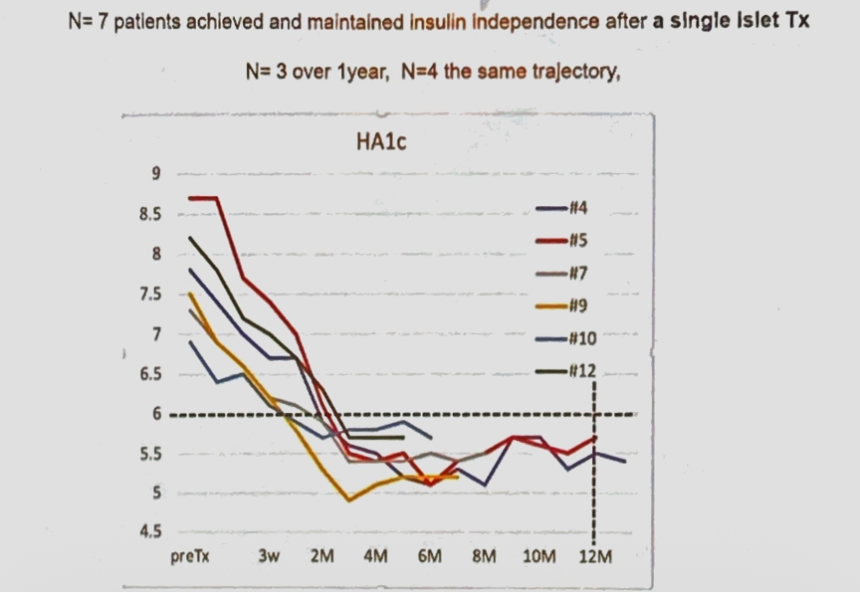
- In immune-modulating therapies, Dr. Piotr Witkowski (University of Chicago) presented safety and efficacy results from a pilot study (n=12) assessing islet transplantation with tegoprubart in a highly anticipated, standing-room-only session. Excitingly, seven out of 12 participants achieved and maintained insulin independence after a single islet transplantation and continued tegoprubart therapy, while the remaining five patients required a second islet transplant to achieve insulin independence.
- Separately, Dr. Philip O’Connell (Westmead Institute for Medical Research, Sydney, Australia) presented findings from a phase 2 clinical study (n=33) evaluating a calcineurin-free immunosuppressive regimen for islet transplantation featuring belatacept (a CD80/CD86 co-stimulation blocker) and sirolimus (an mTOR inhibitor). Notably, the belatacept-sirolimus regimen (bela/siro) was shown to offer strong anti-rejection effects, improved glycemic control, and better-preserved renal function compared to standard immunosuppression.
- In diabetes technology, several speakers provided updates on next-gen algorithms in development to support a fully closed loop system. Dr. Bob Vigersky (MiniMed) discussed outcomes associated with MiniMed AID systems across user engagement levels, while Dr. Greg Forlenza (Colorado University Anschutz) focused on advances between Omnipod 6 and Omnipod 5.
- In AI-based systems, Prof. Tadej Battelino (University Medical Center Ljubljana, Slovenia) discussed the potential of AI-based tools to transform T1D care through earlier detection, improved risk stratification, and more personalized diseasemanagement, while Dr. Boris Kovatchev (University of Virginia) discussed the role of digital twins accelerating preclinicalresearch and clinical development. Dr. Juan Espinoza (Lurie Children’s Hospital) also discussed AI in expanding clinical diabetes outcomes at scale.
- We were excited to learn that Breakthrough T1D also hosted a one-day workshop on Thursday, October 8, just before its Clinical Research Congress began, called “From Screening to Action: Breakthrough T1D Convenes a Clinical Playbook Workshop for Early-Stage T1D” – see inside for more on this gathering that included nearly 60 clinicians representing a very diverse group of institutions from major academic medical centers to private practices to federally qualified health centers (FQHCs).
- Early in the session, Dr. Anastasia Albanese-O'Neill (Breakthrough T1D) opened the session by addressing global screening guidance, an area that has ranged considerably from no guidance to screening for all in some parts of the world.
- Dr. Jay Shubrook (Touro University, Fairfield, CA) followed with network building to support screening – wow is there so much that can be done and is being done, sometimes with virtually no funding.
- Next, Dr. Nicole Sheanon (Cincinnati Children’s Hospital Medical Center) addressed implementation across pre-screening, screening, and post-screening – as one might imagine, there are some very best practices on this front that are vary significantly.
- Dr. Kimber Simmons and the Ask the Experts team led case-based discussions focused on interpreting autoantibody results, stage-based monitoring, communicating results to families, and emerging therapies and trials. Since the inception in 2022 Breakthrough T1D's Early Detection Pilot Program has expanded to include more than 50 locations across 18 states.
Breakthrough T1D Clinical & Research Congress (CRC) Day #1 took place at the Pennsylvania Convention Center in Philadelphia, PA. Read on for our top dozen highlights and see our day-by-day preview of the full conference here!
Table of Contents
-
Top Highlights
- 1. Prof. Chantal Mathieu on the T1D paradigm
- 2. Minimizing toxicity of immunosuppression: Dr. Piotr Witkowski on islet cell transplantation with tegoprubart
- 3. Dr. Brynn Marks highlights the “Interventional Diabetologist” to bridge therapeutic breakthroughs to patient access
- 4. Updates to system algorithms as AID moves closer to fully closed loop
- 5. Digital twins offer potential as bridge between preclinical studies and in-human trials
- 6. CGM appears more sensitive to differentiation in cohorts with low variability, such as stage 2 T1D, when compared to A1c
- 7. Real world application of tech: Test for insulin effectiveness
- 8. The role of AI in standardizing data collection and improving benchmarking
- 9. ADJUST-T1D extension study: Semaglutide discontinuation associated with reduced TIR and increased glycemic variability in T1D
- 10. Belatacept/sirolimus: Calcineurin inhibitor-free immunosuppression preserves renal function and improves early glycemic outcomes following islet transplantation
- 11. Dr. Sergio Chang Figueroa on finerenone for patients with T1D and CKD
- 12. Dr. Justin Michael Gregory on the enduring value of C-peptide preservation
Top Highlights
1. Prof. Chantal Mathieu on the T1D paradigm
In a packed opening session, Prof. Chantal Mathieu (Katholieke Universiteit Leuven, Belgium) reflected on the progression of the T1D paradigm and on future directions. Prof. Chantal described what being diagnosed with T1D looked like for patients and endocrinologists in the 1980s, when she first started practicing medicine. People with diabetes had limited access to diagnosis and treatment options, which at the time were limited to glycosuria measures, injections that mixed regular and NPH insulin, and a strict diet and routine. Fortunately, the field has seen immense improvements with both technology and treatments, supported by Breakthrough T1D and the “open-mindedness” of the field to advance the paradigm. In an era of rapid advancement, Prof. Mathieu shared encouragingly that more patients are seeing improvements in T1D management and overall complication rates.
- Reflection on the T1D paradigm. Prof. Mathieu reflected on the DCCT findings, in which intensive insulin treatment and effective glucose management showed prevention of diabetes complications. She also highlighted ways technology has shifted the field, affecting treatment administration and the lives of each patient. She specifically referred to real-world evidence in Belgium that demonstrated improvements in glycemic outcomes with advances in diabetes technology. With isCGM, only 12% of patients achieved the recommended TIR target of >70%. The proportion increased to 25% with real-time CGM combined with insulin therapy and further to 62% with hybrid-closed loop systems. Importantly, Prof. Mathieu pointed out the substantial improvements in meeting hypoglycemic targets.
- Future direction of T1D paradigm. Prof. Mathieu presented a picture of a person sitting between two roads to represent the current state of the field. The first road of the T1D space includes technology, where Prof. Mathieu highlighted the growing adoption of AID systems that are bringing the field closer to a fully closed-loop approach. The other road includes therapies aside from insulin, as insulin only serves as therapy until a T1D cure is found. Disease-modifying treatments have shown significant promise, with high-dose ATG modifying the immune system, as well as low-dose ATG, which showed similar efficacy with fewer side effects. Yet, among ATG and other disease-modifying treatments, Prof. Mathieu underscored how Tzield (teplizumab) has truly “revolutionized” the field as the first disease-modifying treatment for T1D, approved to delay stage 3 T1D. Aside from therapies, Prof. Mathieu also stressed the encouraging outlook for cell transplantation and how it could ultimately transform the T1D paradigm.
- Looking forward, Prof. Mathieu emphasized the need to understand which interventions might be best for specific individuals to personalize treatment. Breakthrough T1D has been crucial for shaping the way the field thinks about T1D and guiding directions for interventions. Prof. Mathieu presented another slide with a person sitting between two roads with many paths that eventually converged to highlight the importance of combining both T1D technology and therapy.
- Progression on the T1D paradigm. Prof. Mathieu touched on existing questions that come along with advancing technology and therapy for T1D, including efforts around integrating screening into the healthcare system. Specifically in the EU, Breakthrough T1D has supported EDENT1FI to screen across different countries in the general population. To date, EDENT1FI has screened more than 140,000 children, and the program is continually finding ways to determine different ways of monitoring. INNODIA also continues to serve as a network of clinical trial network, testing multiple treatments with large-scale collaborations like Breakthrough T1D. Prof. Mathieu encouraged more trials and enrollment of participants as part of this program to better understand prevention and treatment for T1D.
2. Minimizing toxicity of immunosuppression: Dr. Piotr Witkowski on islet cell transplantation with tegoprubart
In a much-anticipated, standing-room-only session on clinical trials in T1D cell therapy, Dr. Piotr Witkowski (University of Chicago) presented safety and efficacy results from a pilot study (n=12) assessing islet transplantation with tegoprubart. For background, tegoprubart is an investigational anti-CD40L antibody that provides immunosuppression without the toxicities associated with calcineurin inhibitors. Dr. Witkowski explained that initial trials of CD40L antibodies were halted due to thromboembolic events. 20 years later, Eldedon Pharmaceuticals developed a modified anti-CD40L antibody engineered to avoid thromboembolic activity.
- Seven out of 12 participants achieved and maintained insulin independence after a single islet transplantation, while the remaining five patients required a second islet transplant to achieve insulin independence (see below). Excitingly, all participants demonstrated improved glycemic management after their first islet transplantation. Transplanted islet grafts remained stable during follow-up, and patients did not report any severe hypoglycemic episodes post-transplant.
- No unexpected adverse events were recorded. Adverse events were divided into three categories: (i) thymoglobulin-related (immunosuppressant used during transplant); (ii) islet transplant procedure-related, such as liver hematoma (n=1) and intra-abdominal small hematoma (n=1); and (iii) immunosuppression-related, including viremia, norovirus, and skin infections.
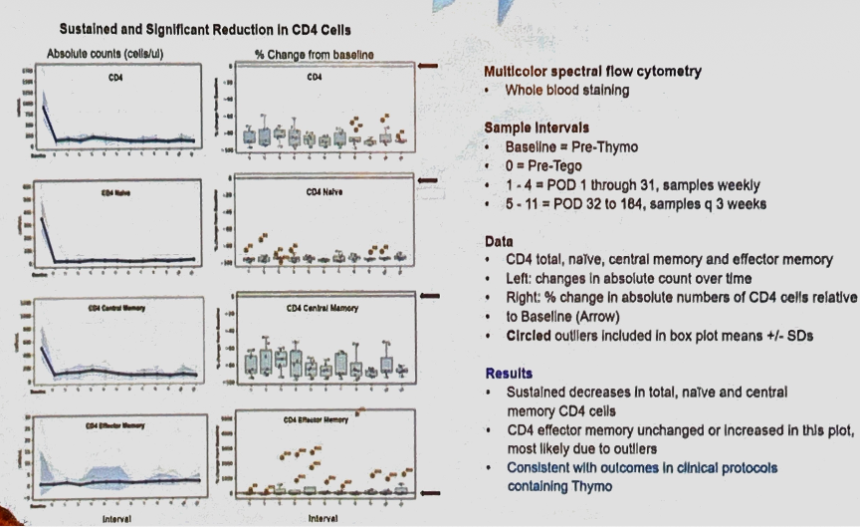
- Next, Dr. Witkowski presented results from key immunological studies. Using multicolor spectral flow cytometry, Dr. Witkowski showed a sustained decrease in total, naïve, and central memory CD4 cells (see below). Critically, tegoprubart conferred sustained reductions in total, naïve, and central memory CD4 cells, while CD4 effector memory was largely unchanged. These data are consistent with clinical protocols containing thymoglobulin.
- Next steps. Dr. Witkowski concluded by highlighting follow-up research investigating tegoprubart for islet transplant in patients with CKD. This pilot multi-center study (n=10) will test tegoprubart in patients with cGFR between 45 and 60 (CKD stage 3a).
3. Dr. Brynn Marks highlights the “Interventional Diabetologist” to bridge therapeutic breakthroughs to patient access
In this compelling Friday afternoon session, Dr. Brynn Marks (Breakthrough T1D) discussed the future of an “Interventional Diabetologist,” emphasizing that advances in early detection, disease-modifying therapies, and islet cell replacement have fundamentally reshaped T1D care, while clinical training and infrastructure have lagged behind. Critically, Dr. Marks emphasized that approval and access do not automatically translate to implementation. Expanding uptake of these therapies requires an educated workforce, clear screening and referral pathways, and evidence to guide safe, effective use.
- Dr. Marks emphasized that substantial unmet needs remain despite recent advances in T1D-related care. She cited glycemic-target attainment in fewer than two in 10 children and approximately three in 10 adults, while noting that broader AID use may be improving these outcomes. Dr. Marks also highlighted elevated cardiovascular risk and the considerable psychosocial burden of T1D, including an estimated 180 diabetes-related decisions each day. These demands coincide with a strained workforce, including clinicians that divide their time among clinical care, research, and other responsibilities, while an aging workforce and difficulty filling training positions threaten capacity. Her “back-of-the-napkin” estimate included approximately 1,100 people with diabetes per diabetes care and education specialist – a workload she considered infeasible. Preparing for more complex care therefore requires addressing both knowledge gaps and the practical limits of the workforce expected to deliver it.
- Turning to implementation, Dr. Marks organized her checklist around clinical readiness, the patient journey, and evidence and safety. Specifically, healthcare teams need education and delivery infrastructure, people with T1D need to understand their options and be prepared to discuss them with clinicians, and the field needs real-world evidence to guide effective, safe treatment. Dr. Marks cited early detection as one example of this effort. In the Breakthrough T1D Early Detection pilot program, participation expanded from one clinic in 2022 to more than 50 locations across 18 states in 2026, with T1D screenings happening for nearly 8,000 people. Importantly, screening participation has already extended beyond academic medical centers into federally funded health systems, rural settings, and pediatric and family medicine clinics. Dr. Marks framed this expansion as part of the broader challenge of connecting screening to meaningful monitoring and treatment pathways in the settings where people already receive care.
- Cell replacement presents an even greater implementation challenge. Islet and pancreas transplantation already offer treatment options, but their reach is limited by donor supply, immunosuppression, and the number of centers and clinicians equipped to provide care. Stem-cell-derived therapies could expand access, while hypoimmune cells represent the longer-term goal of providing replacement cells without immunosuppression. Still, scientific progress alone will not establish these therapies as part of routine care. Dr. Marks highlighted the striking observation that most people receiving islet or pancreas transplants currently self-refer, suggesting a need for stronger clinician awareness and referral pathways.
- To begin closing these access gaps, Dr. Marks described a newly launched hybrid Interventional Diabetology program combining six monthly foundational webinars with small-group learning alongside leading experts. The program’s inaugural year attracted more than 250 applications and enrolled 31 U.S. and 31 international participants, representing 17 states and 17 countries. Dr. Marks positioned the initiative as a starting point toward accredited, multidisciplinary training – not just for physicians, but for the entire care team. BT1D’s longer-term objective is to prepare professionals to use an expanding range of therapies while valuing both glycemic outcomes and quality of life, ensuring that the changing treatment paradigm translates into changes in everyday care.
4. Updates to system algorithms as AID moves closer to fully closed loop
In this data-focused series of presentations, several speakers provided updates on next-gen algorithms in development. These algorithm improvements aim to increase Time in Range (TIR), lower Time below Range (TBR), and reduce user input requirements. Ultimately, these algorithms aim to achieve a fully-closed loop system: one in which the user would not need to engage to achieve high rates of TIR without increased TBR.
- Dr. Bob Vigersky (MiniMed) discussed outcomes associated with AID systems and the potential to improve glycemic control across different levels of user engagement. He reported TIR outcomes of 72.5% across MiniMed users in a wide range of settings, and up to 76% or higher with optimal settings (including meal announcements). For the 128,177 observations, Dr. Vigersky indicated that individuals consumed an average of 4.6 meals or snacks per day, while missing approximately 1.8 meal boluses daily – that is sure a lot of missed insulin delivery in our view. Of all the nearly five meals or snacks, 1.7 boluses were administered on time on average, with the remainder delivered late. Unsurprisingly, timely meal bolusing was associated with improved glycemic outcomes, highlighting the continued importance of user engagement in AID performance. Dr. Vigersky also presented feasibility data for Vivera, a fully closed-loop (FCL) algorithm designed to accommodate a broad range of user engagement by making meal announcements optional. Initial findings have demonstrated comparable outcomes across two pump form factors, suggesting the potential for flexible, less user-dependent insulin delivery approaches to improve accessibility and reduce the burden of diabetes management.
- Dr. Greg Forlenza (CU Anschutz Barbara Davis Center for Diabetes, Aurora, CO) focused on advances in the Omnipod 6 system compared with Omnipod 5, including lower glucose targets, improved maintenance of automated mode, and an adaptive algorithm designed to deliver more insulin automatically. Findings from the STRIVE program, including a cohort of 132 existing Omnipod 5 users with positive baseline glycemic management, highlighted the potential for next-generation AID systems to improve outcomes even among individuals already achieving favorable control. These advances also underscore the growing importance of Time in Tight Range (TITR) as a measure for capturing incremental improvements in glycemic management. Dr. Forlenza also discussed a post-crossover phase evaluating reduced bolus requirements, exploring whether automation could sustain outcomes while decreasing the burden of mealtime insulin administration. In children and young children with T1D, Omnipod 6 met all safety endpoints and demonstrated meaningful improvements over Omnipod 5, while maintaining high TITR despite fewer boluses and higher total daily insulin delivery. These findings support the safety and efficacy of evolving AID technology in pediatric populations, although further data are needed in younger children.
5. Digital twins offer potential as bridge between preclinical studies and in-human trials
In a fascinating afternoon session, Dr. Boris Kovatchev (University of Virginia) discussed the role of digital twins and their broader potential to transform preclinical research and clinical development. Originally introduced in 2010 to describe numerical models of physical systems, digital twins can simulate physiological processes and support the evaluation and optimization of therapeutic interventions. Dr. Kovatchev highlighted the limitations of conventional animal testing, noting that more than 90% of drugs that appear safe and effective in preclinical models ultimately fail to receive FDA approval. AI and new approach methodologies (NAMs) have potential to complement or potentially replace certain animal studies.
- In diabetes, AI and NAMs build on mathematical models of glucose kinetics developed as early as 1979. Digital twin populations comprise sets of parameter vectors designed to represent key sources of physiological variability, enabling researchers to simulate diverse patient responses. Dr. Kovatchev described the continued development of these models, including their expansion to encompass broader populations and additional drug models, and presented evidence of their clinical utility in adapting treatment algorithms. In one clinical trial, digital twin-guided algorithm adaptation improved TIR from 72.3% to 77.4%, demonstrating the potential to optimize AID and hybrid closed-loop (HCL) systems through individualized computational modeling. He concluded that digital twins provide an important foundation for advancing personalized diabetes management and may offer a valuable framework for accelerating the development and evaluation of future medical technologies.
6. CGM appears more sensitive to differentiation in cohorts with low variability, such as stage 2 T1D, when compared to A1c
Continuing BT1D's congress’s emerging theme of AI as an opportunity for improved efficiency, Prof. Tadej Battelino (University Medical Center Ljubljana, Slovenia) discussed the potential of AI-based tools to transform T1D care through earlier detection, improved risk stratification, and more personalized disease management.
- Prof. Battelino contended that CGM should be considered for individuals with stage 2 T1D, highlighting Time above 140 mg/dL (TA140) as a potential marker of disease progression and risk. He reported that TA140 increases across disease stages, and he suggested that more than 10% of Time above 140 mg/dL may identify individuals at elevated risk. Interestingly, CGM and oral glucose tolerance testing (OGTT) have demonstrated comparable sensitivity and specificity, suggesting that both approaches may offer similarly valuable screening information. Prof. Battelino also explained that combining CGM-derived measures with genetic information and AI-based analysis could further improve the identification of individuals at risk of progression. Therefore, he suggested that these findings illustrate the limitations of A1c as a standalone risk-stratification tool, particularly in individuals with near-normal glycemia (i.e., early stage T1D), and pointed to the potential value of integrating CGM data to improve prediction.
- Beyond individual clinical decision-making, AI could support hospital operations, coordinate healthcare delivery, and improve the efficiency and equity of diabetes services at the national level. Large language models and other AI technologies may help connect currently fragmented systems and address gaps in diabetes care, particularly in low- and middle-income countries. Prof. Battelino concluded that AI should function as a tool to augment, rather than replace, person-centered care, with its implementation guided by clinical judgment, accessibility, equity, and appropriate governance.
7. Real world application of tech: Test for insulin effectiveness
Dr. Maren Schinz (Beyond Diagnostics, Switzerland) highlighted the lack of accessible methods for directly measuring insulin biological activity as an important unmet need in diabetes care.
- For individuals with T1D, uncertainty regarding insulin quality and storage can pose a challenge. Simply replacing potentially compromised insulin may not always be a practical solution. Dr. Schinz emphasized that insulin is exposed to multiple real-world stressors beyond temperature fluctuations, potentially compromising its biological activity and effectiveness.
- To address this challenge, her team developed a cell-based bioassay that measures insulin receptor activation under conditions outside conventional laboratory settings. Experimental findings indicated reduced insulin activity across all tested samples that were used in typical situations. Dr. Schinz introduced LumiQ, a rapid insulin quality-testing technology designed to quantify protein function rather than detect its presence, using an optical readout and a smartphone application to estimate the percentage loss of insulin activity within minutes. 91% of patients and 94% of healthcare providers reported that they would use the technology. Overall, this approach could provide patients and clinicians with a practical means of verifying insulin quality at the point of use, potentially improving confidence in insulin delivery and supporting more reliable diabetes management.
8. The role of AI in standardizing data collection and improving benchmarking
In this crowded afternoon session, Dr. Juan Espinoza (Lurie Children’s Hospital, Chicago, IL) discussed the role of AI, spanning machine learning to generative AI, in improving diabetes care. His research focused on standardizing clinical data, clinical benchmarking, and population health management.
- Dr. Espinoza emphasized that standardizing clinical data can improve care even without AI by enabling transparent comparisons, performance feedback, and quality improvement at scale. AI can build on clinical foundations by identifying patterns in more frequently collected data, enabling earlier detection of emerging clinical risks and supporting more targeted interventions. By integrating predictive analytics into clinical benchmarking, healthcare systems can identify which patients require attention and determine how best to allocate care resources. Dr. Espinoza highlighted the Rising T1DE Alliance as an example of this approach, using AI-enabled remote monitoring and risk stratification based on weekly data and 90-day A1c predictions to guide interventions for people with T1D.
- Dr. Espinoza reported that this integrated approach has been associated with improvements in glycemic control, reductions in diabetic ketoacidosis (DKA), decreased emergency department utilization, and fewer inpatient admissions. He stressed, however, that improved AI model performance alone does not guarantee better clinical outcomes. The critical factor will be whether healthcare systems can translate model-generated insights into effective, actionable care. Accordingly, implementation should prioritize clinical utility, equity, and access, with evaluation focused on the performance of the entire care system rather than the predictive model in isolation. He summarized this approach through four principles: (i) standardize data before optimizing performance; (ii) use the simplest method that reliably addresses the clinical problem; (iii) predict outcomes that can inform actionable interventions; and (iv) evaluate whether the overall system is improving care delivery. Ultimately, AI should be viewed as an enabling tool within a well-designed clinical infrastructure, rather than an independent solution to the challenges of diabetes management.
9. ADJUST-T1D extension study: Semaglutide discontinuation associated with reduced TIR and increased glycemic variability in T1D
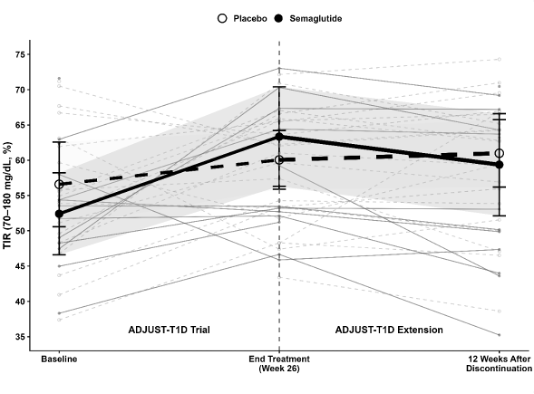
In this compelling Friday afternoon ePoster session, Dr. Kanchan Bhasin (Indiana University) shared results from a three-month extension study (n=38) of the phase 2 ADJUST-T1D trial (n=72) of semaglutide as an adjunct therapy to AID in adults with T1D and obesity. In ADJUST-T1D, participants were randomized 1:1 to semaglutide or placebo with AID. Participants assigned to semaglutide initiated once-weekly treatment at the 0.25 mg dose, titrating to 0.5 mg and 1 mg doses at four-week intervals. Participants then continued 1 mg maintenance therapy for an additional 14 weeks, for a total treatment duration of 26 weeks. Extension study results were published in Diabetes, Obesity and Metabolism, with authorship led Drs. Eslam Montaser (Indiana University), Viral Shah (Indiana University), Davida Kruger (Henry Ford Hospital), and Dr. Bhasin.
- Study design and baseline characteristics. After completing the 26-week ADJUST-T1D trial, participants in the present analysis discontinued semaglutide (n=16) or placebo (n=22) and entered a three-month extension phase. Researchers sought to assess the effects of semaglutide discontinuation using electronic medical record (EMR) data for an observational analysis. Among participants who received no GLP-1 RA therapy during the extension phase, researchers analyzed up to 14 consecutive days of CGM data at Week 26 and at the end of the three-month extension, including TIR, TITR, TAR, TBR, mean glucose, standard deviation (SD), and coefficient of variation (CV).
- Results. Researchers found that TIR increased during the ADJUST-T1D treatment period in both groups, with a greater increase observed with semaglutide. During the three-month follow-up, however, TIR significantly declined by 3.6 percentage points in participants who discontinued semaglutide, compared to a 1.5 percentage point increase in those who discontinued placebo (p=0.044; see below). Glycemic variability also increased significantly after semaglutide discontinuation, with CV rising by 3.1 percentage points compared with 1.1 percentage points after placebo discontinuation (p=0.044). Dr. Bhasin noted that semaglutide discontinuation was associated with reduced TIR and increased glycemic variability despite continued AID use. These findings suggest that semaglutide’s glycemic benefits may not be fully sustained after treatment withdrawal, underscoring the potential for metabolic rebound and the importance of sustaining incretin-based therapy.
10. Belatacept/sirolimus: Calcineurin inhibitor-free immunosuppression preserves renal function and improves early glycemic outcomes following islet transplantation
Dr. Philip O’Connell (Westmead Institute for Medical Research, Australia) presented findings from a phase 2 clinical study (n=33) evaluating a calcineurin-free immunosuppressive regimen for islet transplantation featuring belatacept (a CD80/CD86 co-stimulation blocker) and sirolimus (an mTOR inhibitor). Clinical guidelines currently recommend a calcineurin inhibitor-based therapy as maintenance immunosuppression for islet transplantation. Although this regimen can effectively prevent allograft rejection, calcineurin inhibitors such as tacrolimus still carry risks of nephrotoxicity, neurotoxicity, and hypertension. In the present study, a belatacept-sirolimus regimen (bela/siro) was shown to offer strong anti-rejection effects, improved glycemic control, and better-preserved renal function compared to standard immunosuppression – supporting its use in islet transplantation.
- Study design. This non-randomized, phase 2, multi-center, open-label study followed participants who had received at least one islet transplant for 24 months. 24 participants received the standard-of-care maintenance immunosuppressive therapy of tacrolimus, a calcineurin inhibitor, and mycophenolate mofetil (MMF), an inosine monophosphate dehydrogenase inhibitor, whereas nine patients received belatacept and sirolimus.
- At 12 months after the first transplant, 89% of patients receiving bela/siro achieved the primary endpoints of freedom from hypoglycemia, positive C-peptide, and A1c <7.0%, compared to 52% of patients receiving tacrolimus and MMF (tac/MMF). Bela/siro appeared to facilitate early islet engraftment, with a significantly higher proportion of patients in the bela/siro group achieving insulin independence in the first six months than those in the tac/MMF group. Dr. O’Connell also noted that the bela/siro group had increased patients’ naïve CD4+ T cells, memory Tregs, and CD4+FoxP3+ Tregs (each of which are crucial for maintaining immune tolerance), although clinical implications of these findings remain under investigation.
- Notably, patients treated with belatacept and sirolimus showed no deterioration in eGFR throughout the 24-month follow-up, unlike those receiving tacrolimus and MMF. This result highlights the possibility for the bela/siro regimen to reduce the risk of nephrotoxicity associated with calcineurin-based immunosuppression, a key limitation that current islet transplantation protocols face.
11. Dr. Sergio Chang Figueroa on finerenone for patients with T1D and CKD
In this session generously sponsored by Bayer, Dr. Sergio Chang Figueroa (Baptist Health Deaconess, Madisonville, Kentucky) discussed the clinical consequence of Kerendia’s (finerenone) FDA approval for chronic kidney disease (CKD) associated with T1D. Dr. Chang Figueroa opened by describing the current, inadequate standard of care for CKD, which includes: (i) managing blood pressure; (ii) optimizing glycemia (oh, that!); and (iii) using RAS inhibitors. Ultimately, upwards of 40% of those with T1D have or will have CKD, underscoring a great unmet need for therapies to delay kidney disease and to improve renal outcomes. As background, finerenone is an nsMRA that selectively blocks mineralocorticoid overactivation in the heart and kidneys and was approved for CKD associated with T1D in September 2026. The results of the trial were nothing short of spectacular in our view and we’re very grateful for the regulatory approval by FDA for those with T1D and CKD that emerged several weeks ago (“Kerendia (finerenone) receives FDA approval for adults with CKD associated with T1D – high tolerability and “Januvia-like” ease of use highlighted – September 17, 2026). The highlights of the research were very impressive and we are curious if delay or prevention of CKD will be tested, now that such good news has emerged on the treatment front!
- The phase 3 FINE-ONE trial (n=242) demonstrated a significant reduction in urine albumin-creatinine ratio (uACR) with finerenone. As background, uACR measures the ratio of albumin (a blood protein) compared to creatinine (a muscle waste product) in urine. Protein in the urine, referred to as albuminuria and proteinuria, indicates impaired kidney filtration and an increased risk of CKD progression. The FINE-ONE study included adults with T1D treated with insulin with a uACR ≥200 to ≤5,000 mg/g on a stable dose of ACEi/ARB. Finerenone conferred a 22% reduction in uACR at three months and a 28% reduction at six months compared to placebo. We have asked dQ&A, the market research firm whose expertise is people who have or are at risk for diabetes or obesity, what percentage of people with diabetes (T1D or T2D) know what the term UACR is or eGFR – we imagine it’s very few for UACR in particular.
- Still, UACR functions as a validated surrogate endpoint for kidney function – a very important role! Therefore, Dr. Chang Figueroa stressed that future studies are needed to assess finerenone's impact on rates of kidney failure and end-stage kidney disease requiring dialysis or transplant, serum creatinine, and eGFR decline. During the Q&A, Dr. Chang Figueroa addressed this limitation by citing a meta-analysis that shows a strong link between uACR and clinical outcomes
- . Dr. Chang Figueroa emphasized that while finerenone was generally well-tolerated, significantly more patients taking the therapy (10%) reported hypokalemia compared to just 3% in the placebo condition. During Q&A, Dr. Chang Figueroa shared two interesting suggestions to mitigate the risk of hypokalemia. In response to one question, which asked if lokelma (an oral powder medication used to treat high blood potassium levels) could be co-administered, Dr. Chang Figueroa answered in the affirmative. Responding to another question pointed to Dexcom’s exploration into multi-analyte continuous sensing, he cited K+ monitoring as a potential effective way to limit the risk of hypokalemia in patients with T1D taking finerenone. There will be great joy from our view when continuous ketone monitoring emerges – so much damage comes from hyperglycemia and while this may be “obvious” to many, we worry that so many who are fortunate enough to have CGM often have hyperglycemia alerts silenced.
12. Dr. Justin Michael Gregory on the enduring value of C-peptide preservation
In this C-peptide-focused plenary session, Dr. Justin Michael Gregory (Sanofi) kicked off Day #1 of the Congress with an examination of a critical question: if insulin replacement technology is better than ever, does preserving endogenous insulin still matter? In his opinion, the answer is a resounding yes. Even with new pumps, sensors, and closed-loop control, exogenous insulin delivery still cannot replicate the timing, route, and coordinated islet signaling involved in endogenous insulin secretion. Further, these physiological intangibles that come with innate beta cell function are clinically significant, as Dr. Gregory demonstrated with data across what he called the “three C’s:” control, crises, and complications.
- Control: Higher C-peptide levels are consistently associated with improvements in CGM measures across cohort studies. Dr. Gregory shared data from the CLVer study (n=103), which found that higher stimulated C-peptide was associated with greater TIR and reduced glycemic variability regardless of the insulin replacement intensity in newly diagnosed children with T1D. Similarly, data from a DCCT intensive treatment subgroup (n=412) highlighted a strong relationship between C-peptide, A1c, and insulin dosage, with higher C-peptide associated with lower A1c and insulin doses beyond a certain threshold. These trends also persisted over a longer follow-up. The SDRNT1BIO Scottish Registry study(n=5,630) found that each tenfold higher value for baseline C-peptide was associated a 0.25-percentage point decrease A1c across 11 years of follow-up in participants aged 16 or older.
- Crises: In both cross-sectional and longitudinal studies, higher C-peptide was associated with a reduced risk of severe hypoglycemia and DKA. Dr. Gregory returned to data from the SDRNT1BIO study to illustrate his point, noting a continuous relationship between higher C-peptide and acute complications. Participants with a baseline C-peptide ≥0.2 pmol/mL had a 62% lower incidence of DKA and a 38% lower incidence of severe hypoglycemia compared to participants with <0.005 pmol/mL of baseline C-peptide. In another DCCT analysis (n=1,441) of adults with T1D, there were 129 patients who experienced 180 DKA events. Strikingly, only one of the 180 DKA events occurred with a stimulated C-peptide >0.2 pmol/mL.
- Complications: Having a C-peptide level >0.2 pmol/mL is associated with a significantly lower risk of microvascular complications. In the DCCT intensive treatment subgroup (n=412), every 50% higher stimulated C-peptide was associated with 11% lower risk of retinopathy progression and a 24% lower risk of sustained retinopathy. Moreover, the SDRNT1BIO study found a 17-18% lower incidence in retinopathy or maculopathy per 10-fold higher baseline C-peptide, even after adjustment for time-updated A1c.
- The question that remains: what might explain the influence of C-peptide? Is residual insulin responsible for the improved clinical outcomes themselves, or do other confounding factors explain this association? Dr. Gregory explained that randomized control trials of disease modifying therapies are a way to balance out unknown covariates. In a meta-analysis of 21 trials evaluating disease-modifying therapies in newly diagnosed T1D (n=780), greater treatment-associated C-peptide preservation was accompanied by lower A1c, with a 0.5-percentage-point difference at month 12 between treatment and control in positive trials. Dr. Gregory highlighted two limitations of this data, including: (i) they cannot distinguish between effects of the treatment itself and the retention of endogenous insulin secretion; and (ii) because hypoglycemia is measured inconsistently across studies, the causal association between treatment-associated C-peptide preservation and severe hypoglycemic events is unknown. Nevertheless, he underscored that these findings represent the next rung in the “ladder of evidence” for the value of C-peptide, especially as the push for its recognition as an FDA-accepted clinical endpoint continues.
-- by Carina Sun, Allison Platt, Esther Min, Elizabeth Rose, Monica Oxenreiter, and Kelly Close