Sanofi 4Q25 – MFN pricing for insulins; Tzield (teplizumab) sales total $19 million (flat CER, -11% Q/Q); stage 2 T1D approval in the EU; FDA decision for stage 3 expected in 1H26 –
Executive Highlights
- Sanofi reported its 4Q25 results in a call led by CEO Mr. Paul Hudson. See the press release, webcast, presentation slides, infographic, and net sales charts.
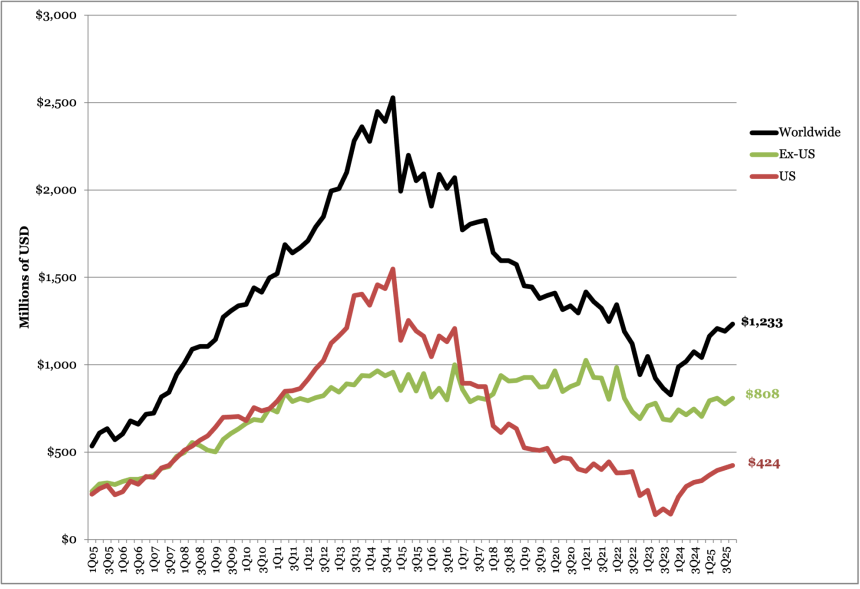
- In 4Q25, the overall diabetes portfolio totaled $1.2 billion, up 5% from 4Q24 and 1% sequentially. US diabetes sales growth significantly outpaced OUS growth in the quarter, totaling $424 million (+12% YoY, +2% Q/Q), while OUS revenue was essentially flat, totaling $808 million (+2% YoY, +1% Q/Q). OUS diabetes revenue has consistently led overall sales in absolute numbers since early 2018 – the last time revenue between the US and OUS was approximately balanced. In terms of growth share, an uptick in US sales since early 2023 has made the US market a key driver of overall growth. The strong growth was largely driven by basal insulin Lantus sales (+5% YoY, -4% Q/Q) and next-generation basal insulin Toujeo sales (+15% YoY, +3% Q/Q). These two products generated nearly $900 million in revenue in 4Q25, comprising over 80% of total diabetes revenue and up approximately 16% from 4Q24. New drug launches, including Tzield (teplizumab), accounted for 10% of pharmaceutical sales, totaling $1.1 billion (+50% CER).
- On insulin, Sanofi’s $35/month price cap for all of its insulins in the US, regardless of insurance status, will go into effect nationwide in 2026. Revenue for Lantus, a basal insulin, totaled $501 million in 4Q25 (+1% CER YoY, -4% Q/Q), demonstrating strong, steady growth. Sales for Toujeo, the next-generation basal insulin, totaled $397 million (+19% CERYoY, +3% Q/Q). Sales for Soliqua, fixed-ratio basal insulin/GLP-1 RA, totaled $101 million (+52% CER YoY, +36% Q/Q).
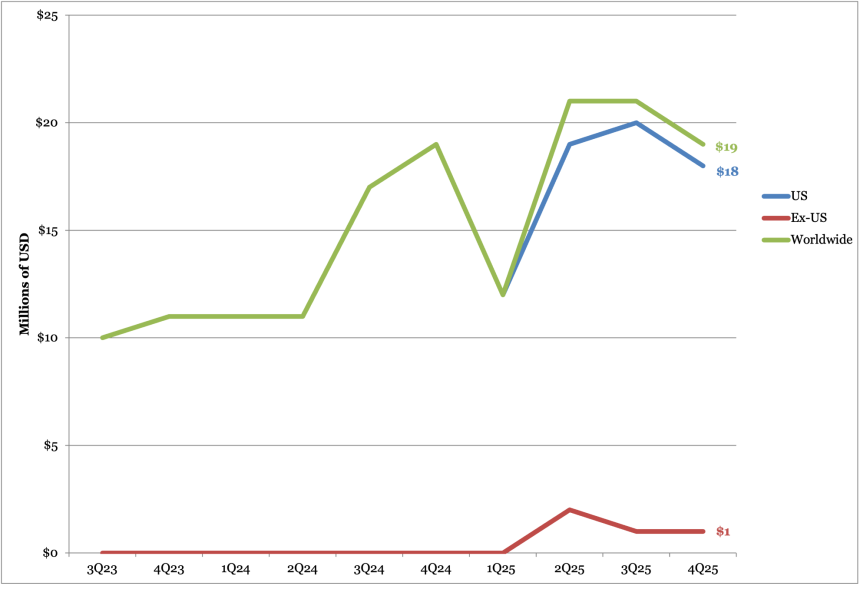
- Tzield (teplizumab), the first and only disease-modifying therapy for T1D, totaled $19 million in 4Q25, flat CER from 4Q24 and -11% sequentially. US sales totaled $18 million (flat CER YoY, -12% Q/Q), while OUS sales totaled $1 million (flat Q/Q) in its third reporting quarter. In the US, the FDA accepted a supplemental biologics license application for priority review to expand the US indication to children as young as one year old (previously ≥eight years) to delay progression of stage 3 T1D. The acceptance was based on positive interim data from the phase 4 PETITE-4 T1D study (n=20).
- In the EU, Tzield received approval in January 2025 for Tzield to delay the onset of stage 3 T1D in individuals ≥eight years with stage 2 T1D, making it the first disease-modifying therapy for T1D approved in the EU. The application and approval for stage 3 T1D were based on the PROTECT (n=328) trial, in which Tzield demonstrated preservation of beta-cell function in children and adolescents with recent-onset T1D.
- In cardiovascular disease, PCSK9 inhibitor Praluent (alirocumab) totaled $158 million in 4Q25 (+20% CERYoY, +4% Q/Q). Revenue growth was attributed to higher sales in the EU (+31% CER), partially offset by lower sales in the Rest of World (-16% CER).
- On the US pricing policy, Sanofi reached an agreement on Most Favored Nation (MFN) prices with the US government in December 2025, agreeing to list its insulin products at $35 per month’s supply and antiplatelet medication Plavix at $16 (a 98% reduction from the previous list price of $756). During today’s call, Mr. Hudson said that, in order to meet growing patient demand and its MFN commitment, Sanofi will continue investing in manufacturing capacity with a strategic focus on the US.
4Q25 Financial Results for Sanofi’s Diabetes Products
| 4Q25 Revenue (USD Millions) | YOY Reported (CER) Growth | Sequential Growth | |
| Total Diabetes | $1,233 | +6% (n/a) | +2% |
| Lantus | $501 | -5% (+1%) | -4% |
| Toujeo | $397 | +15% (+19%) | +3% |
| Soliqua | $101 | +45% (+52%) | +36% |
| Tzield | $19 | -11% (flat) | -11% |
| Estimated Other Diabetes (Insuman, Amaryl, Apidra, and Admelog) | $215 | +5% (n/a) | +2% |
| Praluent (not included in Total Diabetes) | $158 | +20% (+20%) | +4% |
*Starting in 1Q22, Sanofi stopped reporting “Other Diabetes” revenue, which consisted of revenue for Insuman, Amaryl, Apidra, and Admelog. Based on patterns observed in recent quarters, we estimated US “Other Diabetes” revenue as 15% of US revenue for Lantus, Toujeo, and Soliqua. Also based on patterns observed in recent quarters, we estimated OUS “Other Diabetes” revenue as 25% of OUS revenue for Lantus, Toujeo, and Soliqua. “Estimated Other Diabetes” is the sum of these US and OUS estimations. We acknowledge we might be far off on this front.
Table of Contents
-
Financial Highlights
- 1. Overall diabetes portfolio totals $1.2 billion (+6%, +2% Q/Q) in 4Q25, reflecting steady growth in sales of Toujeo (+15%, +3% Q/Q) and Lantus (-5%, +1% Q/Q)
- Sanofi Worldwide Financial Results
- 2. Toujeo revenue totals $397 million (+19% CER, +4% Q/Q)
- 3. Lantus revenue totals $501 million (+1% CER, -4% Q/Q)
- 4. Soliqua revenue totals $101 million (+52% CER, +36% Q/Q)
- 5. Tzield: Sales total $19 million (flat CER) in 4Q25; delayed FDA decision for stage 3 T1D still expected in 1H26; phase 3 BETA PRESERVE trial for stage 3 T1D now recruiting
- 6. Praluent sales total $158 million (+20% CER, +4% Q/Q)
- Pipeline Highlights
- Close Concerns’ Questions
Financial Highlights
1. Overall diabetes portfolio totals $1.2 billion (+6%, +2% Q/Q) in 4Q25, reflecting steady growth in sales of Toujeo (+15%, +3% Q/Q) and Lantus (-5%, +1% Q/Q)
In 4Q25, the overall diabetes portfolio totaled $1.2 billion, up 6% from 4Q24 and 2% sequentially. US diabetes sales totaled $424 million (+12%, +2% Q/Q) and OUS revenue totaled $808 million (+2%, +1% Q/Q). The growth was largely driven by basal insulin Lantus sales in the US (+12% CER), and next-generation basal insulin Toujeo sales globally, with strong growth in both the US (+41%) and OUS markets (+7% in the EU; +22% in the Rest of the World). 4Q25 represented a continuation in the growth trend Sanofi has experienced since early 2024, when the company reversed nearly a decade of declining sales (peaking in mid-2024 at over $2.5 billion).
Sanofi’s pharmaceutical sales totaled $11.3 billion (+13% CER) across vaccines, immunology, neurology, rare disorders, oncology, and metabolic health. Notably, new drug launches, including Tzield (teplizumab), accounted for 10% of sales, totaling $1.1 billion (+50% CER).
Sanofi Worldwide Financial Results
| Overall Diabetes | 4Q24 | 1Q25 | 2Q25 | 3Q25 | 4Q25 |
| Revenue – USD millions | $1,040 | $1,163 | $1,207 | $1,192 | $1,233 |
| YOY Reported Growth | +27% | +18% | +9% | +4% | +6% |
| Sequential Reported Growth | -0.1% | +10% | -4% | -1% | +2% |
Sanofi Diabetes Portfolio 4Q25 Geographic Financial Results
| Diabetes | Revenue – USD Millions | YOY Reported Growth | Sequential Reported Growth |
| US | $424 | +12% | +2% |
| OUS | $808 | +2% | +1% |
Sanofi’s Total Diabetes Portfolio Sales (1Q05 – 4Q25)
2. Toujeo revenue totals $397 million (+19% CER, +4% Q/Q)
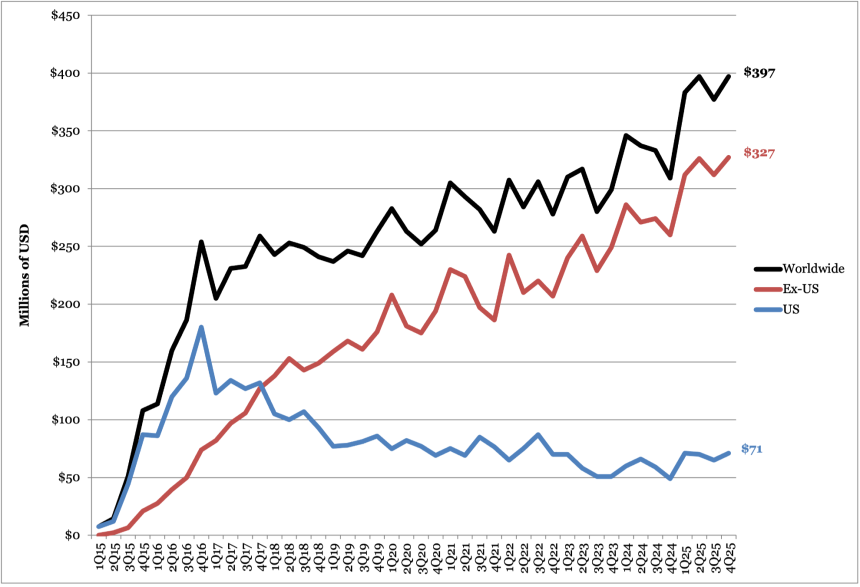
In 4Q25, sales for Toujeo, the next-generation basal insulin, totaled $397 million (+19% CER, +4% Q/Q). US sales totaled $71 million (+41% CER, +7% Q/Q) due to windfall sales from competitor unavailability – though management noted these effects are anticipated to partially subside in 2026. OUS sales totaled $327 million (+12% CER, +3% Q/Q). Sanofi attributed the growth to increased sales in the Rest of World (+22% CER), where Toujeo continues to increase its share in the basal insulin market. Toujeo sales in the EU also increased (+7% CER). Despite sequential declines in OUS Toujeo revenue, the overall sales of insulin have seen ongoing strong demand in international markets. OUS sales account for over 80% of total revenue and have nearly doubled in the last five years.
- In September 2025, Sanofi announced a $35/month price cap for all of its insulins (Toujeo, Lantus, and Soliqua) in the US, regardless of insurance status. This announcement built on previous expansions of its patient affordability program, Insulins Valyou Savings Program, which initially began as a $99/month offer to uninsured people with diabetes in June 2022.
Toujeo Worldwide Financial Results
| Toujeo | 4Q24 | 1Q25 | 2Q25 | 3Q25 | 4Q25 |
| Revenue – USD millions | $309 | $383 | $397 | $377 | $397 |
| YOY Reported Growth (CER) | +4% (+7%) | +10% (+10%) | 8% (+11%) | +6% (+6%) | +15% (19%) |
| Sequential Reported Growth | -4% | +22% | -5% | -5% | +4% |
Toujeo 4Q25 Geographic Financial Results
| Toujeo | Revenue – USD Millions | YOY Reported Growth | Sequential Reported Growth |
| US | $71 | +28% | +7% |
| OUS | $327 | +12% | +3% |
Toujeo Sales (1Q15 – 4Q25)
Source: Sanofi quarterly reports in the Close Concerns Knowledgebase
3. Lantus revenue totals $501 million (+1% CER, -4% Q/Q)
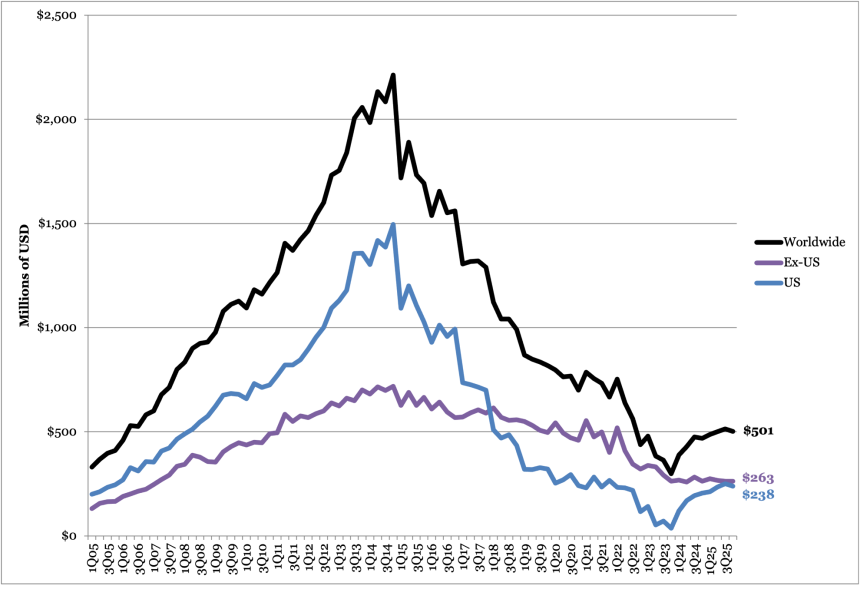
Revenue for Lantus totaled $501 million in 4Q25 (+1% CER, -4% Q/Q), continuing its trend of steady growth. US sales totaled $238 million (+12% CER, -7% Q/Q), and OUS sales totaled $263 million (-11%, -2% Q/Q). Since 2Q24, Lantus sales in the US have increased by volume due to the unavailability of a competing medicine – Novo Nordisk’s Levemir (insulin detemir), which was discontinued in the US in December 2024. Levemir will also be discontinued in the UK by the end of 2026. Customer demand is expected to normalize in 2026 as windfall sales diminish.
Lantus Worldwide Financial Results
| Lantus | 4Q24 | 1Q25 | 2Q25 | 3Q25 | 4Q25 |
| Revenue – USD millions | $468 | $487 | $500 | $514 | $501 |
| YOY Reported Growth (CER) | +59% (+63%) | +25% (+24%) | +7% (+12%) | +2% (+7%) | -5% (+1%) |
| Sequential Reported Growth | -1% | -3% | -5% | +3% | -4% |
Lantus 4Q25 Geographic Financial Results
| Lantus | Revenue – USD millions | YOY Reported Growth | Sequential Reported Growth |
| US | $238 | +3% (+12% CER) | -7% |
| OUS | $263 | -11% | -2% |
Lantus Sales (1Q05 – 4Q25)
Source: Sanofi quarterly reports in the Close Concerns Knowledgebase
4. Soliqua revenue totals $101 million (+52% CER, +36% Q/Q)
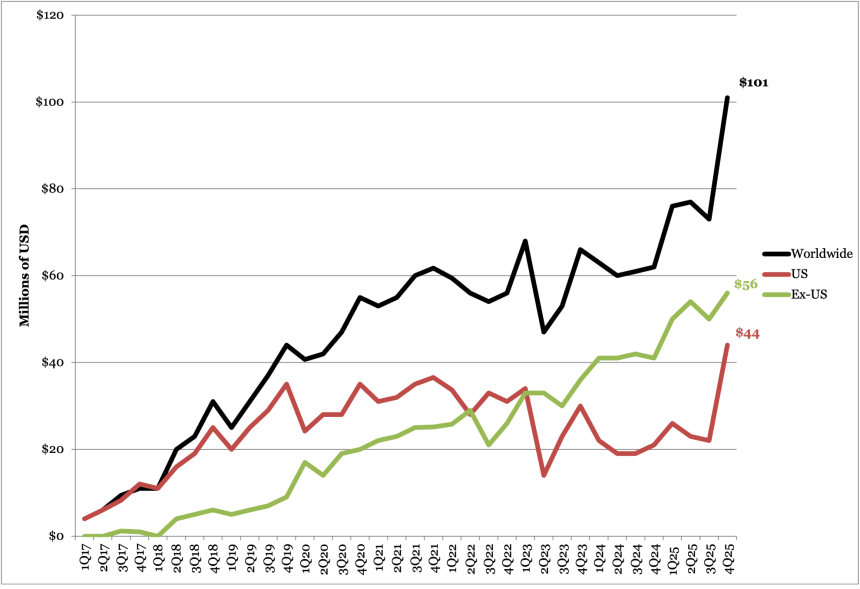
Soliqua, fixed-ratio basal insulin/GLP-1 RA, delivered exceptional growth in 4Q25, totaling $101 million (+52% CER, +36% Q/Q). US sales totaled $44 million (+105% CER, +95% Q/Q), and OUS sales totaled $56 million (+24%, +9% Q/Q).
- Despite the overwhelming success of semaglutide and other incretin-based therapies, we believe that many patients can benefit from this fixed-dose therapy. In clinical practice, combination therapy can help minimize side effects (e.g., weight gain) seen with insulin therapy, provide clinically robust improvements in A1c levels, help HCPs facilitate treatment intensification, and improve treatment adherence. Results from the phase 4 SOLI-SWITCH study (n=162), presented at ATTD 2025, demonstrated that Soliqua reduced A1c by 1.2 percentage points from a mean baseline of 8.5% in 24 weeks of treatment. Moreover, 38% of participants achieved an A1c <7.0% and saw a median body weight reduction of 0.9 kg (2 lbs).
Soliqua Worldwide Financial Results
| Soliqua | 4Q24 | 1Q25 | 2Q25 | 3Q25 | 4Q25 |
| Revenue | $62 | $76 | $77 | $73 | $101 |
| YOY Reported Growth (CER) | -5% (-2%) | +21% (+22%) | +18% (+20%) | +13% (+18%) | +45% (+52%) |
| Sequential Reported Growth | +6% | -21% | -6% | -6% | +36% |
Soliqua 3Q25 Geographic Financial Results
| Soliqua | Revenue – USD millions | YOY Reported Growth | Sequential Reported Growth |
| US | $44 | +85% (+105% CER) | +95% |
| OUS | $56 | +24% | +9% |
Soliqua Sales (1Q17 – 4Q25)
Source: Sanofi quarterly reports in the Close Concerns Knowledgebase
5. Tzield: Sales total $19 million (flat CER) in 4Q25; delayed FDA decision for stage 3 T1D still expected in 1H26; phase 3 BETA PRESERVE trial for stage 3 T1D now recruiting
Sales of Tzield (teplizumab), the first and only disease-modifying therapy for T1D, totaled $19 million in 4Q25, flat CER from 4Q24 and flat sequentially. Revenue in the US comprised the majority of sales (flat CER, -12% Q/Q), totaling $18 million. OUS sales totaled $1 million in the third quarter of reporting (flat Q/Q). Since Sanofi began reporting sales in 3Q23, Tzield’s cumulative revenue has totaled $159 million. Consistent with previous quarters, Sanofi attributed growth in the number of patients treated to continued investment in education and progress in screening.
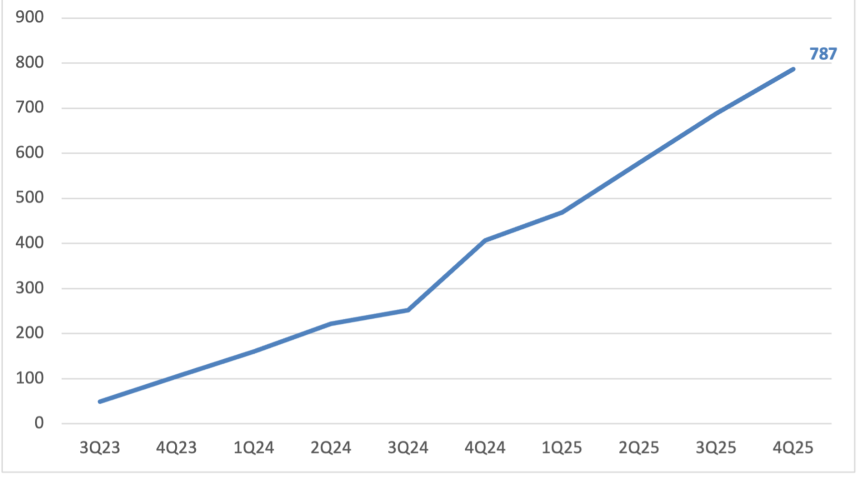
As in previous quarters, there were no updates on the number of Tzield infusions. However, based on the list price of $193,900 in the US and reported revenue, we estimate that there have been 750+ infusions to date since the therapy’s approval in November 2022.
- On the regulatory front, Tzield received approval in the EU for delaying the onset of stage 3 T1D in individuals ≥eight years with stage 2 T1D in January 2026 based on the phase 2 TN-10 study (n=76). The application and approval for stage 3 T1D were based on the PROTECT (n=328) trial, in which Tzield demonstrated preservation of beta cell function in children and adolescents with recent-onset T1D. As background, Tzield received approval in the UK and China in August 2025 and September 2025, respectively, for the same indication.
- In the US, the FDA accepted for priority review a supplemental biologics license application to expand the US indication to children as young as one year old (previously ≥eight years) to delay progression of stage 3 T1D. The acceptance was based on positive interim data from the phase 4 PETITE-4 T1D study (n=20), which is expected to complete in August 2026. This decision has a targeted action date of April 29, 2026.
- Also in the US, Tzield received the first-ever National Priority Voucher for the delayed progression of stage 3 T1D in recently diagnosed patients aged ≥eight years in October 2025. The program aims to provide accelerated review, with a regulatory decision expected in 1H26.
- While a regulatory decision is expected in 1H26, the FDA delayed priority review of Tzield for stage 3 T1D due to an investigation into whether the therapy was associated with a potential treatment-related death. A spokesman for Sanofi told Reuters, who gained access to the FDA’s internal document for the Tzield delay, that its assessment of the patient death is ongoing and that no causal relationship to Tzield has been established at this time. The spokesman also said that blood clotting and seizures have no known causal association with Tzield based on the company’s assessment of its database.
- In clinical trials, Sanofi launched a new large phase 3 BETA PRESERVE trial (n=723) in August 2025 across the US and UK for Tzield in individuals ≤25 years with stage 3 T1D and on insulin therapy. The study is currently enrolling and will measure changes in glycemic levels and prandial insulin independence over 52 weeks with Tzield compared with placebo. The trial is expected to complete in December 2028.
- Tzield is also being evaluated in the phase 3 PROTECT Extension trial (n=188) for long-term safety and efficacy in people recently diagnosed with stage 3 T1D. The PROTECT Extension trial is expected to complete in November 2026.
Tzield Worldwide Financial Results
| Tzield | 4Q24 | 1Q25 | 2Q25 | 3Q25 | 4Q25 |
| Revenue – USD Millions | $19 | $12 | $21 | $21 | $19 |
| YOY Reported Growth (CER) | +80% (+80%) | +10% (+10%) | +64% (+64%) | +20% (+27%) | -11% (flat) |
| Sequential Reported Growth | +20% | -39% | +64% | flat | -11% |
Tzield 4Q25 Geographic Financial Results
| Tzield | Revenue – USD Millions | YOY Reported (CER) Growth | Sequential Reported Growth |
| US | $18 | -17% (flat) | -12% |
| OUS | $1 | N/A | flat |
Tzield Sales (3Q23 – 4Q25)
Estimated Number of Tzield Patients (3Q23 – 4Q25)
6. Praluent sales total $158 million (+20% CER, +4% Q/Q)
PCSK9 inhibitor Praluent (alirocumab) totaled $158 million in 4Q25 (+20% CER, +4% Q/Q) due to higher sales in the EU (+31% CER), partially offset by lower sales in the Rest of World (-16% CER). Given that Praluent is administered every two weeks, we are hopeful that the lower frequency of treatment would encourage uptake and help address unmet needs in treating high cholesterol.
As background, Sanofi is responsible for marketing Praluent in OUS markets, and Regeneron is responsible for US sales, based on a 2020 restructuring agreement. We will be back with more on Praluent’s performance in the US with Regeneron’s 4Q25 update tomorrow (Friday, January 30). Over the past years, OUS sales have accounted for 70% of total Praluent sales.
Praluent Worldwide Financial Results
| Praluent | 4Q24 | 1Q25 | 2Q25 | 3Q25 | 4Q25 |
| Revenue – USD millions | $117 | $141 | $161 | $149 | $158 |
| YOY Reported Growth (CER) | -7% (-7%) | +7% (+7%) | +9% (+10%) | +1% (+2%) | +20% (+20%) |
| Sequential Reported Growth | -13% | +18% | +5% | -7% | +4% |
Pipeline Highlights
1. T1D pipeline: Phase 2 trials evaluate immunotherapies, brivekimig and frexalimab, for newly diagnosed T1D
Sanofi continues to assess multiple candidates for T1D disease modification. In February 2025, Sanofi launched the phase 2 T1D OBTAIN trial (n=84) of brivekimig, a dual inhibitor of TNF-α (proinflammatory cytokine) and OX40L (stimulator of T cells) in adults aged 18-35 (Part A) and children aged 12-21 (Part B) with recently diagnosed T1D on insulin therapy. The study will assess the safety and efficacy of brivekimig in preserving beta-cell function over the 52-week treatment period and the 26-week safety follow-up. As of today, the trial is still enrolling across 24 locations and is expected to complete in September 2028.
- Brivekimig is also being evaluated for other autoimmune diseases, including Crohn’s disease, ulcerative colitis, and an inflammatory skin condition called hidradenitis suppurativa. Previously, in a phase 2a trial (n=86), brivekimig demonstrated a clinically meaningful improvement in abscess and inflammatory nodule counts, demonstrating potential for immune modulation.
Sanofi is also developing frexalimab, a CD40L-antagonist monoclonal antibody, in the phase 2 FABULINUS trial(n=192) in adolescents and adults aged 12-35 with newly diagnosed T1D on insulin therapy. The trial will assess the safety and efficacy of preserving beta cell function and is expected to complete in October 2030 – this timeline is delayed from the previously projected date of October 2028.
- Frexalimab is also being evaluated for multiple sclerosis in phase 3 and systemic lupus erythematosus in phase 2. In a phase 2 trial for relapsing multiple sclerosis, frexalimab significantly reduced Gd+ T1 lesions, a key indicator of multiple sclerosis progression, without depleting lymphocytes, further supporting its potential as an efficacious disease-modifying therapy.
-- by Elizabeth Rose, Esther Min, Monica Oxenreiter, and Kelly Close
Close Concerns’ Questions
- How many patients have been infused with Tzield to date?
- How does Tzield pricing differ in OUS markets compared to the US, if at all?
- What will be the pricing and payer coverage for Tzield in the EU?
- What contributed to Soliqua’s strong growth in both the US and OUS markets?
- Does Sanofi anticipate that its expanded insulin value savings program and MFN pricing will impact US insulin revenue in the coming quarters?
- How does Sanofi plan to invest in expanding capacity in the US, given its MFN commitment?