ADA 2026 Day #4 Highlights –
Executive Highlights
- ADA 2026’s day #4 featured data-rich readouts in therapeutics, technology, and disease management. Across several sessions, speakers explored the evolution of incretin‑based therapies, emerging evidence for CGM use outside traditional intensive insulin populations, and a stronger focus on earlier intervention and broad cardiometabolic care.
- In therapy, sessions spotlighted the shift of incretin-based therapies towards more potent, convenient, and differentiated treatments across obesity, T2D, and cardiometabolic diseases. Several studies reinforced growing momentum behind oral small-molecule GLP-1 RAs. Beyond glucose and weight reduction, speakers increasingly focused on durability, body composition, and real-world implementation – these conversations reflect the field’s broader shift toward comprehensive cardiometabolic care.
- Lilly’s orforglipron continued to strengthen its position as a leading oral incretin. In ACHIEVE-3 (n=1,698), orforglipron demonstrated superior glycemic control and greater weight loss than oral semaglutide, with A1c reductions of 2.2% and weight loss of 9.2%. A substantially greater proportion of participants achieved both glycemic and weight-loss targets.
- AstraZeneca’s elecoglipron generated positive data in both diabetes and obesity. In the phase 2b SOLSTICE trial (n=406), the oral small-molecule GLP-1 RA reduced A1c by 1.9 percentage points and body weight by 8% in people with T2D. Separately, in the VISTA trial, elecoglipron demonstrated up to 10.5% weight loss in people with obesity and without diabetes, supporting advancement into multiple phase 3 programs.
- Roche's enicepatide (CT-388) achieved placebo-adjusted weight loss of 22.5% at Week 48, with nearly half of participants achieving at least 20% weight loss and over one-quarter achieving at least 30% weight loss in a phase 2 trial (n=649). Among participants with prediabetes, 73% returned to normoglycemia.
- In technology, multiple presentations reinforced the growing body of evidence supporting CGM use in people with T2D not using intensive insulin therapy. Dr. Jennifer Layne (Dexcom) presented a large retrospective EHR analysis demonstrating that CGM users with T2D achieved durable glycemic improvements through at least two years, with the greatest benefits observed among those on non-insulin therapy. Individuals not using insulin achieved a 1.7 percentage point reduction in A1c and increased TIR by more than five hours/day after two years.
- Separately, Dr. Jay Shubrook (Abbott) presented a retrospective Truveta EHR analysis showing that FreeStyle Libre initiation was associated with significantly faster achievement of A1c targets compared to no CGM use among adults with T2D not using insulin. Taken together, these findings add to mounting evidence, including Dexcom's CONNECT RCT presented earlier this meeting, that CGM can meaningfully improve glycemic outcomes in people with T2D beyond intensive insulin users and may support broader adoption and reimbursement in this population.
- On next-generation sensing technologies, Dr. Timothy Bailey (Headlands Research) presented pivotal safety and accuracy data for the Biolinq Shine CGM, an FDA-cleared intradermal glucose range monitoring system designed for people with T2D not using insulin. In the pivotal study (n=190), Shine achieved a MARD of 14.6% and 76% 20/20% agreement across the 40-400 mg/dL range, with stronger performance in hypoglycemia.
- In disease management and prevention, sessions emphasized the importance of better risk stratification, earlier intervention, and a more nuanced understanding of metabolic disease beyond glucose levels. Several speakers explored how insulin resistance underlies a broad spectrum of cardiometabolic complications, including MASLD and T2D. Others focused on the value of patient education, technology adoption, and longitudinal monitoring.
Table of Contents
-
Therapy
- 1. Phase 2b SOLSTICE trial: AZ’s Elecoglipron confers a 1.9 percentage point reduction in A1c and 8% weight loss in T2D
- 2. Phase 2 results for dual GLP-1/GIP RA enicepatide demonstrate up to 23% body weight loss with favorable tolerability
- 3. ACHIEVE-3 trial: Orforglipron demonstrated superiority over oral semaglutide in people with T2D on metformin
- 4. Trial emulation study demonstrates the association of SGLT-2 inhibitor treatment duration with cardiovascular outcomes in T2D
- 5. Dr. Stephanie Teal on selecting contraceptive methods for people with diabetes and obesity
- 6. A balance between efficacy and burden: Orforglipron in clinical practice
- 7. Post-hoc analysis of the SYMMETRY trial of efruxifermin in people with T2D and compensated cirrhosis due to MASH
- 8. Exercise and protein supplementation enhance body composition in combination with GLP-1 RA therapy
- 9. Prevalence of DKA with SGLT-2 inhibitor use and the importance of education
- 10. Phase 2b VISTA trial finds that oral small molecule GLP-1 RA elecoglipron confers up to 12% weight loss in adults with obesity
- 11. Lilly’s Tirzepatide is associated with 45% lower risk of major adverse limb events than semaglutide
-
Technology
- 12. CGM in T2D: Real-world Dexcom CGM use confers greatest glycemic improvements among people with T2D not on insulin
- 13. AI is coming, but when and how? Dr. Nestoras Mathioudakis and Dr. Neda Laiteerapong debate its integration into diabetes care
- 14. GluCoCare finds superior A1c levels among participants using CGM in real-world, primary care settings
- 15. Retrospective EHR analysis associates FreeStyle Libre use with A1c goal achievement faster than no CGM among adults with T2D not on insulin
- 16. Biolinq Shine demonstrates 20/20% agreement rate of 76% in 40-400 mg/dL glucose range, MARD of 14.6%
-
Big Picture
- 17. Dr. Timothy Garvey discusses GLP-1 RAs for MASLD and the unique lipid profiles seen in the condition
- 18. Dr. Diana Isaacs receives the ADA’s Outstanding Educator in Diabetes Award and shares her journey and key contributions to the diabetes field
- 19. *NEW* Early loss of 15%+ body weight is associated with lower vascular risk in newly diagnosed T2D
- 20. The “clinical conundrum”: The management of single islet autoantibody detection in youth
Therapy
1. Phase 2b SOLSTICE trial: AZ’s Elecoglipron confers a 1.9 percentage point reduction in A1c and 8% weight loss in T2D
In this well-attended symposium, Dr. Vanita Aroda (Brigham and Women’s Hospital) presented full results of the phase 2b SOLSTICE trial (n=406), which evaluated oral small molecule GLP-1 RA elecoglipron in adults with T2D inadequately managed on diet or exercise alone or with metformin or SGLT-2 inhibitor monotherapy. Full results were published simultaneously in The Lancet. At Week 26, elecoglipron reduced A1c by 1.9 percentage points (0.2% with placebo) and body weight by 8% (vs. 1.7%). Based on the positive results, elecoglipron will be evaluated in the phase 3 ELUMINATE program, which will consist of five global trials in various T2D populations.
- Study design and baseline characteristics. In this dose-ranging trial, adults with A1c between 7.0-10.5% and BMI ≥23 kg/m2 were randomized to elecoglipron (5 mg, 15 mg, 25 mg, 50 mg, and 75 mg), placebo, or semaglutide. Treatment completion rate ranged from 66-95% in the elecoglipron groups, compared to 76% in the placebo group and 88% in the semaglutide group. The trial completion rate was over 90% across all groups.
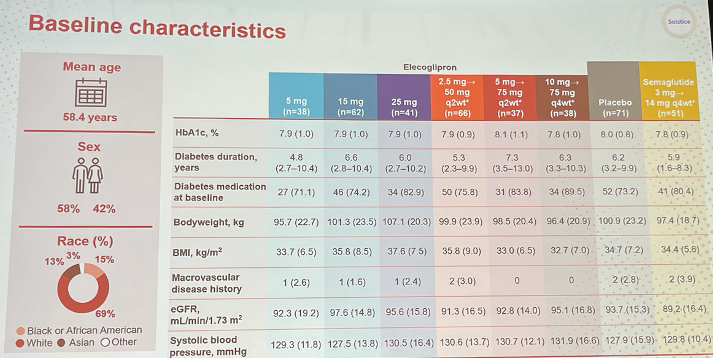
- At baseline, participants were 58 years old, with 58% male, and 69% white. Clinically, they had a mean A1c of 7.9%, diabetes duration of approximately six years, body weight of 100 kg (220 lbs), and BMI of 34 kg/m2. See more below.
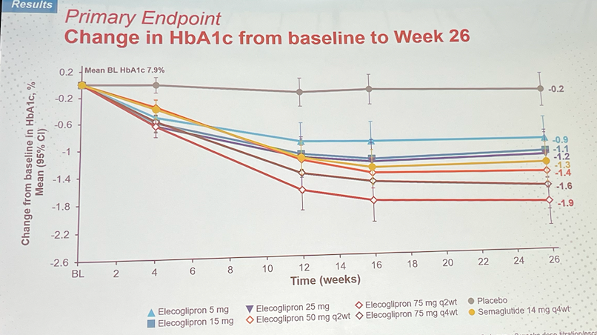
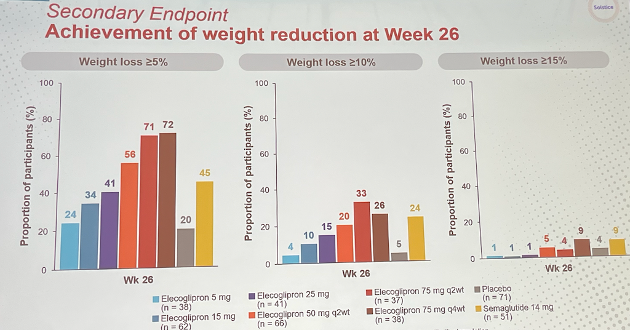
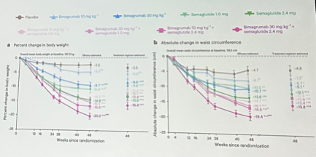
- Results. At Week 26, elecoglipron led to a 1.9 percentage point reduction in A1c (vs. 0.2 percentage point), 51% reduction in fasting glucose (vs. 0.4%), and 7.7% weight loss (vs. 1.7%). Moreover, significantly greater proportions of the elecoglipron group achieved A1c <7% (63-90% vs. 25%) and ≤6.5% (39-85% vs. 13%). Interestingly, for higher elecoglipron doses, a greater proportion of participants achieved weight loss ≥5% and ≥10%, compared to oral semaglutide 14 mg (see figure below). Elecoglipron also reduced systolic blood pressure by 2.9-9.4 mmHg (vs. 3.3 mmHg) from a baseline of 130 mmHg.
- Safety and tolerability were consistent with other incretin-based therapies, with gastrointestinal events, including nausea (3-37% vs. 3%), constipation (10-29% vs. 4%), diarrhea (5-21% vs. 16%), and vomiting (3-15% vs. 1%), being most common. Both gastrointestinal events and treatment discontinuation from adverse events were more common when patients started on higher doses. Dr. Aroda said these results underscore the importance of slow titration.
2. Phase 2 results for dual GLP-1/GIP RA enicepatide demonstrate up to 23% body weight loss with favorable tolerability
Prof. Ildiko Lingvay (University of Texas Southwestern Medical Center) presented strong phase 2 results for enicepatide (formerly known as CT-388). The candidate is in development by Roche following its acquisition of Carmot Therapeutics in December 2023. The trial (NCT06525935) was initiated in 4Q24 with an enrollment of 469 patients and was completed following Roche’s planned timeline. Enicepatide is a cAMP dual signal-biased[1] GLP-1/GIP dual receptor agonist in development for obesity, T2D, and related comorbidities. It is administered weekly via subcutaneous injection. In a phase 1 study, the therapy conferred 18.9% body weight loss reduction in adults with obesity but without T2D in 24 weeks. Safety and tolerability were also consistent with other incretins in stage 1 development. The phase 2 data presented today aimed to evaluate efficacy, safety, and dose-dependent response in participants with overweight or obesity but without T2D.
- The study design evaluated weight loss over 48 weeks. The double-blind, placebo-controlled, multicenter trial included adults aged 18-75 years with a BMI of 30 kg/m² or greater or a BMI of 27 kg/m² or greater with one or more obesity-related conditions, but not diabetes. 467 patients were randomized 1:1:1:1:1:1 to treatment with different doses of enicepatide (4, 8, 12, 16, or 24 mg) or placebo over 48 weeks. Doses were up-titrated over up to 24 weeks. The primary endpoint was percent weight loss from baseline to week 48 and was analyzed using a mixed model for repeated measures based on an efficacy estimand. Key secondary endpoints included categorical weight loss, absolute change in body weight, and the change in proportion of patients with normoglycemia versus prediabetes versus diabetes.
- At baseline, 50% of participants had prediabetes with a mean A1c of 5.5%. The mean BMI was 38 kg/m², 68% of participants were female, and 71% were white. In each group, between 17 and 34% participants discontinued the study for any reason, with the highest rate seen in placebo. Discontinuations due to adverse events were highest in the 12 mg group, and 14%.
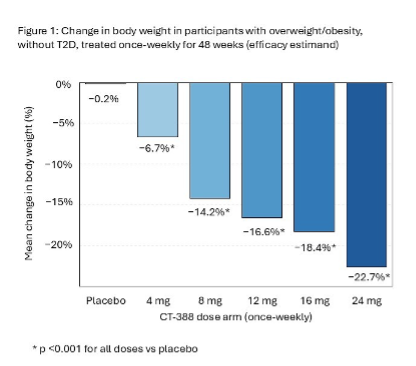
- Enicepatide demonstrated an estimated treatment difference of 22.5% body weight loss compared to placebo at the highest dose of 24 mg. With this dose at Week 48, no weight loss plateau was observed. Weight loss increased with each dose. In terms of secondary endpoints, 95.7% of patients achieved ≥5% body weight loss, 87.0% reached ≥10% weight loss, 47.8% had ≥20% weight loss, and 26.1% had an astounding ≥30% weight loss. Although participants in this trial did not have diabetes, among those with prediabetes at baseline, 73% achieved normoglycemia when taking enicepatide 24 mg compared to just 7.5% on placebo. Just 1% of patients withdrew from the study due to adverse events, with a higher discontinuation rate in the placebo arms compared to the treatment groups. Gastrointestinal events were the most common side effects at 28% in placebo and 47-65% for the enicepatide doses. Dr. Lingvay emphasized the favorable risk-benefit profile of this therapy, especially compared to other incretin dual agonists. The glycemic benefit of enicepatide is particularly impressive and may have implications for diabetes prevention in the future.
3. ACHIEVE-3 trial: Orforglipron demonstrated superiority over oral semaglutide in people with T2D on metformin
In this engaging address, Dr. Julio Rosenstock (UT Southwestern) presented the phase 3 ACHIEVE-3 trial (n=1,698) comparing orforglipron (9 mg, 17.2 mg) to oral semaglutide (7 mg, 14 mg) in adults with T2D inadequately controlled on metformin. The study was simultaneously published in The Lancet.
- Study design and baseline. The ACHIEVE-3 was a global, randomized, open-label trial. Treatment lasted 52 weeks, with a two- to five-week safety follow-up. Eligible patients included those with an A1c of 7.0% to 10.5%, a metformin dose of at least 1,500 mg/day for 90 days, a BMI of at least 25 kg/m2, and an eGFR of at least 45 mL/min/1.73 m2. Baseline characteristics were well balanced across groups. Participants were on average 54 years old, 49% female, had a mean diabetes duration of 8.6 years, mean A1c of 8.3%, and a mean BMI of 35 kg/m2.
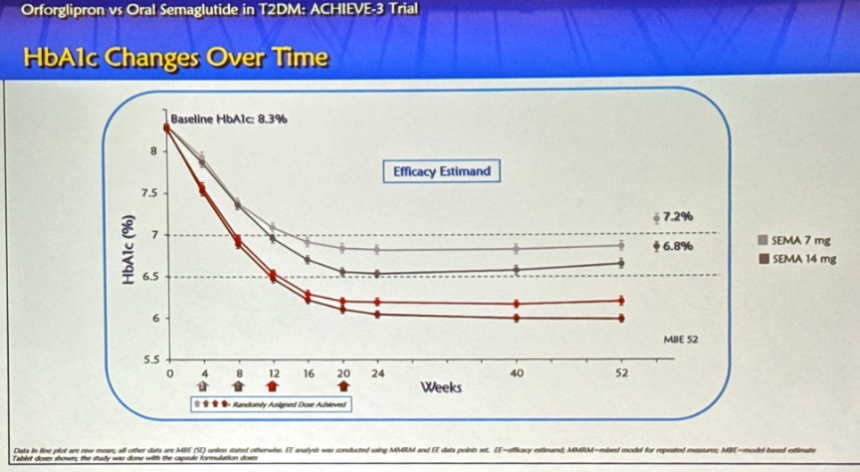
- Orforglipron conferred superior reductions in A1c compared to oral semaglutide. A1c fell by 1.9% with orforglipron 9 mg, 2.2% with orforglipron 17.2 mg, 1.1% with semaglutide 7 mg, 1.4% with semaglutide 14 mg, assuming full adherence (see figure below).
- Greater proportions of people on orforglipron met glycemic targets, as well. An A1c below 7.0% was achieved by 80% of patients with orforglipron 9 mg, 85% with orforglipron 17.2 mg, 55% with semaglutide 7 mg, and 66% with semaglutide 14 mg at Week 52. A1c at or below 6.5% was achieved by 72% with orforglipron 9 mg, 77% with orforglipron 17.2 mg, 41% with semaglutide 7 mg, and 51% with semaglutide 14 mg. Near-normoglycemia, defined as A1c below 5.7%, was achieved by 25% with orforglipron 9 mg, 37% with orforglipron 17.2 mg, 8% with semaglutide 7 mg, and 13% with semaglutide 14 mg.
- Likewise, orforglipron led to greater weight reductions. Body weight decreased by 6.7% with orforglipron 9 mg, 9.2% with orforglipron 17.2 mg, 3.7% with semaglutide 7 mg, and 5.3% with semaglutide 14 mg. Weight-loss thresholds in the efficacy estimand were stronger with orforglipron: at least 5% loss was seen in 59% and 69% for the two orforglipron doses versus 37% and 49% for semaglutide. At least 10% weight loss was seen by 28% and 43% of orforglipron patients, versus 13% and 21% using semaglutide.
- Composite endpoints favored orforglipron over semaglutide. Over half of the orforglipron group (51% and 63%) achieved an A1c <7.0% and ≥5% weight loss without level 2 or 3 hypoglycemia. compared to 25% and 40% of the semaglutide group. Similarly, orforglipron conferred superior improvements in seven-point SMBG profiles. Lipids generally moved in a favorable direction, with reductions in triglycerides, non-HDL cholesterol, total cholesterol, LDL-c, and VLDL-c, and an increase in HDL-c. Hepatic transaminases decreased, and no hepatic safety signal was observed.
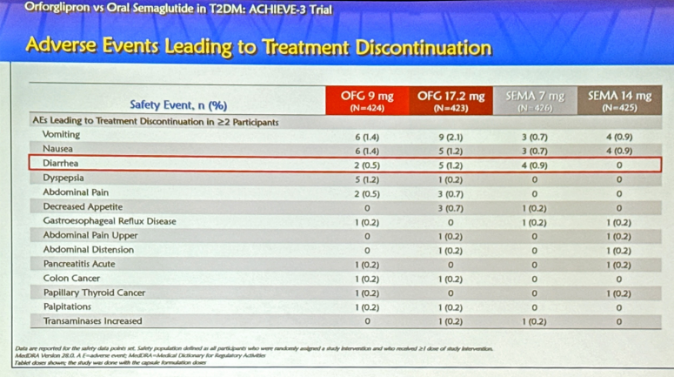
- On safety and tolerability, gastrointestinal adverse events were numerically more frequent with orforglipron compared to semaglutide (see below). Specifically, nausea occurred in 26% and 27% of orforglipron patients versus 13% and 21% taking semaglutide, diarrhea at 22% and 23% versus 13% and 18%, vomiting at 17% and 17% versus 8% and 10%, and constipation at 13% and 12% versus 7% and 9%.
4. Trial emulation study demonstrates the association of SGLT-2 inhibitor treatment duration with cardiovascular outcomes in T2D
In an oral session, Dr. Kyungyeon Jung (Sungkyunkwan University, South Korea) presented a target trial emulation study on the different treatment durations of SGLT-2 inhibitors on cardiovascular outcomes in people with T2D. Despite the significant cardiovascular benefits of SGLT-2 inhibitors, real-world trials have shown poor treatment adherence. For example, the EMPA-REG OUTCOME trial showed a median treatment duration of 2.6 years, compared to real-world findings showing a range in treatment duration from 0.7 years in a 2019 study to 0.9 years in a 2020 study. The impact of shorter treatment duration on the cardiovascular benefits of SGLT-2 inhibitors remains unclear, especially in the real world. Therefore, Dr. Jung and her team conducted a target trial emulation study to quantify the effects of different durations of SGLT-2 inhibitor treatment on cardiovascular outcomes.
- Methods. The trial emulation study used nationwide healthcare data from Source Korea Insurance Service between 2012 and 2023. Dr. Jung said the patient population covers approximately 98% of Korea’s population of 52 million people, and the Insurance Service holds data from Korea’s universal health insurance program. The Insurance Service also provides longitudinal individual-level data across healthcare services, including inpatient and outpatient settings. Individuals eligible for the study included those diagnosed with T2D and no prior use of SGLT-2 inhibitors. The study implemented four different strategy groups of individuals initiating an SGLT-2 inhibitor and receiving it for: (i) <1 year; (ii) ≥1 to <2 years; (iii) ≥2 to <3 years; (iii) ≥2 to <3 years; or (iv) ≥3 years. The primary outcomes included MACE and hospitalization for heart failure, and secondary outcomes included MI/stroke/cardiovascular death/all-cause death.
- Primary outcomes.
- Results on treatment duration of SGLT-2 inhibitors. In the trial, 40.5% were on the treatment for <1 year, 19.8% for ≥1 to <2 years, 13.6% for ≥2 to <3 years, and 26.1% for ≥3 years. Overall, the mean treatment duration was 2.1 years, and the median was 1.5 years.
- Results on MACE and hospitalization for heart failure outcomes. Over a five-year follow-up, compared to those treated with SGLT-2 inhibitors for <1 year, participants had progressively lower risks of MACE when treated for ≥1 to <2 years (7%), ≥2 to <3 years (18%), and ≥3 years (31%). Moreover, compared to those treated with SGLT-2 inhibitors for <1 year, participants had progressively lower risks of hospitalization for heart failure when treated for ≥1 to <2 years (7%), ≥2 to <3 years (9%), and ≥3 years (26%). These results were consistent in subgroup analyses across age, sex, type of SGLT-2 inhibitor, and history of cardiovascular and chronic kidney disease.
- Secondary outcomes. Similar to the primary outcome findings, MI risk also progressively decreased with progressively lower risks when participants were treated for ≥1 to <2 years (9%), ≥2 to <3 years (18%), and ≥3 years 37%), compared to <1 year. Stroke risk also decreased when participants were treated for ≥1 to <2 years (4%), ≥2 to <3 years (17%), and ≥3 years (35%).
- Discussion. Dr. Jung commented that this study demonstrates an association between longer treatment duration with SGLT-2 inhibitors and progressively greater reductions in the risk of cardiovascular outcomes in people with T2D. She encouraged strategies to improve long-term treatment adherence to help patients experience cardiovascular effects in clinical practice.
5. Dr. Stephanie Teal on selecting contraceptive methods for people with diabetes and obesity
Dr. Stephanie Teal (Case Western Reserve University) gave a comprehensive overview of contraceptive options for people with diabetes and obesity. Dr. Teal emphasized that poor glycemic control at conception increases the risk of congenital anomalies, preeclampsia, macrosomia (i.e., greater than average birthweight), and stillbirth, underscoring the importance of routine preconception counseling.
A guiding framework for selecting contraceptives is the US Medical Eligibility Criteria (MEC), which classifies contraceptive safety from Category 1 (no restriction for use) to Category 4 (unacceptable health risk). The framework classifies 18 contraceptive methods across dozens of medical conditions and sub-conditions, with most methods falling under Category 2 (benefits outweigh risks). Of note, the framework accounts for factors such as diabetes duration, microvascular complications, and obesity and venous thromboembolism (VTE) risk. Dr. Teal pointed out that clinicians often overestimate risk – in fact, she said most women can safely use multiple methods – and under-prescribe effective contraception.
- The most efficacious contraceptive methods also tend to have the lowest metabolic risk. Dr. Teal dispelled the idea that more effective contraceptives care more risks and side effects, saying that safety and efficacy “are not battling each other” when it comes to contraceptives. Instead, they are “perfectly aligned.”
- Long-acting reversible contraceptive (LARC) methods (e.g., IUDs and implants) – <1% failure. These are first-line options for people with obesity and diabetes. Notably, Dr. Teal said that there is no evidence that obesity meaningfully reduces the efficacy of IUDs or implants.
- Copper IUD. These are classified as Category 1 for obesity and diabetes and have no impact on glucose or weight on top of being hormone-free.
- Levonorgestrel IUD & implant. These do not demonstrate increases in A1c, insulin resistance, and dyslipidemia. They also protect against endometrial hyperplasia, which is more common in people with diabetes.
- Short-acting hormonal methods – 7-9% failure. These include progestin-only methods, such as pills and the depot medroxyprogesterone (DMPA) (i.e., Depo-Provera) injection. Dr. Teal said DMPA is typically the least favored method in people with obesity because it is associated with weight gain, insulin resistance, and thrombosis risk. These contraceptive methods fall under Category 2 and 3. Combined hormonal contraceptives (CHCs), such as estrogen-containing pills, patches, and rings carry a significantly elevated VTE risk in people with obesity and is contraindicated in people with long-standing diabetes, microvascular disease, and/or multiple CVD risk factors.
- Long-acting reversible contraceptive (LARC) methods (e.g., IUDs and implants) – <1% failure. These are first-line options for people with obesity and diabetes. Notably, Dr. Teal said that there is no evidence that obesity meaningfully reduces the efficacy of IUDs or implants.
6. A balance between efficacy and burden: Orforglipron in clinical practice
Dr. Alice Cheng (University of Toronto, Canada) discussed orforglipron in a clinical context. The ultimate goal of treatment is to help people “be happy.” In patient care, this goal means balancing efficacy and burden. She analyzed oral semaglutide and oral orforglipron along two axes: (i) how effective it is; and (ii) how “easy” it is in real life. “Easy” means easy to take, easy to tolerate, easy to prescribe, and easy to access and afford. Throughout her address, she contrasted the “easy” profile with the “effective” one, framing this tension as the backbone of the talk.
- Through the ADA/EASD “circle of care,” Dr. Cheng emphasized that with diabetes, “we have to close the circle.” Glycemic goals, weight management, cardiovascular risk factor management, and organ‑protecting therapies all need to be addressed together and delivered in a way patients can actually live with. She laid out a “wish list” for a non‑peptide oral GLP‑1 RAs: (i) at least as good or better for glucose, weight, and risk factors; (ii) similar or better organ protection; (iii) easier to take; (iv) at least as well tolerated; (v) combinable with other orals; and (vi) more accessible (see below).
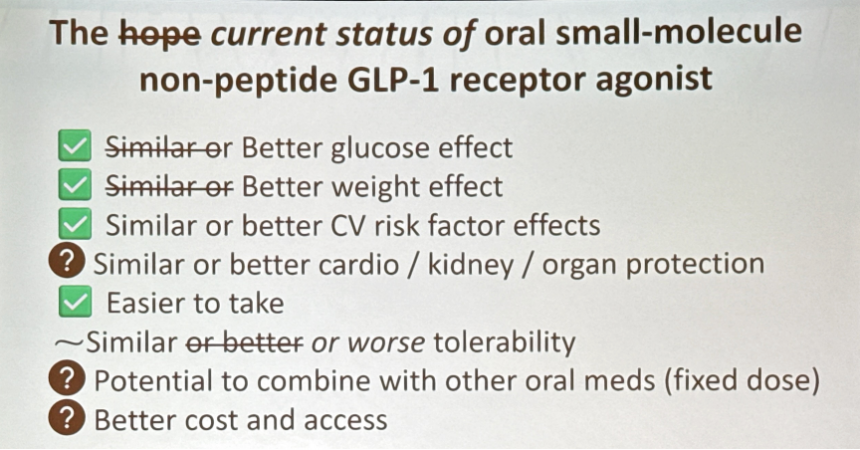
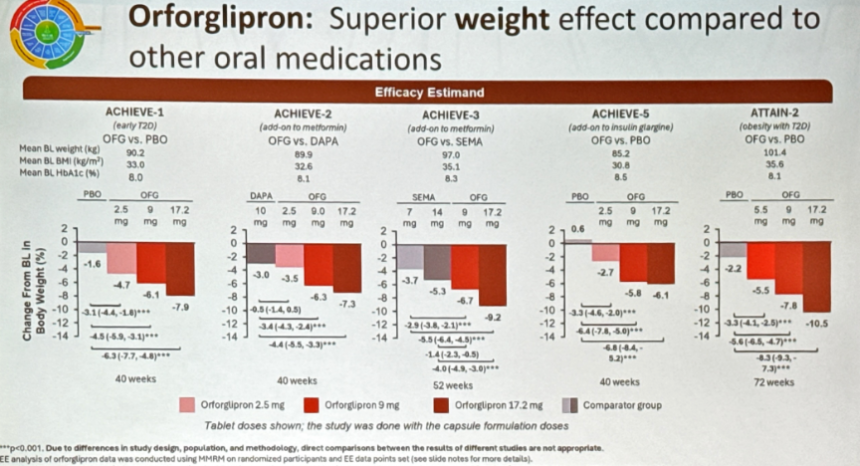
- Orforglipron comes close to that wish list, with strong glucose- and weight loss effects (see below), no food or water restrictions, and cardiovascular safety in studies thus far. However, because of how it is metabolized, prescribers must navigate important drug interactions. Dr. Cheng stressed that this creates both challenges and “an opportunity to increase access” if the drug can be priced and access expanded well.
- Dr. Cheng concluded that orforglipron “fits anywhere that you would currently use a GLP‑1 RA.” She links this to upcoming ADA/EASD guidance that encourages earlier use of GLP‑1 RA and SGLT‑2 inhibitor treatment plans. Even though injectable GLP‑1 RAs are already quite “easy,” many patients still resist injections. “The ability to take a pill is very welcome,” especially one without food and water restrictions.
- At the same time, Dr. Cheng was unequivocal that “this does not replace SGLT‑2 inhibitors.” These therapies “have a very strong role to play in organ protection,” and head‑to‑head data versus an SGLT‑2 inhibitor (ACHIEVE-2) should not be misread as a license to abandon them. She concluded, “This is not a competition. This is a friendship,” capturing her view that oral GLP‑1 RAs and SGLT‑2 inhibitors should be seen as partners, not rivals.
7. Post-hoc analysis of the SYMMETRY trial of efruxifermin in people with T2D and compensated cirrhosis due to MASH
Dr. Mary Rinella (University of Chicago) presented a post-hoc analysis of the phase 2b SYMMETRY trial (n=182) of efruxifermin (Fc-FGF21 fusion protein) in people with T2D and compensated cirrhosis due to MASH. Positive results from the trial, including adults with liver biopsy-confirmed compensated cirrhosis due to MASH, were presented in January 2025. Dr. Rinella said the results of the post-hoc analysis aim to address the high unmet need for T2D and MASH treatment. Overall, the analysis showed that efruxifermin improves: (i) fibrosis and markers of liver injury; (ii) lipid profile; and (iii) insulin sensitivity. Efruxifermin was also generally well tolerated, with an overall adverse event frequency of ≥15%. The most common adverse event was mild to moderate gastrointestinal complications (e.g., diarrhea, nausea, and vomiting).
- Histological reversal of cirrhosis was nearly identical across the overall population and the T2D subgroup. The proportion of participants who had a reduction of ≥one-stage fibrosis without worsening of MASH at Week 96 was 29% for the overall population (n=41) on efruxifermin 28 mg compared to 24% in the T2D subgroup (n=33). These similarities were seen with efruxifermin 50 mg, with both the overall population and T2D group having 39% participants showing fibrosis improvement and no worsening of MASH (n=46 and n=36, respectively). Compared to the placebo group, the overall population (n=47) and T2D subgroup (n=38) both had a 15-16% improvement.
- The enhanced liver fibrosis test (ELF) showed significant improvements in those with T2D on efruxifermin compared with placebo. Dr. Rinella mentioned that ELF is a critical blood test that quantifies three analytes that directly contribute to fibrosis, with a ≥0.5 decrease in ELF score indicating a clinically meaningful improvement. At Week 96, participants on efruxifermin 50 mg conferred a reduction of 0.5 (baseline of 10.5), while those on 28 mg had a reduction of 0.3 (baseline of 10.6). These results were all statistically significant relative to placebo, which had an increase of 0.3 (baseline of 10.3).
- Improvements in measures of liver injury. While the placebo had no change in AST, an enzyme released into the bloodstream during liver damage or inflammation, those on efruxifermin 28 mg had a reduction of 7.2 U/L, and those on 50 mg had a reduction of 9.4 U/L (from a baseline of 34 to 36 U/L). Additionally, changes in ALT, another enzyme that leaks into the bloodstream during liver cell stress, had a reduction of 11.6 U/L for those on efruxifermin 28 mg reduction of 10.3 U/L for those on 50 mg, compared to a reduction of 5.7 U/ in the placebo group.
- Improvements in lipids. Triglyceride levels dropped by 31 mg/dL for efruxifermin 28 mg and by 33 mg/dL for efruxifermin 50 mg, compared to a drop of 8 mg/dL for placebo. HDL-C levels increased by 7 mg/dL for both efruxifermin 28 mg and 50 mg, compared to 2 mg/dL in placebo. Lastly, LDL-C levels reduced by 13 mg/dL for efruxifermin 28 mg and 9 mg/dL for efruxifermin 50 mg, relative to 8 mg/dL for placebo.
- Improvements in insulin sensitivity. Participants on efruxifermin 50 mg showed the greatest improvement in adiponectin levels, increasing by 4.2 mg/L (from baseline of 4.9-5.0 mg/dL), compared to 0.5 mg/L for placebo and 1.7 mg/L for efruxifermin 28 mg. C-peptide levels also reduced by 1.0 µg/L and 0.9 µg/L for efruxifermin 28 mg and 50 mg, respectively, compared to a reduction of 0.2 µg/L for placebo. Lastly, A1c levels remained flat across both dosages.
8. Exercise and protein supplementation enhance body composition in combination with GLP-1 RA therapy
Dr. Ian Neeland (University Hospitals) discussed the preservation of lean body mass for patients on incretin-based therapies. While some lean body mass loss is expected with any weight-loss modality (with approximately 25% of total weight loss coming from lean mass), outcomes vary widely across treatments, and both lifestyle and pharmacologic interventions may help preserve lean mass during GLP-1 RA-induced weight loss. Dr. Neeland highlighted both resistance exercise and protein supplementation as a cornerstone of lifestyle modification necessary to preserve lean tissue. Given that each kilogram of muscle mass lost reduces resting energy expenditure by about 13 kcal/day, the maintenance 0f muscle mass could limit the reduction in metabolic rate and concomitant homeostatic adaptation, which contributes to a slowing or plateau in weight loss.
- Factors that support positive muscle balance include: (i) maximizing postprandial muscle protein synthesis; (ii) reducing muscle protein breakdown; and (iii) promoting a net positive protein balance. These effects are influenced by protein intake, quality, and timing. During moderate energy restriction associated with weight loss, doubling the current recommended daily allowance of protein has been shown to help preserve lean muscle mass. Dr. Neeland identified whole foods (beans, peas, lean meats, fish, etc.) and protein supplements as appropriate forms of protein, while emphasizing that foods with high leucine content (e.g., whey) are important for muscle protein synthesis. Optimizing protein intake factors can potentiate the beneficial effects of resistance exercise, resulting in the enhanced remodeling and repair of existing muscle and the synthesis of new muscle protein.
- In the S-Lite Trial (n=215) of liraglutide, adults with obesity who underwent an eight-week low-calorie diet and 52 weeks of exercise experienced superior weight loss maintenance and improvements in body composition compared to either intervention alone. Additionally, exercise in addition to therapy was found to mitigate weight regain after the therapy discontinuation.
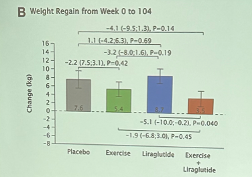
- A randomized study (n=208) showed that healthy older adults randomized to whey protein and heavy training improved quadricep muscle cross-sectional area and isometric knee extensor strength. However, whey protein and light training did not improve quadricep cross sectional area. One meta-analysis (n=1,863) showed that dietary protein supplementation significantly increased changes in strength, fat free mass, and muscle size during periods of prolonged resistance training.
- Dr. Patti Urbanski (St. Luke's Hospital) additionally discussed the importance of proper nutrition for patients on GLP-1 RAs. An important component of proper nutrition is initial patient baseline screening for existing contraindications, including eating disorders, GI disorders, and renal insufficiency. She emphasized the importance of high-protein diets, consistent with Dr. Neeland’s recommendations, along with consuming at least five servings of fruits and vegetables daily. Dr. Urbanski also highlighted the role of healthy fats in supporting the absorption of fat-soluble vitamins. In discussing GLP-1 RA adverse events, she recommended high-fiber diets to help manage constipation, avoiding sugar alcohols to reduce diarrhea risk, and eating smaller, more frequent meals for individuals experiencing nausea.
- Emerging pharmacological approaches may provide strategies to preserve lean mass during incretin-based therapies. Pharmacological adjuncts, such as bimagrumab, work by blocking negative regulators of muscle growth to enhance anabolism and prevent catabolism. Preclinical trials of semaglutide in combination with bimagrumab have shown evidence for the preservation of muscle and amplified weight loss, while early human trials (BELIEVE and COURAGE) report ≥50% better lean-mass retention.
9. Prevalence of DKA with SGLT-2 inhibitor use and the importance of education
In this insightful session, Dr. Helmut Steinberg (University of Tennessee) said that the cardio‑renal benefits of SGLT‑2 inhibitors are firmly established and that their tendency to raise ketone levels is often misinterpreted as evidence of harm. Elevated ketones alone are not pathologic, noting explicitly that “increased ketone body concentration does not equal DKA.” The real challenge, he argued, is distinguishing physiologic ketosis from true euglycemic diabetic ketoacidosis (euDKA), a condition that predates SGLT‑2 inhibitors and accounts for 5.4% of DKA admissions in UK data even before the therapy was widely used.
- Dr. Steinberg traced the origins of current concern back to a 2015 study, which described nine cases of DKA, including seven in T1D, where insulin reduction and infection were major triggers. These early reports created momentum and fear disproportionate to the true incidence. As he put it, this is “not an avalanche,” but a steady, infrequent signal that must be recognized without exaggeration. He contrasted the risk across populations, highlighting that T1D carries the greatest vulnerability. In randomized trials, DKA occurred in about 6% of patients on canagliflozin 300 mg and 4% on empagliflozin 25 mg, compared with 1.2% on placebo. In T2D, however, the incidence was dramatically lower, with approximately 0.7 per 1,000 patient‑years on canagliflozin 300 mg, reflecting a fundamentally different risk profile. Given the need for adjunctive therapies in T1D and the role of SGLT-2 inhibitors for this indication off-label, Dr. Steinberg emphasized the need for continued education surrounding the risk of DKA in the population.
- Across all datasets, Dr. Steinberg emphasized that most DKA events arise from classic precipitating factors: insulin reduction, pump malfunction, infection, dehydration, low‑carbohydrate intake, or surgical stress. He especially highlighted that surgery appears repeatedly in consensus statements as a high‑risk setting, and that many cases stem from delayed recognition of DKA, particularly in the absence of hyperglycemia. Dr. Steinberg closed by stressing that SGLT‑2 inhibitor-associated DKA is largely preventable. Prevention hinges on thoughtful patient selection (avoiding use in those with recurrent DKA), consistent education on routine ketone monitoring in high‑risk situations, and holding the medication for at least 72 hours before planned procedures. He emphasized, “Education of patients and healthcare providers is our first line of defense.”
10. Phase 2b VISTA trial finds that oral small molecule GLP-1 RA elecoglipron confers up to 12% weight loss in adults with obesity
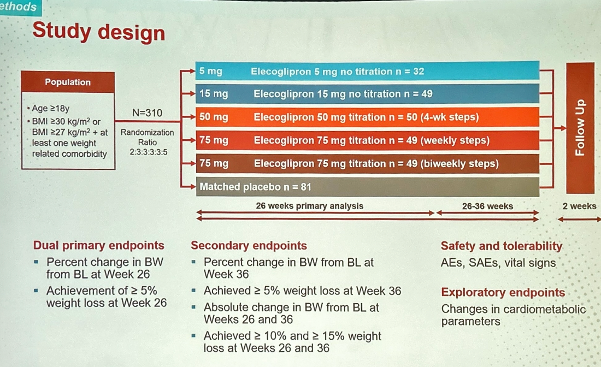
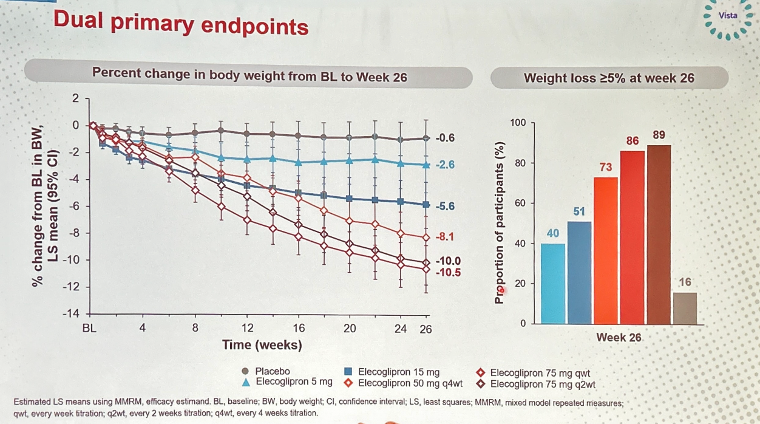
In this afternoon symposium, Prof. Melanie Davies (University of Leicester, UK) presented the full results of the phase 2 VISTA trial (n=310), which evaluated AstraZeneca’s elecoglipron (AZD5004/ECC5004), a once-daily, oral, small-molecule GLP-1 RA, in people with obesity or overweight with at least one weight-related comorbidity but not T2D. See simultaneous publication in The Lancet and press release. At 36 weeks, elecoglipron conferred clinically significant, dose-dependent weight loss up to 10.5% (vs. 0.6% with placebo) and a safety and tolerability profile consistent with the GLP-1 RA class. Looking forward, elecoglipron will advance to the phase 3 EMBOLDtrial for people with overweight and obesity, with or without T2D, as well as long-term trials for cardiovascular and kidney outcomes.
- Study design and baseline characteristics. In the trial, participants were randomized to elecoglipron (5 mg, 15 mg, 50 mg, and 75 mg) or placebo. Over 90% of participants finished the study. At baseline, participants were 48 years old and 73% were female. The mean body weight was 107 kg (236 lbs), and the mean BMI was 38 kg/m2. Clinically, 32% had hypertension, 2.6% had cardiovascular disease, and 14% had obstructive sleep apnea (OSA). See study design and baseline characteristics below.
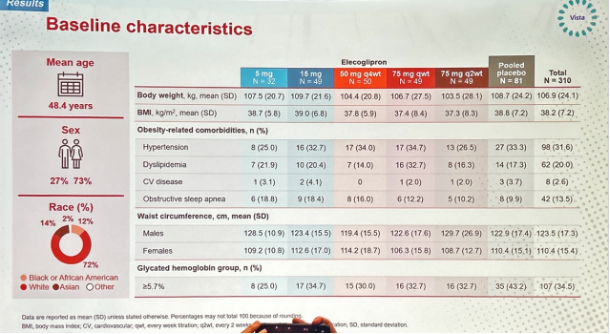
- Results. Elecoglipron conferred dose-dependent weight loss up to 11.8% (0.3% with placebo) at Week 36. Elecoglipron also led to dose-dependent reductions in waist circumference (13 cm [5 in] vs. 3 cm [1 in]), systolic blood pressure (8.8 mmHg vs. 1.5 mmHg gain), and hsCRP (44% vs. 27%).
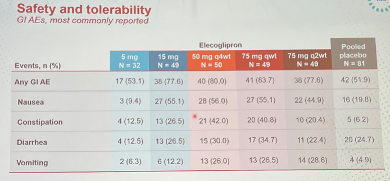
- Safety and tolerability were consistent with the GLP-1 RA class. Approximately 84-98% of the elecoglipron group (vs. 84% of the placebo group) reported any adverse events. The most common side-effects were gastrointestinal, led by nausea (45-56% vs. 20%), constipation (13-42% vs. 6%), diarrhea (13-35% vs. 25%), and vomiting (6-29% vs. 5%). Nausea and vomiting happened most frequently during treatment initiation, while constipation and diarrhea remained at a low level throughout the 36 weeks. Interestingly, only 2-4% of participants discontinued use due to GI side effects.
- In her commentary, Dr. Klara Klein (UNC Medicine) gave a three-part answerto the question: “Where does elecoglipron fit [in the expanding landscape of incretin-based therapies]?” To begin, Dr. Klein quoted Dr. Vanita Aroda, who famously said, “It’s all about the patient,” at an ATTAIN-1 trial readout at EASD 2026. Every patient has different medical needs, treatment responses, and tolerance to medications, and thus, more treatment options will only benefit patients. Dr. Klein also said that obesity prevalence is rising significantly in young adults, and nearly 853 million people will develop diabetes by 2050, up 45% from 2024. She is hopeful that more incretin-based therapy options can increase access to the drugs and prevent end-organ dysfunction across the world. Finally, Dr. Klein said that not everyone needs significant weight loss. Low-dose elecoglipron (e.g., 5 mg, which reduces weight by 2.5 kg [5.5 lbs] and A1c by 0.9 percentage points) could be especially beneficial for those wanting cardio-kidney-metabolic benefits but do not need to lose weight. She called for further research in older adults, people with a kidney transplant or on dialysis, and those with T1D or atypical diabetes.
11. Lilly’s Tirzepatide is associated with 45% lower risk of major adverse limb events than semaglutide
In this afternoon symposium, Dr. Kevin Cowart (University of South Florida) shared findings from a retrospective study (n=24,274) comparing tirzepatide to semaglutide in adults with T2D and peripheral artery disease (PAD). PAD is a vascular condition in which arteries are narrowed by atherosclerosis, reducing the blood flow in the limbs. It is a marker for overall cardiovascular diseases and increases the risk of amputations and limb-threatening ischemia in people with T2D. GLP-1 RAs like liraglutide and semaglutide have previously demonstrated benefits in vascular biology, perfusion, and function. To better understand the real-world effects of semaglutide and tirzepatide on major adverse limb events (MALE), the investigators conducted a retrospective cohort analysis using TriNetX global electronic health record database between 2022 and 2025.
- Study methods and baseline characteristics. The study analyzed data from tirzepatide (n=12,137) and injectable semaglutide initiators (n=12,137), who were 1:1 matched for demographic characteristics, comorbidities, and cardiometabolic risk factors. At baseline, participants were 65 years old, with 51% being female, 77% white, 15% Black, 2% Asian, and 77% Hispanic. Many participants were affected by cardiometabolic conditions, including hypertension (62%), hyperlipidemia (59%), ischemic heart disease (30%), heart failure (19%), and atrial fibrillation (14%), among others. Common medication use at baseline included antihypertensives, diabetes drugs (20% on metformin, 27% on insulin, and 15% on SGLT-2 inhibitors), antiplatelets, anticoagulants, and lipid-lowering therapies. The primary composite outcome was MALE, including critical limb ischemia, amputation, and peripheral angioplasty or lower-extremity bypass procedures.
- Results. Tirzepatide was associated with 45% lower risk of MALE compared to injectable semaglutide. The absolute risks were 2.3% and 4.1%, respectively, reflecting an absolute risk difference of 1.8%. Specifically, tirzepatide was associated with 50% reduced risk of critical limb ischemia, 35% lower risk of amputation, and 47% lower risk of peripheral angioplasty or bypass. Dr. Cowart said that prospective trials are needed to better elucidate the comparative efficacy of tirzepatide and semaglutide on limb health.
Technology
12. CGM in T2D: Real-world Dexcom CGM use confers greatest glycemic improvements among people with T2D not on insulin
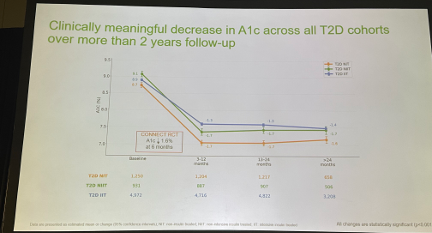
In a closing oral presentation, Dr. Jennifer Layne (Dexcom) discussed results from a retrospective EHR analysis among CGM users with T2D and baseline A1c >7.0%. Most of the cohort comprised individuals on intensive insulin therapy (n=4,972). People on basal-only insulin therapy (n=931) or non-insulin therapy (n=1,250) composed just under one-third of the population. The analysis evaluated change in A1c and CGM metrics from baseline to: (i) three to 12 months; (ii) 13 to 24 months; and (iii) >24 months.
- Users on non-insulin or basal-only therapy achieved comparable A1c reductions. Both cohorts achieved a 1.7-percentage point A1c reduction between baseline and three to 12 months, and outcomes were maintained through 24 months. Intensive insulin users saw a slightly smaller, but still significant, A1c reduction from 8.9% at baseline to 7.6% at three to 12 months, which was sustained past 24 months. Dr. Layne highlighted that this A1c reduction was comparable to the 1.6-percentage point A1c decrease at six months observed in the 26-week CONNECT RCT (presented earlier in ADA) in adults with T2D not on insulin therapy.
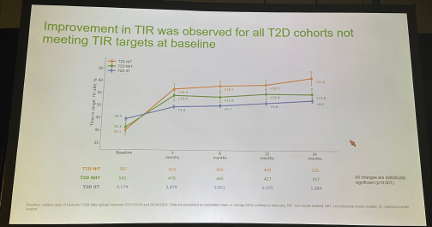
- Among those with baseline TIR ≤70%, TIR improvements were greatest among users on non-insulin therapy. Non-insulin users (n=587) saw a 4.0 hours/day TIR increase from 40% at baseline to 57% at three months, which increased further to 62% at 24 months – representing a 5.2 hours/day increase after two years. Individuals on basal-only insulin (n=541) saw strong TIR improvements as well, increasing 3.1 hours/day from 41% at baseline to 54% at three months, which was maintained at 24 months. Users on intensive insulin therapy (n=3,174) saw the smallest improvements from baseline, achieving a 1.2 hours/day TIR increase from 45% to baseline to 50% at three months. TIR slightly rose to 53% at 24 months – representing a 1.9 hours/day increase after two years.
13. AI is coming, but when and how? Dr. Nestoras Mathioudakis and Dr. Neda Laiteerapong debate its integration into diabetes care
Dr. Nestoras Mathioudakis (Johns Hopkins University) and Dr. Neda Laiteerapong (University of Chicago) engaged in a lively debate on the immediate integration of AI into healthcare delivery. Across their presentations, they covered today’s quality of AI interventions, the risks of integration, and considerations around clinician burnout and skill. Attendees were eager to offer their opinions on opportunities and risks as well, with the session culminating in a timely conversation around where the future of diabetes care is realistically heading.
- Dr. Mathioudakis described AI as a “present tense obligation,” emphasizing that it is no longer a future concept but an increasingly validated tool in diabetes care. AI is already being used in areas such as diabetic retinopathy screening and automated insulin delivery, while evidence continues to grow for applications in clinical decision support, documentation, conversational AI, and digital therapeutics. He highlighted several ways AI could improve diabetes care:
- Expanding access. AI has the potential to extend diabetes expertise beyond specialty clinics. Autonomous retinopathy screening can bring eye screening into primary care settings, reducing reliance on specialists. Emerging evidence also suggests that AI-driven insulin titration and medication optimization can approach endocrinologist-level performance. Drawing on large datasets and clinical guidelines, tools such as OpenEvidence can generate guideline-aligned recommendations, while ChatGPT has been shown to outperform primary care physicians on diabetes knowledge assessments. In diabetes prevention, an AI-led DPP achieved outcomes that were non-inferior to a human-led intervention while offering greater scalability. Reflecting growing acceptance of these technologies, Dr. Mathioudakis noted that the European Union Diabetes Forum has now endorsed 14 recommendations supporting AI deployment.
- Reducing clinician burden. Diabetes care is particularly data-intensive, contributing to high rates of clinician burnout and documentation burden. AI can help streamline these workflows. Studies suggest that AI-assisted chart review is faster than manual review while maintaining comparable — or even superior — performance, allowing clinicians to spend less time preparing for visits and more time thinking critically about patient care. Ambient AI scribes have also been associated with approximately one hour less after-hours documentation per day and increased visit capacity. Across multiple studies, Dr. Mathioudakis noted that AI scribes generally break even financially, with their greatest value stemming from time savings, improved workflow efficiency, and clinician retention.
- Making care more human. Paradoxically, Dr. Mathioudakis argued that AI may help strengthen, rather than diminish, human connection in healthcare. By reducing administrative tasks, clinicians can devote more attention to patients during visits. For patients, AI can improve understanding of their care by translating complex medical information into accessible language and simplifying discharge instructions, helping make healthcare information more understandable and actionable.
- Dr. Laiteerapong made it clear that AI is not “bad,” and the question should be whether immediate, unguarded integration is wise. According to Dr. Laiteerapong, four core themes need to be addressed before AI can be fully integrated into healthcare systems: (i) AI hallucinates, is overconfident, unreliable, and biased; (ii) AI will contribute to the “deskilling” of HCPs; (iii) AI integration will result in “never-skilling”; and (iv) AI comes with several important ethical considerations. She cautioned that without guardrails focused on establishing standards, training, equity, and accountability, AI will do more harm than good.
- Hallucinations and overconfidence. “Imagine if you had a clinician like this?” Examples of these include references by providing incorrect PMIDs. This is especially concerning given that half of endocrinologists report using OpenEvidence. Moreover, when Claude is asked directly if it is overconfident in its responses, it openly agrees. In a study published by Nature on the impact of AI misinformation on diagnostic accuracy, medical students who were given misleading explanations had the worst diagnostic accuracy rate at 9.2% compared to controls at 21%.
- Unreliable and biased. Dr. Laiteerapong struck back against the studies presented that show impressive diagnostic capabilities of AI, highlighting that studies, such as one by Dr. Justin Reese (Lawrence Berkely National Laboratory) et al., which show poor performance, are stuck in preprint and never published. This ultimately leads to what Dr. Laiteerapong calls “the garbage in and garbage out effect.”
- Deskilling and never-skilling. In a randomized-controlled trial looking at adenoma detection rates with AI assistance, those who used AI for three months had a 4 percentage point drop in performance (from 28% to 22%) when attempting to identify adenomas without AI. Dr. Mathioudakis said the issue of “never-skilling” may be more problematic. That is, medical students are not yet experienced or knowledgeable enough to have a “gut check” when AI provides convincing information. The introduction of AI is causing HCPs to switch from a dual process of thinking that involves intuitive and analytic thinking to a tri-system theory of AI that introduces artificial cognition. This artificial cognition results in a cognitive forfeiting of intuitive thinking, creating a lapse in clinical reasoning.
- Ethical considerations. Dr. Laiteerapong said that AI systems are trained on biased data, which worsens disparities. This is especially relevant in diabetes, a known disease of disparity. Additionally, AI erodes the patient-doctor relationship: “the patient came to see you, not your algorithm.” It is also important to establish guidelines that establish guidelines and establish informed consent for patients in which AI is involved in their care. To conclude, Dr. Laiteerapong asked: When AI causes harm, who is liable? Although well-resourced institutions and systems may have begun developing guidelines and training programs to address these concerns, the majority of HCPs are not in a position to receive the same level of AI attention.
- Hallucinations and overconfidence. “Imagine if you had a clinician like this?” Examples of these include references by providing incorrect PMIDs. This is especially concerning given that half of endocrinologists report using OpenEvidence. Moreover, when Claude is asked directly if it is overconfident in its responses, it openly agrees. In a study published by Nature on the impact of AI misinformation on diagnostic accuracy, medical students who were given misleading explanations had the worst diagnostic accuracy rate at 9.2% compared to controls at 21%.
- In rebuttal, Dr. Mathioudakis acknowledged that work is still needed to continue improving AI’s role in clinical care, but he said that humans are not perfect either. Errors are consistent throughout EHRs already and the status quo of healthcare is profoundly inequitable. He pushed back against the idea of deskilling with AI, arguing instead that cognitively offloading retrieval tasks frees up more time to think critically about a patient and their comorbidities and engage with clinical practice guidelines.
14. GluCoCare finds superior A1c levels among participants using CGM in real-world, primary care settings
Dr. Tom Martens (International Diabetes Center) presented the GluCoCare (GLUcose monitoring Comparison in primary CARE) study, which compared CGM and BGM use among patients with T2D on insulin who were managed in primary care. Dr. Martens presented it as an “effectiveness study,” including 50 clinics within the HealthPartners primary care system across Minnesota and Wisconsin. Data was collected over 12 months, without any constraints or supervision on how care was delivered.
- Baseline characteristics. Among the 360 participants, mean A1c was 8.8% and mean DDS-17 score was 2.2. On average, patients were 60.5 years old and have lived with T2D for 14.3 years. Mean BMI of participants was 35.8 kg/m2.
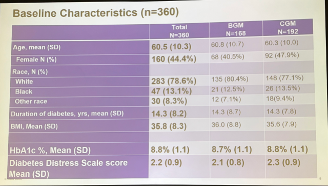
- CGM use conferred a 0.3 percentage point greater benefit to A1c compared to BGM. After 12 months, the CGM cohort had an average A1c of 8.0%, while the BGM cohort average A1c of 8.3% (CI: -0.59 to -0.07; p=0.01).
- There was no significant difference in DDS-17 scores between CGM and BGM use. Patient scores in the CGM arm decreased by 0.4 points (from 2.2 to 1.8), while scores in the BGM arm decreased by 0.3 points (from 2.2 to 1.9).
- There were similar numbers of severe adverse events reported in the CGM (n=31) and BGM arms (n=39). In the CGM arm, one participant experienced two events of severe hypoglycemia. In the BGM arm, there was one event of severe hypoglycemia, two hospitalizations due to hyperglycemia, and one death from myocardial infarction. No events of DKA occurred. Additionally, 11% of the CGM cohort reported sensor-related adverse events such as rash, discomfort, or bleeding.
15. Retrospective EHR analysis associates FreeStyle Libre use with A1c goal achievement faster than no CGM among adults with T2D not on insulin
In an oral symposium, Dr. Jay Shubrook (Touro University California, Vallejo, California) presented a retrospective Truveta EHR analysis of adults with T2D not on insulin, examining whether FreeStyle Libre initiation drove faster glycemic target achievement than no CGM initiation. The analysis included adults managed by non-insulin therapies with at least one baseline A1c measurement between 8.0% and 12.0%. CGM users were propensity score-matched 1:4 to non-CGM users to make the cohorts more comparable. After propensity score matching, baseline demographics were similar between the CGM (n=2,144) and non-CGM groups (n=5,486). In both groups, mean age was 56 years with a baseline A1c of 9.4%. Roughly one-third of each cohort used SGLT-2 inhibitors, 44% used GLP-1 RAs, and 38% used sulfonylureas.
- FreeStyle Libre initiation was associated with faster achievement of A1c targets throughout a one-year period. The probability of achieving an A1c <8.0%, <7.0%, and <6.5% was significantly higher with CGM initiation than no CGM use at three, six, nine, and 12 months. The number of people at risk (i.e., not achieving glycemic targets) also declined more rapidly in the CGM group throughout 12 months. Dr. Shubrook said these results support earlier CGM adoption to accelerate the achievement of glycemic targets.
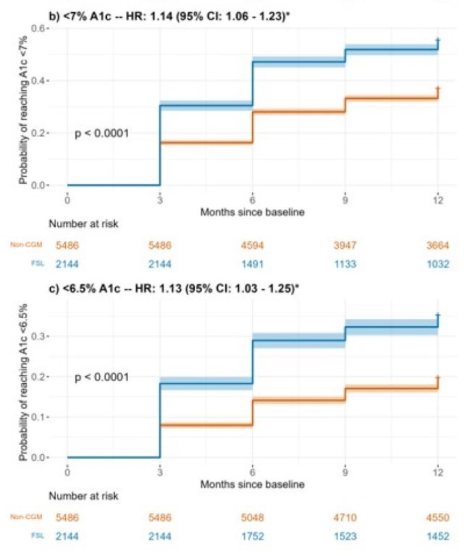
- In a subgroup analysis by age, FreeStyle Libre users <65 years old tended to achieve all three A1c targets faster than non-CGM users. However, among CGM users ≥65 years old, CGM use was only associated with faster achievement of an A1c <8.0%. While similar trends were observed for A1c targets of <7.0% and <6.5%, these did not reach statistical significance.
16. Biolinq Shine demonstrates 20/20% agreement rate of 76% in 40-400 mg/dL glucose range, MARD of 14.6%
Dr. Timothy Bailey (Headlands Research) presented pivotal safety and accuracy data for the Biolinq Shine CGM, which received FDA De Novo classification as a "glucose range monitoring system" for people with T2D not using insulin in September 2025. Unlike traditional CGMs that measure glucose in the subcutaneous space, Biolinq Shine is an intradermal device that uses silicon microsensors positioned within the dermis. The factory-calibrated sensor is worn on the forearm and communicates glucose ranges through colored flashing lights, rather than a numbered display. Pulsing red is used to indicate hypoglycemia (below 79 mg/dL), blue for Time in Range (70-180 mg/dL), a double pulse blue for rapidly rising glucose (by more than 2 mg/dL/min), yellow for glucose levels of 181-400 mg/dL, and flashing yellow for values >400 mg/dL.
- The pivotal study enrolled 190 participants across six sites, using YSI measurements as the reference comparator. Participants had a mean age of 49 years and were relatively evenly distributed by sex. The cohort was relatively diverse, with 24% identifying as Hispanic, 8% as Black, and 6% as Asian; approximately two-thirds had T1D.
- On sensor performance, in the 40-400 mg/dL range, Biolinq Shine achieved 63% agreement within 15/15% of YSI values, 76% agreement within 20/20%, and 97% agreement within 40/40%. MARD was 14.6%, with a negative bias of 7.3 mg/dL. Performance was somewhat stronger in the hypoglycemic range (40-69 mg/dL), with 92% 20/20% agreement, an 11.0% MARD, and a negative bias of 3.1 mg/dL. Accuracy was consistent across subgroups, with no significant differences observed by day of wear, diabetes type, age, sex, skin type, BMI, or ethnicity.
- Dr. Bailey also reported concordance between the sensor's color-coded glucose range indicators and YSI measurements. Concordance ranged from 74% in hypoglycemia (<70 mg/dL) to 86% in hyperglycemia (181-400 mg/dL). Concordance was 80% in the target range (70-180 mg/dL) and 79% for glucose values >400 mg/dL. During Q&A, Dr. Bailey emphasized that the system is currently intended to support lifestyle decision-making in people with T2D not using insulin, rather than provide the level of precision expected from traditional CGMs for those dependent on them for insulin dosing. The app associated with Biolinq Shine is optional, but enables longitudinal insights beyond immediate glucose trends.
- Device reliability was generally strong. Up to 85% of sensors remained functional through Day 5, on average providing over 93% of measurements. Nearly 90% of participants received glucose readings for at least 85% of total wear time.
- Safety outcomes were favorable. No major skin reactions were reported, and device-related adverse events occurred in only 3% of participants. All events were classified as mild.
Big Picture
17. Dr. Timothy Garvey discusses GLP-1 RAs for MASLD and the unique lipid profiles seen in the condition
Dr. Timothy Garvey (University of Alabama Birmingham) delivered a strong presentation on MASLD that generated interest even at the tail end of ADA 2026. He began by saying that metabolic dysfunction-associated steatotic liver disease (MASLD) and metabolic dysfunction-associated steatohepatitis (MASH) are part of the overall process of insulin resistance. Clinicians must tackle these relatively common conditions through the secondary prevention of dyslipidemia, as well as through tertiary prevention of the worsening of MASH. He said that dyslipidemia caused by insulin resistance has a characteristic profile including: (i) elevated triglycerides; (ii) increased VLDL-c; (iii) LDL-c that is normal or only mildly elevated; (iv) low HDL-c; and (v) increased non-HDL-c. He also noted that lipoprotein molecules themselves can have altered characteristics in the case of MASLD. All of these aspects of dyslipidemia and MASH are essential to understanding how therapies such as semaglutide, tirzepatide, and resmetirom improve liver steatosis.
- Lipoprotein profiles change throughout the development in MASH, requiring a change to lipid panel interpretation. Dr. Garvey demonstrated that insulin resistance has an effect on both lipoprotein size and particle concentration as demonstrated by hyperinsulinemic clamps. In particular, insulin resistance leads to larger VLDL-c particle diameters, as well as a higher concentration, while LDL-c increases in concentration but decreases in diameter. In contrast, HDL-c decreases in diameter and in concentration with insulin resistance. These modifications can modify the body’s overall lipid profile, but, importantly, also impact the use of lipid panels. Current calculated LDL cholesterol levels in routine bloodwork do not capture these effects of insulin resistance on lipoproteins and the negative effects of these changes. MASLD is also associated with more profound insulin resistance and atherogenic lipids compared to obesity alone, which requires a specific approach.
- Dr. Garvey then discussed the 2022 AACE-AASLD Lipid Management Guidelines for MASLD/MASH. The document established cholesterol guidelines for patients at high CV risk, very high, and extreme CV risk. However, Dr. Garvey said that many of these guidelines still require improved additional evidence and updating following the 2022 publication. He believes that the field should standardize its approach to lipid risk and continually update its understanding.
- Incretins have demonstrated remarkable efficacy for MASLD. In the STEP-5 trial, semaglutide 2.4 mg demonstrated a 5% reduction to total cholesterol compared to a 2.4% increase in placebo. The results were especially pronounced for VLDL and triglycerides, two areas of concern in MASLD. Tirzepatide has also demonstrated benefit for MASLD via the SURMOUNT-5 trial, with significant reductions to tirzepatide, non-HDL-c, and other metrics.
- Although GLP-1 receptors are negligibly expressed in the liver, GLP-1 RAs affect hepatic lipid metabolism indirectly. GLP-1 RAs reduce caloric intake and weight loss, reduce ectopic fat and hepatic lipid content, increases insulin sensitivity to improve glycemia and anti-lipolysis in adipose tissue, increases adiponectin to improve function, and more.
- In closing, Dr. Garvey discussed the use of resmetirom 80 or 100 mg/day for MASLD. Resmetirom confers little to no weight loss and is a liver-directed thyroid hormone receptor beta-selective agonist. It also has no effect on insulin sensitivity, however, has been proven to be highly effective for MASLD due to its direct action. Resmetirom increases fatty acid beta-oxidation, upregulates LDL receptor expression, and reduces lipogenesis. Dr. Garvey said that he would be interested to see if Madrigal pursues a lipid-lowering indication for Rezdiffra (resmetirom) in the future. In closing, Dr. Garvey quoted Mr. Henry James, an American-British author. In response to a question, “Is life worth living?” he said, “It all depends on the liver.” Dr. Garvey calls for an improved mechanistic understanding of MASLD to tackle the prevalent global issue through the lens of lipid lowering.
18. Dr. Diana Isaacs receives the ADA’s Outstanding Educator in Diabetes Award and shares her journey and key contributions to the diabetes field
After receiving the ADA’s Outstanding Educator in Diabetes Award, Dr. Diana Isaacs (Cleveland Clinic) reviewed her personal history and how that tied into her efforts to transform diabetes care and education. When she was a high school senior, she experienced firsthand the therapeutic power of medications to restore health, fueling her interest in pursuing pharmacology. While at Southern Illinois University, she became involved with various diabetes initiatives and became committed to offering empathy to those with chronic disease. Since then, her impact on the diabetes field has been remarkable, leading initiatives on CGM education, transforming the role of the DCES in technology integration, creating useful frameworks for HCPs to better treat their patients, and much more.
- As the first full-time pharmacist at the Cleveland Clinic dedicated to endocrinology, Dr. Isaacs saw the exploding role of diabetes technology and recognized the need for greater education efforts. She helped lead an initiative that introduced CGM shared medical appointments (SMA) to her patients. Through this, Dr. Isaacs helped over 170 patients achieve a mean A1c reduction of 0.8%, improve self-efficacy of diabetes management, drive dietary changes, and optimize drug therapy. Since then, she has played a critical role in transforming the role of the DCES, publishing numerous articles on how to integrate and optimize diabetes technology.
- Dr. Isaacs highlighted the DATAA model for improving data interpretation: (i) Download data (start with key metrics and ask the patient what they have learned or what is going well with self-management); (ii) Assess safety (identify time spent in hypoglycemia and engage in interactive discussion about possible causes and solutions); (iii) Time in Range (focus on the positives by identifying days or times where TIR is highest and how to replicate what is working well): (iv) Areas to improve (identify times in hyperglycemia and explore possible causes and solutions); (v) Action plan (developed collaboratively with the person with diabetes). Given that there are over 40 factors that can affect glucose, this model helps clinicians work with their patients to interpret CGM data and develop an effective action plan. She emphasized that at each step, you must express that this is just information – not inherently good nor bad.
- Dr. Isaacs continues to leave an indelible impact on the ADA through her various committee and consensus involvements. Recognizing the positive impact of AID technology, she has helped develop consensus recommendations for AID use in clinical practice and has served on an interdisciplinary panel convened by the ADA to develop scientific statements and recommendations that guide the integration of technology in the primary care setting. Furthermore, as the ADA Communication Director of the Pregnancy & Reproductive Health Interest Group from 2018 to 2022, she helped develop the international consensus on CGM and AID use in pregnant women with T1D, T2D, or gestational diabetes. If you think she hasn’t done enough already, she also advocated with an international team to advance care for people with T2D.
- During the height of the COVID-19 pandemic, Dr. Isaacs supported her clinic in continuing to support diabetes health equity during a time of virtual care. Dr. Isaacs’ team has since worked on several initiatives to ensure they offered diabetes education and technology for all who could benefit. To name a few, they: (i) started a virtual GDM shared medical appointments program; (ii) opened a specific diabetes in pregnancy clinic; and (iii) started an insulin pump virtual shared medical appointment program.
- We can all do more than we think! Dr. Isaacs said that despite the rapid advancement of diabetes technology and AI, the human touch will remain of utmost importance. She reminded the audience that behind every number is a story, and that all healthcare providers are responsible for starting the conversation to hear that story.
19. *NEW* Early loss of 15%+ body weight is associated with lower vascular risk in newly diagnosed T2D
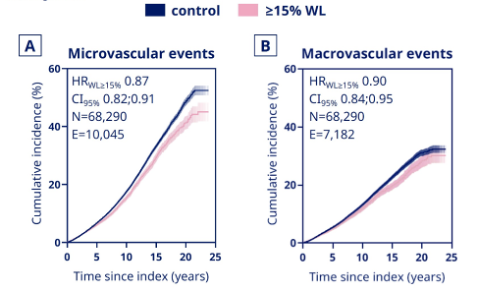
Prof. Naveed Sattar (University of Glasgow, UK) presented results from a recently published study evaluating whether achieving ≥15% body weight loss early after T2D diagnosis is associated with lower vascular complication risk. Dr. Sattar highlighted the growing evidence that excess adiposity not only drives T2D progression but also contributes to its downstream vascular complications. His work sought to address the ongoing debate about whether intentional weight loss meaningfully improves long‑term outcomes. ADA guidance informed the ≥15% weight loss target used in the study, positioning the analysis within a broader shift toward aggressive weight management as a therapeutic strategy in T2D.
- Study design and baseline characteristics. The study used UK CPRD Aurum primary care data from 2000 to 2024 to construct a large cohort of incident T2D in adults aged 18-70 years with obesity. Individuals who achieved ≥15% body weight loss within 3-24 months after diagnosis were propensity-matched 1:4 to weight‑stable controls (<2% change), adjusting for demographics, baseline clinical factors, socioeconomic status, and information on comorbidities, medications, and smoking that was continuously updated. The eligible cohort included about 237,000 individuals, of whom 1 in 16 achieved ≥15% body weight loss. The mean age at diagnosis was 54 years, BMI was 38 kg/m², and mean A1c was 8.0%. Dr. Sattar stated that medication use reflected a pre‑incretin era, with very low GLP‑1 RA and SGLT-2 inhibitor exposure within the cohort. Individuals in the weight‑loss group reduced their BMI by 19% compared to weight stability in controls.
- Results. The primary outcomes were time to first macrovascular and microvascular events. Achieving ≥15% weight loss was associated with a 14% lower risk of macrovascular events (MI, stroke, angina, PAD) and a 10% lower risk of microvascular events (CKD, retinopathy, neuropathy). Dr. Sattar emphasized the gradual divergence of the event curves, noting that the separation between groups only became apparent after several years. Individual components showed significant reductions to MI, angina, CKD, and retinopathy with consistent benefit across all endpoints. Importantly, these improvements were sustained over the four‑year follow‑up period and occurred despite consistently lower use of glycemic management, antihypertensive, and statin therapy in the weight‑loss group. This reinforces that the observed benefits were not driven by treatment intensification but rather by the metabolic effects of substantial early weight reduction. Parallel improvements to A1c and blood pressure, along with higher proportions achieving a BMI <27 or <30 kg/m², further supported the metabolic impact of early, substantial weight reduction.
20. The “clinical conundrum”: The management of single islet autoantibody detection in youth
In a morning session, Dr. Nicole Sheanon (University of Cincinnati) presented on the “clinical conundrum” of single islet autoantibody detection in youth. While a single positive autoantibody represents an early state of T1D, Dr. Sheanon emphasized that it does not represent a low-risk group and encouraged its inclusion in T1D staging. For background, stage 1 T1D is characterized by two or more islet autoantibodies with normal glucose levels, compared to stage 2 and 3, which include positive autoantibodies and glycemic levels not at target.
- The critical window of observation for a single positive autoantibody. Dr. Sheanon explained that three years represent the critical window for those who test positive for a single autoantibody, especially as early changes are the most predictive for the development of additional antibodies. Additional key predictors of T1D progression include younger age at conversion to the first positive autoantibody, as well as changes in A1c levels or glucose tolerance over time.
- Monitoring single autoantibody positivity in youth. Citing a 2024 paper, Dr. Sheanon outlined the need to confirm persistent single autoantibody status with a second laboratory test and to confirm that other antibodies are negative. For children younger than three years, all four autoantibodies and A1c levels should be monitored every six months for three years, then annually for three additional years. For children older than three years, all four autoantibodies and A1c levels should be monitored annually. Finally, education on symptoms should be provided for children who revert to negative autoantibodies or do not progress to positive autoantibodies over three years. Dr. Sheanon presented three case studies of patients with similar profiles who demonstrated different outcomes to highlight the importance of individualized care.
- Outcomes of single autoantibody positivity. Data shows that among patients who test positive for a single autoantibody, approximately half revert to negative autoantibodies while the other half persistently demonstrate single autoantibody positivity. While most do not progress to multiple autoantibodies and stage 3 T1D, Dr. Sheanon said there’s a “meaningful minority progress” of 15%. Patients usually follow a pattern of developing multiple positive autoantibodies, dysglycemia, and then confirmation of stage 3 T1D. However, patients and providers must caution against the possibility of variability in the timing of progression, which could significantly delay or expedite it.
- Guidance on those who test positive for a single autoantibody. Dr. Sheanon highlighted that the single most important care providers could give is education about diabetes symptoms. Some other important messages include the need for continual monitoring and awareness of the possibility of T1D progression. She said that while the thought of potentially developing T1D shouldn’t constantly be at “the front of patients’ minds,” increasing burden, this possibility shouldn’t be completely ignored either. She encouraged the mindset to “continue to live your life but have awareness.”
-- by Elizabeth Rose, Kayla Cao, Andrew Goyette, Nour Khachemoune, Daniel Lee, Kayla Mathieu, Caroline Metz, Esther Min, Kat Moon, Allie Platt, Jeremy Alkire, Ben Wyler, Nina Yao, Elaine Young, Monica Oxenreiter, and Kelly Close
[1] cAMP dual signal-biasing refers to a preference for cAMP pathway activation, compared to other incretin therapies that may activate multiple pathways with no preference. This may affect tolerability or other aspects of the drug’s action.