ADA 2026 Day #2 Highlights –
Executive Highlights
- ADA 2026 continued under the temperamental but cheerful New Orleans sky. Attendees streamed into the room as Dr. Harpreet Bajaj (LMC Diabetes & Endocrinology, Ontario, Canada) presented results from Lilly’s TRANSCEND-T2D trial (n=537) of retatrutide, a triple GLP-1/GIP/glucagon RA. In exciting news, retatrutide conferred the most weight loss seen to date in a population with T2D, totaling 17% at the therapy’s highest dose (12 mg) after 40 weeks of treatment. The therapy demonstrated consistent improvements in A1c compared to placebo (up to -1.9%) with benefits over Ozempic (semaglutide) and Mounjaro (tirzepatide), which Dr. Alice Cheng (University of Toronto, Canada) confidently suggested could be evidence of a “floor when it comes to glucose.”
- Additionally, in the TRIUMPH-1 trial (n=2,339) of retatrutide in obesity, Yale’s Dr. Ania Jastreboff announced that the therapy produced a striking 28% weight loss at 80 weeks. In a 24-week extension trial (n=532), patients lost up to 30% of their initial weight on the highest tolerated dose.
- In technology, Dr. Tom Martens (International Diabetes Center) presented topline results from Dexcom’s CONNECT trial, a 26-week 1:1 RCT evaluating CGM in adults with T2D not using insulin (n=283). CGM produced significantly greater A1c reductions than routine care (p<0.001). A1c fell by 1.6 percentage points in the CGM group (8.8% to 7.2%) compared to 0.7 percentage points with BGM (8.7% to 8.0%). Participants with the highest baseline A1c experienced the greatest benefit, and a substantially larger proportion of CGM users achieved a ≥0.5 percentage point A1c reduction (82% vs. 56%). Treatment effects favored CGM across all patient subgroups. Dexcom has previously said that CONNECT may support future reimbursement decisions for CGM use in this population. A popular panel discussion also featured Dr. Eugene Wright (South Piedmont Area Health Education Center), Dr. Diana Isaacs (Cleveland Clinic), Dr. Thomas Martens (International Diabetes Center), Dr. Sean Oser (University of Colorado Anschutz), and Dr. Osagie Ebekozien (ADA), who outlined the ADA’s Statement on Diabetes Technology in Primary Care, which is expected to be published this fall.
- In terms of big picture presentations, a panel discussion among people living with chronic diseases and addresses by Prof. Chantal Mathieu (KU Leuven, Belgium), this year’s recipient of the Distinguished International Service in the Cause of Diabetes Award, and Ms. Amy Hess-Fischl (ADA President of Healthcare and Education). While the ADA CEO, Mr. Charles Henderson, was supposed to deliver a special address during this session, he didn’t give this address. We imagine that yesterday’s series of controversies prompted the last-minute scheduling change or something else led to his absence.
- The ADA has also issued a statement on Friday's removal of several KOLs from the 86th Scientific Sessions. In a brief statement emailed to attendees shortly after 5 pm local time on Saturday, the ADA stated that the forcible removal of the field’s experts was a result of the unauthorized distribution of materials, not because of the viewpoints they shared. Further, the ADA said that it intends to meet with the parties involved after the conclusion of the meeting. Holding such a discussion after the conclusion of the Scientific Sessions #86 means the highly-respected leaders won’t be reinstated to participate in the remainder of the meeting, though we hope this can be changed since all stakeholders benefit so enormously by their presence.
See our day-by-day preview for more on what’s to come and see our Day #1 Highlights as well.
Table of Contents
-
Therapy
- 1. TRIUMPH-1: Retatrutide confers up to 30% weight loss in people without T2D and significantly improves knee osteoarthritis and obstructive sleep apnea
- 2. TRANSCEND-T2D-1: Retatrutide confers the greatest weight loss in people with T2D to date
- 3. Full phase 2 ZUPREME-1 results: Long-acting amylin agonist confers 10% weight loss with placebo-like tolerability
- 4. Panel with three ADA Banting Medalists debates unresolved questions regarding obesity pathophysiology and intervention targets for next-generation therapies
- 5. Bridging the gap: Advancing stem cell-derived beta-cell therapy toward widespread clinical use
- 6. Results from the VESPER phase 2b program: Redefining long‑acting GLP‑1 RA therapy
- 7. The use of verapamil in people with T1D: Dr. Rayhan Lal on clinical data to practical recommendations
- 8. Balancing cardiorenal benefits and DKA risk: SGLT-2 inhibitors in T1D
- 9. Clinical T1D care: GLP-1 response patterns in youth with T1D
- 10. Ferroptosis inhibition and senotherapies as potential novel treatments for MASH
-
Technology
- 11. Dexcom’s CONNECT RCT shows ~5-hour/day greater improvement in TIR with CGM vs. BGM in adults with T2D not using insulin
- 12. Upcoming ADA statement on diabetes technology in primary care encourages greater use of CGM and insulin delivery systems
- 13. Dr. Fran Kaufman presents real-world data on one year of Eversense 365 use and early twiist-Eversense 365 AID integration
- 14. FreeDM2 subgroup analysis shows consistent CGM benefit across demographic and clinical characteristics in T2D on basal insulin
- 15. twiist shares new real-world evidence (n=1,074), including with different system settings and in older adults
- 16. AI and diabetes technology: Symposium analyzes utility of AI models for AID, decision support, and nutrition tracking
- 17. Dexcom’s product theater promotes T2D staging, Stelo‑driven behavior change, and Smart Basal-guided basal insulin initiation
- 18. CIRCUIT RCT sub-analysis demonstrates glycemic benefits of Control-IQ+ during pregnancy
- 19. “Diabetes shouldn’t be a full-time job”: MiniMed product theater on the value of automation
- 20. Target trial emulation of VA database associates CGM initiation with 37% lower risk of end-stage renal disease over four years in veterans with T1D
-
Big Picture
- 21. Panel discussion among people living with chronic diseases, along with special lectures from the Distinguished International Service Award recipient and the ADA President of Healthcare and Education
- 22. ADA/EASD 2026 consensus report on hyperglycemia in T2D: Updates focus on preventing complications and developing healthy behaviors
- 23. Diabetic neuropathy pain management: Therapies, exercise, and spinal cord stimulation
- 24. “Touch your patients!” Dr. Bellini presents strategies to address skin complications caused by diabetes technology
- 25. Dr. Korey Hood receives the Richard R. Rubin Award and offers considerations for the future of behavioral scientists
Therapy
1. TRIUMPH-1: Retatrutide confers up to 30% weight loss in people without T2D and significantly improves knee osteoarthritis and obstructive sleep apnea
In a standing-room-only session in the New Orleans Convention Center’s largest hall, Dr. Ania Jastreboff (Yale School of Medicine) presented results from the phase 3 TRIUMPH-1 trial (n=2,339) of retatrutide (triple GIP/GLP-1/glucagon RA) in adults with obesity or overweight and without diabetes and with at least one weight-related comorbidity.Alongside the main trial of adults with obesity, Dr. Jastreboff presented results from two embedded “basket” studies – one in knee osteoarthritis (OA; n=574) and one in obstructive sleep apnea (OSA; n=243) – along with an extension phase (n=532).
- Baseline characteristics and study design. TRIUMPH-1 was a randomized double-blind trial that compared once-weekly retatrutide 4 mg, 9 mg, and 12 mg to placebo. All active-treatment groups began at 2 mg and were titrated upward to their randomized cohort. All participants also received individualized lifestyle counseling on diet and physical activity without mandated caloric restriction. On average, participants in the main study were 49 years old, had a mean BMI of 40. 77% of participants had a BMI greater than or equal to 35 kg/m2. The knee OA basket included participants with an average age of 56, and over 75% women. The OSA basket included participants with an average age of 48, had more men (63%), and a high proportion (80%) of Hispanic or Latino participants. See key anthropomorphic measures, stratified by treatment group, below.
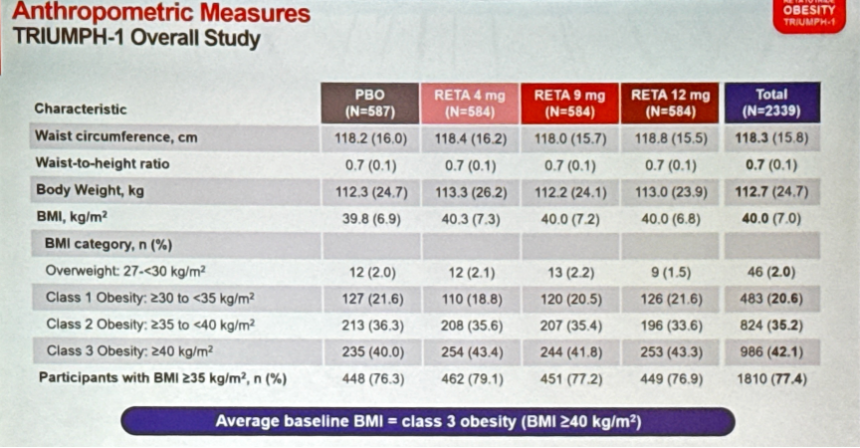
- The primary endpoint was the percent change in body weight at 80 weeks in the main study. Among the basket studies, change in WOMAC (Western Ontario and McMaster Universities Arthritis Index) knee pain and apnea-hypopnea index served as primary endpoints for knee OA and OSA, respectively. The extension trial assessed weight change at 104 weeks.
- Inclusion for the main trial was a BMI greater than 30 kg/m2 or greater than 27 kg/m2 with at least one obesity-related disease. Patients with diabetes or a prior incidence of ketoacidosis or hyperosmolar state were excluded.
- Results. At 80 weeks, average weight loss totaled 2.2% with placebo, 19% with retatrutide 4 mg, 26% with 9 mg, and 28% with 12 mg, with the latter figure translating to nearly 32 kg (70 lbs) of weight loss by 80 weeks.
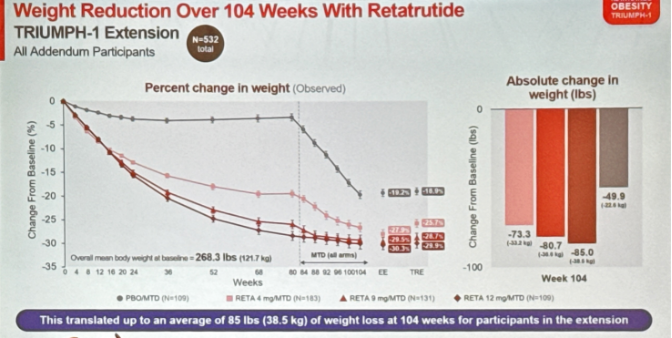
- In the extension trial, where participants continued or titrated up to the maximum tolerated treatment dose, weight loss averages increased to a maximum 30% or 39 kg (85 lbs). After 24 weeks of treatment, participants who were initially on placebo lost 19% body weight on the maximum tolerated dose of retatrutide (see below).
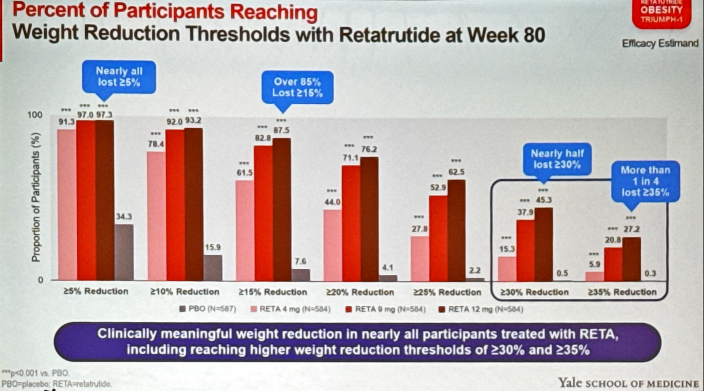
- Nearly all treated participants lost at least 5% body weight, more than 85% on 12 mg lost at least 15%, nearly half on 12 mg lost at least 30%, and more than one in four lost more than 35%. In the 12 mg group, nearly two-thirds of participants reached a BMI below 30, while about one-third reached a BMI below 25 kg/m2, and more than one in four achieved a waist-to-height ratio below 0.5. Female participants appeared to lose more weight on average than male participants, with roughly 31% versus 23% weight reduction.
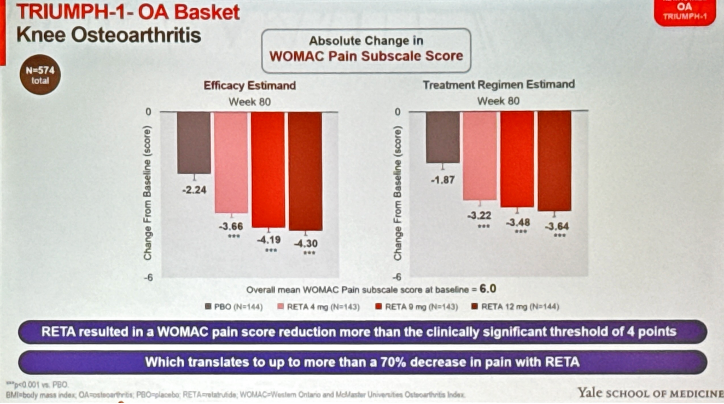
- In the knee OA basket, retatrutide reduced WOMAC pain scores by more than a clinically meaningful threshold and was described as producing over a 70% decrease in pain with RETA (see below).
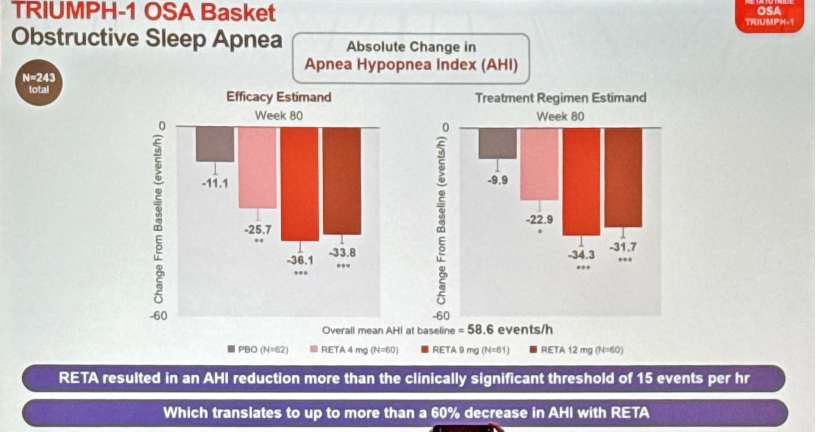
- In the OSA basket, retratrutide reduced apnea-hypopnea index by more than the clinically meaningful threshold, corresponding to over a 60% reduction in AHI with RETA (see below).
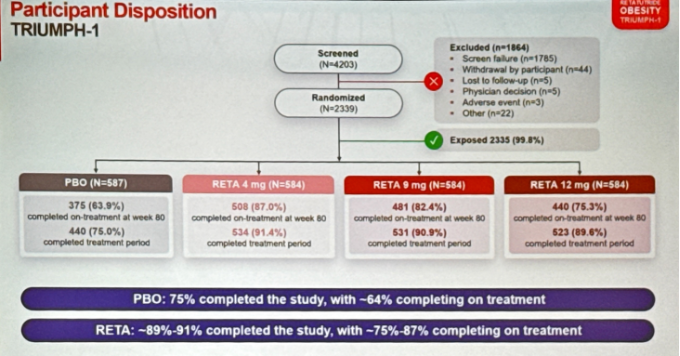
- Placebo discontinuation rates exceeded all doses for retatrutide, which Dr. Jastreboff attributed to patient choice based on inefficacy. Among treatment groups, discontinuation rates increased by dose, ranging from 87% for 4 mg to 75% for 12 mg (see below).
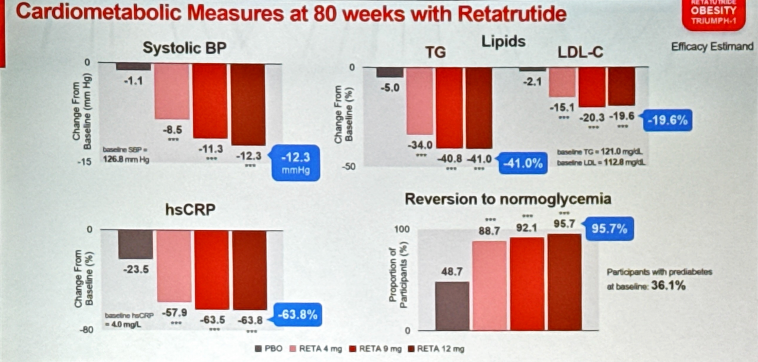
- On secondary endpoints, Dr. Jastreboff reported improvement in several cardiometabolic markers, including a 12.3 mmHg reduction in systolic blood pressure at the 12 mg dose. Triglycerides fell by about 41%, LDL cholesterol by about 20%, and hsCRP by 64% at the highest dose. Among participants with prediabetes at baseline, more than 95% reverted to normoglycemia at the highest dose (see below). Patient-reported outcomes also improved, including physical function and psychosocial quality-of-life measures.
- On safety, treatment-emergent adverse events were reported in 5.5% of placebo participants and 7.7% to 11% of treated participants. The most common adverse effects were gastrointestinal, as fatigue, dizziness, dysesthesias, injection-site reactions, and reported hypotension were also noted more often with retatrutide. Urinary tract infections (UTI) emerged as a new signal, occurring in 6.8% to 8.1% of retatrutide-treated participants versus 4.8% with placebo. 92% of those UTI cases were in female participants.
- In her commentary, Dr. Alice Cheng (University of Toronto, Canada) highlighted the potential of retatrutide in weight loss, rather than glycemia. In TRIUMPH-1, she discussed retatrutide’s efficacy as approaching bariatric surgery. Still, Dr. Cheng paused to issue caution, asking if the larger degree of magnitude is always better, needed, or right. To all three, she answered, “No.” Instead, she advocated that not every patient needs or wants a weight loss of retatrutide’s magnitude. In most individuals, she even suggested that a therapy like retatrutide was not necessary. However, she closed on a compelling note: “Retatrutide has gotten us one step further.”
2. TRANSCEND-T2D-1: Retatrutide confers the greatest weight loss in people with T2D to date
In this standing-room-only address, Dr. Harpreet Bajaj (LMC Diabetes & Endocrinology) presented results from the phase TRANSCEND-T2D-1 trial (n=537) of retatrutide in adults with T2D inadequately managed by diet and exercise alone. The study results were simultaneously published in The Lancet.
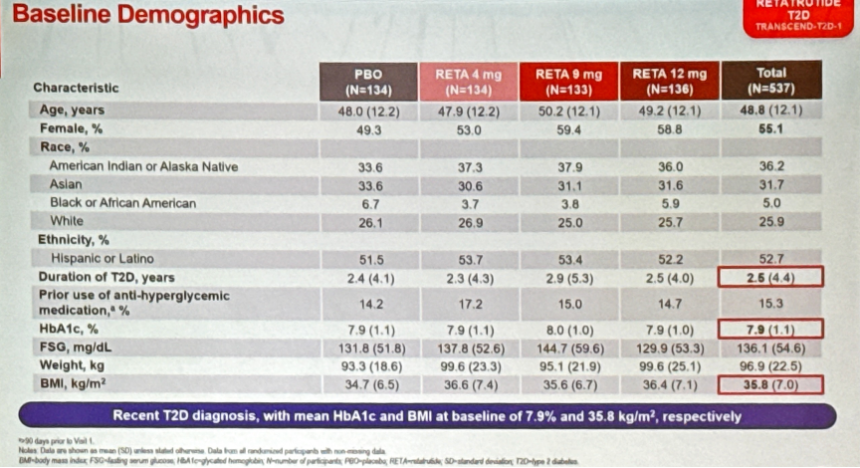
- Baseline characteristics and study design. TRANSCEND-T2D-1 functioned as a double-blind monotherapy trial in insulin-naïve patients with T2D. Patients included in the trial were not on anti-hyperglycemic agents for ≥90 days prior to screening. Participants had a mean diabetes duration of 2.5 years, baseline A1c of 7.9%, and average BMI of 35.8 kg/m2 (see below). Participants were randomized to placebo or retatrutide 4 mg, 9 mg, or 12 mg for 40 Weeks – a notably shorter duration than the main 80-week TRIUMPH-1 trial. All non-maximal arms and placebo underwent sham dose escalation to preserve the trial’s blinded design. The primary outcome was the change in A1c at Week 4. Key secondary endpoints included fasting glucose, body weight, categorical weight-loss thresholds, and a composite of A1c ≤6.5% plus weight loss ≥10%. Cardiometabolic markers, including non-HDL cholesterol, triglycerides, and blood pressure, were also considered as secondary outcomes in the analysis.
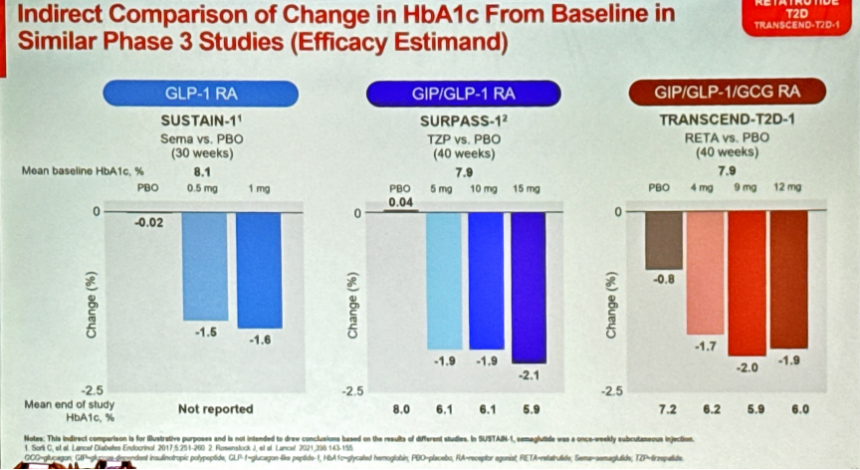
- Glycemic results. All doses of retatrutide conferred significant glycemic improvements. From a baseline A1c of 7.9%, the placebo group fell to 7.2%, while retatrutide 4 mg, 9 mg, and 12 mg cohorts achieved mean A1c of 6.2%, 5.9%, and 6.0%, respectively, at Week 40. These data correspond to around a 2-percentage-point reduction in A1c. Dr. Bajaj noted that downward A1c trajectories suggest that glycemic improvements had not clearly plateaued by Week 40. In indirect comparisons to other incretin-based monotherapies, the magnitude of A1c reduction appeared to be consistent with semaglutide (SUSTAIN-1) and tirzepatide (SURPASS-1; see below). Notably, Dr. Alice Cheng (University of Toronto, Canada) hypothesized that there seems to be a potential “floor” for A1c reduction at ~5.9% in this incretin-based class of T2D therapies.
- Strikingly, up to 85% of participants on the highest retatrutide dose achieved an A1c ≤6.5%, and roughly 46% reached <5.7%, a near-normoglycemic range. Fasting plasma glucose also dropped from 136 mg/dL at baseline to an average of 103 mg/dL in the retatrutide arms. These data show an estimated treatment difference of 40 mg/dL versus placebo and contrast historical expectations that glucagon receptor activation would raise fasting glucose.
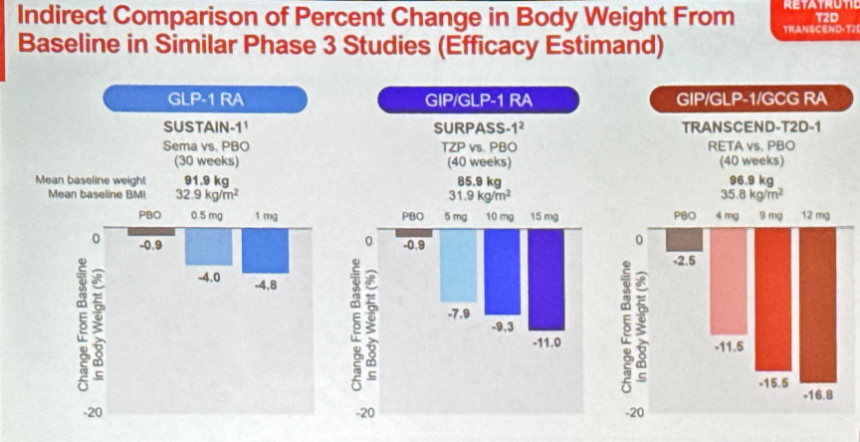
- Weight loss results. From an average baseline body weight of 97 kg (214 lbs), patients taking a placebo lost 2.5% of their body weight, compared to 12%, 16%, and 17% weight loss among the 4 mg, 9 mg, and 12 mg retatrutide arms, respectively. The highest retatrutide dose confers 17 kg (37 lb) of weight loss and a 12.5 cm (5 in) reduction in waist circumference. Similar to A1c results, body weight trends continued to trend downward and did not reach a plateau at the end of the study.
- To emphasize the magnitude of these weight loss findings in T2D, Dr. Bajaj presented another indirect comparison. Retatrutide conferred 15-17% reductions in weight loss, versus the 5% weight loss reported with semaglutide 1 mg and the 11% weight loss seen in the highest tirzepatide dose (see below). Dr. Bajaj emphasized that retatrutide demonstrates the largest magnitude of weight loss observed with any medication in people with T2D, to date. Nearly 90% of patients on 12 mg achieved ≥5% weight loss, about 75% achieved ≥10%, and roughly 55% reached ≥15%. Around two-thirds of participants on the 12 mg dose met the composite endpoint of an A1c ≤6.5% plus at least 10% weight loss.
- Compared to placebo, triglycerides fell by up to 40% and non-HDL cholesterol by nearly 20% with retatrutide use. Systolic and diastolic blood pressures also decreased meaningfully with the therapy by 6 mmHg and 3 mmHg, respectively.
- Safety. Dr. Bajaj described the safety profile of retatrutide as broadly consistent with the GLP-1 RA class. Total treatment-emergent adverse events occurred in 58% of placebo participants and in 62-65% of patients on retatrutide. Most adverse events were gastrointestinal and concentrated during the dose-escalation period. Serious adverse events were uncommon, occurring in 1.5% of the placebo population and 0.8-4.5% of those taking retatrutide (see below).
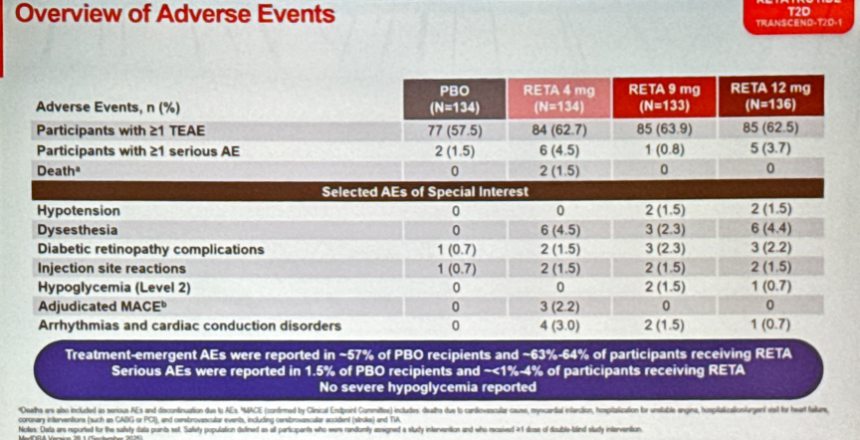
- Two deaths were noted in the retatrutide arms, though Dr. Bajaj noted that retatrutide was not a causal contributor. Adverse events of special interest, including hypotension, dysesthesias, diabetic retinopathy, injection-site reactions, and level 2 hypoglycemia, were infrequent. There were no episodes of severe hypoglycemia. Three major adverse cardiovascular events occurred in the 4 mg arm, while none occurred in the 9 or 12 mg arms. Dr. Bajaj explained that a grouped category of arrhythmias and conduction disorders encompassed sinus tachycardia, ventricular extrasystoles, and palpitations without a clear dose-response pattern.
- Discontinuations due to gastrointestinal events were rare. Strikingly, TRIUMPH-1 reports zero related discontinuations in the 4 mg arm, one in the 9 mg, and four in the 12 mg group. Overall discontinuation due to any adverse event ranged from 2-5% in treatment groups. Dr. Cheng emphasized that these data, particularly in the 4 mg arm, show that it is possible to have “lots of GI effects but remain on the drug.” She called on clinicians in the audience to learn how to better manage and support patients through the initial treatment period, rather than abandoning therapy.
3. Full phase 2 ZUPREME-1 results: Long-acting amylin agonist confers 10% weight loss with placebo-like tolerability
In this well-attended talk, Dr. Timothy Garvey (University of Alabama at Birmingham) presented the full results of the phase 2 ZUPREME-1 trial (n=485), which evaluated long-acting amylin agonist petrelintide in people with overweight or obesity and without T2D. See the simultaneous press release from Zealand. Topline results were announced in March 2026, showing that petrelintide achieved significant weight loss up to 11% at Week 42, compared to 1.7% with placebo. Dr. Garvey emphasized that amylin agonists can improve treatment adherence, one of the biggest challenges of current obesity therapies. Based on favorable results, petrelintide will advance to phase 3 studies in 2H26.
- Trial design and baseline characteristics. In this trial, participants were randomized to five undisclosed doses of petrelintide or placebo. The primary endpoint was the percent change in body weight from baseline to Week 28. Secondary and exploratory endpoints include changes in body weight, waist circumference, and cardiometabolic risk factors at Week 42, as well as the safety and tolerability profile. At baseline, participants were 47 years old, with 53% being women. Mean BMI at baseline was 37 kg/m2, and body weight was 107 kg (236 lbs).
- Results. At Week 42, petrelintide conferred up to 10.7% weight loss (vs. 1.7% with placebo). For cardiovascular risk factors, petrelintide reduced waist circumference by 10.8 cm (4.2 in) from a baseline of 114 cm (45 in), hsCRP by 41% from a baseline of 4.2 mg/L, and triglycerides by 21% from a baseline of 1.6 mmol/L.
- Adverse event rates were similar between the petrelintide and placebo groups. 71% of the petrelintide and 69% of the placebo groups reported any adverse events, while 3.5% and 3.7%, respectively, reported severe adverse events. Treatment discontinuation due to adverse events were 4.5% and 4.9%, respectively. Most common adverse events were gastrointestinal, 77% of which were mild and occurred during the titration period. Nausea (20% vs. 6%) and constipation (7% vs. 4%) were more elevated, while vomiting was less common (3% vs. 6%).
4. Panel with three ADA Banting Medalists debates unresolved questions regarding obesity pathophysiology and intervention targets for next-generation therapies
An esteemed panel featuring three ADA Banting Medalists engaged in a fascinating discussion on the future of obesity pathophysiology research and opportunities for novel therapies. Dr. Martin Myers (University of Michigan) moderated this session with Dr. Barbara Kahn (Harvard), Dr. Philipp Scherer (UT Southwestern), and Prof. Matthias Tschöp (Ludwig Maximilian University of Munich, Germany), who shared their thoughts on unaddressed targets for the prevention and treatment of obesity.
While incretin therapies have revolutionized obesity treatment, the panelists described these therapies as, paradoxically, non-pathophysiological. Despite this “disconnect” per Prof. Tschöp, the panel encouraged continued investigation of obesity pathophysiology as improved understanding may facilitate the development of more specific, personalized interventions with reduced side effects. Dr. Scherer emphasized that the field has “only scratched the surface” of understanding obesity’s biological progression with significant opportunities for next-generation therapies.
- The panel identified several pathophysiological targets that warrant further investigation. Dr. Scherer said that the identity of the “lipostat” – the biological system that governs the body’s weight set point – is essential to discover. Since individuals consistently regain weight after incretin discontinuation, incretins do not alter the weight set point. He argued this is not unexpected because obesity develops over a long time period; therefore, he proposed that slower weight loss over a long timeframe (instead of rapid weight loss with incretins) may make it easier to maintain an altered weight set point and avoid weight rebound. Regarding potential targets, he suggested that peripheral organs, such as adipose tissue or the liver, may be the key set point regulators to investigate rather than the brain.
- Energy expenditure. Panelists unanimously agreed that developing therapies to increase energy expenditure is important since weight loss is associated with a corresponding decrease in basal energy expenditure. However, Dr. Kahn said increasing energy expenditure alone will not be sufficient because food intake will increase to compensate. Therefore, she said interventions may need to target both appetite suppression and energy expenditure – referencing how hypertension treatment often involves multiple agents targeted at different mechanisms.
- Futile cycles. Dr. Kahn proposed futile cycles – two metabolic pathways that operate in opposite directions and lead to a net energy loss without obvious productivity – as opportunities to manipulate energy expenditure. She cited previous research in her lab demonstrating that knockdown of nicotinamide N-methyltransferase (NNMT), a component of the polyamide futile cycle, protected against diet-induced obesity by increasing energy expenditure without causing a compensatory increase in food intake.
- Fibrosis and inflammation. The panel did not believe inflammation is a worthwhile target to treat obesity because systemic inflammation is not a driver of obesity, but rather an ensuing reaction. Dr. Scherer argued that anti-fibrotic interventions may yield greater efficacy while also improving insulin sensitivity. However, he acknowledged that the major fibrotic driver, TGF-β, is not easily accessible, underscoring the need to identify novel targets. Nevertheless, Prof. Tschöp said inflammation is still important to monitor as obesity-related complications likely arise due to inflammatory processes in organs, which could explain incretins’ preventative effects for cardiovascular disease, kidney disease, and neurodegeneration.
- Leptin. Dr. Scherer suggested leptin could be a fibroinflammatory marker since its actions mirror IL-6, which regulates pro-inflammatory processes – stating that sometimes the field needs to take “gambles” in translating interventions to the clinic.
- Energy expenditure. Panelists unanimously agreed that developing therapies to increase energy expenditure is important since weight loss is associated with a corresponding decrease in basal energy expenditure. However, Dr. Kahn said increasing energy expenditure alone will not be sufficient because food intake will increase to compensate. Therefore, she said interventions may need to target both appetite suppression and energy expenditure – referencing how hypertension treatment often involves multiple agents targeted at different mechanisms.
- Prof. Tschöp believes personalized genetic cures for obesity may be possible in the coming decades. While he thought the idea of a cure for obesity was “impossible” a few years ago, the enormous acceleration of AI coupled with decreasing genomic sequencing costs could enable the development of cures personalized to specific genetic polymorphisms. Given the high genetic heterogeneity of obesity, Prof. Tschöp and Dr. Kahn agreed that any gene therapies that emerge would be personalized to individuals rather than blanket interventions in broad populations. They also suggested gene therapy could be an avenue to develop a “one-and-done” obesity therapy without weight rebound after discontinuation, but Dr. Kahn said it would presumably require manipulation of multiple genes to avoid unwanted compensatory effects.
5. Bridging the gap: Advancing stem cell-derived beta-cell therapy toward widespread clinical use
Attendees filled the room for an afternoon panel featuring leaders in islet transplantation. Moderator Dr. Trevor Reichman (University of Toronto, Canada) guided panelists Dr. Sanjoy Dutta (Breakthrough T1D), Dr. Jason Gaglia (Harvard University), Dr. Anna Lam (University of Alberta, Canada), and Dr. Jay Skyler (University of Miami) through a multi-pronged discussion spanning regulation, patient involvement in decision making, and more. In the end, panelists agreed that the next five years will likely change islet transplantation in the US long term.
- Dr. Reichman first asked panelists about the current standard of care in transplantation for T1D in the USA and globally. Dr. Lam discussed the Edmonton program, which has made deceased donor islet cell transplantation possible in Canada for 25 years. The program is funded by the province and is mainly available to patients with T1D who have repeat severe hypoglycemic events. In her clinical practice, immunosuppression presents the greatest risk to patients as the commonly used drug tacrolimus can cause a decrease in kidney function in the first year of use. This presents a particular concern to PWD as kidney disease can arise as a complication of diabetes. However, Dr. Lam has found that kidney function eventually levels off to match that of the general population with T1D not taking immunosuppressants.
- Dr. Gaglia discussed regulatory challenges that prevent such a program from being established in the US. Islets are regulated as drugs in the US, adding additional regulatory burden and limiting access. He encouraged the field to work to expand access just as other nations have done.
- Panelists then discussed key advances in development that address some of today's challenges. Dr. Skyler said that the field needs to move away from immunosuppression and onto anti-CD40 Ligand antibodies such as Eledon’s tegoprubart, which is currently in development. He said that the era of induction of immune tolerance therapy is upon us, to be used in conjunction with anti-CD40 Ligand antibodies. Dr. Dutta then proposed the idea of moving away from immunosuppression at all through approaches like bioshielding, and said that Breakthrough T1D is supporting studies in this vein. He believes that the biggest priority should be improving the regulatory pathway so that more people can become eligible for transplantation – currently, only about 5% of people with T1D in the US are eligible due to restrictions around severe hypoglycemia.
- Dr. Gaglia sees two converging issues in the current landscape. There is a shortage of islets, which can be solved by the use of stem-cell derived islets, and the “cost of goods” which forces the system to limit transplantation to those in highest need instead of all patients. He said that the field does not know where to draw the eligibility line beyond severe hypoglycemia, nor does it know how to keep adapting the cutoff as science advances. As the field works to determine this, he said that we must find a cheaper way to achieve islet transplantation for more people.
- Dr. Dutta said that factoring in the opinions of PWD is also of paramount importance – each patient has a different answer about their personal burden of diabetes. This should be built into decision making.
- Turning to immunotherapies for earlier stage T1D such as Sanofi’s Tzield (teplizumab), Dr. Skyler said that the transplantation field needs to borrow from these therapies to prevent recurrent autoimmunity. Dr. Gaglia added that teplizumab has demonstrated efficacy as an induction agent for immune tolerance and that early disease drugs can be very helpful for transplantation.
- In closing, the speakers discussed best-case scenarios for the next five years, plus their top priorities for the field. Dr. Skyler again emphasized the need for companies to invest in this space and for expanded patient eligibility for this technological advancement. He also discussed the possibility of exploring transplantation sites other than the portal veins, as other abdominal sites may improve durability.
- Dr. Dutta drew parallels to the development of AID, saying that the first approval took about 15 years, but then “the floodgates opened” and now there are multiple systems available in the US. He said that the field needs to lay down a clear pathway to facilitate transplantation. Dr. Gaglia said that his focus on the cost of goods is absolutely key to be able to offer transplantation to all those who desire it. Dr. Lam said that there are still blind spots in T1D management that mean we may not catch all severe lows for every patient. She said that much work still remains to improve the quality of life for even more patients, which motivates all of the panelists’ work.
6. Results from the VESPER phase 2b program: Redefining long‑acting GLP‑1 RA therapy
Dr. Naveed Sattar (University of Glasgow, UK) opened this packed symposium by outlining the growing global crisis of obesity, noting that prevalence in adults has more than doubled since 1990 and is set to continue increasing at an exponential rate. He emphasized that reducing adiposity could substantially improve population health – an estimated 55% of complex multimorbidity cases are potentially preventable through population-wide reductions to BMI. Nutrient-stimulated hormone (NuSH) analogs provide promise as catalysts for improving population health, but Dr. Sattar highlighted persistent barriers for these therapies, including access, cost, titration, side effects, potency, adherence, and long-term use. He emphasized that developing more tolerable weight management therapies with dosing strategies that align with real-world needs and are scalable and accessible will be essential to addressing the obesity crisis. In a conversation following his talk, he emphasized that the potential of more therapies to target weight is promising.
- Dr. Louis Aronne (Weill Cornell Medicine) then introduced berobenatide (PF‘3944, previously known as MET-097 prior to Pfizer acquiring Metsera), a terminally lipidated 41-amino acid peptide biologic whose differentiated structure enables once-monthly dosing. As a fully biased GLP-1 RA generated by select amino acid changes, Dr. Aronne suggested that berobenatide has potentially greater potency than unbiased GLP-1 RAs. This allows berobenatide to have selective cAMP activation and prevents receptor internalization upon GLP-1RA activation, further contributing to prolonged cAMP activation. Because berobenatide is engineered for extended exposure and less frequent administration, it may also translate into more efficient manufacturing and potentially lower production costs compared with higher‑volume weekly regimens. Furthermore, berobenatide can be administered at low, scalable doses that can be optimized for tolerability. Dr. Louis Aronne describes berobenatide as a “foundational incretin for multiple long-acting candidates,” citing its potential for compatibility with amylin, GIP, and other NuSH peptides. Berobenatide is rapidly advancing into phase 3development, with 10 clinical trials planned for 2026 across the entire program.
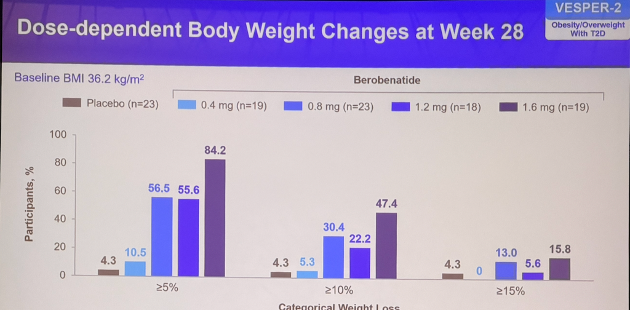
- Building on Dr. Aronne’s overview of berobenatide’s design and long‑acting potential, Dr. Ildiko Lingvay (UT Southwestern) transitioned the discussion into clinical evidence from the phase 2b VESPER-2 trial (n=133) investigating weekly berobenatide across four fixed doses (0.4 mg, 0.8 mg, 1.2 mg, and 1.6 mg) in adults with obesity or overweight and T2D. The trial evaluated weight and glycemic efficacy without dose de‑escalation through Week 28. Berobenatide produced dose‑dependent reductions in body weight of up to 10% and A1c reductions up to 2.2% from a baseline of 8.2%. Despite mandatory adherence to assigned doses, completion rates remained high, and 88% of participants experienced no or only mild GI events, with no severe gastrointestinal (GI) AEs and hypoglycemia rates comparable to placebo. These findings established berobenatide’s efficacy and tolerability profile in a T2D population and provided the foundational weekly maintenance doses of 0.8 mg (low), 1.2 mg (medium), and 2.4 mg (high) that were advanced into the later phase 3 VESPER-5 trial.
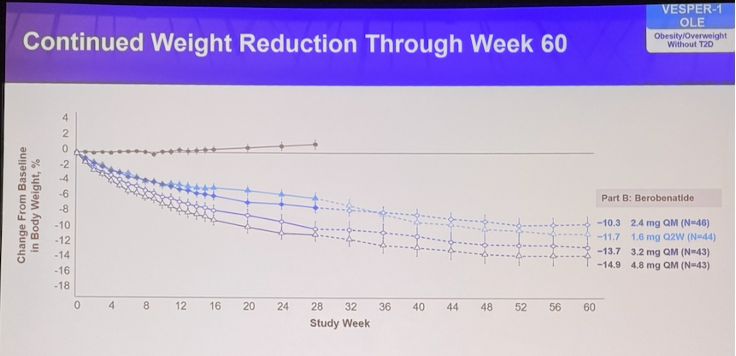
- Dr. John Buse (University of North Carolina) then presented results from the VESPER‑1 open‑label extension (n=239) trial. The study investigated higher weekly doses of berobenatide (1.6 mg and 2.4 mg), extended‑interval dosing schedules of 1.6 mg every two weeks, and monthly doses of 2.4 mg, 3.2 mg, and 4.8 mg in adults with obesity or overweight without diabetes who had completed the initial 28‑week blinded period. The extension evaluated the durability of weight loss, the feasibility of switching from weekly to monthly dosing, and GI tolerability during titration. Weight loss continued at Week 32, reaching 16% with 2.4 mg weekly while monthly regimens (2.4-4.8 mg) sustained 10-15% reductions through Week 60. In terms of tolerability, 96% of participants reported only mild or no GI events, no GI‑related discontinuations occurred, and transitions from weekly to monthly dosing produced only brief, mild nausea or vomiting. These results validated 1.2 mg and 2.4 mg weekly as the medium and high maintenance doses for the phase 3 VESPER-4 and VESPER-5 trials and supported the feasibility of monthly maintenance dosing at 3.2 mg and 4.8 mg.
- Dr. Buse concluded with results from the ongoing 64-week VESPER‑3 trial (n=268), investigating monthly berobenatide dosing at 3.2 mg and 4.8 mg in adults with obesity or overweight without diabetes. The trial evaluated weight‑loss efficacy at the 28‑week primary endpoint and characterized GI tolerability during monthly titration. Berobenatide achieved up to 12% weight loss at Week 28 with no evidence of plateau in early transitions from weekly to monthly dosing. Safety remained favorable, with 83% of participants reporting no or only mild GI events, and GI‑related discontinuations were low (≤12% across arms), occurring primarily during early titration. VESPER‑3 confirmed the robustness of monthly dosing and directly informed the phase 3 VESPER-6 program, including the advancement of a 4.8 mg monthly maintenance dose.
7. The use of verapamil in people with T1D: Dr. Rayhan Lal on clinical data to practical recommendations
Dr. Rayhan Lal (Stanford) explained the use of verapamil in people with T1D, from clinical evidence to practice. Dr. Lal has a deep connection to the T1D space as someone living with T1D for more than 35 years, having siblings with T1D, and being a father to a six-year-old son diagnosed with T1D a couple of years ago. Especially reflecting on his son’s journey through diagnosis and enrollment in the PETITE-T1D trial, he expressed gratitude to those who supported him during this time, including Dr. Irl Hirsch, Dr. Desmond Schatz, and Dr. Michael Haller. Dr. Lal emphasized in his talk that the way these leaders were treated yesterday for speaking out about the US administration’s negative impact on diabetes research and funding was unacceptable, and he made very clear that he stands with them. “They were there for me and how they were treated yesterday for disseminating literature was wrong and a travesty.” After he voiced his support for them, the audience responded with a roar of applause and a standing ovation.
- Current state of T1D management. While Dr. Lal said he’s “happy living this way,” expressing contentment with his approach to diabetes management (e.g., insulin and technological interventions), he acknowledged that not everyone shares the same sentiment. He raised how cardiologists rarely ever see a dying cell or a heart attack and respond with delayed intervention, but, rather, they approach with efficient timing and treatment. Similarly, endocrinologists should think “time is islet cells,” especially in young children who experience more aggressive autoimmune attack on pancreatic beta cells. Encouragingly, he noted that the Oklahoma Senate Bill 1427 will provide general population T1D screening, effective November 2026, allowing early detection and medical intervention.
- Clinical evidence supporting the use of verapamil. Dr. Lal referenced a phase 2 trial (n=32), in which participants treated with verapamil demonstrated a 35% higher stimulated C-peptide AUC than placebo at 12 months, suggesting better preservation of endogenous insulin secretion. He also elaborated on the CLVer trial (n=88), which specifically focused on children and adolescents with newly diagnosed T1D. Results showed that participants receiving verapamil had approximately 30% higher C-peptide AUC than placebo at Year One. Additionally, 95% of those treated with verapamil reached the peak C-peptide level of 0.2 pmol/mL, compared to 71% in the placebo group.
- Real-world evidence on verapamil. Dr. Lal shifted gears and presented real-world findings on the use of verapamil. At his practice in Stanford, results showed that 99 people with T1D (ages 2-66 years) have been considered for verapamil treatment to preserve beta cell function. Among the population, 21 people with T1D are currently on verapamil at Stanford Lucile Packard Children’s Hospital, and 20 are on verapamil at Stanford Health Care. Additionally, 22 people with T1D have been prescribed verapamil by neurology or cardiology departments for reasons unrelated to beta cell preservation, but they have been monitored by endocrinologists. Results showed that 78% of participants reached the recommended maximum dose based on their weight, with a median dose of 4.7 mg/kg. Participants had median C-peptide levels of 0.20 pmol/mL at Year One and 0.35 pmol/mL at Year Two, compared with 0.26 pmol/mL. While Dr. Lal noted that these results don’t entirely prove the efficacy of verapamil, real-world evidence suggests that beta cell function may be maintained longer with verapamil treatment. On safety, verapamil was well tolerated, with eight adverse events attributed to the treatment.
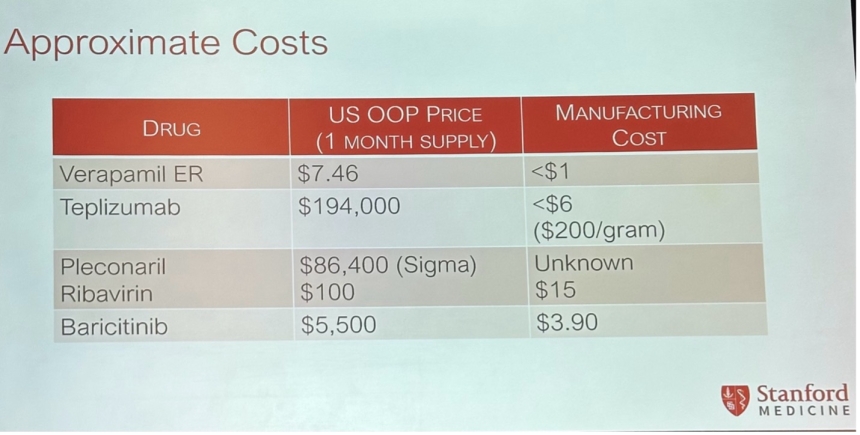
- Cost of verapamil production. Presenting the chart below, Dr. Lal commented on the costs of drug production for T1D delay and treatment, noting that the cost of verapamil is “as cheap as it comes.” Approximate monthly out-of-pocket costs for monthly treatment included $7.46 for verapamil, compared to $194,000 for teplizumab and $5,500 for baricitinib.
- Verapamil represents the “lowest bar” for implementation. Considering both clinical efficacy and price, Dr. Lal emphasized the feasibility of integrating verapamil into diabetes management. Some reminders Dr. Lal provided included: (i) the addition of non-fasting C-peptide/glucose to annual labs, as providers have been finding residual C-peptide after diagnosis; (ii) performance of EKG if C-peptide levels ≥0.05 pmol/mL; and (iii) recognition that patients may not end up with the goal dose.
8. Balancing cardiorenal benefits and DKA risk: SGLT-2 inhibitors in T1D
In a fascinating presentation, Dr. Yunwen Xu (Johns Hopkins University) presented a target trial emulation evaluating the effects of SGLT-2 inhibitors in adults with T1D. SGLT-2 inhibitors reduce kidney disease progression and heart failure in T2D, which has promoted interest in their use for T1D. While existing trials in T1D have demonstrated renal benefits of the class, these studies were not designed to evaluate hard cardiorenal outcomes. Moreover, these trials have consistently reported an increased risk of diabetic ketoacidosis (DKA).
- Investigators conducted a target trial emulation (n=22,134) using EHR data among adults with T1D on insulin therapy. The study compared cardiorenal outcomes of SGLT-2 inhibitors and non-insulin glucose-lowering agents, including metformin, DPP-4 inhibitors, sulfonylureas, and thiazolidinediones. Dr. Xu clarified that GLP-1 RAs were excluded from the analysis, given their known renal benefits. The primary outcome was a composite of end-stage kidney disease (ESKD) or kidney-related death and heart failure hospitalization, while secondary outcomes were: (i) a composite of ≥40% eGFR decline, ESKD, or kidney-related death; (ii) acute kidney injury; and (iii) major adverse cardiovascular events (MACE-3; myocardial infarction, stroke, or all-cause death).
- At baseline, the SGLT-2 inhibitor group tended to be older (55 vs. 50 years), had longer diabetes duration (5.4 vs. 4.0 years), and had more comorbidities, like coronary heart disease (27% vs. 16%) and heart failure (16% vs. 7%). Propensity score weighting was used to account for differences in baseline characteristics.
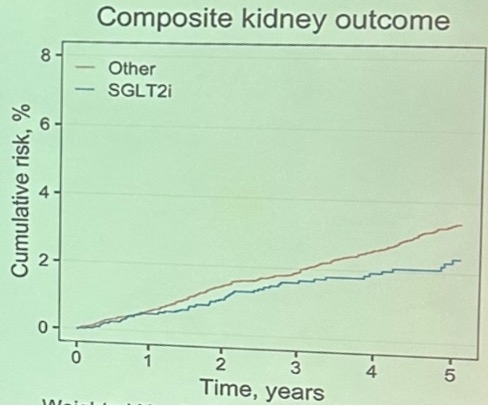
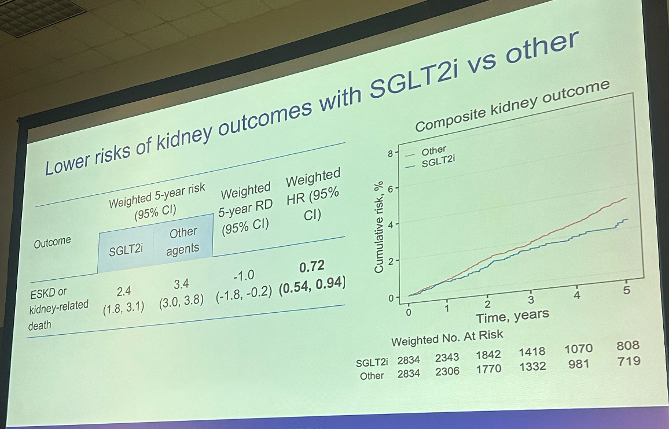
- Findings suggested that SGLT-2 inhibitors may provide clinically meaningful cardiorenal protection in adults with T1D when DKA risk is appropriately managed. SGLT-2 inhibitors were associated with 28% reduced risk of ESKD, 29% reduced risk of composite kidney outcome, and 22% reduced risk of heart failure, compared to non-insulin drugs. The drug was also associated with a 11% lower risk of MACE-3, although this was not statistically significant. SGLT-2 inhibitors were associated with a non-statistically significant 8% higher risk of DKA. The SGLT-2 inhibitor group had 22% smaller risk of severe hypoglycemia events, which is expected given that insulin and sulfonylurea introduce hypoglycemic risks. Dr. Xu said that the limitations of this study include residual confounding, capture of only hospitalization-requiring DKA events, and potential misclassifications of T2D as T1D. He emphasized that randomized controlled trials are necessary to confirm the findings and identify strategies to mitigate DKA risk.
9. Clinical T1D care: GLP-1 response patterns in youth with T1D
A strong oral presentation explored the potential benefit of GLP-1 and multi-incretin RAs for youth with T1D, finding interesting response patterns. Dr. Lauren Waterman (University of Colorado Anschutz) and collaborators conducted a review of youth and young adults with T1D taking GLP-1 RAs or GLP-1/GIP RAs to expand early data suggesting A1c and weight improvements for this population. It is also known that some patients do not respond to incretin treatment, yet the reasons for this remain unclear. The authors sought to identify the characteristics of non-responders for young patients with T1D taking these therapies to further personalize treatment.
- A retrospective chart review was conducted at the Barbara Davis Center for Diabetes. Young patients with T1D aged 12-26 years were included if treated with a GLP-1 RA or GLP-1/GIP RA between January 2020 and December 2025 (n=48). Data on demographics, BMI, timing of overweight or obesity onset, A1c, CGM metrics, insulin dosing, and gastrointestinal adverse events were collected at baseline and every three months following initial prescription. A responder was defined as 5% body weight loss or greater and/or a 0.4% A1c decrease or greater. T-test and chi-square analyses were performed between groups.
- In terms of overweight or obesity onset, patients were categorized as “before puberty” if their BMI first crossed the 85th percentile threshold at an age younger than seven years and “puberty or later” if this occurred at 14 years of age or older. For patients between 7 and 14 years, Tanner Staging or discussion was used to determine if the patients had entered puberty.
- Patients who had overweight or obesity before puberty were less likely to respond to treatment, as well as those with lower baseline A1c values. The mean patient age was 18.6 years and mean T1D duration was 8 years. 73% of participants were female. Baseline A1c was 8.0%. The use of GLP-1RA or GLP-1/GIP RAs led to a 0.5% improvement to A1c values, 5% body weight loss, and a 0.1 unit/kg decrease in insulin total daily dose from baseline (p <0.05). However, response was not uniform across patients.
- Non-response was seen in 32% of patients and was associated with patients who developed overweight or obesity prior to puberty, had lower A1c values at baseline, or only tried one incretin formulation during the study period (p <0.05). Responders demonstrated 8% body weight loss during the study period, compared to 2% body weight gain in non-responders (p <0.0001). Responders had a 0.9% reduction to A1c compared to a 0.4% increase in non-responders (p <0.0001). Responders also demonstrated a reduced total daily insulin dose compared to non-responders over time.
- Incretin therapies show promise for youth with T1D but are not uniformly effective. The interesting discrepancies between responders and non-responders in this population warrant a prospective trial before use can become routine. The benefit seen to a number of metrics for responders further encourages this approach, and Dr. Waterman said that a retrospective matched control analysis is also underway. Further study of ideal dosing for T1D and reliable ways to identify patients most likely to respond are also needed – we’re intrigued by the outright weight gain demonstrated by some patients who continued taking GLP-1 or GLP-1/GIP RAs.
10. Ferroptosis inhibition and senotherapies as potential novel treatments for MASH
In this insightful presentation, Dr. Kuo Du (University of Kansas) explored the liver as a central regulator of metabolic homeostasis and introduced a potential novel therapeutic target for MASH. Dr. Du posed two core questions: (i) how does metabolic stress induce liver injury; and (ii) how does the injured liver affect other organs and contribute to multi-organ failure? Aging biology was highlighted as a key “clue” to both solutions. Aging increases the risk and severity of metabolic disease, and metabolic disease itself accelerates biological aging. Therefore, aging-associated mechanisms could underlie liver injury and its systemic consequences.
- Dr. Du began by characterizing cellular senescence, marked by permanent cell-cycle arrest and a senescence-associated secretory phenotype (SASP), as a hallmark of aging and metabolic stress. In the liver, cellular senescence has been observed in multiple cell types, including hepatocytes, endothelial cells, and immune cells. Hepatocytes make up most of the liver cells, carry out key liver functions, regulate whole-body metabolism, and are primary targets of initiators of inflammatory and fibrotic cascades.
- Dr. Du’s work has focused on determining whether hepatocyte senescence occurs in MASH and whether it can be targeted therapeutically. In a bulk RNA-seq analysis of liver biopsies (n=368) in healthy controls and patients with MASH across fibrosis stages, senescence-associated genes were highly enriched in MASH. This enrichment was even greater in advanced compared to mild fibrosis.
- Still, senescent cells are highly heterogeneous, and researchers have yet to identify a single, definitive in vivo marker. Therefore, Dr. Du’s group sought to develop a more robust senescent hepatocyte signature. In preclinical in vivo and in vitro models, a separate RNA-seq analysis revealed 196 upregulated differentially expressed genes in the senescent hepatocyte gene signature (SHGS). Further analysis showed that SHGS genes are enriched for inflammation and fibrosis pathways. When translated to clinical samples from the Duke MASH cohort, SHGS enrichment was shown to correlate with markers of liver injury (AST), obesity (BMI), and MASH (portal inflammation, hepatocyte ballooning, fibrosis stage). Greater SHGS enrichment was seen in patients with MASH compared to controls. Importantly, SHGS enrichment decreased after bariatric surgery, which has been shown to improve MASH, indicating that SHGS can track disease progression, regression, and clinical outcomes.
- Aging is an independent risk factor for T2D and MASH. In work supervised by Dr. Anna Mae Diehl (Duke University), MASH patients demonstrate accelerated biological aging, correlating with MASH severity, via DNA methylation pathways. Dr. Du presented this work as a conceptual shift, where MASH is framed as a degenerative disease in which livers are “biologically older” than their chronological age. This raised two key questions: can we “reset the clock” in these livers, and, if so, will that improve MASH?
- To establish a hepatocyte aging gene signature (HGS), researchers compared the transcriptome – the complete collection of RNA transcripts – of primary hepatocytes in young and old mice. HGS was found to include 496 differentially expressed genes. Similar to SHGS, the level of enrichment in HGS was correlated with liver ballooning score, portal inflammation, and fibrosis stage. HGS enrichment was also seen in other diseased metabolic organs (e.g., pancreatic islets from patients with T2D, heart failure, diabetic kidney disease). Findings suggest the accumulation of biologically old hepatocytes and aged cells is a conserved feature across metabolic disease.
- Transcriptomic comparisons in patients with MASH and controls demonstrated dysregulation of DNA methylation pathways and programmed cell death pathways. Enrichment in HGS-associated pathways was associated with upregulation of metal ion transport, programmed cell death, and stress response processes. These features point towards ferroptosis – an iron-dependent, lipid peroxidation-driven form of programmed cell death. Dr. Du hypothesizes that ferroptosis is a key mechanistic link between hepatocyte aging and MASH pathogenesis.
- To evaluate ferroptosis presence, Dr. Du’s group evaluated iron accumulation and ferroptosis gene signatures using single-nucleus RNA-seq analysis. Both signatures were highly enriched in livers with MASH, especially in hepatocytes with HGS enrichment. Through preclinical assessments of aged and young livers on a MASH diet, ferroptotic stress was found to be a key driver of MASH progression during aging.
- Summarizing his sweeping address, Dr. Du reminded his audience of the three key takeaways: (i) under metabolic stress, hepatocytes become biologically old and senescent; (ii) these senescent cells experience ferroptotic stress, lose normal liver function, remodel their microenvironment, and drive fibrosis and inflammation; and (iii) ferroptotic stress and senescence connect metabolic stress, aging, and progressive liver disease.
- Therapeutically, ferroptosis inhibition has been shown to improve tissue pathology in several contexts, suggesting that ferroptotic stress modulation is a relevant therapeutic approach for the treatment of MASH. Additionally, several senotherapies – targeting cell senescence – are under active investigation. Several senolytic or senomodulatory candidates have entered early clinical trials, and some have shown early promise in metabolic and fibrotic complications, such as DKD, lung fibrosis, bone loss, and DME.
Technology
11. Dexcom’s CONNECT RCT shows ~5-hour/day greater improvement in TIR with CGM vs. BGM in adults with T2D not using insulin
Dr. Tom Martens (International Diabetes Center) presented topline results from Dexcom’s CONNECT trial, a 26-week 1:1 RCT evaluating CGM in adults with T2D not using insulin (n=283). Compared to routine BGM, CGM drove substantial improvements in A1c, Time in Range (TIR), and other glycemic metrics, with benefits apparent within the first week and no glycemia-related adverse events reported. Dexcom has previously said that CONNECT may support future reimbursement decisions for CGM use in this population.
- Methods. CONNECT was conducted across 22 US primary care practices. Participants continued their pre-study glucose-lowering medications and received education on diet and exercise; those randomized to CGM also received device training. The control group continued routine BGM. Both groups participated in periodic virtual visits. Study completion rates were high, reaching 97% in the CGM group and 90% in the routine care group, with 265 of 283 randomized participants completing the trial.
- Baseline characteristics. Participants had a mean age of 60 years, diabetes duration of 10 years, BMI of 33 kg/m², and 42% were female. The cohort was 80% white, 13% Black, and 14% Hispanic. Nearly two-thirds had less than a bachelor’s degree and annual household income below $75,000. Participants performed BGM a median of three times per week. Medication use was diverse: 40% used a GLP-1 RA, 37% an SGLT-2 inhibitor, 18% both therapies, 33% a sulfonylurea, and 11% a TZD. Mean baseline A1c was 8.8%, while mean baseline TIR was just 30%.
- CGM produced significantly greater A1c reductions than routine care (p<0.001). A1c fell by 1.6 percentage points in the CGM group (8.8% to 7.2%) compared to 0.7 percentage points with BGM (8.7% to 8.0%). Participants with the highest baseline A1c experienced the greatest benefit, and a substantially larger proportion of CGM users achieved a ≥0.5 percentage point A1c reduction (82% vs. 56%). Treatment effects favored CGM across all patient subgroups. Significantly more CGM users achieved A1c targets (p<0.001), including <7.0% (46% vs. 24%), <7.5% (68% vs. 37%), and <8.0% (84% vs. 56%). Median CGM wear was 97% and remained high throughout the study.
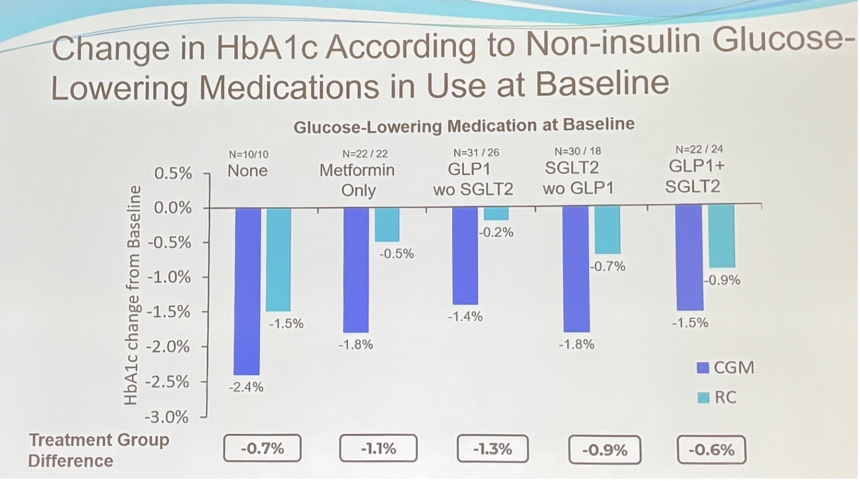
- Benefits were observed across medication regimens, but the largest treatment effect occurred among participants using CGM with a GLP-1 RA. In this subgroup, A1c declined by 1.4 percentage points with CGM plus GLP-1 RA versus 0.2 percentage points with GLP-1 RA alone, yielding a treatment difference of 1.3 percentage points. CGM use with metformin alone also yielded a large treatment difference of 1.1 percentage points (A1c decline of 1.8 percentage points versus 0.5 percentage points), with treatment effect sizes declining in those using SGLT-2 inhibitors with or without GLP-1 RAs.
- CGM improved TIR by an additional 21 percentage points (~5 hours/day) relative to BGM (p<0.001). TIR increased from 29% to 62% in the CGM group compared to 31% to 42% with routine care. Mean glucose was lower across all hours of the day among CGM users. Consistent with other studies with CGM, the largest improvements occurred during the first week of use and generally stabilized after nine weeks in CONNECT.
- Medication intensification was modest. Approximately 20% of participants added a non-insulin glucose-lowering medication during the study (26% in the CGM group vs. 17% in routine care). Few participants discontinued existing therapies or initiated insulin.
12. Upcoming ADA statement on diabetes technology in primary care encourages greater use of CGM and insulin delivery systems
Gearing up for ADA’s release of its statement on diabetes technology in primary care, a panel convened to discuss recommendations for its implementation strategies. In this symposium, Dr. Eugene Wright (South Piedmont Area Health Education Center), Dr. Diana Isaacs (Cleveland Clinic), Dr. Thomas Martens (International Diabetes Center), Dr. Sean Oser (University of Colorado Anschutz), and Dr. Osagie Ebekozien (ADA) outlined the ADA’s Statement on Diabetes Technology in Primary Care, which is expected to be published this fall. This statement resulted from the collaboration of 30+ experts across primary care, technology, and research with the goal of providing statements and key recommendations on the implementation of diabetes technology in primary care settings. The statement has so far been endorsed by a number of professional organizations, including AACE, ADCES, the American Association of Physician Associates, the American College of Diabetology, the American Society for Hospital Pharmacist, the American Association of Nurse Practitioners, and the American Pharmacist Association Foundation.
During the symposium, Dr. Martens referred to primary care physicians as the “front door of the medical system.” With access to such a large population of people with diabetes – many of whom are traditionally underserved – the primary care ecosystem has an important role in maximizing benefit and minimizing burden for patients with diabetes.
- Introducing the first set of statements, Dr. Martens reiterated the importance of CGM in diabetes managed in primary care. Statements 2 through 6 support team-based management. Key recommendations to support this guidance include designating a diabetes technology champion to facilitate awareness and the use of available resources. During Q&A, Dr. Isaacs added that the champion could become a key link to hospital administration to encourage buy-in to expanding diabetes technology programs. Additionally, building interdisciplinary teams through partnerships with DCES and pharmacists can expand primary care’s capacity to integrate technology into clinical workflows, especially for teams with limited resources. Statements 7 through 9 addressed promoting access to CGM and interoperability with other devices, supported by recommendations for the regular review of CGM data and educational support to promote interpretation.
- Dr. Oser followed by presenting statements on integrating insulin delivery technology – from connected pens to AID systems – into primary care (Statements 10 to 13). The statement clearly states that insulin delivery has become less complicated for patients and simultaneously more effective, and recommends leveraging available resources – either in one’s clinic or available for free digitally – and facilitating access to resources that your clinic does not have.
- Dr. Ebekozien emphasized that successful integration of diabetes technology into primary care can improve efficiency and enable population health management. He reiterated key recommendations on ensuring primary care teams have access to patients’ diabetes device data (including CGM, AID systems, and connected pens) and expanding professional training programs to better prepare clinicians to implement diabetes technology in practice. He also outlined a potential pathway for technology integration, by either: (i) training existing practice staff to build in-house expertise; (ii) leveraging trained interdisciplinary team members and relevant support programs; or (iii) referring patients to external specialty resources. Future guidance will also define the roles and responsibilities of stakeholders across the diabetes technology ecosystem, including people with diabetes, prescribing clinicians, DCES, technology companies, and other members of the care team.
- To accelerate adoption, Dr. Ebekozien said that the ADA is launching quality-improvement pilots with ADA-aligned primary care practices focused on expanding CGM use and integrating smart pens and AID systems into routine care. The initiative will combine EHR-integrated clinical decision support with technology training to embed diabetes technology into existing workflows. The initial phase will engage 100 primary care sites for CGM implementation and 30 sites for insulin delivery technologies – which Dr. Ebekozien said represent the diversity of primary care in the US – with plans to expand site participation. Insights from participating clinics will be shared through the ADA Primary Care Council and more than 4,000 Primary Care Alliance practices, followed by broader dissemination through ADA educational, advocacy, and publication channels. In Q&A, panelists and audience further discussed the potential to develop business plans for greater diabetes technology use leveraging reimbursement codes for education and remote patient monitoring and monitoring quality measures with diabetes technology rollout to demonstrate the outcomes and fiscal benefits it confers.
13. Dr. Fran Kaufman presents real-world data on one year of Eversense 365 use and early twiist-Eversense 365 AID integration
Dr. Fran Kaufman (Chief Medical Officer, Senseonics) presented real-world evidence on the Eversense 365 implantable CGM, including one-year outcomes from open-loop use (n=12,360) and early experience integrating Eversense 365 with the Sequel twiist AID system (n=153). Eversense 365 has been available in the US since October 2024 and became interoperable with twiist in January 2026, enabling the first real-world assessment of the combined system.
- One year of open-loop Eversense 365 use demonstrated sustained engagement and stable glycemic outcomes. Users had a mean age 57 years; most had T2D (59%) and approximately one-quarter had T1D, with the remainder not reporting diabetes type. Participants used basal insulin, MDI (including Afrezza), or open-loop pump therapy. Glycemic outcomes were similar during the first and second six months of wear, suggesting durable performance over the full year. Median transmitter wear time for the full year was 93%, indicating strong adherence to CGM use. Across the study period, users achieved a mean glucose of 161 mg/dL, GMI of 7.2%, and TIR of 66%.
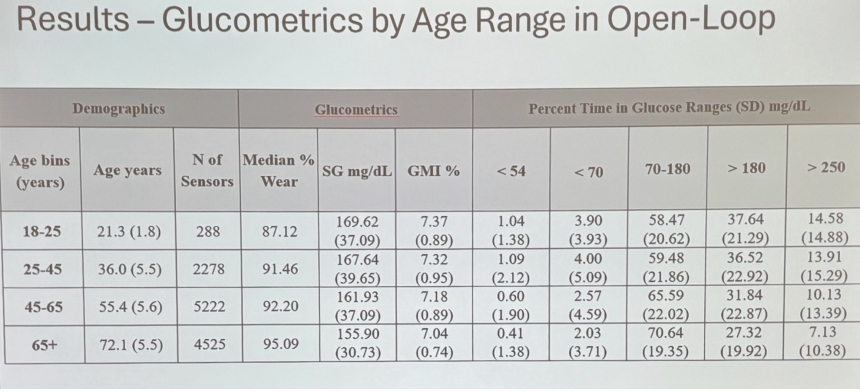
- Glycemic outcomes improved with age. For example, mean GMI decreased from 7.4% among users aged 18-25 years to 7.0% among those aged ≥65 years, while mean glucose fell from 169 mg/dL to 156 mg/dL, respectively. TIR increased from 58% in the youngest cohort to 71% in the oldest. Likewise, a substantially greater proportion of older adults met ADA-recommended hypoglycemia targets, with achievement of level 1 and level 2 hypoglycemia goals increasing by nearly 25 percentage points across age groups (88% versus 63% and 93% versus 68%, respectively).
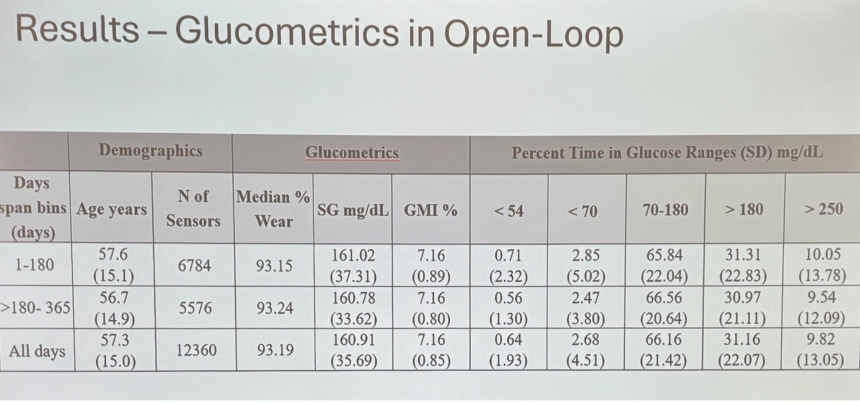
- Integration with Sequel’s twiist AID system led to improved glycemic outcomes and increasing sensor engagement. The closed-loop cohort was younger, with a mean age of 41 years, and most had T1D (65%; 10% had T2D). Prior to initiating twiist, participants had used Eversense 365 in open-loop mode for a mean of 108 days. During open-loop use, outcomes closely mirrored those seen in the larger real-world cohort, including a median sensor wear time of 95%. twiist use averaged 49 days, with a minimum of 30 days required for inclusion in the analysis. After initiating twiist, median sensor wear increased to 99%, suggesting even greater engagement with therapy. GMI improved from 7.1% to 6.8%, while mean glucose fell from 157 mg/dL to 145 mg/dL. TIR increased from 64% to 76%, driven by reductions in both hyperglycemia (41% to 26%) and hypoglycemia (5.9% to 2.7%).
14. FreeDM2 subgroup analysis shows consistent CGM benefit across demographic and clinical characteristics in T2D on basal insulin
Prof. Lalantha Leelarathna (Imperial College London, UK) presented a subgroup analysis from the FreeDM2 trial, which evaluated CGM in adults with T2D treated with basal insulin, many of whom were also using SGLT-2 inhibitors and/or incretin-based therapies. As previously reported at ATTD 2026 and published in The Lancet Diabetes & Endocrinology, FreeDM2 demonstrated significant A1c improvements with CGM compared to BGM at both 16 and 32 weeks. At 16 weeks, A1c declined from 8.8% to 8.0% in the CGM group versus 8.8% to 8.7% with BGM. By 32 weeks, A1c declined further to 7.8% with CGM versus 8.3%. TIR increased by ~10% (~2.5 hours/day) more with CGM than BGM; TIR improved from 40% to 54% with FreeStyle Libre 3 at 16 weeks versus an increase from 42% to 45% with BGM. This separation in TIR was maintained at 32 weeks (60% vs. 50%). This subanalysis examined whether treatment effects differed across demographic, socioeconomic, and clinical subgroups.
- Baseline characteristics. Participants had a mean age of about 60 years, baseline A1c of 8.8%, and TIR of 40%. Most (87%) were using an SGLT-2 inhibitor, approximately one-quarter were using an incretin therapy, and 19% were using both. About half were taking two non-insulin glucose-lowering medications at baseline, while about 45% were taking three or four.
- CGM benefits were consistent across most participant characteristics. The analysis compared treatment effects between the CGM and BGM groups by age (<60 vs. ≥60 years), BMI (<30 vs. ≥30 kg/m²), sex, and socioeconomic status as measured by the Index of Multiple Deprivation. CGM provided similar glycemic benefits across all subgroups, with no significant differences in treatment effect observed. Likewise, treatment effects were comparable when participants were stratified by baseline TIR (≤70% vs. >70%) or baseline A1c (≤8.0% vs. >8.0%).
- Participants with the highest baseline A1c and lowest baseline TIR experienced the greatest benefit. When the A1c threshold was increased to 9.0%, treatment effects differed significantly between groups. Participants with baseline A1c ≤9.0% experienced an adjusted mean A1c reduction of 0.4 percentage points with CGM relative to BGM, while those with baseline A1c >9.0% saw a substantially larger treatment difference of 1.1 percentage points. Similarly, lowering the baseline TIR threshold to 60% revealed significantly greater treatment effects among participants with lower starting TIR, suggesting that those with the greatest room for improvement derive the largest glycemic benefit from CGM.
15. twiist shares new real-world evidence (n=1,074), including with different system settings and in older adults
In a racecar-themed product theater that leaned into the “driving performance” metaphor, Sequel unveiled its largest real-world evidence dataset for twiist to date, building on previously presented data from ADA 2025 and ATTD 2026. Sequel Chief Medical Officer Dr. Joanna Mitri was joined by Dr. David Ahn (Hoag), Ms. Jessica Adkins (Everyday Diabetes Center), and Dr. Rosemarie Lajara (Southern Endocrinology Associates) to share new analyses examining twiist performance across different system settings and in older adults, while discussing the clinical implications of these findings.
- Dr. Ahn first presented results from the overall cohort (n=1,074; 1888-P). Users had a mean age of 41 years, and 58% were female. With twiist, users achieved a mean Time in Range (TIR; 70-180 mg/dL) of 74% and Time in Tight Range (TITR; 70-140 mg/dL) of 51%, improving overnight to 80% TIR and 58% TITR. More than two-thirds (68%) achieved the ADA-recommended TIR target of >70%, three-quarters met the Time below Range (TBR; <70 mg/dL) target of <4%, and nearly half (45%) achieved both targets simultaneously.
- Ms. Adkins next explored outcomes across different system settings, highlighting twiist’s flexibility and the tradeoff between tighter glycemic control and hypoglycemia risk (n=774; 1859-P). Users had a mean age of 41 years, and 56% were female. Participants were grouped according to correction target (CT) and maximum basal rate (MBR): (i) CT 100-140 mg/dL and MBR ≥6.5; (ii) CT 100-140 mg/dL and MBR <6.5; (iii) CT <100 mg/dL and MBR ≥6.5; and (iv) CT <100 mg/dL and MBR <6.5. For context, a CT <100 mg/dL and MBR ≥6.5 represent the cohort with the most aggressive settings. These settings produced the strongest glycemic outcomes, with TIR of 81.1% and TITR of 66.1%, but also the highest TBR at 7.8%.
- Reflecting on these findings, the panel revisited yesterday’s debate around the clinical significance of level 1 hypoglycemia (55-70 mg/dL). Dr. Lajara described the most aggressive settings as “an inflection point,” where further gains in glycemic control may come at the expense of increased hypoglycemia. In clinical practice, the panelists agreed they generally start patients more conservatively and adjust settings over time. Both Dr. Ahn and Ms. Adkins noted that they typically initiate twiist with a correction target of 100-110 mg/dL and an MBR of about 5. Dr. Mitri added that this approach aligns closely with Sequel’s recommended starting settings of 100-110 mg/dL correction target. Panelists also said that they view the maximum glucose safety limit as a “safety net,” occasionally increasing that setting as they increase maximum basal rate.
| Glucose Range | CR <100 MBR <6.5 (n=61) | CT <100 MBR ≥6.5 (n=14) | CT 100-140 mg/dL MBR <6.5 (n=610) | CT 100-140 mg/dL MBR ≥6.5 (n=89) |
| >250 mg/dL | 2.4% | 2.2% | 6.8% | 5.3% |
| >180 – 250 mg/dL | 9.6% | 8.9% | 18.6% | 15.5% |
| TIR 70-180 mg/dL | 82.8% | 81.1% | 72.1% | 76.5% |
| 54 - <70 mg/dL | 4.7% | 6.9% | 2.2% | 2.4% |
| <54 mg/dL | 0.6% | 0.9% | 0.4% | 0.4% |
| TITR 70 – 140 mg/dL | 65.0% | 66.1% | 48.3% | 53.9% |
- Finally, Dr. Lajara presented real-world outcomes in older adults aged >65 years (n=57; 1858-P). Users had a mean age of 71 years, 58% were female, and a median of 38 days of twiist use. This cohort achieved an impressive 80.4% TIR and 57.9% TITR, increasing overnight to 88.2% TIR and 70.0% TITR. These results substantially exceeded current glycemic targets for older adults (50%-70% TIR). Importantly, TBR remained below consensus guideline thresholds, suggesting that twiist may enable tighter glucose management in this population without increasing hypoglycemia risk. Furthermore, three-quarters of users had a GMI <7.0% at the time of analysis, while the remaining participants fell between 7.0% and 8.0%.
16. AI and diabetes technology: Symposium analyzes utility of AI models for AID, decision support, and nutrition tracking
Day #2’s morning symposia included a deep dive into the potential of AI integration in diabetes care to improve glycemic outcomes. Dr. Boris Kovatchev (UVA) first discussed the integration of AI into fully closed-loop (FCL) algorithms, arguing that existing AID models (ex. model predictive control algorithms) are becoming obsolete due to: (i) the enhanced predictive capabilities of AI; and (ii) the extensive real-world AID data generated so far, which can train new algorithms. Dr. Revital Nimri (Schneider Children’s Medical Center, Israel) then evaluated whether AI-based clinical decision support tools could replace physicians within diabetes care. Dr. Yao Qin (UCSB) closed the session by describing her research to use AI models to automate carbohydrate estimation.
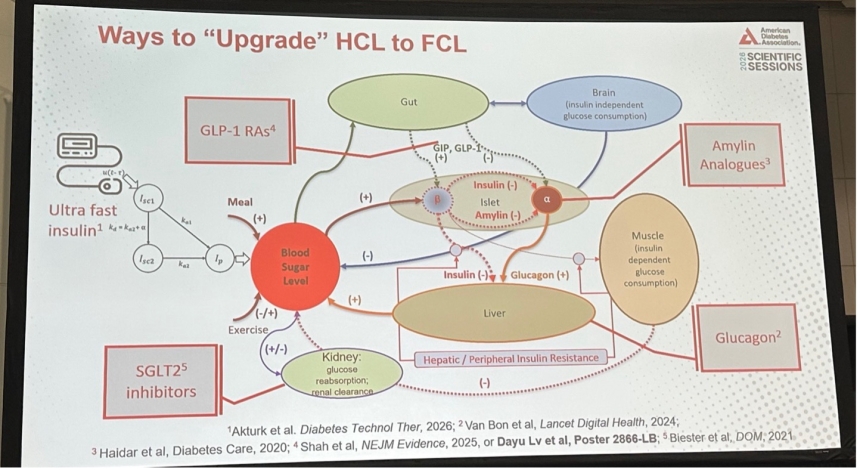
- Fully closed-loop AID algorithms. Dr. Kovatchev acknowledged that FCL algorithms have historically underperformed hybrid closed-loop (HCL) algorithms in mitigating postprandial glucose spikes due to the benefits of preemptive meal bolusing. To address this limitation and better implement FCL use, Dr. Kovatchev said the metabolic system could be “softened” with interventions in different pathways, leveraging therapies like GLP-1 RAs and SGLT-2 inhibitors (see below). Furthermore, he said hardware capabilities could be maximized through multi-hormonal approaches (i.e., glucagon) or using ultra-rapid insulin.
- With about 1.4 million people on AID (providing CGM and insulin delivery data every five minutes) and rapid progress in AI/machine learning (ML) capabilities, Dr. Kovatchev said data-driven automated diabetes management should be a priority. Insulin dosing rules (i.e., AID algorithms) combined with a saturated dataset encompassing all possible actions in a system can be encoded into a neural network. He surveyed clinical results of the neural-net FCL algorithms NAP and AIDANET, which showed comparable (and in some cases improved) performance to HCL algorithms. The addition of AI-based bolus priming to AIDANET (presented at ATTD 2026) further improved Time in Range and Time in Tight Range compared to AIDANET alone. Dr. Kovatchev said these results indicate AI can adequately predict, interpret, and manage human behavior, which could mitigate the main barrier to fully automating AID.
- Clinical decision support. Dr. Nimri adamantly said AI will not replace diabetes care teams. She cited data associating higher physician empathy with better cardiometabolic outcomes, emphasizing that the physician relationship still greatly shapes adherence, behavior, and health outcomes. She also acknowledged that AI remains limited to the data upon which it is trained and cannot identify subtleties in interpersonal interactions that could influence decision making, necessitating clinical oversight. Dr. Nimri suggested that retrieval-augmented generation (RAG) models could help mitigate this bias as it permits AI to integrate external data (i.e., EMR, clinical guidelines, etc.) in addition to its training data.
- However, she suggested that physicians who use AI may replace those who do not as AI could enhance decision making. She surveyed several studies suggesting some AI-based decision support tools show strong agreement with physicians’ recommendations. In particular, she said AI tools are already useful for diabetes detection and risk stratification, CGM interpretation and prediction, and care delivery. Thus, she argued that physicians who leverage these tools could improve their clinical decision making and better personalize treatment.
- Nutrition estimation. Dr. Qin presented UCSB NutriBench, an AI-based nutrition platform developed in her lab to visualize the impact of food on glycemic health. The platform includes an LLM-based automatic carbohydrate estimator where users can insert a text-based food description and receive an estimation within seconds. The tool, which supports over 10 languages, can also be accessed by texting a phone number – which our team tried following the presentation and enjoyed a rapid response assessing the estimated carb in our conference hall lunch. Validation studies indicated the predictive model performed similarly to dietitians permitted to access nutritional content and better than those who could not look up nutritional information to make carbohydrate estimates. Dr. Qin said ongoing work is seeking to fine tune this model to provide a confidence score alongside the carbohydrate estimate. In situations where there’s high uncertainty, the model will decline to provide an estimate, and potentially prompt the user to input more detailed meal information.
17. Dexcom’s product theater promotes T2D staging, Stelo‑driven behavior change, and Smart Basal-guided basal insulin initiation
In Dexcom’s afternoon product theater, Dr. Viral Shah (Indiana University) said that the field must rethink T2D management by abandoning the long‑standing habit of treating T1D and T2D as fundamentally different diseases.He pointed to ADA 2026 Standards of Care language recommending the use of CGM “at diabetes onset and anytime thereafter” for anyone on insulin, then contrasted that standard with real‑world adoption rates. Roughly 55-60% of people with T1D use CGM, compared with only about 22% of those with T2D. Dr. Shah said that this gap reflects perceived need rather than biology, noting that aside from the differences in autoimmunity and the length of the preclinical phase, the lived metabolic consequences and treatment goals overlap far more than current practice reflects. He urged the audience to adopt a staging model for T2D, mirroring those for oncology, CKD, and T1D, so that dysglycemia is recognized and treated earlier. He closed by reminding attendees that it historically takes 17 years for evidence to change practice, underscoring the urgency of accelerating CGM adoption.
- Dr. Helen Baron (Eisenhower Medical Center) extended the conversation into prevention and metabolic visibility, describing Stelo as a tool that “makes the invisible visible” by revealing the biochemical patterns driving inflammation and metabolic decline. She highlighted the scale of missed opportunity in prediabetes, with one in three US adults affected and most unaware. She argued that early, personal insight is more powerful than generic lifestyle advice. Through a case study of Emily, a 52‑year‑old with stage 2 T2D, Dr. Baron illustrated how real‑time glucose feedback can reshape behavior. Without any medication changes, Emily improved her TIR from 65% to 90% with CGM use. Dr. Baron framed Stelo as a continuous guide that supports curiosity‑driven learning, reinforces accountability, and strengthens clinician-patient conversations.
- Dr. Diana Isaacs (Cleveland Clinic) closed the session by addressing therapeutic inertia in basal insulin initiation. She reviewed data showing that nearly 60% of people with T2D do not take basal insulin as prescribed, 73% fail to reach A1c targets after one year, and delays in intensification significantly increase the risks of heart failure, myocardial infarction, stroke, and retinopathy. Dr. Isaacs highlighted Dexcom’s Smart Basal program, a CGM‑guided titration system that uses the Dexcom G7 15 Day to log insulin doses and leverages an HCP-created treatment plan to generate personal basal insulin recommendations. By standardizing titration and reducing fear of hypoglycemia, Smart Basal aims to give clinicians confidence to start insulin earlier and adjust it more effectively. Case examples demonstrated clear, stepwise dose progression. Dr. Isaacs provided an example of a new basal start that moved from 10 units to a stable 29-unit dose over 45 days, illustrating how CGM‑guided titration can streamline decision‑making and reduce the inertia that often delays insulin optimization in T2D.
18. CIRCUIT RCT sub-analysis demonstrates glycemic benefits of Control-IQ+ during pregnancy
During Tandem’s morning product theater, University of Toronto’s Dr. Denice Feig and Dr. Ilana Halperin discussed how to leverage Control-IQ+ technology for glycemic management in pregnant women with T1D. As background, Control-IQ+ is the first and only AID system indicated for use in T1D pregnancy in the US. Dr. Feig argued that CGM was not enough for pregnant women with T1D, citing a CONCEPTT RCT sub-analysis. The study found that only 44% of CONCEPTTparticipants using CGM reached Time in Range (TIR) ≥70%. Pregnant women face unique challenges, such as: (i) a tighter targets of Time in Pregnancy Range (TIPR) between 63-140 mg/dL; (ii) increased risk of hypoglycemia in early pregnancy; (iii) increased risk of hyperglycemia later in pregnancy due to rising insulin resistance and shifting hormones; and (iv) increased risk of hypoglycemia immediately post-delivery, due to an immediate drop in insulin resistance.
- CIRCUIT RCT reported substantial glycemic benefit of closed-loop insulin delivery, with a sub-analysis supporting usage throughout pregnancy, labor, and the early postpartum period. Last October, CIRCUIT RCTfound that t:slim X2 with Control-IQ raised mean TIPR by 15 percentage points (65% vs. 50%) in pregnant women with T1D across 14 clinical sites in Canada and Australia (n=88). This translates to spending an additional three hours per day in pregnancy range when using Control-IQ (n=44) compared to those randomized to CGM alone (n=44). Additionally, a sub-analysis released last week found that these benefits were sustained during labor and postpartum. TIPR was consistently higher for the closed loop cohort (n=39) compared to the control cohort (n=42) during: (i) 24 hours before birth; (ii) first postpartum week; and (iii) delivery to six weeks postpartum.

- Dr. Halperin offered practical guidance for pregnancy management using Control-IQ+, drawing on patient case studies. In the wake of Control-IQ+’s CE-Mark approval, these suggestions offer valuable insight for how HCPs can design treatment plans for their patients.
- “Annie,” a patient who came to Dr. Halperin 12 weeks into her pregnancy, presented with a 44% variability in glucose readings due to overcorrecting on basal bolus injection therapy. As a result, Dr. Halperin collaborated with a registered dietician (RD), who could simplify Annie’s transition into an AID system. While the RD recommended lowering GI and having smaller, more frequent carbohydrate loads, Dr. Halperin tweaked Annie’s settings by: (i) turning on sleep activity 24/7; (ii) updating basal rate to 0.85 units/day; and (iii) strengthening the insulin sensitivity factor (ISF) to 25 mg/dL. Additionally, she discussed learning to trust the system to avoid extra boluses and reviewed hypoglycemia management with AID. This resulted in Annie reaching her goal of 70% TIR four weeks later, up from 60% TIR.
- Another patient named Shanti came to Dr. Halperin mid-pregnancy, already on Control-IQ+. However, her settings were not optimized by previous HCPs who were used to open-loop systems, leading to an extreme burden in managing her glycemia. After strengthening the ISF, Shanti’s TIR went from 60% at 28 weeks to 78% at 32 weeks.
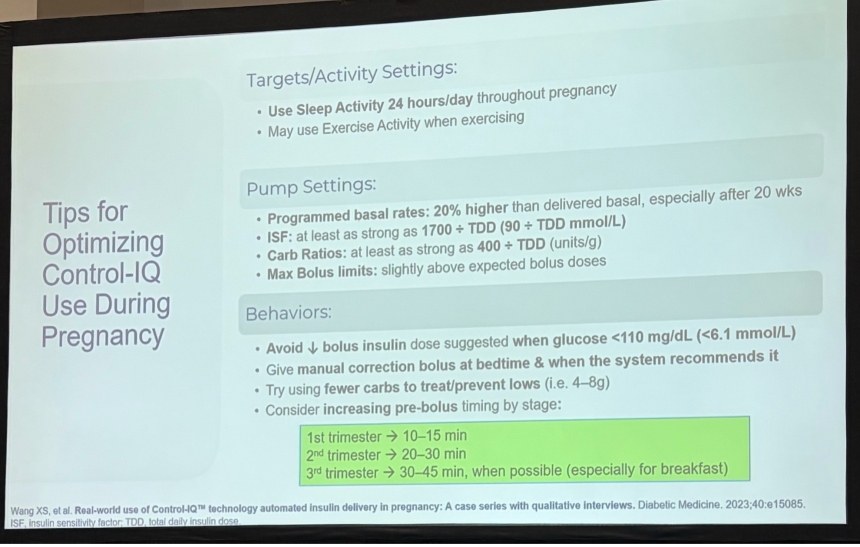
- Labor and delivery (L&D) recommendations for Control-IQ+ involve programming a postpartum profile and personalizing activity settings. If settings from 32 weeks are already present on the device, a 50% reduction from those settings is recommended for a postpartum profile. If comparing to pre-pregnancy settings, a suggested postpartum profile involves: (i) 2/3 basal rates; (ii) 20% weaker ISF; and (iii) 10-20% weaker insulin-to-carbohydrate ratio (I:C). This profile should be switched just before caesarean birth or at the start of pushing. For activity settings, it is recommended to continue Sleep Activity. For patients who are either breastfeeding or experience frequent hypoglycemia, they can consider no Activity and/or Exercise Activity.
19. “Diabetes shouldn’t be a full-time job”: MiniMed product theater on the value of automation
As part of MiniMed’s first ADA as an independent company, CEO Ms. Que Dallara welcomed attendees to the product theater. She said that “diabetes shouldn't be a full-time job,” positioning the company's portfolio as a response to the cognitive, emotional, and logistical demands associated with intensive insulin management. Ms. Dallara reiterated that current diabetes care places excessive responsibility on people with diabetes, caregivers, and healthcare providers. She shared data showing that despite substantial effort from patients and clinicians, approximately three-quarters of individuals still fail to achieve recommended glycemic targets, suggesting that the challenge is not patient engagement but rather the complexity of diabetes management itself.
- EVP and Chief Product and Technology Officer Mr. Ali Dianaty overviewed the MiniMed portfolio. Among the portfolio is MiniMed Go, a smart MDI platform that Mr. Dianaty described through the framework of “remembering, reminding, and recommending.” The platform was designed with the goal of shifting routine diabetes tasks from the user to the system with automated dose tracking, corrective alerts, and insulin recommendations intended to reduce what presenters characterized as the roughly 100 diabetes-related decisions patients face each day. MiniMed extended this simplification strategy beyond AID to include MDI as well.
- Both Ms. Dallara and Mr. Dianaty elaborated on the interconnected relationship between user experience and clinical outcomes. They both posited that systems that patients enjoy using are more likely to produce sustained engagement and, consequently, better outcomes (in this case, higher TIR). On MiniMed 780G and MiniMed Flex, Ms. Dallara highlighted satisfaction surveys, extensive real-world utilization data from the approximately 659,000 global pump users, and more than 280 publications evaluating its algorithms to celebrate the success of the AID portfolio. Data presented by Mr. Dianaty suggested that individuals using MiniMed Go who responded most consistently (>75%) to missed-dose and high-glucose alerts achieved TIR levels exceeding ADA-recommended thresholds (>70%), reinforcing the company's argument that well-designed behavioral prompts can meaningfully improve outcomes even for people using MDI.
- The product theater concluded with a discussion between CMO Dr. Bob Vigersky, Prof. Johan Jendle (Orebro University, Sweden), and Dr. Anuj Bhargava (Iowa Diabetes) on practical implementation and real-world user adoption of the MiniMed system. Panelists highlighted the potential value of simplifying therapy initiation, reducing missed boluses, and providing clinicians with clearer visibility into patient behaviors through connected data platforms. Using different case examples and specific patient profiles, each of the speakers said that the technologies in MiniMed’s portfolio could address longstanding challenges by making diabetes management more intuitive and actionable for patients. Across both executive presentations and panel discussions, the dominant message was consistent: the future of diabetes technology lies not simply in delivering insulin more effectively, but in reducing the amount of work required to live well with diabetes.
20. Target trial emulation of VA database associates CGM initiation with 37% lower risk of end-stage renal disease over four years in veterans with T1D
Ms. Sharon Macwan (Phoenix VA Health Care System) presented a target trial emulation study assessing the impact of CGM initiation on the risk of end-stage renal disease (ESRD) among veterans with T1D (2257-P). The simulated study included CGM-naïve individuals aged 31-84 years old with VA medical records from 2017-2020 with their second endocrinology visit serving as the index date (n=8,226). The study population was “cloned,” and the clones were separated into two arms: (i) CGM initiation within six months; and (ii) no CGM initiation. The primary outcome was incidence of ESRD (i.e., stage 5 CKD or eGFR <15 mL/min/1.73 m2), with ≥30% eGFR decline from baseline as a secondary outcome.
- CGM initiation was associated with a 25% reduced risk of ESRD after one year compared to no initiation (RR=0.75; CI: 0.47-0.96). At two years, CGM initiation was associated with an even greater 39% risk reduction (RR=0.61; CI: 0.46-0.92), which was maintained at three and four years (RR=0.63; CI: 0.46-0.94). This effect persisted even after adjusting for age (RR=0.60; CI: 0.41-0.93) and shortening the CGM initiation grace period from six months to three months (RR=0.75; CI: 0.43-0.99). The effect was also similar regardless of A1c or age.
- For the secondary outcome, CGM initiation was associated with a modest risk reduction for ≥30% eGFR decline. CGM initiation within six months was associated with a 14% risk reduction, narrowly reaching statistical significance (RR=0.86; CI: 0.84-0.99). Initiation with three months was associated with a 17% risk reduction, although this narrowly missed statistical significance (RR=0.83; CI: 0.79-1.00). Ms. Macwan said these results suggest expanded use cases for CGM beyond glycemic management, such as slowing CKD progression.
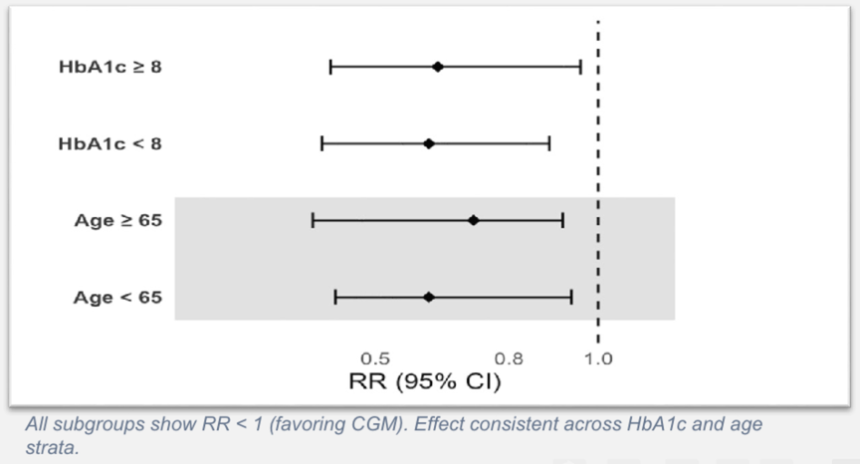
Big Picture
21. Panel discussion among people living with chronic diseases, along with special lectures from the Distinguished International Service Award recipient and the ADA President of Healthcare and Education
This morning kicked off with a panel discussion among people living with chronic diseases and addresses by Prof. Chantal Mathieu (KU Leuven, Belgium), this year’s recipient of the Distinguished International Service in the Cause of Diabetes Award, and Ms. Amy Hess-Fischl (ADA President of Healthcare and Education). While the ADA CEO, Mr. Charles Henderson, was supposed to deliver a special address during this session, yesterday’s series of controversies likely prompted the last-minute scheduling change. For those who missed it, the opening remarks on Day #1 included a fireside chat during which ADA CSO and CMO Dr. Rita Kalyani led a discussion with NIH Senior Advisor Dr. Rick Woychi, posing critical questions related to political outlooks on grant funding and ongoing challenges with NIH budget cuts. We were encouraged to hear from patient advocates Mr. Kyle Banks (person living with T1D), Dr. Luis Chastain (person living with T2D), and Ms. Betsy Rodriguez (person living with obesity) on the importance of education through initiatives such as the ADA Education Recognition Program and personalized interventions.
- Prof. Mathieu presented the Distinguished International Service in the Cause of Diabetes Award lecture. Expressing her gratitude for receiving the award, Prof. Mathieu said she thought of the theme “Unity Makes Strength,” which represents her country’s slogan and the common denominator of her work across patient care, basic/clinical research, education, and policy. Continuing her longstanding career in the field, her goals have focused on: (i) improving clinical care for people with diabetes; and (ii) helping prevent/cure T1D. At the heart of these efforts, she said, it’s important to personify the lived experiences of people living with diabetes, especially given the significant burden this disease imposes on daily life.
- Importance of an integrated network. Prof. Mathieu elaborated on the Belgian integrated care model, which refers patients to diabetes centers and the national care program that supports healthcare finances and connects insurance plans. The standardized approach to delivering specialized care for people with T1D enables them to adhere to the system and meet their needs, which, in turn, improves data registration and supports quality improvement initiatives.
- Collaboration in the EU. To build a strong network across the EU, Prof. Mathieu has focused on integrating basic, clinical, and industry leaders to identify better biomarkers, understand diabetes, and design clinical trials. Prioritizing this goal, INNODIA has enabled analyses of people newly diagnosed with T1D through sample donations, thereby improving the discovery of biomarkers and their further application in research. The standardized method of sample collections has demonstrated the efficacy of multi-omics integration, mRNA signature prediction of C-peptide loss, and genetic pathways. One of the key elements of INNODIA is its integration of a patient advisory committee (PAC), which centered patient experiences across all parts of the project to improve clinical trials in recruitment, communication, and education. INNODIA continues to accelerate the development of potential cures for people with T1D through its expansive network of samples, which Prof. Mathieu highly encouraged the audience to take advantage of through innodia.org.
- Worldwide partnerships. Prof. Mathieu concluded her address by encouraging the field to establish relationships across multiple diabetes organizations. As the former president of EASD, she’s been encouraged to see ongoing collaboration with the ADA and the formation of a joint consensus. Prof. Mathieu shared that in the EU, the European Diabetes Forum brings together societies with industry leaders to knock on the door of politicians. She said, “When you go together, with a harmony of voices, they will listen to you.” Therefore, she emphasized the importance of unity as the basis for research, policy, and clinical care.
- Ms. Hess-Fischl delivers the President of Healthcare and Education Address. In the 2026 ADA Standards of Care, Diabetes Self-Management Education and Support (DSMES) remains the foundation of care for people with diabetes. However, the program is underutilized among people with newly diagnosed diabetes – a 2025 survey found that 54.6% of participants had never been referred for DSMES, and 45.4% of participants had never been referred to work with a dietitian. Ms. Hess-Fischl argued that these results underscore the need to promote DSMES and that educational efforts to promote healthy eating and physical activity are necessary.
- Current barriers to more widespread DSMES utilization are low awareness of these programs and accessibility. To improve the future of DSMES, Ms. Hess-Fischl encouraged the ADA community to take action by: (i) increasing awareness of critical times of DSMES to both providers and patients; (ii) advocating to legislators to change how referrals to DSMES work; (iii) collaborating with local diabetes prevention programs and community health workers; and (iv) embracing new ways to deliver diabetes care to patients.
- Current efforts promote DMSES through several resources. Ms. Hess-Fischl introduced one of the latest resources: a one-page flyer that focuses on the four critical times of DMSES. She also emphasized becoming more involved with national programs such as the National Diabetes Prevention Program (DPP) and its partners. She specifically highlighted the importance of learning how to identify quality programs, building trust between these programs and DSMES, and then using these connections to implement referrals. Lastly, Ms. Hess-Fischl encouraged community health workers to become more involved in diabetes care and education by using ADA resources, engaging with their local community health programs, and embracing new alternatives to in-person care.
22. ADA/EASD 2026 consensus report on hyperglycemia in T2D: Updates focus on preventing complications and developing healthy behaviors
In an afternoon symposium, Prof. Melanie Davies (University of Leicester, UK), Dr. Vanita Aroda (Brigham and Women's Hospital), Dr. Jennifer Green (Duke University), and Prof. Chantal Mathieu (UZ Leuven, Belgium) gave an overview of the latest draft of the 2026 ADA/EASD Consensus Report on the Management of T2D. Scheduled speaker and consensus report co-chair Dr. John Buse (UNC School of Medicine) was not present, and his talk was delivered by co-chair Prof. Davies. She said that Dr. Buse presented on her behalf in the past so she could fulfill her responsibilities to her family, and now she is presenting for him “so he can fulfill his responsibilities to his diabetes family.”
This report follows the 2022 edition and will be presented in its final form at EASD 2026 in Milan. Presentation slides are available online, and public comments are being accepted here until June 16, 2026.
- Changes in diabetes care guidance since the first report in 2006. Dr. Aroda highlighted how focuses shifted with each edition of the report:
- 2006: Focus on glycemic management through lifestyle modifications and metformin.
- 2009: Emergence of “less-validated therapies” such as pioglitazone.
- 2012: Creation of medication menus and profiles and personalization of treatment goals based on patient characteristics.
- 2018: Differentiation of treatment approaches given findings from cardiovascular outcomes trials.
- 2022: Introduction of a holistic treatment approach with person-centered goals.
- 2026: Continuation of a holistic approach with an added life course and longitudinal view and an emphasis on foundation, integrated lifestyle and healthy behaviors; prevention of complications and long-term conditions is also a key focus.
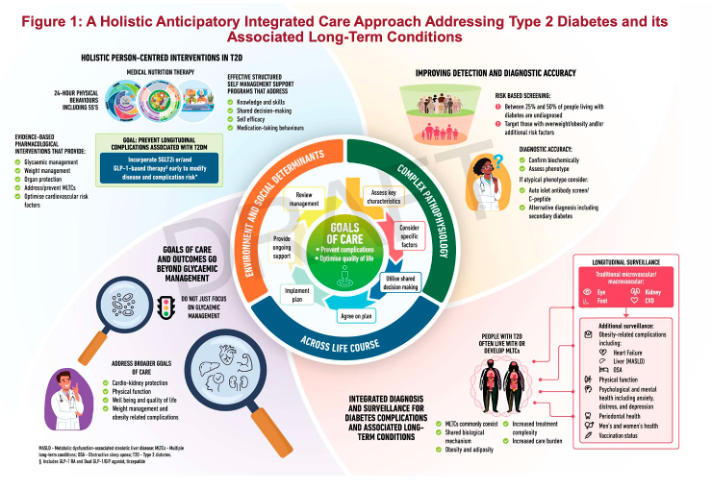
- On earlier pharmacological intervention. A key point from the report is its recommendation for the earlier use of SGLT-2 inhibitors or/and GLP-1 RA-based therapies in people with T2D for organ protection and long-term outcome improvement. Of note, Prof. Mathieu pointed out that the consensus report committee spent four hours discussing whether to use and or or, and ultimately decided on or/and, intentionally putting the or first. In people with T2D and concomitant CVD, CKD, and HF, earlier combination use of both therapy classes is recommended. Interestingly, a knowledge gap that remains, as pointed out by Prof. Davies, is that there is still a lack of compelling evidence for whether GLP-1 RAs and SGLT-2 inhibitors should be routinely combined, as well as if there is an optimal sequence when initiating treatment.
- New dietary pattern summary figure and updated 24-hour physical behavior figure. The report will have a new figure (see draft below), showing a wheel of diets, all of which have bodies of evidence. The wheel is accompanied by a table highlighting the benefits and challenges of each. Following its introduction in the 2022 edition, the physical behavior figure will be updated to emphasize the importance of the 5S’s: standing, stepping, sweating, strengthening, and sleeping.
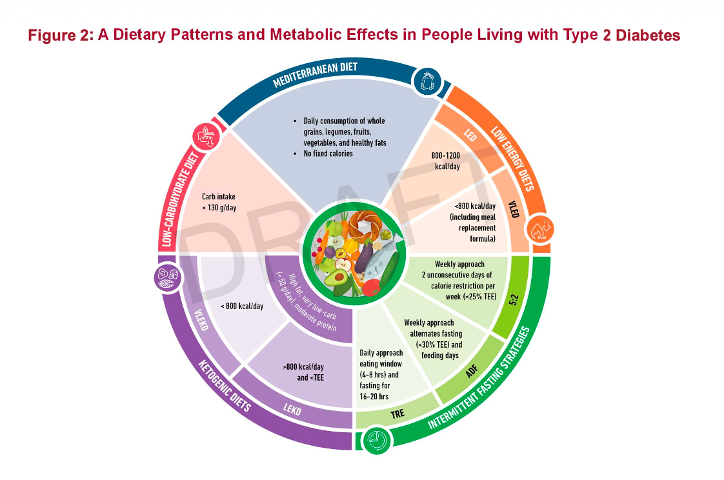
- On MASLD and MASH, weight reduction remains the primary therapeutic target. Pharmacologically, the report now recommends GLP-1 RAs for people with obesity, T2D, and MASLD. For individuals with steatosis or MASH, GLP-1 RAs are preferred; pioglitazone or tirzepatide can also be used. For patients with F2 or F3 fibrosis, the report recommends that providers refer them to a hepatologist to consider the use of a thyroid hormone receptor β agonist, such as resmetirom.
- On technology, Prof. Mathieu said one of the biggest updates to this edition is that CGM should be considered for people with T2D, particularly for those using insulin.
23. Diabetic neuropathy pain management: Therapies, exercise, and spinal cord stimulation
Drs. Melissa Elafros (University of Michigan), Rodica Pop-Busui (Oregon Health & Science University), and J. Robinson Singleton (University of Utah) gave an overview of diabetic neuropathy diagnosis and treatment options. As background, there are multiple ways neuropathy is diagnosed. Beyond asking patients about pain intensity using the Visual Analogue Scale, there are questionnaires and/or physical examinations such as the Neuropathy Total Symptom Score-6 (six ordinal questions), Michigan Neuropathy Screening Instrument (15 yes/no questions), Diabetic Neuropathy Symptom Score (four yes/no questions), Erasmus Polyneuropathy Symptom Score (six ordinal questions), Deuleur Neuropathique en 4 (two questions and two examination), Leeds Assessment of Neuropathy Symptoms and Signs Pain Scale (five questions and two examinations), and Utah Early Neuropathy Scale (five examinations).
The barriers to diagnosing patients through physical examination, Dr. Elafros outlined, include lack of time and appropriate clinical diagnosis tools (e.g., 128-Hz tuning fork), easier alternatives (e.g., referring to a specialist or ordering a diagnostic test), and lack of confidence.
Dr. Elafros highlighted that while estimates of diabetic peripheral neuropathy vary widely (6-51% of people with diabetes), studies suggest that nearly 50% of patients experience pain, underscoring the need for effective treatments. See our painful diabetic peripheral neuropathy competitive landscape here.
- Dr. Pop-Busui gave an overview of pharmacological strategies for managing neuropathic pain. First-line therapies include SNRIs, namely duloxetine and venlafaxine ER. Importantly, these are “metabolically safe” for people with diabetes as they do not affect glucose dynamics and weight. Gabapentinoids such as pregabalin and gabapentin and tricyclic antidepressants are also recommended as first-line options across multiple guidelines. There are also topical therapy options such as the capsaicin 8% and lidocaine 5% patches that may be considered if first-line options are insufficient or contraindicated. Dr. Pop-Busui said that a gap that remains is the variability in treatment response, with some patients continuing to experience pain. Some therapies also have practical barriers to use; for example, the capsaicin 8% patch needs to be applied in medical offices, making it a time-consuming process.
- Dr. Singleton discussed the importance of exercise in managing diabetic neuropathy and reviewed spinal cord stimulation as a treatment option. He said that while exercise does not significantly improve metabolic factors in patients, it is an effective behavioral intervention that can reduce inflammatory injury and pain. He recommended implementing exercise early and choosing low impact, short-interval exercises. He also highlighted the importance of setting an adherence goal, establishing a clear plan (and backup plan), and making exercise fun (e.g., peer reinforcement).
- Spinal cord stimulation (SCS) has been shown to be effective, as in the SENZA-PDN study, though patients may find the surgical nature of the procedure a limiting factor.
24. “Touch your patients!” Dr. Bellini presents strategies to address skin complications caused by diabetes technology
Dr. Natalie Bellini (Case Western Reserve University) offered practical tips for preventing and treating skin problems associated with diabetes technology to an engaged afternoon audience. Drawing from her own study, Dr. Bellini highlighted that skin reactions to diabetes devices occur in approximately 28-29% of users, and those with a history of atopic disease are 3.7 times more likely to experience dermatological complications compared to those without. In her presentation, Dr. Bellini focused on: (i) irritant contact dermatitis (ICD), an innate immunological reaction caused by chemical irritants, physical irritation from repetitive adhesive removal, or moisture accumulation under the device; (ii) allergic contact dermatitis (ACD), a type IV hypersensitivity reaction that requires a sensitization phase, typically appearing 12 to 72 hours after allergen contact; (iii) lipohypertrophy, a dermatological complication of insulin pump and injection therapy; and (iv) lipoatrophy, an immune mediated response that occurs more rarely than lipohypertrophy.
- Irritation and allergy are not the same. ICD typically appears sooner, causing redness, itching, burning, and rashes. Dr. Bellini emphasized the importance of not putting too much tape on the device, as moisture can get underneath and cause further complications. In contrast, ACD will appear as a pressure at the site of adhesion and spread outward, with increased allergic response time even when the device is placed elsewhere on the body. Among patients referred to dermatology, up to 60-76% are ultimately diagnosed with ACD rather than ICD. Acute treatment for ACD would involve device removal, while severe reactions are treated with topical corticosteroids.
- There are several ways to prevent ICD and ACD. Placing the thinnest available hydrocolloid dressing between the skin and the device is the best and most consistent prevention strategy. It is important to educate patients to only apply the thinnest dressing, as thicker dressings can cause unwanted occlusion. Other helpful strategies include implementing a basic skin care program and using gentle removal techniques.
- Lipohypertrophy prevalence increases from 49% to 75% when clinicians palpate their patients versus just doing a visual inspection. Dr. Bellini stressed the critical nature of preventing lipohypertrophy, highlighting findings from a systematic meta-analysis of 37 studies which found that patients with lipohypertrophy compared to those without had markedly higher odds of unexplained hypoglycemia (OR = 6.98), overall hypoglycemia (OR = 6.65), glycemic variability (OR = 5.24), and A1c (+0.55 percentage points).
- Briefly addressing lipoatrophy, Dr. Bellini said that moving the site altogether, changing to a non-zinc preservative insulin (glulisine), and changing the infusion set every 48 hours can help with partial resolution.
Dr. Bellini also shared several tips for general skin problem prevention strategies, including using all available sites (e.g., upper arms, buttocks, and thighs), avoiding bony and high-friction areas, truly rotating rather than alternating sites (i.e., use every inch of space on the right arm before switching to the left), and most importantly, cleaning skin with non-moisturizing, oil-free soap and water. For those with sensitive skin struggling with adhesion, Dr. Bellini recommended a Cavilon or Skin-tac barrier.
25. Dr. Korey Hood receives the Richard R. Rubin Award and offers considerations for the future of behavioral scientists
Dr. Korey Hood (Stanford University) delivered the Richard R. Rubin Award Lecture, as he was recognized for his outstanding contributions to the understanding the behavioral aspects of diabetes. Dr. Hood explained that the core values of a behavioral scientist must center on viewing the patient as the heart of healthcare. Looking ahead, he believes the future of behavioral science falls into three themes: (i) to make sense of human-data interactions; (ii) to promote precision behavioral science; and (iii) to be the voice of compassion.
- Make sense of human-data interactions. Dr. Hood explained that in the current state of affairs, large language models (LLMs) and artificial intelligence (AI) are increasingly being used to synthesize large amounts of data inputs. However, at this nascent stage, an operator is still essential for appropriate diabetes management. Dr. Hood suggested that behavioral scientists must help people with diabetes by serving as co-pilots, implementing stories and lived experiences within AI training to develop more holistic systems.
- Promote precision behavioral science. Dr. Hood highlighted that even as opportunities for earlier detection of diabetes expand, it remains critical to remember that, regardless of diagnosis, patients’ behaviors and emotions will inevitably follow. Dr. Hood illustrated this through the example of receiving an antibody-positive result, a moment often marked by anxiety and uncertainty. Importantly, emotions and thoughts drive actions, making it essential for behavioral scientists to be proactive in designing programs that anticipate behavioral responses and offer appropriate actions in response. For example, following a positive screen, the patient can be supported through increased patient support, psychoeducation, and connecting with the community. Put simply, Dr. Hood called on the audience to “be the glue that keeps people engaged,” and to help people with diabetes optimize management strategies and make sense of intermittent monitoring.
- Be the voice of compassion. While computers and AI can simulate empathic behavior and are great at using rational thinking, they are incapable of generating authentic compassion. For Dr. Hood, compassion is a critical part of the role of behavioral scientists. Emotional thinking is a driver of many decisions and often carries more weight than rational thinking, especially in times of crisis and/or transition – like a diagnosis. The role for behavioral scientists, then, is to help people navigate complex decision-making that requires a balance of both rational and emotional thinking.
-- by Jeremy Alkire, Kayla Cao, Andrew Goyette, Nour Khachemoune, Daniel Lee, Kayla Mathieu, Milenka Men, Caroline Metz, Esther Min, Kat Moon, Allie Platt, Elizabeth Rose, Ben Wyler, Nina Yao, Elaine Young, Monica Oxenreiter, and Kelly Close