DUK 2026 Day #3 Highlights –
Executive Highlights
- Diabetes UK 2026 came to a resounding close today after addressing a wide range of issues facing diabetes management in the country. We want to send our heartfelt gratitude to all of the organizers for putting together a compelling agenda and the clinicians and researchers that not only make such a meeting possible but continue to push the country forward and bring more people into the fold of equitable care. We are already looking forward to returning to Liverpool next year, April 20-22, for DUK 2027.
- In a crowded morning symposium, Prof. Sarah Finer (Queen Mary University of London, UK) delivered the RD Lawrence Lecture on the importance of diversity in diabetes research. She detailed her work to improve diversity in genomic research through Genes & Health, which studies genetic contributors to diabetes and other diseases using genomic, health record, and multi-omics data from British Pakistani and Bangladeshi participants, and Black Health Legacy, a community-based research program for Black African and Caribbean people that helped identify the limits of A1c as a measure of glycemic health.
- In complications, Prof. Teresa Niccoli (University College London, UK) and Prof. Bettina Platt (Chair in Translational Neuroscience, University of Aberdeen, UK) discussed the links between diabetes and dementia, with a focus on basic science and animal models. Prof. Stuart McPherson (The Newcastle upon Tyne Hospitals, UK) shared strategies to diagnose, risk-stratify, and treat metabolic liver diseases. He emphasized that people with advanced fibrosis, cirrhosis, or younger adults with moderate fibrosis are the key population for diagnosis, monitoring, and treatment – particularly Rezdiffra (resmetirom), semaglutide, and tirzepatide.
- A powerhouse session reviewed the inpatient use of diabetes technologies. Dr. Parizad Avari (Imperial College Healthcare NHS Trust, UK) first presented updated JBDS guidelines on inpatient diabetes technology use, which she expects will be published in the coming months. These include: (i) international consensus on hospital TIR; (ii) updates on HCL use in the hospital; (iii) use in perioperative care; (iv) using TIR as a surrogate for A1c pre-operatively; and (v) HCP competencies. Dr. Kalyaani Persad (Sandwell and West Birmingham Hospitals NHS Trust, UK) then presented a systematic review and meta-analysis demonstrating that HCL use in the hospital setting was associated with better glycemic management compared to standard care. Finally, Dr. Mayank Patel (University Hospital Southampton NHS Foundation Trust, UK) and Ms. Paula Johnston (University Hospital Southampton, UK) discussed how to prepare healthcare providers and nurses for the growing use of diabetes technology in hospitals.
- We also had the privilege of sitting down for conversation with the distinguished Prof. Roman Hovorka (University of Cambridge). A pioneer of AID and the architect behind the CamAPS FX algorithm, Prof. Hovorka discussed the evolution of CamDiab’s first-to-market fully closed-loop (FCL) system and its potential to reduce user burden and improve glycemic management among those with poor outcomes at baseline. He touched on the studies supporting its regulatory approval and ultimately made the case that a more autonomous system like FCL could help bring more patients, who are often struggling with self-management and could benefit the most from improved glycemia, into the AID ecosystem.
Table of Contents
-
Top Highlights
- 1. Prof. Hovorka discusses the CamAPS Liberty FCL algorithm and who it may best support
- 2. Prof. Sarah Finer delivers the RD Lawrence Lecture on diversity in diabetes research
- 3. FreeDM2: Lived experience and quality of life data
- 4. Diabetes and dementia: A complex, preventable, and still unsolved connection
- 5. Key updates from the upcoming JBDS guidelines on inpatient diabetes technology use
- 6. Meta-analysis shows AID to be safe and effective in the hospital setting
- 7. Inpatient diabetes technology: Ongoing practical issues and how to best support HCPs and diabetes nurses
- 8. Diagnosis, risk stratification, and treatment algorithm of metabolic liver diseases
- 9. Closing plenary: Diabetes leadership in a time of austerity and inequality
- 10. Foot at risk: Diabetes, amputations, and the forgotten inequality
- Exhibit Hall
Top Highlights
1. Prof. Hovorka discusses the CamAPS Liberty FCL algorithm and who it may best support
We had the privilege of sitting down with the distinguished Prof. Roman Hovorka (University of Cambridge, UK) at DUK this year. A pioneer of AID and the architect behind the CamAPS FX algorithm, Prof. Hovorka discussed the evolution of CamDiab’s first-to-market fully closed-loop (FCL) system and its potential to reduce user burden, improve glycemic management among those with poor outcomes at baseline, and expand overall access to AID.
- For context, the CamAPS FX and HX algorithms power the ‘mylife Loop’ AID system and is currently compatible with the mylife YpsoPump (as well as Dana-I and Dana RS pumps in select geographies), alongside FreeStyle Libre 3 and Dexcom G6 (with Dexcom G7 compatibility expected soon). The system now includes CamAPS Liberty, a fully closed-loop option for people with T1D. The feature received CE-Mark in January 2026 and began a staged rollout last month. In practice, Prof. Hovorka explained that users can “toggle on” FCL mode when desired, such as during periods of feeling overburdened or travel, while still retaining the option to bolus and use features like “Boost” and “Ease Off.” The hybrid closed-loop (HCL) and FCL algorithms continuously learn from one another, allowing FCL to leverage prior HCL data. There are currently ~86,000 CamAPS users globally to which the feature will eventually be rolled out.
- Prof. Hovorka said that much of the FCL algorithm’s foundation comes from his group’s work in T2D,where FCL control is now routinely used. The system does not explicitly detect meals as discrete events; instead, it identifies unexplained rises in glucose and monitors them to respond dynamically over time.
- Prof. Hovorka summarized the data supporting CamAPS Liberty’s regulatory approval, including two studies in adults and adolescents. In both trials, participants alternated between two months of FCL use — during which they were instructed to rely entirely on the system — and two months of conventional therapy (CGM plus insulin pump). Despite relatively poor baseline glycemic management, participants were engaged and accustomed to bolusing.
- He said that FCL use led to meaningful improvements in glycemia, though not yet to the target level of TIR >70%. In adults, TIR increased from a baseline of 36% to 50%, up slightly over 13 percentage points. Adolescents saw a similar relative improvement, with TIR rising from 32% to 45%, alongside a modest reduction in A1c (from 8.9% to 8.6%)[1]. While dedicated exercise data are limited, Prof. Hovorka noted that current guidance for HCL systems should also be applied to FCL use.
- Importantly, Prof. Hovorka noted that the subsequent qualitative interviews with adult and adolescent participants highlighted a central benefit: reduced cognitive and emotional burden. As FCL rolls out more broadly, a key question is how users will balance lower glycemic outcomes against meaningful improvements in quality of life. Prof. Hovorka suggested that FCL may be particularly valuable during periods when individuals want to step back from intensive self-management.
- Prof. Hovorka also pointed to the broader potential for expanding access to AID to more people with T1D.While guidelines increasingly recommend AID for all people with type 1, real-world adoption is often limited by clinician perceptions of who can “manage” the technology or accurately count carbohydrates. Prof. Hovorka suggested that a more autonomous system like FCL could help overcome these barriers and biases and bring more patients, who are often struggling with self-management and could benefit the most from improved glycemia, into the AID ecosystem.
Looking ahead, Prof. Hovorka expressed strong interest in analyzing real-world uptake and use patterns of CamAPS Liberty. As deployment continues, we are similarly interested in seeing both glycemic outcomes and the extent to which FCL can meaningfully broaden access while reducing the day-to-day burden of diabetes management.
2. Prof. Sarah Finer delivers the RD Lawrence Lecture on diversity in diabetes research
In a crowded morning symposium, Prof. Sarah Finer (Queen Mary University of London, UK) delivered the named RD Lawrence Lecture, sharing her personal and professional journey that revealed the importance of diversity in diabetes research. Growing up as an identical twin, Prof. Finer developed an early fascination with genetics. Her family history of refugees and strong women gave her the belief that one could be different and still succeed in life. Surrounded by family members who were doctors, she was exposed to medicine early and pursued medical school at the University College London.
- Prof. Finer developed an interest in diabetes when she traveled globally and saw the burden of diabetes in regions as far as Timbuktu, Mali. Training in East London as a junior doctor, she also learned about the disproportionate burden of T2D among British Bangladeshi and Pakistani populations. Indeed, one in 10 British Bangladeshi adults in their thirties and forties has diabetes, and nearly all of them develop diabetes at older ages. Prof. John Yudkin and Dr. Ranjan Yajnik famously showed that South Asians are likely to have high fat composition at the same BMI levels as their white counterparts. To better understand the factors causing diabetes, Prof. Finer then pursued a PhD exploring how famine in Bangladesh affected fetal programming and gestational diabetes. Following the PhD, she served as a clinical lecturer at the University of Cambridge, where she learned more about diabetes and the excellence of diabetes educators, dieticians, and nurses. Prof. Finer returned to where her heart lied – Newham in East London – a home to the most diverse, fast-growing, and highly immigrant populations in the UK.
- Prof. Finer worked to improve diversity in genomic research through large Genes & Health and Black Health Legacy programs. She explained that in the early 2010s, there was a large genomic movement to identify genes associated with various diseases. Early studies, however, were mostly composed of white Caucasians and were limited in their ability to uncover the full heritability of diabetes. On the other hand, smaller yet diverse cohorts made important discoveries of diabetes. This reality led her to lead Genes & Health and Black Health Legacy programs.
- Genes & Health studies genetic contributors to diabetes and other diseases using genomic, health record, and multi-omics data from British Pakistani and Bangladeshi participants. The program found that South Asians have a higher risk of T2D due to genetic pathways involved in insulin deficiency and unfavorable fat distribution. High-risk individuals, therefore, develop diabetes earlier at a lower body weight and progress faster to complications. The study also found that autozygosity – children born to related (consanguineous) parents are more likely to have recessive genetic variations – accounts for 5-18% of T2D in British Pakistanis. In another study, T1D and T2D polygenic scores allowed researchers to identify 6% of insulin-treated South Asians with T1D who were misclassified as T2D, suggesting potential diagnostic uses. Beyond these findings, Genes & Health contributed to discovering new biology, promoting inclusive trial participation, and developing new and safer medicines.
- Black Health Legacy, a community-based research program for Black African and Caribbean people, identified the limits of A1c as a measure of glycemic health. Prof. Finer said that A1c is a very useful tool, but genetic variants affecting red blood cells can make it inaccurate for some populations. For example, one in seven Black males has G6PD deficiency, developed as a protective mechanism against malaria (compared to one in 10,000 white and one in 63 South Asian people). This deficiency substantially lowers A1c despite the same glucose levels, which can lead to delayed T2D diagnosis and increased risk of complications.
- Other variants, such as PIEZO1, present in one in 12 South Asians, may also lower A1c. On the other hand, HbE thalassemia trait, which affects one in 20 South Asians, may increase A1c in most cases or lower A1c in rare cases, confounding T2D diagnosis.
- Dr. Finer said that A1c is still a useful, reliable, and convenient test for the majority of people. However, genomic studies in diverse populations have revealed important limits. She suggested flagging patients with a known cell variant in health records and using fasting glucose or CGM to diagnose and monitor T2D. These findings will be taken to the policy roundtable, including NHS England, Diabetes UK, and Diabetes Africa.
- In closing, Dr. Finer emphasized that health inequities are everywhere and hidden. She advocated for diversity across all levels of diabetes research to bring discovery and impact. She also encouraged relying on community partnerships to engage with diverse populations.
3. FreeDM2: Lived experience and quality of life data
The FreeDM2 trial was prominently featured at DUK 2026 with a special focus on lived experience and quality of life data. Strong data presentations and an engaging panel discussion were conducted by Prof. Ramzi Ajjan (University of Leeds, UK), Prof. Sankalpa Neupane (University of East Anglia, UK), Prof. Mark Evans (Cambridge University, UK), Prof. Tom Yates (University of Leicester, UK), Prof. Katharine Barnard-Kelly (Southern Health NHS Foundation Trust, UK), Dr. Emma Wilmot (University of Nottingham, UK), and Mr. Kamran Rashid (FreeDM2 trial participant). The UK-based study (n=303) compared the use of the FreeStyle Libre 3 CGM with traditional BGM care in people with T2D using basal insulin alongside either SGLT-2 inhibitors or incretin-based therapy. Although combination therapy with basal insulin is increasingly common, many patients still do not meet recommended glycemic targets, and clinicians have limited understanding of the glycemic and behavioral effects of CGM when added to these regimens, leading to this work. Full results were presented at ATTD 2026 and published in The Lancet Diabetes and Endocrinology during DUK 2026.
- Profs. Neupane and Evans provided an overview of the study design and glycemic outcomes. Participants were randomized 2:1 to FreeStyle Libre 3 (n=198) or BGM (n=105) with usual care for 16 weeks. During this initial 16-week phase, participants could self-titrate insulin and implement lifestyle changes. Those not meeting glycemic targets at the end of this period could then receive clinician support to introduce additional therapies during a second 16-week phase. Participants initially randomized to usual care were also eligible to enroll in an optional 16-week extension phase and switch to FreeStyle Libre 3. Most patients were prescribed SGLT-2 inhibitors or metformin at baseline (87% and 86%, respectively), followed by sulfonylureas (33%) and GLP-1 RAs or dual GIP/GLP-1 RAs (26%). Nearly 20% were taking both an SGLT-2 inhibitor and a GIP/GLP-1 RA prior to enrollment.
- At four months, participants using FreeStyle Libre experienced a significantly greater reduction in A1c values (-0.6%) compared to those using BGM. Specifically, A1c declined from 8.8% to 8.1% versus 8.6%, respectively. By eight months, glycemic outcomes improved further, with A1c falling to 7.8% in the FreeStyle Libre 3 group and 8.3% in the control group. Nearly twice as many participants achieved A1c <8.0% at four months with CGM use (59% versus 35%), though the difference narrowed slightly at eight months (62% versus 48%). Similarly, about twice as many participants achieved an A1c reduction of ≥1% at four months with CGM (41% versus 19%), and by eight months, roughly half of the participants in the FreeStyle Libre 3 group achieved this level of improvement.
- Prof. Barnard-Kelly offered a new discussion of qualitative interviews and patient reported outcome measures. When using a nine-item questionnaire (scale 1-4) to assess confidence with addressing hypoglycemia, the adjusted mean difference between the CGM and control groups was 0.24 (p=0.0006) at four months and 0.17 (p=0.018) at eight months, indicating that patients’ confidence in management increased with the use of CGM over time. Patients also saw statistically significant results favoring the use of CGM across openness, emotional burden, behavioral burden, and worthwhileness.
- In qualitative interviews, at baseline, patients described glucose management as “difficult,” especially diet and therapy adherence. Many patients also reported pressure from others about behavior and a fear of negative health implications that might arise from the use of CGM such as pain, sores, or abscesses. At follow up, a high number of patients reported better diabetes management and a better understanding of glycemia with the use of CGM, improved education/learning, a greater awareness of the impact of food on blood glucose, and other qualitative metrics. In fact, several participants expressed concern, fear, and disappointment about losing access to CGM once the study ended because they had found the experience to be so positive. Prof. Barnard-Kelly concluded that the use of CGM was acceptable and impactful on patients’ lived experience, and that there was considerable value in the context of everyday diabetes management. The transition from “despair to empowerment” was also immense for many participants such as Mr. Rashid.
- FreeDM2 trial participant Mr. Rashid closed the session by describing how CGM had changed his life. He described his children’s prior hesitancy at the prospect of beginning a new technology and in participating in a study but said that he has now completely embraced CGM and pays for it out of pocket. He feels 10-20 years younger, has modified his diet extensively based on his data, and says that it has greatly reduced his anxiety around diabetes. The panelists expressed their gratitude for Mr. Rashid’s participation and expressed their hope that CGM will soon gain reimbursement for a broader patient population with T2D in the UK. As they spoke, work remained ongoing into a cost-benefit analysis for CGM that is intended to support this movement.
4. Diabetes and dementia: A complex, preventable, and still unsolved connection
In a fascinating and thought-provoking session in the main auditorium, Prof. Teresa Niccoli (University College London, UK) and Prof. Bettina Platt (Chair in Translational Neuroscience, University of Aberdeen, UK) discussed the links between diabetes and dementia, with a focus on basic science and animal models.
- Dementia and diabetes are related but the link is elusive: It’s known that mid-life diabetes increases the risk of dementia. In imaging studies, glucose hypometabolism in the brain is correlated with brain atrophy - even more than the location of toxic protein, such as the amyloid plaque in Alzheimer’s disease (AD).
- Alzheimer’s disease may be preventable. It is thought that perhaps 45% of cases might be prevented through modifiable risk factors. Losing weight is one of the most important. In AD, there is a complex interplay between lifestyle, genetic risk, and environment – all driven by ageing. AD is characterized by amyloid plaque, and ‘tau tangles’ in the brain, along with tissue loss and inflammation.
- For those with symptoms, it may be better to improve the ability of brain cells to live with the protein that has already deposited to address quality of life. Removing amyloid (or other toxic proteins) may be part of a complete cure, but they start accumulating years before diagnosis.
- GLP-1 RAs are preventative for neurodegenerative disease but do not treat established disease. Once you have established metabolic dysfunction and inflammation in the brain, it is very difficult to turn the clock back and reverse the changes. The evoke and evoke+ trials showed no cognitive benefit for GLP-1 RA. But on the other hand, epidemiological studies across 116 million people with T2D showed that management with semaglutide reduces AD risk by 40%-70% compared to patients taking other antidiabetic medications.
- Better drugs should be developed, but treatment will also come down to better screening and profiling those at risk. The disease needs addressing well before symptoms emerge.
- Prof. Niccoli discussed a fly gene called Rngo (DDI2 in humans) that clears toxic proteins in the fly brain, so they don’t aggregate and cause damage. The focus on Rngo came from the observation that glucose transporters like metformin improved cognitive performance and lifespan in fly models of AD. Metformin works in very complex, and poorly understood ways, affecting over 700 proteins. Prof. Niccoli’s group is trying to find drug targets that are even more specific to Rngo than metformin, and can better clear the blood/brain barrier, in the hopes that this work can translate to humans.
- Prof. Platt demonstrated a curious finding: knocking out the BACE1 gene, that prevents AD in mice, also gives the mice type 2 diabetes. She noted that not only is T2D a risk factor for diabetes, but the converse is also true. BACE1 is an exciting area of research in AD, since the lack of BACE1 (which expresses an amyloid cleaving enzyme) leads to the toxic amyloid-beta. Prof. Platt has done extensive work looking at the impact of BACE1 on metabolic pathways and neuroinflammation, using transcriptomics and studying the effect in the hippocampus (for neurodegenerative effects) and hypothalamus (for metabolic effects). The puzzle still hasn’t been solved. Prof. Platt noted that “complex problems hardly ever have a simple solution.”
5. Key updates from the upcoming JBDS guidelines on inpatient diabetes technology use
Dr. Parizad Avari (Imperial College Healthcare NHS Trust, UK) presented updated JBDS guidelines on inpatient diabetes technology use, which she expects will be published in the coming months. The update builds on prior guidance and reflects the growing role of CGM and hybrid closed loop (HCL) systems in hospital care. Key updates include:
- International consensus on hospital Time in Range targets. Targets remain largely unchanged, continuing to prioritize hypoglycemia avoidance with a Time below Range goal of zero and TIR ≥60%. The update introduces Time in “Near Low” (70-100 mg/dL) with a target of <15%, which Dr. Avari noted is conceptually similar — but slightly tighter — than the prior “looming low” range (70-108 mg/dL). The JBDS and ADA have already endorsed these updates, and Dr. Avari says she hopes the EASD will as well soon.
- This section also provides more practical guidance on inpatient CGM continuation. Patients who are well enough may continue CGM, though providers should still perform at least two daily capillary checks. Sensors should be removed in incapacitated patients, while in hypoglycemic emergencies they can remain in place but must be confirmed with capillary glucose until stabilization. Continued CGM use is supported by the DIATEC trial, which demonstrated improved TIR versus point-of-care (POC) testing, reinforcing that CGM can add value even in the inpatient setting when used appropriately.
- Updates on HCL use in the hospital. A major update in this section is the recommendation to allow patients already using AID systems to remain in automated mode, when safely indicated. Dr. Avari emphasized this as an important shift, noting that many patients are now more familiar with automated systems than with manual pump therapy. The guidelines also adapt outpatient sick-day rules for inpatient use: if glucose exceeds 270 mg/dL, check glucose and ketones and consider infusion site failure. Pumps should be removed if ketones are >1.5 mmol/L or if hyperglycemia persists after two hours; otherwise, HCL can continue with monitoring. This reflects a broader move toward maintaining patients on their usual management where possible.
- Technology use in perioperative care. Three pathways are outlined: (i) switch to variable rate insulin infusion; (ii) switch to manual mode; or (iii) continue automated mode with point-of-care checks every 30-60 minutes. Continued HCL use requires a documented care plan, short procedures (less than one missed meal), pump placement away from the surgical site, and use of a Teflon rather than steel cannula. The guidelines also stress assessing anesthesia team familiarity with HCL and include a detailed flowchart spanning pre-, intra-, and post-operative care.
- Using TIR as a surrogate for A1c pre-operatively. While JBDS currently recommends A1c <8.5% prior to surgery, Dr. Avari noted that TIR may serve as a practical surrogate in the CGM era. The guidelines now suggest aiming for TIR >40% for two to four weeks pre-procedure, signaling a shift toward relying on CGM for more use cases.
- HCP competencies. The update will reference a recently published tiered framework for healthcare provider competencies in diabetes technology, recently discussed at EASD 2025.
- Additional sections address CGM use in special situations and provide guidance tailored to non-diabetes specialists, though they were not covered today.
6. Meta-analysis shows AID to be safe and effective in the hospital setting
Dr. Kalyaani Persad (Sandwell and West Birmingham Hospitals NHS Trust, UK) presented a systematic review and meta-analysis demonstrating that HCL use in the hospital setting was associated with better glycemic management compared to standard care (point-of-care glucose testing or CGM with insulin titration). The analysis found that continuing HCL use upon hospital admission reduced mean length of stay (four studies; n=83 patients) by 1.67 days and improved glycemic outcomes (six studies; n=326 patients). Specifically, TIR increased by nearly 25% compared to standard care, driven almost entirely by reductions in Time above Range, with no significant difference in Time below Range. HCL use was also associated with lower mean glucose, reduced glycemic variability, and a lower coefficient of variation (-3.22%).
- Adverse events were generally related to infusion site irritation. A smaller proportion of patients experienced sensor failures or connectivity interruptions requiring temporary manual insulin titration.
- Across studies, the primary barriers to implementation were resource constraints, particularly related to efficiently and effectively training ward staff on how to safely support patients with their AID system.
7. Inpatient diabetes technology: Ongoing practical issues and how to best support HCPs and diabetes nurses
In a follow-up to Dr. Parizad Avari’s presentation on updated JBDS inpatient diabetes technology guidelines, Dr.Mayank Patel (University Hospital Southampton NHS Foundation Trust, UK) and Ms. Paula Johnston (University Hospital Southampton, UK) discussed how to prepare healthcare providers and nurses for the growing use of diabetes technology in hospitals.
- Dr. Patel addressed how to adequately prepare HCPs for inpatient diabetes technology use. Framing the challenge as “inpatient tech is only as safe as the least trained doctor,” Dr. Patel emphasized the need to “futureproof” training. While most residents are trained in insulin prescribing, few are equipped to manage wearable technologies. He said this makes a single annual lecture insufficient training. At Southampton, his approach includes: (i) annual insulin safety talks for new residents; (ii) formal, in-person diabetes teaching for Foundation Year 1 and 2 trainees[2]; (iii) more regular department-level updates; and (iv) a quarterly Foundation Year 1 newsletter highlighting practical ward-based scenarios. He also recommended systems consider how to implement simulation-based training on engaging with a patient’s diabetes technology.
- Ms. Johnston shared a diabetes nursing perspective on how to best support nurses with inpatient technology use. She outlined common challenges with CGM and AID systems. For CGM, issues include limited data integration, reduced accuracy during rapid glucose changes and the need for confirmatory capillary checks, and frequent removal for procedures, which could create hospital supply constraints. For AID systems, she highlighted similar potential supply issues, the importance of documenting which insulin a pump is using for future prescribing needs, and the need for staff training on safe pump setting adjustments, device removals, and reinitiations. To improve education, she recommended leveraging link nurses, directing staff to accessible resources and apps, and embedding these directives on diabetes technology into policies on insulin self-management.
8. Diagnosis, risk stratification, and treatment algorithm of metabolic liver diseases
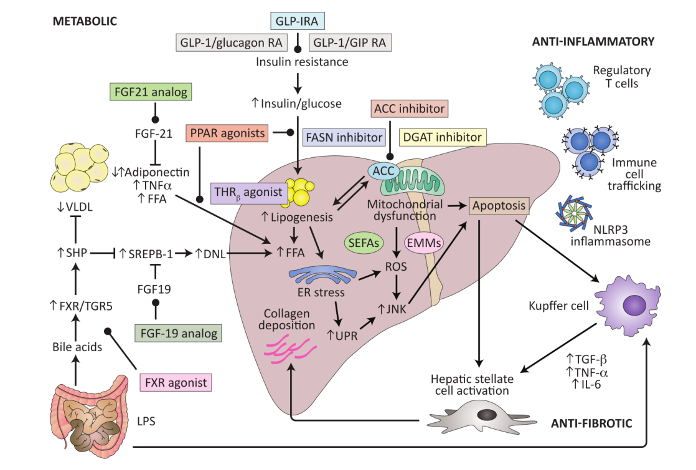
In this packed session, Prof. Stuart McPherson (The Newcastle upon Tyne Hospitals, UK) shared strategies to diagnose, risk-stratify, and treat metabolic liver diseases. He explained that approximately 70-90% of the UK population has hepatic steatosis (>5% fat infiltration of the liver), 10-30% of whom develop steatohepatitis (fat and hepatocellular injury and inflammation) with or without fibrosis. 2% progress to cirrhosis, or permanent scarring, which significantly increases the risk of decompensation, impairing liver function, and leads to 20% mortality at 10 years. Despite the high overall prevalence of 25%, many patients remain undiagnosed because liver disease is mostly asymptomatic, and liver enzymes are often ignored. Prof. McPherson said that all individuals with overweight or obesity (comprising 50% of the overall population), older sedentary adults, and people with T2D or metabolic syndrome (comprising 60%) are at risk of metabolic liver diseases.
- Noting that fibrosis is a major predictor of mortality and adverse liver outcomes, Prof. McPherson emphasized that people with advanced fibrosis, cirrhosis, or younger adults with moderate fibrosis are the key population for diagnosis, monitoring, and treatment. To identify people at high risk of complications, he recommended the use of the FIB-4 score, which uses age, liver enzymes (AST and ALT), and platelet counts to estimate the extent of liver fibrosis. He also suggested enhanced liver fibrosis (ELF) tests and vibration-controlled transient elastography (Fibroscan) as second-line tests to measure fibrosis and cirrhosis. People with FIB-4 ≥1.3 (or ≥2 for older adults aged 65+) and ELF ≥9.8 or Fibroscan ≥10 kPa are likely to have advanced liver diseases and should be referred to specialists.
- For treatment, Prof. McPherson outlined the goals: (i) prolong and improve quality of life; (ii) prevent complications; (iii) stop the progression of fibrosis to cirrhosis; and (iv) improve metabolic risks. Lifestyle management remains the cornerstone; weight loss of ≥3% is known to resolve steatosis, ≥5% to reduce inflammation, ≥7% to reverse MASH, and ≥10% to resolve fibrosis.
- People with advanced fibrosis (F3) should be considered for additional treatments, as 40% of these patients progress to cirrhosis by six years. These include:
- Rezdiffra (resmetirom), a thyroid hormone receptor ß agonist, improves mitochondrial function, reduces intrahepatic triglycerides, lipotoxicity, and circulating atherogenic lipids, and showed significant benefits in MASH and fibrosis in the phase 3 MAESTRO-NASH trial (n=3,955). The drug is approved in the US and Europe for noncirrhotic MASH with moderate-to-advanced fibrosis (F2-F3). It is currently reviewed by NICE, with an outcome expected later in 2026.
- Semaglutide, a GLP-1 RA, also achieved MASH resolution, improvement in histological fibrosis, and significant weight loss in the phase 3 ESSENCE study (n=1197).
- Tirzepatide, a dual GLP-1/GIP RA, significantly improved MASH and fibrosis in the phase 2 SYNERGY-NASH trial (n=190).
- People with advanced fibrosis (F3) should be considered for additional treatments, as 40% of these patients progress to cirrhosis by six years. These include:
9. Closing plenary: Diabetes leadership in a time of austerity and inequality
The closing plenary at Diabetes UK 2026 was organized as an informal conversation between three experts on change. The intention of the session was to motivate attendees to go back to their practices and do something new, leveraging what they had heard at the conference.
- Prof. Helen Bevan (University of Warwick, UK), an experienced change agent, had five main messages:
- “Everyone has more power than they think.” Power is the means to determine a particular outcome. In change management, it is the people at the center of the informal network who are more able to make things happen.
- “Bring a brick, not a cathedral.” We try and sell a fully formed idea to other people, but because nobody else has an emotional connection to the idea, they can fail. By getting a group of people together, we can create a shared vision of what to do, which becomes more compelling to the group.
- “Small tests of change work better than fully formed plans.” We consistently underestimate the power of small changes. As soon as something real is created, it shifts to becoming a possibility, rather than a concept. Tests are a very effective way of creating change. Keep them small.
- “When human beings are free to choose anything they want, they typically follow their neighbors.”Communicating is not the most effective way to make change happen. People change opinions, behavior and practice when the people around them do.
- “Use your 15% solutions.” The possibilities for change are often vast and overwhelming. However, about 15% of them are initiatives where other people’s permission is not required. They can be done immediately.
- Prof. Guy Lubitsh, (Hult International Business School, UK) made two main points:
- Everything comes down to relationships: Of the four domains in change management (contextual, technical, relational and personal), it is the relational and personal domains that are more important. ‘Relational’ means leading change skillfully with others, knowing how to reach and influence others in a broader system. ‘Personal’ means being highly self-aware and authentic, and knowing their own strengths and weaknesses.
- We are entering a ‘post-heroic’ era: We are transitioning from an environment where there was a single heroic leader, to a ‘post-heroic’ era – where we need team participation and where the team takes collective responsibility – requiring a new kind of leader who can bring multi-disciplinary teams together.
- Prof. Naresh Kanumilli, (Greater Manchester and Eastern Cheshire Strategic Clinical Networks, UK) stated that he saw himself less as a leader but more as a person who brought groups together. He felt that we can break down divisions because ultimately, everyone was there for one purpose – to help the patient. Prof. Kanumilli is committed to promoting others and seeing them flourish. He also noted:
- “If there is no focus for your passion, you won’t be successful.”
- “If it doesn’t challenge you, it won’t change you.”
- In Q&A, the panelists agreed that:
- You can’t be a change agent on your own.
- To effect change, you need to build trust.
- You should always assume that the other person has good intentions.
- To address psychological safety – a great thing to do is ‘radiate intent’ by telling everyone that “I’m thinking about doing this”. If nobody objects strongly, then just go ahead and do it.
- Good habits for leaders include stopping to connect with others on a regular basis. This should be a proactive initiative, since everyone is so busy with their daily work.
10. Foot at risk: Diabetes, amputations, and the forgotten inequality
Prof. Brian Kennon (University of Glasgow, UK) delivered a moving presentation and call to action on the issue of diabetic foot disease, which has played a prominent role at DUK 2026. The condition can begin with a loss of sensation or circulation to the feet as a result of vascular damage and can progress to open ulcers in people with T1D or T2D. About one-third of PWD develop a foot ulcer during their lifetime, affecting 18.6 million people worldwide, 1.6 million people in the US, and 450,000people in the UK. About half of all ulcers become infected, and about 20% of these infections end in amputation. Prof. Kennon provided a sobering overview of the regional and resource-based differences in amputation outcomes in the UK, as well as national efforts to tackle this issue.
- Disparities remain in diabetic foot disease outcomes, yet simple actions can have a huge impact. In a 2020 study, Prof. Kennon demonstrated that patient outcomes can be directly predicted by resources. Using Glasgow as an example, Prof. Kennon and collaborators made maps of ulceration, amputation, and mortality rates, discovering strong regional trends. High prevalence of diabetic foot disease can be found in areas of “multiple deprivation,” and knowledge of this can help providers in these areas more effectively target screening and care. Previous work has also explored the impact of diabetic foot disease and major lower extremity amputation on quality of life. Shockingly, the authors found that quality of life after amputation was literally “worse than death.” Many patients experienced suicidal ideation and extreme isolation, and 75% of participants lived in one room housing. Clearly, a large amount of work remains to tackle the resource disparities causing these issues. However, smaller interventions can also make a significant difference to improving patient outcomes and survival with amputation due to diabetic foot disease. Prof. Kennon discussed the Finding Your Feet project which brings together people with mobility or other isolation issues due to amputation. The simple act of social interaction can dramatically increase quality of life and survival.
- In addition to gradual interventions to improve patient quality of life and survival, Prof. Kennon demonstrated the role of healthcare provider bias in patient care. In a study of homelessness and diabetes based in the UK, emergency department visits were assessed in 27 individuals experiencing homelessness. 63% were male. 26% had T1D, 48% had T2D, and 26% had pancreatic diabetes. The average number of emergency department visits per person was a striking 17. Prof. Kennon asked providers to estimate the most likely outcome of these visits and compared the results to reality (see below). A majority of providers greatly underestimated the care received by these patients, with the most popular answers being “discharged with follow up” and “left before assessment/refused.” Although providers may be involved in such care themselves, these responses reveal a bias in the system. Prof. Kennon firmly stated that this bias has moved beyond unconscious to conscious bias, and that it must be addressed as part of broader interventions for diabetic foot disease. He urged attendees to create an environment of trust for their patients and to take steps to address this issue.
| Please consider the most likely outcome: | Perception | Reality |
| Admitted | 13% | 47% |
| Discharged with follow up | 37% | 12% |
| Discharged with no follow up | 0% | 31% |
| Removed by police | 13% | 0.5% |
| Left before assessment/refused | 37% | 8% |
Exhibit Hall
Abbott
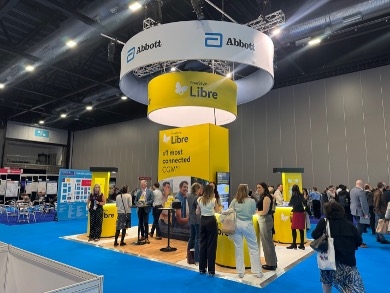
Abbott’s signature yellow booth could not be missed at the DUK 2026 Exhibit Hall, and for very good reason. In the CGM market, Abbott captures about 95% market share, compared to about 3% for Dexcom and about 2% for other brands available in the nation. The booth advertised Abbott’s FreeStyle Libre series as the “#1 most connected” in the UK, referring to the system’s pump integrations that have allowed it to become so popular in the UK. A prominent display discussed results of the FreeDM2 trial as well, for which results were presented at ATTD 2026 and additional analyses featured at DUK this year. Representatives were eager to discuss the trial’s aims with clinicians: to demonstrate the significant glycemic and quality of life benefits afforded by the use of CGM in the UK compared to BGM in hopes of broadening T2D CGM access in the future. At just four months of use, participants using FreeStyle Libre experienced a significantly greater reduction in A1c values (-0.6%) compared to those using BGM.
Data4NHS
Data4NHS is a service for HCPS in the National Health Service offering an online directory, an event calendar, job postings, and email bulletins (including guidance updates). The team at the booth were recruiting new members and claimed a membership of around 300,000. The company is owned by M3 and serves to recruit HCPs to take part in paid surveys.
Dexcom
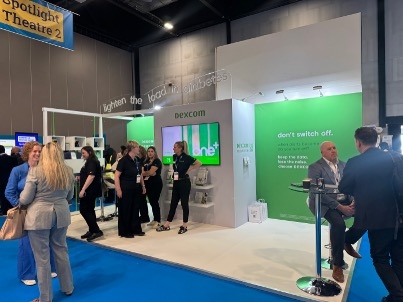
Dexcom’s booth at DUK 2026 took a different, more compact approach compared to what we are most familiar with at US-based conferences, which the booth representatives light-heartedly pointed out. Booth representatives explained that patients with T1D are usually seen at hospitals in the UK for their routine diabetes care and receive diabetes technology supplies from hospitals as well. Dexcom has worked to partner with hospitals in the UK to increase their penetration in the nation, but its market share has lagged far behind competitors. Representatives said that the company is now focusing on promoting Dexcom ONE+ for the nation’s T2D market, which was launched in May 2024. Patients with T2D are typically seen in outpatient settings in the UK. While unmentioned at today’s booth, future efforts may also include launching Stelo, the company’s OTC CGM, in the UK to attract a broader patient user base.
Echosens
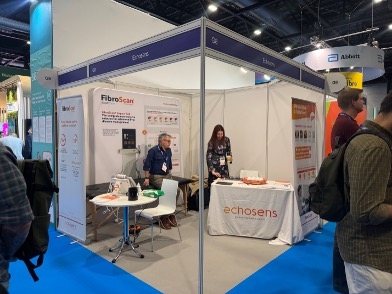
Echosens’s booth attracted interest in the company’s FibroScan technology, which can be used to non-invasively assess liver stiffness and liver health. Recall that metabolic dysfunction-associated steatotic liver disease (MASLD), a buildup of fat in the liver, can progress to inflammation, fibrosis, and cirrhosis in some cases and is associated with diabetes. Global prevalence of MASLD is estimated at 30%, creating a need for improved liver stiffness screening. Company representatives said that Echosens plans to promote FibroScan in the UK to build awareness among endocrinologists – currently, hepatologists are familiar with the technology but diabetes providers less so. The non-invasive technology is expensive compared to blood-based markers of liver health, so it has not been very popular in diabetes management or in primary care thus far. However, the technology has been available in some community centers for wider population screening, which the company plans to continue to promote.
GlucoRx
GlucoRx is a British diabetes products company that manufactures in Taiwan and markets in the UK, India, and the UAE. On the booth, they were displaying their CarePoint insulin pen needles, which they claim are the highest prescribed needles in the UK. They come in seven lengths/sizes at a price of £2.75 for 100 on prescription. GlucoRx also featured glucose gels in fantastic ‘localized’ flavors, such as Cherry Bakewell and Raspberry Ripple – available at £6.95 for three on prescription. Other products include lancets, BGM and an innovative moisturizing foot cream that leaves no sticky residue.

Insulet
Insulet’s familiar Omnipod mango color scheme was on display at DUK 2026, attracting interest from attendees spanning endocrinologists, dieticians, and more. The system’s extensive supporting research was highlighted at the booth. In December 2023, the UK’s NICE published landmark guidance on hybrid closed-loop (HCL) technology, which was a significant milestone for expanding access to the technology for people with T1D across England and Wales. Over the past 10 years, access to AID has increased dramatically for people with T1D in the UK, and the treatment system is reimbursed by the UK’s NHS for this population. Attendees expressed an interest in the pump’s adhesive, removable, and disposable design components, and an enlarged version of an Omnipod 5 pump was on display with representatives available to answer questions about the technology.

Medtrum
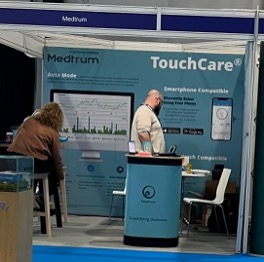
Medtrum’s reps greeted us warmly and asked if we knew about their TouchCare Nano System. Following the slogan, “smaller, smarter, simpler,” Medtrum’s CGMs and tubeless patch-pumps are small. TouchCare Nano CGM measures glucose every 2 minutes and integrates with the pump for a hybrid closed-loop system. The CGM allows up to 14-day wear, is waterproof, and does not require calibration or scanning. Meanwhile, TouchCare Nano Pump is the first ever to hold 200-300U of insulin, lasting three days of continuous delivery. Using a sample pump, comprised of a reservoir patch and a pump base, the rep demonstrated how to fill the pump with insulin, place it at the desired site – such as the belly – and remove it. She noted that the pump uses a steel, 90-degree needle that remains subcutaneously and is removed every three days. As a user herself, she prefers this needle, as she feels it to be less “flimsy” or mobile under the skin. While Medtrum is only available in Europe, Asia-Pacific, and South America, some clinical studies are held in the US.
MiniMed
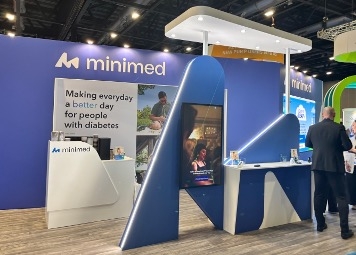
In a welcoming booth, MiniMed showcased its AID portfolio, including the MiniMed 780G, its smart MDI solutions, and its upcoming European CGM launch, Instinct. Instinct received CE-Mark last month, with a phased rollout set to begin in summer 2026 — representatives confirmed that UK availability is expected in the early wave. Once launched, MiniMed 780G users will have access to three CGM options, alongside Guardian 4 and Simplera Sync, reflecting the company’s emphasis on patient choice. Representatives said that adoption of Simplera Sync remains early as reimbursement expands. On the smart MDI front, representatives positioned the system as a “stepping stone” to AID therapy. While some users remain hesitant to adopt full AID, others are using smart MDI as an entry point to more advanced technology. Compared to traditional MDI, the system aims to reduce alarm fatigue by issuing alerts only when action is required, paired with clear, actionable guidance.
mylife Diabetes Care
mylife Diabetes Care’s bright booth near the entrance of the exhibit hall highlighted its AID ecosystem, anchored by the CamAPS FX and HX algorithms and the mylife YpsoPump (with Dana-i and Dana RS compatibility in select regions). The system integrates with FreeStyle Libre 3 and Dexcom G6, and the booth advertised Dexcom G7 compatibility that is expected soon in the UK. Displays throughout the booth emphasized strong real-world outcomes with CamAPS FX. The standout focus, however, was CamAPS Liberty, the system’s newly launched fully closed-loop feature. Following CE-Mark approval in January, Liberty began a phased European rollout last month and will gradually expand to more users. Representatives explained that the feature allows individuals to “toggle on” a fully closed-loop mode, enabling automated glucose management with minimal to no user interaction, which they emphasized will be a notable step toward reducing daily burden and simplifying diabetes care.

Randox Health
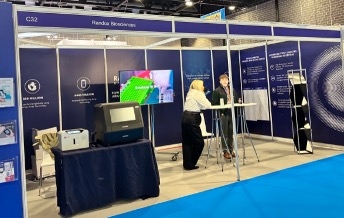
Randox Health is a diagnostics company offering a broad range of biomarker and genetic testing for multiple diseases, directly or through its network of clinics. At Diabetes UK, the company was promoting its genetic Type 1 Diabetes Risk Test, which is based on pioneering risk scoring algorithms developed at the University of Exeter in the UK across 47 SNPs. It is sold as a home testing kit for around £90.
Roche
Roche’s light green booth was hard to miss with its aromatic coffee station and long lines that formed around it. Reps enthusiastically shared about Accu-Chek SmartGuide CGM on a large screen that resembled a smartphone. Accu-Chek is a CGM that measures glucose levels in real-time, with high accuracy (MARD of 9.2%), and helps users prevent glucose excursions using its predictive features. The reps explained that the Low Glucose Predict feature alerts users when their glucose is predicted to drop below the personalized threshold within the next 30 minutes. The Glucose Predict shows a two-hour prediction of glucose levels. A Night Low Predict feature estimates the risk of nocturnal hypoglycemia (<3.9 mmol/L) before bedtime in a colorful semi-circular bar. The app also offers advice for the risk scores, such as keeping a carbohydrate snack within reach for a user with a high (yellow in the scale of green to red) risk of nocturnal hypoglycemia.

Sanofi
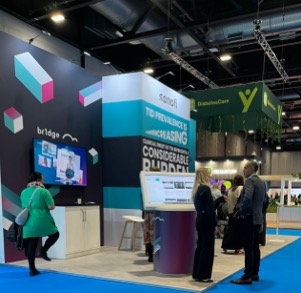
Located at the entrance of the Exhibit Hall, Sanofi’s booth was hard to miss. The reps raised awareness of the progressive nature of the disease – from pre-symptomatic stages 1 and 2 T1D to clinical stages 3 and 4 T1D – and underscored the importance of screening. Given that the prevalence is rising and clinical diagnoses present acute and significant burdens to the patients, such as high rates of DKA, early screening supports patients with pre-symptomatic T1D to be educated ahead of time. Pamphlets further offered scientific, clinical, and patient-focused insights into T1D, such as its pathogenesis, patients’ experiences of life-changing diagnosis – compared to as a “thunderstorm” – and the method and benefits of autoantibody screening. It directed attendees to BRIDGE T1D for additional resources.
Sibionics
In the UK, Germany and Italy, Sibionics is distributed with great enthusiasm by Air Liquide Healthcare (who formerly distributed Tandem in the UK). At Diabetes UK, the team was demonstrating the 14-day Sibionics GS3 CGM system, which was just placed on the UK Drug tariff in the last month. The sensor is small, with a height of 2.9mm, and a MARD of 9%, according to data presented by the company at ATTD. The tariff price is £35/sensor, which is about the same price per day as Abbott FreeStyle Libre 3. A self-pay option is on the way. The GS3 is currently a standalone sensor targeted at patients with type 2 diabetes, but the company is planning to develop pump partnerships in the future. Air Liquide were also keen to note the AI-powered features of the GS3 phone app.

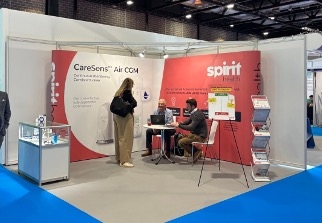
Spirit Health
Spirit differentiates their company by providing consulting and support services to practice groups, focusing on ‘optimizing medicines’ and outcomes. They also offer their own range of BGM products and a recently approved CGM. Their 15-day CGM is the CareSens Air (Spirit is the UK distributor for Korea based i-SENS), and it is positioned as the most cost-effective sensor on the market. According to Spirit, the UK CGM market is ~95% Abbott, and the remainder is mostly Dexcom.
-- by Jeremy Alkire, Nour Khachemoune, Kat Moon, Monica Oxenreiter, and Kelly Close
[1] In addition to standard T1D and T2D on intensive insulin therapy, the FCL algorithm has been studied in other high-risk settings, including perioperative care. For example, in patients undergoing major abdominal surgery, FCL use resulted in ~80% time in 100-180 mg/dL, compared to 54% with standard care.
[2] The first two years of postgraduate medical training.