Novo Nordisk 1Q26 – D+O totals $10.3 B (-4% CER); huge focus on Wegovy franchise, including early trends of Wegovy pill uptake; CagriSema launch expected in 2027; p3 program launched for amycretin –
Executive Highlights
- Novo Nordisk presented its 1Q26 today, led by CEO Mr. Maziar Mike Doustdar and CFO Mr. Karsten Munk Knudsen - see the press release, presentation, finance detail, and webcast.
- In 1Q26, the diabetes and obesity portfolio totaled $10.3 billion in adjusted sales, down 4% CER from 1Q25 and down 8% sequentially. US sales were $5.5 billion, up 11% CER and down 21% sequentially. OUS sales were $5.4 billion, up 6% CER and flat sequentially.
- After cutting guidance four times in 2025, Novo Nordisk has raised its 2026 projections slightly. Nonetheless, the company expects a decline in adjusted sales this year by 4-12% CER, as pricing and competitive pressures outweigh the volume growth of GLP‑1 RA medications.
- The Wegovy franchise, spanning injectable, high-dose injectable, and oral Wegovy, was a central pillar of the call.
- Injectable Wegovy sales totaled $2.9 billion, up 12% CER from 1Q25 and down 17% sequentially. US sales totaled $1.5 billion (-11% CER; -31% Q/Q), while OUS sales totaled $1.4 billion (+62% CER; +7% Q/Q). Injectable Wegovy is now available in over 55 countries, expanding the international obesity market. Wegovy HD (7.2 mg) was launched in the US in April 2026.
- In what management characterized as a “record-breaking launch,” oral Wegovy sales totaled $353 million in its first quarter on the US market. Prescriptions for oral Wegovy soared to 1.3 million in 1Q26 and have continued to increase amid the launch of Foundayo. Notably, 80% of oral Wegovy users have never taken GLP-1 RAs before, suggesting that oral formulation is expanding, rather than cannibalizing, the market. While the uptake is dominated by self-pay patients, Novo Nordisk is expanding access in the insured channel.
- In 1Q26, revenue for Ozempic totaled $4.4 billion, down 8% CER from 1Q25 and down 13% sequentially. US sales totaled $2.8 billion (-14% CER; -21% Q/Q), while OUS sales totaled $1.6 billion (+6% CER; +7% Q/Q). The decline in US sales was largely due to lower realized prices. Excitingly, the FDA approved the Ozempic pill (1.5, 4, and 9 mg) this week for adults with T2D.
- Novo Nordisk expects the loss of exclusivity of semaglutide in several markets to negatively impact international sales. Of note, several generic products were launched in India. In April 2026, Health Canada approved its first generic semaglutide injection by Dr. Reddy’s Laboratories.
- Insulin sales totaled $1.8 billion, down 17% CER and down 13% sequentially. By geography, US sales totaled $424 million (-36% CER; -32% Q/Q), while OUS sales totaled $1.4 billion (-8% CER; -5% Q/Q). By categories, long‑acting insulin totaled $663 million (+22% YoY; +10% Q/Q), premix insulin totaled $375 million (-4% YoY; 5% Q/Q), and Fast‑acting insulin totaled $619 million (-22% YoY; -19% Q/Q). In the pipeline, Awiqli received FDA approval for T2D in March 2026.
- The call highlighted updates on its diabetes and obesity pipeline, including CagriSema, cagrilintide, zenagamtide (amycretin), and UBT251 (long-acting triple GLP-1/GIP/glucagon RA).
1Q26 Financial Results for Novo Nordisk’s Major Diabetes Products
| Product | 1Q26 Revenue – USD millions | Year-Over-Year Reported Growth for 1Q26 | Sequential Reported Growth |
| GLP-1 RA (excluding Xultophy) | $8,401 | flat | -11% |
| Ozempic | $4,358 | -15% | -13% |
| Wegovy (injectable) | $2,856 | +5% | -17% |
| Wegovy (oral) | $353 | – | – |
| Rybelsus | $716 | -20% | -14% |
| Victoza | $52 | -71% | -16% |
| Saxenda | $66 | -60% | -28% |
| Total Insulin | $1,824 | -22% | -13% |
| Long-Lasting Insulin (Tresiba, Xultophy, Levemir, and Awiqli) | $663 | -22% | -10% |
| Rapid-Acting Insulin (Fiasp and NovoRapid) | $619 | -22% | -19% |
| Premix Insulin (Ryzodeg and NovoMix) | $375 | -15% | -5% |
| Human Insulin | $166 | -39% | -19% |
| Other | $87 | +18% | +33% |
| Total Diabetes and Obesity Portfolio | $10,973 | -5% | -5% |
Table of Contents
-
Financial Highlights
- 1. Diabetes and obesity sales total $10.3 billion (‑4% CER; -8% sequentially) in 1Q26; 2026 guidance modestly improves to 4-12% CER reduction in annual sales
- 2. Wegovy franchise expands to include oral, injectable, and high-dose injectable; oral Wegovy prescriptions soar to 1.3 million in first quarter on market; plans to launch Wegovy HD (7.2 mg) in 20 international markets this year
- 3. Ozempic sales total $4.4 billion (-8% CER) due to lower volume and price; Ozempic pill approved for T2D; Rybelsus sales declined due to priority changes
- 4. Rybelsus totals $716 million (-15% CER); sales continue to decline due to reprioritization and lower prices
- 5. Saxenda revenue totals $65 million (-60% CER); dominated by Wegovy OUS
- 6. Major insulin revenue reporting changes in 1Q26; total insulin sales total $1.8 billion (-17% CER; -32% sequentially); Awiqli to launch US with a FlexTouch device in 2H26
- Pipeline Highlights
- Analysts’ Q&A
- Close Concerns’ Questions
Financial Highlights
1. Diabetes and obesity sales total $10.3 billion (‑4% CER; -8% sequentially) in 1Q26; 2026 guidance modestly improves to 4-12% CER reduction in annual sales
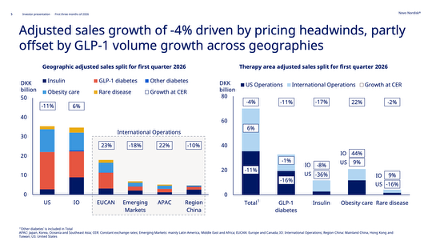
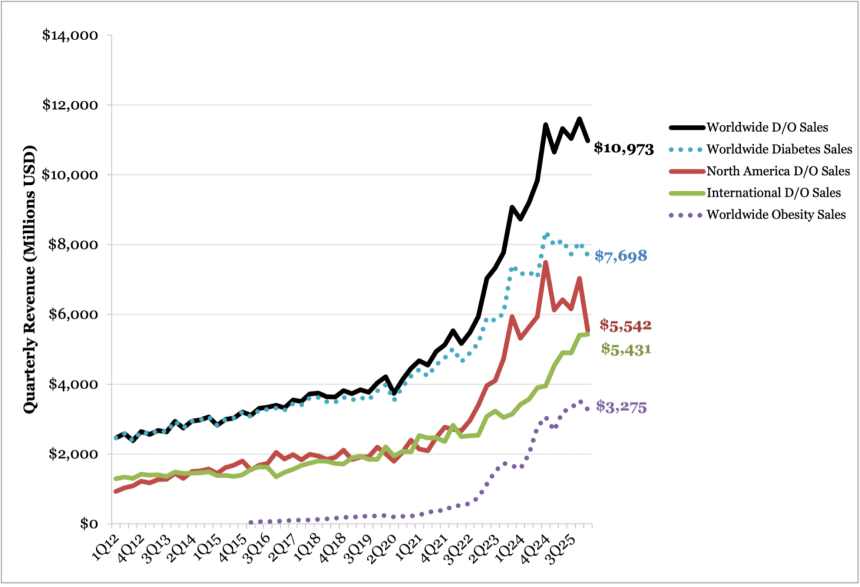
In 1Q26, Novo Nordisk’s diabetes and obesity portfolio totaled $10.3 billion in adjusted sales, down 4% CER from 1Q25 and down 8% sequentially. US sales were $5.5 billion, up 11% CER and down 21% sequentially. OUS sales were $5.4 billion, up 6% CER and flat sequentially. Novo Nordisk reported treating over 45 million people with obesity and diabetes around the world, nearly flat (-1%) from 1Q25. This number includes more than four million on its obesity treatments, representing an over 50% increase compared to one year ago, as well as 41 million on diabetes treatments, down 4% from 1Q25.
Source: Novo Nordisk 1Q26 Investor Presentation, Slide 5
Obesity revenue (Wegovy and Saxenda) was a critical growth driver totaling $3.3 billion, up 22% CER from 1Q25 and down 5% sequentially. Obesity was led by the Wegovy franchise – including its injectable formulations and the pill – along with rapid expansion in international markets, where obesity sales grew 44% CER. By geography, obesity sales OUS totaled $1.4 billion, growing 44% CER from 1Q25 and 5% sequentially, driven by Wegovy launches and telehealth channels. US obesity sales totaled $1.8 billion, up 9% CER and down 15% sequentially, reflecting strong uptake of injectable, pill, and high-dose (HD) Wegovy, offset by lower pricing.
Revenue from GLP-1 RAs for diabetes totaled $5.1 billion, down 11% CER from 1Q25 and down 13% sequentially. By geography, US revenue totaled $3.0 billion, down 16% CER from 1Q25 and 21% sequentially. OUS revenue totaled $2.1 billion, down 1% from 1Q25 and up 3% sequentially. While there was strong growth in GLP‑1 RA volume and insulin, these were offset by substantial pricing headwinds in the US and intensifying competition in the GLP‑1 RA landscape.
- Novo Nordisk expects significant headwinds from price reductions in 2026. Updated guidance now predicts a 4-12% CER reduction (compared to the 5-13% CER reduction projected in 4Q25) in adjusted sales and operating profit – reflecting a modestly better outlook driven by stronger GLP‑1 RA demand.
- In the US, management reiterated that it expects sales to decline in the teens in 2026 due to lower realized prices from: (i) expanding use of cash‑pay and telehealth channels; and (ii) the impact of the US Most Favored Nation agreements and the Medicare Drug Price Negotiation Program on medication list prices. Positively, these lower prices are driving volume growth and increased patient access, as evident in the record uptake of Wegovy pills and sustained momentum of injectable Wegovy sales.
- For OUS sales, Novo Nordisk reiterated its projection of mid‑single‑digit growth, driven by continued GLP‑1 RA penetration in emerging markets and product launches in obesity. These, however, are partially offset by the loss of exclusivity of semaglutide in selected markets, with Canada being the largest contributor to the negative impact.
- After cutting guidance four times in 2025, Novo Nordisk has raised its 2026 projections slightly. Still, the company expects negative adjusted growth this year as pricing and policy pressures outweigh the volume growth of GLP‑1 RA medications.
Novo Nordisk D/O Worldwide Financial Results – Past Five Quarters
Diabetes/ Obesity | 1Q25 | 2Q25 | 3Q25 | 4Q25 | 1Q26 |
| Revenue – USD billions (DKK billions) | $10.7 (DKK 73) | $11.3 (DKK 72) | $11.0 (DKK 70) | $11.6 (DKK 74) | $10.3 (DKK 66) |
| YOY Growth (CER) | +21% (+19%) | +12% (+17%) | +5% (+11%) | -8% (-2%) | -10% (-4%) |
| Sequential Reported Growth | -8% | -2% | -2% | +5% | -11% |
Novo Nordisk D/O Sales – 1Q26 Geographic Results
| Revenue – USD billions (DKK billions) | YOY Reported (CER) Growth | Sequential Reported Growth | |
| US | $5.3 (DKK 34) | -19% (-11%) | -24% |
| OUS | $5.0 (DKK 32) | flat (+6%) | -6% |
Novo Nordisk D/O Sales (2Q21-1Q26)
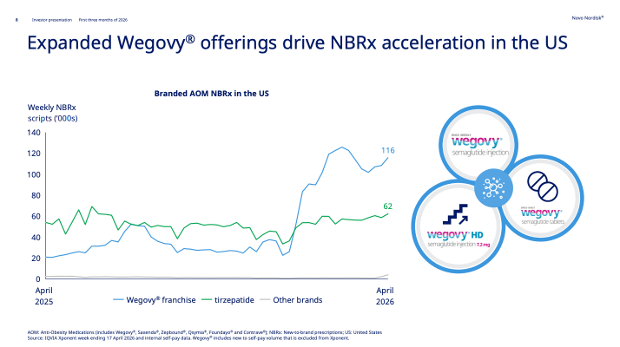
2. Wegovy franchise expands to include oral, injectable, and high-dose injectable; oral Wegovy prescriptions soar to 1.3 million in first quarter on market; plans to launch Wegovy HD (7.2 mg) in 20 international markets this year
The Wegovy franchise was a central pillar of Novo Nordisk’s 1Q26 call. While injectable Wegovy remains the core driver of obesity revenue, management characterized injectable, high-dose injectable, and oral Wegovy as a unified franchise spanning multiple modalities.
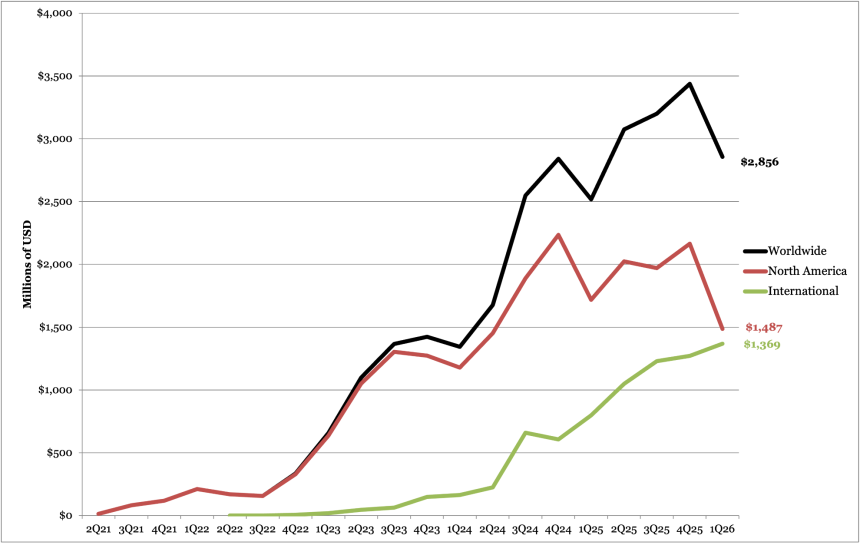
Injectable Wegovy demonstrated a strong quarter, totaling $2.9 billion in total adjusted sales, reflecting a 5% increase (+12% CER) from 1Q25 and 17% decline[1] from 4Q25. US sales totaled $1.5 billion, down 11% CER and down 31% sequentially. OUS sales totaled $1.4 billion, up 62% CER and 7% sequentially. Injectable Wegovy has now launched in more than 55 countries globally and was described as the primary driver of international obesity-care growth, which increased 44% during the quarter. Moreover, management highlighted the importance of telehealth and direct-to-consumer channels; in some large international markets, telehealth comprises 20% of total obesity sales.
- During today’s call, management highlighted the launch of Wegovy HD (7.2 mg) in the US in April 2026. Discontinuation rates at the 7.2 mg dose were similar to the standard 2.4 mg dose, countering concerns that higher efficacy could result in worse tolerability. Management also noted that the three largest PBMs have added Wegovy HD to standard formularies as a line extension, thereby facilitating patient titration from 2.4 mg. Internationally, Novo Nordisk plans to launch Wegovy HD in approximately 20 countries during 2026.
- Management advertised Wegovy HD for patients seeking incremental weight reduction beyond 2.4 mg. Wegovy HD is also Novo Nordisk’s strategy to “level the playing field” against competitors that deliver greater weight loss. During Q&A, management stated that early launch data already show patients titrating to the 7.2 mg dose.
Injectable Wegovy Worldwide Financial Results – Past Five Quarters
| Wegovy (injectable) | 1Q25 | 2Q25 | 3Q25 | 4Q25 | 1Q26 |
| Revenue – USD millions (DKK billions) | $2,517 (DKK 17.4) | $3,074 (DKK 19.5) | $3,200 (DKK 20.4) | $3,437 (DKK 21.9) | $2,856 (DKK 18.2) |
| YOY Reported (CER) Growth | +83% | +68% (+75%) | +18% (+23%) | +10% (+17%) | +5% (+12%) |
| Sequential Reported Growth | -13% | +13% | +4% | +7% | -17% |
Injectable Wegovy Sales – 1Q26 Geographic Results
| Wegovy (injectable) | Revenue – USD millions (DKK billions) | YOY Reported (CER) Growth | Sequential Reported Growth |
| US | $1,487 (DKK 9.5) | -20% (-11%) | -31% |
| OUS | $1,369 (DKK 8.7) | +59% (+62%) | +8% |
Wegovy Sales (2Q21-1Q26)
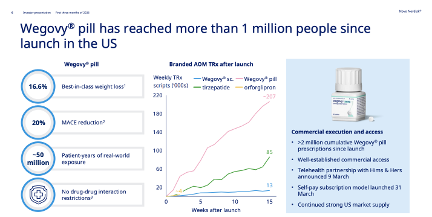
In what management characterized as a “record-breaking launch,” oral Wegovy sales totaled $353 million in its first quarter on the US market. Prescriptions for oral Wegovy soared to 1.3 million in 1Q26. Notably, uptake accelerated throughout the quarter (see below), with oral Wegovy totaling more than 200,000 weekly prescriptions by April 17, 2026 – one week after Lilly launched Foundayo. Management said that oral Wegovy has outpaced all prior GLP-1 RA launches in the US in terms of weekly prescription growth.
- Importantly, ~80% of oral Wegovy users are GLP-1 RA treatment-naïve, which suggests that the pill is expanding the obesity treatment market rather than cannibalizing injectable GLP-1 RA use. Furthermore, many patients are switching from competitor brands to oral Wegovy. On the provider side, management noted that oral Wegovy is broadening the prescriber base by attracting new healthcare providers into the weight-loss therapy space.
- On pricing and access, management announced today that the three largest PBMs in the US have added oral Wegovy to their standard template formularies alongside injectable Wegovy. Currently, the uptake of oral Wegovy is dominated by self-pay patients. Nevertheless, management expects reimbursement-driven volume to grow over time as coverage expands. Lastly, telehealth and direct-to-patient access channels were also emphasized as critical factors for the oral Wegovy strategy domestically in the US and internationally.
- During Q&A, management emphasized that oral Wegovy is currently in a “sweet spot” on pricing, citing continued prescription acceleration despite the launch of Lilly’s Foundayo. At the same time, Mr. Doustdar said that long-term pricing will likely need to decline if Novo Nordisk aims to reach “hundreds of millions” of obesity patients globally.
- Internationally, Novo Nordisk intends to selectively launch oral Wegovy in key markets this year. Management stated that the company intends to “go all in” on markets where it launches oral Wegovy. This will include leveraging both the established injectable Wegovy franchise and growing awareness generated from the US launch.
- On clinical and competitive positioning, management emphasized 17% weight loss for the Wegovy pill during phase 3 trials as the “headline” for prescribers, placing efficacy as the primary decision driver for patients choosing an oral weight-loss medication versus an injectable. Moreover, management referenced an indirect comparison between oral Wegovy and Lilly’s Foundayo, which showed that oral Wegovy has better weight-loss efficacy and a lower likelihood of discontinuation due to adverse GI events. For patients, management explained that the top reasons to choose the Wegovy pill are the magnitude of weight loss first, followed by convenience and the attractiveness of limited-time introductory pricing for starting doses.
- Despite strong volume growth in the Wegovy franchise, Novo Nordisk reported overall sales pressure from pricing headwinds and expects realized prices to decline further as the company invests in market access and complies with US Most-Favored-Nation (MFN) agreements. Obesity-related headwinds include: (i) reduced Medicaid coverage for obesity therapies in the US; (ii) payer negotiations around formulary positioning and rebates; and (iii) potential pressure on injectable obesity growth as oral mix expands. Nevertheless, management reiterated its long-term strategy of prioritizing broad patient access and volume expansion over maximizing near-term pricing.
- Of note, Wegovy pens and pills are part of the Medicare GLP-1 Bridge Program, which the Centers for the Medicare & Medicaid Services announced in December 2025. The pilot program will run separately from Medicare Part D and will offer access to Foundayo, Wegovy, and Zepbound at a $50 copay to eligible beneficiaries between July 1, 2026, and December 31, 2027.
- Novo Nordisk’s increase in 2026 guidance was attributed primarily to stronger GLP-1 RA expectations, driven by momentum in injectable and oral Wegovy in the US, confidence in the Wegovy HD rollout, and planned international launches of oral Wegovy during 2026. Even as certain semaglutide patents begin to expire in the coming years, management said Wegovy will remain central to the company’s international obesity growth strategy. Strategic priorities for the remainder of 2026 include accelerating oral Wegovy uptake, expanding Wegovy HD globally, and growing direct-to-patient and cash-pay obesity channels.
3. Ozempic sales total $4.4 billion (-8% CER) due to lower volume and price; Ozempic pill approved for T2D; Rybelsus sales declined due to priority changes
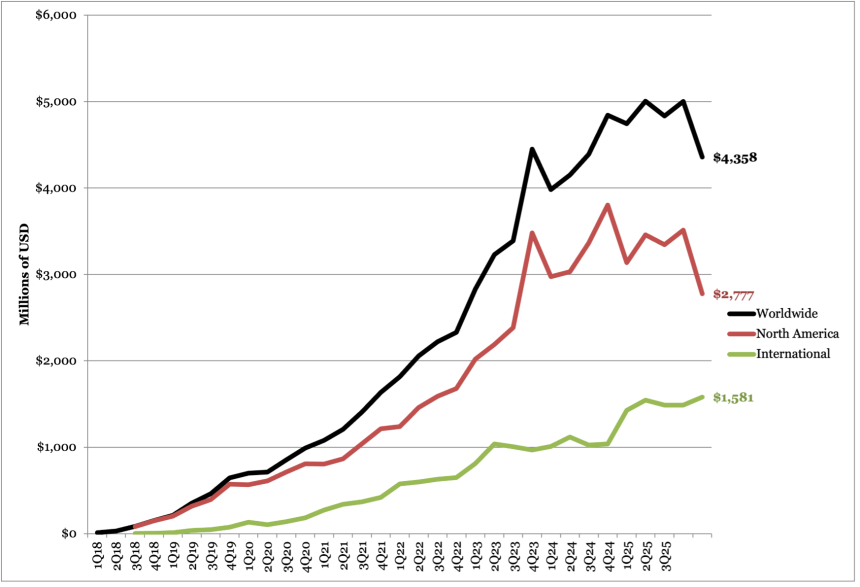
In 1Q26, revenue for Ozempic (a once-weekly injectable semaglutide 0.5 mg, 1 mg, or 2 mg) totaled $4.4 billion, down 8% CER from 1Q25 and down 13% sequentially. By geography, US sales totaled $2.8 billion, down 14% CER from 1Q25 and 21% sequentially. OUS sales increased to an “all-time-high” of $1.6 billion, up 6% CER from 1Q25 and 7% sequentially. In the US and OUS, the GLP-1 RA diabetes market continued to expand by 13% and 40%, respectively.
- In the US, the decline in sales was largely due to lower realized prices in the commercial channel. During Q&A, CFO Mr. Knudsen commented that Ozempic is facing a price erosion of 10-15%. However, this trend is consistent with previous quarters and has been accounted for in the 2026 guidance.
- More on pricing, management noted that Ozempic and Wegovy will be accessible at lower costs under the Most-Favored-Nation (MFN) policy. Starting in mid-2026, the drugs are available at $245 per month through Medicare Part D, Medicaid, and direct-to-consumer platforms, like NovoCare and TrumpRx. While not mentioned in the call, under the Medicare Drug Price Negotiation Program (MDPNP), Ozempic and Rybelsus are set to cost ~$277 per month starting in 2027.
- In February 2026, Novo Nordisk also announced that it will lower the list prices of injectable Wegovy, Wegovy pills, injectable Ozempic, and Ozempic pills to $675, reflecting 50% and 35% reductions from the current list prices of Wegovy and Ozempic, respectively. The price reduction applies to all doses. Management said that this change will impact the company’s cash flow in 2027.
- Excitingly, the FDA approved Ozempic pill this week as the first and only oral peptide GLP-1 RA for adults with T2D. The pill is now available across the US. Ozempic pills have smaller doses (1.5 mg, 4 mg, and 9 mg) than those of Rybelsus (3 mg, 7 mg, and 14 mg) due to enhanced bioavailability. In April 2026, Novo Nordisk shared its plans to file for a pediatric label expansion for both Rybelsus and Ozempic pills in the US and EU in 2H26.
- Internationally, Ozempic continues to be launched in multiple countries, including the UK, Germany, and the Netherlands, where the GLP-1 RA market is expanding.
- In 1Q26, semaglutide lost its exclusivity in several markets, including India, China, Canada, and Brazil. Specifically, several generic products were launched in India. No generics have been launched yet in Canada or Brazil, but Health Canada approved its first generic semaglutide injection by Dr. Reddy’s Laboratory in April 2026. Consistent with its predictions in the 4Q25 call, Novo Nordisk expects genericization to negatively impact sales in 2026.
Ozempic Worldwide Financial Results – Past Five Quarters
| Ozempic | 1Q25 | 2Q25 | 3Q25 | 4Q25 | 1Q26 |
| Revenue – USD millions (DKK billions) | $4,745 (DKK 32.7) | $5,005 (DKK 31.8) | $4,833 (DKK 30.7) | $5,002 (DKK 31.8) | $4,357 (DKK 27.8) |
| YOY Growth (CER) | +18% (+15%) | +10% (+15%) | +3% (+9%) | +6% (+1%) | -15% (-8%) |
| Sequential Reported Growth | -3% | -3% | -3% | +4% | -13% |
Ozempic Sales – 1Q26 Geographic Results
| Ozempic | Revenue – USD millions (DKK billions) | YOY CER Growth | Sequential Reported Growth |
| US | $2,777 (DKK 17.7) | -23% (-14%) | -21% |
| OUS | $1,581 (DKK 10.1) | +3% (+6%) | +7% |
Ozempic Sales (1Q18-1Q26)
4. Rybelsus totals $716 million (-15% CER); sales continue to decline due to reprioritization and lower prices
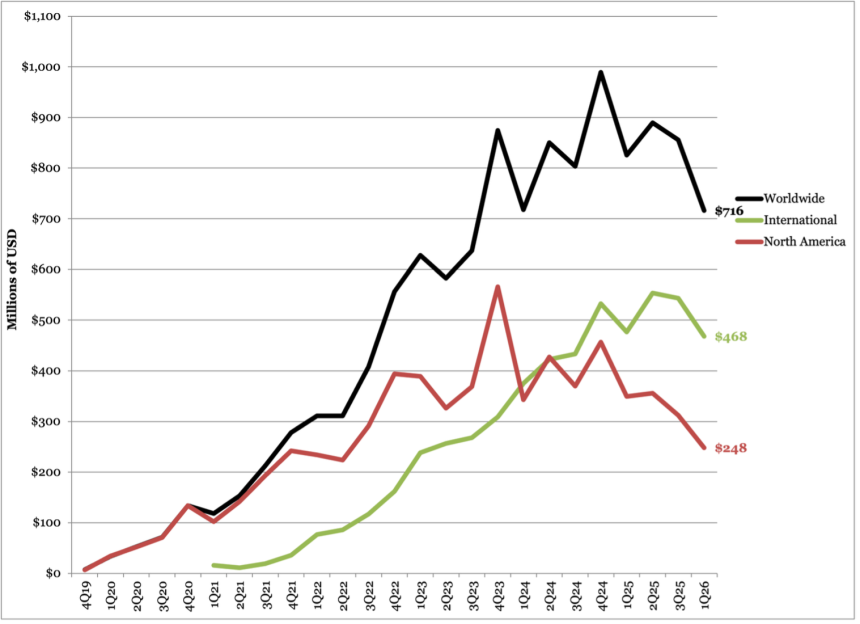
Rybelsus (oral semaglutide) sales totaled $716 million in 1Q26, down 20% from 1Q25 and down 14% sequentially. By geography, US sales totaled $248 million, down 34% from 1Q25 and down 27% sequentially. OUS sales totaled $468 million, down 9% from 1Q25 and down 4% sequentially. Sales for the Rybelsus have been negatively impacted as the company shifts its focus to other GLP-1 RAs for promotional activities in the US and OUS markets. In the US, Rybelsus sales were also negatively impacted by lower realized prices.
- In April 2026, Novo Nordisk published topline results of the phase 3a PIONEER TEENS trial (n=132) of Rybelsus in children and adolescents aged 10-17 years with T2D. Rybelsus conferred a superior 0.83 percentage point reduction in A1c compared to placebo, with a safety profile consistent with previous semaglutide studies. Based on these results, Novo Nordisk plans to file for a pediatric label expansion for Rybelsus and Ozempic pill, which was approved in May 2026, in the US and EU in 2H26.
- Internationally, Novo Nordisk submitted SOUL results to regulatory authorities in Japan to expand the indication to people with T2D and atherosclerotic disease or chronic kidney disease.
Novo Nordisk Rybelsus Worldwide Financial Results – Past Five Quarters
| Diabetes/Obesity | 1Q25 | 2Q25 | 3Q25 | 4Q25 | 1Q26 |
| Revenue – USD millions (DKK billions) | $826 (DKK 5.7) | $890 (DKK 5.7) | $855 (DKK 5.4) | $834 (DKK 5.3) | $716 (DKK 4.6) |
| YOY Reported (CER) Growth | +13% | -5% (-1%) | flat (+4%) | -23% (-19%) | -20% (-15%) |
| Sequential Reported Growth | -18% | -1% | -4% | -3% | -14% |
Novo Nordisk Rybelsus Sales – 1Q26 Geographic Results
| Revenue – USD millions (DKK billions) | YOY Reported (CER) Growth | Sequential Reported Growth | |
| US | $248 (DKK 2.0) | -34% (-27%) | -27% |
| OUS | $468 (DKK 3.5) | -9% (-6%) | -4% |
Rybelsus Sales (4Q19-1Q26)
5. Saxenda revenue totals $65 million (-60% CER); dominated by Wegovy OUS
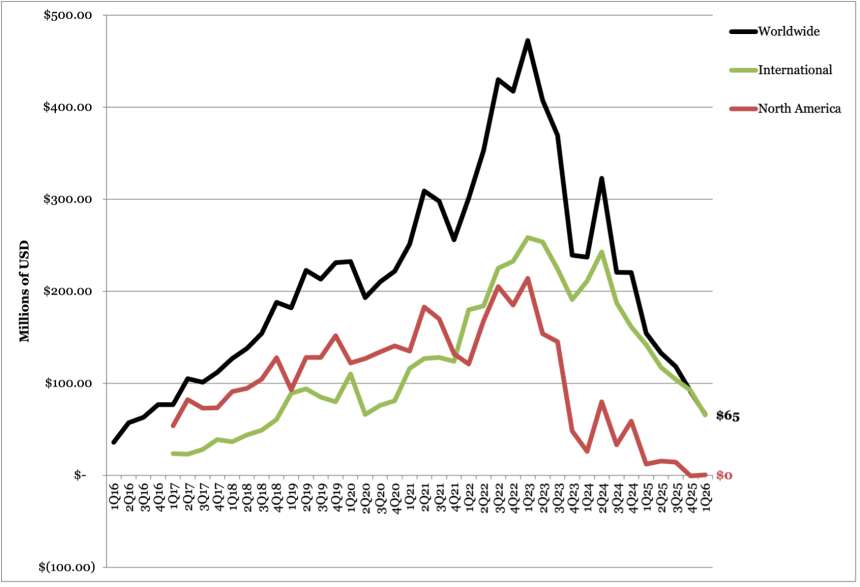
Sales for Saxenda (liraglutide) totaled $65 million, down 60% CER from 1Q25 and down 28% sequentially. US sales totaled less than $1 million, down 93% CER from 1Q25 and up over 2x sequentially, as the franchise rebounded from a net revenue loss in 4Q25. OUS sales totaled $65 million, down 57% CER from 1Q25 and down 29% sequentially. As shown in the figure below, Saxenda (purple) now contributes only marginally to the company’s obesity‑care growth, as the uptake of Wegovy and next‑generation GLP‑1 RAs accelerates across International Operations, Europe, Canada, and Asia‑Pacific.
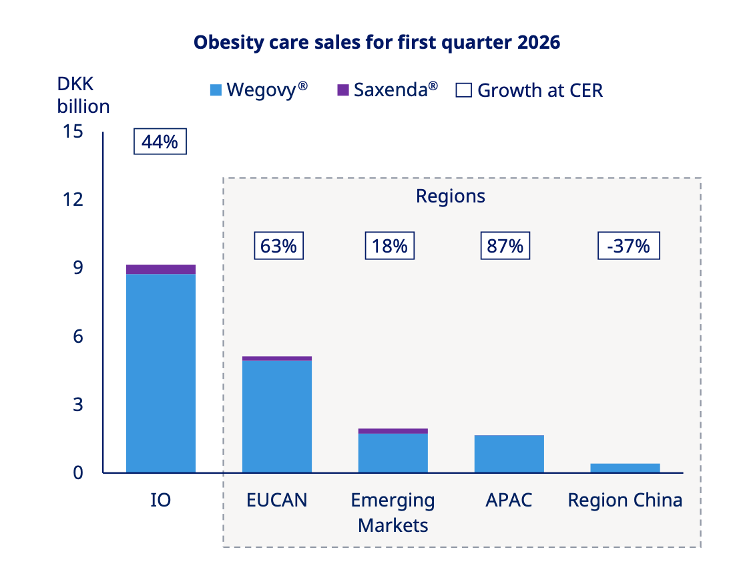
Source: Novo Nordisk 1Q26 presentation, page 9
Saxenda Worldwide Financial Results – Past Five Quarters
| Saxenda | 1Q25 | 2Q25 | 3Q25 | 4Q25 | 1Q26 |
| Revenue – USD millions (DKK billions) | $154 (DKK 1.1) | $133 (DKK 0.8) | $118 (DKK 0.8) | $91 (DKK 0.6) | $65 (DKK 0.4) |
| YOY Reported (CER) Growth | -35% | -62% (-61%) | -50% (-47%) | -62% (-62%) | -60% (-60%) |
| Sequential Reported Growth | -31% | -21% | -11% | -23% | -28% |
Saxenda Sales – 1Q26 Geographic Results
| Saxenda | Revenue – USD millions (DKK billions) | YOY Reported (CER) Growth | Sequential Reported Growth |
| US | $0.5 (DKK 0.03) | -97% (-93%) | -160% |
| OUS | $92 (DKK 4.2) | -57% (-57%) | -28% |
Saxenda Sales (1Q16-1Q26)
6. Major insulin revenue reporting changes in 1Q26; total insulin sales total $1.8 billion (-17% CER; -32% sequentially); Awiqli to launch US with a FlexTouch device in 2H26
In 1Q26, insulin sales totaled $1.8 billion, down 17% CER and down 13% sequentially. By geography, US sales totaled $424 million, down 36% CER and down 32% sequentially. OUS sales totaled $1.4 billion, down 8% CER and down 5% sequentially.
In 1Q26, Novo Nordisk changed the style of its report on insulins. Notably, the revenue of individual therapies (e.g., Tresiba, Fiasp, Awiqli) is not disclosed. Rather, the company has grouped its insulins into three distinct categories: (i) long-acting insulin, including Tresiba, Xultophy, Levemir, and Awiqli; (ii) premix insulin, including Ryzodeg and NovoMix; and (iii) rapid-acting insulin, including Fiasp and NovoRapid.
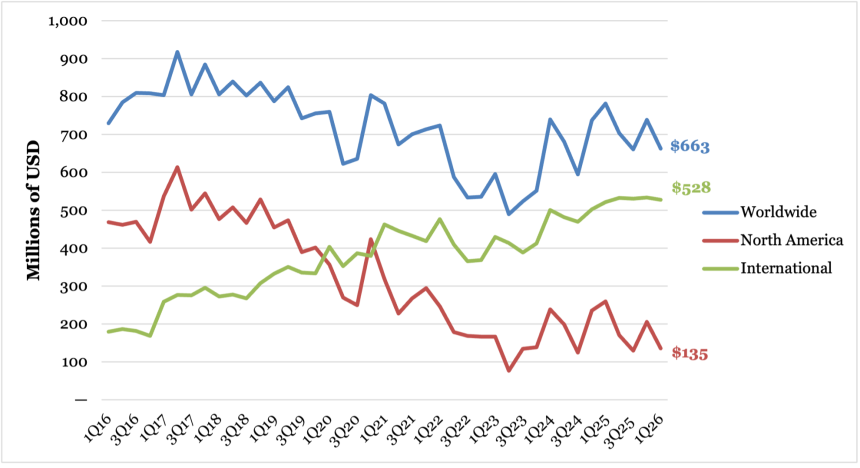
- Long‑acting insulin totaled $663 million in 1Q26, down 22% from 1Q25 and 10% sequentially. US sales totaled $135 million, down 52% from 1Q25 and 34% sequentially. OUS revenue totaled $528 million, down 6% from 1Q25 and 1% sequentially.
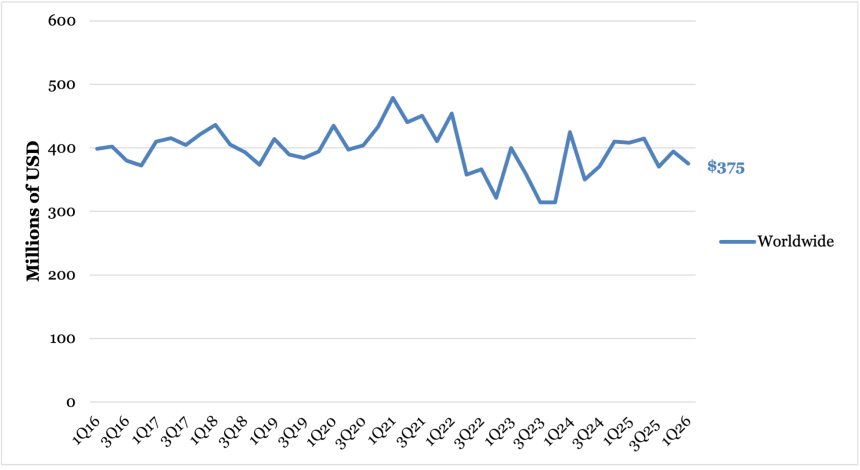
- Premix insulin totaled $375 million in 1Q26, down 4% from 1Q25 and 5% sequentially. While regional detail wasn’t provided, the quarter reflects a generally softer global backdrop, with trends consistent across major markets.
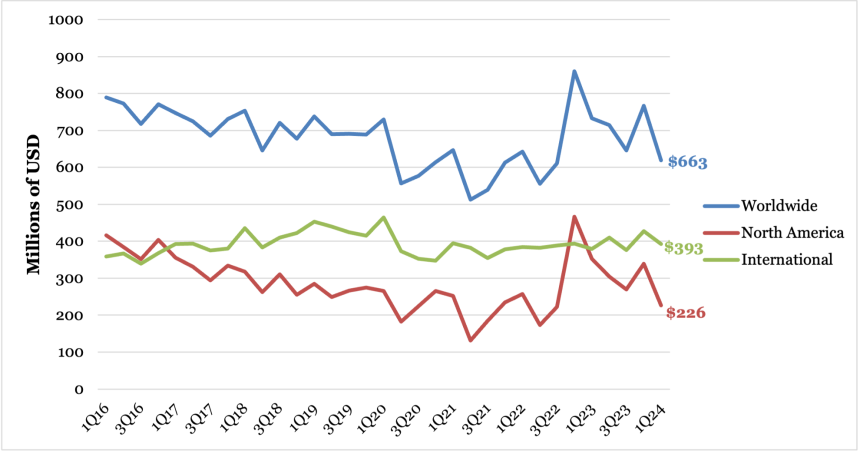
- Fast‑acting insulin totaled $619 million in 1Q26, down 22% from 1Q25 and 19% sequentially. US revenue totaled $226 million, falling 41% from 1Q25 and 33% sequentially. OUS revenue was $393 million, down 4% from 1Q25 and 8% sequentially
In the pipeline, Awiqli was highlighted as a key regulatory achievement in 1Q26, having received FDA approval for T2D in March 2026 based on the phase 3 ONWARDS program. Excitingly, Dr. Lange shared that the company plans to launch Awiqli in the FlexTouch device – a pre-filled, multi-dose pen – in the US in 2H26.
- While not discussed during prepared remarks today, Kyinsu (a once-weekly fixed-ratio combination of insulin icodec and semaglutide) was noted in investor materials for having secured approval in the EU, China, and Japan for T2D. Novo Nordisk intends to launch Kyinsu in Japan this year after regulatory approval. In March 2026, the therapy was approved in China. Novo Nordisk anticipates a commercial launch of Kyinsu in the market for 2H26.
Long-Acting Insulin Worldwide Financial Results – Past Five Quarters
| Long-Acting Insulin | 1Q25 | 2Q25 | 3Q25 | 4Q25 | 1Q26 |
| Revenue – USD millions (DKK billions) | $781 (DKK 5.4) | $703 (DKK 4.5) | $660 (DKK 4.2) | $739 (DKK 4.7) | $663 (DKK 4.2) |
| YOY Growth | +4% | -6% | +4% | -9% | -22% |
| Sequential Reported Growth | +5% | -17% | -6% | +12% | -10% |
Long-Acting Insulin Sales – 1Q26 Geographic Results
| Long-Acting Insulin | Revenue – USD millions (DKK billions) | YOY Growth | Sequential Reported Growth |
| US Revenue – USD millions (DKK billions) | $135 (DKK 0.8) | -52% | -34% |
| OUS Revenue – USD millions (DKK billions) | $528 (DKK 3.4) | -6% | -1% |
Long-Acting Insulin Sales (1Q16-1Q26)
Premix Insulin Worldwide Financial Results – Past Five Quarters
| Long-Acting Insulin | 1Q25 | 2Q25 | 3Q25 | 4Q25 | 1Q26 |
| Revenue – USD millions (DKK billions) | $408 (DKK 2.8) | $415 (DKK 2.6) | $371 (DKK 2.4) | $394 (DKK 2.5) | $375 (DKK 2.4) |
| YOY Growth | -5% | +8% | -6% | -13% | -4% |
| Sequential Reported Growth | -2% | -6% | -11% | +6% | -5% |
Premix Insulin Sales (1Q16-1Q26)
Fast-Acting Insulin Worldwide Financial Results – Past Five Quarters
| Long-Acting Insulin | 1Q25 | 2Q25 | 3Q25 | 4Q25 | 1Q26 |
| Revenue – USD millions (DKK billions) | $733 (DKK 5.1) | $715 (DKK 4.5) | $646 (DKK 4.1) | $767 (DKK 4.9) | $619 (DKK 4.0) |
| YOY Growth | +13% | +17% | -1% | -19% | -22% |
| Sequential Reported Growth | -16% | -10% | -10% | +19% | -19% |
Fast-Acting Insulin Sales – 1Q26 Geographic Results
| Fast-Acting Insulin | Revenue – USD millions (DKK billions) | YOY Growth | Sequential Reported Growth |
| US Revenue – USD millions (DKK billions) | $226 (DKK 1.4) | -41% | -33% |
| OUS Revenue – USD millions (DKK billions) | $393 (DKK 2.5) | -4% | -8% |
Fast-Acting Insulin Sales (1Q16-1Q26)
Pipeline Highlights
1. Obesity and diabetes pipeline: CagriSema, cagrilintide, zenagamtide (amycretin), and triple-agonist
Novo Nordisk is advancing several candidates for obesity and diabetes that employ incretin-based mechanisms, amylin agonism, and combination strategies.
- CagriSema (fixed-dose combination of semaglutide 2.4 mg and cagrilintide 2.4 mg). The candidate is evaluated for obesity and T2D in the phase 3 REDEFINE and REIMAGINE programs.
- For obesity, Novo Nordisk expects an FDA decision in 4Q26, following the regulatory filing in December 2025. A potential launch is expected in 2027. The regulatory filing was based on the phase 3b REDEFINE 1 (n=3,417), in which the candidate conferred up to 20% weight loss.
- In February 2026, Novo Nordisk announced topline data from the open-label phase 3 REDEFINE 4 trial (n=802). The head-to-head trial did not meet its primary endpoint, as CagriSema did not achieve non-inferior weight loss (23%) compared to tirzepatide (25.5%) at 84 weeks.
- Separately, Novo Nordisk plans to launch a phase 3 trial evaluating high-dose CagriSema (2.4, 7.2 mg) in 2Q26.
- For diabetes, regulatory filing in the US is not expected until late 2027. Novo Nordisk plans to meet with the FDA following the completion of the REDEFINE 3 CVOT (n=7,101) in September 2027.
- In 1Q26, Novo Nordisk shared topline results from the 40-week phase 3 REIMAGINE 1 trial (n=189), which compared CagriSema to placebo in people with T2D inadequately managed on diet and exercise. CagriSema conferred a superior A1c reduction of 1.8 percentage points and weight loss by 14%. Full results are expected at ADA 2026.
- Topline results of the phase 3 REIMAGINE 2 trial (n=2,728) were also announced in February 2026, which showed that CagriSema conferred superior A1c reduction of 1.91 percentage points (vs. 1.76 with semaglutide) in people with T2D on metformin with or without SGLT-2 inhibitors.
- Results of the phase 3 REIMAGINE 4 study (n=1,000), comparing CagriSema to tirzepatide in people with T2D on metformin, are expected in 3Q26.
- For T2D and chronic kidney disease, a phase 2 trial (n=626) showed that CagriSema and semaglutide significantly reduced uACR at Week 26. Full results are expected at an undisclosed meeting.
- Novo Nordisk is no longer developing a coformulation of semaglutide and cagrilintide. To clarify, this is not CagriSema, but rather a specific type of injector that dispenses both cagrilintide and semaglutide simultaneously. During Q&A, Dr. Lange clarified that this decision was not due to technical reasons but was rather a business decision. Given that the company is scaling the dual chamber device and is accelerating the clinical development of zenagamtide (amycretin), the company did not find the value in developing coformulation “from a production perspective.”
- For obesity, Novo Nordisk expects an FDA decision in 4Q26, following the regulatory filing in December 2025. A potential launch is expected in 2027. The regulatory filing was based on the phase 3b REDEFINE 1 (n=3,417), in which the candidate conferred up to 20% weight loss.
- Cagrilintide (long-acting amylin analog). Novo Nordisk plans to initiate a phase 3 trial of high-dose cagrilintide for obesity in 4Q26.
- Zenagamtide (amycretin). In 1Q26, Novo Nordisk has initiated several trials in the phase 3 AMAZE program to evaluate injectable zenagamtide:
- AMAZE-1 and AMAZE-2 trials for people with obesity without or with T2D, respectively.
- AMAZE-3 and AMAZE-4 trials to assess zenagamtide in people with obesity and sleep apnea.
- AMAZE-5 and AMAZE-6 for obesity and knee osteoarthritis; and
- AMAZE-12 for maintenance after weight loss.
- Management also shared plans to launch phase 3 AMAZE-9 trial for oral zenagamtide for obesity in 3Q26, and phase 3 program for T2D in 4Q26.
- UBT251 (long‑acting triple GLP‑1/GIP/glucagon RA). As background, Novo Nordisk licensed the candidate from China’s United Biotechnology in March 2025. In 1Q26, Novo Nordisk announced several topline phase 2 results. For Chinese adults with obesity or who are overweight (n=205), UBT251 demonstrated up to 19.7% mean weight loss (vs. 2.0% with placebo) at 24 weeks. For adults with T2D (n=211), UBT251 delivered up to a 2.16‑percentage‑point A1c reduction and 9.8% weight loss at 24 weeks, outperforming semaglutide 1 mg and placebo. Across both studies, UBT251 demonstrated a safety and tolerability profile consistent with other incretin‑based therapies, with mostly mild‑to‑moderate GI events. The therapy is also investigated in phase 2 trials for CKD and MASH.
- A global phase 1b/2a obesity trial is ongoing, with data expected in 2027. A global phase 2 trial in T2D is expected to begin in 2Q26, expanding the program beyond China. Additional UBT251 data will be presented at ADA in June 2026.
See the full list of obesity and diabetes candidates in development, as well as the upcoming milestones for 2026.
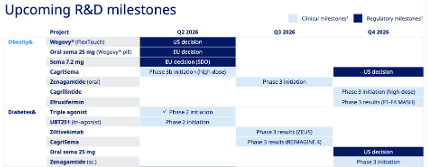
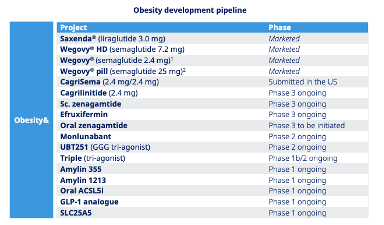
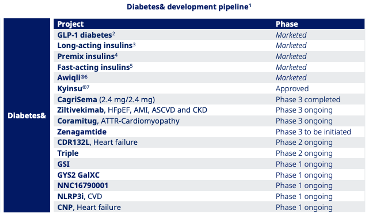
2. MASH pipeline: Novo Nordisk advances FGF21 analog efruxifermin along the phase 3 SYNCHRONY program
Novo Nordisk continues to advance efruxifermin (EFX), a long‑acting FGF21 analogue, which was added to its MASH pipeline with the acquisition of Akero Therapeutics in October 2025. In the call, management emphasized that EFX is the only investigational therapy to demonstrate fibrosis reversal in compensated cirrhosis (F4), a distinction that positions EFX as a potential best‑in‑class, non‑incretin mechanism for advanced MASH.
- The phase 3 SYNCHRONY program currently evaluates EFX in people with MASH and varying stages of fibrosis. These include:
- SYNCHRONY Real-World trial (n=700), evaluating across F1-F4;
- SYNCHRONY Histology trial (n=1,650), across F2-F3 n=1,650); and
- SYNCHRONY Outcomes trial (n=2,150) in F4.
- The real-world study is expected to complete in June 2026, with readout expected in 4Q26. Management highlighted opportunities to evaluate EFX in combination with GLP‑1 RAs.
- As background, in the phase 2b HARMONY trial (n=128), 37% of participants achieved MASH resolution without worsening of fibrosis, and 49% experienced fibrosis improvement without worsening of MASH. In the SYMMETRY trial (n=181), which evaluated EFX in people with F4 cirrhosis, 42% experienced MASH resolution and 29% achieved fibrosis improvement. Across both trials, EFX was found to be generally safe and well-tolerated.
Analysts’ Q&A
On Wegovy
Q (Mr. Richard Vosser, JPMorgan): On oral Wegovy you’ve seen very strong uptake, but there seems to be a bit of a drop off in patients going between the 4 mg and the non-mg doses in terms of titration. So just wanted your views on what might be behind that. Is it the jump in price, tolerability, or weight loss results? And how will your thinking impact the state of the product and growth going forward?
On the supply of oral Wegovy, you’ve referenced launches in a couple of international operations markets. How many markets do you think you can sustain, and generally, how is supply going?
A (Mr. Jamey Millar, EVP, International Operations): Overall, titration is happening as expected and comparable to what we see with injectable Wegovy. So we’re pleased with the progress there. Of course, it’s early post-launch in the evaluative kind of period of usage, but we also see movement toward the 9 mg and 25 mg doses with continued uptake on a week-over-week basis.
A (Mr. Karsten Munk Knudsen, CFO): While we do not have an unlimited supply for the Wegovy pill due to the product design, we are setting a new record in terms of product uptake in the US market, and we’re still able to announce launches in ex-US markets already this year. This speaks really to the supply scaling and inventories we’ve put in place. Then we play it gradually from here in terms of the pace of international rollout.
Q (Dr. Simon Baker, Rothschild & Co.): Firstly on oral Wegovy, I just wonder, in light of the launch and the success of the launch, are you getting a better handle on the price-volume dynamic and as part of that, what’s been your feedback from patients choosing the pill? Is it convenience? Is it efficacy? Or is it cost because it’s the cheapest option in the market at the moment? Just some idea on how this price elasticity is evolving.
Secondly, going back to forecasted costs, not only was SG&A, even after the legal adjustment low in the quarter, R&D was as well. So I just wonder if you could give us an idea on the phasing of R&D through the rest of the year.
A (Mr. Millar): I think on price elasticity, as Mike said, the volume uptake and receptivity in the market suggests that we’ve found that sweet spot in terms of price, leading to record volumes, in terms of oral attractiveness to consumers and patients. The key decision criteria still is magnitude of weight loss, and the Wegovy pill demonstrated 17% weight loss. In addition, the attractiveness of the limited-time offer pricing for the initial starting dose brings people to the product as well.
A (Mr. Knudsen): As you heard from Martin’s introductory comments, we have a lot going in R&D and it’s a strategic priority for the company to expand our pipeline to drive growth, not only for the medium term, but also for the long term. So the R&D ratio in the quarter, yeah is a notch on the low side compared to what we expect for the full year. So expect us to lean in on R&D investment in the coming quarters.
Q (Mr. Peter Verdult, BNP Paribas): Can I push you for some more info on your next-gen GLP-1? Is it fair to assume that this will be differentiated on dosing frequency, or do you still believe there’s scope within the GLP-1 class to differentiate on efficacy or safety?
And then maybe, Jamey, for you, because you are new to the management team and you bring an outsider’s perspective, could you just give us a flavor of what you found when you arrived in your role at Novo? And maybe just a few of the biggest changes you’ve made since taking the role on?
A (Dr. Martin Holst Lange, R&D and CSO): When we talk differentiation, we look at efficacy, differentiation, tolerability, dosing frequency, and maybe scalability. Let’s assume that this one has one or more of these potential traits, but I will not go further into detail, and you’ll have to maybe attend CMP to learn more.
A (Mr. Millar): It’s a big question, but a short answer. Firstly, just a lot of opportunity. I think the first quarter milestones, whether it’s approvals or clinical data readouts, have produced a great environment to make a change in the trajectory of the business specifically. Obviously, Wegovy pills as we’re discussing, but also Wegovy high-dose—the 7.2 milligram strength—really allows us to level the playing field from an efficacy standpoint. So a lot of opportunities and levers to leverage. I think the second thing is the opportunity to integrate our thinking across market access, sales, marketing, medicine, and regulation in a differentiated way.
Q (Dr. Mike Nedelcovych, TD Cowen): On Ziltivekima, I’m wondering if you could tell us between ZEUS, Hermes, Artemis and Athena which trial you view as having the largest opportunity. My second question is on Wegovy IP in the US. I know that the semaglutide composition of matter patent marks the loss of exclusivity date, but there’s almost a decade difference between the drug substance patent and the latest dated patents for Wegovy pill and Wegovy injection. So my question is: does Novo plan to defend that IP?
A (Dr. Lange): From an indication and a potential perspective, Ziltivekimab’s ZEUS, Hermes, and Artemis trials are the only ones that will lead to potential indications, in ASCVD heart failure, preserved ejection fraction, and myocardial infarction. From a medical perspective, we have a high level of confidence in the biology, and there is a potential for improving outcomes in all three of these categories. We still have to flag the high-risk cases for this first-in-class, and we need to establish not only the efficacy in terms of improved outcomes, but also the safety and tolerability of this IL-6 inhibitor. We still see very high potential across those three indications, but it remains high-risk until we’ve seen the first results.
A (Mr. Knudsen): On IP, this industry works in the way that we take very significant risks in early investments in R&D with the fairly low probability of success. In return, we get patent protection for a certain period of time. And that’s why when we then get into that period, it’s very important for us to defend that patent protection granted by patent authorities in the different geographies. This is not something that we decide on our own. And when granted, of course, we intend to defend all our patents in court should they be challenged by generics.
Q (Mr. Graham Parry, Citigroup): Can you quantify the total inventory impacts of Wegovy pill sales in the quarter on the release pre-launch inventory build? Has there been any further inventory increase through the quarter, and do you expect that to run out? Should we expect further inventory increases in subsequent quarters? Secondly, a question just on the CagriSema Co-formulation: why the decision to terminate? Is that a technical or a commercial decision?
A (Mr. Knudsen): For the Wegovy tablet we reported around DKK 2.3 billion sales in the first quarter. Of that, $150 million was related to what we would call “pipeline filling.” Pipeline filling covers both the initial inventory built with the wholesalers and in pharmacies, the customary launch orders. And the second piece is just also the customary inventory built in connection with the brand getting bigger and in this case very, very fast. So that happens for all products. It’s just a question of the pace of the inventory build. We manage inventories in the company in terms of [indiscernible] (01:08:56) hand of inventories, the same way it works with pharmacies and wholesalers in the US. So this is absolutely normal. For what we’re seeing and in terms of going forward, it’s also absolutely normal that there will be a certain degree of inventory built in conjunction with the brands continuing to expand. What you see in IQVIA scripts includes “additional” sales, especially in the early phases of a product lifecycle, which is linked to inventory built across the chain. That happens for all products, and we’ve seen that for decades.
A (Dr. Lange): As you know, we’ve always talked about scaling the dual-chamber device of CagriSema to a full-scale launch. We are very confident in that and saw the Co-formulation as a flexibility upside. Now we have frontloaded and sped up the AMAZE program and the type 2 diabetes program— as well as the all-program facility for Zenagamtide, so with full scalability on the dual-chamber device coming in more or less at the same time or even before the Co-formulation could, it really didn’t make sense to continue. It was not a technical thing, you heard me talk about last quarter. We did see full availability, so it actually works. There was just no need from a production perspective to progress it.
Q (Mr. Carsten Lønborg Madsen, Danske Bank): I was just interested in hearing your wording on the ex-US or Wegovy launch. When you launched in the US, you were quite clear that this would be a full, broad-based, sort of very aggressive US launch of Wegovy, but what’s your sort of commentary on the ex-US launch, including maybe observations on pricing levels outside the US?
A: We are, of course, excited to have the opportunity to launch in selected key markets that lend themselves particularly well to the Wegovy pill in IO. And we see a lot of halo effects from the US already on our injectable franchise. So we are going to go all in when we get the chance to launch. There will not be any half measures in IO, where we launch, but the general play in IO this year—the high-dose launches of 7.2 mg— is where we see good traction with the messaging already. We can then bring the device, and we have a strong belief that it will be part of turning around brand sentiments. So that’s where we have 20 launches planned, and that’s the main play. But of course, it’s a nice addition where we get to launch the Wegovy pill.
Q (Mr. James Quigley, Goldman Sachs): Can you talk to what you’re seeing in the early stages of [indiscernible] (01:03:56) launch? What’s the latest feedback here from physicians and patients, particularly on how to manage relative food and water interactions, but also in terms of the awareness of the weight loss differential between the two products? Are there any patterns or trends in terms of the patients who are going on each drug?
A (Mr. Millar): Of course, it’s early days, but I think what we see so far is an affirmation of the strength of the Wegovy pill profile. As mentioned before, the number one decision criterion is efficacy, and we have, you know, unsurpassed efficacy with that 17% weight loss with Wegovy pill. We also introduced, very quickly, an indirect treatment comparison, which is a well-respected health economic population health approach to indirectly comparing studies based on population adjustment in the phase 3 trials. And that showed better efficacy with Wegovy pill than the competitor, as well as a lower likelihood of discontinuation due to adverse events and specifically GI events. So what we’ve heard in the market is consistent with the strength of our profile.
On Ozempic
Q (Mr. Michael Leuchten, Jefferies): Ozempic had a pretty strong first quarter. Can you speak to the price erosion in the US you saw in Q1? How should that or will that look once the Medicare bridge program kicks in? Would there be collateral damage for Ozempic in diabetes in the second half? That links to my second question on guidance. So, Karsten, you haven’t changed the lower end of the range despite Q1 coming in quite robustly. Which variables are preventing you from lifting that lower end, considering a double-digit decline for the rest of the year?
A (Mr. Knudsen): First, in terms of Ozempic and Ozempic performance, I’d say what we’ve seen here in the first quarter in the US setting, is very much a continuation of what we saw towards the end of last year and the same in connection with full year volume trending and pricing. We’re looking at these— call it minus 10% to up to minus 15%— prior price erosions. Really no change there. That’s what we’re expecting for the full year, so I really don’t want to get into the quarters. But the same guidance this year as last year and even the year before on Ozempic US price.
The important point is that now we’re three months down the road, and we’ve seen a number of items partially playing out our way. In terms of the old script trends, we’ve got the COVID high-dose approval in US. We have decided to launch Wegovy tablet ex-US in a few select markets. And then we’ve gotten more info both on competition and approvals in IO. So based on that, we’re more confident in our outlook, and as a consequence, we parallel shifted both sales and OP ranges by 1% percentage point. So you should see that as increased confidence. I’m with you that the range is a notch, but you should take it as a signal of confidence that we lifted the range by 1% percentage point.
On pricing, sales, and market dynamics of GLP-1 RAs
Q (Mr. James Gordon, Barclays): My first question is on the pricing of long-term semaglutide for obesity. I know you’ve invested tens of billions in CapEx to brew efficiently at scale, but in India, I think there are at least eight generics approved at very low prices— at least the vial form is just $14. So it does look like the generic companies can chemically synthesize at very low cost. So for your latest thinking about manufacturing efficiency, do you still think, in the long-term, synthesis generics would struggle to match you on price ? Or do you think once the patents extend West, it will be tougher for next-generation obesity therapies?
The second question was just a follow-up on some of the comments on SG&A. You did a 47% adjusted EBIT margin, and it sounds like with the one-off legal, it’s still mid 40s, but the midpoint of the full-year guide is more like 40%. Is this because of more R&D, or is it also because you’re allowing for more sales and marketing for an ex-US or Wegovy launch? Otherwise, it seems like you would get to a higher margin.
A (Mr. Knudsen): First and foremost on sema manufacturing, we are hypercompetitive in terms of unit cost in production and in terms of scale. We’re able to produce pretty much at a global scale. What that leads to in pricing in different healthcare systems and different channels remains to be seen. I think it’s important to note that more of this is going to be available in the cash segment with different partners and at different go-to-market models, so let’s see where pricing pans out, and how pricing can influence brand recognition and brand loyalty compared to generics in this market. And consequently, how much price differentiation and price upgrade can we go for next-generation products remains to be seen.
I think India is not a good proxy for other markets, to be honest.
To your second question on margins, then I would say it’s important to note that our point of departure is already very competitive compared to the rest of our peers in the industry. Being at a 40% operating margin— or 40 % plus—is already very high. Strategically, it’s more important for us to invest in future growth than short-term margin optimization. It’s important that we optimize the opportunity. We have short and medium-term outlooks with the assets in the market or coming to the market soon, while investing in the pipeline. So yes, we could drive for a higher margin, but that’s not our strategy and not the intention. I would say though that we are very disciplined and rational. As I also said in the beginning, with our resources, we have almost 10,000 fewer FTEs today compared to a year ago. So we are really reallocating our resources towards our key growth opportunities.
Q (Mr. Evan Seigerman, BMO Capital Markets): First question on the impact of generic Semaglutide in Canada: how are you thinking about that market as you have contemplated your guidance? Secondarily, taking a step back, we’ve had some pretty striking data for sickle cell disease. I know it’s becoming a pillar of the company, so is this an area where you should be leaning in more to complement what you’re doing in obesity and diabetes, giving investors that next leg of growth?
A (Mr. Emil Kongshoej Larsen, EVP, International Operations): We now have two approved generics in Canada. There was a slight delay compared to where they could have come in from a regulatory point of view. Took some time to get the approvals. It has not made us change our overall guidance at the group level. We will see low , single-digit impact at group levels. While we don’t guide at the country level in terms of impact, I can tell you we are very ready, and our leading tactic in Canada, aimed at saving costs, has seen a very good uptake both for Ozempic and Wegovy. That gives us a lot of maneuverability as we see how this unfolds, and I think you all know that the in Canada, after three generics, there’s a mandated 65% price decline versus our list price. So we know sort of the game there, and we are ready to play it, particularly with the savings card. And we have optionality on the second brand as well.
A (Mr. Mike Doustdar, CEO): Our strategy is to really ensure that we drive growth short, medium, and long-term, with the current products. We plan also to do that with the pipeline of our products across all therapy areas. I am incredibly proud and happy with what I have seen with Etavopivat that comes in a family of many other best-in-class and great rare blood and hematology drugs. So that, of course, is no secret. But all in all, stay tuned, and we'll share with you more and more about our overall strategy. The main aim is to really make sure we have multiple legs to stand on so we can drive growth short, medium, and long-term.
Q (Mr. Florent Cespedes, Oddo BHF): First, to follow up on the GLP-1 franchising diabetes, I was wondering how you could re-energize the business in the coming years. It would be mainly driven by innovation, and you can maybe give us a little more color on the two different geographical areas: US and ex-US. A question on UBT251 regarding the tri-agonist: when will we have more visibility on the profiles of these two products, and would you intend to keep one or both going forward?
A (Mr. Larsen): We are very much focused on getting back in the game with Ozempic now that we have a full supply, and we are already seeing emerging positive trends in terms of share growth, particularly in Ukraine. What will further increase the momentum we believe is our 2.0 launch. We’ve had the first launches in three European markets, particularly in Germany. We are seeing very good traction, but also in the Netherlands. In the UK, it always takes a bit longer with local payers et cetera, but we remain optimistic there as well. You might know that in IO, two-thirds of all patients have already gotten to our 1 mg dose, and many would benefit from upside trading, both in terms of weight and A1c.
If I can maybe add another combo angle here, we’ve actually in China launched Kyinsu, which is a once-weekly combination of a GLP-1 and our weekly insulin. We will launch it this summer; we just got the approval, and we have good expectations. We have seen very good traction so far in insulin. In
China, we own the two leading brands, so they can solidify our position and spur good traction for our once-weekly insulin in China. So whether it’s insulin or it’s GLP-1, we still have a strong belief in diabetes across IO.
A (Mr. Millar): In the US, we will continue to focus not only on the efficacy in terms of A1c reduction and type 2 diabetes, but also on the holistic benefits in terms of semaglutide’s unique cardiovascular benefits. And then, as mentioned, the Ozempic pill we’ve just introduced this week will breathe new life into Ozempic based on the iconic naming and awareness of Ozempic generally.
A (Dr. Lange): It’s important to call out the two tri-agonists. One is combining GLP-1, GIP, and Glucagon, and the other, GLP-1, GIP, and Amylin. I think based on what we see so far, they both have a substantial potential to introduce weight loss across the board with a good safety and tolerability profile, but they may also contain individual traits that will clearly differentiate them. That could be effects on the liver, or bones, respectively. It could also be differentiated by weight loss in different subpopulations. So if you take that approach, it’s early days. We intend to progress both. So we understand the full efficacy framework for both biologically, and for safety and tolerability. And we'll see more insights as we already have phase 2 data of UBT251. You’ve seen the weight loss potential in both obesity and diabetes. It seems to be quite stellar.
On the safety and efficacy of tri-agonist development
Q (Mr. James Quigley, Goldman Sachs): On the AMAZE program, you started serving phase 3 trials on ClinicalTrials.gov. Can you talk to the dosing protocol here? In the obesity trials, the primary endpoint is up to week 84. So, taking into account one of the key learnings from the CagriSema program, how flexible is the dosing in the protocol, particularly given the unpredictability we saw in CagriSema? And also before seeing the results of REDEFINE 11?
A (Dr. Lange): We did take a lot of learnings from the REDEFINE program. As you know, there were polls around the patient population. The need and wish to lose a substantial amount of weight is obviously a key imperative, and we’ve implemented that starting with REDEFINE 11, but also in the AMAZE program.
We have the flexible dosing, so we now prompt patients more, or we allow investigators to work more with patients to get them to higher doses while maintaining flexibility within trial. Approximately one-third of patients need flexible dosing to achieve full weight loss potential, and we need to allow that, while providing guidance. We implemented that in REDEFINE 11. Without going into too much detail, we can already now see a substantial impact. I haven’t seen the weight loss data, but I’m looking at this hydration data, and the model seems to work, and we have employed more or less the same algorithm in the AMAZE program. We’re quite confident that will help patients really achieve the full weight loss potential of Amycretin or Zenagamtide.
Close Concerns’ Questions
1. With oral Wegovy added to the formularies of the nation’s three largest PBMs, how does Novo Nordisk expect the uptake to evolve in the near term?
2. What proportion of patients are refilling oral Wegovy prescriptions? Does Novo Nordisk expect the adherence rate to be similar to that of other injectable GLP-1 RAs?
3. Does Novo Nordisk see a difference in adherence rates between patients on Wegovy or Ozempic through direct-to-consumer platforms vs. traditional prescribers? Likewise, are there differences between people accessing medications through self-pay vs. insured channels?
4. How does Novo Nordisk plan to mitigate generic competition for semaglutide in India, China, Canada, and Brazil?
5. In the pipeline, how does Novo Nordisk aim to differentiate CagriSema from other incretin-based therapies, like semaglutide and tirzepatide?
6. How have patients and prescribers responded to once-weekly insulin Awiqli in markets where it has already launched? How do they inform Novo Nordisk’s approach to launch Awiqli in the US?
-- Kayla Mathieu, Elizabeth Rose, Kat Moon, Monica Oxenreiter, and Kelly Close
[1] Of note, Novo Nordisk did not report the reported geographic sales of its medicines in 1Q26. Rather, the company included “adjusted sales” in its report, which affects our analysis.