ATTD 2026 Day #4 Highlights –
Executive Highlights
- ATTD closed out four days of jam-packed learning on diabetes technologies and therapies with a bang. To close the conference, Prof. Tadej Battelino (University of Ljubljana, Slovenia) welcomed Prof. Chantal Mathieu (KU Leuven, Belgium) to the stage to honor her for the ATTD Breakthrough Outcomes Award. This award recognizes Prof. Mathieu’s longstanding dedication to advancing innovation and high-quality care for people with diabetes. Like the conference organizers, we continue to be amazed by Prof. Mathieu. Not just today, but every day, we have been fortunate to learn from her and have been moved by her grace and commitment to the field. Her inspiring speech, which highlighted her passion for basic scientific research and for patient stories, beautifully reflected that commitment.
- In tech, real-world evidence was a clear focus of the day:
- Dr. Lori Laffel (Joslin Diabetes Center), Dr. Jamie Wood (University Hospitals), and Dr. Gregory Forlenza (University of Colorado Anschutz) presented a series of real-world analyses demonstrating that Omnipod 5 is safe and effective in several understudied populations: (i) individuals with very low insulin requirements (<5 units/day); (ii) children under two years of age with T1D; and (iii) users who adopt specific system settings and behaviors associated with optimal outcomes.
- Senseonics Chief Medical Officer Dr. Francine Kaufman presented real-world data (n=5,059) of Eversense 365 CGM users on open-loop insulin therapy and preliminary data from its integration with Sequel’s twiist AID. On the latter, the Eversense 365-twiist system met and exceeded all glycemic targets, with 77% TIR, 54% TITR, 2.8% Time below Range, and 21% Time above Range.
- Dr. Joanna Mitri (Sequel) shared real-world data from the first twiist users in the US (n=274). Mean TIR reached 77%, generally consistent across age groups. Mean Time below Range (TBR) was 2.9%, with no age group’s mean TBR exceeding 3.0%. Notably, 78% of users met the target TIR >70%, and 89% met target Time <54 mg/dl of <1%.
- MiniMed showed that lower glucose alert thresholds (50-60 mg/dL) were associated with the best TIR (~75%) and lower TAR, asking users to “trust the system.”
- Speakers also presented much clinical evidence on diabetes technologies:
- MiniMed 780G showed strong TIR results across both the Simplera Sync and Instinct sensors, with non-inferiority in TIR achieved (79.1% with Instinct versus 80.6% with Simplera Sync).
- Dr. Feng Chen (SiBionics, China) presented promising lab results for the accuracy of the SiBionics GS3 CGM. The company reported an overall MARD of 9.0%, which improved throughout the course of the wear time, decreasing from 12.4% on Day 1 to 8.2% by Day 5.
- Elsewhere, Dr. Gregory Forlenza (University of Colorado Anshutz) gave a popular and fascinating talk on the use of ultra-rapid acting insulins in AID systems, reviewing the evidence demonstrating their safety and efficacy and concluding that further work on their pharmacokinetics and system algorithms can lead to the next “generational leap” in diabetes technology.
- In therapy, Dr. Jay Skyler (University of Miami) outlined a conceptual framework for addressing the major scientific and clinical challenges in T1D. Dr. Skyler highlighted several immunomodulatory strategies to halt immune destruction and discussed experimental efforts to regenerate beta cells through pathways that stimulate beta cell proliferation or differentiation from progenitor cells.
Table of Contents
-
Technology Highlights
- 1. An opportunity for a “generational leap”: Use of ultra-rapid acting insulin in AID systems
- 2. Interoception and education: Prof. Stephanie Amiel on the CLEAR trial and HARPdoc for improving hypoglycemia awareness in T1D
- 3. Omnipod 5 in the real world: Evidence in infants and toddlers, those with very low insulin requirements, and those using optimal settings
- 4. Sequel MedTech shares real-world data from the first twiist users (n=274), with mean TIR of 77% and TBR of 2.9%
- 5. MiniMed presents three studies comparing Simplera Sync and Instinct, studying low glucose alerts, and exploring missed meal boluses
- 6. Results from Italian study of adolescents with T1D switching between Guardian 4 and Simplera Sync sensors
- 7. New Eversense 365 CGM real-world data (n=5,000+) shows up to 72% TIR; preliminary data from twiist AID integration shows 77% TIR
- 8. CGM use is not effective for healthy lifestyle modification in people without diabetes
- 9. Diabetic ketoacidosis in T1D and T2D: Epidemiology, provider perspectives, and the promising role of technology
- 10. Dr. David Klonoff on the glycemic risk index and its clinical and research benefits
- 11. MiniMed symposium spotlights simplified onboarding for 780G, future innovation pipeline, and MiniMed Go
- 12. Clinical implications of extended-wear infusion sites in insulin pump therapy
- 13. Biolinq’s intradermal glucose monitor: Feasibility data supports longer wear time
- 14. Accuracy of a novel, real-time CGM in adults with diabetes: A preliminary analysis
- 15. India D-Tech session takes on diabetes care gaps with clinical decision support and practical CGM use
- 16. Use of CGM in gestational diabetes; CGM metrics show differences in GDM status well before OGTT
- 17. Glycemic outcomes associated with switching from intermittently-scanned to real-time CGM in people with T2D on insulin
- 18. dQ&A study examines the impact of AID systems on diabetes burden and user satisfaction
- 19. First phase 1 data for PharmaSens’ combined insulin patch pump and CGM; second clinical trial planned for 2Q26
- 20. The future of smart pens: Market growth, real‑world uptake, and pediatric use
- 21. *NEW* Feasibility of decentralized clinical trials in diabetes management studies
- 22. *NEW* Dr. Jennifer Sherr on strategies to optimize outcomes with AID
- 23. *NEW* Large real‑world analysis finds significant reductions in MACE and mortality with CGM use in T1D
- 24. *NEW* Glycemic impact of FreeStyle Libre 2 in Italians with T2D on basal-only insulin
- 25. *NEW* Fasting with AID: A review of the safety and efficacy data during religious fasts, including Ramadan and Yom Kippur
- 26. *NEW* Real-world iLet AID data demonstrates glycemic benefit with and without meal boluses
- 27. *NEW* Real-world head-to-head comparison of MiniMed 780G and Control-IQ show strong glycemic outcomes
- 28. *NEW* Tirzepatide use supported by Dexcom CGM leads to greater A1c reduction than tirzepatide alone
-
Therapy Highlights
- 29. Dr. Jay Skyler and his “mission to eradicate T1D”
- 30. Saliva-based screening: T1D Scout’s program to expand large-scale screening by identifying high-risk populations
- 31. Obesity in T1D: Etiology and GLP-1 RAs as a promising therapy
- 32. *NEW* Tirzepatide use significantly improves CGM metrics in people with T1D
- 33. *NEW* Single-center study finds tirzepatide leads to greater hypoglycemia risk than semaglutide in T1D
- Big Picture Highlights
Technology Highlights
1. An opportunity for a “generational leap”: Use of ultra-rapid acting insulin in AID systems
Dr. Gregory Forlenza (University of Colorado Anschutz) reviewed data on the use of ultra-rapid acting insulins within AID systems. He concluded that while ultra-rapid acting insulins appear safe and provide modest improvements in AID performance, greater benefits likely lie with next-generation insulins and algorithms.
- Dr. Forlenza discussed factors contributing to provider and system uncertainty in existing devices. Insulin onset – the time before patients begin to see an effect – is a major driver of the need for bolusing. Delays in onset can contribute to hyperglycemia and insulin resistance. Most clinicians focus on insulin peak (the time to maximum action), which also reinforces the need for bolusing. However, Dr. Forlenza emphasized the importance of time to elimination. The typical three- to four-hour elimination window introduces significant uncertainty and is a major contributor to hypoglycemia risk, consequently limiting how aggressively AID systems can operate. He also reviewed several fast-acting insulin formulations. Fiasp and Lyumjev have pharmacokinetic profiles that differ from earlier insulins but are not dramatically faster. By contrast, AT-247, developed by Arecor, has demonstrated faster early action than both Fiasp and insulin aspart, with the greatest improvement occurring at the front end of the activity curve.
- Published studies evaluating ultra-rapid acting insulins with commercial AID systems consistently show small but statistically significant improvements in glycemic management without safety concerns. Modeling analyses suggest that incorporating faster insulin kinetics directly into control algorithms could further enhance these benefits. Newer insulins in development may therefore provide greater improvements than those observed to date. A recent summary of ultra-rapid acting insulins (not limited to AID) found that these formulations reduce one-hour postprandial glucose excursions, though this benefit is attenuated when patients do not bolus. Several clinical studies illustrate these effects:
- A study evaluating Lyumjev with the Control-IQ system in children, adolescents, and adults showed an increase in TIR from 65% with standard rapid-acting insulin to 67%. TITR increased from 40% to 42%, with no increase in hypoglycemia. Dr. Forlenza noted that patient-reported outcomes were particularly compelling, as adolescents who participated in the study quickly requested the insulin off-label. He said that these insulins enabled mealtime boluses.
- In adults using MiniMed 780G study with Fiasp, TIR increased from 68% to 77%, and reached 83% when users applied recommended optimal settings. A pediatric study using the same system with Lyumjev reported an increase in TIR from 51% to 69%, rising to 75% under optimal settings.
- Looking ahead, Dr. Forlenza suggested that adapting AID algorithms to account for faster-acting insulins may further improve outcomes. Current algorithms were designed around older sensors and slower insulin formulations. He highlighted an in-silico analysis evaluating modified AID algorithms with ultra-rapid acting insulins including aspart, Fiasp, and AT-247. In the model, TIR did not change with aspart, increased from 66% to 71% with Fiasp, and rose from 68% to 75% with AT-247. An additional 24-hour simulation study in a FCL system showed that TIR improves both as insulin action becomes faster and as algorithms are optimized to account for these kinetics. Reduced baseline hypoglycemia allows systems to operate more aggressively, decreasing hyperglycemia and increasing TIR. Faster insulin pharmacokinetics also enable more aggressive mealtime management. Ultimately, Dr. Forlenza suggested that these advances could enable a generational leap in AID performance.
2. Interoception and education: Prof. Stephanie Amiel on the CLEAR trial and HARPdoc for improving hypoglycemia awareness in T1D
Prof. Stephanie Amiel (Kings College London, UK) gave an overview of the CLEAR trial for improving hypoglycemia awareness among adults with T1D. CLEAR, or Closed Loop and Education for Hypoglycemia Awareness Restoration, is an NIH-funded trial (estimated n=324) that will randomize participants to receive or not receive MyHypoCOMPaSS (MyHC), an educational course for recognizing, understanding, and managing hypoglycemia. The trial will enroll people using hybrid closed loop and also those naïve to the technology, who will be randomized to either hybrid closed loop or MyHC. At one year, hybrid closed loop users who have not regained awareness – as measured by epinephrine and autonomic symptom responses to experimental hypoglycemia – will be randomized to receive or not receive HARPdoc, or Hypoglycemia Awareness Restoration Program for adults with T1D and problematic hypoglycemia despite optimized care. According to clinicatrials.gov, the study began in October 2025 and is estimated to be completed in July 2029. As of this week, 44 participants have been recruited, primarily in the US and UK, plus a few in Australia.
- HARPdoc. HARPdoc is a psycho-educational course that uses motivational interviewing and cognitive behavioral theory to address potential cognitive and motivational barriers contributing to impaired awareness of hypoglycemia (IAH). Prof. Amiel said that HARPdoc was designed based on the hypothesis that IAH and untreated hypoglycemic events feed into each other in a vicious cycle that further impairs the brain’s abilities for hypoglycemia sensing. She added that hypoglycemic events likely go untreated from three reasons: (i) patients are prioritizing hyperglycemia; (ii) they have normalized asymptomatic hypoglycemia; and (iii) they minimize any hypoglycemia concerns.
- HARPdoc helps people to recognize and address such thoughts and also aims to improve interoception, or the ability to sense the internal state of one’s body. Specifically, the program reviews ways to recognize the signs and symptoms of hypoglycemia and encourage participants to focus their attention on how their mind, body, and senses are responding. HARPdoc has been shown to improve awareness, mental health scores, and quality of life. It has also been shown to be cost-effective, reducing the use of hospital and community health services.
- In CLEAR, HARPdoc will be delivered as a six-week group intervention (4-8 participants) led by two diabetes educators.
Meanwhile, Prof. Amiel said that retaining or regaining awareness of hypoglycemia, even when using technologies that provide sensor warnings of falling glucose and AID that reduces hypoglycemia risk, provides positive health benefits, including further protection from severe hypoglycemia.
3. Omnipod 5 in the real world: Evidence in infants and toddlers, those with very low insulin requirements, and those using optimal settings
Dr. Lori Laffel (Joslin Diabetes Center), Dr. Jamie Wood (University Hospitals), and Dr. Gregory Forlenza (University of Colorado Anschutz) presented a series of real-world analyses on Omnipod 5 to a packed oral symposium. Across the three presentations, the speakers demonstrated that Omnipod 5 is safe and effective in several understudied populations: (i) individuals with very low insulin requirements (<5 units/day); (ii) children under two years of age with T1D; and (iii) users who adopt specific system settings and behaviors associated with optimal outcomes.
- Dr. Laffel presented a retrospective analysis evaluating Omnipod 5 safety and effectiveness in individuals with T1D (≥2 years) and T2D (≥18 years) using <5 units of total daily insulin (TDD; n=3,588). Omnipod 5 currently carries an FDA warning against use in individuals with insulin requirements this low. The analysis included participant data from days with TDD <5 units between January 1, 2022, and July 30, 2025, and required ≥282 insulin delivery cycles[1]/day and ≥90% time in automated mode.
- Baseline characteristics. Participants had a median age of 18 years. Median TDD was 3.7 units/day in those with T1D (62% basal) and 3.3 units/day in those with T2D (96% basal). Participants with T1D and T2D delivered a median of 1.9 and 0.1 boluses per day, respectively. Median insulin-to-carbohydrate ratio (ICR) was 25 g/U and 11 g/U in those with T1D and T2D, respectively. Median correct-above thresholds were set at 130 mg/dL for T1D and 120 mg/dL for T2D. However, over half of adults with T1D used the lowest target (110 mg/dL), as did nearly half of participants with T2D.
- Results. TIR outcomes were strong across age groups with T1D. As expected, the youngest participants had the lowest median TIR (75%), with outcomes improving with age to 93% and 92% in adolescents and adults with T1D, respectively. Median TIR among participants with T2D reached 92%. Use of the lowest glucose target was associated with particularly large improvements in young children and school age children (reaching 87% and 94% TIR, respectively), as TIR in teenagers and adults remained similar at an impressive 95%. Time below Range (TBR) remained very low, with a median of <15 minutes per day across all groups with T1D and those with T2D.
- Dr. Wood presented a retrospective analysis examining the safety and efficacy of Omnipod 5 in children with T1D under two years of age (n=288), a population younger than the currently approved indication. She concluded that Omnipod 5 appears safe and effective in infants and toddlers, with lower glucose targets associated with higher TIR.
- Baseline characteristics. Participants had a mean age of 11 months and a mean TDD of approximately eight units/day, split roughly evenly between basal and bolus insulin. They averaged 7.5 boluses per day. Few participants used the lowest targets (110 mg/dL: 4%; 120 mg/dL: 14%). Approximately one-quarter selected targets of 130 mg/dL or 140 mg/dL each, while nearly one-third used 150 mg/dL. This trend reflected, according to Dr. Wood, caregiver concerns about hypoglycemia in this age group. Participants spent nearly 90% of time in automated mode and rarely used the activity feature.
- Results. Consistent with findings in older populations, lower targets were associated with significantly higher TIR compared with the cohort mean (63% vs. 49%). More than one-quarter of those using the lowest targets achieved the recommended TIR >70%. Hypoglycemia remained minimal regardless of target (overall TBR 1.0%; 1.4% among those using the lowest targets). Across all target settings, 98% and 94% of participants met clinical goals of <4% TBR and <1% Time <54 mg/dL, respectively.
- Dr. Forlenza reported a large retrospective study evaluating predictors of optimal glycemic outcomes among Omnipod 5 users with T1D (n=176,739). This first large-scale analysis of user behaviors and system settings identified factors associated with achieving high TIR while maintaining hypoglycemia within recommended limits.
- The analysis found that older users, those located in Europe, individuals using a 110 mg/dL glucose target, those with more aggressive ICR or correction factors, users spending more time in automated mode, and those bolusing more frequently were more likely to meet TIR goals. No differences were observed by sex, correct-above setting, or insulin duration of action. Regression analysis showed that individuals bolusing 3-4, 4-5, and ≥5 times per day had 10-fold, four-fold, and two-fold greater likelihoods of meeting TIR targets compared with those bolusing <3 times daily. Spending ≥90% of time in automated mode and using a 110 mg/dL target were each associated with more than a four-fold increased likelihood of achieving target TIR (compared with <60% in automated mode and using a 130-150 mg/dL target, respectively). Use of a 120 mg/dL target and an ICR × TDD <350 were each associated with roughly two-fold greater likelihood. Duration of insulin action was not associated with outcomes. These analyses led investigators to define and rank practical cutoff values for the top five modifiable factors predicting TIR >70% among Omnipod 5 users.
Rank | Modifiable Factor | Cutoff Selected for Practical Implementation |
1 | Number of boluses per day | ≥3-5 |
2 | Percent time in automated mode | ≥90% |
3 | Target glucose | 110 mg/dL |
4 | Insulin to carbohydrate ratio | ≤350/TDD |
5 | Correction factor (mg/dL) | ≤1,500/TDD |
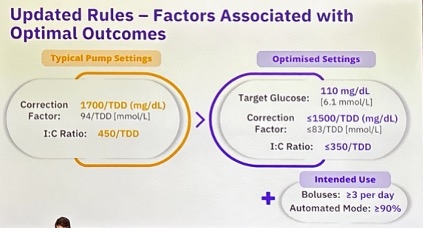
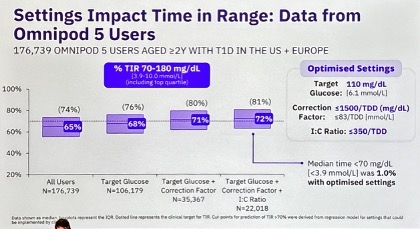
- As more of these optimal settings were used, median TIR increased (see figure below). When all optimized settings were implemented, strong outcomes were observed across age groups (TIR 76% in children and adolescents and 77% in adults) while maintaining TBR within targets (1.6% and 1.0%, respectively). Within the pediatric cohort, outcomes remained robust across age groups (TIR 74% in ages 2-5 and 13-17 years; 78% in ages 6-12). TBR remained below recommended thresholds in all groups. Notably, among the youngest children (2-5 years), a group where caregivers often fear hypoglycemia, use of optimized settings including a lower glucose target was associated with better outcomes (TIR 74%) compared with the same settings paired with a higher target (70%).
4. Sequel MedTech shares real-world data from the first twiist users (n=274), with mean TIR of 77% and TBR of 2.9%
Sequel MedTech hosted an early-morning symposium led by Dr. Joanna Mitri (CMO), who was joined by panelists Dr. Lori Laffel (Joslin Diabetes Center) and Dr. Leah Wilson (Oregon Health & Science University). Dr. Mitri began by introducing the basic features of the twiist AID system, such as compatibility with Eversense 365 and FreeStyle Libre 3 Plus and allowing for user interaction with the pump through the iPhone and Apple Watch. Dr. Laffel then explained how twiist seeks to address unexplained hyperglycemic events due to occlusions, with Dr. Mitri offering context by explaining twiist’s technological features allowing for faster occlusion detection than other AID systems. Finally, Dr. Mitri shared real-world data on glycemic outcomes from the first users of the twiist AID system in the US.
- On occlusion detection and the prevalence of unexplained hyperglycemia among AID users, Dr. Laffel reviewed survey data captured from individuals in the T1D Exchange community (n= 248). Among respondents, nearly half (49%) of pump users experienced at least one unexplained hyperglycemic event without obvious pod or infusion set dislodgement. Of those with unexplained hyperglycemia who then changed their pod/infusion set, 71% reported a maximum glucose level of ≥300 mg/dL, with 21% reporting ≥400 mg/dL. Only 3% of cases received occlusion alarms. These instances were often accompanied by psychological distress, with 73% of these respondents experiencing unexplained hyperglycemia reporting emotional distress and 70% feeling unpleasant physical symptoms at the time. Dr. Wilson commented that her clinical experience generally aligns with survey results, and that she is excited to have a technology that can give much earlier occlusion alerts.
- Dr. Mitri also shared real-world data from the first twiist users in the US (n=274). Mean TIR reached 77%, generally consistent across age groups. Mean Time below Range (TBR) was 2.9%, with no age group’s mean TBR exceeding 3.0%. Notably, 78% of users met the target TIR >70%, and 89% met target Time <54 mg/dl of <1%. The study also categorized users by bolus frequency: (i) <3/day; (ii) 3-4/day; and (iii) >4/day. All groups saw mean TIR exceed target, with no significant differences between the three groups. When assessing TIR by correction range midpoints (n=177), users were categorized as having midpoint <100 mg/dL (n=18) or 100-140 mg/dL (n = 159). Mean TIR was 76% for the entire cohort, with TBR of 2.7%. The group with midpoint target <100 mg/dL group demonstrated slightly higher TIR (82%) than the group with midpoint target of 100-140 mg/dL group (75%), though both met target TIR. However, this came with more TBR, with those using lower targets exceeding consensus recommendations at a mean TBR of 5.1%. By comparison, those using higher targets had a mean TBR of 2.5%. In Q&A, Dr. Wilson said that she generally starts new users on a higher target and moves it progressively lower so that it is not a “shock to the system,” although it is not clear what the approach of these new twiist users was in the study.
- In a later oral presentation, Dr. Mitri presented an expanded analysis of the first nearly 2,000 twiist users in the US (n=1,946). Mean TIR in this expanded cohort was 74%. The analysis similarly separated users by midpoint glucose target during wear. Those with a midpoint target <100 mg/dL achieved superior TIR outcomes (83%) compared to those with a higher target (72%). Similar to the smaller real-world analysis noted above, this TIR improvement came with greater TBR. Mean time in hypoglycemia was 5.3% in those using a lower target, compared to 2.1% in those using higher targets.
5. MiniMed presents three studies comparing Simplera Sync and Instinct, studying low glucose alerts, and exploring missed meal boluses
Dr. Ohad Cohen (MiniMed) and Prof. Amir Tirosh (Tel Aviv University, Israel) presented new data on the MiniMed 780G AID system. Using real-world data and RCT study designs, significant insights were presented spanning low glucose alerts, meal bolusing, and a comparison of outcomes with the Simplera Sync and Instinct sensors.
- MiniMed 780G delivers strong TIR results across both the Simplera Sync and Instinct sensors. MiniMed recently launched its Instinct sensor, made by Abbott, for use with MiniMed 780G. This increases sensor options beyond Medtronic’s Simplera Sync and Guardian 4 sensors. The authors sought to evaluate the integration and performance of the new sensor in an RCT. In a crossover study design, 24 participants with T1D used either Instinct or Simplera Sync for six weeks, then transitioned to the other sensor for six weeks. The primary endpoint was non-inferiority of TIR (within 5%), with secondary endpoints including A1c values and other metrics.
- Non-inferiority in TIR was achieved, with a 79.1% TIR seen with Instinct versus 80.6% with Simplera Sync. Time above Range (TAR) and Time below Range (TBR) were also similar between users of the two devices. A1c values were similar as well, with an average of 6.7% with Instinct and 6.8% with Simplera Sync. No meaningful differences were observed in any other CGM endpoints, and no severe safety events occurred. The authors conclude that both sensors are safe and effective, and that they can be interchanged without meaningful differences in glycemic management. This supports the idea that “it’s not the sensor, it’s the algorithm” – that the strong TIR outcomes seen with MiniMed 780G can be validated.
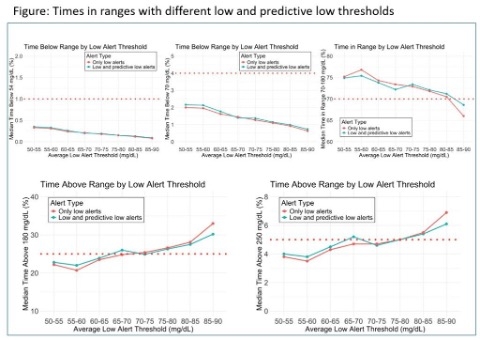
- “Trusting the system” by lowering the threshold for low glucose alerts improves glycemic outcomes. Low glucose alerts are essential for CGM and MDI users to prevent severe complications due to hypoglycemia. The authors sought to quantify the associations between selected low alert thresholds and real-world glycemic outcomes of the AID system MiniMed 780G, given that TBR is significantly lower for users who enable low glucose alerts. Dr. Cohen said that many AID users spend a significant amount of time at relatively low glucose levels as they seek tighter glucose management and improved long-term outcomes. He therefore hypothesized that excessively strict low alerts may negatively impact TIR for AID users. To study this, data were taken from 184,247 MiniMed 780G users in Europe, the Middle East, and Africa (EMEA).
- Lower thresholds (50-60 mg/dL) were associated with the best TIR (~75%) and lower TAR. In contrast, low alert thresholds higher than 75 mg/dL resulted in Time above 180 mg/dL and Time above 250 mg/dL exceeding recommended targets. The authors found that TIR decreased with higher alert thresholds. The highest median Time below 54 mg/dL was 0.35% and Time below 70 mg/dL was 2.16% for alert thresholds of 50-55 mg/dL (see figure below). Dr. Cohen urged users to “forget the concept of the past” that frequent alerts are absolutely essential to prevent hypoglycemia, urging users to trust the system. He said that this approach is safe and definitively provides better outcomes.
- Although auto-corrections are possible, meal bolusing still confers strong benefit to TIR. Bolusing before meals consistently delivers the best glycemic outcomes for AID users, but the MiniMed 780G’s auto-correction feature also allows for positive outcomes when boluses are missed. The authors sought to examine the relationship between daily meals with missed boluses (MMB), on-time boluses (MOTB), and glycemic management in real-world users. Data were taken from 128,177 users in the EMEA region. A machine learning model was used to detect meals based on CGM data. Users averaged 4.6 meals per day, with 1.8 MMB and 1.7 MOTB. MMB were more frequent among younger users (47% in those aged 16-28 years versus 32% in those >55 years).
- Each additional MOTB increased TIR by 9.2 percentage points in the low bolus profile and 4.3 points in the high profile. Use of recommended optimal settings improved TIR by 3-4 points across all profiles and narrowed the TIR benefit gap of each additional MOTB between low and high profiles (8.1% versus 4.4%, respectively). The authors conclude that more frequent MOTBs are strongly associated with improved TIR, especially for patients who bolus infrequently. Across bolus profiles, the use of recommended optimal settings improves glycemic outcomes and reduces variability. Dr. Cohen said that targeted education and support may substantially enhance glycemic management.
6. Results from Italian study of adolescents with T1D switching between Guardian 4 and Simplera Sync sensors
Dr. Marco Marigliano (University of Verona, Italy) introduced a multicenter clinical study on behalf of the Italian Society for Pediatric Diabetes. The study evaluated clinical and patient-reported outcomes in adolescents with T1D who switched from Guardian 4 sensors to Simplera Sync with the MiniMed 780G system. Dr. Marigliano and other researchers sought to determine whether the next-generation sensor could improve time spent in automated mode, glycemic control, and user satisfaction among adolescents already using the MiniMed 780G hybrid closed-loop system.
- The prospective multicenter study was conducted across 14 Italian centers and included 42 adolescents with T1D. Clinical and device data were collected for approximately 30 days before and after the sensor switch. Key metrics included: (i) time spent in automated mode; (ii) glucose management indicators; (iii) insulin dosing parameters; and (iv) standard glycemic metrics such as mean glucose, TIR, TITR, TBR, and GMI. Patient-reported outcomes were assessed using the Diabetes Impact and Device Satisfaction (DIDS) questionnaire, comprising 11 items that evaluate satisfaction with the insulin delivery system and the perceived impact of diabetes management on daily life. Comparisons were based on the final two weeks of use with each sensor generation.
- The results demonstrated improvements across several clinical and experiential measures following the transition to the new sensor. Participants spent more time in automated mode, reflecting improved sensor usability and system continuity. Glycemic outcomes also showed modest but statistically significant improvements, including slight reductions in mean glucose and GMI, an increase in TIR from 76% to 79%, and improvements in nighttime glucose control without an increase in hypoglycemia. Measures of glucose variability also improved. Importantly, adolescents reported higher satisfaction with the overall system and a reduced perceived burden of diabetes management when using the newer sensor. Overall, the findings suggest that switching to an improved CGM sensor within an AID system may enhance both glycemic outcomes and user satisfaction among adolescents with T1D.
7. New Eversense 365 CGM real-world data (n=5,000+) shows up to 72% TIR; preliminary data from twiist AID integration shows 77% TIR
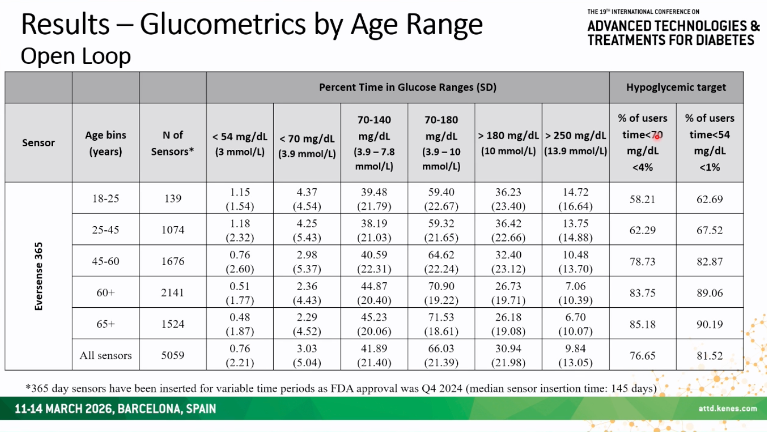
Senseonics Chief Medical Officer Dr. Francine Kaufman presented real-world data (n=5,059) of Eversense 365 CGM users on open-loop insulin therapy, followed by preliminary data from its integration with Sequel’s twiist AID. As background, Eversense 365 received FDA clearance in October 2024 and became compatible with Sequel’s twiist AID system this year. Glucometrics for the first and second six months of Eversense 365 use were compared to each other, as well as to the 180-day Eversense E3 CGM. Sensor glucose data were sourced from the company’s Eversense Data Management System, with a mean of ~28,000 CGM readings per sensor.
- Participant demographics. Self-reported mean age for Eversense 365 users was 55 years old (38% male, 26% female, 35% unreported/other). Most participants had T2D (56%), about quarter had T1D (26%), and the remainder did not report. Median transmitter wear time was 94% (~343 days). E3 users (n=2,412) had a slightly younger mean age of 51 years old. About 41% had T2D, 36% had T1D, and the remainder did not report. Transmitter wear time was 91% (~164 days).
- Sensor glucose and glucose management indicator (GMI). Mean sensor glucose and GMI for Eversense 365 were similar in the first and second six months. Across all 365 days, these values were 160 mg/dL and 7.1%, respectively. Similarly, mean sensor glucose and GMI for E3 was 163 mg/dL and 7.2%.
- Time in glucose ranges. Time in glucose ranges was also similar in the first and second six months. Across all days, Time in Range (70-180 mg/dL) was 66%, compared to 64% with E3. Time below 70 mg/dL was 3%, and Time below 54 mg/dL was 0.8%. E3 users were similar with 2.7% Time below 70 mg/dL and 0.7% Time below 54 mg/dL. For both Eversense 365 and E3 users, 77% of users were able to achieve less than 4% Time below 70 mg/dL. Additionally, 82% of users achieved <1% Time below 54 mg/dL, compared to 78% for E3 users.
- Notably, when stratified by age, glucometrics improved with advancing age, as shown below. Users 65+ years old (n=1,524) achieved up to 72% TIR, with over 90% meeting the target for <1% of Time <54 mg/dL. GMI ranged from 7.32% in the youngest age group (18-25) to 6.99% in the oldest group (65+).
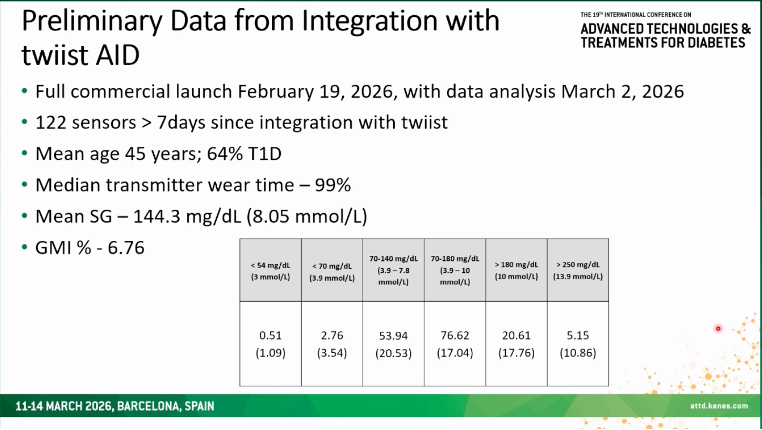
- Preliminary data from Eversense 365’s first AID integration. Excitingly, Dr. Kaufman shared early data from Eversense 365’s integration with Sequel’s twiist AID system, which full launched in the US less than a month ago. Over 120 users and counting have already started on the system. Around two-thirds of users have T1D. Mean sensor glucose and GMI were 144 mg/dL and 6.8%, respectively. As shown below, the system met and exceeded all glycemic targets, with 77% TIR, 54% Time in Tight Range, 2.8% Time below Range, and 21% Time above Range. We are encouraged to see that the longest-duration CGM on the market is now integrated with AID and producing favorable results. We look forward to more data in the future, and we are curious to know whether there are any significant differences between users with T1D vs. T2D.
8. CGM use is not effective for healthy lifestyle modification in people without diabetes
Dr. Nicola Guess (University of Oxford, UK) presented a highly compelling analysis showing that the popular use of CGM for lifestyle and weight management may not be effective in people without diabetes. Her analysis is particularly timely as OTC CGMs Stelo and Lingo continue to gain popularity, with an estimated 400,000+ users worldwide. The two CGMs are explicitly marketed toward lifestyle management. She began with a quote from Son et al. that encapsulates the common understanding of CGM for T2D: “By providing immediate, personalized feedback on how specific food choices and physical activity impact glucose levels, CGM serves as a powerful ‘silent persuader’ for positive behavioral change.” While long-term management of glucose levels is, of course, important for preventing complications, Dr. Guess said that it may not be the most important factor for longevity – LDL cholesterol and blood pressure levels are more important for cardiovascular disease prevention, which remains the leading cause of mortality for people with diabetes. Therefore, even for T2D, while glucose levels are positioned as the most important consideration for lifestyle modification, this approach does not stand up to scrutiny, said Dr. Guess. When moving from T2D to the broader population without diabetes, this approach exhibits even greater weaknesses.
- Glucose is not a meaningful clinical outcome in people without diabetes, nor is it a useful guide for the dietary changes that patients seek. Dr. Guess identified three major clinical goals that the majority of people seek with lifestyle modification: weight loss, improvement of cardiovascular disease risk factors, and an improved quality of life/mental wellbeing. Further, specific lifestyle changes to achieve these goals have already been identified: eating a low-calorie/eucaloric diet, increasing intake of whole plants/fiber while reducing saturated fat/sugar intake, increased physical activity, and increasing sleep quality, respectively.
- Thus far, there has been no evidence that the use of CGM can impact these outcomes, said Dr. Guess (see below). She cited a 2024 study by Richardson et al in support of this concept. In many studies, the use of CGM leads to a reduction in carbohydrate consumption, yet these carbohydrates are replaced by fats, with no change in energy intake. This increase in fat consumption can actually even increase cardiovascular disease risk, said Dr. Guess. There has been some evidence of CGM leading to an increase in physical activity, yet this can also be replicated by other methods such as simple attention to activity or the use of a pedometer.
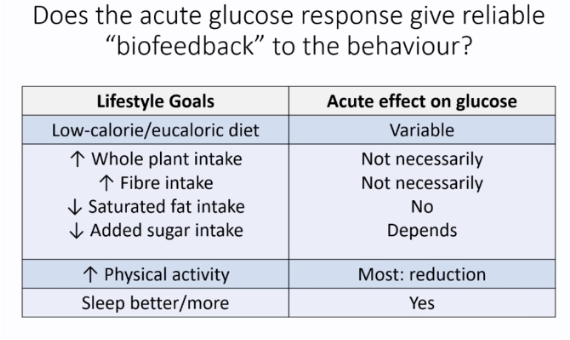
- Dr. Guess presented a 2022 study by Popp et al. demonstrating that dietary interventions to reduce postprandial glucose do not directly lead to weight loss – instead, lowering caloric intake is what reliably leads to weight loss. While dietary modifications that lower postprandial glucose levels often are lower in caloric content compared to other diets, low glucose levels alone cannot lead to weight loss. She also discussed a 2022 RCT by Chekima et al. that explored the effect of CGM use during dieting (n=40). Over two months, participants using CGM lost about 0.8 kg more than those not using CGM, which Dr. Guess said was statistically but not clinically significant. The two groups had no difference in LDL levels or physical activity. Notably, fat intake increased. In sum, Dr. Guess said that relying on the acute glucose response is not particularly helpful for guiding “worthwhile” behavior change.
- The concept of CGM use for personal nutrition is not supported by evidence. Dr. Guess noted that individual responses to meals vary greatly at different time points and in different situations, which complicates the use of CGM data to avoid certain foods. The “second meal” effect describes the disproportionately large spikes seen in the second meal after consuming a low-carbohydrate meal – for example, if one had a fiber-rich, low-carbohydrate dinner and then had a normal carbohydrate load for breakfast, they would see an unexpectedly large glucose spike in their CGM data. This is not due to an inherent glycemic intolerance for the food, but simply the circumstances. Because of such nuance, Dr. Guess again emphasized that CGM data cannot reliably be used to identify specific foods to avoid for individuals. As CGM steadily expands in popularity, Dr. Guess believes the field should seek adequate evidence before joining the lifestyle trend.
9. Diabetic ketoacidosis in T1D and T2D: Epidemiology, provider perspectives, and the promising role of technology
In this fascinating oral presentation session, Prof. Samuel Seidu (University of Leicester, UK) and Dr. Richard Bergenstal (HealthPartners) discussed the burden of diabetic ketoacidosis (DKA) among people with diabetes. Prof. Seidu presented 21-year trends and risk factors of DKA in the UK. Dr. Bergenstal followed with findings from a qualitative study to understand providers’ perspectives on hyperketonemia, diabetic ketoacidosis, and ketone monitoring in people with diabetes.
- To understand the prevalence of DKA over time, Prof. Seidu conducted a retrospective observational cohort study using data from 1999 to 2021. Adults with T1D (n=78,856) or T2D (n=577,088) who had a prescription for any antihyperglycemic therapy or insulin were included. As expected, over a median follow-up of eight years, people with T1D had a higher DKA incidence rate (52.8 vs. 2.8 per 1,000 patient-years) than people with T2D. Likewise, a higher proportion of people with T1D experienced more than one (18% vs. 1.8%) or two DKA events (8% vs. 0.3%).
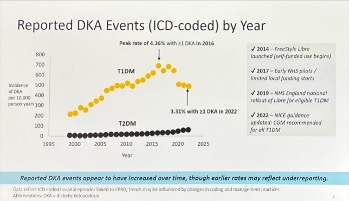
- DKA events in T1D increased over time and declined after the mid-2010s (see figure below). DKA events for T2D increased over time. While this trend may be attributed to underreporting in earlier years, the emergence and adoption of CGMs in the UK likely contributed to the reduced DKA rates in T1D, as well. Moreover, Prof. Seidu found that people with an earlier onset of diabetes, those from lower socioeconomic status, and women were more likely to have an incidence of DKA.
- To better understand the real-world burden and management of DKA, Dr. Bergenstal conducted surveys among providers in the US (n=16) recruited through the T1D Exchange Registry and a survey vendor. Investigators conducted 16 interviews with eight endocrinologists (five adult and three pediatric) and eight primary care physicians. Participants were 52 years old on average, and 44% were female. On average, they had 20 years of practicing post-residency and spent 43% of their time providing direct care to people with T1D or T2D. By geography, eight were from the Midwest, five from the South, one from the Northeast, and two from the West of the US. Topics included the impact of hyperketonemia, burden of ketone monitoring, prevention and management strategies, and adoption of ketone monitoring technology.
- Risk factors of DKA include suboptimal diabetes management, comorbid conditions, limited diabetes education, SGLT-2 inhibitor use, and alcohol consumption. Hydrating, monitoring glucose, and remembering to take insulin are the most important strategies to avoid DKA. Thus, education around ketone monitoring is crucial to DKA prevention. Providers reported that people with T1D generally receive more guidance on checking ketones than people with T2D.
- Ketone monitoring and management are mostly driven by patients. Providers rely on patients to self-monitor and record ketone levels to discuss in clinical settings. Providers often are only able to use CGM data to evaluate glycemic health and DKA risks. Patients face several barriers to ketone monitoring, such as costly co-pay, emotional burdens, or logistical challenges, like dexterity, cognitive abilities, or access to testing supplies. Although blood tests are significantly more reliable, many patients have reported favoring urine ketone strips over finger-prick tests due to perceived lower burdens.
10. Dr. David Klonoff on the glycemic risk index and its clinical and research benefits
Dr. David Klonoff (Diabetes Research Institute, Mills-Peninsula Medical Center [Sutter Health]) gave an overview of the glycemic risk index (GRI) and its applications. As background, GRI was introduced four years ago in the Journal of Diabetes Science and Technology. It was developed through a clinician survey on the quality of 225 14-day CGM tracings. The tracings came from equal numbers of adults with T1D on MDI, T1D on open loop, T1D on AID, and T2D on MDI. A total of 330 clinicians rated these tracings from 0-100, and the results were used to create the following weighted formula:
GRI = (3.0 * % Time below 54 mg/dL) + (2.4 * % Time between 54-69 mg/dL) + (1.6 * % Time above 250 mg/dL) + (0.8 * % Time between 181-250 mg/dL)
The differences in weight (i.e., Time below 54 mg/dL is more heavily weighted than Time above 250 mg/dL) were determined based on assessments of the clinical impact of each range. GRI is a single number and ranges from 0 to 100 (a lower score/percentile is more desirable). GRI can also be plotted on a two-dimensional plot separated into five quintiles, as shown below, allowing further insight into whether an individual is experiencing more hyper- or hypoglycemia.
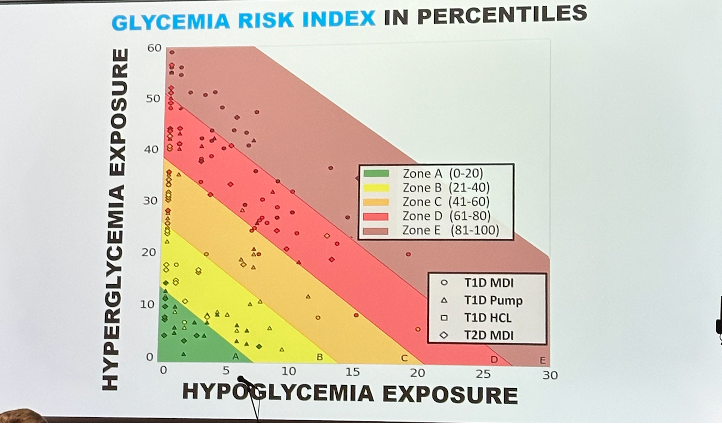
- Clinical and research applications of GRI. Dr. Klonoff highlighted that GRI can be traced for the same patient over time to see trends. Clinicians may benefit from establishing their own cut point for when they decide to modify treatment for their patients (e.g., take action if above 50th percentile). On a population level, GRI can also facilitate triaging and risk stratification, particularly with the five quintiles/zones.
- A recently published survey study evaluating the clinical utility of the GRI found that 50% of participants prefer using GRI and the AGP report together (39% preferred GRI alone and 11% preferred the AGP report alone). Three-fourths of respondents also said they would be willing to integrate GRI into their workflow. In a recently published consensus report, the committee, which included Dr. Klonoff, unanimously recommended the addition of GRI to data visualization software (e.g., CGM apps, AGP reports).
11. MiniMed symposium spotlights simplified onboarding for 780G, future innovation pipeline, and MiniMed Go
In this MiniMed-sponsored symposium, speakers discussed how diabetes education and therapy support remain essential to successful technology use and offered a forward-looking view of the company’s device ecosystem. Across talks related to MiniMed 780G onboarding, future pipeline developments, and the MiniMed Go Smart MDI system, speakers emphasized the fundamental role of diabetes technology, which should improve glycemic outcomes while reducing the burden of both clinicians and patients through efficient workflows, greater flexibility, and more decision support. Speakers included Ms. Núria Alonso-Carril (Hospital Universitaria Mútua de Terrassa, Spain), Dr. Maya Laron-Hirsch (Sheba Medical Center, Israel), Dr. Goran Petrovski (MiniMed), and Dr. Madison Smith (MiniMed).
- Ms. Alonso-Carril and Dr. Laron-Hirsch said structured set-up plans and practical meal-management strategies can reduce burden for both clinicians and people with diabetes. Ms. Alonso-Carril explained that while the SmartGuard algorithm automates: (i) basal delivery; (ii) correction boluses; (iii) and insulin sensitivity adjustments, clinicians still play a crucial role in setting key parameters including carbohydrate ratios, glucose target, and active insulin time (AIT). Recommended settings include a 100 mg/dL target and a two-hour AIT, but these should be individualized as needed. She also outlined a stepwise follow-up approach in CareLink Clinic, beginning with a review of therapy goals and followed by an assessment of behavioral barriers and manual mode settings adjustment when needed.
- Dr. Laron-Hirsch issued guidance for real-world challenges during mealtime, reiterating that the best outcomes are achieved when boluses are given 10-20 minutes before carbohydrate-containing meals. She also provided more flexible strategies when that does not happen. For instance, if a meal bolus is initially forgotten but remembered within 30 minutes of eating, she suggested giving the bolus. For later missed boluses, she advised relying on the system’s autocorrections. She also said that snacks containing up to 20 grams of carbohydrates may cause only slight dysglycemia and reviewed “Fix/Flex” meal approaches that may help some individuals achieve positive glycemic outcomes with less intensive carbohydrate counting.
- Dr. Petrovski framed MiniMed’s innovation pipeline around expanding choice and increasing flexibility for people with diabetes. He began by addressing recent cross-sensor comparison claims in Europe, noting that currently marketed CGMs have all undergone comparable regulatory review and calibration against the YSI standard, making broad claims that one system’s TIR is artificially inflated versus another’s difficult to support. He pointed to data presented during ATTD 2026 showing that users switching from Guardian 4 to the Abbott-made Instinct CGM on the MiniMed 780G maintained similar outcomes, reinforcing his view that the algorithm plays a major role in driving glycemic results.
- Turning to pipeline updates, Dr. Petrovski highlighted MiniMed’s growing ecosystem, which include: (i) a smart MDI system; (ii) the MiniMed 780G with newly approved sensor options; (iii) a new screenless pump with a next-generation algorithm; and (iv) a longer-wear patch pump in development. He described the upcoming AID system as one designed to reduce or even remove the burden of carbohydrate counting and still deliver TIR above 70%. Dr. Petrovski said the company’s longer-term goal consists of enabling a single-app, seamless transition across pens, pumps, and upcoming patch devices depending on the user’s needs. In his perspective, these advances could allow clinicians and diabetes care teams to spend less time on logistics and more time supporting lifestyle changes and overall quality of life for their patients.
- Dr. Smith presented MiniMed Go as the next step in connected multiple daily injections (MDI), designed to reduce challenges by bringing CGM, smart pen data, and insulin decision support into one app. She explained that the system integrates the InPen smart insulin pen with either Medtronic’s Simplera CGM or the new Instinct sensor, allowing users to view glucose data and recommendations in one place. She said that MiniMed Go is intended to “meet patients where they are” with a dose calculator that supports carbohydrate counting, meal estimation, and fixed-dose approaches. Throughout her talk, Dr. Smith discussed the importance of how the system reduces alert fatigue and turns CGM data into actionable prompts. For instance, rather than having high-glucose alerts without context, the system considers recent dosing and insulin on board to suppress these alerts, identify likely missed meal doses, and issue correct high glucose notification only when additional insulin is actually needed. She also highlighted the CareLink Clinic-integrated reports, which provide tools to assess mealtime dosing behaviors and overnight fasting windows for long-acting insulin assessment. Overall, MiniMed Go was positioned both as an informative clinical management platform for those on MDI therapy.
12. Clinical implications of extended-wear infusion sites in insulin pump therapy
Dr. Irl Hirsch (University of Washington) examined the pathophysiology and clinical implications of infusion-site complications associated with insulin pump therapy, particularly in the context of increasingly prolonged infusion set wear times. As more people with diabetes are finding success with AID systems, there are still many questions that have arisen in response to extended-wear options. Evidence from animal models suggests that longer catheter dwell times are associated with greater inflammatory responses, yet comparable long-term human biopsy data for modern extended-wear infusion sets remain unavailable. Repeated use of infusion sites may lead to lipohypertrophy, inflammation, and fibrosis, which collectively degrade the usability of subcutaneous tissue for insulin delivery and compromise glycemic management.
- Insulin formulation components constitute a major driver of tissue toxicity. Experimental studies demonstrate that higher concentrations of preserved insulin reduce cellular viability, causing local cytotoxicity, infusion-set failure, skin irritation, and occasional allergic reactions. Although these preservatives are necessary to maintain insulin stability, their presence likely contributes to premature infusion set occlusion and inflammatory responses at the infusion site. Even further, Dr. Hirsch shared that the physical trauma of catheter insertion plays a critical role in initiating inflammation. Studies in animal models suggest that insertion trauma, rather than the biomaterial itself, triggers early neutrophilic responses, while commonly used Teflon pump catheters appear to produce a more sustained inflammatory reaction than continuous glucose monitoring sensors, with greater recruitment of macrophages, mast cells, and inflammatory cytokines.
- Dr. Hirsch further discussed the clinical consequences of these inflammatory processes, including increased tissue resistance to insulin flow and reduced insulin absorption over time. He shared experimental data indicating that prolonged catheter wear leads to progressively lower circulating insulin levels and higher glucose concentrations, consistent with inflammation-mediated impairment of delivery. Dr. Hirsch highlighted alternative strategies aimed at mitigating tissue damage. One proposed approach involved mechanical “tension off-loading” devices designed to reduce mechanical stress in lipohypertrophic tissue. Preliminary clinical data suggest that such interventions may decrease lipohypertrophy and fibrosis, thereby improving local tissue health. While infusion site failure is multifactorial, largely driven by insulin preservatives and insertion-related trauma, Dr. Hirsch underscored the need for new strategies to reduce inflammation and preserve subcutaneous tissue integrity in long-term insulin pump therapy.
13. Biolinq’s intradermal glucose monitor: Feasibility data supports longer wear time
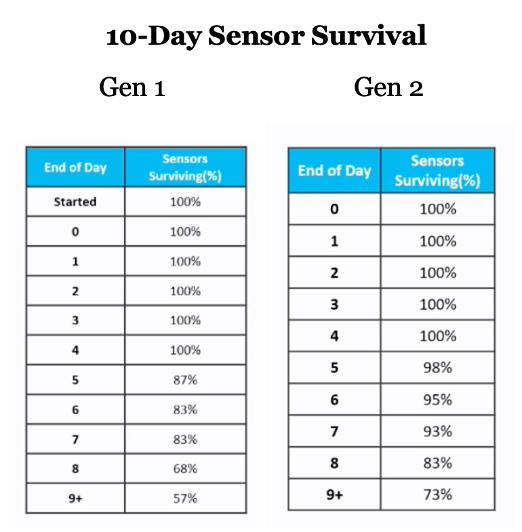
Dr. Jared Tangney (Biolinq) shared feasibility data (n=59) supporting an increased wear time for its intradermal sensor. Biolinq is currently working on the second generation (Gen 2) of its sensor. As background, its first generation (Gen 1) sensor, Biolinq Shine, was FDA cleared in September 2025 for a five-day wear time (see our interview with Biolinq CEO Mr. Rich Yang here). Gen 2 will also feature an updated chemistry design and new ten-day algorithm.
- Study demographics. Mean age was 49 years old and roughly half were female. Most participants had T1D (63%). Among the 22 participants with T2D, 11 were not on insulin, seven were on basal insulin only, and four were on intensive insulin therapy. Mean A1c was 7.0%.
- Sensor survival. As shown below, the Gen 2 sensor demonstrated improved survival, with 73% of sensors surviving for nine or more days, compared to 57% with Gen 1. Dr. Tangney also shared that the insertion depth of the sensor after ten days remains consistent with the depth at five days from prior studies.
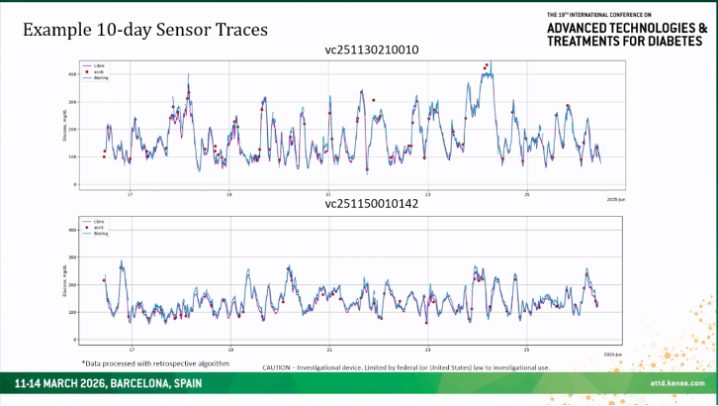
- Sensor traces. Dr. Tangney also shared example sensor traces comparing the sensor (light blue line in photo below) to Roche’s AccuChek BGM (red dots) and Abbott’s Libre 3+ (dark blue line).
14. Accuracy of a novel, real-time CGM in adults with diabetes: A preliminary analysis
In a rapidly-paced oral presentation, Dr. Feng Chen (SiBionics, China) presented promising lab results for the accuracy of the SiBionics GS3 CGM. The 14-day GS3 sensor was announced at ATTD 2025, after it had been awarded CE-Mark approval. It is currently available to patients in select EU markets, including Croatia, Spain, Greece, Norway, and Poland. In Q&A, Dr. Chen noted that SiBionics was at a “pilot stage” in its discussions with the FDA, and is currently designing its study procedure.
- In this accuracy study, adults (n=36) with either T1D (n=35) or T2D (n=1) on insulin therapy (n=23 via pump) were recruited to wear two sensors. Blood was sampled at three visits at various points throughout a 15-day wear cycle. YSI was the comparator, and nearly 4,000 matched data pairs were obtained across a wide range of glucose values, rates of change, and wear times.
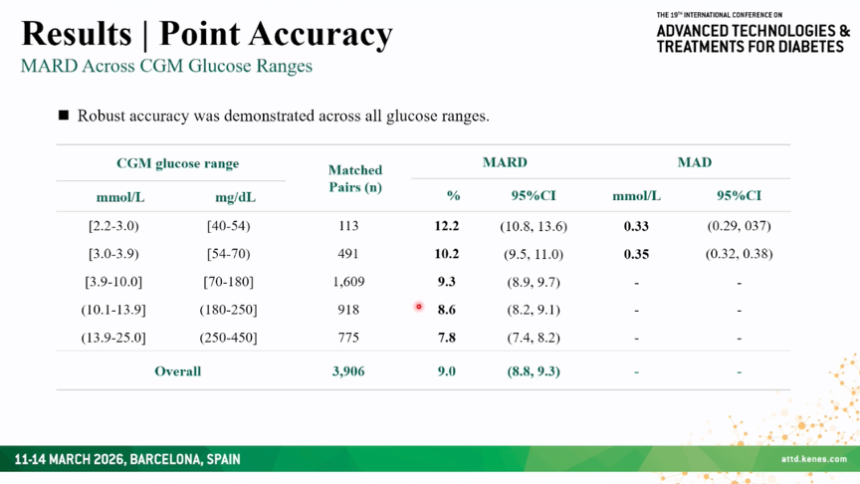
- SiBionics reported an overall MARD of 9.0% (see Figure 1). In the hypoglycemia range, MARD was 12.2% (40-54 mg/dL) and 10.2% (54-70 mg/dL). MARD improved throughout the course of the wear time, decreasing from 12.4% on Day 1 to 8.2% by Day 5. Accuracy seemed to track well across various rates of change. 99.2% of matched data points fell in Zone A or B of the Clarke error grid. The sensor’s alarms did not detect hypoglycemia (<70 mg/dl) in only 4.6% of the cases and gave a false hypoglycemia alarm in 10.2% of cases.
15. India D-Tech session takes on diabetes care gaps with clinical decision support and practical CGM use
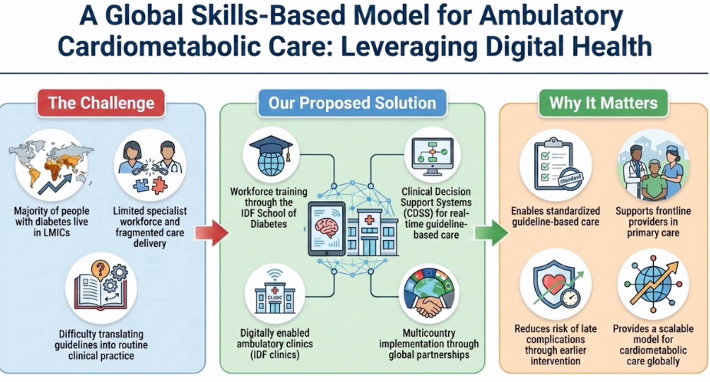
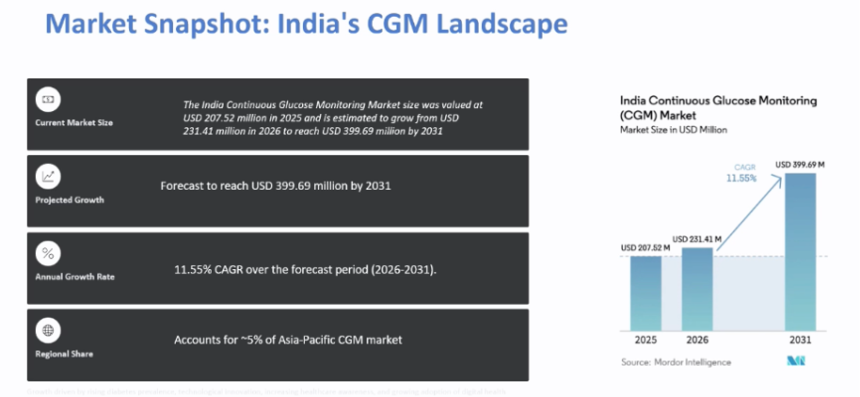
ATTD’s India D-Tech session offered a focused look at the realities shaping diabetes technology adoption in India, where the burden of diabetes is massive, care is often fragmented, and most treatment costs are still paid out of pocket. Across talks from Dr. Amit Gupta (IDF School of Diabetes and Education Committee) and Dr. Manoj Chawla (Lina Diabetes Care, India), a central theme was that better diabetes care in India will require more than just access to new devices. There is a need for solutions that are both scalable and locally relevant, including workflow-integrated clinical decision support and more pragmatic models for CGM use in cost-sensitive settings. Together, the talks made it clear that translating technological progress into better care in India and low- and middle-income countries (LMICs) more broadly will depend on building systems that reflect the regions’ epidemiology, workforce constraints, and out-of-pocket cost environment.
- Dr. Gupta opened the session by focusing on the gap between diabetes guidelines and daily clinical practice, saying that clinical decision support systems (CDSS) may be essential for making evidence-based care scalable in India and other LMICs. He said that although new guidance is constantly being issued by professional societies, implementation remains inconsistent because most diabetes and cardiometabolic care is delivered in primary care rather than specialist settings. In this context, Dr. Gupta said that education alone is insufficient unless it is embedded directly into the clinical workflow. He positioned CDSS as a tool that can help translate knowledge into practice by offering real-time, evidence-based recommendations and standardized care pathways during visits. Drawing on examples including the AIIMS cardiometabolic CDSS program in Delhi and prior digital health interventions such as SimCard, mPower Heart, CARRS, and mWellCare, he suggested that CDSS-based approaches can improve quality of care, support treatment intensification, and potentially reduce burnout.
- Dr. Chawla then examined CGM adoption in India, saying that access strategies must reflect the country’s large diabetes burden and the financial realities of a predominantly self-pay market. He described India as a “raging storm,” not only because of the country’s more than 100 million people living with diabetes and 136 million with prediabetes, but also because roughly 70% of diabetes care spending is out of pocket. He stressed that this distinguishes India from reimbursed, higher-income markets, where device use is often a prescribing decision. By contrast, CGM use in India often becomes a negotiation around affordability and perceived value. Throughout his presentation, Dr. Chawla said that CGM implementation must be pragmatic and cost sensitive. He also highlighted the rising burden across neighboring Middle East and North African (MENA) and South Asian countries, noting that IDF projects the number of people living with diabetes will nearly double in MENA and increase by 73% in South Asia by 2050. He paired this with India’s large pediatric T1D population as a reminder that access challenges extend beyond adult T2D care.
- He described intermittent CGM as an increasingly practical strategy, particularly for people with T2D in resource-constrained settings. Specifically, a single 14-day CGM cycle costing ~5,000 rupees (~$54) may be sustainable on a quarterly basis, translating to an annual cost of ~20,000 rupees ($216) per year. In his view, this model can still enable therapy optimization and behavior change, even if continuous use remains financially out of reach. He also reviewed the current CGM landscape in India, noting that the market has already made multiple systems available, including Abbott’s FreeStyle Libre portfolio and other locally available platforms. He said Dexcom is expected to enter the market in the coming months as well.
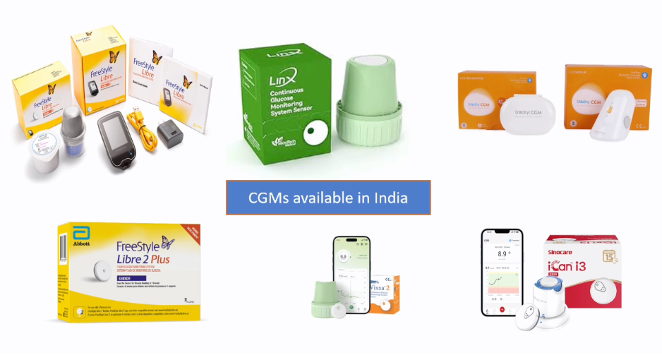
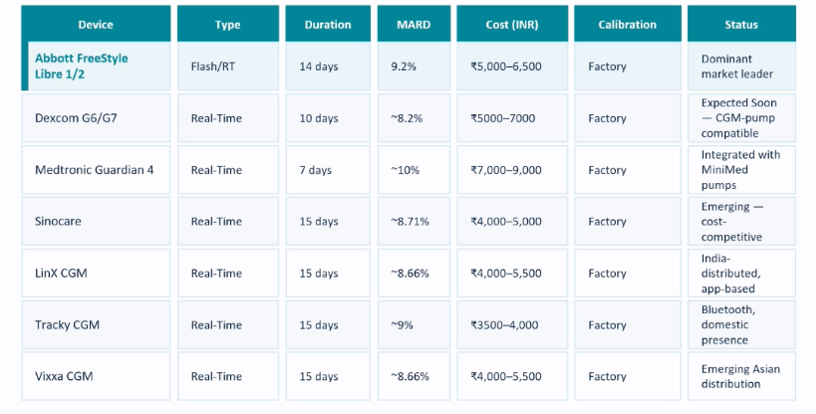
- Dr. Chawla added affordability is only one component of the challenge. Limited device availability outside urban cities, a lack of clinicians able to interpret CGM data, and the heavy workload faced by primary care physicians all remain obstacles to wider adoption. To address this, he pointed to ongoing training efforts, such as the RSSDI CGM clinic, which runs monthly to help physicians build confidence in interpreting and using CGM data. Looking ahead, Dr. Chawla pointed to lower-cost options, digital integration of CGM into EHR platforms, and emerging innovation such as the IIT Madras CGM prototype with a disposable microneedle patch at roughly half the cost of existing products as encouraging signs of momentum.
16. Use of CGM in gestational diabetes; CGM metrics show differences in GDM status well before OGTT
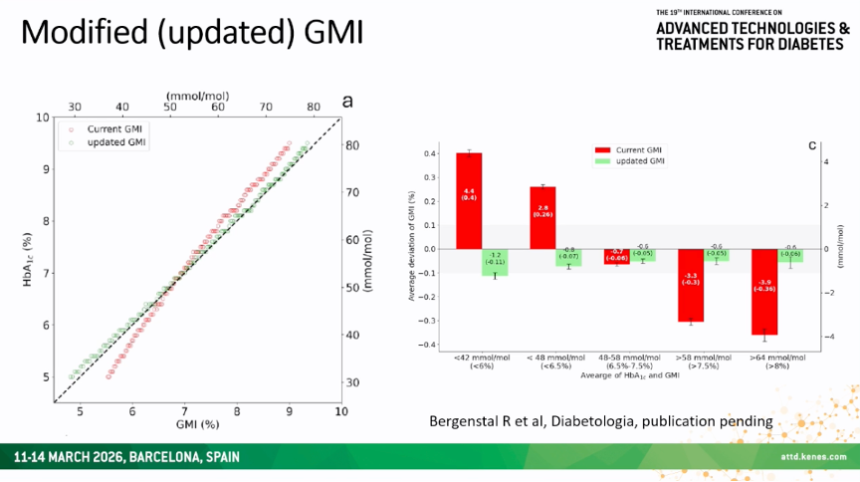
On Saturday afternoon, Dr. Anders Calrson (International Diabetes Center) presented a post-hoc analysis of the Glucose Levels Across Maternity (GLAM) study in pregnant women who wore Dexcom G6 Pro. The observational study enrolled 937 pregnant women and assigned them to wear blinded CGM as early as possible in the study. A total of 768 women were included in the final analysis of women who had both CGM data and OGTT data. Of the 768 women, 58 (7.6%) ended up developing gestational diabetes. In comparing individuals who did and did not develop gestational diabetes, almost every CGM metric was different. Women who developed gestational diabetes had higher mean glucose levels (109 vs. 100 mg/dL); lower Time in Pregnancy Range (TIPR; 87% vs. 94%); and increased Time >140 mg/dL (7% vs. 3%). Perhaps most importantly, all of these differences were observed prior to the OGTT (i.e., 24-28 weeks), suggesting CGM can be used to diagnose gestational diabetes in advance of the traditional OGTT.
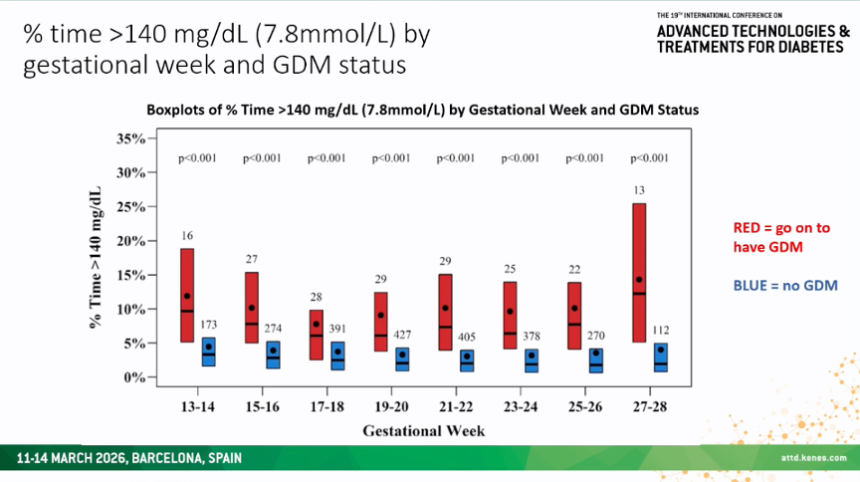
- Dr. Carlson also presented a new “updated GMI” (uGMI) metric which saw better concordance with A1c in pregnancy compared with traditional GMI. This updated GMI is meant to better match with A1c, especially improving at the more extreme low and high glucose ranges where original GMI values do not match as closely with A1c. When comparing uGMI, GMI, and A1c values in the GLAM cohort, uGMI matched much more closely with A1c compared to GMI. For example, when using original GMI, the GMI values were greater than A1c values for 98% of readings, demonstrating a clear bias in the GMI metric for this population. By contrast, uGMI was only greater than A1c in 56% of pairs, demonstrating a well-calibrated metric.
17. Glycemic outcomes associated with switching from intermittently-scanned to real-time CGM in people with T2D on insulin
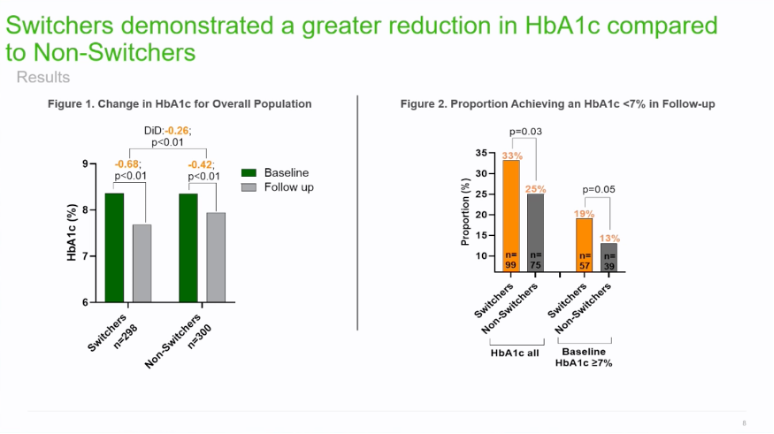
In this short study, Dr. Katia Hannah (Dexcom) compared A1c change in people with T2D on insulin therapy after switching from intermittently scanned CGM (isCGM) to real-time CGM (rtCGM). This retrospective observational study was based on a large de-identified US health claims database. The rtCGM was a Dexcom CGM product (Dexcom G-series, according to Dr. Hannah), and the study design specified Abbott FreeStyle Libre 1 or 2 for the isCGM device. (Note that FreeStyle Libre 3 meets the definition of rtCGM).
- The investigators designated two cohorts: ‘switchers’ (n=298) and ‘non-switchers’ (n=300). Switchers moved from isCGM to rtCGM during the analysis period (2016-2025) and all participants spent at least 12 months on either isCGM (non-switchers) or rtCGM (for the switchers). All participants were CGM-naïve before isCGM. The two cohorts were propensity score matched based on baseline characteristics, such as medications taken. Results were measured at 12 months from rtCGM initiation or at a random dateafter isCGM initiation. Mean A1c at baseline was 8.4%.
- Over the 12-month follow up period, both switchers and non-switchers meaningfully improved their glycemic management, demonstrating the power of CGM (see Figure 1). However, after the cohorts were matched, the switchers’ A1c improved by 0.3 percentage points more than non-switchers. Additionally, a larger proportion of switchers achieved an A1c <7.0% during follow up (33% vs. 25%, p<0.05).
- Dr. Hannah concluded by noting that the study was not able to identify the factors that determined switching behavior, nor the extent to which participants wore or used the CGM as directed. Other factors might have impacted the analysis – for example, participants in both groups might have ‘traded up’ to next generation CGMs at different rates, and the study may have ‘lost’ participants who traded up to Libre 3. Nonetheless, this work clearly confirms how CGM continues to deliver increasing benefits over time for people with T2D.
18. dQ&A study examines the impact of AID systems on diabetes burden and user satisfaction
In a well-attended afternoon session, Ms. Anuradha Krishnan (dQ&A) delivered an oral presentation examining the psychosocial impact of AID systems in people with diabetes. Investigators conducted a cross-sectional survey (n=1,403) among people with T1D and T2D using an AID system in Europe and Canada. The study aimed to understand user satisfaction, perceived algorithm performance, and psychosocial outcomes.
- Overall, 50% of participants reported high satisfaction with the AID system, compared to just 38% who were satisfied with overall diabetes management. Ms. Krishnan said that this suggests patients consider other factors, like the ease of use, impact on sleep, and quality of life, when evaluating their devices. Further analyses found that participants who feel “in control of their diabetes management,” perceive that they put minimal, if any, effort into managing their diabetes, and feel that diabetes interferes with their lives less, are more likely to be satisfied with their AID systems and overall diabetes management. In addition, participants who reported putting moderate to significant effort were more likely to perceive algorithms to be too conservative or aggressive. Finally, the sense of control and low effort to manage diabetes were associated with better psychosocial outcomes, including fewer concerns of long-term complications and better sleep quality.
19. First phase 1 data for PharmaSens’ combined insulin patch pump and CGM; second clinical trial planned for 2Q26
Dr. Michael Schoemaker shared phase 1 data on PharmaSens’ combined CGM and insulin patch pump system: SMART01 (n=18). As background, the Switzerland-based PharmaSens is developing three products: (i) niia essential (a standalone insulin patch pump); (ii) niia advanced (an insulin patch pump controlled by a smartphone app); and (iii) niia signature (a combined insulin patch pump and CGM).
- The niia signature is designed to enable continuous glucose sensing and AID from one device, incorporating pump mechanics, a CGM sensor, and electronics into one on-body device.
In the study, conducted in collaboration with Pacific Diabetes Technologies (PDT, Portland, Oregon, US), an early prototype of the niia signature was used, in which the PDT SynerGTM glucose-sensing insulin cannula was integrated into the insulin patch pump. In this prototype, the CGM sensor’s transmitter had not yet been integrated into the pump’s electronics but was connected to the sensor via a cable.
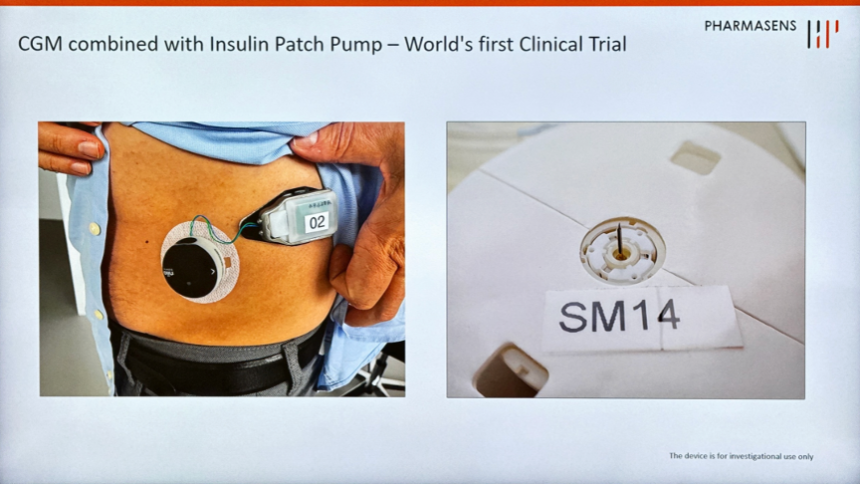
- The SMART01 early feasibility trial evaluated the combined device for adults with T1D in two phases: (i) a pilot phase (n=3) with a one-day duration; and (ii) a main phase (n=15) lasting three days (72 hours). On Day -1 of both phases, patients inserted an unnamed commercially available CGM. On Day 1, the niia signature was placed on each patient. Patients then underwent a mixed meal test and a YSI reference was taken. The study’s pilot phase ended on Day 1 with the removal of combined device. In the study’s main phase, participants wore the device and stayed in a nearby hotel for clinical monitoring. A mixed meal test with YSI reference was repeated on Day 3, and the device was removed in the morning of on Day 4. Of note, the commercially available CGM was placed on a remote site to ensure independence from insulin infusion.
- At baseline, participants had a mean age of 51 years, were predominantly female (78%), and had a mean T1D duration of 30 years. Average CSII duration, BMI, A1c, and insulin dose were 12 years, 29.5 kg/m2, 6.8%, and 42 units, respectively. Of the 18 participants, 11 used Medtronic 780G, five used t:slim X2, and two used YpsoPump as their preferred insulin delivery system.
- The niia signature showed comparable glucose sensor accuracy to the commercially available control CGM, meeting the study’s primary objective. Compared to YSI, MARD was 11.6% and 10.4% for the niia signature and the commercially available CGM, respectively. Similarly, compared to BGM, MARD was 12.0% for the combined device compared to 11.2% in the commercially available CGM. These findings suggest that a a glucose sensor can be relatively unaffected by nearby insulin infusion.
- The niia signature pump functioned “as intended” in its first trial, with no reports of insulin delivery failures and no serious adverse events. However, in a comparison of baseline to Day 2, patients experienced a decrease in TIR from 80% to 62% (p=0.0001), an increase in mean blood glucose level from 140 mg/dL to 166 mg/dL (p=0.0002), and a decrease in total daily insulin dose from 43 units/day to 37 units/day (not statistically significant). Dr. Schoemaker explained that such results “make clinical sense,” as patients transitioned from using AID at baseline to manual insulin dosing in the study. Patients also had different activity profiles with restricted movement during the study, Dr. Schoemaker added.
- On next steps, Dr. Schoemaker explained that PharmaSens plans to integrate the SiBionics CGM sensor into niia signature product development. Additionally, the company is planning a second clinical trial (n=40 esteemed) of niia signature for 2Q26 in Canada. Dr. Schoemaker shared that PharmaSens submitted documentation for the trial in February 2026, where the company will be systematically investigating different basal and bolus rate deliveries on CGM accuracy.
20. The future of smart pens: Market growth, real‑world uptake, and pediatric use
Dr. Dominic Ehrmann (Research Institute Diabetes Academy Mergentheim, Germany) opened this session on smart pens with results from the 2026 DT‑report. Based on data from over 6,500 people with diabetes, more than 1,000 healthcare providers, and data from more than eight countries, the report found high rates of satisfaction with smart pens, reflected in a strong overall net promoter score of 52%. Country differences ranged from 19% in Italy to 59% in Austria. The data also revealed that HCPs view smart pens as important but relevant only for a smaller subset of patients. Dr. Ehrmann highlighted that current use in Germany remains steady at ~5%, with no increase in uptake over the past five years. Barriers to greater adoption remain substantial, with 57% of participants preferring pre‑filled pens, 54% citing limited insulin choice, and 51% pointing to high costs. Lack of evidence or clinical benefit is not considered an obstacle. Across all groups, the reminder for missed doses is considered most valuable (rated “very important” by 52% of respondents).
- Dr. Johan Jendle (Orebro University) provided additional insight into barriers, stating that many people with diabetes have a hard time tracking when to dose. He said smart pens can help: (i) decrease the number of missed injections; (ii) increase TIR; and (iii) improve glycemic management with good overall patient satisfaction. He highlighted a study (n=94) which showed that at follow-up, patients using the NovoPen6 had 42% fewer late bolus doses and 48% fewer missed bolus doses than at baseline. He concluded that the evidence is clear on the impact smart pens have on TIR, TITR, and GMI, but that more evidence is needed on the degree to which it lessens disease burden, reduces long-term complications, and is cost-effective.
- On the future of smart pens, Prof. Lutz Heinemann (Science Consulting in Diabetes GmbH and diateam GmbH, Germany) said that it was projected that the global digital pen market is expanding rapidly, citing data that showed that the market was valued up to $3.4 billion in 2024-2025 with strong projected growth through 2034. However, the real market uptake until now is much lower. He acknowledged that practical challenges persist, including the fact that smart pen systems remain unidirectional, supporting decisions but not sending calculated doses back to the pen. Looking ahead, he pointed to AI as a key enabler for smarter dosing, pattern recognition, and contextual insights, and stressed the importance of sustainability, including eco‑friendly designs and reusable components. Overall, he argued that while adoption is slow, the trajectory toward more intelligent, integrated, and practical smart pens is continuing.
- On pediatric use, Dr. Peter Adolfsson (University of Gothenburg, Sweden) explained how smart pens can meaningfully ease diabetes management for children, their caregivers, and clinicians by supporting dose timing. He showed how smart pen features like the new initiation settings sheet, which standardizes carb ratios, insulin sensitivity, glucose targets, and alert settings, can help families start the therapy with clear and tailored instructions. He then highlighted the InPen Smart MDI system, whose missed‑dose alerts, dose calculator, and CGM‑linked guidance help children navigate school days and sports and support different caregivers. To support his position, he pointed to a recent consensus statement that strongly endorsed smart pens for pediatric care.
21. *NEW* Feasibility of decentralized clinical trials in diabetes management studies
In this afternoon session dedicated to glucose sensing, Prof. Kirsten Nørgaard (Steno Diabetes Centre Copenhagen, Denmark) presented insights from a proof-of-concept study evaluating the feasibility of conducting a fully decentralized clinical trial among individuals with T2D receiving different treatment regimens and using CGM. Traditional clinical trials typically require frequent in-person visits, which can impose significant logistical and time burdens on participants and may limit study participation, particularly for individuals living far from study sites or with demanding personal commitments. Decentralized clinical trials (DCTs), which rely on telemedicine, digital platforms, and connected health devices, offer an alternative approach that may reduce participant burden while enabling more frequent and detailed data collection. The aim of this study was therefore to assess the operational feasibility of conducting a completely remote clinical study among adults with T2D living across Denmark.
- The study employed a virtual central site that managed all participants nationwide. Recruitment was conducted through social media, and informed consent was obtained electronically via digital signature. Participants received CGM devices and an activity tracker by mail and were instructed to self-apply and use them throughout the study. Over a 14-week period, participants engaged in scheduled telemedicine visits and completed study questionnaires through a dedicated mobile application, while physiological and activity data were collected remotely from connected devices. Participants were categorized according to their existing treatment regimens, including metformin-based therapy, basal insulin, or GLP-1 analog treatment.
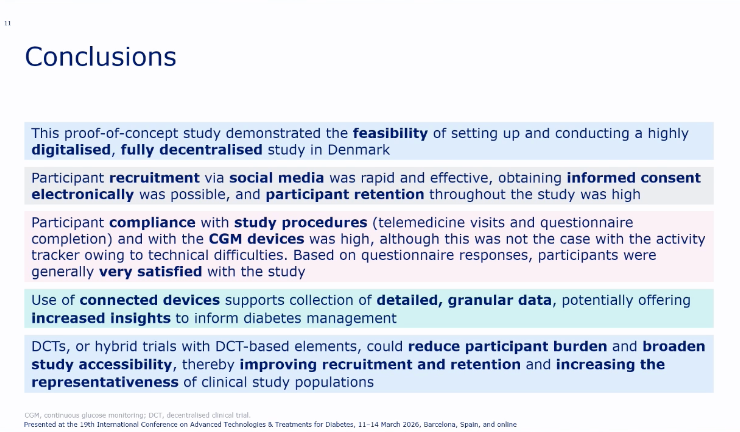
- The study demonstrated that a fully remote clinical trial is operationally feasible and can achieve strong recruitment and retention outcomes. Social media recruitment proved highly effective, generating substantial interest and enabling rapid enrollment. Among the enrolled participants, completion and engagement rates were high, with most individuals attending remote visits and providing substantial CGM data coverage. While adherence to the CGM devices was strong, usage of the activity tracker was limited, largely due to technical challenges during setup. Overall, participant satisfaction with the decentralized format was high, with respondents reporting positive experiences with remote interactions and digital study procedures. These findings suggest that decentralized and hybrid clinical trial designs supported by connected devices can broaden access, reduce participant burden, and facilitate high-resolution data collection, thereby offering valuable opportunities to enhance future diabetes research and clinical trial participation.
22. *NEW* Dr. Jennifer Sherr on strategies to optimize outcomes with AID
Dr. Jennifer Sherr (Yale University) delivered an insightful presentation on strategies to optimize patient outcomes with AID use. She first emphasized the importance of patient choice, which aligns with the ADA Standards of Care. Specifically, Recommendation 7.26 stresses that choices should be based on an individual’s circumstances, preferences, and needs. Dr. Sherr referenced a popular saying, “Just as the wand chooses the wizard”: (as in Harry Potter), there is often a system that “speaks” to an individual. The best option of AID is the one that someone chooses to use.
The first step to optimizing outcomes is ensuring reliable sensor data. Factors affecting sensor wear extend beyond short- and long-term affordability of sensors to include issues impacting continuous wear, such as skin problems and fatigue from excessive alerts. Progress has been made in sensor availability, with some countries, like Australia, subsidizing CGM for youth with T1D. These efforts are already yielding population-level benefits, including lower A1c and reduced rates of DKA among users. Further, removal of eligibility requirements of performing fingerstick SMBG at least 4 times a day for those covered by Medicaid prior to allowing use of CGM has also improved access. To support clinicians in targeting longer sensor wear, tools like the TIDE dashboard offer a population health approach, which can filter patients by factors like low sensor wear, enabling targeted outreach and real-time support.
- Skin issues remain prevalent. Nearly 70% of providers report assessing skin reactions during follow-up visits. Among them, ~40% report a dermatitis prevalence between 5-20%. The global SKIN-PEDIC study found that over half of respondents using diabetes technology have skin issues related to their pump, and 30% experience skin issues with sensors. While there is no one-size-fits-all solution, recommendations include using mild soaps, skin preparations, tapes, and topical steroids to manage skin reactions.
- In terms of alert fatigue, Dr. Sherr recommended advising patients to set only alarms that require immediate attention. One specific suggestion for patients is to start only with hypoglycemia alerts and add hyperglycemia alerts if tolerated (starting higher, i.e. >250 mg/dL, and progressively getting lower).
- On increasing time in automation, Dr. Sherr explained some systems have mandatory exits to manual mode insulin delivery related to prolonged maximum insulin delivery, so she recommends people visually check the system status at least twice a day — ideally when bolusing, or once in the morning and once before bed. Notably, this will be alleviated with planned updates, some of which have been FDA cleared.
- Dr. Sherr described AID as “diabetes with bumpers” (referring to the raised barriers installed in the gutters of a bowling lane to prevent the ball from falling off the lane). However, there are still strategies users can apply to improve AID outcomes:
- For example, it is still important to bolus for meals, ideally 15-20 minutes before eating. If bolusing is forgotten, patients should give half the bolus if more than 30 minutes have passed, and the correction dose if over an hour. For those less engaged with their system, general estimates based on meal size can be helpful.
- A recalibrated approach is necessary when addressing lows — patients should evaluate whether the system is suspending insulin delivery before a low occurs, should not overly rely on trend arrows when making treatment decisions for themselves, and should only treat with 8-10 grams of rapid-acting carbohydrates to prevent overcorrection.
- When hyperglycemia occurs, she advises patients check for infusion set failures (which remain common, with 40% of patients using an insulin delivery system reporting at least one a month). They should also test for ketones in cases of sustained hyperglycemia or illness, and have a DKA mitigation plan in place.
- Dr. Sherr also mentioned a study highlighting lipohypertrophy problems, stressing the importance of regular site checks. Finally, for clinicians specifically, understanding which settings are adjustable and how they influence outcomes is essential (see figure below).
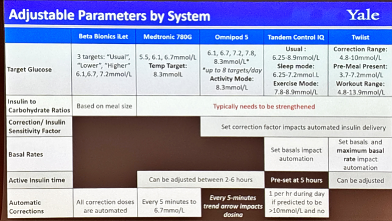
- Despite being complex, exercise remains important for patients with diabetes. For youth, the goal is 60 minutes of moderate to vigorous activity per day (roughly 4% of the week), but many are not meeting this target. A 2024 publication provided specific recommendations for AID users to reduce complexity, taking into account different types of exercise and each system.
- Looking ahead to the future of fully closed-loop (FCL) AID technology, Dr. Sherr noted that many strategies will remain relevant. She also highlighted the promise of continuous ketone monitoring, AI-enhanced algorithms for FCL, and improved insulins. As more companies announce that their FCL algorithms in development will still support hybrid closed-loop style use with user-initiated boluses and meal input, we certainly imagine patients can benefit from keeping these optimization strategies in mind.
23. *NEW* Large real‑world analysis finds significant reductions in MACE and mortality with CGM use in T1D
In this oral presentation, Dr. Jennifer Layne (Dexcom) presented results from a large retrospective analysis (n=39,943) on the effect of CGM use on the risk of MACE in adults with T1D. The analysis used linked very recent Truveta EHR data and Dexcom CGM data (study period January 2017 and June 2025), with an average follow-up period of one to seven years. Adults with T1D were categorized as CGM users or non‑CGM users. Primary outcomes included time to first major adverse cardiovascular event (MACE): non‑fatal MI, stroke, or sudden cardiac death. Secondary outcomes included all‑cause death, hospitalization [any cause or heart failure (HF)], severe hypoglycemia and change in A1c. Given the high cardiovascular disease burden in T1D, the study aimed to assess whether CGM use was associated not only with improved glycemic management but also with meaningful reductions in cardiovascular events, hospitalizations, and mortality – highlighting potential implications for both primary and secondary CVD prevention.
- Baseline characteristics. CGM users were younger than non-users (42 vs. 50 years) and included a greater proportion of females (52% vs. 46%). They also had fewer comorbidities (30+ chronic and acute comorbidities like hypertension and cancer), a lower history of cardiovascular disease (13% vs. 23% ), and higher rates of pump use (12% vs. 3%). Baseline A1c was similar between groups. Subclass propensity score matching was used to account for baseline differences, and outcomes were reported for the matched data.
Results. Across one to seven years of follow‑up, CGM use was associated with significantly lower risks of multiple major outcomes. Compared to matched non‑CGM users, CGM users had:
- 42% reduced risk of cardiovascular death (HR 0.58; CI: 0.50-0.67);
- 16% lower risk of stroke (HR 0.84; CI: 0.77-0.91); and
- 13% lower risk of myocardial infarction (HR 0.87; CI: 0.78-0.98).
For secondary outcomes, CGM use was associated with a 22% lower risk of heart failure hospitalization (HR 0.78; CI: 0.67-0.92); a 40% lower risk of any death (HR 0.60; CI: 0.53-0.68); and a 24% lower risk of any hospitalization (HR 0.76; CI: 0.72-0.81). CGM use was also associated with improved glycemic health, including a 21% lower risk of severe hypoglycemia (HR 0.79; CI: 0.72-0.87) and 0.4% greater reduction (difference in difference) in A1c sustained through more than 24 months. We imagine these findings support CGM use not only for glucose management but as a tool for reducing cardiovascular risk and improving long-term outcomes in people with T1D, potentially justifying broader and earlier CGM adoption and stronger guideline recommendations.
24. *NEW* Glycemic impact of FreeStyle Libre 2 in Italians with T2D on basal-only insulin
Prof. Francesco Giorgino (University of Bari Aldo Moro, Italy) presented a prospective study evaluating the impact of initiating flash glucose monitoring with the FreeStyle Libre 2 system on glycemia over three months in adults with T2D on basal-only insulin in Italy. The study sought to improve the base of evidence supporting CGM use in this population. Adults aged 18-75 years from eight Italian centers with A1c between 7.5% to 12% were included (n=88). Most (86%; n=76) successfully completed the intervention. Participants first wore a blinded CGM for two weeks. During the three-month follow-up phase, participants were followed closely and reviewed their glucose data with clinicians, with additional therapies introduced if clinically indicated. Participants were nearly all (78%) male and white Italian (84%), and had a mean age of 63 years, BMI of 29.5 kg/m2, and duration of insulin use of an average 5.6 years. Diabetes-related complications were somewhat common at baseline: one-third had CVD, one-fifth had renal or ocular disease, and one-tenth had neuropathy.
- Results. Following at least three months of FreeStyle Libre 2 use, A1c significantly improved by 0.9%, from 8.5% to 7.6%. Interestingly, GMI improved only marginally from a low baseline (from 7.3% to 7.1%), illustrating the differences often seen between the metrics in the real world and potentially the rapid behavior change that can come with CGM use. Improvements were also observed in sensor-based glucose metrics. TIR improved from 63% to 73%, driven by reductions in Time above Range (from 36% to 26%), Time >250 mg/dL (from 9% to 5%), and Time below Range (from 1.4% to 0.4%). Time <54 mg/dL was relatively consistent, with 0.4% at baseline and 0.3% after three months of FreeStyle Libre 2 use. No episodes of severe hypoglycemia were observed. Mean glucose decreased slightly, from 168 mg/dL to 157 mg/dL. Furthermore, significant improvements to standard deviation and coefficient of variation were observed (standard deviation decreased from 45 mg/dL to 41 mg/dL, and coefficient of variation decreased from 27% to 25.9%). Prof. Giorgino said much of this can be attributed to improvements in self-management, which patients corroborated with significant improvements to self-management scores. There was no statistically significant change in total daily insulin dose (remaining ~23 units), nor were there great changes in the use of non-insulin glucose lowering medications by three months of CGM use.
25. *NEW* Fasting with AID: A review of the safety and efficacy data during religious fasts, including Ramadan and Yom Kippur
Prof. Mohammed Al-Sofiani (King Saud University, Saudi Arabia) and Dr. Revital Nimri (Schneider Children’s Medical Center, Israel) presented updates on the use of AID systems during fasting states, including Ramadan and Yom Kippur. Historically, clinical guidance has emphasized hypoglycemia risk during fasting, often recommending basal insulin reductions, but emerging data suggest a more nuanced approach may be warranted.
- Prof. Al-Sofiani reviewed the evidence behind fasting during Ramadan with AID. For reference, Ramadan involves daily fasting from dawn to dusk for approximately one month, with meals typically consumed pre-dawn and at sunset. Despite clinical caution, many people with T1D choose to fast — ~78% globally and up to 90% in countries like Saudi Arabia — most using MDI (74%), with ~25% on pump therapy. Prof. Al-Sofiani noted that during Ramadan, Time above Range (TAR) tends to increase, while Time below Range (TBR) remains stable or decreases slightly. He attributed this to: (i) behavioral changes driven by fear of hypoglycemia; and (ii) proactive insulin dose reductions. These patterns, he argued, suggest that hypoglycemia risk may be overemphasized, and that personalized risk assessment is needed. He specifically highlighted limitations of the IDF-DAR Risk Calculator in the 2025 ADA Standards of Care, which does not account for CGM use and treats all pump modalities equally, often categorizing people with T1D as unfit to fast.
- Real-world evidence supports the benefits of AID in this setting. In a prospective study, individuals using AID experienced fewer fast interruptions, fasted more days, and achieved higher TIR with lower TAR and TBR vs. MDI or traditional pumps. In another large dataset of MiniMed 780G users in the Arabian Gulf (n=449), TIR remained largely stable during Ramadan, with no increase in hypoglycemia. Total daily insulin dose was unchanged, though insulin distribution shifted to more basal during fasting hours and more bolus overnight following the sunset meal. A separate study (n>500) demonstrated a clear hierarchy in glycemic outcomes, with AID achieving the highest TIR and lowest TAR, followed by sensor-augmented pump with predictive low glucose suspend, pump with CGM, and MDI with CGM. Notably, nearly half of AID users achieved the “double target of fasting” (breaking fast <2 days while maintaining TIR >70%).
- Looking ahead, Prof. Al-Sofiani highlighted updates in the 2026 ADA Standards of Care, including lower risk categorization for AID and CGM users. He also proposed moving beyond static calculators toward machine learning-based prediction models using pre-Ramadan CGM data, with additional data evaluating this proposal expected at ADA 2026.
- Dr. Nimri then addressed a 25-hour fasting window during Yom Kippur, which has traditionally been discouraged for people with T1D. While data on ketones during prolonged fasting are limited, available evidence suggests levels remain low overnight and generally safe in adults. She also reviewed results from the FAST-AID real-world study (n=54), which evaluated AID use during prolonged fasting in youth with T1D. Participants (mean age 17 years; mean A1c 6.8%) used a range of systems, including MiniMed 780G (~65%) and Tandem Control-IQ (~20%); the remainder used an open-source system. No standardized guidance on pump adjustments was provided, and participants used varied strategies (e.g., exercise or sleep modes, or no changes at all).
- Glycemic outcomes improved during fasting. TIR increased from 72% at baseline to 82% overall and 94% in the final 12 hours, Time in Tight Range (TITR) rose from 50% to 61% (74% in final 12 hours), and TBR decreased from 2.6% to 1.3%. Hypoglycemia was infrequent (n=10), primarily occurring after the pre-fast meal; the only predictor was higher baseline TBR. Mean glucose declined after the pre-fast meal and stabilized within a narrow range. However, glycemic management worsened the day after fasting (TIR 67%), likely reflecting compensatory eating behavior.
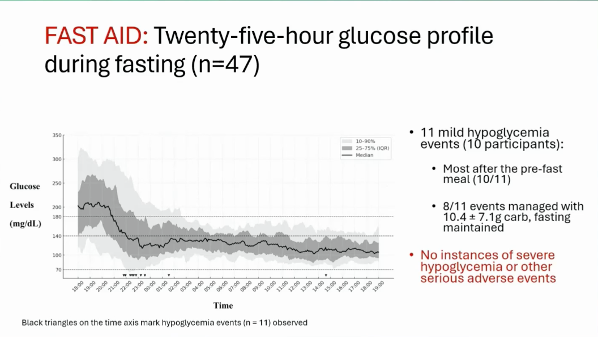
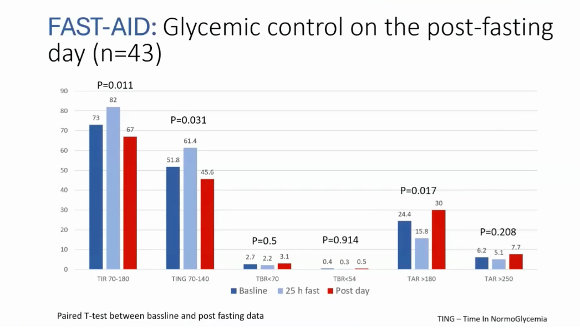
- Insulin delivery decreased substantially, falling from 0.92 to 0.39 units/kg/day overall (~40% of baseline), driven primarily by reductions in bolus insulin, while basal insulin remained relatively stable. Insulin requirements returned to baseline the day after fasting.
- Among MiniMed 780G users, those using exercise mode received ~40% less insulin, with similar overall glycemia but slightly lower TITR compared to standard settings.
- Ketone levels rose modestly (0.4 mmol/L vs. 0.1 mmol/L baseline), but remained <0.6 mmol/L in ~75% of participants; only one exceeded ≥1.1 mmol/L. The only independent predictor of elevated ketones was marked insulin reduction (<30% of usual dose), supporting recommendations to avoid overly aggressive insulin adjustments.
- Overall, Dr. Nimri concluded that AID systems can enable safe prolonged fasting, with lower risk of hypoglycemia and no clinically significant ketonuria. She offered some practical suggestions for users of these different AID systems during fast and said that this suggests that existing guidelines may need to be updated to reflect this lower-than-expected metabolic risk.
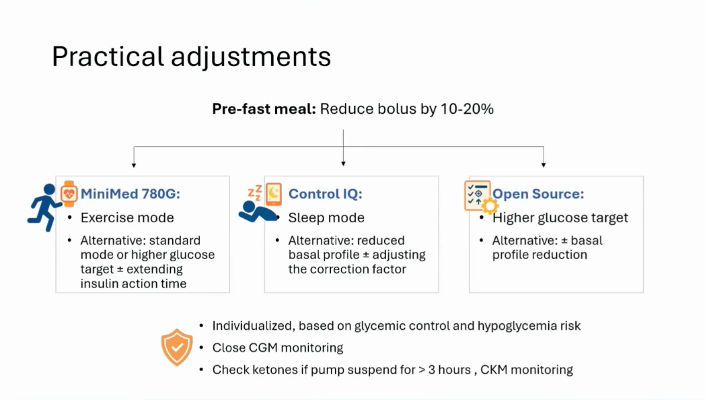
26. *NEW* Real-world iLet AID data demonstrates glycemic benefit with and without meal boluses
ATTD Day #4 included a compelling oral presentation discussing real-world outcomes with Beta Bionics’ iLet AID system. Following the launch of the iLet, referred to as a bionic pancreas by Beta Bionics, users and clinicians have been eager to explore the real-world benefits of the system. Dr. Russell presented data from the first two years of FDA system clearance compared to the Bionic Pancreas Pivotal Trial. Commercial iLet users with a recorded pre-iLet A1c value and at least two weeks of cloud data were included.
- Real-world use of iLet afforded greater A1c reductions compared to RCT participants with comparable rates of hypoglycemia. In a study of 16,394 commercial users of iLet and 330 RCT participants, adult commercial users had a baseline A1c of 8.8% on average and a GMI of 7.3% after iLet use. This was compared to a 7.7% baseline A1c and 7.0% GMI in RCT participants. Pediatric commercial users had a baseline A1c of 9.7% and iLet GMI of 7.8% compared to 8.1% and 7.4% in RCT participants, respectively. In terms of hypoglycemia, Time <54 mg/dL was 0.3% in adults and children for commercial use as well as in RCT data.
- The authors concluded that real-world use of the iLet AID system confers greater benefit to A1c, based on GMI results, compared to results seen in the Bionic Pancreas Pivotal Trial. This is achieved without an increase in hypoglycemia among users. While these data are compelling, the use of GMI as a direct replacement for A1c continues to be debated – see some of this discussion from ADA 2025.
- Results were also strong for real-world iLet users announcing very few meals over a two-year period. Data were drawn from 16,394 iLet users with a mean 193 days of system use. The mean number of meals announced for the entire cohort was 2.1, with a baseline A1c of 8.9% overall and iLet GMI of 7.3%. Subgroup analysis included 1,042users with 0.5 meals per day (MPD) announced or less on average over 201 days, and 180 participants with <0.1 MPD over 169 days. Users with <0.5 MPD had a baseline A1c of 9.7% and iLet GMI of 7.5%. Users with <0.1 MPD had a baseline A1c of 9.6% and iLet GMI of 7.5%.
- Time in hypoglycemia and total daily insulin dose were consistent for all users. Time in hypoglycemia (<54 mg/dL) was 0.3% for all groups, including those with <0.5 MPD, <0.1 MPD, and all users overall. Total daily dose (TDD) was 0.8 U/kg/day for those with <0.5 MPD, 0.7 for those with <0.1 MPD and 0.8 for all users overall. In all, iLet AID users who announced meals experienced benefits to A1c reduction as assessed by GMI values while hypoglycemia and TDD remained similar. This illustrates both the power of announcing meals and the possibility of positive outcomes with minimal patient input.
27. *NEW* Real-world head-to-head comparison of MiniMed 780G and Control-IQ show strong glycemic outcomes
Dr. Laura Sayol Torres (Hospital Universitari Vall d'Hebron, Spain) presented a real-world, two-year, head-to-head comparison of MiniMed 780G and Tandem Control-IQ in youth with T1D (n=89). At baseline, Control-IQ users were younger (8.9 years vs. 12.2 years); no significant difference was seen in baseline glycemic management, although Control-IQ users had a slightly lower A1c (7.2% vs. 7.3%) and higher TIR (59% vs. 61%).
- Over two years of AID use, MiniMed 780G users achieved better TIR (75% vs. 68%), primarily due to reduced Time >250 mg/dL (5% vs. 9%). Time below Range and Time <54 mg/dL were also significantly lower with MiniMed 780G use compared to Control-IQ (1.6% vs. 2.5% and 0.2% vs. 0.8%, respectively). However, these improvements in CGM metrics did not lead to significant differences in A1c, which improved similarly and significantly in both MiniMed 780G (from 7.3% to 7.0%) and Control-IQ (from 7.2% to 6.9%) cohorts. There was no significant between-group difference in A1c at any time point except nine months of use (p<0.05).
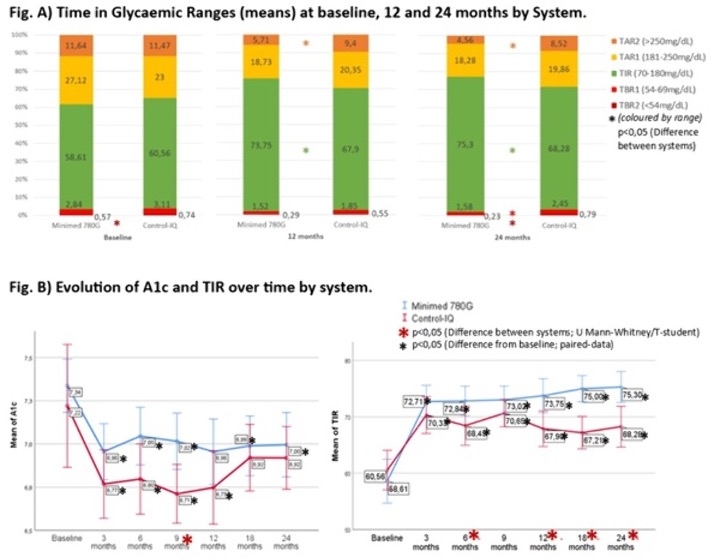
28. *NEW* Tirzepatide use supported by Dexcom CGM leads to greater A1c reduction than tirzepatide alone
Ms. Poorva Nemlekar (Dexcom) presented a retrospective analysis of Optum Clinformatics health claims data assessing the added benefit of using Dexcom G6 or G7 with tirzepatide in people with T2D on intensive insulin therapy or basal insulin therapy compared to using tirzepatide alone. CGM, when combined with a GLP-1 RA, can improve glycemic management by optimizing therapies for T2D. In this study, groups were propensity-score matched and A1c changes were evaluated at baseline and six months post-index date (follow-up). Participants were using tirzepatide already but were CGM-naïve.
- Regardless of insulin regimen, CGM users had greater reductions in A1c compared to CGM non-users. Those on intensive insulin therapy saw an A1c drop of 1.1% to 7.4% with CGM use, compared to a 0.6% drop to 7.8% with tirzepatide alone, leading to a difference-in-differences of -0.5% (p<0.01). This increased among those with higher baseline A1cs (≥ 7.0% and ≥ 8.0%) to a 0.7% greater difference in A1c with CGM use compared with tirzepatide alone. In those on basal-only therapy, trends were similar. In the overall cohort, A1c dropped from a baseline of 8.4% to 7.3% with CGM and tirzepatide use, compared to 8.4% to 7.6% with tirzepatide alone, leading to a between-group difference of 0.3% (p<0.05). This difference expanded to 0.4% and 0.5% with baseline A1c ≥7.0% and ≥8.0%, respectively.
Therapy Highlights
29. Dr. Jay Skyler and his “mission to eradicate T1D”
In this late morning session, Dr. Jay Skyler (University of Miami) outlined a conceptual framework for addressing the major scientific and clinical challenges in T1D. He reviewed the natural history of the disease, describing its progression from genetic susceptibility and an environmental trigger to immune activation and gradual destruction of pancreatic beta cells. This trajectory has been well categorized in stages: (i) early autoimmunity with one or more antibodies (pre-stage and stage 1); (ii) dysglycemia (stage 2); (iii) symptomatic diabetes (stage 3); and (iv) long-standing disease with declining beta cell function (stage 4). Dr. Skyler proposed four major therapeutic goals: (i) preventing immune-mediated beta cell destruction; (ii) preserving remaining beta cell mass and function; (iii) regenerating beta cells; and (iv) ultimately, replacing lost cells.
- To halt immune destruction, Dr. Skyler highlighted several immunomodulatory strategies. These include therapies that directly suppress pathogenic immune responses, such as: (i) Tzield (teplizumab), which has demonstrated a significant delay in progression from stage 2 to stage 3 T1D; as well as (ii) low-dose anti‑thymocyte globulin (ATG), which has shown preservation of beta cell function in recent-onset disease. Emerging approaches seek to improve tolerability and durability, including humanized ATG formulations and agents targeting adaptive immunity (e.g., anti-CD40 ligand therapies) or innate inflammatory pathways, such as anti-TNF antibodies and JAK inhibitors like baricitinib. Dr. Skyler argued that effective prevention will likely involve a combination of immunotherapies. True prevention of T1D would require simultaneously halting the autoimmune response, preventing its recurrence, and controlling inflammatory signaling. Complementary strategies aim to preserve beta cell health through metabolic or cellular protection, including GLP‑1 RAs and inhibition of the stress-related protein TXNIP with drugs such as verapamil.
- Beyond preservation, Dr. Skyler discussed experimental efforts to regenerate beta cells through pathways that stimulate beta cell proliferation or differentiation from progenitor cells. Although human clinical evidence remains limited, these strategies suggest that restoration of endogenous insulin-producing capacity may become feasible. Concluding on an aspirational note, Dr. Skyler framed these advances as part of a broader mission to overcome the disease: “My goal, and my mission, is to eradicate T1D before I retire.”
30. Saliva-based screening: T1D Scout’s program to expand large-scale screening by identifying high-risk populations
In an engaging Saturday morning address, Mr. Yuta Matsuda (T1D Scout) offered a glimpse at the company’s progress in developing a fully remote, saliva-based early-detection program for T1D. For background, T1D Scout is a San Francisco-based startup established in early 2025. As of March 2026, the company’s pilot program has registered over 3,000 families, distributed 1,000 kits, and received 850 samples following its mid-2025 launch. Mr. Matsuda said that a full analysis of T1D Scout’s initial cohort will be presented at ADA 2026.
- T1D Scout employs an initial saliva-based test to screen for genetic T1D risk, and follow-up antibody testing for children determined to be high-risk. Initial screening uses a saliva swab that functions to identify DNA variants associated with T1D risk. Thereby, the test categorizes a child’s genetic susceptibility into “higher” or “lower” T1D genetic risk score (GRS). A low-risk GRS typically concludes patient participation in the T1D Scout program. By contrast, a high-risk GRS prompts follow-up antibody testing. Antibody testing is also completed at home and employs a more conventional finger-stick blood sample.
- Parents can register and order an at-home saliva test kit on T1D Scout’s website for $89 per child. No physician referral is required, and results are expected two to three weeks after the company’s lab receives a sample. If classified as high-risk, T1D Scout offers genetic counseling included in the initial $89 fee and autoantibody testing for a supplemental fee.
- In T1D Scout’s pilot cohort of nearly 900 children, Caucasian participants (82% of the cohort) classified as high-risk were 10 times more likely to test positive for multiple islet autoantibodies than those in the low-risk band (p <0.001). Therefore, Mr. Matsuda argued that the company’s GRS effectively stratifies risk in a real-world setting and validates the utility of genetic prescreening to determine a target population for autoantibody testing. Notably, about 85% of all kits ordered were returned to T1D Scout. 75% of patients screened had not been tested for T1D autoantibodies before, “expanding the reach for large-scale T1D screening.”
31. Obesity in T1D: Etiology and GLP-1 RAs as a promising therapy
In this crowded morning symposium, Dr. Irl Hirsch (University of Washington) delivered an overview of the pathophysiology and treatment options for obesity in people with T1D. Dr. Hirsch began by stating that obesity affects nearly one-third of adults with T1D, a prevalence comparable to that of the general population. Moreover, obesity is a strong risk factor for atherosclerotic cardiovascular disease (ASCVD) and kidney complications in T1D, making it important to address this condition.
- Dr. Hirsch explained that the prevalence of obesity in T1D likely increased due to genetic predisposition to T2D, reduced glycosuria (loss of glucose from the urine) from improved glycemic management, higher insulin doses, and behavioral snacking to avoid hypoglycemia, and reduced energy expenditure with systemic insulin administration (vs. portal). While he did not go into detail, he also listed changes in sympathetic nervous system activity, protein metabolism, and gut microbiome as possible contributors to developing obesity in T1D.
- On treatments, Dr. Hirsch reviewed evidence for the benefits and challenges of lifestyle modifications and pharmacotherapy in people with T1D and obesity. While studies evaluating lifestyle modifications in this population are limited, one small retrospective study (n=68) found that intensive multidisciplinary weight management significantly reduced BMI from 36 to 34 kg/m2 (vs. no difference in the control group). However, there was no difference in A1c between the two groups, which is unsurprising given that weight gain is not associated with A1c in people with T1D, as it is in T2D. On exercise, a systematic review found that it can improve many outcomes, such as one’s fitness, sleep, insulin sensitivity, and quality of life. However, it did not reliably lead to weight loss, partly because people with T1D eat extra calories to prevent or manage hypoglycemia. Ultimately, he said that there is a major gap in evidence for lifestyle recommendations for T1D, as all recommendations in the ADA Standards of Care are based on T2D studies.
- Obesity pharmacotherapy is increasingly used off-label in T1D, and GLP-1 RAs have even been endorsed by the ADA Standards of Care. Indeed, one study found that 6.6% of the T1D population were on GLP-1 RAs in 2023, compared to 0.3% in 2010. At the University of Washington Diabetes Institute, 12.8% of patients (n=2,431) received prescriptions for GLP-1 RAs between June 2024 and June 2025.
- Dr. Hirsch is hopeful that in the near future, GLP-1 RAs and dual GLP-1/GIP RA will be approved for obesity, as well as cardiovascular and renal protection. The phase 2 ADJUST study (n=115) found that a significantly higher percentage of people with T1D on semaglutide achieved TIR >70%, TBR <4%, and ≥5% weight loss (36% vs. 0% on placebo). Tirzepatide is in two registrational studies, SURPASS-T1D-1 and SURPASS-T1D-2, whose primary completions are expected in November 2026. Roche’s dual GLP-1/GIP RA CT-868 recently completed phase 2 studies in T1D and will advance to phase 3 for T1D, as well as CKD in T1D, later this year.
32. *NEW* Tirzepatide use significantly improves CGM metrics in people with T1D
In this fascinating oral presentation session, Dr. Halis Kaan Akturk (University of Colorado) discussed the glycemic benefits of tirzepatide in people with T1D as measured with CGM. Study results were simultaneously published in DT&T. Over two-thirds of US adults with T1D have overweight or obesity, as well as an increased risk of cardiovascular disease. However, adjunctive therapies are limited for T1D due to safety concerns around severe hypoglycemia and diabetic ketoacidosis (like with SGLT-2 inhibitors). Encouragingly, tirzepatide has been shown to decrease weight, glycemia, and insulin dose in T1D. Dr. Akturk highlighted a single-center retrospective study (n=115) on how tirzepatide use affects CGM metrics in people with T1D at one year.
- Study design and baseline characteristics. Tirzepatide users with T1D and sufficient CGM data for 15 months (n=61) and a matching control (n=54) were included in the study. On average, the study population at baseline was 38 years old, had an A1c of 7.0%, a weight of 218 lbs (99 kg), and a diabetes duration of 23 years. Notably, the tirzepatide group had a higher percentage of females (61%) than the control group (37%).
- Results. Tirzepatide use was associated with significantly improved CGM metrics. At 12 months, tirzepatide led to significantly greater Time in Range (TIR; 70-180 mg/dL) of 71%, reflecting a daily increase of an hour and 26 minutes compared to the baseline TIR of 65%. Likewise, Time in Tight Range (TITR; 70-140 mg/dL) increased from 40% at baseline to 44% at 12 months, an increase of 58 minutes each day. In contrast, the control group did not experience a significant increase in TIR or TITR, which remained at 63% (flat from baseline) and 37% (down 1 percentage point from baseline), respectively. The tirzepatide group had a significantly lower mean glucose of ~155 mg/dL (vs. 167 mg/dL in the control group) at 12 months.
- Importantly, while tirzepatide led to a substantial reduction in Time above Range (TAR; >180 mg/dL), there was no difference in Time below Range (TBR; <70 mg/dL) between the two groups. This finding demonstrates a favorable safety profile, especially with regard to hypoglycemia risks – which can occur if too much insulin is taken during tirzepatide use as insulin requirements fall. See figures below.
- Finally, a greater proportion of subjects achieved glycemic goals of TIR ≥70% and TBR ≤4%. At baseline, 30% and 33% of the tirzepatide and control groups met the goal, respectively. However, the proportions increased to 51% as soon as six months (vs. 28%) and remained until 12 months (vs. 26%), further corroborating the glycemic benefits of tirzepatide.


33. *NEW* Single-center study finds tirzepatide leads to greater hypoglycemia risk than semaglutide in T1D
In this well-attended session, Ms. Emma Mason (University of Colorado) characterized adverse events associated with semaglutide or tirzepatide use in people with T1D. She began by highlighting the unmet medical needs of people with T1D. Many adults with T1D do not achieve their glycemic goals, and a third have obesity, similar to the general population. Incretin-based therapies can be used off-label as an adjunct to insulin therapy to improve glycemia, reduce weight, and lower insulin needs, particularly for those without high insulin sensitivity. To better inform off-label use of incretin-based therapies in those with T1D, Ms. Mason conducted a prospective single-center study (n=230) at the University of Colorado to understand trends in adverse events.
- Ms. Mason conducted a survey of adults with T1D (n=739) prescribed Mounjraro or Ozempic off-label and analyzed 230 complete responses (31% response rate). At the time of incretin initiation, females were 90 kg (198 lbs) and 40 years old on average, while males were 108 kg (238 lbs) and 44 years old.
- On overall adverse events, tirzepatide (n=155) and semaglutide (n=157) groups had similar rates of GI side effects, including nausea (59% vs. 59%; p=1), vomiting (25% vs. 21%; p=0.5), constipation (37% vs. 39%; p=0.11), diarrhea (39% vs. 32%; p=0.28), and reflux (31% vs. 25%; p=0.25). None of these were statistically significantly different. However, interestingly, symptomatic hypoglycemia rates were significantly higher in the group taking Lilly’s Mounjaro (29% vs. 13%; p<0.001). Likewise, in people who used both medications at different times, tirzepatide led to a greater risk of statistically significantly different symptomatic hypoglycemia (26% vs. 13%; p=0.006) than semaglutide, while GI side effects were generally similar.
- Females and younger adults were more likely to experience GI side effects. Female participants reported higher rates of nausea (69% vs. 50%; p=0.008), vomiting (33% vs. 18%; p=0.027), constipation (42% vs. 28%; p=0.04), and diarrhea (45% vs. 31%; p=0.043), compared to males. Interestingly, hypoglycemia rates were similar across females and males (24% vs. 25%; p=0.87). Moreover, younger adults were more likely to report GI side effects. For example, the mean age of participants experiencing nausea was 40 years old, compared to 45 years old reporting no nausea events (p=0.001). Baseline A1c, weight, or diabetes duration did not lead to a meaningful difference in adverse events.
- While the study findings are limited by potential selection and response biases, length of drug use, and a ~30% response rate, the differences in hypoglycemia rates warrant further evaluation of tirzepatide versus semaglutide use in T1D. We are also curious about the degree to which complications are meaningful enough to warrant complaint, and how they may differ by gender, which may be too complicated a question for this relatively small trial.
Big Picture Highlights
34. Prof. Chantal Mathieu receives ATTD Breakthrough Award during closing ceremony
After Prof. Chantal Mathieu (KU Leuven, Belgium) delivered the very last presentation of ATTD 2026, Prof. Tadej Battelino (University of Ljubljana, Slovenia) welcomed her back to the stage to honor her for the ATTD Breakthrough Outcomes Award. This award, supported by Lilly, recognizes Prof. Mathieu’s longstanding effort and dedication to advancing innovation and high-quality care for people living with diabetes. Like the conference organizers, we continue to be incredibly impressed by Prof. Mathieu. Not just today, but every day, we have been lucky to learn from her – from conference sessions to her acceptance speech after being honored at the W!LD event earlier this week, we have been moved by her grace and dedication to the field. Her inspiring speech, which highlighted her passion for basic scientific research, as well as on patient stories that continue to underscore her strong involvement in the field. With the increasing number of therapies, technologies, and overall innovation in the field of diabetes, we’re grateful to Prof. Mathieu for continuing the momentum toward better patient outcomes.
- Mr. Pierluca Arietti (Lilly Senior Director, Cardiometabolic Health External Engagement) introduced Prof. Mathieu as a leader who has given immensely to the community, with an unwavering drive and compassion. He said the purpose of ATTD attendees gathering in this space provides a testament to the power of community, working toward the day when every single person with diabetes will feel better. Mr. Arietti emphasized that while clinical inertia, policy barriers, and other challenges may serve as obstacles in the field, he encouraged the field to become unified. He said, “Everyone does their own job, but we can work together.”
35. C-peptide as a marker for functional beta cell mass: Pushing the momentum for disease-modifying T1D treatment
Taking the stage to deliver the very last presentation of ATTD 2026, Prof. Chantal Mathieu (KU Leuven, Belgium) argued for the adoption of C-peptide as a marker for functional beta cell mass in T1D. Prof. Mathieu explained that the field has transitioned from a metabolic diagnosis of T1D to a pathophysiological one. Furthermore, the importance of diagnosis no longer lies solely in established T1D but extends to earlier stages of the disease, enabling detection before beta cell mass and function are significantly reduced. In the course of T1D development and diagnosis, C-peptide remains an “enigma,” yet it serves as a marker of endogenous insulin production and the primary test for beta cell function. Prof. Mathieu emphasized that residual beta cell function, as measured by C-peptide, offers multiple benefits, especially in clinical and regulatory settings. Therefore, she encouraged the need to convince regulators to reinstate C-peptide as an endpoint for clinical trials and ultimately, results necessary for approving disease-modifying treatments.
- Assessing beta cell function in stage 3 T1D. Compared to insulin, C-peptide exhibits a constant rate of clearance and long half-life (20 to 30 minutes). The assay is unaffected by exogenous insulin and can be measured in plasma because it has negligible hepatic clearance. While C-peptide represents a stable and convenient measure with one blood test, Prof. Mathieu also noted the following challenges: (i) assays are not always standardized; (ii) requires correlation with ambient glucose levels; and (iii) uncertain reliability when measured in acute situations (e.g., DKA).
- Evaluation of C-peptide levels. Prof. Mathieu explained the two types of testing for C-peptide levels, including static and dynamic testing. Static testing refers to a single measurement of C-peptide levels taken in a fasting state or after stimulation. Although it offers a convenient and minimally invasive procedure, it cannot be used to stage T1D and generally does not provide sufficient information for interventional trials. On the other hand, dynamic testing refers to C-peptide measurements obtained multiple times over two to four hours during an OGTT or MMTT. This procedure remains the “gold standard” for measuring endogenous insulin secretion in T1D and, in the context of MMTT, more closely reflects patient physiology. However, limitations of dynamic testing include its inconvenient and invasive procedure. Nevertheless, for many years, fields such as islet transplantation have used C-peptide as a marker of functional beta cell mass.
- Prof. Mathieu raised some alternatives to MMTT, referring to studies that have used non-invasive urinary and capillary sampling methods. For instance, a 2011 study assessed the urine C-peptide-to-creatinine ratio (UCPCR) as an alternative to MMTT. Additionally, a 2025 study focused on the feasibility of home-dried blood spot C-peptide levels as an alternative to MMTT for monitoring beta cell function in T1D.
- The need for C-peptide levels. Prof. Mathieu emphasized the problem with using metabolic endpoints to evaluate the effects of disease-modifying therapies for T1D. Currently, direct measures of T1D-related clinical outcomes include A1c, hypoglycemic events, and complications. However, in trials with those recently diagnosed with T1D, participants are treated to the same glycemic target, and therefore, there are minimal A1c differences between groups. Additionally, using hypoglycemic events and complications as primary endpoints requires large sample sizes and long trial durations. Prof. Mathieu commented that with the status quo, she’ll be “long retired” before the next disease-modifying treatment after Tzield (teplizumab) receives approval. Therefore, Prof. Mathieu argued for the use of alternative endpoints, such as C-peptide levels and time to clinical diagnosis, in trials of disease-modifying therapies for early-stage T1D. She said this change would help advance approval of more disease-modifying treatments.
- Previous efforts toward approving C-peptide as a marker. Previously, in 2008, the FDA approved C-peptide as a marker of functional beta cell mass, but later, in 2020, withdrew that approval and issued guidance to use metabolic markers instead. This decision was immediately followed by the EMA. Prof. Mathieu said that while metabolic endpoints in T1D trials have shown promising results, the T1D landscape is rapidly evolving, especially with technological advancements. Referring to previous studies on residual C-peptide and glycemic management, benefits in the real world, and association with CGM metrics, Prof. Mathieu encouraged the need to demonstrate that C-peptide remains a reliable and feasible measure of endogenous insulin secretion. She urged the field to further reinforce this point by: (i) standardizing assays; (ii) agreeing on the dynamic test (e.g., duration of sample collection, number of measuring points, reporting format); (iii) agreeing on how to collect the sample (e.g., venous, capillary, urinary); and (iv) agreeing on cut-off value of stimulated C-peptide levels that can be characterized as clinically meaningful.
36. Cardiovascular disease in T1D: Pathophysiology, pharmacotherapy, and exercise
This well-attended session featured a strong bench of experts who focused their presentations on cardiovascular disease in T1D. It’s well known that T1D is associated with a two-to-three-fold increased risk of atherosclerotic cardiovascular disease (ASCVD), which is in turn the leading cause of death for people with T1D. Happily, registry data show that cardiovascular mortality in people with diabetes has declined significantly over the last 20 years. Famously, the DCCT showed that improved glucose management reduced ASCVD risk by 42% (and by ~30% in the EDIC follow-up). The intensive group also benefited from lower all-cause mortality. (The DCCT also gave rise to the term ‘legacy effect’ or ‘metabolic memory’, in which intensive therapy, even for a relatively short time, resulted in a long-term enduring benefit).
- Dr. Robert Eckel (University of Colorado) is a distinguished endocrinologist who has focused his research career on the intersection of metabolic disease and cardiovascular health. He related that there was a lack of strong randomized controlled data for cardiovascular disease in T1D – with the notable exception of the DCCT/EDIC trial.
- Dr. Eckel asserted that the pathophysiology of T1D is not identical to that of T2D. He noted that the evidence was hard to interpret because of differences in prevalence and duration of risk factors, duration of diabetes, the role of antibodies, and the lack of RCTs. However, he hypothesized that in T1D, plaque growth is slower and more stable, CVD is less dependent on classical risk factors, and may be influenced by cardiac autoantibodies. He suggested that the key differences likely were:
- Glycemic control is more important in reducing risk in T1D than in T2D.
- Lipid-lowering appears to be unequivocally important in T2D, and possibly more effective than in T1D.
- Reduction of obesity, particularly central obesity, appears to be somewhat more important in T2D than T1D.
- Dr. Eckel is chairing a working group for an exciting and welcome new cardiovascular trial in T1D (The T1D and CVD Clinical Outcomes Trial) that will hopefully be sponsored by NHLBI and NIDDK. The group will present its recommendations to the government in Fall 2026.
- Dr. Eckel asserted that the pathophysiology of T1D is not identical to that of T2D. He noted that the evidence was hard to interpret because of differences in prevalence and duration of risk factors, duration of diabetes, the role of antibodies, and the lack of RCTs. However, he hypothesized that in T1D, plaque growth is slower and more stable, CVD is less dependent on classical risk factors, and may be influenced by cardiac autoantibodies. He suggested that the key differences likely were:
- Next, Dr. Oliver Schnell (Sciarc GmbH, Germany) noted that (over and above good glucose control), blood pressure and lipids were the next two most important modifiable factors for the reduction of cardiovascular disease in people with T1D. He reviewed the ESC guidelines for targets and treatment of these risk factors. He promoted the goal of safe and sustained control, and favored simple, repeatable clinical routines to achieve the most benefit for the most patients.
- Next at the podium, Prof. Kirsten Nørgaard (Steno Diabetes Centre, Denmark) discussed the role of physical activity (PA) in cardiometabolic risk reduction for people with T1D. Physical activity is measured by the MET value. A MET-value of one represents resting energy expenditure. A MET value of five would be a five-fold increase in metabolic demand, and a MET value of 10 would typically correspond to someone who exercises intensively.
- Prof. Nørgaard presented overwhelming evidence that cardio-respiratory fitness (CRF) was an important risk marker for CVD in the general population. A MET of <5 is associated with high mortality, and increasing PA to 8-10 MET can decrease mortality by 50%. Exercise truly is a wonder-drug!
- Not surprisingly, people with T1D tend to be less physically active than healthy controls. Additional diabetes specific factors, like fear of hypoglycemia, eating strategies for exercise appear to be at work. Nonetheless, we can be confident that enhanced PA would benefit CV risk in this population.
-- by Jeremy Alkire, Albert Cai, Riya Chatterjee, Nour Khachemoune, Kayla Mathieu, Esther Min, Kat Moon, Paul Moon, Elizabeth Rose, Elaine Young, Monica Oxenreiter, and Kelly Close
[1]No more than 30 minutes of absent insulin delivery in those five minute increments. Getting insulin delivered through almost all of the day.