ATTD 2026 Full Report –
Executive Highlights
- ATTD 2026 was certainly a powerhouse of a conference, featuring over 100 readouts, symposia, and oral presentation sessions. This 19th ATTD drew 5,300 participants from 105 countries – down slightly from last year amidst a time of strife around the world, with many from the Middle East not able join us. We thank many researchers for subbing in for those who could not travel and feel grateful to be among those who are pushing at the field hard and working to make change.
- Glucose and Ketone Monitoring: We saw a number of new data on CGM, including results from Abbott’s FreeDM2 trial comparing the FreeStyle Libre 3 with traditional BGM in people with T2D using basal insulin alongside SGLT-2 inhibitors or incretin-based therapy. Dr. Marco Marigliano (University of Verona) presented a multicenter study evaluating outcomes in adolescents with T1D who transitioned from the Guardian 4 sensor to Simplera Sync with the MiniMed 780G system. Dr. Francine Kaufman (Senseonics) shared real-world data (n=5,059) on Eversense 365 users on open-loop insulin therapy, followed by early data on its integration with Sequel Med Tech’s twiist AID system. Additionally, Dr. Feng Chen (SiBionics) presented promising accuracy data for the GS3 CGM, while Dr. Jared Tangney (Biolinq) shared feasibility results (n=59) supporting extended wear time for its intradermal sensor. In ketone monitoring, Dr. Ahmad Haider (McGill University, Canada) presented data using SiBionics’s continuous ketone monitoring (CKM) in people with T1D on empagliflozin and proposed preliminary ketone targets for this population.
- Insulin Delivery (Pumps, Pens, AID): New data on AID was abundant. Dr. Laurel Messer (Tandem) shared early real-world data from US users of the Mobi, and Dr. Joanna Mitri (Sequel) presented real-world data from the first 274 US users of Sequel Med Tech’s twiist system. Companies presented several studies focused on AID use in specific populations. Dr. Lori Laffel (Joslin Diabetes Center), Dr. Jamie Wood (University Hospitals), and Dr. Gregory Forlenza (University of Colorado Anschutz) presented a series of real-world analyses on Omnipod 5, demonstrating safety and effectiveness in several understudied groups: individuals using <5 units of insulin per day, children under two years old, and users adopting optimal system settings and behaviors. Dr. Ohad Cohen (Medtronic) and Prof. Amir Tirosh (Tel Aviv University, Israel) presented new data on the MiniMed 780G, including findings on low glucose alerts, meal bolusing, and comparative outcomes using the Simplera Sync and Instinct sensors. Elsewhere, Dr. Michael Shoemaker shared phase 1 data on PharmaSens’s combined CGM and patch pump system, SMART01, while Dr. Forlenza reviewed data on the use of ultra-rapid-acting insulins in AID systems. We also heard growing discussion around fully closed-loop development, including efforts from Insulet, UVA’s AIDANET, and Medtronic’s Vivera program.
- New insulins: With the recent FDA approval of Novo Nordisk’s Awiqli (insulin icodec), once-weekly insulins were a key focus of ATTD 2026. In one session, Dr. Natalie Bellini (Cleveland Clinic) presented a post-hoc analysis of the QWINT 2-4 trials, showing that insulin efsitora alfa and once‑daily basal insulins confer a similar duration of hypoglycemia. In a separate session, Prof. Chantal Mathieu (KU Leuven, Belgium) and Dr. Harpreet Bajaj (LMC Healthcare, Canada), along with Dr. Athena Philis-Tsimikas (Scripps Health), offered practical recommendations for using once-weekly insulin in people with T2D. Speakers urged providers to consider once-weekly insulins in insulin-naïve patients with T2D, especially as insulin icodec demonstrated superior A1c reduction compared to insulin glargine or degludec. Dr. Philis-Tsimikas further shared findings that double dosing or combined use with GLP-1 RAs are safe.
- Type 1 diabetes prevention and cures: On novel therapies for T1D, Dr. Jay Skyler (University of Miami) emphasized that the development of novel therapies for T1D fits within a larger roadmap for eradicating T1D. He highlighted the need to halt immune destruction, preserve remaining beta cell mass, regenerate beta cells, and ultimately replace lost cells. Prof. Chantal Mathieu (KU Leuven, Belgium) underscored the importance of measuring functional beta cell mass, arguing that standardized C‑peptide assessment is essential for evaluating whether emerging therapies truly preserve or restore beta cell function. We were also excited to hear new data on novel treatments. Notably, Dr. Jeremy Pettus (UCSD) introduced KRIYA 839, an adeno-associated virus (AAV)-based gene therapy designed as a one-time intramuscular procedure. The therapy enables skeletal muscle to express insulin and glucokinase, supporting glucose absorption and metabolism. First in-human phase 1/2 trial is on track for 2026, with potential for launch in clinics as early as 2030.
- Adjunctive therapies for T1D: Many sessions discussed the use of GLP-1 RAs in T1D. The ADJUST T1D trial demonstrated that adults with T1D and obesity on semaglutide achieved a 20% reduction in both five- and 10-year predicted CVD risk, with risk declining steadily over the 26-week study period. Another single-center retrospective study (n=115) evaluated how tirzepatide use affects CGM metrics in people with T1D at one year. Tirzepatide use was associated with significantly improved CGM metrics. At 12 months, tirzepatide led to significantly greater Time in Range (TIR; 70-180 mg/dL) of 71% from the baseline TIR of 65%, compared to the control group, whose TIR remained at 63% (flat from baseline). On clinical insights, consensus recommendations emphasized how to use these therapies safely in clinical practice. The recommendations include slow dose escalation, individualized insulin reduction, ketone monitoring, and attention to retinopathy risk with rapid A1c improvement.
The ATTD organizers once again blew it out of the water with the 19th annual ATTD conference in Barcelona, Spain. Immediately below, you’ll find our top themes from the meeting, followed by highlights in the categories below. New highlights (those that were neither included in our day-of reports nor sent out in Closer Look after the conference) are highlighted in blue.
Table of Contents
-
Themes
-
Diabetes Technology
- CGM across the T2D continuum: Use of the technology from prediabetes to T2D not on insulin therapy
- Early CGM initiation to overcome clinical inertia in T2D
- Closing the loop: Greater clarity on progress toward FCL algorithms, but what challenges remain?
- Real-world evidence for AID: Strong outcomes across systems, settings, and populations reinforce algorithm-driven performance
- Early frameworks emerge for ketone targets as DKA awareness and monitoring gaps persist
- Metrics beyond A1c: Discussion grows on complementary metrics including TITR and glycemic risk index
- Adjunct therapy supported by diabetes tech: The future of CGM and AID with SGLT-2 inhibitors and incretins
- Diabetes Therapy
- Diabetes Big Picture
-
Diabetes Technology
-
Glucose Monitoring: BGM, CGM, and CKM
- Experts highlight continuous ketone monitoring and its applications to dual glucose-ketone sensing (DGK) for the prevention of DKA
- FreeDM2 trial: FreeStyle Libre 3 improves A1c and TIR compared to BGM in adults with T2D on basal insulin and SGLT-2 inhibitors or incretins
- Inpatient Diabetes Management: Emerging CGM Evidence Highlights Improvements In Glycemic Outcomes in the Hospital
- Prof. Emma Wilmot Addresses Evidence and Access for CGM in T2D
- Expanding the role of CGM in diabetes detection and early diabetes management
- Dr. Viral Shah on CGM for prediabetes: Staging, diagnosis, and potential therapeutic options
- CGM use in people without diabetes: New metrics for phenotyping, Time in Tight Range, and foundation models for glucose
- dQ&A presents data on DKA awareness and ketone testing behavior of adults with T1D
- Real-world performance of the Instinct sensor with the MiniMed 780G AID system
- Dexcom unveils Smart Basal dosing, extended high glucose alerts, and a new sensor patch in dynamic symposium
- Dr. Ahmad Haider takes a first pass at recommendations for continuous ketone level targets for people with T1D on SGLT-2 inhibitors
- From prediabetes to basal insulin: Early CGM use to transform T2D care
- A preview of continuous ketone monitoring data from Abbott; Drs. Ketan Dhatariya and Rich Bergenstal highlight much to be learned
- MiniMed presents three studies comparing Simplera Sync and Instinct, studying low glucose alerts, and exploring missed meal boluses
- Results from Italian study of adolescents with T1D switching between Guardian 4 and Simplera Sync sensors
- CGM use is not effective for healthy lifestyle modification in people without diabetes
- Diabetic ketoacidosis in T1D and T2D: Epidemiology, provider perspectives, and the promising role of technology
- Biolinq’s intradermal glucose monitor: Feasibility data supports longer wear time
- Glycemic outcomes associated with switching from intermittently-scanned to real-time CGM in people with T2D on insulin
- Use of CGM in gestational diabetes; CGM metrics show differences in GDM status well before OGTT
- Accuracy of a novel, real-time CGM in adults with diabetes: A preliminary analysis
- Shifting clinical practice from trend-following to proactive prediction and intervention with CGM
- Glycemic impact of FreeStyle Libre 2 in Italians with T2D on basal-only insulin
- CGM in gestational diabetes: Evidence, real-world use, and unresolved questions
- Tirzepatide use supported by Dexcom CGM leads to greater A1c reduction than tirzepatide alone
- Large real‑world analysis finds significant reductions in MACE and mortality with CGM use in T1D
- Quick Take: 15-day Sinocare iCan CGM demonstrates strong accuracy and safety in pediatric population
-
Insulin Delivery: AID, Pumps, Pens
- Fully closed-loop AID: Dr. Rayhan Lal discusses future challenges and considerations
- Dr. Jennifer Sherr on strategies to optimize outcomes with AID
- From hybrid to fully closed-loop: Dr. Marc Breton discusses UVA’s AIDANET AI-driven AID system and early trial results
- Using AID to overcome clinical inertia in basal insulin dosing for T2D
- Toward hands-off diabetes care: MiniMed unveils the Vivera fully closed-loop algorithm
- “Helping diabetes disappear”: Fully closed-loop AID for T2D and beyond
- Features, early user data, and glycemic strategies with Tandem Mobi
- Integrating wearable technology into adult diabetes care
- mylife Diabetes Care: Evidence and clinical pearls for personalization AID with CamAPS FX
- Interoception and education: Prof. Stephanie Amiel on the CLEAR trial and HARPdoc for improving hypoglycemia awareness in T1D
- Omnipod 5 in the real world: Evidence in infants and toddlers, those with very low insulin requirements, and those using optimal settings
- Sequel MedTech shares real-world data from the first twiist users (n=274), with mean TIR of 77% and TBR of 2.9%
- New Eversense 365 CGM real-world data (n=5,000+) shows up to 72% TIR; preliminary data from twiist AID integration shows 77% TIR
- MiniMed symposium spotlights simplified onboarding for 780G, future innovation pipeline, and MiniMed Go
- Clinical implications of extended-wear infusion sites in insulin pump therapy
- dQ&A study examines the impact of AID systems on diabetes burden and user satisfaction
- The future of smart pens: Market growth, real‑world uptake, and pediatric use
- First phase 1 data for PharmaSens’ combined insulin patch pump and CGM; second clinical trial planned for 2Q26
- French claims data used to evaluate patient engagement with tubed vs. tubeless pumps
- Real-world head-to-head comparison of MiniMed 780G and Control-IQ show strong glycemic outcomes
- The use of AID with older adults: Choosing the right technology at the right time
- Real-world iLet AID data demonstrates glycemic benefit with and without meal boluses
- An opportunity for a “generational leap”: Use of ultra-rapid acting insulin in AID systems
-
Digital Health, AI, and Telehealth
- Human-AI collaboration in diabetes: Prof. Boris Kovatchev on developing AI digital twins
- Continuous insulin guidance with the DreaMed app: Proof-of-concept outcomes
- Data integration into EHRs and improving diabetes technology interoperability
- Interactive web app shows A1c and behavioral benefits in people with T2D
- Time in Range and Beyond A1c
-
GLP-1 Receptor Agonists
- SURPASS-EARLY: Early initiation of tirzepatide for T2D improves glycemic and cardiovascular health
- Lilly symposium: SURPASS‑EARLY trial underscores the potential to alter T2D progression with early tirzepatide treatment
- Adjust T1D study of GLP-1 RA use in adults with T1D and obesity shows significant reductions in cardiovascular outcomes and disease risk
- Dr. Satish Garg on the adjunctive use of incretins in T1D and obesity: Recommendations from an upcoming consensus report
- Tirzepatide use significantly improves CGM metrics in people with T1D
-
Insulin Therapy
- Post-hoc analysis of the QWINT program finds comparable hypoglycemia duration between once-weekly efsitora alfa and daily basal insulin
- Clinical pearls on once-weekly insulin use in insulin-naïve and insulin-experienced people with T2D
- Lilly: Profs. Chantal Mathieu and Harpreet Bajaj on the potential for once-weekly insulins, including in combination with GLP-1 RAs, metformin, and AID system
- Immediate, intensive glycemic management for T2D: An argument for early insulin initiation
-
Diabetes Complications and Prediabetes
- Obesity in T1D: Etiology and GLP-1 RAs as a promising therapy
- Beyond glycemia: Addressing overweight and obesity in T1D
- Dr. Nicole Glaser offers a sneak peek at ISPAD’s 2026 updates to Pediatric DKA Guidance
- Dr. Viswanathan Mohan on the distinction between IFG and IGT in diabetes prevention
- Real-world evidence of reclassification to T1D following misdiagnosis
- Cardiovascular disease in T1D: Pathophysiology, pharmacotherapy, and exercise
-
T1D Cures and Disease-Modifying Therapies
- Dr. Jay Skyler and his “mission to eradicate T1D”
- Dr. Jeremy Pettus introduces a novel gene therapy for T1D, KRIYA-839, which will enter the first-in-human phase 1/2 trial in 2026
- Eight years of normoglycemia in preclinical T1D models of KRIYA-839; one administration designed to last a patient’s lifetime
- Vertex symposium reflects on the T1D landscape and highlights the next chapter with islet cell therapy
- Sanofi’s symposium highlights the future of T1D screening and disease-modifying therapies
- Interim results for Diamyd’s phase 3 DIAGNODE-3 results for retogatein in stage 3 T1D expected by end of month
- Updated results from Eledon Pharmaceutical’s tegoprubart (anti-CD40L antibody) as an immunosuppressant for people with T1D
-
T1D Screening and Early Detection
- C-peptide as a marker for functional beta cell mass: Pushing the momentum for disease-modifying T1D treatment
- Delaying the onset of T1D: Screening and treatment options
- Dr. Anastasia Albanese-O’Neill on building a global consensus for early-stage T1D screening and monitoring at the general population level
- Real-world insights from T1D screening programs in California, Spain, and the Netherlands
- EDENT1FI screens over 100,000 children in Europe for early stage T1D
- T1D screening and monitoring: IDF Europe’s international consensus on for early-stage T1D now published
- Saliva-based screening: T1D Scout’s program to expand large-scale screening by identifying high-risk populations
- Bridging the gap between population screening and initiation of immunotherapy
-
Award Lectures, Joint-Symposia, and Big Picture
- Prof. Chantal Mathieu receives ATTD Breakthrough Award during closing ceremony
- IDF Europe symposium focuses on diabetes detection, treatments, and cures
- Helmsley Charitable Trust Symposium: Protein intake before exercise can prevent hypoglycemia in people with T1D
- Exercise and T1D: Physiological differences, clinical trials, real-world evidence, and continuous lactate monitoring
- Early-onset T2D in pregnancy: Prof. Helen Murphy highlights rising prevalence and urgent need for stronger preconception care
- Risk of diabetic retinopathy during pregnancy: New registry data challenge historical concerns around progression risk
- Breakthrough T1D to train interventional diabetologists and endocrinologists through US certificate program and joint course with ATTD
- India D-Tech session takes on diabetes care gaps with clinical decision support and practical CGM use
- Dr. Ananta Addala on discrimination as the ‘elephant in the room’ shaping diabetes technology uptake
- Feasibility of decentralized clinical trials in diabetes management studies
-
2026 Yearbook – 18 insightful presentations to a packed crowd!
- 1. Continuous and intermittent glucose monitoring
- 2. Insulin delivery hardware: Pumps and pens
- 3. New insulins, biosimilars, and insulin therapy
- 4. Closed-loop, decision support, and AI
- 5. Using digital health technology to prevent and treat diabetes
- 6. Technology and pregnancy
- 7. Diabetes technology and therapy in the pediatric age group
- 8. Advances in exercise and nutrition as therapy in diabetes
- 9. Primary care and diabetes technologies and treatments
- 10. Use of technologies at the advanced age
- 11. The Real “Real World”: Overcoming practical barriers and disparities in diabetes technology
- 12. Diabetes technology in the hospital
- 13. Impact of diabetes technologies on psychosocial outcomes
- 14. Immune intervention and beta cell replacement therapies in T1D
- 15. Obesity and diabetes
- 16. Emerging trends in MASLD and MASH
- 17. Virtual clinics for diabetes care
- 18. New medications for the treatment of diabetes
- Exhibit Hall
Themes
Diabetes Technology
CGM across the T2D continuum: Use of the technology from prediabetes to T2D not on insulin therapy
Use of CGM is expanding beyond traditional populations on intensive insulin therapy toward earlier stages of T2D,including those on non-insulin therapies and even individuals with prediabetes, as conversations at ATTD 2026 showed. Overall, presenters agreed that CGM is reshaping diabetes care across the continuum, from risk prediction in prediabetes to behavior-driven glycemic improvement in non-insulin-treated T2D, though access, evidence gaps, and appropriate use in certain populations remain important considerations.
- Dr. Viral Shah (Indiana University) highlighted emerging applications of CGM in prediabetes, proposing a more granular staging framework spanning normoglycemia through insulin-requiring diabetes. Within this model, CGM-derived metrics — particularly glycemic variability and “entropy” — may help estimate an individual’s likelihood and speed of progression to T2D. Dr. Shah cited data suggesting that individuals with stable, predictable glucose patterns (low entropy) are less likely to progress, while those with higher variability face greater risk. While prospective evidence is still lacking, CGM could ultimately support earlier intervention by informing both risk stratification and behavior change.
- In established T2D, evidence continues to grow for CGM use beyond insulin-intensive populations. Dr. Emma Wilmot (University of Nottingham, UK) presented results from the FreeDM2 trial evaluating FreeStyle Libre 3 in individuals using basal insulin alongside agents such as SGLT-2 inhibitors or incretin therapies. CGM use led to significantly greater A1c reductions (-0.6% at four months, sustained to eight months) and about 10% increases in Time in Range (TIR) versus BGM, with notable overnight improvements. Importantly, these gains occurred without major differences in medication adjustments, suggesting behavioral changes as a key driver. We are curious what the combination of behavior change and changes in therapeutic interventions would show. We’d also love to see more data on automated insulin delivery, since we’re fairly certain we’d see more need here as well – in virtually every geographic region we study, the average A1cs of people with T2D are higher than what guidelines call for and there is lower insulin use than may be optimal. For now, we’ll stay focused just on the goal for people with T2D to know what their glucose “is”.
- Real-world data reinforce these findings. Dr. Thomas Martens (International Diabetes Center) reported from the Dexcom Global Registry that CGM-naïve adults with T2D in primary care achieved about 0.7% A1c reductions at one year, alongside modest weight loss, improved lifestyle behaviors, and reduced diabetes distress. Benefits were consistent across demographics and appeared additive with GLP-1 RAs.
- This study reminds us of “Continuous Glucose Monitoring (CGM) as a Behavior Modification Tool: A Case Series on CGM-Guided Nutrition in People With Type 2 Diabetes Not Using Insulin” from IDC’s Dr. Tara Ettestad and Dr. Rich Bergenstal et al. In this renowned study, a team of registered dietitian nutritionists, CDCESs, and physicians reviewed several case reports on the clinical utility of CGM to help guide nutrition choices and lifestyle changes in people with T2D who are not using insulin. This case series complements the randomized and real-world studies discussed at ATTD 2026 well: CGM may improve outcomes in non-insulin-treated T2D through pharmacotherapy intensification as well as by creating continuous, personal feedback loops that reinforce user-led, sustainable lifestyle changes.
Early CGM initiation to overcome clinical inertia in T2D
Early initiation supports remission-focused care. Dr. Mohammed Almehthel (King Fahad Medical City, Saudi Arabia) emphasized CGM’s role in identifying “hidden” hyperglycemia (140-180 mg/dL), guiding treatment adjustments, and setting ambitious targets such as >90% Time in Tight Range for those pursuing remission. CGM may also help overcome clinical inertia by enabling more timely therapy intensification or deintensification – Prof. Tadej Battelino (University of Ljubljana, Slovenia), Dr. Illana Halperin (University of Toronto, Canada), Dr. Alice Cheng (University of Toronto, Canada), and Prof. Othmar Moser (University of Graz, Austria) all separately argued for immediate, intensive glycemic management for this population, and CGM can certainly help identify those in need of therapeutic intensification. Dr. Almehthel reviewed studies in T2D showing that good management soon after diagnosis reduces future risk of complications and mortality (“the legacy effect”), while even a year of elevated A1c early in the disease course is associated with long-term risk, and said that this growing body of evidence has led to the ADA Standards of Care recommending CGM initiation early in the disease course, including at diagnosis.
- Dr. Viral Shah (Indiana University) also called for updated guidance that emphasizes CGM-based glycemic optimization to help prevent progression from stage 2 T2D (prediabetes) to stage 3 T2D (clinical T2D). On this note, Dr. Sean Oser (University of Colorado Anschutz) discussed Dexcom’s CGM-powered Smart Basal feature in one of the company’s symposiums, which is a tool designed to address clinical inertia in basal insulin titration. He noted that nearly three-in-four new basal insulin users fail to reach glycemic targets within one year of initiation. To account for this, Smart Basal uses an algorithm to calculate a patient’s recommended basal dose each day and identify the optimal dose within 90 days – though he said that in practice it can often occur in about a third of that time.
- Despite strong evidence in T2D, use in people without diabetes remains controversial. Dr. Nicola Guess (University of Oxford, UK) argued that CGM does not meaningfully improve key outcomes such as weight, cardiovascular risk, or quality of life in normoglycemic individuals, and current evidence does not support CGM-guided “personalized nutrition” approaches in this population. In the words of the great Stanford scholar Dr. Carol Dweck, not yet!
Closing the loop: Greater clarity on progress toward FCL algorithms, but what challenges remain?
Advances in AID are bringing the field closer to fully closed-loop (FCL) systems, though important physiological, technical, and practical challenges remain. Dr. Rayhan Lal (Stanford University) addressed some of these challenges, emphasizing that true FCL systems must account for real-world variables such as meals, exercise, stress, and hormonal fluctuations. Among these, exercise remains particularly difficult to model accurately, as current sensing methods (e.g., accelerometers) do not reliably capture intensity or its variable effects on glucose dynamics. He also pointed to broader challenges including cost, data accessibility, and the need for more integrated hardware systems.
- From a physiological standpoint, Dr. Marc Breton (UVA) noted that the mismatch between rapid postprandial glucose excursions and slower insulin pharmacokinetics remains a prominent barrier to full automation. Even with advanced algorithms, insulin delivered at mealtime often cannot prevent early glucose spikes. Potential solutions include adaptive algorithms that deliver insulin more aggressively early in a meal response and taper later, though he predicted user engagement (e.g., optional meal announcements) will still improves outcomes. Faster insulins may help bridge this gap. Dr. Gregory Forlenza (University of Colorado Anschutz) showed that both ultra-rapid insulins and improved algorithms can incrementally increase TIR and reduce hypoglycemia. Simulation data suggest that combining faster pharmacokinetics with smarter control systems could enable a “generational leap” in AID performance. While FCL is expected to reduce burden, presenters across the conference suggested continued innovation in algorithms, insulin formulations, and sensing technologies — alongside improved affordability and access — will determine how quickly it becomes a practical reality.
As this work continues, industry efforts reflect steady progress toward FCL:
- Insulet: Prof. Martin de Bock (University of Otago, New Zealand) reported EVOLUTION 2 data showing TIR improvements to ~68% (+24% increase from standard therapy) without meal bolusing, with minimal hypoglycemia. High continuation rates suggest strong user acceptance.
- Medtronic: Dr. Benyamin Grosman (Medtronic) described the Vivera algorithm, which detects unannounced meals and delivers adaptive auto-boluses using predictive modeling. Dr. Amir Tirosh (Tel Aviv University, Israel) and Prof. Ben Wheeler (University of Otago, New Zealand) presented results from the adult and adolescent studies of the system, respectively. In the adult study (n=14), when announcing all meals, glycemic outcomes were very similar to the run-in period with MiniMed 780G (TIR of 83% and 84%, respectively). TIR targets were still met when adult users stopped announcing meals, though it dropped to 74%. However, during this period TIR and TITR metrics improved over the course of the three weeks, demonstrating the algorithm’s ability to adapt to the user over time based on persistent hypoglycemic or hyperglycemic events. These glycemic outcomes improved slightly when users elected which meals to announce, increasing to 78% TIR, suggesting patients still benefit from some user-initiated boluses even when using a FCL algorithm. Similar trends were seen with the adolescent cohort, and as with the adults, there were no serious device-related adverse events (n=13).
- The University of Virginia’s AIDANET: This academic system’s platform demonstrated non-inferior glycemic control compared to hybrid closed-loop systems even without meal boluses in the FCL@Home study, suggesting feasibility of fully automated control in real-world settings.
Real-world evidence for AID: Strong outcomes across systems, settings, and populations reinforce algorithm-driven performance
Real-world evidence (RWE) presented at ATTD 2026 continued to reinforce the efficacy of AID systems across a wide range of populations, device configurations, and user behaviors. Across datasets including over 200,000 users and several different systems, speakers highlighted that strong glycemic outcomes are achievable regardless of sensor choice, age, or insulin requirements. At the same time, several analyses pointed to the importance of system settings and user interaction in optimizing outcomes, suggesting that while AID systems are highly effective, specific settings and engagement still matters.
- Dr. Viral Shah (Indiana University) presented MiniMed 780G data with Abbott’s Instinct sensor that suggest algorithm performance may be the primary driver of outcomes, rather than sensor choice. In a large CareLink analysis (n=13,967), users achieved mean TIR of 76% and TITR of 52%, with 72% achieving target TIR of >70%, and nearly all (96%) achieving target Time below Range (TBR; <70 mg/dL) of <4%. Use of recommended settings further improved outcomes to 80% TIR and 57% TITR. Participants who switched from Guardian 4 to Instinct (n=4,364) experienced modest increases in TIR (75% to 77%) and TITR (49% to 53%). Dr. Shah attributed these improvements to greater sensor use (91% vs. 98%) and nearly 1.5 more hours per day spent in automated mode (90% vs. 96%).
- Additional MiniMed analyses presented by Dr. Ohad Cohen (MiniMed) and Prof. Amir Tirosh (Tel Aviv University, Israel) highlighted how system settings and user behaviors continue to influence outcomes. In a large real-world dataset (n=184,247), lower low-glucose alert thresholds (50-60 mg/dL) were associated with higher TIR (~75%) and lower hyperglycemia, suggesting that “trusting the system” may improve outcomes. Separately, analysis of missed meal boluses (n=128,177) showed that each additional on-time bolus increased TIR by up to nine percentage points, though auto-corrections still enabled reasonable outcomes when boluses were missed. Use of recommended settings consistently improved TIR by three to four percentage points across user profiles.
- Dr. Lori Laffel (Joslin Diabetes Center), Dr. Jamie Wood (University Hospitals), and Dr. Gregory Forlenza (University of Colorado Anschutz) presented real-world analyses of Omnipod 5 in understudied populations, including very young children and individuals with extremely low insulin requirements. In individuals with T1D (≥2 years) and T2D (≥18 years) using <5 units of total daily insulin (n=3,588), median TIR reached 75% in the youngest users and up to 92%-95% in adolescents and adults, with TBR remaining minimal (<15 minutes/day). In another retrospective analysis (n=288), use of a lower glucose target (110 mg/dL) was associated with further TIR improvements, particularly in younger populations. These findings are significant and extend evidence for Omnipod 5 use in these understudied populations.
- Early real-world data from Sequel’s twiist system (n=274) show mean TIR of 77% and TBR of 2.9%, with 78% of users achieving TIR >70% and 89% achieving Time <54 mg/dL of <1%. Outcomes were consistent across bolus frequency groups (<3/day, 3-4/day, >4/day), suggesting similar glycemic results regardless of bolusing patterns. In an expanded cohort (n=1,946), mean TIR was 74%. Users with a midpoint glucose target <100 mg/dL achieved higher TIR (83%) compared to those with targets of 100-140 mg/dL (72%), though this was accompanied by higher TBR (5.3% vs. 2.1%), highlighting the trade-off between tighter targets and hypoglycemia.
Early frameworks emerge for ketone targets as DKA awareness and monitoring gaps persist
Across ATTD 2026, discussion around ketones moved beyond early curiosity toward more concrete, though still preliminary, clinical frameworks. There was a growing focus on dual glucose-ketone sensing, real-world DKA burden, and persistent gaps in patient education. While continuous ketone monitoring (CKM) remains in early stages, multiple sessions underscored both its potential to reshape DKA prevention and the complexity of interpreting ketone data, reinforcing that meaningful progress will require concurrent advances in education, standardization, and clinical guidance.
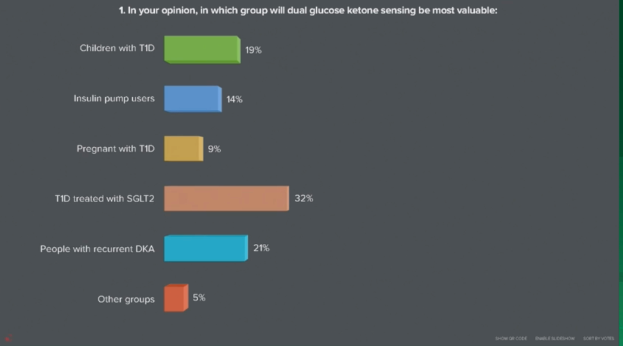
- Abbott’s symposium on dual glucose-ketone (DGK) sensing framed ketones as a critical missing factor in diabetes management, particularly for detecting DKA risk earlier than glucose alone can. Prof. Ketan Dhatariya (University of East Anglia, UK) explained that ketosis is a normal physiological process, but rapid rises ketones in an insulin deficient-setting can quickly become dangerous. He said that glucose and ketone trajectories are often discordant, as demonstrated with insulin interruption data presented by Dr. Jennifer Sherr (Yale University) in which ketones rose even when glucose was only modestly elevated, highlighting the risk of euglycemic DKA. Abbott’s DGK is not yet cleared by the FDA, though the company said it submitted it for regulatory approval in 4Q25. Early consensus proposals suggest the following: (i) ketone thresholds of <0.6 mmol/L as normal; (ii) 0.6-1.5 mmol/L as elevated; (iii) 1.5-3 mmol/L as high risk; and (iv) over 3 mmol/L as requiring urgent action, though he stressed these are preliminary guidelines. Audience polling during Abbott’s School suggested particular interest in DGK use for high-risk populations, including individuals with T1D using SGLT-2 inhibitors.
- A preview of Abbott’s blinded CKM dataset (n>1,400) illustrated both the richness of CKM data and how much remains unknown. Dr. Rich Bergenstal (International Diabetes Center) shared early examples showing patient heterogeneity. Some individuals with persistent hyperglycemia had minimal ketone elevation, while others experienced recurrent ketone spikes under similar glucose conditions. Prof. Dhatariya said that absolute ketone levels may be less informative than the rate of change, noting that prolonged fasting can sustain ketones as high as ~6 mmol/L without detection if levels rise gradually. The dataset included individuals with T1D and T2D across multiple therapies and comorbidities and will be used to analyze typical ranges for ketone levels.
- Dr. Ahmad Haider (McGill University, Canada) provided an early framework for defining ketone targets using continuous data in adults with T1D on SGLT-2 inhibitors, positioning these thresholds as a starting point for future consensus. In a small study (n=24), ketone levels rose in a dose-dependent manner with empagliflozin, particularly under low-carbohydrate conditions. Despite significant inter-individual variability, including cases of high ketones without symptoms, Dr. Haider proposed the following tentative targets based on data from study participants: <3% for level 1 ketosis (>1 mM) and <1% for level 2 ketosis (>1.5 mM). Dr. Haider said these targets can serve as a conversation starter as CKMs become more available.
- Real-world data from dQ&A from Ms. Philly DePiante highlighted persistent gaps in DKA awareness and ketone testing behavior, suggesting that education remains a key barrier alongside technology. In a survey of adults with T1D (n=1,419), 19% of respondents lacked confidence in interpreting ketone results. These individuals were less likely to test ketones in relevant situations, more uncertain about prior DKA events, and more concerned about recurrence. The findings suggest that even with access to testing tools, gaps in understanding may limit effective use, reinforcing the need for clearer guidance.
- Epidemiologic and qualitative data presented by Prof. Samuel Seidu (University of Leicester, UK) and Dr. Bergenstal underscored the ongoing burden of DKA across both T1D and T2D and the limitations of current prevention strategies. Over a 21-year period, DKA incidence remained substantially higher in T1D than T2D (52.8 vs. 2.8 events per 1,000 patient-years), with recurrent events affecting 18% and 8% of individuals with T1D experiencing ≥1 and ≥2 episodes, respectively. While rates in T1D have declined in recent years, potentially reflecting expanding CGM adoption, DKA incidence in T2D continues to rise. Provider interviews further revealed that ketone monitoring is largely patient-driven, with barriers including cost, access, and burden of testing.
Metrics beyond A1c: Discussion grows on complementary metrics including TITR and glycemic risk index
At ATTD 2026, conversations around glycemic assessment moved well beyond A1c, with an interest in how CGM-derived metrics can complement or potentially challenge the long-standing gold standard. Across debates and data-driven presentations, speakers highlighted both the strengths of A1c as a globally standardized, outcomes-linked metric and the increasing ability of CGM data to capture daily glycemic trends. Taken together, the sessions suggested a shift toward a more nuanced framework in which multiple metrics may be needed to contextualize glycemic health and long-term risk.
- The debate over A1c versus CGM depicted a field in transition, with strong arguments on both sides. In a lively exchange, Dr. Elizabeth Selvin (Johns Hopkins University) argued that A1c should remain the global standard, citing its low cost, broad accessibility, and strong links to long-term complications as established in studies such as the DCCT. She said that A1c is standardized worldwide and remains the primary endpoint in most clinical trials. On the other side, Dr. Richard Bergenstal made the case that CGM metrics should take a more central role, pointing to persistently suboptimal outcomes despite widespread A1c testing, with only ~30% of people with T2D achieving A1c <7.0% in the US. He illustrated the limitations of A1c and the granularity CGM provides with examples of patients sharing identical A1c values (6.7%) but markedly different TIR (83% vs. 69% vs. 51%). While both acknowledged the value of each approach, the discussion reflected a growing view that A1c alone may no longer fully capture glycemic health.
- New analyses suggest that CGM-derived metrics may carry similar diagnostic value to A1c for long-term complications. Using a reconstructed “virtual CGM” dataset from the DCCT (n=1,441), Dr. William Horton (University of Virginia) demonstrated that metrics such as TIR, Time in Tight Range (TITR), and mean glucose closely tracked with cardiovascular outcomes. Individuals without CV events had slightly higher TIR (50% vs. 47%) and TITR (32% vs. 36%) and lower mean glucose (190 mg/dL vs. 197 mg/dL). Complementary real-world data presented by Prof. Chiara Fabris (University of Virginia) further linked lower TIR and TITR to higher rates of microvascular complications, including retinopathy, across large cohorts. These findings support the idea that CGM metrics may serve as clinically meaningful endpoints, though prospective validation in broader populations is ongoing.
- Along with these discussions, new composite metrics are emerging to simplify interpretation of increasingly complex CGM data. Dr. David Klonoff (Mills-Peninsula Medical Center) described the glycemic risk index (GRI), a single composite score (0-100) that weights time spent in hypoglycemia and hyperglycemia based on clinical risk. Developed from clinician ratings of CGM profiles, GRI places greater focus on hypoglycemia while still accounting for hyperglycemia. The metrics can be tracked longitudinally for individual patients or used to stratify risk in a population. Early survey data suggest strong interest from clinicians, with ~50% preferring to use GRI alongside standard AGP reports and three-quarters indicating willingness to incorporate it into practice. As CGM data become more crucial for diabetes care, tools like GRI may help translate complex datasets into actionable insights.
Adjunct therapy supported by diabetes tech: The future of CGM and AID with SGLT-2 inhibitors and incretins
As combination therapy becomes more common in both T1D and T2D, presentations at ATTD 2026 underscored the growing role of diabetes technology as a complementary tool to therapies. Across sessions, speakers suggested that CGM and AID can effectively complement the benefits of SGLT-2 inhibitors and incretin-based therapies by improving glycemic outcomes and supporting behavioral change, ultimately enabling more comprehensive cardiometabolic risk reduction.
- Dr. Emma Wilmot (University of Nottingham, UK) presented results from the FreeDM2 trial, which showed that CGM improves glycemic outcomes in people with T2D on basal insulin and SGLT-2 inhibitors or incretin therapies. In this randomized study (n=303), participants using FreeStyle Libre 3 achieved greater A1c reductions compared to those using BGM at four and eight months (7.8% vs. 8.3%). Nearly twice as many participants achieved A1c levels <8% at four months with CGM use (59% vs. 35%). TIR increased by 10 percentage points (~2.5 hours), reaching 60% at eight months versus 50% with BGM, with notable improvements overnight. Medication changes and insulin dosing were similar between groups, suggesting that early gains were largely driven by behavioral changes. During the first phase, CGM users demonstrated healthier food choices and 12 additional minutes of light physical activity per day, though these differences were not sustained at eight months.
- Dr. Viral Shah (Indiana University) and Dr. Janet Snell-Bergeon (University of Colorado Anschutz) presented results from the ADJUST T1D trial, demonstrating that GLP-1 RA therapy can improve both glycemic and cardiovascular risk markers in adults with T1D using modern diabetes technologies like AID. In this randomized trial, semaglutide reduced A1c levels from 7.8% to 7.1% and increased TIR from 56% to 67%, with over one-third of participants achieving combined endpoints of TIR >70%, TBR <4%, and >5% weight loss versus none in the placebo group. Participants lost ~9 kg (~9% body weight), and reductions in insulin were primarily driven by postprandial dosing. Beyond glycemic outcomes, semaglutide was associated with ~20% reductions in predicted five- and 10-year cardiovascular risk, alongside improvements in lipids, systolic blood pressure, and markers of vascular stiffness.
Diabetes Therapy
The use of incretin-based therapies expands toward prevention and T1D
Incretin-based therapies emerged as one of the most popular topics at ATTD 2026, reflecting how they are reshaping the metabolic treatment landscape across both T2D and T1D.
- One symposium presented full results of the phase 4 SURPASS‑EARLY trial (n=794), which demonstrated that early tirzepatide initiation in people with T2D delivers profound and durable improvements in A1c, weight, and cardiometabolic risk. At two years, tirzepatide conferred a superior reduction in A1c, resulting in 5.6% (vs. 6.4% with intensified conventional care) from the baseline of 7.8%. Tirzepatide also led to significantly greater weight loss of 16% compared to 6% from a baseline of 100 kg (221 lbs). Speakers noted that tirzepatide, as a modern pharmacotherapy, challenges traditional definitions of remission, given that many individuals can now safely achieve near‑normoglycemia while on treatment.
- The use of GLP-1 RAs in T1D was also a hot topic. Sessions highlighted the rising prevalence and mechanistic complexity of obesity in T1D, driven in part by peripheral overinsulinization resulting from subcutaneous insulin delivery and the associated reduction in insulin sensitivity in muscle and adipose tissue. ADJUST T1D demonstrated that adults with T1D and obesity on semaglutide achieved a 20% reduction in both five- and 10-year predicted CVD risk, with risk declining steadily over the 26-week study period.
- Another single-center retrospective study (n=115) evaluated how tirzepatide use affects CGM metrics in people with T1D at one year. Tirzepatide use was associated with significantly improved CGM metrics. At 12 months, tirzepatide led to significantly greater Time in Range (TIR; 70-180 mg/dL) of 71%, reflecting a daily increase of an hour and 26 minutes compared to the baseline TIR of 65%. In contrast, the control group did not experience a significant increase in TIR, which remained at 63% (flat from baseline). Importantly, while tirzepatide led to a substantial reduction in Time above Range (TAR; >180 mg/dL), there was no difference in Time below Range (TBR; <70 mg/dL) between the two groups, suggesting a favorable safety profile.
- On clinical insights, consensus recommendations emphasized how to use these therapies safely in clinical practice. The recommendations include slow dose escalation, individualized insulin reduction, ketone monitoring, and attention to retinopathy risk with rapid A1c improvement. Dr. Irl Hirsch (University of Washington) framed obesity in T1D as a growing and clinically important comorbidity, emphasizing the need for therapies that address both weight and cardiometabolic risk.
Innovation in once-weekly insulins and a call for early, intensive glycemic management
Insulin therapy and its innovations were a notable highlight of ATTD 2026. First, Prof. Chantal Mathieu (KU Leuven, Belgium) and Dr. Harpreet Bajaj (LMC Healthcare, Canada) emphasized the potential of once-weekly insulin as a standalone therapy and in combination with GLP-1 RAs, metformin, and AID systems for PWD. Prof. Mathieu offered commentary on two programs, QWINT (Lilly’s once-weekly insulin efsitora) and ONWARDS (Novo Nordisk’s once-weekly insulin icodec, while Dr. Bajaj suggested that once-weekly insulins could “act as the ‘fixed’ component in AID.” With the recent FDA approval of Novo Nordisk’s Awiqli (insulin icodec), the presence of once-weekly insulins will only continue to grow.
- Dr. Natalie Bellini (Cleveland Clinic) also discussed safety with the QWINT program. Presenting a post-hoc analysis of the QWINT 2-4 trials, Dr. Bellini said that insulin efsitora alfa and once‑daily basal insulins confer a similar duration of hypoglycemia. Using CGM-derived data, median durations of mild hypoglycemia (54-70 mg/dL) ranged from 40 to 42.5 minutes with efsitora alfa compared to 40 minutes with once-daily comparators. For moderate hypoglycemia (<54 mg/dL), events ranged from 35 to 40 minutes with efsitora alfa compared to 40 minutes with once-daily comparators. Most moderate hypoglycemia events were managed with oral carbohydrates or required no intervention.
- In a separate session, Prof. Mathieu and Dr. Bajaj, along with Dr. Athena Philis-Tsimikas (Scripps Health), offered practical recommendations for using once-weekly insulin in people with T2D. Dr. Bajaj urged providers to consider once-weekly insulins in insulin-naïve patients with T2D. Of note, the ONWARDS-1, 3, and 5 trials of insulin icodec demonstrated superior A1c reduction (1.55-1.68%) compared to insulin glargine or degludec (1.31-1.36%). Insulin efsitora alfa showed noninferior A1c reductions compared to its comparator (1.19-1.34% vs. 1.16-1.26%) in the QWINT-1 and 2 trials.
- For people who have previously used insulin, Dr. Philis-Tsimikas reviewed once-weekly insulin findings from the ONWARDS-2, 4, QWINT-3, and 4 studies to offer practical recommendations. For patients that miss a once-weekly insulin dose, Dr. Philis-Tsimikas suggested double-dosing as a potential solution. Indeed, a randomized crossover trial (n=85) found that double or triple doses of insulin icodec had similar rates of clinically significant hypoglycemia as insulin glargine. Addressing concerns related to GLP-1 RA use, Dr. Philis-Tsimikas noted that GLP-1 RA use did not affect the safety or efficacy of insulin icodec in a recent subgroup analysis of the ONWARDS program.
- Early insulin initiation in T2D also stood out at ATTD, with Prof. Tadej Battelino (University of Ljubljana, Slovenia), Dr. Illana Halperin (University of Toronto, Canada), Dr. Alice Cheng (University of Toronto, Canada), and Prof. Othmar Moser (University of Graz, Austria) each arguing for immediate, intensive glycemic management for this population. Dr. Halperin urged his audience to overcome therapeutic inertia. She advocated for timely treatment intensification with a parallel between early GLP-1 RA use in prediabetes and earlier insulin initiation in T2D. Moreover, Dr. Halperin presented data wherein early, intensive blood glucose management (with an A1c target of <7.0%) confers a durable, decade-long “glycemic legacy.” Dr. Cheng built on this argument, suggesting that when incretin-based treatments alone are insufficient for glycemic management in T2D, adding a basal insulin could be an effective next step. Fixed-ratio combinations (FRCs) of basal insulin and GLP-1 RA might also further simplify insulin administration while improving A1c, limiting weight gain, and reducing hypoglycemia compared to a premix or basal-bolus regimen, she added.
Advancing toward disease modification with novel T1D therapies
Novel therapies for T1D were a major highlight at ATTD 2026, reflecting the rapidly expanding field, now moving beyond insulin and towards disease-modifying and curative approaches. Dr. Jay Skyler (University of Miami) emphasized that the development of novel therapies for T1D fits within a larger roadmap for eradicating T1D. He highlighted the need to halt immune destruction, preserve remaining beta cell mass, regenerate beta cells, and ultimately replace lost cells. Prof. Chantal Mathieu (KU Leuven, Belgium) underscored the importance of measuring functional beta cell mass, arguing that standardized C‑peptide assessment is essential for evaluating whether emerging therapies truly preserve or restore beta cell function.
- Vertex’s symposium underscored the rising global prevalence of T1D and the persistent burden of hypoglycemia, DKA, and daily management despite modern devices. These challenges warrant more curative approaches, such as beta cell replacement treatments. Zimislecel drew particular attention for restoring endogenous insulin secretion and producing improved glycemic outcomes (A1c <7.0% and TIR >70%).
- On gene therapy, Dr. Jeremy Pettus (UCSD) introduced KRIYA 839, an adeno-associated virus (AAV) based therapy designed as a one-time intramuscular procedure. The therapy enables skeletal muscle to express insulin and glucokinase, supporting glucose absorption and metabolism. Long-term preclinical studies in rodents and dogs showed durable glycemic normalization for up to eight years after a single administration. First in-human phase 1/2 trial is on track for 2026, with potential for launch in clinics as early as 2030.
- Precision immunotherapy continued to advance, as well. Diamyd Medical shared updates on the phase 3 DIAGNODE-3 trial (n=330) of retogatein, an antigen-specific therapy for individuals with the HLA DR3 DQ2 haplotype for stage 3 T1D. During the ATTD tech fair presentations, Diamyd Medical said that interim phase 3 results will be presented at ADA 2026. The company is also in the process of publishing results from its DiAPREV-IT study for retogatein, which found a significant delay in progression to stage 3 T1D for children positive for ≥2 islet autoantibodies.
Diabetes Big Picture
Updates to T1D screening initiatives and bridging the gap to disease-modifying therapies
At ATTD 2026, critical gaps in equitable access, system readiness, and detecting T1D in the adult population stood out as barriers to momentum for early-stage T1D screening. Further, faculty agreed that expanding T1D screening programs beyond high-risk populations is essential to reducing DKA rates at diagnosis, improving long-term care, and ensuring access to disease-modifying therapies.
- Dr. Anastasia Albanese-O’Neill (Breakthrough T1D) shared her insights on the “unacceptably high” rates of DKA during a presentation in Barcelona. T1D has reached a “pivotal moment,” she noted, with Tzield’s (teplizumab) approval and more candidates in the pipeline to prevent or delay disease progression. Updates to international consensus guidance for T1D screening and monitoring recommend population-level screening where infrastructure permits and targeted approaches in higher-risk groups. Further, a three-time-point pediatric screening strategy (ages 2-4, 6-8, and 10-15) is supported by evidence, with a one-time screen suggested in adulthood. Still, evidence in adult populations remains limited.
- Expanding screening initiatives beyond traditionally high-risk groups was a recurring theme at ATTD 2026.Prof. Frederik Vercauteren (KU Leuven, Belgium) stressed that just 10% of individuals diagnosed with T1D also have a first-degree relative with the disease, reinforcing a need for population-wide screening strategies. Large-scale initiatives including EDENT1FI (over 100,000 children screened) and nation-wide programs (e.g. Italy’s system), have already demonstrated feasibility. Moreover, remarks from Dr. Carla Demeterco-Berggren (UCSD), Ms. Christine Fransman (Diabeter, the Netherlands), and Prof. Luis Castano’s (Cruces University Hospital, Spain) underscored that real-world screening programs (e.g. T1DX-QI Collaborative) can meaningfully reduce DKA at diagnosis. In the T1DX-QI Collaborative, none of the individuals progressing to stage 3 T1D in pilot cohorts presented with DKA. However, implementation barriers for these programs persist. In a 2023 survey of 55 centers, 68% of US clinics reported no change in their practices following the approval of teplizumab in November 2022.
- At the systems level, Prof. Sufyan Hussain (King’s College London, UK) outlined a policy-oriented roadmap for national screening implementation, including: (i) mandates for autoantibody testing; (ii) public awareness campaigns; (iii) registry development; and (iv) integrated monitoring programs. Screening and monitoring have been shown to reduce rates of DKA at T1D presentation by up to 80%. Further, such programs are broadly acceptable to patients: over 93% of patients reported a willingness to rescreen for T1D. Notably, cost-effectiveness analyses suggest that population screening, while increasing upfront costs, identifies significantly more at-risk individuals. Importantly, financial analyses also suggest that general population screening does identify more children at risk of T1D, but it does incur high costs comparable to other screening initiatives in the pediatric population (with an incremental cost of $11,383 per case detected for general screening at age four).
- Dr. Jeremy Pettus (UCSD) explored challenges in distinguishing T1D from T2D at the time of presentation, particularly in the adult population. Data from the RECLASS-T1D study (n=6,759,145) demonstrated that over 2% of individuals diagnosed with prediabetes or T2D are later reclassified as having T1D. Misclassification rates increased significantly with age, but did not differ by BMI. 81% of reclassifications occurred within three years of prediabetes or T2D diagnosis. Though frameworks such as AABBCC (age, autoimmunity, BMI, background, control, comorbidities) can offer clinical guidance, the findings of the RECLASS-T1D study suggest that current practices are inadequate for ambiguous cases – reinforcing a need for systematic screening and diagnostic refinement.
- Lastly, bridging the gap between screening and disease-modifying therapy remains a critical area in need of improvement. Dr. David Maahs (Stanford University) emphasized that advances in early detection must be accommodated by healthcare systems with the capability for longitudinal monitoring and the timely initiation of disease-modifying therapy. This requires strengthening primary care education, integrating CGM and OGTT into workflows, building registries, and ensuring care coordination between teams. Without such infrastructure, the benefits of early detection risk cannot fully be realized.
Experts discuss benefits, challenges, and guidance on exercise and diet in people with T1D
Several sessions at ATTD 2026 highlighted the complexities and clinical implications of lifestyle modifications in people with T1D. Although healthy nutrition and physical activities are important cornerstones of health, there is limited evidence on their benefits, challenges, and recommendations, especially with regard to glucose management. Notably, people with T1D have distinct physiology and glucose metabolism, and current AID systems do not manage exercise well. Hence, nutritional and exercise guidelines are imperative for people with T1D even when using AID systems.
- On physiological differences, Dr. Michael Riddell (York University, Canada) explained that glycemic management during exercise in people with T1D remains a significant challenge due to differences in glucose metabolism. Specifically, sensitivity to insulin increases during exercise for people with T1D and remains a significant hurdle to closed loop algorithms. Dr. Dessi Zaharieva (Stanford University) further added that real-world studies, such as the T1DEXI, demonstrated that hypoglycemia risk is higher when people exercise longer or have higher insulin on board at the start of exercise.
- Despite the challenges, exercise has been associated with improved health outcomes. Dr. Klemen Dovc (University of Ljubljana, Slovenia) cited studies showing that exercise reduces morbidity and mortality. Even five minutes of moderate-to-vigorous physical activity a day can prevent death by 6-10%, and reducing sedentary times by 30 minutes a day can prevent death by 3-10%. Another study found that engaging in a variety of physical activity types (e.g., walking, cycling, swimming, yoga) can also reduce mortality.
- The evidence for lifestyle modifications as a means to address obesity in people with T1D is conflicting, however. Dr. Irl Hirsch (University of Washington) said that one small retrospective study (n=68) found that intensive multidisciplinary weight management significantly reduced BMI from 36 to 34 kg/m2 (vs. no difference in the control group), but led to no difference in A1c between the two groups. Another systematic review showed that exercise can improve one’s fitness, sleep, insulin sensitivity, and quality of life. However, it did not reliably lead to weight loss, partly because people with T1D eat additional calories to prevent or manage hypoglycemia.
- To prevent hypoglycemia during exercise in T1D, Dr. Dale Morrison (University of Melbourne, Australia) advocated for increased protein intake. He explained that people with T1D have a higher risk of hypoglycemia during exercise due to impaired beta cell signaling and glucagon secretion. Protein intake could lower the risk of hypoglycemia as it directly increases glucagon secretion through alpha cells and gut hormones. Indeed, one study (n=12) showed that whey protein ingestion increased plasma glucagon and glucose. Another (n=29) found that adults who had a regular meal four hours before and a protein drink before exercise experienced fewer hypoglycemic events during a 60-min moderate-intensity cycling.
- Other recommendations include using an AID system’s activity feature, which demonstrated benefits over its automated mode, and providing structured exercise education in children and adolescents with new-onset T1D to improve glucose outcomes.
Glucose Monitoring: BGM, CGM, and CKM
Experts highlight continuous ketone monitoring and its applications to dual glucose-ketone sensing (DGK) for the prevention of DKA
In a standing-room only Abbott-sponsored symposium, Prof. Fernando Gomez-Peralta (Hospital General de Segovia, Spain) and Prof. Ketan Dhatariya (University of East Anglia, UK) discussed growing interest in a dual glucose-ketone (DGK) sensor in development. Speakers emphasized that while the use of CGM has significantly improved glycemic outcomes and reduced the prevalence of acute complications, diabetic ketoacidosis (DKA) remains a major and often preventable emergency. The session focused on the physiology of ketosis, the limitations of relying on glucose alone to detect DKA risk, and how continuous ketone data could enable the earlier identification of metabolic deterioration.
- Prof. Dhatariya reviewed the physiology of ketosis to illustrate why continuous ketone monitoring (CKM) may be clinically important. Ketone production is a normal metabolic response to low insulin levels and reduced carbohydrate availability. It functions as an evolutionary adaption that provides alternative energy substrates for organs such as the brain and heart during starvation. However, when ketones rise rapidly in the presence of insulin deficiency, this physiological process becomes pathological and can lead to DKA. Prof. Dhatariya emphasized that DKA remains the most common hyperglycemic emergency in people with diabetes – mortality rates can still reach up to 30% in regions with limited access to healthcare.
- Importantly, Prof. Dhatariya noted that glucose and ketone trajectories are not always correlated, reinforcing the need for ketone monitoring even with accurate CGM available. Referencing previous work from Dr. Jennifer Sherr (Yale University), he explained that experimental studies interrupting insulin delivery in people with T1D showed that ketone levels and glucose levels often rise independently. This means that clinicians and patients cannot reliably infer ketone status from glucose trends alone. In some participants, glucose levels increased while ketone levels remained low, while in others, ketones rose despite relatively modest glucose elevations. This issue is particularly relevant for euglycemic DKA, where glucose levels may remain below traditional diagnostic levels while ketone levels rise – often the result of adjunctive therapies that can have glucose-lowering impact.
- Audience polling suggests that clinicians see the greatest value in DGK sensing for high-risk populations. Earlier on Wednesday during Abbott School, Prof. Kirsten Nørgaard (Steno Diabetes Center Copenhagen, Denmark) polled attendees on which patient group they believed would benefit most from DGK systems. Notably, 32% of respondents selected people with T1D treated with SGLT-2 inhibitors, a population known to face elevated risk of euglycemic DKA. Prof. Nørgaard referenced these results and highlighted growing clinical interest in technologies that can detect rising ketone levels before symptoms emerge.
- Early expert consensus is beginning to outline potential clinical frameworks for CKM. Proposed thresholdsoutlined by Prof. Dhatariya suggest that ketone levels of <0.6 mmol/L may represent normal physiology, levels 0.6-1.5 mmol/L indicate elevated ketones, 1.5-3 mmol/L represent high risk, and >3 mmol/L should prompt urgent medical attention. These recommendations are preliminary, reflecting the early stage of the technology, but Prof. Dhatariya emphasized that establishing guidance now may help clinicians and patients interpret CKM data once devices become available.
- Looking ahead, speakers collectively suggested that CKM could complement CGM to help prevent DKA and guide earlier interventions. By providing real-time insight into ketone dynamics alongside glucose trends, DGK sensors may help identify infusion set failures, illness-related ketosis, or insulin deficiency earlier than current monitoring approaches. Although challenges around education and the clinical interpretation of ketone trends remain, speakers noted that CKM could follow a trajectory similar to CGM, which initially faced skepticism but is now central to diabetes care.
FreeDM2 trial: FreeStyle Libre 3 improves A1c and TIR compared to BGM in adults with T2D on basal insulin and SGLT-2 inhibitors or incretins
Prof. Emma Wilmot (University of Nottingham, UK) presented results from Abbott’s FreeDM2 trial (n=303). The UK-based study compared FreeStyle Libre 3 with traditional BGM care in people with T2D using basal insulin alongside either SGLT-2 inhibitors or incretin-based therapy. Prof. Wilmot stressed that although combination therapy with basal insulin is increasingly common, many patients still do not meet recommended glycemic targets, and clinicians have limited understanding of the glycemic and behavioral effects of CGM when added to these regimens. The study therefore aimed to determine whether FreeStyle Libre 3 could improve A1c compared with BGM, and ultimately demonstrated significantly greater improvements in A1c and TIR at four and eight months.
- Participants were randomized 2:1 to FreeStyle Libre 3 (n=198) or BGM (n=105) with usual care for 16 weeks. During this initial 16-week phase, participants could self-titrate insulin and implement lifestyle changes. Those not meeting glycemic targets at the end of this period could then receive clinician support to introduce additional therapies during a second 16-week phase. Participants initially randomized to usual care were also eligible to enroll in an optional 16-week extension phase and switch to FreeStyle Libre 3.
- Baseline characteristics. Participants had a mean age of 61 years and a mean diabetes duration of 17 years. Most (67%) were men, with a mean BMI of 31 kg/m². Baseline glycemia was suboptimal, with a mean A1c of 8.8% and Time in Range (TIR) of 40%. Prof. Wilmot said approximately one-third of participants were from the UK’s most socioeconomically deprived areas, and 84% were white. Many had diabetes-related complications at baseline: more than half had ocular complications, and about one in five had renal or cardiovascular complications. Participants performed an average of two finger-stick tests per day.
- Most were prescribed SGLT-2 inhibitors or metformin at baseline (87% and 86%, respectively), followed by sulfonylureas (33%) and GLP-1 RAs or dual GIP/GLP-1 RAs (26%). Nearly 20% were taking both an SGLT-2 inhibitor and a GIP/GLP-1 RA prior to enrollment.
- At four months, participants using FreeStyle Libre experienced a significantly greater reduction in A1c (-0.6%) compared with those using BGM. Specifically, A1c declined from 8.8% to 8.1% vs. 8.6%, respectively. By eight months, glycemic outcomes improved further, with A1c falling to 7.8% in the FreeStyle Libre 3 group and 8.3% in the control group. Nearly twice as many participants achieved A1c <8% at four months with CGM use (59% vs. 35%), though the difference narrowed slightly at eight months (62% vs. 48%). Similarly, about twice as many participants achieved an A1c reduction of ≥1% at four months with CGM (41% vs. 19%), and by eight months roughly half of participants in the FreeStyle Libre 3 group achieved this level of improvement.
- Participants using FreeStyle Libre 3 also saw a 10% greater increase in TIR (~approximately 2.5 hours) compared with BGM. TIR increased from 40% to 54% in the CGM group, versus an increase from 42% to 45% with BGM. By eight months, mean TIR reached 60% with CGM compared with 50% in the control group. Improvements were observed throughout the day, though Prof. Wilmot highlighted particularly notable gains overnight.
- Medication changes were similar between groups. There were no significant between-group differences in insulin dose at four or eight months. Few participants initiated new medications at four months; introductions increased during the second, clinician-directed phase but occurred at similar rates across both groups.
- The study also identified notable trends in lifestyle behaviors among CGM users. During the first phase of the trial, participants using CGM were more likely to choose healthier food options than those in the control group, though this difference was no longer significant by eight months. A similar pattern was observed for physical activity: CGM users initially reported about 12 additional minutes of exercise per day compared with the control group, but this difference also disappeared by eight months.
Inpatient Diabetes Management: Emerging CGM Evidence Highlights Improvements In Glycemic Outcomes in the Hospital
Prof. Susanne Reger-Tan (University of Bochum, Germany) discussed how CGM could reshape inpatient diabetes management. She emphasized the urgency of improving diabetes care in hospitals, noting that remarkably, about 25% of hospitalized patients have diabetes. A diabetes diagnosis is associated with an average of two additional days spent in the hospital per visit, a doubling of complication risk, and ~20% higher treatment costs. Against this backdrop, Prof. Reger-Tan framed CGM as a practical tool for improving glycemic monitoring, workflow efficiency, and outcomes. She envisions a future in which CGM data forms part of a ‘virtual care hub’, enabling scalable and superior glycemic management in the hospital setting.
- Prof. Reger-Tan asserted that CGM could substantially reduce the clinical burden of glucose monitoring in hospitals. She explained that standard care requires nurses to gather multiple devices and consumables, and spend roughly five minutes obtaining a single glucose value via point of care (POC) fingerstick testing. In contrast, CGM allows staff to review glucose trends instantly through an app while leveraging additional features such as trend arrows, real-time alarms, and remote data sharing with diabetes care teams. In her context, confirmatory POC testing is only required for out-of-range values. Prof. Reger-Tan said these capabilities can help clinicians detect overnight hypoglycemia earlier and adjust insulin dosing proactively.
- Building on these operational advantages, Prof. Reger-Tan highlighted early clinical evidence suggesting that CGM-guided insulin management can improve inpatient glycemic outcomes and reduce complications. She cited the DIATEC study (n=166) comparing CGM-guided management to POC glucose monitoring in T2D patients not in the intensive care unit (ICU). In the CGM arm, nurses received real-time glucose values and alarms and could administer additional insulin boluses when glucose remained over 250 mg/dl for more than two hours. Patients using CGM experienced a 15 percentage-point increase in Time in Range (TIR, 70-180 mg/dl) and were twice as likely to achieve ≥70% TIR compared to those receiving standard monitoring. They also lowered time below range, glycemic variability, prolonged hypoglycemic events, insulin usage, and in-hospital complications.
- Prof. Reger-Tan also demonstrated how CGM can reveal hospital-specific glycemic patterns that are often missed with intermittent testing. Using CGM in dermatology patients receiving high-dose glucocorticoids, her team demonstrated how steroid therapy greatly affects glycemia. Nearly all patients with diabetes experienced strongly worsening hyperglycemia and 20-40% of individuals with prediabetes or no diabetes also developed clinically significant hyperglycemia. CGM use showed that the average patient spent 23% of the day (5.5 hours/day) above target glucose levels. Prof. Reger-Tan said that this is just one example of how CGM data can directly inform treatment changes, as visualizing these patterns prompted dermatologists to introduce structured insulin protocols alongside steroid therapy.
- Turning to sensor performance, Prof. Reger-Tan showed that CGM accuracy is acceptable for hospitals and can be further improved with algorithmic adjustments. In a non-ICU evaluation comparing FreeStyle Libre 2 and Libre 3 with POC glucose testing, CGM achieved a MARD of ~10-11%, with most glucose pairs falling within clinically acceptable zones. She noted that accuracy improved after the first day of sensor wear and at higher glucose levels, although, as seen in outpatient use, precision declined in the hypoglycemia range. Applying algorithmic corrections, including time-lag adjustments and linear optimization, reduced MARD to a remarkable ~6%, demonstrating that computational approaches could further improve sensor performance in complex hospital environments.
- Despite the promising data, Prof. Reger-Tan cautioned that infrastructure still limits the widespread use of CGM in the hospital. She noted that in most settings, there is only limited infrastructure for integrating CGM data into electronic records, or paper based systems; which poses a significant barrier to adoption. Additionally, hospitals must also manage device onboarding, cybersecurity, and fragmented data platforms for each CGM system. Prof. Reger Tan said even practical workflow issues, such as patients’ smartphones being stored during surgery, can interrupt data sharing. Looking ahead, she envisioned CGM as the foundation of a “virtual diabetes care hub,” where glucose data could be integrated with information on insulin dosing, nutrition, activity, and additional metabolites, such as ketones. This interoperable platform could allow diabetes specialists to remotely oversee large inpatient populations and move hospital care toward more scalable, data-driven glycemic management.
Prof. Emma Wilmot Addresses Evidence and Access for CGM in T2D
Prof. Emma Wilmot (University of Nottingham, UK) discussed how CGM is reshaping T2D care in this Abbott School session. Although evidence shows that CGM consistently improves A1c and reduces hypoglycemia, broader adoption, especially in T2D, often depends on demonstrating cost-effectiveness to payers and updating coverage policies. In the UK, the latestguidance from National Institute for Health and Care Excellence (NICE) still limits CGM access for some people with TYPE 2 DIABEtes, despite growing evidence supporting its use.
- Prof. Wilmot started by reviewing the clinical evidence supporting CGM in people with T2D on insulin therapy. Studies such as the DIAMOND T2 trial and FLASH study showed that CGM use drove meaningful improvements in A1c and reductions in hypoglycemia while on intensive insulin therapy. She added that CGM by itself improves outcomes, but pairing it with structured education (which teaches patients to interpret their CGM data to better adjust their insulin doses and timing), produces even greater A1c reductions.
- Prof. Wilmot also highlighted CGM evidence in people with T2D using basal insulin only, citing the MOBILE trial and PDF study, which demonstrated significant improvements in A1c, TIR, and hypoglycemia with CGM. The MOBILE study was particularly interesting, because total daily insulin dose did not differ between study arms, suggesting that glycemic improvements were largely driven by behavioral changes enabled by CGM insights. Many of these benefits emerged quickly, often within the first two weeks. Prof. Wilmot said that while CGM alone provides powerful feedback, when combined with basic nutrition guidance it can lead to even greater improvements in both A1c and body weight.
- Despite this evidence, access can remain uneven. The current NICE guidance for CGM is largely unchanged since 2015, limiting CGM eligibility for people with T2D on MDI to a subgroup of those with problematic hypoglycemia, impaired hypoglycemia awareness, or those who perform frequent fingerstick testing (at least eight times per day). Prof. Wilmot noted that CGM has clearly changed the “language of the clinic,” enabling more precise discussions about glycemic patterns, but she said that policy must catch up with clinical practice.
- Looking ahead, she teased the presentation of results from the FREEDOM2 trial. This is a 24-site UK-based randomized controlled trial, evaluating whether the FreeStyle Libre 3 CGM improves A1c over 16 weeks compared with BGM in adults with T2D treated with basal insulin and SGLT-2 inhibitors/incretin-based therapies, and with suboptimal glycemia (A1c 7.5–11%). We are certainly eager to show you the results from this study, presented with co-lead Dr. Lalantha Leelarathna tomorrow morning at ATTD, as well as hear their recommendations for future guideline updates and reimbursement decisions for this patient population.
Expanding the role of CGM in diabetes detection and early diabetes management
Dr. Valentino Cherubini (Salesi Hospital, Italy) and Dr. Mohammed Almehthel (King Fahad Medical City, Saudi Arabia) opened the ATTD Abbott School by discussing the clinical value of introducing CGM early in the diabetes care pathway, from detection and early disease characterization to guiding early treatment decisions for better long-term outcomes. This is the sixth year of the Abbott School - an ATTD educational event sponsored by Abbott Diabetes. The room was packed with those eager to participate in the conversation around the benefits of CGM, with nearly 90 attendees in person and just as many joining remotely. Both speakers noted that CGM can reveal glycemic patterns not captured by traditional diagnostic tools and supports earlier intervention, more personal care, and improved long-term metabolic trajectories. Moreover, Dr. Almehthel explained that clinicians should use CGM to help guide patients toward better Time in Tight Range (TITR; 70-140 mg/dL), to support prevention or remission efforts in prediabetes and T2D, as well as to minimize complication risk in T1D.
- Dr. Cherubini discussed the evolution of CGM from a management tool to a diagnostic and disease-characterization tool across the diabetes spectrum, particularly in early stage T1D. Traditional diagnostic tests – A1c, fasting glucose, and OGTT – are single-point measures that can miss early dysglycemia and glycemic variability. In presymptomatic T1D (stages 1–3a)[1], CGM can reveal early features such as increased postprandial excursions, prolonged return to baseline after meals, nocturnal hyperglycemia, and small increases in Time above Range (>180 mg/dL).
- CGM may change clinical decision-making in early diabetes by refining the risk stratification,identifying accelerated progression, and enabling the monitoring of disease-modifying therapies. The prime example is teplizumab (Tzield), which has regulatory approval to delay progression to stage 3 T1D in many geographies. Dr. Cherubini noted that CGM can be particularly useful for monitoring glycemia after Tzield treatment to more quickly identify those who may be progressing to stage 3 T1D. In an audience poll, most respondents agreed that the use of CGM would influence their management of patients with presymptomatic T1D. The majority indicated they would use it routinely, and over 85% said they would use it at least in select cases, though nearly one-in-ten reserved judgment and said additional research is needed. During Q&A, Dr. Cherubini clarified that while blinded CGM can be useful for research, unblinded sensors generally provide greater benefit to patients because they enable real-time behavioral feedback.
- Dr. Almehthel then discussed the clinical and behavioral benefits of initiating CGM early in the diabetes journey for people not only with T1D, but also T2D and prediabetes. CGM provides daily insight into the effects of food, insulin, and lifestyle behaviors on glucose levels, helping patients increase TIR with healthier lifestyle behaviors, avoid hypoglycemia and hyperglycemia, and work toward fasting and postprandial glucose targets.
- Dr. Almehthel reviewed evidence suggesting that earlier CGM initiation leads to better outcomes. In one study, type 1 patients who started CGM within one year of diagnosis had lower A1c levels than those who started after three years or those who never used CGM. Early glycemic management also appears important for long-term outcomes, with studies in type 2 diabetes showing that good management soon after diagnosis reduces future risk of complications and mortality (“the legacy effect”), while even a year of elevated A1c early in the disease course is associated with long-term risk. CGM also confers short-term benefits via fewer acute complications, driven largely by reduced incidence of DKA and severe hypoglycemia. This growing body of evidence has led to the ADA Standards of Care recommending CGM initiation early in the disease course, including at diagnosis.
- Dr. Almehthel also highlighted CGM’s potential role in earlier T2D detection and prevention, particularly by prioritizing improvements to TITR. CGM can help identify management issues contributing to the “hidden risk zone” of intermediate hyperglycemia (140–180 mg/dL) and subsequently guide interventions aimed at T2D remission, as well as detect additional cases of prediabetes that standard tests may miss. Specifically, Dr. Almehthel said CGM should be used to establish a baseline glycemic profile and determine if remission is a possible goal in people with newly diagnosed type 2 diabetes. It should also be harnessed for treatment intensification or deintensification for those with established T2D. When pressed in Q&A, he said those aiming for remission should target normoglycemic ranges or >90% TITR. He also mentioned that CGM data may help overcome clinical inertia by providing data to support timely lifestyle changes or medication adjustments.
Dr. Viral Shah on CGM for prediabetes: Staging, diagnosis, and potential therapeutic options
Dr. Viral Shah (Indiana University) delivered an impressive presentation demonstrating advancements in the use of CGM for prediabetes. He discussed the use of CGM metrics in prediabetes staging, the estimated speed of progression, and the potential therapeutic use of CGM for the future.
- Dr. Shah discussed the need for prediabetes staging to identify patients most likely to progress to T2D and the role that CGM plays in this initiative. He suggested six major groups to consider, as published in The Lancet: (i) normoglycemia; (ii) Stage 1 prediabetes; (iii) Stage 2a prediabetes (slow progressors); (iv) Stage 2b prediabetes (fast progressors); (v) Stage 3a diabetes (non-insulin-requiring); and (vi) Stage 3b diabetes (insulin-requiring). Classifications consider fasting plasma glucose levels, OGTT results, A1c values, and Time in Tight Range (TITR). Dr. Shah said that the latter metric is essential for expanding understanding of T2D staging and truly implementing it. He pinpointed a TITR of 90-95% as indicative of Stage 1 prediabetes, 80-90% for Stage 2, and <80% for Stage 3.
- Beyond the three major categories of prediabetes progression, CGM metrics can also be used to estimate the speed of progression to diabetes. This varies greatly between individuals and has traditionally been difficult to predict clinically. Static blood glucose measurements may capture moments of dysglycemia, but do not capture important information such as the rate of change or the amplitude of glucose spikes. CGM enables the collection of 1.5 million data points every five minutes, in the words of Dr. Boris Kovatchev (University of Virginia), which can be harnessed for insight.
- Dr. Shah highlighted a novel glucose metric, “Latest Spike Time,” (LST) that has been correlated with weight loss in people with obesity. In patients using the Signos CGM, abnormal spike patterns that were at least eight times the normal variation seen in CGM were analyzed. Dr. William Dixon et al. (Signos) found that an LST before 5 pm was associated with significant weight loss over time. As OTC CGMs like Abbott’s Lingo and Dexcom’s Stelo expand in popularity, Dr. Shah called upon all providers to familiarize themselves with the systems and the insight they can provide clinicians, sometimes in an unexpected manner.
- The entropy of glycemic measurements can also provide insight into diabetes progression. Dr. Shah cited a study by Dr. Eslam Montaser (Indiana University) et al. that analyzed 5,754 daily CGM profiles across people with normoglycemia, T1D, or T2D. The authors found that plotting the probability of different glycemic states revealed insights into the likelihood of progression. For individuals with low entropy, signaling closely clustered, predictable glucose values, progression to diabetes was less likely. In contrast, those with more variable glucose values and higher entropy were more likely to progress to diabetes.
Moving beyond diagnostics to CGM as a therapeutic tool requires more evidence. Dr. Shah has explored this topic with coauthors Dr. Salwa Zahalka (University of Colorado) et al., finding no existing data across 12 studies that CGM can be used to change prediabetes outcomes. However, based on his clinical experience and the quantity of data that CGM offers, Dr. Shah believes that such efficacy will eventually be demonstrated. He called for prospective studies on the use of CGM for prediabetes toward T2D prevention, which must address certain limitations before they can be fully implemented. For example, CGMs that are accurate within about 15 mg/dL are perfectly sufficient for PWD, however, for people with prediabetes or normoglycemia, the difference between 85 mg/dL and 100 mg/dL is striking and clinically significant. Dr. Shah’s talk was devoted to nuance throughout – in data analysis and clinical care. Such attention to detail will make all the difference in tackling prediabetes on a large scale.
CGM use in people without diabetes: New metrics for phenotyping, Time in Tight Range, and foundation models for glucose
CGM use in people without diabetes: New metrics for phenotyping, Time in Tight Range, and foundation models for glucose
In a recorded presentation, Dr. Smadar Shilo (Tel Aviv University, Israel) presented a range of results of CGM metrics in people without diabetes. Much of the data came from biobanks, including the “Human Phenotype Project” in Israel, which already has two years of longitudinal data on over 14,000 people. To start, Dr. Shilo talked through some results from the “CGMap” project, which evaluated CGM metrics in over 7,000 individuals without diabetes. That study identified several clinical parameters that were associated with CGM metrics, even in people without diabetes. For example, the fractal dimension, a measure of the structure of the retinal vascular tree obtained from fundus imaging, showed correlations with CGM-estimated A1c and CGM J-index. This suggests that fundus imaging can be used for early detection of dysglycemia, even in healthy individuals.
- Dr. Shilo also touched on recent data that showed differences between Time in Range (TIR; 70-180 mg/dL) and Time in Tight Range (TITR; 70-140 mg/dL) in healthy individuals. CGM data from 8,687 individuals without diabetes showed that the average person spends 95% of Time in Range and 93% of Time in Tight Range. More notably, 77% of individuals never went above 180 mg/dL during sensor wear but 86% of individuals did go above 140 mg/dL. On this, Dr. Shilo remarked that as CGMs are more commonly used in people without diabetes, education would be needed to reinforce that glucose levels occasionally rising above 140 mg/dL is quite common in healthy individuals.
- In the same dataset, Dr. Shilo noted that TIR was weakly correlated with A1c while TITR showed no correlation. However, a lesser proportion of Time <140 mg/dL, was associated with higher adiposity, a more atherogenic lipid profile, increase in hepatic-steatosis markers, worse sleep-breathing indices, and an increased risk of incident metabolic disease at follow-up. These correlations were stronger by looking at Time <140 mg/dL compared to Time <180 mg/dL, suggesting this may be a more valuable metric for people without diabetes.
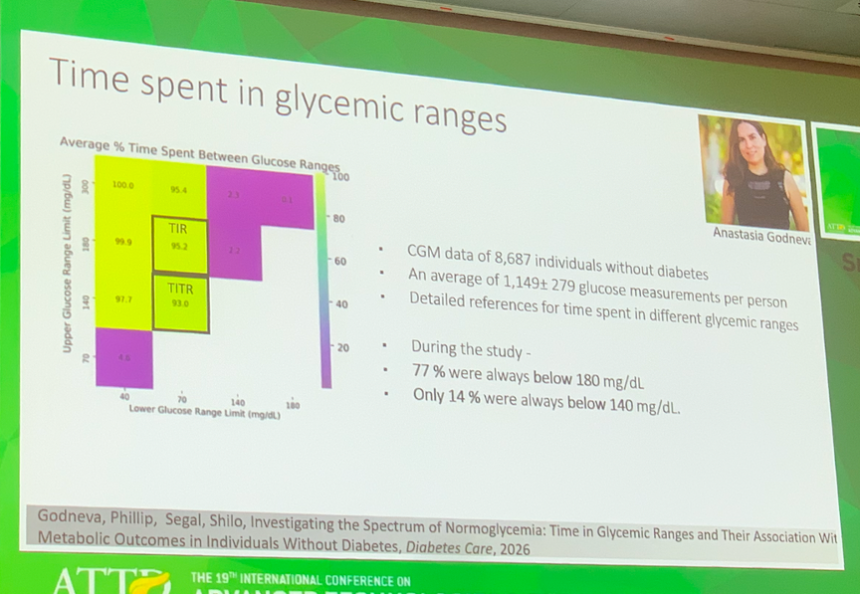
- Finally, Dr. Shilo talked about “GluFormer,” a generative foundation model for glucose in people without diabetes. The model, recently published in Nature, was trained on CGM data from about 11,000 adults without diabetes. The model is able to predict glucose values and was tested for some downstream prediction tasks in a set of individuals across multiple countries and including people with diabetes. Perhaps most impressively, in a cohort of 580 adults, GluFormer was able to predict risk of diabetes and cardiovascular mortality at follow-up (average 11 years) more effectively than A1c. With GluFormer, 66% of incident diabetes cases and 69% of cardiovascular deaths occurred in the top risk quartile, compared with 7% and 0%, respectively, in the bottom quartile. By contrast, with A1c, there was almost no separation between initial quartiles in terms of diabetes incidence at follow-up.
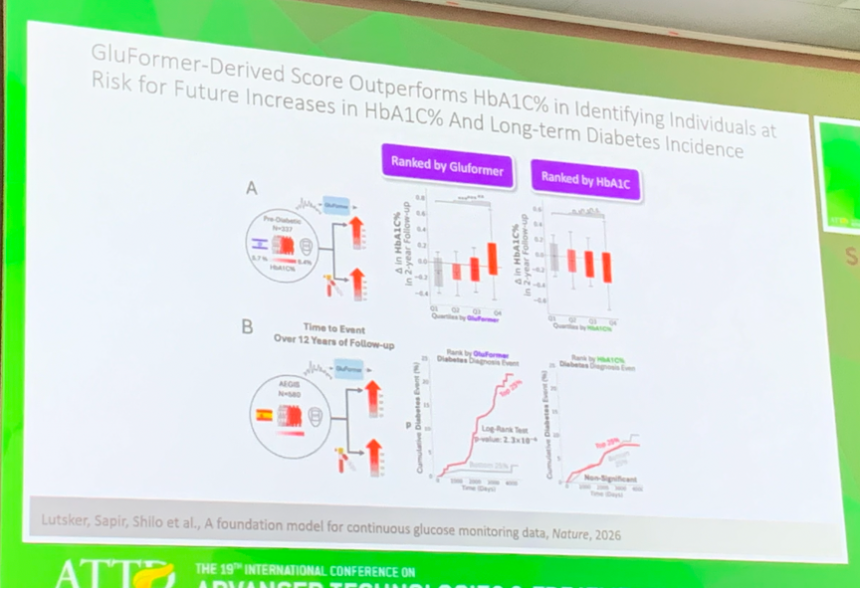
dQ&A presents data on DKA awareness and ketone testing behavior of adults with T1D
Ms. Philly De Piante (dQ&A) presented an e-Poster in the Exhibit Hall today examining how patient confidence in ketone interpretation relates to testing behavior and DKA awareness in adults with T1D. Ms. De Piante began by explaining that in many cases, numbers around rates of ketone testing in this population are not enough to explain the lived experience of T1D and the associated concerns around DKA. In this patient survey (n=1,419), US adults who own ketone testing kits were asked about: (i) their understanding of ketone testing results; (ii) which situations would prompt ketone testing; and (iii) whether their providers have discussed DKA risk and signs with them. They were then categorized as “confident” or “not confident” in their ability to interpret test results.
- Results showed that 19% of those surveyed were found to lack confidence in understanding ketone levels.These participants were more likely to express uncertainty about previous DKA events (17% vs. 8%), were half as likely to test ketones in all situations that could indicate DKA, and overall expressed more concern about the possibility of experiencing another DKA event (9% vs. 6%). Ms. De Piante concluded that there is a clear need to improve provider communication regarding DKA and education for people with T1D about when to test ketones and how to interpret those results.
Real-world performance of the Instinct sensor with the MiniMed 780G AID system
Dr. Viral Shah (Indiana University) presented a real-world analysis of the performance of MiniMed’s Abbott-partnered Instinct sensor with the MiniMed 780G. The study aimed to assess: (i) the effectiveness of Instinct during real-world MiniMed 780G use; and (ii) the potential impact of switching from Guardian 4 to Instinct on patient outcomes. The analysis used CareLink data with a minimum of 30 days and a maximum of 90 days of data per participant. Overall, most users achieved target glycemia using the Instinct sensor as part of the AID system. Among those who switched sensors, modest improvements in glycemia were observed, largely driven by increased time spent in automated mode. Overall, Dr. Shah said the findings support the idea that the AID algorithm may influence clinical outcomes more than the sensor itself.
- Participants using Instinct with MiniMed 780G (n=13,967) achieved a mean Time in Range (TIR) of 76% and Time in Tight Range (TITR) of 52%. Overall, 72% achieved target TIR of >70%, and nearly all (96%) achieved target Time below Range (TBR; <70 mg/dL) of <4%. As seen with typical MiniMed 780G use, those using MiniMed 780G’s optimal settings[1] achieved higher outcomes, including 80% TIR and 57% TITR. Among these participants, 84% achieved TIR targets and 97% achieved TBR targets. Adults performed better than children and adolescents. Specifically, adult users achieved 75% TIR and 51% TITR, while children and adolescent users saw slightly lower mean TIR of 67% and TITR of 57% with Instinct use.
- Participants who switched from Guardian 4 to Instinct (n=4,364) experienced modest increases in TIR (75% to 77%) and TITR (49% to 53%). Dr. Shah attributed these improvements to greater sensor use (91% vs. 98%) and increased time spent in automated mode (90% vs. 96%), translating to nearly 1.5 more hours per day. Correspondingly, the number of daily automated boluses increased with Instinct use. Dr. Shah noted that there was no increase in the proportion of users adopting optimal settings, total basal insulin as a percentage of total daily dose, or the number of user-initiated boluses.
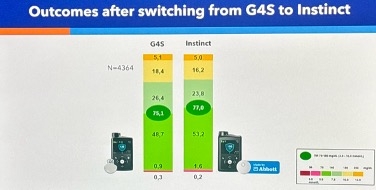
Dexcom unveils Smart Basal dosing, extended high glucose alerts, and a new sensor patch in dynamic symposium
Dr. Jay Skyler (University of Miami), Prof. Chantal Mathieu (KU Leuven, Belgium), Dr. Keri Leone (Dexcom), and Mr. Girish Naganathan (Dexcom) sat for an afternoon panel discussion in ATTD’s busy auditorium. Dr. Leone and Mr. Naganathan introduced several exciting updates that will be coming soon to Dexcom’s product portfolio, including a new sensor patch, an extended high glucose alert, a Smart Bolus tool, and updates to the Stelo app. Dr. Skyler and Prof. Mathieu interjected regularly to offer their insights into the clinical utility of these features and additional areas for future exploration.
- Mr. Naganathan introduced a new sensor patch that aims to increase sensor survivability. He cited internal data showing that 82% of G7 15 Day sensors lasts the full 15 days with the patch, with 89% of sensors lasting 14 days. Dr. Leone said that this does not come at the expense of skin safety, with no increase in skin irritation from the previous patch observed so far. Dexcom plans to roll out for Dexcom G7 15 Day users in the US in late 2Q26 or early 3Q26, followed by the rollout for G7 internationally in 3Q26 and for the 10-day G7 in the US in 4Q26. Prof. Mathieu noted that having a sensor active for longer is always an advantage but emphasized the need to monitor potential allergies and site reactions to the patch. Dr. Skyler joked that the longer wear time with the G7 15 Day meant he no longer needed to pack an extra sensor for trips like this, and that the adhesive on his sensor has already improved enough that he personally no longer uses an overlay patch.
- Dr. Leone also introduced an upcoming feature: an extended high glucose alert designed to enable a more proactive response to sustained hyperglycemia. For example, she said users can set a standard high alert at 300 mg/dL and/or an extended high alert at 250 mg/dL, with the ultimate goal of increasing hyperglycemia awareness, reducing Time above Range, and lowering risk of DKA. Prof. Mathieu commented that it is beneficial that sustained high alerts will be customizable and suggested that future developments around sensor alerts could focus on allowing low alarms to be switched off. In response, Dr. Leone clarified that while the 55 mg/dL urgent low alert cannot be disabled users can modify how the alert is delivered for greater discretion.
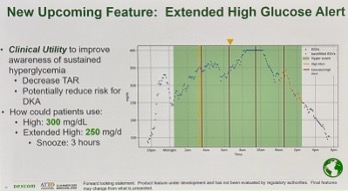
- Dexcom also introduced Smart Bolus, which aims to help patients on MDI deliver accurate fast-acting insulin doses titrated over time without increasing fear of hypoglycemia. The feature will provide personal dose guidance by incorporating user-entered carbohydrates, meal timing and type, current glucose levels and trends, and insulin history. Patients are set up with provider-defined parameters, and the calculation follows the same equation typically taught in diabetes education[2]. By reducing the amount of math and decision-making required by patients, Dexcom hopes to improve therapy adherence and patient outcomes.
- Smart Bolus complements Smart Basal, part of Dexcom’s broader effort to simplify insulin optimization for people with diabetes. Dr. Leone suggested this is particularly useful in primary care, where most insulin starts in the US occur but both clinicians and patients often hesitate to initiate therapy. Smart Basal, now available with the G7 15 Day in the US and expected to expand to other products over time, is designed to reduce the need for frequent in-office titration visits. The feature currently supports only glargine U-100, with Dexcom pursuing additions including degludec and U-300. Across trials, no increase in hypoglycemia has been observed. Qualitative research suggests patients feel more confident adjusting eating behaviors, and providers have reported that the data help them titrate basal insulin more quickly and safely. Dr. Skyler noted that reminders to adjust insulin doses can help more people reach the correct dose.
- Dexcom also highlighted recent updates to the Stelo app, which is becoming increasingly designed to support daily experimentation, long-term tracking, and coaching. New features have included advanced food logging that assesses meal composition across carbohydrates, protein, and fat, either from manual entries or photos that are translated into these macronutrient estimates. Dr. Leone emphasized that the model was trained on culturally and ethnically diverse foods. The system can also show users how they have historically responded to that food, focusing on educating them on four aspects of glucose response: rate of rise, magnitude of rise, total glycemic exposure, and recovery toward pre-prandial levels. A built-in AI-based coach was designed to provide further educational insights and suggestions, which Mr. Naganathan described as a “nudge, not judge” approach. Dr. Skyler commented that the coaching responses could be particularly valuable in helping users gain deeper insights into their glycemic responses to different lifestyle habits, while Prof. Mathieu described it as having an educator “sitting on the patient’s shoulder.”

- Dexcom briefly addressed progress in EHR integration as well. About 160 clinics are currently or soon-to-be connected through the MyChart ecosystem, and Dexcom expects the upcoming 21st Century CURES Act requirement mandating HL7-based interoperability by 2028 to accelerate broader connectivity. Similar trends are emerging in European and UK digital health systems. Dexcom explained that through the Clarity One Click feature within Epic, providers and clinics can analyze patient cohorts through population tagging and visualize clinic-level data in a population health dashboard to support risk stratification. EHR connectivity is already established in the US, Canada, the UK, and the Netherlands, with further expansion planned. Both Dr. Skyler and Prof. Mathieu emphasized the importance of going beyond Epic, noting that many hospitals use different systems and that clinicians would benefit from flexibility in customizing how much data appears in reports.
- Finally, Dexcom reviewed its next-generation sensors, which are being developed with a multi-analyte approach capable of measuring both glucose and ketones. Dexcom G8 is expected to be roughly 50% smaller while maintaining the G7 15 Day’s wear time. The company is targeting a MARD <8%, improved Day 1 accuracy, and a warmup time of less than 30 minutes. As G8 development continues, Dexcom will also continue to invest in better adhesive technology, connectivity improvements, and shorter timelines for future partnerships, while also integrating generative AI in more of its products to deliver more personal insights. Dr. Leone also noted that the company wants to expand the technology into additional areas including GDM, prediabetes and metabolic disease, and inpatient care – the last of which Dr. Skyler said is crucial and should be pushed aggressively.Debate: Should A1c or CGM be the gold standard for glycemic management?
- Dr. Richard Bergenstal (International Diabetes Center) and Dr. Elizabeth Selvin (Johns Hopkins University) hosted a lively debate seeking a gold standard for glycemic management. Dr. Selvin strongly advocated for A1c to remain the gold standard, while Dr. Bergenstal said that the time has come for CGM metrics to replace A1c.
- Pro: A1c should remain the standard of care for evaluating glucose control, said Dr. Selvin. First, Dr. Selvin discussed availability, which is necessary to establish a metric as a truly global standard of care. Unlike CGM, A1c is low cost, requires basic lab infrastructure, and is widely available around the globe and covered by insurance. She also highlighted A1c’s alignment with the likelihood of developing long-term complications, as demonstrated by the landmark DCCT. Glycation in the blood leads to complications, said Dr. Selvin, and A1c directly reflects this, unlike CGM metrics. While work is ongoing to evaluate CGM metrics for predicting long-term outcomes, there have been limited long-term outcome studies completed to date. Metrics also vary between devices, while A1c has been highly standardized around the world by the International Federation of Clinical Chemistry and Laboratory Medicine (IFCC). Dr. Selvin recognized the value of CGM for preventing hypoglycemia and providing a window into daily glucose fluctuations but believes that CGM must complement the use of A1c and is not a total replacement. She advocates for the use of A1c as a long-term control and risk metric and for CGM as a short-term management tool.
- Con: Dr. Bergenstal said that the time has come to cross the bridge from A1c to CGM metrics. Dr. Bergenstal said that glycemic control remains inadequate in most countries despite the ubiquity of A1c testing and its establishment in the standards of care for diabetes treatment. In the US, from 1999-2018, only 60% of people with T2D have an A1c value <8.0% if on insulin, and only 30% have an A1c less than 7.0%. He said that the field is clearly searching for better management strategies, and proposed CGM to fill this gap. He noted that the 2026 ADA Standards of Care first suggest the use of A1c for glycemic management and only suggest the use of CGM and diabetes education after three to four steps if management is inadequate. He instead believes that CGM should come before A1c because of the wealth of daily data it provides. He cited three patients from his own practice, all with A1c values of 6.7%, and showed how different their CGM data were, with 83%, 69%, and 51% Time in Range (TIR). This demonstrates how A1c values cannot capture all the nuance of diabetes care that can impact long-term complications. He then acknowledged challenges with the Glucose Management Indicator (GMI) metric, which is meant to estimate A1c values from CGM data yet has highly variable results in practice. He recently led a study to update GMI to more closely reflect A1c values, which will be published shortly and may address some of the major concerns with CGM alone. Dr. Bergenstal said that only CGM metrics can effectively guide glycemic, metabolic & quality of life improvements through personalized care.
- Rebuttal: Limitations remain unaddressed for CGM, said Dr. Selvin. She said that RCTs continue to use A1c as the standardized outcome because it is more robust than CGM metrics. At the population level, she said, problems in glycemic management should not be attributed to A1c, but rather to other systemic failures. She said that gold standards should only be replaced with a superior metric.
- Rebuttal: Dr. Bergenstal said that CGM enables a new goal for long term diabetes management: a safe life with reduced overall risk, not just survival. The audience applauded loudly for both Dr. Selvin and Dr. Bergenstal, with a slight preference for the CGM perspective.
Dr. Ahmad Haider takes a first pass at recommendations for continuous ketone level targets for people with T1D on SGLT-2 inhibitors
- During a quiet afternoon session, Dr. Ahmad Haider (McGill University, Canada) presented fascinating data using continuous ketone monitoring data in people with T1D on empagliflozin. Using the data, Dr. Haider defined some targets for ketone levels for this particular population, though he made clear that these targets were not “really scientific,” but just drawn up empirically from their small dataset.
- In the study, 24 adults were given continuous ketone monitors (from Sibionics) and empagliflozin. Participants started with four weeks of run-in with no empagliflozin, four weeks with 2.5 mg empagliflozin, eight weeks at 10 mg, and finally – to really push the limits – one week with 10 mg of empagliflozin and a low carbohydrate diet (<50 g carbs per day). The ketone traces with increased empagliflozin doses show an obvious trend with increased ketone levels as empagliflozin dose increased. However, increased ketone levels are not necessarily bad if they do not lead to DKA, and, as Dr. Haider noted, they may even be cardioprotective.
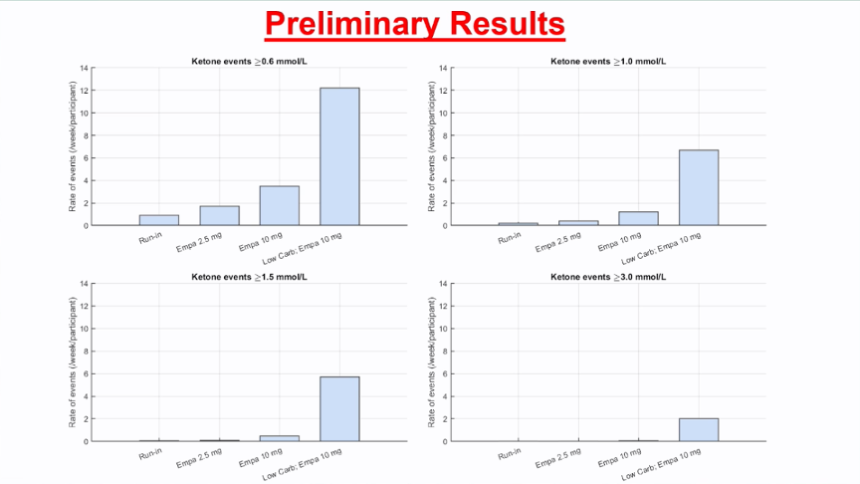
- In one participant, the highest empagliflozin dose and low carbohydrate diet, combined with high activity, led to extremely high ketone levels and a protocol deviation. Ketone levels rose extremely high, as seen in the first chart below, the participant became symptomatic, and they had to eat some carbohydrates and dose insulin to bring ketone levels back down. However, for another participant, ketone levels rose to similar levels and even higher with the 10 mg empagliflozin and low carbohydrate diet. Despite this, the participant never became symptomatic and continued the study, highlighting heterogeneity across individuals.
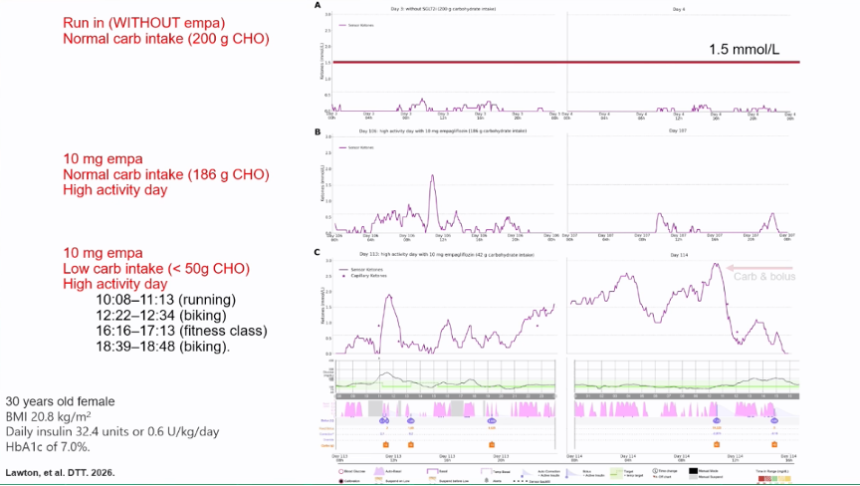
- Despite the varying individual responses to ketone levels, Dr. Haider proposed the first attempt at targets: <3% for level 1 ketosis (>1 mM) and <1% for level 2 ketosis (>1.5 mM). These targets were drawn up entirely empirically based on the 24 participants in the study but serve as a conversation starter as continuous ketone monitors become more available.
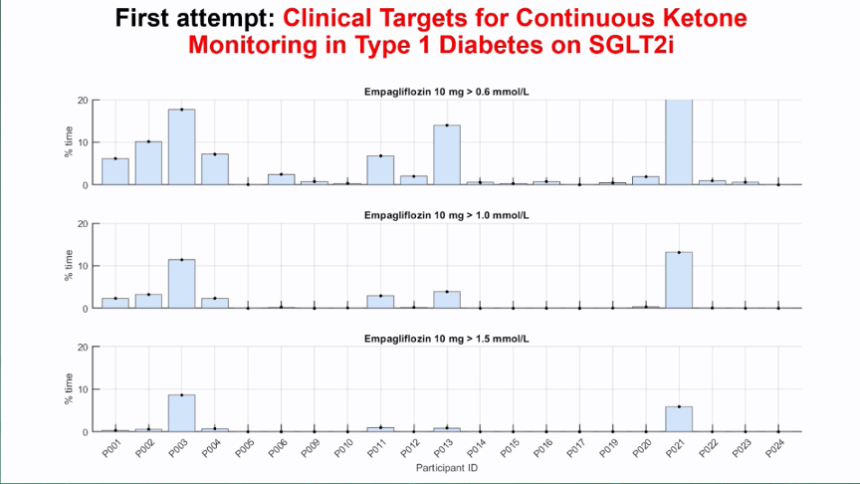
From prediabetes to basal insulin: Early CGM use to transform T2D care
In a busy morning Dexcom symposium, Dr. Viral Shah (Indiana University), Dr. Thomas Martens (International Diabetes Center), and Dr. Sean Oser (University of Colorado Anschutz) stressed the value of early initiation of CGM to optimize therapy and encourage early behavior change. Together, they described how CGM can guide interventions in prediabetes (or stage 2 T2D) to supporting patients initiating basal insulin.
- Dr. Shah opened by proposing a staging framework for T2D similar to that used for T1D. He argued that the term “prediabetes” should be eliminated because it minimizes the condition’s links to serious complications by framing it merely as a risk factor for T2D. Instead, individuals with dysglycemia (but without overt diabetes) should be classified as having stage 2 T2D. Just as CGM can help patients reach therapeutic targets regardless of insulin use among people with T2D, CGM can help prompt and inform behavior change to begin improving glycemia. Dr. Shah also called for updated guidance that emphasizes CGM-based glycemic optimization, as well as greater collaboration with industry and regulators to expand access to therapies such as modern incretins to help prevent progression from stage 2 to stage 3 T2D.
- Dr. Martens highlighted data from the Dexcom Global Registry, which includes CGM-naïve adults with T2D managed in primary care. Participants in this analysis (n=318) represented a diverse population with varied education and insurance status and were typically taking one to three medications; about one-third used GLP-1 RAs and one-third used SGLT-2 inhibitors at enrollment. Real-world CGM adherence was high, with 75% wearing CGM on at least 70% of days – similar to adherence seen in the MOBILE trial. CGM use led to a rapid A1c reduction of 0.5 percentage points from a baseline of 7.4%, reaching a ~0.7 percentage point reduction at one year. Benefits were consistent across age groups, and participants already using GLP-1 RAs experienced greater improvements, suggesting complementary effects between the therapies. At one year, participants also reported an average 2.4 kg (~5 lbs) weight loss, lower diabetes distress, and improvements in eating and exercise habits. Dr. Martens concluded that CGM can meaningfully improve glycemic management in real-world primary care settings, with benefits sustained over a year.
- Finally, Dr. Oser discussed Dexcom’s CGM-powered Smart Basal feature, designed to address clinical inertia in basal insulin titration. He noted that nearly three-in-four new basal insulin users fail to reach glycemic targets within one year of initiation. Smart Basal, available in the US with Dexcom G7 15 Day and insulin glargine U-100, uses an algorithm to calculate a patient’s recommended basal dose each day within provider-defined limits (for example, maximum daily dose increases). The system aims to identify the optimal dose within 90 days, though Dr. Oser noted that in practice it can often occur in about a third of that time. Patients receive the recommended daily dose in their app and are prompted to log administration. Dr. Oser said faster titration to optimal basal dose can significantly improve TIR, reduce Time above Range, and lower GMI.
A preview of continuous ketone monitoring data from Abbott; Drs. Ketan Dhatariya and Rich Bergenstal highlight much to be learned
In the cavernous auditorium in Barcelona’s CCIB, Drs. Ketan Dhatariya (Norfolk and Norwich University Hospitals, UK) and Rich Bergenstal (International Diabetes Center) emphasized that there is still much to learn about continuous ketone monitoring data during an Abbott-sponsored symposium. Dr. Dhatariya kicked things off by reviewing what is currently known about ketone levels in the body. In particular, Dr. Dhatariya emphasized that high ketone levels themselves are not necessarily a bad thing, saying, “We’re all designed to starve.” In fact, Dr. Dhatariya showed results from a study in which humans fasted and beta-hydroxybutyrate levels were sustained at 6 mM for nearly a month. However, because these ketone levels rose gradually, the body was naturally able to compensate. Instead, Dr. Dhatariya noted, the change and rate of change in ketone levels may be more relevant when it comes to managing and preventing ketoacidosis.
Following on, Dr. Bergenstal presented our first look at real-world data from 1,400+ participants wearing blinded dual glucose ketone sensors. While aggregate study data is still being analyzed, Dr. Bergenstal provided a few example sensor traces, highlighting the richness of the data from the sensors, as well as how much was still not understood on the relationship between glucose and ketone levels.
- In the first case, Dr. Bergenstal showed a person with T1D with consistently high glucose levels. This individual spent nearly all of their time above range, and in fact spent much of their time with glucose at the highest levels measurable by the sensor (i.e., >400 mg/dL). However, their ketone levels generally stayed low throughout wear with the exception of one major ketone spike on Day 6. For this, Dr. Bergenstal noted that it’s difficult to know what the cause of that ketone spike was, whether it was due to illness, missing an insulin dose, or something else.
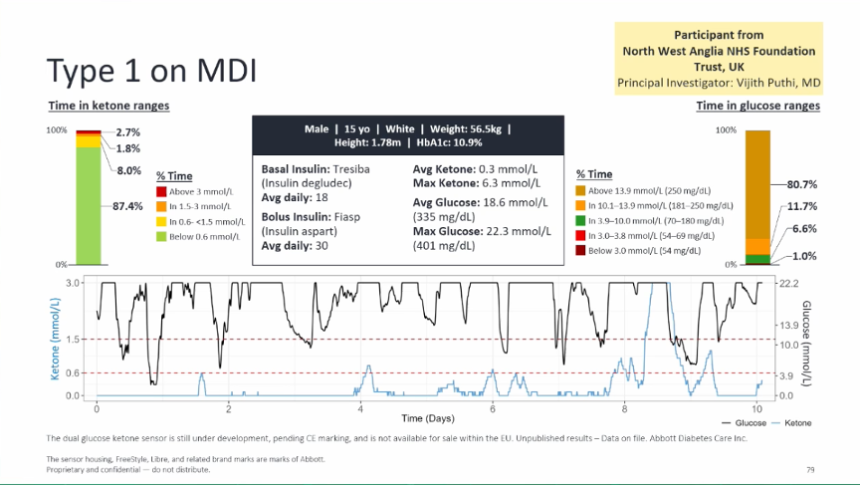
- In another case, Dr. Bergenstal showed sensor traces for a person with T1D on an insulin pump. In this case, glucose was also consistently high, but ketone spikes also occurred with regularity. With a blinded sensor, it’s difficult to know what was causing these ketone spikes, but the two examples show heterogeneity in how glucose and ketone levels are associated with each other.
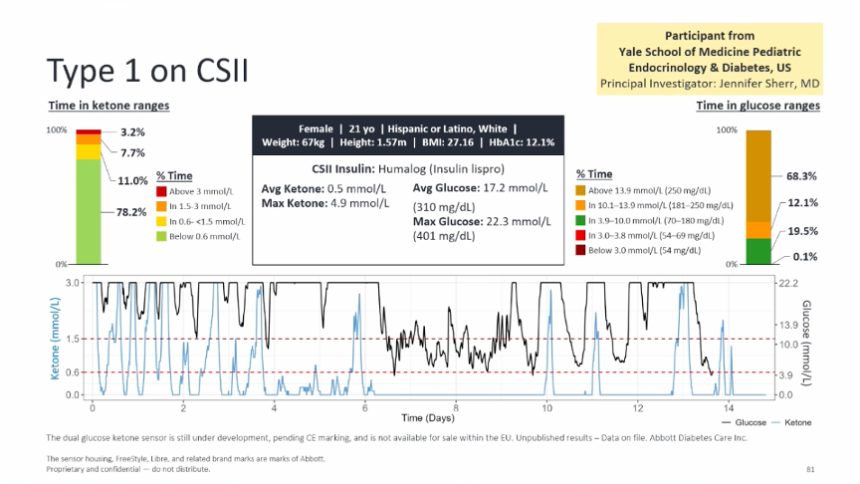
- Dr. Bergenstal highlighted the diversity in the dataset that was collected with the blinded glucose ketone sensor. The study enrolled over 1,400 participants across the US, UK, Austria, Germany, and Australia, and included people with T1D and T2D. It included people using MDI, pumps, hybrid closed loop, basal insulin only, or SGLT-2s. Additionally, pregnant participants and participants with CKD and CVD were included in the dataset. In all, the data will be collected to analyze typical ranges for ketone levels across various diabetes types and comorbidities which will become especially important as continuous ketone sensors become available.
MiniMed presents three studies comparing Simplera Sync and Instinct, studying low glucose alerts, and exploring missed meal boluses
Dr. Ohad Cohen (MiniMed) and Prof. Amir Tirosh (Tel Aviv University, Israel) presented new data on the MiniMed 780G AID system. Using real-world data and RCT study designs, significant insights were presented spanning low glucose alerts, meal bolusing, and a comparison of outcomes with the Simplera Sync and Instinct sensors.
- MiniMed 780G delivers strong TIR results across both the Simplera Sync and Instinct sensors. MiniMed recently launched its Instinct sensor, made by Abbott, for use with MiniMed 780G. This increases sensor options beyond Medtronic’s Simplera Sync and Guardian 4 sensors. The authors sought to evaluate the integration and performance of the new sensor in an RCT. In a crossover study design, 24 participants with T1D used either Instinct or Simplera Sync for six weeks, then transitioned to the other sensor for six weeks. The primary endpoint was non-inferiority of TIR (within 5%), with secondary endpoints including A1c values and other metrics.
- Non-inferiority in TIR was achieved, with a 79.1% TIR seen with Instinct versus 80.6% with Simplera Sync. Time above Range (TAR) and Time below Range (TBR) were also similar between users of the two devices. A1c values were similar as well, with an average of 6.7% with Instinct and 6.8% with Simplera Sync. No meaningful differences were observed in any other CGM endpoints, and no severe safety events occurred. The authors conclude that both sensors are safe and effective, and that they can be interchanged without meaningful differences in glycemic management. This supports the idea that “it’s not the sensor, it’s the algorithm” – that the strong TIR outcomes seen with MiniMed 780G can be validated.
- “Trusting the system” by lowering the threshold for low glucose alerts improves glycemic outcomes. Low glucose alerts are essential for AID users to prevent severe complications due to hypoglycemia. The authors sought to quantify the associations between selected low alert thresholds and real-world glycemic outcomes, given that TBR is significantly lower for users who enable low glucose alerts. Dr. Cohen said that many AID users spend a significant amount of time at relatively low glucose levels as they seek tighter glucose management and improved long-term outcomes. He therefore hypothesized that excessively strict low alerts may negatively impact TIR for AID users. To study this, data were taken from 184,247 MiniMed 780G users in Europe, the Middle East, and Africa (EMEA).
- Lower thresholds (50-60 mg/dL) were associated with the best TIR (~75%) and lower TAR. In contrast, low alert thresholds higher than 75 mg/dL resulted in Time above 180 mg/dL and Time above 250 mg/dL exceeding recommended targets. The authors found that TIR decreased with higher alert thresholds. The highest median Time below 54 mg/dL was 0.35% and Time below 70 mg/dL was 2.16% for alert thresholds of 50-55 mg/dL (see figure below). Dr. Cohen urged users to “forget the concept of the past” that frequent alerts are absolutely essential to prevent hypoglycemia, urging users to trust the system. He said that this approach is safe and definitively provides better outcomes.
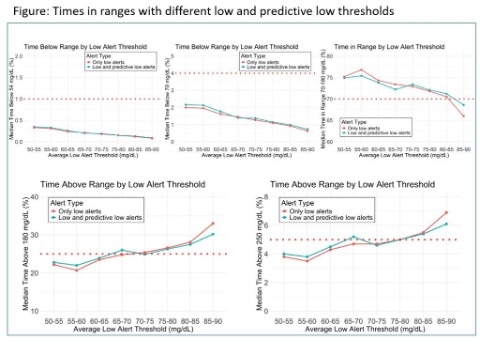
Although auto-corrections are possible, meal bolusing still confers strong benefit to TIR. Bolusing before meals consistently delivers the best glycemic outcomes for AID users, but the MiniMed 780G’s auto-correction feature also allows for positive outcomes when boluses are missed. The authors sought to examine the relationship between daily meals with missed boluses (MMB), on-time boluses (MOTB), and glycemic management in real-world users. Data were taken from 128,177 users in the EMEA region. A machine learning model was used to detect meals based on CGM data. Users averaged 4.6 meals per day, with 1.8 MMB and 1.7 MOTB. MMB were more frequent among younger users (47% in those aged 16-28 years versus 32% in those >55 years).
- Each additional MOTB increased TIR by 9.2 percentage points in the low bolus profile and 4.3 points in the high profile. Use of recommended optimal settings improved TIR by 3-4 points across all profiles and narrowed the TIR benefit gap of each additional MOTB between low and high profiles (8.1% versus 4.4%, respectively). The authors conclude that more frequent MOTBs are strongly associated with improved TIR, especially for patients who bolus infrequently. Across bolus profiles, the use of recommended optimal settings improves glycemic outcomes and reduces variability. Dr. Cohen said that targeted education and support may substantially enhance glycemic management.
Results from Italian study of adolescents with T1D switching between Guardian 4 and Simplera Sync sensors
Dr. Marco Marigliano (University of Verona, Italy) introduced a multicenter clinical study on behalf of the Italian Society for Pediatric Diabetes. The study evaluated the clinical and patient-reported outcomes associated with adolescents with T1D switching from Guardian 4 sensors to Simplera Sync with the MiniMed 780G system. Dr. Marigliano and other researchers hoped to answer whether the next-generation sensor could improve time spent in automated mode, glycemic control, and user satisfaction in adolescents already using the MiniMed 780G hybrid closed-loop system.
- The prospective multicenter study was conducted across 14 Italian centers and included 42 adolescents with T1D. Clinical and device data were collected for approximately 30 days before and after the sensor switch. Key metrics included: (i) time spent in automated mode; (ii) glucose management indicators; (iii) insulin dosing parameters; and (iv) standard glycemic metrics such as mean glucose, GMI, and TIR. Patient-reported outcomes were assessed using the System Usability Scale (SUS) questionnaire, consisting of 11 items designed to evaluate satisfaction with the insulin delivery system and the perceived impact of diabetes management on daily life. Comparisons were based on the final two weeks of use with each sensor generation.
- The results demonstrated improvements across several clinical and experiential measures following the transition to the new sensor. Participants spent more time in automated mode, reflecting improved sensor usability and system continuity. Glycemic outcomes also showed modest but statistically significant improvements, including slight reductions in mean glucose and GMI, an increase in TIR from 76% to 79%, and improvements in nighttime glucose control without an increase in hypoglycemia. Measures of glucose variability also improved. Importantly, adolescents reported higher satisfaction with the overall system and a reduced perceived burden of diabetes management when using the newer sensor. Overall, the findings suggest that switching to an improved CGM sensor within an AID system may enhance both glycemic outcomes and user satisfaction among adolescents with T1D.
CGM use is not effective for healthy lifestyle modification in people without diabetes
Dr. Nicola Guess (University of Oxford, UK) presented a highly compelling analysis showing that the popular use of CGM for lifestyle and weight management may not be effective in people without diabetes. Her analysis is particularly timely as OTC CGMs Stelo and Lingo continue to gain popularity, with an estimated 400,000+ users worldwide. The two CGMs are explicitly marketed toward lifestyle management. She began with a quote from Son et al. that encapsulates the common understanding of CGM for T2D: “By providing immediate, personalized feedback on how specific food choices and physical activity impact glucose levels, CGM serves as a powerful ‘silent persuader’ for positive behavioral change.” While long-term management of glucose levels is, of course, important for preventing complications, Dr. Guess said that it may not be the most important factor for longevity – LDL cholesterol and blood pressure levels are more important for cardiovascular disease prevention, which remains the leading cause of mortality for people with diabetes. Therefore, even for T2D, while glucose levels are positioned as the most important consideration for lifestyle modification, this approach does not stand up to scrutiny, said Dr. Guess. When moving from T2D to the broader population without diabetes, this approach exhibits even greater weaknesses.
- Glucose is not a meaningful clinical outcome in people without diabetes, nor is it a useful guide for the dietary changes that patients seek. Dr. Guess identified three major clinical goals that the majority of people seek with lifestyle modification: weight loss, improvement of cardiovascular disease risk factors, and an improved quality of life/mental wellbeing. Further, specific lifestyle changes to achieve these goals have already been identified: eating a low-calorie/eucaloric diet, increasing intake of whole plants/fiber while reducing saturated fat/sugar intake, increased physical activity, and increasing sleep quality, respectively.
- Thus far, there has been no evidence that the use of CGM can impact these outcomes, said Dr. Guess (see below). She cited a 2024 study by Richardson et al in support of this concept. In many studies, the use of CGM leads to a reduction in carbohydrate consumption, yet these carbohydrates are replaced by fats, with no change in energy intake. This increase in fat consumption can actually even increase cardiovascular disease risk, said Dr. Guess. There has been some evidence of CGM leading to an increase in physical activity, yet this can also be replicated by other methods such as simple attention to activity or the use of a pedometer.
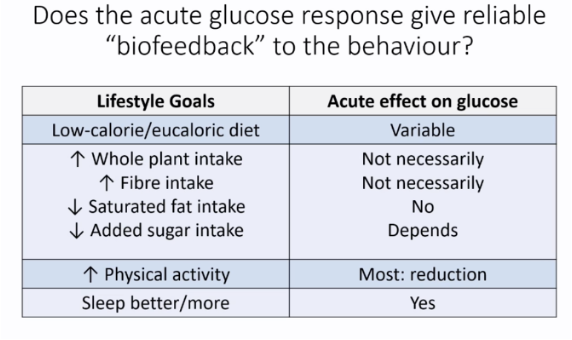
- Dr. Guess presented a 2022 study by Popp et al. demonstrating that dietary interventions to reduce postprandial glucose do not directly lead to weight loss – instead, lowering caloric intake is what reliably leads to weight loss. While dietary modifications that lower postprandial glucose levels often are lower in caloric content compared to other diets, low glucose levels alone cannot lead to weight loss. She also discussed a 2022 RCT by Chekima et al. that explored the effect of CGM use during dieting (n=40). Over two months, participants using CGM lost about 0.8 kg more than those not using CGM, which Dr. Guess said was statistically but not clinically significant. The two groups had no difference in LDL levels or physical activity. Notably, fat intake increased. In sum, Dr. Guess said that relying on the acute glucose response is not particularly helpful for guiding “worthwhile” behavior change.
- The concept of CGM use for personalized nutrition is not supported by evidence. Dr. Guess noted that individual responses to meals vary greatly at different time points and in different situations, which complicates the use of CGM data to avoid certain foods. The “second meal” effect describes the disproportionately large spikes seen in the second meal after consuming a low-carbohydrate meal – for example, if one had a fiber-rich, low-carbohydrate dinner and then had a normal carbohydrate load for breakfast, they would see an unexpectedly large glucose spike in their CGM data. This is not due to an inherent glycemic intolerance for the food, but simply the circumstances. Because of such nuance, Dr. Guess again emphasized that CGM data cannot reliably be used to identify specific foods to avoid for individuals. As CGM steadily expands in popularity, Dr. Guess believes the field should seek adequate evidence before joining the lifestyle trend.
Diabetic ketoacidosis in T1D and T2D: Epidemiology, provider perspectives, and the promising role of technology
In this fascinating oral presentation session, Prof. Samuel Seidu (University of Leicester, UK) and Dr. Richard Bergenstal (HealthPartners) discussed the burden of diabetic ketoacidosis (DKA) among people with diabetes. Prof. Seidu presented 21-year trends and risk factors of DKA in the UK. Dr. Bergenstal followed with findings from a qualitative study to understand providers’ perspectives on hyperketonemia, diabetic ketoacidosis, and ketone monitoring in people with diabetes.
- To understand the prevalence of DKA over time, Prof. Seidu conducted a retrospective observational cohort study using data from 1999 to 2021. Adults with T1D (n=78,856) or T2D (n=577,088) who had a prescription for any antihyperglycemic therapy or insulin were included. As expected, over a median follow-up of eight years, people with T1D had a higher DKA incidence rate (52.8 vs. 2.8 per 1,000 patient-years) than people with T2D. Likewise, a higher proportion of people with T1D experienced more than one (18% vs. 1.8%) or two DKA events (8% vs. 0.3%).
- DKA events in T1D increased over time and declined after the mid-2010s (see figure below). DKA events for T2D increased over time. While this trend may be attributed to underreporting in earlier years, it isn’t known – we believe the increase in DKA may simply reflect the growth in T2D and being diagnosed with DKA. Ultimately, while the emergence and adoption of CGMs in the UK likely contributed to the reduced DKA rates in T1D, this is not true in T2D. Ultimately, Prof. Seidu found that people with an earlier onset of diabetes, those from lower socioeconomic status, and women were more likely to have an incidence of DKA.
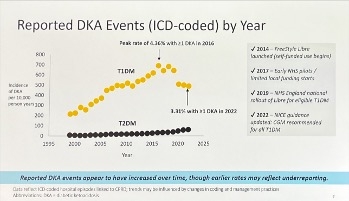
- To better understand the real-world burden and management of DKA, Dr. Bergenstal conducted surveys among providers in the US (n=16) recruited through the T1D Exchange Registry and a survey vendor. Investigators conducted 16 interviews with eight endocrinologists (five adult and three pediatric) and eight primary care physicians. Participants were 52 years old on average, and 44% were female. On average, they had 20 years of practicing post-residency and spent 43% of their time providing direct care to people with T1D or T2D. By geography, eight were from the Midwest, five from the South, one from the Northeast, and two from the West of the US. Topics included the impact of hyperketonemia, burden of ketone monitoring, prevention and management strategies, and adoption of ketone monitoring technology.
- Risk factors of DKA include suboptimal diabetes management, comorbid conditions, limited diabetes education, SGLT-2 inhibitor use, and alcohol consumption. Hydrating, monitoring glucose, and remembering to take insulin are the most important strategies to avoid DKA. Thus, education around ketone monitoring is crucial to DKA prevention. Providers reported that people with T1D generally receive more guidance on checking ketones than people with T2D.
- Ketone monitoring and management are mostly driven by patients. Providers rely on patients to self-monitor and record ketone levels to discuss in clinical settings. Providers often are only able to use CGM data to evaluate glycemic health and DKA risks. Patients face several barriers to ketone monitoring, such as costly co-pay, emotional burdens, or logistical challenges, like dexterity, cognitive abilities, or access to testing supplies. Although blood tests are significantly more reliable, many patients have reported favoring urine ketone strips over finger-prick tests due to perceived lower burdens.
Biolinq’s intradermal glucose monitor: Feasibility data supports longer wear time
Dr. Jared Tangney (Biolinq) shared feasibility data (n=59) supporting an increased wear time for its intradermal “Shine” sensor. Biolinq is currently working on the second generation (Gen 2) of its sensor. As background, its first generation (Gen 1) sensor, Biolinq Shine, was FDA cleared in September 2025 for a five-day wear time - see our fascinating interview with Biolinq CEO Mr. Rich Yang here. Gen 2 will also feature an updated chemistry design and new ten-day algorithm. We look forward to learning more, particularly on manufacturing.
- Study demographics. Mean age was 49 years old and roughly half were female. Most participants had T1D (63%). Among the 22 participants with T2D, 11 were not on insulin, seven were on basal insulin only, and four were on intensive insulin therapy. Mean A1c was 7.0%.
- Sensor survival. As shown below, the Gen 2 sensor demonstrated improved survival, with 73% of sensors surviving for nine or more days, compared to 57% with Gen 1. Dr. Tangney also shared that the insertion depth of the sensor after ten days remains consistent with the depth at five days from prior studies.
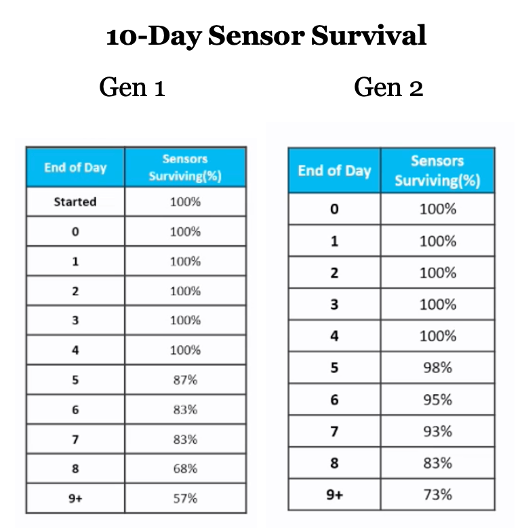
- Sensor traces. Dr. Tangney also shared example sensor traces comparing the sensor (light blue line in photo below) to Roche’s AccuChek BGM (red dots) and Abbott’s Libre 3+ (dark blue line).
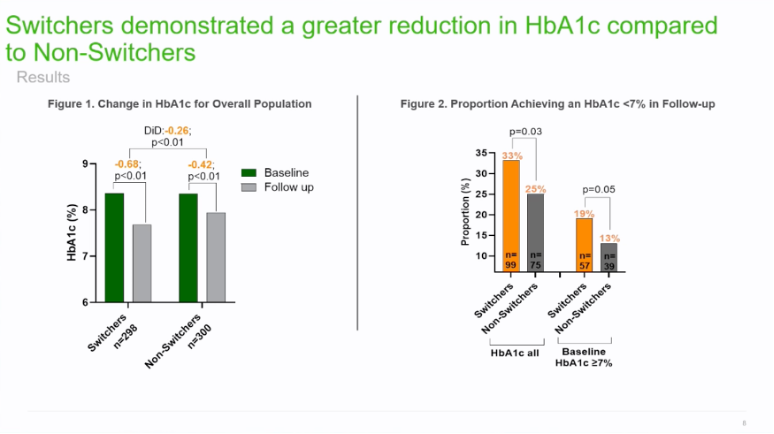
Glycemic outcomes associated with switching from intermittently-scanned to real-time CGM in people with T2D on insulin
In this short study, Dr. Katia Hannah (Dexcom) compared A1c change in people with T2D on insulin therapy after switching from intermittently-scanned CGM (isCGM) to real-time CGM (rtCGM). This retrospective observational study was based on a very large de-identified US health claims database. The rtCGM was a Dexcom CGM product (predominantly G7, according to Dr. Hannah), and the study design specified Abbott FreeStyle Libre 1 or 2 for the isCGM device. (Note that FreeStyle Libre 3 meets the definition of rtCGM).
- The investigators designated two cohorts: ‘switchers’ (n=298) and ‘non-switchers’ (n=300). Switchers moved from isCGM to rtCGM during the analysis period (2016-2025) and all participants spent at least 12 months on either isCGM (non-switchers) or rtCGM (for the switchers). All participants were CGM-naïve before isCGM. The two cohorts were propensity score matched based on baseline characteristics, such as medications taken. Results were measured at 12 months from rtCGM initiation or at a random time >12 months after isCGM initiation. Mean A1c at baseline was 8.4%.
- Over the 12-month follow up period, both switchers and non-switchers meaningfully improved their glycemic management, demonstrating the power of CGM (see Figure 1). However, adjusting for baseline characteristics and analyzed per the study design, the switchers’ A1c improved by 0.3 percentage points more than non-switchers. Additionally, a larger proportion of switchers achieved an A1c <7.0% during follow up (33% vs. 25%, p<0.01).
- Dr. Hannah concluded by noting that the study was not able to identify the factors that determined switching behavior, nor the extent to which participants wore or used the CGM as directed. Other factors might have impacted the analysis – for example, participants in both groups might have ‘traded up’ to next generation CGMs at different rates, and the study may have ‘lost’ participants who traded up to Libre 3. Nonetheless, this work clearly confirms how CGM continues to deliver increasing benefits over time for people with T2D.
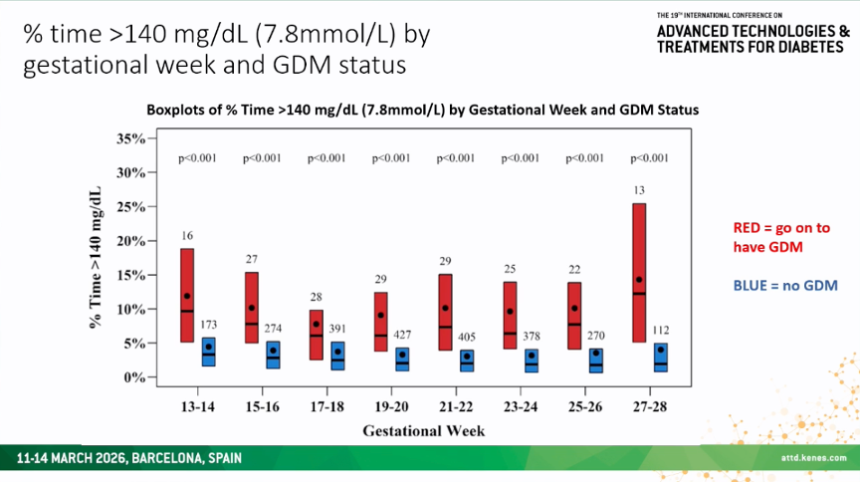
Figure 1: Results of isCGM to rtCGM switching study.
Use of CGM in gestational diabetes; CGM metrics show differences in GDM status well before OGTT
On Saturday afternoon, Dr. Anders Calrson (International Diabetes Center) presented a post-hoc analysis of the Glucose Levels Across Maternity (GLAM) study in pregnant women who wore Dexcom G6 Pro. The observational study enrolled 937 pregnant women and assigned them to wear blinded CGM as early as possible in the study. A total of 768 women were included in the final analysis of women who had both CGM data and OGTT data. Of the 768 women, 58 (7.6%) ended up developing gestational diabetes. In comparing individuals who did and did not develop gestational diabetes, almost every CGM metric was different. Women who developed gestational diabetes had higher mean glucose levels (109 vs. 100 mg/dL); lower Time in Pregnancy Range (TIPR; 87% vs. 94%); and increased Time >140 mg/dL (7% vs. 3%). Perhaps most importantly, all of these differences were observed prior to the OGTT (i.e., 24-28 weeks), suggesting CGM can be used to diagnose gestational diabetes in advance of the traditional OGTT.
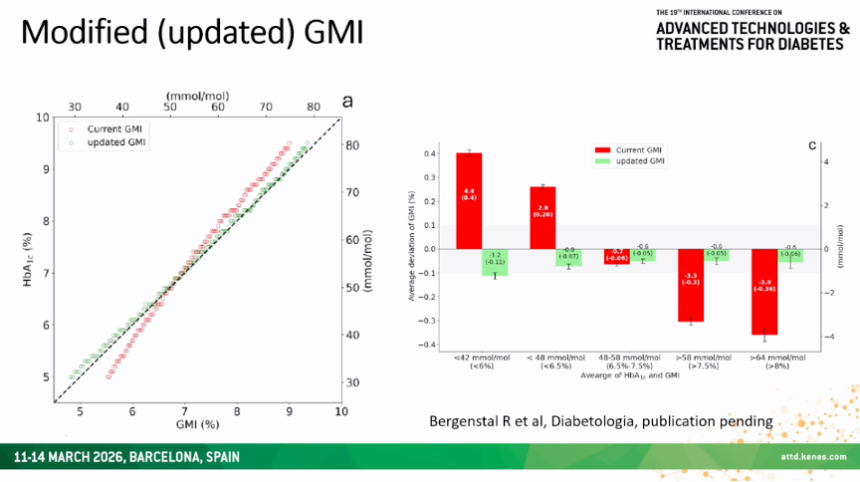
- Dr. Carlson also presented a new “updated GMI” (uGMI) metric which saw better concordance with A1c in pregnancy compared with traditional GMI. This updated GMI is meant to better match with A1c, especially improving at the more extreme low and high glucose ranges where original GMI values do not match as closely with A1c. When comparing uGMI, GMI, and A1c values in the GLAM cohort, uGMI matched much more closely with A1c compared to GMI. For example, when using original GMI, the GMI values were greater than A1c values for 98% of readings, demonstrating a clear bias in the GMI metric for this population. By contrast, uGMI was only greater than A1c in 56% of pairs, demonstrating a well-calibrated metric.
Accuracy of a novel, real-time CGM in adults with diabetes: A preliminary analysis
In a rapidly-paced oral presentation, Dr. Feng Chen (SiBionics, China) presented promising lab results for the accuracy of the SiBionics GS3 CGM. The 14-day GS3 sensor was announced at ATTD 2025, after it had been awarded CE-Mark approval. It is currently available to patients in select EU markets, including Croatia, Spain, Greece, Norway, and Poland. In Q&A, Dr. Chen noted that SiBionics was at a “pilot stage” in its discussions with the FDA, and is currently designing its study procedure.
- In this accuracy study, adults (n=36) with either T1D (n=35) or T2D (n=1) on insulin therapy (n=23 via pump) were recruited to wear two sensors. Blood was sampled at three visits at various points throughout a 15-day wear cycle. YSI was the comparator, and nearly 4,000 matched data pairs were obtained across a wide range of glucose values, rates of change, and wear times.
- SiBionics reported an overall MARD of 9.0% (see Figure 1). In the hypoglycemia range, MARD was 12.2% (40-54 mg/dL) and 10.2% (54-70 mg/dL). MARD improved throughout the course of the wear time, decreasing from 12.4% on Day 1 to 8.2% by Day 5. Accuracy seemed to track well across various rates of change. 99.2% of matched data points fell in Zone A or B of the Clarke error grid. The sensor’s alarms did not detect hypoglycemia (<70 mg/dl) in only 4.6% of the cases and gave a false hypoglycemia alarm in 10.2% of cases.
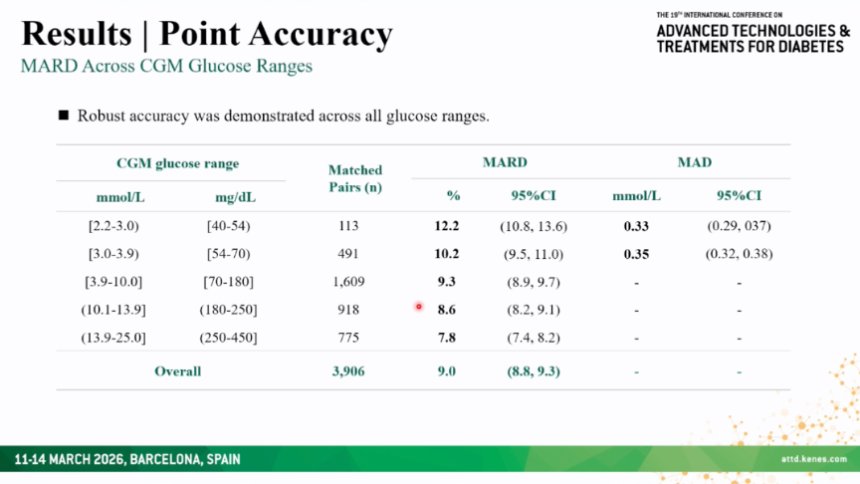
Figure 1. SiBionics GS3 Accuracy Study Results
Shifting clinical practice from trend-following to proactive prediction and intervention with CGM
In an engaging afternoon session sponsored by Roche, Prof. Bogdan Timar (Victor Babeş University of Medicine and Pharmacy, Romania) and Prof. Guido Freckmann (Institute for Diabetes Technology GmbH, Germany) discussed the need for improved glucose predictions based on CGM data. Currently, CGMs use trend arrows that are assumed to be linear, indicating downward or upward trends with varying speeds of change. Patients can use these trend arrows to decide when to bolus or consume carbs to correct trends when appropriate. However, blood glucose does not typically follow a linear trend physiologically.
- Prof. Timar began by discussing the need for proactive clinical intervention that harnesses CGM data. Current limitations of trend arrows can cause patients to over- or underestimate boluses or carbs to consume, leading to unstable blood sugar readings. This inspires the development of advanced glucose forecasting that captures the nuance of blood glucose and has the potential to overcome current unmet needs in diabetes care (see figure below).
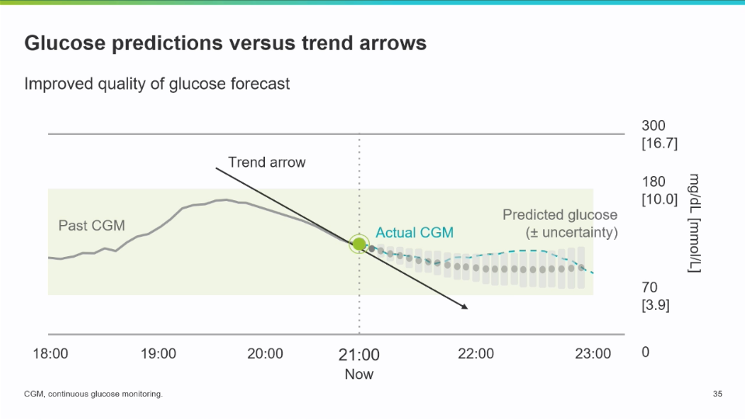
- Roche’s Accu-Chek SmartGuide Glucose Predict and Low Glucose Predict features aim to address this gap in glycemic management. The Low Glucose Predict feature alerts patients up to 30 minutes before glucose values fall too low, and the Glucose Predict feature provides a visualization of a two-hour period. This allows patients to analyze the pattern in far greater detail than a trend arrow and adjust accordingly. In the future, Roche also plans to introduce a Night Low Predict feature that will notify users before bedtime of the possibility of having a hypoglycemic event overnight. The features are based on machine learning algorithms and incorporate glucose values, carbohydrates, time of day, and bolus insulin amounts.
- Prof. Freckmann presented first insights from a pilot study of the Accu-Chek SmartGuide Predict Trial (n=20). The study evaluated the effect of the Accu-Chek SmartGuide Glucose Predict and Low Glucose Predict features for diabetes management. Participants were adults with T1D using MDI therapy and the Accu-Chek CGM for 14 days. Baseline A1c values ranged from 5.5-8.2%. In-clinic sessions were standardized with the observation of participant behavior.
- Initial results focused on the technical reliability of glucose predictions and a preliminary look at patient-reported outcomes. Future presentations will discuss impact on glycemic control via metrics like TIR and TBR in the near future. Prof. Freckmann presented a Consensus Error Grid for two-hour glucose predictions and the linear extrapolation of trend arrow errors, demonstrating a strong correlation between predicted glucose values and actual values over a two-hour period. Mean absolute error was significantly higher for extrapolation based on low glucose arrows alone compared to the Accu-Chek Glucose Predict feature. This demonstrates the efficacy of this feature and its improvement over existing warning arrows. Further results will quantify these findings in publication and provide additional data on glycemic metrics.
Glycemic impact of FreeStyle Libre 2 in Italians with T2D on basal-only insulin
Prof. Francesco Giorgino (University of Bari Aldo Moro, Italy) presented a prospective study evaluating the impact of initiating flash glucose monitoring with the FreeStyle Libre 2 system on glycemia over three months in adults with T2D on basal-only insulin in Italy. The study sought to improve the base of evidence supporting CGM use in this population. Adults aged 18-75 years from eight Italian centers with A1c between 7.5% to 12% were included (n=88). Most (86%; n=76) successfully completed the intervention. Participants first wore a blinded CGM for two weeks. During the three-month follow-up phase, participants were followed closely and reviewed their glucose data with clinicians, with additional therapies introduced if clinically indicated. Participants were nearly all (78%) male and white Italian (84%), and had a mean age of 63 years, BMI of 29.5 kg/m2, and duration of insulin use of an average 5.6 years. Diabetes-related complications were somewhat common at baseline: one-third had CVD, one-fifth had renal or ocular disease, and one-tenth had neuropathy.
- Results. Following at least three months of FreeStyle Libre 2 use, A1c significantly improved by 0.9%, from 8.5% to 7.6%. Interestingly, GMI improved only marginally from a low baseline (from 7.3% to 7.1%), illustrating the differences often seen between the metrics in the real world and potentially the rapid behavior change that can come with CGM use. Improvements were also observed in sensor-based glucose metrics. TIR improved from 63% to 73%, driven by reductions in Time above Range (from 36% to 26%), Time >250 mg/dL (from 9% to 5%), and Time below Range (from 1.4% to 0.4%). Time <54 mg/dL was relatively consistent, with 0.4% at baseline and 0.3% after three months of FreeStyle Libre 2 use. No episodes of severe hypoglycemia were observed. Mean glucose decreased slightly, from 168 mg/dL to 157 mg/dL. Furthermore, significant improvements to standard deviation and coefficient of variation were observed (standard deviation decreased from 45 mg/dL to 41 mg/dL, and coefficient of variation decreased from 27% to 25.9%). Prof. Giorgino said much of this can be attributed to improvements in self-management, which patients corroborated with significant improvements to self-management scores. There was no statistically significant change in total daily insulin dose (remaining ~23 units), nor were there great changes in the use of non-insulin glucose lowering medications by three months of CGM use.
CGM in gestational diabetes: Evidence, real-world use, and unresolved questions
Prof. Eleanor Scott (University of Leeds, UK) delivered a nuanced overview of CGM use in pregnancies complicated by gestational diabetes (GDM), highlighting both its practical advantages and the complexity of interpreting recent clinical evidence. While CGM is widely preferred by both pregnant women and their clinicians and may offer clear benefits in selected cases, she said that current evidence does not yet support routine universal use. Unresolved questions remain around optimal targets and potential risks of overtreatment.
- Prof. Scott opened by reviewing the well-documented challenges with BGM adherence in GDM, which may contribute to worse outcomes. Observational data suggest that up to one-quarter of reported glucose values may not match meter readings. Moreover, over one-third of women perform fewer checks than recommended, and postprandial measurements are often delayed, leading to artificially lower recorded values.
- She highlighted strong user and clinician preference for CGM and its potential to improve education and decision-making. Women report that CGM is more discreet and easier to use than BGM. For clinicians, CGM fills gaps missed by intermittent testing, capturing overnight and between-meal variability and supporting remote monitoring. Early evidence from a meta-analysis of six small RCTs suggested potential benefits of CGM use in GDM include lower maternal glucose levels, reduced birth weight, and less gestational weight gain. However, Prof. Scott noted these studies were limited by small sizes and older technologies.
- Recent RCTs provide a more complex and cautionary picture of CGM use in women with GDM. The Switzerland-based DipGluMo RCT (n=302) showed no significant difference in composite outcomes, which included large-for-gestational-age (LGA), macrosomia, and polyhydramnios, between CGM and BGM use. LGA rates were ~10% in both groups and there was no significant glycemic advantage with CGM use, though the technology was preferred by participants. In contrast, the GRACE trial (n=375) demonstrated lower LGA rates with CGM (4% vs. 10%), though a concerning increase for small-for-gestational-age (SGA) births (19% vs. 13%) was also observed. CGM users also showed slightly improved Time in Pregnancy Range (63-140 mg/dL; 95% vs. 93%) and greater use of rapid-acting insulin. Dr. Scott suggested these findings may reflect some overtreatment or overly aggressive glycemic targets, raising concern that improved glycemia may not always translate to balanced clinical outcomes in this population.
Questions remain around CGM targets, interpretation, and broader applications of the technology in pregnancy.Current CGM targets in GDM are mostly consensus-based, with suggestions such as >90% Time in Pregnancy Range and <10% Time above Range, but these lack strong evidence and may risk pushing glucose levels too low. She also highlighted data from the MAGIC and GLAM studies showing that CGM abnormalities can be detected as early as 10-12 weeks’ gestation in women who later develop GDM. This suggests that CGM could be used for earlier detection. However, variability across studies and a lack of standardized thresholds remain major barriers. She pointed to a recent international clinical perspective emphasizing the need for greater standardization across devices, and previewed the ongoing IMAGINE trial, which builds on MAGIC and GLAM to evaluate CGM use for earlier detection and management of hyperglycemia in pregnancy. She concluded that CGM is promising and clearly useful in selected women, but further research is needed to define optimal targets, avoid unintended consequences, and guide broader implementation
Tirzepatide use supported by Dexcom CGM leads to greater A1c reduction than tirzepatide alone
Dr. Poorva Nemlekar (Dexcom) presented a retrospective analysis of Optum Clinformatics health claims data assessing the added benefit of using Dexcom G6 or G7 with tirzepatide in people with T2D on intensive insulin therapy or basal insulin therapy compared to using tirzepatide alone. CGM, when combined with a GLP-1 RA, can improve glycemic management by optimizing therapies for T2D. In this study, groups were propensity-score matched and A1c changes were evaluated at baseline and six months post-index date (follow-up). Participants were using tirzepatide already but were CGM-naïve.
- Regardless of insulin regimen, CGM users had greater reductions in A1c compared to CGM non-users. Those on intensive insulin therapy saw an A1c drop of 1.1% to 7.4% with CGM use, compared to a 0.6% drop to 7.8% with tirzepatide alone, leading to a difference-in-differences of -0.5% (p<0.01). This increased among those with higher baseline A1c to a 0.7% greater drop with CGM use than with tirzepatide alone. In those on basal-only therapy, trends were similar. In the overall cohort, A1c dropped from a baseline of 8.4% to 7.3% with CGM and tirzepatide use, compared to 8.4% to 7.6% with tirzepatide alone, leading to a between-group difference of 0.3% (p<0.05). This difference expanded to 0.4% and 0.5% with baseline A1c ≥7.0% and ≥8.0%, respectively.
Large real‑world analysis finds significant reductions in MACE and mortality with CGM use in T1D
In this oral presentation, Dr. Jennifer Layne (Dexcom) presented results from a large retrospective analysis (n=39,943) on the effect of CGM use on the risk of MACE in adults with T1D. The analysis used linked very recent Truveta EHR data and Dexcom CGM data (study period January 2017 and June 2025), with an average follow-up period of one to seven years. Adults with T1D were categorized as CGM users or non‑CGM users. Primary outcomes included time to first major adverse cardiovascular event (MACE): non‑fatal MI, stroke, or sudden cardiac death. Secondary outcomes included all‑cause death, hospitalization [any cause or heart failure (HF)], severe hypoglycemia and change in A1c. Given the high cardiovascular disease burden in T1D, the study aimed to assess whether CGM use was associated not only with improved glycemic management but also with meaningful reductions in cardiovascular events, hospitalizations, and mortality – highlighting potential implications for both primary and secondary CVD prevention.
- Baseline characteristics. CGM users were younger than non-users (42 vs. 50 years) and included a greater proportion of females (52% vs. 46%). They also had fewer comorbidities (30+ chronic and acute comorbidities like hypertension and cancer), a lower history of cardiovascular disease (13% vs. 23% ), and higher rates of pump use (12% vs. 3%). Baseline A1c was similar between groups. Subclass propensity score matching was used to account for baseline differences, and outcomes were reported for the matched data.
- Results. Across one to seven years of follow‑up, CGM use was associated with significantly lower risks of multiple major outcomes. Compared to matched non‑CGM users, CGM users had:
- 42% reduced risk of cardiovascular death (HR 0.58; CI: 0.50-0.67);
- 16% lower risk of stroke (HR 0.84; CI: 0.77-0.91); and
- 13% lower risk of myocardial infarction (HR 0.87; CI: 0.78-0.98).
- For secondary outcomes, CGM use was associated with a 22% lower risk of heart failure hospitalization (HR 0.78; CI: 0.67-0.92); a 40% lower risk of any death (HR 0.60; CI: 0.53-0.68); and a 24% lower risk of any hospitalization (HR 0.76; CI: 0.72-0.81). CGM use was also associated with improved glycemic health, including a 21% lower risk of severe hypoglycemia (HR 0.79; CI: 0.72-0.87) and 0.4% greater reduction (difference in difference) in A1c sustained through more than 24 months. We imagine these findings support CGM use not only for glucose management but as a tool for reducing cardiovascular risk and improving long-term outcomes in people with T1D, potentially justifying broader and earlier CGM adoption and stronger guideline recommendations.
Quick Take: 15-day Sinocare iCan CGM demonstrates strong accuracy and safety in pediatric population
Dr. Frank Flacke (Sinocare) presented findings from a multicenter, single-arm study for China-based company Sinocare’s iCan CGM system in the pediatric population. As background, iCan is a 15-day CGM. It received CE-Mark approval for adults in 2023 and pediatrics in 2025. The study had a total of 76 participants ranging in age from 2-17 years old. Most participants (87%) had T1D. Overall MARD was 8.9%, and 100% of paired readings were in zones A and B of the Clarke Error Grid analysis. In the Surveillance Error Grid analysis, as shown below, all readings were in the none to slightly lower or higher degree of risk zones. There were no device-related adverse events nor skin abnormalities reported. Patient survey feedback also revealed high user satisfaction in terms of CGM application pain level, ease of assembly, and wearing comfort.
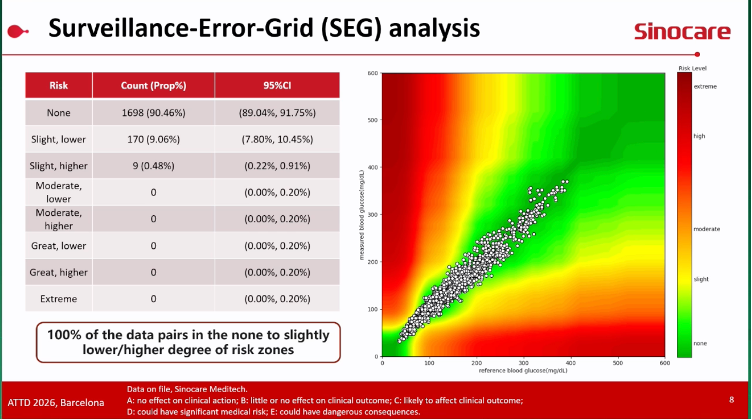
Insulin Delivery: AID, Pumps, Pens
Fully closed-loop AID: Dr. Rayhan Lal discusses future challenges and considerations
In a well-attended afternoon session, Dr. Rayhan Lal (Stanford University) described the global, interdisciplinary challenges that remain for fully closed-loop AID systems. He began by describing his personal journey with T1D, which he has lived with for several decades. He has innovated with his own management over time, and with the use of a GLP-1 RA and the AndroidAPS open-source AID algorithm, he has achieved 82% Time in Range (TIR) without meal boluses for the past three to four years. While a true, fully closed-loop system must also account for exercise, emotional, and hormonal changes that can affect glycemia, meal boluses are an important step towards this. Dr. Lal laid out three main lessons that the field must consider as it moves towards fully closed-loop AID.
- Lesson one: Pricing dynamics limit access to life-saving technology for PWD. Dr. Lal presented the stark differences in manufacturing costs versus out-of-pocket prices for key diabetes technologies. For example, Omnipod DASH and Libre 2 both cost manufacturers about $10 to produce, yet are sold at $60 and $70, respectively. However, in Australia, Omnipod DASH is sold for $15 due to the nation’s system of guaranteed healthcare. Dr. Lal said that the setup of the US healthcare system has prioritized the profits of the wealthy at the expense of everyday people with chronic diseases. Similarly, adjunctive therapies for T1D and disease-modifying therapies like pleconaril and teplizumab are sold for $86,400 and $194,000 per one-month supply, respectively, while their manufacturing costs are $15 and $6. Diabetes technology manufacturers have limited the compatibility of certain devices, such as CGMs and insulin pumps, or have been slow to expand this compatibility, affecting patients’ choices for their diabetes management. Dr. Lal said that the costs associated with a fully closed-loop system are a top concern as he considers the future of the field.
- Lesson two: PWDs do not have full access to their own health data. Dr. Lal said that real-time data access is dictated by the device manufacturer, so a corporate partner often has broader access rights to diabetes data than the patients themselves. Often, patients interested in optimizing their own care may be unable to see the full range of their own health data, while it is instead used for corporate development. Dr. Lal emphasized that open-source AID developers have played a key role in the development of the field as a whole, yet restrictions around data access are limiting innovation and research.
- Lesson three: Combining a CGM and an insulin pump into one device is already a possibility. Dr. Lal pointed to a paper by Tschaikner et al. published in 2020 that demonstrated that a CGM and insulin infusion set can be combined with just a 6-millimeter gap between the sensor and cannula opening. The demonstrated accuracy was similar to a sensor worn on another part of the body. Other options for insulin delivery, including intradermal, intramuscular, intravenous, and intraperitoneal, have other challenges, yet have also demonstrated efficacy. Dr. Lal said that the logistics of a fully closed-loop system have already been proven, yet the field has been slow to adopt them.
- Dr. Lal said that exercise remains the greatest challenge for a true, fully closed-loop system. Truly detecting exercise is imperfect using methods such as accelerometers in CGMs and may not capture the intensity of exercise fully. Dr. Lal also said that activity does not change blood glucose targets; it changes glucose utilization and sensitivity. Aerobic and anaerobic exercise also affect levels differently. While meal announcements may represent a soon-to-be-solved problem, exercise remains a challenge for the future of a fully closed-loop system, alongside the equity issues that Dr. Lal so expertly described.
Dr. Jennifer Sherr on strategies to optimize outcomes with AID
Dr. Jennifer Sherr (Yale University) delivered an insightful presentation on strategies to optimize patient outcomes with AID use. She first emphasized the importance of patient choice, which aligns with the ADA Standards of Care. Specifically, Recommendation 7.26 stresses that choices should be based on an individual’s circumstances, preferences, and needs. Dr. Sherr referenced a popular saying, “just as the wand chooses the wizard” in Harry Potter, highlighting that there is often a system best suited to a particular patient.
- The first step to optimizing outcomes is ensuring reliable sensor data. Factors affecting sensor wear extend beyond short- and long-term affordability of sensors to include issues impacting continuous wear, such as skin problems and fatigue from excessive alerts. Progress has been made in sensor availability, with more countries subsidizing CGM for those with T1D, T2D on intensive insulin therapy, and even early steps toward access for T2D on basal-only insulin. These efforts are already yielding population-level benefits, including lower A1c and reduced rates of DKA among users. To support clinicians in targeting longer sensor wear, she also recommended using tools like the TIDE dashboard, which can filter patients by factors like low sensor wear, enabling targeted outreach and real-time support.
- Skin issues remain prevalent. Fortunately, nearly 70% of providers already report assessing skin reactions during follow-up visits. Among them, about 40% report dermatitis prevalence between 5-20%. The global SKIN-PEDIC study found that over half of respondents using diabetes technolgoy have skin issues related to their pump, and 30% experience skin issues with sensors. While there is no one-size-fits-all solution, recommendations include using mild soaps, skin preparations, tapes, and topical steroids to manage skin reactions.
- In terms of alerts, Dr. Sherr recommended advising patients to set only alarms that require immediate attention to minimize fatigue. One specific suggestion for patients is to start only with hypoglycemia alerts and add hyperglycemia alerts if tolerated (starting higher, i.e. >250 mg/dL, and progressively getting lower).
- On increasing time in automation, Dr. Sherr explained some systems have suspension features related to prolonged maximum insulin delivery, so she recommends patients visually check system status at least twice a day — ideally when bolusing, or once in the morning and once before bed.
- Dr. Sherr described AID as “diabetes with bumpers (in bowling).” However, there are still strategies users can apply to improve outcomes. For example, despite continuous advancements to AID algorithms, it is still important to bolus for meals, ideally 15-20 minutes before eating. If bolusing is forgotten, patients should give half the bolus if more than 30 minutes have passed, and only the correction dose if over an hour. For those less engaged with their system, general estimates based on meal size can be helpful. A recalibrated approach is necessary when addressing lows — patients shouldevaluate whether the system is suspending insulin delivery before a low occurs, should not overly rely on trend arrows when making treatment decisions for themselves, and should only treat with 8-10 grams of rapid-acting carbohydrates to prevent overcorrection. When hyperglycemia occurs, she advises patients check for infusion set failures (which remain common, with 40% of patients using an insulin delivery system reporting at least one a month). They should also test for ketones in cases of sustained hyperglycemia or illness, and have a DKA mitigation plan in place. Dr. Sherr also mentioned a study highlighting lipohypertrophy problems, stressing the importance of regular site checks. Finally, for clinicians specifically, understanding which settings are adjustable and how they influence outcomes is essential (see figure below).
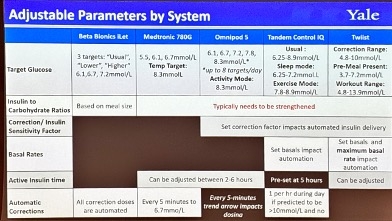
- Despite being complex, exercise remains important for patients with diabetes. For youth, the goal is 60 minutes of moderate to vigorous activity per day (roughly 4% of the week), but many are not meeting this target. A 2024 publication provided specific recommendations for AID users to reduce complexity, taking into account different types of exercise and each system.
- Looking ahead to the future of fully closed-loop (FCL) AID technology, Dr. Sherr noted that many strategies will remain relevant. She also highlighted the promise of continuous ketone monitoring, AI-enhanced algorithms for FCL, and improved insulins. As more companies announce that their FCL algorithms in development will still support hybrid closed-loop style use with user-initiated boluses and meal input, we certainly imagine patients can benefit from keeping these optimization strategies in mind.
From hybrid to fully closed-loop: Dr. Marc Breton discusses UVA’s AIDANET AI-driven AID system and early trial results
In a forward-looking session, Dr. Marc Breton (University of Virginia) presented ongoing work on a fully closed-loop (FCL) insulin delivery system harnessing artificial intelligence, describing how data-driven algorithms may eliminate the need for user-initiated meal boluses. Dr. Breton began by noting that current commercially available, hybrid closed-loop (HCL) AID systems account for ~94% of AID users worldwide. While these systems perform best when users announce meals, they have also all demonstrated safety and improved glycemic management even when meal announcements are omitted.
- Dr. Breton explained that moving from HCL to FCL remains challenging primarily due to physiological limitations. The central issue is the mismatch between the rapid rise in glucose following meals and the slower action profile of insulin, which leads to postprandial hyperglycemia even when boluses are delivered at mealtime. To address this challenge, Dr. Breton outlined several possible solutions. More advanced control algorithms could behave differently at the beginning versus later phases of a postprandial excursion, delivering insulin more aggressively early while slowing delivery later as glucose peaks. He said using adjunct therapies, including amylin, GLP-1 RAs, or SGLT-2 inhibitors, may also help soften the intensity of postprandial spikes.
- To overcome these limitations, Dr. Breton described the University of Virginia’s Automated Insulin delivery as an Adaptive NETwork (AIDANET) system. The platform incorporates data-driven modules designed to improve automated management of postprandial glycemia. Importantly, he emphasized that the system retains core safety protections from existing AID algorithms while allowing both hybrid and fully automated use, depending on how individuals choose to interact with the system. The system consists of the following:
- A neural network embedded within the control algorithm that analyzes recent glucose data and informs dosing decisions;
- A meal-pattern detection module that identifies glycemic patterns that resemble meals and delivers automated insulin doses; and
- An adaptation module that evaluates system performance over time and adjusts dosing behavior based on each user’s recent glucose responses.
- In the multicenter study FCL@Home, the AIDANET system demonstrated non-inferior glycemic outcomes compared with current hybrid AID therapy, even without meal boluses. The trial included adult, young adult, and adolescent participants across three sites (n=34) and compared one week of FCL therapy against one week of usual care with HCL AID, following a supervised five-day hotel training phase. The primary endpoint, mean CGM glucose tested for non-inferiority with a 10 mg/dL margin, was successfully met, demonstrating that fully automated control could achieve glycemic outcomes comparable to current systems.
- Results were especially encouraging in individuals with poorer baseline glycemic management.Participants with baseline A1c levels ≥8% showed the largest improvements, with meaningful gains in TIR compared with their usual care. Across age groups, the system demonstrated consistent performance, with adult cohorts improving from ~53% to ~76% TIR in some analyses.
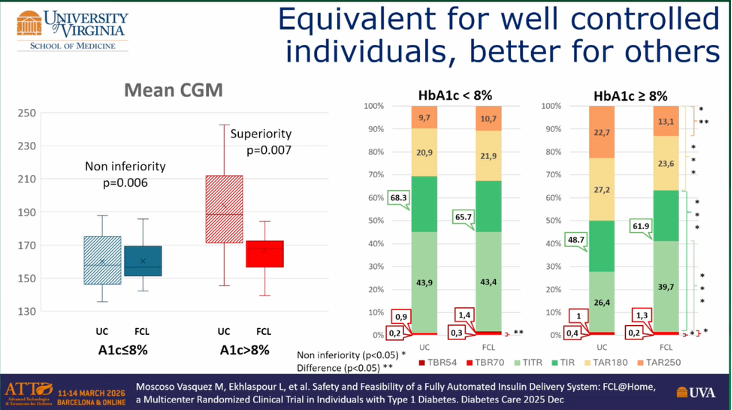
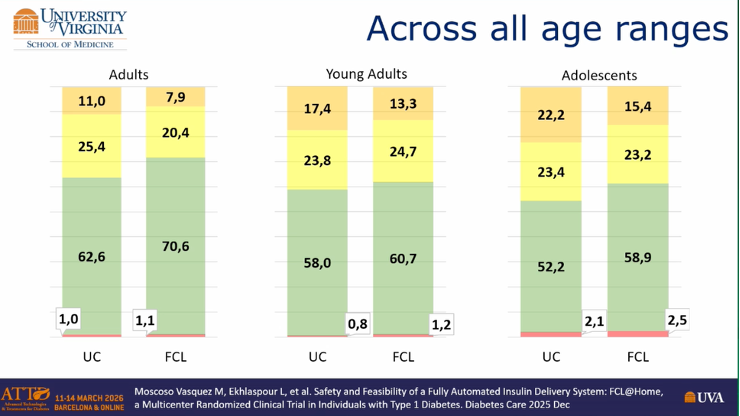
- Performance also varied by time of day. While daytime management was broadly comparable between systems, the FCL system demonstrated improved overnight glycemic regulation relative to current HCL systems.
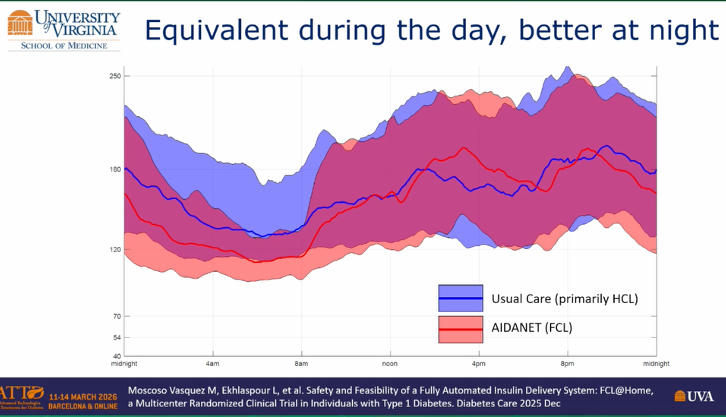
- While FCL systems aim to reduce daily management burden, Dr. Breton said that optimal outcomes will likely still depend on user engagement. Although the system can safely maintain glycemic outcomes without meal announcements, individuals who choose to bolus or estimate carbohydrates generally achieve better postprandial outcomes.
- Additional testing suggests the technology may also be well suited for pediatric populations. In a study of 36 children divided equally into two cohorts, AIDANET was implemented on the iDiAs platform connected to Dexcom G6 and G7 and the Tandem Mobi pump. Preliminary analysis showed similar glycemic outcomes to those observed in adult cohorts, with comparable daytime management and improved overnight management relative to usual therapy.
- Dr. Breton concluded by highlighting emerging work using transformer-based AID models to further automate insulin dosing. These models analyze historical glucose and insulin time-series data, transforming data streams in to structured sequences that allow AI systems to generate automated insulin dosing decisions. Dr. Breton also previewed the ongoing AIDANET@Home study (n=22), which is evaluating glycemic management with the AIDANET algorithm across three modes: (i) AIDANET-FCL; (ii) AIDANET-HCL; and (iii) AIDANET with a mix between FCL and HCL. The study aims to better understand how individuals interact with varying levels of automation and whether different use patterns influence glycemic outcomes.
Using AID to overcome clinical inertia in basal insulin dosing for T2D
Dr. Heman Shakeri (University of Virginia) presented work exploring how AID systems could be used as a tool to accelerate insulin titration in individuals with T2D. He referred to this approach as AID for basal insulin titration (AID for BIT), which proposes using an AID system temporarily to determine an individualized insulin dose before transitioning patients back onto injection therapy. The work builds on prior real-world evidence showing that AID algorithms can help identify optimal insulin dosing in people with T2D, raising the possibility that the technology could help overcome the clinical inertia that slows insulin titration under standard care.
- Dr. Shakeri began by outlining the “titration gap” that exists when initiating basal insulin therapy in T2D. Under current standards of care, clinicians are advised to begin basal insulin conservatively and increase doses gradually based on intermittent glucose data collected during clinic visits. Because these decision points occur only every few days or weeks, the titration process is slow and can often stall. Even when following recommended protocols, reaching an effective insulin dose can take about 16 weeks, leaving many patients on less effective insulin levels for long periods. This delay reflects multiple structural barriers, including limited clinician bandwidth to review frequent adjustments and patients’ fear of hypoglycemia. As Dr. Shakeri said, the result is that many individuals with T2D never reach the optimal insulin dose needed to meaningfully improve glycemic outcomes.
- Retrospective real-world data suggest AID systems may significantly accelerate this process by continuously adjusting insulin delivery in response to glucose patterns. Dr. Shakeri reviewed a study which analyzed individuals with T2D using AID systems (n=796). The analysis showed that AID algorithms rapidly and safely increased insulin delivery for individuals with poorer baseline glycemic management. In some cases, the system identified an optimal insulin dose within seven days, producing reductions in hyperglycemia while keeping Time below Range (TBR) minimal and largely unchanged.
- These findings motivated the AID-BIT RCT, which tested whether short-term AID use could serve as a rapid basal insulin titration tool. The trial consisted of adults with T2D on basal insulin (n=16) and tested whether a brief period of AID use could identify an optimal basal insulin dose before transitioning patients back to injections. To ensure the system focused specifically on basal insulin titration, Dr. Shakeri said all meal-related pathways in the algorithm were discontinued so that the system could only adjust basal insulin delivery. This effectively turned the AID system into a “quick titration engine” with continuous adjustments based on CGM data.
- Results suggest that short-term AID use can substantially improve glycemic outcomes while quickly identifying an optimal insulin dose. During the AID intervention phase, TIR increased by ~20 percentage points to 67%, largely driven by reductions in hyperglycemia. Importantly, TBR was unchanged, indicating that the algorithm increased insulin use without increasing hypoglycemia risk. After the AID system was removed and participants transitioned back to basal injections using the algorithm-derived dose, glycemic outcomes remained stable, suggesting that the system had successfully identified a patient’s appropriate basal insulin dose. The CGM-guided titration arm was used as a control, representing an accelerated and continuous data-driven approach to traditional titration efforts, achieved similar improvements after returning to injections, indicating that the AID-derived basal dose was clinically appropriate and durable even after device removal.
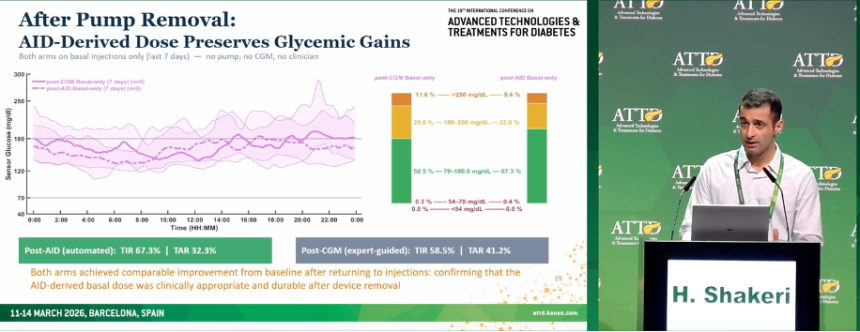
- Dr. Shakeri concluded that short-term AID use could be an effective tool for people with T2D starting basal insulin therapy. Instead of relying on months of stepwise dose adjustments, clinicians could use AID for a brief period to determine a patient’s basal insulin requirement, then translate that dose to injection therapy. If validated in larger studies, this strategy could help close the “titration gap” in T2D and allow clinicians to achieve effective insulin dosing more quickly than current approaches.
Toward hands-off diabetes care: MiniMed unveils the Vivera fully closed-loop algorithm
In one of the most popular sessions of the day, Dr. Goran Petrovski (MiniMed), Dr. Benyamin Grosman (Medtronic), Dr. Amir Tirosh (Tel Aviv University, Israel), Prof. Ben Wheeler (University of Otago, New Zealand), and Prof. Tadej Battelino (University of Ljubljana, Slovenia) presented details on MiniMed’s upcoming fully closed-loop algorithm Vivera to a packed auditorium. The system detects unannounced meals to automatically deliver safe boluses, allowing users to shift between traditional hybrid closed-loop (HCL) and fully closed-loop (FCL) operation. Early feasibility data suggest that the approach can maintain strong glycemic outcomes seen with MiniMed 780G with far fewer meal announcements, highlighting the potential for this next-generation algorithm to simplify diabetes care while preserving TIR.
- Dr. Grosman presented details of the Vivera algorithm, calling the next-generation system the culmination of years of closed‑loop evolution. He emphasized that Vivera is built to minimize user and provider interaction, with bolusing for meals becoming optional. Its most notable breakthrough is its ability to detect unannounced or late-announced meals and deliver safe auto‑boluses that prevent postprandial spikes while not increasing hypoglycemia. During wear, the algorithm will detect unannounced meals and estimate carbohydrates that have not yet been covered by insulin. Each bolus is adjusted using a four-hour glucose prediction model, identifying the largest meal bolus that keeps the prediction about the glucose setpoint. However, users will still have the choice of entering user-initiated meal announcements and boluses, allowing for them to elect the degree to which they engage with the system on a daily basis. The next-gen algorithm will adapt continuously based on patient outcomes during wear, adjusting its corrections based on a user’s persistent hypoglycemic or hyperglycemic events.
- Beyond this ability to transition between HCL-like and FCL use, the next-generation algorithm features several additional new features. Dr. Grosman said that by entering one’s total daily dose, a patient can bypass the traditional 48-hour warmup period. MiniMed will also introduce three new glucose targets with the algorithm: 90, 130, and 140 mg/dL (previously, MiniMed 780G offered 100, 110, and 120 mg/dL glucose targets), as well as a redesigned 150 mg/dL temporary target. Furthermore, active insulin time will no longer influence AID performance, a notable departure from this setting being one of MiniMed 780G’s two settings influencing optimal outcomes[1].
- MiniMed also previewed two different form factors for insulin pumps that will host the Vivera FCL algorithm. During the presentation, MiniMed termed these form factors Novel Medtronic Experimental (NMX) pumps. The first, which features a traditional screen (NMX7), was used in both the adult and pediatric studies assessing the algorithm (see below). The second features MiniMed’s next generation screenless insulin pump, termed NMX8.
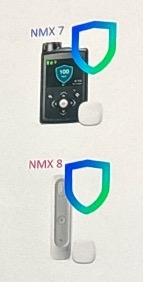
- Dr. Tirosh presented first insights from the feasibility study in adults, and Prof. Wheeler presented results from the adolescent study. Participants in both studies underwent a four-week run-in period with Simplera Sync with MiniMed 780G, followed by nine weeks with the NMX7 AID system. This phase was split equally into three periods. First, the NMX7 system was used in HCL-style with announcements for all meals. It was then used as a pure FCL system lacking all meal announcements. Finally, participants could elect the degree to which they engaged with the pump. In the adult study, the final phase evaluated Medtronic’s NMX8 pump, in which participants could announce meals at will.
- In the adult study (n=14), participants had a mean age of 42 years and diabetes duration of 25 years. Mean A1c was low at 6.5%, and participants had a mean total daily dose (TDD) of 46 units, though Dr. Tirosh noted the range varied widely. Participants announced a similar number of daily meals during the meal announcement period as in run-in (approximately four), equating to a mean of ~150 grams of carbohydrates daily. When given the choice, participants elected to initiate boluses less than half of that time, averaging ~two boluses per day.
- There were no serious device-related adverse events, including severe hypoglycemia or DKA, throughout the study. When announcing all meals with NMX7, glycemic outcomes were very similar to the run-in period with MiniMed 780G (TIR of 83% and 84%, respectively). TIR targets were still met when adult users stopped announcing meals with NMX7, though it dropped to 74%. However, during this period TIR and TITR metrics improved over the course of the three weeks, demonstrating the algorithm’s ability to adapt to the user over time. These glycemic outcomes improved slightly when users elected which meals to announce, increasing to 78% TIR, suggesting patients still benefit from some user-initiated boluses even when using a FCL algorithm. Outcomes were similar between the two form factors: among those who used NMX7 and NMX8 with at-will meal announcements (n=10), TIR was 79% and 77%, respectively.
- The featured adolescent study (n=13) included children aged 8-17 years, with a mean age of 13 years and diabetes duration of seven years. Mean A1c was higher than adults at 7.6%, ranging from 6.4% to 9.1%. Participants announced an average of nearly five meals per day, also accounting for ~150 grams of carbohydrates daily. When given the choice to elect announcements, this dropped to approximately one bolus per day, accounting for ~40 grams of carbohydrate intake. One person missed the unannounced phase of the study, therefore data analyzed included 12 participants.
- As with the adults, there were no serious device-related adverse events during the study. TIR improved slightly when switching from MiniMed 780G to NMX7, from 68% to 74%. TIR fell to 65% when participants fully stopped announcing meals and increased slightly to 68% when announcing at will.
- In the adult study (n=14), participants had a mean age of 42 years and diabetes duration of 25 years. Mean A1c was low at 6.5%, and participants had a mean total daily dose (TDD) of 46 units, though Dr. Tirosh noted the range varied widely. Participants announced a similar number of daily meals during the meal announcement period as in run-in (approximately four), equating to a mean of ~150 grams of carbohydrates daily. When given the choice, participants elected to initiate boluses less than half of that time, averaging ~two boluses per day.
- Dr. Petrovski emphasized that Vivera is building on already strong clinical and real-world outcomes with MiniMed 780G. He highlighted real‑world MiniMed 780G performance showing approximately 76% TIR for all users, with those using optimal settings reaching over 80% TIR. Notably, the transition from use of the Guardian 4 sensor to Instinct, as presented by Dr. Viral Shah at ATTD, revealed that improved outcomes were driven not by sensor technology alone, but by the algorithm’s enhanced automation capabilities. Dr. Petrovski underscored the potential for this new FCL system to reduce complexity for healthcare providers and users alike with its streamlined user experience.
- Prof. Battelino closed the session by discussing how glucose targets shape outcomes. He stressed that even mild elevations in glucose can impair brain function, with studies demonstrating acute declines in spatial working memory and long‑term differences in brain structure linked to Time above Range rather than A1c. Prof. Battelino also highlighted real‑world data showing that 44% of MiniMed 780G users reach target TITR of ≥50% on general settings while 81% reach it with optimal settings, suggesting that advancements to modern technology can meaningfully protect the brain and reduce long‑term risks such as dementia by reducing time in hyperglycemia. He emphasized that better outcomes are not only possible but already happening, and the next step is ensuring these gains come with less burden and more support for people living with diabetes.
“Helping diabetes disappear”: Fully closed-loop AID for T2D and beyond
Insulet’s industry symposium on the opening day of ATTD 2026 drew a crowd that filled the entire large room. Dr. Trang Ly (Insulet) and Prof. Martin de Bock (University of Otago, New Zealand) provided new data and real-world evidence to support the benefits of Omnipod 5 use for people with T2D and clearly laid out Insulet’s plan for innovation in the remainder of the decade.
- Prof. de Bock described Insulet’s approach to closing the loop for full automation in T2D. He reminded the audience that many people with T2D taking multiple daily injections (MDI) continue to not meet glucose targets – 59% of patients have an A1c value of 8.0% or greater, with increased rates of micro- and macrovascular events and a 16% increased likelihood of a cardiovascular event. Patients using Omnipod 5 and a GLP-1 RA have demonstrated a 29% reduction in insulin use, and about a 2.0% reduction in A1c values for those with the highest baseline values of 9.0% or greater. From a clinical perspective, Prof. de Bock said that these data mitigate certain provider hesitations of weight gain for patients using AID, as total insulin dosing is lowered through the efficiencies created by the use of AID.
- Prof. de Bock provided an overview of Insulet’s clinical trial process exploring a fully closed-loop system for T2D with new results from the EVOLUTION 2 trial. In 2023-2024, the EVOLUTION 1 and EVOLUTION 2 trials explored the feasibility and fine-tuning of such a system. He announced that, in EVOLUTION 2 (n=24), participants aged 16-70 years had a TIR increase to an average of 68%, representing a 24% improvement over MDI without bolusing. Time below Range (TBR) also remained very low, with a median of 0.14% Time below 70 mg/dL. In 2025-2026, the EVOLUTION 3 trial continues to validate these findings, with the EVOLVE pivotal trial to come this year. He emphasized that 91% of participants in EVOLUTION 2 chose to continue in the extension study as patients felt “safer with this system than injections,” and that the system “continues to be life changing.” Prof. de Bock closed by saying that a tubeless, fully closed-loop system for T2D will soon be a reality, and that Insulet hopes the system will be transformative, simple, and effective.
- Dr. Ly described Insulet’s recent innovations to support Omnipod 5’s continued popularity. In 2026, Insulet has already launched Omnipod 5 in five new markets in the Middle East, with four additional launches planned this year, beginning with Spain. Expansion to additional markets is a key part of Insulet’s innovation to “help diabetes disappear into life,” said Dr. Ly. She said that improving the ease of use for diabetes technology is Insulet’s driving motivation, as the company recognizes the constant burden of diabetes management. In 2026, Insulet will enhance the Omnipod 5 ecosystem, followed by Omnipod 6 in 2027, and a fully closed-loop system for T2D in 2028.
- Changes to glucose targets and the maximum insulin delivery feature have already received highly positive feedback. Insulet has recently introduced a feature allowing patients to set their target glucose level at 100 mg/dL as opposed to 120 mg/dL, the previous lower limit. Upon lowering the target to 100 mg/dL, patients have demonstrated a 4.8% increase in Time in Range (TIR), with a 12% increase in insulin delivered, allowing for tighter glycemic management. Previously, maximum insulin delivery for long periods of time would switch the pump into Limited Mode, but a new feature has allowed the pump to stay in Automated Mode, said Dr. Ly, again improving outcomes. We look forward to seeing longer-term data in larger datasets on this front.
- Insulet has also explored connectivity through CGM integrations and data visualization. Omnipod 5 is now integrated with the FreeStyle Libre 2 Plus and 3 Plus CGMs, as well as the Dexcom G6 and G7 sensors. Omnipod Discover, a data visualization platform for healthcare providers, has also been launched in select markets in the Middle East and is in a limited US launch with expansion to come. Dr. Ly said that Insulet continues to accelerate into the next steps of innovation for the remainder of this decade. Pointing to more to come, Insulet plans to present results from the STRIVE clinical trial evaluating the SmartAdjust 2.0 algorithm against the current SmartAdjust algorithm at ADA 2026 this June.
Features, early user data, and glycemic strategies with Tandem Mobi
Dr. Laurel Messer (Tandem) and Dr. Viral Shah (Indiana University) led a hands-on presentation focused on Tandem Mobi in this Tandem-sponsored afternoon session. The speakers highlighted the device’s compact design and flexible wear options while also sharing early real-world outcomes and practical guidance for clinicians starting patients on the system. The session combined feature demonstrations and emerging data from early users in the US to confer strategies to optimize glycemic outcomes with the platform ahead of the system’s scaled launch in much of Europe throughout 2026.
- Dr. Messer reviewed many of Mobi’s features. The device is controlled by a cell phone, and Dr. Messer highlighted the small minimum fill requirement of just 30 units, which allows people with low insulin needs to avoid wasting insulin. Mobi also offers the option to deliver a bolus directly from the pump via a quick-bolus button. The system allows flexibility in infusion set use and in addition to insulin delivery adjustments every five minutes, it can deliver up to one AutoBolus per hour, a feature that Dr. Messer described as a “hammer that helps with hyperglycemia.” Clinicians can directly influence how this feature works through the correction factor.
- For clinicians in the room, Dr. Messer also led a hands-on practice session with a demo Mobi and virtual tool, as well as a take-home slider tool that indicates suggested starting doses for new users. While not universally applicable, the tool can ease the start of therapy and can be easily adjusted. It also offers guideline-recommended correction factors for new patients, which can be strengthened to help achieve tighter outcomes.
- Dr. Messer also shared data from the earliest Mobi users in the US. She first reviewed six-week real-world data from adult users (n=1,280), nearly all (97%) with T1D. Across the board, users met or exceeded TIR outcomes within the first six weeks of Mobi use, regardless of the therapy they previously used, and patient satisfaction was high. Tandem also collected real-world data from users who participated in a limited rollout (n=332), showing strong satisfaction across metrics related to freedom, burden, options, ease of use, and effective management. Notably, the data showed that over half (55%) of early users chose to wear the device on the body all the time. The reusable adhesive sleeve was used most of the time and for relatively long periods (with an average wear of 5.5 days). The device was most often worn on the stomach (72%) for discretion, though users reported a wide array of wear locations and styles, with many reporting tucking it into clothing.
- Dr. Shah connected Control-IQ+ to the ability to achieve tight glycemic management. In a paper published in January, he and several co-authors outlined strategies to optimize settings in order to achieve high TIR and Time in Tight Range (TITR) with Control-IQ+. Key recommendations included setting an appropriately aggressive correction factor, establishing a basal rate that accounts for 50-60% of total daily insulin, and turning on Sleep Activity 24/7 for highly engaged users who bolus regularly. With Control-IQ+, using a more intensive correction factor can produce a mean TIR of nearly 80% while maintaining low Time below Range (1.1%). Dr. Shah emphasized that tighter glycemic management with metrics beyond TIR is an important goal – a sentiment a little more than half of the clinicians in the room agreed with, indicating that they discuss TITR with their patients. He noted that tighter targets may be particularly relevant for people early in the course of T1D, during pregnancy, for those with T2D, and for individuals who experience less hypoglycemia.
Integrating wearable technology into adult diabetes care
Dr. Jane Jeffrie Seley (Weill Cornell Medicine) gave an insightful presentation on best practices to better integrate wearable technology into adult diabetes care. With a special focus on AID systems, she introduced the ICC framework, which helps guide patients and providers toward the right technology, configure the device to make it more tailored to the user, and facilitation patient-provider collaboration through a data-driven lens to improve access and promote equitable care. As the insulin delivery ecosystem continues to rapidly move towards insulin pumps and away from MDI, Dr. Jeffrie Seley proceeded to explain the optimal process a provider should take when selecting a wearable technology. Specifically, decisions should consider the patient’s lifestyle, history, and historic and current glycemic outcomes, taking into account specific pump features, CGM types and compatibility, level of desired engagement with the device, and more. Dr. Jeffrie Seley concluded that providers should strive to become an expert on all AID systems available in their region and educate other players in the diabetes care ecosystem to learn more as well – this is the only way to appropriately prescribe the right devices to patients.
mylife Diabetes Care: Evidence and clinical pearls for personalization AID with CamAPS FX
In a mylife Diabetes Care (formerly Ypsomed Diabetes Care)-sponsored session, Prof. Roman Hovorka (University of Cambridge, UK), Dr. Marco Marigliano (University of Verona, Italy), and Dr. Carmen Quirós (University Hospital Mutua de Terrassa, Spain) explained how the CamAPS FX AID system can be personalized using personal glucose targets (PGT) to improve outcomes across different age groups. They emphasized that personalizing glucose targets allows clinicians to balance glycemic outcomes with hypoglycemia risk depending on patient characteristics and daily circumstances.
- Prof. Hovorka described how adjustable PGT allows CamAPS FX to personalize glycemic outcomes and balance safety considerations across age groups. He showed that the system demonstrates a primarily linear relationship between the glucose target selected and the resulting mean glucose outcomes. Lower targets generally produce lower average glucose and higher Time in Range (TIR), whereas higher targets lead to more protection from hypoglycemia. However, outcomes with CamAPS FX use vary across population. Older adults tend to achieve the highest TIR and very young children often achieve lower TIR due to greater glycemic variability and a greater emphasis on hypoglycemia prevention within the algorithm. Prof. Hovorka also highlighted the importance of overnight management, noting that nighttime glucose tends to be more stable and therefore represents an opportunity to tighten glycemic targets rather than relax them.
- In pregnancy, the AIDAPT trial used CamAPS FX to successfully set lower targets, such as ~99 mg/dL during the first trimester of pregnancy and even lower targets later, demonstrating the system’s ability to safely support tighter glycemic management.
- When managing hypoglycemia risk, Prof. Hovorka recommended adjusting system parameters, such as the insulin-to-carbohydrate ratios, before immediately increasing glucose targets, since temporary hypoglycemia risk may reflect short-term physiological changes rather than inappropriate algorithm settings.
- Dr. Marigliano presented real-world evidence demonstrating how PGT can help personalize AID therapy in very young children, a population with unique glucose management challenges. He said that several studies have demonstrated meaningful glycemic improvements with AID use in children under six years old, with TIR typically reaching ~64-67% after improvements of ~11 percentage points, which is sustained over long-term follow-up. He referenced a multicenter real-world analysis of preschool-aged children using CamAPS FX presented at ISPAD 2025, which demonstrated significant glycemic improvements. However, he emphasized that managing diabetes in young children is still difficult due to: (i) insulin needs changing rapidly; (ii) meals being irregular due to snacking or food refusal; and (iii) spontaneous activity levels.
- Despite these improvements, the youngest cohort still experiences lower TIR than older age groups, reflecting their greater physiologic variability and the algorithm’s prioritization of hypoglycemia prevention. Dr. Marigliano said that careful personalization, specifically through PGT adjustments, can help address this challenge. For instance, clinicians may set slightly higher glucose targets during late morning hours when hypoglycemia risk is elevated and tighten targets overnight, as demonstrated by a real-world analysis from 2025. In addition to target selection, he stressed the importance of practical management strategies. One such strategy was optimizing bolus timing, which should be ideally 5-15 minutes before meals. He also suggested avoiding overly aggressive or overly weak carbohydrate ratios. Data from his center in Verona showed encouraging outcomes among very young children using CamAPS FX (n=40), with mean A1c levels decreasing from ~7.5% to ~6.9% over one year and TIR improving by ~15 percentage points, demonstrating that careful personalization and family education can substantially improve outcomes even in this challenging age group.
- To close the symposium, Dr. Quirós discussed how similar strategies apply in adulthood, where adjusting PGT can help clinicians optimize glycemic outcomes while maintaining safety. She reviewed a studydemonstrating the clinical impact of using PGT and how target selection differed across age groups and individuals. Her key clinical takeaway was that tighter glycose targets are not necessarily beneficial for every person, and targets should always be individualized based on each person’s circumstances and preferences. Optimal targets depend on factors such as hypoglycemia risk, daily routines, and patient preferences. Dr. Quirós said that clinicians should adjust targets incrementally and work closely with individuals to build confidence in the system and ultimately optimize outcomes.
Interoception and education: Prof. Stephanie Amiel on the CLEAR trial and HARPdoc for improving hypoglycemia awareness in T1D
Prof. Stephanie Amiel (Kings College London, UK) gave an overview of the CLEAR trial for improving hypoglycemia awareness among adults with T1D. CLEAR, or Closed Loop and Education for Hypoglycemia Awareness Restoration, is an NIH-funded trial (estimated n=324) that will randomize participants to receive or not receive MyHypoCOMPaSS (MyHC), an educational course for recognizing, understanding, and managing hypoglycemia. The trial will also randomize hybrid closed-loop naïve participants to a pump or continue their current treatment regimen. At one year, MyHC non-responders – as measured by epinephrine and autonomic symptom responses to experimental hypoglycemia – will be randomized to receive or not receive HARPdoc, or Hypoglycemia Awareness Restoration Program for adults with T1D and problematic hypoglycemia Despite Optimized Care. According to clinicatrials.gov, the study began in October 2025 and is estimated to complete in July 2029. As of this week, 44 participants have been recruited, primarily in the US and UK, plus a few in Australia.
- HARPdoc. HARPdoc is a psycho-educational course that uses motivational interviewing and cognitive behavioral therapy to address potential cognitive and motivational barriers contributing to impaired awareness of hypoglycemia (IAH). Prof. Amiel said that HARPdoc was designed based on the hypothesis that IAH and untreated hypoglycemic events feed into each other in a vicious cycle that further impairs cognitive abilities for hypoglycemia sensing. She added that hypoglycemic events likely go untreated from three reasons: (i) patients are prioritizing hyperglycemia; (ii) they have normalized asymptomatic hypoglycemia; and (iii) their hypoglycemia concerns are minimized.
- HARPdoc aims to improve interoception, or the ability to sense the internal state of one’s body. Specifically, the program will review ways to recognize the signs and symptoms of hypoglycemia and encourage participants to focus their attention on how their mind, body, and senses are responding. HARPdoc has been shown to improve awareness, mental health scores, and quality of life. It has also been shown to be cost-effective, reducing the use of hospital and community health services.
- In CLEAR, HARPdoc will be delivered as a six-week group intervention (4-8 participants) led by two diabetes educators.
Omnipod 5 in the real world: Evidence in infants and toddlers, those with very low insulin requirements, and those using optimal settings
Dr. Lori Laffel (Joslin Diabetes Center), Dr. Jamie Wood (University Hospitals), and Dr. Gregory Forlenza (University of Colorado Anschutz) presented a series of real-world analyses on Omnipod 5 to a packed oral symposium. Across the three presentations, the speakers demonstrated that Omnipod 5 is safe and effective in several understudied populations: (i) individuals with very low insulin requirements (<5 units/day); (ii) children under two years of age with T1D; and (iii) users who adopt specific system settings and behaviors associated with optimal outcomes.
- Dr. Laffel presented a retrospective analysis evaluating Omnipod 5 safety and effectiveness in individuals with T1D (≥2 years) and T2D (≥18 years) using <5 units of total daily insulin (TDD; n=3,588). Omnipod 5 currently carries an FDA warning against use in individuals with insulin requirements this low. The analysis included participant data from days with TDD <5 units between January 1, 2022, and July 30, 2025, and required ≥282 insulin delivery cycles[1]/day and ≥90% time in automated mode.
- Baseline characteristics. Participants had a median age of 18 years. Median TDD was 3.7 units/day in those with T1D (62% basal) and 3.3 units/day in those with T2D (96% basal). Participants with T1D and T2D delivered a median of 1.9 and 0.1 boluses per day, respectively. Median insulin-to-carbohydrate ratio (ICR) was 25 g/U and 11 g/U in those with T1D and T2D, respectively. Median correct-above thresholds were set at 130 mg/dL for T1D and 120 mg/dL for T2D. However, over half of adults with T1D used the lowest target (110 mg/dL), as did nearly half of participants with T2D.
- Results. TIR outcomes were strong across age groups. As expected, the youngest participants had the lowest TIR (75%), with outcomes improving with age to 92-93% in adolescents and adults. Median TIR among participants with T2D reached 92%. Use of the lowest glucose target was associated with particularly large improvements in young children and adolescents (reaching 87% and 94% TIR, respectively), as TIR in teenagers and adults remained similar at an impressive 95%. Time below Range (TBR) remained very low, with a median of <15 minutes per day.
- Dr. Wood presented a retrospective analysis examining the safety and efficacy of Omnipod 5 in children with T1D under two years of age (n=288), a population younger than the currently approved indication. She concluded that Omnipod 5 appears safe and effective in infants and toddlers, with lower glucose targets associated with higher TIR.
- Baseline characteristics. Participants had a mean age of 11 months and a mean TDD of approximately eight units/day, split roughly evenly between basal and bolus insulin. They averaged 7.5 boluses per day. Few participants used the lowest targets (110 mg/dL: 4%; 120 mg/dL: 14%). Approximately one-quarter selected targets of 130 mg/dL or 140 mg/dL each, while nearly one-third used 150 mg/dL. This trend reflected, according to Dr. Wood, caregiver concerns about hypoglycemia in this age group. Participants spent nearly 90% of time in automated mode and rarely used the activity feature.
- Results. Consistent with findings in older populations, lower targets were associated with significantly higher TIR compared with the cohort mean (63% vs. 49%). More than one-quarter of those using the lowest targets achieved the recommended TIR >70%. Hypoglycemia remained minimal regardless of target (overall TBR 1.0%; 1.4% among those using the lowest targets). Across all target settings, 98% and 94% of participants met clinical goals of <4% TBR and <1% Time <54 mg/dL, respectively.
- Dr. Forlenza reported a large retrospective study evaluating predictors of optimal glycemic outcomes among Omnipod 5 users with T1D (n=176,739). This first large-scale analysis of user behaviors and system settings identified factors associated with achieving high TIR while maintaining hypoglycemia within recommended limits.
- The analysis found that older users, those located in Europe, individuals using a 110 mg/dL glucose target, those with more aggressive ICR or correction factors, users spending more time in automated mode, and those bolusing more frequently were more likely to meet TIR goals. No differences were observed by sex, correct-above setting, or insulin duration of action. Regression analysis showed that individuals bolusing 3-4, 4-5, and ≥5 times per day had 10-fold, four-fold, and two-fold greater likelihoods of meeting TIR targets compared with those bolusing <3 times daily. Spending ≥90% of time in automated mode and using a 110 mg/dL target were each associated with more than a four-fold increased likelihood of achieving target TIR (compared with <60% in automated mode and using a 130-150 mg/dL target, respectively). Use of a 120 mg/dL target and an ICR × TDD <350 were each associated with roughly two-fold greater likelihood. Duration of insulin action was not associated with outcomes. These analyses led investigators to define and rank practical cutoff values for the top five modifiable factors predicting TIR >70% among Omnipod 5 users.
Rank | Modifiable Factor | Cutoff Selected for Practical Implementation |
1 | Number of boluses per day | ≥3-5 |
2 | Percent time in automated mode | ≥90% |
3 | Target glucose | 110 mg/dL |
4 | Insulin to carbohydrate ratio | ≤350/TDD |
5 | Correction factor (mg/dL) | ≤1,500/TDD |
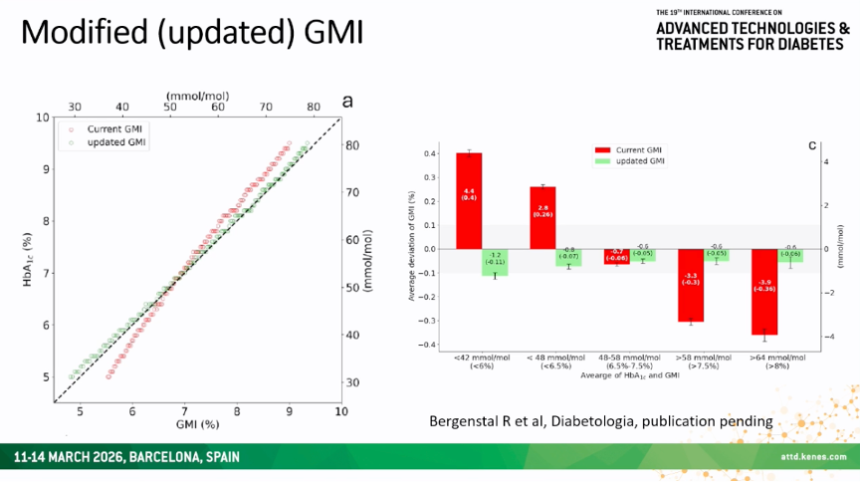
- As more of these optimal settings were used, median TIR increased (see figure below). When all optimized settings were implemented, strong outcomes were observed across age groups (TIR 76% in children and adolescents and 77% in adults) while maintaining TBR within targets (1.6% and 1.0%, respectively). Within the pediatric cohort, outcomes remained robust across age groups (TIR 74% in ages 2-5 and 13-17 years; 78% in ages 6-12). TBR remained below recommended thresholds in all groups. Notably, among the youngest children (2-5 years), a group where caregivers often fear hypoglycemia, use of optimized settings including a lower glucose target was associated with better outcomes (TIR 74%) compared with the same settings paired with a higher target (70%).
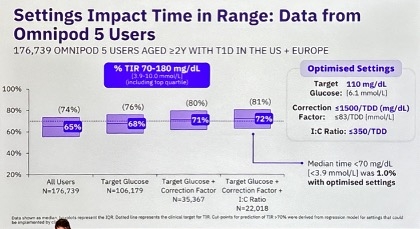
Sequel MedTech shares real-world data from the first twiist users (n=274), with mean TIR of 77% and TBR of 2.9%
Sequel MedTech hosted an early-morning symposium led by Dr. Joanna Mitri (CMO), who was joined by panelists Dr. Lori Laffel (Joslin Diabetes Center) and Dr. Leah Wilson (Oregon Health & Science University). Dr. Mitri began by introducing the basic features of the twiist AID system, such as compatibility with Eversense 365 and FreeStyle Libre 3 Plus and allowing for user interaction with the pump through the iPhone and Apple Watch. Dr. Laffel then explained how twiist seeks to address unexplained hyperglycemic events due to occlusions, with Dr. Mitri offering context by explaining twiist’s technological features allowing for faster occlusion detection than other AID systems. Finally, Dr. Mitri shared real-world data on glycemic outcomes from the first users of the twiist AID system in the US.
- On occlusion detection and the prevalence of unexplained hyperglycemia among AID users, Dr. Laffel reviewed survey data captured from individuals in the T1D Exchange community (n= 248). Among respondents, nearly half (49%) of pump users experienced at least one unexplained hyperglycemic event without pod dislodgement or unchanged pods. Of them, 71% reported a maximum glucose level of >300 mg/dL, with 21% reporting >400 mg/dL. Only 3% of cases received occlusion alarms. These instances were often accompanied by psychological distress, with 73% of these respondents experiencing unexplained hyperglycemia reporting emotional distress and 70% feeling unpleasant physical symptoms at the time. Dr. Wilson commented that her clinical experience generally aligns with survey results, and that she is excited to have a technology that can give much earlier occlusion alerts.
- Dr. Mitri also shared real-world data from the first twiist users in the US (n=274). Mean TIR reached 77%, generally consistent across age groups. Mean Time below Range (TBR) was 2.9%, with no age group’s mean TBR exceeding 3.0%. Notably, 78% of users met the target TIR >70%, and 89% met target Time <54 mg/dl of <1%. The study also categorized users by bolus frequency: (i) <3/day; (ii) 3-4/day; and (iii) >4/day. All groups saw mean TIR exceed target, with no significant differences between the three groups. When assessing TIR by correction range midpoints (n=177), users were categorized as having midpoint <100 mg/dL (n=18) or 100-140 mg/dL (n = 159). Mean TIR was 76% for the entire cohort, with TBR of 2.7%. The group with midpoint target <100 mg/dL group demonstrated slightly higher TIR (82%) than the group with midpoint target of 100-140 mg/dL group (75%), though both met target TIR. However, this came with more TBR, with those using lower targets exceeding consensus recommendations at a mean TBR of 5.1%. By comparison, those using higher targets had a mean TBR of 2.5%. In Q&A, Dr. Wilson said that she generally starts new users on a higher target and moves it progressively lower so that it is not a “shock to the system,” although it is not clear what the approach of these new twiist users was in the study.
- In a later oral presentation, Dr. Mitri presented an expanded analysis of the first nearly 2,000 twiist users in the US (n=1,946). Mean TIR in this expanded cohort was 74%. The analysis similarly separated users by midpoint glucose target during wear. Those with a midpoint target <100 mg/dL achieved superior TIR outcomes (83%) compared to those with a higher target (72%). Similar to the smaller real-world analysis noted above, this TIR improvement came with greater TBR. Mean time in hypoglycemia was 5.3% in those using a lower target, compared to 2.1% in those using higher targets.
New Eversense 365 CGM real-world data (n=5,000+) shows up to 72% TIR; preliminary data from twiist AID integration shows 77% TIR
Senseonics Chief Medical Officer Dr. Francine Kaufman presented real-world data (n=5,059) of Eversense 365 CGM users on open-loop insulin therapy, followed by preliminary data from its integration with Sequel’s twiist AID. As background, Eversense 365 received FDA clearance in October 2024 and became compatible with Sequel’s twiist AID system this year. Glucometrics for the first and second six months of Eversense 365 use were compared to each other, as well as to the 180-day Eversense E3 CGM. Sensor glucose data were sourced from the company’s Eversense Data Management System, with a mean of ~28,000 CGM readings per sensor.
- Participant demographics. Self-reported mean age for Eversense 365 users was 55 years old (38% male, 26% female, 35% unreported/other). Most participants had T2D (56%), about quarter had T1D (26%), and the remainder did not report. Median transmitter wear time was 94% (~343 days). E3 users (n=2,412) had a slightly younger mean age of 51 years old. About 41% had T2D, 36% had T1D, and the remainder did not report. Transmitter wear time was 91% (~164 days).
- Sensor glucose and glucose management indicator (GMI). Mean sensor glucose and GMI for Eversense 365 were similar in the first and second six months. Across all 365 days, these values were 160 mg/dL and 7.1%, respectively. Similarly, mean sensor glucose and GMI for E3 was 163 mg/dL and 7.2%.
- Time in glucose ranges. Time in glucose ranges was also similar in the first and second six months. Across all days, Time in Range (70-180 mg/dL) was 66%, compared to 64% with E3. Time below 70 mg/dL was 3%, and Time below 54 mg/dL was 0.8%. E3 users were similar with 2.7% Time below 70 mg/dL and 0.7% Time below 54 mg/dL. For both Eversense 365 and E3 users, 77% of users were able to achieve less than 4% Time below 70 mg/dL. Additionally, 82% of users achieved <1% Time below 54 mg/dL, compared to 78% for E3 users.
- Notably, when stratified by age, glucometrics improved with advancing age, as shown below. Users 65+ years old (n=1,524) achieved up to 72% TIR, with over 90% meeting the target for <1% of Time <54 mg/dL. GMI ranged from 7.32% in the youngest age group (18-25) to 6.99% in the oldest group (65+).
MiniMed symposium spotlights simplified onboarding for 780G, future innovation pipeline, and MiniMed Go
In this MiniMed-sponsored symposium, speakers discussed how diabetes education and therapy support remain essential to successful technology use and offered a forward-looking view of the company’s device ecosystem. Across talks related to MiniMed 780G onboarding, future pipeline developments, and the MiniMed Go Smart MDI system, speakers emphasized the fundamental role of diabetes technology, which should improve glycemic outcomes while reducing the burden of both clinicians and patients through efficient workflows, greater flexibility, and more decision support. Speakers included Ms. Núria Alonso-Carril (Hospital Universitaria Mútua de Terrassa, Spain), Dr. Maya Laron-Hirsch (Sheba Medical Center, Israel), Dr. Goran Petrovski (MiniMed), and Dr. Madison Smith (MiniMed).
- Ms. Alonso-Carril and Dr. Laron-Hirsch said structured setup plans and practical meal-management strategies can reduce burden for both clinicians and people with diabetes. Ms. Alonso-Carril explained that while the SmartGuard algorithm automates: (i) basal delivery; (ii) correction boluses; (iii) and insulin sensitivity adjustments, clinicians still play a crucial role in setting key parameters including carbohydrate ratios, glucose target, and active insulin time (AIT). Recommended settings include a 100 mg/dL target and a two-hour AIT, but these should be individualized as needed. She also outlined a stepwise follow-up approach in CareLink Clinic, beginning with a review of therapy goals and followed by an assessment of behavioral barriers and manual mode settings adjustment when needed.
- Dr. Laron-Hirsch issued guidance for real-world challenges during mealtime, reiterating that the best outcomes are achieved when boluses are given 10-20 minutes before carbohydrate-containing meals. She also provided more flexible strategies when that does not happen. For instance, if a meal bolus is initially forgotten but remembered within 30 minutes of eating, she suggested giving the bolus. For later missed boluses, she advised relying on the system’s autocorrections. She also said that snacks containing up to 20 grams of carbohydrates may cause only slight dysglycemia and reviewed “Fix/Flex” meal approaches that may help some individuals achieve positive glycemic outcomes with less intensive carbohydrate counting.
- Dr. Petrovski framed MiniMed’s innovation pipeline around expanding choice and increasing flexibility for people with diabetes. He began by addressing recent cross-sensor comparison claims in Europe, noting that currently marketed CGMs have all undergone comparable regulatory review and calibration against the YSI standard, making broad claims that one system’s TIR is artificially inflated versus another’s difficult to support. He pointed to data presented during ATTD 2026 showing that users switching from Guardian 4 to the Abbott-made Instinct CGM on the MiniMed 780G maintained similar outcomes, reinforcing his view that the algorithm plays a major role in driving glycemic results.
- Turning to pipeline updates, Dr. Petrovski highlighted MiniMed’s growing ecosystem, which include: (i) a smart MDI system; (ii) the MiniMed 780G with newly approved sensor options; (iii) a new screenless pump with a next-generation algorithm; and (iv) a longer-wear patch pump in development. He described the upcoming AID system as one designed to reduce or even remove the burden of carbohydrate counting and still deliver TIR above 70%. Dr. Petrovski said the company’s longer-term goal consists of enabling a single-app, seamless transition across pens, pumps, and upcoming patch devices depending on the user’s needs. In his perspective, these advances could allow clinicians and diabetes care teams to spend less time on logistics and more time supporting lifestyle changes and overall quality of life for their patients.
- Dr. Smith presented MiniMed Go as the next step in connected multiple daily injections (MDI), designed to reduce challenges by bringing CGM, smart pen data, and insulin decision support into one app. She explained that the system integrates the InPen smart insulin pen with either Medtronic’s Simplera CGM or the new Instinct sensor, allowing users to view glucose data and recommendations in one place. She said that MiniMed Go is intended to “meet patients where they are” with a dose calculator that supports carbohydrate counting, meal estimation, and fixed-dose approaches. Throughout her talk, Dr. Smith discussed the importance of how the system reduces alert fatigue and turns CGM data into actionable prompts. For instance, rather than having high-glucose alerts without context, the system considers recent dosing and insulin on board to suppress these alerts, identify likely missed meal doses, and issue correct high glucose notification only when additional insulin is actually needed. She also highlighted the CareLink Clinic-integrated reports, which provide tools to assess mealtime dosing behaviors and overnight fasting windows for long-acting insulin assessment. Overall, MiniMed Go was positioned both as an informative clinical management platform for those on MDI therapy.
Clinical implications of extended-wear infusion sites in insulin pump therapy
Dr. Irl Hirsch (University of Washington) examined the pathophysiology and clinical implications of infusion-site complications associated with insulin pump therapy, particularly in the context of increasingly prolonged infusion set wear times. As more people with diabetes are finding success with AID systems, there are still many questions that have arisen in response to extended-wear options. Evidence from animal models suggests that longer catheter dwell times are associated with greater inflammatory responses, yet comparable long-term human biopsy data for modern extended-wear infusion sets remain unavailable. Repeated use of infusion sites may lead to lipohypertrophy, inflammation, and fibrosis, which collectively degrade the usability of subcutaneous tissue for insulin delivery and compromise glycemic management.
- Insulin formulation components constitute a major driver of tissue toxicity. Experimental studies demonstrate that higher concentrations of preserved insulin reduce cellular viability, causing local cytotoxicity, infusion-set failure, skin irritation, and occasional allergic reactions. Although these preservatives are necessary to maintain insulin stability, their presence likely contributes to premature infusion set occlusion and inflammatory responses at the infusion site. Even further, Dr. Hirsch shared that the physical trauma of catheter insertion plays a critical role in initiating inflammation. Studies in animal models suggest that insertion trauma, rather than the biomaterial itself, triggers early neutrophilic responses, while commonly used Teflon pump catheters appear to produce a more sustained inflammatory reaction than continuous glucose monitoring sensors, with greater recruitment of macrophages, mast cells, and inflammatory cytokines.
- Dr. Hirsch further discussed the clinical consequences of these inflammatory processes, including increased tissue resistance to insulin flow and reduced insulin absorption over time. He shared experimental data indicating that prolonged catheter wear leads to progressively lower circulating insulin levels and higher glucose concentrations, consistent with inflammation-mediated impairment of delivery. Dr. Hirsch highlighted alternative strategies aimed at mitigating tissue damage. One proposed approach involved mechanical “tension off-loading” devices designed to reduce mechanical stress in lipohypertrophic tissue. Preliminary clinical data suggest that such interventions may decrease lipohypertrophy and fibrosis, thereby improving local tissue health. While infusion site failure is multifactorial, largely driven by insulin preservatives and insertion-related trauma, Dr. Hirsch underscored the need for new strategies to reduce inflammation and preserve subcutaneous tissue integrity in long-term insulin pump therapy.
dQ&A study examines the impact of AID systems on diabetes burden and user satisfaction
In a well-attended afternoon session, Ms. Anuradha Krishnan (dQ&A) delivered an oral presentation examining the psychosocial impact of AID systems in people with diabetes. Investigators conducted a cross-sectional survey (n=1,403) among people with T1D and T2D using an AID system in Europe and Canada. The study aimed to understand user satisfaction, perceived algorithm performance, and psychosocial outcomes.
- Overall, 50% of participants reported high satisfaction with the AID system, compared to just 38% who were satisfied with overall diabetes management. Ms. Krishnan said that this suggests patients consider other factors, like the ease of use, impact on sleep, and quality of life, when evaluating their devices. Further analyses found that participants satisfied with AID systems and overall diabetes management are more likely to feel “in control of things,” put less effort into managing diabetes, and feel that diabetes interferes with their lives less. In addition, participants who reported putting moderate to significant effort were more likely to perceive algorithms to be too conservative or aggressive. Finally, the sense of control and low effort to manage diabetes were associated with better psychosocial outcomes, including fewer concerns of long-term complications and better sleep quality.
The future of smart pens: Market growth, real‑world uptake, and pediatric use
Dr. Dominic Ehrmann (Research Institute Diabetes Academy Mergentheim, Germany) opened this session on smart pens with results from the 2026 DT‑report. Based on data from over 6,500 people with diabetes, more than 1,000 healthcare providers, and data from more than eight countries, the report found high rates of satisfaction with smart pens, reflected in a strong overall net promoter score of 52%. Country differences ranged from 19% in Italy to 59% in Austria. The data also revealed that HCPs view smart pens as important but relevant only for a smaller subset of patients. Dr. Ehrmann highlighted that current use in Germany remains steady at ~5%, with no increase in uptake over the past five years. Barriers to greater adoption remain substantial, with 57% of participants preferring pre‑filled pens, 54% citing limited insulin choice, and 51% pointing to high costs. Lack of evidence or clinical benefit is not considered an obstacle. Across all groups, the reminder for missed doses is considered most valuable (rated “very important” by 52% of respondents).
- Dr. Johan Jendle (Orebro University) provided additional insight into barriers, stating that many people with diabetes have a hard time tracking when to dose. He said smart pens can help: (i) decrease the number of missed injections; (ii) increase TIR; and (iii) improve glycemic management with good overall patient satisfaction. He highlighted a study (n=94) which showed that at follow-up, patients using the NovoPen6 had 42% fewer late bolus doses and 48% fewer missed bolus doses than at baseline. He concluded that the evidence is clear on the impact smart pens have on TIR, TITR, and GMI, but that more evidence is needed on the degree to which it lessens disease burden, reduces long-term complications, and is cost-effective.
- On the future of smart pens, Prof. Lutz Heinemann (University of Applied Sciences, Germany) said that the global digital pen market is expanding rapidly, citing data that showed that the market was valued up to $3.4 billion in 2024-2025 with strong projected growth through 2034. He acknowledged that practical challenges persist, including the fact that smart pen systems remain unidirectional, supporting decisions but not sending calculated doses back to the pen. Looking ahead, he pointed to AI as a key enabler for smarter dosing, pattern recognition, and contextual insights, and stressed the importance of sustainability, including eco‑friendly designs and reusable components. Overall, he argued that while adoption is slow, the trajectory toward more intelligent, integrated, and practical smart pens is continuing.
- On pediatric use, Dr. Peter Adolfsson (University of Gothenburg, Sweden) explained how smart pens can meaningfully ease diabetes management for children, their caregivers, and clinicians by supporting dose timing. He showed how smart pen features like the new initiation settings sheet, which standardizes carb ratios, insulin sensitivity, glucose targets, and alert settings, can help families start the therapy with clear and tailored instructions. He then highlighted the InPen Smart MDI system, whose missed‑dose alerts, dose calculator, and CGM‑linked guidance help children navigate school days and sports and support different caregivers. To support his position, he pointed to a recent consensus statement that strongly endorsed smart pens for pediatric care.
First phase 1 data for PharmaSens’ combined insulin patch pump and CGM; second clinical trial planned for 2Q26
Dr. Michael Shoemaker shared phase 1 data on PharmaSens’ combined CGM and insulin patch pump system: SMART01 (n=18). As background, the Switzerland-based PharmaSens is developing three products: (i) niia essential (an insulin patch pump); (ii) niia advanced (an insulin patch pump controlled by a smartphone app); and (iii) niia signature (a combined insulin patch pump and CGM).
- The niia signature is designed to enable continuous glucose sensing and AID from one device, incorporating pump mechanics, a CGM sensor, and electronics into one on-body device. The device uses a single port design (see the device below), incorporating the CGM’s glucose sensor to the exterior of the insulin cannula.
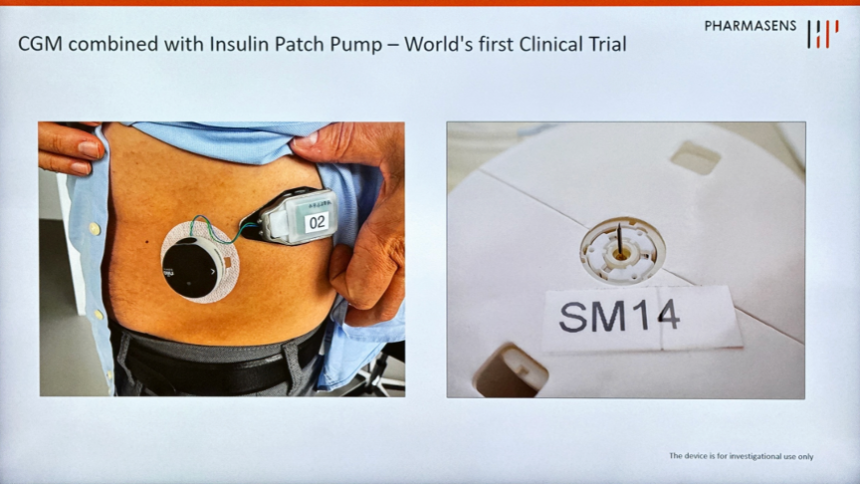
- The SMART01 trial evaluated niia signature for adults with T1D in two phases: (i) a pilot phase (n=3) with a two-day duration; and (ii) a main phase (n=15) lasting four days. On Day -1 of both phases, patients inserted an unnamed commercially available CGM. On Day 1, the niia signature was placed on each patient. Patients then underwent a mixed meal test and a YSI reference was taken. The study’s pilot phase ended on Day 1 with the removal of niia signature. In the study’s main phase, participants wore the niia signature and stayed in a nearby hotel for clinical monitoring. A mixed meal test with YSI reference was repeated on Day 3, and the niia signature was removed on Day 4. Of note, the commercially available CGM was placed on a remote site to ensure independence from insulin infusion.
- At baseline, participants had a mean age of 51 years, were predominantly female (78%), and had a mean T1D duration of 30 years. Average CSII duration, BMI, A1c, and insulin dose were 12 years, 29.5 kg/m2, 6.8%, and 42 units, respectively. Of the 18 participants, 11 used Medtronic 780G, five used t:slim X2, and used YpsoPump as their preferred insulin delivery system.
- The niia signature showed comparable glucose sensor accuracy to commercially available CGMs, meeting the study’s primary objective. Compared to YSI, MARD was 11.6% and 10.4% for the niia signature and the commercially available CGM, respectively. Similarly, compared to BGM, MARD was 12.0% for the combined device compared to 11.2% in the commercially available CGM. These findings suggest that an on-cannula glucose sensor can be relatively unaffected by nearby insulin infusion.
- The niia signature pump functioned “as intended” in its first trial, with no reports of insulin delivery failures and no serious adverse events. However, in a comparison of baseline to Day 2, patients experienced a decrease in TIR from 80% to 62% (p=0.0001), an increase in mean blood glucose level from 140 mg/dL to 166 mg/dL (p=0.0002), and a decrease in total daily insulin dose from 43 units/day to 37 units/day (not statistically significant). Dr. Shoemaker explained that such results “make clinical sense,” as patients transitioned from using AID at baseline to manual insulin dosing in the study. Patients also had different activity profiles with restricted movement during the study, Dr. Shoemaker added.
- On next steps, Dr. Shoemaker explained that PharmaSens plans to integrate the SiBionics CGM sensor into niia signature product development. Additionally, the company is planning a second clinical trial (n=40 estimand) of niia signature for 2Q26 in Canada. Dr. Shoemaker shared that PharmaSens submitted documentation for the trial in February 2026, where the company will be systematically investigating different basal and bolus rate deliveries on CGM accuracy.
French claims data used to evaluate patient engagement with tubed vs. tubeless pumps
Dr. Gabriel Guigand (Insulet) reported on new analyses conducted using the French National Health Insurance claims database to evaluate treatment persistence among people with T1D initiating different types of insulin pump therapy. Tubeless insulin pumps were introduced in France in 2016 and have been associated with high levels of patient satisfaction. Although prior studies have demonstrated strong user preference for tubeless systems, it remained unclear whether these satisfaction levels translate into improved treatment persistence. The objective of this retrospective observational study was therefore to compare treatment persistence and therapy changes among individuals initiating tubed versus tubeless insulin pumps in routine clinical practice.
- The analysis used data from a comprehensive national claims database covering the entire French population. Individuals with at least one reimbursement for insulin between 2016 and 2021 were identified. Participants initiating insulin pump therapy were categorized into tubed pump or tubeless pump users. The primary outcomes were treatment persistence and the proportion of individuals switching to another therapy within 12 months of pump initiation. Among more than 1.2 million individuals with insulin reimbursement records, approximately 233,000 were classified as having T1D, and around 90,000 initiated a new insulin therapy during the study period. Of those initiating pump therapy, the majority used tubeless pumps. Baseline characteristics indicated that pump users tended to be slightly younger than the overall population, and nearly all participants had long-term disease coverage for diabetes under the French healthcare system.
- The results demonstrated significantly higher treatment persistence among individuals initiating tubeless pumps compared with those starting tubed pumps. There was a lower risk of discontinuation for tubeless pump users, with hazard ratios indicating roughly a 40% reduction in the risk of stopping treatment relative to tubed pump users. In addition, individuals using tubeless pumps experienced fewer therapy changes within the first 12 months following initiation. While therapy changes occurred in approximately 14-18% of tubed pump users during the first year, the corresponding proportion among tubeless pump users ranged from 7-9%. Overall, the findings suggest that tubeless insulin pumps are associated with greater treatment persistence and fewer therapy modifications, highlighting their potential advantages for long-term diabetes management.
Real-world head-to-head comparison of MiniMed 780G and Control-IQ show strong glycemic outcomes
Dr. Laura Sayol Torres (Hospital Universitari Vall d'Hebron, Spain) presented a real-world, two-year, head-to-head comparison of MiniMed 780G and Tandem Control-IQ in youth with T1D (n=89). At baseline, Control-IQ users were younger (8.9 years vs. 12.2 years); no significant difference was seen in baseline glycemic management, although Control-IQ users had a slightly lower A1c (7.2% vs. 7.3%) and higher TIR (59% vs. 61%).
- Over two years of AID use, MiniMed 780G users achieved better TIR (75% vs. 68%), primarily due to reduced Time >250 mg/dL (5% vs. 9%). Time below Range and Time <54 mg/dL were also significantly lower with MiniMed 780G use compared to Control-IQ (1.6% vs. 2.5% and 0.2% vs. 0.8%, respectively). However, these improvements in CGM metrics did not lead to significant differences in A1c, which improved similarly and significantly in both MiniMed 780G (from 7.3% to 7.0%) and Control-IQ (from 7.2% to 6.9%) cohorts. There was no significant between-group difference in A1c at any time point except nine months of use (p<0.05).
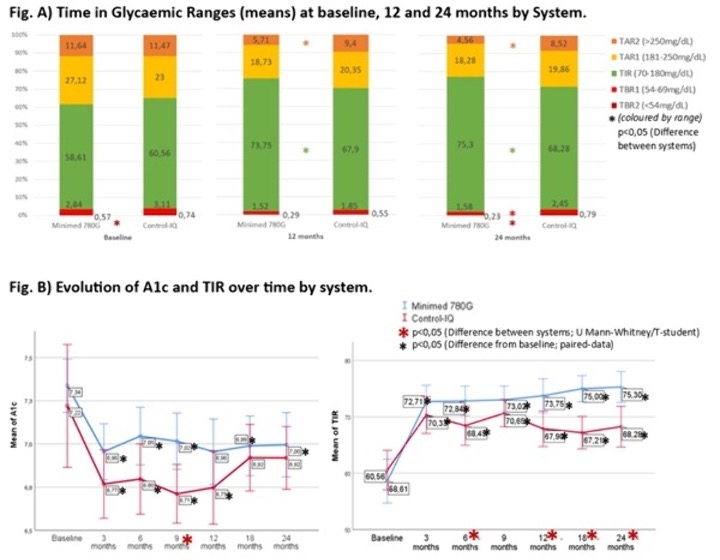
The use of AID with older adults: Choosing the right technology at the right time
Drs. Yogish Kudva (Mayo Clinic) and Medha Munshi (Harvard University) offered perspectives on the use of AID for reshaping safe and effective diabetes care in older adults with T1D. The speakers agreed that AID can dramatically improve outcomes for older adults with T1D, but also that adoption requires intentional design, tailored workflows, and geriatric-informed implementation. As the population of older adults with T1D grows rapidly, the field must pair strong efficacy data with equally strong strategies to ensure that the people who stand to benefit the most are not left behind.
- Dr. Kudva presented growing evidence demonstrating that AID is not only feasible but also highly effective for older adults. Early trials based in the UK/Australia and the US AIDE randomized crossover study (n=82) consistently showed that AID and predictive low-glucose (PLGS) systems substantially reduce hypoglycemia compared to sensor‑augmented pump therapy while also improving Time in Range (TIR), glycemic variability, and A1c.
- In the study, older adults >65 years of age achieved an A1c of 6.9% with fewer hypoglycemic incidents, a result that challenges the long‑standing ADA Standards of Care that includes a higher glycemic target of 7.4% in this population. In addition, 90% of participants chose to continue the use of AID in the extension phase, underscoring both its safety and uptake. He also highlighted new evidence from a trial (n=319) in insulin‑treated people with T2D where AID reduced A1c by an additional 0.6 percentage points and increased TIR by 14 percentage points compared to CGM alone. This reinforces the expanding role of AID beyond T1D. As AID expands into T2D, Dr. Kudva emphasized the need for trials specifically to evaluate its use in older adults with T2D.
- Dr. Munshi discussed aging with T1D, grounding her perspective in the heterogeneity of older adults and the practical barriers that shape technology use. She illustrated how aging‑related changes directly affect patients’ ability to manage insulin pumps and AID systems. Real‑world challenges, such as remembering multi‑step infusion‑set changes, pressing small buttons, seeing alerts, hearing alarms, and managing supplies compound these risks. She gave several examples of patient cases that underscored this variability. Some older adults thrive with AID and value its flexibility, while others struggle with repeated errors, anxiety around decision‑making, or a lack of support. Dr. Munshi emphasized that these barriers are not simply individual shortcomings but predictable consequences of aging physiology and care environment complexity.
- Dr. Munshi said that the adoption of technology must be aligned with patient health status. Robust older adults may benefit from AID, while those with intermediate health or mild cognitive impairment may require simplified workflows, caregiver involvement, or CGM‑first strategies. She also stressed the need for the structured assessment of technological readiness, ongoing reassessment as health status changes, and intentional design choices like reduced manual bolus demands, accessibility‑focused interfaces, and clear caregiver pathways to support safe and equitable AID use.
Real-world iLet AID data demonstrates glycemic benefit with and without meal boluses
ATTD Day #4 included a compelling oral presentation discussing real-world outcomes with Beta Bionics’ iLet AID system. Following the launch of the iLet, referred to as a bionic pancreas by Beta Bionics, users and clinicians have been eager to explore the real-world benefits of the system. Dr. Russell presented data from the first two years of FDA system clearance compared to the Bionic Pancreas Pivotal Trial. Commercial iLet users with a recorded pre-iLet A1c value and at least two weeks of cloud data were included.
- Real-world use of iLet afforded greater A1c reductions compared to RCT participants with comparable rates of hypoglycemia. In a study of 16,394 commercial users of iLet and 330 RCT participants, adult commercial users had a baseline A1c of 8.8% on average and a GMI of 7.3% after iLet use. This was compared to a 7.7% baseline A1c and 7.0% GMI in RCT participants. Pediatric commercial users had a baseline A1c of 9.7% and iLet GMI of 7.8% compared to 8.1% and 7.4% in RCT participants, respectively. In terms of hypoglycemia, Time <54 mg/dL was 0.3% in adults and children for commercial use as well as in RCT data.
- The authors concluded that real-world use of the iLet AID system confers greater benefit to A1c, based on GMI results, compared to results seen in the Bionic Pancreas Pivotal Trial. This is achieved without an increase in hypoglycemia among users. While these data are compelling, the use of GMI as a direct replacement for A1c continues to be debated – see some of this discussion from ADA 2025.
- Results were also strong for real-world iLet users announcing very few meals over a two-year period. Data were drawn from 16,394 iLet users with a mean 193 days of system use, 1,042 with 0.5 meals per day (MPD) announced or less on average over 201 days, and 180 participants with <0.1 MPD over 169 days. Users with <0.5 MPD had a baseline A1c of 9.7% and iLet GMI of 7.5%. Users with <0.1 MPD had a baseline A1c of 9.6% and iLet GMI of 7.5%. The mean number of meals announced was 2.1, with a baseline A1c of 8.9% overall and iLet GMI of 7.3%.
- Time in hypoglycemia and total daily insulin dose were consistent for all users. Time in hypoglycemia (<54 mg/dL) was 0.3% for all groups, including those with <0.5 MPD, <0.1 MPD, and all users overall. Total daily dose (TDD) was 0.8 U/kg/day for those with <0.5 MPD, 0.7 for those with <0.1 MPD and 0.8 for all users overall. In all, iLet AID users who announced meals experienced benefits to A1c reduction as assessed by GMI values while hypoglycemia and TDD remained similar. This illustrates both the power of announcing meals and the possibility of positive outcomes with minimal patient input.
An opportunity for a “generational leap”: Use of ultra-rapid acting insulin in AID systems
Dr. Gregory Forlenza (University of Colorado Anschutz) reviewed data on the use of ultra-rapid acting insulins within AID systems. He concluded that while ultra-rapid acting insulins appear safe and provide modest improvements in AID performance, greater benefits likely lie with next-generation insulins and algorithms.
- Dr. Forlenza discussed factors contributing to provider and system uncertainty in existing devices. Insulin onset – the time before patients begin to see an effect – is a major driver of the need for pre-bolusing. Delays in onset can contribute to hyperglycemia and insulin resistance. Most clinicians focus on insulin peak (the time to maximum action), which also reinforces the need for pre-bolusing. However, Dr. Forlenza emphasized the importance of time to elimination. The typical three- to four-hour elimination window introduces significant uncertainty and is a major contributor to hypoglycemia risk, consequently limiting how aggressively AID systems can operate. He also reviewed several fast-acting insulin formulations. Fiasp and Lyumjev have pharmacokinetic profiles that differ from earlier insulins but are not dramatically faster. By contrast, AT-247, developed by Arecor, has demonstrated faster early action than both Fiasp and insulin aspart, with the greatest improvement occurring at the front end of the activity curve.
- Published studies evaluating ultra-rapid acting insulins with commercial AID systems consistently show small but statistically significant improvements in glycemic management without safety concerns. Modeling analyses suggest that incorporating faster insulin kinetics directly into control algorithms could further enhance these benefits. Newer insulins in development may therefore provide greater improvements than those observed to date. A recent summary of ultra-rapid acting insulins (not limited to AID) found that these formulations reduce one-hour postprandial glucose excursions, though this benefit is attenuated when patients do not pre-bolus. Several clinical studies illustrate these effects:
- A study evaluating Lyumjev with the Control-IQ system in children, adolescents, and adults showed an increase in TIR from 65% with standard rapid-acting insulin to 67%. TITR increased from 40% to 42%, with no increase in hypoglycemia. Dr. Forlenza noted that patient-reported outcomes were particularly compelling, as adolescents who participated in the study quickly requested the insulin off-label. He said that these insulins enabled mealtime boluses.
- In adults using MiniMed 780G study with Fiasp, TIR increased from 68% to 77%, and reached 83% when users applied recommended optimal settings. A pediatric study using the same system with Lyumjev reported an increase in TIR from 51% to 69%, rising to 75% under optimal settings.
- Looking ahead, Dr. Forlenza suggested that adapting AID algorithms to account for faster-acting insulins may further improve outcomes. Current algorithms were designed around older sensors and slower insulin formulations. He highlighted an in-silico analysis evaluating modified AID algorithms with ultra-rapid acting insulins including aspart, Fiasp, and AT-247. In the model, TIR did not change with aspart, increased from 66% to 71% with Fiasp, and rose from 68% to 75% with AT-247. An additional 24-hour simulation study in a FCL system showed that TIR improves both as insulin action becomes faster and as algorithms are optimized to account for these kinetics. Reduced baseline hypoglycemia allows systems to operate more aggressively, decreasing hyperglycemia and increasing TIR. Faster insulin pharmacokinetics also enable more aggressive mealtime management. Ultimately, Dr. Forlenza suggested that these advances could enable a generational leap in AID performance.
Digital Health, AI, and Telehealth
Human-AI collaboration in diabetes: Prof. Boris Kovatchev on developing AI digital twins
Prof. Boris Kovatchev (University of Virginia) gave this year’s opening session lecture, discussing the use of digital twins and artificial intelligence in the human-machine coregulation of diabetes. Prof. Kovatchev gave an overview of machine learning and AI before diving into its use in diabetes. While there has been an explosion of AI-centric research within the diabetes space, Prof. Kovatchev highlighted that most papers on the topic are not patient facing and are instead focused on AI’s use in diagnostics and clinician-support. In contrast, his work on AI digital twins in diabetes – or Cloud-based data entities that enable safe, in silico testing of human responses to treatment – aims to build a human-AI collaboration for diabetes.
- Prof. K0vatchev introduced a crash-course on the technological concepts behind AI and its recent presence in the diabetes space. Explaining how AI starts from a base artificial neuron, he summarized how artificial neurons are used to facilitate deep learning, which aggregates to machine learning, which is the foundation behind AI. With a humorous jab at some dystopian projections of AI development, Prof. Kovatchev emphasized his firm prediction that the future of AI will be a collaboration with humans that leads to improvements in biology and healthcare. As emphasis, he highlighted the 5,000 AI-centric diabetes research papers that have been published, mostly within the last five years.
- He specifically highlighted his belief in the future of AI digital twins for diabetes management. By providing an AI digital twin built through data from connected devices, patients and physicians will be able to experimentally adjust parameters are treatments in a digital twin prior to any changes in actual treatment. With his introduction of the concept, he dispelled the idea that this was science-fiction, with research already having shown that in an early six-month study (n=72), TIR increased by 5.1%, from 72.3% to 77.4%. Stratified by baseline A1c, individuals in the highest A1c group (≥7.5%) saw the greatest improvement in TIR. Importantly, the AI digital twin did not “spoil” the control of individuals already with an A1c <6.5% and even improved TIR by 1.2%.
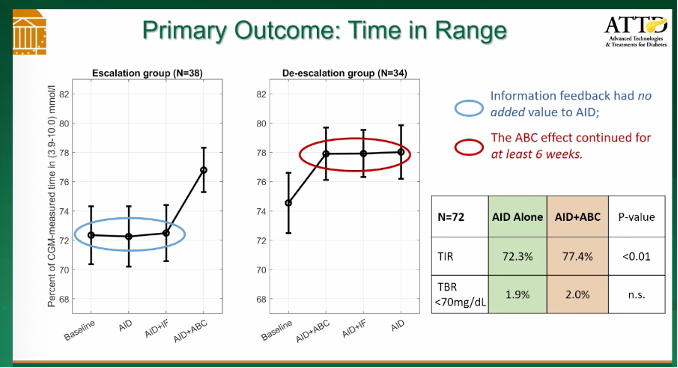
- Looking ahead, Prof. Kovatchev discussed building a foundation model of glucose-insulin-behavioral interplay in diabetes. Prof. Kovatchev suggested that the next step in advancing digital twin technology is to develop a foundation model for the interaction between glucose, insulin, and human behavior. This is the equivalent to building a diabetes version of well-known AI models such as ChatGPT, Gemini, and Claude. Traditionally, diabetes models have been designed using equations to model human physiology, often drawing on clinical intuition and knowledge. These models are useful when data are limited, but they are restricted in their ability to adapt. AI models, on the other hand, are adaptive and do not require prior knowledge. While they require significant amounts of data, Prof. Kovatchev pointed out that there is plenty of data available just considering are ~1.4 million AID users.
Continuous insulin guidance with the DreaMed app: Proof-of-concept outcomes
Prof. Andrej Janež (Medical University Ljubljana, Slovenia) spoke at ATTD Day #2 on the need for a “paradigm shift from episodic visits to continual intelligence” with the DreaMed app, an insulin dose guidance system for people with diabetes. The talk was titled “Evaluation of CGM-based insulin dose guidance system in people with type 1 and type 2 diabetes: Single arm feasibility study” and was from the “Hot from the Oven” symposium. The app, designed for both patients and clinicians, includes a bolus calculator, patient diary, and individualized insulin treatment plan. It integrates glucose monitoring data from patient devices to provide: (i) daily recommendations when needed; and (ii) weekly titration guidance, including an updated treatment plan, personal behavioral tips, and data visualizations for context.
- Prof. Janež presented results from a prospective, single-arm proof-of-concept study (n=45) with the app.Participants were evenly divided into three groups: (i) people with T1D using MDI; (ii) people with T2D using MDI; and (iii) people with T2D using basal insulin only. After a two- to four-week run-in period, participants received weekly insulin dose recommendations for 10 weeks. During the run-in, baseline metrics included: (i) Time below Range (TBR) of 3.7%; (ii) Time <54 mg/dL of 0.5%; (iii) Time >250 mg/dL of 5.3% (this is lower than we often see); and (iv) weekly averages of 0.5 severe hypoglycemia events and 1.2 prolonged hyperglycemia events.
- By the end of the study, TBR dropped by one percentage point to 2.7% from 3.7%, a drop of nearly 30%, and Time <54 mg/dL improved slightly to 0.4% (from ~55 minutes to ~40 minutes). Participants with T2D on basal-only insulin saw the greatest benefit, with TBR decreasing from 3.8% to 1.5% and Time <54 mg/dL from 0.8% to 0.3%. Those using MDI experienced more modest improvements, with TBR decreasing from 3.7% to 3.2% and no change in Time <54 mg/dL. The mean number of severe hypoglycemia events remained unchanged. Time >250 mg/dL improved overall to 4.6%, though this was driven by MDI users (from 6.8% to 5.5%), while those on basal-only insulin saw a slight increase (from 2.4% to 2.9%).
- Participants with higher baseline A1c experienced the greatest reductions after 10 weeks. Those starting between 7% and 8% saw A1c decrease from 7.5% to 7.2%, while those with A1c ≥8% dropped nearly one percentage point, from 8.8% to 7.9%. Participants with baseline A1c <7% remained stable (6.3% to 6.4%).
- Meaningful glycemic improvements were observed among participants who did not meet the consensus TIR target (≥70%) at baseline (n=21). TIR increased from 58% to 65%, primarily driven by a reduction in Time above Range (TAR) from 39% to 32%. Time >250 mg/dL, TBR, and Time <54 mg/dL also improved, though these changes did not reach statistical significance.
Adherence to the app’s recommendations was generally high. Among those on basal-only insulin, fewer than 20% overrode more than 20% of recommendations, and about 10% logged at least 70% of their doses. Among MDI users, nearly one-third overrode fewer than 20% of recommendations, and 16% logged at least 70% of doses. Participants also reported high satisfaction with the app experience. Prof. Janež concluded that frequent algorithm-driven insulin titration recommendations can feasibly and safely improve glycemic management among people with diabetes on injection therapy
Data integration into EHRs and improving diabetes technology interoperability
Dr. Peter Adolfsson (University of Gothenburg, Sweden) shared his perspective on how data is being integrated into EHRs in this popular morning session. First explaining the type of data being integrated into EHRs, which include clinical data, patient-generated data, genomic data, and demographic data including social determinants of health, he laid out the current methods and standards for integration. These include facilitating messages between healthcare systems, using application program interfaces (APIs) as bridges, following DICOM (the international standard for medical images), and adhering to the clinical document architecture (a standard defining the structure and semantics of clinical documents). Diving deeper, Dr. Adolfsson discussed the Integration of Continuous Glucose Monitoring Data into the Electronic Health Record (iCoDE), an initiative of the Diabetes Technology Society aimed at creating standards for importing CGM data directly to EHR systems. Specifically, these standards call for high levels of interoperability and cooperation between the government, diabetes technology companies, and hospital systems. The challenges of such a project include ensuring that the data uploaded is high quality, accessible, and HIPAA compliant. Notably, Dr. Adolfsson said that these implementation goals starts with the US, which has more established EHRs and data systems, claiming that Europe is “at least two years behind.”
Interactive web app shows A1c and behavioral benefits in people with T2D
Dr. Rogerio Ribeiro (University of Aveiro, Portugal) presented results from a prospective study of the eDiabetes interactive web app, which supports users with tools such as daily activity logging and motivational follow-up to promote patient empowerment and motivation. The study enrolled people with T2D (n=134) who were predominantly male (66%) and older (mean age 62 years). Participants had a mean diabetes duration of just over 14 years and reported moderate digital literacy at baseline.
- Results. A1c decreased significantly from 8.5% at baseline to 7.9% at three months and 7.7% at six months. This was accompanied by slight weight loss, from 85.5 kg (188 lbs) at baseline to 83.7 kg (185 lbs) at six months. Digital literacy improved from “moderate” to “high” by six months. Patient activation and empowerment scores were already high and were stable or slightly elevated by study end, and diabetes distress remained stable throughout the study. Adherence to dietary guidelines improved, while physical activity levels were generally maintained. Dr. Ribeiro noted that the intervention emphasized low-intensity activity, focusing on reducing sedentary behavior rather than promoting higher-intensity exercise.
Time in Range and Beyond A1c
CGM metrics as predictors of vascular risk: Insights from Virtual DCCT and real‑world evidence
In this session, Dr. William Horton (University of Virginia) presented findings from a study that explored whether CGM metrics can serve as reliable predictors of cardiovascular (CV) outcomes in people with T1D, using an impressive reconstruction of CGM data from the DCCT (n=1,441). Because the DCCT predated modern CGM, his team used machine learning to populate individualized virtual CGM traces for all the participants in both the intensive and control groups, based on the A1c and seven point blood glucose data from the original trial. From this point, the team calculated ‘CGM metrics’ such as Time in Range (TIR), Time in Tight Range (TITR), mean glucose, and hyperglycemia exposure. These metrics were then compared against CV outcomes defined in two ways: the original broad composite definition that included a wide range of CV events, and a modern stricter definition limited to the most clinically severe outcomes.
- Dr. Horton showed that it was possible to replicate the original adjusted hazard ratios for CV events for A1c, with virtual CMG metrics - TIR, TITR, mean glucose, and hyperglycemia exposure. It turns out that individuals in the DCCT who did not experience CV events had slightly lower mean A1c (8.2% vs. 8.4%) and therefore spent more TIR (50% vs. 47%), while those with events had modest but consistent reductions in both TIR and TITR and higher mean glucose (190 mg/dL vs. 197 mg/dL). The original DCCT adjusted hazard ratio for the CV outcome measure was 1.29 for a 1.44% increase in A1c. This was almost identical for a TIR reduction of 18%, and a TITR reduction of 15%. These results reinforce the concept that CGM data should serve as clinically meaningful endpoints for long‑term outcomes, especially as clinicians seek metrics that better reflect day‑to‑day glycemic patterns.
- On limitations, Dr. Horton emphasized that while the DCCT provides a rich dataset, it is not the ideal population for evaluating hypoglycemia‑related CV risk, given its younger age and lower baseline CV burden. Dr. Horton highlighted the need for prospective studies in older, higher‑risk populations and pointed to the large‑scale FACULTY study (n=70,000) in France as a major step toward answering these questions using real‑world CGM data. The study is underway, and links real-world CGM data with national health claims records to examine how CGM metrics relate to future macrovascular and microvascular complications.
- In a related session, Prof. Chiara Fabris (also from the University of Virginia) presented multiple real‑world and longitudinal datasets showing that lower TIR and TITR track with higher microvascular risk. In one study of adults with T1D (n=808), individuals with microvascular complications had statistically significantly lower TIR (50% vs. 54%) and TITR (32% vs. 36%), and the odds of retinopathy rose steadily across lower TIR/TITR quartiles. Her key takeaway was that CGM‑derived metrics, especially TIR and TITR, are consistently linked to both the prevalence and incidence of microvascular complications, particularly retinopathy, and therefore should be used to assess glycemic management, track disease progression, and guide therapy adjustments alongside or even beyond A1c.
- Dr. Horton closed by discussing the U‑shaped relationship between glycemia and CV mortality, noting that both chronic hyperglycemia and frequent hypoglycemia appear to elevate risk. He did not expect that the U-shaped relationship would hold with TIR, and asserted that it would be important to determine the ideal TIR target for CV health to add to our guidelines. Initial work in China suggests that truly CV-protective TIR thresholds may be in the range of 85% which, if true, raises the question of how we will be able to hit those targets.
Dr. David Klonoff on the glycemic risk index and its clinical and research benefits
Dr. David Klonoff (Diabetes Research Institute, Mills-Peninsula Medical Center [Sutter Health]) gave an overview of the glycemic risk index (GRI) and its applications. As background, GRI was introduced four years ago in the Journal of Diabetes Science and Technology. It was developed through a clinician survey on the quality of 225 14-day CGM tracings. The tracings came from equal numbers of adults with T1D on MDI, T1D on open loop, T1D on AID, and T2D on MDI. A total of 330 clinicians rated these tracings from 0-100, and the results were used to create the following weighted formula:
GRI = (3.0 * % Time below 54 mg/dL) + (2.4 * % Time between 54-69 mg/dL) + (1.6 * % Time above 250 mg/dL) + (0.8 * % Time between 181-250 mg/dL)
The differences in weight (i.e., Time below 54 mg/dL is more heavily weighted than Time above 250 mg/dL) were determined based on assessments of the clinical impact of each range. GRI is a single number and ranges from 0 to 100 (a lower score/percentile is more desirable). GRI can also be plotted on a two-dimensional plot separated into five quintiles, as shown below, allowing further insight into whether an individual is experiencing more hyper- or hypoglycemia.
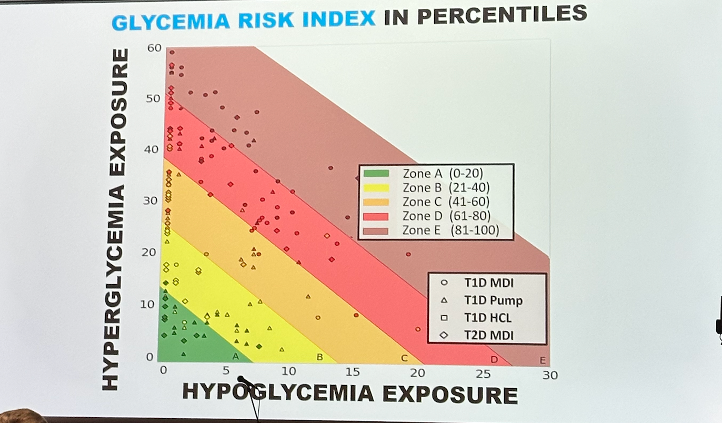
- Clinical and research applications of GRI. Dr. Klonoff highlighted that GRI can be traced for the same patient over time to see trends. Clinicians may benefit from establishing their own cut point for when they decide to modify treatment for their patients (e.g., take action if above 50th percentile). On a population level, GRI can also facilitate triaging and risk stratification, particularly with the five quintiles/zones.
- A recently published survey study evaluating the clinical utility of the GRI found that 50% of participants prefer using GRI and the AGP report together (39% preferred GRI alone and 11% preferred the AGP report alone). Three-fourths of respondents also said they would be willing to integrate GRI into their workflow. In a recently publishedconsensus report, the committee, which included Dr. Klonoff, unanimously recommended the addition of GRI to data visualization software (e.g., CGM apps, AGP reports).
GLP-1 Receptor Agonists
SURPASS-EARLY: Early initiation of tirzepatide for T2D improves glycemic and cardiovascular health
In a crowded morning symposium, Prof. Stefano Del Prato (University of Pisa, Italy) presented results from the ongoing phase 4 SURPASS-EARLY trial (n=794), which evaluates long-term outcomes of early initiation of tirzepatide vs. conventional care in people with T2D. The UK Prospective Diabetes Study (UKPDS) and STENO-2 studies found a “legacy effect,” in which achievement of early glycemic control following the diagnosis of T2D translates into long-term risk reduction of key diabetes complications1,2,3. Given that tirzepatide has been shown to improve glycemia, weight, CV risk factors, and insulin sensitivity in people with T2D, the SURPASS-EARLY trial aimed to understand “where tirzepatide will be placed in this picture” of early treatment initiation and its legacy effect.
- Study design and baseline characteristics. SURPASS-EARLY is a four-year, open-label phase 4 study conducted in 10 countries, including the US, Canada, the UK, Italy, and Germany. Adults diagnosed with T2D within four years and on metformin background therapy were randomized to receive tirzepatide or intensified conventional care (sulfonylurea, TZD, DPP-4 inhibitor, SGLT-2 inhibitor, GLP-1 RA, and insulin) based on local guidelines and aiming at achieving optimal glycemic control (within a non-diabetic range).
- The primary endpoint is a noninferior change in A1c from baseline at two years. Secondary endpoints include superior changes in A1c, weight, and waist circumference, as well as CV risk factors and insulin sensitivity and beta-cell function.
- At baseline, participants were 54 years old, with 49% being female. On average, participants had a mean A1c of 7.8%, a weight of 100 kg (221 lbs), a BMI of 35.4 kg/m2, a waist circumference of 114 cm (45 in), and a T2D duration of 2.6 years.
- In the tirzepatide group, 84% of participants reached the highest dose (15 mg). In the intensified conventional care group, 88% had one glucose lowering agent on top of background metformin therapy, 10% had two, and 1.2% had three. By drug classes, a vast majority (85%) was on GLP-1 RAs, including injectable semaglutide (56%), oral semaglutide (18%), and dulaglutide (12%). 17% were on SGLT-2 inhibitors, 3% on sulfonylureas, 3% on insulin, and 2% on DPP-4 inhibitors.
- Results. At two years, tirzepatide conferred a superior reduction in A1c, resulting in 5.6% (vs. 6.4% with intensified conventional care) from the baseline of 7.8%. Likewise, a greater proportion of participants achieved A1c targets; notably, 91% (vs. 66%) and 69% (vs. 27%) had A1c ≤6.5% and <5.7%, respectively. Tirzepatide also led to significantly greater weight loss of 16% compared to 6% from a baseline of 100 kg (221 lbs).
- On risk factors, tirzepatide led to significant improvements in HDL cholesterol (+7.7 percentage points difference), VLDL cholesterol (-18.6 percentage points), and triglycerides (-18.9 percentage points), as well as systolic blood pressure (-3.8 mmHg). Interestingly, tirzepatide also led to lower fasting plasma insulin levels but better improvement in basal insulin function (HPMA-B) and higher insulin sensitivity (HOMA-IR).
- Safety. Overall, tirzepatide had higher adverse event rates (75% vs. 69%) and treatment discontinuation from adverse events (4.5% vs. 0.3%).
- Ultimately, these results support the early initiation of tirzepatide to optimize health outcomes by helping to fulfill a more holistic approach as recommended by current guidelines.
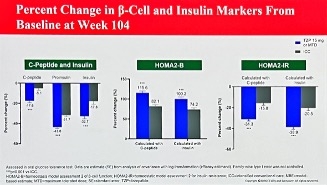
Lilly symposium: SURPASS‑EARLY trial underscores the potential to alter T2D progression with early tirzepatide treatment
In this Lilly‑sponsored symposium, Dr. Alice Cheng (University of Toronto, Canada) presented results from the ongoing SURPASS‑EARLY trial (n=794), a long‑term, phase 4 randomized study that evaluates whether early initiation of tirzepatide can shift the metabolic trajectory of T2D. This follows the full readout from Day #2 of ATTD and provides additional context on clinical impact. Adults diagnosed with T2D in the last four years were randomized to tirzepatide (titrated to 15 mg or maximum tolerated dose) plus metformin, or to intensified conventional care (ICC) with metformin and stepwise addition of guideline‑directed therapies. Over 104 weeks, the study assessed glycemic management, weight, waist circumference, and cardiometabolic markers to determine whether early, potent pharmacologic intervention could deliver greater and more durable metabolic improvements.
- Results. Compared with ICC, tirzepatide produced consistently superior outcomes across all major endpoints. Participants receiving tirzepatide achieved a greater reduction in A1c (2.24% compared to 1.45%) and substantially more weight loss (16% compared to 6%). Tirzepatide also led to improvements in HDL cholesterol, VLDL cholesterol, and triglycerides. Importantly, a significantly higher proportion of participants reached A1c targets, with 91% (vs. 66%) and 69% (vs. 27%) having A1c ≤6.5% and <5.7%, respectively.
- Clinical implications. Dr. Cheng was joined by Dr. Sufyan Hussain (King's College London, UK), Dr. Santiago Tofe (The University of the Balearic Islands, Spain), and Dr. Jonathan Rachman (University of Oxford, England), who emphasized that these results reinforce a broader shift toward early, comprehensive metabolic intervention. The combination of substantial weight loss, improved insulin sensitivity, and reduced beta cell stress aligns with the concept of modifying disease trajectory rather than simply managing hyperglycemia. They also highlighted how modern pharmacotherapy challenges traditional definitions of remission, as many individuals can now safely achieve near‑normoglycemia while on treatment. At the same time, sustained lifestyle support remains essential to prevent weight regain and metabolic deterioration. The panel emphasized the practical clinical relevance of early tirzepatide use. Many individuals may maintain excellent glycemic and weight outcomes with one additional therapy (tirzepatide + metformin), whereas ICC often requires multiple agents to achieve similar targets. The upcoming four‑year data will be critical for understanding durability and beta cell function trajectory.
Adjust T1D study of GLP-1 RA use in adults with T1D and obesity shows significant reductions in cardiovascular outcomes and disease risk
Dr. Viral Shah (Indiana University) and Dr. Janet Snell-Bergeon (University of Colorado Anschutz) presented glycemic and cardiovascular results from the ADJUST T1D RCT, which evaluated the safety and efficacy of semaglutide in adults with T1D and obesity. Glycemic outcomes were previously published in Diabetes Care in June 2025. Because cardiovascular risk remains elevated in this population — approximately three to four times higher than in people without diabetes — the study also assessed semaglutide’s impact on cardiovascular risk factors, recognizing that improved glycemic management alone may not sufficiently reduce cardiovascular risk.
- Dr. Snell-Bergeon presented cardiovascular secondary outcomes. Using the trial data, investigators estimated participants’ five- and 10-year cardiovascular disease (CVD) event risk. The semaglutide group experienced an approximately 20% reduction in both five- and 10-year predicted CVD risk, with risk declining steadily over the 26-week study period. In contrast, the placebo group showed no meaningful change from baseline to Week 26.
- The study found significant improvements in several lipid measures. Total cholesterol declined by about 23 mg/dL compared with placebo, and LDL cholesterol showed a between-group difference of 18.4 mg/dL. HDL cholesterol initially decreased in the semaglutide group by eight weeks, though this effect resolved and was no longer significant by Week 26. Triglyceride levels declined in both groups, with no significant between-group difference at the end of the study.
- Semaglutide treatment was associated with a significant reduction in systolic blood pressure of 6.2 mmHg, while no change was observed in the placebo group. A significant between-group difference in diastolic blood pressure emerged only at Week 26, with the semaglutide group showing a modest 2 mmHg decrease from a baseline of 124 mmHg. Dr. Snell-Bergeon suggested that a longer study duration might reveal a larger difference. The trial also identified improvements in central blood pressure and arterial stiffness at Week 26, including significant reductions in central systolic blood pressure, mean arterial pressure, and pulse pressure with semaglutide compared with placebo. Central diastolic blood pressure did not change significantly. In addition, brachial artery distensibility, a measure of vascular stiffness, improved significantly with semaglutide treatment.
- Although participants began the trial with generally good kidney health, the investigators observed a significant between-group difference in urinary albumin-to-creatinine ratio (UACR): levels declined slightly with semaglutide and increased slightly in the placebo group. Estimated glomerular filtration rate (eGFR) remained stable in both cohorts from a baseline of approximately 100 mL/min/1.73 m2.
- Dr. Shah also reviewed the ADJUST T1D study’s glycemic outcomes. More than one-third of participants receiving semaglutide met all three key endpoints: (i) TIR >70%; (ii) Time below Range <4%; and (iii) weight loss >5%. No participants in the placebo group met all three criteria. A1c decreased from 7.8% at baseline to 7.1% at 26 weeks in the semaglutide group, corresponding to an adjusted between-group difference of 0.3%. CGM metrics also improved. TIR increased from 56% to 67%, with most of the improvement reflecting greater TITR. Participants receiving semaglutide lost approximately 9 kg from a baseline weight of about 100 kg, equivalent to roughly 9% weight loss. Importantly, weight loss had not plateaued by 26 weeks, suggesting that a longer trial could produce further reductions, even though A1c levels had stabilized by that point.
- Dr. Shah also noted that most reductions in insulin use occurred in postprandial dosing rather than basal insulin. However, he emphasized that many participants were using AID systems, which selectively modulate basal insulin. While the precise contribution of weight loss to insulin reduction remains uncertain, Dr. Shah said the data suggest that semaglutide’s glycemic benefits are not entirely dependent on weight reduction. Regarding safety, no cases of DKA were reported. Rates of severe hypoglycemia were similar between groups, while gastrointestinal adverse events occurred approximately twice as often in the semaglutide group.
Dr. Satish Garg on the adjunctive use of incretins in T1D and obesity: Recommendations from an upcoming consensus report
Dr. Satish Garg (University of Colorado) shared guidelines from an upcoming consensus report for the adjunctive use of incretins in people with T1D and obesity. Drawing on much of his research from the last decade, Dr. Garg reviewed findings from multiple studies that are referenced in the upcoming report, which will be published in the June edition of DT&T. As background, pramlintide, an amylin analogue, is the only FDA-approved therapy for T1D that has potential weight loss benefits. Despite this, there has been an exponential increase in prescriptions for GLP-1 RAs in the US, warranting a consensus report and guidelines on their safe use in T1D. Dr. Garg shared that there are over 700 patients with T1D at University of Colorado’s Barbara Davis Center for Diabetes who have been prescribed semaglutide or tirzepatide.
Key takeaways from the report include:
- Start slow, adjust dosage gradually, and individualize treatment. Dr. Garg said that the full dose is usually not necessary to achieve the full benefits of these therapies in this population. The majority of his patients, for example, only need to go up to the 7.5 mg and 10 mg doses of tirzepatide. He also emphasized the need to titrate insulin doses carefully, particularly prandial insulin. He shared a case study in which a 20% reduction in a patient’s total daily dose was insufficient, resulting in an ER visit for a hypoglycemic event. In another case study, a patient decided to reduce their basal insulin by 60% instead of the advised 20%, running the risk of ketosis. For some patients, it may also be necessary to adjust the dosages of their other medications (e.g., T4, statins, and blood pressure medications). Once the desired weight is reached, the consensus recommends considering a dosage reduction to achieve a maintenance dose.
- Dr. Garg also emphasized the importance of managing nutrition to prevent sarcopenia, mitigating GI side effects, and ensuring patients have ketone strips and glucagon.
- Baseline labs and annual eye exams. The consensus report recommends lab tests for TSH, uric acid, albumin excretion rate (AER), albumin-to-creatine (A/C) ratio, eGFR, and more. Annual eye exams are also advised given reports of incident or worsening diabetic retinopathy resulting from rapid A1c correction. Dr. Garg emphasized that in a real-world study with tirzepatide, there was no difference in risk compared to controls except when individuals had a high baseline A1c.
Tirzepatide use significantly improves CGM metrics in people with T1D
In this fascinating oral presentation session, Dr. Halis Kaan Akturk (University of Colorado) discussed the glycemic benefits of tirzepatide in people with T1D as measured with CGM. Study results were simultaneously published in DT&T. Over two-thirds of US adults with T1D have overweight or obesity, as well as an increased risk of cardiovascular disease. However, adjunctive therapies, like SGLT-2 inhibitors, are limited for T1D due to safety concerns like diabetic ketoacidosis. Encouragingly, tirzepatide has been shown to decrease weight, glycemia, and insulin dose in T1D. Dr. Akturk highlighted a single-center retrospective study (n=115) on how tirzepatide use affects CGM metrics in people with T1D at one year.
- Study design and baseline characteristics. Tirzepatide users with T1D and sufficient CGM data for 15 months (n=61) and a matching control (n=54) were included in the study. On average, the study population at baseline was 38 years old, had an A1c of 7.0%, a weight of 218 lbs (99 kg), and a diabetes duration of 23 years. Notably, the tirzepatide group had a higher percentage of females (61%) than the control group (37%).
- Results. Tirzepatide use was associated with significantly improved CGM metrics. At 12 months, tirzepatide led to significantly greater Time in Range (TIR; 70-180 mg/dL) of 71%, reflecting a daily increase of an hour and 26 minutes compared to the baseline TIR of 65%. Likewise, Time in Tight Range (TITR; 70-140 mg/dL) increased from 40% at baseline to 44% at 12 months, an increase of 58 minutes each day. In contrast, the control group did not experience a significant increase in TIR or TITR, which remained at 63% (flat from baseline) and 37% (down 1 percentage point from baseline), respectively. The tirzepatide group had a significantly lower mean glucose of ~155 mg/dL (vs. 167 mg/dL in the control group) at 12 months.
- Importantly, while tirzepatide led to a substantial reduction in Time above Range (TAR; >180 mg/dL), there was no difference in Time below Range (TBR; <70 mg/dL) between the two groups. This finding demonstrates a favorable safety profile, especially with regard to hypoglycemia risks. See figures below.
- Finally, a greater proportion of subjects achieved glycemic goals of TIR ≥70% and TBR ≤4%. At baseline, 30% and 33% of the tirzepatide and control groups met the goal, respectively. However, the proportions increased to 51% as soon as six months (vs. 28%) and remained until 12 months (vs. 26%), further corroborating the glycemic benefits of tirzepatide.
Insulin Therapy
Post-hoc analysis of the QWINT program finds comparable hypoglycemia duration between once-weekly efsitora alfa and daily basal insulin
In this oral presentation, Dr. Natalie Bellini (University Hospitals) presented a post-hoc analysis of the QWINT 2-4 trials, evaluating once-weekly insulin efsitora alfa in adults with T2D. Across the phase 3 QWINT program, efsitora alfa showed glycemic efficacy comparable to once‑daily basal insulins with low rates of hypoglycemia. Because dosing frequency and pharmacokinetic characteristics may influence the pattern and duration of hypoglycemic events, this exploratory post-hoc analysis examined masked CGM and SMBG data from QWINT‑2, ‑3, and ‑4 to further characterize hypoglycemia duration, treatment patterns, and persistent‑recurrent hypoglycemia in adults with T2D.
- Study design. The analysis included participants from three phase 3 trials spanning populations who are insulin‑naïve or on basal‑switch or basal‑plus‑mealtime therapy. Each trial compared efsitora alfa with a once‑daily basal insulin (insulin degludec in QWINT‑2 and ‑3; insulin glargine U100 in QWINT‑4). Masked CGM sessions were conducted at prespecified intervals and were not used for dose titration. Hypoglycemic events were defined using standardized CGM‑derived thresholds: (i) combined level 1 and 2 events required ≥15 minutes <70 mg/dL with ≥15 minutes of recovery; and (ii) level 2 events required ≥15 minutes <54 mg/dL with ≥15 minutes of recovery. Persistent‑recurrent hypoglycemia was assessed using a prespecified SMBG algorithm. Investigator‑identified events were also captured.
- Results. Across all three trials, efsitora alfa and once‑daily basal insulins demonstrated a similar duration of CGM‑derived hypoglycemia. Median durations of combined level 1 and 2 events ranged from 40 to 42.5 minutes with efsitora alfa versus 40 minutes with comparators, while level 2 events ranged from 35 to 40 minutes with efsitora alfa versus 35 minutes with comparators. Most level 2 events were managed with oral carbohydrates or required no intervention. Level 3 events requiring IV glucose or glucagon were infrequent in both groups. Persistent‑recurrent hypoglycemia was rare in QWINT‑2 and ‑3, with slightly higher event counts in QWINT‑4 (19 participants with efsitora alfa vs. 9 with insulin glargine), though investigator‑identified events remained low across all arms. Together, these findings reinforce that once‑weekly efsitora alfa does not prolong hypoglycemia and maintains a safety profile consistent with daily basal insulin therapy in people with T2D.
Clinical pearls on once-weekly insulin use in insulin-naïve and insulin-experienced people with T2D
In this PeerView and Lilly-sponsored educational symposium, Prof. Chantal Mathieu (KU Leuven, Belgium), Dr. Harpreet Bajaj (LMC Healthcare, Canada), and Dr. Athena Philis-Tsimikas (Scripps Health) shared clinical recommendations on using once-weekly insulin in people with T2D. Prof. Mathieu said that basal insulin is a critical treatment for people with T2D who are not at glycemic goal despite noninsulin agents or cannot tolerate other medications. However, due to the complexity of the insulin regimen, fear of hypoglycemia, and poor adherence, many patients face challenges in intensifying insulin treatment. Indeed, studies show that nearly one in five patients misses at least one basal insulin dose over 14 days. In the US and Europe, adherence rates range from 42-56%. Prof. Mathieu said that once-weekly basal insulin, like Novo Nordisk’s insulin icodec (U-700) and Lilly’s efsitora alfa (U-500), can lower treatment burden and address these challenges. The symposium focused specifically on their use in insulin-naïve and insulin-experienced people with T2D. See PeerView’s guide for clinicians on insulin icodec and efsitora alfa use.
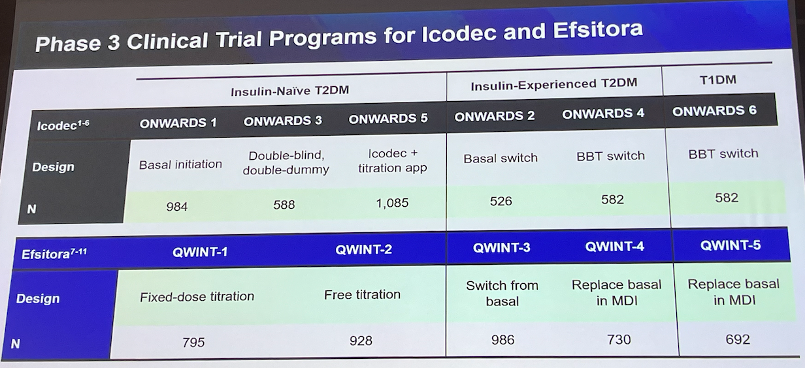
- Dr. Bajaj said that insulin-naïve patients with T2D were probably the “easiest” patient profile to consider once-weekly insulin. In the ONWARDS-1, 3, and 5 trials, insulin icodec demonstrated superior A1c reduction (1.55-1.68 vs. 1.31-1.36 percentage points) compared to insulin glargine or degludec. In the QWINT-1 and 2 trials, insulin efsitora alfa showed noninferior A1c reductions (1.19-1.34 vs. 1.16-1.26 percentage points). Moreover, hypoglycemia incidence and duration were similar between once-weekly and once-daily insulins, although weight gain was numerically greater with once-weekly insulins. Dr. Bajaj further explained titration protocols: insulin efsitora alfa begins with 100U and is up-titrated every four weeks based on glycemic level, while insulin icodec’s doses are adjusted by 20U (10U if at high risk of hypoglycemia) based on three pre-breakfast glucose levels. Finally, he said that more studies are needed to assess its use in children, pregnant or lactating women, individuals with hypoglycemia unawareness, or those newly diagnosed with T1D. See the table below for key clinical takeaways for using two once-weekly insulins.
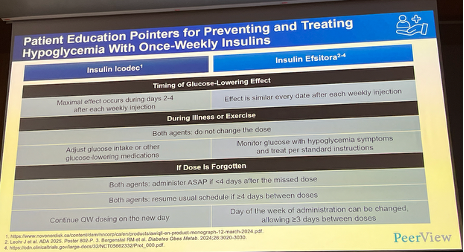
- For insulin-experienced people with T2D, Dr. Tsimikas reviewed ONWARDS-2, 4, QWINT-3, and 4 studies, in which insulin icodec and efsitora alfa demonstrated comparable efficacy in A1c reduction as insulin degludec or glargine. Hypoglycemia incidence was similar for both once-weekly and once-daily insulins; weight gain was comparable, as well, except in the ONWARDS-2 trial, in which insulin icodec conferred a 1.7 kg (3.4 lbs) increase in body weight compared to insulin degludec. Next, Dr. Tsimikas addressed several common questions about once-weekly insulin use in insulin-experienced people with T2D.
- First, what happens when a patient misses a once-weekly insulin dose? Encouragingly, in a randomized crossover trial (n=85), double or triple doses of insulin icodec had similar rates of clinically significant hypoglycemia as insulin glargine. In another study, a missed or doubled dose had minimal effects on Time in Range (see figure below).
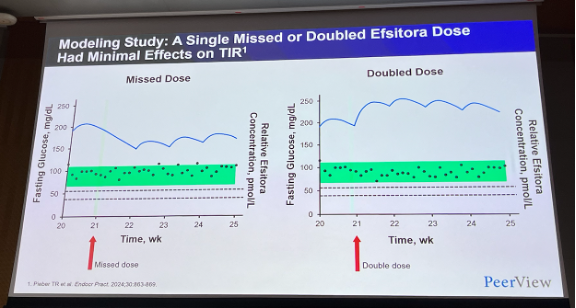
- How do the efficacy and safety of once-weekly insulin differ depending on baseline GLP-1 RA use? According to a subgroup analysis of the ONWARDS program, GLP-1 RA use did not affect the safety or efficacy of insulin icodec. In addition, the COMBINE-1, 2, and 3 studies found that insulin icodec combined with semaglutide was superior to insulin icodec or semaglutide monotherapies and noninferior to basal-bolus therapy.
- How should patients on once-weekly insulin prepare for perioperative settings? Dr. Tsimikas said that once-weekly insulins should be discontinued weeks ahead of the operation (four weeks for insulin icodec; eight weeks for efsitora alfa) if patients have reduced caloric intake for over 24 hours after a procedure or a liquid diet for over two days before a procedure. In an emergency situation, no dose adjustment is needed for once-weekly insulin, and hyper- and hypoglycemia should be managed with usual protocols.
Lilly: Profs. Chantal Mathieu and Harpreet Bajaj on the potential for once-weekly insulins, including in combination with GLP-1 RAs, metformin, and AID system
In Lilly's industry-sponsored session, Profs. Chantal Mathieu (KU Leuven) and Harpreet Bajaj (LMC Healthcare, Canada) offered their clinical insights on the role of once-weekly insulins in T1D and T2D.
- Prof. Mathieu highlighted findings from the QWINT (Lilly’s once-weekly insulin efsitora) and ONWARDS (Novo Nordisk’s once-daily insulin degludec) programs to advocate for once-weekly insulin in T2D. Specifically, Prof. Mathieu said that once-weekly basal insulin achieved similar A1c reductions and hypoglycemic risk to once-daily doses in both insulin-naïve and insulin-experienced populations. Prof. Mathieu stressed the importance of titration for insulins with a very long half-life (~17.5 days for Lilly’s insulin efsitora), noting that weeks of dosing are required to reach a steady state of basal insulin. Alluding to an imminent guideline update, Prof. Mathieu added that GLP-1 RA therapy and metformin should be maintained while initiating and titrating once-weekly insulin. Importantly, basal insulin use must be individualized, though once-weekly regimens could reduce injection burden and improve adherence and satisfaction for many.
- In people with T1D, Prof. Bajaj speculated in an “evidence-free zone” that once-weekly basal insulin could have the potential to complement AID use. Specifically, he predicted that once-weekly insulin could positively impact PWD who frequently miss insulin injections, those who are newly diagnosed, and persons with relaxed or moderate A1c targets (e.g., patients in palliative care or dependent on a caregiver). Moreover, basal insulin injections could serve as a temporary backup during a pump failure or a supplement in patients with very high insulin needs to reduce frequent pump site changes. Prof. Bajaj ascribed once-weekly insulin the potential to “act as the ‘fixed’ component in AID.” While Prof. Bajaj concluded that substantial evidence is required to determine the real-world impact, once-weekly insulin stands as a potential safety tool to reduce DKA risk in the real world.
Immediate, intensive glycemic management for T2D: An argument for early insulin initiation
In this engaging morning symposium, Prof. Tadej Battelino (UMC Ljubljana, Slovenia), Dr. Illana Halperin (University of Toronto, Canada), Dr. Alice Cheng (University of Toronto, Canada), and Prof. Othmar Moser (University of Graz, Austria) offered clinical insight into insulin use for patients with T2D.
- Dr. Halperin advocated for the need for timely treatment intensification, drawing a parallel between early GLP-1 RA use in prediabetes and earlier insulin initiation in T2D. For GLP-1 RAs, patients who receive their first injectable therapy earlier in the diabetes disease course are more likely to achieve and maintain glycemic targets. Citing the UKPDS 44-year follow-up study (n=600), Dr. Halperin showed that early, intensive blood glucose management (an A1c target of <7.0%) confers a durable “glycemic legacy”: sustained risk reductions for microvascular complications, myocardial infarction, and all-cause mortality beyond a decade after trial completion. Accordingly, Dr. Halperin stressed that the T2D community must overcome therapeutic inertia. Timely intervention, she added, is critical to reduce risk of T2D complications – particularly for a population that develops T2D at a younger age than ever before, lengthening disease duration.
- Dr. Alice Cheng built on Prof. Halperin’s argument, reviewing the BEGIN and EDITION programs, which compared first- and second-generation insulins, as well as the head-to-head BRIGHT and CONCLUDE studies, which compared two second-generation analogs. Across these data, Dr. Cheng noted that second-generation basal insulin provides similar glucose-lowering effects with less hypoglycemia compared to first-generation agents. Further, she argued that when incretin-based treatments alone are insufficient for glycemic management in T2D, adding a basal insulin could be an effective next step. Fixed-ratio combinations (FRCs) of basal insulin and GLP-1 RA might also further simplify insulin administration while improving A1c, limiting weight gain, and reducing hypoglycemia compared to a premix or basal-bolus regimen. While an FRC may not be appropriate for every person with T2D, she concluded, the option could reduce injection burden.
- Prof. Moser closed the session by highlighting the potential for technology to support insulin use, including: (i) digital diabetes education; (ii) app-based titration algorithms; (iii) connected insulin pens; and (iv) integrated data platforms that combine CGM, dosing, and lifestyle information into a single ecosystem for HPCs and PWD. He said that such tools could accelerate insulin titration, improve A1c and Time in Range, and decrease clinician workload while helping patients manage the “mental math” and burden of insulin self-management.
Diabetes Complications and Prediabetes
Obesity in T1D: Etiology and GLP-1 RAs as a promising therapy
In this crowded morning symposium, Dr. Irl Hirsch (University of Washington) delivered an overview of the pathophysiology and treatment options for obesity in people with T1D. Dr. Hirsch began by stating that obesity affects nearly one-third of adults with T1D, a prevalence comparable to that of the general population. Moreover, obesity is a strong risk factor for atherosclerotic cardiovascular disease (ASCVD) and kidney complications in T1D, making it important to address this condition.
- Dr. Hirsch explained that the prevalence of obesity in T1D likely increased due to genetic predisposition to T2D, reduced glycosuria (loss of glucose from the urine) from improved glycemic management, higher insulin doses, and behavioral snacking to avoid hypoglycemia, and reduced energy expenditure with systemic insulin administration (vs. portal). While he did not go into detail, he also listed changes in sympathetic nervous system activity, protein metabolism, and gut microbiome as possible contributors to developing obesity in T1D.
- On treatments, Dr. Hirsch reviewed evidence for the benefits and challenges of lifestyle modifications and pharmacotherapy in people with T1D and obesity. While studies evaluating lifestyle modifications in this population are limited, one small retrospective study (n=68) found that intensive multidisciplinary weight management significantly reduced BMI from 36 to 34 kg/m2 (vs. no difference in the control group). However, there was no difference in A1c between the two groups, which is unsurprising given that weight gain is not associated with A1c in people with T1D, as it is in T2D. On exercise, a systematic review found that it can improve many outcomes, such as one’s fitness, sleep, insulin sensitivity, and quality of life. However, it did not reliably lead to weight loss, partly because people with T1D eat extra calories to prevent or manage hypoglycemia. Ultimately, he said that there is a major gap in evidence for lifestyle recommendations for T1D, as all recommendations in the ADA Standards of Care are based on T2D studies.
- Obesity pharmacotherapy is increasingly used off-label in T1D, and GLP-1 RAs have even been endorsed by the ADA Standards of Care. Indeed, one study found that 6.6% of the T1D population were on GLP-1 RAs in 2023, compared to 0.3% in 2010. At the University of Washington Diabetes Institute, 12.8% of patients (n=2,431) received prescriptions for GLP-1 RAs between June 2024 and June 2025.
- Dr. Hirsch is hopeful that in the near future, GLP-1 RAs and dual GLP-1/GIP RA will be approved for obesity, as well as cardiovascular and renal protection. The phase 2 ADJUST study (n=115) found that a significantly higher percentage of people with T1D on semaglutide achieved TIR >70%, TBR <4%, and ≥5% weight loss (36% vs. 0% on placebo). Tirzepatide is in two registrational studies, SURPASS-T1D-1 and SURPASS-T1D-2, whose primary completions are expected in November 2026. Roche’s dual GLP-1/GIP RA CT-868 recently completed phase 2 studies in T1D and will advance to phase 3 for T1D, as well as CKD in T1D, later this year.
Beyond glycemia: Addressing overweight and obesity in T1D
Prof. Lia Bally (University of Bern, Switzerland) discussed the physiology behind overweight and obesity in T1D and its whole-body implications. Obesity is rapidly increasing in prevalence worldwide and among people with T1D as well. However, Prof. Bally urged the audience not to think of this trend as “simply obesity happening on top of T1D,” but rather to understand the fundamental physiology that contributes to the increased prevalence. She provided a detailed mechanistic exploration of overweight and obesity in T1D, three major ways to combat the rising prevalence, and related comorbidities that remain overlooked.
- The delivery of life-saving insulin for people with T1D has effects on weight gain and insulin resistance. In patients without diabetes, the pancreas secretes insulin into the portal vein, leading the portal vein to have a two-to-three-fold higher insulin concentration compared to peripheral insulin concentration in circulation. However, in T1D, the injection of subcutaneous insulin means that insulin concentration is higher in circulation, deemed peripheral overinsulinization. This contributes to insulin resistance and weight gain. In an analysis of specific organs, insulin sensitivity was lower in muscle and adipose tissue for people with T1D, while hepatic insulin sensitivity was similar across groups. Even in people with T1D with a normal weight and strong management, insulin sensitivity is lower than in matched controls, reflecting the consequences of peripheral insulin exposure. Prof. Bally said that once adipose tissue begins to accumulate with weight gain, this insulin resistance is only further amplified. She suggested three major approaches that may minimize excess insulin exposure: glucose-responsive AID systems, a restoration of the portal-peripheral insulin gradient, and improving insulin sensitivity via lifestyle intervention, adjunctive pharmacotherapy, or bariatric surgery.
- Prof. Bally discussed the benefits and drawbacks of three major classes of adjunctive therapies for T1D. GLP-1 RAs provide A1c reduction, weight loss, an increase in insulin sensitivity, and reduce total daily insulin dose, yet cause GI symptoms, ketosis, and biliopancreatic complications. SGLT-2 inhibitors also lower A1c values, contribute slight weight loss, reduce total daily dose, and improve kidney function. They also carry a risk of urinary tract infections, hypoglycemia, and euglycemic DKA. Finally, metformin lends a slight A1c value improvement, an improvement to insulin sensitivity, and a reduction in total daily dose, yet causes GI symptoms, hypoglycemia, and lactic acidosis in some cases. Prof. Bally identified GLP-1 RAs as the most promising weight-loss strategy that has been studied in T1D to date, as they can confer 20-35% reductions to insulin requirements, improve Time in Range (TIR) without increased hypoglycemia, and improve cardiometabolic health. She called for further mechanistic insight into the role of glucagon, gastric emptying, and insulin sensitivity, and said that individualized dosing and proactive insulin adjustment are essential. The use of GLP-1 RAs for T1D remains off-label, and there are specific safety concerns of euglycemic DKA and hypoglycemia that must be carefully navigated. Prof. Bally also said that the therapies lend a sixfold increase to hip fracture risk and recommended serial DXA scans and functional tests for patients using the therapies.
- Comorbidities must be given appropriate attention and mechanistic understanding for people with T1D. Prof. Bally said that T1D confers cardiovascular (CVD) risk independent of glucose control – even with an A1c value of 6.9% or less, CVD death is twice as prevalent compared to people without diabetes. This is driven by inflammation, insulin resistance, and oxidative stress. Additionally, she identified a female-specific vulnerability to CVD in T1D. In the general population, women are less likely to have CVD than men, but this protective effect is not seen in people with T1D. Polycystic ovary syndrome (PCOS) has about 20-40% prevalence in women with T1D, as well as excessive gestational weight gain and postpartum weight retention. In perimenopause, increased weight gain has been observed, along with an increase to cardiometabolic risk. All of these factors lead Prof. Bally to call for more aggressive CVD risk management.
Dr. Nicole Glaser offers a sneak peek at ISPAD’s 2026 updates to Pediatric DKA Guidance
In an engaging Friday afternoon address, Dr. Nicole Glaser (University of California Davis) offered a first look at ISPAD’s 2026 updates to pediatric DKA guidelines. Dr. Glaser stressed that the 2026 guidelines remain a work in progress. Therefore, recommendations she shared in today’s presentation may change before the official 2026 guidelines are published later this year, but should provide good insight into the discussions behind the upcoming guidelines.
- ISPAD’s 2026 guidelines will emphasize the adjunctive use of CGM for glucose monitoring during DKA treatment. In recent studies, CGMs were found to offer similar accuracy during cases of DKA compared to non-DKA cases. While this evidence is insufficient to recommend replacing point of care (POC) glucose testing, ISPAD plans to recommend the adjunctive use of CGM during pediatric treatment for DKA.
- ISPAD will expand options for DKA treatment based on the biochemical features of DKA and local capabilities. The guidelines, Dr. Glaser said, will be broken down into cases of mild DKA, moderate-severe DKA, and hyperosmolar DKA.
- In mild DKA, which was defined as well-appearing and hemodynamically stable patients without hyperosmolarity or vomiting, ISPAD will recommend a subcutaneous insulin protocol. The protocol, Dr. Glaser explained, is designed to be less labor-intensive and to be managed on a general pediatric ward – addressing a common challenge of limited intensive care and specialized diabetes ward capacity. Recommendations for mild DKA treatment were drafted based on group consensus. Dr. Glaser emphasized that such recommendations can be modified according to local capabilities and resources.
- Basal insulin infusion (0.3 units/kg for new-onset diabetes or a patient’s usual dose for known diabetes) is now recommended at the time of mild DKA presentation.
- Rapid-acting insulin (0.15 units/kg every 3-4 hours) is also advised for mild DKA. The rapid-acting dose should be adjusted to patient response: dose reduction is recommended if blood glucose falls >5 mmol/L/hour and an increase is recommended if the BOHB/anion gap does not improve.
- Fluids can be taken orally if well-tolerated, with an aim to replace 5% dehydration. If unsuccessful, IV rehydration with a 10 mL/kg 0.9% saline bolus and, later, 0.45-0.9% saline and 20 mmol/L KCL is recommended to replace 5% dehydration.
- Monitoring of vital signs and POC glucose testing is recommended every 1-2 hours for the first 3-4 hours after presentation. Subsequently, monitoring vitals, POC glucose, BOHB, and electrolytes is recommended every 3-4 hours
- In hyperosmolar DKA (defined as serum glucose >600 mg/dL and serum osmolarity >320 mOsm/kg), Dr. Glaser characterized fluid and electrolyte deficits and risk of ketosis/acidosis to be substantially greater than mild-moderate DKA.
- Monitoring was described as “the key” to treatment of patients presenting with hyperosmolar DKA. Frequent electrolyte monitoring is now recommended, including: (i) basic electrolytes (e.g. K) every 2-3 hours; (ii) Phos, Ca, and Mg every 3-4 hours; and (iii) frequent reassessment (initially hourly) of I/O balance and circulatory status. Hourly monitoring of each, Dr. Glaser noted, may be required.
- In mild DKA, which was defined as well-appearing and hemodynamically stable patients without hyperosmolarity or vomiting, ISPAD will recommend a subcutaneous insulin protocol. The protocol, Dr. Glaser explained, is designed to be less labor-intensive and to be managed on a general pediatric ward – addressing a common challenge of limited intensive care and specialized diabetes ward capacity. Recommendations for mild DKA treatment were drafted based on group consensus. Dr. Glaser emphasized that such recommendations can be modified according to local capabilities and resources.
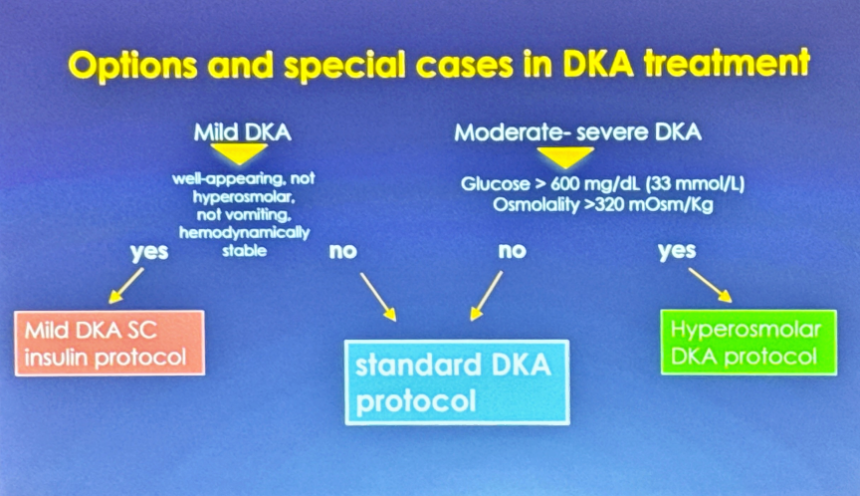
- The 2026 updates expand guideline discussion of hyperinflammatory states caused by DKA and their potential role in DKA complications. A hyperinflammatory state has been well characterized to contribute to insulin resistance before and during DKA episodes. Moreover, clinical inflammatory indexes (e.g. systemic immune-inflammation index) have been shown to correlate with DKA severity. Thus, updated guidelines suggest that inflammation may play a role in DKA complications, including sub-clinical cerebral edema, myocardial injury markers, and acute kidney injury (AKI).
- AKI occurs in 43-64% of all pediatric DKA cases and is highly predictive of AKI at subsequent DKA episodes. Patients with AKI during a prior DKA incidence, Dr. Glaser continued, have an “8-9x” higher rate of AKI for a subsequent DKA episode. A prior case of AKI, notably, also increases the rate of development of albuminuria later in life.
- While life-threatening cerebral edema and injury are rare (0.3-0.9%) in DKA, sub-clinical cerebral edema and injury are common. Further, children who suffer from a DKA episode also have evidence of subtle, lasting neurological injuries. This concern, Dr. Glaser added, becomes far more substantial in children who experience recurrent DKA episodes.
- Technology use and basal insulin to prevent recurrent DKA are emphasized in the 2026 updates. Dr. Glaser noted that the use of CGM alone confers a 40-50% lower rate of DKA. Use of insulin pumps with AID, however, confers higher rates of recurrent DKA, which is concerning given that AID use is expanding exponentially. Per 100 patient years, children who used AID experienced 1.74 DKA events compared to 0.96 in children who did not use AID. In youth with an A1c value >8.5%, this trend was exacerbated: 5.25 incidences of DKA were reported per 100 patient-years in AID users compared to 1.53 in non-users. The administration of basal insulin by school personnel was highlighted for its 30% reduction in readmission for DKA, prompting a recommendation for the use of injected basal insulin in addition to insulin pump use in children with recurrent DKA. Notably, combining basal insulin injections with an insulin pump reduced DKA frequency from 25% to 9%. We are curious how the dosing for basal insulin is calculated. It makes sense from our view that there is more DKA since when no basal is “on board” and the pump stops, delays are far more dangerous than if basal insulin is on board
Dr. Viswanathan Mohan on the distinction between IFG and IGT in diabetes prevention
In this morning session, Dr. Viswanathan Mohan (Dr. Mohan’s Diabetes Specialities Centre) discussed the critical topic of prevention of T2D through lifestyle changes. He explored the differences between three different metabolic subtypes of prediabetes: (i) people with isolated impaired fasting glucose (IFG); (ii) those with isolated impaired glucose tolerance (IGT); and (iii) those with both IFG and IGT. In South Asian populations, a relatively modest weight loss can prevent progression to diabetes in many people. He advocated that prediabetes remission should be an important goal of health systems.
- Dr. Mohan explained that isolated IFG (plasma glucose of >100 mg/dl and <126 mg/dL) is driven primarily by hepatic insulin resistance, whereas IGT (>140 and <200 mg/dL, two hours after a 75g OGTT) reflects insulin resistance in muscle. While many regions report higher rates of IGT, one study found that Southeast Asia stands out with the opposite pattern, with IFG being far more common than IGT (10% vs. 3%). This phenotype, Dr. Mohan noted, has implications for prevention strategies.
- Dr. Mohan addressed the question of whether diabetes can be prevented in people with prediabetes, leaning on IFG and IGT subtypes to answer the question. Drawing on landmark trials from the US, Finland, China, and India, he highlighted that lifestyle interventions, such as the National Diabetes Prevention Program (DPP) consistently reduce diabetes incidence, up to 58% in Western cohorts, but somewhat lower in China and India, likely due to lower baseline obesity. But the real nuance emerged when he dissected outcomes by prediabetes subtype. The D‑CLIP trial showed that individuals with isolated IGT or combined IFG + IGT responded well to lifestyle change, with nearly half avoiding progression to diabetes. In contrast, those with isolated IFG showed minimal benefit, with only about 3% achieving prevention. A recent meta‑analysis reinforced this pattern, confirming that isolated IFG is far more resistant to conventional lifestyle interventions.
- Dr. Mohan also addressed the possibility of prediabetes remission. While remission of T2D is now widely discussed, Dr. Mohan noted that remission of prediabetes has received far less attention. Presenting new analyses from the D‑CLIP study, including a paper submitted earlier this year, he showed that regression to normoglycemia is not only possible but predictable, with clear patterns across phenotypes. Those who achieved remission tended to be younger, had lower baseline A1c, were less insulin resistant, and had better preserved beta‑cell function. In addition, isolated IFG or isolated IGT were more common among regressors, whereas combined IFG + IGT dominated among non‑regressors. Notably, even modest weight loss (just 2.5 to 5 kg, on average) significantly increased the likelihood of remission in South Asians - a population that requires far smaller weight reduction than white Europeans to achieve a metabolic benefit. Dr. Mohan emphasized that glycemic remission should be a goal of prevention in people with prediabetes and those at high risk for T2D.
Real-world evidence of reclassification to T1D following misdiagnosis
In a morning oral session, Dr. Jeremy Pettus (UCSD) presented results from the RECLASS-T1D study (n=6,759,145), which estimated the proportion of individuals diagnosed with prediabetes or T2D who were later reclassified as having T1D. Other objectives of the study included time to reclassification and healthcare utilization following reclassification. The study used EHR data from TrialNetX and included participants with prediabetes or T2D diagnosis from July 2016 to October 2024. Overall, 2.2% of individuals diagnosed with prediabetes or T2D were ultimately reclassified to T1D. People who were later reclassified with T1D were more likely to be younger and had higher A1c. Interestingly, BMI was not a distinguishing factor for reclassification.
- The overlap between T1D and T2D. Dr. Pettus explained that T1D and T2D share multiple overlapping characteristics, leading to misclassification among patients. The risk of misdiagnosis increases with age, with rates of 14% in ages 13-17 and 55% in ages ≥50. People with adult-onset T1D are especially at risk of misclassification, leading to clinical and emotional challenges.
- Current criteria used to distinguish T1D from T2D. Dr. Pettus presented the AABBCC framework (age, autoimmunity, BMI, background, control, comorbidities) currently used to differentiate the two types of diabetes. For example, those who are younger and those who have other autoimmune diseases (e.g., celiac or hyperthyroidism) are likely to have T1D. However, Dr. Pettus noted that while such factors are important to consider, they don’t help distinguish all cases of diabetes diagnosis. He encouraged focusing on people in the “middle” – those with unclear features of either T1D or T2D.
- Reclassification of prediabetes and T2D into T1D. Among the total population initially diagnosed with prediabetes or T2D, 2.2% were reclassified with T1D. While 2.2% may seem like a low proportion of individuals with reclassification, Dr. Pettus said that the true number of people (n=147,419) creates a different perspective. Considering only people with a T2D diagnosis, the reclassification rate was nearly 4%.
- Features of those reclassified with T1D. The study found that reclassification rates were higher in individuals <18 years than in those 18-35 years (7% vs. 4.4%). There was no notable difference in reclassification rate across gender and race/ethnicity. While underweight individuals had slightly higher reclassification rates (2.5%), overall, BMI was not found to be a reliable predictor of reclassification. Furthermore, individuals with renal disease had higher reclassification rates (2.8%), as well as those with Addison’s disease (2.9%) and celiac disease (2.4%).
- Timing of reclassification and utilization of healthcare resources. The study also found that most reclassifications (81%) to T1D occurred within three years of initial diagnosis with prediabetes or T2D. Dr. Pettus commented that this timeline seems “relatively soon.” On the other hand, 19% were reclassified after three years, highlighting the proportion of individuals who likely had unmet needs in their diabetes management. Study results also pointed toward greater use of diabetes-related healthcare resources during the follow-up period in people later reclassified as T1D. In response to this finding, Dr. Pettus said that people with misclassification likely had suboptimal disease management. While the field has recommendations and guidance in place, Dr. Pettus pushed for greater efforts toward distinguishing between T1D and T2D to provide the sufficient care people need.
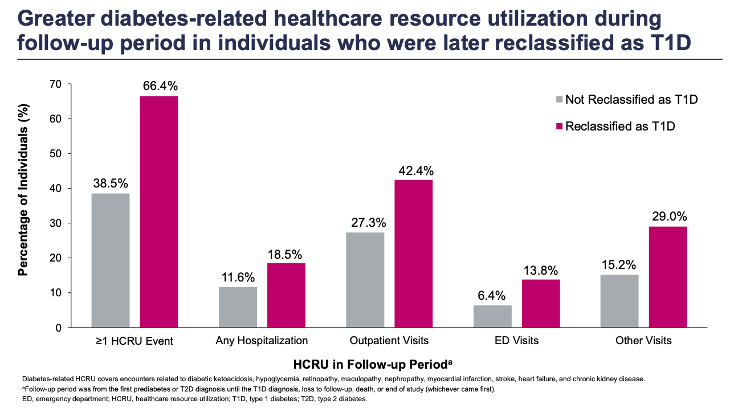
Cardiovascular disease in T1D: Pathophysiology, pharmacotherapy, and exercise
This well-attended session featured a strong bench of experts who focused their presentations on cardiovascular disease in T1D. It’s well known that T1D is associated with a two-to-three-fold increased risk of atherosclerotic cardiovascular disease (ASCVD), which is in turn the leading cause of death for people with T1D. Happily, registry data show that cardiovascular mortality in people with diabetes has declined significantly over the last 20 years. Famously, the DCCT showed that improved glucose management reduced ASCVD risk by 42% (and by ~30% in the EDIC follow-up). The intensive group also benefited from lower all-cause mortality. (The DCCT also gave rise to the term ‘legacy effect’ or ‘metabolic memory’, in which intensive therapy, even for a relatively short time, resulted in a long-term enduring benefit).
- Dr. Robert Eckel (University of Colorado) is a distinguished endocrinologist who has focused his research career on the intersection of metabolic disease and cardiovascular health. He related that there was a lack of strong randomized controlled data for cardiovascular disease in T1D – with the notable exception of the DCCT/EDIC trial.
- Dr. Eckel asserted that the pathophysiology of T1D is not identical to that of T2D. He noted that the evidence was hard to interpret because of differences in prevalence and duration of risk factors, duration of diabetes, the role of antibodies, and the lack of RCTs. However, he hypothesized that in T1D, plaque growth is slower and more stable, CVD is less dependent on classical risk factors, and may be influenced by cardiac autoantibodies. He suggested that the key differences likely were:
- Glycemic control is more important in reducing risk in T1D than in T2D.
- Lipid-lowering appears to be unequivocally important in T2D, and possibly more effective than in T1D.
- Reduction of obesity, particularly central obesity, appears to be somewhat more important in T2D than T1D.
- Dr. Eckel is chairing a working group for an exciting and welcome new cardiovascular trial in T1D (The T1D and CVD Clinical Outcomes Trial) that will hopefully be sponsored by NHLBI and NIDDK. The group will present its recommendations to the government in Fall 2026.
- Dr. Eckel asserted that the pathophysiology of T1D is not identical to that of T2D. He noted that the evidence was hard to interpret because of differences in prevalence and duration of risk factors, duration of diabetes, the role of antibodies, and the lack of RCTs. However, he hypothesized that in T1D, plaque growth is slower and more stable, CVD is less dependent on classical risk factors, and may be influenced by cardiac autoantibodies. He suggested that the key differences likely were:
- Next, Dr. Oliver Schnell (Sciarc GmbH, Germany) noted that (over and above good glucose control), blood pressure and lipids were the next two most important modifiable factors for the reduction of cardiovascular disease in people with T1D. He reviewed the ESC guidelines for targets and treatment of these risk factors. He promoted the goal of safe and sustained control, and favored simple, repeatable clinical routines to achieve the most benefit for the most patients.
- Next at the podium, Prof. Kirsten Nørgaard (Steno Diabetes Centre, Denmark) discussed the role of physical activity (PA) in cardiometabolic risk reduction for people with T1D. Physical activity is measured by the MET value. A MET-value of one represents resting energy expenditure. A MET value of five would be a five-fold increase in metabolic demand, and a MET value of 10 would typically correspond to someone who exercises intensively.
- Prof. Nørgaard presented overwhelming evidence that cardio-respiratory fitness (CRF) was an important risk marker for CVD in the general population. A MET of <5 is associated with high mortality, and increasing PA to 8-10 MET can decrease mortality by 50%. Exercise truly is a wonder-drug!
- People with T1D tend to be less physically active than healthy controls. Additional diabetes specific factors, like fear of hypoglycemia, eating strategies for exercise appear to be at work. Nonetheless, we can be confident that enhanced PA would benefit CV risk in this population.
T1D Cures and Disease-Modifying Therapies
Dr. Jay Skyler and his “mission to eradicate T1D”
In this late morning session, Dr. Jay Skyler (University of Miami) outlined a conceptual framework for addressing the major scientific and clinical challenges in T1D. He reviewed the natural history of the disease, describing its progression from genetic susceptibility and an environmental trigger to immune activation and gradual destruction of pancreatic beta cells. This trajectory has been well categorized in stages: (i) early autoimmunity with one or more antibodies (pre-stage and stage 1); (ii) dysglycemia (stage 2); (iii) symptomatic diabetes (stage 3); and (iv) long-standing disease with declining beta cell function (stage 4). Dr. Skyler proposed four major therapeutic goals: (i) preventing immune-mediated beta cell destruction; (ii) preserving remaining beta cell mass and function; (iii) regenerating beta cells; and (iv) ultimately, replacing lost cells.
- To halt immune destruction, Dr. Skyler highlighted several immunomodulatory strategies. These include therapies that directly suppress pathogenic immune responses, such as: (i) Tzield (teplizumab), which has demonstrated a significant delay in progression from stage 2 to stage 3 T1D; as well as (ii) low-dose anti‑thymocyte globulin (ATG), which has shown preservation of beta cell function in recent-onset disease. Emerging approaches seek to improve tolerability and durability, including humanized ATG formulations and agents targeting adaptive immunity (e.g., anti-CD40 ligand therapies) or innate inflammatory pathways, such as anti-TNF antibodies and JAK inhibitors like baricitinib. Dr. Skyler argued that effective prevention will likely involve a combination of immunotherapies. True prevention of T1D would require simultaneously halting the autoimmune response, preventing its recurrence, and controlling inflammatory signaling. Complementary strategies aim to preserve beta cell health through metabolic or cellular protection, including GLP‑1 RAs and inhibition of the stress-related protein TXNIP with drugs such as verapamil.
- Beyond preservation, Dr. Skyler discussed experimental efforts to regenerate beta cells through pathways that stimulate beta cell proliferation or differentiation from progenitor cells. Although human clinical evidence remains limited, these strategies suggest that restoration of endogenous insulin-producing capacity may become feasible. Concluding on an aspirational note, Dr. Skyler framed these advances as part of a broader mission to overcome the disease: “My goal, and my mission, is to eradicate T1D before I retire.”
Dr. Jeremy Pettus introduces a novel gene therapy for T1D, KRIYA-839, which will enter the first-in-human phase 1/2 trial in 2026
In a fascinating and very well-attended symposium, Dr. Jeremy Pettus (UCSD) introduced KRIYA-839, a novel gene therapy for T1D. Dr. Pettus began the talk by highlighting the unmet needs in T1D despite continued innovations. In addition to his role as a leading clinician and scientist, Dr. Pettus is a major advocate and often begins his talks by discussing unmet needs. In the US, he said, over 70% of patients with T1D have A1c >7.0%, and, astoundingly, he said that one in 20 is admitted to a hospital each year for diabetic ketoacidosis (DKA). Moreover, people with well-managed T1D still have a two-to-four-fold higher risk of CVD, warranting additional approaches to address T1D. Reflecting on the T1D treatment landscape, Dr. Pettus shared an analogy that, if insulin were a train, technology a truck, and immuno- or cell therapies cars, gene therapies would be a “fancy fast car” that has not entered clinical development but has the potential to be a significant, quick-to-develop cure. What analogies!
- KRIYA-839 is an adeno-associated virus (AAV) gene therapy that delivers insulin and glucokinase genes into patients’ muscles. As shown in the figure below,insulin expression allows cells to absorb glucose, while glucokinase expression promotes glucose metabolism in the cells.
- KRIYA-839 is designed to be administered once in large leg muscles. Patients will undergo a brief peri-dosing immunomodulation to support transgene expression. Then, in an outpatient clinic, the therapy will be administered with an ultrasound to guide precise and reproducible intramuscular delivery. Patients can be discharged the same day, increasing treatment accessibility and reducing burden.
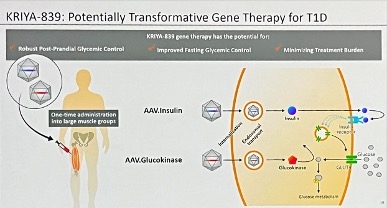
- As background, AAV gene therapy uses non-pathogenic viruses as a vehicle to transport genes into patients’ cells to edit genes. AAV gene therapies offer durable clinical benefit and simple administration without the need for chronic immunosuppression or strict patient eligibility. While first in T1D, AAV gene therapies have previously been approved for other conditions, such as lipoprotein lipase deficiency (Glybera, alipogene tiparvovec), spinal muscular atrophy (Zolgensma, onasemnogene abeparvovec), and hemophilia A (Roctavian, valoctocogene roxaparvovec).
- Long-term preclinical studies in rodents and dogs demonstrated glycemic normalization with the administration of AAV glucokinase and AAV insulin. As shown in the figure below, four years after one-time gene therapy, diabetic dogs continued to have robust glycemic management with minimal fluctuations.

- The first-in-human study for KRIYA-839 is on track to launch in 2026. Adults with T1D and baseline A1c >7.0% on an AID system will be recruited. The trial will consist of Part 1 (dose escalation) and Part 2 (dose expansion), as well as 52-week post-treatment follow-up and long-term follow-up studies. Primary endpoints are the safety profile and the change in blood glucose and A1c from baseline. We are not certain if this will reflect CGM metrics or BGM. Key secondary endpoints include other measures of glycemic health, change in weight, and perceived quality of life. What’s the catch here, we ask!?
Eight years of normoglycemia in preclinical T1D models of KRIYA-839; one administration designed to last a patient’s lifetime
In a captivating evening symposium, representatives of North Carolina-based Kriya Therapeutics expanded on Dr. Pettus’ presentation of KRIYA-839, a novel gene therapy for T1D. CEO and Co-Founder of Kriya Therapeutics, Dr. Shankar Ramaswamy, joined Dr. Fraser Wright (Kriya Therapeutics), Prof. Fatima Bosch (Universitat Autònomia de Barcelona, Spain), and Dr. Jeremy Pettus (UCSD) to discuss the potential of KRIYA-839 in humans as it moves to a first-in-human trial later this year.
- As background, KRIYA-839 is an adeno-associated virus (AAV) gene therapy that delivers insulin and glucokinase genes into patients’ muscles. Muscle cells, Dr. Jeremy Pettus (UCSD) noted, do not typically regenerate. Modifications to muscle cells stand to last a lifetime, making KRIYA-839 a potential “one-and-done type of procedure.” Based on preclinical data, Dr. Pettus shared today that the genetic modifications are expected to “set” around three months after treatment.
- KRIYA-839 will be injected into the quadriceps muscles in both legs to “spread out” the therapy after a brief peri-dosing immunomodulation to support transgene expression. In initial trials, the therapy will be administered in an outpatient clinic with an ultrasound to guide precise and reproducible intramuscular delivery. Consistent with comments made on Day #2 of ATTD, patients can be discharged the same day as the procedure.
- In long-term preclinical studies in rodents and dogs this afternoon, glycemic control was maintained for at least eight years after a one-time dose of KRIYA-839 in preclinical models (see below). Notably, none of the preclinical models developed secondary complications. Sharing her excitement with the audience, Prof. Bosch notes that the preclinical species had “recovered completely from the diabetes” – including glycemic control, body weight, and energy (as evident in a video shared with the audience).
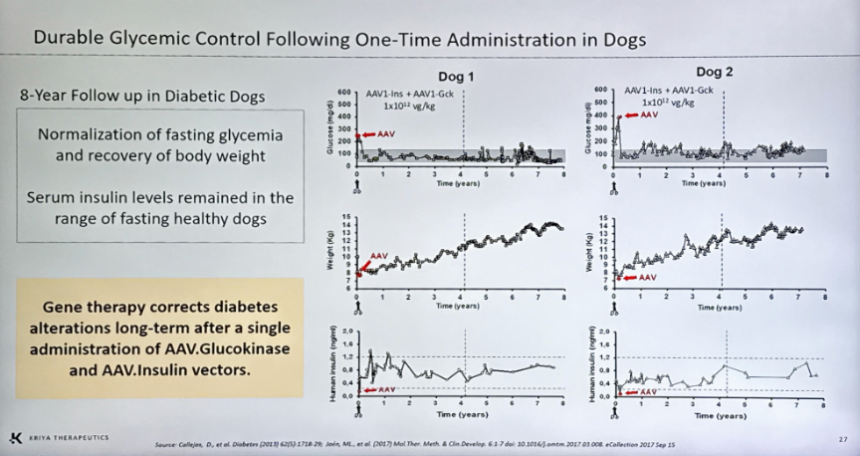
- Moreover, preclinical data support self-adjustment by treated muscle cells, maintaining appropriate glucose control for metabolic changes associated with aging without increased incidence of hypoglycemia. As shown in the photo below, an OGTT administered eight years after treatment demonstrated that both treated dogs had normal glucose tolerance. Furthermore, a post-mortem analysis of the preclinical models revealed that only a marginal number of ß cells remained in the pancreas among the dogs with induced T1D. Therefore, glycemic control was determined not to be from islet regeneration, but from the genetically engineered muscle.
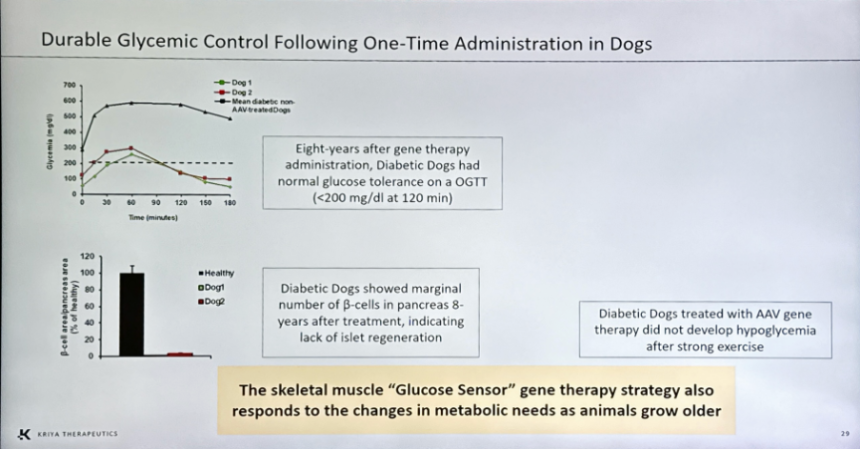
- A first-in-human study for KRIYA-839 remains on track to launch in 2026, and a potential for launch in clinics was shared to be as early as 2030. Adults with T1D and baseline A1c >7.0% on an AID system will be recruited. The trial will consist of Part 1 (dose escalation) and Part 2 (dose expansion), as well as 52-week post-treatment follow-up and long-term follow-up studies.
- Today’s speakers repeatedly framed KRIYA-839 as a response to persistent unmet needs in T1D, even in the hybrid-closed loop era. Specifically, they argued that current and future treatments, while mimicking physiologic insulin secretion, leave patients with a high disease burden, glycemic variability, and long-term complication risk. KRIYA-839 seeks to relieve the need for exogenous insulin by engineering skeletal muscle as a “glucose sensor” that co-expresses low-level insulin and glucokinase.
Vertex symposium reflects on the T1D landscape and highlights the next chapter with islet cell therapy
Vertex’s late afternoon session highlighted the next chapter in T1D with islet cell therapy. Dr. Jay Skyler (University of Miami) moderated the session and kicked off the symposium by highlighting the increasing prevalence and incidence of T1D. Dr. Jennifer Sherr (Yale University) then emphasized the remaining T1D burden despite advances in diabetes technology, and Dr. Jason Gaglia (Joslin Diabetes Center) followed with an overview of beta cell replacement with islet cell therapy. Dr. Trevor Reichman (University of Toronto, Canada) concluded the session by focusing on stem cell-derived islet cell therapy for T1D, including promising candidates in the pipeline and ongoing clinical trials.
- Dr. Skyler on the prevalence and incidence of T1D. Dr. Skyler shared that in 2025, the estimated global prevalence of T1D was 9.5 million, including 19% aged <20 years, 68% aged 20-59 years, and 12% aged ≥60 years. Also in 2025, there were half a million new diagnoses, including 43% aged <20 years and 57% aged ≥20 years. By 2040, nearly 15 million people are estimated to be living with T1D. Reflecting on the high rates of T1D, Dr. Skyler explained the multiple challenges people living with T1D face on a daily basis, including management of hypoglycemia, hyperglycemia, and burdens with injections, distress, and stigma. Given the increasing prevalence of T1D, ideal therapeutic goals include: (i) prevention of immune destruction; (ii) preservation of beta cell mass or function; (iii) automated insulin delivery; and (iv) replacement or regeneration of beta cells.
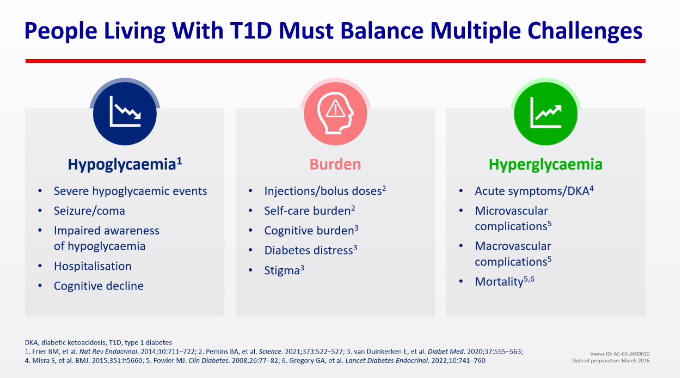
- Dr. Sherr highlighted ongoing unmet needs despite advances in diabetes technology. Referring to the well-known results of the DCCT, Dr. Sherr discussed the benefits of intensive insulin treatment compared to conventional diabetes care. Yet, achieving lower glucose targets has also revealed other issues, such as hypoglycemia. Dr. Sherr described this challenge as a “double-edged sword,” given the inverse relationship between A1c levels and rates of rates. Encouragingly, since the DCCT, several new tools have emerged with improved strategies for T1D care – blood glucose meters have transformed into continuous glucose monitors, decision making on paper has been integrated into applications and algorithms that support dose titration, and insulin delivery has transitioned from syringes to pens and ultimately, pumps and AID. However, Dr. Sherr again highlighted the limitations of technology, given the persisting acute complications of diabetes with high rates of hypoglycemia and DKA despite the use of advanced diabetes technology. Dr. Sherr also referred to results from a 2024 retrospective study (n=2,044) that showed persistent rates of severe hypoglycemia despite the use of advanced technologies, as well as a subset of this study of patients who reported CGM data, which also showed that many did not reach glycemic targets despite the use of diabetes technology. Furthermore, Dr. Sherr emphasized that the incidence of diabetes complications, even with achievement of A1c targets, remains a risk to people with T1D. Therefore, Dr. Sherr emphasized, “Technology has improved care, but it is not a cure.”
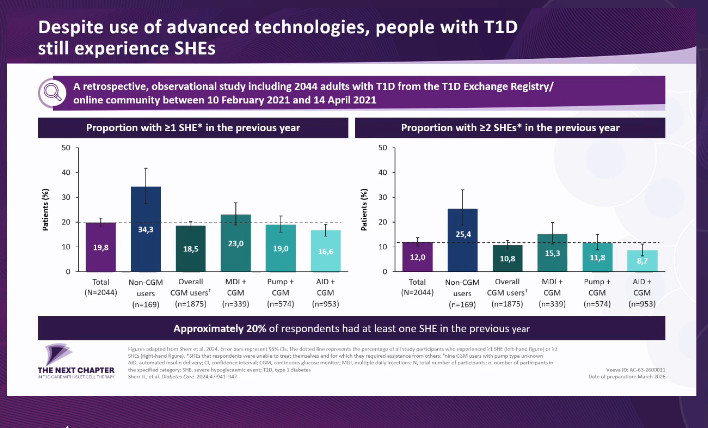
- Dr. Gaglia on the journey of beta cell replacement with islet cell therapy. Dr. Gaglia presented a comprehensive slide featuring landmarks throughout the history of beta cell replacement, including the most recent advances: (i) the FDA’s approval of Lantidra (donislecel) in June 2023; and (ii) Vertex’s zimislecel demonstrating insulin independence in June 2025. Dr. Gaglia then explained the processes of whole pancreas transplantation and allogeneic cadaveric islet transplantation, highlighting the advantages and disadvantages of each decision. For both procedures, the requirement of immunosuppression still raises concerns about side effects like infection, malignancy, impaired kidney function, anemia, and gastrointestinal-related events. Yet, Dr. Gaglia referred to studies such as the CIT-07 trial, the CITR-T1DX trial, and a 2025 French retrospective study, and he expressed optimism that the downsides of immunosuppression may outweigh the risks. Overall, Dr. Gaglia encouraged that, as the field refines approaches to islet cell treatments, it must consider the appropriate patient population and individual benefits.
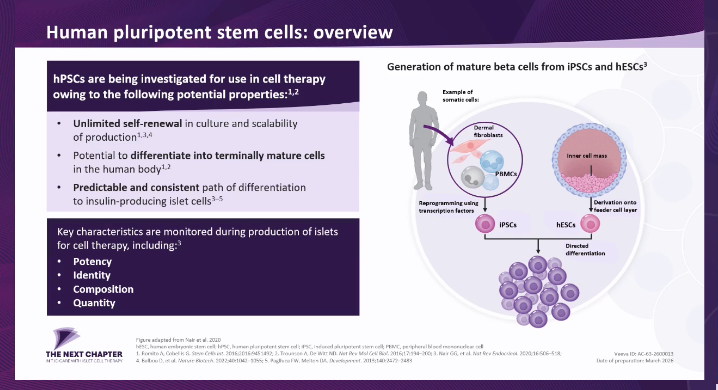
- Dr. Reichman on the potential of stem cell-derived islet therapy in T1D. Dr. Reichman explained that the limitations of cadaveric islet cell transplantation include a limited supply of donor cells with unpredictable quality and the need to protect the cells from the patient’s immune system. Potential solutions for these challenges include islet-like cells developed in vitro at a scalable level, as well as mechanisms to protect cells from the immune system. Current approaches particularly focus on protecting allogeneic stem cells from immune rejection through immunosuppressive treatment, encapsulation, and immune evasion through gene editing. Given the limitations previously explained by Dr. Gaglia, Dr. Reichman elaborated on the latter two emerging potentials, noting that encapsulation provides a highly stable environment for cell transport and that gene editing reduces recognition and enhances inhibition.
- The pipeline for cell-based therapies includes: (i) phase 1/2 VC-02, which uses perforated microencapsulation and immunosuppression; (ii) phase 1/2 CTX211, which uses gene editing; and (iii) phase 1/2/2 zimislecel, which uses systemic immunosuppression. Dr. Reichman expanded on zimislecel, which demonstrated engraftment of islet cells with endogenous insulin, and eliminated severe hypoglycemia, improved glycemic outcomes (A1c <7.0% and TIR >70%) while reducing exogenous use of insulin.
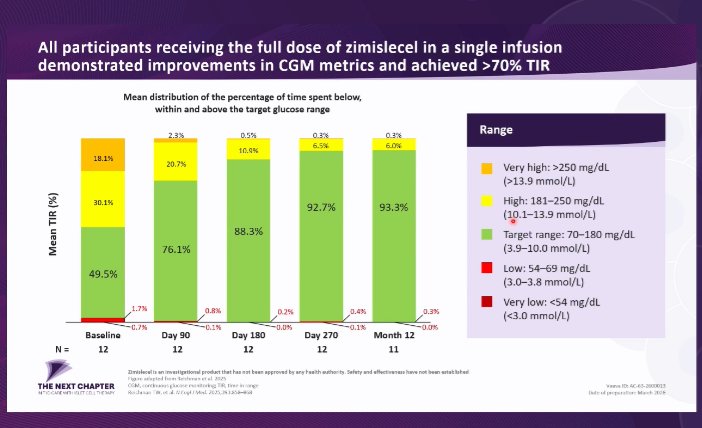
Sanofi’s symposium highlights the future of T1D screening and disease-modifying therapies
In a packed lunchtime symposium sponsored by Sanofi, Dr. Alice Cheng (University of Toronto), joined by an expert panel, set the stage for a forward‑looking discussion on the evolving landscape of T1D detection, staging, and management. Dr. Cheng underscored the urgent need to identify individuals with early-stage T1D before they present in the emergency department, shifting from reactive to proactive care. Dr. Cheng framed the conversation around real‑world cases – a 25-year-old male with a history of celiac disease and positive IAb results and a 36-year-old female with a family history of T2D, who was misdiagnosed with T2D – illustrating both the promise of early detection and the challenge of misclassification in adults. Nearly 39% of adults with T1D are initially misclassified as having T2D.
- On early detection and screening, Dr. Sanjoy Dutta (Breakthrough T1D) said that early detection is not merely about identifying risk, but also creating opportunities to slow, stop, or potentially reverse disease progression. Looking ahead, the field is moving toward precision‑medicine approaches that account for the heterogeneity of T1D. He pointed at resources available through Sanofi’s BR1DGE program to help providers navigate screening guidance. Global screening efforts have already begun to improve disease marker identification, reduce misclassification, and support research in stage 1 T1D.
- On interpreting screening results, Dr. Jeremy Pettus (UCSD) focused on how to make islet autoantibody testing a routine part of practice. Barriers to screening include complex test names, lack of familiarity, and inconsistent ordering workflows. Dr. Pettus said that simple system‑level changes, such as embedding autoantibody panels directly into electronic health record order sets, can dramatically increase screening rates. Dr. Pettus also highlighted international guidelines (ISPAD, Breakthrough T1D, ADA, and EDENT1FI), which stress the need to confirm any positive autoantibody result with a second test before making a diagnosis or staging decision. Misclassification persists, reinforcing the need for clinicians to use autoantibodies as a tool not only for staging early T1D but also for distinguishing T1D from T2D in adults. He also highlighted the utility of the AABBCC method, which considers age (<35 years), autoimmunity, body habitus (BMI <25 kg/m2), background of family history, control (glucose management on noninsulin therapies), and comorbidities as common factors of T1D.
- On education, Ms. Jessica Melin (Lund University, Sweden) and Prof. Karen Lange (Hannover Medical School, Germany) shifted the focus to the lived experience of early‑stage T1D, emphasizing that monitoring, education, and psychosocial support are shared responsibilities across the entire healthcare system. Prof. Lange emphasized the emotional turbulence that often follows a positive result, especially in young adults, and encouraged clinicians to normalize reactions, provide clear and focused information, and help individuals maintain a sense of agency amid uncertainty. On the next steps, drawing on experiences from the ELSA study, a UK-based T1D screening program, Dr. Renuka Dias (University of Birmingham, UK) cautioned against offering false reassurance after a negative screen, stressing the importance of education around rescreening, particularly in younger children. She also said it is crucial to help people understand both the promise and the limits of emerging and existing therapies like Tzield. In that same vein, she emphasized as an exceptionally exciting time to be working in T1D cures, with a rapidly expanding pipeline of disease modifying therapies now moving through clinical development. Specifically, she highlighted therapies across regulatory T cells and effector T cells, being investigated to preserve beta-cell function.
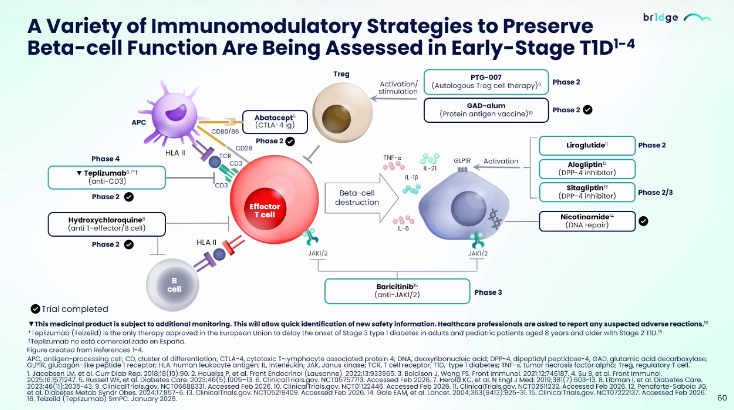
Interim results for Diamyd’s phase 3 DIAGNODE-3 results for retogatein in stage 3 T1D expected by end of month
During the exhibit hall tech fair presentations, Diamyd Medical’s Chief Scientific Officer Mr. Anton Lindqvist gave an overview of the company’s T1D precision medicine work and shared updates about study recruitment and upcoming results. As background, the company’s key candidate retogatein is an antigen-specific immunomodulatory therapy targeting individuals carrying the HLA DR3-DQ2 haplotype (approximately 40% of individuals with T1D). Retogatein is administered as an intralymphatic injection. Mr. Lindqvist highlighted that the company has been in the clinical development phase of T1D treatments for over 20 years, having dosed now over 1,000 patients. The company’s early studies led to the discovery that individuals with the HLA DR3-DQ2 haplotype were particularly responsive to retogatein, prompting the company to focus on this population.
- Phase 3 DIAGNODE-3 trial for stage 3 T1D. As shared in the company’s F1Q26 call, the DIAGNODE-3 trial for retogatein has completed participant screening, enrollment, and randomization. Interim results are expected in March 2026, and this readout will be based on approximately 170 of the 310-320 individuals who, by that time, will have completed their 15-month visit. The company will also present these interim results in a symposium at ADA 2026 in June. The full primary readout is not expected until 3Q27.
- Of those screened in DIAGNODE-3, around 52% had the DR3/X or DR3/DR4 genotype, retogatein’s target population. About 37% had the DR4/X genotype, which may benefit from proinsulin treatment – a potential future direction for the company. The remaining 11% are not carriers of the DR3 or DR4 allele.
- DiAPREV-IT and DiaPrecise for early-stage T1D. Diamyd Medical is also in the process of publishing results from its DiAPREV-IT study for retogatein, which found a significant delay in progression to stage 3 T1D in 50 children positive for ≥2 islet autoantibodies. DiaPrecise is an ongoing phase 2 trial (n=16) in children and adolescents with stage 1 or 2 T1D estimated to complete in December 2026.
Updated results from Eledon Pharmaceutical’s tegoprubart (anti-CD40L antibody) as an immunosuppressant for people with T1D
Dr. Piotr Witkowski (University of Chicago) presented updated results from the investigator-led pilot trial of Eledon Pharmaceutical’s tegoprubart (anti-CD40L antibody) in people with T1D – results were also announced in a press release. These results include data from 12 participants, providing an update to results from six participants announced in November 2025 and presented at the Rachmiel Levine-Arthur Riggs Diabetes Research Symposium 2025. As background, tegoprubart targets the CD40L pathway to block immune cell activation, offering a safer and more effective immunosuppressant than traditional treatments. Immunosuppressants like tacrolimus, primarily used for transplantation, increase toxicity, including direct harm to islets.
- Trial background and baseline characteristics. The investigator-led pilot study enrolled 12 adults with T1D who received allogeneic islet transplantation at the University of Chicago Medicine. Participants had a median duration of T1D for approximately 33 years and a mean A1c of 8.0% before transplantation. All participants received tegoprubart at the time of their pancreatic islet transplantation. Enrollment criteria included participants 18-65 years of age, with a diagnosis of T1D ≥five years with onset of disease at <40 years of age.
- Preliminary results. Preliminary results from the pilot study demonstrated the safety and effectiveness of tegoprubart in protecting islet grafts post-transplantation. All 12 participants showed improvements in blood glucose management after the first islet transplantation. To date, 10 participants remain insulin independent, including six after one transplantation and four after two transplantations. The remaining two participants in the trial are on the same trajectory. Of the 10 participants who achieved insulin independence, all reached an A1c level <6.0%, with a mean of 5.4%.
- Safety results. Immunosuppression with tegoprubart was well tolerated, with adverse events related to post-transplant immunosuppression treated by lowering the mycophenolic acid dose. No participants showed rejections or development of donor-specific HLA antibodies. Participants also showed no signs of nephrotoxicity, neurotoxicity, or hypertension, which are commonly associated with tacrolimus-based immunosuppression.
- Future outlooks. Dr. Witkowski expressed gratitude for the trial, as well as for extending the study to evaluate tegoprubart in people with T1D and CKD undergoing islet cell transplantation. Positive results from this trial would position tegoprubart as an alternative to tacrolimus, which is generally unsuitable for people with CKD due to risks of kidney toxicity.
T1D Screening and Early Detection
C-peptide as a marker for functional beta cell mass: Pushing the momentum for disease-modifying T1D treatment
Taking the stage to deliver the very last presentation of ATTD 2026, Prof. Chantal Mathieu (KU Leuven, Belgium) argued for the adoption of C-peptide as a marker for functional beta cell mass in T1D. Prof. Mathieu explained that the field has transitioned from a metabolic diagnosis of T1D to a pathophysiological one. Furthermore, the importance of diagnosis no longer lies solely in established T1D but extends to earlier stages of the disease, enabling detection before beta cell mass and function are significantly reduced. In the course of T1D development and diagnosis, C-peptide remains an “enigma,” yet it serves as a marker of endogenous insulin production and the primary test for beta cell function. Prof. Mathieu emphasized that residual beta cell function, as measured by C-peptide, offers multiple benefits, especially in clinical and regulatory settings. Therefore, she encouraged the need to convince regulators to reinstate C-peptide as an endpoint for clinical trials and ultimately, results necessary for approving disease-modifying treatments.
- Assessing beta cell function in stage 3 T1D. Compared to insulin, C-peptide exhibits a constant rate of clearance and long half-life (20 to 30 minutes). The assay is unaffected by exogenous insulin and can be measured in plasma because it has negligible hepatic clearance. While C-peptide represents a stable and convenient measure with one blood test, Prof. Mathieu also noted the following challenges: (i) assays are not always standardized; (ii) requires correlation with ambient glucose levels; and (iii) uncertain reliability when measured in acute situations (e.g., DKA).
- Evaluation of C-peptide levels. Prof. Mathieu explained the two types of testing for C-peptide levels, including static and dynamic testing. Static testing refers to a single measurement of C-peptide levels taken in a fasting state or after stimulation. Although it offers a convenient and minimally invasive procedure, it cannot be used to stage T1D and generally does not provide sufficient information for interventional trials. On the other hand, dynamic testing refers to C-peptide measurements obtained multiple times over two to four hours during an OGTT or MMTT. This procedure remains the “gold standard” for measuring endogenous insulin secretion in T1D and, in the context of MMTT, more closely reflects patient physiology. However, limitations of dynamic testing include its inconvenient and invasive procedure. Nevertheless, for many years, fields such as islet transplantation have used C-peptide as a marker of functional beta cell mass.
- Prof. Mathieu raised some alternatives to MMTT, referring to studies that have used non-invasive urinary and capillary sampling methods. For instance, a 2011 study assessed the urine C-peptide-to-creatinine ratio (UCPCR) as an alternative to MMTT. Additionally, a 2025 study focused on the feasibility of home-dried blood spot C-peptide levels as an alternative to MMTT for monitoring beta cell function in T1D.
- The need for C-peptide levels. Prof. Mathieu emphasized the problem with using metabolic endpoints to evaluate the effects of disease-modifying therapies for T1D. Currently, direct measures of T1D-related clinical outcomes include A1c, hypoglycemic events, and complications. However, in trials with those recently diagnosed with T1D, participants are treated to the same glycemic target, and therefore, there are minimal A1c differences between groups. Additionally, using hypoglycemic events and complications as primary endpoints requires large sample sizes and long trial durations. Prof. Mathieu commented that with the status quo, she’ll be “long retired” before the next disease-modifying treatment after Tzield (teplizumab) receives approval. Therefore, Prof. Mathieu argued for the use of alternative endpoints, such as C-peptide levels and time to clinical diagnosis, in trials of disease-modifying therapies for early-stage T1D. She said this change would help advance approval of more disease-modifying treatments.
- Previous efforts toward approving C-peptide as a marker. Previously, in 2008, the FDA approved C-peptide as a marker of functional beta cell mass, but later, in 2020, withdrew that approval and issued guidance to use metabolic markers instead. This decision was immediately followed by the EMA. Prof. Mathieu said that while metabolic endpoints in T1D trials have shown promising results, the T1D landscape is rapidly evolving, especially with technological advancements. Referring to previous studies on residual C-peptide and glycemic management, benefits in the real world, and association with CGM metrics, Prof. Mathieu encouraged the need to demonstrate that C-peptide remains a reliable and feasible measure of endogenous insulin secretion. She urged the field to further reinforce this point by: (i) standardizing assays; (ii) agreeing on the dynamic test (e.g., duration of sample collection, number of measuring points, reporting format); (iii) agreeing on how to collect the sample (e.g., venous, capillary, urinary); and (iv) agreeing on cut-off value of stimulated C-peptide levels that can be characterized as clinically meaningful.
Delaying the onset of T1D: Screening and treatment options
In a packed afternoon session, panelists spotlighted screening and treatment options for T1D, especially given the well-known benefits of Tzield (teplizumab), the first and only FDA-approved for T1D delay. Dr. Michael Haller (University of Florida) started the session with an overview of T1D screening programs in the US, and Dr. Boris Kovatchev (University of Virginia) discussed whether CGMs could replace antibody screening. Dr. Desmond Schatz (University of Florida) then provided insights on screening recommendations for the general population, and Dr. Shweta Mital (University of Manitoba, Canada) concluded the session with cost-benefit analyses of screening and immune interventions.
- Dr. Haller on T1D screening programs in the US. Dr. Haller emphasized that practical outcomes drive screening programs, including fewer DKA at diagnosis, preparedness among patients and their caregivers, earlier access to disease-modifying treatments like Tzield, and meeting inclusion criteria for prevention studies. Screening programs in the US include three common archetypes, including: (i) relatives of people with T1D; (ii) population-based pediatric populations; and (iii) clinic-enabled diffusion. The common denominator across these programs includes a method for confirmatory testing, staged monitoring, and ultimately, the “what to do next” steps. Dr. Haller then highlighted protocols of major screening efforts across TrialNet, ASK, CASCADE, and PLEDGE. He also elaborated on Breakthrough T1D’s Early Detection Pilot Clinic Program, which aims to demonstrate the efficacy of T1D screening and monitoring in the real world. To date, nearly 4,600 individuals have been screened with 29 pilot clinic partnerships. Reflecting on the ongoing efforts in this space, Dr. Haller reminded that screening is no longer only for research and encouraged HCPs to standardize confirmatory testing, monitoring, and interventions through a shared decision-making process.
- Dr. Kovatchev on whether CGMs could replace antibody screening. Before turning the presentation slide, Dr. Kovatchev said the short answer to this question is “yes and no.” Antibody screening often misses 85-90% of future cases and is often limited to those with a family history. As an alternative, CGMs could be used for differential diagnosis of T1D upon detection of dysglycemia, with a potential opportunity for data integration across CGM metrics, antibody status, and demographics. Dr. Kovatchev referred to a 2014 study, which showed that CGMs could detect early hypoglycemia in children with positive autoantibodies at high risk of progressing to T1D. He also cited a 2025 study that studied whether CGMs could identify stage 3 T1D. Results showed that CGM metrics can accurately predict disease progression and classify an individual’s risk of developing T1D diagnosis along with other factors. As well, Dr. Kovatchev elaborated on a 2023 study, which concluded that CGMs could help identify people likely to progress to T1D, including those with a normal OGTT. Finally, given the plethora of evidence and emerging advances of AI, Dr. Kovatchev encouraged combining CGM and AI for the management of prediabetes.
- Dr. Schatz on recommendations for screening in the general population. Sharing key points from the 2026 ADA Standards of Care, Dr. Schatz reminded the audience of screening recommendations for children, adults, and those at high risk for T1D. He then questioned the field’s preparedness for public health screening, which includes the following criteria: (i) identification of a health challenge that’s recognizable in its early stage; (ii) a valid, reliable, and affordable test for determining eligibility for intervention; and (iii) availability of a cost-effective diagnosis and treatment. Given the increasing prevalence of T1D and its associated complications, Dr. Schatz emphasized the importance of screening more than ever before. Yet, Dr. Schatz also raised challenges, including false positives, inconvenient access, lack of intervention, and other factors among individuals. Dr. Schatz concluded with a firm statement that screening should be performed in relatives and those with a high genetic risk. For population screening, he said the wide-scale effort should begin with confirmation across cost-benefit analyses.
- Dr. Mital on cost effectiveness of screening and immune interventions. Dr. Mital presented findings from a 2026 cost-effective analysis on general population screening for T1D. General population screening at age four incurred an additional cost of $404,534 but led to the detection of 35 additional cases (per 10,000 children), yielding an incremental cost-effectiveness ratio of $11,383/case detected. General population screening at ages two and six increased the cost to $462,679, but it detected 18 more cases (per 10,000 children) at an incremental cost of $25,923/case detected. Findings showed that general population screening detects more children at risk of T1D, but it also incurs higher costs. Incremental costs per case detected were comparable to other screening initiatives in the pediatric population. Dr. Mital also shared results from a 2025 cost-effective analysis of immune therapies in delaying the initiation of AID systems in T1D. Among the strategies considered, ATG therapy followed by AID was the most cost-effective, with lifetime costs of $394,250 and approximately 19 QALYs – these costs were lower, and QALY gains were higher than strategies without immune therapy or AID. Tzield therapy followed by AID led to 0.25 additional QALYs compared with ATG therapy followed by AID, at an additional cost of $153,670. Overall, Dr. Mital concluded that the optimal strategy depends on payers’ ability to negotiate prices for Tzield and additional results on the efficacy of ATG in T1D prevention.
Dr. Anastasia Albanese-O’Neill on building a global consensus for early-stage T1D screening and monitoring at the general population level
In this standing-room-only symposium, Dr. Anastasia Albanese-O’Neill (Breakthrough T1D) offered insights from an international consensus guidance on T1D screening and monitoring. She began by emphasizing the benefits of screening and identification of early stage T1D, including: (i) an alternative to “unacceptably high” rates of DKA at diagnosis; (ii) time for families and caregivers to educate themselves about diabetes; and (iii) an option to take disease-modifying therapies. She said the field has reached a “pivotal moment,” with Tzield (teplizumab) approved and more candidates emerging to prevent or delay T1D progression (see below). Though her points were met with nods of agreement throughout the packed hall, not one member of the audience raised their hand when Dr. Albanese-O’Neill asked if anyone received education on the importance of screening for T1D during their medical training. She thus stressed an urgent need for consensus screening guidance to raise awareness and clarify screening processes. This builds on the consensus guidance on early-stage T1D monitoring published in June 2024 – this landmark article has been accessed over 85,000 times across Diabetologiaand Diabetes Care and cited nearly 100 times, indicating high interest among clinicians, researchers, and the public.
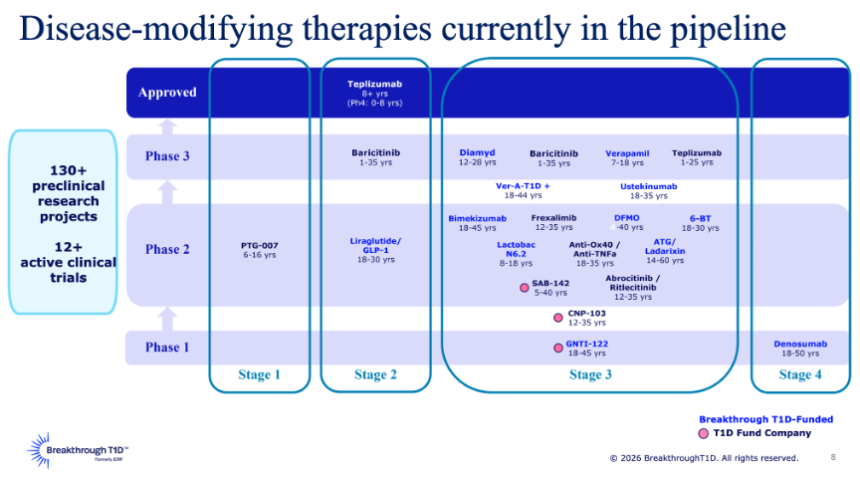
- Breakthrough T1D and collaborating experts created a committee in late 2024 to develop expert-guided consensus on population level screening for T1D. While the consensus itself is currently unpublished, Dr. Albanese-O’Neill provided a high-level overview of the tenets and
- On the implementation of screening programs, Dr. Albanese-O’Neill summarized key elements of the emerging consensus: (i) when adequate policy and follow-up infrastructure are in place, screening for early-stage T1D in the general population is recommended; and (ii) targeted screening of higher-risk groups (family history or coexisting autoimmune disease) is an acceptable starting point in settings that are just beginning to implement programs.
- Clinically, a three-time-point childhood screening strategy is most supported by evidence. The first screening would occur between ages 2-4, another test between ages 6-8, and a final childhood screening between ages 10-15 if earlier tests are negative. For individuals over 15 years old who have never been screened, Dr. Albanese-O’Neill shared that a one-time screen is suggested at some point in adulthood. However, she said that we lack substantial evidence on screening in the adult population. More research needs to be done on the significance of single antibody positivity, optimal screening workflows and follow-up care, screening assays, and T1D staging in individuals of non-European ancestry, as well.
Real-world insights from T1D screening programs in California, Spain, and the Netherlands
In a crowded session, Dr. Carla Demeterco-Berggren (UCSD), Ms. Christine Fransman (Diabeter, the Netherlands), and Prof. Luis Castano (Cruces University Hospital, Spain) shared insights from real-world T1D screening initiatives. Beyond the EDENT1FI collaboration, many organizations and clinics have established and led screening programs for early T1D detection.
- UCSD’s Rady Children’s Hospital is part of the T1D Exchange Quality Improvement (T1DX-QI) Collaborative, a network of over 55 centers serving people with T1D. Even the centers of the collaborative, however, demonstrate low readiness to conduct T1D autoantibody screening and administer disease-modifying therapy (e.g., Tzield). In a 2023 survey (n=55 centers), 68% of the clinics did not change their clinical practice after FDA approval of Tzield in November 2022, with screening largely limited to research programs like TrialNet. In response, T1DX-QI Collaborative launched quality improvement pilot programs to integrate screening and monitoring workflows into routine practice. The first pilot (2023-24), funded by Breakthrough T1D, involved Rady Children’s and the University of Florida, and the second pilot (2024-25), funded by Sanofi, involved four additional institutions.
- Across the six pilot centers, 1,396 at-risk children were screened between June 2024 and December 2025, with 153 (11%) testing positive for ≥ two autoantibodies, 76 (5%) diagnosed as stage 2 T1D, and 59 (4%) offered disease-modifying therapy. During follow-up, 33 individuals progressed to stage 3 T1D, but none presented with diabetic ketoacidosis (DKA), highlighting the potential of screening programs to prevent life-threatening emergencies at diagnosis. Dr. Demeterco-Berggren shared key lessons from the pilot program: (i) the importance of early leadership engagement; (ii) patient-centered education; (iii) EHR integration; (iv) readily available screening kits; (v) dedicated T1D at-risk clinics; and (vi) nurse-led screening clinic. Looking forward, Rady Children’s Hospital will focus on developing sustainable reimbursement models, screening networks with primary care providers, and community screening events to expand access. Based on these learnings, T1DX QI Collaborative published a white paper, “Real World Beta Cell Preservation Throughout the Stages of T1D,” in February 2026 to provide a practical implementation guide.
- Independent screening efforts are ongoing in Spain and the Netherlands, as well. Building on Spain’s decades-long history of T1D screening, three Spanish societies established a national consensus to: (i) conduct routine screening for first-degree relatives and people with genetic risk at endocrinology clinics via SCREEND1A-FAM; and (ii) pilot a general population screening program, SCREEND1A, in primary care clinics to evaluate feasibility and cost-effectiveness. Prof. Castano highlighted the use of antibody detection by the agglutination-PCR (ADAP) method, which has offered greater sensitivity and cost-effectiveness, and the expansion of the national T1D registry, REDCap, to include data on early-stage T1D. In the Netherlands, Diabeter, INNODIA, and Sanofi launched a project to pilot T1D screening. It will first begin with INNODIA’s Family & Friends model (n=50-100) and expand to a broader population across the nation (n=7,000). Ms. Fransman hoped that this research initiative will accumulate evidence to show national leaders the value of population-wide screening.
EDENT1FI screens over 100,000 children in Europe for early stage T1D
In this jam-packed morning session, Prof. Jurgen Vercauteren (KU Leuven, Belgium) offered the latest updates on EDENT1FI. As background, EDENT1FI is a five-year EU-based research consortium that focuses on early T1D detection in children. Prof. Vercauteren shared that EDENT1FI has already screened over 100,000 children across Europe – halfway to the project’s previously shared goal. EDENT1FI is structured into five “work packages”:
- Screening. Providing a framework to apply and extend early-stage T1D screening to new and existing regions in Europe, as well as expanding a European registry.
- Impact. Evaluating the ethical, psychological, and economic impact of general population screening using a cost‑effectiveness model and questionnaires.
- Monitoring. Developing and implementing a monitoring framework for progression to clinical-stage T1D. Identifying novel biomarkers and CGM approaches to monitor disease progression.
- Roadmap for preventative and intervention studies. Building a unified master protocol and biomarker roadmap for preventive and disease‑modifying therapies.
- Communication. Implementing screening and policy change in Europe through communication campaigns, consensus guidelines, partnerships with advocacy and industry, and engagement with regulators and lawmakers.
As just ~10% of individuals diagnosed with T1D have a first-degree relative with T1D, Prof. Vercauteren and EDENT1FI leaders argued that broader screening is essential to identify individuals with early-stage T1D, reduce DKA incidence, and recruit participants to clinical trials evaluating disease-modifying therapies.
- Prof. Zdeněk Šumník (Motol University Hospital, Czechia) offered insight into EDENT1FI’s efforts in Czechia, where 1% of the national pediatric population has been screened during 22 months of the EDENT1FI protocol. Approximately 0.4% of children tested positive for two or more autoantibodies in the general population, compared to nearly 3% of children with a first-degree relative who has T1D. Of those who tested positive for two or more autoantibodies, 94% provided a confirmatory venous sample. Accordingly, Prof. Šumník stressed that T1D screening at scale is feasible, effective, and well-accepted by parents and physicians – offering a positive foundation for population-wide screening. This conclusion was reiterated by Prof. Parth Narendran (University of Birmingham, UK), who cited newly published findings from the UK-based general population ELISA study to substantiate his argument. The study (n=24,875) identified 75 children (0.3%) with one autoantibody, 160 (0.6%) with two autoantibodies without symptoms, and seven with stage 3 T1D. Among relatives of people with T1D, who were more likely to engage with the program, 3.7% (n=101) of first-degree relatives and 2.2% (n=131) of children with a family history of T1D screened positive.
- Prof. Pieter Gillard (KU Leuven) discussed EDENT1FI’s third work program: Monitoring for progression to clinical T1D and biomarker refinement. Prof. Gillard described three risk tiers – Tier 1 (low), Tier 2 (moderate), and Tier 3 (high) – in addition to traditional staging measures (see below). Prof. Gillard advocated for tier- and stage-dependent follow-up timelines in T1D screening initiatives.
- Prof. Gillard also advocated for CGM use after staging OGTTs for risk stratification, citing evidence that Time above Range (TAR; >140 mg/dL) is correlated to T1D progression risk. Furthermore, he shared that a collaboration between MiniMed and EDENT1FI will seek to evaluate if CGM algorithms (e.g., meal detection or sleep patterns) might further improve the prediction of progression to stage 3 T1D beyond traditional biomarkers.
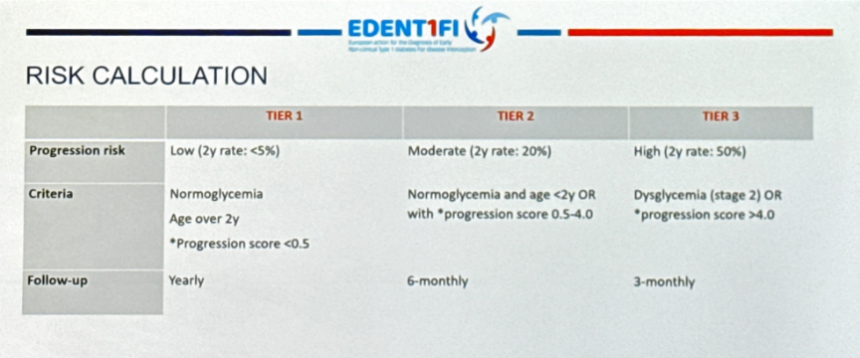
T1D screening and monitoring: IDF Europe’s international consensus on for early-stage T1D now published
Prof. Sufyan Hussain (King’s College London, UK) gave an overview of the rationale and contents of IDF Europe’s international consensus on screening and monitoring for early-stage T1D, which was published today in Diabetes, Obesity, and Metabolism. Prof. Hussain noted that this consensus is not so much a source of clinical recommendations for screening and monitoring (see the Breakthrough T1D-led consensus document for more on this) but rather a document making a case for screening and monitoring to the policy front.
- The document presents a nine-step national implementation roadmap: (i) create a mandate for islet autoantibody general population screening; (ii) build advocacy by engaging and educating stakeholders, especially PCPs; (iii) broadcast the news by creating awareness campaigns, which have shown to reduce DKA at T1D onset by up to 65.5%; (iv) promote public health participation; (v) start screening upon establishing necessary infrastructure; (vi) support people with early-stage T1D with monitoring programs, educational content, and psychological counseling; (vii) build registries for islet autoantibody screening; (viii) evaluate and improve processes; and (ix) determine value through cost-benefit analyses at local, national, and pan-European levels.
- On the rationale for this consensus, Prof. Hussain highlighted that roughly 0.3-0.6% of the population in Europe, or ~2.8 million people, has T1D. This figure is projected to rise to 3.9 million by 2040. The frequency of DKA at diagnosis in Europe is 40-42% and as high as two in three cases in Romania, for example. The annual cost burden across Europe is 17 billion euros, and each DKA event avoided saves an estimated 4,700 euros. Screening and monitoring can reduce DKA at T1D onset by up to 80%, and Prof. Hussain highlighted that public attitudes toward screening are largely positive – over 93% of individuals who participated in screening reported that they would do so again. Capillary fingerpick sampling and at-home dried blood spot kits appear to be the most preferred (90%) sampling method. Still there remains a significant knowledge gap, with 51-76% of parents and first-degree relatives reporting little to no knowledge about islet autoantibodies.
Saliva-based screening: T1D Scout’s program to expand large-scale screening by identifying high-risk populations
In an engaging Saturday morning address, Mr. Yuta Matsuda (T1D Scout) offered a glimpse at the company’s progress in developing a fully remote, saliva-based early-detection program for T1D. For background, T1D Scout is a San Francisco-based startup established in early 2025. As of March 2026, the company’s pilot program has registered over 3,000 families, distributed 1,000 kits, and received 850 samples following its mid-2025 launch. Mr. Matsuda said that a full analysis of T1D Scout’s initial cohort will be presented at ADA 2026.
- T1D Scout employs an initial saliva-based test to screen for genetic T1D risk, and follow-up antibody testing for children determined to be high-risk. Initial screening uses a saliva swab that functions to identify DNA variants associated with T1D risk. Thereby, the test categorizes a child’s genetic susceptibility into “higher” or “lower” T1D genetic risk score (GRS). A low-risk GRS typically concludes patient participation in the T1D Scout program. By contrast, a high-risk GRS prompts follow-up antibody testing. Antibody testing is also completed at home and employs a more conventional finger-stick blood sample.
- Parents can register and order an at-home saliva test kit on T1D Scout’s website for $89 per child. No physician referral is required, and results are expected two to three weeks after the company’s lab receives a sample. If classified as high-risk, T1D Scout offers genetic counseling included in the initial $89 fee and autoantibody testing for a supplemental fee.
- In T1D Scout’s pilot cohort of nearly 900 children, Caucasian participants (82% of the cohort) classified as high-risk were 10 times more likely to test positive for multiple islet autoantibodies than those in the low-risk band (p <0.001). Therefore, Mr. Matsuda argued that the company’s GRS effectively stratifies risk in a real-world setting and validates the utility of genetic prescreening to determine a target population for autoantibody testing. Notably, about 85% of all kits ordered were returned to T1D Scout. 75% of patients screened had not been tested for T1D autoantibodies before, “expanding the reach for large-scale T1D screening.”
Bridging the gap between population screening and initiation of immunotherapy
In a late-afternoon session, Dr. David Maahs (Stanford) delivered a presentation on ways to address the gap between population screening and the implementation of immunotherapy. Dr. Maahs focused on how the field has advanced in translating T1D research into improved clinical care and emphasized that population screening and research on immunomodulation have advanced rapidly. With such progression, the question remains: How do we bridge from screening to immunomodulation? Furthermore, what are the gaps and needs? Dr. Maahs focused his presentation on explaining how to monitor individuals who screen positive and ensure they receive immunotherapy as soon as they need it with a stage 2 T1D diagnosis.
- The importance of T1D diagnosis. Dr. Maahs said that in 2025, an estimated 174,000 people died prematurely from T1D. Within this population, an astounding close to 50,000 (n=46,000) are estimated to be under 25 years old. Furthermore, 30,000 of the deaths in those under 25 years are estimated to include populations without a T1D diagnosis. The IDF and T1D Atlas estimate that the additional life expectancy of a 10-year-old child diagnosed with T1D varies across countries from six to 66 years. Clearly, these statistics underscore the need for greater awareness of early detection and diagnosis to improve health outcomes worldwide.
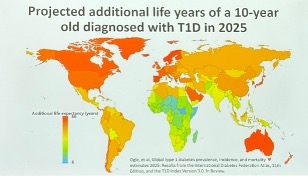
- The needs across HCPs, medical education, and clinical workflow. Dr. Maahs presented a list of needs to be addressed, including those of patients and their caregivers, as well as HCPs. Among primary care providers, he encouraged greater education and awareness about the signs and symptoms of T1D, complications, screening, and overall diabetes management. In the medical system, Dr. Maahs emphasized increased awareness of screening, as well as the use of OGTT and CGMs. For clinical workflows, Dr. Maahs suggested early detection through potential population screening, ongoing follow-ups, and timely initiation of immunomodulation treatment. Finally, he mentioned that national registries and care coordination that support clinical models will be critical for tracking at-risk populations, accelerating research, and ensuring appropriate guidance and treatment. Dr. Maahs also focused on the following needs of people with stage 1 or stage 2 T1D and their families: (i) reliable information; (ii) support from primary care physicians; (iii) T1D education; (iv) psychosocial and dietary support; and (v) access to T1D specialty care.
- Insights from the 4T study. As background, the 4T study integrated CGM data and telemedicine to improve T1D management, allowing HCPs to remotely monitor patients’ data for review and follow-up. In 2023, one-year results from the study showed that the integration conferred a 0.5% reduction in A1c, improved quality of life, and family and HCP satisfaction. Following these results, in 2024, a study prospectively assessed the impact of a systematic, equitable digital-healthcare team program with tighter glucose targets, early use of technology, and remote patient monitoring in young people with newly diagnosed T1D. The participants in the 4T study showed a mean A1c of 6.6%, and 64% of the population reached an A1c <7.0%. Additionally, the mean TIR was 68% at one year after T1D diagnosis. Given these results, Dr. Maahs encouraged the development of systems and processes for earlier screening and the implementation of treatments for people with stage 1 and 2 T1D.
Award Lectures, Joint-Symposia, and Big Picture
Prof. Chantal Mathieu receives ATTD Breakthrough Award during closing ceremony
After Prof. Chantal Mathieu (KU Leuven, Belgium) delivered the very last presentation of ATTD 2026, Prof. Tadej Battelino (University of Ljubljana, Slovenia) welcomed her back to the stage to honor her for the ATTD Breakthrough Outcomes Award. This award, supported by Lilly, recognizes Prof. Mathieu’s longstanding effort and dedication to advancing innovation and high-quality care for people living with diabetes. Like the conference organizers, we continue to be incredibly impressed by Prof. Mathieu. Not just today, but every day, we have been lucky to learn from her – from conference sessions to her acceptance speech after being honored at a W!LD event also at ATTD, we have been moved by her grace and supreme dedication to the field. Her inspiring speech, which highlighted her passion for basic scientific research, as well as on patient stories that continue to underscore her strong involvement in the field. With the increasing number of therapies, technologies, and overall innovation in the field of diabetes, we’re grateful to Prof. Mathieu for continuing the momentum toward better patient outcomes.
- Mr. Pierluca Arietti (Lilly Senior Director, Cardiometabolic Health External Engagement) introduced Prof. Mathieu as a leader who has given immensely to the community, with an unwavering drive and compassion. He said the purpose of ATTD attendees gathering in this arena provides a testament to the power of community, working toward the day when every single person with diabetes will feel better. Mr. Arietti emphasized that while clinical inertia, policy barriers, and other challenges may serve as obstacles in the field, he encouraged the field to become unified. He emphasized, “Everyone does their own job, but we can work together.”
IDF Europe symposium focuses on diabetes detection, treatments, and cures
In the afternoon, IDF Europe hosted a lunch symposium focused on diabetes detection, treatment, and cure. Introducing the session theme, “Turning vision into reality,” Prof. Tadej Battelino (University of Ljubljana, Slovenia) welcomed the attendees and emphasized how timely this topic is in light of emerging development in the field. Dr. Sufyan Hussain (King’s College London, UK) started the session, highlighting an international consensus on screening and monitoring early-stage T1D, published today. Then, Ms. Marissa Hitchcock Town (Children with Diabetes) focused on diabetes stigma and practical approaches for population screening for T1D. Prof. Tsvetalina Tankova (University of Sofia, Bulgaria) followed this presentation with a presentation on CVD prevention for people with dysglycemia and diabetes, and Prof. Sanja Klobucar (University of Rijeka, Croatia) spoke on the use of CGM in people living with obesity, intermediate hyperglycemia, or T2D.
- Dr. Hussain on the newly published international consensus on screening and monitoring T1D. Just this morning, Diabetes, Obesity, and Metabolismpublished an international consensus on screening and monitoring early-stage T1D. From a European perspective, the article outlines key components of implementing general population screening for early-stage T1D. Dr. Hussain highlighted key takeaways from the statement, including the need for screening, as the frequency of DKA at T1D onset remains high at 20-40%, with associated risks of cognitive dysfunction, diminished beta cell function, acute kidney injury, and other complications. The consensus emphasizes that screening and monitoring could reduce the incidence of DKA at T1D onset by up to 80%, and that early detection could be further associated with reduced symptom severity at T1D onset, reduced long-term microvascular and cardiovascular disease, and overall improved quality of life. Dr. Hussain also highlighted that the consensus provides critical policy recommendations, including: (i) equity, making screening accessible for all populations regardless of socioeconomic status, ethnicity, or location; (ii) registries, allowing monitoring programs before screening; (iii) HCP education for T1D management, especially in primary care; (iv) participation with psychological support and clear communication for everyone who tests positive; and (v) evaluation of outcomes, including cost-benefit analyses. With the approval of a disease-modifying treatment, emerging screening criteria, and compelling evidence, Dr. Hussain stressed, “The moment for action is now.”
- Ms. Town addresses diabetes stigma, especially to encourage population screening for T1D. Taking the stage, Ms. Town shared that she has used “PWD” as her first credential to highlight her journey of living with T1D for 36 years. She even presented screenshots of her TIR data and a QR code for the audience to view her glucose data to emphasize how she has difficulty managing her condition. She highlighted how despite decades of living with T1D, in addition to professional certifications and working in the diabetes field, she still will experience time out of range. Ms. Town encouraged the importance of using appropriate and cognizant language with people with diabetes, avoiding labels like “diabetic,” “control,” and “compliance.” Especially among people being encouraged for T1D and early detection, Ms. Town said HCPs should: (i) use clear and simple language; (ii) provide context on risks and diagnosis at early stages; (iii) use caution with timeline estimates in diabetes progression; and (iv) provide actionable steps with glucose monitoring and advice on medical assistance.
- Prof. Tankova on CVD prevention for people with dysglycemia and diabetes. Prof. Tankova explained that prediabetes not only increases the risk of developing T2D but also CVD and other diabetes complications. Therefore, the management of prediabetes also affects the impact on micro- and macrovascular diseases. For example, a 2010 meta-analysis found an 18% increased risk of CVD in people with impaired fasting glucose and 20% increased risk of CVD in people with impaired glucose tolerance. Furthermore, a 2021 systematic review found that impaired glucose tolerance was associated with 19% increased risk of all-cause mortality, and impaired fasting glucose was associated with a 17% increased risk of all-cause mortality. Following these results, a 2025 study clarified the relationship between prediabetes and cardiovascular risk, finding that the progression of diabetes accounts for <25% of CVD risk. Therefore, prediabetes has an association with an increased CVD risk even without diabetes progression.
- Prof. Tankova explained that altogether, these results highlight that the field must adopt a new approach, focusing on remission of prediabetes (i.e., transition from prediabetes to normoglycemia), rather than “just” stopping progression from prediabetes to diabetes. She referred to studies like the DPPOS study, which has shown the effectiveness of intensive lifestyle intervention on remission of prediabetes and CVD, as well as a 2024 study on GLP-1 RAs and lifestyle modification showing a 76% increased incidence of prediabetes reversion to normoglycemia. Prof. Tankova reminded, “We have strong tools in our hands,” encouraging the possibilities of prediabetes remission and ultimately, reduction of CVD.
- Prof. Klobucar on the use of CGM in people living with obesity, intermediate hyperglycemia, or T2D. Prof. Klobucar noted that CGM remains underappreciated in this population, despite emerging benefits. Establishing the relationship between obesity, intermediate hyperglycemia, and T2D, Prof. Klobucar said early detection of dysglycemia and timely intervention could break the chain of metabolic dysregulation. Referring to the studies demonstrating how standard diagnostic criteria (e.g., fasting glucose, oral glucose tolerance test, and A1c) often fail to detect or misclassify dysglycemia and new patterns of glucose dysregulation, Prof. Klobucar called for the use of CGM as an “educational and motivational tool.” With real-time biofeedback on the effects of diet and physical activity on glycemic levels, people could implement behavioral changes focused on obesity and T2D. Interestingly, a 2022 study found that the use of CGM has supported 67% of study participants experiencing diabetes remission at a three-month follow up. Importantly, Prof. Klobucar encouraged considering ways to reduce global disparities through the widespread adoption of CGM and the simplification of AI-driven data interpretation.
Helmsley Charitable Trust Symposium: Protein intake before exercise can prevent hypoglycemia in people with T1D
In the first-ever Helmsley Charitable Trust session at ATTD, Ms. Deniz Dalton, Program Officer of Helmsley’s T1D Program, cogently introduced the Type 1 Diabetes and Exercise Initiative (T1DEXI), aimed at understanding how individuals with T1D can better manage glucose levels during exercise. The initiative took off in 2016, when Helmsley convened a think tank meeting to address this critical gap: although physical activity is a critical cornerstone of health, current technologies like AID systems do not handle exercise well, and the scientific evidence was limited to a few small, short clinical trials. Helmsley launched T1DEXI (n=750) to generate real-world data on a wide variety of exercises (e.g., high-intensity interval, resistance, aerobic, running, walking, gardening) in adults and children with T1D and shared them with researchers around the globe. In a series of talks, experts shared strategies to manage glucose during exercise in T1D.
- Dr. Dale Morrison (University of Melbourne, Australia) advocated for protein intake as an “untapped, practical tool” to prevent hypoglycemia during exercise in T1D. In people with T1D, glucagon secretion via beta cell signaling is impaired, leading to a higher risk of hypoglycemia during exercise. Encouragingly, protein ingestion directly stimulates glucagon secretion via alpha cells and indirectly through gut-derived incretins (see figure below). Indeed, in a study (n=12), whey protein ingestion increased plasma glucagon and glucose, with glycemic elevation sustained for over three hours with higher doses (0.5-0.75 g/kg).
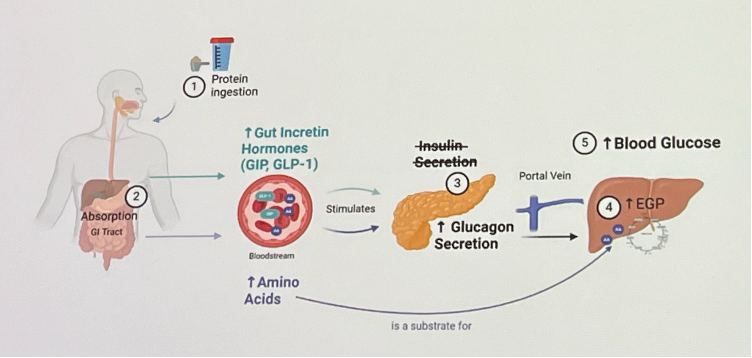
- In another study (n=29), adults using MiniMed 780G experienced fewer hypoglycemic events during a 60-min moderate-intensity cycling if they had a regular meal four hours before and a protein (0.5 g/kg) drink 30 minutes before the exercise. As shown in the figures below, glycemic level remained more stable during and after exercise in the protein group, compared to the control. The finding that protein intake reduces hypoglycemia was consistent across other scenarios, too, including: (i) high-risk conditions (n=21) when people had a meal two hours before exercise and had high insulin-on-board; and (ii) prolonged fasting during Ramadan (n=41).
- Dr. Morrison cited a survey, which found that 56% of people with T1D do not use protein in close proximity to exercise or going to the gym. Among those who do, the majority take protein after exercise (57% vs. 29% taking before) and reported that the primary purpose is to improve muscle building (46%) rather than managing glucose levels (20%). Thus, he emphasized that protein is a low-hanging fruit that is underused and can be implemented “now” to manage exercise in T1D.
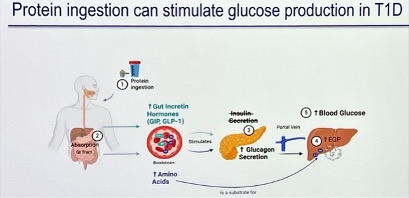
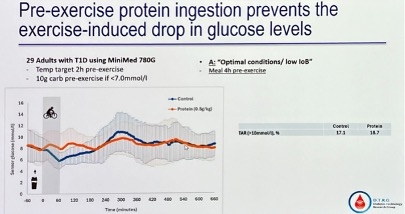
Exercise and T1D: Physiological differences, clinical trials, real-world evidence, and continuous lactate monitoring
Drs. Michael Riddell (York University, Canada), Dessi Zaharieva (Stanford University), and Klemen Dovc (University of Ljubljana, Slovenia) tackled the complexities of exercise with T1D. Setting the stage, Dr. Riddell highlighted multiple physiological differences during exercise in people with T1D compared to healthy controls. For example, people with T1D have, on average, a 15% lower aerobic capacity/VO2 max, a 30% slower motor unit conduction velocity (i.e., slower reaction times), and a 20% lower muscle capillarization recruitment (i.e., muscles are being fueled with less oxygen). Despite these differences, Dr. Riddell emphasized that people with T1D can perform equally to those without diabetes, particularly when they maintain glycemic control and engage in higher levels of physical activity. At the same time, glycemic management during exercise in people with T1D remains a significant challenge due to differences in glucose metabolism. Specifically, sensitivity to insulin on board increases during exercise for people with T1D, which Dr. Riddell said is a real Achilles’ heel for closed loop algorithms. Additionally, glucagon levels increase during exercise in individuals without diabetes yet remain flat in those with T1D.
- Dr. Zaharieva reviewed findings from clinical trials and real-world studies for exercise and T1D, concluding that there are insights to be gleaned from both types of research. Exercise conditions, meal timing, insulin on board, environmental factors, and behavioral factors (e.g., stress, sleep, illness) are more controlled in clinical trials, allowing for higher quality data quality and a better mechanistic understanding of how exercise affects glucose levels. Meanwhile, real-world studies are much larger in sample size and more generalizable.
- Clinical trials have revealed insights such as the benefits of using an AID system’s activity feature compared to its automated mode. They have also shown that supporting resistance training with a mobile health app is safe and feasible, as well as reduce insulin requirements.
- Real-world studies such as the T1DEXI have shown that hypoglycemia risk is higher in conditions including longer exercise duration and higher insulin on board at exercise initiation. Other studies have shown that providing structured exercise education in youth with new-onset T1D is associated with better glucose outcomes.
- There are even studies with both controlled and real-world components, such as one that compared the accuracy of three CGMs during exercise.
- Dr. Dovc emphasized the importance of exercise for reducing morbidity and mortality. As background, cardiorespiratory fitness is the best predictor of morbidity and mortality. It can be measured during cardiopulmonary exercise tests, which assess the maximum rate of oxygen the body can consume during intense exercise (i.e., VO2 max). Studies have shown that even five minutes of moderate-to-vigorous physical activity a day can prevent death by 6-10%, and reducing sedentary times by 30 minutes a day can prevent death by 3-10%. Another study found that engaging in a variety of physical activity types (e.g., walking, cycling, swimming, yoga) can also reduce mortality. In Slovenia, there is also a national surveillance system for physical and motor development in youth called SLOfit.
- Dr. Riddell discussed lactate metabolism and potential benefits of continuous lactate monitoring during exercise. Prior knowledge of lactate suggested that it is a waste product that causes muscular fatigue and soreness. A newer theory suggests that lactate serves as both a signaling molecule in muscles for angiogenesis and memory formation, as well as a fuel source for muscle, heart, and brain cells. Additionally, lactate is now also known to be produced continuously – not just during intense exercise or other anaerobic conditions – and used in glucose production/blood sugar balance via the Cori cycle. A key metric that elite athletes have used to enhance performance is the lactate threshold. This corresponds to the point during a progressive exercise test where lactate concentration starts increasing more rapidly. A continuous lactate monitor would allow individuals to improve their capacity to burn fat, increase the mitochondrial function of skeletal muscle, and promote better glucose control by enhancing lactate transport between muscle fibers and the liver (i.e., the Cori cycle).
Early-onset T2D in pregnancy: Prof. Helen Murphy highlights rising prevalence and urgent need for stronger preconception care
Prof. Helen Murphy (University of East Anglia, UK) examined pregnancy outcomes in women with early-onset T2D, emphasizing that the growing prevalence of T2D in women under age 40 represents a major and under-addressed clinical challenge. Drawing on national audit data and emerging CGM studies, she argued that improving outcomes for these pregnancies will require more than technology alone, highlighting the importance of preconception care, contraception access, and broader social support alongside glycemic management.
- Prof. Murphy began by highlighting the rapidly rising prevalence and high complication burden associated with early-onset T2D, specifically among socially underserved populations. Globally, early-onset T2D disproportionately affects women from ethnic minority groups and individuals living in areas of social deprivation. It is also often accompanied by clustered cardiometabolic risk factors. Among women diagnosed before age 30, ~80% develop at least one microvascular complication by age 26, and life expectancy is reduced by ~16 years compared with later-onset disease. Using data from the UK’s mandatory National Pregnancy and Diabetes Audit, Prof. Murphy showed that pregnancies complicated by early-onset T2D now exceed those with T1D. Between 2022-2024, the UK recorded over 9,000 pregnancies with T2D versus ~6,000 with T1D, meaning roughly 60% of diabetes pregnancies now occur in women with early-onset T2D. Alarmingly, rates of serious adverse pregnancy outcomes, including congenital anomalies, stillbirth, and neonatal death, are now higher in early-onset T2D pregnancies than in T1D pregnancies, reflecting persistent disparities in care.
- Prof. Murphy said that the most impactful intervention for improving pregnancy outcomes in this population is not technology, but better preconception care and pregnancy planning. She showed that women living in the most deprived communities are both least likely to plan pregnancies and most likely to develop early-onset T2D. Achieving optimal glycemic outcomes before and during pregnancy remains critical. Maternal A1c above target after 24 weeks gestation is strongly associated with increased risk of stillbirth and neonatal death, even after adjusting for early pregnancy glycemia. However, while progress has been made in improving early pregnancy glycemic outcomes among women with T1D, the data suggests little improvement, and potentially worsening trends, in early-onset T2D pregnancies, underscoring the need for targeted clinical interventions.
- Turning to technology, Prof. Murphy discussed the potential and current limitations of CGM use in pregnancies complicated by early-onset T2D. In the UK, ~90% of women with T1D enter pregnancy already using CGM and ~97.5% are using CGM by 24 weeks, demonstrating near-universal adoption. In contrast, only ~16% of women with T2D enter pregnancy using CGM and only about half are offered the technology early in pregnancy, despite strong patient preference for it. While RCTs and real-world data have shown that CGM improves glycemic outcomes in T1D pregnancies, she noted that evidence in T2D pregnancies remains limited. Key unanswered questions include optimal CGM targets and how CGM metrics relate to neonatal outcomes in this population. Prof. Murphy highlighted an ongoing UK trial, the PROTECT RCT, where her team is actively recruiting 422 pregnant women across 20 NHS sites. The study aims to determine the clinical benefits and cost-effectiveness of CGM in women with T2D. Ultimately, she concluded that improving outcomes will require an integrated care strategy that combines glycemic optimization with contraception access and broader social care, instead of relying on technology alone.
Risk of diabetic retinopathy during pregnancy: New registry data challenge historical concerns around progression risk
Ms. Janni Larsson (Zealand University Hospital Roskilde, Denmark) spoke about diabetic retinopathy (DR) in pregnancy, including a clinical overview of the disease contextualized within nationwide evidence from a Danish registry. While pregnancy has historically been associated with worsening DR due to increased rates of circulating VEGF in the body, her group’s findings suggest that pregnancy may not independently increase the risk of progression with improved glycemic management and structured screening.
- Ms. Larsson contextualized DR as a leading cause of visual impairment globally and emphasized the importance of early detection but noted that progression rates have fallen dramatically over time. She reviewed the pathophysiology of DR, from early microaneurysms to proliferative disease with neovascularization and tractional retinal detachment. She also highlighted screening as critical to enabling timely treatment before vision loss occurs. Notably, historical data showed a marked decline in progression rates over several decades (from ~8% to <1% five-year risk), reflecting advances in diabetes management.
- Turning to new data, she presented findings from The Danish Registry of Diabetic Retinopathy (DiaBase), which suggest that pregnancy itself may not increase the risk of DR progression compared to non-pregnant women with T1D. In a cohort of pregnant women with T1D (n=1,041) matched to non-pregnant controls, there were no significant differences in: (i) progression to proliferative DR; (ii) development of diabetic macular edema; or (iii) need for treatment, such as laser or anti- VEGF injections, before, during, or after pregnancy. She noted that rates of treatment were low overall, and no excess risk was observed across pregnancy or postpartum periods. According to Ms. Larsson and her team, pregnancy was not identified as an independent driver of worsening retinopathy.
- Consistent with historical findings, baseline disease severity was found to be the primary determinant of risk, reinforcing the importance of individual screening strategies for DR before and during pregnancy. Within the pregnancy cohort, factors such as higher baseline DR level and longer diabetes duration were associated with progression. Notably, only ~2% of women with no or mild DR required laser treatment, compared to ~11% among those with more advanced disease, representing over a five-fold difference in treatment risk by baseline severity. This suggests that risk stratification may guide more efficient screening approaches.
- To close, she said these findings have already influenced clinical practice in Denmark, supporting a differentiated screening approach during pregnancy. National guidelines now recommend a single first-trimester screening for all women, with no additional screening during pregnancy for those without signs of retinopathy, followed by regular postpartum follow-up. Taken together, Ms. Larsson highlighted how advances in diabetes care are reshaping assumptions about pregnancy-related risk.
Breakthrough T1D to train interventional diabetologists and endocrinologists through US certificate program and joint course with ATTD
To a full room, Prof. Thomas Danne (Breakthrough T1D) introduced two new Breakthrough T1D initiatives aimed at redefining T1D care as an interventional discipline. Highlighting the shortage of endocrinologists in the US, Prof. Danne explained that endocrinology likely attracts less interest than specialties like cardiology and radiology due to fewer procedural interventions, hence lower reimbursement. With the current availability of the disease-modifying therapy Tzield (teplizumab) and potential cell therapies in the future, Breakthrough T1D is gearing up to approach T1D care from an interventional perspective, analogous to medical subspecialties such as interventional radiology and interventional cardiology.
- US certificate program in interventional diabetology. Breakthrough T1D and the American College of Diabetology are currently soliciting interest among US diabetes specialists for a certificate program in interventional diabetology. The aim of the program is to build clinical expertise in disease-modifying and islet cell replacement therapies to bridge immune science with real-world care. The program will have a hybrid structure, starting with a three-month virtual preparatory phase (readings, guideline reviews, pre-recorded lectures), followed by a three-day in-person phase at Breakthrough T1D’s headquarters in New York City (plenary sessions; case discussions; expert and peer engagement).
- BT1D-ATTD Course: Interventional Endocrinology in T1D. Breakthrough T1D and ATTD are also collaborating on an interventional endocrinology course for T1D. While not yet finalized, the course will recruit up to 30 pediatric and adult endocrinologists who are early in their careers for its inaugural class. Its core framework is based on four therapeutic components across the disease continuum, including: (i) immune interception (stages 1-2 T1D); (ii) precision monitoring; (iii) advanced management (stage 3 T1D); and (iv) future interception & cure strategies. The course will also feature an ATTD plenary, webinar series, and a two-day intensive course in Europe. Applications are open until April 30.
India D-Tech session takes on diabetes care gaps with clinical decision support and practical CGM use
ATTD’s India D-Tech session offered a focused look at the realities shaping diabetes technology adoption in India, where the burden of diabetes is massive, care is often fragmented, and most treatment costs are still paid out of pocket. Across talks from Dr. Amit Gupta (IDF School of Diabetes and Education Committee) and Dr. Manoj Chawla (Lina Diabetes Care, India), a central theme was that better diabetes care in India will require more than just access to new devices. There is a need for solutions that are both scalable and locally relevant, including workflow-integrated clinical decision support and more pragmatic models for CGM use in cost-sensitive settings. Together, the talks made it clear that translating technological progress into better care in India and low- and middle-income countries (LMICs) more broadly will depend on building systems that reflect the regions’ epidemiology, workforce constraints, and out-of-pocket cost environment.
- Dr. Gupta opened the session by focusing on the gap between diabetes guidelines and daily clinical practice, saying that clinical decision support systems (CDSS) may be essential for making evidence-based care scalable in India and other LMICs. He said that although new guidance is constantly being issued by professional societies, implementation remains inconsistent because most diabetes and cardiometabolic care is delivered in primary care rather than specialist settings. In this context, Dr. Gupta said that education alone is insufficient unless it is embedded directly into the clinical workflow. He positioned CDSS as a tool that can help translate knowledge into practice by offering real-time, evidence-based recommendations and standardized care pathways during visits. Drawing on examples including the AIIMS cardiometabolic CDSS program in Delhi and prior digital health interventions such as SimCard, mPower Heart, CARRS, and mWellCare, he suggested that CDSS-based approaches can improve quality of care, support treatment intensification, and potentially reduce burnout.
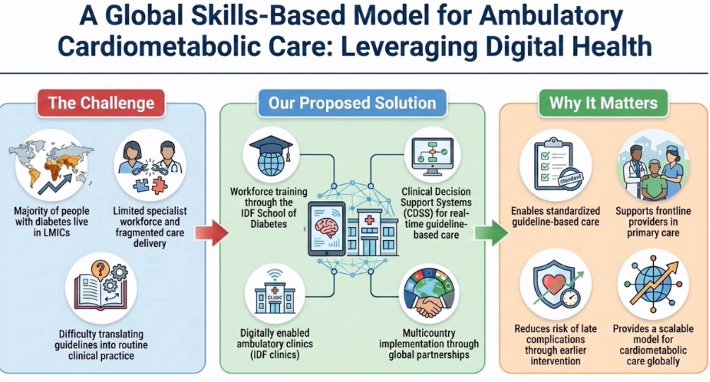
- Dr. Chawla then examined CGM adoption in India, saying that access strategies must reflect the country’s large diabetes burden and the financial realities of a predominantly self-pay market. He described India as a “raging storm,” not only because of the country’s more than 100 million people living with diabetes and 136 million with prediabetes, but also because roughly 70% of diabetes care spending is out of pocket. He stressed that this distinguishes India from reimbursed, higher-income markets, where device use is often a prescribing decision. By contrast, CGM use in India often becomes a negotiation around affordability and perceived value. Throughout his presentation, Dr. Chawla said that CGM implementation must be pragmatic and cost sensitive. He also highlighted the rising burden across neighboring Middle East and North African (MENA) and South Asian countries, noting that IDF projects the number of people living with diabetes will nearly double in MENA and increase by 73% in South Asia by 2050. He paired this with India’s large pediatric T1D population as a reminder that access challenges extend beyond adult T2D care.
- He described intermittent CGM as an increasingly practical strategy, particularly for people with T2D in resource-constrained settings. Specifically, a single 14-day CGM cycle costing ~5,000 rupees (~$54) may be sustainable on a quarterly basis, translating to an annual cost of ~20,000 rupees ($216) per year. In his view, this model can still enable therapy optimization and behavior change, even if continuous use remains financially out of reach. He also reviewed the current CGM landscape in India, noting that the market has already made multiple systems available, including Abbott’s FreeStyle Libre portfolio and other locally available platforms. He said Dexcom is expected to enter the market in the coming months as well.
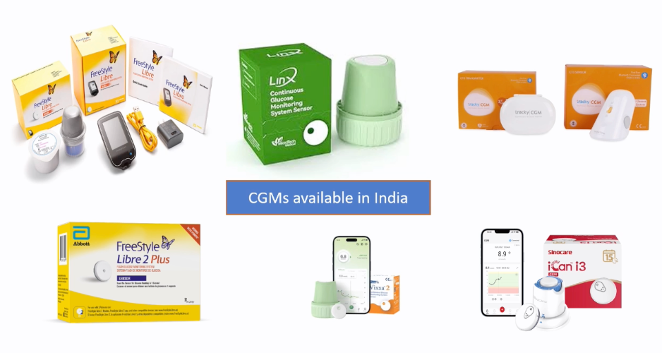
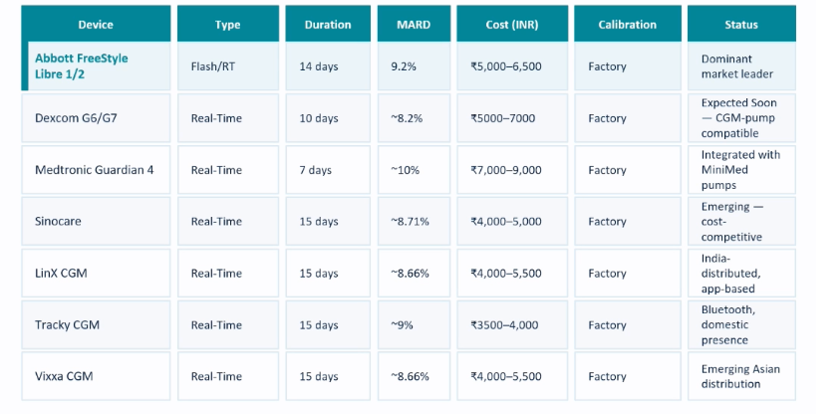
- Dr. Chawla added affordability is only one component of the challenge. Limited device availability outside urban cities, a lack of clinicians able to interpret CGM data, and the heavy workload faced by primary care physicians all remain obstacles to wider adoption. To address this, he pointed to ongoing training efforts, such as the RSSDI CGM clinic, which runs monthly to help physicians build confidence in interpreting and using CGM data. Looking ahead, Dr. Chawla pointed to lower-cost options, digital integration of CGM into EHR platforms, and emerging innovation such as the IIT Madras CGM prototype with a disposable microneedle patch at roughly half the cost of existing products as encouraging signs of momentum.
Dr. Ananta Addala on discrimination as the ‘elephant in the room’ shaping diabetes technology uptake
In this impactful session, Dr. Ananta Addala (Stanford University) discussed how discrimination – often the “elephant in the room” – shapes diabetes disparities, emotional burden, and technology readiness for underrepresented youth and families. Dr. Addala said that people often struggle to talk about discrimination because we are operating under a “fundamental logical fallacy,” treating race as if it were the same as ancestry. She said that while race is defined differently across country, regional, and even federal standards, most only ever look at pieces of the problem when trying to understand what drives disparities.
- Dr. Addala presented evidence showing that discrimination is measurable. Among caregivers, everyday discrimination correlated strongly with community discrimination (r=0.74; p<0.001) and lifetime discrimination (r=0.68, p<0.001). Discrimination also affects diabetes outcomes, with some studies finding that it is tied to lower diabetes‑technology acceptance (r=-0.38, p=0.05). Furthermore, Dr. Addala said that explicit racism is not only experienced individually but shared across generations. For example, explicit racism scores among youth and their parents are highly correlated, showing that discriminatory experiences are often mutually experienced among family members. She also said that parental reports of explicit racism were strongly linked to whether youth reported greater CGM burden and diabetes distress. She explained that these findings underscore that it’s not only the youth’s experience that shapes technology readiness, but the caregiver’s as well. These patterns generally mirror what is seen in generational trauma.
- While qualitative findings show that many marginalized families describe CGM as a necessity, pumps are viewed as optional or difficult to pursue because of insurance instability, fear of losing coverage, or lack of knowledge from providers. Families said that maintaining consistent access to CGM felt essential, whereas pursuing a pump often felt as if they were seeking a technology without certainty that its use would be sustainable. Dr. Addala closed by emphasizing that addressing discrimination in diabetes care requires coordinated action across every level of the system. She highlighted concrete steps that span policy, community representation, institutional practices, interpersonal interactions, and individual education that can be taken. Together, these actions outline a path toward more equitable access to diabetes technologies and more equitable outcomes for youth and families.
Feasibility of decentralized clinical trials in diabetes management studies
In this afternoon session dedicated to glucose sensing, Prof. Kirsten Nørgaard (Steno Diabetes Centre Copenhagen, Denmark) presented insights from a proof-of-concept study evaluating the feasibility of conducting a fully decentralized clinical trial among individuals with T2D receiving different treatment regimens and using CGM. Traditional clinical trials typically require frequent in-person visits, which can impose significant logistical and time burdens on participants and may limit study participation, particularly for individuals living far from study sites or with demanding personal commitments. Decentralized clinical trials (DCTs), which rely on telemedicine, digital platforms, and connected health devices, offer an alternative approach that may reduce participant burden while enabling more frequent and detailed data collection. The aim of this study was therefore to assess the operational feasibility of conducting a completely remote clinical study among adults with T2D living across Denmark.
- The study employed a virtual central site that managed all participants nationwide. Recruitment was conducted through social media, and informed consent was obtained electronically via digital signature. Participants received CGM devices and an activity tracker by mail and were instructed to self-apply and use them throughout the study. Over a 14-week period, participants engaged in scheduled telemedicine visits and completed study questionnaires through a dedicated mobile application, while physiological and activity data were collected remotely from connected devices. Participants were categorized according to their existing treatment regimens, including metformin-based therapy, basal insulin, or GLP-1 analog treatment.
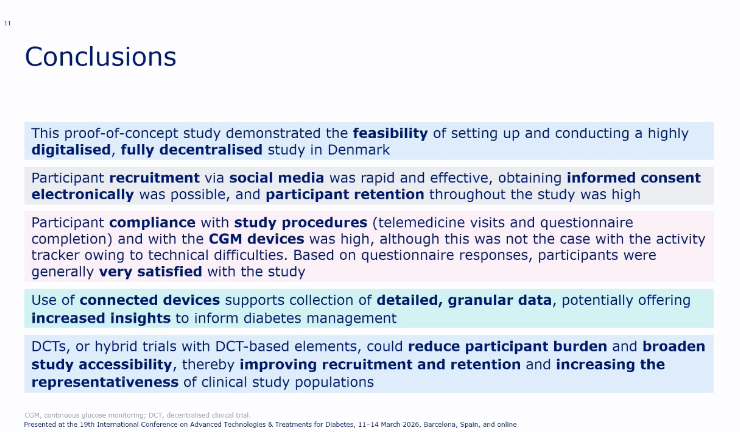
- The study demonstrated that a fully remote clinical trial is operationally feasible and can achieve strong recruitment and retention outcomes. Social media recruitment proved highly effective, generating substantial interest and enabling rapid enrollment. Among the enrolled participants, completion and engagement rates were high, with most individuals attending remote visits and providing substantial CGM data coverage. While adherence to the CGM devices was strong, usage of the activity tracker was limited, largely due to technical challenges during setup. Overall, participant satisfaction with the decentralized format was high, with respondents reporting positive experiences with remote interactions and digital study procedures. These findings suggest that decentralized and hybrid clinical trial designs supported by connected devices can broaden access, reduce participant burden, and facilitate high-resolution data collection, thereby offering valuable opportunities to enhance future diabetes research and clinical trial participation.
2026 Yearbook – 18 insightful presentations to a packed crowd!
1. Continuous and intermittent glucose monitoring
- Dr. Jennifer Sherr (Yale University) opened the 2026 ATTD Yearbook session by highlighting three studies in the clinical literature on CGM spanning early disease prediction, beta cell function assessment, and inpatient diabetes management.
- First, Dr. Sherr highlighted a pooled analysis evaluating whether CGM metrics could predict progression to stage 3 T1D among individuals with islet autoantibodies (AAb) (Calhoun et al. 2025). The dataset included 218 participants with T1D and ≥1 positive AAb type across five studies: (i) ASK (n=79); (ii) BDR (n=22); (iii) DAISY (n=18); (iv) DIPP (n=8); and (v) the TrialNet Pathway to Prevention (n=91). Nearly 30% of participants developed stage 3 T1D, and their CGM-derived metrics were able to accurately predict progression. The data suggest that CGM could play an important role in monitoring individuals identified through expanded screening programs and potentially enable home-based tracking of disease progression.
- Dr. Sherr also cited an analysis from the Closed-Loop/Verapamil (CLVer) study examining the association of CGM metrics with stimulated C-peptide measures in youth with recent-onset T1D (Neyman et al. 2025). Across 103 children followed for up to 52 weeks after diagnosis, CGM metrics were correlated with mixed-meal tolerance test-derived C-peptide measures, but the strength of this correlation was not sufficient to replace direct C-peptide testing.
- Dr. Sherr concluded by highlighting the DIATEC trial evaluating CGM use in hospitalized individuals with T2D (Olsen et al. 2025). Non-intensive care unit patients (n=166) were randomized to either point-of-care (POC) glucose testing or CGM use. Participants using CGM achieved 15 percentage points higher TIR (+3 hours/day) compared to those monitored with standard POC testing. According to Dr. Sherr, these findings support the growing evidence base for CGM use in hospital settings. However, she said that the full benefits of inpatient CGM will likely depend on integrating sensor data with automated alerts and insulin titration algorithms to guide clinical decision-making.
2. Insulin delivery hardware: Pumps and pens
- Dr. Rayhan Lal (Stanford University) continued his usual coverage of insulin delivery hardware in this year’s edition of the ATTD Yearbook.
- Smart insulin pens:
- Dr. Lal discussed an important use of smart insulin pens for reducing Time Below Range (TBR) in underserved populations (Gomez-Peralta et al. 2024).
- A post hoc analysis created two algorithms to detect glucose excursions, or spikes, from smart pens and correlate them to identify suboptimal bolusing (Wolpert et al. 2025).
- Insulin infusion:
- A systematic review demonstrated persistent gaps in the study of lipohypertrophy, a common complication of insulin infusion (Mader et al. 2025).
- An observational study also found that glycemic management deteriorated from Day 2 to Day 4 of infusion set use, as assessed by CGM metrics (Yoshimura et al. 2025).
- The authors included the pivotal trial for the Tandem seven-day extended wear infusion set, Steadiset, which was completed in 2025 (n=260), observing a mild increase in Time Above Range (TAR) between Day 4 and Day 7 (Lal et al. 2025). Dr. Lal again used his famous Achilles Heel metaphor to highlight the challenges of insulin infusion in diabetes.
- Technology safety and usability:
- During flight takeoff, insulin pumps over-deliver 0.6 units, and under-deliver 0.51 units during landing – Dr. Lal said that these figures may not impact adults yet may be critical for insulin-sensitive children (Garden et al. 2025).
- A study also found that rates of DKA in the DCCT/EDIC cohort have decreased over 34 years, attributed to insulin occlusion alerts, CGM, education, and experience (Budhram et al. 2025).
- Pump initiation and teaching time have become faster over time (Gordon et al. 2025), and deep learning algorithms provide promise for detecting pump faults (Idi et al. 2025).
- Insulin pumps for T1D:
- Dr. Lal called attention to persistent disparities in pump uptake even in areas with universal pump programs (Soliman et al. 2024).
- He noted that insulin sensitivity is acutely enhanced with motion, encouraging patients to frequently stand (Larsen et al. 2025).
- Finally, an analysis of 34,248 adults in the TriNetX database found that pump use was associated with decreased mortality, foot ulcers, DKA, and MI compared to MDI, but also with a higher risk of ischemic heart disease and retinopathy (Haughton et al. 2025).
3. New insulins, biosimilars, and insulin therapy
- Dr. Torben Biester (Auf der Bult Center, Germany) highlighted two studies of the 27 articles chosen across biosimilars, long-acting insulin, and new short-acting and new formulations. Dr. Biester discussed a secondary analysis (n=51) from two trials, comparing faster-acting insulin aspart (Fiasp) to insulin aspart and ultra-rapid insulin lispro (Lyumjev) to insulin lispro using the CamAPS FX hybrid closed-loop algorithm (Haliloglu et al., 2024). The study found that insulin lispro was superior with the use of the CamAPS FX closed-loop system, and faster-acting insulin aspart was not superior to insulin aspart. Dr. Biester added that it is refreshing to see a real comparison of two substances. He also highlighted a randomized controlled trial (n=123) of inhaled insulin plus degludec compared with usual care of MDI, CSII, or AID (Hirsch et al., 2024). The study included adults with an A1c of 5.4-10.5%, with T1D duration >6 months. Results showed that inhaled insulin was non-inferior to usual care, predominantly consisting of AID (48%) or MDI (44%). Specifically, 21% of inhaled insulin users achieved an A1c reduction of greater than 0.5% compared with 5% of the usual care group, and 26% of inhaled insulin users saw a greater than 0.5% increase in A1c compared with 3% in the usual care group. Dr. Biester added that inhaled insulin is superior to total usual care, most notably for non-AID users. Dr. Biester emphasized that insulin continues to be relevant in diabetes care, especially as novel formulations emerge.
4. Closed-loop, decision support, and AI
- Dr. Mark Clements (Glooko) reviewed recent data on AID, decision support systems, and AI. Beginning with closed-loop AID systems, his chapter identified 300 manuscripts published between July 1, 2024, and June 30, 2025. Dr. Clements identified several major themes, including long-term real-world observations and AID in T2D and very young children. More rare were studies on conceptually new technology, such as human-machine co-adaption and replay simulation, as well as early feasibility studies from fully closed-loop systems. Dr. Clements highlighted four studies in particular (Battelino et al. 2025; Elbarbary et al. 2024; Kovatchev et al. 2025; Kudva et al. 2025) and specifically called out the last of the four, a 13-week RCT comparing Control-IQ+ to CGM alone that demonstrated significantly greater improvements to A1c and TIR.
- On decision support, Dr. Clements pointed to what he believed was the first study on an AI-powered insulin titration system for people with T2D (Ying et al. 2025), which showed that the ML system was noninferior for TIR outcomes compared to physician led groups.
- Dr. Clements predicted that novel applications of AI and LLMs would be the fastest growing section of diabetes literature in the next five years. The chapter identified more than 1,500 publications on the topic, ranging from glucose, hospitalization, complications, and progression prediction to adaptive interventions. He highlighted one in particular (Metwally et al. 2025), which he said offers a “volume of data” on phenotypes for muscle and hepatic insulin resistance that can be used to inform the development of future therapies.
- The esteemed Dr. Neal Kaufman (Canary Health) explored key progress, proof-of-concept, and critical areas of improvement in digital health interventions at ATTD 2026. Echoing his sentiment from ATTD 2025, Dr. Kaufman stressed the impact on patient behavior that personalized digital health interventions can have, but warned that certain limitations will continue to limit efficacy and access to such benefits until rectified.
- To underscore the value of digital health interventions, Dr. Kaufman first explored the DIAMANTE study (n=168) – a 24-week RCT with a control, random, and adaptive arm. Adaptive intervention, which included receiving a daily text selected by a reinforcement learning algorithm, conferred a substantial increase (19% increase in daily step count) in physical activity compared to control or random conditions (+4% and +2%, respectively). Dr. Kaufman concluded that the DIAMANTE study supports the use of reinforcement learning algorithms in personalizing digital health interventions to increase physical activities in diverse populations.
- Nevertheless, Dr. Kaufman stressed that further emphasis on personalized access is required. Specifically, he discussed: (i) precision recruitment and engagement; (ii) personalization as critical to increasing engagement and efficacy; (iii) considering the complexity of the lived experience of diabetes in program design; and (iv) availability in multiple languages.
- Dr. Kaufman also reviewed papers on the potential for family caregivers support during his time at the podium (Setyoadi et al. 2024; Kim et al. 2023; Amed et al. 2025).
- To underscore the value of digital health interventions, Dr. Kaufman first explored the DIAMANTE study (n=168) – a 24-week RCT with a control, random, and adaptive arm. Adaptive intervention, which included receiving a daily text selected by a reinforcement learning algorithm, conferred a substantial increase (19% increase in daily step count) in physical activity compared to control or random conditions (+4% and +2%, respectively). Dr. Kaufman concluded that the DIAMANTE study supports the use of reinforcement learning algorithms in personalizing digital health interventions to increase physical activities in diverse populations.
5. Using digital health technology to prevent and treat diabetes
- The esteemed Dr. Neal Kaufman (Canary Health) explored key progress, proof-of-concept, and critical areas of improvement in digital health interventions at ATTD 2026. Echoing his sentiment from ATTD 2025, Dr. Kaufman stressed the impact on patient behavior that personalized digital health interventions can have, but warned that certain limitations will continue to limit efficacy and access to such benefits until rectified.
- To underscore the value of digital health interventions, Dr. Kaufman first explored the DIAMANTE study (n=168) – a 24-week RCT with a control, random, and adaptive arm. Adaptive intervention, which included receiving a daily text selected by a reinforcement learning algorithm, conferred a substantial increase (19% increase in daily step count) in physical activity compared to control or random conditions (+4% and +2%, respectively). Dr. Kaufman concluded that the DIAMANTE study supports the use of reinforcement learning algorithms in personalizing digital health interventions to increase physical activities in diverse populations.
- Nevertheless, Dr. Kaufman stressed that further emphasis on personalized access is required. Specifically, he discussed: (i) precision recruitment and engagement; (ii) personalization as critical to increasing engagement and efficacy; (iii) considering the complexity of the lived experience of diabetes in program design; and (iv) availability in multiple languages.
- To underscore the value of digital health interventions, Dr. Kaufman first explored the DIAMANTE study (n=168) – a 24-week RCT with a control, random, and adaptive arm. Adaptive intervention, which included receiving a daily text selected by a reinforcement learning algorithm, conferred a substantial increase (19% increase in daily step count) in physical activity compared to control or random conditions (+4% and +2%, respectively). Dr. Kaufman concluded that the DIAMANTE study supports the use of reinforcement learning algorithms in personalizing digital health interventions to increase physical activities in diverse populations.
- Dr. Kaufman also reviewed papers on the potential for family caregivers support during his time at the podium (Setyoadi et al. 2024; Kim et al. 2023; Amed et al. 2025).
6. Technology and pregnancy
- Dr. Jennifer Yamamoto (University of Manitoba, Canada) reviewed the recent literature on diabetes technology use during pregnancy, highlighting two studies among eight selected papers.
- She began with a prospective cohort study comparing CGM profiles in pregnancies with and without GDM (Durnwald et al. 2024). Participants (n=768) used CGM prior to 17 weeks’ gestation and conventional GDM screening later in pregnancy. While GDM is typically diagnosed at ~24-28 weeks, this CGM data revealed clear differences in glucose profiles between those who did (n=58) and did not develop GDM. Retrospective examination of earlier CGM data showed that glycemic differences were already detectable as early as the second trimester, highlighting the potential role of CGM in earlier identification (and treatment) of dysglycemia during pregnancy.
- Dr. Yamamoto also discussed a large retrospective cohort study examining the safety of GLP-1 RA use during the preconception period (Imbroane et al. 2025). Given the rapidly increasing use of GLP-1 RAs among younger adults, many of whom are women of reproductive age, the study evaluated pregnancy outcomes among individuals exposed to GLP-1 RAs prior to conception. Results suggested that GLP-1 RA use during this period was not associated with increased risk, but rather was linked to lower rates of several adverse obstetric outcomes, including lower rates of GDM, preterm delivery, hypertensive disorders of pregnancy, and Cesarean delivery. Dr. Yamamoto cautioned that these findings should be interpreted carefully given the limitations inherent to retrospective database studies and called for more prospective studies to better define the safety and potential benefits of GLP-1 RA use in pre-pregnancy care.
7. Diabetes technology and therapy in the pediatric age group
- Dr. David Maahs (Stanford University) again brought his expertise in pediatric endocrinology to highlight a diverse set of publications. In an analysis of nine international registries and over 100,000 children with T1D, each registry demonstrated an increase in the use of CGM, insulin pumps, and AID in parallel to decreases in A1c and a reduction in severe hypoglycemic events (Zimmerman et al. 2025). In another study of over 4,000 children with T1D, beginning CGM use less than six months after diagnosis led to lower A1c levels three years post-diagnosis, underscoring the need to remove barriers to CGM (Mann et al. 2025). Turning to the early use of AID, in children aged 10-17 newly diagnosed with T1D had no changes to C-peptide levels over 48 months, but had 12% higher TIR and 0.9% lower A1c values (Ware et al. 2024). Even in children aged 1-7 years, a 0.4% improvement to A1c values and 8% to Time in Range (TIR) was shown over 18 months, highlighting the long-term safety and benefit of AID for youth (Ware et al. 2024). In a study of over 9,000 children in nine countries, DKA at diagnosis was associated with higher A1c values, neurocognitive damage, and higher BMI after two years. Early AID uptake mitigated some of this association (Dovc et al. 2025).
8. Advances in exercise and nutrition as therapy in diabetes
- Dr. Michael Riddell (York University, Canada) discussed the robust volume of research related to exercise and nutrition in diabetes, with 3,075 titles related to exercise and diabetes and 8,767 related to nutrition and diabetes published between July 1, 2024, and June 30, 2025. Of these, he highlighted 10 papers that he found to be particularly novel and impactful.
- On nutrition, Dr. Riddell explained that consumption of meat, especially processed and red meat, was correlated with elevated risk for developing T2D (Li et al. 2024). With a humorous jab at hotdogs, he showed research demonstrating that ultra-processed foods were correlated with elevated T2D risk (Vitale et al. 2024; Dicken et al. 2024), while whole foods and plant-based diets were shown to be correlated with a reduced need for diabetes-related medications (Hanick et al. 2024).
- Dr. Riddell also shared research on sweetened beverages that showed consuming over two servings of sugar- or artificially-sweetened drinks daily was correlated with a 41% and 11% greater risk of developing T2D, respectively (Pacheco et al. 2025). Consuming two per week without following proper exercise guidelines was also linked with elevated risk.
- Touching briefly on exercise, Dr. Riddell shared that resistance training improves body composition with GLP-1 RA use, yoga has been shown to be beneficial for youth with T1D, and mobile health biometrics enhances exercise adherence.
- Finally, joking that doctors like him may be replaced in the future, he discussed research that indicated that generative AI can be useful for providing accurate and helpful instructions regarding exercise for patients with T2D, though he warned that one must be careful before rashly accepting advice from AI (Chung and Chang, 2024).
9. Primary care and diabetes technologies and treatments
- Dr. Gregg Simonson (International Diabetes Center) presented about primary care, where much of T2D management occurs. This year, 12 studies – five on diabetes therapy, three on technology, and four on care models – were selected among 361 articles. In therapy, Dr. Simonson highlighted the SOUL trial (n=9,650), published in NEJM (McGuire et al., 2025), which investigated the use of oral semaglutide for MACE in T2D. The study found 3.1 events per 100 person-years in the oral semaglutide group compared with 3.7 in the placebo. Dr. Simonson highlighted that nonfatal MI had the largest risk difference between oral semaglutide and placebo. In technology, Dr. Simonson highlighted a retrospective cohort analysis (Garg et al., 2024) of CGM use in people with T2D on one of three treatment regimens: (i) non-insulin; (ii) basal insulin; and (iii) prandial insulin therapy. The results showed a significant reduction in hospitalizations and ER visits across all three treatment groups. In addition, a pre-specified subgroup analysis found that three-month A1c reductions were maintained throughout the post-index period. Dr. Simonson concluded that for primary care providers, this data shows that CGM use results in fewer hospital and ER visits, along with improved glucose management. On care models, Dr. Simonson highlighted the International Geriatric Diabetes Society’s Deprescribing Consensus Initiative (Munshi et al., 2025), examining the unique challenges older adults face, such as multimorbidity, cognitive or functional decline, and difficulty managing complex regimens. The publication proposes a structured 4S Pathway to guide clinicians in reassessing goals through shared decision‑making and implementing safer, more manageable treatment strategies.
10. Use of technologies at the advanced age
- Dr. Anna Kahkoska (University of North Carolina Chapel Hill) and her co-authors selected 13 articles (from over 300) to include in the chapter. She highlighted three articles covering CGM and AID use in older adults, as well as diabetes care in long-term care facilities.
- Research on CGM use found that the average CGM education time for older adults is longer and more variable compared to younger adults (Weinstock et al. 2024).
- In a 10-day blinded CGM study (n=65, mean A1c = 7.2%) in eight nursing homes in the US, over one in four residents had ≥1% time below 70 mg/dL and over half of residents spent >10% of time above 250 mg/dL, with the highest burden seen, interestingly, among insulin users (Munshi et al. 2025).
- In a 36-week, multicenter, randomized, crossover trial (n=82) of people with T1D ages 65 to 86 years old, a comparison of sensor-augmented pump (SAP) to hybrid closed loop (HCL) found that HCL more effectively decreases hypoglycemia and improves glycemia (Kudva et al. 2025). In the 12-week extension phase 91% of the participants chose to continue using HCL (Kudva et al. 2025).
11. The Real “Real World”: Overcoming practical barriers and disparities in diabetes technology
- Stanford’s Dr. Ananta Addala presented the real-world data section of this year’s ATTD yearbook section, with a focus on the barriers and disparities in diabetes technology use. Of the 387 articles identified, up significantly from the 2025 session, 14 were included in this year’s chapter. She categorized them into five themes: (i) early frontiers of AI in diabetes care; (ii) diabetes technology in higher-risk situations; (iii) continuous barriers to diabetes technology use; (iv) how we affect our diabetes technology; and (v) tracing inequities to transform diabetes care. Dr. Addala highlighted two studies she though best represented the third and fifth theme:
- The SKIN-PEDIC study (Berg et al. 2025) was a thorough global exploration of the skin problems children and adolescents face with devices. Across the diverse pediatric population with various skin conditions and devices used, eczema, skin infections, wounds, and scarring were common, and the study identified several associated factors, including longer pump and CGM wear and use of certain devices.
- Dr. Addala also highlighted an interventional RCT in the US (Agarwal et al. 2024) that aimed to support young adults with diabetes, all of whom had A1c ≥9% at baseline and concerning rates of DKA. With weekly clinics, flexible scheduling, screenings for social needs, and enhanced access to diabetes tech, participants saw improvements to A1c, incidence of hospitalization, and diabetes technology uptake.
12. Diabetes technology in the hospital
- Dr. Tim Hropot (University Medical Centre Ljubljana, Slovenia) discussed the continual challenges of diabetes technology in the hospital. The DIATEC study compared CGM with point-of-care (POC) glucose monitoring in 166 non-ICU patients with T2D. In-hospital CGM use increased TIR by 15% (77.6% vs. 62.7%, p<0.001), mainly by reducing TAR. CGM also lowered TBR, glycemic variability, prolonged hypoglycemic events, insulin usage, and in-hospital complications (Olsen et al. 2025). In the US, the TIGHT study studied 110 adults with T2D at six academic hospitals. Participants were randomized to either standard therapy with a glucose target of 140-180 mg/dL or intensive therapy with a glucose target 90-130 mg/dL guided by CGM. No difference was seen in mean glucose values and only 7% of the intensive group achieved the target range. Participants with lower baseline A1c values (<7.5%) achieved substantially higher TIR with CGM (77% vs. 62%) (Hirsch et al. 2025).
13. Impact of diabetes technologies on psychosocial outcomes
- Dr. Alon Liberman (Children’s Medical Center) shared insights from two studies that highlighted the impact that diabetes technology has on psychosocial outcomes, particularly in youth.
- The first study assessed the psychosocial implications of messaging from clinicians and CGM devices and apps. Dr. Liberman explained that youth often felt as if their TIR numbers were being judged or graded as if it were a school test (Tanenbaum et al. 2024). Due to the pressure and stress associated with this perception, youth and their families were more likely to create their own non-consensus target ranges to cope and regain their sense of control. Colors commonly used in CGM apps, such as green, yellow, and red also often negatively impacted patient-reported stress. These concerns worsened when considering TITR, with many viewing the metric as an additional pressure, though Dr. Liberman clarified that this sentiment was not universal and some felt motivated by the metric.
- In the second study, Dr. Liberman discussed executive function challenges in teens with T1D, especially around emotional regulation, and how A1c was impacted by the use of insulin pumps. In the study, while teens without executive functioning challenges demonstrated insignificant differences in A1c values with or without insulin pumps, teens with challenges saw a significant reduction from baseline A1c (Vitale et al. 2025). Dr. Liberman noted that there was little additional risk from the technology and concluded that diabetes technologies can improve equity by overcoming certain psychosocial barriers.
14. Immune intervention and beta cell replacement therapies in T1D
- Dr. Desmond Schatz (University of Florida) two selections of articles relevant to immune intervention and restorative therapies: (i) a study on Tzield (teplizumab) maintaining insulin secretion in “slow-progressor” people with stage 2 T1D (Galderisi et al., 2025); and (ii) a study on Vertex’s zimislecel, a stem cell-derived islet therapy (Reichman et al., 2025).
- The first study analyzed the TN10 trial using oral minimal model (OMM)-derived indices to characterize the history of stage 2 T1D in placebo and Tzield-treated individuals. As background, OMM represents a differential equation-based model of meal-stimulated glucose and insulin dynamics. Results showed that individuals considered “rapid progressors” treated with Tzield transitioned from stage 2 to stage 3 T1D within two years, but still showed improved insulin secretion compared to those identified as “rapid progressors” treated with placebo. Curiously, rapid or slow progression to T1D did not correlate with changes in CD8 T cell exhaustion.
- The second study, previously presented at ADA 2025, demonstrated positive results in follow-up data from the FORWARD study (n=12). All participants achieved A1c <7.0% and Time in Range (TIR) >70%, and TIR continued to increase to 93% at one year. 10 of 12 participants eliminated insulin use, and insulin use was reduced in the two participants who did not achieve insulin independence. There were no severe hypoglycemic events for any of the participants.
15. Obesity and diabetes
- Dr. Viral Shah (Indiana University) highlighted five studies among 223 clinical trials published between July 2024 and June 2025. The review focused on three themes: (i) GLP-1 RA beyond diabetes and obesity; (ii) T2D prevention; and (iii) use in T1D.
- First, Dr. Shah highlighted an analysis of the SELECT trial (n=17,604), which found that while semaglutide did not reduce incident COVID-19, it lowered serious adverse event or mortality rates among those who were infected.
- The NutrIMM study (n=112) offers a potential mechanism for the anti-inflammatory effects of GLP-1 RAs: people with obesity have more inflammatory markers and reduced immune response, and weight loss through GLP-1 RA can improve immune function.
- Next, Dr. Shah spotlighted clinical trial analyses demonstrating that semaglutide and tirzepatide were effective in preventing T2D in people with prediabetes. He added that it is time to change the term “prediabetes” into “stage 2 T2D” to create regulatory pathways for T2D prevention.
- Lastly, Dr. Shah pointed to the ADJUST-T1D trial (n=115), in which GLP-1 RA significantly improved CGM metrics in people with T1D, compared to AID systems alone.
16. Emerging trends in MASLD and MASH
- To close out the ATTD Yearbook, Dr. Satish Garg (University of Colorado) offered insights on MASLD and MASH. Dr. Garg shared a striking statistic that individuals with lean MASLD have a 1.6-fold increase in mortality. The global prevalence of lean MASLD is estimated to be 5% in the general population and makes up 19% of all MASLD cases. The global prevalence of MASLD is estimated to be nearly 40%. After decades of limited therapeutic options, Dr. Garg spotlighted a new generation of FDA-approved treatments for MASLD and MASH: Rezdiffra’s resmetirom (MAESTRO-NASH study) and Novo Nordisk’s semaglutide (ESSENCE study). Moreover, three separate therapies remain under investigation for both diseases, including: (i) FGF-21 (Noureddin et al. 2025); (ii) dual/triple agonists (Loomba et al. 2024); and (iii) survodutide for MASH and MASLD (Sanyal et al. 2024).
17. Virtual clinics for diabetes care
- As with last year’s ATTD Yearbook Dr. Satish Garg (University of Colorado) shared the latest DT&T metrics. Now in its 27th year, DT&T’s global readership covers 170 countries. Manuscript submission have increased by 20% in 2025 (compared to 8% in 2024). The publication remains highly selective with an ~82% rejection rate (~85% in 2024). In 2025, there were >575,000 full-text downloads (+15%), including 22,000+ downloads for ATTD and ATTD-Asia abstracts and 18,500+ for the ATTD Yearbook.
- On virtual clinics for diabetes care, Dr. Garg kept things short and sweet with a single slide highlighting four key articles, which showed improved patient-reported outcomes with CGM-aided virtual diabetes care (Hood et al. 2025), lowered A1c following a pharmacist-led hybrid care diabetes clinic (Smith et al. 2025), improved patient satisfaction and glycemia with a hybrid gestational diabetes care model (Axelrod et al. 2025), and feasibility of remote CGM use training in older adults (also referenced in the “Use of Technologies at the Advanced Age” chapter of this year’s Yearbook) (Weinstock et al. 2024).
18. New medications for the treatment of diabetes
- Dr. Satish Garg (University of Colorado) highlighted multiple studies of new medications for the treatment of diabetes.
- The first study (Linong et al., 2025) involved the phase 3 GLORY-1 trial of once-weekly mazdutide in Chinese adults with obesity or overweight. At baseline, the mean body weight was 87.2 kg (181 lbs) and the mean BMI was 31.1 kg/m². At Week 32, the mean percentage change in body weight from baseline decreased by 10%, 13%, and 0.45% in the mazdutide 4 mg, 6 mg, and placebo groups, respectively. Furthermore, at Week 48, the mean percentage change in body weight was 11%, 14%, and 0.3% in the mazdutide 4 mg, 6 mg, and placebo groups, respectively.
- Dr. Garg also highlighted another study (McGuire et al., 2025) of the phase 3 SOUL trial, which assessed oral semaglutide in people with T2D and high CV risk. Primary outcome events (MACE) occurred in 12% of the oral semaglutide group, compared with 14% in the placebo group (hazard ratio, 0.86), indicating that oral semaglutide was associated with a significantly lower risk of major adverse CV events than placebo.
- Finally, Dr. Garg presented his study (Garg et al., 2025) on cardiovascular and renal biomarkers in people with T1D and overweight or obesity, who had been treated with tirzepatide. The retrospective study found that long-term use of tirzepatide in the population led to more than 23% weight loss and sustained improvement in glucose management. Additionally, irrespective of changes in weight or A1c levels, the study showed significant improvements in cardiovascular biomarkers and preservation of kidney function. Dr. Garg said these findings are quite notable, as GLP-1 RAs are not yet approved for people with T1D, yet studies have shown an increasing trend in the prescribing of incretin treatments for this population. A long term randomized controlled trial would be valuable.
Exhibit Hall
Diabetes Technology
Abbott
At one of the main entrances to the exhibit hall, Abbott made a strong first impression with a dynamic showcase of new software, hardware, data, and patient-facing initiatives. We’re guessing that the eyes of many attendees’ eyes were likely first drawn to large yellow posters advertising the new Libre mobile app, which unifies the previously separate FreeStyle Libre 2 and 3 apps into a single, more seamless platform that aims to simplify the user experience across devices. Fantastic! Abbott featured its new Libre Assistplatform, launched late last year, which analyzes meal photos to forecast and categorize potential glycemic impact. On the hardware and awareness front, an eye-catching interactive display challenged passersby to identify DKA symptoms, reinforcing the company’s push for earlier detection and action. The message — “Recognize. Check. Act.” — was hard to miss. While its dual glucose-ketone sensor is not yet approved or launched, and so it was not at the booth, it was submitted to the FDA at the end of 2025 and we hope to hear updates soon. The booth also highlighted a major data presentation at the conference: the FreeDM2 study results evaluating FreeStyle Libre in people with T2D not using insulin. FreeStyle Libre significantly reduced A1c compared with those using BGM, falling to 8.1% for those on Libre vs. 8.6% for those on BGM, respectively, from an 8.8% baseline A1c. On the time in range (TIR) front, those on Libre increased TIR by 35%, or 14 “percentage points,” going from 40% to 54%. While those on BGM increased their TIR by 7%, or three percentage points, to 45% from 42%, there is far more improvement needed in this group. Ultimately, TIR increasing to 54% from 40% with Libre, versus an increase to 45% from 42% with BGM – it’s not even a choice which group someone with diabetes would want to be in, although clearly, we shouldn’t miss the forest for the trees – we hope that both groups of patients received far better advice on the therapeutic front and that they could make the advice actionable – we wonder what people without any extra resources do with information on this front. On a different note, for those needing a pick-me-up, Abbott staffed a busy espresso bar fueling attendees as they navigated the busy exhibit floor.

Dexcom
Dexcom’s booth at ATTD 2026 featured the company’s usual engaging “Dexcom Green” branding. Displays highlighted the value of CGM in complication prevention in diabetes, linking CGM use with better outcomes in T1D. Other displays highlighted both patient and provider satisfaction with Dexcom CGM, stating that providers in particular view the brand as being committed to innovation. Product sizing was of particular interest to conference attendees engaging with the booth and is an important consideration in terms of patient comfort and management burden. When asked about availability across Europe, company representatives explained that coverage for its CGMs varies across different markets in Europe and must be negotiated on a country-by-country basis. Dexcom continues to advocate for coverage in individual markets and has dedicated specific teams to this effort.

Senseonics
Just as we have seen at conferences across the US and Europe, Senseonics’ booth prominently featured the “One year. One CGM.”tagline. The company’s booth highlighted the possibility for one year of accurate, reliable CGM data with the insertion of an Eversense 365 sensor. Company representatives highlighted the benefits of an insertable CGM, including more flexibility from not inserting a new CGM every 15 days or so as well as not needing a strong adhesive for Eversense’s on-body transmitter. By comparison, they said stronger adhesive are needed to support Abbott’s FreeStyle Libre series and Dexcom’s G-series 14-15 day wear time. The option to remove the on-arm transmitter for medical, aesthetic, or other personal reasons also offers greater patient choice and has been popular with attendees at ATTD 2026, said company representatives. (We assume people with diabetes are careful when they do this!) Looking to the future, representatives highlighted Eversense’s work on updated sensors coming soon! Pivotal trials for its Gemini sensor are expected to complete by the end of 2026, with launch anticipated in 2027. Gemini incorporates a one-year battery into the sensor itself, enabling transmitter-free use – wow, this will be nirvana for many, we imagine! The Freedom sensor is expected to follow in 2028, which will aim to incorporate direct wireless communication between the implanted sensor and the patient’s smartphone, eliminating the need for a separate transmitter entirely!

Glooko
Glooko’s exhibit featured several large interactive display screens that allowed visitors to scroll through a realistic demo account from a clinician’s perspective. Representatives were eager to demonstrate how easily Glooko’s standardized systems are to navigate, showcasing several detailed reports from the list of all relevant data collected from a patient’s devices across a range of brands. Historically, those that know Glooko well know that the company’s standardization is what has made its services so beneficial to physicians, enabling them to save time searching for and downloading data from several devices. We are impressed by clear system improvements and the degree of collaboration that seems possible with more diabetes devices.

Inreda
Inreda’s display featured an inviting teal color scheme and highly knowledgeable representatives. Its tagline, “Glucose fully regulated,” was accompanied by up and down arrows symbolizing the company’s bihormonal approach to glucose management. The Netherlands-based company offers a dual glucagon-insulin pump, which has launched in its home country to over 100 patients so far. Recent trials demonstrate that one year of bihormonal fully closed-loop pump use increases Time in Range from 55.5% to 80.3%, decreases Time below Range from 3.2% to 1.4%, and reduces self-reported diabetes burden. Additionally, nearly all (98.6%) patients achieved the recommended treatment goal of >70% TIR, compared to just 22.7% of patients at baseline. A similar proportion (97.2%) of patients achieved the combined recommended treatment goals of >70% and <4% TBR, compared to 10.7% at baseline. Company representatives discussed this impressive data in detail, saying that additional trials are underway that may facilitate expansion beyond the Netherlands.
Insulet
Insulet’s signature mango booth remained busy throughout ATTD 2026, with much of the discussion focused on international Omnipod 5 expansions – a theme visually depicted by the rotating globe display at the center of the booth – and how the technology simplifies diabetes management. Representatives at the booth also teased what’s next for the platform, with many themes echoed from Insulet’s opening-day symposium where the company shared new data supporting Omnipod 5 use in T2D. Conversations also focused on Insulet’s broader innovation pipeline. The completed STRIVE study evaluating SmartAdjust 2.0 and ongoing EVOLUTION trial work toward a fully closed-loop system were also key points of interest. Specifically, representatives were happy to go over highlights from Insulet’s symposium, where Prof. Martin de Bock (University of Otago, New Zealand) presented results from the EVOLUTION 2 study (n=24) showing that the fully closed-loop system achieved 68% TIR without bolusing, with minimal hypoglycemia. Finally, attendees were interested in Insulet’s recent interoperability updates, including integration with the FreeStyle Libre 2 Plus and 3 Plus CGMs, as well as Dexcom G6 and G7 sensors. We know that many would love to see a deal with Senseonics, given that both companies value discretion.

i-SENS
i-SENS’s exhibit primarily featured their CareSens Air (CSAir) CGM technology, the company’s 15-day sensor. i-SENS representatives and exhibit graphics emphasized recent improvements in the CSAir system algorithm, where the prior two-hour warm-up and daily user calibration requirements were improved to 30-minutes for warm-up and optional user-entered calibration. CSAir achieved CE-Mark approval in March 2024 following two pivotal studies conducted in Germany and South Korea. The booth also showcased findings from a July 2025 study that demonstrated improved accuracy compared to the algorithm with manual calibration, and this accuracy was stable across measurement ranges and sensor lifetime.

Kaleido
Kaleido’s booth was an eye-catching burst of color at ATTD 2026 that highlighted the company’s insulin pump, which is compatible with the Dexcom G6. Kaleido’s pumps, charging cable, and inserter are reusable for up to four years, while its insulin cartridges, body and pump patches, and infusion sets must be replaced every three days. Representatives highlighted the pump’s self-learning algorithm and waterproof design, and the booth showed the 12 colors for which the pump itself can be personalized, which adds a fun personal touch to the pump.

MiniMed
MiniMed’s booth at ATTD 2026 drew steady crowds throughout the exhibit hall, reflecting strong interest behind its AID ecosystem and its forward-looking pipeline. Prominent displays highlighted both the MiniMed 780G AID system and the MiniMed Go smart pen system. Representatives pointed to the systems’ consistently positive real-world outcomes, including data reinforcing that MiniMed’s performance is driven largely by its algorithm rather than any single sensor. Representatives were referring to data presented by Dr. Ohad Cohen and Prof. Amir Tirosh, which demonstrated non-inferior glycemic outcomes between Simplera Sync and the Abbott-partnered Instinct, with both sensors associated with strong TIR (~79%-81%) outcomes. MiniMed also used the booth to extend conversations from Dr. Cohen’s additional analyses on system behavior, particularly around low glucose alerts and meal bolusing. Data showing that lower alert thresholds (50-60 mg/dL) were associated with improved TIR and reduced hyperglycemia, encouraging a shift toward “trusting the system” rather than relying on frequent alerts.

mylife Diabetes Care
mylife Diabetes Care’s booth at ATTD 2026 drew steady attention from attendees, particularly given the company’s strong European presence. Representatives focused on the personalization offered by the AID system, touting the wide range of glucose targets (80-198 mg/dL) available to users. Their conversations with attendees also reflected themes and data from the company’s symposium on CamAPS FX. Data presented by Prof. Roman Horvorka showed a clear relationship between selected targets and the mean glucose and TIR achieved, highlighting how adjustable personal glucose targets (PGT) can be used to tailor glycemic outcomes. Real-world pediatric data was also presented on the CamAPS FX system, showing TIR improvements into the mid-60% range with consistent gains over time.

Pharmasens
The representative from Pharmasens enthusiastically discussed the company’s niia patch pump device. They highlighted the upcoming niia signature pump, which features a built-in CGM, enabling the device to continuously monitor glucose and deliver insulin. The goal is to integrate replaceable disposable elements of a pump with longer lasting CGM systems. The representative said that their current goal is to release the systems into the market late 2026 to early 2027, “getting their feet wet” by first releasing a non-integrated pump system similar to ones already in the market. More broadly, the representative highlighted the 200 years of collective experience in the diabetes space that their 15-member team has, which fuels their mission to make insulin pump technology more accessible to patients.
Roche
Roche’s booth was hard to miss with its aromatic coffee station, a large screen featuring Accu-Chek SmartGuide CGM, and its rectangular signage hanging from the roof. The representatives approached attendees warmly, asking if they could answer any questions. One brought us to a human-sized cell-phone-resembling structure that displayed the mySugr app. She explained that Accu-Chek SmartGuide CGM is unique in that it predicts hypo- and hyperglycemia through a machine learning algorithm. Notably, the Low Glucose Predict feature gives users hypoglycemia alerts up to 30 minutes before glucose levels drop too low, while the Glucose Predict feature offers glucose projection for the next two hours. A Night Low Predict feature also calculates the risk of nocturnal hypoglycemia ahead of bedtime, and offers recommendations like keeping a carbohydrate snack nearby or considering insulin injection. The representative clarified that the recommendations are uniform across alerts (i.e., it would not give specific recommendations on how many carbohydrates to take based on that moment but rather encourage having a snack). Finally, the representative said that Accu-Chek SmartGuide CGM is currently not integrated with pumps, and many patients use Accu-Chek in addition to their existing AID system.
Sequel
Sequel’s booth at ATTD underscored how its twiist system is performing in the real world. Alongside messaging on personalized onboarding, the booth advertised Sequel’s industry symposium with new real-world data and clinical insights. The session highlighted early outcomes from the first 274 US twiist users, showing mean TIR of 77% and TBR of 2.9%, with 78% of users achieving TIR >70%. Speakers at the symposium emphasized twiist’s compatibility with Eversense 365 and FreeStyle Libre 3 Plus, its iPhone and Apple Watch interfaces, and its design focused on addressing unexplained hyperglycemia due to occlusions through faster occlusion detection. Expanded data from nearly 2,000 users echoed these data, with a mean TIR at 74% and higher TIR among those using lower glucose targets. Taken together, the booth positioned twiist as a system aiming to combine approachable design with meaningful, real‑world glycemic performance.
Sibionics
Sibionics’ booth at ATTD was eye‑catching this year, showcasing its GS3 CGM built around AI‑driven insights, voice logging, and food analysis. The company highlighted its expanding suite of AI tools, including real‑time hypo- and hyperglycemia insights with clear next‑step guidance, automated pattern recognition, and a new, “Just Say It, AI Logs It for You,” feature that converts spoken meal or health inputs into structured logs. Another display walked attendees through AI‑powered food analysis, offering breakdowns of sugar types, carbohydrate content, glycemic impact, and practical dietary adjustments. The booth was busy, with attendees crowding around the smartphone demos and the playful astronaut‑themed visuals to see how Sibionics is using artificial intelligence on top of core CGM functionality to support more intuitive, actionable diabetes management.
Tandem
Tandem’s booth was busy on the exhibit hall floor, with a clear emphasis on flexibility and real-world usability that closely mirrored its symposium, led by Dr. Laurel Messer and Dr. Viral Shah. Much of the booth’s focus centered on the Tandem Mobi, with representatives highlighting its small form factor, phone-based control, and flexible wear options. Six-week real-world data was presented at ATTD, noting that users achieved strong TIR regardless of prior therapy. Dr. Shah also discussed clinical optimization strategies, particularly around Control-IQ+, where more aggressive correction factors and thoughtful basal settings were linked to TIR approaching ~80% with low hypoglycemia. Overall, Tandem’s booth effectively bridged product experience with clinical guidance, reinforcing a cohesive message around personalization, flexibility, and achieving strong outcomes through both technology and optimized use.
Diabetes Therapy
Diamyd
Diamyd’s booth featured several flyers and infographics spotlighting the company’s novel treatment retogatein, an antigen-specific immunomodulatory precision therapy for the treatment and prevention of T1D. As background, retogatein is a GAD65 protein-containing molecule for people with detectable GAD65 antibodies and the HLA DR3-DQ2 haplotype, which affects about 40% of people with T1D. The company representative reminded attendees that the interim analysis results from the ongoing phase 3 DIAGNODE-3 trial (n=330), which have since been announced, would be shared soon after the conference. Aligning with the projected timeline, the company shared results from the trial last month, which included 174 out of 321 participants in the trial. Trial participants demonstrated “results that were unexpected” and “not aligned with prior retrospective or prospective data.” In the interim dataset, retogatein did not show an effect on C-peptide, neither in the overall population nor pre-specified subgroups, including those identified as “super responders.” Following this announcement, Diamyd discontinued the DIAGNODE-3 study and paused the retogatein program in April 2026, with no current plans for further development.

Lilly
Lilly advertised “shocking the future of cardiometabolic care” at its ATTD 2026 booth, highlighting Mounjaro (tirzepatide) on multiple eye-catching displays centered around a latte bar. Consistent with Lilly’s tirzepatide focus at the meeting, its booth was no different. Mounjaro was positioned as a blockbuster therapy for T2D, weight loss, and cardiovascular through real-patient testimonials and topline trial results. Attendees browsed around the booth surrounded by walls of visuals illustrating products and outcomes. On the side of its booth, Lilly also highlighted its participation in the Life for a Child program, which provides insulin, diabetes supplies, and education to children and adolescents with T1D in developing nations. Since 2009, the company has provided 10.6 million vials and cartridges of insulin to the program. In 2021, Lilly committed to extend its support for Life for a Child, which now aims to reach ~150,000 children and youth annually by 2030.

MannKind
Afrezza was the focus at MannKind’s ATTD 2026 booth, with most materials and displays advertising the inhaled insulin. Of note, MannKind displayed both 2026 updates to the ADA Standards of Care and publications that support the use of Afrezza. Catchy slogans like, “Inhale innovation, exhale possibilities,” and, “Inhale tomorrow’s potential,” beckoned attendees from across the hall, while the Breathe Café served espresso-based drinks. As background, Afrezza is approved for adults with T1D and T2D. In children, MannKind enrolled its first participant in the INHALE-1st trial for pediatric patients with new-onset T1D in February 2026. The pediatric indication for Afrezza for T1D remains under review by the FDA, with a PDUFA target action date of May 29, 2026.

Sanofi
Sanofi’s purple booth stood out with banners and screens that projected many topics across T1D, including its mechanism of action as an autoimmune condition characterized by the loss of beta cells. Our team had the opportunity to immerse ourselves in interactive learning through touchscreens, which helped us understand the progression of T1D across different stages. An educational resource explained that beta cell dysfunction in T1D can be detected up to six years prior to symptom onset, underscoring the importance of early screening and detection. Sanofi’s symposium on ATTD Day #1 further emphasized the importance of screening and positioned Tzield (teplizumab) as a critical disease-modifying treatment. Aside from the approval Tzield, we’re encouraged to hear the field move toward precision‑medicine approaches that account for the heterogeneity of T1D. Furthermore, Sanofi’s BR1DGE program continues to help providers navigate screening guidance, and global screening efforts aim to improve the identification of disease markers, reduce misclassification, and support research on T1D.

-- by Jeremy Alkire, Albert Cai, Riya Chatterjee, Nour Khachemoune, Kayla Mathieu, Esther Min, Kat Moon, Paul Moon, Elizabeth Rose, Elaine Young, Monica Oxenreiter, and Kelly Close
[1] Dr. Cherubini reviewed the four stages of T1D. Stage 1 T1D is characterized by ≥2 autoantibodies and normoglycemia, stage 2 is characterized by ≥2 autoantibodies and dysglycemia, stage 3a is characterized by patients beginning to experience hyperglycemia, and upon stage 3b and “clinical” T1D patients begin to see symptoms of the disease.
[2] Dexcom Smart Bolus’s core equation is: Total dose = carbohydrate coverage + correction + trend adjustment – insulin on board.
[1] Optimal settings for MiniMed 780G are: (i) glucose target of 100 mg/dL; and (ii) active insulin time of two hours.
[1] 100 mg/dL glucose target and active insulin time of two hours.
[1]No more than 30 minutes of absent insulin delivery in those five minute increments. Getting insulin delivered through almost all of the day.