ADA 2026 Day #3 Highlights –
Executive Highlights
- ADA 2026 continued strongly in NOLA, with long-anticipated data readouts across incretin-based therapies and AID systems, clinical recommendations, and discussions about the broader diabetes field. Across multiple sessions, including the REIMAGINE symposium, the 2026 Diabetes Year in Review, and the Kelly West Award lecture, speakers advocated for protecting freedom of speech to improve science and health.
- In therapy, Novo Nordisk’s phase 3 REIMAGINE program showed that CagriSema (fixed dose combination of cagrilintide and semaglutide) conferred significant reductions in A1c by 1.8-2.3 percentage points (vs. 0.15 percentage points with placebo) and weight reductions by 12-14% (vs. 1.5%) in people with T2D. Among the most interesting findings of REIMAGINE-1 was an exploratory assessment of diabetes remission following treatment withdrawal. For participants with early-stage T2D inadequately managed with lifestyle intervention alone, 53% of the 2.4 mg cohort, 42% of the 1.0 mg cohort, and 20.1% of the placebo group achieved diabetes remission.
- Lilly’s once-daily oral GLP-1 RA orforglipron also demonstrated glycemic and weight loss benefits in the phase 3 ACHIEVE program. In the ACHIEVE-2 trial (n=962), orforglipron was superior to SGLT-2 inhibitor dapagliflozin, with a 1.7 percentage point reduction in A1c (vs. 0.8 percentage point). In the ACHIEVE-5 trial (n=546), orforglipron, when used as an add-on therapy to insulin glargine in adults with longstanding T2D, reduced A1c by 2 percentage points (vs. 0.8 percentage points).
- BI/Zealand’s GLP-1/glucagon RA survodutide demonstrated weight loss and liver fat reduction in people with obesity (SYNCHRONIZE-1) and with obesity and MASLD (SYNCHRONIZE-MASLD). In the former, survodutide led to 17% weight loss (vs. 5% with placebo), while in the latter, 84% of the survodutide group (vs. 24%) achieved liver fat reduction ≥30%.
- Innovent Biologic’s GLP-1/glucagon RA mazdutide similarly showed 20% weight loss in people with obesity in the phase 3 GLORY-2 trial (n=462) and superior weight and A1c reduction compared to semaglutide 1.0 mg in the phase 3b DREAMS-3 trial (n=349).
- In technology, the full results from the AIDING trial (n=130) were presented, evaluating AID use in non-ICU hospitalized adults with either T1D or T2D and at least two glucose measurements ≥180 mg/dL. The study demonstrated a striking 28 percentage point improvement in Time in Range (TIR; 6 hours and 43 minutes) with AID versus MDI plus CGM (67.7% vs. 40.8%), driven largely by reductions in severe hyperglycemia and achieved without increased hypoglycemia.
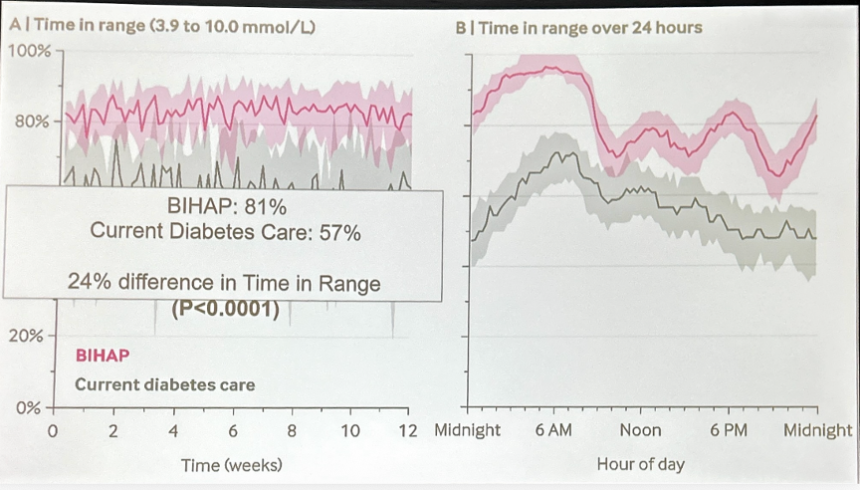
- On next-generation technologies, the PANORAMA study (n=25) compared the fully closed-loop Inreda bihormonal AID system (insulin + glucagon) with standard care in people who developed diabetes following a total pancreatectomy. The Inreda bihormonal pump achieved an impressive 81% TIR, 24 percentage points (5 hours and 46 minutes) higher than standard care (57%). Insulet’s product theater also discussed new algorithm innovations designed to move T1D and T2D management closer to fully automated insulin delivery.
- On broader diabetes topics, Dr. Mohammed Ali (Emory University) delivered the Kelly West Award lecture, first reflecting on the current scientific climate. He shared disappointment with the ADA’s handling of recent controversies and reminded the audience of lessons from post-apartheid South Africa and the example of Nelson Mandela, advocating for compromise, dialogue, and a renewed commitment to truth. In his lecture, he also shared his insights into how diabetes epidemiology and implementation science have advanced diabetes care in the “era of averages,” and what the future holds with a greater appreciation of the disease heterogeneity
Table of Contents
-
Diabetes Therapy Highlights
- 1. Full results of the REIMAGINE-1, 2, 3 trials: CagriSema demonstrates strong A1c and weight reductions across T2D cohorts
- 2. ACHIEVE-5: Orforglipron as an add-on therapy to insulin glargine improves A1c in adults with longstanding T2D
- 3. ACHIEVE-2: Orforglipron demonstrates superiority over dapagliflozin in A1c improvements and weight reduction
- 4. SYNCHRONIZE-1 trial: GLP-1/glucagon RA survodutide confers 17% weight loss in people with obesity
- 5. SYNCHRONIZE-MASLD trial: GLP-1/glucagon RA survodutide significantly reduces liver fat in people with obesity and MASLD
- 6. Full phase 3 GLORY-2 results: Dual GLP-1/glucagon RA mazdutide confers nearly 20% weight loss in people with obesity
- 7. Full results of the phase 3b DREAMS-3 trial find mazdutide confers greater weight and A1c reductions than semaglutide 1.0 mg in T2D
- 8. The landscape of clinical trials for T1D immunotherapies: Vedolizumab, ATG, and antigen-specific plasmid treatment
- 9. MASLD/MASH: A review of the drug approval process and treatment options beyond resmetirom
- 10. Weight loss from GIP/GLP-1 RAs could prevent over five million deaths and save $10.5 trillion over the next decade
- 11. Phase 2b COURAGE trial analysis shows that trevogrumab added to GLP-1 RA preserves lean mass, regardless of baseline body composition
- 12. Lilly’s product theater features clinical trial results and practical tips for Foundayo (orforglipron), the newly approved oral GLP-1 RA
-
Diabetes Technology Highlights
- 13. AIDING RCT demonstrates substantial glycemic benefits of inpatient AID use
- 14. Simplicity meets automation: Insulet product theater highlights Omnipod 6, algorithm enhancements, and the path to FCL
- 15. Expanded real-world US performance data of MiniMed 780G with Instinct (n=44,082)
- 16. Bihormonal AID system strongly improves glycemic management after total pancreatectomy in PANORAMA trial
- 17. Stelo drives 2.8 hour/day TIR increase within three months among people with T2D not on insulin (n=12,008)
- 18. Glycemic outcomes of Stelo users with T2D not on insulin, prediabetes, or without diabetes (n=136,142)
- 19. Real-world analysis suggests twiist’s occlusion detection system mitigates glycemic excursions
-
Diabetes Big Picture Highlights
- 20. Kelly West Award Lecture: Dr. Mohammed Ali on the value of averages and diabetes heterogeneity
- 21. Dr. Anne Peters discusses important clinical updates during the 2025-2026 Diabetes Year in Review
- 22. Banting Award Address: Pathogenesis of T2D and the spiral approach to the truth
- 23. Congressman Troy Carter (LA-02) on preventive care, TROA, and the importance of research – “There’s no excuse … for research dollars drying up”
- 24. Launch of the first fully remote, non-invasive T1D screening program with T1D Scout
- 25. President, Medicine & Science Address: Dr. Enrique Caballero campaigns to unite biomedical science with sociocultural factors shaping T2D
- 26. Early identification is essential for the prevention of CVD in patients with diabetes
- 27. *NEW* ADA-EASD joint consensus report on the management of T1D in adults
Diabetes Therapy Highlights
1. Full results of the REIMAGINE-1, 2, 3 trials: CagriSema demonstrates strong A1c and weight reductions across T2D cohorts
In this packed symposium focused on Novo Nordisk’s phase 3 REIMAGINE program, studies demonstrated substantial reductions in A1c and body weight. The data provided indicated that beyond impact to glycemic and weight management, there is also early evidence that treatment may alter the underlying course of T2D.
- Dr. John Buse (UNC Chapel Hill) opened the session by noting the absence of Dr. Steven Kahn (University of Washington), who was replaced by Dr. Timothy Garvey (University of Alabama at Birmingham). Dr. Buse commented on the need to protect freedom of speech, citing the impact of the actions of the “New Orleans Five,” which prompted a standing ovation from the audience.
- Dr. Garvey presented on amylin physiology and pharmacology, citing a study that showed the association between beta cell loss in T2D with amylin deposition. Cagrilintide is a long-acting analogue of human amylin that induced 10-15% weight loss in patients without diabetes. Notably, the therapy regulated caloric intake through hypothalamic and basal brain cell types distinct from GLP-1 RAs. Preclinical experiments have suggested the metabolic benefit of amylin in preserving muscle, increasing leptin sensitivity, and regulating bone remodeling. CagriSema draws on the synergism of amylin and GLP-1 RAs through a combination of cagrilintide and semaglutide. Dr. Donna Ryan (Pennington Biomedical Research Center) provided commentary on amylin, using the metaphor of feng shui to represent the complementary profiles of cagrilintide and semaglutide.
- Dr. Vanita Aroda (Brigham and Women’s Hospital) presented results on the REIMAGINE-1 trial (n=294), investigating CagriSema’s efficacy for T2D inadequately controlled with lifestyle therapy. At baseline, participants had a mean A1c of 7.8%, a mean body weight of 101 kg (223 lbs), and a mean BMI of 35.2 kg/m2.
- Among the most interesting findings of REIMAGINE-1 was an exploratory assessment of diabetes remission following treatment withdrawal. For participants with early-stage T2D inadequately managed with lifestyle intervention alone, Dr. Aroda and her team discontinued study medication and evaluated glycemia after a 12-week washout period. After assessing A1c levels 12 weeks off treatment among participants with A1c <6.5%, 53% for the 2.4 mg cohort, 42% for the 1.0 mg cohort, and 20.1% for the placebo achieved remission as defined by the trial protocol. Importantly, remission was not assessed solely by A1c, but confirmed by OGTT, demonstrating that early initiation of CagriSema likely restores beta cell function and delivers diabetes remission in recently-diagnosed T2D. This would be an ideal first line therapy. We would be very excited to see further analysis of the REIMAGINE-1 data, in order to assess this exciting possibility. Also, assuming that the effect is mediated by excess weight loss, as in the DiRECT trial, it would be valuable to perform similar trials with other weight loss agents.
- Under the efficacy estimand, CagriSema 2.4 mg lowered A1c by 1.8 percentage points, while the 1.0 mg dose lowered A1c by 1.5 percentage points. Comparatively, the placebo lowered A1c by 0.15 percentage points. Greater proportions of participants taking CagriSema 2.4 mg achieved glycemic targets, with 87% reaching <7.0% A1c, 81% reaching ≤6.5%, and 43% reaching <5.7%. Mean body weight was reduced by 14% in the CagriSema 2.4 mg cohort, 12% in the 1 mg cohort, and 1.5% in the placebo cohort.
- On safety, GI-related adverse events were most common, consistent with the incretin class. Within the 2.4 mg, 1 mg, and placebo cohorts, nausea was experienced by 36%, 27%, and 9%, respectively.
- Dr. Akshay Jain (University of British Columbia, Canada) presented results from the 68-week phase 3 REIMAGINE-2 trial (n=2,713) of CagriSema versus semaglutide in people with T2D on metformin with or without an SGLT-2 inhibitor, with findings simultaneously published in The Lancet Diabetes & Endocrinology. The trial, which included a seven‑arm design and 96% completion rate, showed that CagriSema delivered the greatest reductions in both A1c and body weight across among the treatment groups evaluated.
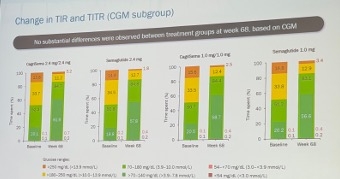
- Participants on CagriSema 2.4 mg achieved a 1.9 percentage point reduction in A1c from a baseline of 8.2% and lost 14% of body weight, compared with semaglutide 2.4 mg, which lowered A1c by 1.8 percentage points and produced 10% weight loss. In addition, on CagriSema 2.4 mg, nearly one in four participants reached ≥20% weight loss, compared with 10% on semaglutide 2.4 mg. Composite outcomes further favored CagriSema, with more than half of participants on the highest dose of CagriSema achieving A1c ≤6.5% plus ≥10% weight loss (versus 40% on semaglutide 2.4 mg), and about one in five reaching A1c ≤5.7% or a BMI between 18 and 25 kg/m2. In addition, nearly 50% of participants were included in a subgroup who wore CGM throughout the trial, and all active therapies improved TIR and TITR, though between‑group differences were minimal.
- Safety was consistent with other GLP‑1 RA-based therapies, with GI events the most common but generally mild. Overall, CagriSema demonstrated clear superiority over semaglutide alone and expanded the therapeutic potential for greater metabolic improvement in T2D.
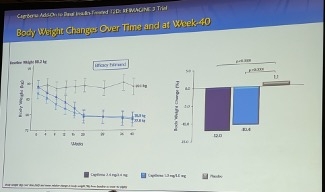
- Dr. Julio Rosenstock (UT Southwestern) presented results from the 40-week phase 3 REIMAGINE‑3 trial (n=274 ), simultaneously published in The Lancet Diabetes & Endocrinology, evaluating CagriSema as an add‑on to basal insulin in people with long‑standing T2D inadequately controlled on basal insulin with or without metformin. At baseline, participants had a mean A1c 8.8%, a diabetes duration of ~15 years, and a baseline basal insulin of 34 units.
- Participants on CagriSema achieved an average A1c reduction of 2.3 percentage points, and body weight decreased by 10-12%, while the average basal insulin dose decreased when combined with CagriSema. Nearly 60% of participants on CagriSema 2.4 mg achieved A1c ≤6.5%, and ~75% achieved <7.0%. A significant proportion of participants achieved clinically meaningful weight loss thresholds, with almost 60% reaching ≥10% loss and one‑third achieving ≥15%.
- On safety, hypoglycemia remained low even with large A1c reductions and lower insulin doses. No severe hypoglycemia occurred in any group. GI‑related discontinuations were uncommon, at 2% and 9% in the 2.4 mg and 1 mg versus none on placebo. Overall, GI events were modest in frequency, with nausea reported in 31% on CagriSema 2.4 mg, and slightly lower rates with the 1.0 mg dose; these levels indicate that GI symptoms were reported as mild to moderate, consistent with the class as a whole.
2. ACHIEVE-5: Orforglipron as an add-on therapy to insulin glargine improves A1c in adults with longstanding T2D
In this compelling afternoon session, Prof. Francesco Giorgino (University of Bari Aldo Moro, Italy) presented results from the phase 3 ACHIEVE-5 trial (n=546) of orforglipron as an add-on to insulin glargine in adults with longstanding T2D. Findings were simultaneously published in JAMA and demonstrated improved A1c without increased hypoglycemic risk.
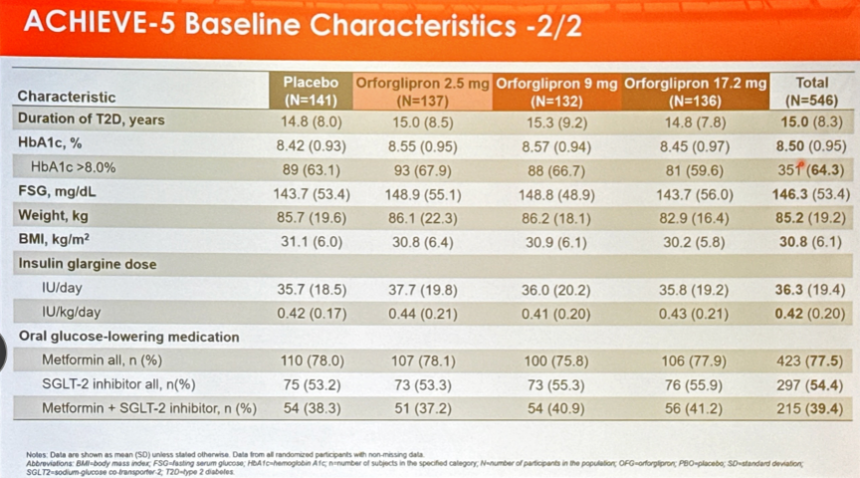
- Baseline characteristics and study design. The ACHIEVE-5 study was a multicenter, randomized, parallel-arm, double-blind trial in adults with T2D inadequately managed with basal insulin. Patients continued to use insulin glargine during the trial, and many were also taking metformin and/or SGLT-2 inhibitors. Participants were randomized to placebo or once-daily orforglipron 2.5 mg, 9 mg, or 17.2 mg, with dose escalation occurring every four weeks. The total trial duration was 40 weeks, along with two weeks of follow-up.
- Eligible participants had an A1c between 7.0% and 10.5%, a stable BMI of at least 23 kg/m2, and background therapy with insulin glargine. Key exclusions included an eGFR below 15 mL/min/1.73 m², significant transaminase elevation, severe hypoglycemia or hypoglycemia unawareness within six months, and active or planned treatment for diabetic retinopathy or macular edema. See the baseline characteristics below.
- The primary endpoint was superiority of orforglipron over placebo in the change from baseline in A1c at Week 40. Key secondary endpoints included change from baseline in A1c at Week 40 with 2.5 mg orforglipron, as well as the proportion of participants achieving an A1c <7.0% and participants achieving ≤6.5%. Additionally, researchers evaluated the change from baseline in body weight at Week 40, glycemic control, insulin requirements, cardiometabolic risk factors, and patient-reported outcomes.
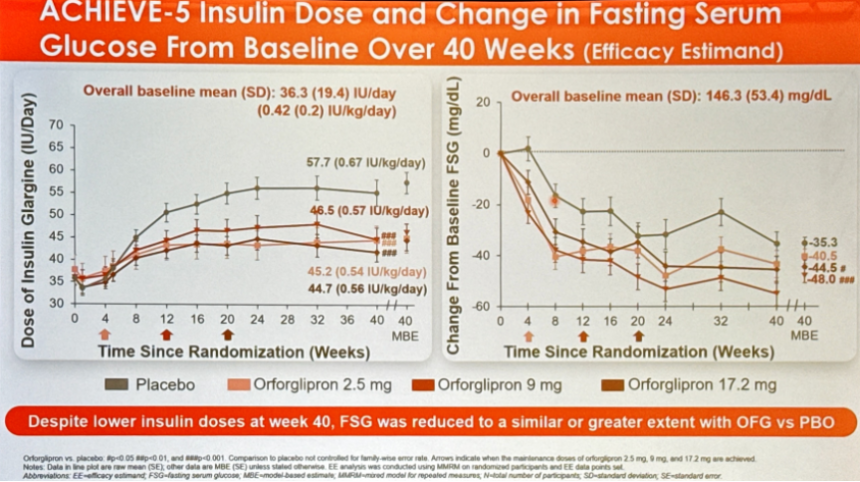
- Results. Over 40 weeks, insulin glargine was titrated up in all trial arms. This trend was most aggressive in the placebo group (see below). Despite a lower insulin dose at 40 weeks, patients taking orforglipron achieved equal or greater reductions in fasting serum glucose. Using a treat-to-target algorithm, people taking orforglipron were found to need less insulin glargine than patients on placebo.
- Glargine plus orforglipron conferred up to 2% A1c reduction, compared to a 0.8% improvement seen in the glargine plus placebo group. This translates to a placebo-adjusted A1c reduction by 0.8-1.3% across orforglipron doses (see below). Up to 81%, 69%, and 21% of participants treated with orforglipron achieved an A1c of <7.0%, ≤6.5%, and <5.7%, respectively. Though insulin glargine is typically associated with weight gain, the addition of orforglipron demonstrated body weight reductions of up to 6.1% in the treatment’s highest dose.
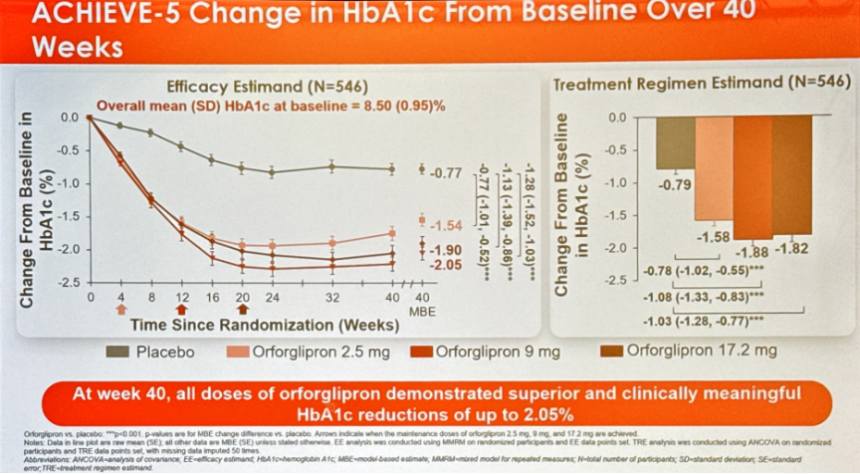
- Safety. Discontinuation events were described to be low overall, though somewhat increased in the 9 mg and 12 mg orforglipron cohorts. Prof. Giorgino attributed this finding to gastrointestinal events consistent with the therapy class, including nausea, diarrhea, decreased appetite, and vomiting. Rates of diabetic retinopathy and lipase changes were similar across groups. No acute pancreatitis cases were reported. There was no increased risk of hypoglycemia.
3. ACHIEVE-2: Orforglipron demonstrates superiority over dapagliflozin in A1c improvements and weight reduction
In a compelling presentation, Dr. Michelle Welch (Consano Clinical Research) announced results from the phase 3 ACHIEVE-2 trial (n=962) comparing orforglipron to dapagliflozin in adults with T2D inadequately managed on metformin. Orforglipron demonstrated superiority over dapagliflozin for all primary and key secondary endpoints.
- Study design and baseline characteristics. ACHIEVE-2 was a parallel-arm, open-label study which randomized patients to dapagliflozin 10 mg or orforglipron 1.5 mg, 9 mg, or 17.2 mg once daily for 40 weeks, followed by two weeks of safety follow-up. All orforglipron arms employed stepwise dose escalation (see below).
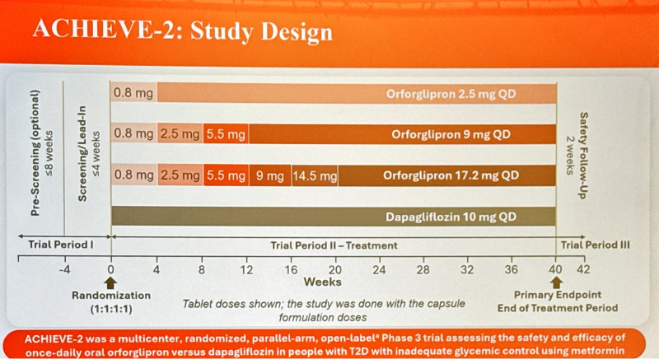
- Eligible participants had an A1c between 7.0% and 10.5%, metformin dose at or above 1500 mg/day for at least 90 days, and a stable BMI over 23 kg/m2. Key exclusion criteria included an eGFR below 45 mL/min/1.73 m2, ALT or AST over five times the upper normal limit, and use of other antihyperglycemic agents besides metformin. At baseline, participants were on average 56 years old, 49% female, and 48% Hispanic or Latino. The mean diabetes duration was 8.0 years, the mean baseline A1c was 8.1%, and the mean BMI was 33 kg/m2.
- The primary endpoint was orforglipron noninferiority compared to dapagliflozin on A1c from baseline to Week 40. Key secondary endpoints tested orforglipron superiority for A1c change, A1c target attainment, body weight, triglycerides, non-HDL cholesterol, and systolic blood pressure.
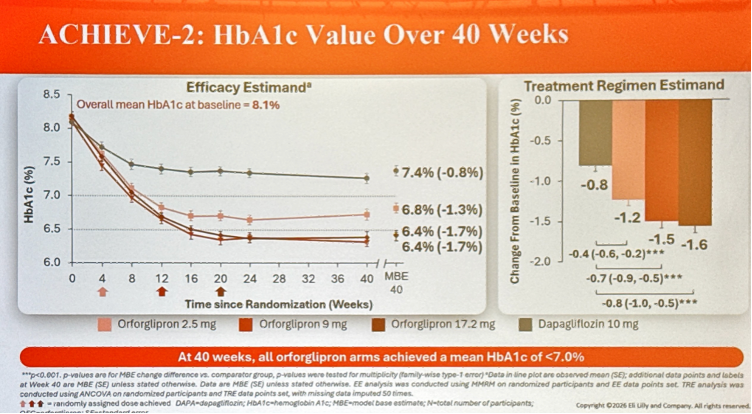
- Results. At Week 40, average A1c fell from 8.1% to 6.8% with orforglipron 2.5 mg, 6.4% with 9 mg, 6.4% with 17.2 mg, and 7.4% with dapagliflozin. In the treatment estimand, these figures translate to reductions of 1.3%, 1.7%, 1.7%, and 0.8%, respectively. More participants on orforglipron also reached prespecified glycemic targets compared to dapagliflozin. 3.2%, 80.1%, and 77.9% of patients taking orforglipron 2.5 mg, 9 mg, and 17.2 mg, respectively, compared to 37.0% in the dapagliflozin group, achieved an A1c below 7.0%. For an A1c at or below 6.5%, respective rates were 54.6%, 66.7%, and 68.6% versus 21.6%. For an A1c below 5.7%, respective rates 9.7%, 15.3%, and 23.7% compared to 4.4%.
- On secondary endpoints, sustained differences in fasting serum glucose curves began early (Week 4). By Week 40, fasting serum glucose decreased by 22.5 mg/dL with orforglipron 2.5 mg, 43.1 mg/dL with 9 mg, 43.9 mg/dL with 17.2 mg, and 32.3 mg/dL with dapagliflozin. Percent weight change at week 40 was 3.0% with dapagliflozin, 3.5% with orforglipron 2.5 mg, 6.3% with 9 mg, and 7.3% with 17.2 mg. Dr. Welch noted that the weight-loss curves had not yet plateaued by the end of the 40-week study. Cardiometabolic markers also improved in the orforglipron group, particularly within the 17.2 mg dose. At Week 40, triglycerides decreased by 14.8% with orforglipron 17.2 mg compared to 4.0% with dapagliflozin. Similarly, non-HDL cholesterol decreased by 5.0% with orforglipron compared to minimal change with dapagliflozin.
- Safety. Orforglipron’s safety profile was characterized as consistent with the GLP-1 RA class. There were no deaths in the orforglipron arms, and serious adverse events were balanced across groups. Total treatment-emergent adverse events occurred in 69%, 70%, and 71% of orforglipron 2.5 mg, 9 mg, and 17.2 mg, respectively, versus 54% with dapagliflozin. Gastrointestinal events, though mostly mild to moderate and tending to concentrate early in dose escalation, occurred in 6.7%, 47%, and 54% of the orforglipron arms compared with 12% on dapagliflozin. Discontinuation due to treatment due to adverse events occurred in 9.2%, 11%, and 12% of orforglipron 2.5 mg, 9 mg, 17.2 mg, respectively, versus 1.2% with dapagliflozin.
4. SYNCHRONIZE-1 trial: GLP-1/glucagon RA survodutide confers 17% weight loss in people with obesity
In this packed hall, Dr. Ania Jastreboff (Yale University) and Prof. Carel le Roux (University College Dublin, UK) delivered full results of the SYNCHRONIZE-1 trial (n=726), which evaluated Boehringer Ingelheim’s (BI) dual GLP-1/glucagon RA survodutide in people with overweight or obesity but not T2D.Full results were simultaneously published in NEJM. Survodutide is a novel dual GLP-1/glucagon RA, which has an eight-fold higher activity toward GLP-1 receptors. Topline results announced in April 2026 found 17% weight loss compared to 3.2% with placebo at 76 weeks. Dr. Jastreboff said that survodutide is also evaluated in SYNCHRONIZE-2 (n=755) for obesity with T2D, SYNCHRONIZE-MASLD (n=218) for obesity with at-risk MASLD, and SYNCHRONIZE-CVOT (n=5,531) for obesity with cardiovascular disease and chronic kidney disease.
- Trial design, baseline characteristics, and challenges. Adults with obesity were randomized 1:1:1 to survodutide 6.0 mg, 3.6 mg, and placebo at Week 76, with three weeks of follow-up. Primary endpoints include weight loss, while secondary and pre-specified endpoints include the percentage of people achieving weight loss targets and changes in waist circumference, cardiometabolic markers, and body composition.
- At baseline, participants were 47 years old, with 41% being male, 68% white, 22% Asian, and 7% Black. The mean weight was 108.8 kg (240 lbs), BMI was 37.9 kg/m2, the waist circumference was 115 cm (45 in), and the systolic blood pressure was 127 mmHg. Clinically, 40% had hypertension, 34% had dyslipidemia, 31% had prediabetes, and 18% had obstructive sleep apnea.
- The treatment completion rate was rather low at 60-66% across placebo and survodutide groups. Dr. Jastreboff said that the first 16 weeks and the dose maintenance period had limited flexibility to deviate from the dose titration protocol. Nonetheless, the trial completion rates were high at 88-96%, reflecting the trial investigators’ dedication. She also said that other survodutide trials have incorporated more flexible dosing to address this challenge. Among participants who completed the treatment, 85% and 81% of survodutide 3.6 mg and 6.0 mg, respectively, ended on the highest dose.
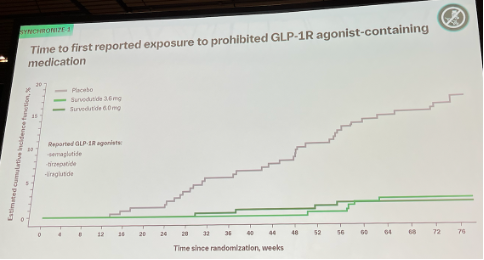
- While other obesity medications were not allowed as per protocol, 15% of participants reported using prohibited medication containing GLP-1 RAs. Specifically, 17% of the placebo group, 2.5% of the survodutide 3.6 mg group, and 3.7% of the survodutide 6.0 mg group reported use. For statistical analysis, these participants were considered to have discontinued treatment; however, panelists noted that there may have been other participants who did not report any prohibited GLP-1 RA use, which could have confounded the study results. In his commentary, Dr. Jaime Almandoz (UT Southwestern) said this is becoming increasingly challenging for clinical trials for obesity.
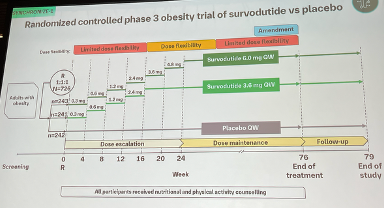
- Survodutide conferred 16.6% weight loss from a baseline of 109 kg (240 lbs), compared to 5.4% reduction with placebo. Assuming full adherence, a greater proportion of participants achieved weight loss targets, with 85% (vs. 39% on placebo) reaching ≥5%, 57% (vs. 8.7%) achieving ≥ 15%, and 38% (vs. 4.5%) achieving ≥20%. Survodutide also reduced waist circumference by 14.6 cm (5.7 in), compared to 4.6 cm (1.8 in) at Week 76. Weight loss was significantly greater among females (19.5% s. 12.6% for males), which Prof. le Roux said warrants further research. Survodutide also reduced systolic blood pressure by 7.9 mmHg (vs. 3.2 mmHg) from a baseline of 127 mmHg and improved lipid levels, including cholesterol (11% vs. 3%), LDL-c (12% s. 3%), HDL-c (3% gain vs. 2% gain), and triglycerides (34% vs. 8%).
- On glycemic health, survodutide led to an A1c reduction by 0.26 percentage point (vs. 0.07 percentage point gain) from a baseline of 5.5%. Three participants who had prediabetes at baseline in the placebo group progressed to T2D, compared to none with prediabetes on survodutide. Moreover, 32% of the survodutide group with prediabetes returned to normoglycemia (vs. 10%). Survodutide also improved plasma glucose by 9.3% (vs. 0.4%) from a baseline of 95 mg/dL, fasting C-peptide levels by 20% (vs. 3%) from the baseline of 3.2 ng/mL, plasma insulin by 34% (vs. 7%) from a baseline of 11 mIU/L, and HOMA-IR by 41% (vs. 9%) from 2.6.
- On body composition measured by MRI, survodutide significantly reduced visceral and liver fat. Specifically, lean mass was lowered by 10% (vs. 3%), subcutaneous adipose tissue by 28% (vs. 10%), visceral fat by 34% (vs. 12%), and liver fat content by 63% (vs. 25%).
- Safety and tolerability. Survodutide had more frequent treatment-emergent adverse events (86% vs. 44% on placebo) and higher discontinuation rates from adverse events (24% vs. 5.4%). Approximately 19% of participants on survodutide (vs. 2.9%) discontinued the treatment due to GI events. The rates of serious adverse events were slightly higher in the survodutide group (8.3% vs. 6.2%). Adverse events were mostly GI-related and mild-to-moderate (see figure below).
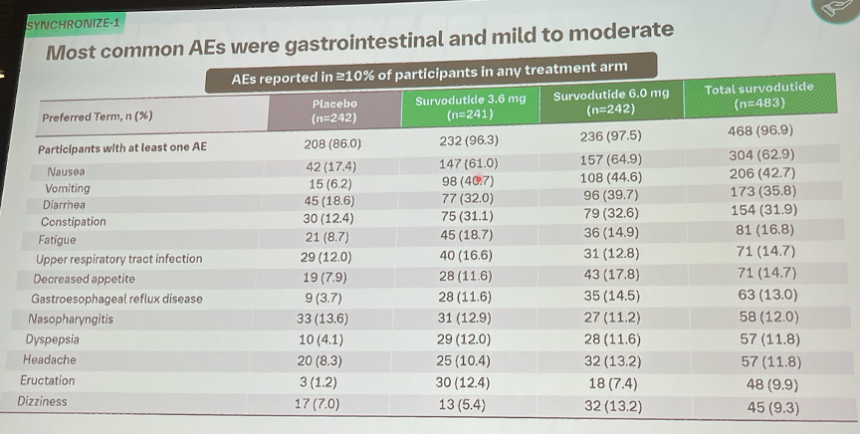
- In his commentary, Dr. Almandoz said that the benefits beyond weight loss are becoming more important with weight loss drugs. Given that GLP-1 RAs reduce food intake, A1c, and gastric emptying, and glucagon RAs improve liver fat oxidation, glucose production, and energy expenditure. He also said that the MRI findings of the SYNCHRONIZE-1 trial are impressive, with 90% of weight loss coming from adipose tissue. However, he said this figure cannot be directly compared to other trials that use DXA scans, which showed two-thirds of weight loss was from lean mass. Finally, on tolerability, he said trial investigators face regulatory pressure to evaluate specific doses for approval. However, real practice allows for flexible dose titration and individual dose maintenance.
5. SYNCHRONIZE-MASLD trial: GLP-1/glucagon RA survodutide significantly reduces liver fat in people with obesity and MASLD
In this crowded symposium, Dr. Ania Jastreboff (Yale University) and Dr. Lee Kaplan (University of Miami) presented full results of the SYNCHRONIZE-MASLDtrial (n=218), evaluating dual GLP-1/glucagon RA survodutide in people with obesity and MASLD. Full results were simultaneously published inNature Medicine.
- Trial design, baseline characteristics, and challenges. Adults with obesity were randomized 2:1 to survodutide 6.0 mg and placebo and were followed for 48 weeks, with three additional weeks of follow-up. Similar to the SYNCHRONIZE-1 trial, there was little dose flexibility during the first 16 weeks of dose escalation and maintenance periods. Primary endpoints include liver fat and body weight loss, and secondary endpoints include ALT, waist circumference, HOMA-IR, and other cardiometabolic markers.
- At baseline, participants were 56 years old, with 61% being female. Clinically, 38% had T2D, and the mean body weight was 108 kg (239 lbs), the BMI was 40 kg/m2, and the waist circumference was 121 cm (48 in). On liver parameters, participants had: (i) MRI-Proton Density Fat Fraction (PDFF) of 17%, indicating steatosis, FIB-4 score of 1.3; (ii) FibroScan-measured liver stiffness of 10.3 kPa, and ELF score of 9.4, reflecting fibrosis; and (iii) corrected T1 (cT1) MRI of 924 msec, reflecting fibroinflammation.
- Survodutide decreased body weight by 12%, compared to 1% with placebo. On cardiometabolic parameters, survodutide led to reductions in waist circumference by 11 cm (4.4 in) (vs. 1.9 cm [0.7 in]), systolic blood pressure by 6.7 mmHg (vs. 0.7 mmHg gain), A1c by 0.6 percentage point (vs. flat), HOMA-IR by 46% (vs. 12%), total cholesterol by 11% (vs. 1.8%), triglycerides by 30% (vs. 0.7%), and hsCRP by 46% (vs. 7%).
- On liver outcomes, approximately 84% of the survodutide group (vs. 24%) achieved liver fat reduction ≥30%, assuming full adherence. Moreover, 61% of the survodutide group (vs. 6%) achieved normalized liver fat content (<5%). Survodutide decreased ALT by 37% (vs. 11%), and 82% of the treatment group (27%) achieved ALT normalization. cT1 was lowered by 117 msec (vs. 24 msec), and 63% of the treatment group (vs. 21%) achieved normalization.
- Safety and tolerability. Adverse events (87% vs. 79%) and treatment-related discontinuation (23% vs. 10%) were more common in the survodutide group. Consistent with the incretin class, most events were GI-related. Survodutide is investigated further in LIVERAGE (n=1,800) and LIVERAGE-Cirrhosis trials (n=1,590) for individuals with biopsy-proven MASH with fibrosis or those with MASH and compensated cirrhosis, respectively.
6. Full phase 3 GLORY-2 results: Dual GLP-1/glucagon RA mazdutide confers nearly 20% weight loss in people with obesity
In this fully packed session, Dr. Leili Gao (Peking University, China) presented the full results of the phase 3 GLORY-2 trial (n=462), evaluating a dual GLP-1/glucagon RA oxyntomodulin (OXM) mazdutide 9 mg in Chinese adults with obesity, including those with and without T2D. Full results were published in JAMA Network. As background, topline results were announced in November 2025, showing that mazdutide 9 mg achieves nearly 20% weight loss, compared to 3% with placebo. Lower doses of the drug (4 mg, 6 mg) were approved in China for obesity in June 2025 and for T2D in September 2025, and mazdutide 9 mg is under regulatory review. Innovent licensed this candidate from Lilly in August 2019 for development and commercialization in China as a potential therapy for diabetes, obesity, and MASH.
- Study design. In this trial, adults with BMI ≥30 kg/m2 or T2D were randomized to mazdutide (n=308) and placebo (n=154). Mazdutide was titrated from 3 mg to 6 mg at Week 4 and to 9 mg at Week 8, and participants were followed through Week 60 for body weight reduction.
- At baseline, participants were 33 years old, with 34% being male. Mean body weight was 94 kg (207 lbs), BMI was 34 kg/m2, and waist circumference was 107 cm (42 in). In terms of cardiometabolic markers, systolic blood pressure was 122 mmHg, triglycerides were 1.8 mmol/L, non-HDL cholesterol was 3.8 mmol/L, LDL-c was 3.0 mmol/L, and A1c was 5.9%.
- Approximately 16% had T2D. In this subgroup, participants had an A1c of 7.8%, and ~60% were on glucose-lowering drugs.
- Results. At Week 60, mazdutide conferred 19% weight loss (vs. 3% with placebo). Significantly greater percentage of the mazdutide group achieved weight loss thresholds of ≥15% (57% vs. 6%), and ≥20% (42% vs. 3%). Moreover, mazdutide significantly reduced waist circumference by 13 cm (5 in), compared to 3 cm (1 in) with placebo, and improved systolic blood pressure (11 vs. 0.5 mmHg), triglycerides (25% vs. 18% gain), and LDL-c (9% vs. 3% gain).
- For the subgroup of participants with T2D, weight loss results were slightly lower at 11% (vs. 5% with placebo). Similar to the non-T2D group, greater proportions of participants achieved weight loss thresholds of ≥10% (49% vs. 17%) and ≥15% (33% vs. none). Finally, mazdutide led to a 1.6 percentage point reduction in A1c, compared to 0.24 percentage points from a baseline of 7.9%.
- Safety and tolerability profile was consistent with other incretin-based therapies. Treatment-emergent adverse events were mostly gastrointestinal, led by vomiting (53% vs. 1%), nausea (47% vs. 3%), and diarrhea (39% vs. 7%). These events were most common during titration and were less frequent when patients reached a 9 mg dosage. Treatment-led discontinuation rates were low at 3% for the mazdutide group and none for the placebo group. When asked about upper respiratory tract infection, which was slightly more common in the mazdutide group (30.6% vs. 29.2%), Dr. Gao said that the incidence was very low and that more studies are needed.
7. Full results of the phase 3b DREAMS-3 trial find mazdutide confers greater weight and A1c reductions than semaglutide 1.0 mg in T2D
In this crowded symposium, Prof. Linong Ji (Peking University, China) delivered full results of the phase 3b DREAMS-3 trial (n=349), which compared a dual GLP-1/glucagon RA oxyntomodulin (OXM) mazdutide 6 mg to semaglutide 1.0 mg in Chinese adults with obesity and T2D. Topline results were announced in October 2025, demonstrating a greater proportion of the mazdutide group achieving weight loss ≥10% and A1c <7.0% at Week 32, compared to the semaglutide group. As background, mazdutide was approved in China for obesity and T2D in June and September 2025, respectively.
- Study design and baseline characteristics. Adults with A1c between 7.0-10.5%, BMI ≥28 kg/m2, and diabetes duration <10 years were randomized 1:1 to mazdutide 6 mg or semaglutide 1.0 mg. Prof. Ji clarified that 1.0 mg is the highest dose of semaglutide approved in China. The primary endpoint was the percentage of participants achieving both A1c <7.0% and weight loss ≥10% at Week 32, while secondary endpoints include changes in weight, A1c, waist circumference, and cardiometabolic markers.
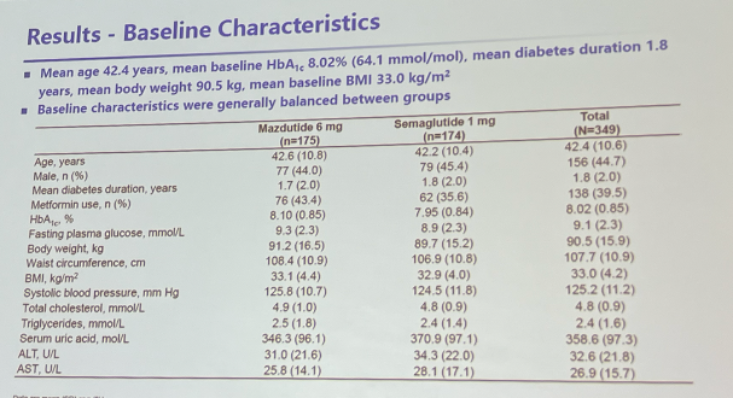
- At baseline, participants were 42 years old, with 45% being male. Clinically, the mean A1c was 8.0%, weight was 91 kg (201 lbs), BMI was 33 kg/m2, and diabetes duration was nearly two years (see figure below). Medication use was similar across the groups.
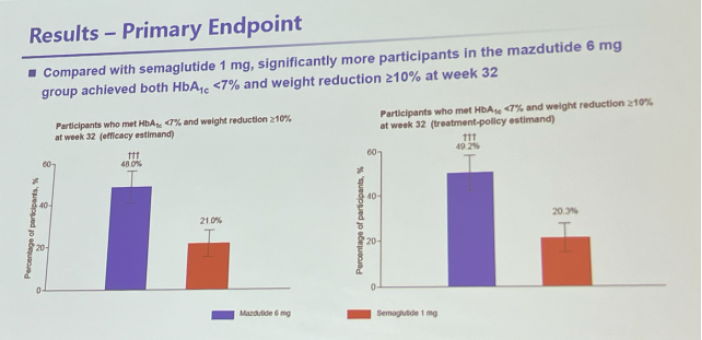
- Results. Significantly greater proportion of the mazdutide group (48% vs. 21%) achieved A1c <7.0% and weight loss ≥10%, compared to semaglutide (see figure below). Likewise, more participants on mazdutide (16% vs. 7%) achieved tighter goals of A1c <6.5% and weight loss ≥15%. In a more direct metric, mazdutide led to statistically significantly greater A1c reduction (2.04 vs. 1.87 percentage points) and weight loss (11 vs. 6%) from baseline. Cardiometabolic marks also improved, with placebo-adjusted reductions in waist circumference by 2.8 cm (1.1 in), systolic blood pressure by 3.2 mmHg, total cholesterol by 3%, and triglycerides by 21%.
- The safety and tolerability profile was favorable and consistent with other incretin-based therapies. Most common events were gastrointestinal, led by nausea (31% vs. 13%), diarrhea (27% vs. 22%), and vomiting (24% vs. 9%). The rate of serious adverse events (6.3% vs. 4.6%) and treatment discontinuation due to adverse events (1.7% vs. 0.6%) were slightly higher in the mazdutide group. Dr. Ji said that discontinuations were due to decreased appetite, nausea, and cerebral infarction.
8. The landscape of clinical trials for T1D immunotherapies: Vedolizumab, ATG, and antigen-specific plasmid treatment
In this early morning session, panelists shed light on the emerging landscape of clinical trials for T1D immunotherapies. Dr. Cate Speake (Director, Center for International Immunology) presented on vedolizumab and the importance of advancing T1D trial designs with mechanistic clinical studies, encouraging greater use to promote trials and studies for the disease. Then, Dr. Stephen Gitelman (UCSF) presented insightful perspectives on anti-thymocyte globulin (ATG), and Dr. Robin Goland (Columbia University) followed with a presentation on islet antigen-specific plasmid co-expressing tolerogenic proteins in recent-onset T1D. Finally, Dr. Lauren Higdon (Director of Biomarker and Discovery Research, Immune Tolerance Network) concluded with explanations on trials across the Immune Tolerance Network (ITN).
- Dr. Speake elaborated on vedolizumab. Dr. Speake highlighted vedolizumab, which is currently approved by the FDA for ulcerative colitis and Crohn’s disease. Vedolizumab is a monoclonal antibody targeting the α4β7 integrin on lymphocytes, preventing lymphocyte migration from the blood into the gut. Preclinical studies have shown that α4β7 integrin is also present on pancreatic vascular endothelium, and vedolizumab has been shown to prevent B-cell migration and protect against T1D in mouse models. Given its mechanism of action, Dr. Speake proposed that vedolizumab may increase islet-specific T cells and prevent T1D.
- Results from the early phase 1 COBRA trial (n=20), which studied the combination of vedolizumab and etanercept (anti-TNF). Dr. Speake shared that combination treatments are likely needed for T1D treatment, as no immunotherapy has permanently slowed T1D progression when used alone. In particular, anti-TNF – a treatment class widely used in rheumatic diseases and inflammatory bowel disease – may provide synergistic benefits with vedolizumab, perhaps further blocking T cells from migrating to the pancreas and preventing destruction of beta cells. Regarding efficacy, results showed that with vedolizumab alone, islet-specific CD4+ cells were retained in the blood. In comparison, pre-treatment with etanercept led to a reduction in circulating islet-specific CD4+ but limited retention after vedolizumab. Dr. Speake contextualized these results, explaining the potential benefit of anti-TNF on islet-specific cells and the notable loss of the subsequent effect of vedolizumab on these cells. On safety, vedolizumab had
- The role of small mechanistic trials. Trials like the COBRA trial are small mechanistic studies that address hypotheses and improve the design of clinical trials. In comparison to clinical trials in humans, Dr. Speake highlighted that these studies are small with a short duration of treatment and overall trial procedure (e.g., several weeks compared to years). These small studies aim to refine the drug’s mechanism of action and advance the understanding of disease pathogenesis, as well as test combination therapies to obtain safety/efficacy data. Most importantly, they provide early results on therapies that are not “on the radar,” enabling quick, effective improvements to clinical trials.
- Dr. Gitelman presented on ATG. Dr. Gitelman explained the rationale for using ATG for new onset T1D, including positive preclinical findings and promising clinical studies in transplantation and autoimmunity – studies date back to pilot studies in 1985! ATG offers multiple mechanisms, including T-cell depletion and migration. Dr. Gitelman then reviewed three phase 2 trials, each studying various doses of ATG, with insights on upcoming studies of ATG for prevention (Ascend T1D) and new onset T1D (WAVE T1D, ATG Fresenius, and Safeguard).
- START trial (n=58). The START trial studied a high 6.5 mg/kg dose in participants aged 12-35 years. ATG therapy did not delay beta cell destruction in participants with recent-onset T1D. Dr. Gitelman explained that the negative results may be attributed to the persistence of effector memory T cells following ATG or a decrease in Treg count.
- TN19 trial (n=89). Following negative results from the START trial, the TN19 trial looked at the effects of a lower ATG dose (2.5 mg/kg) in ages 12-45 years. Results showed that one-year mean C-peptide AUC was significantly higher in those treated with ATG (0.646 nmol/L) compared to placebo (0.406 nmol/L).
- MELD-ATG trial (n=117). Results from the MELD-ATG trial, most recently reported at EASD 2025, confirmed the efficacy of 2.5 mg/kg, which demonstrated C-peptide preservation compared to placebo by 0.124 nmol/L/min. Additionally, 0.5 mg/kg was identified as the minimum effective dose, which significantly preserved C-peptide AUC by 0.102 nmol/L/min. Notably, from MELD-ATG, the lower ATG dose appeared to be better tolerated than the higher and intermediate doses, and yet achieved comparable efficacy. It may be that T cell depletion is not needed, and that the positive effects result from T-cell exhaustion and/or effects on Tregs. Further mechanistic studies from MELD-ATG will be published in the near future.
- Dr. Goland reviewed an islet antigen-specific plasmid treatment. The phase 1 TOPPLE trial (n=47) studied a DNA plasmid in people with T1D across four ascending dose cohorts to assess safety and tolerability, as well as changes in immune responses. As background, the treatment was developed as a recombinant DNA plasmid encoding four human proteins, including pre-proinsulin and cytokines TGFβ, IL-10, and IL-2. While no differences in A1c levels were observed between treatment arms, participants who received 12.5 mg had higher mean C-peptide AUC at 24 and 52 weeks than the placebo group. Regarding safety outcomes, the treatment did not increase T cells or natural killer cells. Dr. Goland shared that these results support further trials to assess the efficacy of a DNA plasmid treatment in T1D. He particularly noted the dose-dependent increases of INF-associated genes, which could inform future trials.
- Dr. Higdon expanded on ITN trials. Established in 1999, the ITN has over 100 clinical trials across autoimmune disease, including T1D, and transplantation. Among many areas, T1D studies include AbATE, START, RETAIN, T1DAL, EXTEND, T1DES, and DESIGNATE. During today’s presentation, she specifically detailed results from the AbATE trial of teplizumab and the T1DAL trial of alefacept to highlight the distinct but overlapping mechanisms of the treatments – teplizumab depletes CD3+ cells, while alefacept depletes CD2 cells. Results across trials showed that teplizumab reached peak CD4+ Treg levels at treatment points, whereas alefacept maintained steady levels. Additionally, while both teplizumab and alefacept increased CD8 T cells, alefacept's peak occurred much later in the trial. Among all, Dr. Higdon said one of the most interesting biomarkers has been the TIGIT+PD+ T cell, for which ATG, teplizumab, and alefacept have all shown distinct kinetics.
- To better understand the mechanisms underlying treatment differences in T1D, Dr. Higdon encouraged the use of quantitative responses (QR) as a primary endpoint to identify agents for durable tolerance and potential combination treatments. Encouragingly, the ITN has one trial in development and one in feasibility, both using QR as the primary endpoint.
9. MASLD/MASH: A review of the drug approval process and treatment options beyond resmetirom
Drs. Sonal Kumar (Cornell University), Mazen Noureddin (Houston Methodist), and Meena Bansal (Mount Sinai) gave an overview of MASLD/MASH therapies, including those already available and those still in the pipeline, across three drug classes: (i) PPAR agonists; (ii) FGF-21 analogues; and (iii) incretins. As background, Dr. Noureddin shared that while there are multiple study designs available for phase 3 MASH trials, most researchers go with the design involving liver biopsies because those can lead to drug approval in just a year. For EMA approval, a therapy needs to show both MASH resolution and fibrosis improvement, while for FDA approval, only one is necessary. Dr. Kumar said that endocrinologists will play a central role in identifying and managing patients with MASLD/MASH.
- PPAR agonists
- Pioglitazone: Pioglitazone has been shown in a randomized controlled trial (n=101) led by University of Florida’s Dr. Kenneth Cusi to be effective in people with T2D. A key concern with pioglitazone is its weight gain side effect. Dr. Kumar said this is challenging for her as a hepatologist because she often also tells her patients that they need to lose weight.
- Saroglitazar: While not available in the US, saroglitazar has been approved in India since 2013. A phase 4 study published this year showed that saroglitazar improved steatosis, liver enzymes, and, slightly, A1c.
- Lanifibranor: Phase 2 results for lanifibranor were published in 2021, showing significant reduction in liver fat content and improvements in several metabolic endpoints. Dr. Kumar pointed out that phase 3 results are expected later this year.
- FGF-21 analogues
- Efruxifermin: Results from the phase 2b study for efruxifermin were published in 2025 and showed statistically significant improvement in fibrosis without worsening of MASH. The phase 3 SYNCHRONY trial program is ongoing. Efruxifermin is also the first drug to show promise in patients with cirrhosis.
- Pegozafermin: Phase 2b results published in 2023 showed statistically significant improvement in fibrosis at just 24 weeks. Dr. Noureddin pointed out that lanifibranor is the only other drug that has shown this in such a short time frame.
- Efimosfermin: Results were recently published for this phase 2 trial, showing general tolerability. In comparison to the others, this is a once-monthly therapy.
- Dr. Noureddin shared that he is also keeping an eye on Kriya Therapeutic’s KRIYA-497 and Minwei Biotech’s MWN105. KRIYA-497 is a one-time intramuscular gene therapy, while MWN105 is a GLP-1/GIP/FGF21 agonist.
- Incretins.
- Liraglutide: Liraglutide was the first GLP-1 RA to show histologic MASH improvement.
- Semaglutide: Semaglutide received conditional approval for MASH in adults with stages F2/F3 fibrosis in August 2025 based on positive results from the ESSENCE trial. While semaglutide was not shown to be effective in people with cirrhosis, Dr. Bansal emphasized that it is still safe for these patients who are taking it for other reasons.
- Tirzepatide: The phase 2 SYNERGY-NASH trial met its primary endpoint, and the phase 3 SYNERGY-Outcomes trial is now currently underway.
- Survodutide: Survodutide showed positive phase 2b results and two phase 3 studies are underway, including in patients with cirrhosis (LIVERAGE and LIVERAGE-Cirrhosis).
- Pemvidutide: Positive phase 2b results from the IMPACT trial were announced in December, and the phase 3 PERFORMA trial is planned.
- Retatrutide: A phase 2a MASLD substudy found significant reductions in liver fat with retatrutide.
10. Weight loss from GIP/GLP-1 RAs could prevent over five million deaths and save $10.5 trillion over the next decade
In an early morning session that introduced ADA’s new journal: Diabetes, Obesity, and Cardiometabolic CARE (DOCM CARE), Mr. Timothy Dall (GlobalData) predicted the cost of treating, and more importantly, the cost of not treating obesity. Mr. Dall highlighted four articles published under the “Cost of Obesity” collection, which evaluated the benefits and costs of treating obesity among adults in Medicaid or commercial insurance. He presented a microsimulation model that predicts the health outcomes and economic impacts of different levels of intervention to treat obesity. While his results predicted a positive 10-year ROI and estimated that millions of deaths could be prevented, he also presented a problem: in order to get insurers to invest in obesity treatment, they likely want a ROI within one year (i.e., during the time that they are still responsible for coverage of an individual). However, Mr. Dall also noted that other chronic diseases are still treated even if it is costly in the short term. For instance, he said, “We don’t not treat cancer because it costs money.” Overall, Mr. Dall argued that we “cannot afford to NOT treat obesity.”
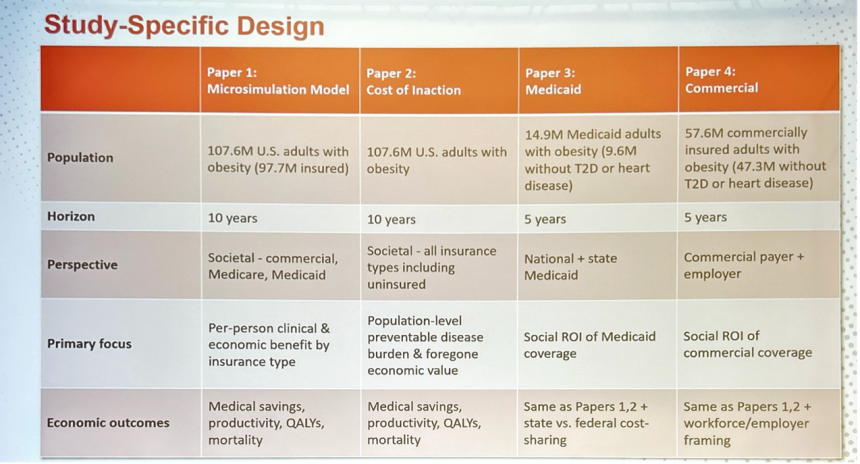
- Methods. Each of the four studies discussed had a slightly different experimental design, as shown in the photo below. To analyze results, Mr. Dall and colleagues used a Markov-based microsimulation based on published longitudinal studies to model about 40 clinical outcomes. These studies compared outcomes for non-treatment and four interventions: intensive lifestyle management (ILM), first-gen FDA-approved obesity medications, modern obesity medications, and bariatric surgery. The main outcomes fell into three categories: clinical (T2D, hypertension, CVD events, obesity-related cancers, and more), economic (direct medical costs, productivity, disability payments), and social (quality of life, mortality, social return on investment).
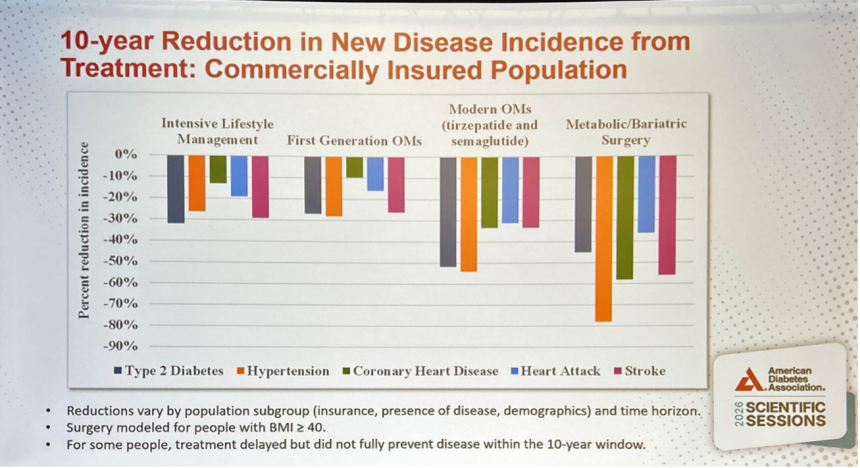
- Improved health outcomes. As shown with the bar graph below, for patients with commercial insurance all interventions including lifestyle interventions, first-generation medications, GLP-1 RAs, and surgery showed reductions to 10-year predicted rates of T2D, hypertension, coronary heart disease, heart attack, and stroke. Notably, metabolic/bariatic surgery showed an over 70% reduction in hypertension. Intervention also showed reduced mortality with ILM and first-gen medications preventing a predicted 1.9 million deaths (3% reduction). GIP/GLP-RAs could also prevent 5.3 million deaths over 10 years.
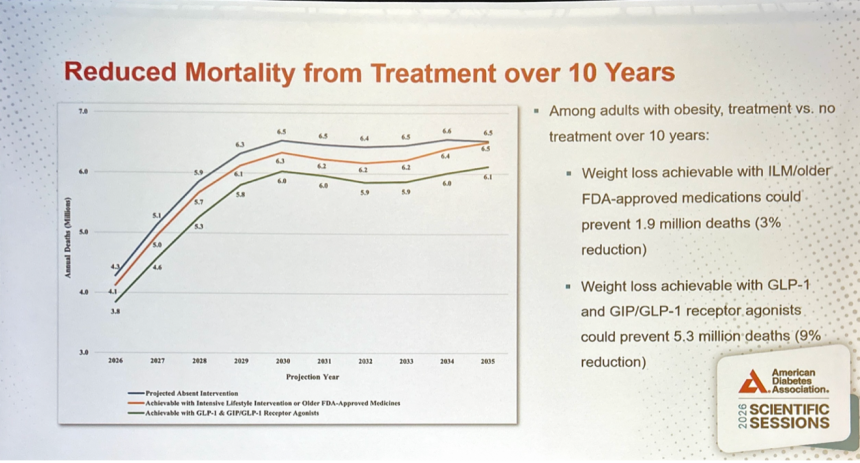
- Economic impact. Mr. Dall estimated a 10-year total economic benefit of approximately $10.5 trillion with GIP/GLP-1 RA usage. Furthermore, GIP/GLP-1 RA use could result in $1.8 trillion saved in medical costs, and $2.7 trillion in labor force participation gains. As shown below, over five years, Mr. Dall estimated $3.81 national social ROI per dollar for the Medicaid population, and $3.09 ROI per dollar for commercially insured patients. Overall, these data provide a compelling argument that the 10-year ROI on aggressively managing obesity justifies the investment.
11. Phase 2b COURAGE trial analysis shows that trevogrumab added to GLP-1 RA preserves lean mass, regardless of baseline body composition
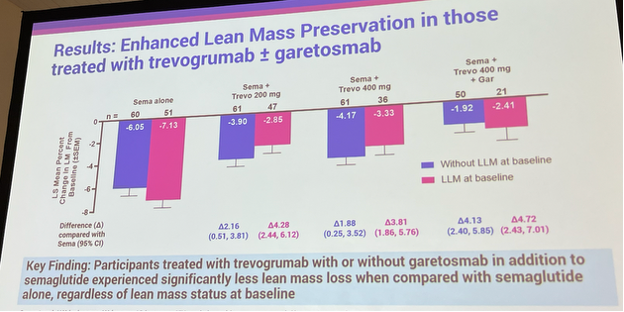
In this highly anticipated session, Dr. Jesse Chao (Regeneron) shared further analysis of the phase 2b COURAGE trial (n=599), evaluating whether trevogrumab (anti-GDF8/anti-myostatin) with or without garetosmab (anti-activin A) enhances lean mass in people with obesity, when combined with semaglutide. Full results were presented at EASD 2025, demonstrating that trevogrumab helps preserve 50-80% of lean mass lost with semaglutide alone. This analysis aims to understand whether this treatment effect is affected by baseline low lean mass status, which refers to people with obesity with appendicular lean mass/BMI of <0.789 m2 in males or <0.512 m2 in females.
- Study design and baseline characteristics. Adults with obesity but not diabetes were randomized to: (i) semaglutide monotherapy; (ii) semaglutide with trevogrumab 200 mg; (iii) semaglutide with trevogrumab 400 mg; and (iv) semaglutide with trevogrumab 400 mg and garetosmab 10 mg/kg.
- At baseline, participants with low lean mass (n=235) tended to be older (53 vs. 47 years), male (41% vs. 27%), and white rather than Black (85% vs. 66%). Clinically, those with low lean mass at baseline had similar weight (102 kg) but slightly higher BMI (38 vs. 36 kg/m2).
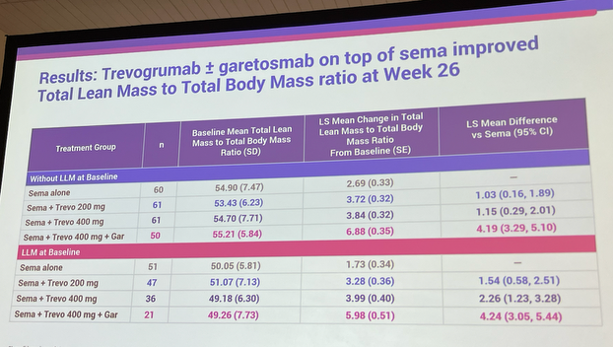
- Results. Adding trevogrumab, with or without garetosmab, significantly preserved lean mass loss by three to five percentage points, compared to semaglutide alone. Moreover, these candidates improved the ratio of total lean mass to total body mass at Week 26 (see figures below). These effects were present regardless of low lean mass status at baseline. Dr. Chao said further research is needed to understand the long-term clinical and functional benefits of preserving lean mass.
12. Lilly’s product theater features clinical trial results and practical tips for Foundayo (orforglipron), the newly approved oral GLP-1 RA
With Frank Sinatra playing in the background, HCPs shuffled into a packed room where Dr. Neil Skolnik (Thomas Jefferson University) presented findings from the phase 3 ATTAIN trials of Lilly’s newly approved Foundayo (orforglipron), a daily oral GLP-1 RA. Dr. Skolnik began the presentation by describing a patient who, despite numerous efforts, had gained two pounds over the past year. While two pounds may not seem notable, he noted that two pounds every year for 25 years would be significant. He then asked: Should we be waiting for a patient who has struggled with weight and tried many times to manage it? What if the best time to intervene is before the patient asks for help?
- Phase 3 trial of Foundayo shows powerful weight reductions sustained through 72 weeks. The highest dose of Foundayo (17.2 mg) conferred an 11% weight loss (~25 lbs). Dr. Skolnik noted that trial participants were representative of the patients he sees in his clinic, with approximately 45% of them having a BMI <35 kg/m² and one-third having prediabetes. The lowest dose of Foundayo (5.5 mg) demonstrated a 7.4% weight loss (~17 lbs). In comparison, those on placebo lost an average weight loss of 2.1% (~5.3 lbs). Across all doses (5.5 mg, 9 mg, and 17.2 mg), more than half of patients achieved 5% or more weight loss. Additionally, the DEXA Scan showed that Foundayo’s weight reduction is primarily driven by fat loss rather than lean mass, with approximately 14% decrease in fat mass and a 4.5% decrease in lean mass.
- Foundayo also shows improvements across cardiometabolic parameters. Across all doses, participants receiving Foundayo treatment showed a 14.8% decrease in triglyceride levels (baseline of 122.0 mg/dL) compared with a 3.8% decrease with placebo (baseline of 125.4 mg/dL). Foundayo also lowered systolic blood pressure by 5.7 mmHg (baseline of 125.4 mmHg), whereas placebo lowered by 1.4 mmHg (baseline of 125.8 mmHg).
- Dr. Skolnik reviewed safety information and highlighted adverse reactions observed in the ATTAIN trials. He reminded risks of thyroid C-cell tumors and acute pancreatitis. Additionally, Dr. Skolnik emphasized the importance of reminding patients to stay hydrated, as acute kidney injury may occur. There is also a risk of hypoglycemia, particularly in people with diabetes on sulfonylurea treatment. In the ATTAIN trials, adverse reactions were reported in at least 5% of participants, with the majority of reactions being gastrointestinal related (e.g., nausea, constipation, diarrhea, and vomiting).
- Practical application for clinicians. Dr. Skolnik stated that patients should begin Foundayo at 0.8 mg, then increase to 2.5 mg after waiting at least 30 days. From there, the patient’s dose may be increased to 5.5 mg, 9 mg, 14.5 mg, or 17.2 mg, depending on the patient, with each increase requiring at least 30 days in between. Should the patient forget to take a dose, they are advised to take it later in the day whenever they remember, but should not double up for the next day. When managing side effects, Dr. Skolnik recommended instructing patients to: (i) eat smaller meals by splitting three daily meals into four or more; (ii) practice mindful eating by stopping when they feel full; and (iii) avoid processed, fried, refined, spicy, and fatty foods.
Diabetes Technology Highlights
13. AIDING RCT demonstrates substantial glycemic benefits of inpatient AID use
Kicking off the morning at ADA, investigators from Stanford University, Emory University, and the University of Virginia presented results from the AIDING trial (n=130), a multicenter randomized controlled trial evaluating the safety and efficacy of AID in non-ICU hospitalized adults with either T1D or T2D and at least two glucose measurements ≥180 mg/dL. Presenters included Emory’s Dr. Georgia Davis, Dr. Michael Hughes, and Dr. Francisco Pasquel, Stanford’s Dr. Rayhan Lal, and UVA’s Dr. Sue Brown; the session was moderated by Dr. Irl Hirsch (University of Washington). This important session included a key acknowledgement by Dr. Lal to a longtime leader in and friend of the diabetes community, Dr. Thomas Peyser – AID as it is known today wouldn’t exist without Dr. Peyser, who was a pioneer at Dexcom and on the team at Santa Barbara that developed the first OP5 algorithm. The AIDING study was incredibly exciting to hear. The study demonstrated a striking 28 percentage point improvement in Time in Range (TIR) with AID versus MDI plus CGM (67.7% vs. 40.8%), driven largely by reductions in severe hyperglycemia and achieved without increased hypoglycemia. AID and CGM performance in the inpatient setting was excellent, with participants spending 95% of time in automated mode and with 98% active CGM time. The findings generated considerable enthusiasm, with audience members quickly lining up during Q&A to praise the work; notably, Dr. Gregory Forlenza (CU Anschutz School of Medicine) described the results as “transformational.”
- Dr. Davis opened by reviewing the rationale for bringing diabetes technology into the inpatient setting. Current antihyperglycemic management varies based on diabetes type and severity of hyperglycemia. Patients with T1D or severe hyperglycemia with T2D require basal-bolus insulin regimens, whereas those with T2D and milder hyperglycemia may be managed with basal insulin alone. Interest in inpatient diabetes technology accelerated during the COVID-19 pandemic, generating real-world evidence that prompted further study. While inpatient CGM studies have generally shown only modest glycemic improvements, they have demonstrated that hybrid protocols combining CGM with intermittent point-of-care (POC) testing can be safely implemented. Early AID studies showed more substantial improvements in TIR, prompting the AIDING feasibility study (n=16), which demonstrated progressive increases in TIR that stabilized above 70% by Day 3 while maintaining very low hypoglycemia. With evidence that inpatient physiology responds well to AID, investigators also sought to determine whether the technology could be successfully integrated into routine hospital workflows.
- Dr. Lal reviewed the study design and baseline characteristics. Participants were randomized 1:1 to either AID or MDI plus CGM. CGMs in both groups were validated twice daily, and nurses were responsible for all insulin administration. Hypoglycemia alarms were set to glucose <80 mg/dL, while hyperglycemia alarms were set to glucose >300 mg/dL for at least one hour.
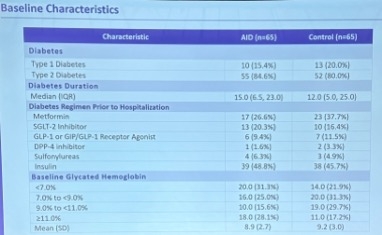
- The study enrolled a diverse population. Approximately 40% of participants were white, 45% were Black, and nearly 10% were Hispanic. Half had a high school education or less, about 40% reported annual household incomes below $50,000, and about half were publicly insured. Mean age was ~58 years, and about 40% were male. Roughly 80% of participants had T2D. Baseline A1c averaged 8.9% in the AID group and 9.2% in the control group, with nearly half of participants in each arm having an A1c ≥9.0%. Mean glucose at randomization ranged from 210-220 mg/dL, and participants represented a broad spectrum of kidney function. Cardiovascular disease was common (~60%) and was the leading reason for admission (~20%). About one in five participants had prior CGM experience.
- Dr. Hughes described the nursing workflows developed during the feasibility and AIDING studies. Unlike outpatient use, the primary “users” of the devices were the bedside nursing teams. Data from Omnipod 5 and Dexcom G6 were streamed both to the bedside controller and nursing-station tablet, which displayed real-time glucose and hypoglycemia alerts, and to the study team, which also monitored for prolonged hyperglycemia and data loss. To support implementation, investigators established clear responsibilities:
- Patients: Wear devices and help report meals;
- Bedside nurses: Receive device training at the start of shifts, validate CGM readings, confirm dosing, and administer meal boluses based on carbohydrate counts;
- Study team: Initiate devices, train nursing staff, review data daily, and adjust pump settings; and
- Primary team: Continue overall medical management while delegating diabetes management to the study workflow.
Dr. Hughes emphasized that leveraging existing nursing workflows and simplifying training were critical to success. He also noted that routine CGM validation helped build trust in the technology among clinical staff.
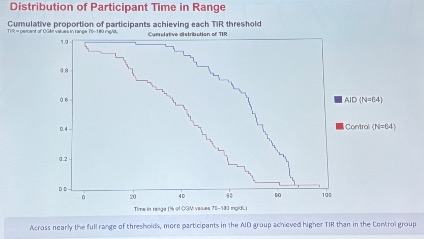
- Dr. Brown presented the trial’s results. Patients using AID achieved 67.7% TIR compared with 40.8% among those managed with MDI plus CGM, representing a 27.6 percentage point improvement (p<0.001) — equivalent to roughly 6.5 additional hours per day spent in range. Separation between groups particularly emerged after dinner and persisted through the overnight and morning hours, though they narrowed around lunch. Unlike the feasibility study, improvements with AID were apparent from Day 1 and sustained throughout hospitalization, whereas TIR in the MDI plus CGM group improved more gradually.
- Additional CGM metrics also favored AID. Time >250 mg/dL was significantly lower with AID than with MDI plus CGM (6.7% vs. 20.6%; p<0.001), as was mean glucose (164 mg/dL vs. 198 mg/dL; p<0.001). Improvements again appeared immediately after treatment initiation. Importantly, hypoglycemia did not increase. Time below Range was 0.7% with AID versus 2.9% with MDI plus CGM, while Time <54 mg/dL was 0.17% versus 2.3%, respectively. Across nearly all glycemic thresholds, a greater proportion of AID users achieved higher TIR.
- Benefits were consistent across demographic and clinical subgroups. Improvements in TIR favored AID regardless of age, sex, BMI, race, or diabetes duration. Notably, AID also outperformed MDI in participants with T1D (n=22), those receiving steroids (n=39), and those with eGFR <30 mL/min/1.73m² (n=27).
- Additional CGM metrics also favored AID. Time >250 mg/dL was significantly lower with AID than with MDI plus CGM (6.7% vs. 20.6%; p<0.001), as was mean glucose (164 mg/dL vs. 198 mg/dL; p<0.001). Improvements again appeared immediately after treatment initiation. Importantly, hypoglycemia did not increase. Time below Range was 0.7% with AID versus 2.9% with MDI plus CGM, while Time <54 mg/dL was 0.17% versus 2.3%, respectively. Across nearly all glycemic thresholds, a greater proportion of AID users achieved higher TIR.
- Rates of severe glycemic excursions were substantially lower with AID. The control group experienced more than four times as many glucose >300 mg/dL events (295 vs. 70) and over 15 times as many glucose >400 mg/dL events (49 vs. 3). Rates of glucose <54 mg/dL events were similar (19 vs. 16). No episodes of diabetic ketoacidosis, severe hypoglycemia (with altered consciousness), or hyperosmolar hyperglycemic state occurred in either group. While the trial was not powered to assess broader safety outcomes, Dr. Brown characterized the overall safety profile as reassuring.
- Insulin requirements differed modestly between groups. Participants using AID received slightly higher basal insulin doses (26.0 vs. 18.6 units; p<0.01) and higher total daily insulin doses (50.6 vs. 38.0 units; p<0.05), while bolus insulin requirements remained similar.
- Device performance was excellent. Participants spent approximately 95% of study time in automated mode, which Dr. Brown described as “excellent” given the complexity of inpatient care. The protocol specified an initial glucose target of 120 mg/dL; more than 60% of participants remained at this target, while approximately one-quarter were later adjusted to 110 mg/dL. During Q&A, Dr. Lal noted that lessons from the feasibility study encouraged more aggressive target adjustments to optimize outcomes. Sensor performance was similarly strong, with most participants using a single 10-day sensor throughout the 10-day study. Successful CGM validations exceeded 85% in both groups, and the median number of calibrations required was zero.
- Dr. Pasquel concluded by placing the findings in context. He noted that conventional inpatient insulin strategies generally perform well in patients with less complex T2D, particularly those who are insulin-naïve or require relatively low insulin doses. AIDING is therefore particularly important because it demonstrates the safety and efficacy of inpatient AID in populations often excluded from prior studies, including patients with T1D, steroid exposure, and advanced kidney disease. The findings also further suggest that non-ICU inpatient teams can safely reduce POC testing frequency from four or more checks per day to just two when using a hybrid CGM protocol, all while making the patient feel more involved in their care.
14. Simplicity meets automation: Insulet product theater highlights Omnipod 6, algorithm enhancements, and the path to FCL
Insulet’s product theater drew a standing-room-only audience and focused on the company’s vision for simplifying diabetes management across T1D and T2D populations. Dr. Sufyan Hussain (Guy’s and St. Thomas’ NHS Foundation Trust, UK) highlighted the importance of simplicity in driving population-level adoption, while Dr. Gregory Forlenza (University of Colorado Anschutz) and Dr. Trang Ly (Insulet) showcased new algorithm innovations designed to move T1D and T2D management closer to fully automated insulin delivery.
- Dr. Hussain said that simplicity may be one of the most important drivers of population-level technology adoption. Drawing on both his professional experience and his personal experience living with T1D for more than 35 years, Dr. Hussain described Omnipod 5 as a particularly attractive option due to its tubeless design, streamlined onboarding, and compatibility with multiple CGM systems. He noted that simplicity benefits not only users, but also caregivers, healthcare professionals, and healthcare systems. Referencing his own clinic’s experience, Dr. Hussain highlighted previously published real-world data showing that glycemic improvements were observed across socioeconomic groups, including in populations that have historically faced barriers to technology access. He also emphasized the importance of cloud connectivity and telemedicine, saying that remote access to device data can simplify follow-up and facilitate large-scale implementation of AID systems.
- Dr. Forlenza focused on how incremental algorithm improvements continue to drive meaningful glycemic gains. While detailed STRIVE results were presented earlier during the conference, Dr. Forlenza provided additional context on the rationale behind Insulet’s recently launched Omnipod 5 algorithm enhancements, including a lower 100 mg/dL target and updates designed to keep users in automated mode more consistently. Early data suggest that users adopting the 100 mg/dL target experienced about 2-3% improvements in TIR and approximately 5-6% improvements in Time in Tight Range (TITR; 70-140 mg/dL). He suggested that TITR may increasingly serve as a useful metric for evaluating next-generation systems, noting that users are increasingly achieving TITR values in the 50-60% range.
- Looking ahead, Dr. Forlenza positioned Omnipod 6, which is expected to launch in 2027, as the next major step in Insulet’s automation strategy. He highlighted improvements in CGM connectivity, greater personalization, and the algorithm’s ability to deliver substantially more automated insulin when needed. Referencing STRIVE, he said that Omnipod 6 improved TIR by 2.5%-4.1% and TITR by 5.5%-7.4% across most age groups and diabetes types. Particularly notable were findings from the optional limited-bolus extension phase, in which participants were asked to bolus only three times daily. Despite reduced user interaction, TIR generally remained above 70% and TITR above 50%.
- Dr. Ly shifted the discussion toward T2D and Insulet’s longer-term ambition of FCL insulin delivery. She said that despite growing use of GLP-1 RAs and other therapies, glycemic outcomes remain suboptimal for many people with T2D. Dr. Ly reviewed prior findings from SECURE-T2D, where Omnipod 5 reduced A1c by 0.8% overall and by 2.1% among those with baseline A1c values above 9.0%. She also referenced the 2026 ADA Standards of Care, which now recommend AID as the preferred insulin delivery method for both T1D and insulin-intensive T2D.
- Building on these advances, Dr. Ly touted Insulet’s progress toward FCL insulin delivery for T2D. Unlike traditional hybrid closed-loop systems, the platform is designed so that it does not require carbohydrate counting, meal boluses, or manual insulin titration. Participants in EVOLUTION2 initiated therapy using a single, standardized starting dose without carbohydrate ratios or manual titration, and subsequently relied entirely on automated dose adjustments. TIR increased from 51% at baseline to 66% after six weeks, while total daily insulin requirements declined by 29%. Dr. Ly said that participants reported reduced diabetes distress and high satisfaction, reinforcing the idea that the value of automation extends beyond glycemic metrics alone. She closed by previewing the ongoing EVOLVE pivotal study, describing FCL therapy for T2D as “within reach.”
15. Expanded real-world US performance data of MiniMed 780G with Instinct (n=44,082)
In the poster hall, MiniMed presented an expanded dataset of MiniMed 780G users with the Abbott-developed Instinct CGM (1891-P). At ATTD 2026, Dr. Viral Shah (Indiana University) presented a smaller dataset of nearly 14,000 users, which showed strong glycemic outcomes – users achieved a mean TIR of 76% and TITR of 52%. Similarly, this analysis also used deidentified CareLink data from MiniMed 780G users with self-reported T1D or T2D using either Instinct or Guardian 4 with at least 10 days of available CGM data.
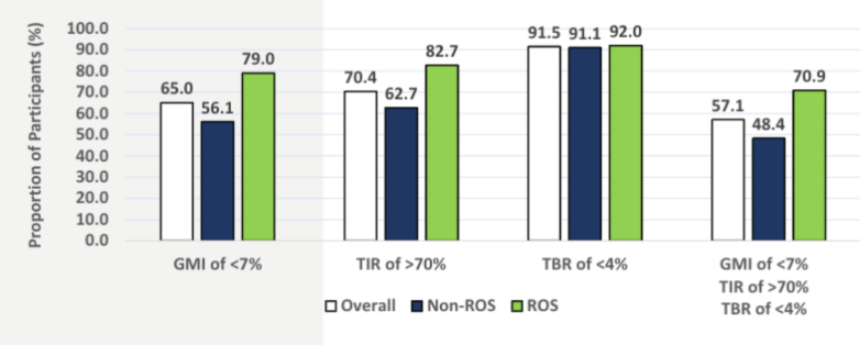
- The overall cohort achieved mean TIR of 75% and mean TITR of 51%. TBR was minimal at 1.6%. Use of the system’s recommended settings (ROS; 100 mg/dL target and two-hour active insulin time) was associated with improved glycemic outcomes. Compared to non-ROS users (n=27,014), ROS users (n=17,068) achieved 1.7 hours/day more in range and 2.0 hours/day more in tight range (79% TIR vs. 72% TIR and 56% TITR vs. 48% TITR) without difference in TBR (1.4% in both subgroups).
- Use of recommended settings was associated with more clinically significant improvements than transitioning from Guardian 4 to Instinct. After transitioning from Guardian 4 to Instinct (n=23,270), users saw a modest 27 min/day TIR improvement (75% to 77%) and a greater 58 min/day TITR improvement (48% to 52%). TBR was slightly higher with Instinct than Guardian 4 (1.6% vs. 1.2%).
- A greater proportion of ROS users achieved consensus glycemic goals than non-ROS users. 71% of ROS users achieved the triple composite endpoint of: (i) GMI <7.0%; (ii) TIR >70%; and (iii) TBR <4.0% compared to 48% of non-ROS users.
16. Bihormonal AID system strongly improves glycemic management after total pancreatectomy in PANORAMA trial
Prof. Hans de Vries (Amsterdam UMC, Netherlands) presented results from the PANORAMA study (n=25), which compared the fully closed-loop Inreda bihormonal AID system (insulin + glucagon) with standard care in people who developed diabetes following a total pancreatectomy. These patients lack both pancreatic alpha and beta cell function. The Inreda bihormonal system received CE-Mark approval in 2020 and requires at least once calibration per day. Overall, PANRORAMA demonstrated substantially improved glycemic management compared to standard care.
- Trial design and baseline characteristics. Participants had undergone a total pancreatectomy at least three months prior to enrollment and were randomized to either their current treatment or the Inreda system for three months. After a three-month washout period, participants crossed over to the alternate treatment for an additional three months. 70% of participants were male, they had a median age of 65 years, and they initiated the system a median of 1.5 years after their pancreatectomy. Mean baseline weight was 71.3 kg (157.2 lbs.). Notably, 28% of participants discontinued use of the device due to factors such as its size and alarms.
- The Inreda bihoromonal pump achieved an impressive 81% TIR, 24 percentage points higher than standard care (57%). A1c was significantly lower with Inreda compared to standard care (7.2% versus 8.0%; p=0.001), as was mean glucose (142 mg/dL versus 180 mg/dL). Time below Range was also lower with Inreda (0.9% versus 1.5%; p<0.05).
17. Stelo drives 2.8 hour/day TIR increase within three months among people with T2D not on insulin (n=12,008)
Dr. Jennifer Layne (Dexcom) presented an additional real-world analysis of Stelo users, evaluating glycemic outcomes after Stelo initiation among adults with self-reported T2D not on insulin (n=12,008). This retrospective analysis included individuals with at least 90 days of Stelo use and a baseline TIR ≤70%, evaluating the change from baseline to three and six months for: (i) CGM metrics; and (ii) hyperglycemic excursions (defined as events with glucose >180 mg/dL for at least two hours over a 10-day period).
- Stelo users achieved a 2.8 hour/day TIR improvement from 43% at baseline to 55% at three months (p<0.001). This improvement was driven solely by reductions in hyperglycemia as Time above Range (TAR) decreased 2.9 hours/day from 57% at baseline to 45% (p<0.001), which was mirrored by a corresponding 2.9 hours/day increase in TITR from 12% at baseline to 24% (p<0.001).
- CGM metrics further improved at six months. TIR increased to 58%, representing a 3.6 hours/day improvement from baseline, while TITR increased to 26%, up 3.6 hours/day from baseline. Like at three months, these increases were driven by reduced TAR, which further decreased to 42% – a 3.6 hours/day improvement from baseline. Time >250 mg/dL decreased 1.0 hour/day from 17% at baseline to 13% at six months. There was a statistically significant increase in Time below Range from 0.3% at baseline to 0.4% at six months (p=0.002); however, this difference is likely not clinically meaningful.
- The number of hyperglycemic excursions over a 10-day period decreased at six months. Stelo users averaged 14.2 hyperglycemic excursions over 10 days at baseline, which decreased to 10.2 at six months – translating to a 3.6 hours/day reduction.
Glycemic Metric | Baseline | Three Months | Six Months |
Time in Range | 43% | 55% | 58% |
Time in Tight Range | 12% | 24% | 26% |
Time above Range | 57% | 45% | 42% |
Time >250 mg/dL | 17% | 15% | 13% |
Time below Range | 0.3% | 0.4% | 0.4% |
Mean glucose | 200 mg/dL | 187 mg/dL | 182 mg/dL |
GMI | 8.1% | 7.8% | 7.7% |
CV | 22% | 22% | 22% |
18. Glycemic outcomes of Stelo users with T2D not on insulin, prediabetes, or without diabetes (n=136,142)
Dr. Mingkai Peng (Dexcom) presented a poster reporting real-world outcomes from over 136,000 Stelo users (2896-LB). This analysis is more than double the size of the real-world Stelo data that Dexcom presented at ADA 2025 (n=61,085). At the end of 2025, Stelo had over 500,000 users. Earlier this week, Dexcom unveiled a redesigned Stelo app that introduces AI coaching, personalized metabolic summaries, and improved pattern recognition. The updated app entered limited early access during ADA, and a broader commercial launch is expected later this summer.
- Nearly half of the cohort comprised adults without diabetes (n=65,034) with roughly similar numbers of people with prediabetes (n=36,015) and T2D not on insulin (n=35,093). Diabetes status was self-reported. A K-means cluster analysis was performed to segment the three populations into non-overlapping subgroups, yielding four clusters in the no diabetes and prediabetes cohorts and six in the T2D cohort. In both the no diabetes and prediabetes cohorts, the first two clusters represented 95% of users, while the T2D cohort featured greater heterogeneity as the first two clusters only represented 61% of users. CGM metrics, including mean glucose, Time in Tight Range (TITR), Time in Range (TIR), and CV, were compared across clusters.
- Significant differences in TITR were observed between clusters. As expected, TITR tended to be highest in people without diabetes and lowest among people with T2D. TITR was much more variable among people with T2D, ranging from 27-80% in the four dominant clusters. TIR was largely similar between the no diabetes and prediabetes clusters and approached 100%, but TIR varied significantly between the four T2D clusters, ranging from 58-98%.
Diabetes Status | Cluster Identity | TITR | TIR | Mean Glucose | CV |
No diabetes | 1 (n=58,895) | 96% | 99% | 107 mg/dL | 13% |
2 (n=5,831) | 82% | 97% | 118 mg/dL | 19% | |
Prediabetes | 1 (n=27,305) | 93% | 99% | 111 mg/dL | 13% |
2 (n=6,635) | 75% | 96% | 126 mg/dL | 18% | |
T2D not on insulin | 1 (n=11,806) | 80% | 98% | 122 mg/dL | 15% |
2 (n=9,747) | 52% | 87% | 144 mg/dL | 19% | |
3 (n=6,203) | 37% | 72% | 160 mg/dL | 22% | |
4 (n=3,695) | 27% | 58% | 177 mg/dL | 24% |
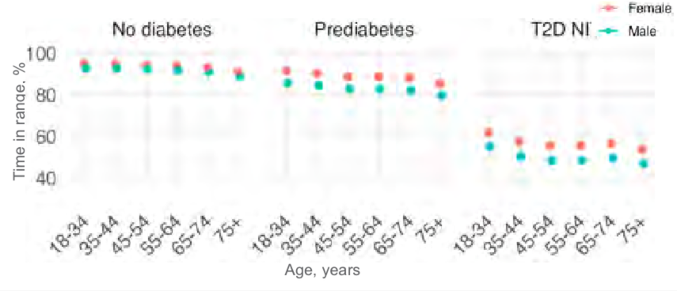
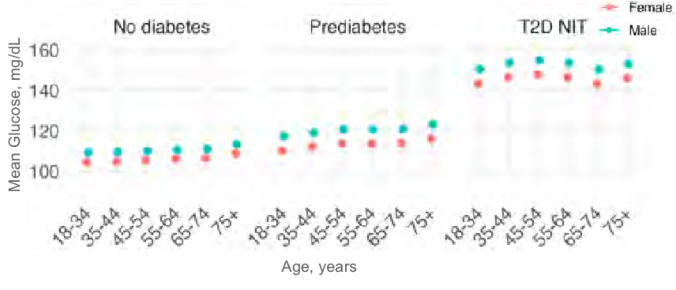
- Male users consistently had higher mean glucose and lower TIR regardless of age and diabetes status. Mean glucose tended to increase slightly with increasing age, while TIR appeared to decrease with increasing age.
19. Real-world analysis suggests twiist’s occlusion detection system mitigates glycemic excursions
In the poster hall, Dr. Kenneth Snow (CSO, Sequel Med Tech) presented real-world glycemic outcomes proximal to occlusion alarms for twiist (2884-LB). As a reminder, twiist directly measures insulin delivery volume during each microdose, enabling quicker detection and alerts for occlusions. Therefore, it may enable users to intervene sooner and prevent occlusion-induced glycemic excursions.
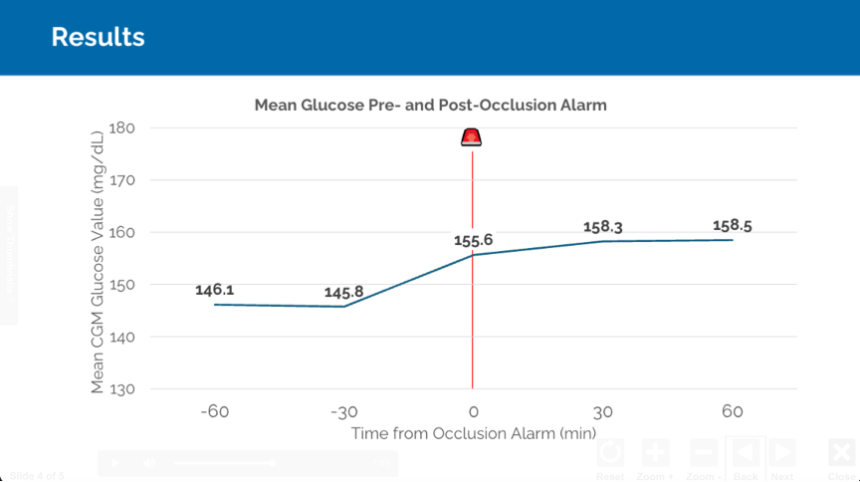
- The analysis analyzed sensor glucose readings in the one-hour periods preceding and following an occlusion alarm, including data from 2,006 users. If either a carbohydrate entry or insulin bolus occurred three hours before or one hour after an occlusion alarm, these notifications were excluded from the analysis to avoid confounding glycemic effects.
- Mean glucose modestly increased in the 30 minutes before an occlusion alarm, suggesting twiist typically detected the occlusion within 30 minutes. Following the alarm, mean glucose was relatively stable, implying that users intervened to address the interruption in insulin delivery. Dr. Snow said the results indicate the efficacy of twiist’s rapid occlusion detection system and its utility for preventing severe glycemic excursions if insulin administration is disrupted.
Diabetes Big Picture Highlights
20. Kelly West Award Lecture: Dr. Mohammed Ali on the value of averages and diabetes heterogeneity
Dr. Mohammed Ali (Emory University), this year’s recipient of the Kelly West Award, opened his lecture by acknowledging his mentors, collaborators, trainees, and family members who shaped his career, emphasizing that scientific progress is built by “standing on the shoulders of giants.” He paid tribute to numerous leaders in diabetes and global health, highlighted the importance of nurturing the next generation of researchers, and offered heartfelt thanks to his parents and wife, Nadia, for instilling resilience, optimism, and purpose. Dr. Ali then shifted to a broader reflection on the current scientific climate, invoking the inscription at the National Academy of Sciences that describes science as an “eternal guide to truth.” He expressed disappointment with the ADA’s handling of recent controversies, arguing that scientific organizations should protect open discourse and seek reconciliation rather than division. Using lessons from post-apartheid South Africa (which he said he shared with Dr. Steven Kahn) and the example of Nelson Mandela, he called for compromise, dialogue, and a renewed commitment to truth-seeking within the scientific community. This was met with great applause. Separately, at the end of his remarks, he was celebrated with a standing ovation.
- Dr. Ali reviewed the evolution of diabetes epidemiology and implementation science, beginning with what he described as the “era of averages.” Traditional epidemiologic approaches have relied on population-level estimates to inform guidelines, treatment recommendations, and public health policy, exemplified by landmark studies such as the DPP. Dr. Ali reviewed his group's efforts to translate evidence into practice across low- and middle-income countries (LMICs), including the INDIA-WORKS initiative, which screened more than 6,500 individuals and demonstrated meaningful reductions in diabetes risk through workplace-based prevention programs. He also highlighted the CARRS translation trial, which combined non-physician care coordinators with clinical decision support tools to improve diabetes management. Despite enrolling participants with mean A1c values approaching 10.0%, the intervention produced substantial improvements in glycemic management, blood pressure, lipid management, and vascular outcomes. These and similar initiatives demonstrated that evidence-based interventions can improve diabetes outcomes at scale, while also increasing awareness, treatment, and control rates in diverse populations.
- Population averages often obscure profound biological and clinical heterogeneity. Dr. Ali argued that diabetes should no longer be viewed as a single disease entity or even as a simple T1D vs. T2D dichotomy. Using examples from a comparison study of Pima Indians in Arizona and Asian Indians in Chennai, he illustrated how populations with similar diabetes prevalence can exhibit fundamentally different pathophysiologic mechanisms, including varying contributions of insulin resistance and insulin deficiency. Drawing on machine learning analyses from large cohorts in the US and South Asia, he described emerging diabetes subtypes characterized by distinct metabolic profiles and complication risks. Notably, insulin-deficient phenotypes appeared to predominate in several LMIC populations and were associated with the greatest burden of mortality and years of life lost (nearly 18 years). These findings suggest that the biological drivers of diabetes vary substantially across individuals and populations, with important implications for prevention, treatment, and risk prediction.
- Dr. Ali concluded by arguing that the future of diabetes care must move beyond “one-size-fits-all” approaches toward precision diabetes. Heterogeneity exists not only in biology, but also in psychology, behavior, health literacy, and treatment preferences, all of which influence patient outcomes. He highlighted the need for earlier identification of disease mechanisms, potentially years before clinical diagnosis – he urged the field to move towards a process like cancer, where clinicians aim to diagnose in early stages of the disease and prevent progression. Ultimately, Dr. Ali argued that although population-based approaches have produced important advances, their impact has often been modest because “one size fits some, not all.” As our understanding of diabetes becomes more sophisticated, future progress will depend on identifying the right intervention for the right individual at the right time, while ensuring that scientific discovery continues to translate into equitable improvements in global population health.
21. Dr. Anne Peters discusses important clinical updates during the 2025-2026 Diabetes Year in Review
Dr. Anne Peters (USC) presented the 2025-2026 clinical diabetes Year in Review, with a major focus on the “tremendous potential” of GLP-1 RAs. She also presented exciting updates in diabetes technology and cautioned against AI use, which she stated can often provide incorrect recommendations. In addition, Dr. Peters passionately reminded attendees to advocate for science, honest discourse, and freedom of speech, for the people with diabetes that depend on this community: “For the past 40 years, the ADA has been a major part of my team. However, recent events have been very concerning to me. In the classic Western High Noon, Marshall Will Kane is abandoned by the townspeople he protected--they stay silent, look away, or flee rather than stand up to the outlaws threatening to take over. It's a timeless warning about what happens when people choose comfort and self-preservation over truth and integrity. We must advocate for science, honest discourse, and freedom of speech, because we face powerful forces that prefer our silence. But just as Kane refused to leave town, we must refuse to abandon the fight — because people with diabetes depend on us.”
- On incretin-based therapies, Dr. Peters highlighted the prevalence of GLP-1 RAs in popular culture. To further emphasize the growth of this drug class, Dr. Peters provided an overview of the market growth from millions with the first drug in the class, exenatide, to billions with modern GLP-1 RAs or multi-incretin agonists. Furthermore, she emphasized that tirzepatide is the “world’s best-selling drug.” Finally, Dr. Peters reviewed expanded indications for injected semaglutide for MASH, oral semaglutide for CV risk reduction, and tirzepatide for children and adolescents. During Q&A, Dr. Peters expressed concern about “too much weight loss” and stressed that diet and lifestyle remain important while on GLP-1/multi-incretin agonists. She also cautioned against the rise of “unregulated peptides” as seen in Hollywood at the moment.
- Technology. Dr. Peters highlighted several advancements in technology in the past year, including the approval of MiniMed 780G for use in T2D, the MiniMed Flex with a streamlined design, the MiniMed GO Smart insulin pen, and the twiist insulin pump’s integration with the Eversense 365 CGM. She also highlighted the use of Tandem’s AID systems for use in pregnancy; however, she cautioned providers to learn about how to use it appropriately since the trial altered traditional use protocols. Importantly, Dr. Peters emphasized that we all need to “advocate for health equity” and provided an optimistic perspective on the use of CGM and AID in under-resourced settings.
- Islet cell therapy. To conclude her session, Dr. Peters discussed a case study of the first patient for whom she prescribed islet cell therapy. She shared a moving story showing that he was off insulin five days after transplantation and after suffering severe complications due to a hypoglycemic incident, including anoxic brain injury. Given the promise that islet therapy may hold for more patients, Dr. Peters calls for improved connections between endocrinologists and transplant teams to make this feasible.
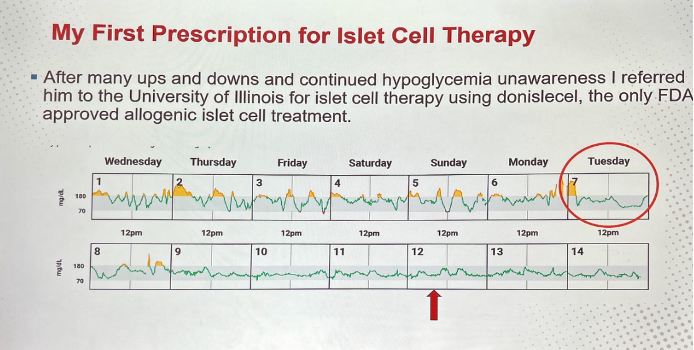
22. Banting Award Address: Pathogenesis of T2D and the spiral approach to the truth
In this year’s Banting Award address, Dr. Takashi Kadowaki (University of Tokyo, Japan) delivered a sweeping address on the pathogenesis of T2D. Dr. Takashi framed the talk as both a personal and scientific journey. He began with the framework he inherited at the start of his career: genetic predisposition and high-fat diet can lead to insulin resistance, pancreatic ß-cell exhaustion, relative insulin deficiency, and overt T2D. Over four decades, his work would gradually move beyond the linear framework of T2D pathogenesis and towards a more integrative model. Genetics, gene-environment interactions, obesity, adipose tissue, adiponectin, insulin resistance, pancreatic insulin secretion, and tissue-specific insulin action all interact to determine whether diabetes develops – and what subtype or complication pattern emerges. This expanded model is especially important for understanding phenotypes where impaired insulin secretion appears particularly central (e.g., “lean T2D” phenotype in Japan and East Asian populations).
- Dr. Takashi’s epidemiologic work helped establish the conceptual foundation for the next four decades of his research. In individuals with impaired glucose tolerance, three predictors stood out as key risk factors for progression to T2D: (i) impaired early insulin response to glucose; (ii) obesity as a marker of insulin resistance; and (iii) family history as a marker of genetic predisposition. These findings suggested that the disease could not be reduced to a single mechanism. Both insulin secretion and insulin resistance independently mattered.
- A major mechanistic focus focused on insulin receptor biology, and the proof that abnormalities in insulin signaling could directly cause metabolic dysfunction in humans. In Dr. Kadowaki’s research on patients with mutant alleles of the insulin receptor gene, he worked to establish the insulin receptor as essential to glucose homeostasis. His findings laid the groundwork for later questions about what happens downstream of the insulin receptor, and why some forms of impaired signaling lead to diabetes, while others do not.
- Dr. Kadowaki framed the IRS knockout mouse as a turning point. Through in vivo experiments, IRS-1 knockout mice were clearly insulin resistant. Yet, they did not develop diabetes. They maintained normal glucose tolerance through compensatory hyperinsulinemia. This finding directly contradicted the then-common expectation that insulin resistance alone should be enough to produce T2D. Dr. Kadowaki used this finding as an example of how contradiction can drive discovery. Further work then showed that IRS-1 knockout mice had only mild insulin resistance compared with insulin receptor mutations, implying the existence of both IRS-1-dependent and IRS-1-independent insulin signaling pathways. This finding led to the identification of IRS-2.
- The comparison between IRS-1 and IRS-2 knockout mice became Dr. Kadowaki’s clearest mechanistic lesson. Although IRS-2 knockout mice showed a similar degree of insulin resistance to IRS-1 knockout mice, they did develop overt diabetes. IRS-1 knockout mice responded to insulin resistance with compensatory ß-cell hyperplasia and preserved normal glucose tolerance. IRS-2 knockout mice failed to mount that same compensatory ß-cell response and progressed to T2D. T2D arises from the interaction between insulin resistance and an inadequate ß-cell response.
- Dr. Kadowaki pivoted from mechanistic to philosophical in his reflections. He described the pathogenesis of T2D as “a quest” pursued through “a spiral approach to the truth.” In this model, Dr. Kadowaki described scientists as formulating rational hypotheses and testing them experimentally. If the results match predictions, the hypothesis gains support, and science can move one step closer to the truth. However, if the results contradict the hypothesis, that contradiction can be resolved through reinterpretation and an alternative hypothesis. These have the potential to produce incremental progress, but also a leap forward. Scientific advancement is not linear, and the most transformative moments often come from anomalies rather than confirmations (see below).
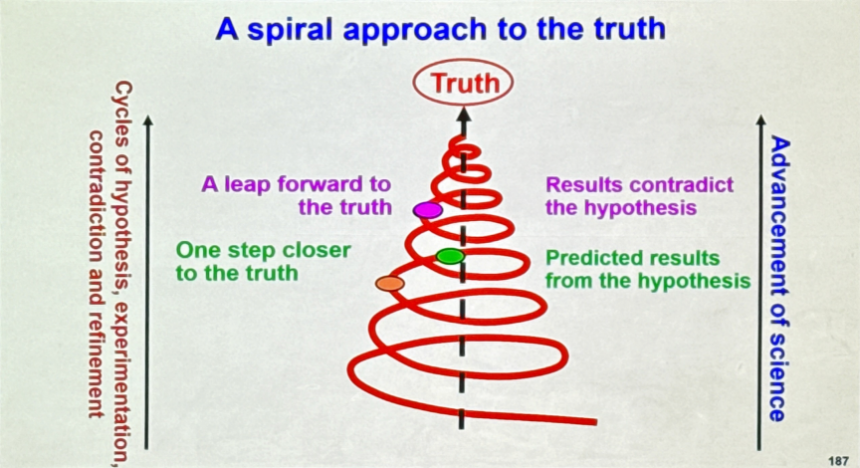
- Scientists should embody rigor, courage, passion, and creativity. Dr. Kadowaki explained that scientists should demonstrate rigor in staying faithful to experimental facts, courage in not being intimidated by authority, passion in relentlessly pursuing truth, and creativity in resolving contradictions between hypothesis and evidence. As research on T2D continues to advance, our understanding may continue to “evolve indefinitely.” Dr. Kadowaki reflected, “That is exactly what makes this field so exciting.”
23. Congressman Troy Carter (LA-02) on preventive care, TROA, and the importance of research – “There’s no excuse … for research dollars drying up”
Congressman Troy Carter, Sr. (LA-02) gave a keynote address during an ADA Diabetes Care Symposium titled, “The Oscillation of Diabetes and the Environment.” Diabetes rates in Louisiana consistently rank among the highest in the US. Congressman Carter shared that in his district, three or four dialysis centers can be found right next to each other, adding that this says a lot about the need for discussion and preventive care. In particular, he called for closing the care gap that has left men of color particularly vulnerable, saying that too many men in his district live with undiagnosed diabetes. Addressing this, he said, will involve tackling cultural barriers to seeking care.
- On research, he noted its important in improving care and the importance of cross-sector collaboration, saying, “Research matters, lives matter, and policy can drive us in the right direction.” He added, “There’s no excuse for people being sick, for research dollars drying up,” and urged researchers not to walk away and to stay in the battle, thanking all the researchers and clinicians in the room.
- When asked about the most impactful ways researchers can make their voices heard, he encouraged showing up to Capitol Hill directly and to committee hearings. Social media and letters – but not form letters – are also effective, and Congressman Carter added, “You are more respected than you realize.”
- On TROA, the Treat and Reduce Obesity Act, Congressman Carter highlighted that he is a cosponsor of the act (see here for the list of cosponsors). As background, TROA aims to expand coverage of obesity treatments to Medicare beneficiaries. Congressman Carter emphasized that obesity is not due to a lack of willpower and that the importance of treating obesity is to prevent downstream chronic diseases.
24. Launch of the first fully remote, non-invasive T1D screening program with T1D Scout
Mr. Yuta Matsuda (Co-founder and CEO at T1D Scout) presented the company's novel method for T1D screening to a small but intimate crowd. He shared data revealing the striking gaps in T1D screening: currently, only about 4% of families affected by T1D get screened (about 350,000 families out of 10 million). He noted that limited research sites, reliance on blood tests, and the costs of current screening methods create barriers that prevent more families from getting screened, not to mention the psychological impact of this data. T1D Scout aims to overcome these barriers with its at-home, saliva-based tests, along with educational programming to support those who have results at higher risk for developing T1D.
- T1D Scout’s genetic risk score model performance achieves an area under the curve (AUC) value of 0.93, indicating successful discrimination between T1D and population controls. Tested on 500 combined cases of T1D, T2D, and healthy controls, its single-nucleotide polymorphism model was equivalent to the state-of-the-art genetic risk scores that generally fall within 0.77 to 0.87 AUC. This tool optimizes the genetic risk score for scalable real-world operation while keeping the accuracy of the model.
- Mr. Matsuda also shared results from recent real-world deployment. During initial deployment, T1D Scout restricted eligibility to children under 19 years old who had a family history of T1D. The company hopes to eventually expand availability to the general population. Within two weeks of release, over 3,000 families registered, 1,000 kits were shipped, and over 500 data points were generated. Of those who registered, 82% were white – which broadly reflects the US T1D population – and the mean age was eight years. Notably, more than 80% of those who registered had never been screened for T1D before.
- Those stratified as ‘high-risk’ by their genetic risk score profile had 10 times higher odds of testing positive for multiple autoantibodies. High-risk classification was based on the top 20% of autoantibody counts among registrants. In the low-risk group, the positivity rate approached that seen in the general population (0.93%). Altogether, among the 500 data points currently collected, 11 of 110 cases (10%) in the high-risk group were considered autoantibody positive, while only 3 out of 323 cases (>1%) in the lower risk group were autoantibody positive.
- Counseling services were provided after positive autoantibody detection, which helped ease anxiety. Those who had a positive screening had a 16% increase in anxiety (from 36.9 to 43.0), but their anxiety fell back to baseline following counseling . Furthermore, those who are high-risk and screened positive for autoantibodies are provided additional free antibody testing every year to monitor their progression.
- Looking ahead, Mr. Matsuda said he hopes to reach 100,000 individuals by 2028 and is currently in discussion with European and Asian research groups to expand their reach outside of the US.
25. President, Medicine & Science Address: Dr. Enrique Caballero campaigns to unite biomedical science with sociocultural factors shaping T2D
In this highly anticipated address, ADA President of Medicine & Science, Dr. A. Enrique Caballero (Harvard University), argued that the future of diabetes care depends on uniting biomedical science with socioeconomic and cultural realities of T2D. He began his address on a positive note, celebrating extraordinary progress in the field. Diabetes is now understood as a complex multi-system disease, while obesity is recognized as the primary driver and a therapeutic target. Interventions for both conditions – ranging from GLP-1 RAs and SGLT-2 inhibitors to metabolic surgery, CGM, AID systems, and AI-enabled care – have transformed the clinical toolkit.
- Only a minority of people with diabetes achieve even relatively modest goals for glycemic management, blood pressure, lipids, and smoking. This failure is patterned. Uninsured patients, racial and ethnic minorities, and young adults are systematically less likely to reach treatment targets because their lives are shaped by work demands, financial strain, and chronic psychosocial stress.
- This is not a simple “race vs. class story,” he continued. Race and socioeconomic context are mutually reinforcing factors that influence exposure to risk and access to care. Citing a large national cohort study, Dr. Caballero demonstrated that as a number of adverse social determinants accumulates, cardiovascular mortality risk rises in a clear dose-dependent response fashion, even after accounting for traditional risk factors. These data suggest additional mechanisms related to chronic inflammation, allostatic load, and other stress-mediated pathways link adversity to disease.
- Throughout his presentation, he built his practical agenda for his presidency. First, he called researchers to re-engineer studies so that social and cultural determinants of health are built into trial design, rather than analyzed as covariates. Affected patients must also help shape the questions asked and the interventions tested. Second, Dr. Caballero supported that the same sociocultural integration must occur in everyday care. Multidisciplinary teams must grow physically and culturally closer to the communities they serve to expand access to advanced therapies and technologies where at-risk populations reside. As an example, he described his own experience of leaving a prestigious, well-resourced care campus for a modest community health. He shared that closer proximity to patients’ lives, language, and circumstances allows for a more honest and effective practice. Lastly, he outlined his “Multi-Check” model (see below), which blends primary and specialty care to address biomedical, psychosocial, social, and cultural aspects of diabetes.
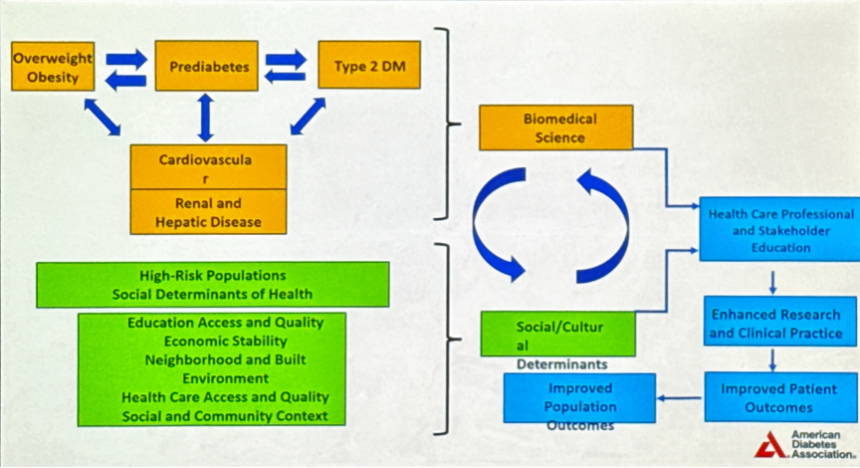
- Dr. Caballero views systems design and policy as the next frontier. He proposed embedding structured social-determinant assessments into EHRs to enable systematic identification of patient need. Yet, he cautioned that these projects are only actionable if health systems expand access to community resources – including housing support, food assistance, transportation, and culturally appropriate medication.
- Dr. Caballero urged researchers to generate solid evidence that team-based, socially informed care models can improve outcomes and, ideally, reduce costs. Thereby, they could create a compelling business case for payers and policy makers to reward a whole-person, preventative, community-embedded care. However, without payer participation, Dr. Caballero lamented that the field would remain trapped in reactive, illness-centered systems that burn out clinicians while under-serving the most vulnerable patients.
26. Early identification is essential for the prevention of CVD in patients with diabetes
In this Ask the Experts session, panelists discussed recent updates to guidelines concerning blood pressure, lipids, and heart failure. Dr. Daniel Jones (University of Mississippi) opened with the diabetes specific recommendations in the 2025 Guideline for the Prevention, Detection, Evaluation and Management of High Blood Pressure in Adults released by the American Heart Association (AHA) and American College of Cardiologists (ACC). The 2026 Guideline on the Management of Dyslipidemia was presented by Dr. Pamela Morris (Medical University of South Carolina), who acted as the vice-chair of the guideline writing committee. To close, Dr. Ambarish Pandey (UT Southwestern) discussed strategies for preventing heart failure (HF) in diabetes.
- Per the AHA/ACC guidelines, systolic blood pressure (SBP) ≤130 mm Hg diastolic blood pressure (DBP) ≥80 is recommended for patients with diabetes. These values are grounded in the eight RCTs that have compared CV outcomes for lower and higher SBP targets – seven out of the eight trials contained significant participation from patients with diabetes. A meta-analysis of seven trials found that more intensive lowering (SBP <130 mm Hg) resulted in significant reductions to major CVD (22%) and all-cause mortality (13%) when compared to less intensive lowering (SBP ≥130 mm Hg).
- In the era of “lower is better,” Dr. Jones acknowledged the need for a risk benefit analysis to account for adverse events associated with lower BP reduction. However, he still strongly advocated for intensive lowering, citing its additional benefit in reducing the risk of dementia by 15%.
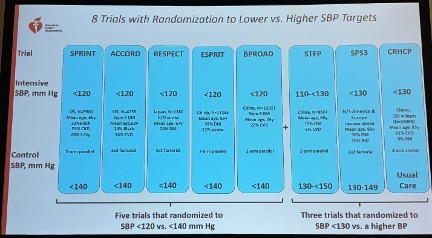
- Dr. Morris presented top take home messages from the AHA/ACC 2026 lipid guidelines, which included using the PREVENT-ASCVD calculator for risk assessment. In keeping with the session’s theme of early detection, Dr. Morris discussed the benefit of early dyslipidemia treatment in reducing lifelong risk of prolonged exposure to atherogenic lipoproteins. As a reminder, cumulative exposure to apo-B containing lipoproteins such as LDL-C is proportional to total atherosclerotic plaque burden, underscoring the importance of early detection to prevent CVD.
- LDL-lowering prescriptions are recommended for primary prevention in adults with established diabetes. Here, Dr. Morris cited the VESALIUS-CV trial, which found that the risk of a first major cardiovascular event was significantly reduced through intensive lowering of LDL levels in patients with diabetes on daily insulin without known significant atherosclerosis. For ages 20-39 years, a moderate-intensity statin is recommended. For ages 40-75 years, the PREVENT-ASCVD framework should be used to assess if an increase in statin intensity is needed. For ages >75 years, with an estimated life expectancy of ≥2.5 years, moderate-intensity statins may be initiated following clinician-patient discussion. These recommendations are supported by a statistically significant reduction in risk of a first major cardiovascular event following treatment.
- Dr. Pandey presented the benefits of using biomarkers for screening and prevention of HF in diabetes. The development of HF is not a one-step process, but rather a progression through three stages that involves myocardial stress and injury. The key to preventing HF lies in the early identification of the Stage B phenotype in this progression, also known as diabetic cardiomyopathy. In the absence of other etiologies of cardiac abnormalities such as overt hypertension or obesity, cardiac biomarkers such as N-terminal pro B-type natriuretic peptide (NT-proBNP) and high-sensitivity troponin T (hsTnT) can aid in identification of diabetic cardiomyopathy. Use of these biomarkers also support better outcomes, with a sub-analysis of the DECLARE-TIMI 58 trial finding that NT-proBNP and hsTnT levels identified patients with greatest absolute risk reductions with SGLT2i. However, Dr. Pandey emphasized that using biomarkers alone was not sufficient and recommended supplementation with risk scores and EHR-based implementation targets.
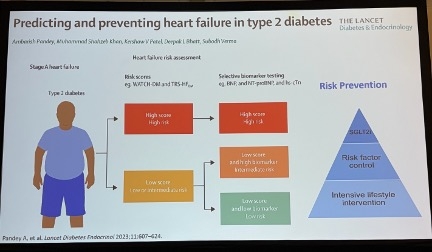
27. *NEW* ADA-EASD joint consensus report on the management of T1D in adults
In an afternoon session chaired by Dr. Anne Peters (USC), panelists spoke on the updated ADA-EASD consensus report on the management of T1D in adults. Dr. Peters said that the first EASD-ADA consensus report, published in 2021, was warmly welcomed by the field and highly regarded, and since then, there have been rapid advancements in the diagnosis and treatment of T1D. The committee received requests to place greater emphasis on the management of obesity and cardiovascular risk, and to provide guidance on screening for microvascular complications. Following this feedback, between January 2025 and September 2025, the original writing committee met monthly and organized multiple new sections while simultaneously producing updates to all the existing sections. The draft was presented at EASD 2025, was opened for public comment, and then submitted to reviewers. Dr. Peters shared that the committee received nearly 150 detailed comments, which were systematically addressed in preparation for final submission. Excitingly, the draft is now under review for publication.
- Dr. Jay Skyler (University of Miami) on the diagnosis and staging of T1D. Dr. Skyler outlined key updates to the section on diabetes diagnosis, suggesting that an algorithm can support T1D diagnosis, particularly when the diagnosis is not obvious. To support this method, the ADA-EASD consensus report includes a thorough diagram that outlines the consideration of T1D from autoantibody testing and the following steps for further testing or management. Dr. Skyler noted that the updated consensus recommends considering C-peptide testing if autoantibodies are negative or single, low-titer positive – meaning that the lab detected a small concentration of autoantibodies. He also said that higher C-peptide levels do not exclude T1D diagnosis.
- The consensus report introduces the need for a specific diagnosis marker, particularly for those with adult-onset diabetes.
- On preservation and replacement of beta cell function, Dr. Skyler listed several different areas of research and development:
- Immune therapies, including disease-modifying approaches that delay the progression and preservation of residual beta cell function;
- Metabolic or adjunctive strategies: agents targeting β-cell stress and survival under active investigation;
- Replacement methods with pancreas and islet transplantation;
- Technological impact with AID systems, of which there are many examples, and where there continues to be tremendous progress; and
- Stem cell-derived islets and novel strategies such as encapsulation, immune evasion, and xenotransplantation.
- Prof. Kirsten Nørgaard (Steno Diabetes Center Copenhagen, Denmark) on glycemic management of T1D. The updated consensus report lists several interventions to manage glycemic levels in people with diabetes, including the following:
- CGM. People with T1D should have access to CGM as the standard of care for glucose monitoring, supporting glycemic optimization, and improving quality of life, according to Prof. Nørgaard. She emphasized that CGM reduces the burden of hypoglycemia, especially in older populations and those with impaired awareness of hypoglycemia. Although she didn’t talk about it extensively, we also know there is great progress on minimization of hyperglycemia, around which there is significant enthusiasm.
- Insulin. The consensus report acknowledges that AID systems have become the preferred mode of insulin delivery for people with T1D to improve glucose levels and reduce hypoglycemia. While this was great to see, the reality is that the majority of governments globally cannot afford to provide this. Yet, Prof. Nørgaard emphasized that it’s important that both patients and providers understand how different algorithms work across AID systems, including the recognition of which parameters can and cannot be adjusted to alter glycemic measures. This is certainly important in countries in which AID systems are more available, though it is irrelevant in many economies globally, even in many wealthy economies. We were glad to see the report detail multiple characteristics of some widely used AID systems, like infusion mode, CGM compatibility, control algorithm, and other specific features and certainly acknowledge the strength of this message going out in the US. Beyond economic constraints, there are also constraints related to clinician knowledge, understanding, and time to be able to spend on these systems.
- Adjunctive therapies. The report indicates insufficient evidence to recommend the use of adjunctive therapies in T1D to improve glycemic outcomes. Given the increasing use of off-label treatments, e.g., GLP-1 RAs and SGLT-2 inhibitors, the report encourages discussion between patients and providers on the risks and benefits for each individual.There are multiple trials ongoing with people with T1D taking adjunctive therapies and there are also some trials that have been recently halted on this front. We believe that without continuous ketone monitoring, there are major safety questions for SGLT-2 inhibitors in particular.
- Prof. J. Hans DeVries (Amsterdam University, the Netherlands) on microvascular complications, cardiovascular risk, and obesity. These three sections were newly added to the consensus report to increase education and awareness on the deep connection between diabetes and comorbidities.
- Screening for microvascular complications. The report states that microvascular complication screening should be performed at five years post-diagnosis and thereafter. It encourages regular assessment for retinopathy, nephropathy, and neuropathy to enable early detection and intervention. Additionally, it recommends that screening frequency be adjusted for each patient based on glycemic levels and other comorbidities.
- Cardiovascular risk management. Prof. DeVries highlighted that cardiovascular risk significantly increases in people with T1D as they age, requiring active management. The consensus notes the role of GLP-1 RAs and SGLT-2 inhibitors in cardiovascular disease prevention but does not explicitly recommend them, as these treatments are not yet approved for T1D – as noted above, there is currently insufficient evidence to recommend the use of adjunctive therapies for better glycemic control. Recognizing the increasing off-label use, the report cautions against SGLT-2 inhibitors and the associated risk of euglycemic diabetic ketoacidosis (DKA), which we were happy to see given the dangers of this and the frequency since 2013, when SGLT-2 inhibitors were approved for people with T2D in the US (and later in many other geographies) and after which they began to be used off label by people with T1D.
- Obesity. The report comments that overweight and obesity are “at least as common in people with T1D as in the general population.” Some contributing factors to this prevalence include increased food intake to prevent or treat hypoglycemic events, as well as the effects of hyperinsulinemia. Recommendations for weight management in people with T1D include pharmacotherapies, behavioral interventions, and bariatric surgery.
-- by Daniel Lee, Caroline Metz, Kayla Cao, Allie Platt, Ben Wyler, Nina Yao, Kayla Mathieu, Elizabeth Rose, Andrew Goyette, Esther Min, Elaine Young, Jeremy Alkire, Nour Khachemoune, Kat Moon, Monica Oxenreiter, and Kelly Close