ADA 2026 – Full Report –
Executive Highlights
- The ADA’s 86th Scientific Sessions brought robust scientific and clinical discourse across diabetes technology, therapies, prevention, and complications. Approximately 12,000 attendees gathered at the New Orleans Ernest N. Morial Convention Center, discussing science in the session rooms, hallways, and exhibit floor over a backdrop of jazz.
- In technology, ADA 2026 reinforced the continued expansion of automated insulin delivery (AID) beyond traditional outpatient T1D use, with new data supporting broader use in pregnancy, inpatient care, and T2D. Across settings, the message was clear: modern AID technology can improve outcomes in populations historically considered too complex, high-risk, or operationally challenging for automated insulin delivery. Of note, results from the STRIVE trial (n=132 people with T1D and T2D) demonstrated significantly greater TIR and Time in Tight Range (TITR) with Insulet's next-generation Omnipod 6 algorithm compared to Omnipod 5 across most age groups and in T2D. For the use of MiniMed 780G with Instinct, an expanded analysis of 44,082 users demonstrated mean TIR of 75% and TITR of 51%. Those using the system’s recommended settings (100 mg/dL target and two-hour active insulin time) achieved 79% TIR and 56% TITR.
- While CGM has been firmly established as standard of care for people using intensive insulin therapy, ADA 2026 demonstrated how rapidly the evidence base is expanding to additional populations. Dexcom's CONNECT trial was among the most notable readouts at ADA - a 26-week randomized controlled trial in adults with T2D not using insulin that showed that CGM drove substantially greater reductions than routine BGM in A1c (from 8.8% to 7.2% in CGM versus 8.7% to 8.0% in BGM). TIR improved significantly from 29% to 62% in CGM versus 31% to 42% in BGM (itself a notable increase of over two hours a day), with benefits emerging within the very first week of use.
- A subgroup analysis from Abbott’s FreeDM2 trial, which was first presented at ATTD 2026, also demonstrated that CGM benefits were consistent regardless of age, sex, BMI, socioeconomic status, baseline A1c, or baseline TIR among adults with T2D using basal insulin.
- In therapy, multiple pivotal incretin trials demonstrated robust weight loss, glycemic reduction, and cardiometabolic benefits. In the phase 3 TRIUMPH‑1 (n=2,339)and TRANSCEND‑T2D‑1 (n=537) trials, retatrutide (triple GIP/GLP-1/glucagon RA) conferred up to a record 28% weight loss in people without diabetes and 17% in people with T2D, respectively. In the REIMAGINE program, CagriSema (fixed dose combination of cagrilintide and semaglutide) led to A1c reduction by 1.8-1.9 percentage points and weight loss by 10-14% in people with T2D. The SYNCHRONIZE-1 trial (n=726) showed that survodutide (dual GLP-1/glucagon RA) conferred 16.6% weight loss and 0.26 percentage point reduction in A1c. Oral GLP-1 RAs were of central focus, as well, with the ACHIEVE trials demonstrating A1c reduction by up to 2.2 percentage points in people with T2D.
- Obesity treatments continued to advance beyond incretin-based mechanisms. Notably, in the phase 2 ZUPREME-1 trial (n=485), long-acting amylin analog petrelintide reduced body weight by up to 10.7% (vs. 1.7% with placebo), with a placebo-like tolerability profile.
- In T1D advancements, the promise of disease-modifying therapies, stem cell-based islet transplantation, and adjunctive treatments were highlighted. Additional analysis of the phase 1 trial found that SAB-142 (human anti-thymocyte immunoglobulin) preserved C-peptide levels, improved Time in Range, and reduced insulin requirements by 120 days. Regarding adjunctive therapies for T1D management, a target trial emulation (n=22,134) revealed cardiorenal protection with SGLT‑2 inhibitors in adults with T1D. A retrospective chart review further showed the glycemic benefits of GLP‑1 RAs – albeit heterogeneous depending on obesity status before puberty and baseline A1c – in youth with T1D.
- The momentum for T1D screening and monitoring also continued. A Sanofi symposium reiterated that early screening can reduce DKA rates at diagnosis, provide more time for emotional preparation, and offer opportunities to delay the disease progression.
- Turning to complications, several presentations suggested that the impact of CGM and AID may extend well beyond glucose management. New analyses linked technology use to improved renal outcomes, lower cardiovascular risk, and safer management of complex patient populations, signaling a growing focus on the broader health consequences of diabetes technology adoption.
- Many studies also featured microvascular complications at ADA 2026, with topics ranging from diabetic retinopathy to limb health. On eye health, a prespecified SURPASS-CVOT sub study (n=920) found that tirzepatide did not increase the risk of diabetic retinopathy compared to dulaglutide. Though tirzepatide produced a 2.18 percentage-point A1c reduction at six months compared to a 1.28 percentage-point reduction with dulaglutide, retinal outcomes remained stable and comparable between groups. Stratifying participants by >2.0% vs. ≤2.0% A1c reduction did not reveal any differential risk in either treatment group.
- The meeting also caught national attention as some of the ADA’s most prominent scientists had their badges taken for distributing a Diabetes Care editorial criticizing the Trump administration ahead of a contentious fireside chat. Throughout the meeting, attendees called for truth, integrity, and reinstatement of the speakers.
The researchers certainly impressed us all at the 86th Scientific Sessions and we thank the ADA enormously for bringing together so many great minds. Below, you’ll find our top themes from the meeting, followed by highlights sorted by category.
Table of Contents
-
Themes
-
Technology
- 1. AID for all: Evidence mounts for pregnancy, inpatient use, and more
- 2. CGM's next frontier: Mounting evidence supports expansion beyond insulin-treated diabetes
- 3. Diabetes care shifts upstream: AI-enabled predictive monitoring and decision support take center stage
- 4. From glycemia to outcomes: Diabetes technology further demonstrates renal and cardiovascular benefits
-
Therapy
- 1. Next-generation incretin-based therapies deliver record weight loss and expand treatment landscape with oral and combination approaches
- 2. Beyond incretins: Obesity treatments advance toward improved tolerability and lean mass preservation
- 3. Advances in cures, disease-modifying drugs, and adjunctive therapies for T1D
- 4. Macrovascular complications like MASLD and heart disease inspire both traditional and innovative therapies
- 5. Dive into microvascular complications: Diabetic retinopathy, neuropathy, and limb health
- 6. Beyond a metabolic disease: T2D pathophysiology, prevention, and behavioral health
- Big Picture
-
Technology
-
Incretin-based Therapies
- TRIUMPH-1: Retatrutide confers up to 30% weight loss in people without T2D and significantly improves knee osteoarthritis and obstructive sleep apnea
- TRANSCEND-T2D-1: Retatrutide confers the greatest weight loss in people with T2D to date
- ACHIEVE-2: Orforglipron demonstrates superiority over dapagliflozin in A1c improvements and weight reduction
- ACHIEVE-3 trial: Orforglipron demonstrated superiority over oral semaglutide in people with T2D on metformin
- ACHIEVE-5: Orforglipron as an add-on therapy to insulin glargine improves A1c in adults with longstanding T2D
- A balance between efficacy and burden: Orforglipron in clinical practice
- Lilly’s product theater features clinical trial results and practical tips for Foundayo (orforglipron), the newly approved oral GLP-1 RA
- Full results of the REIMAGINE-1, 2, 3 trials: CagriSema demonstrates strong A1c and weight reductions across T2D cohorts
- SYNCHRONIZE-1 trial: GLP-1/glucagon RA survodutide confers 17% weight loss in people with obesity
- Full phase 3 GLORY-2 results: Dual GLP-1/glucagon RA mazdutide confers nearly 20% weight loss in people with obesity
- Full results of the phase 3b DREAMS-3 trial find mazdutide confers greater weight and A1c reductions than semaglutide 1.0 mg in T2D
- Highest dose of zenagamtide (amycretin) confers placebo-adjusted A1c reduction by 1.6% in people with T2D in phase 2 results
- Phase 2 results for dual GLP-1/GIP RA enicepatide demonstrate up to 23% body weight loss with favorable tolerability
- Results from the VESPER phase 2b program: Redefining long‑acting GLP‑1 RA therapy
- Dual GLP-1/GIP RA HDM1005 demonstrates up to 13% weight loss at Week 22 in people with obesity
- Full results of the phase 2b ACCESS trial: Oral small molecule GLP-1 RA aleniglipron confers up to 12% weight loss in people with overweight or obesity
- Phase 2b SOLSTICE trial: Elecoglipron confers a 1.9 percentage point reduction in A1c and 8% weight loss in T2D
- Phase 2b VISTA trial finds that oral small molecule GLP-1 RA elecoglipron confers up to 12% weight loss in adults with obesity
- Dual GLP-1/GIP RA CT-388 demonstrates 23% weight loss at Week 48 in people with overweight or obesity
- Bi-weekly GLP-1/GIP RA RAY1225 confers up to 21% weight loss in Chinese adults with overweight or obesity
- Phase 1 trial results of Innovent Biologics’ once-weekly mazdutide (dual GLP-1/glucagon RA) in Chinese adolescents with obesity
- Tirzepatide confers improved insulin resistance and adipocyte function with matched dietary weight loss
-
Non-incretin Therapies
- Full phase 2 ZUPREME-1 results: Long-acting amylin agonist confers 10% weight loss with placebo-like tolerability
- Prof. Thomas Lutz discusses the amylin biology
- Long-acting amylin agonists: Competitive landscape and clinical pearls
- Long-acting amylin agonists: Dr. Tim Garvey shares additional clinical insights and future directions
- Trial emulation study demonstrates the association of SGLT-2 inhibitor treatment duration with cardiovascular outcomes in T2D
- Prevalence of DKA with SGLT-2 inhibitor use and the importance of education
- CATALYST sub-analysis finds that mifepristone confers glycemic and weight reduction in people taking GLP-1 RAs
-
Insulin Therapies
- Retrospective analysis finds CGM-based workflow for once-weekly insulin efsitora dosing
- The major cause of insulin resistance is insulin: An argument to decrease exogenous insulin to treat cardio-renal metabolic syndrome
- Make new friends, but keep the old? Updates on insulin therapy in pregnancy
- Hepatocyte-directed insulin lispro may reduce hypoglycemia without increasing A1c in adults with T1D
-
T1D Cures and Adjunctive Therapies
- Bridging the gap: Advancing stem cell-derived beta-cell therapy toward widespread clinical use
- The landscape of clinical trials for T1D immunotherapies: Vedolizumab, ATG, and antigen-specific plasmid treatment
- Evolving strategies in pediatric T1D: From AID systems to disease‑modifying drugs and islet replacement therapy
- Preventing T1D: Safety of repeated dosing for SAB-142, a human anti-thymocyte immunoglobulin
- The use of verapamil in people with T1D: Dr. Rayhan Lal on clinical data to practical recommendations
- Tirzepatide improves BMI and A1c without increasing DR risk in adults with T1D and obesity
- Full results of phase 2 trial of dual GLP-1/GIP RA acmopatide (CT-868) in T1D; Roche discontinues program
- Clinical T1D care: GLP-1 response patterns in youth with T1D
- Balancing cardiorenal benefits and DKA risk: SGLT-2 inhibitors in T1D
- Insulin clearance and disease progression in children with preclinical T1D
- Sanofi’s symposium discusses life-threatening cases of Tzield infusion
- The “clinical conundrum”: The management of single islet autoantibody detection in youth
- Launch of the first fully remote, non-invasive T1D screening program with T1D Scout
- Preventing hypoglycemia: A retrospective study compares the sensitivity of biometric trackers in detecting physical activity
- Disease burden, perceived effectiveness, and social factors influence patients’ decisions to pursue stem cell therapy for T1D
- ADA-EASD joint consensus report on the management of T1D in adults
- Meeting the needs of older adults with T1D: Unique considerations, pharmacotherapies, and care transitions
- ADA Presidents’ select abstract: Time to minimal residual C-peptide as an endpoint for recent-onset T1D
-
Obesity
- Phase 2b COURAGE trial analysis shows that trevogrumab added to GLP-1 RA preserves lean mass, regardless of baseline body composition
- Exercise and protein supplementation enhance body composition in combination with GLP-1 RA therapy
- Panel with three ADA Banting Medalists debates unresolved questions regarding obesity pathophysiology and intervention targets for next-generation therapies
- Weight loss from GIP/GLP-1 RAs could prevent over five million deaths and save $10.5 trillion over the next decade
-
Complications
- ADA/EASD 2026 consensus report on hyperglycemia in T2D: Updates focus on preventing complications and developing healthy behaviors
- Debate: Prof. Stephanie Amiel and Dr. Irl Hirsch on the significance of level 1 hypoglycemia
- Which biomarkers matter? Prof. Naveed Sattar encourages clinicians to “think simple” and prioritize traditional cardiovascular risk factors in T2D
- Early loss of 15%+ body weight is associated with lower vascular risk in newly diagnosed T2D
- Early identification is essential for the prevention of CVD in patients with diabetes
- Semaglutide reduces MACE by altering proteins involved in cardiac wall stress, fibrosis, endothelial dysfunction, and vascular inflammation
- Meta-analysis finds that SGLT-2 inhibitors are safe and may be beneficial for management of cardiac arrhythmia
- SYNCHRONIZE-MASLD trial: GLP-1/glucagon RA survodutide significantly reduces liver fat in people with obesity and MASLD
- Post-hoc analysis of the SYMMETRY trial of efruxifermin in people with T2D and compensated cirrhosis due to MASH
- Rezdiffra demonstrates meaningful gains in MASH resolution and fibrosis improvement
- Dr. Timothy Garvey discusses GLP-1 RAs for MASLD and the unique lipid profiles seen in the condition
- MASLD/MASH: A review of the drug approval process and treatment options beyond resmetirom
- Ferroptosis inhibition and senotherapies as potential novel treatments for MASH
- Bayer-sponsored symposium discusses screening, pathogenesis, and treatment of chronic kidney disease in diabetes
- STEP UP post-hoc analysis shows high-dose semaglutide improves kidney health in people with obesity but without T2D
- Changes in glomerular filtration rate and hyperfiltration status in youth with T2D with tirzepatide from SURPASS-PEDS
- Experts debate sequential versus simultaneous initiation of therapies for diabetic kidney disease
- SURPASS‑CVOT substudy finds no signal of early diabetic retinopathy worsening with tirzepatide versus dulaglutide
- Tirzepatide is associated with 45% lower risk of major adverse limb events than semaglutide
- Diabetic neuropathy pain management: Therapies, exercise, and spinal cord stimulation
- Dr. Stephanie Teal on selecting contraceptive methods for people with diabetes and obesity
-
Glucose Monitoring – CGM, CKM, BGM
- Drs. Jennifer Sherr and Jeremy Pettus tackle the value of CKM for the masses
- Dexcom’s CONNECT RCT shows ~5-hour/day greater improvement in TIR with CGM vs. BGM in adults with T2D not using insulin
- Dr. Fran Kaufman presents real-world data on one year of Eversense 365 use and early twiist-Eversense 365 AID integration
- FreeDM2 subgroup analysis shows consistent CGM benefit across demographic and clinical characteristics in T2D on basal insulin
- Dexcom’s product theater promotes T2D staging, Stelo‑driven behavior change, and Smart Basal-guided basal insulin initiation
- Target trial emulation of VA database associates CGM initiation with 37% lower risk of end-stage renal disease over four years in veterans with T1D
- Stelo drives 4.8 hour/day TIR increase within three months among people with T2D not on insulin (n=12,008)
- Glycemic outcomes of Stelo users with T2D not on insulin, prediabetes, or without diabetes (n=136,142)
- CGM in T2D: Real-world Dexcom CGM use confers greatest glycemic improvements among people with T2D not on insulin
- GluCoCare finds superior A1c levels among participants using CGM in real-world, primary care settings
- Retrospective EHR analysis associates FreeStyle Libre use with A1c goal achievement faster than no CGM among adults with T2D not on insulin
- iCan CGM system shows overall MARD of about 8.5% and 20/20% agreement rate of over 93% in youth with T1D
- Abbott showcases its lineup of FreeStyle Libre systems, including FreeStyle Libre 3 Plus and Libre Duo
- Qualitative findings from Dexcom’s CONNECT study highlights CGM for lifestyle improvements and psychological and emotional burden reduction
- Large real-world analysis links Dexcom CGM use to lower cardiovascular risk in insulin-treated T2D
- Integrating over-the-counter CGM data with OURA Ring data
- eGFR and renal outcomes linked with CGM metrics
- Comparing concordance of GMI with A1c from Dexcom, MiniMed, and Abbott CGM sensors
-
Insulin Delivery: AID, Pumps, and Pens
- Single-arm trial with Sequel twiist demonstrates A1c reduction of 0.7 percentage points to 7.4% and TIR of 73% in adults with T2D
- STRIVE trial with next-generation Omnipod 6 algorithm demonstrates significantly greater TIR and TITR at nearly all ages in T1D and T2D
- AIDING RCT subgroup analysis demonstrates substantial glycemic improvement in inpatient adults with diabetes and advanced kidney disease with AID use
- Dr. Dessi Zaharieva discusses the association of negative premeal net insulin on board with postprandial excursions during AID use
- twiist shares new real-world evidence (n=1,074), including with different system settings and in older adults
- CIRCUIT RCT sub-analysis demonstrates glycemic benefits of Control-IQ+ during pregnancy
- “Diabetes shouldn’t be a full-time job”: MiniMed product theater on the value of automation
- AIDING RCT demonstrates substantial glycemic benefits of inpatient AID use
- Simplicity meets automation: Insulet product theater highlights Omnipod 6, algorithm enhancements, and the path to FCL
- Expanded real-world US performance data of MiniMed 780G with Instinct (n=44,082)
- Bihormonal AID system strongly improves glycemic management after total pancreatectomy in PANORAMA trial
- Real-world analysis suggests twiist’s occlusion detection system mitigates glycemic excursions
- Strategies to optimize AID with general use, during pregnancy, and with exercise
- A1c and TIR improve significantly with mylife Loop AID regardless of precise or estimated carbohydrate counting
- Use of hybrid closed loop in vulnerable populations with T1D
-
Digital Health, Telemedicine, and Decision Support
- ADA consensus panel unveils new clinical decision algorithm to identify and treat elevated ketone levels
- Participation in a real-world, comprehensive telehealth weight management program yields substantial weight loss for adults with prediabetes and T2D
- SUNRISE outreach trial in development, with the aim to delay or prevent T2D and GDM-related complications with digital health
- Rising T1DE Alliance highlights data integration as the next frontier in diabetes care
- Time in Range and Other CGM-Derived Metrics
-
Diabetes Technology Big Picture
- Upcoming ADA statement on diabetes technology in primary care encourages greater use of CGM and insulin delivery systems
- AI and diabetes technology: Symposium analyzes utility of AI models for AID, decision support, and nutrition tracking
- “Touch your patients!” Dr. Bellini presents strategies to address skin complications caused by diabetes technology
- AI is coming, but when and how? Dr. Nestoras Mathioudakis and Dr. Neda Laiteerapong debate its integration into diabetes care
- Technology should be considered for many older adults despite persistently low adoption rates
- Practical suggestions when dealing with diabetes technology in extreme environments and/or with device distress
- Physical activity measured with wearable devices provide an objective alternative to self-reporting when evaluating T2D risk
- Diabetes device waste reduction: Prof. Lutz Heinemann continues to champion a greener diabetes world
- Workflow drafting and retinal screening identified as promising areas for AI use in diabetes management
-
Award Lectures and Special Addresses
- Contentious fireside chat between ADA’s CSMO Dr. Rita Kalyani and NIH’s Dr. Rick Woychik on NIH’s MAHA strategy, funding delays, and new proposal to subject federal grant reviews to greater political control
- Pathway to Stop Diabetes symposium highlights promising research across prevention, metabolic disease, and global diets
- Kelly West Award Lecture: Dr. Mohammed Ali on the value of averages and heterogeneity
- Dr. Anne Peters discusses important clinical updates during the 2025-2026 Diabetes Year in Review
- Banting Award Address: Pathogenesis of T2D and the spiral approach to the truth
- Congressman Troy Carter (LA-02) on preventive care, TROA, and the importance of research – “There’s no excuse … for research dollars drying up”
- President, Medicine & Science Address: Dr. Enrique Caballero campaigns to unite biomedical science with sociocultural factors shaping T2D
- Dr. Korey Hood receives the Richard R. Rubin Award and offers considerations for the future of behavioral scientists
- Dr. Diana Isaacs receives the ADA’s Outstanding Educator in Diabetes Award and shares her journey and key contributions to the diabetes field
- Panel discussion among people living with chronic diseases, along with special lectures from the Distinguished International Service Award recipient and the ADA President of Healthcare and Education
-
Big Picture Presentations
- BMI in obesity diagnosis: The case for a function-based alternative
- Practical strategies for primary care providers to address overweight and obesity through nutrition counseling
- CGM can detect glycemic dysregulation early and predict progression to stage 3 T1D
- Recommendations for T1D screening and Tzield use
- Creating an obesity toolbox: Medications, surgery, and behavioral health
- ADA’s Standards of Care 2026 updates highlight new approaches to diabetes management
- Diabetes technology use in children, elderly, hospitalized patients, and people with disability
- MRI reveals hidden multi-organ fibroinflammatory disease in T2D
- Insulin secretagogues disproportionately increase hypoglycemia risk for patients facing food insecurity
- DPN-Check as a quick point-of-care screening device for diabetic painful neuropathy
- Insurance plans with preventative drug lists covered at $0 out-of-pocket reduce complication incidence
-
Exhibit Hall
- Diabetes Therapy
- Amgen
- Amphastar
- AstraZeneca
- Bayer
- Boehringer Ingelheim
- Corcept Therapeutics
- Gan & Lee
- Ionis
- Lilly
- Madrigal
- MannKind
- Merck
- Novo Nordisk
- Regeneron
- Pfizer
- Sanofi
- Structure Therapeutics
- Vertex
- Viking
- Xeris
- Zealand
- Abbott
- Beta Bionics
- CeQur
- Dexcom
- Insulet
- MiniMed
- Open Evidence
- Sequel
- Senseonics
- SOOIL Development
- Tandem
- Tidepool
Themes
Technology
1. AID for all: Evidence mounts for pregnancy, inpatient use, and more
ADA 2026 reinforced the continued expansion of AID beyond traditional outpatient T1D use, with new data supporting broader use in pregnancy, inpatient care, and T2D. Across settings, the message was clear: modern AID technology can improve outcomes in populations historically considered too complex, high-risk, or operationally challenging for automated insulin delivery. Presenters focused not only on whether AID works, but also on how settings and clinician workflows can optimize outcomes while minimizing hypoglycemia and burden.
- Pregnancy. Tandem highlighted growing evidence for AID use throughout pregnancy, just months after its FDA clearance and a week after its CE-Mark approval for use in this population with T1D. During a product theater, University of Toronto’s Drs. Denice Feig and Ilana Halperin reviewed data from the CIRCUIT RCT (n=88), which demonstrated that Tandem’s latest Control-IQ+ algorithm increased mean Time in Pregnancy Range by 15 percentage points (65% vs. 50%), equivalent to roughly three additional hours per day spent between 63-140 mg/dL. A new sub-analysis showed these benefits persisted during labor, delivery, and the postpartum period.
- Inpatient diabetes management. The AIDING RCT (n=130) generated considerable excitement as one of the first large, randomized studies of inpatient AID. Compared to MDI plus CGM, Omnipod 5 improved TIR by 28 percentage points (68% vs. 41%), equivalent to approximately 6.5 additional hours per day in range, without increasing hypoglycemia. Benefits were observed from Day 1 and extended across key subgroups including T1D, steroid-treated patients, and those with advanced kidney disease.
- T2D and simplified automation. Results from the STRIVE trial (n=132 people with T1D and T2D) demonstrated significantly greater TIR and Time in Tight Range (TITR) with Insulet's next-generation Omnipod 6 algorithm compared to Omnipod 5 across most age groups and in T2D. Omnipod 6 incorporates a 100 mg/dL target, fewer automated-mode interruptions, and an adaptive automated rate capable of delivering up to 50% more automated insulin when needed. Participants with T2D achieved 76% TIR and 48% TITR with Omnipod 6 versus 73% TIR and 43% TITR with Omnipod 5. Notably, glycemic outcomes remained largely preserved during a bolus-optional phase despite substantially fewer meal boluses, highlighting the system's potential to reduce treatment burden by reducing the need for user interaction.
- Real-world evidence and settings optimization. Several manufacturers presented increasingly large real-world datasets while emphasizing the importance of recommended settings:
- MiniMed 780G + Instinct: An expanded analysis of 44,082 users demonstrated mean TIR of 75% and TITR of 51%. Those using the system’s recommended settings (100 mg/dL target and two-hour active insulin time) achieved 79% TIR and 56% TITR.
- Sequel twiist: Real-world outcomes from 1,074 users showed mean TIR of 74% and TITR of 51%. Among adults aged >65 years, TIR reached an impressive 80%, substantially exceeding current glycemic targets for older adults. Additional early real-world experience integrating Eversense 365 with twiist (n=153) demonstrated TIR improvements from 64% to 76%, alongside increased CGM engagement. Finally, a 13-week single-arm study (n=307) demonstrated a 0.7 percentage point A1c reduction (8.1% to 7.4%) and a TIR increase from 57% to 73%, with low hypoglycemia and consistent benefits across baseline characteristics and adjunct medication use.
- Novel applications and system design. ADA 2026 also highlighted emerging applications of AID technology beyond conventional T1D management:
- Inreda bihormonal AID: The PANORAMA trial demonstrated that insulin-plus-glucagon delivery after total pancreatectomy increased TIR from 57% to 81% while reducing A1c and hypoglycemia.
- Sequel twiist: Real-world analyses suggested that twiist’s insulin-volume sensing technology may detect occlusions rapidly enough to mitigate glycemic excursions before significant hyperglycemia develops.
- Algorithm optimization: Dr. Dessi Zaharieva presented evidence that calculating negative premeal net insulin on board is associated with larger postprandial excursions, highlighting opportunities for future AID refinement around meals and exercise.
2. CGM's next frontier: Mounting evidence supports expansion beyond insulin-treated diabetes
While CGM has been firmly established as standard of care for people using intensive insulin therapy, ADA 2026 demonstrated how rapidly the evidence base is expanding to additional populations. Across randomized trials, real-world analyses, and health outcomes’ studies, presenters highlighted CGM's ability to improve glycemic outcomes in people with T2D not using insulin and accelerate achievement of glycemic targets. Together, these findings suggest that the conversation around CGM is increasingly shifting to how broadly access should be expanded.
- Dexcom's CONNECT trial was among the most notable readouts on CGM in T2D at the 86th Scientific Sessions. CONNECT was a 26-week randomized controlled trial in adults with T2D not using insulin that showed that CGM drove substantially greater reductions than routine BGM in A1c (from 8.8% to 7.2% in CGM versus 8.7% to 8.0% in BGM) and significantly improved TIR (from 29% to 62% in CGM versus 31% to 42% in BGM), with benefits emerging within the first week of use. Notably, treatment effects were observed across medication regimens and demographic groups, reinforcing the consensus that CGM can meaningfully improve outcomes even among people managed without insulin. Dexcom has previously indicated that CONNECT may help support future reimbursement decisions in this population.
- Several additional analyses reinforced these findings. A subgroup analysis from Abbott’s FreeDM2 trial, which was first presented at ATTD 2026, demonstrated that CGM benefits were consistent regardless of age, sex, BMI, socioeconomic status, baseline A1c, or baseline TIR among adults with T2D using basal insulin. Participants with the highest baseline A1c and lowest TIR experienced the greatest improvements, reinforcing that CGM may provide particular value for those furthest from glycemic goals.
- Real-world evidence echoed these trial results. Dexcom presented outcomes from more than 12,000 Stelo users with T2D not using insulin, showing sustained improvements in TIR (from 43% to 58%) and reductions in hyperglycemia through six months of follow-up. An additional EHR analysis found that people using CGM on non-insulin therapy achieved A1c reductions comparable to those observed in basal-only insulin-treated populations (both cohorts achieved a 1.7-percentage point A1c reduction between baseline and three to 12 months) and maintained glycemic improvements for more than two years. Similarly, a large Truveta analysis presented by Abbott found that adults with T2D not using insulin who initiated FreeStyle Libre reached A1c targets faster than matched non-CGM users throughout a one-year period.
3. Diabetes care shifts upstream: AI-enabled predictive monitoring and decision support take center stage
A recurring theme across ADA 2026 was proactive diabetes management with continuous monitoring, advanced algorithms, and AI. Rather than responding to complications after they occur, presenters highlighted predictive analytics and care models designed to identify risk earlier, guide decisions, and enable intervention before adverse outcomes develop.
- AI has emerged as an enabler of proactive care. During a dedicated symposium on AI in diabetes management, presenters explored how AI may augment clinical decision-making. Dr. Revital Nimri (Schneider Children’s Medical Center, Israel) strongly rejected the notion that AI will replace diabetes care teams and argued that clinicians who effectively leverage AI tools may outperform those who do not. Current applications already include diabetes risk stratification, CGM interpretation, and clinical decision support, with several studies demonstrating substantial agreement between AI-generated recommendations and physician assessments. Similarly, Dr. Yao Qin (UCSB) showcased an AI-powered nutrition platform capable of generating near-instant carbohydrate estimates from simple meal descriptions, illustrating how AI may reduce the cognitive burden associated with day-to-day diabetes management.
- Several sessions focused on identifying individuals at risk before progression to more advanced disease. Dr. Laura Pyle (University of Washington) presented evidence that CGM-derived metrics, particularly glycemic variability measures such as standard deviation and coefficient of variation, can predict progression to stage 3 T1D independently of A1c. Time >140 mg/dL also outperformed mean glucose as a predictor of progression risk. These findings add to growing interest in leveraging CGM as a screening and monitoring tool in early-stage T1D, potentially enabling earlier identification of individuals at greatest risk for clinical disease onset.
- A similar emphasis on earlier intervention emerged in discussions surrounding T2D. During Dexcom's product theater, Dr. Viral Shah (Indiana University) reiterated his argument that the field should move away from viewing T1D and T2D as fundamentally distinct conditions and instead adopt a staging framework for T2D similar to those used in oncology, chronic kidney disease, and T1D. He suggested that earlier deployment of CGM could help identify worsening dysglycemia sooner and reduce delays in treatment intensification. Echoing this theme, Dr. Diana Isaacs (Cleveland Clinic) highlighted the persistent challenge of therapeutic inertia in basal insulin initiation and described Dexcom's Smart Basal program, which uses CGM-guided insulin titration to facilitate earlier and more effective treatment adjustments.
- Clinical applications for continuous ketone monitoring also emerged this ADA. During a packed symposium on DKA, Dr. Shah unveiled a forthcoming ADA clinical decision algorithm designed to help patients and providers identify and respond to elevated ketones before progression to DKA. The framework was motivated in part by the anticipated launch of Abbott’s dual glucose-ketone sensor, Libre Duo, in Europe, following its CE-Mark approval. The sensor remains under FDA review in the US. It seeks to provide practical, standardized guidance for integrating continuous ketone data into clinical decision-making.
4. From glycemia to outcomes: Diabetes technology further demonstrates renal and cardiovascular benefits
Metrics including A1c, Time in Range, and hypoglycemia have long been used to demonstrate the value of diabetes technology. At ADA 2026, several presentations suggested that the impact of CGM and AID may extend well beyond glucose management. New analyses linked technology use to improved renal outcomes, lower cardiovascular risk, and safer management of complex patient populations, signaling a growing focus on the broader health consequences of diabetes technology adoption.
- A target trial emulation among more than 8,000 veterans with T1D found that CGM initiation was associated with a substantially lower risk of progression to end-stage renal disease compared to no CGM use. Risk reductions emerged within the first year (of 25%) and increased to nearly 40% through four years of follow-up. Investigators also observed a modest reduction in the risk of significant eGFR decline (≥30%), suggesting that improved glucose management enabled by CGM may translate into meaningful preservation of kidney function over time (a 14% risk reduction when initiated within six months).
- On AID, a subgroup analysis from the AIDING trial demonstrated that Omnipod 5 significantly improved glycemic outcomes among hospitalized adults with diabetes and advanced chronic kidney disease, nearly doubling TIR compared to basal-bolus insulin therapy (69% versus 36%) without increasing hypoglycemia. Given the complexity of inpatient glycemic management in individuals with advanced kidney disease, these findings highlight the broad benefits AID can confer beyond those with insulin-requiring diabetes in the inpatient setting alone.
- Another study showed that CGM-derived metrics were strongly associated with future renal decline in adults with diabetes, even after adjustment for A1c and traditional risk factors. These relationships persisted among individuals with elevated A1c levels, reinforcing the notion that CGM metrics may capture clinically relevant risk that is not reflected by A1c alone.
- Diabetes technology and cardiovascular outcomes also received increased attention. Dr. Jennifer Layne (Dexcom) presented a large real-world analysis of more than one million adults with T2D receiving intensive insulin therapy, finding that CGM use was associated with lower rates of cardiovascular death (23%), mortality (23%), hospitalization for heart failure (16%), all-cause hospitalization (11%), myocardial infarction (5%), and stroke (5%). The consistency of the findings after propensity matching, including for GLP-1 RA use, suggests that CGM may contribute to meaningful improvements in broader health outcomes beyond glucose management alone.
Therapy
1. Next-generation incretin-based therapies deliver record weight loss and expand treatment landscape with oral and combination approaches
Incretin‑based therapies took center stage at ADA 2026, with many phase 2 and 3 trial readout sessions filled to capacity. Particularly of interest were symposiums highlighting the ACHIEVE program of orforglipron, the REIMAGINE trial of CagriSema, and TRIUMPH-1 and TRANSCEND-T2D-1 trials of retatrutide, which consistently demonstrated double‑digit weight loss, larger A1c reductions, and improvements in cardiometabolic markers.
- Incretin-based candidates that combine multiple agonisms demonstrated robust weight loss and cardiometabolic benefits across several phase 3 trials. Full results from the phase 3 TRIUMPH‑1 (n=2,339)and TRANSCEND‑T2D‑1 (n=537) trials investigated retatrutide (triple GIP/GLP-1/glucagon RA) in adults with obesity without and with T2D, respectively. The therapy continued to redefine the upper limits of weight loss achieved, demonstrating up to 28% weight loss in people without diabetes and 17% in people with T2D, the largest weight loss observed to date. In addition, participants with T2D reached an A1c of 6.0% from a baseline of 7.9%.
- The REIMAGINE program investigated CagriSema (fixed dose combination of cagrilintide and semaglutide) in people with T2D, with findings simultaneously published in The Lancet Diabetes & Endocrinology. In the REIMAGINE-1 trial (n=294) for T2D inadequately controlled with lifestyle therapy, CagriSema 2.4 mg lowered A1c by 1.8 percentage points, compared with 0.15 percentage points on placebo. In the REIMAGINE-2 trial (n=2,713) for people with T2D on metformin with or without an SGLT-2 inhibitor, CagriSema conferred a 1.9 percentage point reduction in A1c from a baseline of 8.2% and 14% weight loss, compared with 1.8 percentage point reduction in A1c and 10% weight loss with semaglutide 2.4 mg. In the REIMAGINE‑3 trial (n=274), which evaluated CagriSema as an add‑on to basal insulin in people with long‑standing T2D, the treatment reduced A1c by 2.3 percentage points and body weight by 10-12%, as well as basal insulin requirements.
- Additional results included GLORY‑2 (n=462) and DREAMS‑3 (n=349) trials of mazdutide (dual GLP-1/glucagon RA) oxyntomodulin (OXM) in Chinese adults. In the GLORY-2 trial, mazdutide conferred 19% weight loss (vs. 3% with placebo) in people with obesity with or without T2D. In the DREAMS‑3 trial, a significantly greater proportion of the mazdutide group (48% vs. 21%) achieved A1c <7.0% and weight loss ≥10%, compared to semaglutide.
- Full results of the SYNCHRONIZE-1 trial (n=726) showed that Boehringer Ingelheim’s (BI) dual GLP-1/glucagon RA survodutide conferred 16.6% weight loss from a baseline of 109 kg (240 lbs), compared to 5.4% reduction with placebo in people with overweight or obesity but not T2D. Survodutide also led to an A1c reduction by 0.26 percentage point (vs. 0.07 percentage point gain) from a baseline of 5.5%.
- On oral therapies, full results from the phase 3 ACHIEVE‑2 (n=962), ACHIEVE‑3 (n=1,698), and ACHIEVE‑5 (n=546) trials demonstrated the efficacy and safety of orforglipron (oral small‑molecule GLP‑1 RA) in people with T2D. In ACHIEVE‑2, A1c fell from 8.1% to 6.4%, outperforming dapagliflozin. In ACHIEVE‑3, orforglipron conferred a superior 2.2 percentage point reduction in A1c compared to 1.4 percentage point with oral semaglutide among participants with T2D inadequately managed on metformin. In ACHIEVE‑5, orforglipron plus insulin glargine conferred a 2 percentage point reduction in A1c, compared to 0.8 percentage point with insulin glargine alone.
- Dr. Alice Cheng (University of Toronto, Canada) shared clinical insights into these study results. She said glycemic management, weight loss, cardiovascular risk reduction, and organ protection need to be addressed together and delivered in a way that patients can actually live with. Orforglipron offers strong glucose and weight loss, without food or water restrictions. Hence, orforglipron offers an opportunity to increase access to incretin-based therapies if the drug can be priced reasonably.
- Other phase 2 programs included the ACCESS trial (n=230), in which oral small molecule GLP-1 RA aleniglipron conferred dose-dependent weight loss up to 12% (vs. 0.8% with placebo). In the VISTA trial (n=310) of elecoglipron, a once-daily, oral, small-molecule GLP-1 RA, achieved dose-dependent weight loss up to 11.8% (0.3% with placebo) in people with obesity or overweight. Finally, in the SOLSTICE trial (n=406), elecoglipron conferred a 1.9 percentage point reduction in A1c (vs. 0.2 percentage point), 51% reduction in fasting glucose (vs. 0.4%), and 7.7% weight loss (vs. 1.7%) in adults with T2D.
- On long-acting GLP-1 RAs, phase 2b VESPER-2 trial (n=133) showed that beronatide (previously known as MET-097) led to dose-dependent weight loss up to 10% with weekly dosing. Once-monthly dosing sustained weight loss through 60 weeks in the VESPER-1 open-label extension trial (n=239). On safety, 88% of participants experienced no or only mild GI events, with no severe gastrointestinal (GI) AEs, and hypoglycemia rates were comparable to placebo.
2. Beyond incretins: Obesity treatments advance toward improved tolerability and lean mass preservation
Obesity treatments took the spotlight at ADA 2026 acrosstrial readouts, debates, and clinical discussions. We were especially interested in the development of amylin analogs as novel treatments for weight loss. In the phase 2 ZUPREME-1 trial (n=485), Roche and Zealand’s long-acting amylin analog petrelintide conferred up to 10.7% weight loss (vs. 1.7% with placebo), as well as reductions in waist circumference, hsCRP, and triglycerides in people with overweight or obesity but not diabetes. Importantly, adverse event rates were similar between the petrelintide and placebo groups. Nausea (20% vs. 6%) and constipation (7% vs. 4%) were more elevated in the petrelintide group, while vomiting was less common (3% vs. 6%). Dr. Timothy Garvey (University of Alabama) emphasized that amylin agonists can improve treatment adherence, one of the biggest challenges of current obesity therapies.
- Reflecting the growing enthusiasm for amylin agonists, a popular symposium highlighted their clinical promise. Prof. Thomas Lutz (Universität Zürich, Switzerland) began by explaining the biology of amylin. Amylin acts on the area postrema in the hindbrain to promote satiety and reduce postprandial glucagon secretion. In preclinical models, amylin treatment reduced food intake and body weight but did not increase food avoidance, visceral malaise, nausea, or emesis. Amylin may also be beneficial for bone health. Prof. Carel le Roux (University College Dublin, UK) then provided an overview of amylin mono- and combination therapies currently under development. These include cagrilintide, eloralintide, petrelintide, MET-233, ABBV-295, and AZD6234, as well as combination therapies CagriSema and Zenagamtide. Finally, Dr. Garvey emphasized that, unlike investors who focus on the amount of weight loss, the majority of patients look for drugs that are: (i) safe and tolerable; (ii) can confer ~15% weight loss; (iii) are affordable; (iv) have health benefits; and (v) are easy to take long-term. Long-acting amylin agonists meet many of these criteria and thus could be the first-line treatment for most patients, while incretin-based therapies could be tailored for people with high weight loss needs or cardiometabolic risks.
- On novel mechanisms for obesity treatments, three ADA Banting Medalists, Dr. Barbara Kahn (Harvard), Dr. Philipp Scherer (UT Southwestern), and Prof. Matthias Tschöp (Ludwig Maximilian University of Munich, Germany), shared their thoughts on unaddressed targets for obesity. Dr. Scherer said that slower weight loss over a long timeframe, instead of rapid weight loss with incretins, may make it easier to alter the weight set point and avoid weight rebound. Peripheral organs, such as adipose tissue or the liver, rather than the brain, may be the key set point regulators. Dr. Kahn proposed futile cycles – two metabolic pathways that operate in opposite directions and lead to a net energy loss without obvious productivity – as opportunities to manipulate energy expenditure. Finally, the panel said inflammation may not be a worthwhile target to treat obesity because systemic inflammation is not a driver of obesity, but rather an ensuing reaction. Prof. Tschöp said inflammation is still important to monitor as it leads to obesity-related complications.
- On body composition, Regeneron shared further analysis of the phase 2b COURAGE trial (n=599). The study found that adding trevogrumab (anti-GDF8/anti-myostatin), with or without garetosmab (anti-activin A), to semaglutide significantly preserved lean mass loss, compared to semaglutide alone, regardless of baseline BMI. Another session discussed strategies to preserve lean body mass for patients on incretin-based therapies. Dr. Ian Neeland (University Hospitals) highlighted both resistance exercise and protein supplementation as a cornerstone of lifestyle modification necessary to preserve lean tissue. Given that each kilogram of muscle mass lost reduces resting energy expenditure by about 13 kcal/day, the maintenance of muscle mass could limit the reduction in metabolic rate and concomitant homeostatic adaptation, which contributes to a slowing or plateau in weight loss.
3. Advances in cures, disease-modifying drugs, and adjunctive therapies for T1D
We appreciated ADA 2026’s focus on T1D cures, disease‑modifying therapies, and adjunctive treatments, alongside growing attention to the needs of older adults with T1D. On disease-modifying therapies, we heard new phase 1 data for human anti-thymocyte immunoglobulin SAB‑142 from Dr. Christoph Bausch (SAB Bio). In the T1D cohort, all four patients who received SAB‑142 (2.5 mg/kg) showed C‑peptide preservation through 120 days, and three of the four even demonstrated enhanced C‑peptide. Time in Range (TIR) improved from 73% at baseline to 85% by the end of the study, and insulin doses decreased over time in the SAB‑142 group. The majority of adverse events were mild and resolved by the end of the first week. There were no deaths, no drug‑related serious adverse events, and no adverse events leading to withdrawal. Based on these results, SAB‑142 has advanced to the phase 2b SAFEGUARD study (n=159) in people aged 5‑40 years within 100 days of stage 3 T1D diagnosis, and the trial is actively enrolling.
- Continuing the discussion of disease‑modifying treatments, Dr. Rayhan Lal (Stanford University) discussed the potential role of verapamil in people with T1D. Referencing a phase 2 trial (n=32), he shared that participants treated with verapamil demonstrated a 35% higher stimulated C‑peptide AUC at 12 months than placebo, suggesting better preservation of endogenous insulin secretion. In real‑world evidence, Dr. Lal argued that beta cell function may be maintained longer with verapamil treatment, positioning it as a practical disease‑modifying option. Of note, verapamil is significantly less expensive than other disease-modifying therapies like teplizumab or baricitinib, with monthly treatment priced at $7.46 per month, compared to $194,000 and $5,500, respectively.
- On progress in stem-cell-derived beta cell therapy, we enjoyed attending a panel discussion between Drs. Sanjoy Dutta (Breakthrough T1D), Jason Gaglia (Harvard University), Anna Lam (University of Alberta, Canada), and Jay Skyler (University of Miami). Panelists reviewed key advances that address modern challenges, including availability, accessibility, and burden of treatment. Dr. Skyler argued that the field needs to move away from systemic immunosuppression and towards anti-CD40 antibodies (e.g., Eledon’s tegoprubart). Dr. Dutta proposed an alternative route: moving away from all immunosuppression through approaches like bioshielding so that more people with T1D are eligible for transplantation. In a forward-looking conclusion, panelists stressed the need for a clear pathway to facilitate transplantation, a reduction in the cost of goods, and improving monitoring strategies to capture data on severe hypoglycemic events.
- Regarding adjunctive therapies for T1D management, Dr. Yunwen Xu (Johns Hopkins University) presented findings from a target trial emulation (n=22,134) on the effects of SGLT‑2 inhibitors in adults with T1D. Findings suggested that this therapy class may provide clinically meaningful cardiorenal protection when diabetic ketoacidosis (DKA) risk is proactively and appropriately managed. Separately, Dr. Helmut Steinberg (University of Tennessee) said that the cardio‑renal benefits of SGLT‑2 inhibitors are firmly established and that their tendency to raise ketone levels is often misinterpreted as evidence of harm. He argued that elevated ketones are not inherently pathologic and that the central challenge in managing patients with T1D on SGLT‑2 inhibitors lies in distinguishing physiologic ketosis from true euglycemic DKA.
- On GLP‑1 RAs in youth with T1D, Dr. Lauren Waterman (University of Colorado) presented a retrospective chart review of youth and young adults with T1D taking GLP‑1 RAs. The analysis suggested improvements in A1c and weight in this population, pointing to the promise of incretin‑based adjunctive therapy. However, response was heterogeneous: patients who had overweight or obesity before puberty and those with lower baseline A1c values were less likely to respond, and non‑response was observed in 32% of patients. Dr. Waterman argued that incretin therapies show meaningful promise in youth with T1D but are not uniformly effective, underscoring the need for careful patient selection and further prospective trials.
- On the rising prevalence of T1D in older adults, Drs. Richard Pratley (AdventHealth), Elena Toschi (Joslin Diabetes Center), and Naushira Pandya (Nova Southeastern University) discussed the field’s readiness to meet the population’s complex needs. Dr. Pratley highlighted the heterogeneity of diabetes in older adults, encouraging clinicians to consider polypharmacy, cognitive impairment, bone health, chronic pain, and other physiologic changes when individualizing treatment. Dr. Toschi shared a simplified approach to clinical management that prioritizes avoiding excessive problem‑solving, reducing treatment burden, and emphasizing “non‑reactive” behavior in the clinic. Dr. Pandya underscored the necessity of structured care transitions given the growing prevalence of T1D in nursing homes. She emphasized beginning with a clear identification of people with T1D and explicit documentation of the need for specialized management in medical records.
4. Macrovascular complications like MASLD and heart disease inspire both traditional and innovative therapies
The heart, liver, kidneys, and other organ systems were on display at ADA 2026 as presenters discussed macrovascular complications. First, Prof. Naveed Sattar (University of Glasgow, UK) encouraged clinicians to “think simple” and prioritize traditional cardiovascular risk factors in T2D like A1c, lipid levels, systolic blood pressure, and eGFR. He pointed to two ongoing trials: iDiabetes and TARTAN-HF, which will provide insight into the potential cost-effectiveness of several emerging cardiac biomarkers for T2D compared to existing biomarkers. In addition, he heavily considers age of onset, calling T2D before 40 years old a “completely different disease” compared to T2D that manifests in elderly individuals.
- Prof. Sattar also discussed the importance of early weight loss following T2D diagnosis. He highlighted the growing evidence that excess adiposity not only drives T2D progression but also contributes to its downstream vascular complications. His studysought to address the ongoing debate about whether intentional weight loss meaningfully improves long‑term outcomes, finding that ≥15% weight loss was associated with a 14% lower risk of macrovascular events (MI, stroke, angina, PAD) and a 10% lower risk of microvascular events (CKD, retinopathy, neuropathy).
- In terms of therapies for cardiovascular disease related to diabetes, Dr. Kyungyeon Jung (Sungkyunkwan University, South Korea) explored the importance of SGLT-2 inhibitor treatment duration for cardiovascular outcomes in people with T2D. The trial emulation study used nationwide Korean healthcare data. Over a five-year follow-up, compared to those treated with SGLT-2 inhibitors for <1 year, participants had progressively lower risks of MACE when treated for ≥1 to <2 years (7%), ≥2 to <3 years (18%), and ≥3 years (31%). Similar results were seen for hospitalization with HF.
- MASLD played an increasingly prominent role at ADA 2026, with interest spanning novel therapies to multi-incretin analogs. Dr. Timothy Garvey (University of Alabama Birmingham) discussed MASLD and MASH as two parts of the overall process of insulin resistance. He said that incretins have demonstrated remarkable efficacy for MASLD, from the STEP-5 trial to the SURMOUNT-5 trial.
- In the pipeline, results from the SYNCHRONIZE-MASLD trial (n=218) showed that 84% of patients in the dual GLP-1/glucagon RA survodutide group (vs. 24%) achieved liver fat reduction ≥30%, assuming full adherence. Moreover, 61% of the survodutide group (vs. 6%) achieved normalized liver fat content (<5%). Survodutide decreased ALT by 37% (vs. 11%), and 82% of the treatment group (27%) achieved ALT normalization.
- Drs. Sonal Kumar (Cornell University), Mazen Noureddin (Houston Methodist), and Meena Bansal (Mount Sinai) also discussed the benefits and drawbacks of PPAR agonists, FGF-21 analogs, and incretins for MASH. In a highly insightful presentation, Dr. Kuo Du (Duke University) also explored the liver as a central regulator of metabolic homeostasis. By studying cellular aging, he made a case for ferroptosis inhibition and senotherapies for MASH.
- Severe MASH complications have also drawn interest. Apost-hoc analysis of the SYMMETRY trial (n=182) of efruxifermin for people with T2D and compensated cirrhosis due to MASH. Overall, the analysis showed that efruxifermin improves: (i) fibrosis and markers of liver injury; (ii) lipid profile; and (iii) insulin sensitivity. Efruxifermin was also generally well tolerated, with an overall adverse event frequency of ≥15%.
5. Dive into microvascular complications: Diabetic retinopathy, neuropathy, and limb health
Several studies featured microvascular complications at ADA 2026, with topics ranging from diabetic retinopathy to limb health. On eye health, a prespecified SURPASS-CVOT substudy (n=920) found that tirzepatide did not increase the risk of diabetic retinopathy compared to dulaglutide. Though tirzepatide produced a 2.18 percentage-point A1c reduction at six months compared to a 1.28 percentage-point reduction with dulaglutide, retinal outcomes remained stable and comparable between groups. Stratifying participants by >2.0% vs. ≤2.0% A1c reduction did not reveal any differential risk in either treatment group. The study’s presenter, Dr. David D’Alessio (Duke University), underscored that these findings are particularly meaningful given the concern that rapid correction of hyperglycemia can precipitate early worsening of diabetic retinopathy.
- For major adverse limb events (MALE), a retrospective study (n=24,274) found tirzepatide to confer a 45% lower risk of MALE compared to injectable semaglutide. Absolute risks were 2.3% and 4.1%, respectively. Specifically, tirzepatide was associated with 50% reduced risk of critical limb ischemia, 35% lower risk of amputation, and 47% lower risk of peripheral angioplasty or bypass. Dr. Kevin Cowart (University of South Florida) argued that prospective trials are needed to better elucidate the comparative efficacy of tirzepatide and semaglutide on limb health.
- For diabetic neuropathy, Drs. Melissa Elafros (University of Michigan), Rodica Pop-Busui (Oregon Health & Science University), and J. Robinson Singleton (University of Utah) shared an overview of diagnosis and treatment options. Dr. Elafros highlighted barriers to diagnosing patients through physical examination, including a lack of time and a lack of provider confidence. Dr. Pop-Busui then discussed first-line therapies for neuropathic pain, including serotonin-norepinephrine reuptake inhibitors (SNRIs), which are “metabolically safe” for people with diabetes. Dr. Singleton underscored the importance of exercise in managing diabetes neuropathy to reduce inflammatory injury and pain.
6. Beyond a metabolic disease: T2D pathophysiology, prevention, and behavioral health
Across sessions, a unifying theme emerged around the need to understand T2D not only as a metabolic disease but as a condition shaped by biology, environment, culture, and behavior across the life course. Throughout the conference, speakers highlighted how: (i) T2D pathophysiology provides the mechanistic foundation; (ii) prevention requires early identification; and (iii) behavioral science ensures that interventions are human-centered, culturally grounded, and sustainable. This reflects a broader shift in the field toward holistic, anticipatory, and person-centered diabetes care.
- On T2D pathophysiology, Dr. Takashi Kadowaki (University of Tokyo, Japan) delivered a Banting Award address, explaining how (i) impaired early insulin response to glucose; (ii) obesity as a marker of insulin resistance; and (iii) family history as a marker of genetic predisposition contribute to the development of diabetes. Specifically, his research on insulin receptor gene mutations revealed that insulin receptors are essential to glucose homeostasis.
- On prevention, Dr. Marie‑France Hivert (Harvard University) highlighted how diabetes risk begins long before diagnosis, rooted in developmental exposures and epigenetic signatures that shape metabolic trajectories from gestation onward. She advocated for precision prevention, as early‑life markers can identify who will develop T2D, when progression will occur, and which lifestyle interventions are most likely to succeed. Dr. Pamela Morris (Medical University of South Carolina) further underscored the importance of cardiovascular prevention. The AHA/ACC 2026 Guideline on the Management of Dyslipidemia recommends assessing risks with the PREVENT-ASCVD calculator and treating dyslipidemia early. Dr. Morris cited the VESALIUS-CV trial, which found that intensive lowering of LDL-c levels significantly reduces the risk of a first major cardiovascular event in patients with diabetes without known significant atherosclerosis.
- Lifestyle and behavioral health remain foundational to diabetes care. In the Richard R. Rubin Award lecture, Dr. Korey Hood said that the future of diabetes care depends on making sense of human‑data interactions, integrating behavioral responses into precision medicine, and maintaining compassion. AI and digital tools can support, but never replace, the emotional and relational dimensions of diabetes management. In his President, Medicine & Science Address, Dr. Enrique Caballero (Harvard University) said that biomedical science must be integrated with social and cultural determinants to achieve meaningful population outcomes. His “Multi‑Check” model illustrates how education, economic stability, community context, and structural inequities shape the lived experience of diabetes, and how clinical care must adapt to these realities. Dr. Vanita Aroda (Brigham and Women's Hospital) highlighted the ADA/EASD 2026 consensus report on hyperglycemia in T2D, which integrates pharmacology, healthy lifestyle, longitudinal care, and prevention of complications. Finally, Dr. Tinashe Chikowore (Harvard University) added a global perspective, showing that 70% of diabetes incidences worldwide are linked to suboptimal diets. Prevention strategies must be culturally grounded rather than built solely on European dietary standards. His work with proteomics and AI illustrated how global diets can be optimized in ways that respect local food systems and cultural patterns.
Big Picture
1. Controversies and compliments: Clashes between politics and science do not overshadow excellent research
Day #1 of ADA 2026 drew far more publicity than usual as some of the ADA’s most prominent scientists had their badges taken, were removed from the premises, and were threatened with arrest. They had been inside the convention center distributing an editorial in Diabetes Care that was sharply critical of the Trump administration. Leading the effort to distribute the editorial was Dr. Steven Kahn, who was its lead author, is the Editor in Chief of Diabetes Care, and was last year’s winner of the prestigious ADA Banting Medal. Also distributing the editorial, among others, were three past presidents of the ADA, Drs. Jane Reusch, Elizabeth Seaquist and Desmond Schatz. Despite prominent calls to reinstate the speakers, the ADA chose not to do so.
- A contentious fireside chat triggered the protest. Dr. Rick Woychik (NIH) delivered the opening keynote of ADA 2026, followed by a fireside chat with the ADA’s CSMO Dr. Rita Kalyani on how the NIH’s “Make America Healthy Again” strategy intersects with diabetes research. Dr. Kalyani pressed Dr. Woychik on a recent 412-page rule proposal from the Office of Management and Budget (OMB) that would overhaul federal grant reviews, saying that the ADA is “extremely concerned” about the proposed rule.Dr. Woychik claimed this proposed rule does not significantly differ from funding precedent at the NIH, citing his previous experience serving on study sections – panels of about 20 scientific peer reviewers who evaluate and score the merit of grant proposals. (These panels make funding recommendations to the NIH but do not decide which proposals receive funding.)
- Dr. Kalyani also raised the scientific community’s concerns on funding delays and cancellations. In early 2025 alone, the NIH terminated nearly 2,300 active research grants, constituting $2.5 billion in funding. According to a study published in PNAS, these cancellations disproportionately affected women and early-career researchers. Dr. Woychik simply said the scientific field must acknowledge that it’s in “a changing environment.”
- Government representatives also offered hope and close attention to diabetes care. Congressman Troy Carter, Sr. (LA-02) gave a keynote address that called for closing the care gap that has left men of color particularly vulnerable, saying that too many men in his district live with undiagnosed diabetes. Addressing this, he said, will involve tackling cultural barriers to seeking care. He is a cosponsor of the Treat and Reduce Obesity Act, which aims to expand coverage of obesity treatments to Medicare beneficiaries. Congressman Carter emphasized that obesity is not due to a lack of willpower and that the importance of treating obesity is to prevent downstream chronic diseases.
- The 2025-2026 Diabetes Year in Review offered key clinical updates presented by Dr. Anne Peters. She included a major focus on the “tremendous potential” of GLP-1 RAs, presented exciting updates in diabetes technology, and cautioned against AI use, which she stated can often provide incorrect recommendations. In addition, Dr. Peters passionately reminded attendees to advocate for science, honest discourse, and freedom of speech, for the people with diabetes that depend on this community:
- “For the past 40 years, the ADA has been a major part of my team. However, recent events have been very concerning to me. In the classic Western High Noon, Marshall Will Kane is abandoned by the townspeople he protected--they stay silent, look away, or flee rather than stand up to the outlaws threatening to take over. It's a timeless warning about what happens when people choose comfort and self-preservation over truth and integrity. We must advocate for science, honest discourse, and freedom of speech, because we face powerful forces that prefer our silence. But just as Kane refused to leave town, we must refuse to abandon the fight — because people with diabetes depend on us.”
2. T1D screening and monitoring: Continued momentum toward early detection and novel techniques
The momentum toward early T1D detection continued at ADA 2026. A dinner symposium sponsored by Med Learning Group and Sanofi once again emphasized the importance of T1D screening and highlighted the opportunities to delay the progression to stage 3 T1D. Dr. Jay Shubrook (Touro University California) suggested a risk stratification approach that prioritizes three groups differently: (i) those with a family history of T1D or genetic risk; (ii) those with a personal or family history of autoimmune diseases; and (iii) the general population. Early screening can reduce DKA rates at diagnosis, provide more time for emotional preparation, and offer opportunities to delay the disease progression.
- Novel methods for T1D screening are emerging. One such example is T1D Scout’s generic risk score model. Founder and CEO Mr. Yuta Matsuda said that its genetic model has a high area under the curve (AUC) value of 0.93, indicating successful discrimination between T1D and population controls. The company has recently deployed the model in the real world for children under 19 years old with a family history of T1D. Within two weeks of release, over 3,000 families registered, 1,000 kits were shipped, and over 500 data points were generated. 11 of 110 cases (10%) in the high-risk group – whose genetic risk score profile had 10 times higher odds of testing positive for multiple autoantibodies – were found to be autoantibody positive, while only 3 out of 323 cases (<1%) in the lower risk group were autoantibody positive. The company hopes to eventually expand availability to the general population.
- On monitoring, Dr. Nicole Sheanon (University of Cincinnati) presented on the “clinical conundrum” of single islet autoantibody detection in youth. Among patients who test positive for a single autoantibody, nearly half revert to negative autoantibodies, while the other half persistently demonstrate single autoantibody positivity. Approximately 15%, a “meaningful minority,” progress to multiple autoantibodies and stage 3 T1D. To address the uncertainty, she advised clinicians to confirm persistent single autoantibody status with a second laboratory test. Children should be regularly monitored for all four autoantibodies and A1c levels. Moreover, HCPs should educate about symptoms for children who revert to negative autoantibodies or do not progress further. In another presentation, Dr. Laura Pyle (University of Washington) supported CGM use in people with stage 2 T1D, as a study (n=714) showed that CGM-derived metrics reduce the risk of progression to stage 3 T1D, independent of A1c.
Incretin-based Therapies
TRIUMPH-1: Retatrutide confers up to 30% weight loss in people without T2D and significantly improves knee osteoarthritis and obstructive sleep apnea
In a standing-room-only session in the New Orleans Convention Center’s largest hall, Dr. Ania Jastreboff (Yale School of Medicine) presented results from the phase 3 TRIUMPH-1 trial (n=2,339) of retatrutide (triple GIP/GLP-1/glucagon RA) in adults with obesity or overweight and without diabetes and with at least one weight-related comorbidity. Alongside the main trial of adults with obesity, Dr. Jastreboffpresented results from two embedded “basket” studies – one in knee osteoarthritis (OA; n=574) and one in obstructive sleep apnea (OSA; n=243) – along with an extension phase (n=532).
- Baseline characteristics and study design. TRIUMPH-1 was a randomized double-blind trial that compared once-weekly retatrutide 4 mg, 9 mg, and 12 mg to placebo. All active-treatment groups began at 2 mg and were titrated upward to their randomized cohort. All participants also received individualized lifestyle counseling on diet and physical activity without mandated caloric restriction. On average, participants in the main study were 49 years old, had a mean BMI of 40. 77% of participants had a BMI greater than or equal to 35 kg/m2. The knee OA basket included participants with an average age of 56, and over 75% women. The OSA basket included participants with an average age of 48, had more men (63%), and a high proportion (80%) of Hispanic or Latino participants. See key anthropomorphic measures, stratified by treatment group, below.
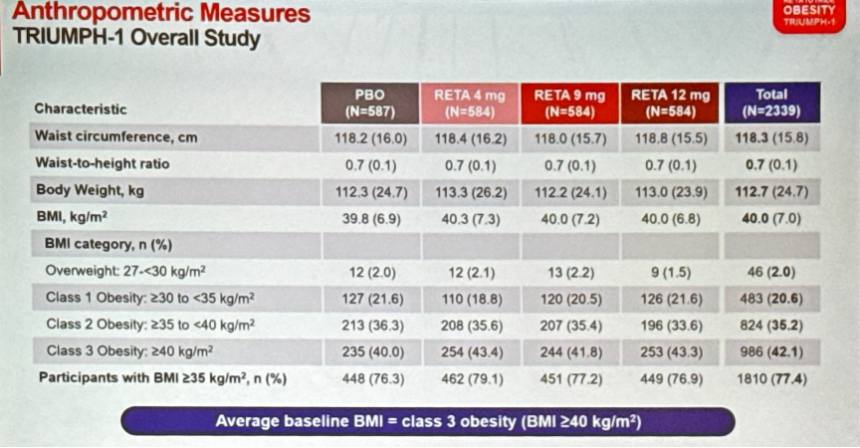
- The primary endpoint was the percent change in body weight at 80 weeks in the main study. Among the basket studies, change in WOMAC (Western Ontario and McMaster Universities Arthritis Index) knee pain and apnea-hypopnea index served as primary endpoints for knee OA and OSA, respectively. The extension trial assessed weight change at 104 weeks.
- Inclusion for the main trial was a BMI greater than 30 kg/m2 or greater than 27 kg/m2 with at least one obesity-related disease. Patients with diabetes or a prior incidence of ketoacidosis or hyperosmolar state were excluded.
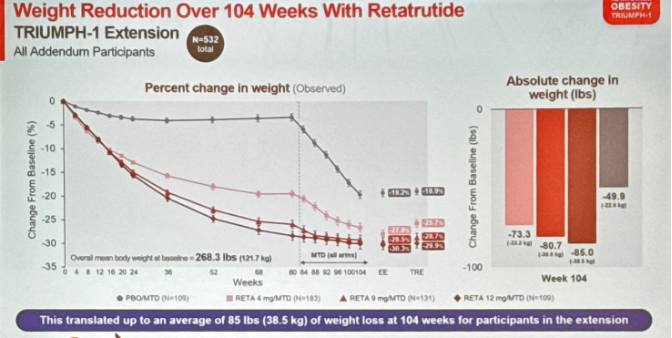
- Results. At 80 weeks, average weight loss totaled 2.2% with placebo, 19% with retatrutide 4 mg, 26% with 9 mg, and 28% with 12 mg, with the latter figure translating to nearly 32 kg (70 lbs) of weight loss by 80 weeks.
- In the extension trial, where participants continued or titrated up to the maximum tolerated treatment dose, weight loss averages increased to a maximum 30% or 39 kg (85 lbs). After 24 weeks of treatment, participants who were initially on placebo lost 19% body weight on the maximum tolerated dose of retatrutide (see below).
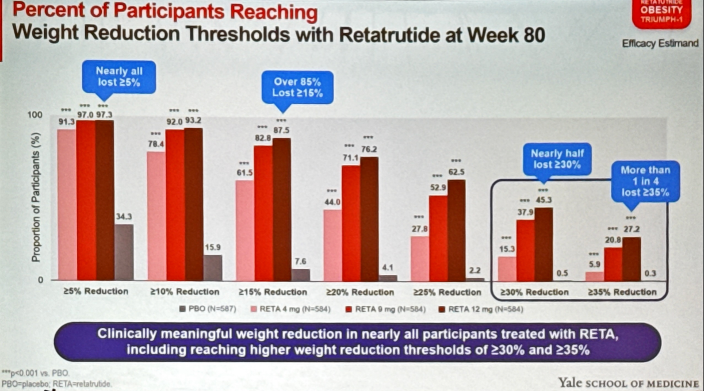
- Nearly all treated participants lost at least 5% body weight, more than 85% on 12 mg lost at least 15%, nearly half on 12 mg lost at least 30%, and more than one in four lost more than 35%. In the 12 mg group, nearly two-thirds of participants reached a BMI below 30, while about one-third reached a BMI below 25 kg/m2, and more than one in four achieved a waist-to-height ratio below 0.5. Female participants appeared to lose more weight on average than male participants, with roughly 31% versus 23% weight reduction.
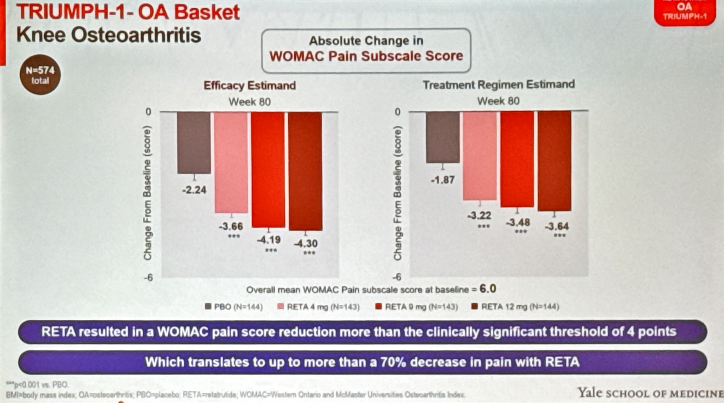
- In the knee OA basket, retatrutide reduced WOMAC pain scores by more than a clinically meaningful threshold and was described as producing over a 70% decrease in pain with RETA (see below).
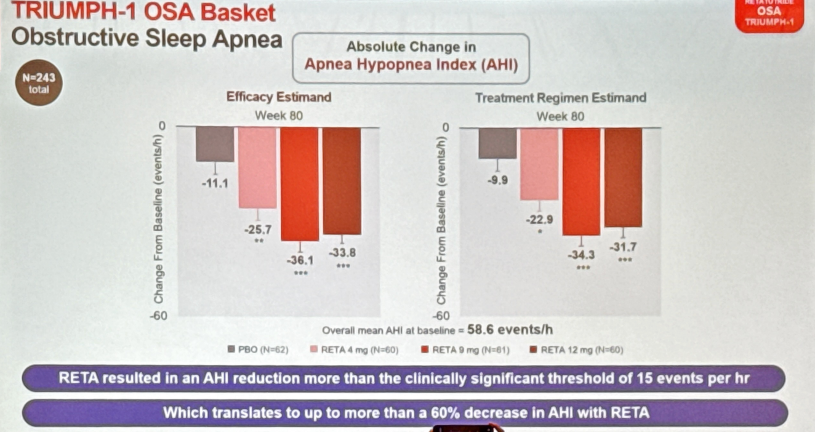
- In the OSA basket, retratrutide reduced apnea-hypopnea index by more than the clinically meaningful threshold, corresponding to over a 60% reduction in AHI with RETA (see below).
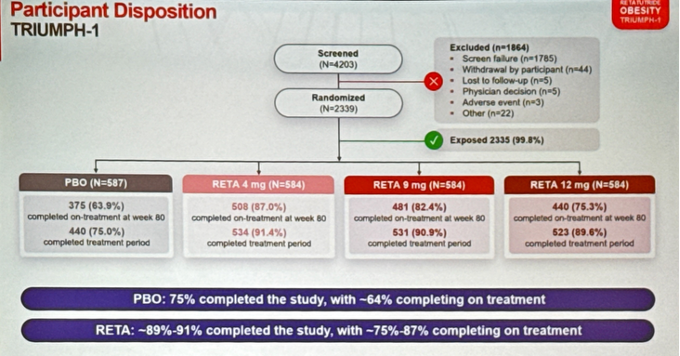
- Placebo discontinuation rates exceeded all doses for retatrutide, which Dr. Jastreboff attributed to patient choice based on inefficacy. Among treatment groups, discontinuation rates increased by dose, ranging from 87% for 4 mg to 75% for 12 mg (see below).
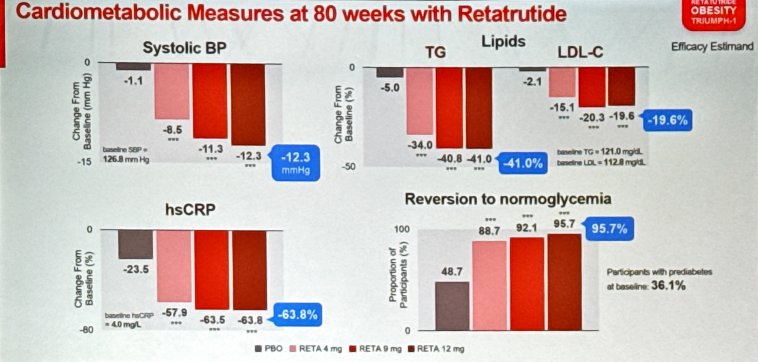
- On secondary endpoints, Dr. Jastreboff reported improvement in several cardiometabolic markers, including a 12.3 mmHg reduction in systolic blood pressure at the 12 mg dose. Triglycerides fell by about 41%, LDL cholesterol by about 20%, and hsCRP by 64% at the highest dose. Among participants with prediabetes at baseline, more than 95% reverted to normoglycemia at the highest dose (see below). Patient-reported outcomes also improved, including physical function and psychosocial quality-of-life measures.
- On safety, treatment-emergent adverse events were reported in 5.5% of placebo participants and 7.7% to 11% of treated participants. The most common adverse effects were gastrointestinal, as fatigue, dizziness, dysesthesias, injection-site reactions, and reported hypotension were also noted more often with retatrutide. Urinary tract infections (UTI) emerged as a new signal, occurring in 6.8% to 8.1% of retatrutide-treated participants versus 4.8% with placebo. 92% of those UTI cases were in female participants.
- In her commentary, Dr. Alice Cheng (University of Toronto, Canada) highlighted the potential of retatrutide in weight loss, rather than glycemia. In TRIUMPH-1, she discussed retatrutide’s efficacy as approaching bariatric surgery. Still, Dr. Cheng paused to issue caution, asking if the larger degree of magnitude is always better, needed, or right. To all three, she answered, “No.” Instead, she advocated that not every patient needs or wants a weight loss of retatrutide’s magnitude. In most individuals, she even suggested that a therapy like retatrutide was not necessary. However, she closed on a compelling note: “Retatrutide has gotten us one step further.”
TRANSCEND-T2D-1: Retatrutide confers the greatest weight loss in people with T2D to date
In this standing-room-only address, Dr. Harpreet Bajaj (LMC Diabetes & Endocrinology) presented results from the phase TRANSCEND-T2D-1 trial (n=537) of retatrutide in adults with T2D inadequately managed by diet and exercise alone. The study results were simultaneously published in The Lancet.
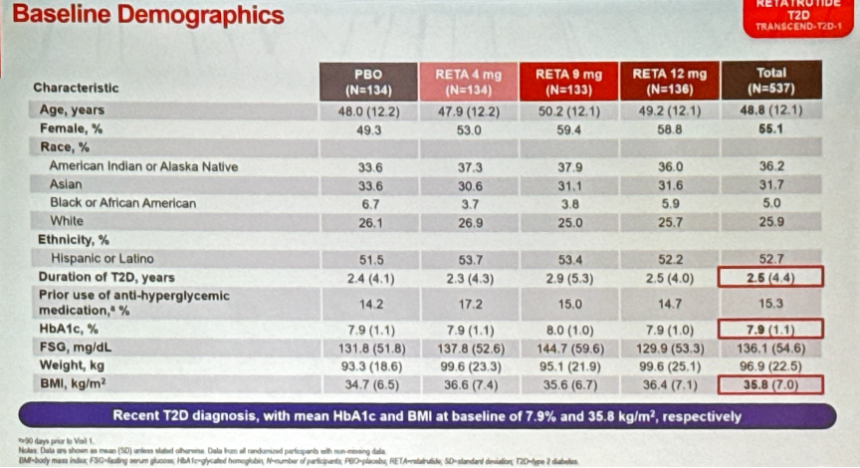
- Baseline characteristics and study design. TRANSCEND-T2D-1 functioned as a double-blind monotherapy trial in insulin-naïve patients with T2D. Patients included in the trial were not on anti-hyperglycemic agents for ≥90 days prior to screening. Participants had a mean diabetes duration of 2.5 years, baseline A1c of 7.9%, and average BMI of 35.8 kg/m2 (see below). Participants were randomized to placebo or retatrutide 4 mg, 9 mg, or 12 mg for 40 Weeks – a notably shorter duration than the main 80-week TRIUMPH-1 trial. All non-maximal arms and placebo underwent sham dose escalation to preserve the trial’s blinded design. The primary outcome was the change in A1c at Week 4. Key secondary endpoints included fasting glucose, body weight, categorical weight-loss thresholds, and a composite of A1c ≤6.5% plus weight loss ≥10%. Cardiometabolic markers, including non-HDL cholesterol, triglycerides, and blood pressure, were also considered as secondary outcomes in the analysis.
- Glycemic results. All doses of retatrutide conferred significant glycemic improvements. From a baseline A1c of 7.9%, the placebo group fell to 7.2%, while retatrutide 4 mg, 9 mg, and 12 mg cohorts achieved mean A1c of 6.2%, 5.9%, and 6.0%, respectively, at Week 40. These data correspond to around a 2-percentage-point reduction in A1c. Dr. Bajaj noted that downward A1c trajectories suggest that glycemic improvements had not clearly plateaued by Week 40. In indirect comparisons to other incretin-based monotherapies, the magnitude of A1c reduction appeared to be consistent with semaglutide (SUSTAIN-1) and tirzepatide (SURPASS-1; see below). Notably, Dr. Alice Cheng (University of Toronto, Canada) hypothesized that there seems to be a potential “floor” for A1c reduction at ~5.9% in this incretin-based class of T2D therapies.
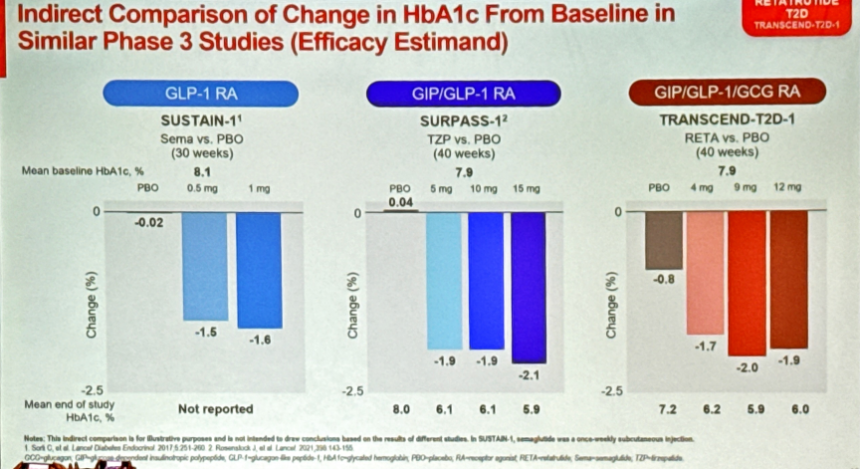
- Strikingly, up to 85% of participants on the highest retatrutide dose achieved an A1c ≤6.5%, and roughly 46% reached <5.7%, a near-normoglycemic range. Fasting plasma glucose also dropped from 136 mg/dL at baseline to an average of 103 mg/dL in the retatrutide arms. These data show an estimated treatment difference of 40 mg/dL versus placebo and contrast historical expectations that glucagon receptor activation would raise fasting glucose.
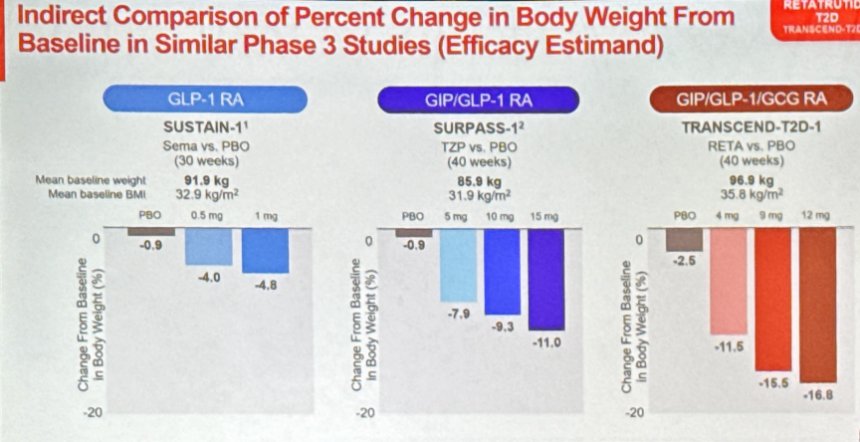
- Weight loss results. From an average baseline body weight of 97 kg (214 lbs), patients taking a placebo lost 2.5% of their body weight, compared to 12%, 16%, and 17% weight loss among the 4 mg, 9 mg, and 12 mg retatrutide arms, respectively. The highest retatrutide dose confers 17 kg (37 lb) of weight loss and a 12.5 cm (5 in) reduction in waist circumference. Similar to A1c results, body weight trends continued to trend downward and did not reach a plateau at the end of the study.
- To emphasize the magnitude of these weight loss findings in T2D, Dr. Bajaj presented another indirect comparison. Retatrutide conferred 15-17% reductions in weight loss, versus the 5% weight loss reported with semaglutide 1 mg and the 11% weight loss seen in the highest tirzepatide dose (see below). Dr. Bajaj emphasized that retatrutide demonstrates the largest magnitude of weight loss observed with any medication in people with T2D, to date. Nearly 90% of patients on 12 mg achieved ≥5% weight loss, about 75% achieved ≥10%, and roughly 55% reached ≥15%. Around two-thirds of participants on the 12 mg dose met the composite endpoint of an A1c ≤6.5% plus at least 10% weight loss.
- Compared to placebo, triglycerides fell by up to 40% and non-HDL cholesterol by nearly 20% with retatrutide use. Systolic and diastolic blood pressures also decreased meaningfully with the therapy by 6 mmHg and 3 mmHg, respectively.
- Safety. Dr. Bajaj described the safety profile of retatrutide as broadly consistent with the GLP-1 RA class. Total treatment-emergent adverse events occurred in 58% of placebo participants and in 62-65% of patients on retatrutide. Most adverse events were gastrointestinal and concentrated during the dose-escalation period. Serious adverse events were uncommon, occurring in 1.5% of the placebo population and 0.8-4.5% of those taking retatrutide (see below).
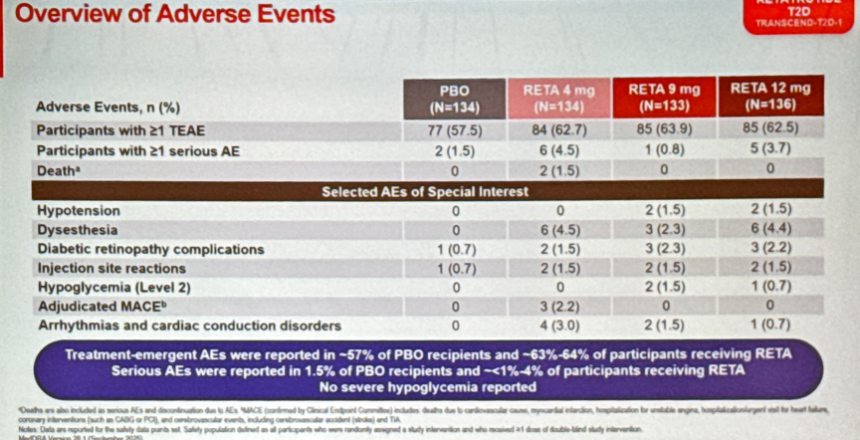
- Two deaths were noted in the retatrutide arms, though Dr. Bajaj noted that retatrutide was not a causal contributor. Adverse events of special interest, including hypotension, dysesthesias, diabetic retinopathy, injection-site reactions, and level 2 hypoglycemia, were infrequent. There were no episodes of severe hypoglycemia. Three major adverse cardiovascular events occurred in the 4 mg arm, while none occurred in the 9 or 12 mg arms. Dr. Bajaj explained that a grouped category of arrhythmias and conduction disorders encompassed sinus tachycardia, ventricular extrasystoles, and palpitations without a clear dose-response pattern.
- Discontinuations due to gastrointestinal events were rare. Strikingly, TRIUMPH-1 reports zero related discontinuations in the 4 mg arm, one in the 9 mg, and four in the 12 mg group. Overall discontinuation due to any adverse event ranged from 2-5% in treatment groups. Dr. Cheng emphasized that these data, particularly in the 4 mg arm, show that it is possible to have “lots of GI effects but remain on the drug.” She called on clinicians in the audience to learn how to better manage and support patients through the initial treatment period, rather than abandoning therapy.
ACHIEVE-2: Orforglipron demonstrates superiority over dapagliflozin in A1c improvements and weight reduction
In a compelling presentation, Dr. Michelle Welch (Consano Clinical Research) announced results from the phase 3 ACHIEVE-2 trial (n=962) comparing orforglipron to dapagliflozin in adults with T2D inadequately managed on metformin. Orforglipron demonstrated superiority over dapagliflozin for all primary and key secondary endpoints.
- Study design and baseline characteristics. ACHIEVE-2 was a parallel-arm, open-label study which randomized patients to dapagliflozin 10 mg or orforglipron 1.5 mg, 9 mg, or 17.2 mg once daily for 40 weeks, followed by two weeks of safety follow-up. All orforglipron arms employed stepwise dose escalation (see below).
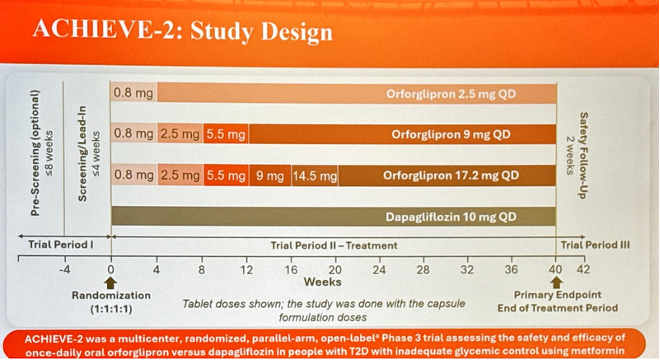
Eligible participants had an A1c between 7.0% and 10.5%, metformin dose at or above 1500 mg/day for at least 90 days, and a stable BMI over 23 kg/m2. Key exclusion criteria included an eGFR below 45 mL/min/1.73 m2, ALT or AST over five times the upper normal limit, and use of other antihyperglycemic agents besides metformin. At baseline, participants were on average 56 years old, 49% female, and 48% Hispanic or Latino. The mean diabetes duration was 8.0 years, the mean baseline A1c was 8.1%, and the mean BMI was 33 kg/m2.
- The primary endpoint was orforglipron noninferiority compared to dapagliflozin on A1c from baseline to Week 40. Key secondary endpoints tested orforglipron superiority for A1c change, A1c target attainment, body weight, triglycerides, non-HDL cholesterol, and systolic blood pressure.
- Results. At Week 40, average A1c fell from 8.1% to 6.8% with orforglipron 2.5 mg, 6.4% with 9 mg, 6.4% with 17.2 mg, and 7.4% with dapagliflozin. In the treatment estimand, these figures translate to reductions of 1.3%, 1.7%, 1.7%, and 0.8%, respectively. More participants on orforglipron also reached prespecified glycemic targets compared to dapagliflozin. 3.2%, 80.1%, and 77.9% of patients taking orforglipron 2.5 mg, 9 mg, and 17.2 mg, respectively, compared to 37.0% in the dapagliflozin group, achieved an A1c below 7.0%. For an A1c at or below 6.5%, respective rates were 54.6%, 66.7%, and 68.6% versus 21.6%. For an A1c below 5.7%, respective rates 9.7%, 15.3%, and 23.7% compared to 4.4%.
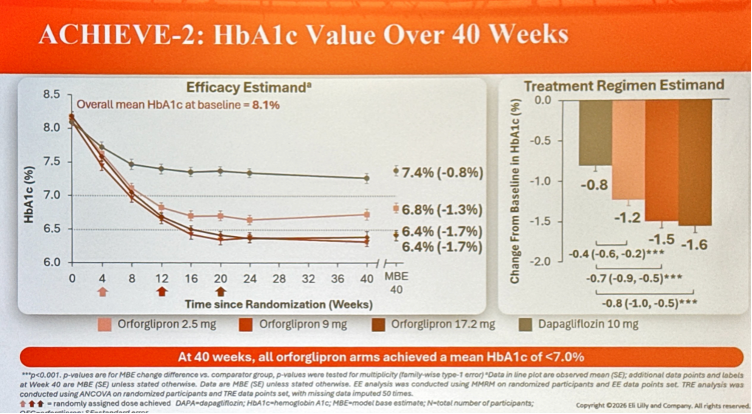
- On secondary endpoints, sustained differences in fasting serum glucose curves began early (Week 4). By Week 40, fasting serum glucose decreased by 22.5 mg/dL with orforglipron 2.5 mg, 43.1 mg/dL with 9 mg, 43.9 mg/dL with 17.2 mg, and 32.3 mg/dL with dapagliflozin. Percent weight change at week 40 was 3.0% with dapagliflozin, 3.5% with orforglipron 2.5 mg, 6.3% with 9 mg, and 7.3% with 17.2 mg. Dr. Welch noted that the weight-loss curves had not yet plateaued by the end of the 40-week study. Cardiometabolic markers also improved in the orforglipron group, particularly within the 17.2 mg dose. At Week 40, triglycerides decreased by 14.8% with orforglipron 17.2 mg compared to 4.0% with dapagliflozin. Similarly, non-HDL cholesterol decreased by 5.0% with orforglipron compared to minimal change with dapagliflozin.
- Safety. Orforglipron’s safety profile was characterized as consistent with the GLP-1 RA class. There were no deaths in the orforglipron arms, and serious adverse events were balanced across groups. Total treatment-emergent adverse events occurred in 69%, 70%, and 71% of orforglipron 2.5 mg, 9 mg, and 17.2 mg, respectively, versus 54% with dapagliflozin. Gastrointestinal events, though mostly mild to moderate and tending to concentrate early in dose escalation, occurred in 6.7%, 47%, and 54% of the orforglipron arms compared with 12% on dapagliflozin. Discontinuation due to treatment due to adverse events occurred in 9.2%, 11%, and 12% of orforglipron 2.5 mg, 9 mg, 17.2 mg, respectively, versus 1.2% with dapagliflozin.
ACHIEVE-3 trial: Orforglipron demonstrated superiority over oral semaglutide in people with T2D on metformin
In this engaging address, Dr. Julio Rosenstock (UT Southwestern) presented the phase 3 ACHIEVE-3 trial (n=1,698) comparing orforglipron (9 mg, 17.2 mg) to oral semaglutide (7 mg, 14 mg) in adults with T2D inadequately controlled on metformin. The study was simultaneously published in The Lancet.
- Study design and baseline. The ACHIEVE-3 was a global, randomized, open-label trial. Treatment lasted 52 weeks, with a two- to five-week safety follow-up. Eligible patients included those with an A1c of 7.0% to 10.5%, a metformin dose of at least 1,500 mg/day for 90 days, a BMI of at least 25 kg/m2, and an eGFR of at least 45 mL/min/1.73 m2. Baseline characteristics were well balanced across groups. Participants were on average 54 years old, 49% female, had a mean diabetes duration of 8.6 years, mean A1c of 8.3%, and a mean BMI of 35 kg/m2.
- Orforglipron conferred superior reductions in A1c compared to oral semaglutide. A1c fell by 1.9% with orforglipron 9 mg, 2.2% with orforglipron 17.2 mg, 1.1% with semaglutide 7 mg, 1.4% with semaglutide 14 mg, assuming full adherence (see figure below).
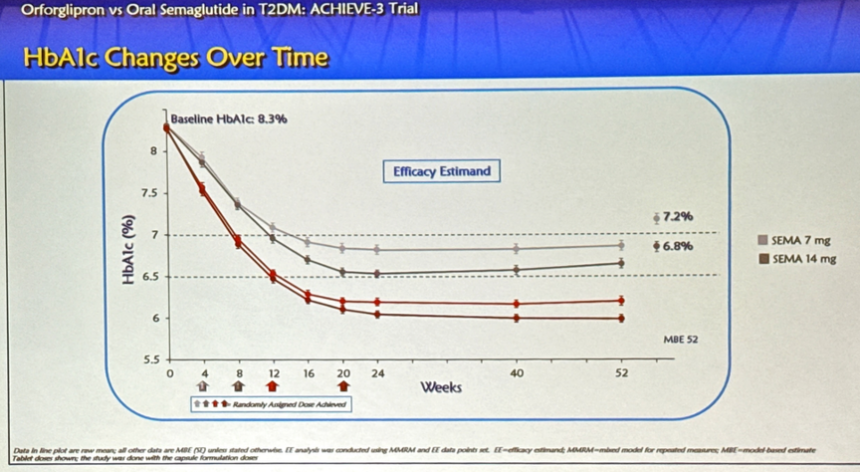
- Greater proportions of people on orforglipron met glycemic targets, as well. An A1c below 7.0% was achieved by 80% of patients with orforglipron 9 mg, 85% with orforglipron 17.2 mg, 55% with semaglutide 7 mg, and 66% with semaglutide 14 mg at Week 52. A1c at or below 6.5% was achieved by 72% with orforglipron 9 mg, 77% with orforglipron 17.2 mg, 41% with semaglutide 7 mg, and 51% with semaglutide 14 mg. Near-normoglycemia, defined as A1c below 5.7%, was achieved by 25% with orforglipron 9 mg, 37% with orforglipron 17.2 mg, 8% with semaglutide 7 mg, and 13% with semaglutide 14 mg.
- Likewise, orforglipron led to greater weight reductions. Body weight decreased by 6.7% with orforglipron 9 mg, 9.2% with orforglipron 17.2 mg, 3.7% with semaglutide 7 mg, and 5.3% with semaglutide 14 mg. Weight-loss thresholds in the efficacy estimand were stronger with orforglipron: at least 5% loss was seen in 59% and 69% for the two orforglipron doses versus 37% and 49% for semaglutide. At least 10% weight loss was seen by 28% and 43% of orforglipron patients, versus 13% and 21% using semaglutide.
- Composite endpoints favored orforglipron over semaglutide. Over half of the orforglipron group (51% and 63%) achieved an A1c <7.0% and ≥5% weight loss without level 2 or 3 hypoglycemia. compared to 25% and 40% of the semaglutide group. Similarly, orforglipron conferred superior improvements in seven-point SMBG profiles. Lipids generally moved in a favorable direction, with reductions in triglycerides, non-HDL cholesterol, total cholesterol, LDL-c, and VLDL-c, and an increase in HDL-c. Hepatic transaminases decreased, and no hepatic safety signal was observed.
- On safety and tolerability, gastrointestinal adverse events were numerically more frequent with orforglipron compared to semaglutide (see below). Specifically, nausea occurred in 26% and 27% of orforglipron patients versus 13% and 21% taking semaglutide, diarrhea at 22% and 23% versus 13% and 18%, vomiting at 17% and 17% versus 8% and 10%, and constipation at 13% and 12% versus 7% and 9%.
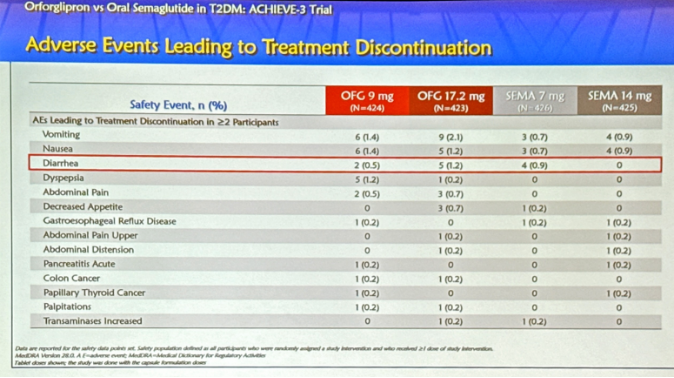
ACHIEVE-5: Orforglipron as an add-on therapy to insulin glargine improves A1c in adults with longstanding T2D
In this compelling afternoon session, Prof. Francesco Giorgino (University of Bari Aldo Moro, Italy) presented results from the phase 3 ACHIEVE-5 trial (n=546) of orforglipron as an add-on to insulin glargine in adults with longstanding T2D. Findings were simultaneously published in JAMA and demonstrated improved A1c without increased hypoglycemic risk.
- Baseline characteristics and study design. The ACHIEVE-5 study was a multicenter, randomized, parallel-arm, double-blind trial in adults with T2D inadequately managed with basal insulin. Patients continued to use insulin glargine during the trial, and many were also taking metformin and/or SGLT-2 inhibitors. Participants were randomized to placebo or once-daily orforglipron 2.5 mg, 9 mg, or 17.2 mg, with dose escalation occurring every four weeks. The total trial duration was 40 weeks, along with two weeks of follow-up.
- Eligible participants had an A1c between 7.0% and 10.5%, a stable BMI of at least 23 kg/m2, and background therapy with insulin glargine. Key exclusions included an eGFR below 15 mL/min/1.73 m², significant transaminase elevation, severe hypoglycemia or hypoglycemia unawareness within six months, and active or planned treatment for diabetic retinopathy or macular edema. See the baseline characteristics below.
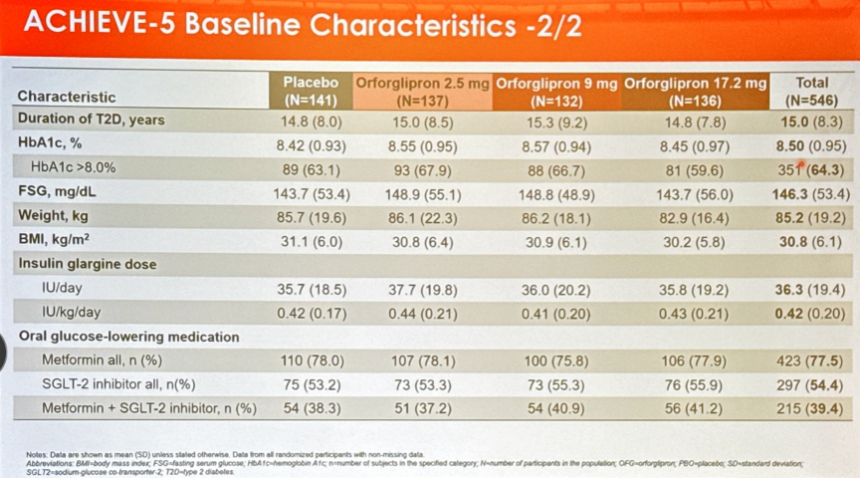
- The primary endpoint was superiority of orforglipron over placebo in the change from baseline in A1c at Week 40. Key secondary endpoints included change from baseline in A1c at Week 40 with 2.5 mg orforglipron, as well as the proportion of participants achieving an A1c <7.0% and participants achieving ≤6.5%. Additionally, researchers evaluated the change from baseline in body weight at Week 40, glycemic control, insulin requirements, cardiometabolic risk factors, and patient-reported outcomes.
- Results. Over 40 weeks, insulin glargine was titrated up in all trial arms. This trend was most aggressive in the placebo group (see below). Despite a lower insulin dose at 40 weeks, patients taking orforglipron achieved equal or greater reductions in fasting serum glucose. Using a treat-to-target algorithm, people taking orforglipron were found to need less insulin glargine than patients on placebo.
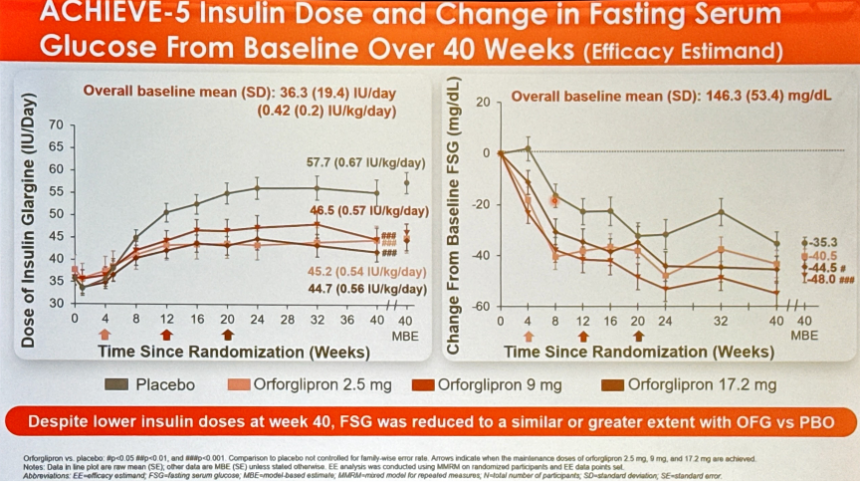
- Glargine plus orforglipron conferred up to 2% A1c reduction, compared to a 0.8% improvement seen in the glargine plus placebo group. This translates to a placebo-adjusted A1c reduction by 0.8-1.3% across orforglipron doses (see below). Up to 81%, 69%, and 21% of participants treated with orforglipron achieved an A1c of <7.0%, ≤6.5%, and <5.7%, respectively. Though insulin glargine is typically associated with weight gain, the addition of orforglipron demonstrated body weight reductions of up to 6.1% in the treatment’s highest dose.
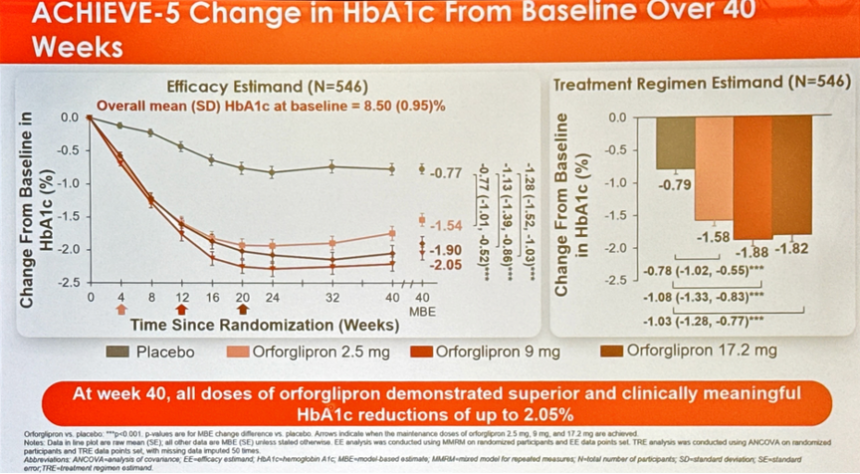
- Safety. Discontinuation events were described to be low overall, though somewhat increased in the 9 mg and 12 mg orforglipron cohorts. Prof. Giorgino attributed this finding to gastrointestinal events consistent with the therapy class, including nausea, diarrhea, decreased appetite, and vomiting. Rates of diabetic retinopathy and lipase changes were similar across groups. No acute pancreatitis cases were reported. There was no increased risk of hypoglycemia.
A balance between efficacy and burden: Orforglipron in clinical practice
Dr. Alice Cheng (University of Toronto, Canada) discussed orforglipron in a clinical context. The ultimate goal of treatment is to help people “be happy.” In patient care, this goal means balancing efficacy and burden. She analyzed oral semaglutide and oral orforglipron along two axes: (i) how effective it is; and (ii) how “easy” it is in real life. “Easy” means easy to take, easy to tolerate, easy to prescribe, and easy to access and afford. Throughout her address, she contrasted the “easy” profile with the “effective” one, framing this tension as the backbone of the talk.
- Through the ADA/EASD “circle of care,” Dr. Cheng emphasized that with diabetes, “we have to close the circle.” Glycemic goals, weight management, cardiovascular risk factor management, and organ‑protecting therapies all need to be addressed together and delivered in a way patients can actually live with. She laid out a “wish list” for a non‑peptide oral GLP‑1 RAs: (i) at least as good or better for glucose, weight, and risk factors; (ii) similar or better organ protection; (iii) easier to take; (iv) at least as well tolerated; (v) combinable with other orals; and (vi) more accessible (see below).
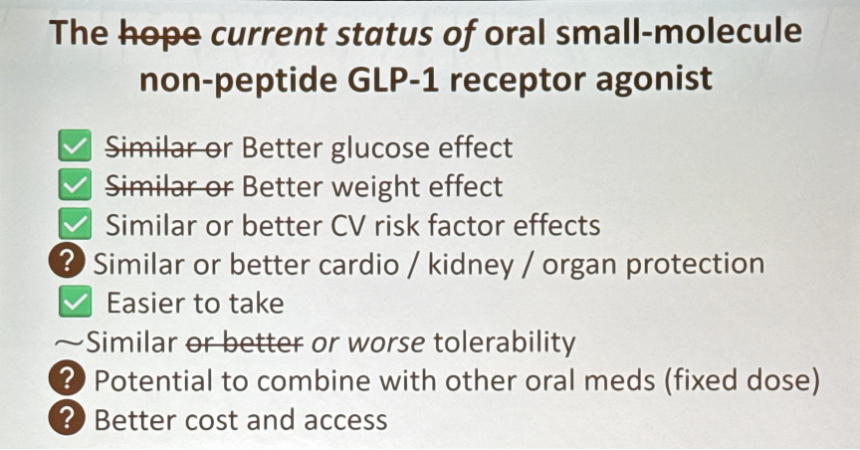
- Orforglipron comes close to that wish list, with strong glucose- and weight loss effects (see below), no food or water restrictions, and cardiovascular safety in studies thus far. However, because of how it is metabolized, prescribers must navigate important drug interactions. Dr. Cheng stressed that this creates both challenges and “an opportunity to increase access” if the drug can be priced and access expanded well.
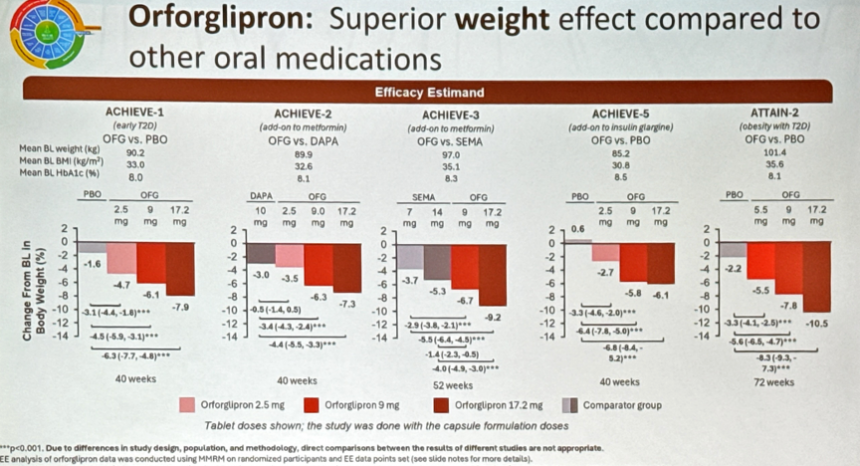
- Dr. Cheng concluded that orforglipron “fits anywhere that you would currently use a GLP‑1 RA.” She links this to upcoming ADA/EASD guidance that encourages earlier use of GLP‑1 RA and SGLT‑2 inhibitor treatment plans. Even though injectable GLP‑1 RAs are already quite “easy,” many patients still resist injections. “The ability to take a pill is very welcome,” especially one without food and water restrictions.
- At the same time, Dr. Cheng was unequivocal that “this does not replace SGLT‑2 inhibitors.” These therapies “have a very strong role to play in organ protection,” and head‑to‑head data versus an SGLT‑2 inhibitor (ACHIEVE-2) should not be misread as a license to abandon them. She concluded, “This is not a competition. This is a friendship,” capturing her view that oral GLP‑1 RAs and SGLT‑2 inhibitors should be seen as partners, not rivals.
Lilly’s product theater features clinical trial results and practical tips for Foundayo (orforglipron), the newly approved oral GLP-1 RA
With Frank Sinatra playing in the background, HCPs shuffled into a packed room where Dr. Neil Skolnik (Thomas Jefferson University) presented findings from the phase 3 ATTAIN trials of Lilly’s newly approved Foundayo (orforglipron), a daily oral GLP-1 RA. Dr. Skolnik began the presentation by describing a patient who, despite numerous efforts, had gained two pounds over the past year. While two pounds may not seem notable, he noted that two pounds every year for 25 years would be significant. He then asked: Should we be waiting for a patient who has struggled with weight and tried many times to manage it? What if the best time to intervene is before the patient asks for help?
- Phase 3 trial of Foundayo shows powerful weight reductions sustained through 72 weeks. The highest dose of Foundayo (17.2 mg) conferred an 11% weight loss (~25 lbs). Dr. Skolnik noted that trial participants were representative of the patients he sees in his clinic, with approximately 45% of them having a BMI <35 kg/m² and one-third having prediabetes. The lowest dose of Foundayo (5.5 mg) demonstrated a 7.4% weight loss (~17 lbs). In comparison, those on placebo lost an average weight loss of 2.1% (~5.3 lbs). Across all doses (5.5 mg, 9 mg, and 17.2 mg), more than half of patients achieved 5% or more weight loss. Additionally, the DEXA Scan showed that Foundayo’s weight reduction is primarily driven by fat loss rather than lean mass, with approximately 14% decrease in fat mass and a 4.5% decrease in lean mass.
- Foundayo also shows improvements across cardiometabolic parameters. Across all doses, participants receiving Foundayo treatment showed a 14.8% decrease in triglyceride levels (baseline of 122.0 mg/dL) compared with a 3.8% decrease with placebo (baseline of 125.4 mg/dL). Foundayo also lowered systolic blood pressure by 5.7 mmHg (baseline of 125.4 mmHg), whereas placebo lowered by 1.4 mmHg (baseline of 125.8 mmHg).
- Dr. Skolnik reviewed safety information and highlighted adverse reactions observed in the ATTAIN trials. He reminded risks of thyroid C-cell tumors and acute pancreatitis. Additionally, Dr. Skolnik emphasized the importance of reminding patients to stay hydrated, as acute kidney injury may occur. There is also a risk of hypoglycemia, particularly in people with diabetes on sulfonylurea treatment. In the ATTAIN trials, adverse reactions were reported in at least 5% of participants, with the majority of reactions being gastrointestinal related (e.g., nausea, constipation, diarrhea, and vomiting).
- Practical application for clinicians. Dr. Skolnik stated that patients should begin Foundayo at 0.8 mg, then increase to 2.5 mg after waiting at least 30 days. From there, the patient’s dose may be increased to 5.5 mg, 9 mg, 14.5 mg, or 17.2 mg, depending on the patient, with each increase requiring at least 30 days in between. Should the patient forget to take a dose, they are advised to take it later in the day whenever they remember, but should not double up for the next day. When managing side effects, Dr. Skolnik recommended instructing patients to: (i) eat smaller meals by splitting three daily meals into four or more; (ii) practice mindful eating by stopping when they feel full; and (iii) avoid processed, fried, refined, spicy, and fatty foods.
Full results of the REIMAGINE-1, 2, 3 trials: CagriSema demonstrates strong A1c and weight reductions across T2D cohorts
In this packed symposium focused on Novo Nordisk’s phase 3 REIMAGINE program, studies demonstrated substantial reductions in A1c and body weight. The data provided indicated that beyond impact to glycemic and weight management, there is also early evidence that treatment may alter the underlying course of T2D.
- Dr. John Buse (UNC Chapel Hill) opened the session by noting the absence of Dr. Steven Kahn (University of Washington), who was replaced by Dr. Timothy Garvey (University of Alabama at Birmingham). Dr. Buse commented on the need to protect freedom of speech, citing the impact of the actions of the “New Orleans Five,” which prompted a standing ovation from the audience.
- Dr. Vanita Aroda (Brigham and Women’s Hospital) presented results on the REIMAGINE-1 trial (n=294), investigating CagriSema’s efficacy for T2D inadequately controlled with lifestyle therapy. At baseline, participants had a mean A1c of 7.8%, a mean body weight of 101 kg (223 lbs), and a mean BMI of 35.2 kg/m2.
- Among the most interesting findings of REIMAGINE-1 was an exploratory assessment of diabetes remission following treatment withdrawal. For participants with early-stage T2D inadequately managed with lifestyle intervention alone, Dr. Aroda and her team discontinued study medication and evaluated glycemia after a 12-week washout period. After assessing A1c levels 12 weeks off treatment among participants with A1c <6.5%, 53% for the 2.4 mg cohort, 42% for the 1.0 mg cohort, and 20.1% for the placebo achieved remission as defined by the trial protocol. Importantly, remission was not assessed solely by A1c, but confirmed by OGTT, raising the possibility that early initiation of CagriSema could restore beta cell function in recently-diagnosed T2D. We are curious if this study might answer whether patients who stop treatment might still have diabetes, or if this might represent a potentially curative effect in T2D.
- Under the efficacy estimand, CagriSema 2.4 mg lowered A1c by 1.8 percentage points, while the 1.0 mg dose lowered A1c by 1.5 percentage points. Comparatively, the placebo lowered A1c by 0.15 percentage points. Greater proportions of participants taking CagriSema 2.4 mg achieved glycemic targets, with 87% reaching <7.0% A1c, 81% reaching ≤6.5%, and 43% reaching <5.7%. Mean body weight was reduced by 14% in the CagriSema 2.4 mg cohort, 12% in the 1 mg cohort, and 1.5% in the placebo cohort.
- On safety, GI-related adverse events were most common, consistent with the incretin class. Within the 2.4 mg, 1 mg, and placebo cohorts, nausea was experienced by 36%, 27%, and 9%, respectively.
- Dr. Garvey presented on amylin physiology and pharmacology, citing a study that showed the association between beta cell loss in T2D with amylin deposition. Cagrilintide is a long-acting analogue of human amylin that induced 10-15% weight loss in patients without diabetes. Notably, the therapy regulated caloric intake through hypothalamic and basal brain cell types distinct from GLP-1 RAs. Preclinical experiments have suggested the metabolic benefit of amylin in preserving muscle, increasing leptin sensitivity, and regulating bone remodeling. CagriSema draws on the synergism of amylin and GLP-1 RAs through a combination of cagrilintide and semaglutide. Dr. Donna Ryan (Pennington Biomedical Research Center) provided commentary on amylin, using the metaphor of feng shui to represent the complementary profiles of cagrilintide and semaglutide.
- Dr. Akshay Jain (University of British Columbia, Canada) presented results from the 68-week phase 3 REIMAGINE-2 trial (n=2,713) of CagriSema versus semaglutide in people with T2D on metformin with or without an SGLT-2 inhibitor, with findings simultaneously published in The Lancet Diabetes & Endocrinology. The trial, which included a seven‑arm design and 96% completion rate, showed that CagriSema delivered the greatest reductions in both A1c and body weight across among the treatment groups evaluated.
- Participants on CagriSema 2.4 mg achieved a 1.9 percentage point reduction in A1c from a baseline of 8.2% and lost 14% of body weight, compared with semaglutide 2.4 mg, which lowered A1c by 1.8 percentage points and produced 10% weight loss. In addition, on CagriSema 2.4 mg, nearly one in four participants reached ≥20% weight loss, compared with 10% on semaglutide 2.4 mg. Composite outcomes further favored CagriSema, with more than half of participants on the highest dose of CagriSema achieving A1c ≤6.5% plus ≥10% weight loss (versus 40% on semaglutide 2.4 mg), and about one in five reaching A1c ≤5.7% or a BMI between 18 and 25 kg/m2. In addition, nearly 50% of participants were included in a subgroup who wore CGM throughout the trial, and all active therapies improved TIR and TITR, though between‑group differences were minimal.
- Safety was consistent with other GLP‑1 RA-based therapies, with GI events the most common but generally mild. Overall, CagriSema demonstrated clear superiority over semaglutide alone and expanded the therapeutic potential for greater metabolic improvement in T2D.
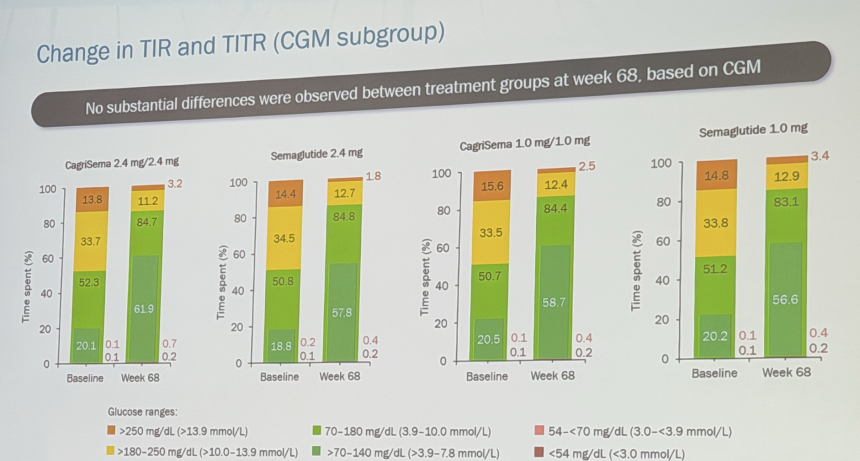
- Dr. Julio Rosenstock (UT Southwestern) presented results from the 40-week phase 3 REIMAGINE‑3 trial (n=274 ), simultaneously published in The Lancet Diabetes & Endocrinology, evaluating CagriSema as an add‑on to basal insulin in people with long‑standing T2D inadequately controlled on basal insulin with or without metformin. At baseline, participants had a mean A1c 8.8%, a diabetes duration of ~15 years, and a baseline basal insulin of 34 units.
- Participants on CagriSema achieved an average A1c reduction of 2.3 percentage points, and body weight decreased by 10-12%, while the average basal insulin dose decreased when combined with CagriSema. Nearly 60% of participants on CagriSema 2.4 mg achieved A1c ≤6.5%, and ~75% achieved <7.0%. A significant proportion of participants achieved clinically meaningful weight loss thresholds, with almost 60% reaching ≥10% loss and one‑third achieving ≥15%.
- On safety, hypoglycemia remained low even with large A1c reductions and lower insulin doses. No severe hypoglycemia occurred in any group. GI‑related discontinuations were uncommon, at 2% and 9% in the 2.4 mg and 1 mg versus none on placebo. Overall, GI events were modest in frequency, with nausea reported in 31% on CagriSema 2.4 mg, and slightly lower rates with the 1.0 mg dose; these levels indicate that GI symptoms were reported as mild to moderate, consistent with the class as a whole.
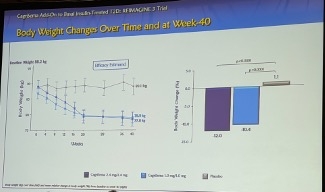
SYNCHRONIZE-1 trial: GLP-1/glucagon RA survodutide confers 17% weight loss in people with obesity
In this packed hall, Dr. Ania Jastreboff (Yale University) and Prof. Carel le Roux (University College Dublin, UK) delivered full results of the SYNCHRONIZE-1 trial (n=726), which evaluated Boehringer Ingelheim’s (BI) dual GLP-1/glucagon RA survodutide in people with overweight or obesity but not T2D.Full results were simultaneously published in NEJM. Survodutide is a novel dual GLP-1/glucagon RA, which has an eight-fold higher activity toward GLP-1 receptors. Topline results announced in April 2026 found 17% weight loss compared to 3.2% with placebo at 76 weeks. Dr. Jastreboff said that survodutide is also evaluated in SYNCHRONIZE-2 (n=755) for obesity with T2D, SYNCHRONIZE-MASLD (n=218) for obesity with at-risk MASLD, and SYNCHRONIZE-CVOT (n=5,531) for obesity with cardiovascular disease and chronic kidney disease.
- Trial design, baseline characteristics, and challenges. Adults with obesity were randomized 1:1:1 to survodutide 6.0 mg, 3.6 mg, and placebo at Week 76, with three weeks of follow-up. Primary endpoints include weight loss, while secondary and pre-specified endpoints include the percentage of people achieving weight loss targets and changes in waist circumference, cardiometabolic markers, and body composition.
- At baseline, participants were 47 years old, with 41% being male, 68% white, 22% Asian, and 7% Black. The mean weight was 108.8 kg (240 lbs), BMI was 37.9 kg/m2, the waist circumference was 115 cm (45 in), and the systolic blood pressure was 127 mmHg. Clinically, 40% had hypertension, 34% had dyslipidemia, 31% had prediabetes, and 18% had obstructive sleep apnea.
- The treatment completion rate was rather low at 60-66% across placebo and survodutide groups. Dr. Jastreboff said that the first 16 weeks and the dose maintenance period had limited flexibility to deviate from the dose titration protocol. Nonetheless, the trial completion rates were high at 88-96%, reflecting the trial investigators’ dedication. She also said that other survodutide trials have incorporated more flexible dosing to address this challenge. Among participants who completed the treatment, 85% and 81% of survodutide 3.6 mg and 6.0 mg, respectively, ended on the highest dose.
- While other obesity medications were not allowed as per protocol, 15% of participants reported using prohibited medication containing GLP-1 RAs. Specifically, 17% of the placebo group, 2.5% of the survodutide 3.6 mg group, and 3.7% of the survodutide 6.0 mg group reported use. For statistical analysis, these participants were considered to have discontinued treatment; however, panelists noted that there may have been other participants who did not report any prohibited GLP-1 RA use, which could have confounded the study results. In his commentary, Dr. Jaime Almandoz (UT Southwestern) said this is becoming increasingly challenging for clinical trials for obesity.
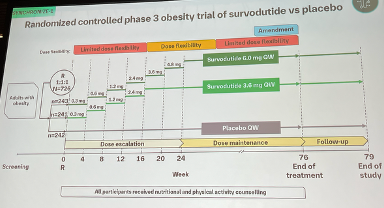
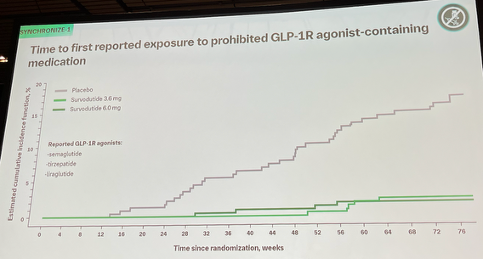
- Survodutide conferred 16.6% weight loss from a baseline of 109 kg (240 lbs), compared to 5.4% reduction with placebo. Assuming full adherence, a greater proportion of participants achieved weight loss targets, with 85% (vs. 39% on placebo) reaching ≥5%, 57% (vs. 8.7%) achieving ≥ 15%, and 38% (vs. 4.5%) achieving ≥20%. Survodutide also reduced waist circumference by 14.6 cm (5.7 in), compared to 4.6 cm (1.8 in) at Week 76. Weight loss was significantly greater among females (19.5% s. 12.6% for males), which Prof. le Roux said warrants further research. Survodutide also reduced systolic blood pressure by 7.9 mmHg (vs. 3.2 mmHg) from a baseline of 127 mmHg and improved lipid levels, including cholesterol (11% vs. 3%), LDL-c (12% s. 3%), HDL-c (3% gain vs. 2% gain), and triglycerides (34% vs. 8%).
- On glycemic health, survodutide led to an A1c reduction by 0.26 percentage point (vs. 0.07 percentage point gain) from a baseline of 5.5%. Three participants who had prediabetes at baseline in the placebo group progressed to T2D, compared to none with prediabetes on survodutide. Moreover, 32% of the survodutide group with prediabetes returned to normoglycemia (vs. 10%). Survodutide also improved plasma glucose by 9.3% (vs. 0.4%) from a baseline of 95 mg/dL, fasting C-peptide levels by 20% (vs. 3%) from the baseline of 3.2 ng/mL, plasma insulin by 34% (vs. 7%) from a baseline of 11 mIU/L, and HOMA-IR by 41% (vs. 9%) from 2.6.
- On body composition measured by MRI, survodutide significantly reduced visceral and liver fat. Specifically, lean mass was lowered by 10% (vs. 3%), subcutaneous adipose tissue by 28% (vs. 10%), visceral fat by 34% (vs. 12%), and liver fat content by 63% (vs. 25%).
- Safety and tolerability. Survodutide had more frequent treatment-emergent adverse events (86% vs. 44% on placebo) and higher discontinuation rates from adverse events (24% vs. 5.4%). Approximately 19% of participants on survodutide (vs. 2.9%) discontinued the treatment due to GI events. The rates of serious adverse events were slightly higher in the survodutide group (8.3% vs. 6.2%). Adverse events were mostly GI-related and mild-to-moderate (see figure below).
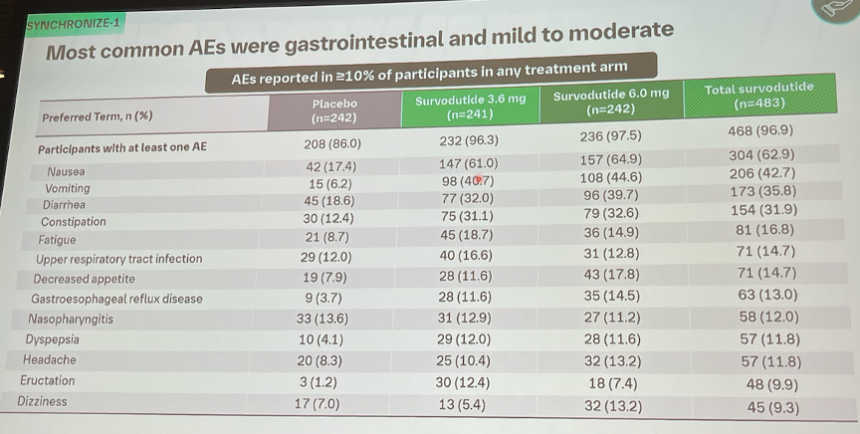
- In his commentary, Dr. Almandoz said that the benefits beyond weight loss are becoming more important with weight loss drugs. Given that GLP-1 RAs reduce food intake, A1c, and gastric emptying, and glucagon RAs improve liver fat oxidation, glucose production, and energy expenditure. He also said that the MRI findings of the SYNCHRONIZE-1 trial are impressive, with 90% of weight loss coming from adipose tissue. However, he said this figure cannot be directly compared to other trials that use DXA scans, which showed two-thirds of weight loss was from lean mass. Finally, on tolerability, he said trial investigators face regulatory pressure to evaluate specific doses for approval. However, real practice allows for flexible dose titration and individual dose maintenance.
Full phase 3 GLORY-2 results: Dual GLP-1/glucagon RA mazdutide confers nearly 20% weight loss in people with obesity
In this fully packed session, Dr. Leili Gao (Peking University, China) presented the full results of the phase 3 GLORY-2 trial (n=462), evaluating a dual GLP-1/glucagon RA oxyntomodulin (OXM) mazdutide 9 mg in Chinese adults with obesity, including those with and without T2D. Full results were published in JAMA Network. As background, topline results were announced in November 2025, showing that mazdutide 9 mg achieves nearly 20% weight loss, compared to 3% with placebo. Lower doses of the drug (4 mg, 6 mg) were approved in China for obesity in June 2025 and for T2D in September 2025, and mazdutide 9 mg is under regulatory review. Innovent licensed this candidate from Lilly in August 2019 for development and commercialization in China as a potential therapy for diabetes, obesity, and MASH.
- Study design. In this trial, adults with BMI ≥30 kg/m2 or T2D were randomized to mazdutide (n=308) and placebo (n=154). Mazdutide was titrated from 3 mg to 6 mg at Week 4 and to 9 mg at Week 8, and participants were followed through Week 60 for body weight reduction.
- At baseline, participants were 33 years old, with 34% being male. Mean body weight was 94 kg (207 lbs), BMI was 34 kg/m2, and waist circumference was 107 cm (42 in). In terms of cardiometabolic markers, systolic blood pressure was 122 mmHg, triglycerides were 1.8 mmol/L, non-HDL cholesterol was 3.8 mmol/L, LDL-c was 3.0 mmol/L, and A1c was 5.9%.
- Approximately 16% had T2D. In this subgroup, participants had an A1c of 7.8%, and ~60% were on glucose-lowering drugs.
- Results. At Week 60, mazdutide conferred 19% weight loss (vs. 3% with placebo). Significantly greater percentage of the mazdutide group achieved weight loss thresholds of ≥15% (57% vs. 6%), and ≥20% (42% vs. 3%). Moreover, mazdutide significantly reduced waist circumference by 13 cm (5 in), compared to 3 cm (1 in) with placebo, and improved systolic blood pressure (11 vs. 0.5 mmHg), triglycerides (25% vs. 18% gain), and LDL-c (9% vs. 3% gain).
- For the subgroup of participants with T2D, weight loss results were slightly lower at 11% (vs. 5% with placebo). Similar to the non-T2D group, greater proportions of participants achieved weight loss thresholds of ≥10% (49% vs. 17%) and ≥15% (33% vs. none). Finally, mazdutide led to a 1.6 percentage point reduction in A1c, compared to 0.24 percentage points from a baseline of 7.9%.
- Safety and tolerability profile was consistent with other incretin-based therapies. Treatment-emergent adverse events were mostly gastrointestinal, led by vomiting (53% vs. 1%), nausea (47% vs. 3%), and diarrhea (39% vs. 7%). These events were most common during titration and were less frequent when patients reached a 9 mg dosage. Treatment-led discontinuation rates were low at 3% for the mazdutide group and none for the placebo group. When asked about upper respiratory tract infection, which was slightly more common in the mazdutide group (30.6% vs. 29.2%), Dr. Gao said that the incidence was very low and that more studies are needed.
Full results of the phase 3b DREAMS-3 trial find mazdutide confers greater weight and A1c reductions than semaglutide 1.0 mg in T2D
In this crowded symposium, Prof. Linong Ji (Peking University, China) delivered full results of the phase 3b DREAMS-3 trial (n=349), which compared a dual GLP-1/glucagon RA oxyntomodulin (OXM) mazdutide 6 mg to semaglutide 1.0 mg in Chinese adults with obesity and T2D. Topline results were announced in October 2025, demonstrating a greater proportion of the mazdutide group achieving weight loss ≥10% and A1c <7.0% at Week 32, compared to the semaglutide group. As background, mazdutide was approved in China for obesity and T2D in June and September 2025, respectively.
- Study design and baseline characteristics. Adults with A1c between 7.0-10.5%, BMI ≥28 kg/m2, and diabetes duration <10 years were randomized 1:1 to mazdutide 6 mg or semaglutide 1.0 mg. Prof. Ji clarified that 1.0 mg is the highest dose of semaglutide approved in China. The primary endpoint was the percentage of participants achieving both A1c <7.0% and weight loss ≥10% at Week 32, while secondary endpoints include changes in weight, A1c, waist circumference, and cardiometabolic markers.
- At baseline, participants were 42 years old, with 45% being male. Clinically, the mean A1c was 8.0%, weight was 91 kg (201 lbs), BMI was 33 kg/m2, and diabetes duration was nearly two years (see figure below). Medication use was similar across the groups.
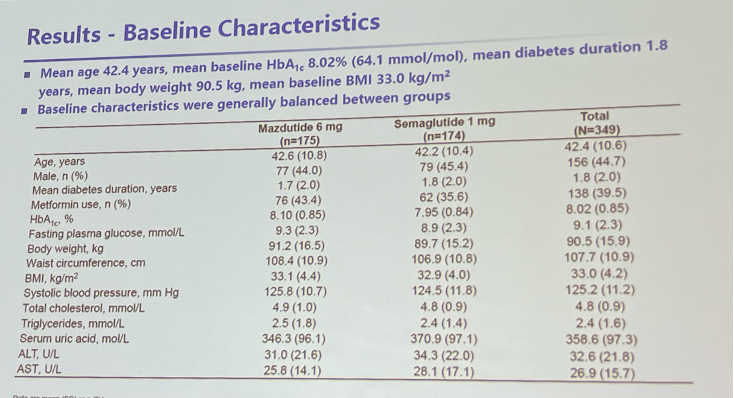
- Results. Significantly greater proportion of the mazdutide group (48% vs. 21%) achieved A1c <7.0% and weight loss ≥10%, compared to semaglutide (see figure below). Likewise, more participants on mazdutide (16% vs. 7%) achieved tighter goals of A1c <6.5% and weight loss ≥15%. In a more direct metric, mazdutide led to statistically significantly greater A1c reduction (2.04 vs. 1.87 percentage points) and weight loss (11 vs. 6%) from baseline. Cardiometabolic marks also improved, with placebo-adjusted reductions in waist circumference by 2.8 cm (1.1 in), systolic blood pressure by 3.2 mmHg, total cholesterol by 3%, and triglycerides by 21%.
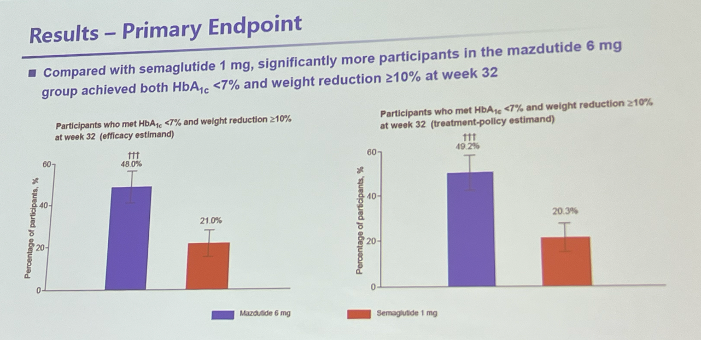
- The safety and tolerability profile was favorable and consistent with other incretin-based therapies. Most common events were gastrointestinal, led by nausea (31% vs. 13%), diarrhea (27% vs. 22%), and vomiting (24% vs. 9%). The rate of serious adverse events (6.3% vs. 4.6%) and treatment discontinuation due to adverse events (1.7% vs. 0.6%) were slightly higher in the mazdutide group. Dr. Ji said that discontinuations were due to decreased appetite, nausea, and cerebral infarction.
Highest dose of zenagamtide (amycretin) confers placebo-adjusted A1c reduction by 1.6% in people with T2D in phase 2 results
In this Friday evening industry symposium, Dr. Pablo Mora (UT Southwestern) shared results of a phase 2 study (n=262) of once-weekly injectable zenagamtide (amycretin) for adults with T2D inadequately controlled on metformin. The results were released in a poster abstract; see accompanying press release from Novo Nordisk. As background, zenagamtide is a first-in-class, unimolecular, peptide GLP-1/amylin RA. The trial met its primary and secondary endpoints, and findings support the initiation of a phase 3 development program of zenagamtide for adults with T2D in 2H26.
- Baseline characteristics and study design. The study evaluated six doses of zenagamtide: (i) 0.4 mg; (ii) 1.5 mg; (iii) 5 mg; (iv) 10 mg; (v) 20 mg; and (vi) 40 mg. At baseline, participants were 66% male and on average 57 years old, had a mean body weight of 99 kg (219 lbs), and a mean A1c of 7.8% (ranging from 7.0%-10.0%). 40% of patients were taking an SGLT-2 inhibitor. The trial used a fixed-dose-escalation trial design (see below). If the planned treatment dose was not tolerated, treatment was permanently discontinued.
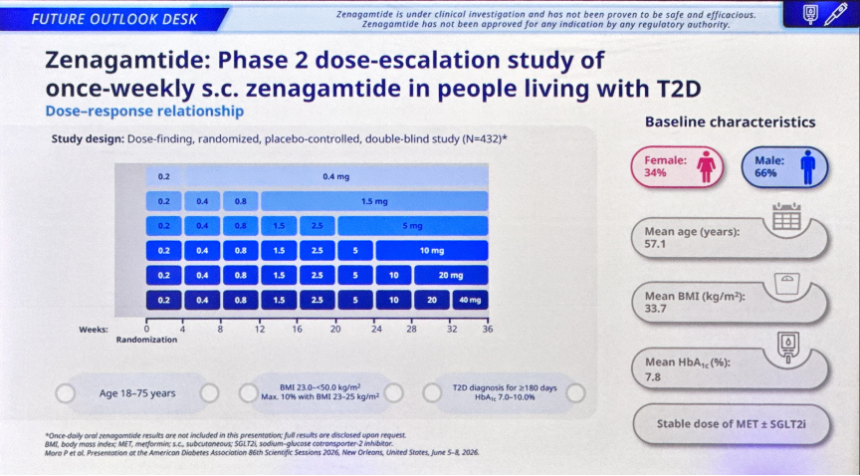
- The primary endpoint was the change in A1c from baseline to Week 36. Key secondary endpoints included changes from baseline to Week 36 in Time in Range, body weight, systolic blood pressure, C-reactive protein, lipids, and the number of adverse events (AEs) from baseline to end of trial.
- Results. The phase 2 study showed dose-dependent and significant change in A1c from baseline to Week 36 in all doses of zenagamtide compared to placebo. At Week 36, the estimated treatment difference in A1c from placebo was -1.56 percentage points at the highest dose. Up to 89% of patients on zenagamtide achieved A1c levels below 7.0%, while up to 76% achieved levels at or below 6.5% (see below).
- In secondary endpoints, the proportion of Time in Range (70-180 mg/dL) was above the internationally recommended target of >70% across all zenagamtide doses, and up to 91% in patients taking zenagamtide 40 mg. Participants taking zenagamtide 40 mg also saw a mean body weight reduction of up to 14.6% from a baseline body weight of 219 lbs, compared to 2% in placebo. No apparent weight loss plateau was observed at Week 36 with the “higher doses” of zenagamtide.
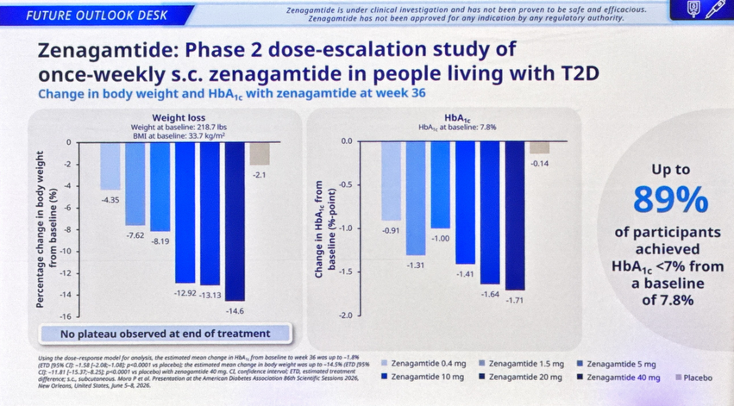
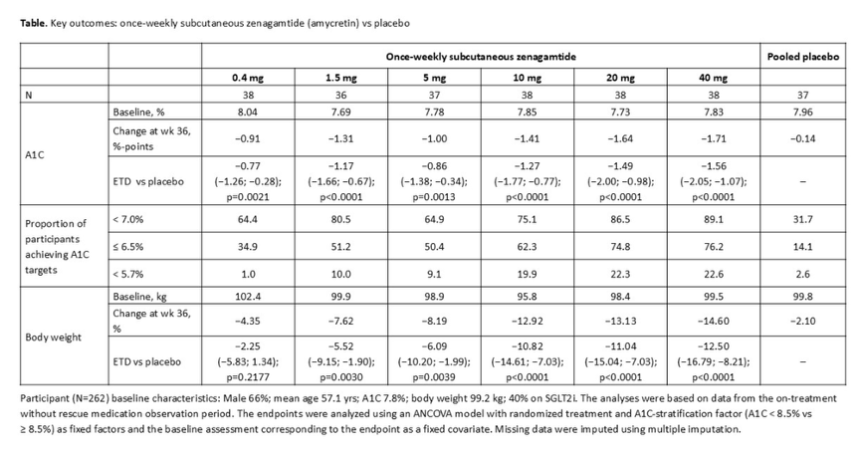
- The most common adverse events were gastrointestinal of mild to moderate severity. The safety and tolerability profile was consistent with other incretin and amylin-based therapies.
- Drs. Louise Aronne (Weill Cornell Medicine) and Domenica Rubino (Washington Center for Weight Management & Research) praised the potential of the therapy. Dr. Aronne characterized zenagamtide to have “GLP-1 and amylin effect in one molecule” with a “phenomenal effect.” Dr. Rubino said the era is “quite exciting” for providers and patients. During Q&A, Dr. Rubino also shared that Novo Nordisk does not plan to do a head-to-head comparison trial with CagriSema and confirmed that phase 3 is planned for later this year.
Phase 2 results for dual GLP-1/GIP RA enicepatide demonstrate up to 23% body weight loss with favorable tolerability
Prof. Ildiko Lingvay (University of Texas Southwestern Medical Center) presented strong phase 2 results for enicepatide (formerly known as CT-388). The candidate is in development by Roche following its acquisition of Carmot Therapeutics in December 2023. The trial (NCT06525935) was initiated in 4Q24 with an enrollment of 469 patients and was completed following Roche’s planned timeline. Enicepatide is a cAMP dual signal-biased GLP-1/GIP dual receptor agonist in development for obesity, T2D, and related comorbidities. It is administered weekly via subcutaneous injection. In a phase 1 study, the therapy conferred 18.9% body weight loss reduction in adults with obesity but without T2D in 24 weeks. Safety and tolerability were also consistent with other incretins in stage 1 development. The phase 2 data presented today aimed to evaluate efficacy, safety, and dose-dependent response in participants with overweight or obesity but without T2D.
- The study design evaluated weight loss over 48 weeks. The double-blind, placebo-controlled, multicenter trial included adults aged 18-75 years with a BMI of 30 kg/m² or greater or a BMI of 27 kg/m² or greater with one or more obesity-related conditions, but not diabetes. 467 patients were randomized 1:1:1:1:1:1 to treatment with different doses of enicepatide (4, 8, 12, 16, or 24 mg) or placebo over 48 weeks. Doses were up-titrated over up to 24 weeks. The primary endpoint was percent weight loss from baseline to week 48 and was analyzed using a mixed model for repeated measures based on an efficacy estimand. Key secondary endpoints included categorical weight loss, absolute change in body weight, and the change in proportion of patients with normoglycemia versus prediabetes versus diabetes.
- At baseline, 50% of participants had prediabetes with a mean A1c of 5.5%. The mean BMI was 38 kg/m², 68% of participants were female, and 71% were white. In each group, between 17 and 34% participants discontinued the study for any reason, with the highest rate seen in placebo. Discontinuations due to adverse events were highest in the 12 mg group, and 14%.
- Enicepatide demonstrated an estimated treatment difference of 22.5% body weight loss compared to placebo at the highest dose of 24 mg. With this dose at Week 48, no weight loss plateau was observed. Weight loss increased with each dose. In terms of secondary endpoints, 95.7% of patients achieved ≥5% body weight loss, 87.0% reached ≥10% weight loss, 47.8% had ≥20% weight loss, and 26.1% had an astounding ≥30% weight loss. Although participants in this trial did not have diabetes, among those with prediabetes at baseline, 73% achieved normoglycemia when taking enicepatide 24 mg compared to just 7.5% on placebo. Just 1% of patients withdrew from the study due to adverse events, with a higher discontinuation rate in the placebo arms compared to the treatment groups. Gastrointestinal events were the most common side effects at 28% in placebo and 47-65% for the enicepatide doses. Dr. Lingvay emphasized the favorable risk-benefit profile of this therapy, especially compared to other incretin dual agonists. The glycemic benefit of enicepatide is particularly impressive and may have implications for

diabetes prevention in the future.
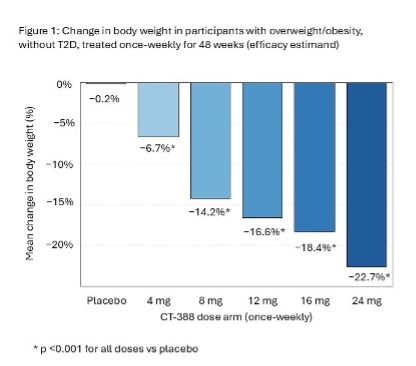
Results from the VESPER phase 2b program: Redefining long‑acting GLP‑1 RA therapy
Dr. Naveed Sattar (University of Glasgow, UK) opened this packed symposium by outlining the growing global crisis of obesity, noting that prevalence in adults has more than doubled since 1990 and is set to continue increasing at an exponential rate. He emphasized that reducing adiposity could substantially improve population health – an estimated 55% of complex multimorbidity cases are potentially preventable through population-wide reductions to BMI. Nutrient-stimulated hormone (NuSH) analogs provide promise as catalysts for improving population health, but Dr. Sattar highlighted persistent barriers for these therapies, including access, cost, titration, side effects, potency, adherence, and long-term use. He argued that developing more tolerable weight management therapies with dosing strategies that align with real-world needs and are scalable and accessible will be essential to addressing the obesity crisis.
- Dr. Louis Aronne (Weill Cornell Medicine) then introduced berobenatide (PF‘3944, previously known as MET-097 prior to Pfizer acquiring Metsera), a terminally lipidated 41-amino acid peptide biologic whose differentiated structure enables once-monthly dosing. As a fully biased GLP-1 RA generated by select amino acid changes, Dr. Aronne suggested that berobenatide has potentially greater potency than unbiased GLP-1 RAs. This allows berobenatide to have selective cAMP activation and prevents receptor internalization upon GLP-1RA activation, further contributing to prolonged cAMP activation. Because berobenatide is engineered for extended exposure and less frequent administration, it may also translate into more efficient manufacturing and potentially lower production costs compared with higher‑volume weekly regimens. Furthermore, berobenatide can be administered at low, scalable doses that can be optimized for tolerability. Dr. Louis Aronne describes berobenatide as a “foundational incretin for multiple long-acting candidates,” citing its potential for compatibility with amylin, GIP, and other NuSH peptides. Berobenatide is rapidly advancing into phase 3 development, with 10 clinical trials planned for 2026 across the entire program.
- Building on Dr. Aronne’s overview of berobenatide’s design and long‑acting potential, Dr. Ildiko Lingvay (UT Southwestern) transitioned the discussion into clinical evidence from the phase 2b VESPER-2 trial (n=133) investigating weekly berobenatide across four fixed doses (0.4 mg, 0.8 mg, 1.2 mg, and 1.6 mg) in adults with obesity or overweight and T2D. The trial evaluated weight and glycemic efficacy without dose de‑escalation through Week 28. Berobenatide produced dose‑dependent reductions in body weight of up to 10% and A1c reductions up to 2.2% from a baseline of 8.2%. Despite mandatory adherence to assigned doses, completion rates remained high, and 88% of participants experienced no or only mild GI events, with no severe gastrointestinal (GI) AEs and hypoglycemia rates comparable to placebo. These findings established berobenatide’s efficacy and tolerability profile in a T2D population and provided the foundational weekly maintenance doses of 0.8 mg (low), 1.2 mg (medium), and 2.4 mg (high) that were advanced into the later phase 3 VESPER-5 trial.
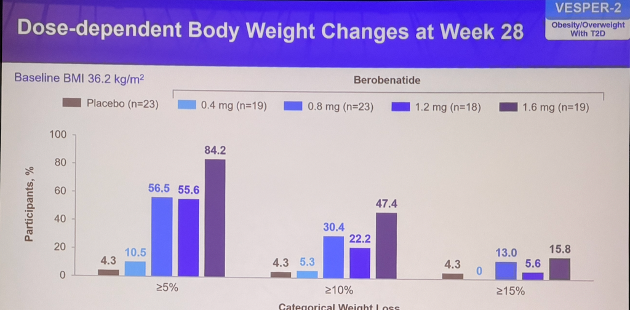
- Dr. John Buse (University of North Carolina) then presented results from the VESPER‑1 open‑label extension (n=239) trial. The study investigated higher weekly doses of berobenatide (1.6 mg and 2.4 mg), extended‑interval dosing schedules of 1.6 mg every two weeks, and monthly doses of 2.4 mg, 3.2 mg, and 4.8 mg in adults with obesity or overweight without diabetes who had completed the initial 28‑week blinded period. The extension evaluated the durability of weight loss, the feasibility of switching from weekly to monthly dosing, and GI tolerability during titration. Weight loss continued at Week 32, reaching 16% with 2.4 mg weekly while monthly regimens (2.4-4.8 mg) sustained 10-15% reductions through Week 60. In terms of tolerability, 96% of participants reported only mild or no GI events, no GI‑related discontinuations occurred, and transitions from weekly to monthly dosing produced only brief, mild nausea or vomiting. These results validated 1.2 mg and 2.4 mg weekly as the medium and high maintenance doses for the phase 3 VESPER-4 and VESPER-5 trials and supported the feasibility of monthly maintenance dosing at 3.2 mg and 4.8 mg.
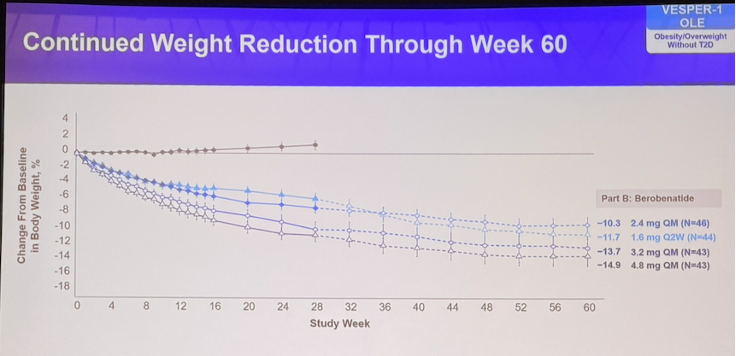
- Dr. Buse concluded with results from the ongoing 64-week VESPER‑3 trial (n=268), investigating monthly berobenatide dosing at 3.2 mg and 4.8 mg in adults with obesity or overweight without diabetes. The trial evaluated weight‑loss efficacy at the 28‑week primary endpoint and characterized GI tolerability during monthly titration. Berobenatide achieved up to 12% weight loss at Week 28 with no evidence of plateau in early transitions from weekly to monthly dosing. Safety remained favorable, with 83% of participants reporting no or only mild GI events, and GI‑related discontinuations were low (≤12% across arms), occurring primarily during early titration. VESPER‑3 confirmed the robustness of monthly dosing and directly informed the phase 3 VESPER-6 program, including the advancement of a 4.8 mg monthly maintenance dose.
Dual GLP-1/GIP RA HDM1005 demonstrates up to 13% weight loss at Week 22 in people with obesity
In a packed hall, Dr. Junfang Xu (Huadong Medicine, China) presented results from a phase 2 trial (n=243) of HDM1005, a once-weekly injectable dual GLP-1/GIP RA, in people with obesity and without diabetes. Dr. Xu explained that HDM1005 has threefold greater GLP-1 receptor agonistic potency compared to tirzepatide and has exhibited promising weight loss effects in phase 1 trials.
- Study design and baseline characteristics. In the 22-week trial, participants were randomized to HDM1005 0.5 mg, 1 mg, 2 mg, and 4 mg, or placebo. Doses were gradually increased until participants reached their max dose. The primary endpoint was weight loss efficacy, and secondary endpoints included cardiometabolic parameters and the tolerability profile. Nearly all (99.2%) completed the study.
- At baseline, participants were an average of 34 years old, with 48% being female. Mean weight was 90 kg (198 lbs), BMI was 32 kg/m2, and A1c was 5.3%. On cardiometabolic markers, participants had a mean blood pressure of 121/81 mmHg, triglycerides of 1.6 mmol/L, and LDL-c of 3.0 mmol/L.
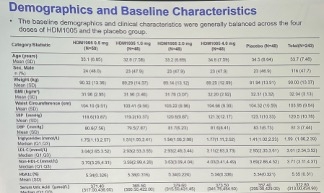
- Results. At Week 22, HDM1005 conferred dose-dependent weight loss up to 13%, compared to 2.5% for the placebo group (see figure below). In addition, a significantly greater proportion of participants on HDM1005 (75% vs. 6%) achieved ≥10% weight loss, compared to placebo. HDM1005 also improved cardiometabolic markers, including reductions in systolic blood pressure by 10 mmHg (vs. 2 mmHg with placebo), triglycerides by 27% (vs. 9%), LDL-c by 12% (vs. 3%), and A1c by 0.42 percentage-points (vs. flat).
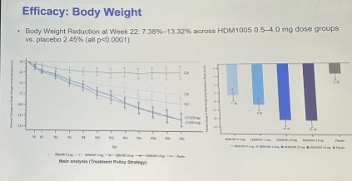
- Safety. As commonly seen with other GLP-1 RAs, the most frequent adverse events were GI-related, such as diarrhea, nausea, and decreased appetite. Dr. Xu clarified that most treatment-emergent adverse events (TEAEs) were mild to moderate, and there were no reports of serious TEAE. Notably, there was no discontinuation due to TEAEs.
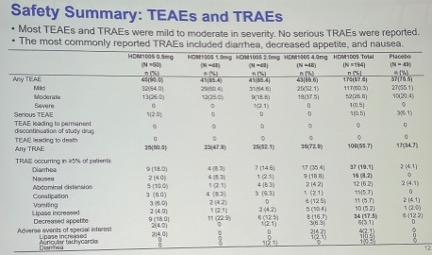
- Looking forward, Dr. Xu said a multicenter 52-week phase 3 trial (n=825) is ongoing for HDM1005 in patients with overweight and obesity, with results expected by the end of the year. During Q&A, Dr. Xu also said it will evaluate higher doses of HDM1005 against tirzepatide in another study.
Full results of the phase 2b ACCESS trial: Oral small molecule GLP-1 RA aleniglipron confers up to 12% weight loss in people with overweight or obesity
In a jam-packed symposium, Dr. Julio Rosenstock (University of Texas) presented results of the phase 2b ACCESS trial (n=230), which evaluated Structure Therapeutics’ oral small molecule GLP-1 RA aleniglipron in people with overweight or obesity with at least one weight-related comorbidity. The results were simultaneously published in Nature Medicine. Dr. Rosenstock explained that aleniglipron is a potent, highly selective, and ß-arrestin-biased small-molecule GLP-1 RA. It is designed to be taken once daily with no food restrictions. Moreover, the molecule does not have chiral centers, which makes manufacturing simper. Previously, in the phase 2 ACCESS II trial (n=82), aleniglipron demonstrated up to 16.3% weight loss at Week 44 in people with obesity and weight-related comorbidity.
- Study design and baseline characteristics. The 36-week ACCESS trial compared aleniglipron 45 mg, 90 mg, and 120 mg to placebo in terms of weight loss, cardiometabolic effects, and safety and tolerability profile. Following the study completion, participants (n=151) were invited to join an open-label extension trial.
- At baseline, participants were 50 years old, with 54% being female. The majority was white (84%), followed by Black (10%). On average, participants had a baseline body weight of 115 kg (254 lbs), BMI of 40 kg/m2, A1c of 5.6%, and blood pressure of 125/81 mmHg.
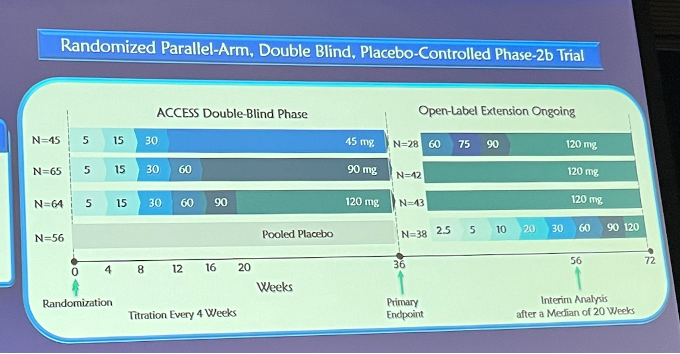
- Results. At Week 36, aleniglipron conferred dose-dependent weight loss up to 12% (vs. 0.8% with placebo), with no signs of plateau. Moreover, a greater proportion of people on aleniglipron achieved weight loss thresholds of ≥5% (86% vs. 23% on placebo), ≥10% (70% vs. 7%), and 15% (38% vs. 1%). On cardiometabolic outcomes, aleniglipron led to greater reductions in A1c (0.36 vs. 0.01 percentage points), systolic blood pressure (9 vs. 1.5 mmHg), and hsCRP (46% vs. 7%), compared to placebo. On the other hand, consistent with other incretin-based therapies, heart rate rose dose-dependently by up to 2.2 beats per minute, compared to placebo, which decreased by 1.2 beats per minute. In an open-label extension study, aleniglipron has further led to 16% weight loss from a baseline of 117 kg (258 lbs) at Week 52.
- Safety and tolerability. Overall, a higher percentage (92%) of the aleniglipron group experienced treatment-emergent adverse events, compared to the placebo group (79%). GI side effects were most common, led by nausea (71% with aleniglipron 45 mg vs. 21% with placebo), vomiting (40% vs. 5%), diarrhea (42% vs. 23%), and constipation (40% vs. 14%). In addition, participants taking aleniglipron were more likely to discontinue treatment (13%, 8%, and 5% with aleniglipron 45 mg, 60 mg, and 120 mg vs. 1% with placebo) due to GI events. More specifically, 47% completed treatment successfully, while 31% experienced interruptions, and 21% discontinued treatment. Encouragingly, Dr. Rosenstock noted that the GI events mostly occurred at the beginning of the treatment, and that when treatments were interrupted, participants generally were able to restart the treatment without recurrent vomiting. There were no notable hepatic safety signals.
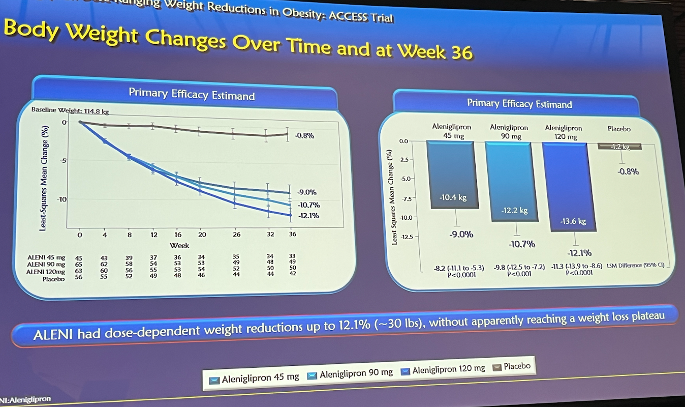
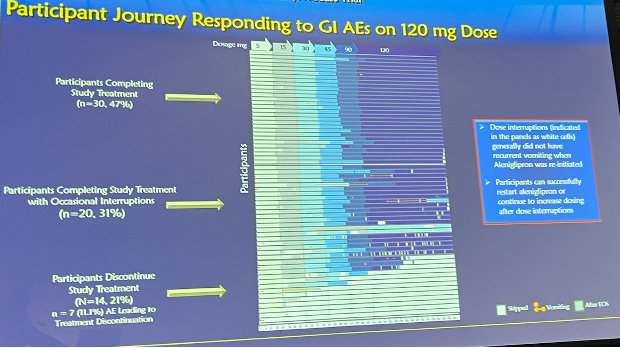
Phase 2b SOLSTICE trial: Elecoglipron confers a 1.9 percentage point reduction in A1c and 8% weight loss in T2D
In this well-attended symposium, Dr. Vanita Aroda (Brigham and Women’s Hospital) presented full results of the phase 2b SOLSTICE trial (n=406), which evaluated oral small molecule GLP-1 RA elecoglipron in adults with T2D inadequately managed on diet or exercise alone or with metformin or SGLT-2 inhibitor monotherapy. Full results were published simultaneously in The Lancet. At Week 26, elecoglipron reduced A1c by 1.9 percentage points (0.2% with placebo) and body weight by 8% (vs. 1.7%). Based on the positive results, elecoglipron will be evaluated in the phase 3 ELUMINATE program, which will consist of five global trials in various T2D populations.
- Study design and baseline characteristics. In this dose-ranging trial, adults with A1c between 7.0-10.5% and BMI ≥23 kg/m2 were randomized to elecoglipron (5 mg, 15 mg, 25 mg, 50 mg, and 75 mg), placebo, or semaglutide. Treatment completion rate ranged from 66-95% in the elecoglipron groups, compared to 76% in the placebo group and 88% in the semaglutide group. The trial completion rate was over 90% across all groups.
- At baseline, participants were 58 years old, with 58% male, and 69% white. Clinically, they had a mean A1c of 7.9%, diabetes duration of approximately six years, body weight of 100 kg (220 lbs), and BMI of 34 kg/m2. See more below.
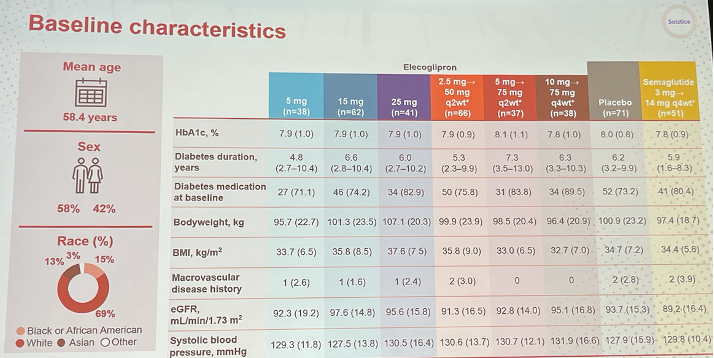
- Results. At Week 26, elecoglipron led to a 1.9 percentage point reduction in A1c (vs. 0.2 percentage point), 51% reduction in fasting glucose (vs. 0.4%), and 7.7% weight loss (vs. 1.7%). Moreover, significantly greater proportions of the elecoglipron group achieved A1c <7% (63-90% vs. 25%) and ≤6.5% (39-85% vs. 13%). Interestingly, for higher elecoglipron doses, a greater proportion of participants achieved weight loss ≥5% and ≥10%, compared to oral semaglutide 14 mg (see figure below). Elecoglipron also reduced systolic blood pressure by 2.9-9.4 mmHg (vs. 3.3 mmHg) from a baseline of 130 mmHg.
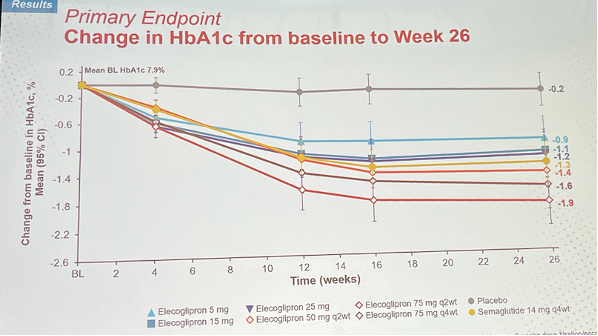
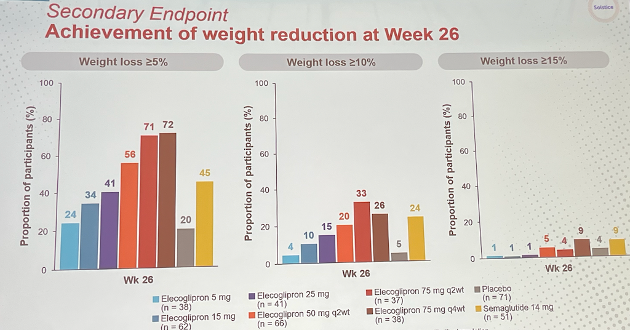
- Safety and tolerability were consistent with other incretin-based therapies, with gastrointestinal events, including nausea (3-37% vs. 3%), constipation (10-29% vs. 4%), diarrhea (5-21% vs. 16%), and vomiting (3-15% vs. 1%), being most common. Both gastrointestinal events and treatment discontinuation from adverse events were more common when patients started on higher doses. Dr. Aroda said these results underscore the importance of slow titration.
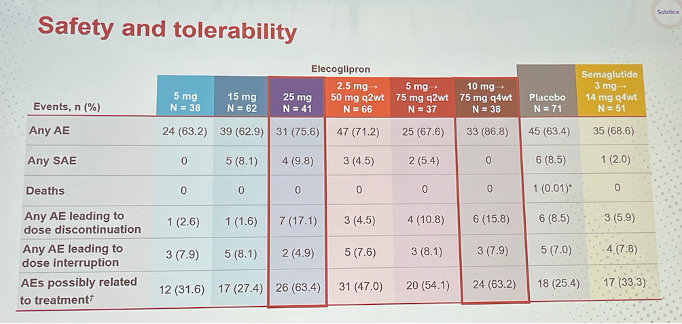
Phase 2b VISTA trial finds that oral small molecule GLP-1 RA elecoglipron confers up to 12% weight loss in adults with obesity
In this afternoon symposium, Prof. Melanie Davies (University of Leicester, UK) presented the full results of the phase 2 VISTA trial (n=310), which evaluated AstraZeneca’s elecoglipron (AZD5004/ECC5004), a once-daily, oral, small-molecule GLP-1 RA, in people with obesity or overweight with at least one weight-related comorbidity but not T2D. See simultaneous publication in The Lancet and press release. At 36 weeks, elecoglipron conferred clinically significant, dose-dependent weight loss up to 10.5% (vs. 0.6% with placebo) and a safety and tolerability profile consistent with the GLP-1 RA class. Looking forward, elecoglipron will advance to the phase 3 EMBOLDtrial for people with overweight and obesity, with or without T2D, as well as long-term trials for cardiovascular and kidney outcomes.
- Study design and baseline characteristics. In the trial, participants were randomized to elecoglipron (5 mg, 15 mg, 50 mg, and 75 mg) or placebo. Over 90% of participants finished the study. At baseline, participants were 48 years old and 73% were female. The mean body weight was 107 kg (236 lbs), and the mean BMI was 38 kg/m2. Clinically, 32% had hypertension, 2.6% had cardiovascular disease, and 14% had obstructive sleep apnea (OSA). See study design and baseline characteristics below.
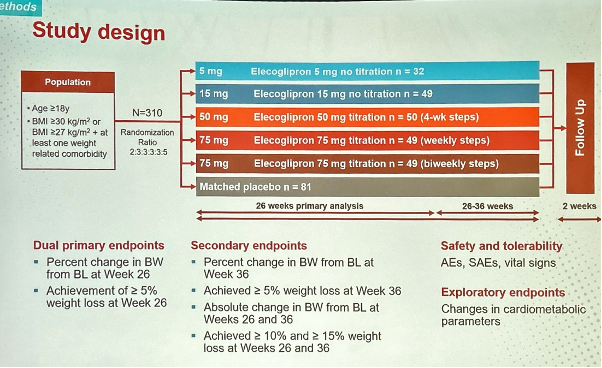
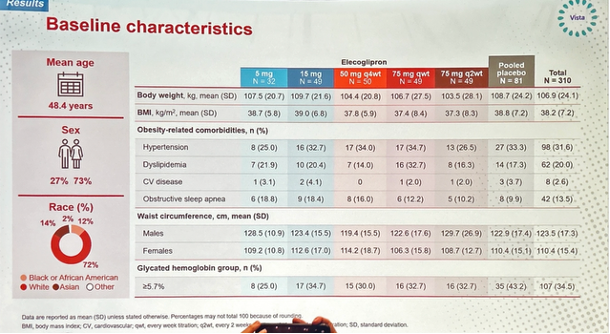
- Results. Elecoglipron conferred dose-dependent weight loss up to 11.8% (0.3% with placebo) at Week 36. Elecoglipron also led to dose-dependent reductions in waist circumference (13 cm [5 in] vs. 3 cm [1 in]), systolic blood pressure (8.8 mmHg vs. 1.5 mmHg gain), and hsCRP (44% vs. 27%).
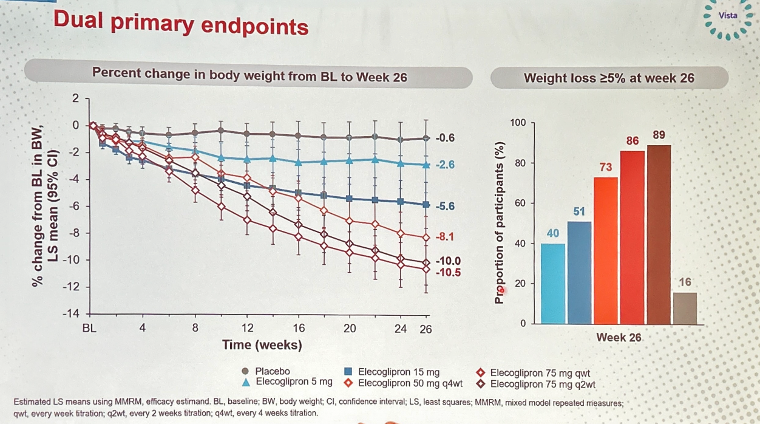
- Safety and tolerability were consistent with the GLP-1 RA class. Approximately 84-98% of the elecoglipron group (vs. 84% of the placebo group) reported any adverse events. The most common side-effects were gastrointestinal, led by nausea (45-56% vs. 20%), constipation (13-42% vs. 6%), diarrhea (13-35% vs. 25%), and vomiting (6-29% vs. 5%). Nausea and vomiting happened most frequently during treatment initiation, while constipation and diarrhea remained at a low level throughout the 36 weeks. Interestingly, only 2-4% of participants discontinued use due to GI side effects.
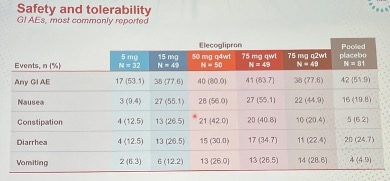
- In her commentary, Dr. Klara Klein (UNC Medicine) gave a three-part answerto the question: “Where does elecoglipron fit [in the expanding landscape of incretin-based therapies]?” To begin, Dr. Klein quoted Dr. Vanita Aroda, who famously said, “It’s all about the patient,” at an ATTAIN-1 trial readout at EASD 2026. Every patient has different medical needs, treatment responses, and tolerance to medications, and thus, more treatment options will only benefit patients. Dr. Klein also said that obesity prevalence is rising significantly in young adults, and nearly 853 million people will develop diabetes by 2050, up 45% from 2024. She is hopeful that more incretin-based therapy options can increase access to the drugs and prevent end-organ dysfunction across the world. Finally, Dr. Klein said that not everyone needs significant weight loss. Low-dose elecoglipron (e.g., 5 mg, which reduces weight by 2.5 kg [5.5 lbs] and A1c by 0.9 percentage points) could be especially beneficial for those wanting cardio-kidney-metabolic benefits but do not need to lose weight. She called for further research in older adults, people with a kidney transplant or on dialysis, and those with T1D or atypical diabetes.
Dual GLP-1/GIP RA CT-388 demonstrates 23% weight loss at Week 48 in people with overweight or obesity
In this well-attended session, Dr. Ildiko Lingvay (UT Southwestern) delivered the full results of the phase 2 trial (n=467) evaluating enicepatide (CT-388), a cAMP dual signal-based GLP-1/GIP RA, in people with overweight or obesity without T2D. As background, in the phase 1 trial (n=129), enicepatide 22 mg led to 18.9% weight loss in adults with obesity but not T2D at 24 weeks, with the safety and tolerability profile consistent with other incretin-based drugs.
- Study design and baseline characteristics. Adults with BMI ≥30 kg/m2 or ≥27 kg/m2 and at least one weight-related comorbidity were randomized to enicepatide (4 mg, 12 mg, 16 mg, 24 mg) or placebo. At baseline, participants were 49 years old, with 68% being female, 71% white, 23% Black, and 20% Latino. Clinically, body weight was 108 kg (238 lbs), BMI was 38 kg/m2, and A1c was 5.5%. Half of the participants at prediabetes at baseline. Nearly all participants taking placebo or lower doses (4 mg, 8 mg, and 16 mg) of enicepatide reached the target dose, while participants on higher doses (12 mg and 24 mg) had a slightly lower attainment rate of 86% and 80%. Notably, study discontinuation was higher in the placebo group (34%) compared to the treatment group (14-31%).
- Results. Enicepatideconferred dose-dependent weight loss up to 22.7% (vs. 0.2% with placebo) at Week 48, with no plateau observed. Greater proportions of the enicepatide group achieved normoglycemia (45-73% vs. 8%), compared to the placebo group, as shown in the figure below.
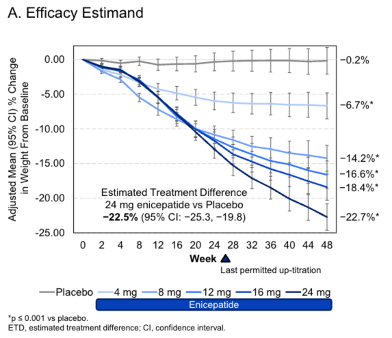
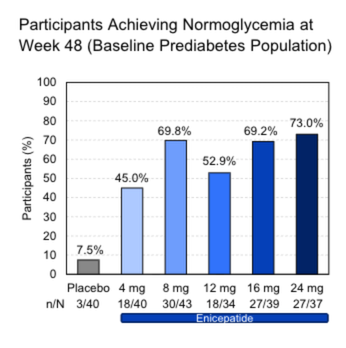
- Safety and tolerability profile was consistent with other incretin-based treatments. GI eventswere most common (47-65% vs. 28%), led by nausea (33-46% vs. 19%), constipation (22-26% vs. 19%), diarrhea (14-32% vs. 10%), and vomiting (8-25% vs. none). Treatment discontinuation due to adverse events occurred once in the placebo group, and once each in the enicepatide 4 mg and 12 mg.
Bi-weekly GLP-1/GIP RA RAY1225 confers up to 21% weight loss in Chinese adults with overweight or obesity
In this packed session, Dr. Leili Gao (Peking University People’s Hospital, China) presented results of the phase 2 REBUILDING-1 trial (n=243), which evaluated a bi-weekly GLP-1/GIP RA, RAY1225, in Chinese adults with overweight or obesity. As background, RAY1225 is designed to have strong binding affinity for both GLP-1 and GIP receptors, with a biased GLP-1 receptor agonism toward cAMP generation over ß-arrestin recruitment. Given its half-life of 10 days, the drug can be taken once every two weeks.
- Trial design and baseline characteristics. Chinese adults with BMI ≥28 kg/m2 or ≥24 kg/m2 with at least one obesity-related comorbidity, excluding diabetes, were randomized to receive placebo or RAY1225 (3, 6, 9, 12, 15, or 18 mg). The primary endpoint was the percentage change in body weight at Week 24. At baseline, participants were 34 years old on average, with 60% being male. Clinically, the mean weight was 92 kg (204 lbs), BMI was 33 kg/m2, waist circumference was 104 cm (41 in), triglyceride level was 5 mmol/L, ALT was 36 U/L, and mean liver fat content was 12%.
- At Week 24, RAY1225 conferred dose-dependent weight loss up to 21% (vs. 3% with placebo). Moreover, a greater proportion of the treatment group achieved weight loss targets, with all participants receiving RAY1225 18 mg achieving ≥15% weight reduction. RAY1225 also led to reductions in BMI (7.2 kg/m2 vs. 1.0 kg/m2) and waist circumference (18 cm [7.3 in] vs. 4.4 cm [1.7 in]), as well as other cardiometabolic markers, including blood pressure, triglycerides, and ALT. Specifically on liver health, RAY1225 reduced liver fat content in a dose-dependent manner by up to 72% (vs. 3.6% gain with placebo).
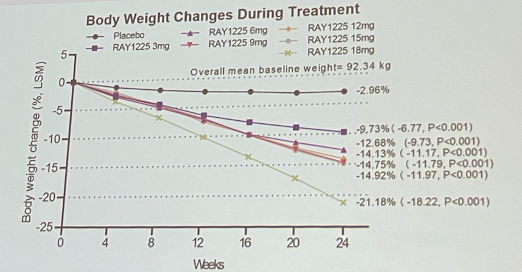
- Safety and tolerability profile was consistent with other incretin-based therapies, with most adverse events being mild-to-moderate GI events. Diarrhea was most common (28%), followed by vomiting (14%), nausea (13%), and abdominal distension (6.7%). Treatment discontinuation due to adverse events was rare, occurring once in the placebo, 3 mg, and 12 mg groups each. Approximately 17% of participants were positive for treatment-emergent anti-drug antibodies, but this reactivity did not reduce the efficacy or cause safety risks.
Phase 1 trial results of Innovent Biologics’ once-weekly mazdutide (dual GLP-1/glucagon RA) in Chinese adolescents with obesity
Dr. Chunxiu Gong (Innovent Biologics) presented results of the phase 1 trial of Innovent Biologics’ once-weekly mazdutide in Chinese adolescents with obesity. As background, mazdutide, a dual GLP-1/glucagon RA, has received approvals in China (4 mg and 6 mg) for weight management in adults with obesity or overweight with at least one weight-related comorbidity. In the phase 1 trial in adolescents, mazdutide 4 mg and 6 mg showed a favorable safety profile and pharmacokinetics comparable to those in adults with obesity. Results showed meaningful weight loss and multiple metabolic benefits, supporting the potential of mazdutide as a treatment option for adolescents with obesity.
- Trial background. The primary endpoint of the trial was the safety and tolerability of mazdutide. Secondary endpoints included pharmacokinetic measures and changes from baseline in the following: (i) weight; (ii) BMI; (iii) waist and hip ratio; (iv) blood pressure; (v) lipid; (vi) A1c; and (vii) mental health status. Inclusion criteria included adolescents (12 to 18 years of age), BMI meeting obesity criteria, and <5% BMI reduction after ≥12 weeks of diet/exercise alone.
- Baseline measurements. The trial included participants with a median age of 14 years, a mean baseline BMI of 34 kg/m², and a body weight of 96 kg (212 lbs).
- Results. All participants in the mazdutide 4 mg, 6 mg, and placebo groups completed the trial.
- On safety, mazdutide showed a manageable safety profile, with no severe treatment emergent adverse events or severe adverse events. The most frequently reported treatment-emergent adverse events were decreased appetite, vomiting, nausea, and diarrhea. All GI-related side effects were mild.
- On pharmacokinetics, a single 2 mg subcutaneous injection of mazdutide had a Tmax of approximately 12 hours and a half-life of about nine days. The pharmacokinetics of mazdutide in adolescents were consistent with those of adults.
- On BMI and body weight, both doses of mazdutide reduced BMI. Dr. Gong said the results do not include nominal tests, as they only represent a phase 1 study.
- On other endpoints, mazdutide conferred rapid, meaningful weight loss and metabolic benefits. Specifically, the change in waist circumference from baseline was 6.7 cm, 7.7 cm, and 1.6 cm, for mazdutide 4 mg, 6 mg, and placebo, respectively. The change in A1c from baseline was 0.22%, 0.32%, and 0.13% for mazdutide 4 mg, 6 mg, and placebo, respectively.
Tirzepatide confers improved insulin resistance and adipocyte function with matched dietary weight loss
Dr. Tracey McLaughlin (Stanford) presented findings on the independent effect of tirzepatide on insulin sensitivity and human fat, comparing metabolic and adipocyte responses to the drug vs. matched dietary weight loss. Tirzepatide has conferred significant improvements in glycemic outcomes and weight management, but the metabolic effects of dual GIP/GLP-1 agonism independent of weight loss have not been fully explored. Given that GIP receptor targets are on fat cells, there is potential for dual GIP/GLP-1 RAs to improve insulin sensitivity. Dr. McLaughlin hypothesized that tirzepatide improves insulin sensitivity, independent of weight loss through adipocyte effects.
- Methods. The study split 53 adults with BMI in the range of 27-40 kg/m² and a fasting glucose level <126 mg/dL into two groups: (i) tirzepatide treatment; and (ii) low-calorie diet. At Week 6, both groups were strictly matched to lose the exact same amount of weight (4 kg; 8.8 lbs). At Weeks 0, 6, and 22, fat biopsies were obtained and insulin resistance was measured. The fat biopsies were used to test lipolysis and observe adipocyte size and differentiation. The insulin resistance was measured using the Steady-State Plasma Glucose (SSPG) test.
- Results. At Week 6, despite both groups losing the same amount of weight, the tirzepatide group saw their insulin resistance improve by 41%, compared with 7.5% in the diet group. At Week 22, the tirzepatide group’s insulin resistance improved by 53% while the diet group improved by 15%. Statistical adjustments showed that the improvements in insulin resistance for the tirzepatide group were independent of weight loss. Lipolysis also increased for both groups, but the tirzepatide group showed a significantly greater response to isoproterenol and greater metabolic flexibility. Adipocyte size and differentiation decreased for both groups, but the difference between the two groups was not statistically significant. Given these findings, Dr. McLaughlin suggested that tirzepatide improves insulin resistance independent of weight loss and improves metabolic flexibility of adipocytes.
Non-incretin Therapies
Full phase 2 ZUPREME-1 results: Long-acting amylin agonist confers 10% weight loss with placebo-like tolerability
In this well-attended talk, Dr. Timothy Garvey (University of Alabama at Birmingham) presented the full results of the phase 2 ZUPREME-1 trial (n=485), which evaluated long-acting amylin agonist petrelintide in people with overweight or obesity and without T2D. See the simultaneous press release from Zealand. Topline results were announced in March 2026, showing that petrelintide achieved significant weight loss up to 11% at Week 42, compared to 1.7% with placebo. Dr. Garvey emphasized that amylin agonists can improve treatment adherence, one of the biggest challenges of current obesity therapies. Based on favorable results, petrelintide will advance to phase 3 studies in 2H26.
- Trial design and baseline characteristics. In this trial, participants were randomized to five undisclosed doses of petrelintide or placebo. The primary endpoint was the percent change in body weight from baseline to Week 28. Secondary and exploratory endpoints include changes in body weight, waist circumference, and cardiometabolic risk factors at Week 42, as well as the safety and tolerability profile. At baseline, participants were 47 years old, with 53% being women. Mean BMI at baseline was 37 kg/m2, and body weight was 107 kg (236 lbs).
- Results. At Week 42, petrelintide conferred up to 10.7% weight loss (vs. 1.7% with placebo). For cardiovascular risk factors, petrelintide reduced waist circumference by 10.8 cm (4.2 in) from a baseline of 114 cm (45 in), hsCRP by 41% from a baseline of 4.2 mg/L, and triglycerides by 21% from a baseline of 1.6 mmol/L.
- Adverse event rates were similar between the petrelintide and placebo groups. 71% of the petrelintide and 69% of the placebo groups reported any adverse events, while 3.5% and 3.7%, respectively, reported severe adverse events. Treatment discontinuation due to adverse events were 4.5% and 4.9%, respectively. Most common adverse events were gastrointestinal, 77% of which were mild and occurred during the titration period. Nausea (20% vs. 6%) and constipation (7% vs. 4%) were more elevated, while vomiting was less common (3% vs. 6%).
Prof. Thomas Lutz discusses the amylin biology
In this overflowing symposium, Prof. Thomas Lutz (Universität Zürich, Switzerland) explains the biology of amylin, which is a peptide hormone co-secreted with insulin from pancreatic beta-cells. Amylin acts on the area postrema in the hindbrain to promote satiety and reduce postprandial glucagon secretion. Currently, there is limited evidence supporting the involvement of vagal or non-vagal afferents in amylin signaling, suggesting that amylin’s effects are primarily mediated within the brain. Dr. Lutz shared preclinical data demonstrating improved tolerability. While amylin treatment reduced food intake and body weight, it was not associated with avoidance, aversion, visceral malaise, nausea, or emesis, as seen with salmon calcitonin (sCT) and semaglutide. In addition, amylin shows promise in bone health, as amylin-treated rodents exhibited lower blood calcium levels, potentially indicating reduced bone resorption. Amylin may also benefit skeletal muscle, but he said these effects are “more a field of discussion than research” as data is not conclusive. Looking forward, future research could aim to identify specific amylin receptors to target and reconcile differences between in vitro and in vivo studies.
Long-acting amylin agonists: Competitive landscape and clinical pearls
In a standing room-only symposium, Prof. Carel le Roux (University College Dublin, UK) and Dr. Timothy Garvey (University of Alabama at Birmingham) discussed long-acting amylin agonists as the emerging treatment for obesity and diabetes. Prof. le Roux provided an overview of amylin mono- and combination therapies currently under development.
- Amylin monotherapy includes:
- Cagrilintide. In a phase 2 trial (n=706), cagrilintide conferred up to 11% weight loss (vs. 9%) with fewer vomiting events (10-19 vs. 55 events per 100 years), compared to liraglutide. Prof. le Roux said a few patients experienced fatigue, as well, which warrants further research.
- Eloralintide. In a phase 2 trial (n=263), eloralintide demonstrated 20% weight loss (vs. flat with placebo) – showing for the first time that amylin agonists confer weight loss similar to incretin-based therapies. Prof. le Roux said clinicians still need to respect the gradual titration scheme. Participants who started with eloralintide 3 mg and were titrated up to 9 mg reported significantly lower rates of nausea (25% vs. 54% and 33%), fatigue (21% vs. 46% and 43%), and vomiting (2% vs. 13% and 11%) compared with those who started at 6 mg or 9 mg, respectively.
- Petrelintide. In the phase 2 ZUPREME-1 trial (n=493), petrelintide conferred 11% weight loss with placebo-like tolerability.
- MET-233. Phase 1 data (n=40) found that MET-233 led to up to 8.4% placebo-adjusted weight loss at one month.
- ABBV-295. Phase 1 data (n=76) showed that ABBV-295 led to 10% weight loss at Week 12.
- AZD6234. Phase 1a data (n=54) demonstrated nearly 4% weight loss after five days, with favorable tolerability.
- Amylin combination therapy includes:
- CagriSema. Prof. le Roux noted that in the phase 3 REDEFINE 1 trial (n=3,417), weight loss from semaglutide (16%) and cagrilintide (12%) did not fully add up to the weight loss achieved with CagriSema (23%). He hypothesized that semaglutide and cagrilintide are not additive because of the overlapping neurobiological mechanism of action.
- CagriSema also has greater weight loss variability than cagrilintide or semaglutide monotherapies. While it is unclear why some are super-responders while others are non-responders, Prof. le Roux warned that these non-responders will be patients who will “fill the clinics” in a couple of years. It would also be interesting to examine whether non-responder profiles overlap between those taking amylin and incretin-based therapies.
- Finally, there was no clear relationship between the mean CagriSema dose and weight loss, suggesting patients can achieve robust weight loss by pushing through the “minimum effective dose,” rather than reaching the maximal doses.
- CagriSema. Prof. le Roux noted that in the phase 3 REDEFINE 1 trial (n=3,417), weight loss from semaglutide (16%) and cagrilintide (12%) did not fully add up to the weight loss achieved with CagriSema (23%). He hypothesized that semaglutide and cagrilintide are not additive because of the overlapping neurobiological mechanism of action.
- Zenagamtide. A novel, unimolecular GLP-1/amylin RA, zenagamtide has demonstrated weight loss up to 24% (vs. 2% weight gain with placebo) in a phase 1b/2a trial.
Long-acting amylin agonists: Dr. Tim Garvey shares additional clinical insights and future directions
Following presentations by Profs. Lutz and le Roux, Dr. Timothy Garvey (University of Alabama at Birmingham) closed the packed session with his insights into long-acting amylin agonists. Recently, there has been a significant shift toward complications-centric obesity care, given that weight loss ≥10-20% is associated with improved health outcomes. Indeed, semaglutide and tirzepatide have demonstrated benefits for conditions like cardiovascular risk reduction, heart failure, liver health, and obstructive sleep apnea, among others. However, Dr. Garvey challenged the practice of applying complications-centric care to every patient. According to the NHANES data, only a relatively small percentage of American adults with obesity have T2D (30%), MASH (26%), coronary heart disease (16%), and congestive heart failure (6%). Given that the majority of patients with obesity do not meet the indications of incretin-based therapies, Dr. Garvey suggested using amylin agonists as the first-line treatment for most patients and GLP-1 RAs specifically for those with complications.
- Dr. Garvey highlighted long-term adherence as one of the greatest challenges of second-generation medications. Approximately 25% of patients do not fill prescriptions, and over half discontinue after one year, primarily due to high costs (48%), side effects (15%), and barriers to filling prescriptions (12%). Given that discontinuing obesity drugs results in weight regain and reversal of health benefits, it is crucial to improve treatment adherence. Dr. Garvey emphasized the importance of improving tolerability, expanding access, reducing the frequency of administration, developing oral formulations, and exploring microdosing options.
- Dr. Garvey proposed a therapeutic paradigm for obesity. While investors look for the highest amount of weight loss, he said the majority of patients look for drugs that are: (i) safe and tolerable; (ii) can confer ~15% weight loss; (iii) are affordable; (iv) have health benefits; and (v) are easy to take long-term. Long-acting amylin agonists meet many of these criteria and thus could be the first-line treatment for most patients. GLP-1 RAs could be tailored for patients with cardiometabolic complications, while dual and triple agonists can be used for those with high BMI and biomechanical complications.
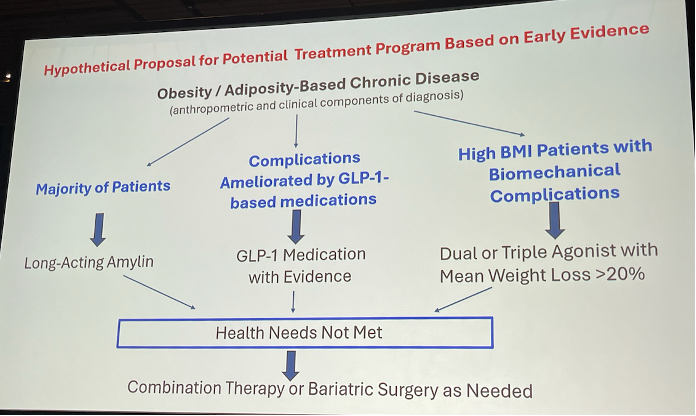
- Finally, Dr. Garvey listed additional mechanisms of action that could treat obesity. These include GDF15 analogues, cannabinoid-1 receptor blockers, anti-inflammatory drugs like IL-22 analogues, ROCK2 inhibitors, long-acting CRF2 agonists, G-protein coupled receptor agonists targeting GPR40 and taste receptors, nicotinamide phosphoribosyl transferase activator-NAMPT, and long-acting therapies with less frequent administrations.
Trial emulation study demonstrates the association of SGLT-2 inhibitor treatment duration with cardiovascular outcomes in T2D
In an oral session, Dr. Kyungyeon Jung (Sungkyunkwan University, South Korea) presented a target trial emulation study on the different treatment durations of SGLT-2 inhibitors on cardiovascular outcomes in people with T2D. Despite the significant cardiovascular benefits of SGLT-2 inhibitors, real-world trials have shown poor treatment adherence. For example, the EMPA-REG OUTCOME trial showed a median treatment duration of 2.6 years, compared to real-world findings showing a range in treatment duration from 0.7 years in a 2019 study to 0.9 years in a 2020 study. The impact of shorter treatment duration on the cardiovascular benefits of SGLT-2 inhibitors remains unclear, especially in the real world. Therefore, Dr. Jung and her team conducted a target trial emulation study to quantify the effects of different durations of SGLT-2 inhibitor treatment on cardiovascular outcomes.
- Methods. The trial emulation study used nationwide healthcare data from Source Korea Insurance Service between 2012 and 2023. Dr. Jung said the patient population covers approximately 98% of Korea’s population of 52 million people, and the Insurance Service holds data from Korea’s universal health insurance program. The Insurance Service also provides longitudinal individual-level data across healthcare services, including inpatient and outpatient settings. Individuals eligible for the study included those diagnosed with T2D and no prior use of SGLT-2 inhibitors. The study implemented four different strategy groups of individuals initiating an SGLT-2 inhibitor and receiving it for: (i) <1 year; (ii) ≥1 to <2 years; (iii) ≥2 to <3 years; (iii) ≥2 to <3 years; or (iv) ≥3 years. The primary outcomes included MACE and hospitalization for heart failure, and secondary outcomes included MI/stroke/cardiovascular death/all-cause death.
- Primary outcomes.
- Results on treatment duration of SGLT-2 inhibitors. In the trial, 40.5% were on the treatment for <1 year, 19.8% for ≥1 to <2 years, 13.6% for ≥2 to <3 years, and 26.1% for ≥3 years. Overall, the mean treatment duration was 2.1 years, and the median was 1.5 years.
- Results on MACE and hospitalization for heart failure outcomes. Over a five-year follow-up, compared to those treated with SGLT-2 inhibitors for <1 year, participants had progressively lower risks of MACE when treated for ≥1 to <2 years (7%), ≥2 to <3 years (18%), and ≥3 years (31%). Moreover, compared to those treated with SGLT-2 inhibitors for <1 year, participants had progressively lower risks of hospitalization for heart failure when treated for ≥1 to <2 years (7%), ≥2 to <3 years (9%), and ≥3 years (26%). These results were consistent in subgroup analyses across age, sex, type of SGLT-2 inhibitor, and history of cardiovascular and chronic kidney disease.
- Secondary outcomes. Similar to the primary outcome findings, MI risk also progressively decreased with progressively lower risks when participants were treated for ≥1 to <2 years (9%), ≥2 to <3 years (18%), and ≥3 years 37%), compared to <1 year. Stroke risk also decreased when participants were treated for ≥1 to <2 years (4%), ≥2 to <3 years (17%), and ≥3 years (35%).
- Discussion. Dr. Jung commented that this study demonstrates an association between longer treatment duration with SGLT-2 inhibitors and progressively greater reductions in the risk of cardiovascular outcomes in people with T2D. She encouraged strategies to improve long-term treatment adherence to help patients experience cardiovascular effects in clinical practice.
Prevalence of DKA with SGLT-2 inhibitor use and the importance of education
In this insightful session, Dr. Helmut Steinberg (University of Tennessee) said that the cardio‑renal benefits of SGLT‑2 inhibitors are firmly established and that their tendency to raise ketone levels is often misinterpreted as evidence of harm. Elevated ketones alone are not pathologic, noting explicitly that “increased ketone body concentration does not equal DKA.” The real challenge, he argued, is distinguishing physiologic ketosis from true euglycemic diabetic ketoacidosis (euDKA), a condition that predates SGLT‑2 inhibitors and accounts for 5.4% of DKA admissions in UK data even before the therapy was widely used.
- Dr. Steinberg traced the origins of current concern back to a 2015 study, which described nine cases of DKA, including seven in T1D, where insulin reduction and infection were major triggers. These early reports created momentum and fear disproportionate to the true incidence. As he put it, this is “not an avalanche,” but a steady, infrequent signal that must be recognized without exaggeration. He contrasted the risk across populations, highlighting that T1D carries the greatest vulnerability. In randomized trials, DKA occurred in about 6% of patients on canagliflozin 300 mg and 4% on empagliflozin 25 mg, compared with 1.2% on placebo. In T2D, however, the incidence was dramatically lower, with approximately 0.7 per 1,000 patient‑years on canagliflozin 300 mg, reflecting a fundamentally different risk profile. Given the need for adjunctive therapies in T1D and the role of SGLT-2 inhibitors for this indication off-label, Dr. Steinberg emphasized the need for continued education surrounding the risk of DKA in the population.
- Across all datasets, Dr. Steinberg emphasized that most DKA events arise from classic precipitating factors: insulin reduction, pump malfunction, infection, dehydration, low‑carbohydrate intake, or surgical stress. He especially highlighted that surgery appears repeatedly in consensus statements as a high‑risk setting, and that many cases stem from delayed recognition of DKA, particularly in the absence of hyperglycemia. Dr. Steinberg closed by stressing that SGLT‑2 inhibitor-associated DKA is largely preventable. Prevention hinges on thoughtful patient selection (avoiding use in those with recurrent DKA), consistent education on routine ketone monitoring in high‑risk situations, and holding the medication for at least 72 hours before planned procedures. He emphasized, “Education of patients and healthcare providers is our first line of defense.”
CATALYST sub-analysis finds that mifepristone confers glycemic and weight reduction in people taking GLP-1 RAs
In this well-attended session, Dr. Lance Sloan (University of Texas Medical School) shared findings from the sub-analysis of the CATALYST trial, which evaluated the effects of Korlym (mifepristone) in people taking incretin-based therapies. As background, in Part 1 of the trial (n=1,057), nearly 25% of individuals with difficult-to-treat T2D had hypercortisolism, while Part 2 (n=252) found that mifepristone reduced A1c by 1.5 percentage points (vs. 0.2 percentage points with placebo) from a baseline of 8.6% and weight by 5% (vs. 0.7% with placebo) from a baseline of 99 kg (218 lbs). As a reminder, difficult-to-treat T2D was defined as A1c between 7.5-11.5% despite several glucose-lowering medications. The sub-analysis aimed to evaluate the effects of mifepristone in people with difficult-to-treat T2D already taking incretin-based therapies (n=71).
- At baseline, participants taking incretin-based therapies were slightly younger (62 vs. 65 years), more likely to be male (65% vs. 58%), and had higher weight (105 kg [231 lbs] vs. 92 kg [203 lbs]), waist circumference (111 cm [44 in] vs. 117 cm [46 in]), and BMI (35 vs. 32 kg/m2) than those who did not. The two groups had a similar mean A1c of 8.5%.
- Mifepristone led to greater placebo-adjusted reductions in A1c, weight, BMI, and waist circumference in people taking incretin-based drugs, compared to those who did not. As shown in the figure below, mifepristone conferred a 1.7 percentage point decrease in A1c (vs. flat with placebo) in the incretin group and a 1.2 percentage point reduction (vs. 0.3 percentage point with placebo) in the non-incretin group. Moreover, the incretin group taking mifepristone experienced greater placebo-adjusted weight loss (6.1 kg [13 lbs] vs. 3.9 kg [8.6 lbs]). Safety profile was similar between the two groups, although participants on incretin-based therapies were more likely to experience nausea and vomiting. Ultimately, the finding suggests that mifepristone has the potential to enhance the metabolic benefits of incretin-based therapies.
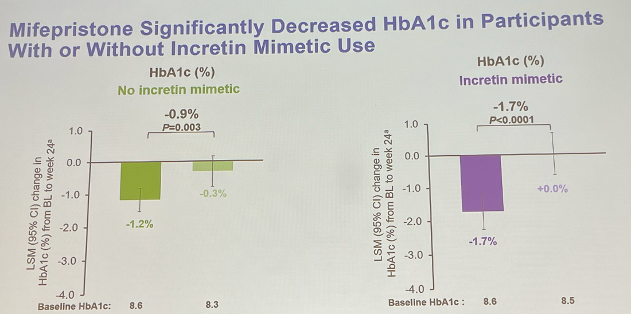
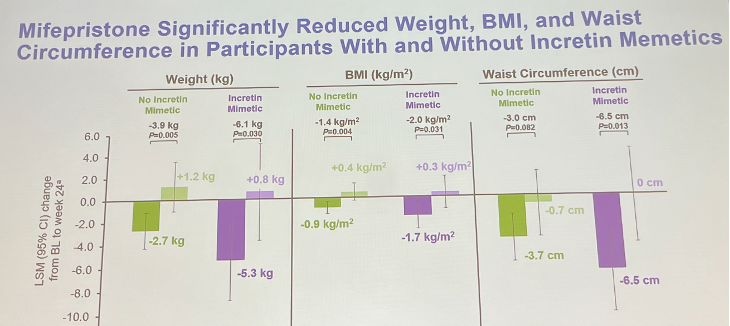
Insulin Therapies
Retrospective analysis finds CGM-based workflow for once-weekly insulin efsitora dosing
Dr. Richard Bergenstal (International Diabetes Center) presented a retrospective analysis of QWINT-2 data assessing the use of CGM-derived indicators for weekly insulin titration. QWINT-2 was a phase 3 trial investigating insulin efsitora alfa (efsitora) among people with T2D who had not previously used insulin. This retrospective analysis drew from those randomized to efsitora (n=466).
- The analysis identified a respective CGM indicator and threshold for three types of hypoglycemic events. Using a TBR (<70 mg/dL) threshold of 2% threshold had 94.78% accuracy in identifying a patient with three hypoglycemic events. Similarly, a threshold of any Time <54 mg/dL had 91.9% accuracy in identifying individuals who experienced a severe hypoglycemia event, and using a nocturnal TBR threshold of 5% had 98.29% accuracy in identifying a patient with at least one nocturnal hypoglycemic event. This means that CGM can be used to identify an average number of hypoglycemic events, which can tie TBR as a metric to outcomes that are quantifiable.
- Based on at least three days of CGM data, two CGM indicators showed dose-to-dose clinical equivalency to self-monitored fasting blood glucose. Based on the ease of finding these values in hourly statistics or estimating from AGP, these indicators were categorized as low user burden.
- Lowest median of AGP (the lowest value of the median line over the 24-hour span), which conferred a 91.3% dose-to-dose clinical equivalency.
- Typical fasting 25% from AGP (a value determined by using the lowest value of the 25% line during the hour of the day in which the patient consistently measures their fasting blood glucose), which had a 93.4% dose-to-dose clinical equivalency.
- Putting it all together, Dr. Bergenstal walked through a clinical approach to using CGM indicators for efsitora titration. This three-step process included: (i) assessing safety by identifying any hypoglycemic events that may have occurred; (ii) determining whether the fasting glucose indicator is within desired target range; and (iii) applying clinical judgment for holistic review of AGP.
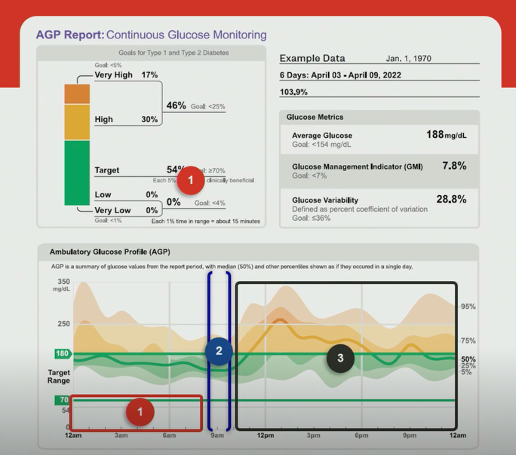
The major cause of insulin resistance is insulin: An argument to decrease exogenous insulin to treat cardio-renal metabolic syndrome
In this rousing presentation, Dr. Philipp Scherer (UT Southwestern) argued that insulin itself causes insulin resistance. In what he described as “not [his] usual roadshow,” Dr. Scherer focused on the adipocyte as the central cause of cardio-renal metabolic syndrome associated with T2D. From his perspective, the key to improving glycemic control, and complications like MASH, HFpEF, sleep apnea, osteoarthritis, CKD, and neurodegenerative diseases is weight loss – with benefits largely conferred through adipocyte remodeling and improved insulin sensitivity. As weight is reduced, adipocytes transition from an insulin‑resistant, disease‑promoting state to a metabolically “happy” state that supports systemic health, a process he framed as “metabolic flexibility.” He concluded that the adipocyte is “not only the cause of a lot of problems, it’s also the solution that we’re looking for.” Improvements in insulin sensitivity at the adipocyte level are sufficient to drive systemic benefit.
- To substantiate his claims from a preclinical point of view, Dr. Scherer presented extensive mouse models using PTEN (phosphatase and tensin homolog), an enzyme that terminates insulin signaling. Systemic, adipocyte‑specific deletion of PTEN significantly enhanced systemic insulin sensitivity, demonstrated by improved oral glucose tolerance and strikingly low insulin levels during OGTT. Deletion of PTEN specifically in subcutaneous adipocytes was sufficient to reproduce systemic benefits. Conversely, the expression of a hyperactive PTEN in adipose tissue caused systemic insulin resistance, underscoring that isolated changes in adipocyte insulin sensitivity alone are sufficient to significantly alter whole‑body metabolism.
- Of note, PTEN is also a critical tumor suppressor gene in humans. Inhibiting its activity triggers rampant cell division and survival signaling, conferring a massive risk of new cancers or promoting the growth of existing ones. However, its selective inhibition has been temporarily aimed at promoting tissue repair in humans. Still, no PTEN inhibitor to date has earned regulatory approval in humans.
- “The major cause of insulin resistance is insulin.” Dr. Scherer again supported his perspective with preclinical findings. Within a separate, insulin-limiting mouse model, his group established insulin as the rate-limiting agent by preventing a rise in insulin during nutrient intake while maintaining glucose tolerance. Despite lower overall insulin concentrations, glucose uptake remained consistent. Insulin tolerance tests and clamp studies demonstrated improved insulin sensitivity in the model. Making insulin rate‑limiting then produced livers that were “exceedingly happy”: free of steatosis, transcriptionally downregulated for de novo lipogenesis genes, and more insulin‑sensitive overall.
- In Dr. Scherer’s view, although exogenous insulin is life‑saving and indispensable for many patients, pharmacologic‑level insulin exposure is inherently “toxic:” it promotes insulin resistance, steatosis, and weight gain over time. He argued that preclinical data from his lab and others point to a potential therapeutic tactic: decreasing ligand availability to enhance receptor sensitivity. Drawing a parallel to leptin biology, he argued for a “less is more” philosophy that likely applies to insulin – provided that glycemic control can be preserved through other mechanisms (e.g. weight loss or GLP-1 RAs).
Make new friends, but keep the old? Updates on insulin therapy in pregnancy
An afternoon panel discussion featured impassioned discussion around improving insulin use in pregnancy. Glycemic management during pregnancy is complicated due to rapid changes in physiology and the subsequent need for specific pregnancy glucose targets. The ADA recommends glucose targets of 100 mg/dL in early pregnancy and 81-90 mg/dL from 16 to 20 weeks onward – significantly lower than the targets set by most patients who are not pregnant. The use of insulin during pregnancy is the standard of care for patients and offers challenges that continue to evolve over time.
- Dr. Lene Ringholm (Rigshospitalet University Hospital Copenhagen, Denmark) argued that faster, rather than longer-acting, insulins are essential to meeting patient needs during pregnancy. Dr. Ringholm began by discussing Fiasp, an insulin aspart with a faster onset of action compared to Novolog that could potentially benefit pregnant women with diabetes. The CopenFast trial (n=216) included women with T1D or T2D randomized to Fiasp or Novolog in early pregnancy and showed that the two groups had similar A1c values, insulin doses, and pregnancy outcomes. However, only one patient randomized to Fiasp reported hyperglycemia compared to seven women randomized to Novolog. However, infant birth weight was lower among women randomized to Novolog. Dr. Ringholm therefore argued that women with T1D at risk of severe hypoglycemia can be offered Fiasp.
- Dr. Ringholm also discussed insulin degludec, an ultra-long-acting (>42 hours) insulin analog with an improved pharmacological profile compared to other basal insulin analogs. Data from the EXPECT trial with 92 women randomized to degludec and 96 women to detemir, a long-acting insulin, in early pregnancy showed similar glycemic control, prevalence of hypoglycemia, and pregnancy outcomes. However, women randomized to degludec experienced higher rates of preeclampsia (14%) and preterm delivery (34%).
- Dr. Amy Valent (Ohio State University) discussed the versatility of inhaled insulin and its potential applications for diabetes in pregnancy. While not yet approved for pregnancy, inhaled insulin can offer versatility, creating options to tailor glucose management. The term “diabetes in pregnancy” includes far more phenotypes at risk of hyperglycemia than what may be initially expected, including T1D, T2D, MODY, GDM, and complications of cystic fibrosis and bariatric surgery. Each of these etiologies for hyperglycemia requires a different management approach, again supporting the need for alternative insulins.
- Dr. Valent demonstrated the rapid absorption of inhaled insulin using data from MannKind’s Afrezza, the only inhaled option currently available in the US. The large surface area of the lungs allows for rapid systemic absorption, peaking at 12-15 minutes versus 45-60 minutes for rapid-acting insulin. In non-pregnant patients, the therapy improved postprandial hyperglycemia, reduced instances of hypoglycemia, and limited weight gain compared to injected insulin. However, very limited data specific to pregnancy are currently available, particularly for optimal dosing and rates of severe hypoglycemia.
- Dr. Carol Levy (Mount Sinai Hospital) discussed the benefits, considerations, and limitations of AID use during pregnancies with diabetes. Dr. Levy began by addressing the challenges for pregnant patients with diabetes including health risks for both the mother and fetus, risk of hypoglycemia while avoiding hyperglycemia due to tighter glycemic targets, and changes in insulin needs throughout gestation. Dr. Levy then discussed the use of various AID systems for pregnancy and specific advantages for each:
- The CamAPS FX algorithm is approved in the US; however, the associated insulin pump (YpsoPump) has not yet received approval. CamAPS FX can be used with faster aspart and lispro-aabc insulins. Compared with standard of care (SOC), women using CamAPS FX achieved a Time in Range (TIR) of 47%, compared with 11% among those receiving SOC.
- MiniMed 780G, currently approved in the US and EU for pregnant women and compatible with faster aspart and lispro-aabc, requires user boluses and has no formal protocol for the entry of “fake carbs.” Dr. Levy queried how to optimize meal delivery based on the nature of meals. The CRISTAL Trial featured 43 patients assigned to MiniMed 780G and 46 to SOC, with a mean proportion of TIR of 66.5% in the HCL group compared to 63.2% in the standard insulin therapy group (p=0.17).
- Tandem’s Control-IQ. A trial of 91 randomized women with T1D in early pregnancy revealed that time in pregnancy-specific glucose range was 65.4% as opposed to 50.3% with SOC. In April 2026, the company’s updated Control-IQ+ algorithm became the first FDA-cleared algorithm for pregnancy in the US.
- Sequel’s twiist was presented using two case studies involving pregnant patients who transitioned to this AID system during pregnancy. Case one involved transitioning from Insulet’s Omnipod 5 to twiist during the third trimester, resulting in an increase in TIR from 41% in the first trimester to 74% in the third trimester. Case two involved transitioning from Tandem’s t:slim X2 to twiist during the second trimester, with TIR increasing from 58% to 67%.
Hepatocyte-directed insulin lispro may reduce hypoglycemia without increasing A1c in adults with T1D
In this afternoon oral presentation, Dr. Klara Klein (UNC Chapel Hill) presented results from the phase 2b OPTI-2 trial (n=227), which evaluated hepatocyte-directed insulin lispro (HDV-LIS) versus standard insulin lispro in adults with T1D.
- HDV-LIS combines insulin lispro with hepatocyte-directed vesicles (HDV) – microscopic, lipid-based packaging that preferentially routes a small portion of the injected insulin to liver cells. The mixture is administered as a routine, subcutaneous lispro injection. Dr. Klein described approximately 1% of the lispro as HDV-bound in the viral mixture.
- HDV-LIS is believed to induce a partial restoration of liver-directed insulinization, which suppresses hepatic glucose production and improves hepatic glucose storage. In theory, HDV-LIS should expand the body’s glucose storage for release during periods of rapid blood glucose decline – thereby reducing hypoglycemia risk.
- Study design and baseline characteristics. OPTI-2 was a double-blind, trial that randomized adults with T1D to HDV-LIS (n=113) or lispro (n=114) after a two-week run-in period. Key eligibility criteria included use of MDI or pump therapy, an A1c between 6.0% and 10.0%, a BMI between 18.0 and 35.0 kg/m², and liver enzymes plus bilirubin less than 1.5 times the upper limit of normal. Study design included a 12-week dose-optimization phase with weekly insulin titration to tight CGM targets, followed by a maintenance phase without titration through Week 25. Baseline characteristics were balanced between groups. In the HDV-LIS and lispro groups, participants were on average 47 and 44 years, had an A1c of 7.4% and 7.3%, and demonstrated a baseline TIR of 59% and 61%, respectively.
- Results. At Week 12, HDV-LIS met its noninferiority goal for A1c reduction compared to lispro. During dose optimization, hypoglycemia measures numerically favored HDV-LIS across 14 of the trial’s 15 endpoints, though statistical superiority was not achieved on prespecified primary hypoglycemia metrics. During the first 6 weeks of maintenance treatment, five CGM-derived hypoglycemia metrics were significantly lower than HDV-LIS, including: (i) daytime level 2 hypoglycemia (OR 0.67); (ii) 24-hour level 2 hypoglycemia (OR 0.72); (iii) daytime time below 54 mg/dL (OR 0.68); (iv) 24-hour time below 54 mg/dL (OR 0.72); and (v) 24-hour extended hypoglycemia of at least 120 minutes (OR 0.64). At Week 25, A1c reduction did not differ significantly between groups. Rates of level 2 hypoglycemia differed across groups, decreasing by 0.09 events/week with HDV-LIS and increasing 0.16 events/week with lispro (p=0.0143). These data support HDV-LIS’s potential to decouple glycemic management from hypoglycemia risk.
- Safety. No participants receiving HDV-LIS experienced severe hypoglycemia, compared with five participants in the lispro group. Adverse event rates were similar between groups, though serious adverse events were less frequent in patients taking HDV-LIS (0.9% vs. 7.0%). There were no DKA events, deaths, or signals of liver damage in either group.
- Altogether, findings from the OPTI-2 study suggest that preferential insulin delivery to the liver may preserve or improve glycemic management while lowering hypoglycemia risk. Still, phase 3 studies are required to confirm the clinical significance of this approach.
T1D Cures and Adjunctive Therapies
Bridging the gap: Advancing stem cell-derived beta-cell therapy toward widespread clinical use
Attendees filled the room for an afternoon panel featuring leaders in islet transplantation. Moderator Dr. Trevor Reichman (University of Toronto, Canada) guided panelists Dr. Sanjoy Dutta (Breakthrough T1D), Dr. Jason Gaglia (Harvard University), Dr. Anna Lam (University of Alberta, Canada), and Dr. Jay Skyler (University of Miami) through a multi-pronged discussion spanning regulation, patient involvement in decision making, and more. In the end, panelists agreed that the next five years will likely change islet transplantation in the US long term.
- Dr. Reichman first asked panelists about the current standard of care in transplantation for T1D in the USA and globally. Dr. Lam discussed the Edmonton program, which has made deceased donor islet cell transplantation possible in Canada for 25 years. The program is funded by the province and is mainly available to patients with T1D who have repeat severe hypoglycemic events. In her clinical practice, immunosuppression presents the greatest risk to patients as the commonly used drug tacrolimus can cause a decrease in kidney function in the first year of use. This presents a particular concern to PWD as kidney disease can arise as a complication of diabetes. However, Dr. Lam has found that kidney function eventually levels off to match that of the general population with T1D not taking immunosuppressants.
- Dr. Gaglia discussed regulatory challenges that prevent such a program from being established in the US. Islets are regulated as drugs in the US, adding additional regulatory burden and limiting access. He encouraged the field to work to expand access just as other nations have done.
- Panelists then discussed key advances in development that address some of today's challenges. Dr. Skyler said that the field needs to move away from immunosuppression and onto anti-CD40 Ligand antibodies such as Eledon’s tegoprubart, which is currently in development. He said that the era of induction of immune tolerance therapy is upon us, to be used in conjunction with anti-CD40 Ligand antibodies. Dr. Dutta then proposed the idea of moving away from immunosuppression at all through approaches like bioshielding, and said that Breakthrough T1D is supporting studies in this vein. He believes that the biggest priority should be improving the regulatory pathway so that more people can become eligible for transplantation – currently, only about 5% of people with T1D in the US are eligible due to restrictions around severe hypoglycemia.
- Dr. Gaglia sees two converging issues in the current landscape. There is a shortage of islets, which can be solved by the use of stem-cell derived islets, and the “cost of goods” which forces the system to limit transplantation to those in highest need instead of all patients. He said that the field does not know where to draw the eligibility line beyond severe hypoglycemia, nor does it know how to keep adapting the cutoff as science advances. As the field works to determine this, he said that we must find a cheaper way to achieve islet transplantation for more people.
- Dr. Dutta said that factoring in the opinions of PWD is also of paramount importance – each patient has a different answer about their personal burden of diabetes. This should be built into decision making.
- Turning to immunotherapies for earlier stage T1D such as Sanofi’s Tzield (teplizumab), Dr. Skyler said that the transplantation field needs to borrow from these therapies to prevent recurrent autoimmunity. Dr. Gaglia added that teplizumab has demonstrated efficacy as an induction agent for immune tolerance and that early disease drugs can be very helpful for transplantation.
- In closing, the speakers discussed best-case scenarios for the next five years, plus their top priorities for the field. Dr. Skyler again emphasized the need for companies to invest in this space and for expanded patient eligibility for this technological advancement. He also discussed the possibility of exploring transplantation sites other than the portal veins, as other abdominal sites may improve durability.
- Dr. Dutta drew parallels to the development of AID, saying that the first approval took about 15 years, but then “the floodgates opened” and now there are multiple systems available in the US. He said that the field needs to lay down a clear pathway to facilitate transplantation. Dr. Gaglia said that his focus on the cost of goods is absolutely key to be able to offer transplantation to all those who desire it. Dr. Lam said that there are still blind spots in T1D management that mean we may not catch all severe lows for every patient. She said that much work still remains to improve the quality of life for even more patients, which motivates all of the panelists’ work.
The landscape of clinical trials for T1D immunotherapies: Vedolizumab, ATG, and antigen-specific plasmid treatment
In this early morning session, panelists shed light on the emerging landscape of clinical trials for T1D immunotherapies. Dr. Cate Speake (Director, Center for International Immunology) presented on vedolizumab and the importance of advancing T1D trial designs with mechanistic clinical studies, encouraging greater use to promote trials and studies for the disease. Then, Dr. Stephen Gitelman (UCSF) presented insightful perspectives on anti-thymocyte globulin (ATG), and Dr. Robin Goland (Columbia University) followed with a presentation on islet antigen-specific plasmid co-expressing tolerogenic proteins in recent-onset T1D. Finally, Dr. Lauren Higdon (Director of Biomarker and Discovery Research, Immune Tolerance Network) concluded with explanations on trials across the Immune Tolerance Network (ITN).
- Dr. Speake elaborated on vedolizumab. Dr. Speake highlighted vedolizumab, which is currently approved by the FDA for ulcerative colitis and Crohn’s disease. Vedolizumab is a monoclonal antibody targeting the α4β7 integrin on lymphocytes, preventing lymphocyte migration from the blood into the gut. Preclinical studies have shown that α4β7 integrin is also present on pancreatic vascular endothelium, and vedolizumab has been shown to prevent B-cell migration and protect against T1D in mouse models. Given its mechanism of action, Dr. Speake proposed that vedolizumab may increase islet-specific T cells and prevent T1D.
- Results from the early phase 1 COBRA trial (n=20), which studied the combination of vedolizumab and etanercept (anti-TNF). Dr. Speake shared that combination treatments are likely needed for T1D treatment, as no immunotherapy has permanently slowed T1D progression when used alone. In particular, anti-TNF – a treatment class widely used in rheumatic diseases and inflammatory bowel disease – may provide synergistic benefits with vedolizumab, perhaps further blocking T cells from migrating to the pancreas and preventing destruction of beta cells. Regarding efficacy, results showed that with vedolizumab alone, islet-specific CD4+ cells were retained in the blood. In comparison, pre-treatment with etanercept led to a reduction in circulating islet-specific CD4+ but limited retention after vedolizumab. Dr. Speake contextualized these results, explaining the potential benefit of anti-TNF on islet-specific cells and the notable loss of the subsequent effect of vedolizumab on these cells. On safety, vedolizumab had
- The role of small mechanistic trials. Trials like the COBRA trial are small mechanistic studies that address hypotheses and improve the design of clinical trials. In comparison to clinical trials in humans, Dr. Speake highlighted that these studies are small with a short duration of treatment and overall trial procedure (e.g., several weeks compared to years). These small studies aim to refine the drug’s mechanism of action and advance the understanding of disease pathogenesis, as well as test combination therapies to obtain safety/efficacy data. Most importantly, they provide early results on therapies that are not “on the radar,” enabling quick, effective improvements to clinical trials.
- Dr. Gitelman presented on ATG. Dr. Gitelman explained the rationale for using ATG for new onset T1D, including positive preclinical findings and promising clinical studies in transplantation and autoimmunity – studies date back to pilot studies in 1985! ATG offers multiple mechanisms, including T-cell depletion and migration, as well as effects on other antigens. Dr. Gitelman then reviewed three phase 2 trials, each studying various doses of ATG, with insights on upcoming studies of ATG for prevention (Ascend T1D) and new onset T1D (WAVE T1D, ATG Fresenius, and Safeguard).
- START trial (n=58). The START trial studied a high 6.5 mg/kg dose in participants aged 12-35 years. ATG therapy did not delay beta cell destruction in participants with recent-onset T1D. Dr. Gitelman explained that the negative results may be attributed to the persistence of effector memory T cells following ATG or a decrease in Treg count.
- TN19 trial (n=89). Following negative results from the START trial, the TN19 trial looked at the effects of a lower ATG dose (2.5 mg/kg) in ages 12-45 years. Results showed that one-year mean C-peptide AUC was significantly higher in those treated with ATG (0.646 nmol/L) compared to placebo (0.406 nmol/L).
- MELD-ATG trial (n=117). Results from the MELD-ATG trial, most recently reported at EASD 2025, confirmed the efficacy of 2.5 mg/kg, which demonstrated C-peptide preservation compared to placebo by 0.124 nmol/L/min. Additionally, 0.5 mg/kg was identified as the minimum effective dose, which significantly preserved C-peptide AUC by 0.102 nmol/L/min.
- Dr. Goland reviewed an islet antigen-specific plasmid treatment. The phase 1 TOPPLE trial (n=47) studied a DNA plasmid in people with T1D across four ascending dose cohorts to assess safety and tolerability, as well as changes in immune responses. As background, the treatment was developed as a recombinant DNA plasmid encoding four human proteins, including pre-proinsulin and cytokines TGFβ, IL-10, and IL-2. While no differences in A1c levels were observed between treatment arms, participants who received 12.5 mg had higher mean C-peptide AUC at 24 and 52 weeks than the placebo group. Regarding safety outcomes, the treatment did not increase T cells or natural killer cells. Dr. Goland shared that these results support further trials to assess the efficacy of a DNA plasmid treatment in T1D. He particularly noted the dose-dependent increases of INF-associated genes, which could inform future trials.
- Dr. Higdon expanded on ITN trials. Established in 1999, the ITN has over 100 clinical trials across autoimmune disease, including T1D, and transplantation. Among many areas, T1D studies include AbATE, START, RETAIN, T1DAL, EXTEND, T1DES, and DESIGNATE. During today’s presentation, she specifically detailed results from the AbATE trial of teplizumab and the T1DAL trial of alefacept to highlight the distinct but overlapping mechanisms of the treatments – teplizumab depletes CD3+ cells, while alefacept depletes CD2 cells. Results across trials showed that teplizumab reached peak CD4+ Treg levels at treatment points, whereas alefacept maintained steady levels. Additionally, while both teplizumab and alefacept increased CD8 T cells, alefacept's peak occurred much later in the trial. Among all, Dr. Higdon said one of the most interesting biomarkers has been the TIGIT+PD+ T cell, for which ATG, teplizumab, and alefacept have all shown distinct kinetics.
- To better understand the mechanisms underlying treatment differences in T1D, Dr. Higdon encouraged the use of quantitative responses (QR) as a primary endpoint to identify agents for durable tolerance and potential combination treatments. Encouragingly, the ITN has one trial in development and one in feasibility, both using QR as the primary endpoint.
Evolving strategies in pediatric T1D: From AID systems to disease‑modifying drugs and islet replacement therapy
In this evening session, Dr. Laura Jacobsen (University of Florida) discussed the evolving landscape of pediatric T1D management, framing her talk around the modern staging system and the distinct therapeutic goals at each phase of disease. To begin, she explained that pre‑stage 1 and stage 1 T1D involve assessing genetic risk, islet autoimmunity, immune activation, microbiome influences, and early beta cell stress. Stage 2, defined by dysglycemia and persistent autoantibodies, is a window for disease‑modifying therapy (DMT), while early stage 3 (“honeymoon” period) and established stage 3/4 T1D shift the focus toward beta cell preservation, glycemic stabilization, and, in select cases, reversal or replacement strategies such as islet transplantation.
- Dr. Jacobsen emphasized that T1D management now sits at the intersection of three major approaches: (i) AID; (ii) disease‑modifying therapy; and (iii) islet cell replacement.
- AID systems have demonstrated A1c improvements across age groups, yet remain neither fully closed‑loop nor universally accessible.
- Disease-modifying therapies have advanced meaningfully with the FDA approval of teplizumab, which has now been indicated for use as early as age one and demonstrates up to 50% higher C‑peptide and 20% lower A1c versus natural history at two years. These gains translate into clinically meaningful reductions in severe hypoglycemia and microvascular complications.
- Meanwhile, islet cell replacement has entered a new era: one-third of FDA‑approved Lantidra (donislecel) recipients maintain insulin independence beyond five years. Stem-cell-derived products such as zimislecel have achieved insulin independence in 10 of 12 participants at one year. Dr. Jacobsen emphasized that graft durability varies, however, and insulin independence is not guaranteed.
- On risk assessment, Dr. Jacobsen highlighted the relative safety of disease-modifying therapies, typically limited to infusion reactions, mild cytokine release, transient lymphopenia, and low malignancy risk, with long‑term follow‑up showing no excess infections, autoimmune disease, or severe hypoglycemia compared with placebo. In contrast, islet replacement currently requires chronic immunosuppression, carrying substantially higher rates of serious adverse events, including infection, malignancy, and rare treatment‑related deaths. These risks are especially consequential when considering pediatric use, in which growth, puberty, fertility, vaccination schedules, and lifetime malignancy risk must be weighed carefully.
- In conclusion, Dr. Jacobsen said that while AID remains foundational, disease-modifying therapies are emerging as an accessible option. Islet transplantation will become more viable for pediatric use when immunosuppression can be removed and autoimmune re‑attack is prevented. This shift would ultimately open the door to a future in which the combination of disease-modifying therapy and cell replacement may offer the most durable benefit. Above all, she underscored that the voice of people with T1D and their families must guide decisions as these therapies evolve.
Preventing T1D: Safety of repeated dosing for SAB-142, a human anti-thymocyte immunoglobulin
An innovative afternoon presentation featured new data for SAB-142 and seeks to delay T1D progression. The disease-modifying immunotherapy is a fully human anti‑thymocyte immunoglobulin. SAB-142 is being investigated for the delay of T1D progression by preventing the immune system from attacking insulin-producing pancreatic beta cells. Dr. Christoph Bausch (SAB Biotherapeutics) began by discussing the clinical need for SAB-142: there is no currently approved therapy to halt the progression of new-onset T1D. Rabbit anti-thymocyte globulin (ATG) has shown efficacy for preserving C-peptide and A1c values, but it has demonstrated safety issues when used in humans. Dr. Bausch and collaborators sought to evaluate fully human SAB-142 for the concerns seen with rabbit ATG, namely serum sickness, an immune hypersensitivity reaction, and immunogenicity that prevents re-dosing.
- The phase 1 trial named SAB-142-101 is a randomized, double-blind, placebo-controlled study to evaluate the safety, tolerability, pharmacokinetics, and pharmacodynamics of SAB-142 in patients with and without T1D. The therapy was administered intravenously as an ascending dose up to 4.5 mg/kg. A re-dosing cohort was included to evaluate the proposed six-month dosing regimen that was the main focus of these data.
- Strong safety and efficacy data were demonstrated with the use of SAB-142. All four patients showed C-peptide preservation through 120 days and three of the four even had enhanced C-peptide. Time in Range (TIR) improved from 73% at baseline to 85% by the end of the study and insulin doses decreased over time in the SAB-142 group. The majority of adverse events were mild, associated with one-to-two-day infusions, and resolved by the end of the first week. No deaths or drug-related serious adverse events occurred, and no adverse events led to withdrawal. Dr. Bausch discussed the lack of serum sickness and low immunogenicity seen with SAB-142, two positives that render the therapy “substantially less immunogenic than rabbit ATG or teplizumab.”
- In terms of redosing, the pharmacokinetic profile of SAB-142 showed that systemic exposure after redosing was comparable to what was observed in the single-dose cohort at the same dose. Exposure was consistent even across redosing. Redosing also caused a transient increase in cytokines similar to the initial dose.
- In all, phase 1 results demonstrate favorable safety and immunogenicity for SAB-142. Based on these data, Dr. Bausch said that SAB-142 will advance to the phase 2b SAFEGUARD study (n=159) for patients aged 12-40 years.
The use of verapamil in people with T1D: Dr. Rayhan Lal on clinical data to practical recommendations
Dr. Rayhan Lal (Stanford) explained the use of verapamil in people with T1D, from clinical evidence to practice. Dr. Lal has a deep connection to the T1D space as someone living with T1D for more than 35 years, having siblings with T1D, and being a father to a six-year-old son diagnosed with T1D a couple of years ago. Especially reflecting on his son’s journey through diagnosis and enrollment in the PETITE-T1D trial, he expressed gratitude to those who supported him during this time, including Dr. Irl Hirsch, Dr. Desmond Schatz, and Dr. Michael Haller. Dr. Lal said the way these leaders were treated yesterday for speaking out about the Trump administration’s negative impact on diabetes research and funding was unacceptable, and that he stands with them. He voiced his support for them, and the audience responded with a roar of applause and a standing ovation.
- Current state of T1D management. While Dr. Lal said he’s “happy living this way,” expressing contentment with his approach to diabetes management (e.g., insulin and technological interventions), he acknowledged that not everyone shares the same sentiment. He raised how cardiologists rarely ever see a dying cell or a heart attack and respond with delayed intervention, but rather approach with efficient timing and treatment. Similarly, endocrinologists should think “time is islet cells,” especially in young children who experience more aggressive autoimmune attack on pancreatic beta cells. Encouragingly, he noted that the Oklahoma Senate Bill 1427 will provide general population T1D screening, effective November 2026, allowing early detection and medical intervention.
- Clinical evidence supporting the use of verapamil. Dr. Lal referenced a phase 2 trial (n=32), in which participants treated with verapamil demonstrated a 35% higher stimulated C-peptide AUC than placebo at 12 months, suggesting better preservation of endogenous insulin secretion. He also elaborated on the CLVer trial (n=88), which specifically focused on children and adolescents with newly diagnosed T1D. Results showed that participants receiving verapamil had approximately 30% higher C-peptide AUC than placebo at Year One. Additionally, 95% of those treated with verapamil reached the peak C-peptide level of 0.2 pmol/mL, compared to 71% in the placebo group.
- Real-world evidence on verapamil. Dr. Lal shifted gears and presented real-world findings on the use of verapamil. At his practice in Stanford, results showed that 99 people with T1D (ages 2-66 years) have been considered for verapamil treatment to preserve beta cell function. Among the population, 21 people with T1D are currently on verapamil at Stanford Lucile Packard Children’s Hospital, and 20 are on verapamil at Stanford Health Care. Additionally, 22 people with T1D have been prescribed verapamil by neurology or cardiology departments for reasons unrelated to beta cell preservation, but they have been monitored by endocrinologists. Results showed that 78% of participants reached the recommended maximum dose based on their weight, with a median dose of 4.7 mg/kg. Participants had median C-peptide levels of 0.20 pmol/mL at Year One and 0.35 pmol/mL at Year Two, compared with 0.26 pmol/mL. While Dr. Lal noted that these results don’t entirely prove the efficacy of verapamil, real-world evidence suggests that beta cell function may be maintained longer with verapamil treatment. On safety, verapamil was well tolerated, with eight adverse events attributed to the treatment.
- Cost of verapamil production. Presenting the chart below, Dr. Lal commented on the costs of drug production for T1D delay and treatment, noting that the cost of verapamil is “as cheap as it comes.” Approximate monthly out-of-pocket costs for monthly treatment included $7.46 for verapamil, compared to $194,000 for teplizumab and $5,500 for baricitinib.
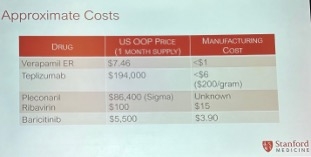
- Verapamil represents the “lowest bar” for implementation. Considering both clinical efficacy and price, Dr. Lal emphasized the feasibility of integrating verapamil into diabetes management. Some reminders Dr. Lal provided included: (i) the addition of non-fasting C-peptide/glucose to annual labs, as providers have been finding residual C-peptide after diagnosis; (ii) performance of EKG if C-peptide levels ≥0.05 pmol/mL; and (iii) recognition that patients may not end up with the goal dose.
Tirzepatide improves BMI and A1c without increasing DR risk in adults with T1D and obesity
Dr. Sarit Polsky (University of Colorado) shared findings from a retrospective chart review (n=191) on how tirzepatide affects the risk of diabetic retinopathy (DR) in people with T1D. Although previous reports have shown an increased risk of DR associated with tirzepatide in T2D, the study found that adults with T1D using tirzepatide had similar rates of incident DR as controls and did not experience worsening DR.
- Study design and baseline characteristics. Individuals taking tirzepatide (n=106) for approximately a year were matched by sex, age, and BMI for a retrospective chart review. Those who conducted eye exams at baseline and at follow-up were included.
- At baseline, individuals were approximately 40 years old, with 62% being females. The mean diabetes duration was 27 years, and A1c was 7.1%. BMI was significantly higher among the tirzepatide group (36 kg/m2 vs. 32 kg/m2). Finally, approximately two-thirds had DR, and 5-7% had diabetic macular edema (DME) at baseline.
- Results. Tirzepatide lowered A1c levels and BMI for participants with T1D. At two years of follow-up, participants on tirzepatide (n=105) experienced significant A1c reduction from 7.1% to 6.3%, compared to controls whose A1c remained at 7.2%. BMI also decreased from 36 kg/m2 to 31 kg/m2, whereas controls remained at 32 kg/m2.
- Newly diagnosed cases, progression of existing cases, and regression of DR were similar across both groups. Among 39 participants on tirzepatide who did not have baseline DR, approximately 26% received a diagnosis at two years, compared to 29% of controls (n=24). Similarly, for those with preexisting DR, about 9% of participants on tirzepatide (n=67) and 8% of controls (n=61) experienced disease progression. There was also no difference in the proportion of participants who had DR regression (13% in the tirzepatide group vs. 12% in the control group). For DME, one individual of each group newly developed the disease, while one-fourth experienced disease progression, and 11-13% faced disease regression.
- Incidence of DR does not vary across baseline A1c levels but increases with more rapid reductions in A1c. The incidence of DR did not show statistical differences when participants were stratified based on baseline A1c cut-offs of 7.5% and 8.0%. However, participants who had more than a 0.5 percentage point decline in A1c at six months of follow-up had an incident DR of 39% compared to only 17% in participants who had an A1c drop of <0.5 percentage point. Given these findings, Dr. Polsky recommended that people with T1D starting tirzepatide should consider routine baseline and follow-up eye exams.
Full results of phase 2 trial of dual GLP-1/GIP RA acmopatide (CT-868) in T1D; Roche discontinues program
In this well-attended afternoon symposium, Dr. Klara Klein (UNC Chapel Hill) and Dr. Jeremy Pettus (UCSD) presented the full results of the phase 2 trial (n=111), which evaluated dual GLP-1/GIP RA acmopatide (CT-868) in people with T1D. Most people with T1D do not meet glycemic targets with insulin alone and face significant cardiovascular (CV) risks. Given that people with T1D face similar obesity prevalence as the general population, and excess adiposity further contributes to CV risks, incretin-based therapies have the potential to improve cardiometabolic health in people with T1D. Acmopatide is a first-in-class, once-daily dual GLP-1/GIP RA designed specifically as an adjunctive-to-insulin therapy for T1D. In the phase 2 trial, acmopatide demonstrated a statistically significant reduction in A1c by 0.3 percentage points, along with 6.7% weight loss, 15% lower insulin requirement, 3-5 mmHg lower blood pressure, and improved patient satisfaction. However, Dr. Pettus announced that Roche has discontinued the program, reversing its decision in 4Q25 to initiate a phase 3 trial this year.
- Trial design and baseline characteristics. The trial evaluated acmopatide 1.8 mg, 4.1 mg, 6.6 mg, and placebo among adults with T1D and BMI ≥27 kg/m2. The primary endpoint was the change in A1c from baseline at Week 16, and key secondary endpoints included weight loss efficacy and change in total daily insulin dose.
- At baseline, participants were 41 years old, with 63% being female. Mean body weight was 98 kg (216 lbs), BMI was 34 kg/m2, A1c was 7.5%, and diabetes duration was over two decades. Approximately one-third was on an AID, while a third was on a non-AID pump system, and the final third was on MDI.
- Results. At Week 16, acmopatide conferred up to a 0.59 percentage point reduction in A1c (vs. 0.25 percentage points on placebo). Moreover, a greater proportion of participants on acmopatide (up to 56% vs. 33% on placebo) achieved an A1c target of <7.0% (see figure below). Dr. Pettus said that a placebo-adjusted 0.3 percentage point reduction in A1c is clinically significant and has led to approvals of diabetes technology like AID systems. Moreover, A1c reduction in people with T1D should not be compared directly to that in T2D, as T1D is complicated by lower insulin requirements when compared to T2D.
- On CGM metrics, Time in Range (TIR) increased by up to 5.9% (one hour and 25 minutes) compared to placebo from a baseline of ~60%. Time below Range (TBR; 54-70 mg/dL) lowered by up to 0.2% (3 minutes) compared to placebo from a baseline of ~1.5%.
- Hypoglycemia risks were similar across the treatment and placebo groups. More specifically, similar proportions of participants (77-82%) achieved the ADA-recommended hypoglycemia target of TBR <70 mg/dL for less than 4%.
- Acmopatide led to significant weight loss by up to 6.7% from a baseline of 98 kg (216 lbs), compared to 0.29% gain with placebo. Dr. Pettus said that this means patients lost ~15 lbs over 16 weeks, which is significant. Furthermore, greater proportions of the acmopatide group (63% and 11%) achieved ≥5% and ≥10% weight loss, respectively, compared to placebo (7.4% vs. none).
- Total insulin units decreased by up to 15% from baseline, compared to the placebo.
- Systolic and diastolic blood pressure lowered by up to 8.4 mmHg and 2.6 mmHg, respectively.
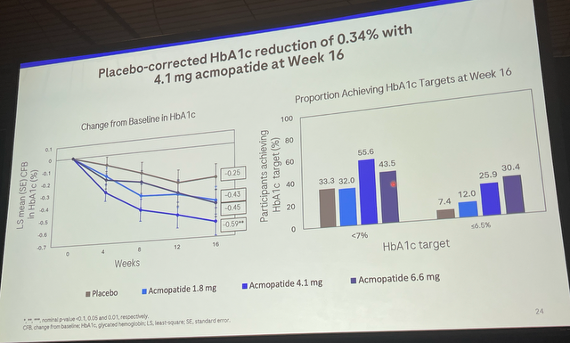
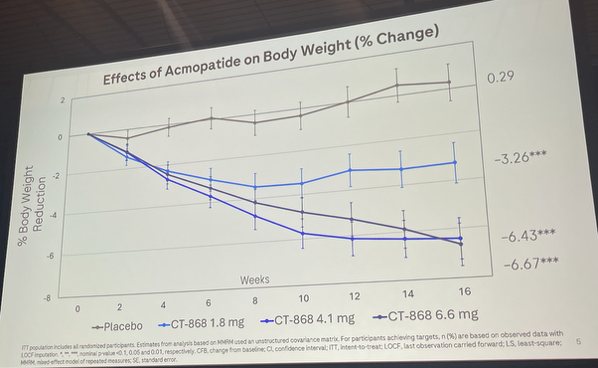
- On safety and tolerability, approximately half of the participants on acmopatide experienced nausea, compared to 7% in the placebo group. Likewise, the treatment group had higher rates of gastrointestinal events, such as constipation (up to 35% vs. 10%), vomiting (44% vs. none), decreased appetite (33% vs. 14%), and diarrhea (33% vs. 7%). Dr. Pettus hypothesized that people with T1D may be more sensitive to the GI effects of incretin-based therapies. While hypoglycemia was more common among the acmopatide group (28% vs. 7%), there was no severe hypoglycemia or DKA event across the study.
- Despite the glycemic, weight loss, and cardiovascular benefits, Roche discontinued the development of acmopatide into phase 3. While a bittersweet outcome, Dr. Pettus said this study confirms the benefits of incretin-based therapies in T1D (see figure below) and underscores the need for metabolic therapies in diabetes management. He looks forward to the results of the pivotal phase 3 SURPASS T1D-1 trial (n=905) later this year, which could lead to the approval of tirzepatide for T1D. Finally, Dr. Pettus said that coordinated effort is needed to make GLP-1 RAs safe, effective, and accessible for people with T1D. This includes educating clinicians and patients, developing a safe and unique titration scheme – especially with insulin dose reduction – and improving the tolerability profile.
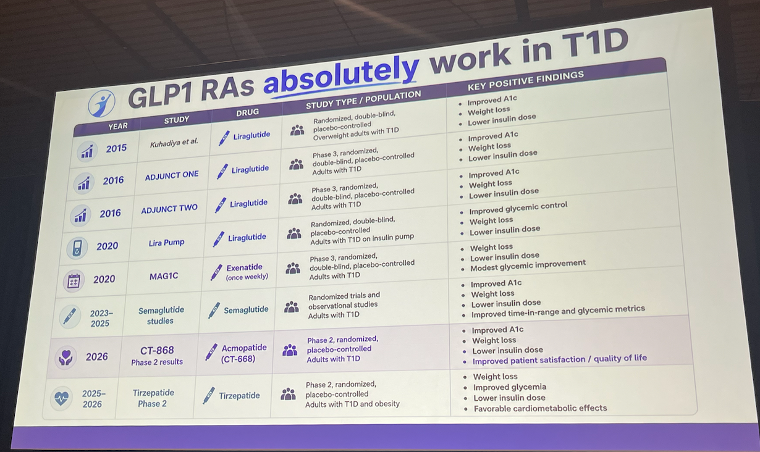
Clinical T1D care: GLP-1 response patterns in youth with T1D
A strong oral presentation explored the potential benefit of GLP-1 and multi-incretin RAs for youth with T1D, finding interesting response patterns. Dr. Lauren Waterman (University of Colorado Anschutz) and collaborators conducted a review of youth and young adults with T1D taking GLP-1 RAs or GLP-1/GIP RAs to expand early data suggesting A1c and weight improvements for this population. It is also known that some patients do not respond to incretin treatment, yet the reasons for this remain unclear. The authors sought to identify the characteristics of non-responders for young patients with T1D taking these therapies to further personalize treatment.
- A retrospective chart review was conducted at the Barbara Davis Center for Diabetes. Young patients with T1D aged 12-26 years were included if treated with a GLP-1 RA or GLP-1/GIP RA between January 2020 and December 2025 (n=48). Data on demographics, BMI, timing of overweight or obesity onset, A1c, CGM metrics, insulin dosing, and gastrointestinal adverse events were collected at baseline and every three months following initial prescription. A responder was defined as 5% body weight loss or greater and/or a 0.4% A1c decrease or greater. T-test and chi-square analyses were performed between groups.
- In terms of overweight or obesity onset, patients were categorized as “before puberty” if their BMI first crossed the 85th percentile threshold at an age younger than seven years and “puberty or later” if this occurred at 14 years of age or older. For patients between 7 and 14 years, Tanner Staging or discussion was used to determine if the patients had entered puberty.
- Patients who had overweight or obesity before puberty were less likely to respond to treatment, as well as those with lower baseline A1c values. The mean patient age was 18.6 years and mean T1D duration was 8 years. 73% of participants were female. Baseline A1c was 8.0%. The use of GLP-1RA or GLP-1/GIP RAs led to a 0.5% improvement to A1c values, 5% body weight loss, and a 0.1 unit/kg decrease in insulin total daily dose from baseline (p <0.05). However, response was not uniform across patients.
- Non-response was seen in 32% of patients and was associated with patients who developed overweight or obesity prior to puberty, had lower A1c values at baseline, or only tried one incretin formulation during the study period (p <0.05). Responders demonstrated 8% body weight loss during the study period, compared to 2% body weight gain in non-responders (p <0.0001). Responders had a 0.9% reduction to A1c compared to a 0.4% increase in non-responders (p <0.0001). Responders also demonstrated a reduced total daily insulin dose compared to non-responders over time.
- Incretin therapies show promise for youth with T1D but are not uniformly effective. The interesting discrepancies between responders and non-responders in this population warrant a prospective trial before use can become routine. The benefit seen to a number of metrics for responders further encourages this approach, and Dr. Waterman said that a retrospective matched control analysis is also underway. Further study of ideal dosing for T1D and reliable ways to identify patients most likely to respond are also needed – we’re intrigued by the outright weight gain demonstrated by some patients who continued taking GLP-1 or GLP-1/GIP RAs.
Balancing cardiorenal benefits and DKA risk: SGLT-2 inhibitors in T1D
In a fascinating presentation, Dr. Yunwen Xu (Johns Hopkins University) presented a target trial emulation evaluating the effects of SGLT-2 inhibitors in adults with T1D. SGLT-2 inhibitors reduce kidney disease progression and heart failure in T2D, which has promoted interest in their use for T1D. While existing trials in T1D have demonstrated renal benefits of the class, these studies were not designed to evaluate hard cardiorenal outcomes. Moreover, these trials have consistently reported an increased risk of diabetic ketoacidosis (DKA).
- Investigators conducted a target trial emulation (n=22,134) using EHR data among adults with T1D on insulin therapy. The study compared cardiorenal outcomes of SGLT-2 inhibitors and non-insulin glucose-lowering agents, including metformin, DPP-4 inhibitors, sulfonylureas, and thiazolidinediones. Dr. Xu clarified that GLP-1 RAs were excluded from the analysis, given their known renal benefits. The primary outcome was a composite of end-stage kidney disease (ESKD) or kidney-related death and heart failure hospitalization, while secondary outcomes were: (i) a composite of ≥40% eGFR decline, ESKD, or kidney-related death; (ii) acute kidney injury; and (iii) major adverse cardiovascular events (MACE-3; myocardial infarction, stroke, or all-cause death).
- At baseline, the SGLT-2 inhibitor group tended to be older (55 vs. 50 years), had longer diabetes duration (5.4 vs. 4.0 years), and had more comorbidities, like coronary heart disease (27% vs. 16%) and heart failure (16% vs. 7%). Propensity score weighting was used to account for differences in baseline characteristics.
- Findings suggested that SGLT-2 inhibitors may provide clinically meaningful cardiorenal protection in adults with T1D when DKA risk is appropriately managed. SGLT-2 inhibitors were associated with 28% reduced risk of ESKD, 29% reduced risk of composite kidney outcome, and 22% reduced risk of heart failure, compared to non-insulin drugs. The drug was also associated with a 11% lower risk of MACE-3, although this was not statistically significant. SGLT-2 inhibitors were associated with a non-statistically significant 8% higher risk of DKA. The SGLT-2 inhibitor group had 22% smaller risk of severe hypoglycemia events, which is expected given that insulin and sulfonylurea introduce hypoglycemic risks. Dr. Xu said that the limitations of this study include residual confounding, capture of only hospitalization-requiring DKA events, and potential misclassifications of T2D as T1D. He emphasized that randomized controlled trials are necessary to confirm the findings and identify strategies to mitigate DKA risk.
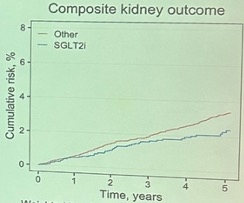
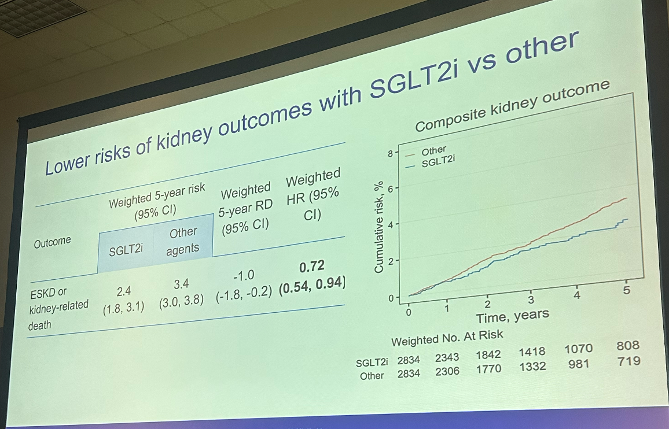
Insulin clearance and disease progression in children with preclinical T1D
In an afternoon oral session, Dr. Alfonso Galderisi (Yale) presented results on an analysis that showed the association between insulin clearance and disease progression in children with preclinical T1D. Dr. Galderisi explained that T1D stages represent an incomplete measure of disease progression because it relies on glucose-based metrics that don’t entirely represent beta cell function. Furthermore, Dr. Galderisi emphasized the heterogeneity across T1D stages, including stage 1 and stage 2 T1D, who rapidly or slowly progress to stage 3 T1D. The analysis, therefore, aimed to identify metabolic hallmarks of rapid vs. slow disease progression in people with multiple islet autoantibodies across different ages.
- Methods. The analysis included participants (n=620) who were a part of TrialNet intervention studies with stage 1 or stage 2 T1D (i.e., TN10, TN18, TN20, TN22). Metabolic measures were classified by the two-hour OGTT every six months with glucose, insulin, and C-peptide measures, along with insulin clearance measures with C-peptide AUC and insulin dosing during the OGTT.
- Results. At baseline, insulin sensitivity and insulin clearance did not differ between rapid- and slow-progressors. In all three age groups, rapid progressors showed a faster decline in insulin secretion. Interestingly, rapid progressors among children <8 years showed higher insulin secretion (p=0.048) and an increase in insulin clearance (p=0.016). Dr. Galderisi explained that children display a distinct metabolic phenotype compared with older age groups, characterized by decreased insulin secretion, increased insulin sensitivity, and increased insulin clearance. The trajectories in insulin secretion and insulin clearance did not show a difference between rapid and slow progressors in children aged ≥8 years.
- Discussion. Based on these findings, Dr. Galderisi encouraged the need for age-adapted beta cell function metrics for use in clinical trials. Developing a threshold for metabolic variables based on age would support the interpretation of clinical endpoints and advance therapies based on a developmental context.
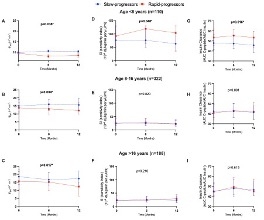
Sanofi’s symposium discusses life-threatening cases of Tzield infusion
In a crowded room just behind the bustling Exhibit Hall, Sanofi’s session discussed the benefits and safety concerns of Tzield (teplizumab). As background, Tzield is a drug that binds to surface antigen CD3 on T lymphocytes to prevent the autoimmune attack associated with T1D. Tzield is currently approved for delaying the disease progression in people with stage 2 T1D (two or more autoantibodies and dysglycemia). Dr. Teresa Quattrin (University of Buffalo) shared guidance on patient selection, infusion, and monitoring, and commented on the potential causes of death and life-threatening cases in people taking Tzield.
- Before beginning Tzield, Dr. Quattrin cautioned that complete blood count must be assessed. Tzield should not be used if lymphocyte count is <1000 per mcL, hemoglobin <10 g/dL, platelet count <150,000 per mcL, or neutrophil count <1,500 per mcL. In addition, liver enzyme tests should assess alanine aminotransferase (ALT), aspartate transaminase (AST), and bilirubin. Tzield should not be used in patients with an active serious infection or active chronic infections, and before treatment initiation, clinicians should confirm no evidence of active EBV and CMV infection. Additionally, Dr. Quattrin noted that the safety of live attenuated vaccines has not been studied in Tzield-treated patients, and Tzield may interfere with vaccine efficacy. Current recommendations state that live-attenuated vaccinations are not recommended eight weeks before Tzield treatment or for 52 weeks after, and inactivated or mRNA vaccinations are not recommended within the two weeks before Tzield treatment, during infusion, or six weeks after completion.
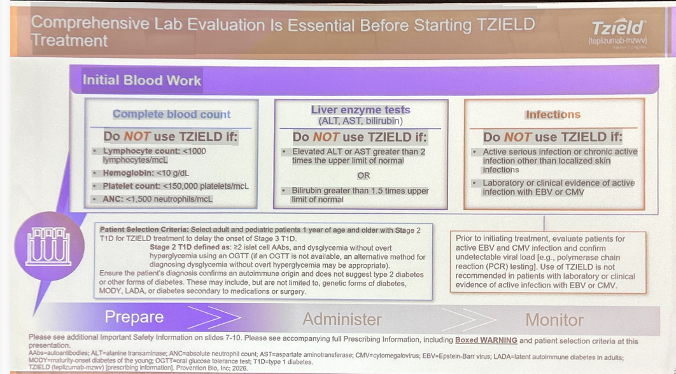
- While taking Tzield, Dr. Quattrin recommended monitoring lymphocyte count every two to three days during infusion and lymphocyte recovery following treatment. Patients should be checked for signs and symptoms of viral reactivity for at least two months following infusion. Tzield should be stopped if severe lymphopenia (<500 cells/mcL) persists for over a week.
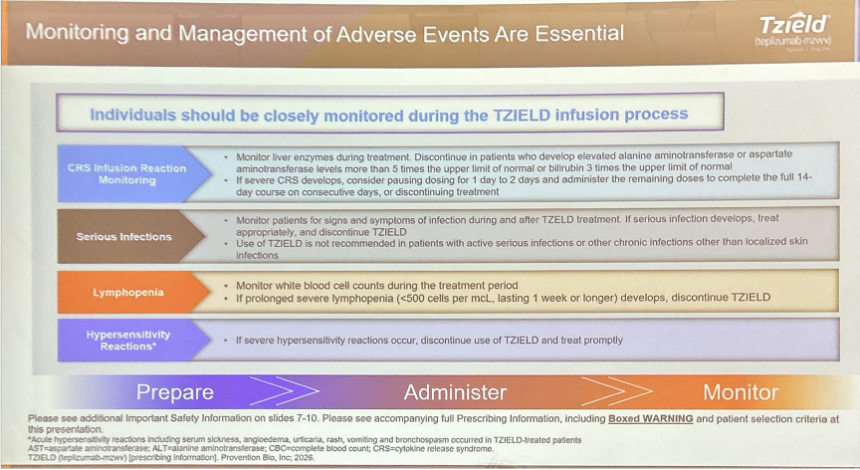
- On the potential causes of death and life-threatening cases, Dr. Quattrin said some may be related to continued infusion of Tzield amid viral reactivation – specifically Epstein-Barr virus (EBV) and cytomegalovirus (CMV) – in patients with low lymphocyte counts. A few other cases of death or life-threatening complications were potentially related to Tzield infusion in patients who were already immunocompromised, such as those with Down syndrome who are known to have a dysregulated immune system. These cases underscore the importance of ensuring that patients have adequate health before Tzield infusion and monitoring for lymphocyte counts during and after the treatment.
- Dr. Quattrin proposed a daily infusion checklist for infusion center staff, nurses, and physicians. Referencing a book Hospitals Should Fly by John J. Nance, Dr. Quattrin said that “pilots in the cockpit don’t take any chances” but rather “have a checklist and are rigid” despite their experience. She emphasized, “We should have the same thing more often in medicine and certainly for Tzield.”
- The session closed on an optimistic note with a case study highlighting the efficacy of Tzield in delaying the progression of T1D. A mother shared how her daughter, diagnosed with stage 2 T1D at eight years old, has not progressed to stage 3 T1D for two years since Tzield infusion. She said Tzield provided a feeling of hope for her daughter and the family.
The “clinical conundrum”: The management of single islet autoantibody detection in youth
In a morning session, Dr. Nicole Sheanon (University of Cincinnati) presented on the “clinical conundrum” of single islet autoantibody detection in youth. While a single positive autoantibody represents an early state of T1D, Dr. Sheanon emphasized that it does not represent a low-risk group and encouraged its inclusion in T1D staging. For background, stage 1 T1D is characterized by two or more islet autoantibodies with normal glucose levels, compared to stage 2 and 3, which include positive autoantibodies and glycemic levels not at target.
- The critical window of observation for a single positive autoantibody. Dr. Sheanon explained that three years represent the critical window for those who test positive for a single autoantibody, especially as early changes are the most predictive for the development of additional antibodies. Additional key predictors of T1D progression include younger age at conversion to the first positive autoantibody, as well as changes in A1c levels or glucose tolerance over time.
- Monitoring single autoantibody positivity in youth. Citing a 2024 paper, Dr. Sheanon outlined the need to confirm persistent single autoantibody status with a second laboratory test and to confirm that other antibodies are negative. For children younger than three years, all four autoantibodies and A1c levels should be monitored every six months for three years, then annually for three additional years. For children older than three years, all four autoantibodies and A1c levels should be monitored annually. Finally, education on symptoms should be provided for children who revert to negative autoantibodies or do not progress to positive autoantibodies over three years. Dr. Sheanon presented three case studies of patients with similar profiles who demonstrated different outcomes to highlight the importance of individualized care.
- Outcomes of single autoantibody positivity. Data shows that among patients who test positive for a single autoantibody, approximately half revert to negative autoantibodies while the other half persistently demonstrate single autoantibody positivity. While most do not progress to multiple autoantibodies and stage 3 T1D, Dr. Sheanon said there’s a “meaningful minority progress” of 15%. Patients usually follow a pattern of developing multiple positive autoantibodies, dysglycemia, and then confirmation of stage 3 T1D. However, patients and providers must caution against the possibility of variability in the timing of progression, which could significantly delay or expedite it.
- Guidance on those who test positive for a single autoantibody. Dr. Sheanon highlighted that the single most important care providers could give is education about diabetes symptoms. Some other important messages include the need for continual monitoring and awareness of the possibility of T1D progression. She said that while the thought of potentially developing T1D shouldn’t constantly be at “the front of patients’ minds,” increasing burden, this possibility shouldn’t be completely ignored either. She encouraged the mindset to “continue to live your life but have awareness.”
Launch of the first fully remote, non-invasive T1D screening program with T1D Scout
Mr. Yuta Matsuda (Co-founder and CEO at T1D Scout) presented the company's novel method for T1D screening to a small but intimate crowd. He shared data revealing the striking gaps in T1D screening: currently, only about 4% of families affected by T1D get screened (about 350,000 families out of 10 million). He noted that limited research sites, reliance on blood tests, and the costs of current screening methods create barriers that prevent more families from getting screened, not to mention the psychological impact of this data. T1D Scout aims to overcome these barriers with its at-home, saliva-based tests, along with educational programming to support those who have results at higher risk for developing T1D.
- T1D Scout’s genetic risk score model performance achieves an area under the curve (AUC) value of 0.93, indicating successful discrimination between T1D and population controls. Tested on 500 combined cases of T1D, T2D, and healthy controls, its single-nucleotide polymorphism model outperformed other genetic risk scores that generally fall within 0.77 to 0.87 AUC.
- Mr. Matsuda also shared results from recent real-world deployment. During initial deployment, T1D Scout restricted eligibility to children under 19 years old who had a family history of T1D. The company hopes to eventually expand availability to the general population. Within two weeks of release, over 3,000 families registered, 1,000 kits were shipped, and over 500 data points were generated. Of those who registered, 82% were white – which broadly reflects the US T1D population – and the mean age was eight years. Notably, more than 80% of those who registered had never been screened for T1D before.
- Those stratified as ‘high-risk’ by their genetic risk score profile had 10 times higher odds of testing positive for multiple autoantibodies. High-risk classification was based on the top 20% of autoantibody counts among registrants. In the low-risk group, the positivity rate approached that seen in the general population (0.93%). Altogether, among the 500 data points currently collected, 11 of 110 cases (10%) in the high-risk group were considered autoantibody positive, while only 3 out of 323 cases (>1%) in the lower risk group were autoantibody positive.
- Counseling services were provided after positive autoantibody detection, which helped ease anxiety. Those who had a positive screening had a 16% increase in anxiety (from 36.9 to 43.0), but their anxiety fell back to baseline following counseling . Furthermore, those who are high-risk and screened positive for autoantibodies are provided additional free antibody testing every year to monitor their progression.
- Looking ahead, Mr. Matsuda said he hopes to reach 100,000 individuals by 2028 and is currently in discussion with European and Asian research groups to expand their reach outside of the US.
Preventing hypoglycemia: A retrospective study compares the sensitivity of biometric trackers in detecting physical activity
Dr. Alice Adenis (Diabeloop) presented her findings on tracking biometric data to predict and prevent hypoglycemic events for people with T1D using AID systems. Physical activity is known to cause hypoglycemic events in people with T1D. However, the temporal relationship between physical activity detection signals and hypoglycemic events has not been fully characterized. Therefore, in this retrospective study, Dr. Adenis aimed to determine which physical activity indicators are associated with hypoglycemia and to record the time interval between detection and hypoglycemia onset. The overall goal of the study was to inform AID systems in predicting hypoglycemic episodes in patients.
- Methods. The study used data from the T1-DEXI database, which comprised 497 adults with T1D. An event was defined as a physical activity if: (i) the patient reported it; (ii) the heart rate was elevated above a personal threshold for more than 10 minutes; and (iii) the step count was above 10 for more than 10 minutes. Additionally, the resting heart rate was measured in patients, and the heart rate threshold was calculated using both maximum and resting heart rates.
- Results. Heart rate captured 80.2% of physical activity cases, while patient declarations and step counts captured 53.5% and 37.6%, respectively. In 37.2% of physical activity cases, heart rate was the only indicator, compared with 9.8% for patient declarations and 3.9% for step counts. This finding demonstrated that heart rate was the most sensitive in detecting physical activity. When using all three indicators, 40.3% of hypoglycemic events were predicted, with a 66-minute gap between the detection of physical activity and the decrease in the patient’s blood sugar levels.
- Conclusion. Dr. Adenis said that measuring heart rate is the best way to detect physical activity compared with patient self-report and step count alone. The time lag between physical activity detection and the onset of a hypoglycemic event is similar to the peak action window of rapid-acting insulin analogs, suggesting that reducing insulin dosage upon physical activity detection can effectively prevent hypoglycemia. Therefore, integrating continuous heart rate tracking into AID systems can be valuable for predicting and preventing hypoglycemic events.
Disease burden, perceived effectiveness, and social factors influence patients’ decisions to pursue stem cell therapy for T1D
In an afternoon session, Dr. Sufyan Hussain (King’s College London, UK) shared valuable insights into why adults with T1D may or may not pursue stem cell-based treatments. Investigators conducted interviews (n=25) among adults with T1D enrolled in the CellT1D registry. At baseline, participants were aged 25-68 years and were diagnosed with T1D at a mean age of 20 years old. 44% were female, and A1c was 6.9%. Among those who use or were offered a hybrid closed-loop system, many non-pursuers said they “didn’t know [clinical trials evaluating stem cell treatments] were looking for people,” highlighting the need to raise greater awareness to ensure equitable participation. Furthermore, the decision to pursue stem cell-based therapies was influenced by: (i) affective attitude (how an individual feels about pursuing the therapy for T1D); (ii) perceived effectiveness (extent to which the treatment is perceived as likely to achieve its intended purpose); and (iii) opportunity costs (extent to which patients perceive that their valued resources or priorities must be sacrificed to pursue the treatment).
- Affective attitude. Participants shared feelings of burnout caused by the emotional and cognitive demands of living with T1D. Those who experienced a higher emotional burden of T1D emphasized the greater benefits of pursuing stem cell-based therapies over their side effects. Health complications associated with T1D further heightened the appeal of receiving treatments in both groups.
- Perceived effectiveness. HCPs’ endorsement of stem cell-based therapies increased the odds of participants being willing to pursue them. Dr. Hussain emphasized the importance of clear communication to patients about the benefits, risks, and uncertainties. Other participants pursued stem cell-based therapies in hopes of improving glycemia and accessing better treatments. Those who were experiencing limitations of the hybrid closed loop were also likely to express greater appeal.
- Opportunity costs. Participants’ lived experiences shaped their perceptions of risk associated with stem cell-based therapies. Some expressed having T1D as part of their identity, such that if they were cured tomorrow, they would “be delighted” but would also feel as if their “identity is gone as well.” Socioeconomic barriers were a significant factor, as well, with white or participants with higher education and income more likely to pursue stem cell-based therapy.
ADA-EASD joint consensus report on the management of T1D in adults
In an afternoon session chaired by Dr. Anne Peters (USC), panelists spoke on the updated ADA-EASD consensus report on the management of T1D in adults. Dr. Peters said that the first EASD-ADA consensus report, published in 2021, was warmly welcomed by the field and highly regarded, and since then, there have been rapid advancements in the diagnosis and treatment of T1D. The committee received requests to place greater emphasis on the management of obesity and cardiovascular risk, and to provide guidance on screening for microvascular complications. Following this feedback, the original writing committee was re-appointed to meet monthly since January 2025 and include updates to each section, as well as three new sections. The draft was presented at EASD 2025, open for public comment, and then submitted to reviewers. Dr. Peters shared that the committee received more than 140 detailed comments, which were systematically addressed in preparation for final submission. Excitingly, the draft is now under review for publication.
- Dr. Jay Skyler (University of Miami) on the diagnosis and staging of T1D. Dr. Skyler overviewed key updates to the section on diabetes diagnosis, suggesting that an algorithm can support T1D diagnosis, particularly when the diagnosis is not self-evident. To support this method, the ADA-EASD consensus report includes a thorough figure that outlines the consideration of T1D from autoantibody testing and the following steps for further testing or management. Dr. Skyler noted that the updated consensus recommends considering C-peptide testing if autoantibodies are negative or single, low-titer positive. He also reminded that higher C-peptide levels do not exclude T1D diagnosis. Furthermore, the consensus report highlights the need for a specific diagnosis marker, particularly for those with adult-onset diabetes.
- On preservation and replacement of beta cell function, Dr. Skyler listed several different areas of research and development: (i) immune therapies, including disease-modifying approaches that delay the progression and preservation of residual beta cell function; (ii) metabolic or adjunctive strategies like agents that target beta cell stress and survival; (iii) replacement methods with pancreas and islet transplantation; (iv) technological impact with AID systems; and (v) stem cell-derived islets and novel strategies such as encapsulation, immune evasion, and xenotransplantation.
- Prof. Kirsten Nørgaard (Steno Diabetes Center Copenhagen, Denmark) on glycemic management of T1D. The updated consensus report lists several interventions to manage glycemic levels in people with diabetes, including the following:
- CGM. People with T1D should have access to CGM as the standard of care for glucose monitoring, supporting glycemic optimization, and improving quality of life. Prof. Nørgaard emphasized that CGM reduces the burden of hypoglycemia, especially in older populations and those with impaired awareness of hypoglycemia.
- Insulin. The consensus report acknowledges that AID systems have become the preferred mode of insulin delivery for people with T1D to improve glucose levels and reduce hypoglycemia. Prof. Nørgaard said it’s important that both patients and providers understand how different algorithms work across AID systems, including the recognition of which parameters can and cannot be adjusted to alter glycemic measures. The report lists detailed characteristics of some widely used AID systems, like infusion mode, CGM compatibility, control algorithm, and other specific features.
- Adjunctive therapies. The report indicates insufficient evidence to recommend the use of adjunctive therapies in T1D to improve glycemic outcomes. Given the increasing use of off-label treatments (e.g., GLP-1 RAs and SGLT-2 inhibitors), the report encourages discussion between patients and providers on the risks and benefits for each individual.
- Prof. J. Hans DeVries (Amsterdam University, the Netherlands) on microvascular complications, cardiovascular risk, and obesity. These three sections were newly added to the consensus report to increase education and awareness on the deep connection between diabetes and comorbidities.
- Screening for microvascular complications. The report states that microvascular complication screening does not need to be performed until five years post-diagnosis. It encourages regular assessment for retinopathy, nephropathy, and neuropathy to enable early detection and intervention. Additionally, it recommends that screening frequency be adjusted for each patient based on glycemic levels and other comorbidities.
- Cardiovascular risk management. Prof. DeVries highlighted that cardiovascular risk significantly increases in people with T1D, requiring active management. The consensus notes the role of GLP-1 RAs and SGLT-2 inhibitors in cardiovascular disease prevention but does not explicitly recommend them, as these treatments are not yet approved for T1D. Recognizing the increasing off-label use, the report does caution against SGLT-2 inhibitors and the associated risk of eDKA.
- Obesity. The report comments that overweight and obesity are “at least as common in people with T1D as in the general population.” Some contributing factors to this prevalence include increased food intake to prevent or treat hypoglycemic events, as well as the effects of hyperinsulinemia. Recommendations for weight management in people with T1D include behavioral interventions, pharmacotherapies, and bariatric surgery.
Meeting the needs of older adults with T1D: Unique considerations, pharmacotherapies, and care transitions
Reflecting on the growing prevalence of T1D, panelists addressed the field’s readiness to meet the needs of older adults with T1D. Dr. Richard Pratley (Advent Health) kicked off the symposium by focusing on the growing population of older adults with T1D and the unique needs they face due to the heterogeneous nature of the disease. Then, Dr. Elena Toschi (Joslin Diabetes Center) took the stage to discuss pharmacotherapies for older adults with T1D. Dr. Naushira Pandya (Nova Southeastern) concluded the symposium by highlighting her experience as a geriatrician and spoke on care transitions for older adults with T1D, including the use of technology, in assisted living or nursing homes.
- Dr. Pratley on the unique needs of older adults with T1D. Dr. Pratley highlighted the heterogeneity of diabetes in older adults, including disease duration, pathophysiology, comorbidities/complications, glycemic targets, and management strategies. He referred to a 2018 study that explains the differences in the genetic basis of childhood-onset compared to adult-onset T1D. Older adults usually have attenuation of HLA haplotypes associated with T1D, less positivity for multiple autoantibodies, and more often C-peptide and GAD65 positivity. Dr. Pratley also explained barriers to setting glycemic targets in older adults, including variable life expectancies, clinical differences, and a lack of evidence from large clinical trials. He therefore emphasized the importance of shared decision-making, with goals individualized on critical factors, such as comorbidities and patient preferences. Diabetes management in older adults is especially challenging due to the intersection of diabetes and geriatric syndromes – he encouraged careful consideration of polypharmacy, cognitive impairments, bone health, chronic pain, and other physiological changes.
- Dr. Pratley elaborated on the WISDM study, which studied the use of CGM in older adults with T1D. Results showed that the use of CGM led to improvements in glycemic management and a 90% decrease in hypoglycemic events. Dr. Pratley also spoke on the AIDE study, which investigated the use of AID in older adults with T1D and showed that older adults could use a hybrid closed loop to improve glycemic management and reduce hypoglycemic events, without significant adverse events.
- In T2D and CKD, Dr. Pratley said the field has made significant progress, with a pillarized approach of the four treatment classes (i.e., RAS inhibitors, SGLT-2 inhibitors, finerenone, semaglutide). On the other hand, for the past three decades, there have been no new approved treatments for people with T1D and CKD. Most recently, however, the phase 3 FINE-ONE trial showed the efficacy of Bayer’s Kerendia (finerenone) in people with CKD and T1D, with finerenone reducing uACR over six months. Reflecting on the results from the FINE-ONE trial and the FDA’s ongoing review of finerenone for CKD and T1D, Dr. Pratley shared optimism that the field is making progress in the T1D space.
- Dr. Toschi on pharmacotherapy. She explained the balance of insulin treatment in older adults with T1D, considering both hypoglycemia and hyperglycemia. Over the past few years, treatment priorities have shifted from strict glycemic management toward safe and preventative efforts of reducing hypoglycemia. Beyond achieving glycemic targets, the four M’s (i.e., what matters most, medications, mentation, mobility) and four S’s (i.e., signs/symptoms, shared decision making, set/reset goals, simpler/safer treatment) represent key frameworks for individualized care on risk management, rather than fixed treatment approaches. To address challenges with T1D treatment, Dr. Toschi shared a simplification approach:
- Avoid problem-solving. Patients should avoid carbohydrate counting or correction factors. Instead, patients should use fixed doses for small or large meals, with a fixed correction dose only during mealtimes.
- Decrease treatment burden. Patients should be advised to avoid correction doses between meals, for snacks, or at bedtime. If possible, caregivers should support monitoring, injecting, or providing reminders for insulin doses.
- Emphasis on “non-reactive behavior.” Patients should avoid high CGM alerts to avoid reactive insulin doses. Yet, they should also avoid a low CGM alert to avoid even mild hypoglycemic events.
- Dr. Pandya on care transitions. There’s currently a lack of published data on the prevalence of T1D in nursing homes in the US or those in other countries. Furthermore, until 2025, there were no clinical guidelines on the care of those in assisted living or nursing homes. Challenges across these settings include clinicians and staff being unaware of T1D diagnosis, unfamiliarity with technological devices (e.g., CGM, insulin pumps, AID), and even critical conditions like DKA onset.
- Dr. Pandya shared results from a 2025 survey distributed to long-term care practitioners. In response to whether their facilities have a policy for T1D management, 38% said “not sure,” 31% said “no,” and 31% said “yes.” Furthermore, in response to the proportion of people with T1D in their facility with a CGM, 55% said “none,” 23% said “very low,” 13% said “moderate,” 6% said “low,” and 3% said “common.” Given these responses, Dr. Pandya stressed the opportunity to improve education across care homes and the benefits of facilities with standardized policies.
- Some risk factors for adverse outcomes during care transitions for people with T1D include: (i) increased risk of hypoglycemia; (ii) increasing comorbidities and complications; (iii) limited health literacy and challenges with technology; (iv) cognitive impairment; (v) lack of family or caretakers; and (vi) changes in preferences. Dr. Pandya reviewed the ADA recommendations for effective care transitions, including structured discharge planning, communication between HCPs, and review of treatments (both new and old), among many other considerations.
- While there are several benefits of technology in older people with diabetes, various challenges contribute to the underutilization. Dr. Pandya encouraged a structured approach, which starts with identifying people with T1D. Then, there should be preparedness across facilities, with clear diagnoses in medical records and collaboration among clinical teams. Healthcare providers should further support patients in reviewing their medical history and complications with a review of medications, self-management, as well as assessment of hypoglycemia awareness and the use of CGM, AID, or smart pens.
ADA Presidents’ select abstract: Time to minimal residual C-peptide as an endpoint for recent-onset T1D
This afternoon session spotlighted the ADA Presidents’ select abstract by Dr. Samuel Shangwu Wu (University of South Florida), who presented on the use of minimal residual C-peptide (TMRCP) as an efficacy endpoint for recent-onset T1D immunotherapy trials. Dr. Wu explained that T1D intervention trials focus on understanding the preservation of residual beta cell function through measures like the mixed meal tolerance test or the mean area under the curve of C-peptide levels. Yet, these measures do not infer a longitudinal trajectory of treatments and fail to incorporate detection limits. Therefore, Dr. Wu and his team incorporated TMRCP to address the limitations, defining it as the time until C-peptide declines to a prespecified minimal residual level (c) to represent functional loss of beta cell secretory capacity.
- Background on the use of TMRCP. Dr. Wu and his team sought to address the following objectives: (i) understand how C-peptide trajectories can be used to define endpoints; (ii) identify how to incorporate minimum residual threshold and assay detection; and (iii) determine how to make inferences when C-peptide levels are measured on a varied schedule. They chose c=0.03 nmol/L based on results from a 2021 study, which reported significantly fewer hypoglycemic events among C-peptide levels greater than 0.03 nmol/L.
- Data sources for integration of TMRCP. The study incorporated TMRCP across six trials conducted by TrialNet in people with recent-onset T1D. During Q&A, Dr. Wu clarified that Sanofi’s Tzield (teplizumab) was not included in this study, given its indication to delay stage 3 T1D. The following six trials were included in the assessment:
- TN02 trial, which studied mycophenolate mofetil (MMF) alone and MMF in combination with daclizumab (DZB);
- TN05 trial, which studied rituximab;
- TN08 trial, which studied glutamic acid decarboxylase (GAD) alum in two or three doses;
- TN09 trial, which studied abatacept;
- TN14 trial, which studied canakinumab; and
- TN19 trial, which studied low-dose anti-thymocyte globulin (ATG) and ATG in combination with granulocyte colony-stimulating factor (GCSF).
- Results on the efficacy of TMRCP. Results across the six trials showed that TMRCP was significantly prolonged in treatment groups with rituximab (128 vs. 84 months; p=0.03), abatacept (92 vs. 70 months; p=0.003), and ATG (137 vs. 58 months; p=0.0003). Results also showed that every one-year increase in age was associated with a decrease in the hazard ratio by 6% to 10%. Interestingly, there was no significant genetic effect on TMRCP.
- Additional investigation of TMRCP. The study also examined different values of c, which represent the minimal residual C-peptide level. No significant differences between treatment and control groups were observed when the study employed values ranging from c=0.02 nmol/L to c=0.05 nmol/L.
- Future outlook. Dr. Wu emphasized that future work should compare estimated TMRCP from models with observed values from long-term follow-up studies. He suggested that these results would further position TMRCP as an alternative endpoint for T1D intervention studies.
Obesity
Phase 2b COURAGE trial analysis shows that trevogrumab added to GLP-1 RA preserves lean mass, regardless of baseline body composition
In this highly anticipated session, Dr. Jesse Chao (Regeneron) shared further analysis of the phase 2b COURAGE trial (n=599), evaluating whether trevogrumab (anti-GDF8/anti-myostatin) with or without garetosmab (anti-activin A) enhances lean mass in people with obesity, when combined with semaglutide. Full results were presented at EASD 2025, demonstrating that trevogrumab helps preserve 50-80% of lean mass lost with semaglutide alone. This analysis aims to understand whether this treatment effect is affected by baseline low lean mass status, which refers to people with obesity with appendicular lean mass/BMI of <0.789 m2 in males or <0.512 m2 in females.
- Study design and baseline characteristics. Adults with obesity but not diabetes were randomized to: (i) semaglutide monotherapy; (ii) semaglutide with trevogrumab 200 mg; (iii) semaglutide with trevogrumab 400 mg; and (iv) semaglutide with trevogrumab 400 mg and garetosmab 10 mg/kg.
- At baseline, participants with low lean mass (n=235) tended to be older (53 vs. 47 years), male (41% vs. 27%), and white rather than Black (85% vs. 66%). Clinically, those with low lean mass at baseline had similar weight (102 kg) but slightly higher BMI (38 vs. 36 kg/m2).
- Results. Adding trevogrumab, with or without garetosmab, significantly preserved lean mass loss by three to five percentage points, compared to semaglutide alone. Moreover, these candidates improved the ratio of total lean mass to total body mass at Week 26 (see figures below). These effects were present regardless of low lean mass status at baseline. Dr. Chao said further research is needed to understand the long-term clinical and functional benefits of preserving lean mass.
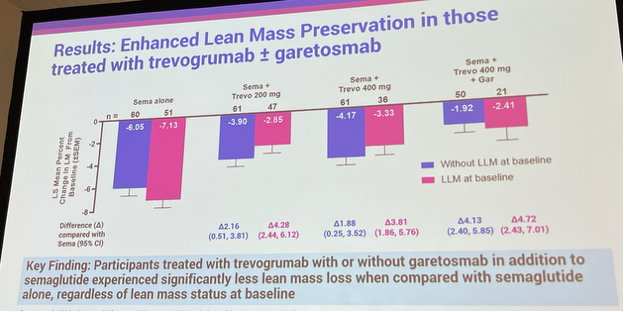
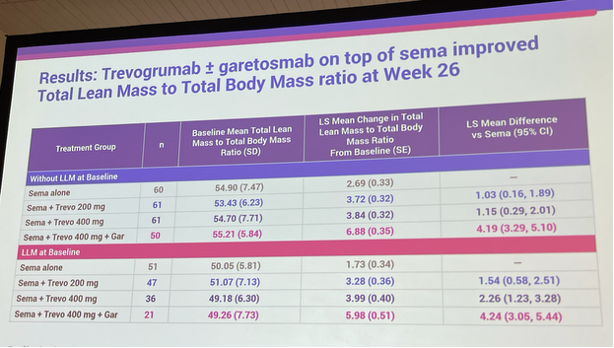
Exercise and protein supplementation enhance body composition in combination with GLP-1 RA therapy
Dr. Ian Neeland (University Hospitals) discussed the preservation of lean body mass for patients on incretin-based therapies. While some lean body mass loss is expected with any weight-loss modality (with approximately 25% of total weight loss coming from lean mass), outcomes vary widely across treatments, and both lifestyle and pharmacologic interventions may help preserve lean mass during GLP-1 RA-induced weight loss. Dr. Neeland highlighted both resistance exercise and protein supplementation as a cornerstone of lifestyle modification necessary to preserve lean tissue. Given that each kilogram of muscle mass lost reduces resting energy expenditure by about 13 kcal/day, the maintenance 0f muscle mass could limit the reduction in metabolic rate and concomitant homeostatic adaptation, which contributes to a slowing or plateau in weight loss.
- Factors that support positive muscle balance include: (i) maximizing postprandial muscle protein synthesis; (ii) reducing muscle protein breakdown; and (iii) promoting a net positive protein balance. These effects are influenced by protein intake, quality, and timing. During moderate energy restriction associated with weight loss, doubling the current recommended daily allowance of protein has been shown to help preserve lean muscle mass. Dr. Neeland identified whole foods (beans, peas, lean meats, fish, etc.) and protein supplements as appropriate forms of protein, while emphasizing that foods with high leucine content (e.g., whey) are important for muscle protein synthesis. Optimizing protein intake factors can potentiate the beneficial effects of resistance exercise, resulting in the enhanced remodeling and repair of existing muscle and the synthesis of new muscle protein.
- In the S-Lite Trial (n=215) of liraglutide, adults with obesity who underwent an eight-week low-calorie diet and 52 weeks of exercise experienced superior weight loss maintenance and improvements in body composition compared to either intervention alone. Additionally, exercise in addition to therapy was found to mitigate weight regain after the therapy discontinuation.
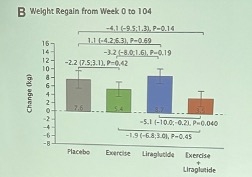
- A randomized study (n=208) showed that healthy older adults randomized to whey protein and heavy training improved quadricep muscle cross-sectional area and isometric knee extensor strength. However, whey protein and light training did not improve quadricep cross sectional area. One meta-analysis (n=1,863) showed that dietary protein supplementation significantly increased changes in strength, fat free mass, and muscle size during periods of prolonged resistance training.
- Dr. Patti Urbanski (St. Luke's Hospital) additionally discussed the importance of proper nutrition for patients on GLP-1 RAs. An important component of proper nutrition is initial patient baseline screening for existing contraindications, including eating disorders, GI disorders, and renal insufficiency. She emphasized the importance of high-protein diets, consistent with Dr. Neeland’s recommendations, along with consuming at least five servings of fruits and vegetables daily. Dr. Urbanski also highlighted the role of healthy fats in supporting the absorption of fat-soluble vitamins. In discussing GLP-1 RA adverse events, she recommended high-fiber diets to help manage constipation, avoiding sugar alcohols to reduce diarrhea risk, and eating smaller, more frequent meals for individuals experiencing nausea.
- Emerging pharmacological approaches may provide strategies to preserve lean mass during incretin-based therapies. Pharmacological adjuncts, such as bimagrumab, work by blocking negative regulators of muscle growth to enhance anabolism and prevent catabolism. Preclinical trials of semaglutide in combination with bimagrumab have shown evidence for the preservation of muscle and amplified weight loss, while early human trials (BELIEVE and COURAGE) report ≥50% better lean-mass retention.
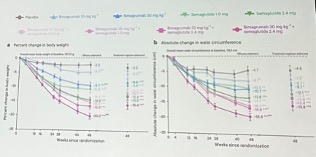
Panel with three ADA Banting Medalists debates unresolved questions regarding obesity pathophysiology and intervention targets for next-generation therapies
An esteemed panel featuring three ADA Banting Medalists engaged in a fascinating discussion on the future of obesity pathophysiology research and opportunities for novel therapies. Dr. Martin Myers (University of Michigan) moderated this session with Dr. Barbara Kahn (Harvard), Dr. Philipp Scherer (UT Southwestern), and Prof. Matthias Tschöp (Ludwig Maximilian University of Munich, Germany), who shared their thoughts on unaddressed targets for the prevention and treatment of obesity.
While incretin therapies have revolutionized obesity treatment, the panelists described these therapies as, paradoxically, non-pathophysiological. Despite this “disconnect” per Prof. Tschöp, the panel encouraged continued investigation of obesity pathophysiology as improved understanding may facilitate the development of more specific, personalized interventions with reduced side effects. Dr. Scherer emphasized that the field has “only scratched the surface” of understanding obesity’s biological progression with significant opportunities for next-generation therapies.
- The panel identified several pathophysiological targets that warrant further investigation. Dr. Scherer said that the identity of the “lipostat” – the biological system that governs the body’s weight set point – is essential to discover. Since individuals consistently regain weight after incretin discontinuation, incretins do not alter the weight set point. He argued this is not unexpected because obesity develops over a long time period; therefore, he proposed that slower weight loss over a long timeframe (instead of rapid weight loss with incretins) may make it easier to maintain an altered weight set point and avoid weight rebound. Regarding potential targets, he suggested that peripheral organs, such as adipose tissue or the liver, may be the key set point regulators to investigate rather than the brain.
- Energy expenditure. Panelists unanimously agreed that developing therapies to increase energy expenditure is important since weight loss is associated with a corresponding decrease in basal energy expenditure. However, Dr. Kahn said increasing energy expenditure alone will not be sufficient because food intake will increase to compensate. Therefore, she said interventions may need to target both appetite suppression and energy expenditure – referencing how hypertension treatment often involves multiple agents targeted at different mechanisms.
- Futile cycles. Dr. Kahn proposed futile cycles – two metabolic pathways that operate in opposite directions and lead to a net energy loss without obvious productivity – as opportunities to manipulate energy expenditure. She cited previous research in her lab demonstrating that knockdown of nicotinamide N-methyltransferase (NNMT), a component of the polyamide futile cycle, protected against diet-induced obesity by increasing energy expenditure without causing a compensatory increase in food intake.
- Fibrosis and inflammation. The panel did not believe inflammation is a worthwhile target to treat obesity because systemic inflammation is not a driver of obesity, but rather an ensuing reaction. Dr. Scherer argued that anti-fibrotic interventions may yield greater efficacy while also improving insulin sensitivity. However, he acknowledged that the major fibrotic driver, TGF-β, is not easily accessible, underscoring the need to identify novel targets. Nevertheless, Prof. Tschöp said inflammation is still important to monitor as obesity-related complications likely arise due to inflammatory processes in organs, which could explain incretins’ preventative effects for cardiovascular disease, kidney disease, and neurodegeneration.
- Leptin. Dr. Scherer suggested leptin could be a fibroinflammatory marker since its actions mirror IL-6, which regulates pro-inflammatory processes – stating that sometimes the field needs to take “gambles” in translating interventions to the clinic.
- Energy expenditure. Panelists unanimously agreed that developing therapies to increase energy expenditure is important since weight loss is associated with a corresponding decrease in basal energy expenditure. However, Dr. Kahn said increasing energy expenditure alone will not be sufficient because food intake will increase to compensate. Therefore, she said interventions may need to target both appetite suppression and energy expenditure – referencing how hypertension treatment often involves multiple agents targeted at different mechanisms.
- Prof. Tschöp believes personalized genetic cures for obesity may be possible in the coming decades. While he thought the idea of a cure for obesity was “impossible” a few years ago, the enormous acceleration of AI coupled with decreasing genomic sequencing costs could enable the development of cures personalized to specific genetic polymorphisms. Given the high genetic heterogeneity of obesity, Prof. Tschöp and Dr. Kahn agreed that any gene therapies that emerge would be personalized to individuals rather than blanket interventions in broad populations. They also suggested gene therapy could be an avenue to develop a “one-and-done” obesity therapy without weight rebound after discontinuation, but Dr. Kahn said it would presumably require manipulation of multiple genes to avoid unwanted compensatory effects.
Weight loss from GIP/GLP-1 RAs could prevent over five million deaths and save $10.5 trillion over the next decade
In an early morning session that introduced ADA’s new journal: Diabetes, Obesity, and Cardiometabolic CARE (DOCM CARE), Mr. Timothy Dall (GlobalData) predicted the cost of treating, and more importantly, the cost of not treating obesity. Mr. Dall highlighted four articles published under the “Cost of Obesity” collection, which evaluated the benefits and costs of treating obesity among adults in Medicaid or commercial insurance. He presented a microsimulation model that predicts the health outcomes and economic impacts of different levels of intervention to treat obesity. While his results predicted a positive 10-year ROI and estimated that millions of deaths could be prevented, he also presented a problem: in order to get insurers to invest in obesity treatment, they likely want a ROI within one year (i.e., during the time that they are still responsible for coverage of an individual). However, Mr. Dall also noted that other chronic diseases are still treated even if it is costly in the short term. For instance, he said, “We don’t not treat cancer because it costs money.” Overall, Mr. Dall argued that we “cannot afford to NOT treat obesity.”
- Methods. Each of the four studies discussed had a slightly different experimental design, as shown in the photo below. To analyze results, Mr. Dall and colleagues used a Markov-based microsimulation based on published longitudinal studies to model about 40 clinical outcomes. These studies compared outcomes for non-treatment and four interventions: intensive lifestyle management (ILM), first-gen FDA-approved obesity medications, modern obesity medications, and bariatric surgery. The main outcomes fell into three categories: clinical (T2D, hypertension, CVD events, obesity-related cancers, and more), economic (direct medical costs, productivity, disability payments), and social (quality of life, mortality, social return on investment).
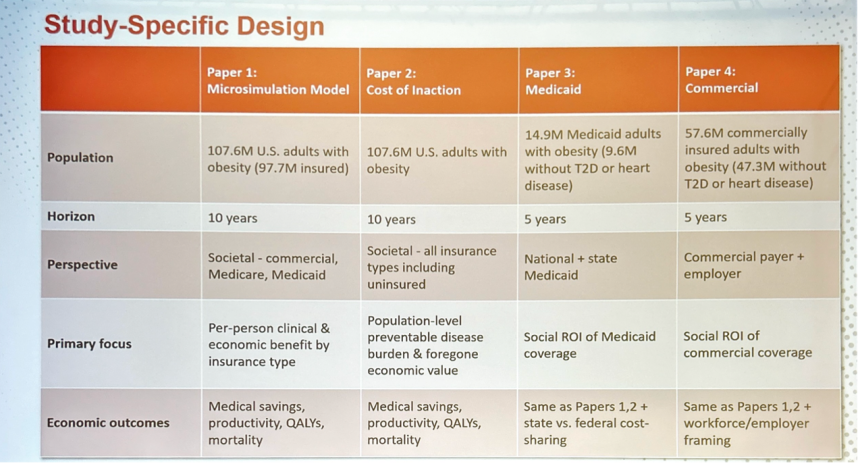
- Improved health outcomes. As shown with the bar graph below, for patients with commercial insurance all interventions including lifestyle interventions, first-generation medications, GLP-1 RAs, and surgery showed reductions to 10-year predicted rates of T2D, hypertension, coronary heart disease, heart attack, and stroke. Notably, metabolic/bariatic surgery showed an over 70% reduction in hypertension. Intervention also showed reduced mortality with ILM and first-gen medications preventing a predicted 1.9 million deaths (3% reduction). GIP/GLP-RAs could also prevent 5.3 million deaths over 10 years.
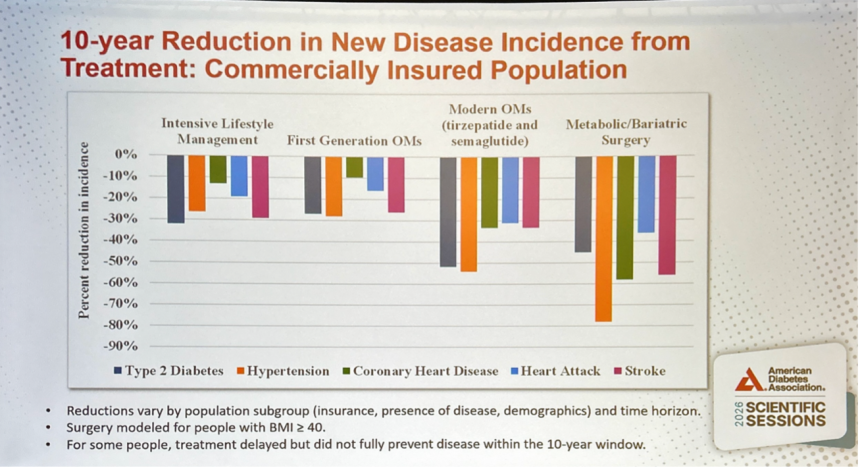
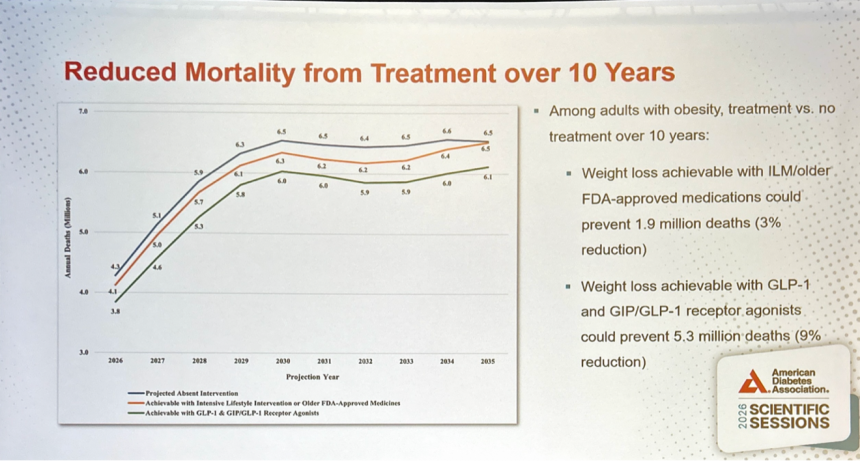
- Economic impact. Mr. Dall estimated a 10-year total economic benefit of approximately $10.5 trillion with GIP/GLP-1 RA usage. Furthermore, GIP/GLP-1 RA use could result in $1.8 trillion saved in medical costs, and $2.7 trillion in labor force participation gains. As shown below, over five years, Mr. Dall estimated $3.81 national social ROI per dollar for the Medicaid population, and $3.09 ROI per dollar for commercially insured patients. Overall, these data provide a compelling argument that the 10-year ROI on aggressively managing obesity justifies the investment.
Complications
ADA/EASD 2026 consensus report on hyperglycemia in T2D: Updates focus on preventing complications and developing healthy behaviors
In an afternoon symposium, Prof. Melanie Davies (University of Leicester, UK), Dr. Vanita Aroda (Brigham and Women's Hospital), Dr. Jennifer Green (Duke University), and Prof. Chantal Mathieu (UZ Leuven, Belgium) gave an overview of the latest draft of the 2026 ADA/EASD Consensus Report on the Management of T2D. Scheduled speaker and consensus report co-chair Dr. John Buse (UNC School of Medicine) was not present, and his talk was delivered by co-chair Prof. Davies. She said that Dr. Buse presented on her behalf in the past so she could fulfill her responsibilities to her family, and now she is presenting for him “so he can fulfill his responsibilities to his diabetes family.”
This report follows the 2022 edition and will be presented in its final form at EASD 2026 in Milan. Presentation slides are available online, and public comments are being accepted here until June 16, 2026.
- Changes in diabetes care guidance since the first report in 2006. Dr. Aroda highlighted how focuses shifted with each edition of the report:
- 2006: Focus on glycemic management through lifestyle modifications and metformin.
- 2009: Emergence of “less-validated therapies” such as pioglitazone.
- 2012: Creation of medication menus and profiles and personalization of treatment goals based on patient characteristics.
- 2018: Differentiation of treatment approaches given findings from cardiovascular outcomes trials.
- 2022: Introduction of a holistic treatment approach with person-centered goals.
- 2026: Continuation of a holistic approach with an added life course and longitudinal view and an emphasis on foundation, integrated lifestyle and healthy behaviors; prevention of complications and long-term conditions is also a key focus.
Debate: Prof. Stephanie Amiel and Dr. Irl Hirsch on the significance of level 1 hypoglycemia
Prof. Stephanie Amiel (King’s College London, UK) and Dr. Irl Hirsch (University of Washington) engaged in an entertaining and nuanced debate on level 1 hypoglycemia. The overall debate title was “Level 1 hypoglycemia: Does it really matter?” with Prof. Amiel responding in the affirmative and Dr. Hirsch in the negative. An audience vote prior to their presentations showed that slightly more individuals felt that level 1 hypoglycemia does indeed matter, though the room was mostly divided.
- Prof. Amiel and Dr. Hirsch offered complementary perspectives. Taking the stage first, Prof. Amiel maintained that level 1 hypoglycemia is a “cause for concern,” focusing her discussion on its harmful effects. Meanwhile, Dr. Hirsch took the stance that level 1 hypoglycemia is a “matter of course,” highlighting that it is common even in people with diabetes. He also said that level 1 hypoglycemia is not something that we are able to eliminate in yet, pointing out that even when people with diabetes are using the latest technologies such as AID, they still experience hypoglycemia.
- Both agreed that level 1 hypoglycemia is biomedically harmless, though it has negative psychological and emotional effects. Prof. Amiel opened her presentation with a picture of a gift for Dr. Hirsch. Inside contained an empty plate, representing her point that, from a medical perspective, “there is no such thing as level 1 hypoglycemia.” To illustrate her point, she reviewed how the widely recognized diabetes cutoff of <70 mg/dL was determined through two small clamp studies in healthy individuals from the 1980s and 90s. Dr. Hirsch also highlighted that EEG studies investigating the effects of level 1 hypoglycemia on the brain are inconsistent.
- Level 1 hypoglycemia becomes a concern for both Prof. Amiel and Dr. Hirsch when considering the effects that the number <70 mg/dL itself has on people with diabetes. Prof. Amiel pointed out that the number serves as an alert value for people with diabetes. She shared that Breakthrough T1D’s Dr. Aaron Kowalski helped her fully realize that level 1 hypoglycemia is a major inconvenience for people with diabetes because it means that an individual needs to stop what they are doing and take corrective action. Indeed, findings from the Hypo-RESOLVE project have shown that awareness of hypoglycemia has negative effects on multiple domains of daily functioning (e.g., poorer sleep quality, heightened worry and anxiety). Relatedly, Dr. Hirsch said that lack of awareness of level 1 hypoglycemia is also harmful.
- Following both presentations, a repoll of the audience showed greater agreement that level 1 hypoglycemia matters.
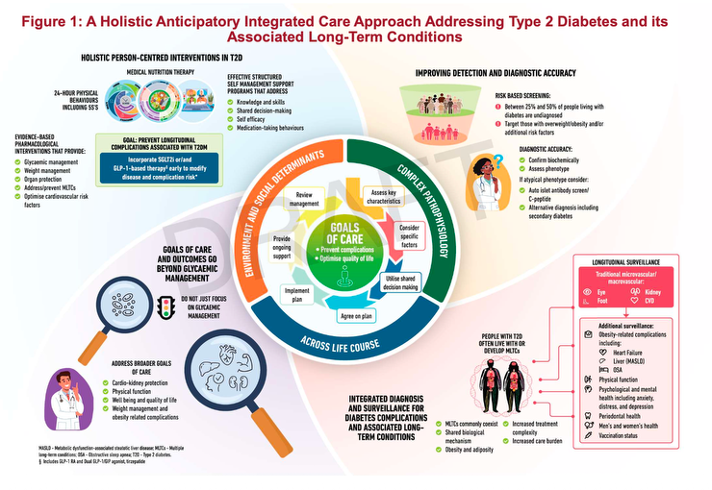
- On earlier pharmacological intervention. A key point from the report is its recommendation for the earlier use of SGLT-2 inhibitors or/and GLP-1 RA-based therapies in people with T2D for organ protection and long-term outcome improvement. Of note, Prof. Mathieu pointed out that the consensus report committee spent four hours discussing whether to use and or or, and ultimately decided on or/and, intentionally putting the or first. In people with T2D and concomitant CVD, CKD, and HF, earlier combination use of both therapy classes is recommended. Interestingly, a knowledge gap that remains, as pointed out by Prof. Davies, is that there is still a lack of compelling evidence for whether GLP-1 RAs and SGLT-2 inhibitors should be routinely combined, as well as if there is an optimal sequence when initiating treatment.
- New dietary pattern summary figure and updated 24-hour physical behavior figure. The report will have a new figure (see draft below), showing a wheel of diets, all of which have bodies of evidence. The wheel is accompanied by a table highlighting the benefits and challenges of each. Following its introduction in the 2022 edition, the physical behavior figure will be updated to emphasize the importance of the 5S’s: standing, stepping, sweating, strengthening, and sleeping.
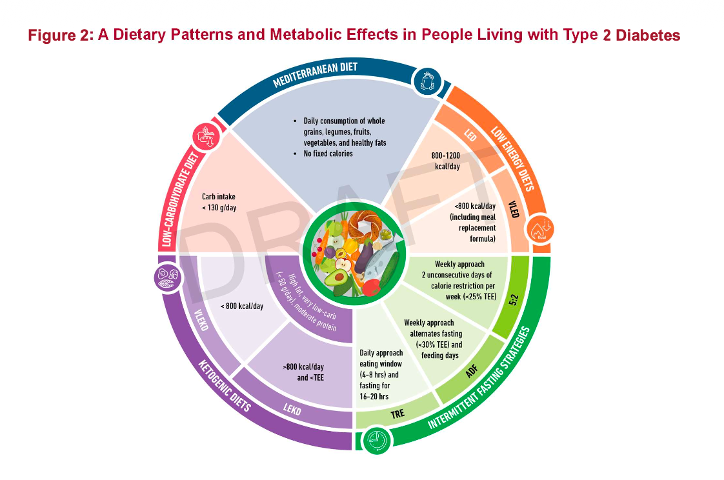
- On MASLD and MASH, weight reduction remains the primary therapeutic target. Pharmacologically, the report now recommends GLP-1 RAs for people with obesity, T2D, and MASLD. For individuals with steatosis or MASH, GLP-1 RAs are preferred; pioglitazone or tirzepatide can also be used. For patients with F2 or F3 fibrosis, the report recommends that providers refer them to a hepatologist to consider the use of a thyroid hormone receptor β agonist, such as resmetirom.
- On technology, Prof. Mathieu said one of the biggest updates to this edition is that CGM should be considered for people with T2D, particularly for those using insulin.
Which biomarkers matter? Prof. Naveed Sattar encourages clinicians to “think simple” and prioritize traditional cardiovascular risk factors in T2D
Prof. Naveed Sattar (University of Glasgow, UK) surveyed the utility of several cardiovascular risk factors. While new biomarkers continue to emerge, Prof. Sattar emphasized that clinicians should aggressively manage traditional risk factors, including A1c, lipids, systolic blood pressure, and eGFR, to most effectively reduce cardiovascular risk. He highlighted two ongoing trials – the iDiabetes and TARTAN-HF trials – that will provide greater insight into the usefulness and potential cost-effectiveness of several emerging cardiac biomarkers for T2D compared to existing biomarkers.
- Prof. Sattar said clinicians should “think simple” when evaluating cardiovascular risk, sharing his thoughts on the clinical applicability for several biomarkers.
- Age of diabetes onset. Prof. Sattar characterized diagnosis age as a major risk factor, stating T2D before 40 years old is a “completely different disease” than T2D that manifests in elderly individuals. He cited data associating diagnosis at 30 years old with loss of 14 healthy life years – compared to roughly one year for diagnosis at 70 years old – due to decades of excess weight and glycemic exposure, increasing lifetime risk for CVD. To combat elevated cardiovascular risk, in the UK, Prof. Sattar said clinical guidelines have been updated to provide incretin therapies as a first-line therapy to individuals diagnosed with T2D before 40 years old.
- BMI. Prof. Sattar acknowledged that obesity increases risk for many cardiometabolic disorders, emphasizing that weight loss is essential to manage multiple cardiovascular risk factors. He noted propensity to ectopic fat (triglycerides stored in non-adipose tissue) accumulation varies between ethnicities, with South Asians predisposed to faster ectopic fat development and thus accelerated T2D risk. Beyond incretin therapy to drive weight loss, Prof. Sattar also said clinicians should emphasize increased physical activity since other biomarkers, such as A1c, triglycerides, and ALT, tend to decrease alongside weight loss.
- Cystatin C. Prof. Sattar said a Scottish hospital will soon adopt cystatin C as the primary biomarker for kidney function instead of creatinine, citing data showing improved risk prediction in measuring cystatin C compared to creatinine alone.
- Cardiac biomarkers. Prof. Sattar argued that general screening for troponin may not be cost-effective because screening of 408-473 people is necessary to prevent one additional cardiovascular event. Additionally, he disagreed with guidelines recommending annual NT-proBNP screening, similarly suggesting that universal screening is not cost-effective. Rather, he proposed only screening individuals with a high PREVENT risk score for NT-proBNP. He also positioned Lp(a) screening only for a select population in which LDL levels are higher than anticipated.
- Prof. Sattar said proteomic, genetic, and holistic risk factor assessments are promising, but still possess major translation challenges. He mentioned the SomaScan proteomic platform, which can measure thousands of proteins within one biological sample, has significant potential to assist risk identification for non-cardiometabolic disorders, including cognitive decline.
Early loss of 15%+ body weight is associated with lower vascular risk in newly diagnosed T2D
Prof. Naveed Sattar (University of Glasgow, UK) presented results from a study evaluating whether achieving ≥15% body weight loss early after T2D diagnosis is associated with lower vascular complication risk. Dr. Sattar highlighted the growing evidence that excess adiposity not only drives T2D progression but also contributes to its downstream vascular complications. His work sought to address the ongoing debate about whether intentional weight loss meaningfully improves long‑term outcomes. ADA guidance informed the ≥15% weight loss target used in the study, positioning the analysis within a broader shift toward aggressive weight management as a therapeutic strategy in T2D.
- Study design and baseline characteristics. The study used UK CPRD Aurum primary care data from 2000 to 2024 to construct a large cohort of incident T2D in adults aged 18-70 years with obesity. Individuals who achieved ≥15% body weight loss within 3-24 months after diagnosis were propensity-matched 1:4 to weight‑stable controls (<2% change), adjusting for demographics, baseline clinical factors, socioeconomic status, and information on comorbidities, medications, and smoking that was continuously updated. The eligible cohort included about 237,000 individuals, of whom 1 in 16 achieved ≥15% body weight loss. The mean age at diagnosis was 54 years, BMI was 38 kg/m², and mean A1c was 8.0%. Dr. Sattar stated that medication use reflected a pre‑incretin era, with very low GLP‑1 RA and SGLT-2 inhibitor exposure within the cohort. Individuals in the weight‑loss group reduced their BMI by 19% compared to weight stability in controls.
- Results. The primary outcomes were time to first macrovascular and microvascular events. Achieving ≥15% weight loss was associated with a 14% lower risk of macrovascular events (MI, stroke, angina, PAD) and a 10% lower risk of microvascular events (CKD, retinopathy, neuropathy). Dr. Sattar emphasized the gradual divergence of the event curves, noting that the separation between groups only became apparent after several years. Individual components showed significant reductions to MI, angina, CKD, and retinopathy with consistent benefit across all endpoints. Importantly, these improvements were sustained over the four‑year follow‑up period and occurred despite consistently lower use of glycemic management, antihypertensive, and statin therapy in the weight‑loss group. This reinforces that the observed benefits were not driven by treatment intensification but rather by the metabolic effects of substantial early weight reduction. Parallel improvements to A1c and blood pressure, along with higher proportions achieving a BMI <27 or <30 kg/m², further supported the metabolic impact of early, substantial weight reduction.
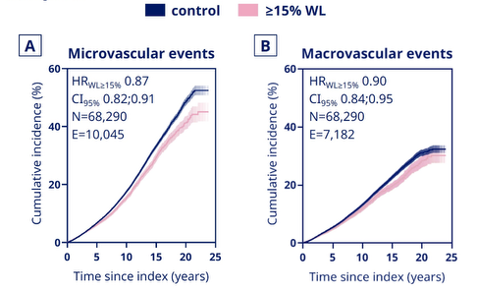
Early identification is essential for the prevention of CVD in patients with diabetes
In this Ask the Experts session, panelists discussed recent updates to guidelines concerning blood pressure, lipids, and heart failure. Dr. Daniel Jones (University of Mississippi) opened with the diabetes specific recommendations in the 2025 Guideline for the Prevention, Detection, Evaluation and Management of High Blood Pressure in Adults released by the American Heart Association (AHA) and American College of Cardiologists (ACC). The 2026 Guideline on the Management of Dyslipidemia was presented by Dr. Pamela Morris (Medical University of South Carolina), who acted as the vice-chair of the guideline writing committee. To close, Dr. Ambarish Pandey (UT Southwestern) discussed strategies for preventing heart failure (HF) in diabetes.
- Per the AHA/ACC guidelines, systolic blood pressure (SBP) ≤130 mm Hg diastolic blood pressure (DBP) ≥80 is recommended for patients with diabetes. These values are grounded in the eight RCTs that have compared CV outcomes for lower and higher SBP targets – seven out of the eight trials contained significant participation from patients with diabetes. A meta-analysis of seven trials found that more intensive lowering (SBP <130 mm Hg) resulted in significant reductions to major CVD (22%) and all-cause mortality (13%) when compared to less intensive lowering (SBP ≥130 mm Hg).
- In the era of “lower is better,” Dr. Jones acknowledged the need for a risk benefit analysis to account for adverse events associated with lower BP reduction. However, he still strongly advocated for intensive lowering, citing its additional benefit in reducing the risk of dementia by 15%.
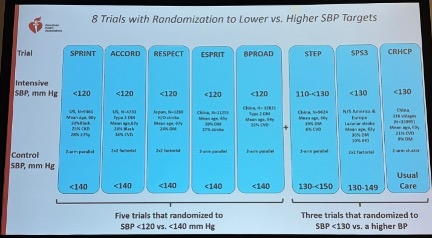
- Dr. Morris presented top take home messages from the AHA/ACC 2026 lipid guidelines, which included using the PREVENT-ASCVD calculator for risk assessment. In keeping with the session’s theme of early detection, Dr. Morris discussed the benefit of early dyslipidemia treatment in reducing lifelong risk of prolonged exposure to atherogenic lipoproteins. As a reminder, cumulative exposure to apo-B containing lipoproteins such as LDL-C is proportional to total atherosclerotic plaque burden, underscoring the importance of early detection to prevent CVD.
- LDL-lowering prescriptions are recommended for primary prevention in adults with diabetes. Here, Dr. Morris cited the VESALIUS-CV trial, which found that the risk of a first major cardiovascular event was significantly reduced through intensive lowering of LDL levels in patients with diabetes without known significant atherosclerosis. For ages 20-39 years, a moderate-intensity statin is recommended. For ages 40-75 years, the PREVENT-ASCVD framework should be used to assess if an increase in statin intensity is needed. For ages >75 years, with an estimated life expectancy of ≥2.5 years, moderate-intensity statins may be initiated following clinician-patient discussion. These recommendations are supported by a statistically significant reduction in risk of a first major cardiovascular event following treatment.
- Dr. Pandey presented the benefits of using biomarkers for screening and prevention of HF in diabetes. The development of HF is not a one-step process, but rather a progression through three stages that involves myocardial stress and injury. The key to preventing HF lies in the early identification of the Stage B phenotype in this progression, also known as diabetic cardiomyopathy. In the absence of other etiologies of cardiac abnormalities such as overt hypertension or obesity, cardiac biomarkers such as N-terminal pro B-type natriuretic peptide (NT-proBNP) and high-sensitivity troponin T (hsTnT) can aid in identification of diabetic cardiomyopathy. Use of these biomarkers also support better outcomes, with a sub-analysis of the DECLARE-TIMI 58 trial finding that NT-proBNP and hsTnT levels identified patients with greatest absolute risk reductions with SGLT2i. However, Dr. Pandey emphasized that using biomarkers alone was not sufficient and recommended supplementation with risk scores and EHR-based implementation targets.
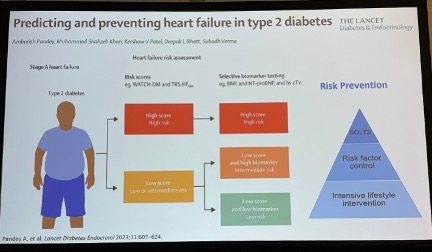
Semaglutide reduces MACE by altering proteins involved in cardiac wall stress, fibrosis, endothelial dysfunction, and vascular inflammation
In this fascinating presentation, Dr. Kristoffer Jensen Kolnes (Berlin Institute of Health, Germany) highlighted a novel mechanism underlying semaglutide’s cardiovascular (CV) benefits. Dr. Kolnes and colleagues conducted a mediation analysis using proteomics and identified four regulatory proteins associated with cardiovascular disease (CVD) that mediate semaglutide’s CV effects independently of weight loss. These proteins are involved in pathways related to cardiac wall stress, fibrosis and remodeling, macrophage-driven inflammation, endothelial dysfunction, and vascular inflammation.
- These proteins accounted for ~44% of the semaglutide’s CV benefits. At three years, after accounting for the effects of semaglutide-induced weight loss at Week 20, THBS2 (associated with fibrosis and remodeling) mediated 11% of semaglutide’s MACE risk reduction, NPPB (associated with wall stress) mediated 33%, and ANGPT2 and CD93 (both associated with endothelial dysfunction and vascular inflammation) mediated 19% and 36%, respectively. Although tenascin-C (TNC) – a protein associated with fibrosis and remodeling – had lower levels at Week 20, it was not a statistically significant mediator. The protein associated with macrophage-driven inflammation, MSR1, was not affected by semaglutide and was not a significant mediator. These proteins were similarly shown to mediate 59% of semaglutide’s effect on MACE after adjusting for participants’ weight-to-height ratio, confirming a robust analysis (see figure below).
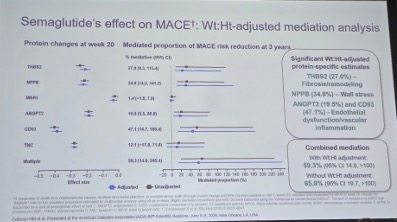
Meta-analysis finds that SGLT-2 inhibitors are safe and may be beneficial for management of cardiac arrhythmia
Dr. Uday Shree Akkala Shetty (Southern Regional Medical Center) presented on the electrophysiological safety of SGLT-2 inhibitors in reducing serious cardiac arrhythmia. Although the DAPA-HF study showed that dapagliflozin reduced serious ventricular arrhythmia and sudden death by 21%, when pooled across the eight randomized-controlled trials (n=16,000 with heart failure, T2D, and CKD), SGLT-2 inhibitors showed an insignificant 10% reduction in tachycardic events vs. placebo. Furthermore, SGLT-2 inhibitors did not increase the risk of supraventricular tachycardia, with a relative risk of 0.95. In patients with CKD, SGLT-2 inhibitors achieved a 50% lower risk of cardiac arrest. Despite the lack of statistical significance, given that this meta-analysis only included double-blinded RCTs, the directional trends suggest that SGLT-2 inhibitors have a favorable safety profile and may offer additional protection in high-risk cardiovascular populations.
SYNCHRONIZE-MASLD trial: GLP-1/glucagon RA survodutide significantly reduces liver fat in people with obesity and MASLD
In this crowded symposium, Dr. Ania Jastreboff (Yale University) and Dr. Lee Kaplan (University of Miami) presented full results of the SYNCHRONIZE-MASLDtrial (n=218), evaluating dual GLP-1/glucagon RA survodutide in people with obesity and MASLD. Full results were simultaneously published inNature Medicine.
- Trial design, baseline characteristics, and challenges. Adults with obesity were randomized 2:1 to survodutide 6.0 mg and placebo and were followed for 48 weeks, with three additional weeks of follow-up. Similar to the SYNCHRONIZE-1 trial, there was little dose flexibility during the first 16 weeks of dose escalation and maintenance periods. Primary endpoints include liver fat and body weight loss, and secondary endpoints include ALT, waist circumference, HOMA-IR, and other cardiometabolic markers.
- At baseline, participants were 56 years old, with 61% being female. Clinically, 38% had T2D, and the mean body weight was 108 kg (239 lbs), the BMI was 40 kg/m2, and the waist circumference was 121 cm (48 in). On liver parameters, participants had: (i) MRI-Proton Density Fat Fraction (PDFF) of 17%, indicating steatosis, FIB-4 score of 1.3; (ii) FibroScan-measured liver stiffness of 10.3 kPa, and ELF score of 9.4, reflecting fibrosis; and (iii) corrected T1 (cT1) MRI of 924 msec, reflecting fibroinflammation.
- Survodutide decreased body weight by 12%, compared to 1% with placebo. On cardiometabolic parameters, survodutide led to reductions in waist circumference by 11 cm (4.4 in) (vs. 1.9 cm [0.7 in]), systolic blood pressure by 6.7 mmHg (vs. 0.7 mmHg gain), A1c by 0.6 percentage point (vs. flat), HOMA-IR by 46% (vs. 12%), total cholesterol by 11% (vs. 1.8%), triglycerides by 30% (vs. 0.7%), and hsCRP by 46% (vs. 7%).
- On liver outcomes, approximately 84% of the survodutide group (vs. 24%) achieved liver fat reduction ≥30%, assuming full adherence. Moreover, 61% of the survodutide group (vs. 6%) achieved normalized liver fat content (<5%). Survodutide decreased ALT by 37% (vs. 11%), and 82% of the treatment group (27%) achieved ALT normalization. cT1 was lowered by 117 msec (vs. 24 msec), and 63% of the treatment group (vs. 21%) achieved normalization.
- Safety and tolerability. Adverse events (87% vs. 79%) and treatment-related discontinuation (23% vs. 10%) were more common in the survodutide group. Consistent with the incretin class, most events were GI-related. Survodutide is investigated further in LIVERAGE (n=1,800) and LIVERAGE-Cirrhosis trials (n=1,590) for individuals with biopsy-proven MASH with fibrosis or those with MASH and compensated cirrhosis, respectively.
Post-hoc analysis of the SYMMETRY trial of efruxifermin in people with T2D and compensated cirrhosis due to MASH
Dr. Mary Rinella (University of Chicago) presented a post-hoc analysis of the phase 2b SYMMETRY trial (n=182) of efruxifermin (Fc-FGF21 fusion protein) in people with T2D and compensated cirrhosis due to MASH. Positive results from the trial, including adults with liver biopsy-confirmed compensated cirrhosis due to MASH, were presented in January 2025. Dr. Rinella said the results of the post-hoc analysis aim to address the high unmet need for T2D and MASH treatment. Overall, the analysis showed that efruxifermin improves: (i) fibrosis and markers of liver injury; (ii) lipid profile; and (iii) insulin sensitivity. Efruxifermin was also generally well tolerated, with an overall adverse event frequency of ≥15%. The most common adverse event was mild to moderate gastrointestinal complications (e.g., diarrhea, nausea, and vomiting).
- Histological reversal of cirrhosis was nearly identical across the overall population and the T2D subgroup. The proportion of participants who had a reduction of ≥one-stage fibrosis without worsening of MASH at Week 96 was 29% for the overall population (n=41) on efruxifermin 28 mg compared to 24% in the T2D subgroup (n=33). These similarities were seen with efruxifermin 50 mg, with both the overall population and T2D group having 39% participants showing fibrosis improvement and no worsening of MASH (n=46 and n=36, respectively). Compared to the placebo group, the overall population (n=47) and T2D subgroup (n=38) both had a 15-16% improvement.
- The enhanced liver fibrosis test (ELF) showed significant improvements in those with T2D on efruxifermin compared with placebo. Dr. Rinella mentioned that ELF is a critical blood test that quantifies three analytes that directly contribute to fibrosis, with a ≥0.5 decrease in ELF score indicating a clinically meaningful improvement. At Week 96, participants on efruxifermin 50 mg conferred a reduction of 0.5 (baseline of 10.5), while those on 28 mg had a reduction of 0.3 (baseline of 10.6). These results were all statistically significant relative to placebo, which had an increase of 0.3 (baseline of 10.3).
- Improvements in measures of liver injury. While the placebo had no change in AST, an enzyme released into the bloodstream during liver damage or inflammation, those on efruxifermin 28 mg had a reduction of 7.2 U/L, and those on 50 mg had a reduction of 9.4 U/L (from a baseline of 34 to 36 U/L). Additionally, changes in ALT, another enzyme that leaks into the bloodstream during liver cell stress, had a reduction of 11.6 U/L for those on efruxifermin 28 mg reduction of 10.3 U/L for those on 50 mg, compared to a reduction of 5.7 U/ in the placebo group.
- Improvements in lipids. Triglyceride levels dropped by 31 mg/dL for efruxifermin 28 mg and by 33 mg/dL for efruxifermin 50 mg, compared to a drop of 8 mg/dL for placebo. HDL-C levels increased by 7 mg/dL for both efruxifermin 28 mg and 50 mg, compared to 2 mg/dL in placebo. Lastly, LDL-C levels reduced by 13 mg/dL for efruxifermin 28 mg and 9 mg/dL for efruxifermin 50 mg, relative to 8 mg/dL for placebo.
- Improvements in insulin sensitivity. Participants on efruxifermin 50 mg showed the greatest improvement in adiponectin levels, increasing by 4.2 mg/L (from baseline of 4.9-5.0 mg/dL), compared to 0.5 mg/L for placebo and 1.7 mg/L for efruxifermin 28 mg. C-peptide levels also reduced by 1.0 µg/L and 0.9 µg/L for efruxifermin 28 mg and 50 mg, respectively, compared to a reduction of 0.2 µg/L for placebo. Lastly, A1c levels remained flat across both dosages.
Rezdiffra demonstrates meaningful gains in MASH resolution and fibrosis improvement
Madrigal’s product theater spotlighted Rezdiffra(resmetirom), an oral, once-daily tablet approved for noncirrhotic MASH and moderate to advanced fibrosis (stages F2–F3). Dr. Taher Modarrassi (Advocare Princeton Cardiometabolic Health) and Dr. Gia Landry (Louisiana State University) called for treating MASH early, given its rising prevalence and significant hepatic and extrahepatic burden. Approximately 22% of patients with F3 fibrosis progress to cirrhosis within two years. The speakers then highlighted the liver’s central role in lipid homeostasis and systemic metabolic regulation. Dysfunction in critical liver processes, such as those caused by MASH, plays a key role in causing and exacerbating metabolic stress. In a cross-sectional outpatient study of 561 people with T2D and/or steatosis and fibrosis were identified in 70% and 21% of participants, respectively, highlighting the high prevalence of undiagnosed liver disease in diabetes care settings.
- In the phase 3 MAESTRO-NASH trial (n=888), Rezdiffra conferred statistically significant fibrosis improvement without worsening steatohepatitis at Week 52 in patients with F2-F3 fibrosis. Compared to placebo, Rezdiffra group was 1.6-2x more likely to achieve fibrosis improvement and 2.4-3x more likely to achieve steatohepatitis resolution. Additionally, reductions in liver fat content in patients treated with Rezdiffra were observed at 16 and 52 weeks of treatment.
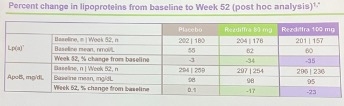
- The presenters highlighted that Rezdiffra has favorable access, with 87% of commercial lives having coverage for the therapy. Moreover, Madrigal Patent Support assists patients with access through benefits verification and authorization support, eliminates financial barriers via copay, and provides ongoing education and resources to help with informed use.
- Drs. Modarressi and Landry clarified that its use is not recommended in patients with decompensated cirrhosis. Safety considerations include hepatotoxicity, gallbladder-related adverse events, gastrointestinal side effects, and drug-drug interactions, including statins. Diarrhea and nausea were the most common causes of treatment discontinuation, and the therapy should not be used with strong CYP2C8 inhibitors. No clinical data are currently available in pregnancy or lactation.
Dr. Timothy Garvey discusses GLP-1 RAs for MASLD and the unique lipid profiles seen in the condition
Dr. Timothy Garvey (University of Alabama Birmingham) delivered a strong presentation on MASLD that generated interest even at the tail end of ADA 2026. He began by saying that metabolic dysfunction-associated steatotic liver disease (MASLD) and metabolic dysfunction-associated steatohepatitis (MASH) are part of the overall process of insulin resistance. Clinicians must tackle these relatively common conditions through the secondary prevention of dyslipidemia, as well as through tertiary prevention of the worsening of MASH. He said that dyslipidemia caused by insulin resistance has a characteristic profile including: (i) elevated triglycerides; (ii) increased VLDL-c; (iii) LDL-c that is normal or only mildly elevated; (iv) low HDL-c; and (v) increased non-HDL-c. He also noted that lipoprotein molecules themselves can have altered characteristics in the case of MASLD. All of these aspects of dyslipidemia and MASH are essential to understanding how therapies such as semaglutide, tirzepatide, and resmetirom improve liver steatosis.
- Lipoprotein profiles change throughout the development in MASH, requiring a change to lipid panel interpretation. Dr. Garvey demonstrated that insulin resistance has an effect on both lipoprotein size and particle concentration as demonstrated by hyperinsulinemic clamps. In particular, insulin resistance leads to larger VLDL-c particle diameters, as well as a higher concentration, while LDL-c increases in concentration but decreases in diameter. In contrast, HDL-c decreases in diameter and in concentration with insulin resistance. These modifications can modify the body’s overall lipid profile, but, importantly, also impact the use of lipid panels. Current calculated LDL cholesterol levels in routine bloodwork do not capture these effects of insulin resistance on lipoproteins and the negative effects of these changes. MASLD is also associated with more profound insulin resistance and atherogenic lipids compared to obesity alone, which requires a specific approach.
- Dr. Garvey then discussed the 2022 AACE-AASLD Lipid Management Guidelines for MASLD/MASH. The document established cholesterol guidelines for patients at high CV risk, very high, and extreme CV risk. However, Dr. Garvey said that many of these guidelines still require improved additional evidence and updating following the 2022 publication. He believes that the field should standardize its approach to lipid risk and continually update its understanding.
- Incretins have demonstrated remarkable efficacy for MASLD. In the STEP-5 trial, semaglutide 2.4 mg demonstrated a 5% reduction to total cholesterol compared to a 2.4% increase in placebo. The results were especially pronounced for VLDL and triglycerides, two areas of concern in MASLD. Tirzepatide has also demonstrated benefit for MASLD via the SURMOUNT-5 trial, with significant reductions to tirzepatide, non-HDL-c, and other metrics.
- Although GLP-1 receptors are negligibly expressed in the liver, GLP-1 RAs affect hepatic lipid metabolism indirectly. GLP-1 RAs reduce caloric intake and weight loss, reduce ectopic fat and hepatic lipid content, increases insulin sensitivity to improve glycemia and anti-lipolysis in adipose tissue, increases adiponectin to improve function, and more.
- In closing, Dr. Garvey discussed the use of resmetirom 80 or 100 mg/day for MASLD. Resmetirom confers little to no weight loss and is a liver-directed thyroid hormone receptor beta-selective agonist. It also has no effect on insulin sensitivity, however, has been proven to be highly effective for MASLD due to its direct action. Resmetirom increases fatty acid beta-oxidation, upregulates LDL receptor expression, and reduces lipogenesis. Dr. Garvey said that he would be interested to see if Madrigal pursues a lipid-lowering indication for Rezdiffra (resmetirom) in the future. In closing, Dr. Garvey quoted Mr. Henry James, an American-British author. In response to a question, “Is life worth living?” he said, “It all depends on the liver.” Dr. Garvey calls for an improved mechanistic understanding of MASLD to tackle the prevalent global issue through the lens of lipid lowering.
MASLD/MASH: A review of the drug approval process and treatment options beyond resmetirom
Drs. Sonal Kumar (Cornell University), Mazen Noureddin (Houston Methodist), and Meena Bansal (Mount Sinai) gave an overview of MASLD/MASH therapies, including those already available and those still in the pipeline, across three drug classes: (i) PPAR agonists; (ii) FGF-21 analogues; and (iii) incretins. As background, Dr. Noureddin shared that while there are multiple study designs available for phase 3 MASH trials, most researchers go with the design involving liver biopsies because those can lead to drug approval in just a year. For EMA approval, a therapy needs to show both MASH resolution and fibrosis improvement, while for FDA approval, only one is necessary. Dr. Kumar said that endocrinologists will play a central role in identifying and managing patients with MASLD/MASH.
- PPAR agonists
- Pioglitazone: Pioglitazone has been shown in a randomized controlled trial (n=101) led by University of Florida’s Dr. Kenneth Cusi to be effective in people with T2D. A key concern with pioglitazone is its weight gain side effect. Dr. Kumar said this is challenging for her as a hepatologist because she often also tells her patients that they need to lose weight.
- Saroglitazar: While not available in the US, saroglitazar has been approved in India since 2013. A phase 4 study published this year showed that saroglitazar improved steatosis, liver enzymes, and, slightly, A1c.
- Lanifibranor: Phase 2 results for lanifibranor were published in 2021, showing significant reduction in liver fat content and improvements in several metabolic endpoints. Dr. Kumar pointed out that phase 3 results are expected later this year.
- FGF-21 analogues
- Efruxifermin: Results from the phase 2b study for efruxifermin were published in 2025 and showed statistically significant improvement in fibrosis without worsening of MASH. The phase 3 SYNCHRONY trial program is ongoing. Efruxifermin is also the first drug to show promise in patients with cirrhosis.
- Pegozafermin: Phase 2b results published in 2023 showed statistically significant improvement in fibrosis at just 24 weeks. Dr. Noureddin pointed out that lanifibranor is the only other drug that has shown this in such a short time frame.
- Efimosfermin: Results were recently published for this phase 2 trial, showing general tolerability. In comparison to the others, this is a once-monthly therapy.
- Dr. Noureddin shared that he is also keeping an eye on Kriya Therapeutic’s KRIYA-497 and Minwei Biotech’s MWN105. KRIYA-497 is a one-time intramuscular gene therapy, while MWN105 is a GLP-1/GIP/FGF21 agonist.
- Incretins.
- Liraglutide: Liraglutide was the first GLP-1 RA to show histologic MASH improvement.
- Semaglutide: Semaglutide received conditional approval for MASH in adults with stages F2/F3 fibrosis in August 2025 based on positive results from the ESSENCE trial. While semaglutide was not shown to be effective in people with cirrhosis, Dr. Bansal emphasized that it is still safe for these patients who are taking it for other reasons.
- Tirzepatide: The phase 2 SYNERGY-NASH trial met its primary endpoint, and the phase 3 SYNERGY-Outcomes trial is now currently underway.
- Survodutide: Survodutide showed positive phase 2b results and two phase 3 studies are underway, including in patients with cirrhosis (LIVERAGE and LIVERAGE-Cirrhosis).
- Pemvidutide: Positive phase 2b results from the IMPACT trial were announced in December, and the phase 3 PERFORMA trial is planned.
- Retatrutide: A phase 2a MASLD substudy found significant reductions in liver fat with retatrutide.
Ferroptosis inhibition and senotherapies as potential novel treatments for MASH
In this insightful presentation, Dr. Kuo Du (University of Kansas) explored the liver as a central regulator of metabolic homeostasis and introduced a potential novel therapeutic target for MASH. Dr. Du posed two core questions: (i) how does metabolic stress induce liver injury; and (ii) how does the injured liver affect other organs and contribute to multi-organ failure? Aging biology was highlighted as a key “clue” to both solutions. Aging increases the risk and severity of metabolic disease, and metabolic disease itself accelerates biological aging. Therefore, aging-associated mechanisms could underlie liver injury and its systemic consequences.
- Dr. Du began by characterizing cellular senescence, marked by permanent cell-cycle arrest and a senescence-associated secretory phenotype (SASP), as a hallmark of aging and metabolic stress. In the liver, cellular senescence has been observed in multiple cell types, including hepatocytes, endothelial cells, and immune cells. Hepatocytes make up most of the liver cells, carry out key liver functions, regulate whole-body metabolism, and are primary targets of initiators of inflammatory and fibrotic cascades.
- Dr. Du’s work has focused on determining whether hepatocyte senescence occurs in MASH and whether it can be targeted therapeutically. In a bulk RNA-seq analysis of liver biopsies (n=368) in healthy controls and patients with MASH across fibrosis stages, senescence-associated genes were highly enriched in MASH. This enrichment was even greater in advanced compared to mild fibrosis.
- Still, senescent cells are highly heterogeneous, and researchers have yet to identify a single, definitive in vivo marker. Therefore, Dr. Du’s group sought to develop a more robust senescent hepatocyte signature. In preclinical in vivo and in vitro models, a separate RNA-seq analysis revealed 196 upregulated differentially expressed genes in the senescent hepatocyte gene signature (SHGS). Further analysis showed that SHGS genes are enriched for inflammation and fibrosis pathways. When translated to clinical samples from the Duke MASH cohort, SHGS enrichment was shown to correlate with markers of liver injury (AST), obesity (BMI), and MASH (portal inflammation, hepatocyte ballooning, fibrosis stage). Greater SHGS enrichment was seen in patients with MASH compared to controls. Importantly, SHGS enrichment decreased after bariatric surgery, which has been shown to improve MASH, indicating that SHGS can track disease progression, regression, and clinical outcomes.
- Aging is an independent risk factor for T2D and MASH. In work supervised by Dr. Anna Mae Diehl (Duke University), MASH patients demonstrate accelerated biological aging, correlating with MASH severity, via DNA methylation pathways. Dr. Du presented this work as a conceptual shift, where MASH is framed as a degenerative disease in which livers are “biologically older” than their chronological age. This raised two key questions: can we “reset the clock” in these livers, and, if so, will that improve MASH?
- To establish a hepatocyte aging gene signature (HGS), researchers compared the transcriptome – the complete collection of RNA transcripts – of primary hepatocytes in young and old mice. HGS was found to include 496 differentially expressed genes. Similar to SHGS, the level of enrichment in HGS was correlated with liver ballooning score, portal inflammation, and fibrosis stage. HGS enrichment was also seen in other diseased metabolic organs (e.g., pancreatic islets from patients with T2D, heart failure, diabetic kidney disease). Findings suggest the accumulation of biologically old hepatocytes and aged cells is a conserved feature across metabolic disease.
- Transcriptomic comparisons in patients with MASH and controls demonstrated dysregulation of DNA methylation pathways and programmed cell death pathways. Enrichment in HGS-associated pathways was associated with upregulation of metal ion transport, programmed cell death, and stress response processes. These features point towards ferroptosis – an iron-dependent, lipid peroxidation-driven form of programmed cell death. Dr. Du hypothesizes that ferroptosis is a key mechanistic link between hepatocyte aging and MASH pathogenesis.
- To evaluate ferroptosis presence, Dr. Du’s group evaluated iron accumulation and ferroptosis gene signatures using single-nucleus RNA-seq analysis. Both signatures were highly enriched in livers with MASH, especially in hepatocytes with HGS enrichment. Through preclinical assessments of aged and young livers on a MASH diet, ferroptotic stress was found to be a key driver of MASH progression during aging.
- Summarizing his sweeping address, Dr. Du reminded his audience of the three key takeaways: (i) under metabolic stress, hepatocytes become biologically old and senescent; (ii) these senescent cells experience ferroptotic stress, lose normal liver function, remodel their microenvironment, and drive fibrosis and inflammation; and (iii) ferroptotic stress and senescence connect metabolic stress, aging, and progressive liver disease.
- Therapeutically, ferroptosis inhibition has been shown to improve tissue pathology in several contexts, suggesting that ferroptotic stress modulation is a relevant therapeutic approach for the treatment of MASH. Additionally, several senotherapies – targeting cell senescence – are under active investigation. Several senolytic or senomodulatory candidates have entered early clinical trials, and some have shown early promise in metabolic and fibrotic complications, such as DKD, lung fibrosis, bone loss, and DME.
Bayer-sponsored symposium discusses screening, pathogenesis, and treatment of chronic kidney disease in diabetes
In an interactive symposium, participants answered questions related to chronic kidney disease (CKD) and early detection and treatment in T1D and T2D. Sponsored by Medscape Education and Bayer, Dr. Charles Vega (UC Irvine), Prof. Peter Rossing (Steno Diabetes Center, Denmark), Dr. Janet McGill (Washington University), and Prof. Chantal Mathieu (KU Leuven, Belgium) discussed CKD as an underrecognized complication of diabetes and a contributor to worse long-term outcomes. People with diabetes share risk factors that contribute to CKD and cardiovascular disease (CVD), including hypoglycemia and high blood pressure, mineralocorticoid overreaction in the kidney and heart cells, tissue damage, and albuminuria. Despite clinical guidelines, screening remains inconsistent, with only about an estimated 52% of adults with T2D (n=513,165) screened with eGFR and UACR. Through evolving case studies, participants interpreted test results and applied current guideline recommendations to better understand the multidisciplinary strategies used to slow CKD progression and reduce CV risk.
- The CURE-CKD registry revealed a persistently high CKD burden in people with T1D, with 27.1% of adults with T1D (n=23,589) meeting criteria for CKD. Females, racial and ethnic minorities, older adults, and those with CVD were disproportionately affected by CKD. The coexistence of diabetes and CKD was also associated with substantially elevated cardiorenal risk, including higher rates of heart failure (HF), atherosclerotic CVD, and progression to kidney failure.
- Given the high burden of CKD and the significant consequences of missed diagnoses in T2D, early detection and screening are critical. According to the 2025 Annual Data Report from the United States Renal Data System, diabetes accounted for 37% of reported causes of end-stage kidney disease in the US (n=831,192). Additionally, People with T2D and CKD have a 2- to 5-fold increased risk of developing HF, reflecting the close pathophysiologic relationship between CKD and HF. Panelists described the bi-directional relationship between heart failure with preserved ejection fraction (HFpEF) and CKD, given that both pathways involve inflammation, mineralocorticoid receptor activation, and extracellular fluid expansion. Given the overlap between HF risk, CKD progression, ASCVD risk, and metabolic dysfunction, therapies should target cardiorenal outcomes rather than glycemia alone.
- The ADA and KDIGO consensus report emphasized that therapeutic options for people with T1D and CKD are limited, highlighting the importance of regular risk reassessment and individualized management. Current recommendations focus on optimizing CV and renal risk reduction through therapies including RAAS inhibitors, statins, blood pressure management, and lipid-lowering agents. However, panelists emphasized the need for additional risk-based therapies and improved treatment options for this population.
- Finerenone therapy can slow kidney and CV disease progression. As a selective, non-steroidal mineralocorticoid receptor antagonist (MRA), finerenone functions by blocking MR overreaction. Finerenone was highlighted as a therapy that can reduce CKD progression, CV events, and HF hospitalizations, particularly when used alongside SGLT2 inhibitors and GLP-1 receptor agonists. The panelists emphasized that finerenone therapy requires a coordinated interprofessional approach to optimize cardio-renal outcomes while minimizing hyperkalemia risk. Interprofessional considerations suggested include routine CKD staging and albuminuria assessment, renal function and potassium monitoring, and individualized dose adjustments based on eGFR.
STEP UP post-hoc analysis shows high-dose semaglutide improves kidney health in people with obesity but without T2D
In an interesting session, Prof. Peter Rossing (Steno Diabetes Center, Denmark) shared findings from the post-hoc analysis of the phase 3b STEP UP trial (n=1,407), assessing renal effects of semaglutide 7.2 mg in people with obesity and without diabetes. As background, in the trial, semaglutide 7.2 mg conferred 21% weight loss at 72 weeks, significantly greater than with semaglutide 2.4 mg. In addition, semaglutide has demonstrated kidney benefits potentially through weight loss and reduced inflammation. The post-hoc analysis evaluated how high-dose semaglutide affects eGFR and hsCRP, markers of kidney health and inflammation.
- At baseline, participants were 47 years old and had a mean body weight of 112 kg (251 kg), BMI of 40 kg/m2, hsCRP of 4.71 mg/L, and eGFR of 99 mL/min/1.73 m2. Approximately two-thirds of the participants had normal renal function (eGFR ≥90 mL/min/1.73 m2), while 28% had mild renal impairment (eGFR between 60-90 mL/min/1.73 m2) and 2% had moderate renal impairment (eGFR between 30-60 mL/min/1.73 m2).
- Results. At Week 72, there was no statistically significant difference regarding changes in eGFR (see figure below). Interestingly, however, another measure of eGFR, calculated with both creatinine and cystatin C, increased in the semaglutide group by 3.2 mL/min/1.73 m2, compared to placebo. While the reason for this discrepancy is unclear, Prof. Rossing said it could be due to improved kidney function better captured with cystatin C or the differential effect of semaglutide on serum creatinine or cystatin C levels. Finally, semaglutide led to significant reductions in hsCRP compared to placebo, with an estimated treatment difference of 42% for semaglutide 2.4 mg and 47% for 7.2 mg.
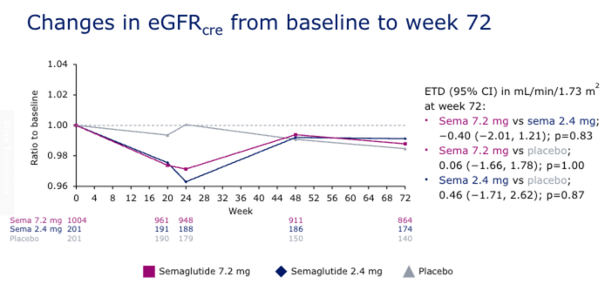
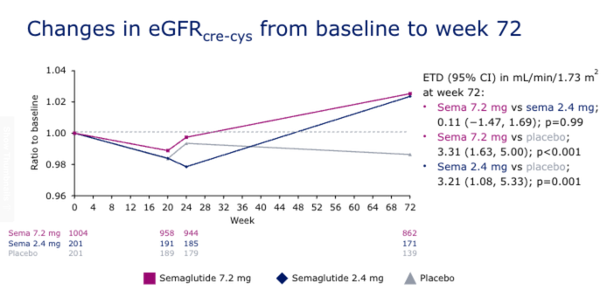
Changes in glomerular filtration rate and hyperfiltration status in youth with T2D with tirzepatide from SURPASS-PEDS
In an oral session, Dr. Peter Bjornstad (UW Medicine Diabetes Institute) presented findings of tirzepatide’s effect on glomerular filtration rate in participants with youth-onset T2D. As background, Dr. Bjornstad shared evidence that youth-onset T2D progresses more rapidly than adult-onset T2D, yet there are fewer glucose-lowering treatments approved for use in youth. In the phase 3 SURPASS-PEDS trial (n=99), tirzepatide demonstrated significant improvements in glycemic management in youth-onset T2D, with a safety profile comparable to that of adults. This study expanded findings from this trial, observing the effect of tirzepatide on glomerular hyperfiltration – a common marker of early kidney disease affecting 24% of youth-onset T2D. The current analysis used a mixed-effects model of repeated measures to determine changes in eGFR from baseline to Week 30 and Week 52 from the SURPASS-PEDS trial.
- Tirzepatide was associated with a decrease in eGFR, primarily attributed to attenuation of glomerular hyperfiltration. At baseline, the mean age of participants was 15 years, and 18% of participants had hyperfiltration. Results showed that at Week 30, tirzepatide treatment was associated with a decrease in eGFR, primarily in participants with hyperfiltration. At Week 30, among participants with baseline hyperfiltration (n=16), the change from baseline in eGFR was a 24% reduction with tirzepatide 5 mg, a 16% reduction with tirzepatide 10 mg, and an 8% increase with placebo. In participants without baseline hyperfiltration (n=74), the change from baseline in eGFR was a 6% reduction with tirzepatide 5 mg, a 10% reduction with tirzepatide 10 mg, and a 1% reduction with placebo.
- At Week 52, among participants with hyperfiltration (n=16), the change from baseline in eGFR was a 16% reduction with tirzepatide 5 mg, a 5% reduction with 10 mg, and a 12% reduction with placebo. In participants without hyperfiltration (n=74), the change from baseline in eGFR was 4% reduction with tirzepatide 5 mg, 6% reduction with tirzepatide 10 mg, and nearly 0.4% with placebo.
- Results suggest a potential kidney-protective effect of tirzepatide. Reflecting on the study’s results, Dr. Bjornstad suggested that tirzepatide has kidney-protective effects in participants with youth-onset T2D. For context, Novo Nordisk’s semaglutide is approved to reduce the risk of CKD in adults with T2D. Dr. Bjornstad encouraged a longer-term study to understand the effects tirzepatide might have for preventing diabetic kidney disease.
Experts debate sequential versus simultaneous initiation of therapies for diabetic kidney disease
In a debate on the optimal approach to combining therapies for diabetic kidney disease, Dr. Ian de Boer (University of Washington) advocated for the sequential addition of therapies, while Dr. Amy Mottl (UNC Chapel Hill) argued for simultaneous initiation. Despite taking opposite positions, both speakers agreed that treatment decisions should be personalized to patients, implemented without delay, and designed to mitigate adverse effects.
- Dr. de Boer argued for sequential addition for five main reasons. First, not every patient needs every tool. Second, patients’ responses to therapies vary, and if a patient experiences side effects from a drug, sequential addition allows the clinician to identify which drug is to blame. Third, sequential addition minimizes adverse effects and the fear of adverse effects. Fourth, since overall treatment adherence is low, sequential addition could optimize adherence and long-term benefits. Finally, drug indications and patients’ lifestyles, risk factors, and diseases change over time. Given these considerations, Dr. de Boer argued for combining therapies in a sequential manner. While doing so, HCPs could schedule repeated contacts and coordinate multidisciplinary care to improve patients’ access to the highest quality of care.
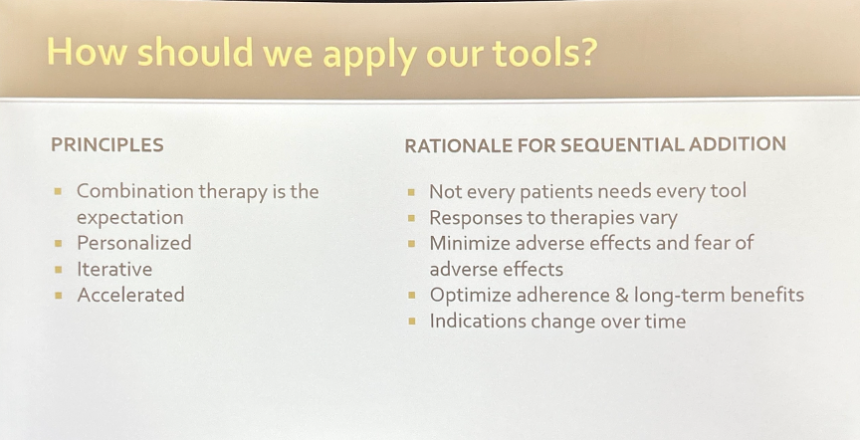
- Dr. Amy Mottl advocated for simultaneous initiation of therapies because “every day, week, month with risk factors controlled matters.” An early combination therapy can improve long-term health outcomes. Moreover, a sequential approach is time-intensive for both patients and providers, and patients may get frustrated with repeat testing. In an interesting remark, Dr. Mottl said, in her experience, “Patients don’t care about how many medications they are on – only how many pills they have to take.” Hence, a polypill could allow patients to be on more therapies without the added burden of taking more pills. Finally, simultaneous initiation of therapies is already used for other conditions. For instance, a four-drug polypill, including statin, ACE inhibitor, calcium channel blocker, and aspirin, is common for addressing cardiovascular diseases.
SURPASS‑CVOT substudy finds no signal of early diabetic retinopathy worsening with tirzepatide versus dulaglutide
In this oral presentation, Dr. David D’Alessio (Duke University) shared findings from a prespecified SURPASS‑CVOT substudy, examining whether the substantial glucose‑lowering achieved with tirzepatide versus dulaglutide affects retinal outcomes in people with long‑standing T2D at high risk for developing diabetic retinopathy (DR). The study was designed to directly address long‑standing concerns about worsening of DR when chronic hyperglycemia is corrected rapidly. Dr. D’Alessio emphasized that tirzepatide produces some of the most rapid and substantial A1c reductions seen in clinical practice, making retinal safety a critical question in people with long‑standing T2D.
- Study design and baseline characteristics. The substudy enrolled 920 participants with established cardiovascular disease and either existing DR or elevated risk for progression, randomized to tirzepatide (up to 15 mg weekly) or dulaglutide (1.5 mg weekly). Retinal status was assessed using standardized fundus photography at baseline and 12 months, using a modified Early Treatment Diabetic Retinopathy Study (ETDRS) scale. Dr. D’Alessio described this as a semi‑quantitative system that ranks retinopathy severity from no DR to proliferative disease. It also enables detection of clinically meaningful worsening of DR, defined as a ≥2‑step increase on the scale. The primary endpoint was ≥2‑step ETDRS progression or need for DR treatment over 36 months, with secondary endpoints including time to first DR progression and sustained visual acuity loss. Baseline characteristics reflected a population at substantial risk, with a mean A1c of 8.7%, nearly 20 years of diabetes duration, and more than 75% having DR.
- Results. Tirzepatide produced a 2.18 percentage-point A1c reduction at six months vs. a 1.28 percentage-point reduction with dulaglutide, yet retinal outcomes remained stable and comparable between groups. Rates of ≥2‑step ETDRS progression were similar, with no statistically significant differences between treatments, and time‑to‑event curves overlapped throughout the 36‑month follow‑up. DR‑related interventions, including photocoagulation, intravitreal anti‑VEGF therapy, vitrectomy, and vitreous hemorrhage, occurred at low and comparable rates across both arms. Sustained visual acuity loss of ≥3 lines was rare and did not differ between tirzepatide and dulaglutide. Mean ETDRS scores remained stable in participants without baseline DR, and although small increases were observed in those with baseline DR, these changes were gradual and aligned with the natural history of long‑standing disease rather than treatment‑related acceleration. Importantly, Dr. D’Alessio emphasized that there was no correlation between the magnitude of A1c reduction and changes in ETDRS score, and stratifying participants by >2.0% vs. ≤2.0% A1c reduction did not reveal any differential risk in either treatment group.
- Implications. Dr. D’Alessio underscored that these findings are particularly meaningful given the concern that rapid correction of hyperglycemia can precipitate early worsening of diabetic retinopathy. Given tirzepatide’s ability to lower A1c rapidly, the absence of any signal of early worsening is clinically meaningful. The lack of association between the magnitude of A1c reduction and changes in ETDRS score further supports that tirzepatide’s potency does not translate into retinal vulnerability, compared to dulaglutide, even in a cohort with long diabetes duration, high baseline A1c, and a high prevalence of existing DR. We are curious how these retinal outcomes differ between tirzepatide and placebo or other drug classes like metformin, insulin, or SGLT-2 inhibitors.
Tirzepatide is associated with 45% lower risk of major adverse limb events than semaglutide
In this afternoon symposium, Dr. Kevin Cowart (University of South Florida) shared findings from a retrospective study (n=24,274) comparing tirzepatide to semaglutide in adults with T2D and peripheral artery disease (PAD). PAD is a vascular condition in which arteries are narrowed by atherosclerosis, reducing the blood flow in the limbs. It is a marker for overall cardiovascular diseases and increases the risk of amputations and limb-threatening ischemia in people with T2D. GLP-1 RAs like liraglutide and semaglutide have previously demonstrated benefits in vascular biology, perfusion, and function. To better understand the real-world effects of semaglutide and tirzepatide on major adverse limb events (MALE), the investigators conducted a retrospective cohort analysis using TriNetX global electronic health record database between 2022 and 2025.
- Study methods and baseline characteristics. The study analyzed data from tirzepatide (n=12,137) and injectable semaglutide initiators (n=12,137), who were 1:1 matched for demographic characteristics, comorbidities, and cardiometabolic risk factors. At baseline, participants were 65 years old, with 51% being female, 77% white, 15% Black, 2% Asian, and 77% Hispanic. Many participants were affected by cardiometabolic conditions, including hypertension (62%), hyperlipidemia (59%), ischemic heart disease (30%), heart failure (19%), and atrial fibrillation (14%), among others. Common medication use at baseline included antihypertensives, diabetes drugs (20% on metformin, 27% on insulin, and 15% on SGLT-2 inhibitors), antiplatelets, anticoagulants, and lipid-lowering therapies. The primary composite outcome was MALE, including critical limb ischemia, amputation, and peripheral angioplasty or lower-extremity bypass procedures.
- Results. Tirzepatide was associated with 45% lower risk of MALE compared to injectable semaglutide. The absolute risks were 2.3% and 4.1%, respectively, reflecting an absolute risk difference of 1.8%. Specifically, tirzepatide was associated with 50% reduced risk of critical limb ischemia, 35% lower risk of amputation, and 47% lower risk of peripheral angioplasty or bypass. Dr. Cowart said that prospective trials are needed to better elucidate the comparative efficacy of tirzepatide and semaglutide on limb health.
Diabetic neuropathy pain management: Therapies, exercise, and spinal cord stimulation
Drs. Melissa Elafros (University of Michigan), Rodica Pop-Busui (Oregon Health & Science University), and J. Robinson Singleton (University of Utah) gave an overview of diabetic neuropathy diagnosis and treatment options. As background, there are multiple ways neuropathy is diagnosed. Beyond asking patients about pain intensity using the Visual Analogue Scale, there are questionnaires and/or physical examinations such as the Neuropathy Total Symptom Score-6 (six ordinal questions), Michigan Neuropathy Screening Instrument (15 yes/no questions), Diabetic Neuropathy Symptom Score (four yes/no questions), Erasmus Polyneuropathy Symptom Score (six ordinal questions), Deuleur Neuropathique en 4 (two questions and two examination), Leeds Assessment of Neuropathy Symptoms and Signs Pain Scale (five questions and two examinations), and Utah Early Neuropathy Scale (five examinations).
The barriers to diagnosing patients through physical examination, Dr. Elafros outlined, include lack of time and appropriate clinical diagnosis tools (e.g., 128-Hz tuning fork), easier alternatives (e.g., referring to a specialist or ordering a diagnostic test), and lack of confidence.
Dr. Elafros highlighted that while estimates of diabetic peripheral neuropathy vary widely (6-51% of people with diabetes), studies suggest that nearly 50% of patients experience pain, underscoring the need for effective treatments. See our painful diabetic peripheral neuropathy competitive landscape here.
- Dr. Pop-Busui gave an overview of pharmacological strategies for managing neuropathic pain. First-line therapies include SNRIs, namely duloxetine and venlafaxine ER. Importantly, these are “metabolically safe” for people with diabetes as they do not affect glucose dynamics and weight. Gabapentinoids such as pregabalin and gabapentin and tricyclic antidepressants are also recommended as first-line options across multiple guidelines. There are also topical therapy options such as the capsaicin 8% and lidocaine 5% patches that may be considered if first-line options are insufficient or contraindicated. Dr. Pop-Busui said that a gap that remains is the variability in treatment response, with some patients continuing to experience pain. Some therapies also have practical barriers to use; for example, the capsaicin 8% patch needs to be applied in medical offices, making it a time-consuming process.
- Dr. Singleton discussed the importance of exercise in managing diabetic neuropathy and reviewed spinal cord stimulation as a treatment option. He said that while exercise does not significantly improve metabolic factors in patients, it is an effective behavioral intervention that can reduce inflammatory injury and pain. He recommended implementing exercise early and choosing low impact, short-interval exercises. He also highlighted the importance of setting an adherence goal, establishing a clear plan (and backup plan), and making exercise fun (e.g., peer reinforcement).
- Spinal cord stimulation (SCS) has been shown to be effective, as in the SENZA-PDN study, though patients may find the surgical nature of the procedure a limiting factor.
Dr. Stephanie Teal on selecting contraceptive methods for people with diabetes and obesity
Dr. Stephanie Teal (Case Western Reserve University) gave a comprehensive overview of contraceptive options for people with diabetes and obesity. Dr. Teal emphasized that poor glycemic control at conception increases the risk of congenital anomalies, preeclampsia, macrosomia (i.e., greater than average birthweight), and stillbirth, underscoring the importance of routine preconception counseling.
A guiding framework for selecting contraceptives is the US Medical Eligibility Criteria (MEC), which classifies contraceptive safety from Category 1 (no restriction for use) to Category 4 (unacceptable health risk). The framework classifies 18 contraceptive methods across dozens of medical conditions and sub-conditions, with most methods falling under Category 2 (benefits outweigh risks). Of note, the framework accounts for factors such as diabetes duration, microvascular complications, and obesity and venous thromboembolism (VTE) risk. Dr. Teal pointed out that clinicians often overestimate risk – in fact, she said most women can safely use multiple methods – and under-prescribe effective contraception.
- The most efficacious contraceptive methods also tend to have the lowest metabolic risk. Dr. Teal dispelled the idea that more effective contraceptives care more risks and side effects, saying that safety and efficacy “are not battling each other” when it comes to contraceptives. Instead, they are “perfectly aligned.”
- Long-acting reversible contraceptive (LARC) methods (e.g., IUDs and implants) – <1% failure. These are first-line options for people with obesity and diabetes. Notably, Dr. Teal said that there is no evidence that obesity meaningfully reduces the efficacy of IUDs or implants.
- Copper IUD. These are classified as Category 1 for obesity and diabetes and have no impact on glucose or weight on top of being hormone-free.
- Levonorgestrel IUD & implant. These do not demonstrate increases in A1c, insulin resistance, and dyslipidemia. They also protect against endometrial hyperplasia, which is more common in people with diabetes.
- Short-acting hormonal methods – 7-9% failure. These include progestin-only methods, such as pills and the depot medroxyprogesterone (DMPA) (i.e., Depo-Provera) injection. Dr. Teal said DMPA is typically the least favored method in people with obesity because it is associated with weight gain, insulin resistance, and thrombosis risk. These contraceptive methods fall under Category 2 and 3. Combined hormonal contraceptives (CHCs), such as estrogen-containing pills, patches, and rings carry a significantly elevated VTE risk in people with obesity and is contraindicated in people with long-standing diabetes, microvascular disease, and/or multiple CVD risk factors.
- Long-acting reversible contraceptive (LARC) methods (e.g., IUDs and implants) – <1% failure. These are first-line options for people with obesity and diabetes. Notably, Dr. Teal said that there is no evidence that obesity meaningfully reduces the efficacy of IUDs or implants.
Glucose Monitoring – CGM, CKM, BGM
Drs. Jennifer Sherr and Jeremy Pettus tackle the value of CKM for the masses
In this stirring debate, Dr. Jennifer Sherr (Yale University) and Dr. Jeremy Pettus (UCSD) tackled a hot topic: whether continuous ketone monitoring (CKM) is ready for wide-spread use. The debate centered on whether CKM represents the next major advance in preventing diabetic ketoacidosis (DKA) or if the technology is too nascent to be introduced – asking if the diabetes community is adequately prepared to interpret and act on the data it generates. Both speakers agreed that DKA remains a significant clinical problem despite substantial advances in diabetes technology. However, they differed sharply on whether CKM can meaningfully reduce DKA risk and improve patient outcomes. Dr. Sherr argued that CKM offers a transformative opportunity for earlier detection and intervention, whereas Dr. Pettus said that the new data and unfamiliar metrics associated with the technology may create more confusion than benefit for many patients. The lively and engaging debate highlighted both the promise and the practical challenges of integrating a novel device into routine diabetes care.
- Dr. Sherr made the case that DKA remains an urgent and unresolved problem in diabetes management. Drawing on international registry data, she noted that although A1c levels have improved over time and CGM use has increased dramatically in the last decade, DKA rates have remained relatively stable. This suggests that current technologies are insufficient to eliminate this complication. She emphasized that DKA continues to account for the vast majority of diabetes-related hospitalizations among youth and imposes substantial healthcare costs. Dr. Sherr also said that existing ketone testing methods are cumbersome, inconvenient, and underutilized by both patients and providers, creating missed opportunities for early intervention. In contrast, CKM enables the passive, continuous measurement of beta-hydroxybutyrate, allowing elevated ketones to be detected before symptoms develop. Citing early studies and real-world examples, she suggested that timely awareness of rising ketone levels could prompt corrective action, potentially preventing progression to DKA and reducing hospitalizations.
- Dr. Pettus approached the topic from a deliberately skeptical perspective. In fact, he told the audience to pretend he was not himself, but rather someone “who does not believe in CKM” and questioned whether CKM is ready for widespread adoption. While acknowledging the technology’s theoretical benefits, he argued that more data are not inherently valuable for patients unless they are easily understood and actionable. Dr. Pettus highlighted widespread uncertainty among healthcare professionals regarding normal ketone levels and appropriate intervention thresholds, suggesting that patients would face even greater difficulties interpreting CKM data. He questioned how many individuals currently use discrete ketone monitoring in their day-to-day management – and whether there was any value in providing continuous data for a metric people do not widely use in discrete form. Dr. Pettus also stressed that the individuals most likely to experience DKA often face challenges such as high A1c levels, missed insulin doses, limited healthcare access, or psychosocial barriers, making them less likely to engage with an additional wearable device like a CKM. Ultimately, he maintained that CKM risks increasing patient anxiety, clinic workload, and healthcare costs without clear evidence that it will substantially reduce DKA incidence across the broader diabetes population.
- Speaking off the cuff for her rebuttal, Dr. Sherr argued that the field can draw lessons from the successful rollout of CGM, emphasizing that most users would not need to continuously monitor ketone values but rather respond to alerts when intervention is needed. Dr. Pettus countered by emphasizing that clinicians still lack consensus on concerning ketone thresholds and appropriate responses. Despite these disagreements, both speakers ultimately acknowledged the potential value of CKM and agreed that education, standardized protocols, and further evidence will be essential to its success. The debate concluded on an optimistic note, with audience Q&A reflecting a shared belief that innovation must begin somewhere, even if the path toward broad adoption is likely to be iterative and, at times, messy.
Dexcom’s CONNECT RCT shows ~5-hour/day greater improvement in TIR with CGM vs. BGM in adults with T2D not using insulin
Dr. Tom Martens (International Diabetes Center) presented topline results from Dexcom’s CONNECT trial, a 26-week 1:1 RCT evaluating CGM in adults with T2D not using insulin (n=283). Compared to routine BGM, CGM drove substantial improvements in A1c, Time in Range (TIR), and other glycemic metrics, with benefits apparent within the first week and no glycemia-related adverse events reported. Dexcom has previously said that CONNECT may support future reimbursement decisions for CGM use in this population.
- Methods. CONNECT was conducted across 22 US primary care practices. Participants continued their pre-study glucose-lowering medications and received education on diet and exercise; those randomized to CGM also received device training. The control group continued routine BGM. Both groups participated in periodic virtual visits. Study completion rates were high, reaching 97% in the CGM group and 90% in the routine care group, with 265 of 283 randomized participants completing the trial.
- Baseline characteristics. Participants had a mean age of 60 years, diabetes duration of 10 years, BMI of 33 kg/m², and 42% were female. The cohort was 80% white, 13% Black, and 14% Hispanic. Nearly two-thirds had less than a bachelor’s degree and annual household income below $75,000. Participants performed BGM a median of three times per week. Medication use was diverse: 40% used a GLP-1 RA, 37% an SGLT-2 inhibitor, 18% both therapies, 33% a sulfonylurea, and 11% a TZD. Mean baseline A1c was 8.8%, while mean baseline TIR was just 30%.
- CGM produced significantly greater A1c reductions than routine care (p<0.001). A1c fell by 1.6 percentage points in the CGM group (8.8% to 7.2%) compared to 0.7 percentage points with BGM (8.7% to 8.0%). Participants with the highest baseline A1c experienced the greatest benefit, and a substantially larger proportion of CGM users achieved a ≥0.5 percentage point A1c reduction (82% vs. 56%). Treatment effects favored CGM across all patient subgroups. Significantly more CGM users achieved A1c targets (p<0.001), including <7.0% (46% vs. 24%), <7.5% (68% vs. 37%), and <8.0% (84% vs. 56%). Median CGM wear was 97% and remained high throughout the study.
- Benefits were observed across medication regimens, but the largest treatment effect occurred among participants using CGM with a GLP-1 RA. In this subgroup, A1c declined by 1.4 percentage points with CGM plus GLP-1 RA versus 0.2 percentage points with GLP-1 RA alone, yielding a treatment difference of 1.3 percentage points. CGM use with metformin alone also yielded a large treatment difference of 1.1 percentage points (A1c decline of 1.8 percentage points versus 0.5 percentage points), with treatment effect sizes declining in those using SGLT-2 inhibitors with or without GLP-1 RAs.
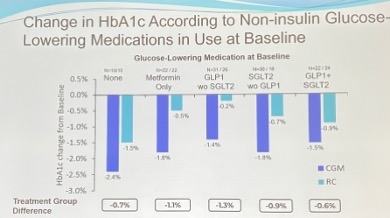
- CGM improved TIR by an additional 21 percentage points (~5 hours/day) relative to BGM (p<0.001). TIR increased from 29% to 62% in the CGM group compared to 31% to 42% with routine care. Mean glucose was lower across all hours of the day among CGM users. Consistent with other studies with CGM, the largest improvements occurred during the first week of use and generally stabilized after nine weeks in CONNECT.
- Medication intensification was modest. Approximately 20% of participants added a non-insulin glucose-lowering medication during the study (26% in the CGM group vs. 17% in routine care). Few participants discontinued existing therapies or initiated insulin.
Dr. Fran Kaufman presents real-world data on one year of Eversense 365 use and early twiist-Eversense 365 AID integration
Dr. Fran Kaufman (Chief Medical Officer, Senseonics) presented real-world evidence on the Eversense 365 implantable CGM, including one-year outcomes from open-loop use (n=12,360) and early experience integrating Eversense 365 with the Sequel twiist AID system (n=153). Eversense 365 has been available in the US since October 2024 and became interoperable with twiist in January 2026, enabling the first real-world assessment of the combined system.
- One year of open-loop Eversense 365 use demonstrated sustained engagement and stable glycemic outcomes. Users had a mean age 57 years; most had T2D (59%) and approximately one-quarter had T1D, with the remainder not reporting diabetes type. Participants used basal insulin, MDI (including Afrezza), or open-loop pump therapy. Glycemic outcomes were similar during the first and second six months of wear, suggesting durable performance over the full year. Median transmitter wear time for the full year was 93%, indicating strong adherence to CGM use. Across the study period, users achieved a mean glucose of 161 mg/dL, GMI of 7.2%, and TIR of 66%.
- Glycemic outcomes improved with age. For example, mean GMI decreased from 7.4% among users aged 18-25 years to 7.0% among those aged ≥65 years, while mean glucose fell from 169 mg/dL to 156 mg/dL, respectively. TIR increased from 58% in the youngest cohort to 71% in the oldest. Likewise, a substantially greater proportion of older adults met ADA-recommended hypoglycemia targets, with achievement of level 1 and level 2 hypoglycemia goals increasing by nearly 25 percentage points across age groups (88% versus 63% and 93% versus 68%, respectively).
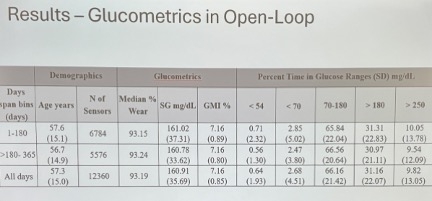
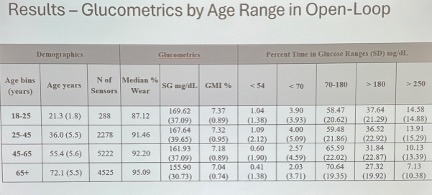
- Integration with Sequel’s twiist AID system led to improved glycemic outcomes and increasing sensor engagement. The closed-loop cohort was younger, with a mean age of 41 years, and most had T1D (65%; 10% had T2D). Prior to initiating twiist, participants had used Eversense 365 in open-loop mode for a mean of 108 days. During open-loop use, outcomes closely mirrored those seen in the larger real-world cohort, including a median sensor wear time of 95%. twiist use averaged 49 days, with a minimum of 30 days required for inclusion in the analysis. After initiating twiist, median sensor wear increased to 99%, suggesting even greater engagement with therapy. GMI improved from 7.1% to 6.8%, while mean glucose fell from 157 mg/dL to 145 mg/dL. TIR increased from 64% to 76%, driven by reductions in both hyperglycemia (41% to 26%) and hypoglycemia (5.9% to 2.7%).
FreeDM2 subgroup analysis shows consistent CGM benefit across demographic and clinical characteristics in T2D on basal insulin
Prof. Lalantha Leelarathna (Imperial College London, UK) presented a subgroup analysis from the FreeDM2 trial, which evaluated CGM in adults with T2D treated with basal insulin, many of whom were also using SGLT-2 inhibitors and/or incretin-based therapies. As previously reported at ATTD 2026 and published in The Lancet Diabetes & Endocrinology, FreeDM2 demonstrated significant A1c improvements with CGM compared to BGM at both 16 and 32 weeks. At 16 weeks, A1c declined from 8.8% to 8.0% in the CGM group versus 8.8% to 8.7% with BGM. By 32 weeks, A1c declined further to 7.8% with CGM versus 8.3%. TIR increased by ~10% (~2.5 hours/day) more with CGM than BGM; TIR improved from 40% to 54% with FreeStyle Libre 3 at 16 weeks versus an increase from 42% to 45% with BGM. This separation in TIR was maintained at 32 weeks (60% vs. 50%). This subanalysis examined whether treatment effects differed across demographic, socioeconomic, and clinical subgroups.
- Baseline characteristics. Participants had a mean age of about 60 years, baseline A1c of 8.8%, and TIR of 40%. Most (87%) were using an SGLT-2 inhibitor, approximately one-quarter were using an incretin therapy, and 19% were using both. About half were taking two non-insulin glucose-lowering medications at baseline, while about 45% were taking three or four.
- CGM benefits were consistent across most participant characteristics. The analysis compared treatment effects between the CGM and BGM groups by age (<60 vs. ≥60 years), BMI (<30 vs. ≥30 kg/m²), sex, and socioeconomic status as measured by the Index of Multiple Deprivation. CGM provided similar glycemic benefits across all subgroups, with no significant differences in treatment effect observed. Likewise, treatment effects were comparable when participants were stratified by baseline TIR (≤70% vs. >70%) or baseline A1c (≤8.0% vs. >8.0%).
- Participants with the highest baseline A1c and lowest baseline TIR experienced the greatest benefit. When the A1c threshold was increased to 9.0%, treatment effects differed significantly between groups. Participants with baseline A1c ≤9.0% experienced an adjusted mean A1c reduction of 0.4 percentage points with CGM relative to BGM, while those with baseline A1c >9.0% saw a substantially larger treatment difference of 1.1 percentage points. Similarly, lowering the baseline TIR threshold to 60% revealed significantly greater treatment effects among participants with lower starting TIR, suggesting that those with the greatest room for improvement derive the largest glycemic benefit from CGM.
Dexcom’s product theater promotes T2D staging, Stelo‑driven behavior change, and Smart Basal-guided basal insulin initiation
In Dexcom’s afternoon product theater, Dr. Viral Shah (Indiana University) said that the field must rethink T2D management by abandoning the long‑standing habit of treating T1D and T2D as fundamentally different diseases. He pointed to ADA 2026 Standards of Care language recommending the use of CGM “at diabetes onset and anytime thereafter” for anyone on insulin, then contrasted that standard with real‑world adoption rates. Roughly 55-60% of people with T1D use CGM, compared with only about 22% of those with T2D. Dr. Shah said that this gap reflects perceived need rather than biology, noting that aside from the differences in autoimmunity and the length of the preclinical phase, the lived metabolic consequences and treatment goals overlap far more than current practice reflects. He urged the audience to adopt a staging model for T2D, mirroring those for oncology, CKD, and T1D, so that dysglycemia is recognized and treated earlier. He closed by reminding attendees that it historically takes 17 years for evidence to change practice, underscoring the urgency of accelerating CGM adoption.
- Dr. Helen Baron (Eisenhower Medical Center) extended the conversation into prevention and metabolic visibility, describing Stelo as a tool that “makes the invisible visible” by revealing the biochemical patterns driving inflammation and metabolic decline. She highlighted the scale of missed opportunity in prediabetes, with one in three US adults affected and most unaware. She argued that early, personal insight is more powerful than generic lifestyle advice. Through a case study of Emily, a 52‑year‑old with stage 2 T2D, Dr. Baron illustrated how real‑time glucose feedback can reshape behavior. Without any medication changes, Emily improved her TIR from 65% to 90% with CGM use. Dr. Baron framed Stelo as a continuous guide that supports curiosity‑driven learning, reinforces accountability, and strengthens clinician-patient conversations.
- Dr. Diana Isaacs (Cleveland Clinic) closed the session by addressing therapeutic inertia in basal insulin initiation. She reviewed data showing that nearly 60% of people with T2D do not take basal insulin as prescribed, 73% fail to reach A1c targets after one year, and delays in intensification significantly increase the risks of heart failure, myocardial infarction, stroke, and retinopathy. Dr. Isaacs highlighted Dexcom’s Smart Basal program, a CGM‑guided titration system that uses the Dexcom G7 15 Day to log insulin doses and leverages an HCP-created treatment plan to generate personal basal insulin recommendations. By standardizing titration and reducing fear of hypoglycemia, Smart Basal aims to give clinicians confidence to start insulin earlier and adjust it more effectively. Case examples demonstrated clear, stepwise dose progression. Dr. Isaacs provided an example of a new basal start that moved from 10 units to a stable 29-unit dose over 45 days, illustrating how CGM‑guided titration can streamline decision‑making and reduce the inertia that often delays insulin optimization in T2D.
Target trial emulation of VA database associates CGM initiation with 37% lower risk of end-stage renal disease over four years in veterans with T1D
Ms. Sharon Macwan (Phoenix VA Health Care System) presented a target trial emulation study assessing the impact of CGM initiation on the risk of end-stage renal disease (ESRD) among veterans with T1D (2257-P). The simulated study included CGM-naïve individuals aged 31-84 years old with VA medical records from 2017-2020 with their second endocrinology visit serving as the index date (n=8,226). The study population was “cloned,” and the clones were separated into two arms: (i) CGM initiation within six months; and (ii) no CGM initiation. The primary outcome was incidence of ESRD (i.e., stage 5 CKD or eGFR <15 mL/min/1.73 m2), with ≥30% eGFR decline from baseline as a secondary outcome.
- CGM initiation was associated with a 25% reduced risk of ESRD after one year compared to no initiation (RR=0.75; CI: 0.47-0.96). At two years, CGM initiation was associated with an even greater 39% risk reduction (RR=0.61; CI: 0.46-0.92), which was maintained at three and four years (RR=0.63; CI: 0.46-0.94). This effect persisted even after adjusting for age (RR=0.60; CI: 0.41-0.93) and shortening the CGM initiation grace period from six months to three months (RR=0.75; CI: 0.43-0.99). The effect was also similar regardless of A1c or age.
- For the secondary outcome, CGM initiation was associated with a modest risk reduction for ≥30% eGFR decline. CGM initiation within six months was associated with a 14% risk reduction, narrowly reaching statistical significance (RR=0.86; CI: 0.84-0.99). Initiation with three months was associated with a 17% risk reduction, although this narrowly missed statistical significance (RR=0.83; CI: 0.79-1.00). Ms. Macwan said these results suggest expanded use cases for CGM beyond glycemic management, such as slowing CKD progression.
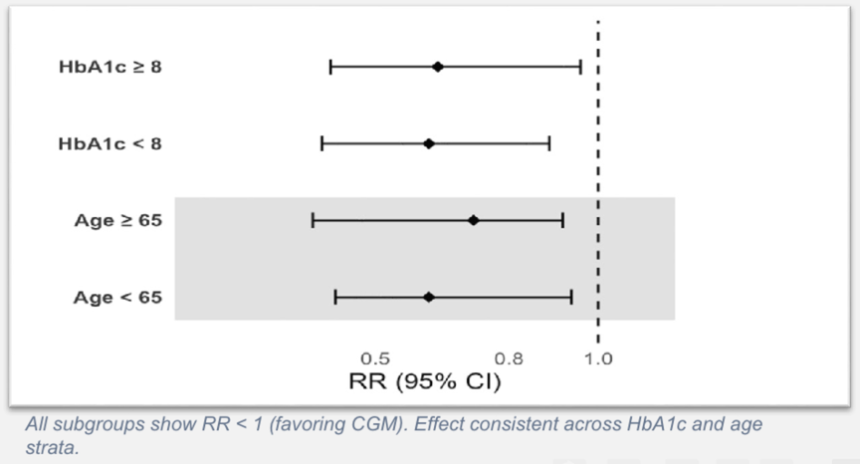
Stelo drives 4.8 hour/day TIR increase within three months among people with T2D not on insulin (n=12,008)
Dr. Jennifer Layne (Dexcom) presented an additional real-world analysis of Stelo users, evaluating glycemic outcomes after Stelo initiation among adults with self-reported T2D not on insulin (n=12,008). This retrospective analysis included individuals with at least 90 days of Stelo use and a baseline TIR ≤70%, evaluating the change from baseline to three and six months for: (i) CGM metrics; and (ii) hyperglycemic excursions (defined as events with glucose >180 mg/dL for at least two hours over a 10-day period).
- Stelo users achieved a 4.8 hour/day TIR improvement from 43% at baseline to 55% at three months (p<0.001). This improvement was driven solely by reductions in hyperglycemia as Time above Range (TAR) decreased 4.8 hours/day from 57% at baseline to 45% (p<0.001), which was mirrored by a corresponding 4.8 hours/day increase in TITR from 12% at baseline to 24% (p<0.001).
- CGM metrics further improved at six months. TIR increased to 58%, representing a 5.5 hours/day improvement from baseline, while TITR increased to 26%, up 5.6 hours/day from baseline. Like at three months, these increases were driven by reduced TAR, which further decreased to 42% – a 5.5 hours/day improvement from baseline. Time >250 mg/dL decreased 1.0 hour/day from 17% at baseline to 12.9% at baseline. There was a statistically significant increase in Time below Range from 0.3% at baseline to 0.4% at six months (p=0.002); however, this difference is likely not clinically meaningful.
- The number of hyperglycemic excursions over a 10-day period decreased at six months. Stelo users averaged 14.2 hyperglycemic excursions over 10 days at baseline, which decreased to 10.2 at six months – translating to a 3.6 hours/day reduction.
Glycemic Metric | Baseline | Three Months | Six Months |
Time in Range | 43% | 55% | 58% |
Time in Tight Range | 12% | 24% | 26% |
Time above Range | 57% | 45% | 42% |
Time >250 mg/dL | 17% | 15% | 13% |
Time below Range | 0.3% | 0.4% | 0.4% |
Mean glucose | 200 mg/dL | 187 mg/dL | 182 mg/dL |
GMI | 8.1% | 7.8% | 7.7% |
CV | 22% | 22% | 22% |
Glycemic outcomes of Stelo users with T2D not on insulin, prediabetes, or without diabetes (n=136,142)
Dr. Mingkai Peng (Dexcom) presented a poster reporting real-world outcomes from over 136,000 Stelo users (2896-LB). This analysis is more than double the size of the real-world Stelo data that Dexcom presented at ADA 2025 (n=61,085). At the end of 2025, Stelo had over 500,000 users. Earlier this week, Dexcom unveiled a redesigned Stelo app that introduces AI coaching, personalized metabolic summaries, and improved pattern recognition. The updated app entered limited early access during ADA, and a broader commercial launch is expected later this summer.
- Nearly half of the cohort comprised adults without diabetes (n=65,034) with roughly similar numbers of people with prediabetes (n=36,015) and T2D not on insulin (n=35,093). Diabetes status was self-reported. A K-means cluster analysis was performed to segment the three populations into non-overlapping subgroups, yielding four clusters in the no diabetes and prediabetes cohorts and six in the T2D cohort. In both the no diabetes and prediabetes cohorts, the first two clusters represented 95% of users, while the T2D cohort featured greater heterogeneity as the first two clusters only represented 61% of users. CGM metrics, including mean glucose, Time in Tight Range (TITR), Time in Range (TIR), and CV, were compared across clusters.
- Significant differences in TITR were observed between clusters. As expected, TITR tended to be highest in people without diabetes and lowest among people with T2D. TITR was much more variable among people with T2D, ranging from 27-80% in the four dominant clusters. TIR was largely similar between the no diabetes and prediabetes clusters and approached 100%, but TIR varied significantly between the four T2D clusters, ranging from 58-98%.
Diabetes Status | Cluster Identity | TITR | TIR | Mean Glucose | CV |
No diabetes | 1 (n=58,895) | 96% | 99% | 107 mg/dL | 13% |
2 (n=5,831) | 82% | 97% | 118 mg/dL | 19% | |
Prediabetes | 1 (n=27,305) | 93% | 99% | 111 mg/dL | 13% |
2 (n=6,635) | 75% | 96% | 126 mg/dL | 18% | |
T2D not on insulin | 1 (n=11,806) | 80% | 98% | 122 mg/dL | 15% |
2 (n=9,747) | 52% | 87% | 144 mg/dL | 19% | |
3 (n=6,203) | 37% | 72% | 160 mg/dL | 22% | |
4 (n=3,695) | 27% | 58% | 177 mg/dL | 24% |
- Male users consistently had higher mean glucose and lower TIR regardless of age and diabetes status. Mean glucose tended to increase slightly with increasing age, while TIR appeared to decrease with increasing age.
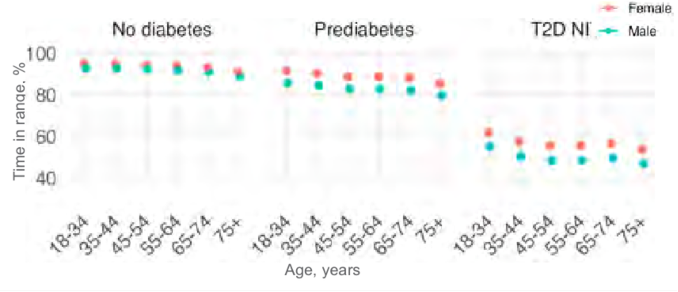
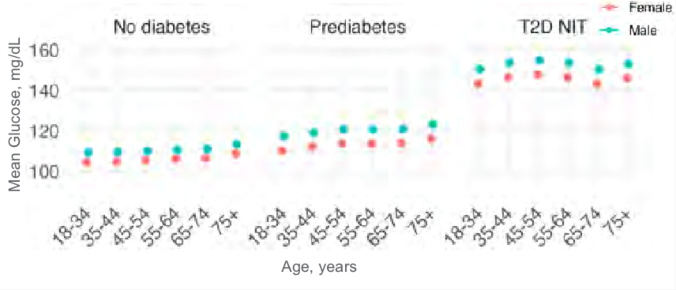
CGM in T2D: Real-world Dexcom CGM use confers greatest glycemic improvements among people with T2D not on insulin
In a closing oral presentation, Dr. Jennifer Layne (Dexcom) discussed results from a retrospective EHR analysis among CGM users with T2D and baseline A1c >7.0%. Most of the cohort comprised individuals on intensive insulin therapy (n=4,972). People on basal-only insulin therapy (n=931) or non-insulin therapy (n=1,250) composed just under one-third of the population. The analysis evaluated change in A1c and CGM metrics from baseline to: (i) three to 12 months; (ii) 13 to 24 months; and (iii) >24 months.
- Users on non-insulin or basal-only therapy achieved comparable A1c reductions. Both cohorts achieved a 1.7-percentage point A1c reduction between baseline and three to 12 months, and outcomes were maintained through 24 months. Intensive insulin users saw a slightly smaller, but still significant, A1c reduction from 8.9% at baseline to 7.6% at three to 12 months, which was sustained past 24 months. Dr. Layne highlighted that this A1c reduction was comparable to the 1.6-percentage point A1c decrease at six months observed in the 26-week CONNECT RCT (presented earlier in ADA) in adults with T2D not on insulin therapy.
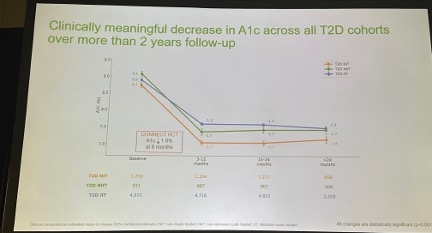
- Among those with baseline TIR ≤70%, TIR improvements were greatest among users on non-insulin therapy. Non-insulin users (n=587) saw a 4.0 hours/day TIR increase from 40% at baseline to 57% at three months, which increased further to 62% at 24 months – representing a 5.2 hours/day increase after two years. Individuals on basal-only insulin (n=541) saw strong TIR improvements as well, increasing 3.1 hours/day from 41% at baseline to 54% at three months, which was maintained at 24 months. Users on intensive insulin therapy (n=3,174) saw the smallest improvements from baseline, achieving a 1.2 hours/day TIR increase from 45% to baseline to 50% at three months. TIR slightly rose to 53% at 24 months – representing a 1.9 hours/day increase after two years.
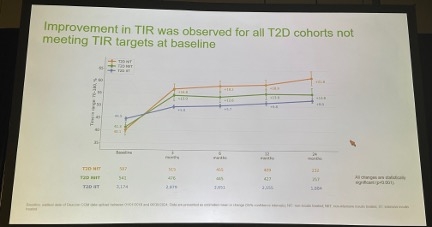
GluCoCare finds superior A1c levels among participants using CGM in real-world, primary care settings
Dr. Tom Martens (International Diabetes Center) presented the GluCoCare (GLUcose monitoring Comparison in primary CARE) study, which compared CGM and BGM use among patients with T2D on insulin who were managed in primary care. Dr. Martens presented it as an “effectiveness study,” including 50 clinics within the HealthPartners primary care system across Minnesota and Wisconsin. Data was collected over 12 months, without any constraints or supervision on how care was delivered.
- Baseline characteristics. Among the 360 participants, mean A1c was 8.8% and mean DDS-17 score was 2.2. On average, patients were 60.5 years old and have lived with T2D for 14.3 years. Mean BMI of participants was 35.8 kg/m2.
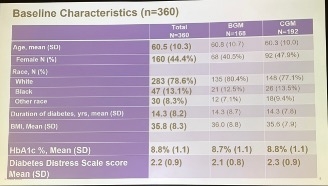
- CGM use conferred a 0.3 percentage point greater benefit to A1c compared to BGM. After 12 months, the CGM cohort had an average A1c of 8.0%, while the BGM cohort average A1c of 8.3% (CI: -0.59 to -0.07; p=0.01).
- There was no significant difference in DDS-17 scores between CGM and BGM use. Patient scores in the CGM arm decreased by 0.4 points (from 2.2 to 1.8), while scores in the BGM arm decreased by 0.3 points (from 2.2 to 1.9).
- There were similar numbers of severe adverse events reported in the CGM (n=31) and BGM arms (n=39). In the CGM arm, one participant experienced two events of severe hypoglycemia. In the BGM arm, there was one event of severe hypoglycemia, two hospitalizations due to hyperglycemia, and one death from myocardial infarction. No events of DKA occurred. Additionally, 11% of the CGM cohort reported sensor-related adverse events such as rash, discomfort, or bleeding.
Retrospective EHR analysis associates FreeStyle Libre use with A1c goal achievement faster than no CGM among adults with T2D not on insulin
In an oral symposium, Dr. Jay Shubrook (Touro University California, Vallejo, California) presented a retrospective Truveta EHR analysis of adults with T2D not on insulin, examining whether FreeStyle Libre initiation drove faster glycemic target achievement than no CGM initiation. The analysis included adults managed by non-insulin therapies with at least one baseline A1c measurement between 8.0% and 12.0%. CGM users were propensity score-matched 1:4 to non-CGM users to make the cohorts more comparable. After propensity score matching, baseline demographics were similar between the CGM (n=2,144) and non-CGM groups (n=5,486). In both groups, mean age was 56 years with a baseline A1c of 9.4%. Roughly one-third of each cohort used SGLT-2 inhibitors, 44% used GLP-1 RAs, and 38% used sulfonylureas.
- FreeStyle Libre initiation was associated with faster achievement of A1c targets throughout a one-year period. The probability of achieving an A1c <8.0%, <7.0%, and <6.5% was significantly higher with CGM initiation than no CGM use at three, six, nine, and 12 months. The number of people at risk (i.e., not achieving glycemic targets) also declined more rapidly in the CGM group throughout 12 months. Dr. Shubrook said these results support earlier CGM adoption to accelerate the achievement of glycemic targets.
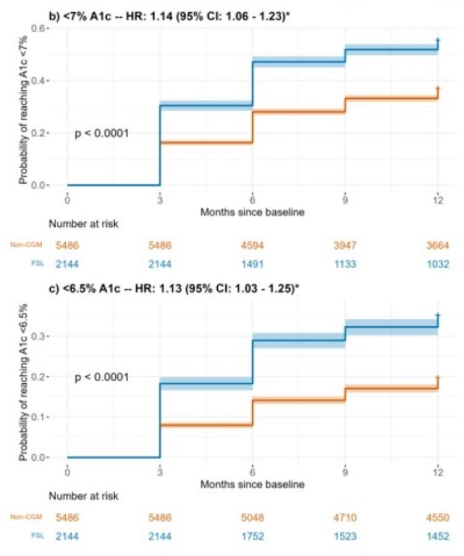
- In a subgroup analysis by age, FreeStyle Libre users <65 years old tended to achieve all three A1c targets faster than non-CGM users. However, among CGM users ≥65 years old, CGM use was only associated with faster achievement of an A1c <8.0%. While similar trends were observed for A1c targets of <7.0% and <6.5%, these did not reach statistical significance.Biolinq Shine demonstrates 20/20% agreement rate of 76% in 40-400 mg/dL glucose range, MARD of 14.6%
Dr. Timothy Bailey (Headlands Research) presented pivotal safety and accuracy data for the Biolinq Shine CGM, which received FDA De Novo classification as a "glucose range monitoring system" for people with T2D not using insulin in September 2025. Unlike traditional CGMs that measure glucose in the subcutaneous space, Biolinq Shine uses silicon microsensors positioned within the dermis. The factory-calibrated sensor is worn on the forearm and communicates glucose ranges through colored flashing lights: pulsing red for hypoglycemia, blue for Time in Range (70-180 mg/dL), yellow for glucose levels of 181-400 mg/dL, and flashing yellow for values >400 mg/dL.
- The pivotal study enrolled 190 participants across six sites, using YSI measurements as the reference comparator. Participants had a mean age of 49 years and were relatively evenly distributed by sex. The cohort was relatively diverse, with 24% identifying as Hispanic, 8% as Black, and 6% as Asian; approximately two-thirds had T1D.
- On sensor performance, in the 40-400 mg/dL range, Biolinq Shine achieved 63% agreement within 15/15% of YSI values, 76% agreement within 20/20%, and 97% agreement within 40/40%. MARD was 14.6%, with a negative bias of 7.3 mg/dL. Performance was somewhat stronger in the hypoglycemic range (40-69 mg/dL), with 92% 20/20% agreement, an 11.0% MARD, and a negative bias of 3.1 mg/dL. Accuracy was consistent across subgroups, with no significant differences observed by day of wear, diabetes type, age, sex, skin type, BMI, or ethnicity.
- Dr. Bailey also reported concordance between the sensor's color-coded glucose range indicators and YSI measurements. Concordance ranged from 74% in hypoglycemia (<70 mg/dL) to 86% in hyperglycemia (181-400 mg/dL). Concordance was 80% in the target range (70-180 mg/dL) and 79% for glucose values >400 mg/dL. During Q&A, Dr. Bailey emphasized that the system is currently intended to support lifestyle decision-making in people with T2D not using insulin, rather than provide the level of precision expected from traditional CGMs for those dependent on them for insulin dosing.
- Device reliability was generally strong. Up to 85% of sensors remained functional through Day 5, on average providing over 93% of measurements. Nearly 90% of participants received glucose readings for at least 85% of total wear time.
- Safety outcomes were favorable. No major skin reactions were reported, and device-related adverse events occurred in only 3% of participants. All events were classified as mild.
iCan CGM system shows overall MARD of about 8.5% and 20/20% agreement rate of over 93% in youth with T1D
Dr. Poul Strange (Integrated Medical Development) presented results on Sinocare’s iCan CGM for pediatric use (age 2-17 years) with T1D (n=129). The study found that the iCan CGM system was both accurate and safe for pediatric T1D patients, consistent with the sensor’s performance in adults.
- The iCan CGM, which has a 15-day wear time, was assessed across its lifetime, with results evaluated against YSI. In the 13-17-year-old cohort, participants attended three clinic visits compared to two from the 7-12-year-old cohort. The mean age in these groups were 10.4 years and 15 years, respectively. Nearly all participants were white (94% of the 7-12-year-old group and 88% of the 13-17 years-old group).
- The iCan CGM was found to be both accurate and safe for pediatric use. The results are summarized in the table below. With both arm and abdominal use, 99.9% of its paired readings in Zones A and B of the Parkes Error Grid.
- During abdominal use, the overall 20/20% agreement rate was 93.8%, with performance >90% at all glucose levels. The system reported an overall MARD of 8.5%.
- Its performance was similar on the arm, with an overall 20/20% agreement rate of 93.5% – again with an agreement rate of >90% at all glucose values – and a MARD of 8.6%.
- Dr. Strange also reported that the iCan CGM demonstrated MARD <10% across its full 15-day wear time with both arm and abdomen use.
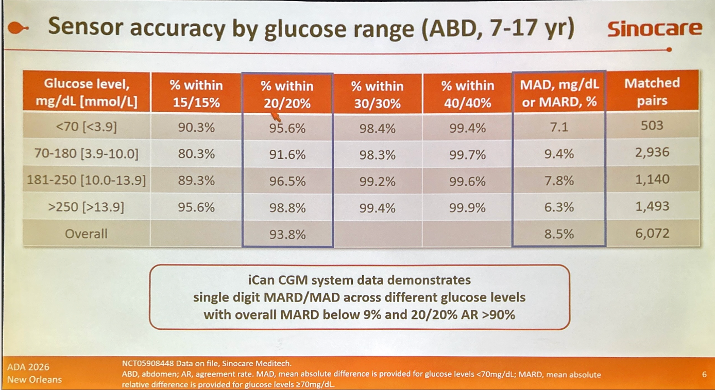
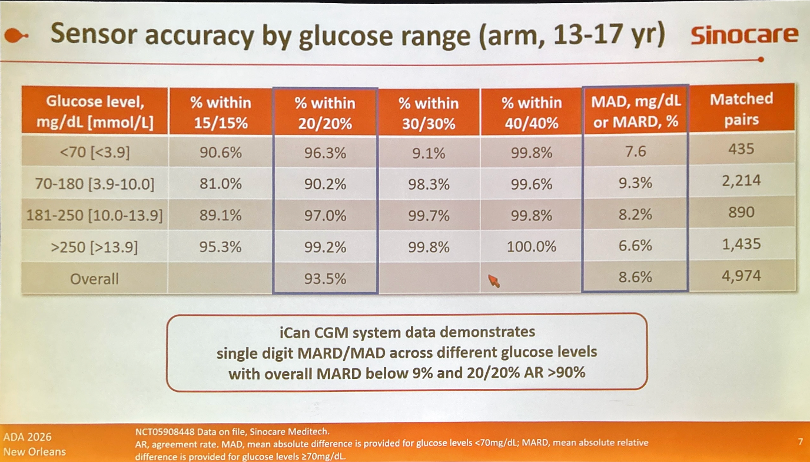
Abbott showcases its lineup of FreeStyle Libre systems, including FreeStyle Libre 3 Plus and Libre Duo
In a packed product theater, Dr. Eden Miller (Diabetes and Obesity Care LLC) and Dr. Jennifer Sherr (Yale University) presented on Abbott’s “next revolution” of continuous monitoring technology. This included Dr. Sherr presenting on Libre Duo, the first continuous dual glucose-ketone device that received CE-Mark approval last month and is currently under FDA review.
- Dr. Miller reviewed findings from the FreeStyle Libre 3 in adults with T2D. In a study published by The Lancet Diabetes & Endocrinology, adults with T2D on basal insulin who used the FreeStyle Libre 3 system showed greater improvements by week 16 in A1c (difference of 0.6%) and TIR (+2.5 hours total per day) compared to those using BGM. This was led by more proactive lifestyle modifications (e.g., more total physical activity and better diet) and accompanied by psychosocial improvements (e.g., reduced emotional and behavioral burden). Dr. Miller also highlighted Libre Assist, the compatible mobile app that enables patients to take a photo of their meal and predict how it will impact their glucose. For physicians, the FreeStyle Libre system data is now integrated with Epic EHR to improve provider efficiency and enhance clinical decision-making by facilitating easier access to glucose data.
- Although CGM technology has helped improve glycemic management, DKA remains a prominent concern. Dr. Sherr presented striking data showing the rising prevalence of DKA in youth with T1D, with those younger than five years having the sharpest increase in prevalence between 2017 and 2024. Furthermore, the annual risk of DKA continues to rise in people with T2D across all ages, with nearly all episodes (96%) requiring inpatient hospitalization.
- Current tools for measuring ketone are insufficient and not used. Dr. Sherr explained that people with diabetes are not testing ketones because of the inconvenience of urine testing, and blood ketone monitors are expensive and require people to carry an additional meter. Out of nearly 3,000 people with T1D, 52% report having urine test strips at home and 18% with a blood ketone meter, with 32% having no ketone testing supplies at all.
- Continuous ketone monitors can detect rising ketones and alert patients, aiming to prevent DKA. With the Libre Duo, users can continuously monitor both glucose and ketone levels without user calibration. The associated mobile app is designed to automatically display glucose results and features optional, customizable glucose and ketone alarms. Additionally, the cloud-based software makes it possible for caregivers to see how their kids are doing via the caregiver app.
Qualitative findings from Dexcom’s CONNECT study highlights CGM for lifestyle improvements and psychological and emotional burden reduction
Dr. Harsimran Singh (Dexcom) presented compelling themes drawn from the CONNECT study, highlighting lived experiences from adults with T2D who either used or did not use CGM. Dr. Singh explained that while most of us understand the need for real-time glycemic metrics, there is a lack of understanding of how people are engaging with their data in practice. In Dexcom’s qualitative part of its CONNECT Study, three themes emerged: (i) CGM for real-time, actionable feedback; (ii) CGM for behavioral and lifestyle changes; and (iii) CGM for psychological and emotional improvement.
- Real-time actionable feedback. Participants using BGM reported that the infrequent finger sticks provided limited feedback, often requiring guesswork in management and leading to difficulty in linking behaviors to outcomes. Furthermore, without real-time feedback, participants reported inconsistent motivation to maintain healthy behaviors. One participant explained that “because my finger sticks were so infrequent… I was not really able to have that mind-body correlation between the number I was seeing [and what I was doing].” In contrast, participants using Dexcom G7 felt empowered by data, as it provided real-time, actionable feedback related to their behavior’s impact on glucose levels. This ultimately supported behavior changes and made CGM into an “accountability partner” for ensuring consistent, healthier choices.
- Behavioral and lifestyle changes. Participants randomized to continuing routine care felt confusion about their treatment due to a one-size-fits-all approach. One participant explained how “[diabetes education] didn’t make a lot of sense” because they “don’t eat potato salad and casserole.” Additionally, routine care often prioritizes medication as the main treatment approach, with limited personalization. With the CGM, however, participants reported greater individualization of care and optimization of medication regimens. For example, one participant who was on 10 mg of glipizide was advised to reduce to 5 mg because their physician was able to see their glucose data and infer that the lows were likely caused by the dosage being too high.
- Psychological and emotional impact. Without CGM, participants often sought ways to feel more in control and regain a sense of normalcy. They reported experiencing cycles of guilt and burnout, describing diabetes as “a big weight to carry… and the fact that it’s just always there. The awareness is always there.” Participants with CGM described reduced mental burden and greater confidence, agency, and hope in managing diabetes. They felt that “wearing a Dexcom helps me make better decisions” and that it makes you “realize that you do control [diabetes] to a certain extent… You’re not just completely helpless.”
Large real-world analysis links Dexcom CGM use to lower cardiovascular risk in insulin-treated T2D
Presenting new real-world evidence from more than one million adults with T2D, Dexcom’s Dr. Jennifer Layne shared data suggesting that CGM use is associated with significantly lower rates of major adverse cardiovascular events (MACE), hospitalization, and mortality among individuals treated with intensive insulin therapy.
- The retrospective analysis evaluated electronic health record data collected between January 2017 and June 2025, with follow-up ranging from one to seven years. Eligible participants were adults with T2D receiving intensive insulin therapy. Of more than one million individuals included in the analysis, nearly 50,000 were CGM users. Compared to non-users, CGM users were generally younger and had higher baseline A1c levels (8.5% vs. 7.5%) but had a lower prevalence of established cardiovascular disease (40% vs. 50%). Medication use also differed between groups, including use of incretin-based therapies and SGLT-2 inhibitors.
- CGM use was associated with substantially lower rates of adverse cardiovascular outcomes. Compared to non-users, CGM users experienced a 23% lower risk of cardiovascular death, a 5% lower risk of myocardial infarction, and a 5% lower risk of stroke. Additional benefits included a 16% lower risk of hospitalization for heart failure, an 11% lower risk of all-cause hospitalization, and a 23% reduction in overall mortality. The only outcome that occurred more frequently among CGM users was hypoglycemia, which investigators suggested may reflect increased recognition and documentation of events enabled by CGM.
- The investigators also examined glycemic outcomes among participants with baseline A1c ≥7.0%. While both groups experienced improvements over time, CGM users achieved greater reductions in A1c. Baseline A1c was 9.1% among CGM users and 8.9% among non-users; after one year, CGM use was associated with an additional 0.4% reduction in A1c relative to non-users. Notably, this advantage persisted for more than two years of follow-up.
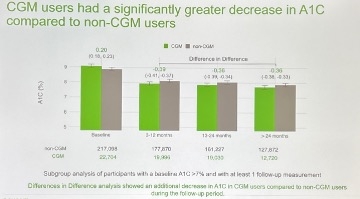
- To address potential confounding of results, investigators conducted propensity-matched analyses that included matching for use of GLP-1 RAs. The cardiovascular and mortality benefits remained evident after adjustment, strengthening the observed association between CGM use and improved outcomes. Dr. Layne concluded that the findings underscore the potential for CGM to serve as a powerful tool for both glycemic management and improving broader health outcomes in insulin-treated T2D.
Integrating over-the-counter CGM data with OURA Ring data
Dr. Pauli Ohukainen (Oura) presented findings from a large-scale observational study examining the relationship between physiological and behavioral metrics collected through the OURA Ring and Dexcom’s over-the-counter CGM Stelo. The study included more than 46,000 adults who wore a Stelo sensor for at least seven days. Dr. Ohukainen and his team hoped to identify which wearable-derived measures of sleep, physical activity, and cardiovascular health were most strongly associated with glycemic variability and glucose management. Using statistical modeling approaches, he incorporated metrics including heart rate variability (HRV), resting heart rate, sleep efficiency, physical activity measures, BMI, and Oura’s “Cardiovascular Age” metric, which estimates biological cardiovascular aging relative to chronological age.
Several significant associations emerged between wearable-derived metrics and glucose outcomes. Higher resting heart rate and greater cardiovascular age were associated with less effective glucose management. Consistent patterns were also observed across demographic and anthropometric factors, including higher average glucose levels among men and worsening glucose management with increasing age. Overall, the study demonstrates the potential value of integrating wearable health data with CGM metrics to better understand factors influencing glucose regulation.
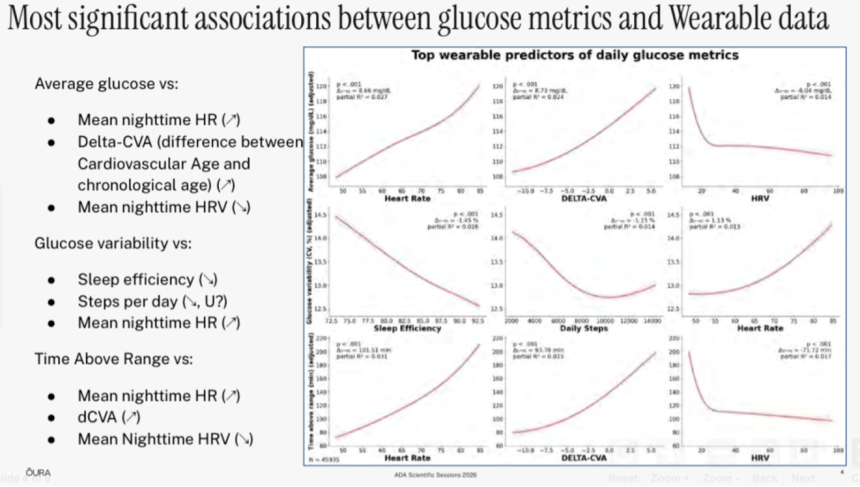
eGFR and renal outcomes linked with CGM metrics
Dr. Tomoki Okuno (UCLA) presented a retrospective cohort study investigating whether CGM-derived metrics are predictive of long-term renal outcomes in adults with T1D and T2D, particularly for CKD, where A1c may be less reliable due to factors such as carbamylation and altered red blood cell turnover. Using linked Dexcom CGM data and VA health records from 2015-2020, researchers followed 2,315 adults without baseline ESRD for up to five years after CGM initiation. CGM metrics, glycemic variability, risk indices, mean glucose, and time spent outside of range were assessed during the first three months of CGM use and evaluated as predictors of subsequent renal decline. Across multiple outcomes, including ≥30% and ≥40% declines eGFR and incident CKD, most CGM-derived metrics remained significantly associated with renal risk even after adjustment for traditional risk factors and A1c. Notably, these associations persisted among individuals with A1c levels >8.0%, suggesting that CGM metrics may capture clinically meaningful risk beyond that reflected by A1c alone. With 367 participants experiencing a ≥30% decline in eGFR, 211 experiencing a ≥40% decline, and 111 developing incident CKD, the findings support the potential role of CGM-derived measures as robust predictors of diabetic kidney disease progression and highlight their value for future risk stratification and prospective intervention studies.
Comparing concordance of GMI with A1c from Dexcom, MiniMed, and Abbott CGM sensors
In this fascinating presentation, Prof. Lalantha Leelarathna (Imperial College London, UK) compared glucose management indicator (GMI) estimates from different CGM systems (Dexcom, MiniMed, Abbott) vs. laboratory A1c values under real-world conditions (n=384). This analysis builds on a prior study that found significant discordance between Dexcom, MiniMed, and Abbott CGMs. Prof. Leelarathna compared concordance with A1c using GMI for all sensors.
- Methods and baseline characteristics. This multi-center study recruited adults with T1D across NHS hospitals in England (n=384), who used AID for over six months and used CGMs >70% of the time. Participants were excluded if they had an eGFR <30 mL/min/1.73 m2, were on dialysis, were anemic, or were pregnant. At baseline, the mean age was 41 years old, 56% were female, 75% were white, and the mean BMI was 27 kg/m2. The study looked at real-world sensor data 90 and 28 days before A1c measurements.
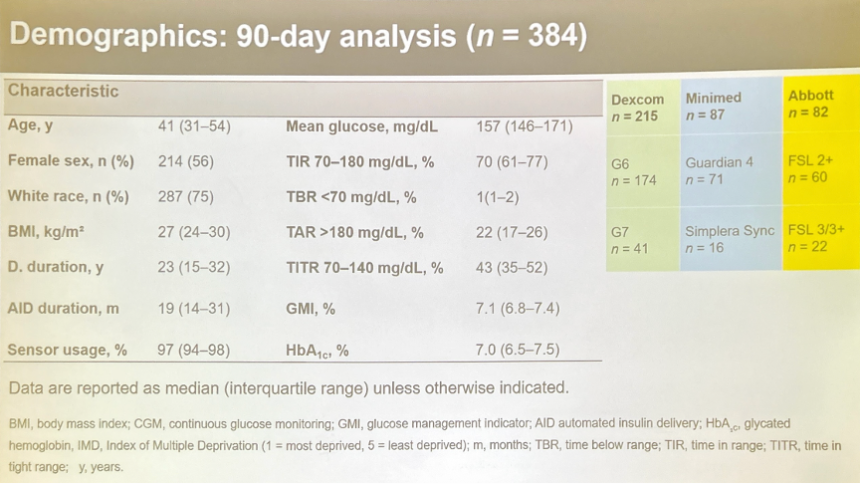
- Dexcom, MiniMed, and Abbott all showed over- and underestimated GMI. While the absolute difference between the sensors was not statistically significant, when the direction of deviation was taken into account, Dexcom showed a significant difference from MiniMed and Abbott. Comparisons of 28-day data showed virtually identical results. “Very subtle” differences in A1c vs. Time in Range (TIR) were seen across the manufacturers, with Dexcom slightly right skewed, and Medtronic slightly left skewed, as shown below. Updated GMI (uGMI) showed superior concordance with A1c.
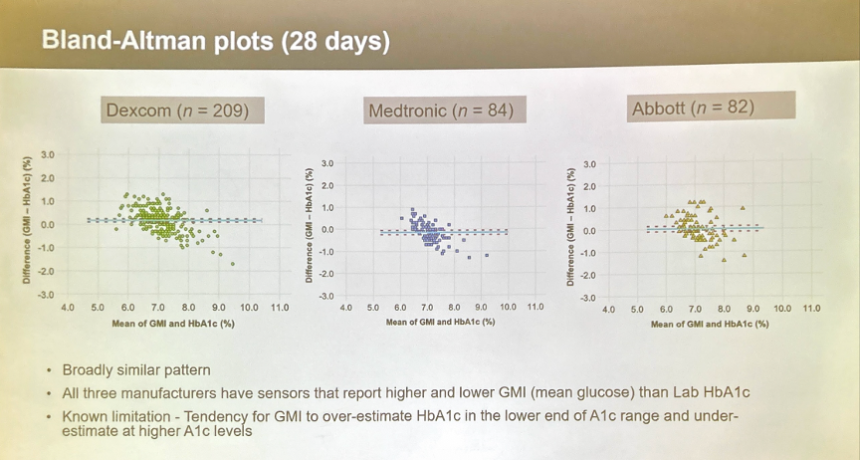
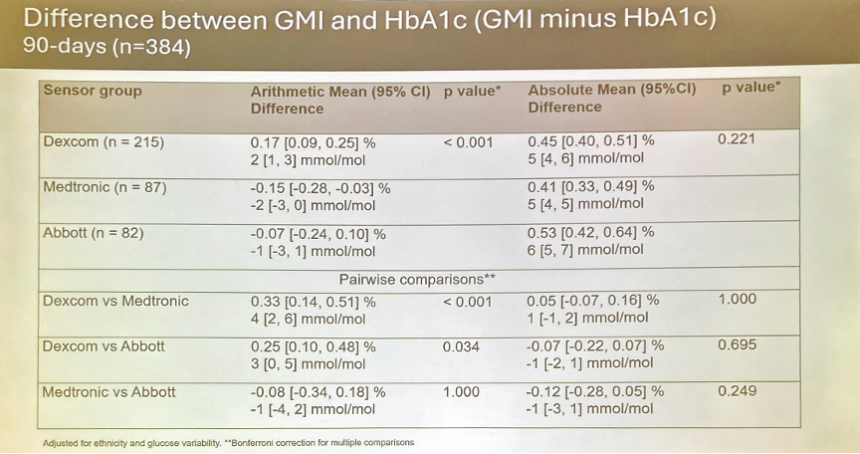
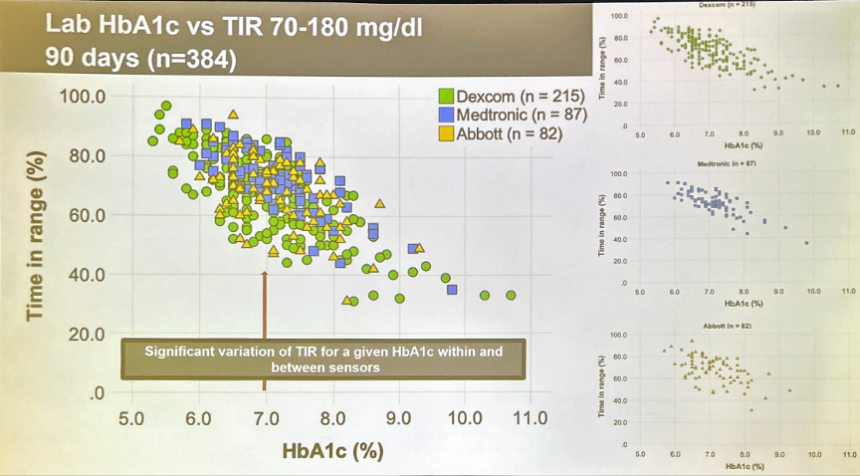
Insulin Delivery: AID, Pumps, and Pens
Single-arm trial with Sequel twiist demonstrates A1c reduction of 0.7 percentage points to 7.4% and TIR of 73% in adults with T2D
Dr. Carol Levy (Mount Sinai) presented results from a single-arm trial (n=307) evaluating the use of the Sequel twiist AID system in adults with T2D using insulin. The study assessed glycemic and safety outcomes after 13 weeks of use, ultimately demonstrating that the system was safe and conferred significant improvements to A1c, Time in Range (TIR), and other CGM-derived metrics. twiist is currently FDA-cleared for use by people with T1D ages six years and older. twiist includes the DEKA insulin pump and the DEKA Loop algorithm, which is based on the FDA cleared Tidepool Loop and is currently compatible with FreeStyle Libre 3 Plus and Eversense 365.
- Methods. The study was conducted at 30 sites across the US. Participants had T2D for at least six months, and could simultaneously be using non-insulin glucose-lowering or weight reduction medications, provided they were on a stable dose and did not have dose changes during the study. Pump settings were set by site staff based on pre-study insulin delivery regimens and CGM data. The initial correction range was based on baseline mean glucose, ranging from 110 mg/dL for mean glucose <155 mg/dL and 175 mg/dL for ≥230 mg/dL. After three weeks without safety concerns, the correction range was lowered, with a lowest possible setting of 87-97 mg/dL. Over 90% of participants of participants completed the study (n=286), with a median time of twiist use of 95%.
- The study enrolled a diverse patient population. Participants had a mean age of 58 years and were relatively diverse – two-thirds were white, one-quarter were Black, and 13% were Hispanic. Almost half were female. Nearly three-quarters (73%) were on a basal-bolus insulin regiment, one-quarter (24%) were on basal only insulin, and very few were using premix insulin (2%) or a pump without automated delivery (0.6%). Most had used CGM before enrolling (84%). Many also used adjunct therapies: over half were using GLP-1 RAs (56%), one-third were using SGLT-2 inhibitors (37%), and 23% were using both.
- Participants experienced a significant reduction in A1c, dropping from 8.1% at baseline to 7.4% at 13 weeks (p<0.001 for non-inferiority and superiority). The proportion of those achieving target A1c <7.0% increased from 18% to 30%, and Dr. Levy said that significant improvements those started from much higher baseline A1c led to an increase in those achieving A1c <7.5% from 37% to 57%. Over half saw a ≥0.5% reduction from their baseline A1c. Reductions were also broadband across adjunct therapy use, with Dr. Levy noting that those not using an adjunct therapy had higher baseline A1c and subsequently greater mean reduction. Furthermore, A1c reductions were consistent across characteristics including age, sex, total daily dose, BMI, C-peptide, and more.
A1c Change at 13 Weeks by Baseline A1c
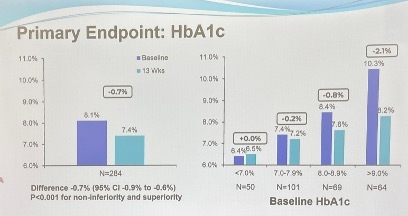
A1c Change at 13 Weeks by Adjunct Therapy Use
Therapy | Mean Baseline A1c | Mean A1c at 13 Weeks | Average A1c Reduction |
None | 9.2% | 7.7% | -1.4% |
Metformin Only | 8.5% | 7.4% | -1.0% |
GLP-1 RA | 7.9% | 7.3% | -0.6% |
SGLT-2 inhibitor | 8.4% | 7.7% | -0.7% |
GLP-1 RA + SGLT-2 inhibitor | 7.7% | 7.2% | -0.5% |
- Mean TIR also improved at 13 weeks, increasing from 57% at baseline to 73% (p<0.001). Unsurprisingly, improvements were greatest among those with the lowest baseline TIR. As with other AID systems, most of the improvement was observed at Day 1 and remained relatively stable thereafter. Mean glucose remained lower than baseline at all time points during the day. Mean Time above Range fell from 42% to 27% (p<0.001), and Time >250 mg/dL fell from 13% to 5% (p<0.001). Time below Range was low at baseline (0.66%) and fell further with AID use to 0.36% (p<0.001 for both non-inferiority and superiority), and Time <54 mg/dL remained at 0.02% (p<0.001 for non-inferiority).
- In other secondary outcomes, the total daily dose of participants on a basal-bolus regimen fell from 91.5 units to 72.2 units, while the total daily dose of those on basal-only insulin remained relatively stable. Weight gain was minimal (increasing from 99.7 kg to 100.9 kg), with a smaller increase of 0.5 kg observed in participants taking GLP-1 RAs.
- Furthermore, twiist use in T2D was demonstrated to be safe, with no reports of severe hypoglycemia during the study and just one DKA event.
STRIVE trial with next-generation Omnipod 6 algorithm demonstrates significantly greater TIR and TITR at nearly all ages in T1D and T2D
Dr. Lori Laffel (Joslin Diabetes Center) presented results from the STRIVE trial (n=132) assessing the safety and efficacy of Insulet’s next-generation Omnipod 6 algorithm compared to the first-generation Omnipod 5 system in people with T1D and T2D. She explained that the Omnipod 6 algorithm features: (i) a lower glucose target of 100 mg/dL; (ii) updates to keep users in automated mode with fewer interruptions; and (iii) an adaptive automated rate that delivers up to 50% more automated insulin when needed. Insulet aims to launch Omnipod 6 in 2027. Notably, the first two of these three enhancements were launched earlier this week to current Omnipod 5 users in the US. However, the comparison group of Omnipod 5 users in this study did not have access to any of these enhancements at the time of the trial.
- Methods. STRIVE is a randomized crossover trial that was conducted across 11 sites in the US. Participants had previously used Omnipod 5 for at least three months, with the 110 mg/dL target used for ≥30% of time if aged ≤13 years and ≥50% of time if aged 14-70 years for two weeks prior to the trial screening. Participants were initially randomized 1:1 to either continued Omnipod 5 use with the 110 mg/dL target or Omnipod 6 use with the 100 mg/dL target for four weeks. They then switched to the other system for another four weeks of use.
- Baseline characteristics. Most participants had T1D (n=99), with a mean age of 19 years, baseline A1c of 6.9%, and total daily insulin dose of 0.8 units/kg/day. Participants with T2D (n=34) had a mean age of 56 years, baseline A1c of 7.3%, and total daily insulin dose of 0.6 units/kg/day.
- Omnipod 6 met the non-inferiority margin for all of its safety and efficacy outcomes. Overall, TIR was 73% with Omnipod 6 versus 70% with Omnipod 5, TBR was 2.0% versus 1.7%, and Time <54 mg/dL was 0.3% versus 0.34%. Mean glucose was also lower (151 versus 158 mg/dL). There were also no episodes of severe hypoglycemia, DKA, or hyperosmolar hyperglycemic state.
- Participants with T2D and with T1D aged six years and older saw significant increases in TIR and Time in Tight Range (70-140 mg/dL) with Omnipod 6 (p<0.05). The TIR and TITR increases in those with T1D aged <6 years were not significant. Dr. Laffel also noted that Omnipod 6 increased the amount of insulin delivered via automation compared to Omnipod 5.
TIR and TITR Differences Between Omnipod 5 (OP5) and Omnipod 6 (OP6)
| Group | TIR with OP5 | TIR with OP6 | Mean TIR Difference | TITR with OP5 | TITR with OP6 | Mean TITR Difference |
| T1D, 2 to <6 years | 67% | 68% | +1.3% | 47% | 49% | +1.8% |
| T1D, 6 to <14 years | 67% | 71% | +3.6% | 46% | 51% | +5.5% |
| T1D, ≥14 years | 73% | 77% | +4.1% | 47% | 54% | +7.4% |
| T2D | 73% | 76% | +2.5% | 43% | 48% | +5.7% |
- Participants spent a median of 97% of time in automated mode with Omnipod 6. Participants with T2D and T1D aged ≥6 years spent on average about this amount of time at the 100 mg/dL with Omnipod 6, though this was slightly lower than those staying at the 110 mg/dL target with Omnipod 5 use. Unsurprisingly, those <6 years spent slightly less time at these target glucose settings.
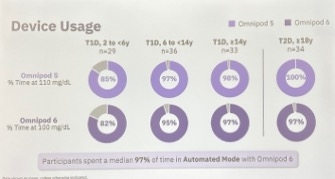
- Participants also had the option of participating in a post-crossover, bolus optional phase with Omnipod 6 at the 100 mg/dL target. This phase lasted four weeks in those aged 2-13 years and six weeks in those aged 14-70 years, during which they were requested to bolus three or fewer times a day. In practice, mean number of boluses per day decreased from 5.4 to 3.2 in those with T1D and from 3.7 to 2.5 in those with T2D, with total daily insulin remaining about the same. TIR remained about the same as with initial Omnipod 6 use, decreasing from 77% to 76% when optionally bolusing in those aged ≥14 years with T1D and from 76% to 74% in those with T2D. TITR trends were similar, remaining at 54% when switching to the bolus optional phase in those aged ≥14 years with T1D and decreasing from 48% to 46% in those with T2D.
AIDING RCT subgroup analysis demonstrates substantial glycemic improvement in inpatient adults with diabetes and advanced kidney disease with AID use
During this ADA Presidents’ Select abstract presentation, Dr. Tugce Akcan (Stanford University) presented a subgroup analysis from the Automated Insulin Delivery for INpatients with DysGlycemia (AIDING) RCT (NCT06418880) investigating how AID use may improve glycemic management among hospitalized adults with diabetes and advanced CKD (eGFR ≤30 mL/min/1.73 m²). She explained that this trial followed a 2023 feasibility study in insulin-using patients with diabetes in the hospital setting (n=18). In the study, patients achieved a mean Time in Range (TIR) of 68% without any severe hypoglycemia or DKA events. The findings from this subgroup analysis of the AIDING trial demonstrate that glycemic benefits from AID extend to those with advanced CKD in the hospital setting as well.
- Methods. This analysis drew from a subgroup of the AIDING RCT, consisting of 27 hospitalized adults with diabetes and eGFR ≤30 mL/min/1.73 m2. The full trial consisted of 130 patients across three academic medical centers in the US. In the control arm, participants were managed with basal-bolus MDI and Dexcom G7. In the intervention arm, participants received Omnipod 5 with Dexcom G7 alongside nurse-delivered meal boluses. This subgroup received the same protocol, devices, and monitoring as those in the broader trial. Participants were followed for up to 10 days or until hospital discharge.
- Baseline characteristics. Participants had a baseline mean A1c of 8.2% in the control cohort and 7.3% in the treatment cohort, which Dr. Akcan said was not a statistically significant difference. Most had T2D (86% in the treatment arm and 77% in the control arm), and several were on dialysis (57% in the treatment arm and 31% in the control arm). They had a mean age of about 60 years, 44% were female, and over half were Black.
- AID use was found to be safe in this inpatient population. The CGMs used were validated for accuracy every 12 hours and triggered alarms at glucose levels <80 mg/dL and >300 mg/dL, with glucose <70 mg/dL treated per hospital protocol. No severe adverse events occurred. Hypoglycemia exposure was minimal in both groups, with mean Time below Range (<70 mg/dL) of 0.32% and 0.11% for the control and treatment groups, respectively. Mean Time <54 mg/dL was 0.09% for the control group and none for the treatment group.
- AID use was associated with significantly greater glycemic management compared to control. Mean TIR with AID use was nearly double that with MDI and CGM (68.6% versus 36.3%), leading to an adjusted difference of 25.7 percentage points (CI: 13.5% to 37.9%; p=0.001). Improvements were observed at Day 1 and generally maintained over the course of the stay and were greater than with MDI at each time point during the day. Mean Time above Range was also significantly lower (p≤0.001) in participants on AID compared to MDI for both >180 mg/dL (30.9% versus 63.6%) and >250 mg/dL (8.9% versus 30.4%, respectively). Additionally, mean glucose was 53 mg/dL lower with AID use (164 mg/dL) compared to control (217 mg/dL; CI: -79.1 to -27.9; p<0.001).
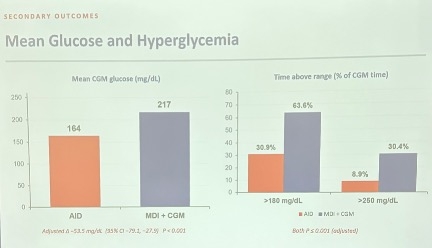
Dr. Dessi Zaharieva discusses the association of negative premeal net insulin on board with postprandial excursions during AID use
Dr. Dessi Zaharieva (Stanford University) presented on a novel variation of a metric, premeal netIOB, and its association with postprandial excursions during AID use in adults with T1D (n=141). To begin, Dr. Zaharieva explained the differences between traditional insulin on board (IOB) metrics and net insulin on board (netIOB). Traditional IOB tracks just bolus insulin that is actively circulating about three to six hours after a dose, not accounting for the basal changes that were made by the AID algorithm. NetIOB is the sum of all insulin action, measured as the bolus IOB minus any basal deviations from the scheduled rate. She explained that netIOB can be negative when a pump is suspended or basal insulin is reduced below the scheduled rate, making patients insulin-deficient before a meal. The real-world study she presented aimed to evaluate whether premeal netIOB is associated with postprandial glycemic outcomes in AID users.
- The study analyzed over 8,000 meal events with about 27 days of CGM coverage per userusing data from the T1DEXI dataset. Meals were categorized as small (≤21 grams of carbohydrates), medium (21-49 grams of carbohydrates), or large (≥50 grams of carbohydrates). NetIOB was categorized as negative at values <-0.5 units, neutral between -0.5 and 0.5 units, or positive at values >0.5 units. Adverse outcomes were defined as: (i) postprandial glucose rise >80 mg/dL compared to one’s premeal baseline within three hours of eating; (ii) peak glucose >250 mg/dL within three hours of a meal; or (iii) prolonged postprandial hyperglycemia with excessive total glucose exposure above baseline (AUC >100).
- Premeal netIOB correlated with postprandial excursions. When meals were small, there were no significant differences in adverse outcomes between netIOB groups (ranging from 47%-49%). However, negative netIOB was associated with more adverse outcomes than when netIOB was positive (48% versus 43%; p<0.001) and when netIOB was neutral (48% versus 45%; p<0.05). When meals were large, all comparisons of adverse outcome rates by netIOB were significant (53% when negative, 46% when neutral, and 38% when positive). Those with negative premeal netIOB had an about 24 mg/dL greater glucose spike than those with positive netIOB. In sum, the statistical significance of premeal netIOB differences increases with meal size, with negative premeal netIOB associated with larger postprandial glucose spikes and higher adverse outcome rates. Looking ahead, Dr. Zaharieva said that the study’s researchers will evaluate TIR and Time above Range over a longer period of time (24 hours) and reanalyze the data after normalizing total daily dose. When asked on the metrics’ clinical applications if disclosed to users, Dr. Zaharieva said a large part will come with education. For example, if users see negative netIOB when sitting down for breakfast, bolusing more could account for their lower overnight insulin delivery and minimize postprandial spikes.
- Dr. Zaharieva also applied these findings to exercise. She said that premeal negative netIOB might occur in adults who exercise after work but before dinner, as setting a higher target for exercise may result in less afternoon insulin delivery, leading a post-exercise meal to trigger a larger postprandial spike. She also offered another example in children who disconnect or suspend their AID system to swim, as that leads to net negative insulin activity and higher subsequent post-meal glycemic excursions.
twiist shares new real-world evidence (n=1,074), including with different system settings and in older adults
In a racecar-themed product theater that leaned into the “driving performance” metaphor, Sequel unveiled its largest real-world evidence dataset for twiist to date, building on previously presented data from ADA 2025 and ATTD 2026. Sequel Chief Medical Officer Dr. Joanna Mitri was joined by Dr. David Ahn (Hoag), Ms. Jessica Adkins (Everyday Diabetes Center), and Dr. Rosemarie Lajara (Southern Endocrinology Associates) to share new analyses examining twiist performance across different system settings and in older adults, while discussing the clinical implications of these findings.
- Dr. Ahn first presented results from the overall cohort (n=1,074; 1888-P). Users had a mean age of 41 years, and 58% were female. With twiist, users achieved a mean Time in Range (TIR; 70-180 mg/dL) of 74% and Time in Tight Range (TITR; 70-140 mg/dL) of 51%, improving overnight to 80% TIR and 58% TITR. More than two-thirds (68%) achieved the ADA-recommended TIR target of >70%, three-quarters met the Time below Range (TBR; <70 mg/dL) target of <4%, and nearly half (45%) achieved both targets simultaneously.
- Ms. Adkins next explored outcomes across different system settings, highlighting twiist’s flexibility and the tradeoff between tighter glycemic control and hypoglycemia risk (n=774; 1859-P). Users had a mean age of 41 years, and 56% were female. Participants were grouped according to correction target (CT) and maximum basal rate (MBR): (i) CT 100-140 mg/dL and MBR ≥6.5; (ii) CT 100-140 mg/dL and MBR <6.5; (iii) CT <100 mg/dL and MBR ≥6.5; and (iv) CT <100 mg/dL and MBR <6.5. For context, a CT <100 mg/dL and MBR ≥6.5 represent the cohort with the most aggressive settings. These settings produced the strongest glycemic outcomes, with TIR of 81.1% and TITR of 66.1%, but also the highest TBR at 7.8%.
- Reflecting on these findings, the panel revisited yesterday’s debate around the clinical significance of level 1 hypoglycemia (55-70 mg/dL). Dr. Lajara described the most aggressive settings as “an inflection point,” where further gains in glycemic control may come at the expense of increased hypoglycemia. In clinical practice, the panelists agreed they generally start patients more conservatively and adjust settings over time. Both Dr. Ahn and Ms. Adkins noted that they typically initiate twiist with a correction target of 100-110 mg/dL and an MBR of about 5. Dr. Mitri added that this approach aligns closely with Sequel’s recommended starting settings of 100-110 mg/dL correction target. Panelists also said that they view the maximum glucose safety limit as a “safety net,” occasionally increasing that setting as they increase maximum basal rate.
| Glucose Range | CR <100 MBR <6.5 (n=61) | CT <100 MBR ≥6.5 (n=14) | CT 100-140 mg/dL MBR <6.5 (n=610) | CT 100-140 mg/dL MBR ≥6.5 (n=89) |
| >250 mg/dL | 2.4% | 2.2% | 6.8% | 5.3% |
| >180 – 250 mg/dL | 9.6% | 8.9% | 18.6% | 15.5% |
| TIR 70-180 mg/dL | 82.8% | 81.1% | 72.1% | 76.5% |
| 54 - <70 mg/dL | 4.7% | 6.9% | 2.2% | 2.4% |
| <54 mg/dL | 0.6% | 0.9% | 0.4% | 0.4% |
| TITR 70 – 140 mg/dL | 65.0% | 66.1% | 48.3% | 53.9% |
- Finally, Dr. Lajara presented real-world outcomes in older adults aged >65 years (n=57; 1858-P). Users had a mean age of 71 years, 58% were female, and a median of 38 days of twiist use. This cohort achieved an impressive 80.4% TIR and 57.9% TITR, increasing overnight to 88.2% TIR and 70.0% TITR. These results substantially exceeded current glycemic targets for older adults (50%-70% TIR). Importantly, TBR remained below consensus guideline thresholds, suggesting that twiist may enable tighter glucose management in this population without increasing hypoglycemia risk. Furthermore, three-quarters of users had a GMI <7.0% at the time of analysis, while the remaining participants fell between 7.0% and 8.0%.
CIRCUIT RCT sub-analysis demonstrates glycemic benefits of Control-IQ+ during pregnancy
During Tandem’s morning product theater, University of Toronto’s Dr. Denice Feig and Dr. Ilana Halperin discussed how to leverage Control-IQ+ technology for glycemic management in pregnant women with T1D. As background, Control-IQ+ is the first and only AID system indicated for use in T1D pregnancy in the US. Dr. Feig argued that CGM was not enough for pregnant women with T1D, citing a CONCEPTT RCT sub-analysis. The study found that only 44% of CONCEPTT participants using CGM reached Time in Range (TIR) ≥70%. Pregnant women face unique challenges, such as: (i) a tighter targets of Time in Pregnancy Range (TIPR) between 63-140 mg/dL; (ii) increased risk of hypoglycemia in early pregnancy; (iii) increased risk of hyperglycemia later in pregnancy due to rising insulin resistance and shifting hormones; and (iv) increased risk of hypoglycemia immediately post-delivery, due to an immediate drop in insulin resistance.
- CIRCUIT RCT reported substantial glycemic benefit of closed-loop insulin delivery, with a sub-analysis supporting usage throughout pregnancy, labor, and the early postpartum period. Last October, CIRCUIT RCT found that t:slim X2 with Control-IQ raised mean TIPR by 15 percentage points (65% vs. 50%) in pregnant women with T1D across 14 clinical sites in Canada and Australia (n=88). This translates to spending an additional three hours per day in pregnancy range when using Control-IQ (n=44) compared to those randomized to CGM alone (n=44). Additionally, a sub-analysis released last week found that these benefits were sustained during labor and postpartum. TIPR was consistently higher for the closed loop cohort (n=39) compared to the control cohort (n=42) during: (i) 24 hours before birth; (ii) first postpartum week; and (iii) delivery to six weeks postpartum.

- Dr. Halperin offered practical guidance for pregnancy management using Control-IQ+, drawing on patient case studies. In the wake of Control-IQ+’s CE-Mark approval, these suggestions offer valuable insight for how HCPs can design treatment plans for their patients.
- “Annie,” a patient who came to Dr. Halperin 12 weeks into her pregnancy, presented with a 44% variability in glucose readings due to overcorrecting on basal bolus injection therapy. As a result, Dr. Halperin collaborated with a registered dietician (RD), who could simplify Annie’s transition into an AID system. While the RD recommended lowering GI and having smaller, more frequent carbohydrate loads, Dr. Halperin tweaked Annie’s settings by: (i) turning on sleep activity 24/7; (ii) updating basal rate to 0.85 units/day; and (iii) strengthening the insulin sensitivity factor (ISF) to 25 mg/dL. Additionally, she discussed learning to trust the system to avoid extra boluses and reviewed hypoglycemia management with AID. This resulted in Annie reaching her goal of 70% TIR four weeks later, up from 60% TIR.
- Another patient named Shanti came to Dr. Halperin mid-pregnancy, already on Control-IQ+. However, her settings were not optimized by previous HCPs who were used to open-loop systems, leading to an extreme burden in managing her glycemia. After strengthening the ISF, Shanti’s TIR went from 60% at 28 weeks to 78% at 32 weeks.
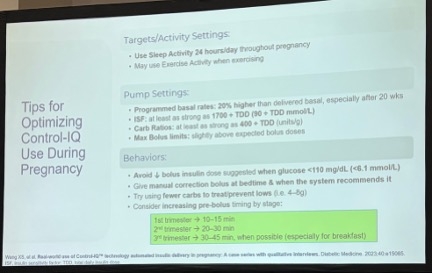
- Labor and delivery (L&D) recommendations for Control-IQ+ involve programming a postpartum profile and personalizing activity settings. If settings from 32 weeks are already present on the device, a 50% reduction from those settings is recommended for a postpartum profile. If comparing to pre-pregnancy settings, a suggested postpartum profile involves: (i) 2/3 basal rates; (ii) 20% weaker ISF; and (iii) 10-20% weaker insulin-to-carbohydrate ratio (I:C). This profile should be switched just before caesarean birth or at the start of pushing. For activity settings, it is recommended to continue Sleep Activity. For patients who are either breastfeeding or experience frequent hypoglycemia, they can consider no Activity and/or Exercise Activity.
“Diabetes shouldn’t be a full-time job”: MiniMed product theater on the value of automation
As part of MiniMed’s first ADA as an independent company, CEO Ms. Que Dallara welcomed attendees to the product theater. She said that “diabetes shouldn't be a full-time job,” positioning the company's portfolio as a response to the cognitive, emotional, and logistical demands associated with intensive insulin management. Ms. Dallara reiterated that current diabetes care places excessive responsibility on people with diabetes, caregivers, and healthcare providers. She shared data showing that despite substantial effort from patients and clinicians, approximately three-quarters of individuals still fail to achieve recommended glycemic targets, suggesting that the challenge is not patient engagement but rather the complexity of diabetes management itself.
- EVP and Chief Product and Technology Officer Mr. Ali Dianaty overviewed the MiniMed portfolio. Among the portfolio is MiniMed Go, a smart MDI platform that Mr. Dianaty described through the framework of “remembering, reminding, and recommending.” The platform was designed with the goal of shifting routine diabetes tasks from the user to the system with automated dose tracking, corrective alerts, and insulin recommendations intended to reduce what presenters characterized as the roughly 100 diabetes-related decisions patients face each day. MiniMed extended this simplification strategy beyond AID to include MDI as well.
- Both Ms. Dallara and Mr. Dianaty elaborated on the interconnected relationship between user experience and clinical outcomes. They both posited that systems that patients enjoy using are more likely to produce sustained engagement and, consequently, better outcomes (in this case, higher TIR). On MiniMed 780G and MiniMed Flex, Ms. Dallara highlighted satisfaction surveys, extensive real-world utilization data from the approximately 659,000 global pump users, and more than 280 publications evaluating its algorithms to celebrate the success of the AID portfolio. Data presented by Mr. Dianaty suggested that individuals using MiniMed Go who responded most consistently (>75%) to missed-dose and high-glucose alerts achieved TIR levels exceeding ADA-recommended thresholds (>70%), reinforcing the company's argument that well-designed behavioral prompts can meaningfully improve outcomes even for people using MDI.
- The product theater concluded with a discussion between CMO Dr. Bob Vigersky, Prof. Johan Jendle (Orebro University, Sweden), and Dr. Anuj Bhargava (Iowa Diabetes) on practical implementation and real-world user adoption of the MiniMed system. Panelists highlighted the potential value of simplifying therapy initiation, reducing missed boluses, and providing clinicians with clearer visibility into patient behaviors through connected data platforms. Using different case examples and specific patient profiles, each of the speakers said that the technologies in MiniMed’s portfolio could address longstanding challenges by making diabetes management more intuitive and actionable for patients. Across both executive presentations and panel discussions, the dominant message was consistent: the future of diabetes technology lies not simply in delivering insulin more effectively, but in reducing the amount of work required to live well with diabetes.
AIDING RCT demonstrates substantial glycemic benefits of inpatient AID use
Kicking off the morning at ADA, investigators from Stanford University, Emory University, and the University of Virginia presented results from the AIDING trial (n=130), a multicenter randomized controlled trial evaluating the safety and efficacy of AID in non-ICU hospitalized adults with either T1D or T2D and at least two glucose measurements ≥180 mg/dL. Presenters included Emory’s Dr. Georgia Davis, Dr. Michael Hughes, and Dr. Francisco Pasquel, Stanford’s Dr. Rayhan Lal, and UVA’s Dr. Sue Brown; the session was moderated by Dr. Irl Hirsch (University of Washington). This important session included a key acknowledgement by Dr. Lal to a longtime leader in and friend of the diabetes community, Dr. Thomas Peyser – AID as it is known today wouldn’t exist without Dr. Peyser, who was a pioneer at Dexcom and on the team at Santa Barbara that developed the first OP5 algorithm. The AIDING study was incredibly exciting to hear. The study demonstrated a striking 28 percentage point improvement in Time in Range (TIR) with AID versus MDI plus CGM (67.7% vs. 40.8%), driven largely by reductions in severe hyperglycemia and achieved without increased hypoglycemia. AID and CGM performance in the inpatient setting was excellent, with participants spending 95% of time in automated mode and with 98% active CGM time. The findings generated considerable enthusiasm, with audience members quickly lining up during Q&A to praise the work; notably, Dr. Gregory Forlenza (CU Anschutz School of Medicine) described the results as “transformational.”
- Dr. Davis opened by reviewing the rationale for bringing diabetes technology into the inpatient setting. Current antihyperglycemic management varies based on diabetes type and severity of hyperglycemia. Patients with T1D or severe hyperglycemia with T2D require basal-bolus insulin regimens, whereas those with T2D and milder hyperglycemia may be managed with basal insulin alone. Interest in inpatient diabetes technology accelerated during the COVID-19 pandemic, generating real-world evidence that prompted further study. While inpatient CGM studies have generally shown only modest glycemic improvements, they have demonstrated that hybrid protocols combining CGM with intermittent point-of-care (POC) testing can be safely implemented. Early AID studies showed more substantial improvements in TIR, prompting the AIDING feasibility study (n=16), which demonstrated progressive increases in TIR that stabilized above 70% by Day 3 while maintaining very low hypoglycemia. With evidence that inpatient physiology responds well to AID, investigators also sought to determine whether the technology could be successfully integrated into routine hospital workflows.
- Dr. Lal reviewed the study design and baseline characteristics. Participants were randomized 1:1 to either AID or MDI plus CGM. CGMs in both groups were validated twice daily, and nurses were responsible for all insulin administration. Hypoglycemia alarms were set to glucose <80 mg/dL, while hyperglycemia alarms were set to glucose >300 mg/dL for at least one hour.
- The study enrolled a diverse population. Approximately 40% of participants were white, 45% were Black, and nearly 10% were Hispanic. Half had a high school education or less, about 40% reported annual household incomes below $50,000, and about half were publicly insured. Mean age was ~58 years, and about 40% were male. Roughly 80% of participants had T2D. Baseline A1c averaged 8.9% in the AID group and 9.2% in the control group, with nearly half of participants in each arm having an A1c ≥9.0%. Mean glucose at randomization ranged from 210-220 mg/dL, and participants represented a broad spectrum of kidney function. Cardiovascular disease was common (~60%) and was the leading reason for admission (~20%). About one in five participants had prior CGM experience.
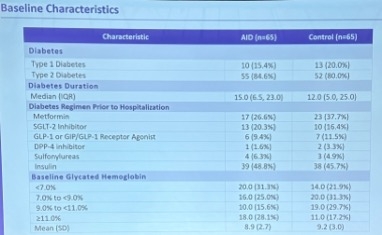
- Dr. Hughes described the nursing workflows developed during the feasibility and AIDING studies. Unlike outpatient use, the primary “users” of the devices were the bedside nursing teams. Data from Omnipod 5 and Dexcom G6 were streamed both to the bedside controller and nursing-station tablet, which displayed real-time glucose and hypoglycemia alerts, and to the study team, which also monitored for prolonged hyperglycemia and data loss. To support implementation, investigators established clear responsibilities:
- Patients: Wear devices and help report meals;
- Bedside nurses: Receive device training at the start of shifts, validate CGM readings, confirm dosing, and administer meal boluses based on carbohydrate counts;
- Study team: Initiate devices, train nursing staff, review data daily, and adjust pump settings; and
- Primary team: Continue overall medical management while delegating diabetes management to the study workflow.
Dr. Hughes emphasized that leveraging existing nursing workflows and simplifying training were critical to success. He also noted that routine CGM validation helped build trust in the technology among clinical staff.
- Dr. Brown presented the trial’s results. Patients using AID achieved 67.7% TIR compared with 40.8% among those managed with MDI plus CGM, representing a 27.6 percentage point improvement (p<0.001) — equivalent to roughly 6.5 additional hours per day spent in range. Separation between groups particularly emerged after dinner and persisted through the overnight and morning hours, though they narrowed around lunch. Unlike the feasibility study, improvements with AID were apparent from Day 1 and sustained throughout hospitalization, whereas TIR in the MDI plus CGM group improved more gradually.
- Additional CGM metrics also favored AID. Time >250 mg/dL was significantly lower with AID than with MDI plus CGM (6.7% vs. 20.6%; p<0.001), as was mean glucose (164 mg/dL vs. 198 mg/dL; p<0.001). Improvements again appeared immediately after treatment initiation. Importantly, hypoglycemia did not increase. Time below Range was 0.7% with AID versus 2.9% with MDI plus CGM, while Time <54 mg/dL was 0.17% versus 2.3%, respectively. Across nearly all glycemic thresholds, a greater proportion of AID users achieved higher TIR.
- Benefits were consistent across demographic and clinical subgroups. Improvements in TIR favored AID regardless of age, sex, BMI, race, or diabetes duration. Notably, AID also outperformed MDI in participants with T1D (n=22), those receiving steroids (n=39), and those with eGFR <30 mL/min/1.73m² (n=27).
- Additional CGM metrics also favored AID. Time >250 mg/dL was significantly lower with AID than with MDI plus CGM (6.7% vs. 20.6%; p<0.001), as was mean glucose (164 mg/dL vs. 198 mg/dL; p<0.001). Improvements again appeared immediately after treatment initiation. Importantly, hypoglycemia did not increase. Time below Range was 0.7% with AID versus 2.9% with MDI plus CGM, while Time <54 mg/dL was 0.17% versus 2.3%, respectively. Across nearly all glycemic thresholds, a greater proportion of AID users achieved higher TIR.
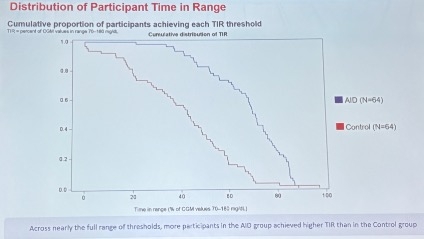
- Rates of severe glycemic excursions were substantially lower with AID. The control group experienced more than four times as many glucose >300 mg/dL events (295 vs. 70) and over 15 times as many glucose >400 mg/dL events (49 vs. 3). Rates of glucose <54 mg/dL events were similar (19 vs. 16). No episodes of diabetic ketoacidosis, severe hypoglycemia (with altered consciousness), or hyperosmolar hyperglycemic state occurred in either group. While the trial was not powered to assess broader safety outcomes, Dr. Brown characterized the overall safety profile as reassuring.
- Insulin requirements differed modestly between groups. Participants using AID received slightly higher basal insulin doses (26.0 vs. 18.6 units; p<0.01) and higher total daily insulin doses (50.6 vs. 38.0 units; p<0.05), while bolus insulin requirements remained similar.
- Device performance was excellent. Participants spent approximately 95% of study time in automated mode, which Dr. Brown described as “excellent” given the complexity of inpatient care. The protocol specified an initial glucose target of 120 mg/dL; more than 60% of participants remained at this target, while approximately one-quarter were later adjusted to 110 mg/dL. During Q&A, Dr. Lal noted that lessons from the feasibility study encouraged more aggressive target adjustments to optimize outcomes. Sensor performance was similarly strong, with most participants using a single 10-day sensor throughout the 10-day study. Successful CGM validations exceeded 85% in both groups, and the median number of calibrations required was zero.
- Dr. Pasquel concluded by placing the findings in context. He noted that conventional inpatient insulin strategies generally perform well in patients with less complex T2D, particularly those who are insulin-naïve or require relatively low insulin doses. AIDING is therefore particularly important because it demonstrates the safety and efficacy of inpatient AID in populations often excluded from prior studies, including patients with T1D, steroid exposure, and advanced kidney disease. The findings also further suggest that non-ICU inpatient teams can safely reduce POC testing frequency from four or more checks per day to just two when using a hybrid CGM protocol, all while making the patient feel more involved in their care.
Simplicity meets automation: Insulet product theater highlights Omnipod 6, algorithm enhancements, and the path to FCL
Insulet’s product theater drew a standing-room-only audience and focused on the company’s vision for simplifying diabetes management across T1D and T2D populations. Dr. Sufyan Hussain (Guy’s and St. Thomas’ NHS Foundation Trust, UK) highlighted the importance of simplicity in driving population-level adoption, while Dr. Gregory Forlenza (University of Colorado Anschutz) and Dr. Trang Ly (Insulet) showcased new algorithm innovations designed to move T1D and T2D management closer to fully automated insulin delivery.
- Dr. Hussain said that simplicity may be one of the most important drivers of population-level technology adoption. Drawing on both his professional experience and his personal experience living with T1D for more than 35 years, Dr. Hussain described Omnipod 5 as a particularly attractive option due to its tubeless design, streamlined onboarding, and compatibility with multiple CGM systems. He noted that simplicity benefits not only users, but also caregivers, healthcare professionals, and healthcare systems. Referencing his own clinic’s experience, Dr. Hussain highlighted previously published real-world data showing that glycemic improvements were observed across socioeconomic groups, including in populations that have historically faced barriers to technology access. He also emphasized the importance of cloud connectivity and telemedicine, saying that remote access to device data can simplify follow-up and facilitate large-scale implementation of AID systems.
- Dr. Forlenza focused on how incremental algorithm improvements continue to drive meaningful glycemic gains. While detailed STRIVE results were presented earlier during the conference, Dr. Forlenza provided additional context on the rationale behind Insulet’s recently launched Omnipod 5 algorithm enhancements, including a lower 100 mg/dL target and updates designed to keep users in automated mode more consistently. Early data suggest that users adopting the 100 mg/dL target experienced about 2-3% improvements in TIR and approximately 5-6% improvements in Time in Tight Range (TITR; 70-140 mg/dL). He suggested that TITR may increasingly serve as a useful metric for evaluating next-generation systems, noting that users are increasingly achieving TITR values in the 50-60% range.
- Looking ahead, Dr. Forlenza positioned Omnipod 6, which is expected to launch in 2027, as the next major step in Insulet’s automation strategy. He highlighted improvements in CGM connectivity, greater personalization, and the algorithm’s ability to deliver substantially more automated insulin when needed. Referencing STRIVE, he said that Omnipod 6 improved TIR by 2.5%-4.1% and TITR by 5.5%-7.4% across most age groups and diabetes types. Particularly notable were findings from the optional limited-bolus extension phase, in which participants were asked to bolus only three times daily. Despite reduced user interaction, TIR generally remained above 70% and TITR above 50%.
- Dr. Ly shifted the discussion toward T2D and Insulet’s longer-term ambition of FCL insulin delivery. She said that despite growing use of GLP-1 RAs and other therapies, glycemic outcomes remain suboptimal for many people with T2D. Dr. Ly reviewed prior findings from SECURE-T2D, where Omnipod 5 reduced A1c by 0.8% overall and by 2.1% among those with baseline A1c values above 9.0%. She also referenced the 2026 ADA Standards of Care, which now recommend AID as the preferred insulin delivery method for both T1D and insulin-intensive T2D.
- Building on these advances, Dr. Ly touted Insulet’s progress toward FCL insulin delivery for T2D. Unlike traditional hybrid closed-loop systems, the platform is designed so that it does not require carbohydrate counting, meal boluses, or manual insulin titration. Participants in EVOLUTION2 initiated therapy using a single, standardized starting dose without carbohydrate ratios or manual titration, and subsequently relied entirely on automated dose adjustments. TIR increased from 51% at baseline to 66% after six weeks, while total daily insulin requirements declined by 29%. Dr. Ly said that participants reported reduced diabetes distress and high satisfaction, reinforcing the idea that the value of automation extends beyond glycemic metrics alone. She closed by previewing the ongoing EVOLVE pivotal study, describing FCL therapy for T2D as “within reach.”
Expanded real-world US performance data of MiniMed 780G with Instinct (n=44,082)
In the poster hall, MiniMed presented an expanded dataset of MiniMed 780G users with the Abbott-developed Instinct CGM (1891-P). At ATTD 2026, Dr. Viral Shah (Indiana University) presented a smaller dataset of nearly 14,000 users, which showed strong glycemic outcomes – users achieved a mean TIR of 76% and TITR of 52%. Similarly, this analysis also used deidentified CareLink data from MiniMed 780G users with self-reported T1D or T2D using either Instinct or Guardian 4 with at least 10 days of available CGM data.
- The overall cohort achieved mean TIR of 75% and mean TITR of 51%. TBR was minimal at 1.6%. Use of the system’s recommended settings (ROS; 100 mg/dL target and two-hour active insulin time) was associated with improved glycemic outcomes. Compared to non-ROS users (n=27,014), ROS users (n=17,068) achieved 2.9 hours/day more in range and 3.3 hours/day more in tight range (79% TIR vs. 72% TIR and 56% TITR vs. 48% TITR) without difference in TBR (1.4% in both subgroups).
- Use of recommended settings was associated with more clinically significant improvements than transitioning from Guardian 4 to Instinct. After transitioning from Guardian 4 to Instinct (n=23,270), users saw a modest 46 min/day TIR improvement (75% to 77%) and a greater 1.6 hours/day TITR improvement (48% to 52%). TBR was slightly higher with Instinct than Guardian 4 (1.6% vs. 1.2%).
- A greater proportion of ROS users achieved consensus glycemic goals than non-ROS users. 71% of ROS users achieved the triple composite endpoint of: (i) GMI <7.0%; (ii) TIR >70%; and (iii) TBR <4.0% compared to 48% of non-ROS users.
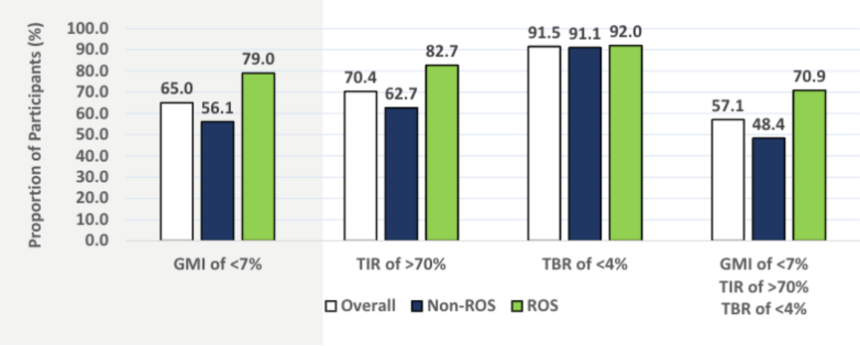
Bihormonal AID system strongly improves glycemic management after total pancreatectomy in PANORAMA trial
Prof. Hans de Vries (Amsterdam UMC, Netherlands) presented results from the PANORAMA study (n=25), which compared the fully closed-loop Inreda bihormonal AID system (insulin + glucagon) with standard care in people who developed diabetes following a total pancreatectomy. These patients lack both pancreatic alpha and beta cell function. The Inreda bihormonal system received CE-Mark approval in 2020 and requires at least once calibration per day. Overall, PANRORAMA demonstrated substantially improved glycemic management compared to standard care.
- Trial design and baseline characteristics. Participants had undergone a total pancreatectomy at least three months prior to enrollment and were randomized to either their current treatment or the Inreda system for three months. After a three-month washout period, participants crossed over to the alternate treatment for an additional three months. 70% of participants were male, they had a median age of 65 years, and they initiated the system a median of 1.5 years after their pancreatectomy. Mean baseline weight was 71.3 kg (157.2 lbs.). Notably, 28% of participants discontinued use of the device due to factors such as its size and alarms.
- The Inreda bihoromonal pump achieved an impressive 81% TIR, 24 percentage points higher than standard care (57%). A1c was significantly lower with Inreda compared to standard care (7.2% versus 8.0%; p=0.001), as was mean glucose (142 mg/dL versus 180 mg/dL). Time below Range was also lower with Inreda (0.9% versus 1.5%; p<0.05).
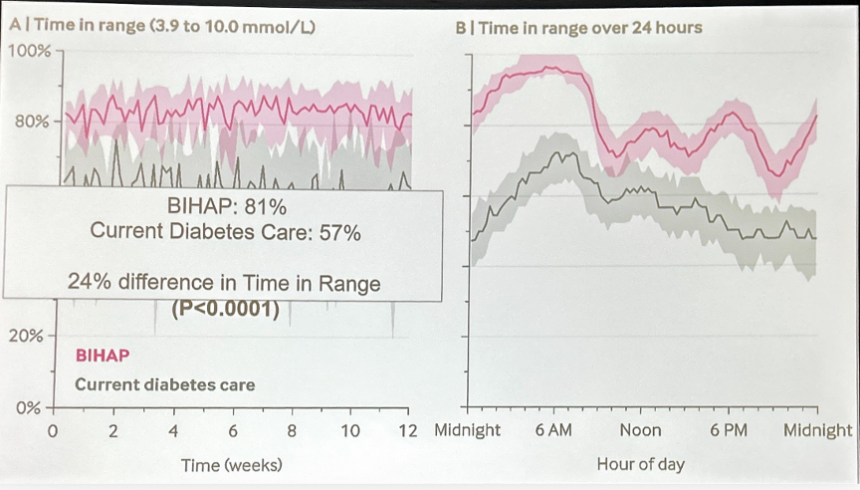
Real-world analysis suggests twiist’s occlusion detection system mitigates glycemic excursions
In the poster hall, Dr. Kenneth Snow (CSO, Sequel Med Tech) presented real-world glycemic outcomes proximal to occlusion alarms for twiist (2884-LB). As a reminder, twiist directly measures insulin delivery volume during each microdose, enabling quicker detection and alerts for occlusions. Therefore, it may enable users to intervene sooner and prevent occlusion-induced glycemic excursions.
- The analysis analyzed sensor glucose readings in the one-hour periods preceding and following an occlusion alarm, including data from 2,006 users. If either a carbohydrate entry or insulin bolus occurred three hours before or one hour after an occlusion alarm, these notifications were excluded from the analysis to avoid confounding glycemic effects.
- Mean glucose modestly increased in the 30 minutes before an occlusion alarm, suggesting twiist typically detected the occlusion within 30 minutes. Following the alarm, mean glucose was relatively stable, implying that users intervened to address the interruption in insulin delivery. Dr. Snow said the results indicate the efficacy of twiist’s rapid occlusion detection system and its utility for preventing severe glycemic excursions if insulin administration is disrupted.
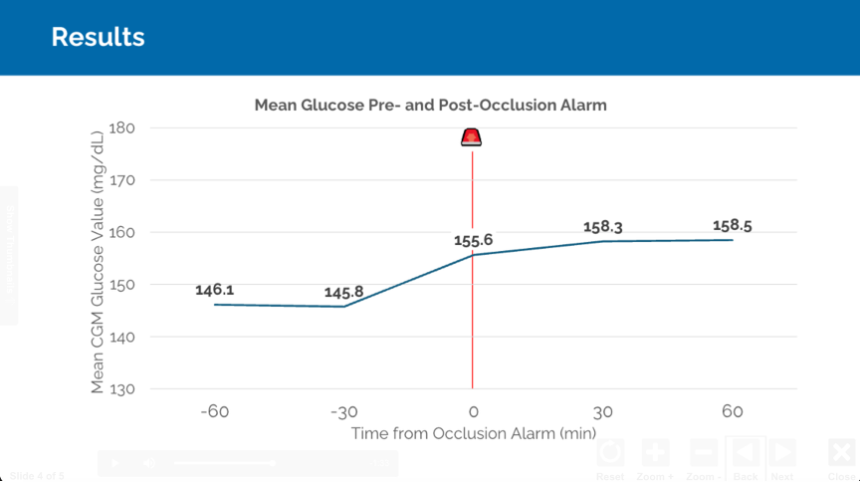
Strategies to optimize AID with general use, during pregnancy, and with exercise
University of Colorado Anschutz’s Dr. Gregory Forlenza and Dr. Sarit Polsky and Stanford’s Dr. Dessi Zaharieva delivered insightful presentations on optimizing AID generally, during pregnancy, and during exercise. During their talks, they offered several recommendations tailored to each system.
- To set the stage for the need for AID optimization, Dr. Forlenza shared real-world evidence from the Barbara Davis Center (as of April 2026). Technology use is high – 91% are using CGM (with all having been prescribed it), with about 14% using CGM with MDI and almost 80% using with it alongside an insulin pump (virtually all these patients are using AID). Mean A1c has improved notably from five years ago, reaching 7.8% in this population, but still falls well below what is achieved in clinical trials with these systems, where A1c can reach 7.0%-7.5%. In terms of TIR, his patients are reaching 60% on average, below the 67%-72% observed in clinical trials.
- Dr. Forlenza advocated for the use of more aggressive system settings across AID systems to improve these real-world outcomes. He attributed part of this gap in clinical trial and real-world outcomes to the reliance on old diabetes dosing “dogma” and the huge variety in which AID system settings affect outcomes. To start, he promoted larger boluses, which can inhibit basal delivery feedback. Weaker boluses will then require higher basal modulation, which can trigger instability in postprandial excursions. Additionally, he reviewed studies identifying optimal settings across several AID systems, offering the general advice to use more aggressive settings like an insulin-to-carbohydrate ratio (ICR) of about 350/TDD (rather than 450/TDD) and a correction factor of a 1400/TDD (rather than the traditional 1800/TDD rule).
- Control-IQ: Using around an ICR of 300-350/TDD, correction factor of about 1400-1500/TDD, and more aggressive basal rates of up to 60% were optimal, producing TIR improvement without increasing TBR.
- MiniMed 780G: Two settings are most influential for success: (i) glucose target of 100 mg/dL; and (ii) active insulin time of two hours. Dr. Forlenza added that he tends to use an ICR of 350/TDD with this system.
- Omnipod 5: The lowest glucose target of 110 mg/dL (now 100 mg/dL), ICR of about 350/TDD, and CF of about 1600/TDD should be used.
- While Dr. Forlenza said he could not find peer-reviewed articles on optimizing iLet, twiist, CamAPS FX, or Diabeloop, he projected that prioritizing more aggressive targets would hold true. On iLet, however, he recommended primarily using the “usual” or “lower” targets.
- Dr. Polsky said optimizing AID use during pregnancy begins with building a strong foundation and regularly reviewing and adjusting pump settings. She emphasized the importance of closely monitoring glucose levels and weight throughout each week of pregnancy while encouraging well-balanced eating patterns that include adequate, high-quality carbohydrates. Dr. Polsky also said individual discussions surrounding the risks and benefits of specific AID components, including CGM use (with fingerstick glucose measurements still recommended), infusion sets, and algorithms, are needed.
- Dr. Polsky then reviewed the three large RCTs evaluating the use of AID in T1D pregnancies: AiDAPT (CamAPS FX), CRISTAL (MiniMed 780G), and CIRCUIT (Control-IQ). These trials have shown improvements in glycemia – including Time in Pregnancy Range (63-140 mg/dL) – compared to standard care. She said that AID systems should be carefully selected for pregnant women, and that women with severe hypoglycemia and high glycemic variability could particularly benefit from AID. In terms of optimizing AID for pregnancy, Dr. Polsky said that generally the lowest glucose target level or range offered by the AID system should be used. Additionally, pregnant women should enter extra boluses when needed (limiting frequency to once every two hours), avoid overcorrecting for hypoglycemia by consuming fewer carbohydrates given basal suspensions, and “super bolus” (shift a portion of basal insulin to the mealtime bolus) with meals. Specific recommendations by AID system include:
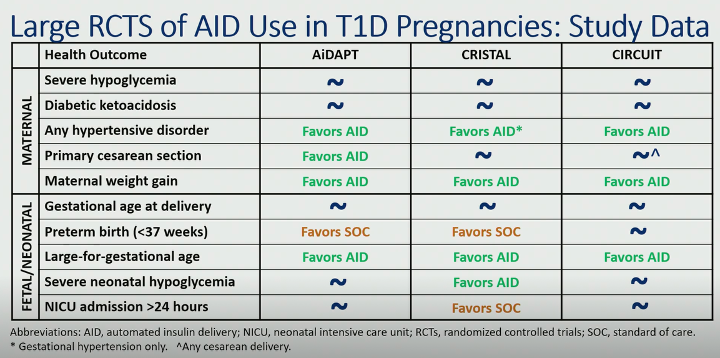
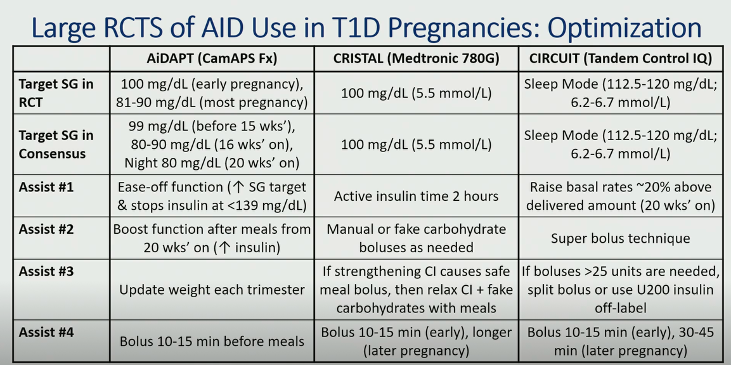
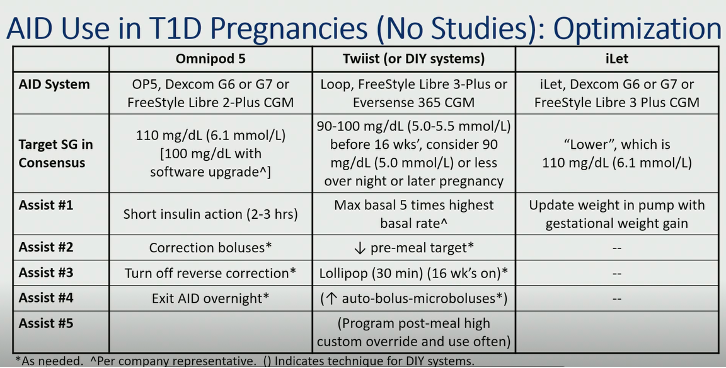
- Looking ahead, Dr. Polsky said that while these RCTs were randomized around 10-12 weeks’ gestation, starting AID earlier may help increase glycemic gains. She also said that while systems tend to focus on glucose targets, adjusting to insulin resistance as well may increase TIPR.
- Finally, Dr. Zaharieva reviewed key challenges with current AID systems with exercise. She highlighted five key recommendations: (i) set higher glucose target one to two hours before exercise to prevent excess insulin on board; (ii) reduce mealtime insulin modestly (about 20-30%) before exercise; (iii) consume carbohydrates early when glucose is <126 mg/dL and dropping; (iv) consume slightly fewer carbohydrates during exercise to prevent overtreatment of hypoglycemia; and (v) start with low insulin on board before exercise.
- These recommendations seek to rectify various challenges with current AID systems:
- Insulin on board (IOB) does not reflect physiologic insulin. She touched on the concept of netIOB, which she detailed extensively on Friday at ADA.
- Exercise can increase insulin absorption, particularly that already in subcutaneous depots, leading to more insulin in circulation even if insulin was reduced before exercise.
- AID algorithms cannot detect or account for factors like adrenaline, stress, uncovered carbohydrates, or menstrual cycle phases.
- Building on recommendations in the joint EASD/ISPAD position statement, Dr. Zaharieva discussed challenges and suggestions for specific AID systems. She also highlighted the importance of education on exercise with diabetes, showcasing the free, Stanford-licensed SPEED classes (Sports, Play, and Exercise Education for Diabetes), and identified the use of different targets for different types of exercise as an area of future research.
- Control-IQ+: Dr. Zaharieva said that a small bolus reduction may be more effective compared to aggressive reductions. She also explained that when setting Exercise Mode (which establishes a 140-160 mg/dL target), the AutoBolus feature still targets closer to 110 mg/dL, which can be triggered when glucose approaches 180 mg/dL. Small manual boluses before exercise can prevent an AutoBolus for the next hour.
- Omnipod 5: The activity feature limits insulin delivery and delays time to hypoglycemia if set 30 to 60 min before exercise. She also recommended manually turning off reverse corrections and said the system’s new 100 mg/dL target option and reduced interruptions to automated mode may help improve outcomes with exercise.
- MiniMed 780G: Autocorrections stop when the temporary target is set for exercise. The combination of 25% meal bolus reductions and use of the temporary target is associated with minimal exercise-induced hypoglycemia. Briefly reviewing a post hoc analysis from the FACT study in youth with T1D, she said that use of the temporary target is associated with longer and safer exercise.
- iLet: While the pump does not have any exercise settings, users can still suspend it 30 minutes before exercise and adjust glucose targets as needed.
- twiist: Notably, this latest entrant to the AID ecosystem is the only one that displays netIOB to users.
- These recommendations seek to rectify various challenges with current AID systems:
A1c and TIR improve significantly with mylife Loop AID regardless of precise or estimated carbohydrate counting
Dr. Navya Basavaraju (Shrewsbury and Telford Hospital NHS Trust, UK) presented results from a prospective observational pilot study evaluating precision carbohydrate counting compared to estimated carbohydrate counting among adults with T1D using the mylife Loop AID system (n=34). The participants were naïve to mylife Loop and completed six months of follow up. Group allocation was 1:1 and based on carbohydrate counting ability. For those allocated to meal estimates, inputs were categorized as: (i) snack (30 grams carbohydrates); (ii) small meal (50 grams carbohydrates); (iii) medium meal (75 grams carbohydrates); or (iv) large meal (100 grams carbohydrates).
- Dr. Basavaraju reported some differences in baseline characteristics between the groups. The precise carbohydrate counting group was on average younger (mean age of 42 versus 54 years) and had a shorter duration of diabetes (22 vs. 35 years). They also had a higher total daily insulin requirement (59 units vs. 52 units, respectively) and lower mean baseline A1c (7.6% vs. 8.1%, respectively). Mean baseline TIR was comparable at 52% and 49%, respectively.
- Mean A1c, TIR, and Time >250 mg/dL all improved significantly upon initiating the mylife Loop AID system, with no significant difference between precise and estimated carbohydrate counting. However, precise carbohydrate counting may still confer a clinically greater benefit than meal estimations, as it was associated with a numerically lower A1c and higher TIR.
Precise Carbohydrate Counting | Estimated Carbohydrate Counting | |||||
| Baseline | 6 months | p-value | Baseline | 6 months | p-value | |
| A1c | 7.6% | 6.8% | <0.001 | 7.8% | 7.1% | <0.001 |
| TIR | 52% | 70% | <0.001 | 49% | 65% | <0.001 |
| Time >250 mg/dL | 18% | 7% | <0.001 | 22% | 11% | <0.01 |
- Alongside glycemic improvement, initiating mylife Loop reduced mean total daily dose. These reductions were not significant in either group (from 59 units/day to 54 units with precise carbohydrate counting and from 52 units/day to 48 units with estimated carbohydrate counting). The share of basal insulin as percentage of the total daily dose also increased in both cohorts. For example, the share of basal insulin increased with estimated carbohydrate counting (from 43% to 56%; p<0.01), suggesting that the algorithm could accommodate for less precise announcements with insulin dosing adjustments. Similarly, the share of bolus insulin decreased significantly with precise carbohydrate counting (from 47% to 37%; p<0.01) because the AID system was optimizing insulin delivery.
Use of hybrid closed loop in vulnerable populations with T1D
Prof. Katarzyna Cyranka (Jagiellonian University, Poland) presented on the HI-LOOP study, which evaluated the metabolic and psychological impact of the CamAPS FX hybrid closed-loop (HCL) system in a vulnerable population of adults with T1D. The cohort had A1c levels >9.0%, a long duration with diabetes, and significant mental health challenges, including personality disorders, diabetes distress, burnout, and reduced quality of life. In this randomized clinical trial, participants (n=30) were allocated to either HCL therapy (CamAPS FX with insulin pump and CGM) or standard insulin therapy. Following initiation of AID and a simplified educational approach, participants using HCL experienced substantial improvements in glycemic outcomes within three months, including a marked reduction in A1c and a 28% increase in TIR, whereas no significant changes were observed in the control group.
Participants receiving HCL therapy reported significant reductions in diabetes burnout and anxiety, alongside improvements in quality of life, without an increase in fear of hypoglycemia. All individuals completed the study. These results support broader access to AID for populations traditionally considered difficult to manage and highlight the potential for improved diabetes outcomes to enhance engagement with psychological and behavioral interventions.
Digital Health, Telemedicine, and Decision Support
ADA consensus panel unveils new clinical decision algorithm to identify and treat elevated ketone levels
A packed panel discussion on the identification, monitoring, and management of elevated ketones closed ADA Day #1. Dr. Guillermo Umpierrez (Emory University) opened the symposium by presenting concerning trends in DKA hospitalization rates. Globally, DKA rates are increasing in children and adults with T1D and T2D. According to CDC’s 2026 National Diabetes Statistics Report, 10.4 per 1,000 adults with diabetes experienced a hyperglycemic crisis requiring hospitalization in 2021. Readmittance also remains an issue, with one in eight DKA patients being hospitalized again within 30 days. Additionally, although risk of DKA remains higher in people with T1D, it is rising in those with T2D due to usage of SGLT-2 inhibitors. Given these concerning trends, Dr. Viral Shah (Indiana University) discussed the ADA’s efforts to develop actionable clinical guidance for patients, while Dr. Eden Miller (Diabetes and Obesity Care) addressed how continuous ketone monitoring (CKM) could mitigate DKA risk.
- Dr. Shah unveiled a clinical decision algorithm (CDA) developed by an ADA consensus team. The CDA did not encompass: (i) pregnancy (due to the unique pathophysiology of DKA and limited evidence); (ii) SGLT-2 inhibitor-related euglycemic DKA (noting that ketone management principles are similar to the STOP DKA protocol); and (iii) mixed disorders and hyperglycemic ketosis due to cannabis hyperemesis syndrome (HK-CHS). Dr. Shah said the pending commercialization of Abbott’s dual glucose-ketone monitor motivated this CDA to provide people with diabetes and clinicians with actionable, simple guidance to address elevated ketone levels and prevent DKA. He said the ADA consensus panel sought to align well with an alternative CKM consensus statement published in The Lancet Diabetes and Endocrinology earlier this year to minimize confusion. The CDA comprised five clinical steps.
- Step 1: All individuals at risk for elevated ketones should receive education on ketone monitoring and treatment. Dr. Shah emphasized education should be provided regardless of ketone assessment method. If individuals are not using CKM, proceed to Step 2. If individuals are using CKM, proceed to Step 3.
- Step 2: Assess if current symptoms, if any, warrant ketone measurement. Factors indicating the need to evaluate ketone levels include, but are not limited to: (i) significantly elevated glucose levels (>250 mg/dL); (ii) nausea or vomiting; (iii) heavy or rapid breathing; and (iv) confusion and fatigue.
- Step 3: Evaluate ketone levels with CKM, capillary tests, or urine strips.
- Step 4: Determine if ketones are elevated. The CDA includes color-coded guidance to assist with identification and aligns with the previous CKM consensus. The chart defines ketone levels according to the method of measurement, including diagrams to help with interpretation of urinary tests.
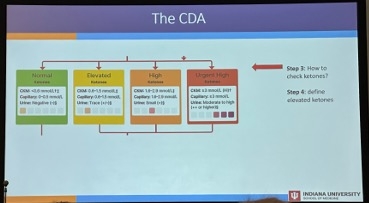
- Step 5: Manage ketone levels accordingly. Dr. Shah noted the CDA aims to empower people with diabetes to manage their ketone levels themselves if they have the appropriate resources to do so, providing practical guidance according to glucose levels. Dr. Shah said the consensus group chose a glucose level 250 mg/dL as the benchmark to delineate treatment recommendations to minimize unnecessary testing and maintain simplicity. If individuals do not have the resources to manage ketones themselves or do not have successful resolution of elevated ketones, they are advised to seek treatment at the emergency department.
Dr. Miller emphasized that everyone at risk for elevated ketones needs a personalized plan to manage rising levels. She said that CKM offers a real-time, proactive solution to improve the accessibility of ketone monitoring and intervene early, stating that clinicians must embrace the technology in order to revamp clinical guidance as necessary according to the real-world data gathered from implementation. Furthermore, she called on endocrinologists to teach primary care physicians to be experts in ketone monitoring, rather than dismissing the technology as too complicated for primary care. By embracing CKM and involving the entire care team, Dr. Miller stressed there is substantial opportunity to empower people with diabetes to identify and respond to elevated ketone levels to reduce DKA risk.
Participation in a real-world, comprehensive telehealth weight management program yields substantial weight loss for adults with prediabetes and T2D
In a morning poster presentation session, Dr. Kelli Richardson (Weight Watchers International) discussed the weight loss outcomes of patients with prediabetes or T2D who participated in a telehealth medical weight management program that included both lifestyle changes and anti-obesity medication. Previous research has demonstrated that GLP-1 RA therapy yields lower weight loss in adults with T2D. Dr. Richardson hypothesized that weight loss interventions that include behavioral support for lifestyle changes along with medication are necessary for the prevention and management of overweight and obesity in these patients.
- This retrospective observational study included patients with either prediabetes or T2D who were enrolled in a telehealth-based medical weight management program: Weight Watchers Med+. Participants were enrolled in the program for at least a year and initiated an obesity medication with at least one refill. Three types of obesity medications were included in the analysis: long-acting GLP-1 RAs, short-acting GLP-1 RAs, and oral medications. Mean weight change was measured at three, six, nine, and 12 months. Researchers also calculated the proportion of patients reaching at least 5%, 10%, 15%, and 20% weight loss at 12 months.
- Mean weight changes were similar between patients with prediabetes and T2D at all recorded time points. At 12 months, those with prediabetes lost 18.0% body weight while those with T2D lost 18.2% body weight. All obesity medications conferred weight loss, but oral medications yielded the lowest mean weight change (while the use of long-acting GLP-1 RAs resulted in the greatest weight loss). Nearly all participants lost more than 5% body weight (95.8% pre-diabetes; 94.4% T2D), and weight loss of ≥20% was common by 52 weeks (39.5% of those with prediabetes and 41.6% of those with T2D. This study demonstrates that more accessible, scalable programs such as telehealth programs can be incorporated in diabetes care and result in meaningful weight loss and improved health outcomes. Future studies will investigate improving program engagement and cardiometabolic outcomes.
SUNRISE outreach trial in development, with the aim to delay or prevent T2D and GDM-related complications with digital health
Dr. Susan Brown (University of California, Davis) discussed the potential for digital health outreach to promote postpartum screening after gestational diabetes (GDM). GDM is present in up to 15% of pregnancies and its rate is rising by about 3.7% annually, and T2D increases the risk for GDM 10-fold. This in turn contributes to a 2.3 times higher risk of a cardiovascular event 10 years postpartum and a 2.4 times higher risk of metabolic syndrome. There is currently a care gap with respect to postpartum screening for patients with GDM, with less than half of recommended patients from Kaiser Permanente receiving a screening (n=21,974). Assessing why, survey results (n=162) show that many factors contribute to a low screening rate, including low perceived risk (58%), and logistical difficulties in terms of finding time (52%) and childcare (38%), and fear of the results (31%).
- The SUNRISE trial aimed to optimize patient outreach and increase the uptake of postpartum diabetes screening and preventative lifestyle programs after GDM through digital health. It is currently in its “optimize” phase with the intention of identifying and selecting promising intervention components that will improve screening. Researchers will then initiate an RCT to test the efficacy of the optimized intervention package using selected components. These components will include value affirmations, tailored risk information, and an action plan for health screening.
- Eligible patients with GDM will be identified through EHR and will receive a baseline survey and gift card. They will then be randomized, with one group receiving an initial outreach message during pregnancy and a second outreach message postpartum, along with a second survey and gift card. Primary outcomes will be measured via EHR at 12 weeks postpartum, and secondary outcomes will be assessed after 12 months.
Rising T1DE Alliance highlights data integration as the next frontier in diabetes care
A series of presentations from the Rising T1DE Alliance highlighted a persistent challenge in diabetes care: while diabetes generates vast amounts of data, much of it remains fragmented across device manufacturer portals, electronic health records (EHRs), patient-reported outcomes, and research databases. Speakers outlined emerging efforts to transform these disconnected data streams into actionable insights that can support population health management, risk prediction, quality improvement, and more proactive clinical care.
- Presenting on behalf of Children's Mercy Kansas City, Dr. Daniel Tilden said that most diabetes device data remain trapped within manufacturer-specific platforms, limiting clinicians' ability to conduct timely reviews outside of episodic clinic visits. Combining CGM metrics with EHR data, hospitalization records, and patient-reported outcomes could enable health systems to identify patients at risk for deterioration, predict adverse events, and intervene earlier.
- To address these challenges, Children's Mercy developed the Diabetes Data Dock (DDD), a data integration platform that sits alongside the EHR and aggregates clinical, CGM, and patient-reported outcome data. Established in 2016, the platform now encompasses data from approximately 10,000 clinic visits, more than one million clinical events and insulin boluses, and hundreds of millions of CGM readings. Leveraging this infrastructure, the team has developed machine learning models that predict both 90-day A1c changes and 180-day hospitalization risk. These metrics are displayed through customized dashboards that stratify patients by risk and help clinical teams prioritize outreach and interventions.
- Dr. Tilden said that identifying risk is only the first step. Children's Mercy has also built workflows that connect risk identification to referral coordinators who review dashboards and proactively enroll patients into remote patient monitoring (RPM) programs or diabetes education outreach. The team has also developed dashboards for pre-visit planning, quality improvement initiatives, research, and broader diabetes care monitoring. Over time, the institution has observed declines in emergency department visits and hospitalizations while also supporting a pediatric specialty value-based care program that ties performance incentives to population-level outcomes.
- Complementing these efforts, Dr. Sadaf Javaid (Lurie Children's Hospital of Chicago) introduced the Diabetes Technology Maturity Model (DTMM), a framework designed to help healthcare organizations assess and advance their readiness for diabetes technology integration. Adapted for diabetes technology implementation, the model evaluates institutions across six domains and six levels of maturity, ranging from "absent" to "optimized." Organizations may progress at different rates across domains, providing a nuanced view of strengths and gaps.
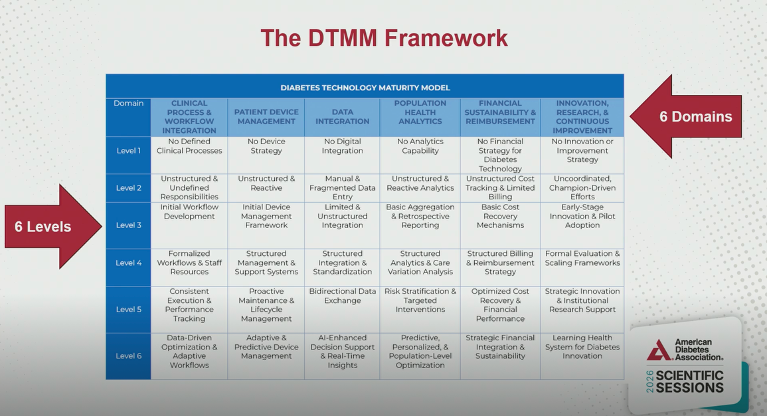
- Dr. Javaid described the DTMM as a “roadmap” for organizations seeking to move from their current state toward more advanced technology integration. Healthcare systems can use the framework to assess existing capabilities, identify shortcomings, and develop strategic plans for improvement. Developed through literature review, expert consensus, and iterative evaluation, the model is undergoing validation, with broader dissemination anticipated later this year. Early findings suggest that most organizations cluster around mid-level maturity, with interoperability and population health capabilities often lagging behind other domains.
- Finally, Dr. Sarah Corathers (Cincinnati Children’s Hospital Medical Center) focused on the challenge of making CGM data clinically actionable through interoperability and standardized integration. She said that closing data gaps requires seamless movement of CGM data from manufacturer cloud platforms into EHR systems, rather than forcing clinicians to navigate a growing number of standalone portals.
- Central to these efforts is the iCoDE initiative, which has established consensus recommendations for CGM-EHR integration. Dr. Corather described her health system’s implementation of structured CGM data integration from multiple vendor platforms into the EHR, including direct access to dynamic visualizations. It has also partnered with Tidepool and Glooko to enable single-click access to device data platforms from within the EHR, eliminating multiple login steps and improving clinician workflows. Additional innovations include electronic ordering systems that automatically retrieve CGM metrics and ambulatory glucose profile (AGP) reports. Adoption has grown to roughly 300 orders per month, generating approximately 2,000 digital CGM data entries that previously required manual transcription, while reducing administrative burden, lowering paper costs, and improving data quality. She added that these integrated CGM metrics are now available for quality improvement initiatives and external benchmarking.
- Beyond individual implementations, speakers stressed the need for national policy alignment. Without common standards, each health system must independently solve the same integration challenges, creating inefficiencies and potentially widening disparities. Preliminary policy recommendations include strengthening patient access rights, establishing interoperability standards, addressing information blocking, defining infrastructure requirements, and developing clear data-sharing principles. They emphasized that standardized approaches are also critical for health equity, noting that without them, only the most well-resourced institutions will be able to build advanced diabetes data ecosystems. To advance these goals, the Rising T1DE Alliance recently launched a CGM Data Policy Initiative aimed at developing national standards for diabetes data interoperability. The effort is expected to culminate in a consensus white paper in fall 2026.
Time in Range and Other CGM-Derived Metrics
Value and challenges of Time in Tight Range (TITR) in T1D populations
Dr. Molly Tanenbaum (Stanford University) examined the perceived benefits and burdens of adopting Time in Tight Range (TITR; 70–140 mg/dL) as a clinical target among people living with T1D. While current clinical guidelines emphasize the value of Time in Range (TIR), emerging discussions have proposed TITR as a potential target that could reduce complication risk for people with T1D. To explore patient perspectives, Dr. Tanenbaum and her team conducted two complementary online surveys: (i) one through Sutter Health in the US (n=444); and (ii) a second international online survey (n=393), which primarily recruited participants from the US and the UK. A total of 837 respondents, with high rates of CGM, insulin pump, and AID use. The survey assessed perceived benefits, risks, and burdens associated with TITR, as well as factors such as hypoglycemia awareness and food insecurity.
Many respondents simultaneously recognized both the potential value and challenges of TITR as a clinical target. Approximately 55% of respondents believed achieving TITR was feasible, while 56% felt it could improve diabetes self-management. However, participants also expressed concerns regarding increased treatment burden, stress, risk of hypoglycemia, and the potential risk of disordered eating behaviors. Individuals using AID systems were more likely to view TITR as achievable, whereas those not using AID expressed greater concern about restrictive eating behaviors associated with striving for tighter glycemic targets on MDI. Notably, 21% of respondents reported experiencing food insecurity, highlighting the importance of considering social determinants of health when promoting more intensive targets. Dr. Tanenbaum suggested that the study suggests the need for further research to identify which individuals may benefit most from TITR targets and emphasizes the importance of incorporating the perspectives of people with diabetes when developing future clinical recommendations.
Diabetes Technology Big Picture
Upcoming ADA statement on diabetes technology in primary care encourages greater use of CGM and insulin delivery systems
Gearing up for ADA’s release of its statement on diabetes technology in primary care, a panel convened to discuss recommendations for its implementation strategies. In this symposium, Dr. Eugene Wright (South Piedmont Area Health Education Center), Dr. Diana Isaacs (Cleveland Clinic), Dr. Thomas Martens (International Diabetes Center), Dr. Sean Oser (University of Colorado Anschutz), and Dr. Osagie Ebekozien (ADA) outlined the ADA’s Statement on Diabetes Technology in Primary Care, which is expected to be published this fall. This statement resulted from the collaboration of 30+ experts across primary care, technology, and research with the goal of providing statements and key recommendations on the implementation of diabetes technology in primary care settings. The statement has so far been endorsed by a number of professional organizations, including AACE, ADCES, the American Association of Physician Associates, the American College of Diabetology, the American Society for Hospital Pharmacist, the American Association of Nurse Practitioners, and the American Pharmacist Association Foundation.
During the symposium, Dr. Martens referred to primary care physicians as the “front door of the medical system.” With access to such a large population of people with diabetes – many of whom are traditionally underserved – the primary care ecosystem has an important role in maximizing benefit and minimizing burden for patients with diabetes.
- Introducing the first set of statements, Dr. Martens reiterated the importance of CGM in diabetes managed in primary care. Statements 2 through 6 support team-based management. Key recommendations to support this guidance include designating a diabetes technology champion to facilitate awareness and the use of available resources. During Q&A, Dr. Isaacs added that the champion could become a key link to hospital administration to encourage buy-in to expanding diabetes technology programs. Additionally, building interdisciplinary teams through partnerships with DCES and pharmacists can expand primary care’s capacity to integrate technology into clinical workflows, especially for teams with limited resources. Statements 7 through 9 addressed promoting access to CGM and interoperability with other devices, supported by recommendations for the regular review of CGM data and educational support to promote interpretation.
- Dr. Oser followed by presenting statements on integrating insulin delivery technology – from connected pens to AID systems – into primary care (Statements 10 to 13). The statement clearly states that insulin delivery has become less complicated for patients and simultaneously more effective, and recommends leveraging available resources – either in one’s clinic or available for free digitally – and facilitating access to resources that your clinic does not have.
- Dr. Ebekozien emphasized that successful integration of diabetes technology into primary care can improve efficiency and enable population health management. He reiterated key recommendations on ensuring primary care teams have access to patients’ diabetes device data (including CGM, AID systems, and connected pens) and expanding professional training programs to better prepare clinicians to implement diabetes technology in practice. He also outlined a potential pathway for technology integration, by either: (i) training existing practice staff to build in-house expertise; (ii) leveraging trained interdisciplinary team members and relevant support programs; or (iii) referring patients to external specialty resources. Future guidance will also define the roles and responsibilities of stakeholders across the diabetes technology ecosystem, including people with diabetes, prescribing clinicians, DCES, technology companies, and other members of the care team.
- To accelerate adoption, Dr. Ebekozien said that the ADA is launching quality-improvement pilots with ADA-aligned primary care practices focused on expanding CGM use and integrating smart pens and AID systems into routine care. The initiative will combine EHR-integrated clinical decision support with technology training to embed diabetes technology into existing workflows. The initial phase will engage 100 primary care sites for CGM implementation and 30 sites for insulin delivery technologies – which Dr. Ebekozien said represent the diversity of primary care in the US – with plans to expand site participation. Insights from participating clinics will be shared through the ADA Primary Care Council and more than 4,000 Primary Care Alliance practices, followed by broader dissemination through ADA educational, advocacy, and publication channels. In Q&A, panelists and audience further discussed the potential to develop business plans for greater diabetes technology use leveraging reimbursement codes for education and remote patient monitoring and monitoring quality measures with diabetes technology rollout to demonstrate the outcomes and fiscal benefits it confers.
AI and diabetes technology: Symposium analyzes utility of AI models for AID, decision support, and nutrition tracking
Day #2’s morning symposia included a deep dive into the potential of AI integration in diabetes care to improve glycemic outcomes. Dr. Boris Kovatchev (UVA) first discussed the integration of AI into fully closed-loop (FCL) algorithms, arguing that existing AID models (ex. model predictive control algorithms) are becoming obsolete due to: (i) the enhanced predictive capabilities of AI; and (ii) the extensive real-world AID data generated so far, which can train new algorithms. Dr. Revital Nimri (Schneider Children’s Medical Center, Israel) then evaluated whether AI-based clinical decision support tools could replace physicians within diabetes care. Dr. Yao Qin (UCSB) closed the session by describing her research to use AI models to automate carbohydrate estimation.
- Fully closed-loop AID algorithms. Dr. Kovatchev acknowledged that FCL algorithms have historically underperformed hybrid closed-loop (HCL) algorithms in mitigating postprandial glucose spikes due to the benefits of preemptive meal bolusing. To address this limitation and better implement FCL use, Dr. Kovatchev said the metabolic system could be “softened” with interventions in different pathways, leveraging therapies like GLP-1 RAs and SGLT-2 inhibitors (see below). Furthermore, he said hardware capabilities could be maximized through multi-hormonal approaches (i.e., glucagon) or using ultra-rapid insulin.
- With about 1.4 million people on AID (providing CGM and insulin delivery data every five minutes) and rapid progress in AI/machine learning (ML) capabilities, Dr. Kovatchev said data-driven automated diabetes management should be a priority. Insulin dosing rules (i.e., AID algorithms) combined with a saturated dataset encompassing all possible actions in a system can be encoded into a neural network. He surveyed clinical results of the neural-net FCL algorithms NAP and AIDANET, which showed comparable (and in some cases improved) performance to HCL algorithms. The addition of AI-based bolus priming to AIDANET (presented at ATTD 2026) further improved Time in Range and Time in Tight Range compared to AIDANET alone. Dr. Kovatchev said these results indicate AI can adequately predict, interpret, and manage human behavior, which could mitigate the main barrier to fully automating AID.
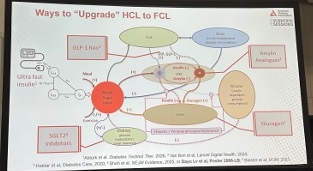
- Clinical decision support. Dr. Nimri adamantly said AI will not replace diabetes care teams. She cited data associating higher physician empathy with better cardiometabolic outcomes, emphasizing that the physician relationship still greatly shapes adherence, behavior, and health outcomes. She also acknowledged that AI remains limited to the data upon which it is trained and cannot identify subtleties in interpersonal interactions that could influence decision making, necessitating clinical oversight. Dr. Nimri suggested that retrieval-augmented generation (RAG) models could help mitigate this bias as it permits AI to integrate external data (i.e., EMR, clinical guidelines, etc.) in addition to its training data.
- However, she suggested that physicians who use AI may replace those who do not as AI could enhance decision making. She surveyed several studies suggesting some AI-based decision support tools show strong agreement with physicians’ recommendations. In particular, she said AI tools are already useful for diabetes detection and risk stratification, CGM interpretation and prediction, and care delivery. Thus, she argued that physicians who leverage these tools could improve their clinical decision making and better personalize treatment.
- Nutrition estimation. Dr. Qin presented UCSB NutriBench, an AI-based nutrition platform developed in her lab to visualize the impact of food on glycemic health. The platform includes an LLM-based automatic carbohydrate estimator where users can insert a text-based food description and receive an estimation within seconds. The tool, which supports over 10 languages, can also be accessed by texting a phone number – which our team tried following the presentation and enjoyed a rapid response assessing the estimated carb in our conference hall lunch. Validation studies indicated the predictive model performed similarly to dietitians permitted to access nutritional content and better than those who could not look up nutritional information to make carbohydrate estimates. Dr. Qin said ongoing work is seeking to fine tune this model to provide a confidence score alongside the carbohydrate estimate. In situations where there’s high uncertainty, the model will decline to provide an estimate, and potentially prompt the user to input more detailed meal information.
“Touch your patients!” Dr. Bellini presents strategies to address skin complications caused by diabetes technology
Dr. Natalie Bellini (Case Western Reserve University) offered practical tips for preventing and treating skin problems associated with diabetes technology to an engaged afternoon audience. Drawing from her own study, Dr. Bellini highlighted that skin reactions to diabetes devices occur in approximately 28-29% of users, and those with a history of atopic disease are 3.7 times more likely to experience dermatological complications compared to those without. In her presentation, Dr. Bellini focused on: (i) irritant contact dermatitis (ICD), an innate immunological reaction caused by chemical irritants, physical irritation from repetitive adhesive removal, or moisture accumulation under the device; (ii) allergic contact dermatitis (ACD), a type IV hypersensitivity reaction that requires a sensitization phase, typically appearing 12 to 72 hours after allergen contact; (iii) lipohypertrophy, a dermatological complication of insulin pump and injection therapy; and (iv) lipoatrophy, an immune mediated response that occurs more rarely than lipohypertrophy.
- Irritation and allergy are not the same. ICD typically appears sooner, causing redness, itching, burning, and rashes. Dr. Bellini emphasized the importance of not putting too much tape on the device, as moisture can get underneath and cause further complications. In contrast, ACD will appear as a pressure at the site of adhesion and spread outward, with increased allergic response time even when the device is placed elsewhere on the body. Among patients referred to dermatology, up to 60-76% are ultimately diagnosed with ACD rather than ICD. Acute treatment for ACD would involve device removal, while severe reactions are treated with topical corticosteroids.
- There are several ways to prevent ICD and ACD. Placing the thinnest available hydrocolloid dressing between the skin and the device is the best and most consistent prevention strategy. It is important to educate patients to only apply the thinnest dressing, as thicker dressings can cause unwanted occlusion. Other helpful strategies include implementing a basic skin care program and using gentle removal techniques.
- Lipohypertrophy prevalence increases from 49% to 75% when clinicians palpate their patients versus just doing a visual inspection. Dr. Bellini stressed the critical nature of preventing lipohypertrophy, highlighting findings from a systematic meta-analysis of 37 studies which found that patients with lipohypertrophy compared to those without had markedly higher odds of unexplained hypoglycemia (OR = 6.98), overall hypoglycemia (OR = 6.65), glycemic variability (OR = 5.24), and A1c (+0.55 percentage points).
- Briefly addressing lipoatrophy, Dr. Bellini said that moving the site altogether, changing to a non-zinc preservative insulin (glulisine), and changing the infusion set every 48 hours can help with partial resolution.
Dr. Bellini also shared several tips for general skin problem prevention strategies, including using all available sites (e.g., upper arms, buttocks, and thighs), avoiding bony and high-friction areas, truly rotating rather than alternating sites (i.e., use every inch of space on the right arm before switching to the left), and most importantly, cleaning skin with non-moisturizing, oil-free soap and water. For those with sensitive skin struggling with adhesion, Dr. Bellini recommended a Cavilon or Skin-tac barrier.
AI is coming, but when and how? Dr. Nestoras Mathioudakis and Dr. Neda Laiteerapong debate its integration into diabetes care
Dr. Nestoras Mathioudakis (Johns Hopkins University) and Dr. Neda Laiteerapong (University of Chicago) engaged in a lively debate on the immediate integration of AI into healthcare delivery. Across their presentations, they covered today’s quality of AI interventions, the risks of integration, and considerations around clinician burnout and skill. Attendees were eager to offer their opinions on opportunities and risks as well, with the session culminating in a timely conversation around where the future of diabetes care is realistically heading.
- Dr. Mathioudakis described AI as a “present tense obligation,” emphasizing that it is no longer a future concept but an increasingly validated tool in diabetes care. AI is already being used in areas such as diabetic retinopathy screening and automated insulin delivery, while evidence continues to grow for applications in clinical decision support, documentation, conversational AI, and digital therapeutics. He highlighted several ways AI could improve diabetes care:
- Expanding access. AI has the potential to extend diabetes expertise beyond specialty clinics. Autonomous retinopathy screening can bring eye screening into primary care settings, reducing reliance on specialists. Emerging evidence also suggests that AI-driven insulin titration and medication optimization can approach endocrinologist-level performance. Drawing on large datasets and clinical guidelines, tools such as OpenEvidence can generate guideline-aligned recommendations, while ChatGPT has been shown to outperform primary care physicians on diabetes knowledge assessments. In diabetes prevention, an AI-led DPP achieved outcomes that were non-inferior to a human-led intervention while offering greater scalability. Reflecting growing acceptance of these technologies, Dr. Mathioudakis noted that the European Union Diabetes Forum has now endorsed 14 recommendations supporting AI deployment.
- Reducing clinician burden. Diabetes care is particularly data-intensive, contributing to high rates of clinician burnout and documentation burden. AI can help streamline these workflows. Studies suggest that AI-assisted chart review is faster than manual review while maintaining comparable — or even superior — performance, allowing clinicians to spend less time preparing for visits and more time thinking critically about patient care. Ambient AI scribes have also been associated with approximately one hour less after-hours documentation per day and increased visit capacity. Across multiple studies, Dr. Mathioudakis noted that AI scribes generally break even financially, with their greatest value stemming from time savings, improved workflow efficiency, and clinician retention.
- Making care more human. Paradoxically, Dr. Mathioudakis argued that AI may help strengthen, rather than diminish, human connection in healthcare. By reducing administrative tasks, clinicians can devote more attention to patients during visits. For patients, AI can improve understanding of their care by translating complex medical information into accessible language and simplifying discharge instructions, helping make healthcare information more understandable and actionable.
- Dr. Laiteerapong made it clear that AI is not “bad,” and the question should be whether immediate, unguarded integration is wise. According to Dr. Laiteerapong, four core themes need to be addressed before AI can be fully integrated into healthcare systems: (i) AI hallucinates, is overconfident, unreliable, and biased; (ii) AI will contribute to the “deskilling” of HCPs; (iii) AI integration will result in “never-skilling”; and (iv) AI comes with several important ethical considerations. She cautioned that without guardrails focused on establishing standards, training, equity, and accountability, AI will do more harm than good.
- Hallucinations and overconfidence. “Imagine if you had a clinician like this?” Examples of these include references by providing incorrect PMIDs. This is especially concerning given that half of endocrinologists report using OpenEvidence. Moreover, when Claude is asked directly if it is overconfident in its responses, it openly agrees. In a study published by Nature on the impact of AI misinformation on diagnostic accuracy, medical students who were given misleading explanations had the worst diagnostic accuracy rate at 9.2% compared to controls at 21%.
- Unreliable and biased. Dr. Laiteerapong struck back against the studies presented that show impressive diagnostic capabilities of AI, highlighting that studies, such as one by Dr. Justin Reese (Lawrence Berkely National Laboratory) et al., which show poor performance, are stuck in preprint and never published. This ultimately leads to what Dr. Laiteerapong calls “the garbage in and garbage out effect.”
- Deskilling and never-skilling. In a randomized-controlled trial looking at adenoma detection rates with AI assistance, those who used AI for three months had a 4 percentage point drop in performance (from 28% to 22%) when attempting to identify adenomas without AI. Dr. Mathioudakis said the issue of “never-skilling” may be more problematic. That is, medical students are not yet experienced or knowledgeable enough to have a “gut check” when AI provides convincing information. The introduction of AI is causing HCPs to switch from a dual process of thinking that involves intuitive and analytic thinking to a tri-system theory of AI that introduces artificial cognition. This artificial cognition results in a cognitive forfeiting of intuitive thinking, creating a lapse in clinical reasoning.
- Ethical considerations. Dr. Laiteerapong said that AI systems are trained on biased data, which worsens disparities. This is especially relevant in diabetes, a known disease of disparity. Additionally, AI erodes the patient-doctor relationship: “the patient came to see you, not your algorithm.” It is also important to establish guidelines that establish guidelines and establish informed consent for patients in which AI is involved in their care. To conclude, Dr. Laiteerapong asked: When AI causes harm, who is liable? Although well-resourced institutions and systems may have begun developing guidelines and training programs to address these concerns, the majority of HCPs are not in a position to receive the same level of AI attention.
- Hallucinations and overconfidence. “Imagine if you had a clinician like this?” Examples of these include references by providing incorrect PMIDs. This is especially concerning given that half of endocrinologists report using OpenEvidence. Moreover, when Claude is asked directly if it is overconfident in its responses, it openly agrees. In a study published by Nature on the impact of AI misinformation on diagnostic accuracy, medical students who were given misleading explanations had the worst diagnostic accuracy rate at 9.2% compared to controls at 21%.
- In rebuttal, Dr. Mathioudakis acknowledged that work is still needed to continue improving AI’s role in clinical care, but he said that humans are not perfect either. Errors are consistent throughout EHRs already and the status quo of healthcare is profoundly inequitable. He pushed back against the idea of deskilling with AI, arguing instead that cognitively offloading retrieval tasks frees up more time to think critically about a patient and their comorbidities and engage with clinical practice guidelines.
Technology should be considered for many older adults despite persistently low adoption rates
In a session led by the ADA Clinical Centers & Programs Interest Group, Dr. Nuzhat Chalisa (Morris Hospital & Health Care Centers), Dr. Medha Munshi (Joslin Diabetes Center), and Dr. Thaer Idrees (Emory University) reviewed ADA guidelines and considerations for diabetes technology use among older adults.Speakers emphasized that technology should be used more frequently in the elderly population. The right technology for each patient depends on the personal needs and abilities. Dr. Idrees further argued that long-term care facilities could benefit from CGM use with adequate staff training and infrastructure.
- Dr. Chalisa emphasized that diabetes management in older adults should be guided by health status stratification, individual needs, and a goal of hypoglycemia risk reduction.The ADA Standards of Care for Diabetes state that glycemic goals vary widely by patients and should be established based on comprehensive assessments that include cognitive function, functional status, comorbidities, and social support. For example, healthy older adults may pursue relatively lower glycemic targets with CGMs, while patients with complex health conditions are recommended to avoid hypoglycemia over lowering A1c. For older adults with very complex and poor health, the recommendations prioritize comfort by only minimizing hypoglycemia and symptomatic hyperglycemia.
- Dr. Munshi said that only 19% of older adults with T1D are on CGMs, despite their widely demonstrated benefits. In the WISDM trial (n=203), CGM use reduced Time below Range (TBR) by 1.9% (~27 minutes/day) among adults with T1D aged over 60 years, while the DIAMOND trial (n=116) showed a mean A1c reduction by 0.4 percentage points and reduced glycemic variability in older adults with T1D and T2D using CGMs. Likewise, in the MOBILE RCT sub-analysis (n=42), CGM use was associated with an A1c decrease by 0.65 percentage points for basal insulin-treated patients with T2D aged 65 years or more, compared to those using blood glucose monitoring.
- While AID use for older adults is not as widely researched, Dr. Munshi highlighted several studies suggesting benefits. In the AIDE T1D trial (n=82), patients aged 65-86 years using AID systems experienced an impressive 8.9% (2.1 hours/day) increase in Time in Range and a 1.05% reduction in TBR, compared to those using sensor-augmented pumps. ORACL and a pilot study also similarly demonstrated increased TIR and decreased hypoglycemia, though the latter was not statistically significant (p=0.053). These studies suggest that AID may be valuable for older adults, especially those who have intact cognition and do not depend on caregivers. Patients with intermediate health, caregiver dependency (2+ IADL), or mild-moderate cognitive dysfunction might be able to maintain AID use but shouldn’t start on complicated technology. Finally, AID systems are not recommended for candidates with poor health, moderate-severe cognitive dysfunction, or caregiver dependency (2+ ADL). Dr. Munshi pointed out that these patients may still consider CGM to help avoid hypo- and hyperglycemia.
- Dr. Idrees said CGM may also be valuable in long-term care facilities. Hypoglycemia can be frequently missed with only a fingerstick, while hypoglycemia detection is greatly improved on CGMs in long-term care settings. CGMs can also enable remote monitoring of patients with adequate staff training.
Practical suggestions when dealing with diabetes technology in extreme environments and/or with device distress
Prof. Julia Mader (Medical University of Graz, Austria) and Dr. Jessie Wong (Stanford University) presented findings related to overcoming technology limitations to an engaged audience. When it comes to extreme environments, such as diving, high altitudes, and aviation, Prof. Mader said modern technology makes these situations increasingly accessible for patients. Dr. Wong, meanwhile, offered several considerations and strategies for overcoming device distress.
- Diabetes and diving. Prof. Mader highlighted risks and precautions patients must take when diving, including the range of waterproofing and pressure limitations various devices offer, and the inability of most CGMs to provide real-time monitoring during dives. Still, there are several organizations that are working to develop guidelines on diving under specific conditions. For instance, Australia, France, Italy, and Sweden have all published criteria for diabetes-related diving eligibility, with restrictions focused on having A1c <8.5%, no episodes of severe hypoglycemia in the previous year, and no diabetes-related complications or hospitalizations, as well as having the required medical certifications. In a study by Dr. Elena Gamarra (Ente Ospedaliero Cantonale, Switzerland) et al., they found that in nearly 1,200 dives, the median reduction in glycemia was -38 mg/dL (from 218 mg/dL), with post-dive hypoglycemia occurring in only 1.7% of cases. Overall, Prof. Mader stated that diving with diabetes is generally safe as long as you are not going too deep and not for too long. Current recommendations by Australia, for example, suggest keeping dives to a depth of less than 30 meters and for less than one hour duration. We imagine pumps and AID systems are removed prior to diving, as none of the systems on the market are capable of achieving any depth without impacting the insulin delivery capability.
- Real-time CGMs still have a ways to go before widespread implementation during diving. Despite advancements in diving guidelines, Prof. Mader shared concerns about the accuracy and survivability of CGMs in deep underwater conditions. There are numerous factors to consider in addition to the water, including pressure and temperature, that are not yet adequately addressed by current models. As such, Prof. Mader emphasized the importance of being accompanied by a diving buddy who is equipped and aware of how to support you underwater.
- High altitude exposure. Prof. Mader acknowledged that while there is not much data on the effects of high-altitude exposure on diabetes technology, there are studies from Poland with promising findings on the topic. In a study published in DT&T by Dr. Andrzej Gawrecki (Poznan University of Medical Sciences, Poland) et al., they found that four men with T1D safely completed an ultramarathon trail run. The peak of their climb was 3,235 meters (over 10,000 feet), and all avoided severe hypoglycemia by reducing their insulin dose and consuming additional carbohydrates. Another study by Dr. Bartłomiej Matejko (Jagiellonian University Medical College, Poland) et al. found that while at an elevation of 5,670 meters, all pump models functioned without any disruption and there were no cases of severe hypoglycemia. Despite these successes, Prof. Mader cautioned that current CGM technology shows reduced accuracy under hypoxia, particularly during dynamic glycemic changes. Until further advancements in these systems are made, BGM can still help confirm CGM readings.
- Diabetes in aviation. While in the air, there have been reports of hypoglycemia caused by unintended insulin delivery from insulin pumps (in excess of 0.62% of the cartridge volume). Additionally, in a hypobaric chamber study using insulin pumps from MiniMed, Tandem, and Insulet, the pumps over-delivered 0.6 units of insulin during a 20-minute ascent and under-delivered by 0.51 units during descent compared to ground-level performance. Given these findings, Prof. Mader suggested patients who use insulin pumps disconnect them before takeoff and before landing. On CGM, the accuracy during flight varies across products, with Dexcom G7 and FreeStyle Libre 3 showing higher accuracy and clinical reliability, whereas Simplera and Sinocare iCan demonstrate greater variability.
- Device distress can impact a user’s quality of life. Worrying about device failure, being frustrated with inaccurate data, experiencing alarm fatigue, being overwhelmed with all the supplies and devices, and feeling self-conscious or embarrassed about the visibility of the device can all change someone’s view on the device and their overall feelings. Distress may present as apathy, increased stress, and desensitization to alarms. Consequently, patients may experience diabetes burnout, have inconsistent or ineffective device use, or they may stop device use altogether. These can all lead to glycemic deterioration and worsening of their diabetes.
- Strategies to overcome device distress. Dr. Wong said communication and open-mindedness toward patients experiencing device distress but may not feel comfortable discussing it are important. The patient could be experiencing self-blame for not being able to use the device and be fearful of the provider’s response. Therefore, providers need to address these concerns and discuss psychosocial issues with their patients in a comforting way. Dr. Wong is working with the Stanford Diabetes Research Center to develop a 27-item survey intended to capture device distress severity. In the meantime, providers can use several other survey measures that gauge general device satisfaction, such as the insulin device satisfaction survey. Alternatively, providers can perform an informal assessment of device distress by asking open-ended questions like, “How have things been going with your device lately?” or, “Do you ever feel overwhelmed or stressed with your devices?” Providers should also set aside time to review device settings and help the patient optimize when possible. For example, if the patient is experiencing alarm fatigue, new alert thresholds could be discussed.
- Importance of peer support. Beyond the clinic, Dr. Wong underscored the importance of patients having peer support where they can talk with others about what works, what doesn’t work, and to validate their experiences. Dr. Wong specifically recommended DiabetesWISER and BeyondType1 as good resources.
Physical activity measured with wearable devices provide an objective alternative to self-reporting when evaluating T2D risk
Mr. Dhairya Upadhyay (NYU Grossman School of Medicine) used physical activity data from wrist worn wearables to predict users’ risk of developing T2D. Current diabetes risk assessment tools, including ADA’s Diabetes Risk Test, rely on self-reporting for physical activity, contributing to more subjective and therefore inaccurate reporting. In this study, Mr. Upadhyay aimed to objectively measure moderate-to-vigorous physical activity (MVPA) using wrist-worn wearables in order to predict T2D risk in the All of US (AoU) cohort.
- The AoU cohort had a mean age of 51 years, were predominantly female, and were considerably active. The cohort excluded individuals that were already diagnosed with T2D or did not wear the wrist wearable more than 180 days in the year. Weekly MVPA was calculated using biometric data recorded from the wearable, and T2D incidence was recorded over a 10-year follow-up period. A multivariable logistic regression model was used to predict T2D while also adjusting for sex, race, ethnicity, hypertension history, age, and BMI.
- Out of 13,482 participants, 189 developed T2D over the 10-year follow-up. F0r every additional one hour per week of MVPA, the chances of developing T2D decreased by 6%. For every additional 1,000 steps taken per day, the chances of developing T2D decreased by 9%. Traditional risk factors like sex, race, age, and medical history still remained significant in predicting the likelihood of developing T2D. The model achieved an AUROC of 0.75 for predicting T2D risk over a 10-year period, indicating a moderate-to-strong level of predictive performance.
Diabetes device waste reduction: Prof. Lutz Heinemann continues to champion a greener diabetes world
In a brief, 10-minute presentation, Prof. Lutz Heinemann (Science Consulting in Diabetes, Germany) gave an overview of recent work that has been done to characterize and bring awareness to the waste produced by diabetes devices. Published in Diabetes Care in March 2025, a study (n=49) by Tian et al. aimed to quantify the amount of waste generated by diabetes devices, finding that diabetes technology accounts for 2% of average household waste. We have seen progress in the field to address the environmental impact of diabetes waste, such as Insulet’s Omnipod recycling initiative, which continues to expand. The company is also engaged in packaging design initiatives that have reduced material use, lowering packaging volume and weight. Elsewhere, continued efforts to extend wear times of diabetes technology (e.g., Senseonics’ Eversense 365, Minimed’s extended-wear infusion set) can also be seen as ways to decrease waste generation. Beyond the individual organization level, Prof. Heinemann highlighted that the Sustainable Markets Initiative’sHealth Systems Task Force announced a public-private partnership this year – including manufacturers such as Novo Nordisk, Roche, and Sanofi – to coordinate a takeback scheme.
We last heard Prof. Heinemann speak on this topic at DTM 2025, where he shared four options to minimize the environmental impact of diabetes care: (i) insulin pen recycling; (ii) electronic instructions in lieu of paper copies; (iii) removable/recyclable batteries; and (iv) greener conferences (e.g., reducing single-use items such as plastic bottles). Recognized in the audience by Prof. Heinemann was Dr. David Klonoff (Sutter Health; Editor-in-Chief, JDST; Founder, Diabetes Technology Society [DTS]), who has worked with Prof. Heinemann for years on this topic (see one of their articles from 2021 and details on the launch of DTS’s Green Diabetes Initiative in 2020).
Workflow drafting and retinal screening identified as promising areas for AI use in diabetes management
On AI and innovation, a panel sought to determine how large language models (LLMs) will be integrated into diabetes care, including assessing: (i) what tasks deserve them; (ii) the evidence they have accumulated; and (iii) under whose review they will fall. According to Dr. David Liebovitz (Northwestern University), three forces have converged, priming clinical acceptance of LLMs. The first is the ability of LLMs to clear the language barrier of medical data. Models have made impressive gains in reading dense clinical data and interpreting them on a fairly accurate scale. Second, clinician burnout has created a “willing buyer.” As this issue continues to rise in prominence, AI-driven solutions have offered reprieve from tasks like EHR documentation. Finally, regulators have stopped waiting. Now, the FDA has authorized over 1,400 AI-enabled devices, as both regulated and unregulated opportunities increase. Dr. Andjela Drincic (University of Nebraska Medical Center) later offered practical AI implementation advice based on institutional and personal experience.
- Dr. Liebovitz presented on the value of LLMs, citing workflow drafting as the safest first deployment. Evidence shows that AI reasoning is now on par with physicians on bounded tasks. One study found that GPT-5 reached the correct diagnosis in 98% of complex cases, indicating strong clinical management reasoning. For diabetes care specifically, CGM interpretation is close to clinical readiness. GPT-4 demonstrated good performance across measures of accuracy, completeness, and safety, with limitations on interpretation and handling missing data. Dr. Liebovitz also said that LLMs show promise for education and coaching, with self-management chatbot use associated with A1c drops of -1.0% among engaged users. Other studies found that these models increased self-care confidence among patients, and were even rated higher than HCPs on knowledge, helpfulness, and empathy. As of now, workflow drafting is most supported for LLM use due to its high tolerance for human review, bounded risk per draft, and immediate ROI due to documented reductions in burden and feelings of burnout.
- However, “drafting” remains a key distinction, as direct LLM use for medication guidance is still not fully supported. For example, glucose-lowering plan scores from GPT-4 declined sharply as case complexity increased. Additionally, LLMs lagged behind physicians when it came to glucose-lowering medication selection, carbohydrate estimates, and accounting for missing medications. Therefore, expert clinician judgement is still required with LLM use.
- On implementation, Dr. Drincic analyzed an AI-based retinal screening program. Rates of retinal screening continue to remain low at 60%, with disparities present across race, socioeconomic class, and insurance status. To combat this, University of Nebraska Medical Center implemented EyeArt, one of three FDA-cleared AI platforms for retinal screening. Dr. Drincic offered tips she learned along the way, such as coordinating pre-launch meetings with IT, security, the AI vendor, ambulatory services, lead physicians, informatics, and clinic managers. One key challenge during implementation was establishing a referral route in the workflow to ensure timely follow-up. Other challenges included getting buy-in from staff and encountering ungradable exams. However, Dr. Drincic said its integration was an overall positive experience, with EyeArt identifying 221 patients as positive for diabetic retinopathy over a roughly 2.5-year period.
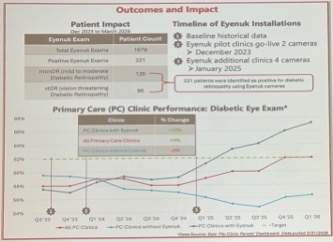
Award Lectures and Special Addresses
Contentious fireside chat between ADA’s CSMO Dr. Rita Kalyani and NIH’s Dr. Rick Woychik on NIH’s MAHA strategy, funding delays, and new proposal to subject federal grant reviews to greater political control
Dr. Rick Woychik (NIH) delivered the opening keynote of ADA 2026, followed by a fireside chat with the ADA’s CSMO Dr. Rita Kalyani on how the NIH’s “Make America Healthy Again” (MAHA) strategy may advance diabetes research. Dr. Woychik replaced NIH Director Dr. Jay Bhattacharya, who had a last-minute conflict. Dr. Woychik serves as Senior Advisor for NIH’s MAHA strategy, stating that he is in “total synchrony” with Dr. Bhattacharya’s “MAHA agenda.” Based on audience reactions to statements from Dr. Woychik and Dr. Kalyani, it would appear that the audience is not quite in lockstep with Drs. Woychik and Bhattacharya.
- Dr. Kalyani pressed Dr. Woychik on a recent 412-page rule proposal from the Office of Management and Budget (OMB) that would overhaul federal grant reviews. The proposed rule is open for public comment through July 13. As of today, there are already more than 6,500 public comments. The proposal includes provisions, among others: (i) relegating scientific peer review boards to merely “advisory” roles with political appointees (i.e., non-scientists) possessing final oversight; (ii) permitting grant terminations at any time and for any reason; (iii) mandating strict limitations on use of funds for conference attendance and publication; (iv) implementing restrictions on public communications; and (v) requiring funding proposals to “demonstrably advance the President’s policy priorities.” For more, see this summary of the proposed rule.
- Dr. Kalyani said the ADA is “extremely concerned” about the proposed rule. Two days ago, the ADA issued a statement, which said this rule “politicizes federal financial assistance and creates uncertainty for the biomedical research community.” The ADA also argued “empowering [political appointees] with the authority to terminate grants based on vague performance measures” could impede innovative diabetes research. Given these concerns, Dr. Kalyani asked Dr. Woychik to explain how the NIH would implement this rule, if approved.
- Dr. Woychik claimed this proposed rule does not significantly differ from funding precedent at the NIH, citing his previous experience serving on study sections – panels of about 20 scientific peer reviewers who evaluate and score the merit of grant proposals. (These panels make funding recommendations to the NIH but do not decide which proposals receive funding.) Dr. Woychik said many proposals are not funded strictly according to study sections’ recommendations, suggesting that “high-risk, high-reward” proposals with lower scores could still receive funding if they address a research priority. Dr. Kalyani then asked Dr. Woychik to state whether her understanding was correct that the proposed rule would permit non-scientists to make funding decisions outside study sections; however, Dr. Woychik evaded the question, simply stating that the proposed rule is open for public comment and he “cannot tell people what to do.”
- Dr. Woychik added that Dr. Bhattacharya aims to give the directors of the NIH’s 27 Institutes and Centers (IC) “more influence” in funding decisions. However, in February 2026, 16 ICs lacked permanent directors – per NBC News, all but two of these vacant positions opened during President Donald Trump’s second term. As of June 5, 2026, 14 ICs still have acting directors. Except the director of the National Cancer Institute (who is appointed by the US President), IC directors are appointed by the Secretary of Health and Human Services (currently Mr. Robert F. Kennedy, Jr.) and report directly to Dr. Bhattacharya. Dr. Woychik emphasized that IC directors are “directly accountable” to Dr. Bhattacharya and acknowledged his influence in leadership decisions.
- Dr. Kalyani raised the scientific community’s concerns on funding delays and cancellations. She cited testimony during a US Senate Appropriations Subcommittee hearing in May attended by Dr. Bhattacharya, in which some Senators argued that current NIH policies are a “deliberate erosion of research institutions” and that the Trump administration “has thrown the NIH into chaos.” She also highlighted that the NIH has eliminated about one-quarter of its workforce and prematurely cancelled grants prior to completion, disrupting thousands of projects. In early 2025 alone, the NIH terminated nearly 2,300 active research grants, constituting $2.5 billion in funding. According to a study published in PNAS, these cancellations disproportionately affected women and early-career researchers. Dr. Kalyani asked Dr. Woychik to explain how this funding turmoil may impact diabetes research.
- Dr. Woychik said the scientific field must acknowledge that it’s in “a changing environment,” stating that Dr. Bhattacharya has “different priorities” than previous NIH directors. Since US Congress allocates the NIH budget for each fiscal year, he claimed that Dr. Bhattacharya has been working with lawmakers to ensure the NIH receives adequate funding. He highlighted that the NIH received a 1% increase in funding for FY 2026 compared to FY 2025. He did not mention that the Trump administration originally proposed a 40% reduction ($20 billion) in the NIH’s budget for FY 2026 and consolidating the 27 ICs into eight, which was rebuked by Congress.
- Moreover, the Trump administration has proposed a 12% reduction ($4.8 billion) in the NIH budget for FY 2027. Dr. Kalyani said that this budget includes a $169 million reduction in funding for the National Institute of Diabetes and Digestive and Kidney Diseases (NIDDK). She asked Dr. Woychik how this budget reduction can be reconciled with Dr. Bhattacharya’s Senate testimony that the NIH seeks to better target the root causes of chronic disease. Dr. Woychik again evaded the question, vaguely telling the audience to “pay attention to what’s happening in Congress” as there’s a lot of support for the NIH.
- Dr. Kalyani said funding statistics indicate this is an “unprecedented” research environment,” and scientists are struggling to see “a way forward” for their research. Dr. Woychik said the diabetes community has driven significant progress in treatment, yet much “unfinished business” remains. To work through the funding issues, he said scientists should “stay focused on gold standard science” – to which Dr. Kalyani asked how this differs from research currently being conducted at the NIH, which Dr. Woychik evaded and repeated that “the work NIH supports is gold standard science.”
Pathway to Stop Diabetes symposium highlights promising research across prevention, metabolic disease, and global diets
Directly following Friday’s Welcome and Keynote Address, Dr. Marlon Pragnell (ADA) introduced the Pathway to Stop Diabetes Symposium at ADA 2026. Dr. Pragnell explained that the ADA established the program of the same name to invest in the most promising early scientists in the field of diabetes research – those who will lead the field’s next wave of discovery. These young leaders are shaping overall pathways to prevention and seeking better treatments and cures. The program provides support to researchers, pairings with world-class mentors, creates conditions for breakthrough research, and enhances academic skills. The ADA has selected 50 pathway awardees for this year under the direction of Dr. Christopher Newgard (Duke University) and Dr. Louis Philipson (University of Chicago). We were so fortunate to hear from award recipients Drs. Marie-France Hivert (Harvard University), Chelsea Hepler (University of Michigan), and Tinashe Chikowore (Harvard University) to open the 86th Scientific Sessions.
- In her talk, “Can we stop diabetes before it begins?”, Dr. Hivert discussed precision prevention of diabetes across the life course. Dr. Hivert’s research builds on the developmental origins of health and disease (DOHaD) theory, which proposes that exposures in the womb have the potential to impact long-term health. Her team focused on gestational diabetes by studying epigenetic markers underlying the theory. She noted that the prevalence of T2D in younger women entering their reproductive years doubled from 1990 to 2019, accelerating diabetes from one generation to the next and motivating her work.
- As part of the Precision Medicine Diabetes Initiative, Dr. Hivert discussed the promise of this approach to gestational diabetes. These include predictions of which patients will develop T2D, when this will occur, and what lifestyle components they will most likely respond to. However, challenges arise when creating programs that aim to stop diabetes before it begins, such as: (i) incompatibility of funding structures with early life prevention studies; (ii) inaccessibility of accessing healthy foods due to the current food environment; and (iii) distrust in doctors and researchers. Currently, Dr. Hivert is working with Health Families Massachusetts to address these challenges head-on. Since Fall 2025, she has worked on a full nutrition intervention that is built on partnerships with community members and organizations such as the USDA’s Women, Infants, and Children program (WIC) and the Greater Boston Food Bank. She is looking forward to the clustered randomized trials that are planned all across Massachusetts.
- Dr. Hepler discussed how disrupted circadian rhythms drive metabolic disease. She began with the idea of a biological clock that many organisms share – a popular, scientific understanding of circadian rhythms. For example, plants open and close their leaves for photosynthesis to align with the sun and continue the same pattern even when kept in the dark. Biological clocks, from plants to humans, are internal and anticipate the cycles seen in our 24-hour world. In humans, the digestive system prepares to eat even before one’s first bite in response to natural rhythms. Mechanistically, activator proteins turn on different aspects of digestion throughout the day in feedback loops. Changes to this natural rhythm can have serious consequences.
- Dr. Hepler described longstanding research finding that lean individuals tend to eat within a 12-hour window each day, while people who are overweight have an extended eating window of about 16 hours. Mouse models have further demonstrated that mutating the biological clock of organisms leads the body to lose its preparation for nutrients, leading to obesity, cancer, metabolic disease, and cardiovascular disease in many cases. In 2018, Sutton et al. demonstrated that eating within a six-hour window each day improves metabolic health even without changing quantities or diet, resulting in A1c reductions of 1.5-2%.
- Dr. Hepler’s work investigates the mechanism of this observation to mimic and expand the benefits. She explored genes encoding part of the circadian clock, finding that obesity specifically impairs the PER2 circadian gene. This leads to increased inflammation and decreased mitochondrial function, connecting mealtimes with systemic physical impact. Dr. Hepler’s work explores the idea of aligned feeding, which leverages the biological clock to ensure high PER2 expression, leading to reduced inflammation and improved mitochondrial function. The field still needs to better understand how circadian disruption rewires metabolism, why timing changes metabolic outcomes, how modern life uncouples behavior from biological rhythms, and how circadian biology can be harnessed therapeutically. Only then can the field prevent and treat metabolic disease.
- Dr. Chikowore works to leverage proteomics and AI to optimize global diets. Previous work in Nature has found that 70% of incident diabetes cases from 1990 to 2018 are associated with suboptimal diets in 184 countries. Clearly, strategies for diet optimization are required for global diabetes prevention, but global diets cannot be optimized using European quality metrics alone. Popular healthy diets such as the DASH, Mediterranean, and AHEI are biased towards European standards for health, but these do not apply to all populations. In a study of African heritage diets versus Western diets, the traditional diet lowered patient inflammation biomarkers in just two weeks. Clearly, “healthy eating is universal, but not uniform” said Dr. Chikowore.
- The contradiction between diabetes incidence and the many different types of healthy global diets leads to a need for closer investigation of diet. Dr. Chikowore leverages AI to uncover nutrient patterns across a broad range of global diets. He uses food frequency questionnaires to conduct principal coordinate axis analyses of nutrient patterns and to find patterns in proteomic signatures. Then, protective nutrient patterns can be identified that are generalizable across ancestries, and the effect size can be correlated. Finally, culturally sensitive recommendations can be created, such as cultural food databases, diet optimization algorithms, and mobile apps with sensitive meal recommendations. Overall, this will improve the quality of life for patients while acknowledging the benefit of traditional diets from a more global perspective.
Kelly West Award Lecture: Dr. Mohammed Ali on the value of averages and heterogeneity
Dr. Mohammed Ali (Emory University), this year’s recipient of the Kelly West Award, opened his lecture by acknowledging his mentors, collaborators, trainees, and family members who shaped his career, emphasizing that scientific progress is built by “standing on the shoulders of giants.” He paid tribute to numerous leaders in diabetes and global health, highlighted the importance of nurturing the next generation of researchers, and offered heartfelt thanks to his parents and wife, Nadia, for instilling resilience, optimism, and purpose. Dr. Ali then shifted to a broader reflection on the current scientific climate, invoking the inscription at the National Academy of Sciences that describes science as an “eternal guide to truth.” He expressed disappointment with the ADA’s handling of recent controversies, arguing that scientific organizations should protect open discourse and seek reconciliation rather than division. Using lessons from post-apartheid South Africa (which he said he shared with Dr. Steven Kahn) and the example of Nelson Mandela, he called for compromise, dialogue, and a renewed commitment to truth-seeking within the scientific community. This was met with great applause. Separately, at the end of his remarks, he was celebrated with a standing ovation.
- Dr. Ali reviewed the evolution of diabetes epidemiology and implementation science, beginning with what he described as the “era of averages.” Traditional epidemiologic approaches have relied on population-level estimates to inform guidelines, treatment recommendations, and public health policy, exemplified by landmark studies such as the DPP. Dr. Ali reviewed his group's efforts to translate evidence into practice across low- and middle-income countries (LMICs), including the INDIA-WORKS initiative, which screened more than 6,500 individuals and demonstrated meaningful reductions in diabetes risk through workplace-based prevention programs. He also highlighted the CARRS translation trial, which combined non-physician care coordinators with clinical decision support tools to improve diabetes management. Despite enrolling participants with mean A1c values approaching 10.0%, the intervention produced substantial improvements in glycemic management, blood pressure, lipid management, and vascular outcomes. These and similar initiatives demonstrated that evidence-based interventions can improve diabetes outcomes at scale, while also increasing awareness, treatment, and control rates in diverse populations.
- Population averages often obscure profound biological and clinical heterogeneity. Dr. Ali argued that diabetes should no longer be viewed as a single disease entity or even as a simple T1D vs. T2D dichotomy. Using examples from a comparison study of Pima Indians in Arizona and Asian Indians in Chennai, he illustrated how populations with similar diabetes prevalence can exhibit fundamentally different pathophysiologic mechanisms, including varying contributions of insulin resistance and insulin deficiency. Drawing on machine learning analyses from large cohorts in the US and South Asia, he described emerging diabetes subtypes characterized by distinct metabolic profiles and complication risks. Notably, insulin-deficient phenotypes appeared to predominate in several LMIC populations and were associated with the greatest burden of mortality and years of life lost (nearly 18 years). These findings suggest that the biological drivers of diabetes vary substantially across individuals and populations, with important implications for prevention, treatment, and risk prediction.
- Dr. Ali concluded by arguing that the future of diabetes care must move beyond “one-size-fits-all” approaches toward precision diabetes. Heterogeneity exists not only in biology, but also in psychology, behavior, health literacy, and treatment preferences, all of which influence patient outcomes. He highlighted the need for earlier identification of disease mechanisms, potentially years before clinical diagnosis – he urged the field to move towards a process like cancer, where clinicians aim to diagnose in early stages of the disease and prevent progression. Ultimately, Dr. Ali argued that although population-based approaches have produced important advances, their impact has often been modest because “one size fits some, not all.” As our understanding of diabetes becomes more sophisticated, future progress will depend on identifying the right intervention for the right individual at the right time, while ensuring that scientific discovery continues to translate into equitable improvements in global population health.
Dr. Anne Peters discusses important clinical updates during the 2025-2026 Diabetes Year in Review
Dr. Anne Peters (USC) presented the 2025-2026 clinical diabetes Year in Review, with a major focus on the “tremendous potential” of GLP-1 RAs. She also presented exciting updates in diabetes technology and cautioned against AI use, which she stated can often provide incorrect recommendations. In addition, Dr. Peters passionately reminded attendees to advocate for science, honest discourse, and freedom of speech, for the people with diabetes that depend on this community.
- On incretin-based therapies, Dr. Peters highlighted the prevalence of GLP-1 RAs in popular culture. To further emphasize the growth of this drug class, Dr. Peters provided an overview of the market growth from millions with the first drug in the class, exenatide, to billions with modern GLP-1 RAs or multi-incretin agonists. Furthermore, she emphasized that tirzepatide is the “world’s best-selling drug.” Finally, Dr. Peters reviewed expanded indications for injected semaglutide for MASH, oral semaglutide for CV risk reduction, and tirzepatide for children and adolescents. During Q&A, Dr. Peters expressed concern about “too much weight loss” and stressed that diet and lifestyle remain important while on GLP-1/multi-incretin agonists. She also cautioned against the rise of “unregulated peptides” as seen in Hollywood at the moment.
- Technology. Dr. Peters highlighted several advancements in technology in the past year, including the approval of MiniMed 780G for use in T2D, the MiniMed Flex with a streamlined design, the MiniMed GO Smart insulin pen, and the twiist insulin pump’s integration with the Eversense 365 CGM. She also highlighted the use of Tandem’s AID systems for use in pregnancy; however, she cautioned providers to learn about how to use it appropriately since the trial altered traditional use protocols. Importantly, Dr. Peters emphasized that we all need to “advocate for health equity” and provided an optimistic perspective on the use of CGM and AID in under-resourced settings.
- Islet cell therapy. To conclude her session, Dr. Peters discussed a case study of the first patient for whom she prescribed islet cell therapy. She shared a moving story showing that he was off insulin five days after transplantation and after suffering severe complications due to a hypoglycemic incident, including anoxic brain injury. Given the promise that islet therapy may hold for more patients, Dr. Peters calls for improved connections between endocrinologists and transplant teams to make this feasible.
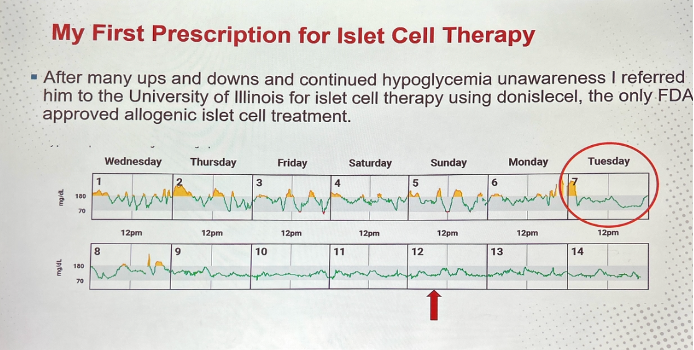
Banting Award Address: Pathogenesis of T2D and the spiral approach to the truth
In this year’s Banting Award address, Dr. Takashi Kadowaki (University of Tokyo, Japan) delivered a sweeping address on the pathogenesis of T2D. Dr. Takashi framed the talk as both a personal and scientific journey. He began with the framework he inherited at the start of his career: genetic predisposition and high-fat diet can lead to insulin resistance, pancreatic ß-cell exhaustion, relative insulin deficiency, and overt T2D. Over four decades, his work would gradually move beyond the linear framework of T2D pathogenesis and towards a more integrative model. Genetics, gene-environment interactions, obesity, adipose tissue, adiponectin, insulin resistance, pancreatic insulin secretion, and tissue-specific insulin action all interact to determine whether diabetes develops – and what subtype or complication pattern emerges. This expanded model is especially important for understanding phenotypes where impaired insulin secretion appears particularly central (e.g., “lean T2D” phenotype in Japan and East Asian populations).
- Dr. Takashi’s epidemiologic work helped establish the conceptual foundation for the next four decades of his research. In individuals with impaired glucose tolerance, three predictors stood out as key risk factors for progression to T2D: (i) impaired early insulin response to glucose; (ii) obesity as a marker of insulin resistance; and (iii) family history as a marker of genetic predisposition. These findings suggested that the disease could not be reduced to a single mechanism. Both insulin secretion and insulin resistance independently mattered.
- A major mechanistic focus focused on insulin receptor biology, and the proof that abnormalities in insulin signaling could directly cause metabolic dysfunction in humans. In Dr. Kadowaki’s research on patients with mutant alleles of the insulin receptor gene, he worked to establish the insulin receptor as essential to glucose homeostasis. His findings laid the groundwork for later questions about what happens downstream of the insulin receptor, and why some forms of impaired signaling lead to diabetes, while others do not.
- Dr. Kadowaki framed the IRS knockout mouse as a turning point. Through in vivo experiments, IRS-1 knockout mice were clearly insulin resistant. Yet, they did not develop diabetes. They maintained normal glucose tolerance through compensatory hyperinsulinemia. This finding directly contradicted the then-common expectation that insulin resistance alone should be enough to produce T2D. Dr. Kadowaki used this finding as an example of how contradiction can drive discovery. Further work then showed that IRS-1 knockout mice had only mild insulin resistance compared with insulin receptor mutations, implying the existence of both IRS-1-dependent and IRS-1-independent insulin signaling pathways. This finding led to the identification of IRS-2.
- The comparison between IRS-1 and IRS-2 knockout mice became Dr. Kadowaki’s clearest mechanistic lesson. Although IRS-2 knockout mice showed a similar degree of insulin resistance to IRS-1 knockout mice, they did develop overt diabetes. IRS-1 knockout mice responded to insulin resistance with compensatory ß-cell hyperplasia and preserved normal glucose tolerance. IRS-2 knockout mice failed to mount that same compensatory ß-cell response and progressed to T2D. T2D arises from the interaction between insulin resistance and an inadequate ß-cell response.
- Dr. Kadowaki pivoted from mechanistic to philosophical in his reflections. He described the pathogenesis of T2D as “a quest” pursued through “a spiral approach to the truth.” In this model, Dr. Kadowaki described scientists as formulating rational hypotheses and testing them experimentally. If the results match predictions, the hypothesis gains support, and science can move one step closer to the truth. However, if the results contradict the hypothesis, that contradiction can be resolved through reinterpretation and an alternative hypothesis. These have the potential to produce incremental progress, but also a leap forward. Scientific advancement is not linear, and the most transformative moments often come from anomalies rather than confirmations (see below).
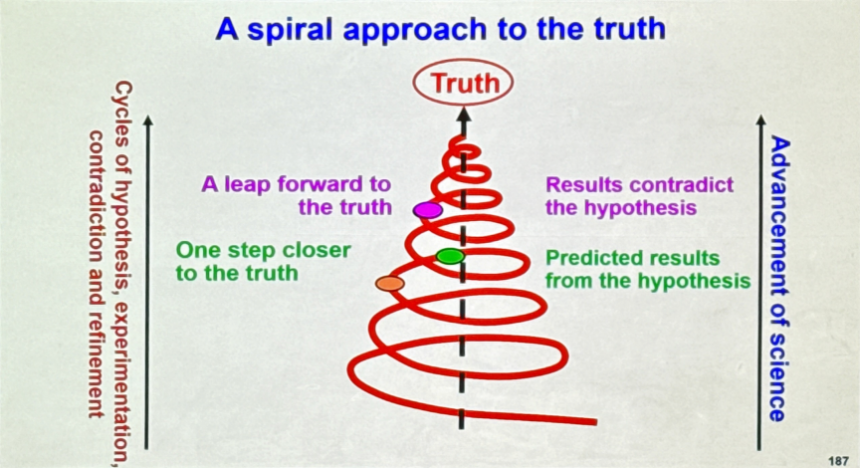
- Scientists should embody rigor, courage, passion, and creativity. Dr. Kadowaki explained that scientists should demonstrate rigor in staying faithful to experimental facts, courage in not being intimidated by authority, passion in relentlessly pursuing truth, and creativity in resolving contradictions between hypothesis and evidence. As research on T2D continues to advance, our understanding may continue to “evolve indefinitely.” Dr. Kadowaki reflected, “That is exactly what makes this field so exciting.”
Congressman Troy Carter (LA-02) on preventive care, TROA, and the importance of research – “There’s no excuse … for research dollars drying up”
Congressman Troy Carter, Sr. (LA-02) gave a keynote address during an ADA Diabetes Care Symposium titled, “The Oscillation of Diabetes and the Environment.” Diabetes rates in Louisiana consistently rank among the highest in the US. Congressman Carter shared that in his district, three or four dialysis centers can be found right next to each other, adding that this says a lot about the need for discussion and preventive care. In particular, he called for closing the care gap that has left men of color particularly vulnerable, saying that too many men in his district live with undiagnosed diabetes. Addressing this, he said, will involve tackling cultural barriers to seeking care.
- On research, he noted its important in improving care and the importance of cross-sector collaboration, saying, “Research matters, lives matter, and policy can drive us in the right direction.” He added, “There’s no excuse for people being sick, for research dollars drying up,” and urged researchers not to walk away and to stay in the battle, thanking all the researchers and clinicians in the room.
- When asked about the most impactful ways researchers can make their voices heard, he encouraged showing up to Capitol Hill directly and to committee hearings. Social media and letters – but not form letters – are also effective, and Congressman Carter added, “You are more respected than you realize.”
- On TROA, the Treat and Reduce Obesity Act, Congressman Carter highlighted that he is a cosponsor of the act (see here for the list of cosponsors). As background, TROA aims to expand coverage of obesity treatments to Medicare beneficiaries. Congressman Carter emphasized that obesity is not due to a lack of willpower and that the importance of treating obesity is to prevent downstream chronic diseases.
President, Medicine & Science Address: Dr. Enrique Caballero campaigns to unite biomedical science with sociocultural factors shaping T2D
In this highly anticipated address, ADA President of Medicine & Science, Dr. A. Enrique Caballero (Harvard University) argued that the future of diabetes care depends on uniting biomedical science with socioeconomic and cultural realities of T2D. He began his address on a positive note, celebrating extraordinary progress in the field. Diabetes is now understood as a complex multi-system disease, while obesity is recognized as the primary driver and a therapeutic target. Interventions for both conditions – ranging from GLP-1 RAs and SGLT-2 inhibitors to metabolic surgery, CGM, AID systems, and AI-enabled care – have transformed the clinical toolkit.
- Only a minority of people with diabetes achieve even relatively modest goals for glycemic management, blood pressure, lipids, and smoking. This failure is patterned. Uninsured patients, racial and ethnic minorities, and young adults are systematically less likely to reach treatment targets because their lives are shaped by work demands, financial strain, and chronic psychosocial stress.
- This is not a simple “race vs. class story,” he continued. Race and socioeconomic context are mutually reinforcing factors that influence exposure to risk and access to care. Citing a large national cohort study, Dr. Caballero demonstrated that as a number of adverse social determinants accumulates, cardiovascular mortality risk rises in a clear dose-dependent response fashion, even after accounting for traditional risk factors. These data suggest additional mechanisms related to chronic inflammation, allostatic load, and other stress-mediated pathways link adversity to disease.
- Throughout his presentation, he built his practical agenda for his presidency. First, he called researchers to re-engineer studies so that social and cultural determinants of health are built into trial design, rather than analyzed as covariates. Affected patients must also help shape the questions asked and the interventions tested. Second, Dr. Caballero supported that the same sociocultural integration must occur in everyday care. Multidisciplinary teams must grow physically and culturally closer to the communities they serve to expand access to advanced therapies and technologies where at-risk populations reside. As an example, he described his own experience of leaving a prestigious, well-resourced care campus for a modest community health. He shared that closer proximity to patients’ lives, language, and circumstances allows for a more honest and effective practice. Lastly, he outlined his “Multi-Check” model (see below), which blends primary and specialty care to address biomedical, psychosocial, social, and cultural aspects of diabetes.
Dr. Korey Hood receives the Richard R. Rubin Award and offers considerations for the future of behavioral scientists
Dr. Korey Hood (Stanford University) delivered the Richard R. Rubin Award Lecture, as he was recognized for his outstanding contributions to the understanding the behavioral aspects of diabetes. Dr. Hood explained that the core values of a behavioral scientist must center on viewing the patient as the heart of healthcare. Looking ahead, he believes the future of behavioral science falls into three themes: (i) to make sense of human-data interactions; (ii) to promote precision behavioral science; and (iii) to be the voice of compassion.
- Make sense of human-data interactions. Dr. Hood explained that in the current state of affairs, large language models (LLMs) and artificial intelligence (AI) are increasingly being used to synthesize large amounts of data inputs. However, at this nascent stage, an operator is still essential for appropriate diabetes management. Dr. Hood suggested that behavioral scientists must help people with diabetes by serving as co-pilots, implementing stories and lived experiences within AI training to develop more holistic systems.
- Promote precision behavioral science. Dr. Hood highlighted that even as opportunities for earlier detection of diabetes expand, it remains critical to remember that, regardless of diagnosis, patients’ behaviors and emotions will inevitably follow. Dr. Hood illustrated this through the example of receiving an antibody-positive result, a moment often marked by anxiety and uncertainty. Importantly, emotions and thoughts drive actions, making it essential for behavioral scientists to be proactive in designing programs that anticipate behavioral responses and offer appropriate actions in response. For example, following a positive screen, the patient can be supported through increased patient support, psychoeducation, and connecting with the community. Put simply, Dr. Hood called on the audience to “be the glue that keeps people engaged,” and to help people with diabetes optimize management strategies and make sense of intermittent monitoring.
- Be the voice of compassion. While computers and AI can simulate empathic behavior and are great at using rational thinking, they are incapable of generating authentic compassion. For Dr. Hood, compassion is a critical part of the role of behavioral scientists. Emotional thinking is a driver of many decisions and often carries more weight than rational thinking, especially in times of crisis and/or transition – like a diagnosis. The role for behavioral scientists, then, is to help people navigate complex decision-making that requires a balance of both rational and emotional thinking.
Dr. Diana Isaacs receives the ADA’s Outstanding Educator in Diabetes Award and shares her journey and key contributions to the diabetes field
After receiving the ADA’s Outstanding Educator in Diabetes Award, Dr. Diana Isaacs (Cleveland Clinic) reviewed her personal history and how that tied into her efforts to transform diabetes care and education. When she was a high school senior, she experienced firsthand the therapeutic power of medications to restore health, fueling her interest in pursuing pharmacology. While at Southern Illinois University, she became involved with various diabetes initiatives and became committed to offering empathy to those with chronic disease. Since then, her impact on the diabetes field has been remarkable, leading initiatives on CGM education, transforming the role of the DCES in technology integration, creating useful frameworks for HCPs to better treat their patients, and much more.
- As the first full-time pharmacist at the Cleveland Clinic dedicated to endocrinology, Dr. Isaacs saw the exploding role of diabetes technology and recognized the need for greater education efforts. She helped lead an initiative that introduced CGM shared medical appointments (SMA) to her patients. Through this, Dr. Isaacs helped over 170 patients achieve a mean A1c reduction of 0.8%, improve self-efficacy of diabetes management, drive dietary changes, and optimize drug therapy. Since then, she has played a critical role in transforming the role of the DCES, publishing numerous articles on how to integrate and optimize diabetes technology.
- Dr. Isaacs highlighted the DATAA model for improving data interpretation: (i) Download data (start with key metrics and ask the patient what they have learned or what is going well with self-management); (ii) Assess safety (identify time spent in hypoglycemia and engage in interactive discussion about possible causes and solutions); (iii) Time in Range (focus on the positives by identifying days or times where TIR is highest and how to replicate what is working well): (iv) Areas to improve (identify times in hyperglycemia and explore possible causes and solutions); (v) Action plan (developed collaboratively with the person with diabetes). Given that there are over 40 factors that can affect glucose, this model helps clinicians work with their patients to interpret CGM data and develop an effective action plan. She emphasized that at each step, you must express that this is just information – not inherently good nor bad.
- Dr. Isaacs continues to leave an indelible impact on the ADA through her various committee and consensus involvements. Recognizing the positive impact of AID technology, she has helped develop consensus recommendations for AID use in clinical practice and has served on an interdisciplinary panel convened by the ADA to develop scientific statements and recommendations that guide the integration of technology in the primary care setting. Furthermore, as the ADA Communication Director of the Pregnancy & Reproductive Health Interest Group from 2018 to 2022, she helped develop the international consensus on CGM and AID use in pregnant women with T1D, T2D, or gestational diabetes. If you think she hasn’t done enough already, she also advocated with an international team to advance care for people with T2D.
- During the height of the COVID-19 pandemic, Dr. Isaacs supported her clinic in continuing to support diabetes health equity during a time of virtual care. Dr. Isaacs’ team has since worked on several initiatives to ensure they offered diabetes education and technology for all who could benefit. To name a few, they: (i) started a virtual GDM shared medical appointments program; (ii) opened a specific diabetes in pregnancy clinic; and (iii) started an insulin pump virtual shared medical appointment program.
- We can all do more than we think! Dr. Isaacs said that despite the rapid advancement of diabetes technology and AI, the human touch will remain of utmost importance. She reminded the audience that behind every number is a story, and that all healthcare providers are responsible for starting the conversation to hear that story.
Panel discussion among people living with chronic diseases, along with special lectures from the Distinguished International Service Award recipient and the ADA President of Healthcare and Education
This morning kicked off with a panel discussion among people living with chronic diseases and addresses by Prof. Chantal Mathieu (Katholieke Universiteit Leuven, Belgium), this year’s recipient of the Distinguished International Service in the Cause of Diabetes Award, and Ms. Amy Hess-Fischl (ADA President of Healthcare and Education). While the ADA CEO, Mr. Charles Henderson, was supposed to deliver a special address during this session, we imagine yesterday’s series of controversies may have contributed to the last-minute scheduling change – though there was no mention of his absence at any time during the session, nor explanation for the unexpected shift in agenda. For those of you who might have missed it, the opening remarks on Day #1 included a fireside chat, during which ADA CSO and CMO Dr. Rita Kalyani led a discussion with NIH Senior Advisor Dr. Rick Woychi, posing critical questions related to political outlooks on grant funding and ongoing challenges with NIH budget cuts. Although we looked forward to hearing from Mr. Henderson, we were encouraged to hear from patient advocates Mr. Kyle Banks (person living with T1D), Dr. Luis Chastain (person living with T2D), and Ms. Betsy Rodriguez (person living with obesity) on the importance of education through initiatives such as the ADA Education Recognition Program and personalized interventions.
- Prof. Mathieu presented the Distinguished International Service in the Cause of Diabetes Award lecture. Expressing her gratitude for receiving the award,Prof. Mathieu said she thought of the theme “Unity Makes Strength,” which represents her country’s slogan and the common denominator of her work across patient care, basic/clinical research, education, and policy. Continuing her longstanding career in the field, her goals have focused on: (i) improving clinical care for people with diabetes; and (ii) helping prevent/cure T1D. At the heart of these efforts, she said, it’s important to personify the lived experiences of people living with diabetes, especially given the significant burden this disease imposes on daily life.
- Importance of an integrated network. Prof. Mathieu elaborated on the Belgian integrated care model, which refers patients to diabetes centers and the national care program that supports healthcare finances and connects insurance plans. The standardized approach to delivering specialized care for people with T1D enables them to adhere to the system and meet their needs, which, in turn, improves data registration and supports quality improvement initiatives.
- Collaboration in the EU. To build a strong network across the EU, Prof. Mathieu has focused on integrating basic, clinical, and industry leaders to identify better biomarkers, understand diabetes, and design clinical trials. Prioritizing this goal, INNODIA has enabled analyses of people newly diagnosed with T1D through sample donations, thereby improving the discovery of biomarkers and their further application in research. The standardized method of sample collections has demonstrated the efficacy of multi-omics integration, mRNA signature prediction of C-peptide loss, and genetic pathways. One of the key elements of INNODIA is its integration of a patient advisory committee (PAC), which centered patient experiences across all parts of the project to improve clinical trials in recruitment, communication, and education. INNODIA continues to accelerate the development of potential cures for people with T1D through its expansive network of samples, which Prof. Mathieu highly encouraged the audience to take advantage of through innodia.org.
- Worldwide partnerships. Prof. Mathieu concluded her address by encouraging the field to establish relationships across multiple diabetes organizations. As the former president of EASD, she’s been encouraged to see ongoing collaboration with the ADA and the formation of a joint consensus. Prof. Mathieu shared that in the EU, the European Diabetes Forum brings together societies with industry leaders to knock on the door of politicians. She said, “When you go together, with a harmony of voices, they will listen to you.” Therefore, she emphasized the importance of unity as the basis for research, policy, and clinical care.
- Ms. Hess-Fischl delivers the President of Healthcare and Education Address. In the 2026 ADA Standards of Care, Diabetes Self-Management Education and Support (DSMES) remains the foundation of care for people with diabetes. However, the program is underutilized among people with newly diagnosed diabetes – a 2025 survey found that 54.6% of participants had never been referred for DSMES, and 45.4% of participants had never been referred to work with a dietitian. Ms. Hess-Fischl argued that these results underscore the need to promote DSMES and that educational efforts to promote healthy eating and physical activity are necessary.
- Current barriers to more widespread DSMES utilization are low awareness of these programs and accessibility. To improve the future of DSMES, Ms. Hess-Fischl encouraged the ADA community to take action by: (i) increasing awareness of critical times of DSMES to both providers and patients; (ii) advocating to legislators to change how referrals to DSMES work; (iii) collaborating with local diabetes prevention programs and community health workers; and (iv) embracing new ways to deliver diabetes care to patients.
- Current efforts promote DMSES through several resources. Ms. Hess-Fischl introduced one of the latest resources: a one-page flyer that focuses on the four critical times of DMSES. She also emphasized becoming more involved with national programs such as the National Diabetes Prevention Program (DPP) and its partners. She specifically highlighted the importance of learning how to identify quality programs, building trust between these programs and DSMES, and then using these connections to implement referrals. Lastly, Ms. Hess-Fischl encouraged community health workers to become more involved in diabetes care and education by using ADA resources, engaging with their local community health programs, and embracing new alternatives to in-person care.
Big Picture Presentations
BMI in obesity diagnosis: The case for a function-based alternative
An excited buzz filled the room in anticipation of Friday night’s BMI debate between Dr. Leigh Perreault (University of Colorado) and Prof. Francesco Rubino (King’s College London, UK). The speakers examined the role of BMI in diagnosing obesity and its utility relative to emerging clinical markers such as waist circumference.
- Dr. Perreault defended BMI as “the cornerstone of obesity diagnosis,” arguing that “all roads lead back to BMI.” She cited its high correlation with disease risks, including all-cause, cardiovascular, respiratory disease, and cancer mortality across large populations, and its utilization in FDA eligibility criteria and clinical guidelines linking BMI to over 200 diseases.
- She acknowledged that the relationship between BMI and body fat percentage varies significantly by sex, age, and ethnicity – meaning that individuals with the same BMI can have substantially different levels of adiposity. Even so, she pointed to a Scottish cohort of over 2,000 adults, where, at a BMI of 30 kg/m2, waist circumference thresholds yielded about 96% sensitivity and 98% specificity for BMI-defined obesity, to support combined use rather than replacement.
- Moreover, she cautioned that abandoning BMI would disrupt decades of data continuity and risk creating more confusion than clinical benefit. The priority should be using existing tools more effectively rather than creating new barriers to diagnosing and treating a highly prevalent condition.
- Dr. Rubino fired back that “all roads lead away from BMI,” countering that BMI conflates risk with disease. Drawing on the Lancet Commission on Obesity report, which defined obesity as a disease of excess adiposity causing organ dysfunction and functional impairment, he presented a tiered system that separates “preclinical” from “clinical” obesity. He cautioned against applying the Commission’s criteria too broadly across a wide range of BMI, however, as such practice can artificially inflate the prevalence of obesity.
- From the floor, the audience was engaged and respectful. Questions touched on the real-world implications of a “preclinical obesity” label for patient motivation, how insurers might interpret a narrower disease definition, and whether added diagnostic complexity would help or hinder care in practice. The prevailing sense was that future practice will likely blend the strengths of BMI with more precise, function-based criteria.
Practical strategies for primary care providers to address overweight and obesity through nutrition counseling
In a morning symposium, Dr. Victoria Bouhairie (Obesity Association) spoke passionately about applying a person-centered approach to nutrition counseling for people with obesity. Dr. Bouhairie emphasized that obesity impacts nearly every single organ, such that targeting obesity can prevent over 200 associated diseases.
- Dr. Bouhairie shared the 6-As for supporting sustainable nutrition changes:
- Ask patients for permission to discuss body weight and explore their readiness for change;
- Assess patients’ BMI and visceral adiposity to understand drivers and complications of excess weight;
- Advise patients that obesity is a chronic disease and will increase their risk of cardiometabolic complications;
- Agree with patients and include them in the decision-making process, while making sure to tailor recommendations to clinical findings, goals, and readiness for change;
- Assist patients in addressing barriers and identifying adherence strategies, such as providing self-help resources and rewarding positive behavior changes; and
- Arrange long-term care with patients.
- Dr. Bouhairie encouraged primary care providers to improve their communication strategy. “Person-first language matters,” she said, noting that providers should be “intentional about how [they] communicate.” HCPs should avoid stigmatizing language, like “obese patient,” and instead say “patient with obesity.” She also suggested applying a trauma-informed approach. This might include asking for permission before discussing weight and listening to the patient before offering any guidance or advice. Particularly helpful is the concept of shared decision-making, with literature showing better outcomes when patients are allowed to create their own goals and make decisions.
- Social determinants of health matter. Nutrition therapy is not a one-size-fits-all approach. Providers should be aware of social determinants and how they may be impacting their patients’ ability to achieve their goals. This involves understanding patients’ cultural preferences, health literacy, financial constraints, and access to healthy food. Above all, providers must be knowledgeable about resources to connect their patients to in cases like food insecurity, such as local food pantries.
- On assessing patients’ food intake and developing a nutritional approach, Dr. Bouhairie suggested asking patients to recall what they eat on a typical day. Most people tend to eat the same set of foods every day, so this can be a particularly easy and useful question. Providers can also ask patients to recall the previous day’s diet or have them fill out a food diary. After obtaining this information, providers should work with their patients to group foods they would like to emphasize or limit. Dr. Bouhairie suggested avoiding words like “don’t” or “no” during this process. For example, rather than saying, “Don’t eat this food,” one could say, “Let’s look at these other great foods.”
- Dr. Bouhairie provided a list of eating patterns associated with positive glycemic and weight outcomes, such as vegetarian, vegan, low-fat, low-carb, and Mediterranean-style meal patterns. When assessing these options, it is important to ensure that the pattern can be applied to patients’ day-to-day lives. It may also be helpful to explore the patient’s readiness to change using the stages of change model: (i) precontemplation; (ii) contemplation; (iii) preparing; (iv) action; and (v) maintenance.
CGM can detect glycemic dysregulation early and predict progression to stage 3 T1D
Dr. Laura Pyle (University of Washington) discussed a study aimed at identifying CGM metrics that can be used clinically to assess risk of progression to stage 3 T1D independent of A1c. Early detection of glycemic dysregulation in T1D can improve outcomes and prevent diabetic ketoacidosis (DKA), but the oral glucose tolerance test (OGTT) may be challenging to implement in clinical care, and A1c may not be sufficiently sensitive, particularly in young children. Hence, Dr. Pyle evaluated the utility of CGM metrics for predicting progression to stage 3 T1D beyond A1c alone.
- Participants with T1D (n=714) using Dexcom G4 (n=252), Dexcom G6 (n=439), and Dexcom G6 Pro devices (n=23), who were part of the ASK and DAISY programs, were followed prospectively. Dr. Pyle used joint modeling approaches as a method to account for informative dropout, reduce measurement error, and improve statistical efficiency. CGM-derived metrics independently predicted progression to stage 3 T1D beyond A1c alone, with standard deviation (SD) and coefficient of variation (CV) demonstrating the strongest model performance across multiple age groups and prediction windows. Time above range >140 mg/dL also outperformed mean glucose in predicting progression risk.
Recommendations for T1D screening and Tzield use
In this dinner symposium sponsored by Med Learning Group and Sanofi, Dr. Jay Shubrook (Touro University California), Dr. Emily Sims (Indiana University), and patient advocate Dr. Kimberly Belz emphasized the importance of early T1D detection and discussed Tzield (teplizumab) as a strategy to preserve beta cell function. The global prevalence of T1D is rising rapidly; in 2025, there were 10 million cases, and by 2040, this figure is projected to reach nearly 15 million. Fortunately, T1D care has experienced a major paradigm shift: presymptomatic T1D can now be identified through islet autoantibody screening, and disease-modifying treatments are emerging to delay disease progression and protect beta cells.
- Screening. Dr. Shubrook argued that early screening is becoming increasingly important as the prevalence of T1D continues to rise. The median age at T1D diagnosis is 36 years – much higher than the traditional perception of T1D as a juvenile disease. Although the risk of developing T1D is up to 15 times higher among individuals with first-degree relatives with the disease, about 90% of people diagnosed with T1D do not have a family history. For screening, Dr. Shubrook suggested a risk stratification approach that prioritizes three groups differently. Starting with the highest priority, these groups are: (i) those with a relative with T1D or elevated genetic risk scores; (ii) those who have a personal or family history of autoimmune diseases; and (iii) the general population, for which T1D screening can be combined with other pediatric tests or done through organized programs.
- Throughout the symposium, live polling results assessed clinical perspectives from the audience. The top three barriers to screening with islet autoantibodies for presymptomatic T1D were: (i) cost of screening (43%); (ii) lack of knowledge of when to screen (35%); and (iv) patient or caregiver anxiety (32%). Notably, none of the audience members indicated that they screened second-degree relatives, although this population is in the highest priority group.
- On screening and rescreening, Dr. Belz offered a powerful perspective as a mother of two young daughters with T1D. Dr. Belz’s oldest daughter was diagnosed after experiencing diabetic ketoacidosis (DKA). Eight months later, TrialNet approached them to screen their entire family. Dr. Belz’s husband preferred ignorance, hoping that “if we don’t know, it won’t happen.” However, through shared decision making, they ultimately decided to get screened, and their youngest daughter tested negative at two years old. When her daughter turned four a few years later, Dr. Belz was advised to rescreen her, given that she had a sibling with T1D. This time, the result was positive for the four standard autoantibodies involved in screening (and one additional autoantibody). Based on this experience, Dr. Belz said that screening offers benefits for patients and families, including: (i) more time for emotional preparation; (ii) lower likelihood of DKA or hospitalization at diagnosis; (iii) reduced risk of long-term complications through improved glycemic control; and (iv) opportunities to take approved therapies or enroll in clinical trials.
- Treatment. According to Dr. Sims, patients who screen positive for at least two T1D autoantibodies or the IA-2 autoantibody alone are in stage 1 T1D until dysglycemia emerges. Dysglycemia (often assessed by oral glucose tolerance test, among other assessments) defines stage 2 T1D, and eventually, symptomatic T1D (e.g., hyperglycemia) begins in stage 3. To date, teplizumab is the first and only FDA-approved disease-modifying therapy that delays the onset of stage 3 T1D. The drug is administered during stage 2 through a one-time 14-day infusion. The speakers describe it as an immunomodulator that aims to delay the autoimmune response, which causes T1D.
- Patients generally report positive patient impressions of teplizumab. 83% of parents/caregivers or patients who took the drug stated that they were glad they received the drug, 81% of them stated that they would recommend teplizumab to others in a similar situation, and 72% believed the drug would help delay progression to stage 3 T1D.
- Dr. Sims and Dr. Belz also discussed pediatric use of teplizumab early in life. Teplizumab was approved for children aged one year and older in April 2026. Dr. Sims said that teplizumab was safe and well-tolerated with a similar side effect profile to the adult study in the PETITE-4 T1D study. On a more personal note, Dr. Belz’s younger daughter received teplizumab via a clinical trial before it was approved and tolerated the medication well. Dr. Belz also said that her older daughter, who is in stage 3 T1D, even asked if she could receive teplizumab after having a difficult day of diabetes management.
- Many doctors don’t have a plan for how they could prescribe teplizumab. In a poll of attendees, 50% of individuals stated that they do not have an established pathway to prescribe teplizumab, while others reported that they administer the drug in their clinics or refer to a specific center.
Creating an obesity toolbox: Medications, surgery, and behavioral health
In this comprehensive session, Dr. Katherine Saunders (Weill Cornell Medicine), Dr. Robyn Pashby (Health Psychology Partners), and Dr. Richard Peterson (UT San Antonio) discussed the full continuum of obesity treatment. The particularly well-engaged audience chuckled and sighed in equal measure at well-placed Indiana Jones jokes and candid acknowledgements of current care limits.
- Dr. Saunders highlighted first-generation obesity medications as important, underused tools in a GLP-1 RA-dominated landscape. She urged the room to align treatment with the diverse nature of obesity’s biological mechanisms using five main pillars of consideration: (i) contraindications; (ii) secondary benefits; (iii) efficacy; (iv) administration and timing; and (v) cost and coverage. Dr. Saunders stressed that older agents (e.g., phentermine, orlistat, naltrexone/bupropion) are crucial add-on therapies when patients plateau on newer agents or lose insurance coverage. She framed them as indispensable tools for “trial and error” and combination therapy, rather than previous tools from a pre-GLP-1 RA era.
- Dr. Pashby then discussed how high-intensity obesity medications are affecting psychosocial dynamics both in culture and in the clinic. She mentioned changes in culture and consumer behavior, with a recent return to the “thinness ideal,” which is affecting shopping patterns and restaurant meal decisions. Dr. Pashby advocated for a multidisciplinary approach to obesity care to support patients through the emotional adaptation, self-worth, body image, and anxious monitoring that come with changes in self-perception. Within clinical practice, Dr. Pashby said that consumer-driven expectations may influence providers to prescribe high-powered obesity medications.
- Dr. Peterson said that lifestyle, medications, and surgery are complementary rather than competing options. Surgery – including sleeve gastrectomy, gastric bypass, and duodenal switch – offers powerful, durable weight loss and remission of comorbidities for many patients but is underused relative to the rising prevalence of obesity. Indeed, only 1% of patients opt for surgical treatment, and 2-4% use pharmacotherapy, even as obesity rates approach 50% in the US, and one billion worldwide are projected to have obesity by 2030.
- He further underscored the synergy between pharmacotherapy and surgery. Pre-surgery pharmacotherapy can help optimize glycemic control and risk profiles, making surgery safer and more effective. Post-surgery pharmacotherapy can be used to manage weight plateaus or regains, as surgery alone may not be sufficient for lifelong control.
- Dr. Peterson called for “comprehensive obesity centers” that integrate medical obesity specialists, surgeons, behavioral health providers, and dietitians. These teams would provide structured guidance that flexibly combines lifestyle, medications, and surgery. Moreover, he provided an impetus for system-level shifts: educating clinicians about all modalities, improving access, altering referral pathways, and continuously incorporating emerging pharmacotherapies.
ADA’s Standards of Care 2026 updates highlight new approaches to diabetes management
In a grand ballroom, experts reviewed the 2026 updates to the ADA Standards of Care on key areas: (i) positive health behaviors; (ii) pharmacology; (iii) technology; (iv) cardiovascular risk; (v) pregnancy; and (vi) children and adolescents. As background, the 2026 Standards of Care were published in December 2025 – see our detailed coverage here.
- Positive health behaviors. Dr. Elizabeth Beverly (Ohio University) outlined changes to Section 5 on positive health behaviors and Diabetes Self-Management Education and Support (DSMES). Now, behavioral strategies, including motivational interviewing, SMART goals (specific, measurable, achievable, relevant, time-bound), and problem-solving, are explicitly recommended for people with diabetes. Additionally, Dr. Beverly also recommends that clinicians address diabetes distress and screen patients annually for anxiety and depression.
- Pharmacology. Dr. Alissa Segal (Massachusetts College of Pharmacy and Health Sciences) presented a brief segment on updates to pharmacology recommendations. In particular, she focused on an added algorithm for T1D treatment, providing standardized guidelines for insulin initiation and adjustment.
- Technology. Dr. Anne Peters (USC) emphasized that early initiation of technology is key, as “CGMs help everyone.” CGM can be useful for patients not on insulin, as well.
- Cardiovascular (CV) disease and risk management. Dr. Dave Dixon (VCU) discussed updates to Section 10 on CV risk by emphasizing how CVD remains the leading cause of morbidity and mortality for people with diabetes. He highlighted the benefits of GLP-1 RAs in reducing CV risk. He also reviewed new recommendations against fibrates, niacin, or dietary supplements in combination with statin therapy due to the lack of evidence supporting their efficacy. Finally, for heart failure, he explained how recommendations differ based on ejection fraction (as shown below).
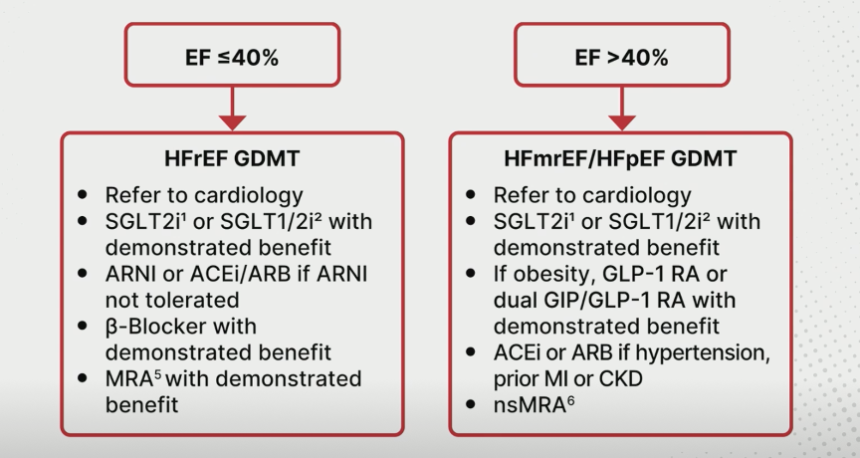
- Pregnancy. Dr. Emily Szmuilowicz (Northwestern) said that the previously scattered suggestions are now centralized in Section 15. Focusing on mild hyperglycemia in pregnancy, Dr. Szmuilowicz pointed out that the “benefits of early GDM treatment may be limited to those with higher glucose levels” and there may be harm in treating others. Additionally, the blood pressure threshold is simplified to use 140/90 mmHg as a cutoff for antihypertensive therapy. Updated guidelines also newly discuss preconception discontinuation of GLP-1 RA therapy, with semaglutide and tirzepatide recommended to be discontinued two and one months before pregnancy, respectively.
- Children and Adolescents. Dr. Lori Laffel (Joslin Diabetes Center) concluded the session by summarizing the updates to Section 14 with an emphasis that “children and adolescents are not just small adults.” She highlighted different glycemic goals based on circumstances. She also stressed that CGM should be offered as soon as possible, and AID should be offered for patients with T1D who are capable of using the device.
Diabetes technology use in children, elderly, hospitalized patients, and people with disability
In this morning symposium, an expert panel discussed diabetes technology use across life situations, including children, the elderly, those in inpatient settings, and people with disabilities with diabetes. Panelists Dr. Laya Ekhlaspour (UCSF), Dr. Medha Munshi (Joslin Diabetes Center), Dr. Francisco Pasquel (Emory University), and Dr. Michelle Litchman (University of Utah) discussed the distinct needs of different populations and the promise technology holds to improve access and outcomes.
- Young children with T1D. Dr. Ekhlaspour said children with T1D face unique challenges, such as unpredictable eating, high physical activity, inability to communicate symptoms of low blood sugars, higher variability in insulin requirements, and higher insulin sensitivity. She reviewed the 2026 ADA Standards of Care on CGM use in children and adolescents with diabetes (Dexcom G7, Dexcom G6, Freestyle Libre 3 plus, Freestyle Libre 2, all approved for children aged two years or more). Dr. Ekhlaspour also shared key results from the ADVICE4U study, highlighting clinical benefits of AID systems, and discussed the future of closed-loop technology.
- Elderly and those in long-term care facilities. Dr. Munshi said that both CGM and AID systems are “safe, effective, [and] well-tolerated” in older adults and should be considered in alignment with geriatric principles. She also said that 25-34% of long-term care residents have diabetes. To improve diabetes management at these long-term care facilities, Dr. Munshi recommended training staff at all levels, improving CGM protocols and algorithms, and strengthening infection control. She also provided a useful framework for how to select the right technology for each patient, as shown below. To learn more, Dr. Munshi recommended attending the 7th International Geriatric Diabetes Workshop in Boston between November 11-13.
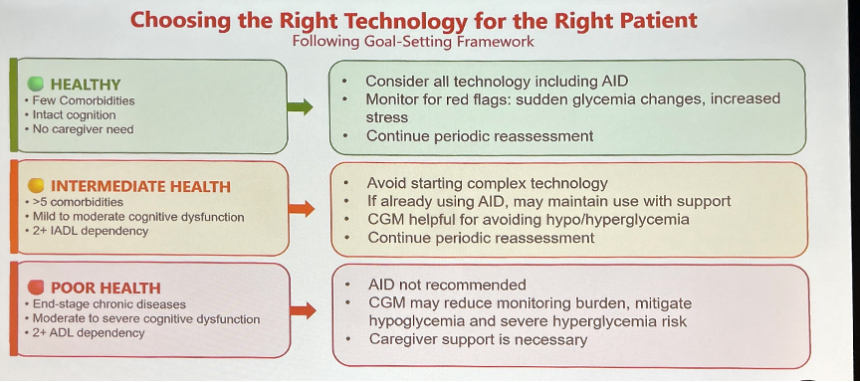
- AID use in inpatient settings. Dr. Francisco Pasquel (Emory University) reviewed very promising data from the AIDING trial (n=130). As presented at ADA 2026, AID use conferred a 28-percentage point improvement in Time in Range (TIR; 6 hours and 43 minutes) with AID versus MDI plus CGM (67.7% vs. 40.8%) in non-ICU hospitalized adults with either T1D or T2D and at least two glucose measurements ≥180 mg/dL. This study highlights the benefit of AID use in hospital settings.
- People with disabilities. Dr. Litchman called for more inclusive and accessible technology, especially given that one in six people has a disability worldwide. She emphasized three key areas for improvement – audible alarms, haptic alarms, and visual alarms – with which blind and deaf people with diabetes may struggle. She also said disability should not be a barrier to accessing diabetes technology. Unfortunately, in select states (orange in the figure below), disability acts as a barrier to coverage. Dr. Litchman advocated for greater inclusion of people with disabilities in RCTs during testing required to clear a device for the market. Another important call to action is for insurance to cover secondary devices, supplementary technology necessary for people with diabetes to take advantage of a device, such as smart watches and blood glucose displays.
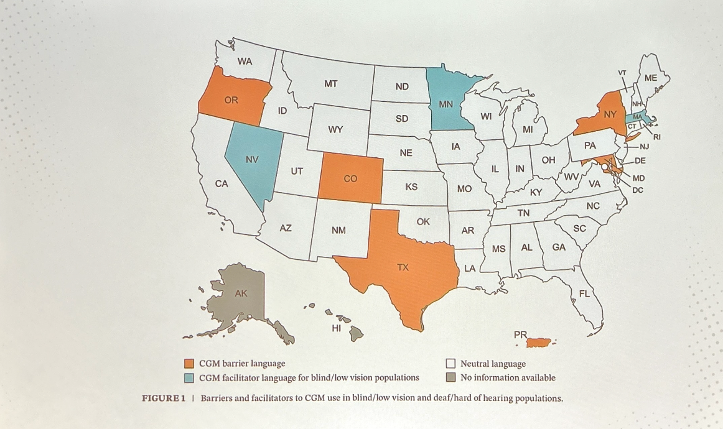
MRI reveals hidden multi-organ fibroinflammatory disease in T2D
Dr. Tushy Kailayanathan (Perspectum Ltd, UK) brought imaging to the forefront of cardiometabolic risk assessment. The UK Imaging Diabetes Study revealed striking levels of multi-organ fibroinflammatory disease in adults with T2D even before overt cardiovascular disease (CVD) is diagnosed.
- Study design. This study used a standardized 30-minute non-contrast MRI protocol to map inflammatory marker T1 activity across the liver, pancreas, heart, and skeletal muscle and to quantify organ fat and fibroinflammatory activity. Participants with T2D (n=271) were recruited from primary care and community diabetic eye health clinics. Those with established CVD were excluded from the study. Individuals were compared against anthropometrically matched controls from the UK Biobank (n=271) and a healthy volunteer reference group (n=92), ensuring that observed differences were attributable to diabetes rather than obesity alone. The cohorts were well-matched for age, sex, and ethnicity, with 67% being male and 46% being non-white. At baseline, both groups had a BMI of 31 kg/m² and waist circumferences of 104 cm (41 lbs). Only 10% of the diabetes group were on GLP-1 RAs at the time of imaging.
- Organ fat content was broadly similar between the diabetes group and matched controls, but fibroinflammatory disease activity was markedly higher in those with T2D. Nearly 50% of the diabetes cohort showed fibroinflammatory activity in at least one organ compared with 16% of matched controls (p<0.001). In the T2D cohort, 45% displayed multi-organ fibroinflammation (p=0.005).
- Fibroinflammatory activity was not observed in fat alone. The liver emerged as the most responsive organ to fat debulking. All-cause mortality increased as the number of organs affected increased.
- There was significant fibroinflammation in cardiac tissues, even in the absence of overt structural disease pathology. 35% of the T2D group showed reduced left ventricular global longitudinal strain, and 27% demonstrated elevated cardiac fat. This suggests early functional compromise even before conventional heart failure criteria were met.
- Strikingly, approximately 40% of participants with T2D had normal routine blood tests. This indicates a considerable “hidden” cardiometabolic risk burden invisible to standard biochemical screening, underscoring a core limitation of current practice. Focusing on adiposity or standard labs alone may underestimate true organ-level disease. The investigators concluded that MRI-based biomarkers of organ fat and fibroinflammatory activity could meaningfully refine risk assessment in T2D. They envision incorporating these tools into future clinical trials and potentially routine care to identify high-risk patients and to monitor response to emerging diabetes and obesity therapies.
Insulin secretagogues disproportionately increase hypoglycemia risk for patients facing food insecurity
In an oral presentation that received the President’s Select Abstract designation, Dr. Alexandria Ratzki-Leewing (University of Maryland) shared survey findings (n=339), which highlighted the disproportionate risk of severe hypoglycemia associated with insulin secretagogue use among people experiencing food insecurity. Sulfonylureas and other insulin secretagogues stimulate insulin release regardless of food intake, potentially increasing hypoglycemia risk in individuals who have inconsistent access to meals. Moreover, because these agents are relatively inexpensive compared to newer glucose-lowering drugs, they are frequently prescribed to patients with lower socioeconomic status, who are more likely to face food insecurity. In the iNPHORM survey (n=339), responders were 51% male, were 55 years old on average, and had T2D for 10 years. 19% reported food insecurity. Survey data revealed that participants who reported food insecurity were twice as likely to experience a level 3 hypoglycemic event compared to those who did not report food insecurity.
DPN-Check as a quick point-of-care screening device for diabetic painful neuropathy
Dr. Mohummad Shaan Goonoo (Sheffield Teaching Hospitals, UK) advocated for the use of DPN-Check in combination with SUDOSCAN to assess diabetic peripheral neuropathy (DPN), moving beyond current bedside techniques that are subjective and lack sensitivity. He presented data from a study (n=132) of individuals with T2D who underwent DPNCheck testing alongside comprehensive neurophysiological assessments. DPN-Check offered an area under the sensitivity-specificity curve (AUC) of 0.72. While less accurate than the modified Toronto Clinical Neuropathy Score (mTCNS), which has an AOC of 0.92, DPN-Check can be completed in about three minutes (vs. 20 minutes for mTCNS). Moreover, the test may be more accurate when combined with electrocardiogram results and age.
Insurance plans with preventative drug lists covered at $0 out-of-pocket reduce complication incidence
Dr. James Frank Wharam (Duke University) presented evidence suggesting that employer-based preventative drug lists (PDLs) that cap out-of-pocket costs of preventive medicines at $0 can improve medication adherence, reduce diabetes complications, and potentially provide economic value for employers. These plans typically waive cost-sharing for preventive drugs like insulin and GLP-1 RAs. Using claims data (n=20,448), investigators compared individuals enrolled in plans with PDLs to those enrolled in plans without PDLs.
- PDL implementation significantly reduced out-of-pocket pharmacy spending by 23% for people with diabetes, compared to the control group. The PDL group also experienced a 9% increase in medication fills, especially for GLP-1 RAs (+23%) and SGLT-2 inhibitors (+40%). In contrast, insulin uptake was only increased by 5%, potentially because it is less replaceable for patients who require insulin.
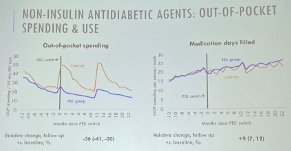
- PDL plans are often used by larger employers who have more resources and greater employee tenure and retention. Employers enrolled in PDL plans had 10% greater pharmacy costs, but 12% reduced medical costs, with the overall cost not changing significantly.
- In a separate talk, Dr. Rebecca Myerson (Emory University) said that Medicare beneficiaries are more likely to adhere to insulin treatments when the drug costs less. Individuals who had previously faced the highest insulin costs experienced an 8% increase in insulin fills after the $35 per month cap was put into place. However, because 87% of insulin prescriptions already cost less than $35 per month before the policy change, the cap had relatively little effect on insulin use across the broader Medicare population.
Exhibit Hall
Diabetes Therapy
Amgen
Amgen’s booth was hard to miss with its central location, aromatic coffee booth, and augmented reality activities. In one corner, attendees could interact with a large touchscreen of a US map displaying statistics of people taking and discontinuing GLP-1 RAs. Another screen posed a question, “More than 50% of people drop off GLP-1-based injectables within a year. What does that look like where you practice?” highlighting the unmet needs of current obesity medications. While we were playing with the screen, a rep approached and introduced us to Amgen’s once-monthly GLP-1 RA/GIP receptor antagonist MariTide. In the phase 2 trials presented last year, MariTide conferred up to 20% weight loss (vs. 2.6% with placebo) at 52 weeks in people with obesity without T2D, and up to 17% weight loss (vs. 1.4% with placebo) in people with T2D. The incidence of nausea and vomiting and discontinuation rates were very high in both cohorts. The rep said that GI events are a challenge for many incretin-based drugs, and Amgen is exploring a slower titration scheme to improve the tolerability.

Amphastar
Amphastar’s small but popular booth featured a bright yellow backdrop that highlighted Baqsimi, the company’s glucagon nasal powder used for severe hypoglycemic emergencies. Informational pamphlets emphasized that Baqsimi is the most prescribed glucagon in the US and that two devices can be purchased for “as little as $25.” Company representatives were very friendly and enthusiastic about Baqsimi’s small size and ease of use, requiring only one button press. The representatives also eagerly provided demonstrations of product use. In response to a question about dosing, the representative clarified that one nasal spray of Baqsimi is effective in most cases, but patients are recommended to have two tubes on hand in case. In addition to Baqsimi, the company’s largest source of revenue, Amphastar offers traditional glucagon and is developing a generic GLP-1 RA (AMP-018), a biosimilar insulin aspart (AMP-004), a biosimilar recombinant human insulin (AMP-005), and an early-stage, non-injectable anti-VEGF therapy (AMP-107).

AstraZeneca
AstraZeneca showcased its broad and mechanistically diverse pipeline across oral and injectable platforms. A virtual reality setup allowed attendees to explore its pipeline in an immersive format. The star of promotional materials and booth discussion was elecoglipron (AZD5004), a once-daily oral small-molecule GLP-1 RA licensed from Eccogene. Based on the strength of findings from the VISTA and SOLSTICE trials for overweight/obesity and T2D, respectively, AZ will initiate its phase 3 program in 2H26 to evaluate elecoglipron: (i) for overweight and obesity; (ii) as a monotherapy and in combination with AZ's SGLT-2 inhibitor Farxiga (dapagliflozin) for T2D; and (iii) in cardiorenal outcomes trials. Beyond elecoglipron, the booth highlighted AZ’s candidates in phase 2 trials. AZD6234 is a once-weekly subcutaneous selective amylin receptor agonist (SARA) currently in phase 2 development for chronic weight management. AZD9550 is a once-weekly injectable dual GLP-1/glucagon receptor agonist (GLP-1/GCG RA) designed with an optimized agonism ratio to maximize weight loss while offering organ-protective and MASH benefits.

Bayer
Bayer maintained a modest footprint in the Exhibit Hall with a booth that delivered more substance than scale. An informational video walked attendees through the use of Kerendia (finerenone) and its role in managing CKM pathways, offering clear framing on disease progression and patient selection for the therapy. Currently approved to treat chronic kidney disease (CKD) associated with T2D and heart failure (HF) with preserved (LVEF ≥50%) or mildly reduced ejection fraction (LVEF between 41-49%), Kerendia continues to be a pillar of Bayer’s cardiometabolic portfolio. While the physical setup was simple with two chairs, a counter, and a Medical Affairs screen, the content itself was notably informative, offering attendees a refresher on where finerenone fits within cardiorenal management landscape. In May 2026, the FDA granted Kerendia Priority Review for the treatment of kidney disease with T1D, which would mark an incredible advance for T1D adjunctive therapies if approved. We look forward to future ADA booths where the discussion of this treatment may become a reality.

Boehringer Ingelheim
Boehringer Ingelheim had three separate booths in the Exhibit Hall. The smallest of the three was dedicated to SGLT-2 inhibitor Jardiance and featured the tagline, “Don’t delay, start today,” posted on a selfie wall. We were so thrilled to see this – in our dreams, there would be trials of this tremendous therapy where people with highest risk of T2D would receive this medicine – those with a strong family history, pre-T2D glycemic “scores,” high cholesterol, high blood pressure, and high stress, perhaps? Boehringer’s second-largest booth was focused on educating conference goers about screening patients for uACR and eGFR values. This is a dream from our view, given how many can benefit from “working on” lowering their uACR levels and increasing their eGFR levels with therapy! Just this year, Boehringer Ingelheim launched the “Detect the SOS Collective,” which kicked off with a Super Bowl ad with Ms. Octavia Spencer and Sofia Vergara raising awareness about uACR testing in people with hypertension and/or T2D. The largest booth (shown below) was dedicated to the company’s obesity and MASLD/MASH pipelines, as evidenced by the slogan, “See obesity, think liver.” While it isn’t as catchy, as, perhaps, “got Milk?” it is sure thought-provoking. Across all three booths, attendees looked as though they were enjoying Boehringer Ingelheim’s coffee, fruit skewers, and yogurt parfait offerings.

Corcept Therapeutics
Corcept Therapeutics’ blue booth featured Korlym (mifepristone), a cortisol modulating therapy for hypercortisolism, which is an affliction affecting many with diabetes. The endocrine disorder is caused by chronic exposure to excess levels of cortisol, a stress hormone naturally produced by the adrenal gland, which many with diabetes (and beyond) experience. Excess cortisol production can be caused by adrenal adenomas, also known as benign tumors on the pituitary glands. Korlym is a reversible glucocorticoid receptor antagonist introduced by Corcept in 2012 and is the first FDA-approved medication for hypercortisolism. The representative noted the increasing prevalence of hypercortisolism since Korlym’s initial approval, citing Corcept’s MOMENTUM study which found that over 25% (27.3% to be exact) of patients with resistant hypertension had hypercortisolism, which can have significant cardiometabolic health consequences. Further, Corcept’s CATALYST trial demonstrated a 1.5% A1c reduction from a baseline of 8.6% in patients with Cushing’s syndrome and difficult-to-control T2D using Korlym. Patients also saw weight reductions, no muscle degradation, and cognitive impairment alleviation. We are thrilled that Corcept is working on expanding awareness and knowledge about hypercortisolism all to the end of better health, especially for people with diabetes and obesity.

Gan & Lee
Located directly in front of the Exhibit Hall entrance, Gan & Lee’s eye-catching modern and bright booth drew in passersby with graphics highlighting therapies in the company’s pipeline. The Beijing-based company emphasized key biologics in the pipeline that have begun clinical trials in the US and EU, such as ludefen (GZR4), a once-weekly basal insulin injection and bofanglutide, a biweekly GLP-1 RA. Shortly following ADA 2026, Gan & Lee announced positive results for ludefen compared to Lantus, with a 0.2% A1c advantage conferred by ludefen (baseline levels were not specified) – since 0.2% isn’t seen as “meaningful” by many clinicians, we are curious to know if CGM metrics were collected that show meaningful differences in Time in Range that would imply better “quality” of A1c in addition to the small difference. At 36 Weeks, bofanglutide 48 mg also demonstrated 15% body weight loss with no evident plateau, compared to 17% achieved with tirzepatide group. Company representatives were eager to discuss Gan & Lee’s pipeline and expansion prospects. Gan & Lee’s expansive booth featured a winding display detailing Bofanglutide phase 3 clinical development in patients with obesity, overweight, T2D, or obstructive sleep apnea. An eye-catching display also showed the chemical structure of Bofanglutide both in a graphic and as a model.

Ionis
Ionis’s booth featured Tryngolza (olezarsen) an APOC-III-directed antisense oligonucleotide (ASO) that is FDA approved for adults with familial chylomicronemia syndrome. This genetic disorder results in hypertriglyceridemia, greatly impacting cardiac outcomes. Through interactive displays, attendees could explore case studies and learn more about the drug’s safety and indications. Ionis also highlighted results from its Balance trial, which showed that monthly injections of Tryngolza reduced mean fasting triglyceride levels by 42.5% from baseline to Month 6 compared with placebo (n=22; baseline level was 2604 mg/dL). Additionally, Tryngolza lowered the incidence of acute pancreatitis (AP), with only one AP event experienced compared to 11 AP events in the placebo group over the course of a year. The company plans to seek a broader indication for severe HTG (sHTG; triglyceride levels above 500 mg/dL).

Lilly
Lilly’s large booth drew much attention throughout the meeting, seemingly reflecting the company’s expanding incretin footprint and the buzz surrounding its newly approved oral GLP‑1 RA, Foundayo (orforglipron). This year marked the first ADA with full Foundayo branding on display following its April 2026 approval based on the ATTAIN clinical program, including the ATTAIN‑1 trial (n=3,127) where adults on the highest dose of orforglipron saw an average of 12.4% body weight loss (27.2 lbs) compared with 0.9% (2.2 lbs) on placebo. The company leaned into the milestone approval with prominent signage both in the Exhibit Hall and around the convention center. Signage highlighted the small molecule nature of Foundayo, as well as its lack of food or water restrictions as differentiating factors for the therapy. Lilly featured a “Different Patients, Different Needs, Different Medicines” theme that unified the space, positioning Foundayo alongside Zepbound and Mounjaro as part of a diversified incretin portfolio. Attendees clustered around the Foundayo area in particular, again underscoring strong interest in a once‑daily oral GLP‑1 RA with meaningful differentiators in an ever-growing therapeutic class. Beyond incretins, Lilly manufactures a number of insulins that are a mainstay of diabetes care, including rapid-acting Humalog (insulin lispro) and generic insulin lispro, as well as insulin glargine Basaglar and Rezvoglar (insulin glargine-aglr) in partnership with Boehringer Ingelheim. Finally, Lilly also introduced ultra-rpaid acting insulin Lyumjev in 2020.

Madrigal
Madrigal had a larger booth in the Exhibit Hall dedicated primarily to Rezdiffra (resmetirom), a once-daily oral thyroid hormone receptor-beta agonist for metabolic dysfunction-associated steatohepatitis (MASH). Rezdiffra was the first FDA-approved therapy specifically for MASH and has shown consistent efficacy across patient subtypes. Despite its rapid uptake, penetration remains just under 10% of the 460,000 diagnosed F2/F3 patients under specialist care, highlighting the novelty of the market. The booth featured taglines such as, “Improving fibrosis and MASH is no longer wishful thinking,” and, “The time is NOW.” One section had an interactive whack-a-mole-style game in which players quickly tapped on a liver-shaped surface to change the buttons from red to green. As shared during its 1Q26 call, Madrigal continues to add pre-clinical siRNA candidates to its MASH pipeline, most recently Arrowhead Pharmaceuticals’ ARO-PNPLA3. The company also has the oral GLP-1 RA MGL-2086 in its pipeline, which it is planning for use as a combination treatment with Rezdiffra.

MannKind
Located at the front entrance of the Exhibit Hall, MannKind’s exhibit featured a virtual reality experience that guided attendees through the journey of an inhaled insulin particle within the lungs. Afrezza is the first and only FDA-approved, ultra rapid-acting inhaled mealtime insulin for adults and children ages six and older with diabetes. The pediatric indication was secured just days before the beginning of ADA 2026 based on the 26‑week pivotal phase 3 INHALE‑1 trial (n=230), which evaluated Afrezza versus rapid‑acting analog (RAA) insulin in children and adolescents (aged 4-17 years) with T1D. When the analysis excluded one participant who did not adhere to trial protocols, the mean A1c in the Afrezza group was 8.4%, meeting the specified noninferiority margin compared to 8.2% in the RAA group. Afrezza aims to improve glycemic control and provide additional insulin dosing options for those who require very rapid bolus insulin absorption. MannKind representatives also emphasized how inhaled insulin may more closely mimic physiologic insulin response during meals compared to traditional injectable options. Afrezza’s rapid absorption also allows the convenience of dosing at the beginning of a meal without the need for advanced pre-bolusing.

Merck
Merck’s exhibit featured educational materials that emphasized the importance of LDL cholesterol reduction in lowering cardiovascular risk. Data highlighted throughout the booth demonstrated that individuals with the highest cumulative LDL cholesterol exposure were approximately three times more likely to experience a cardiovascular event by age 55 compared to those with the lowest LDL cholesterol exposure. In both booth discussions and clinician presentations, Merck reinforced the idea that prolonged exposure to elevated LDL cholesterol drives atherosclerotic cardiovascular disease (ASCVD) risk over time and stressed the importance of early LDL cholesterol lowering. The company also provided clinicians with resources focused on guideline-based LDL cholesterol management, treatment intensification strategies, and approaches to helping patients achieve recommended lipid targets. Given that heart disease is the leading cause of death for people with diabetes, we greatly appreciate Merck’s attention to this important complication. The company continues to develop enlicitide decanoate, an oral PCSK9 inhibitor for which strong results were presented at ACC 2026. As well, Merck’s DPP-4 inhibitor Januvia is now the medicine with among the largest safety databases, if not the largest – so many have taken it since it’s approval in 2005, and we hope that many clinicians will bypass sulfonylureas for Januvia as it goes generic and becomes even higher-value. We particularly appreciate how easy it is to start, with an incredibly benign side effect profile.

Novo Nordisk
Novo Nordisk showcased its offerings in two separate booths at the ADA 2026 Exhibit Hall. In its Medical Affairs booth, the company highlighted amylin – a hormone co-secreted with insulin from pancreatic beta cells in response to nutrient intake. Amylin acts across four physiological domains: (i) bone metabolism; (ii) appetite regulation; (iii) gastric emptying; and (iv) glucose regulation. Amylin’s central, physiological focus at the Medical Affairs booth mirrored the emphasis on Novo Nordisk’s amylin development pipeline at its main booth. Consistent with recent conferences, Novo Nordisk's also highlighted its two injectable, blockbuster GLP-1 RAs – Wegovy (semaglutide for obesity) and Ozempic (semaglutide for T2D). Starting July 1, 2026, Medicare beneficiaries will be able to access all doses of Wegovy (injectable and oral) for $50 per month under the newly launched Medicare GLP-1 Bridge program. The booth also contextualized GLP-1 RAs and amylin biology with scientific messaging tying together the mechanisms by which these hormones address the dysregulated energy balance, glycemic control, and gastrointestinal dysfunction seen in both conditions. Lastly, the main booth featured a section dedicated to Novo Nordisk's pipeline, including CagriSema (a fixed-dose combination of semaglutide and long-acting amylin analogue cagrilintide). Novo Nordisk is, of course, also an insulin-sales giant, offering long-acting insulins Tresiba, Xultophy, Levemir, and Awiqli, premix insulin including Ryzodeg and NovoMix, and rapid-acting insulin including Fiasp and NovoRapid.

Regeneron
Regeneron’s booth highlighted its rapidly expanding presence in metabolic liver disease, with a dedicated display detailing multiple next‑generation programs. The pipeline board highlighted olatorepalide, a dual GLP‑1/GIP RA in development for overweight and obesity. Regeneron also highlighted its work in muscle preservation, such as through the phase 2 COURAGE trial evaluating trevogrumab, an anti‑myostatin antibody studied in combination with semaglutide. Three siRNA therapeutics also underscored Regeneron’s push into genetically informed MASH/MASLD treatment, including: (i) ALN‑HSD targeting HSD17B13 for MASH with fibrosis and genetic risk factors in the NASHGEN‑2 trial; (ii) ALN‑CIDE targeting CIDEB for MASH; and (iii) ALN‑PNP targeting PNPLA3 for MASLD/MASH. Together, these programs reinforce Regeneron’s commitment to precision metabolic therapeutics, with the booth’s interactive screens giving attendees a clear look at how the company is approaching genetically mediated liver disease.

Pfizer
Pfizer’s blue booth stood out with interactive displays of its obesity drug pipeline – right alongside a well-attended yogurt stand. Reps approached us warmly, asking if we had heard about its incretin-based candidates. New results from the phase 2b VESPER program evaluating a long-acting GLP-1 RA berobenatide (PF‘3944, previously known as MET-097) had just been presented at ADA. Recall that Pfizer acquired PF‘3944 and other candidates following its $10 billion acquisition of Metsera in November 2025. The move was a strong signal of Pfizer’s commitment to play a larger role in metabolic health in the future. In people with T2D and obesity, once-weekly berobenatide conferred weight loss of up to 10% and an A1c reduction of up to 2.2% from a baseline of 8.2% in the VESPER-2 trial (n=133). In the VESPER-1 open‑label extension (n=239) trial, once-weekly berobenatide continued to reduce weight, reaching 16% at Week 32, while once-monthly regimens sustained 10-15% reductions through Week 60. In the ongoing VESPER‑3 trial (n=268), berobenatide led to 12% weight loss at Week 28 with no evidence of plateau in early transitions from weekly to monthly dosing. The reps said that berobenatide is currently evaluated in phase 3 trials, as detailed on a different screen.

Sanofi
Sanofi’s booth featured none other than Tzield (teplizumab), the first and only FDA-approved disease-modifying treatment for T1D. With a coffee station offering multiple beverage options and a circular seating area, the booth highlighted the many benefits of Tzield. One of the booth’s panels had a slogan, “Act within the window of WHEN,” with a colon between “WH” and “EN” to emphasize the importance of timely intervention for T1D. Company representatives shared with excitement that as of April 2026, Tzield is now indicated to delay the onset of stage 3 T1D in children aged one year and above who have been diagnosed with stage 2 T1D. This announcement is based on positive results from the phase 4 PETITE-4 T1D study (n=20), expanding Tzield’s initial indication from November 2022 to include delaying T1D in those aged eight years and older. Sanofi also manufactures Lantus, the global basal insulin market leader capturing 27% market share in 4Q25. In March 2023, Sanofi announced a strong initiative to reduce the US list price of Lantus by 78% and cap out-of-pocket costs at $35 per month, improving global access.

Structure Therapeutics
Structure Therapeutics’ booth quickly drew in many interested parties. Representatives discussed where the company’s current therapies stand in the clinical-stage pipeline. Aleniglipron, Structure Therapeutics’ oral small molecule GLP-1 RA, is currently moving through phase 2 trials. Representatives also walked through results from the ACCESS II trial on a large touch screen television, which demonstrated dose-dependent reductions in body weight in adults who are overweight or have obesity. They also noted the program’s unique open-label extension, which gave participants the choice to assess the longer-term safety of aleniglipron after completion of the 36-week treatment period. Other therapies in the pipeline include an ongoing phase 1 clinical study of a dual amylin and calcitonin receptor agonist. Structure Therapeutics is also focusing efforts on G protein-coupled receptors such as GIP and glucagon.

Vertex
Vertex stood out with its quintessential purple covering all corners of the booth, along with “spotlight” stations that encouraged attendees to learn more about unreported severe hypoglycemia in T1D. The booth listed that approximately 50% of people with T1D have not discussed their most recent severe hypoglycemic event with their HCP. Attendees, including some members of our team, were able to step inside the booth and shine a flashlight on the walls to reveal the untold truths of people with T1D, including challenges with hypoglycemia. Attendees also had the opportunity to expand their knowledge through the “T1D Light Up Challenge,” which included a 90-second quiz to illuminate severe hypoglycemic events in T1D. Some of the questions included the proportion of adults reporting having a high fear of hypoglycemia, as well as the associated risks of hypoglycemia and cardiovascular disease. At the end of the quiz, attendees had the option to receive additional resources on hypoglycemic events.

Viking
Viking’s small booth featured a table set up for personal conversations with company representatives. The booth seemed especially geared towards physicians with representatives eager to discuss technical details about Viking’s offerings. The table featured one-page printouts of a publication about VK2735, a GIP/GLP‐1 dual RA, and a Forbes article about the company’s founder. Viking has repeatedly emphasized its momentum around the development of VK2735 from 2o25 that has carried into 2026. The phase 3 VANQUISH program has now fully completed enrollment, including the VANQUISH-1 trial (n=4,661) for obesity and the VANQUISH-2 trial (n=1,000) for obesity and T2D. VANQUISH-1 is expected to complete in 2027 with VANQUISH-2 scheduled for the announcement of baseline demographics at EASD 2026. The booth also handed out protein bars and Biocare protein supplements geared towards patients on GLP-1 RAs.

Xeris
Xeris spotlighted the GVOKE HypoPen at ADA 2026. Featuring an interactive demonstration of its glucagon pens, company representatives spoke about the value of protecting patients from severe hypoglycemia. Xeris compared its ready-to-use pens, which can be rapidly deployed, to the older, boxed style of glucagon. Prior formulations required the manual mixing of a dry and wet ingredient making it much more complicated to use than the premixed HypoPen, which representatives said could lead to worse patient outcomes in an emergency state. The medication, which company representatives said is well-covered by many commercial insurance companies, has a 24-month shelf life despite being premixed, and can be used with instructions as simple as, “Pull red, push yellow.”

Zealand
Zealand Pharma's exhibit hall booth offered an overview of its obesity pipeline, with a particular emphasis on amylin biology. Its two phase 3 candidates were the primary focus: (i) petrelintide (a once-weekly long-acting amylin analog, being co-developed with Roche); and (ii) survodutide (a dual glucagon/GLP-1 RA, licensed to Boehringer Ingelheim). Zealand specifically directed attendees toward a dedicated ADA symposium, "Amylin as a Novel Diabetes and Obesity Therapy" as a marker of the field's growing scientific recognition of amylin as a core part of obesity treatment. Earlier in its pipeline, Zealand will explore a combination of petrelintide with CT-388 (a dual GLP-1/GIP RA) in upcoming phase 2 trials. Preclinically, ZP6590, a GIP RA, also remains in development, with a first-in-human clinical trial expected to initiate in 2026. Notably, the company paused its development of dapiglutide (a dual GLP-1/GLP-2 RA) in November 2025 to prioritize its higher-value metabolic programs.
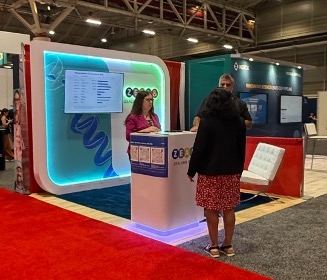
Diabetes Technology
Abbott
Abbott’s bright yellow booth in the center of the Exhibit Hall was routinely busy throughout the conference, with many attendees interested in Abbott’s forthcoming dual glucose-ketone sensors Libre Duo and Libre Duo 10 Day, which received CE-Mark at the end of May. The booth had dedicated stations to learn more about the devices and ketone monitoring, including a virtual reality demonstration to visualize the symptoms of rising ketones. Company representatives reiterated that these sensors will launch in select European countries later this year, and they remain under FDA review in the US. Abbott’s booth also highlighted its growing pump partnerships, including newly launched FreeStyle Libre 3 Plus integration with Omnipod 5 in the US as well as the Instinct sensor that exclusively integrates with MiniMed’s AID systems (which launched in the US at the end of 2025). Furthermore, a small station for Lingo, Abbott’s over-the-counter CGM for adults not on insulin, was tucked in the back of the booth. Representatives said demand remains high, and the company has seen encouraging adoption through retail channels, including Best Buy, Amazon, Walmart, and Walgreens.
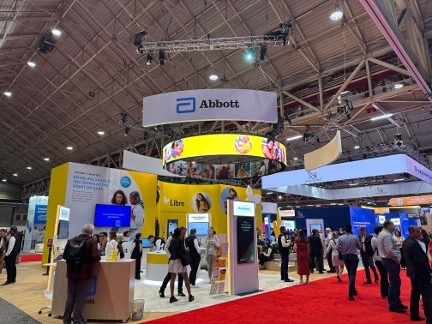
Beta Bionics
Beta Bionics’ booth was one of the first to catch attendees’ attention upon entering the Exhibit Hall. Beneath the company’s slogan, “Less Work, Better Real-World Outcomes,” towering displays showcased what has become a hallmark of the company’s conference presence: extensive real-world outcomes data from the iLet Bionic Pancreas. This year, the company highlighted its first three years of commercial-use data, continuing to show a clustering of GMI values in the 7.3%-8.2% range across users. As in prior analyses, the largest improvements were observed among those starting with the highest A1c levels; notably, the 153 users with baseline A1c ≥14.0% achieved an average 6.4 percentage-point reduction in GMI to 8.2%. While it wasn’t a focus of the display, we look forward to seeing more real-time real-world data on iLet use with the company’s new dashboard with data on iLet use. To put faces behind the data, digital displays throughout the booth featured individual patient stories, particularly users who struggled with tasks such as consistently bolusing for meals and experienced meaningful improvements after transitioning to iLet.

CeQur
CeQur’s booth featured an eye-catching display promoting CeQur Simplicity, the company’s mealtime insulin patch. Company representatives described the device as a convenient in-between option compared to MDI and insulin pumps. The injection-free, discreet device delivers rapid-acting insulin with one click. CeQur was also proud to discuss its recent FDA clearance, just days before ADA, for a wear time of up to seven days. This represents an extension from CeQur’s previous four-day maximum wear, as well as the release of a one-unit device in addition to the current two-unit device. CeQur has also expanded its maximum insulin capacity by 40% from 200 to 240 units. The company’s pamphlets further showcased data from a recent study, which showed improved Time in Range (TIR) (n=555; 49% to 62% after 60-90 days of use; +3.1 hours/day) and improved A1c values as well (n=755; from 8.8% to 7.9%). Shortly following ADA, CeQur also announced the closure of $100 million in Series E financing for the company’s next phase of commercial growth.

Dexcom
Dexcom’s spacious booth prominently showcased its prescription and over-the-counter CGM portfolio, with a clear emphasis on its latest-generation products. Multiple stations throughout the booth allowed attendees to explore insulin pump integrations and discuss G7 and G7 15 Day availability, coverage, and reimbursement with company representatives. Compared to prior years, the spotlight was firmly on G7, reflecting the upcoming discontinuation of G6 on July 1. Suspended above the booth was a large Dexcom logo-shaped display directing attendees to the company’s product theater, while surrounding signage promoted the highly anticipated CONNECT trial readout evaluating CGM use in adults with T2D not using insulin. One of the busiest corners of the booth was dedicated to Stelo, where a mock kitchen demonstrated how CGM data can support food and lifestyle decisions. Attendees gathered around food displays and interactive screens highlighting the platform’s recently enhanced Smart Food Logging capabilities, including a nutrition database and redesigned Daily Insights feature. Digital demonstrations walked users through personalized insights generated from the prior day’s TIR, meals, and activity levels, reinforcing Dexcom’s growing focus on translating glucose data into actionable behavioral guidance with its latest update. The area also featured information on Stelo by Dexcom’s ongoing integration with Oura, showcasing the company’s continued push toward a broader metabolic health ecosystem.

Insulet
Insulet’s classic mango booth captured significant attention in the Exhibit Hall. An electronic display boasted real-world evidence demonstrating Omnipod 5 users can achieve over 80% Time in Range with optimized settings as well as Omnipod 5’s status as the most prescribed AID system in the US. The booth also featured stations highlighting Insulet’s partnerships with Marvel and Calm. Representatives were especially excited to discuss two major launches in the US announced two days before the start of ADA 2026: (i) an enhanced Omnipod 5 algorithm, including a 100 mg/dL target; and (ii) FreeStyle Libre 3 Plus compatibility. In addition to the lower target, representatives also highlighted modifications to Automated Mode, which will now continue when maximum insulin delivery persists over several hours. Since users previously needed to exit Automated Mode in this situation, this modification should be a significant quality-of-life improvement to reduce interruptions in insulin delivery. Representatives also highlighted that this launch is only the beginning of further innovation in the coming years as progress continues on the next-generation Omnipod 6, planned for launch in 2027, and a fully closed-loop algorithm for T2D (EVOLUTION), planned to launch in 2028.

MiniMed
MiniMed made a strong statement in its first ADA Scientific Sessions exhibit as an independent company, with a large and visually striking booth on the show floor. Anchored by the company’s “Make Better Happen” branding and a massive circular overhead display, the booth highlighted MiniMed’s expanding diabetes technology portfolio, with a focus on its insulin delivery systems. A centrally positioned demonstration area featured MiniMed Flex, the company’s newly cleared durable pump, which is roughly half the size of the MiniMed 780G and replaces an on-device screen with full smartphone control. Nearby displays showcased real-world outcomes from the MiniMed 780G system, underscoring the company’s continued emphasis on demonstrating real-world AID performance. MiniMed also devoted significant space to MiniMed Go, its latest smart pen offering that combines InPen with the Instinct CGM. Large digital displays highlighted the system’s reminder functionality for missed basal and bolus doses, while representatives demonstrated how the platform aims to bring greater structure and support to multiple daily injection therapy. MiniMed’s exhibit continued to reflect the company’s strategy of serving people across the spectrum of insulin delivery, from connected pens to advanced AID systems.

Open Evidence
Although Open Evidence hosted a relatively quiet booth, the company’s impact was clear. Open Evidence drew in interested clinicians with a large-screen display of its clinical AI platform in action. Clinicians frequently stopped by, expressing their gratitude for the platform and how helpful it has been for their practice. Used by a remarkable one in two US endocrinologists, Open Evidence provides clinicians answers to medical questions within seconds, drawing on open-access data from the current ADA Standards of Care recommendations, as well as journals like Diabetes Care, Diabetes, Obesity and Metabolism, NEJM, JAMA, and Cochrane with 35 million+ peer-reviewed papers. Open Evidence representatives encouraged attendees to try the tool with these prompts: (i) For patients with well-managed T2D on older medications, when should a switch to GLP-1 RAs be considered?; and (ii) For a patient with T2D and obesity who hasn’t reached goals on a GLP-1 RA, what does the evidence show for dual and triple incretin agonists?

Sequel
Sequel’s booth emphasized twiist’s form factor above all. A larger-than-life model of the pump hung from the ceiling in a presentation of the unique circular design, weighing ~ 2 ounces. twiist “looks and works like no other AID system” was the company’s tagline at ADA this year. Representatives said that twiist is the only pump that offers three ways to bolus: (i) from the pump; (ii) via a compatible phone; or, uniquely, (iii) from a smartwatch. Sequel also offers users an absorption time selector that specifies the consumption of fast-, medium-, or slow-absorbing carbohydrates. The algorithm then adapts its insulin delivery accordingly. The company has also frequently emphasized its iiSure technology that enables rapid occlusion detection in about 19 minutes compared to the range of 40-201 minutes for competitors. Finally, representatives also emphasized affordability, saying that most patients pay $0 for the first month of use, followed by no more than $50/month.
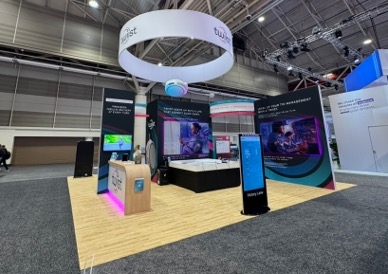
Senseonics
Senseonics’ exhibit showcased the Eversense 365 CGM, the only fully implantable CGM currently available. Eversense 365 is designed to work for up to one year following an outpatient insertion procedure, making it the longest-lasting CGM currently on the market. Eversense 365 currently uses a removable Bluetooth transmitter worn on the arm for data transmission as the company continues to develop fully integrated options. Gemini is targeted for launch in early 2027, offering a one-year sensor with a battery enabling continuous on-demand readings. In the second half of 2027, Freedom, which is a one-year sensor with a built-in Bluetooth transmitter, is scheduled for a first in-human trial. This configuration allows for direct connection with a user’s phone and insulin pump. Company representatives highlighted several differentiating features of the current system, including its removable rechargeable transmitter, on-body vibration alerts for high and low glucose levels, and silicone adhesives that minimize skin irritation. The implantable design was also presented as a solution to common frustrations associated with traditional wearable CGMs, including compression lows, sensor adhesion issues, and frequent sensor replacements. In addition, the exhibit underscored Eversense’s compatibility with AID systems and its ability to provide continuous glucose readings every five minutes using Bluetooth connectivity.

SOOIL Development
In a vibrant booth at ADA 2026, SOOIL displayed its Dana Diabecare line of insulin pumps. While not currently available in the US market, company representatives were excited to share that Dana Diabecare is working to integrate CamDiab’s CamAPS Liberty fully closed-loop algorithm with one of their pumps, which will offer patients more options depending on their needs. On display, the company featured its Diabecare DANA-i insulin pump, which offers phone-based remote control as well as on-pump control options. Outside of the US, the DANA Diabecare RS and DANA-i insulin pumps integrate with CamAPS FX and have demonstrated particular relevance for managing T1D in pregnancy in the UK. In the US, this indication is currently being explored with initial clearance granted to Tandem’s Control-IQ+ and MiniMed 780G.

Tandem
Tandem’s familiar light blue color scheme highlighted the company’s strong results for use in pregnancy, as well as the advantages of the company’s smaller pump offering, Tandem Mobi. Company representatives expressed excitement about the international rollout of Tandem Mobi, which began over the past three months. Tandem has also recently expanded its direct commercial operations in the UK, Switzerland, and Austria. Additionally, Tandem has begun the international launch of its t:slim X2 pump integration with Abbott's FreeStyle Libre 3 Plus CGM in select European countries, which will scale to additional countries throughout this year. In terms of pregnancy, representatives highlighted Tandem’s landmark US FDA clearance in April 2026. The Control-IQ+ algorithm was cleared for use during pregnancy for people with T1D, expanding the label for both the t:slim X2 and Mobi pumps. This marks a major regulatory milestone for diabetes technology in maternal care – Control-IQ+ became the first commercially available AID system in the US specifically indicated for pregnancy in T1D. Finally, an interactive display showcased Mobi’s small form-factor and its convenient wireless charging, with its battery withstanding two to three days of use after about 30 minutes of charging.

Tidepool
We were engaged with Tidepool at ADA 2026, which offered a modern booth discussing the Tidepool+ TIDE program. The dashboard connects with patient CGM systems to stratify risk and glycemia and determine which patients may be in need of assistance. The nonprofit was excited to share that it is displaying research at the Scientific Sessions, and we were glad to hear that their integration is now listed for Direct Connect to the Epic EHR. One poster presentation of note discussed a diabetes care management program (n=24) for T2D patients with mean initial A1c of 10.5%. Tidepool led to a mean increase in Time in Range of 13.4% and mean A1c reduction of 1.59% over 12 weeks by placing the patient on CGM and following up weekly with patients that would benefit from management based on remote monitoring.

-- by Kayla Cao, Daniel Lee, Caroline Metz, Allison Platt, Milenka Men, Ben Wyler, Rachel Kim, Nina Yao, Riya Chatterjee, Kayla Mathieu, Elizabeth Rose, Elaine Young, Esther Min, Andrew Goyette, Jeremy Alkire, Nour Khachemoune, Kat Moon, Monica Oxenreiter, and Kelly Close